Community
Learn how to manage your money, send money home with confidence, and build a secure financial future for you and your family.

Immigration
How to apply for a credit card as an immigrant in the U.S. in 2026
Step-by-step guide to applying for a credit card in the U.S. as an immigrant in 2026. No SSN, no credit history: learn your options.
8 min read

Olivia Rhye
20 Jan 2024
How to apply for a credit card as an immigrant in the U.S. in 2026
Applying for a credit card in the United States as an immigrant is possible, even if you don't have a Social Security number (SSN) or established credit history. This guide provides general information about the process and shares helpful tips.
What do you need to apply for a credit card in the U.S.?
Applying for a credit card in the U.S. is generally a straightforward process. Issuers typically request documentation for identity verification and risk assessment purposes. Requirements may vary by issuer, but you can generally expect the following:
Identification
- Full legal name
- Date of birth (must be 18+)
- U.S. address (some institutions may accept applicants with a U.S. mailing address)
- Government-issued ID (for example, passport or driver's license)
Tax ID number
You'll typically need one of the following: SSN or ITIN (Individual Taxpayer Identification Number) issued by the IRS. It's important to note that not all credit card issuers accept ITINs. However, some financial institutions and fintech providers may offer alternatives.
Income information
- Annual income (employment, self-employment, or other sources)
- Employer name (may be requested)
Credit history
- Credit score (for example, FICO) may be reviewed
- Existing loans, credit cards, and payment history
Contact information
- Phone number and email address
Can I apply for a credit card without a Social Security number?
Yes. Some credit card issuers accept an ITIN instead of a Social Security Number. You can apply for an ITIN by submitting Form W-7 to the IRS.
It is recommended to look for service providers whose requirements match your current needs and documentation. For example, you may be able to open an account with Común using more than 100 valid Latin American IDs, which can be a helpful first step before applying for a credit card.
Step by step: How to apply for your first credit card
Step 1: Open a bank account in the U.S.
Before applying for credit, while not always required, it is generally recommended to open a debit account in the U.S. Having one may improve your chances of approval and help simplify the process. It can also help demonstrate income activity and provide a way to make payments on your credit account.
Look for service providers whose requirements align with your current documentation status. For example, some traditional banks may accept an ITIN to open a debit account. Others, such as Común, offer the ability to open a debit account online with more than 100 valid Latin American IDs. Visit comun.app to learn more.
Step 2: Build a basic financial history
To begin establishing a financial footprint in the U.S., it is often suggested to use a debit account consistently. This may include receiving direct deposits and maintaining regular account activity. While this does not create a credit history on its own, it may help establish a relationship with financial institutions and may support access to credit-building products.
Step 3: Choose the correct card type
Secured credit cards:
These cards typically require a refundable deposit, for example, $200. The deposit usually becomes your credit limit. This structure helps reduce risk for the issuer and may make approval more accessible.
Credit cards for individuals with limited or no credit history:
These credit cards are designed for individuals without an established credit history. They may not require a deposit but can have stricter approval criteria. Some issuers may offer products that accept an ITIN.
Step 4: Submit your application
To submit your application, depending on the issuer you may apply online or at a bank branch. You will typically be required to provide personal details, such as your name, address, date of birth, an SSN or ITIN and your income information.
It is generally recommended to avoid submitting multiple applications in a short period of time, as each application may result in a 'hard inquiry' which can temporarily impact your credit score.
Differences between a credit card and a debit card
Debit card:
- Uses your own money (that you deposit or transfer)
- Does not involve borrowing money
- Can help manage daily spending and receive deposits
- Does not typically build credit history on its own
- May serve as a practical and accessible first step into the U.S. financial system
Credit card:
- Uses borrowed money from a bank
- Requires repayment (ideally in full each month)
- Activity may be reported to credit bureaus
- Can help build your credit history and score over time
Tips to help reduce the likelihood of application rejection
- If possible, avoid applying for multiple credit cards at the same time
- You could consider starting with a secured card if you don't have a credit history
- It is recommended to have an active debit account before applying
- Verify that your information matches across all documents
- Try to keep your expectations realistic about your first credit limit — approval matters more than the amount
Frequently asked questions about applying for a credit card as an immigrant
How long does it take to build credit?
You may generate your first credit score within approximately 3 to 6 months after opening a credit account.
Can I apply for a credit card without documentation?
In most cases, to apply for a credit card you'll need some form of identification, such as a passport, and an ITIN. Some institutions offer options for individuals without an SSN, but applications without any documentation are generally not accepted.
What is a credit score?
A credit score is a number that reflects how you manage credit, based on your payment history and use of borrowed money.
Can I be denied a credit card because I'm an immigrant?
No. Lenders generally don't deny applications based on immigration status alone. However, an application may not be approved if you don't have a credit history, sufficient income, or the required identification requested by the issuer.
Does my credit history from another country count in the U.S.?
In most cases, no. Most U.S. lenders don't have access to international credit data, so you'll need to start building credit history in the U.S.
In summary
Starting somewhere can make the process feel more manageable. For many people, building credit in the U.S. begins with something simple such as opening a debit account. Común offers a debit account that can be opened with more than 100 valid Latin American IDs, with an app available in Spanish. Visit comun.app to learn more.
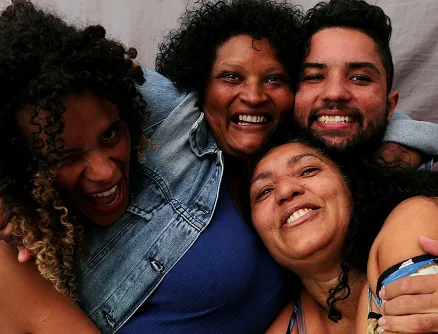






Thousands of immigrants are already achieving more with their money. You can too.
Comun is a financial technology company and not a bank. Banking services are provided by Community Federal Savings Bank; Member FDIC. The Comun Visa® Debit Card is issued by Community Federal Savings Bank, pursuant to a license from Visa U.S.A Inc. and may be used everywhere Visa Cards are accepted.
Results may vary. For a complete list of eligible IDs and application requirements, follow this link.
No minimums, no maintenance fees. ATM or transfer fees may apply. See app for fee details.
Direct deposit funds are typically available when we receive the payment file, up to two days before the scheduled payment date. This early availability is not guaranteed.
A service provided by Service UniTeller, Inc. Service UniTeller, Inc. is licensed in all states that require a license.
Remittance fees start at $2.99 but may vary. Please check the app for more details.
Comun Inc. may earn revenue from the conversion of foreign currencies.
Funds in your account are FDIC insured up to $250,000 by ownership category through Community Federal Savings Bank (CFSB), Member FDIC, in the event CFSB fails.