Community
Learn how to manage your money, send money home with confidence, and build a secure financial future for you and your family.

Living in the United States
Back to School in the U.S.: A Guide for Immigrant Families
Starting a new school year in the U.S. means enrollment paperwork, supply lists, and new expenses — and it can look very different from school systems in Mexico, Colombia, Guatemala, El Salvador, or Honduras. This guide covers what to expect and how to prepare with confidence.
8 min read

Olivia Rhye
20 Jan 2024
Starting a new school year in the United States can involve several administrative and financial tasks. Enrollment requirements, school supply lists, transportation arrangements, meal programs, and extracurricular activities can vary between districts and schools.
For many immigrant families, the process may also involve adapting to a school system that works differently from those in Mexico, Colombia, Guatemala, El Salvador, Honduras, and other countries. Understanding how schools operate, what documents are typically required, and how to prepare financially can make the transition smoother.
This guide explains what to expect during the back to school season in the U.S., how school enrollment works, what supplies children may need, and how to prepare for the school year with confidence.
When does the school year start in the U.S.?
Unlike some countries that follow a national academic calendar, school start dates in the United States are generally determined by states, school districts, and local education authorities.
Most public schools begin classes between early August and early September.
The table below shows common start periods for several major states during the 2026 school year.
| State | Typical 2026 school start period |
|---|---|
| Alabama | Early August |
| Alaska | Mid-August |
| Arizona | Late July to early August |
| Arkansas | Mid-August |
| California | Early to mid-August |
| Colorado | Mid-August |
| Connecticut | Late August to early September |
| Delaware | Early September |
| Florida | Early to mid-August |
| Georgia | Early August |
| Hawaii | Early August |
| Idaho | Late August |
| Illinois | Late August |
| Indiana | Early to mid-August |
| Iowa | Late August |
| Kansas | Mid-August |
| Kentucky | Early to mid-August |
| Louisiana | Early August |
| Maine | Early September |
| Maryland | Early August |
| Massachusetts | Late August to early September |
| Michigan | Early September |
| Minnesota | Early September |
| Mississippi | Early August |
| Missouri | Late August |
| Montana | Early September |
| Nebraska | Mid-August |
| Nevada | Early August |
| New Hampshire | Early September |
| New Jersey | Early September |
| New Mexico | Early August |
| New York | Early September |
| North Carolina | Late August |
| North Dakota | Late August |
| Ohio | Late August |
| Oklahoma | Mid-August |
| Oregon | Early September |
| Pennsylvania | Late August |
| Rhode Island | Early September |
| South Carolina | Late August |
| South Dakota | Mid-August |
| Tennessee | Early to Mid-August |
| Texas | Early to mid-August |
| Utah | Mid-August |
| Vermont | Early September |
| Virginia | Mid to late August |
| Washington | Early September |
| West Virginia | Late August |
| Wisconsin | Early September |
| Wyoming | Late August |
Source: https://us-school-calendar.com/first-day-of-school-2026
The school year generally runs from August or September through May or June. Winter break, spring break, teacher workdays, and holidays are scheduled throughout the year.
Because school calendars can differ even within the same city, families should always verify dates directly with the local school district.
What differentiates the U.S. school system from those in Latin America?
One of the most noticeable differences is the strong role of local school districts. Curriculum decisions, school calendars, transportation policies, and enrollment procedures can vary from one district to another.
Schools are generally organized into:
- Elementary school
- Middle school or junior high school
- High school
Grade levels may differ slightly depending on the district.
Another difference involves parental communication. Schools frequently use online portals, email notifications, text messages, and mobile applications to share grades, attendance records, schedules, and announcements.
Parents may also encounter:
- Parent-teacher conferences
- School volunteer opportunities
- Individual learning plans
- English language support services
- After-school activities and sports programs
Students who arrive from another country may qualify for English learner services designed to support language development while continuing their academic education.
How to enroll your children: documents and process
Most public schools ask families to provide documents during enrollment that are typically used to confirm a child's age, home address, vaccination history, and prior education.
Commonly requested documents include:
- Birth certificate
- Passport
- Proof of address
- Immunization records
- Previous school records or transcripts when available
- Parent or guardian identification
Enrollment can be completed online, in person, or through a district enrollment center.
One of the most important facts for immigrant families to understand is that children have a constitutional right to attend public elementary and secondary schools regardless of their immigration status. This protection comes from the U.S. Supreme Court decision in Plyler v. Doe
As a result, public schools generally cannot deny enrollment solely because a child or parent lacks immigration documentation.
School districts may still request documents that establish residency within the district and verify a child's age, but immigration status is not a requirement for access to public education.
Families who recently arrived in the United States and do not yet have all prior school records should contact the district directly. Many schools have procedures for assisting students during the enrollment process while records are being obtained.
The U.S. school supply list: what to expect and how to optimize spending
School supply requirements in the United States are often determined by individual schools or teachers rather than a national standard. In addition to notebooks and pencils, families may be asked to provide classroom supplies such as tissues, disinfecting wipes, folders, headphones, calculators, or art materials depending on the grade level. Unlike some countries like Mexico's Becas Benito Juárez, children in the U.S. do not receive cash stipends for school supplies.
Teachers often publish detailed lists before the school year begins. Depending on the grade level, families may be asked to purchase:
- Notebooks
- Folders
- Pencils and pens
- Colored pencils
- Markers
- Glue sticks
- Scissors
- Tissues
- Hand sanitizer
- Backpacks
- Calculators
- Headphones or earbuds
Some classrooms also request community supplies that are shared among students.
When it comes to school supplies, the costs can add up quickly. However there are some strategies that may help reduce expenses:
- Compare prices across multiple retailers
- Purchase supplies gradually during summer sales
- Reuse items that remain in good condition from the previous year
- Check whether local organizations distribute supplies at no cost
- Review teacher lists carefully before making purchases
Some teachers provide additional guidance during the first weeks of school.
How to budget for back to school as an immigrant family
The total cost of a school year is often easier to manage when families plan for it as an ongoing expense rather than isolated expenses. A budget that covers the entire academic year can help reduce unexpected financial pressure.
When preparing a back to school budget, families may also need to consider:
- Transportation
- School meals
- Uniforms when required
- Sports participation fees
- Extracurricular activities
- Technology expenses
- Field trips
- Childcare before or after school
Creating a seasonal budget can make these expenses easier to manage. A useful approach can be to divide costs into three main categories:
Enrollment expenses
These may include uniforms, school supplies, and transportation arrangements before classes begin.
Monthly school expenses
Lunch money, transportation, activity fees, and classroom contributions that continue throughout the year.
Unexpected expenses
Field trips, special projects, replacement supplies, and school events can appear with limited notice.
Considering those three categories can help families avoid relying on emergency funds during the school year. However, it is always important to consider your context and plan according to your own needs.
School support programs for immigrant families
Accessing available school support programs can help reduce some of the challenges families face during the academic year. School districts frequently partner with local organizations to provide services that support student success both inside and outside the classroom. These resources can help families navigate academic, language, and financial barriers that may arise during the school year.
Available resources vary by location but may include:
School meal programs
Eligible students may qualify for breakfast and lunch programs offered through their school district.
English learning services
Students developing English skills may receive language instruction and academic support.
After-school programs
Schools, community centers, and nonprofit organizations often provide academic enrichment and recreational activities.
School supply assistance
Some districts, churches, and community organizations distribute backpacks and school supplies before the academic year begins.
Family resource centers
Certain districts maintain offices that help families access educational resources, translation services, and community support programs.
These programs are designed to help students participate fully in school regardless of their family's circumstances. Checking what is available locally can help families take advantage of resources that support learning, nutrition, and school involvement.
How Común helps you manage school year expenses
Back-to-school season can involve a wide range of financial responsibilities. School supplies, transportation costs, lunch expenses, extracurricular activities, and classroom contributions can create recurring expenses throughout the year.
For families who also support relatives abroad, the back-to-school season may extend beyond the United States. Some immigrants may contribute to support the educational expenses for children back home.
Común offers remittance services that allow eligible customers to send money to Latin America directly through the app, with fees starting at $2.99.
For everyday financial management, eligible customers can open an account using an ITIN, a passport, or more than 100 accepted Latin American IDs. Común also offers features that can help families manage school-year spending, including direct deposit, debit card access, and customer support in Spanish through the app with no mínimum balance requirements or monthly maintenance fees.
For group expenses such as field trips, classroom activities, sports teams, or shared school purchases, ComunPay can help parents collect and send payments directly from the app.
This school year, organizing expenses in one place can make it easier to track spending, support family members, and prepare for school-related costs throughout the year.
FAQ
Do I need immigration documents to enroll my children in school?
Public schools cannot deny enrollment solely because of a child's or parent's immigration status. School districts commonly request proof of age, residency, and immunization records, but immigration documentation is generally not required for enrollment.
When does the school year start in the U.S.?
Most schools begin classes between early August and early September. Exact dates vary by state, district, and school system.
Are school supply lists longer in the U.S. than in Latin America?
It depends. Teachers often provide detailed lists that may include classroom supplies, technology accessories, and shared materials used throughout the school year.
What vaccinations do my children need to enter school in the U.S.?
Vaccination requirements vary by state and school district. Schools typically provide a list of required immunizations during enrollment, and additional guidance may be available through local health departments.
How can I help my children with the language if they don't speak English when they arrive?
Many public schools offer English learning programs that provide language support while students continue learning grade-level subjects. Additional tutoring and community programs may also be available locally.
Are there financial aid programs for school supplies for low-income families?
Some school districts, nonprofit organizations, religious institutions, and community groups distribute school supplies or provide financial assistance before the academic year begins. Availability depends on the location and program requirements.

International Money Transfers
What Are Remittances and How Do They Work from the U.S.?
8 min read

November 20, 2025
Do you really know what remittances are? They are international money transfers made by people living and working abroad to family members or recipients in their home country.
For Latin American immigrants living in the United States, sending remittances is a crucial matter, as is having efficient financial services that allow them to send money to their families and friends quickly, safely, and at low cost.
According to recent sources, the flow of remittances from Mexico to the United States fell 12.4% year over year, which is attributed to recent immigration measures imposed by that country. For this reason, it is important that migrants have international money transfer services that understand their needs.
Why Do People Send Remittances?
For the families of migrant workers in the United States, remittances represent much more than a simple transfer of money, as they often become the main support for millions of people in Latin America.
These Are the Main Reasons to Send Remittances:
Household expense support (rent, utilities, food)
This category includes basic expenses such as food, rent, utility payments, and everything related to daily costs, highlighting the importance of remittances for recipient families.
Education and study tools
Includes payment of tuition, school supplies, transportation, preschool fees, and computing tools such as laptops or desktop computers.
Health and family emergencies
If any family member requires specialized medical care, remittances play a central role in covering hospitalization, medications, treatments, and more.
Targeted savings (e.g., family home improvements)
It is also common for migrants to use remittances to build or renovate their family homes, thereby improving their quality of life.
Unexpected expenses during travel or temporary stays
Remittances may also be useful to cover unexpected travel expenses, related to unforeseen illnesses, flight cancellations, or unplanned charges.
How Do Remittances Work and What Options Exist?
Currently, there are several remittance service options you can rely on to send money to your relatives.
Traditional banks, such as Bank of America and Wells Fargo, allow you to make remittance transfers through their digital banking services or directly at branches.
There are also specialized sending agencies, such as Western Union, one of the most widely used and longest-standing remittance services in the United States, with a global presence in more than 200 countries.
The information that traditional banks and agencies will generally require to send money includes:
- Beneficiary’s full name
- Beneficiary’s account number
- SWIFT code
- Receiving country
- Amount and currency
Finally, you can choose digital platforms, which allow you to send money through mobile apps and, in general, offer more competitive options regarding costs and delivery times.
Común is one of these platforms, integrating the fintech experience with various benefits, such as a digital account and an easy to use mobile app, that is available in Spanish. Común accepts more than 100 qualified official IDs from your country of origin to open an account and offers different options for receiving money: into a local bank account or cash pickup. With Común, send money to your relatives for clear and competitive rates, from $2.99 USD and send up to applicable limits.
These Are the Characteristics of Each Available Remittance Sending Option:
Traditional Banks
Traditional banks are a safe option to send money through wire transfer. The advantage is that they are fully established institutions in the U.S. financial system.
However, they have certain limitations, such as high fees, which can reach 60 USD depending on the bank. Additionally, transfers also tend to be slower, taking up to 5 business days.
To access this service, it is necessary to open a bank account at a traditional U.S. bank, or resort to sending cash directly at a branch.
Money Sending Agencies
Specialized agencies for international money transfer, such as Western Union, are also a reliable alternative you can use.
However, fees are usually high and exchange rates less competitive, similar to traditional banks. Although delivery times tend to be shorter.
Digital Platforms
If you are looking for an option to make international bank transfers, digital platforms are a great option. In addition to more accessible opening requirements, they offer far more competitive fees compared to the two previous alternatives.
Remember that Común offers you a comprehensive digital platform to connect with your loved ones in a simple and fair way.
Costs, Timeframes, and How to Save When Sending Remittances
The cost of sending remittances depends on three main factors:
- Sending fee: this is the commission charged by the provider for offering its sending services. This amount varies depending on the method, amount, receiving country, and involvement of intermediaries. The fee may be variable or fixed. One option is to choose a service with a fixed fee, to avoid paying more than expected.
- Exchange rate: a common practice among remittance services is not using the real market exchange rate, but adding a margin that reduces the total amount to be received.
For example, if the dollar price is 18 Mexican pesos, and the remittance service offers it at 17.50, when sending 500 USD, the total amount to be received will be reduced by 250 pesos.
- Possible charges to the recipient: Some traditional banks may charge fees for receiving transfers from foreign countries, so it is important to also verify the recipient’s conditions.
Good Savings Practices for Sending Remittances
To ensure your family receives the maximum amount possible, we recommend following these tips.
Check if there are margins in the exchange rate
The ideal choice is a provider that uses the real exchange rate or as close as possible. Otherwise, your recipient will receive a significantly smaller amount.
Prefer fixed and transparent fees
Understanding sending fees can be confusing, since several services use ranges that vary according to numerous criteria. The recommended approach is to look for a provider that offers fixed fees and with no hidden costs.
Always compare the amount received (not just the fee)
Remember that, in addition to the sending fee, you must consider the exchange rate and how much the amount to be received is reduced after applying this margin.
Avoid data errors to prevent delivery delays
Check your recipient’s information and make sure it is written correctly.
Consider the sending time and holidays in both countries
In many cases, transfers may be delayed if they are made on weekends or on holidays in either country.
Use platforms with support available in Spanish to resolve questions quickly
It is important to choose a service capable of answering your questions in your language and understanding your needs as a migrant.
Get Ready to Start Sending Remittances with Común
Every month, millions of dollars are sent from the United States to Latin America, representing an emotional and financial bridge between immigrant families and their homes, for whom remittances are a primary source of income.
Before choosing a remittance service, don’t forget to check the total amount your household will receive, considering the fee, exchange rate, and possible receiving charges. We recommend choosing a financial solution with transparent costs, support available in Spanish, and you can open your account with qualifying official ID from your country of origin.
Discover Común, the comprehensive platform that offers you low fees, with fees starting from $2.99, and send up to the applicable limits, and support available in Spanish. Open your account today and connect with your loved ones, send them money transparently.
Frequently Asked Questions (FAQ)
What happens if I don’t claim a remittance?
Remittances usually have a validity period established by the provider. Once that period expires, the money is not lost but the transaction may be canceled. In such cases, the sender may reissue it or request a refund depending on the provider’s policies.
What is the difference between a remittance and a transfer?
The main difference between the two lies in their intended purpose. Remittances are money transfers with a personal motive, commonly used to send money to relatives in other countries, whereas the purpose of a bank transfer can vary, ranging from commercial to personal payments, among others.

Checking account
What to Do if Your Alza Account Was Closed
8 min read
July 16, 2024
Similarities Between Alza and Común
Sending money to Latin America: Both Alza and Común offer remittance services, letting users send money to friends and family in Latin America quickly and efficiently.
Debit card and checking account: Users on both platforms get a debit card linked to a checking account; Común offers a Visa card, allowing worldwide transactions and access to funds.
Virtual Visa debit card: Común provides a checking account connected to a physical and virtual Visa debit card, emphasizing the importance of this offering for the financial stability and inclusion of Latino families.
Flexible application process: Both platforms let users apply for an account using various forms of ID, like an international passport, consular card, SSN, or ITIN.
ATM fee reimbursement: Alza users could withdraw cash from any ATM worldwide with full fee reimbursement. Común also supports ATM withdrawals, ensuring convenient access to cash.
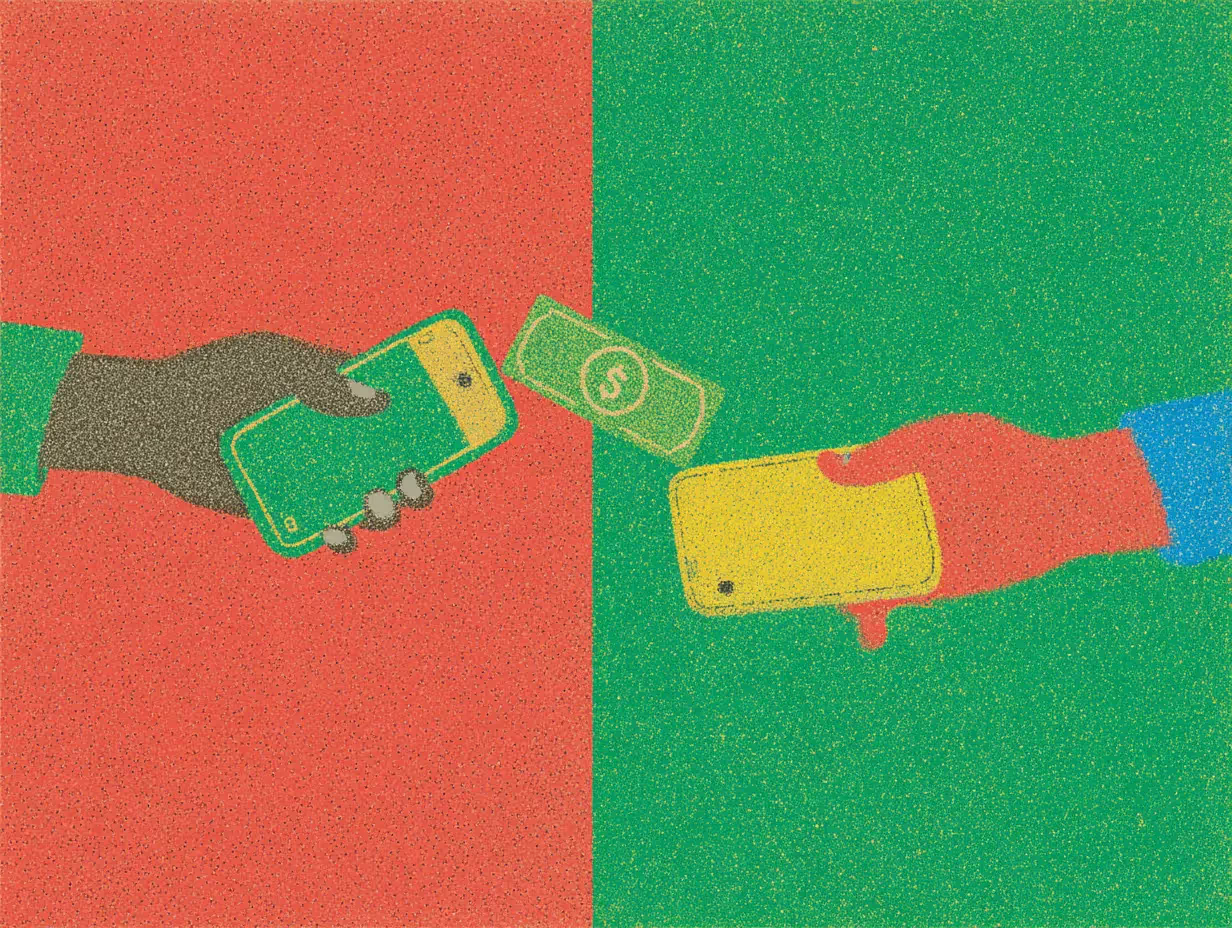
Advantages of Switching to Común: Modern Banking Solutions
One of Común's standout features is its commitment to transparency and cost-effectiveness. Unlike traditional banks and even Alza, Común doesn't charge opening fees, monthly maintenance fees, and has no minimum balance requirements. This makes it an ideal option for those looking to avoid unnecessary banking fees and keep more of their hard-earned money. Here are a few more standout features of a Común account:
Financial inclusion: Común is dedicated to promoting financial inclusion by providing modern banking solutions tailored to the unique needs of Latino families. They address the challenges Latinos face in accessing traditional financial services and emphasize the importance of financial education. This commitment ensures the Latino community has access to an inclusive, supportive banking experience.
Broader ID acceptance:
- Común: Accepts any official government-issued ID, not just passports or consular cards. This makes it easier for a wider range of people to open an account.
- Alza: Limited to specific forms of ID, which could be restrictive for some users.
Simplified address verification:
- Común: Applicants can verify their home address using their phone's geolocation. This feature is particularly beneficial for immigrants who may not have traditional proof-of-address documents.
- Alza: Required physical proof of address, which could be a challenge for those in non-permanent housing or living with relatives.
Extensive cash deposit network:
- Común: Offers access to the largest cash deposit network in the U.S., with more than 90,000 locations, including popular retailers like Walgreens, Walmart, and Dollar General.
- Alza: Didn't specify as extensive a cash deposit network, limiting convenience for cash deposits.
24/7 customer service:
- Común: Provides customer service around the clock, ensuring help is available anytime, any day of the week.
- Alza: Customer service availability wasn't highlighted as a 24/7 feature.
With Común, you'll never feel alone managing your finances. They offer top-tier customer service available seven days a week via chat, email, or phone. That means you can get help whenever you need it, making your banking experience smooth and worry-free.
Open your bank account¹ in 3 minutes with your country's ID²
- No minimum balance fees
- Send money to your home country safely
- Get paid up to 2 days early³
- Send money to your home country safely
- And much more!
Making the Switch to Común: Financial Inclusion
Switching from Alza to Común is simple and hassle-free. As a trusted financial partner, Común understands Latino families' unique needs. You can apply for a Común account online in minutes using a variety of ID documents like a passport, consular card, or ITIN. Once your account is set up, you can easily transfer your funds to Común. The fastest way would be to withdraw cash from your Alza account and then deposit it at any cash deposit location Común offers using the barcode option in Común's cash deposit feature.
The transition from Alza to Común is designed to be smooth and straightforward, helping you achieve financial freedom. Here's how you can make the switch:
Open a Común account: Visit the Común website or download the Común app to start your application. Use any government-issued ID and your phone's geolocation to verify your address.
Transfer your funds: To transfer your funds to your Común account, we recommend first withdrawing cash from your Alza account. Then, you can go to any cash deposit location Común offers and deposit your cash using the barcode option. This option doesn't require your physical card, so you can deposit cash from your Alza account immediately after being approved for a Común account.
Another quick option that doesn't require your Común card is transferring your Alza funds directly from your Alza account to your Común account using your account number and routing number. You can find this information under Account Information in Settings.
Set up direct deposits: Update your direct deposit information with your employer or any other income source to ensure uninterrupted access to your funds.
Current Común Offerings
One of Común's founding principles is inclusivity. As a customer-focused digital bank, Común doesn't require a Social Security Number (SSN) to open an account. Unlike many traditional banks, this feature is particularly beneficial for immigrants and people who may not have access to traditional forms of ID. Común focuses on providing secure banking solutions for everyone, regardless of immigration status. Común also aims to be a financial hub for Latino immigrants, offering a comprehensive banking solution with expanded resources tailored to their needs. To welcome former Alza customers, Común has several incentives:
- Hassle-free application: Apply using any government-issued ID and easily verify your address through your smartphone.
- Enhanced customer support: Benefit from 24/7 customer service to assist with any questions or issues during your transition.
- Extensive cash deposit options: Enjoy the convenience of depositing cash at more than 90,000 locations nationwide.
Conclusion: Secure Your Financial Future With Común for Financial Stability
As Alza prepares to close its doors, Común offers a robust, user-friendly alternative that not only matches but goes beyond the services Alza provided. With no fees, an extensive cash deposit network, and unmatched customer support, Común is the ideal banking solution for former Alza customers. Make the switch today and experience the superior banking experience Común has to offer.
Make the switch today and experience the benefits of a banking platform that truly puts you first. Visit the Común website to learn more and start your new banking journey.
For more information and to start your application, visit Común's official website here: https://www.comun.app

Financial Education
What to Do if Your Bank Account Is Compromised: Immediate Actions
8 min read
June 27, 2024
Recognizing the Signs of Identity Theft and a Compromised Account
The first step is recognizing the signs that your bank account may have been compromised. Unusual or suspicious transactions, unexpected changes to your account details, and alerts or notifications from your bank that you didn't trigger are clear indicators. Getting text or email alerts about activity you didn't do can also mean your account has been hacked. Staying alert and regularly reviewing your account activity can help you catch these signs early if your bank account is hacked.
Immediate Actions to Take When You Notice Suspicious Activity
1. Contact Your Bank Immediately. If you suspect your account has been compromised, call your financial institution directly. Most banks have a dedicated fraud department that can freeze your account to prevent further unauthorized transactions. Acting quickly is crucial to protecting your hard-earned money.
2. Change Your Account Passwords. Immediately change your online account passwords and any other online accounts linked to your financial information. Make sure your new passwords are strong, unique, and different from passwords you've used before.
3. Monitor Your Account for Further Activity. Keep a close eye on your account for any additional suspicious activity. Regularly review your bank statement and account activity, and report any discrepancies to your bank. Setting up text and email alerts for transactions can help you stay on top of your account status.
Learn how to monitor your accounts here
4. Report the Fraud. File a report with your bank's fraud department. Also report the incident to the Federal Trade Commission (FTC) and consider filing a police report. This can help protect your credit report and prevent further identity theft.
Additional Precautions: Enable Two-Factor Authentication
[Image: homepage of bank app — keep image as-is]
To Prevent Future Incidents, Take These Additional Security Measures:
1. Secure Your Devices. Make sure your devices are protected with the latest antivirus protection and security updates. Avoid using public Wi-Fi for online banking.
2. Enable Two-Factor Authentication. Turn on two-factor authentication (2FA) for an extra layer of security on your bank accounts and other online accounts. This makes it harder for unauthorized users to access your accounts.
3. Be Careful What You Share. Be careful about the information you share online, and avoid providing sensitive information like your Social Security number through unsecured channels. Watch out for phishing emails and malicious links that can lead to a compromised account.
4. Use Strong, Unique Passwords. Make sure to use strong, unique passwords for all your other accounts. Avoid reusing the same password across multiple accounts, and change your passwords regularly.
5. Set Up Fraud Alerts. Consider setting up fraud alerts with your bank and credit bureaus. This can help you stay informed about any suspicious activity on your accounts.
We'll show you how to open a bank account in the United States
Común's Security Features
At Común, we prioritize the security of our customers' accounts, just like leading financial institutions. Our platform includes advanced security measures like encryption and real-time monitoring to protect your financial information. If you ever suspect fraudulent activity, our customer service team is available to help you right away. Just send us a message through the Común app, and we'll walk you through the steps needed to secure your account.
Open your bank account¹ in 3 minutes with your country's ID²
- No minimum balance fees
- Get paid up to 2 days early³
- Send money to your home country safely
- And much more!
Conclusion
Quick action is crucial when it comes to a compromised bank account. By recognizing the signs, taking immediate action, and using strong security features, you can protect your finances and regain control of your accounts. Stay alert and proactive to keep your bank account secure. Remember, responding quickly can prevent further losses and ensure your money stays in your hands.

Checking account
The Pros and Cons of Using Checks at Banks in the U.S. | Común
8 min read
May 21, 2024
Cashing a Check at Your Own Bank
When it comes to cashing a check, one of the simplest options is visiting your own bank or financial institution. Here's a step-by-step process for depositing or cashing a check:
- Endorse the Check: Flip the check over and sign your name on the back in the area designated for endorsement. Make sure your signature matches what's on file with the bank.
- Visit Your Bank: Head to the local branch of the bank where you have an account. Bring a valid form of ID, like a driver's license or passport.
- Approach a Teller: Depending on your preference and the bank's options, you can present the check to a teller for processing or use an ATM equipped with check deposit functionality to get your money.
- Provide Necessary Information: If you're dealing with a teller, you may need to provide additional account information, like your account number, the issuing bank, and the check amount. For ATM deposits, follow the on-screen prompts to enter the relevant details.
- Confirm Deposit or Receive Cash: After processing, you'll receive confirmation of the deposit into your account or the cash in hand if you chose to cash the check.
'Cashing' a Check Electronically
Beyond traditional in-person methods, many banks offer electronic options for depositing checks. This convenient approach lets you deposit checks without visiting physical locations or even cash checks without ID. Here's how it works:
- Mobile Deposit: Most banks provide a mobile app that lets you deposit checks using your smartphone or tablet. Simply endorse the check, take photos of the front and back, and submit them through the app.
- Online Banking: Some banks offer online banking portals where you can scan and upload images of checks for deposit. This method generally follows steps similar to mobile deposit and is accessible through a web browser.
- Electronic Funds Transfer: In some cases, you may have the option to electronically transfer a check's funds directly to your account without needing physical processing.
Pros and Cons of Checking Accounts
Checking accounts serve as the hub for many financial transactions, offering both benefits and drawbacks. Understanding these pros and cons is crucial to effectively managing your resources.
Advantages of Having a Checking Account
- Convenience: Checking accounts provide a convenient way to access and manage your funds for everyday expenses, like paying bills and making purchases with a debit card.
- Writing Checks: With a checking account, you can issue checks to people or businesses, offering a secure, traceable payment method.
- Direct Deposit: Many employers offer direct deposit, letting your paychecks be automatically deposited into your checking account, providing quick access to money.
- Online Banking: Most banks offer online banking services for checking accounts, letting you monitor account activity, transfer money, and pay bills from the comfort of home or on the go.
- Overdraft Protection: Some checking accounts come with overdraft protection options, which can help prevent declined transactions and fees in the event of insufficient funds.
Disadvantages or Limitations of Checking Accounts
- Fees: Some checking and money market accounts may have monthly maintenance fees, overdraft fees, limited withdrawals, or ATM fees, which can reduce your balance if not carefully managed.
- Minimum Balance Requirements: Certain checking accounts require you to maintain a minimum balance to avoid fees, which can be a challenge for those living paycheck to paycheck.
- Limited Interest: While some checking accounts offer interest on balances, rates are typically lower compared to savings accounts, resulting in minimal earnings on your deposits.
- Fraud Risk: Issuing checks or using a debit card linked to your checking account exposes you to the risk of fraud or unauthorized transactions, requiring vigilance and prompt reporting of any suspicious activity.
By carefully weighing the advantages and disadvantages of checking accounts and considering key factors when selecting the right account, you can effectively manage your finances and get the most out of your banking experience.
Where to Cash a Check
When it comes to cashing a check, you have several options available, ranging from a traditional bank to a retail store. However, not all locations are equal, and it's essential to weigh the pros and cons of each option before making a decision.
- Banks: Your bank is often the simplest option for cashing a check. You can visit a branch or use an ATM equipped with check deposit functionality. Many banks and credit unions also offer mobile deposit options, letting you deposit checks using your smartphone.
- Retail Stores: Some retail stores, like supermarkets, convenience stores, and big-box retailers, offer check-cashing services for a fee. This can be a convenient option if you don't have a bank account or need access to cash outside of banking hours.
- Check-Cashing Stores: Dedicated check-cashing stores specialize in cashing checks for a fee. While these establishments provide quick access to cash, their fees can be higher compared to other options, reducing the amount you receive.
- Prepaid Debit Card: Certain prepaid debit cards let you load checks onto the card electronically, providing instant access to funds. This can be a convenient option if you regularly use prepaid cards for financial transactions.
Where to Avoid Cashing a Check Due to Potential Fees or Limitations
- Payday Lenders: Avoid cashing checks at payday loan establishments, since they often charge exorbitant fees and may engage in predatory lending practices.
- Pawn Shops: While some pawn shops offer check-cashing services, their fees can be high, and they may require collateral or impose additional charges and higher costs to cover transactions.
- High-Fee Retailers: Be careful when cashing checks at retailers that charge high fees for the service, since these fees can significantly reduce the amount of cash you receive.
When deciding where to cash a check, consider factors like convenience, fees, and access to money. Choose a reputable establishment and service with transparent fee structures to make sure you get the most value from your check-cashing experience.
Comparing Checking and Savings Accounts
Understanding the differences between checking and savings accounts is crucial for effective financial management. Here's a concise comparison:
Interest Rates and Benefits of Savings Accounts
- Interest Rates: A savings account generally offers higher interest rates compared to a checking account, making it ideal for growing your money over time.
- Benefits:
- Goal-Oriented Saving: Savings accounts are great for setting aside funds for specific goals.
- Safety Net: They provide a financial cushion for unexpected expenses.
- Access to Funds: While there may be a limit on withdrawals, savings accounts offer relatively easy access to your money.
Considerations for Having Both Accounts at the Same Bank
- Convenience: Managing both a savings and checking account at the same bank offers ease in transferring money, viewing balances, and accessing statement cycles and bundled services.
- Relationship Benefits: Some banks or credit unions offer perks for customers with multiple accounts, like higher interest rates or waived fees.
- Simplified Experience: Consolidating a savings and checking account simplifies banking tasks like bill payments and money transfers.
- Diversification: However, having accounts at different banks provides diversification and can mitigate risks associated with a single financial institution.
Ultimately, the decision to have a savings and checking account at the same bank or spread across multiple financial institutions depends on your preferences, financial goals, and banking needs.
Loading a Check Onto a Prepaid Card
Loading a check onto a prepaid card is a convenient alternative to traditional banking methods, offering flexibility and accessibility for people who may not have or prefer not to use traditional accounts. Let's briefly break down the process and considerations associated with this method.
Prepaid Cards and Their Suitability
- Prepaid Cards: Reloadable payment cards not linked to traditional bank accounts.
- Loading Checks: Prepaid card providers offer options to load checks electronically through mobile apps or online portals.
- Suitability: Ideal for those without a bank account or who prefer alternative financial services.
Pros and Cons of Using Prepaid Cards
Pros:
- Accessibility and convenience for loading checks.
- Control over spending and security features.
Cons:
- Monthly fees for various transactions.
- Limited features compared to traditional bank accounts.
- Reload limits and lack of FDIC insurance.
Consider the convenience and accessibility of prepaid cards for check transactions, keeping in mind the associated fees and limitations.
You Can Open a Checking Account With Común Right Now!
Open your checking account¹ in 3 minutes with your country's ID²
Conclusion
Navigating the check banking landscape today requires a balanced understanding of the advantages and disadvantages inherent to this payment method. While checks offer flexibility and accessibility, they also come with potential fees and security risks. By weighing the pros and cons outlined in this article and exploring alternative banking options, people can make informed decisions to optimize their financial and cash management strategies.
Checking account
Transaction Limits and Declined Transactions: Understanding Why Your Transactions May Be Declined
8 min read
Declined: Why?
Picture this: you're in the checkout line, ready to pay for your purchases. You've carefully budgeted for the week, and now it's time to swipe your card. But instead of the usual approval sound, you hear something different, and the cashier tells you your transaction has been declined. Embarrassed and confused, you reach for another card or cash, wondering what went wrong.
Transaction Limits
Every bank and financial institution imposes certain transaction limits to ensure security and manage risk. These limits can vary depending on the type of transaction:
- Daily Withdrawal Limits: There may be a limit on how much cash you can withdraw from an ATM in a single day.
- Purchase Limits: Transactions made with your debit or credit card may have a maximum limit per transaction or per day.
- Transfer Limits: Transfers between accounts, especially international ones, often have set limits to prevent fraud.
If your transaction exceeds these predefined limits, it will be declined. Always check your bank's policy on transaction limits and plan your transactions accordingly.
Incorrect PIN Entry and Fraud Protection Rules
Your Personal Identification Number (PIN) is crucial for authorizing transactions. However, if the PIN is entered incorrectly more than four times, the transaction will be automatically declined. This is a security measure to prevent unauthorized access to your account.
If you forget your PIN, you can easily retrieve it through your banking app in the cards section. Be sure to memorize it or store it securely to avoid repeated declines.
To protect customers against fraud, banks have rules to block transactions that appear suspicious. These can include:
- Unusual Spending Patterns: Large or out-of-the-ordinary transactions can trigger a block.
- Geographic Restrictions: Transactions from locations far from your usual activity may be flagged.
- Repeated Declines: Multiple declines or failed attempts can lead to a temporary block.
If you're planning a large purchase or traveling internationally, notify your bank in advance to avoid unnecessary declines.
Cash Deposits and Insufficient Balance
When depositing cash at an ATM, it's important to know that deposits generally can only be made into checking accounts and at specific ATMs like Allpoint+. Trying to deposit cash at a different ATM or into a savings account will result in an error. Always check the account type and ATM capabilities before attempting a deposit.
Additionally, one of the most common reasons for a declined transaction is insufficient balance. Make sure you have enough funds in your account before making a transaction. You can easily check your balance using your banking app. Regularly monitoring your account helps avoid declined transactions and possible overdraft fees.
Común - Banking Designed for Your Life in the USA
Open your bank account¹ in 3 minutes with your country's ID²
Card Activation or Card Locking
When you receive a new physical card, it must be activated before use. Until it's activated, any attempt to use the card will be declined. Activation can usually be done quickly through your banking app in the cards section. Follow your bank's instructions to make sure your card is ready to use.
On the other hand, for security reasons, you may need to lock your card if it's lost, stolen, or if you suspect fraudulent activity. This can easily be done through your banking app in the cards section. Locking the card prevents any unauthorized transactions and gives you control over your account's security.
[Image: credit card — keep as-is]
Understanding Declined Transactions
Beyond the common reasons, there are additional factors that can lead to a declined transaction:
- Credit Limit: If you've reached your card's credit limit, any additional transaction will be declined. You can request a credit limit increase from your card issuer if you frequently reach your limit.
- Incorrect Payment Information: Make sure the billing address, card number, and expiration date entered are correct. An incorrect credit card number or billing address will result in a declined transaction.
- Expired Card: Using an expired card will lead to a declined transaction. Always check the expiration date and update your payment method with a new card when needed.
- Suspected Fraud: Banks may decline transactions they suspect are fraudulent. This includes transactions in a different city or country. You can contact your bank to resolve fraud alerts and authorize the transaction.
- Insufficient Available Credit: For credit card transactions, make sure you have enough available credit to cover the purchase. Monitoring your remaining balance can help avoid declines.
- Temporary and Final Declines: Temporary declines (soft declines) are temporary and can be retried, while final declines (hard declines) are definitive and require contacting the issuing bank for resolution.
We'll teach you everything you need to know about bank accounts in the United States.
Conclusion
Understanding the reasons behind declined transactions can help you manage your finances more effectively and avoid unnecessary stress. By familiarizing yourself with transaction limits, using your PIN correctly, being aware of fraud protection measures, ensuring a sufficient balance, activating new cards, and knowing how to lock your card if needed, you can ensure smoother, safer banking experiences. Stay proactive with your banking habits and use the tools your bank provides to stay in control of your financial activity.

International Money Transfers
Money Transfers: From Traditional Methods to Digital Innovations
8 min read
May 4, 2024
The financial evolution of money transfer methods from traditional practices to digital innovations marks a crucial shift, revolutionizing how we think about and manage our finances in our bank accounts and beyond. This transition isn't just about technological advancement — it reflects a fundamental shift in user expectations, security standards, and global connectivity, especially in international money transfers and seamless bank account integration.
Accelerating Transactions: The Digital Revolution in Money Transfers
The rise of digital platforms and money transfer apps has transformed the speed and accessibility of transactions. Where bank transfers between financial institutions once took days to complete, digital innovations now enable instant money transfers, letting users transfer money around the world in just a few business days or even instantly. This monumental shift in convenience lets users send money or transfer funds from one bank account to another 24/7, without the traditional visit to a bank or credit union.
These changes encapsulate the journey from traditional methods like bank transfers and bank-to-bank transfers to the digital innovations now dominating our financial ecosystem. As we continue exploring these developments, it's clear that ways of transferring money — from using a debit card for instant transfers to leveraging payment app capabilities like Google Pay and Apple Pay — aren't just evolving, they're being redefined for a new era of global connectivity and digital empowerment, making money transfer apps an indispensable tool in our daily lives.
Navigating International Money Transfers: Considerations
Additionally, the rise of mobile apps, from money transfer services like Cash App to full banking apps, has democratized access to financial services. These platforms offer user-friendly interfaces that simplify the money transfer process, whether sending money abroad through international transfers or managing domestic transfers between checking and savings accounts within the same bank. This broadens financial inclusion, letting even those with a basic savings account or checking account participate easily in bank transfers and person-to-person payments.
It's equally important to have a solid understanding of the regulatory framework surrounding international money transfers. This includes being aware of anti-money laundering (AML) laws and the various transfer limits imposed by different countries. These regulations are designed to prevent financial crimes and ensure the security of cross-border transactions. Following these laws not only helps avoid legal complications, but also ensures your transactions process without unnecessary delays.
In addition to choosing the right service and understanding regulations, it's also helpful to be aware of the exchange rates offered by different services. Exchange rates can significantly affect the final amount received on the other end, especially for large transactions. It's also crucial to consider delivery times, especially if the transfer is time-sensitive. While some services can transfer funds almost instantly, others may take several business days. This can be particularly important in emergency situations or when making payments with strict deadlines.
Exploring Different Money Transfer Options: Wire, ACH, and Beyond
Digital advances have also introduced a new level of security and transparency to money transfers. With modern encryption and authentication technologies, including features like fraud detection, financial transactions — whether internal transfers, external transfers, or even online payments for online purchases — are safer than ever.
Money transfer apps have become a safe haven for personal finances, offering real-time transaction tracking and ensuring that transferring money — from a linked bank account via Automated Clearing House (ACH) transfers or direct deposit — stays secure and straightforward. ACH transfers stand out for domestic efficiency and cost-effectiveness, ideal for regular payments like salaries and bills. Additionally, traditional methods like checks, cash deposits, and money orders retain their usefulness for specific scenarios, offering tangible options in a predominantly digital world.
The Rise of Person-to-Person (P2P) Money Transfer Apps
P2P transfer apps have fundamentally transformed how we exchange money, making transactions as simple as sending a message. These apps let users send funds directly to others, using just an email address or phone number, eliminating the need for intermediaries. Among the many options available, several apps have gained prominence, each standing out for its distinctive features.
For example, some apps are celebrated for their integration with social networks, enhancing the social aspect of money transfers. Others prioritize security, offering advanced encryption and authentication methods to protect transactions. There are also apps designed to facilitate cross-border payments by simplifying the process of sending money internationally, offering competitive exchange rates and low fees. This diversity ensures there's a P2P transfer app suited to practically every need and preference, reflecting the dynamic, user-centered evolution of financial technology.
Decoding the Costs: Fees in Money Transfers
The rise of mobile apps, from money transfer services like Cash App to full banking apps, has democratized access to financial services. These platforms offer user-friendly interfaces that simplify the money transfer process, whether sending money abroad through international transfers or managing domestic transfers between checking and savings accounts within the same bank. This broadens financial inclusion, letting even those with a basic savings account or checking account participate easily in bank transfers and person-to-person payments.
Understanding the fees associated with money transfers is pivotal for managing your finances effectively and avoiding unexpected costs. The fee landscape for transfers can vary significantly, spanning service charges, transaction fees, and currency conversion fees, among others. Transparency around these fees is crucial — so it's essential to choose services that offer clear, straightforward information about all the costs involved.
Service charges and transaction fees are often the most visible costs associated with transferring money. These can vary widely depending on the provider and transfer method chosen. For example, traditional bank transfers might carry higher fees compared to online platforms or mobile apps. Currency conversion fees also play a significant role, especially for international transfers, where money needs to be exchanged from one currency to another. Some services build their profit into the exchange rate offered, making it less favorable than the market rate. This practice underscores the importance of scrutinizing the exchange rates provided, not just the explicit fees.
This approach not only helps you make informed decisions, but also helps avoid hidden charges that can add up. To minimize these costs, adopting strategies like selecting the transfer method best suited to your needs — considering factors like speed, destination, and amount — and diligently comparing providers to find the best rates and lowest fees can lead to significant savings. By prioritizing transparency and using cost-minimizing strategies, users can navigate the complexities of money transfers more confidently and economically.
Send abroad with peace of mind with your Común account¹
Open your account in 3 minutes!
Conclusion
In conclusion, the shift from traditional methods to digital innovations in money transfers represents a significant advancement in financial management. Digital platforms and money transfer apps have revolutionized how we send money, providing unprecedented convenience, speed, and security. From seamless bank account transfers to the global reach of international money transfers, these digital solutions offer a full range of services that meet our diverse financial needs.
By emphasizing transparency, these platforms minimize hidden fees, making it easier than ever to manage our savings and checking accounts. Additionally, innovations like instant transfers and robust fraud detection technology have made money transfer apps a reliable option for consumers. As we continue embracing these digital advances, the essence of mastering money transfers lies in leveraging technology to enhance our personal finance capabilities, ensuring we can navigate the complexities of modern financial transactions with confidence and cost-effectively.
Community
What You Need to Open a Común¹ Account
8 min read
July 7, 2024
Común: Revolutionizing Financial Access for the Immigrant Community
Discover Común, a pioneering financial technology platform designed specifically to meet the needs of the immigrant community in the United States. Unlike traditional banking, Común offers a friendly digital banking experience focused on financial inclusion, low fees, and bilingual support, making financial services more inclusive and empowering.
Unmatched Ease When Opening an Account
Opening a checking account with Común is simple and hassle-free, addressing the barriers to financial exclusion the immigrant community typically faces. Accepting more than 100 forms of ID², including Social Security equivalents from Latin American countries, Común ensures immigrants have access to essential banking services. The application process is fast, taking under 5 minutes, and is free of additional or hidden fees, minimum balance requirements, or monthly charges. This inclusivity is central to Común's mission of fostering financial stability and growth.
Mobile Deposit Options
Común: Común offers a very convenient mobile deposit feature that lets users deposit cash at more than 88,000 locations across the United States, including major retailers like Walgreens, Dollar General, and Walmart. This extensive network ensures users can easily find a nearby deposit location, making the process of adding money to their accounts simple and hassle-free.
Traditional Banking: While many traditional banks offer mobile deposit options, they often restrict these to check deposits through a mobile app. Cash deposits typically require a visit to an ATM or bank branch, which can be less convenient and more time-consuming than Común's extensive cash deposit network.
Usefulness in Today's World: In today's fast-paced environment, the flexibility to deposit cash at a wide range of accessible locations is invaluable, especially for people who may not have easy access to traditional banking services or who work non-traditional hours when banks are closed.
International Remittances
Común: Común stands out in facilitating international remittances⁴, letting users send money abroad quickly and at lower fees compared to many traditional banks and remittance services. The process is enhanced with real-time notifications, keeping the sender informed from the moment the money is sent until it's received.
Traditional Banking: Traditional banks generally offer international transfer services, but these can be expensive and slow, with transfers sometimes taking several days to complete. Additionally, fees associated with traditional bank remittances can be significantly higher.
Usefulness in Today's World: In a globalized economy, the ability to send money across borders quickly and affordably is crucial. Many families rely on remittances for financial support, and businesses need efficient ways to handle international transactions. Común's streamlined, cost-effective service effectively meets these modern demands.
Early Access to Pay
Común: Común offers the ability to connect your paycheck to the app and get paid up to two days early³. This feature doesn't carry additional fees, providing significant relief during financial emergencies or when planning ahead.
Traditional Banking: Some traditional banks have started offering similar features, but they're often tied to specific account types or require a minimum balance. The accessibility and ease of use of Común's early pay access isn't always matched in traditional settings.
Usefulness in Today's World: With the rise of gig economy jobs and irregular pay schedules, having early access to wages can provide a buffer against financial instability. This feature is particularly valuable for those living paycheck to paycheck, offering a cushion that can help avoid overdraft fees and late payments.
Unlike traditional banking institutions, Común's innovative features are designed to meet the needs of today's diverse, mobile population, particularly benefiting the immigrant community in the U.S. By providing services that offer greater convenience, lower costs, and increased accessibility, Común doesn't just address the common challenges its users face — it also empowers them toward greater financial freedom and stability. As we move toward a more interconnected, fast-paced world, the importance of responsive, inclusive financial services keeps growing, something Común is uniquely positioned to deliver.
Robust Security and Customer Support
Security and customer support are paramount at Común. With FDIC-insured accounts and Visa protection on virtual Visa debit card transactions, Común customers can manage their funds with confidence. Innovative security features like biometric logins and instant transaction notifications keep your money safe. Plus, Común offers 24/7 customer support in English and Spanish, ensuring help is always available in your preferred language.
Commitment to Zero Fees and Upward Mobility
Común stands out not just for offering zero fees for opening an account, monthly maintenance, or minimum balances, but also for its commitment to helping its users achieve economic advancement. Común acts as a financial partner, supporting financial transactions without the burden of excessive fees. This commitment aligns with the goal of enabling upward mobility for immigrants, who contribute significantly to the U.S. economy.
Personalized Features and Benefits
Común goes beyond traditional financial services by offering features designed to meet the immigrant community's unique needs. Users can send money abroad at low or no cost, deposit cash at more than 88,000 locations nationwide, including free ATM withdrawals, and connect their accounts to popular payment apps like Cash App and Venmo. Común's platform also lets customers get paid up to two days early through direct deposit, further enhancing their flexibility and financial stability.
Conclusion
Común isn't just a financial services provider — it's a platform dedicated to transforming the banking experience for immigrants in the U.S. With its user-focused design, commitment to financial freedom, and robust features, Común is set to become a vital tool for its users' financial stability and growth. Whether you're looking to manage your day-to-day finances or send money to loved ones abroad quickly and safely, Común offers a reliable, inclusive, and efficient banking solution.
Founding Moment: Did You Know?
Founded by entrepreneurs Abiel Gutierrez and Andres Santos in New York, Común was built to empower families and enable upward mobility, particularly for immigrant families. The company has raised significant investment from notable firms like Costanoa Ventures, FJ Labs, and South Park Commons, underscoring the tremendous opportunity to serve immigrant families' financial needs and improve every person's life.

Financial Education
Best Practices for Managing Your Bank Account
8 min read
May 16, 2024
Managing your bank accounts efficiently involves understanding best practices for handling them, using your bank or credit union’s resources, and making informed financial decisions. This article will explore essential strategies from choosing the right type of bank and balancing your checking account to taking advantage of your bank’s mobile banking app for optimal account management.
Understanding Your Account
Explore different types of bank accounts, such as checking accounts, savings accounts, and money market accounts at various financial institutions. Learn about their specific uses, from everyday spending with a debit card to saving money for future goals through a high-yield savings account. Master how to monitor checking account balances and track financial transactions using your bank’s mobile banking app, ensuring effective cash management.
Click here to learn more about your account number
Setting Up Account Alerts
Mobile banking alerts are essential tools in the digital banking era, as they increase your awareness of account activity and help with financial management. Use strong security practices to manage your online account, such as using secure passwords and enabling two-factor authentication. Use your bank’s mobile app security features to protect against unauthorized access and ensure the safety of your financial transactions.
When setting up alerts, you can receive notifications for various events, such as when your balance falls below a certain threshold, which helps prevent overdraft fees. Alerts for large deposits or withdrawals can also help monitor fraudulent transactions, especially important across multiple bank accounts at different financial institutions.
In addition, many banks and credit unions now offer customizable alert options, allowing you to receive updates on account balances at set times or even unusual card activity, further securing your financial transactions and helping maintain good cash flow management.
Budgeting and Tracking Spending
An effective budget is crucial for financial stability, and modern money management tools are designed to meet this need by providing detailed insight into your variable and fixed expenses. These tools sync with your bank accounts to automatically categorize transactions, making it easier to track where your money goes and identify areas for potential savings.
Using direct deposits strategically can automate much of your financial planning, ensuring essential expenses such as monthly bills are covered automatically, while also directing money into separate savings accounts designated for specific goals such as saving for an emergency fund or building up a down payment. This direct deposit setup not only simplifies financial management, but also helps maintain discipline in achieving your financial goals.
Using Automatic Savings Tools
Automatic savings tools are vital for building financial resilience without requiring constant manual intervention. Setting up transfers between your checking account and high-yield savings accounts can significantly improve your savings efforts by taking advantage of the higher interest rates offered by these accounts. These tools can be programmed to transfer a fixed amount or a percentage of your monthly income directly into a savings or investment account, ensuring that saving becomes a continuous part of your financial routine.
In addition, some banks offer features such as “round-up” programs, where everyday transactions are rounded up to the nearest dollar and the difference is transferred into a separate savings account, effectively turning every purchase into a savings opportunity. Discussing these options provides a clear view of how automatic savings tools not only help achieve long-term financial goals, but also more effectively manage day-to-day financial health.

Minimizing Fees
Understanding and minimizing the fees associated with bank accounts is crucial to maintaining your financial health. Monthly service fees, minimum balance requirements, overdraft fees, and other charges can quickly erode your savings if not managed properly. It is important to regularly review the terms and conditions of each bank account, as banks often change their fee structures. One effective strategy is to keep a certain balance in the account that exempts some of these fees.
Also consider using a bank or credit union that offers fee-free checking and savings options. Tools like fee-analysis apps can help identify potential savings by suggesting changes in how you manage your accounts or even recommending a switch to a different financial institution that offers lower fees. This proactive approach ensures that you are always ahead of unnecessary expenses, preserving more of your hard-earned money.
Common Fees:
- Monthly Service Fees: Charged for account maintenance, applicable to many checking and savings accounts.
- Minimum Balance Requirement Fees: Incurred when account balances fall below a specified threshold.
- Overdraft Fees: Charged when transactions exceed the account balance.
- ATM Fees: Applied when using ATMs outside your bank’s network.
- Transaction Fees: Some accounts charge fees for certain types of transactions, such as wire transfers or even excessive withdrawals.
Strategies to Avoid Fees:
- Maintain Minimum Balances: Keep your account above the required minimum to avoid monthly fees.
- Use In-Network ATMs: Withdraw cash from ATMs within your bank’s network to avoid fees.
- Set Up Alerts: Monitor your account balances and receive notifications to prevent overdrafts.
- Choose the Right Account Type: Opt for bank accounts that fit your financial habits, such as accounts with no monthly fees or accounts that offer fee waivers with direct deposit.
- Link Accounts: Link your checking and savings accounts to automatically cover shortfalls and avoid overdraft fees.
- Review Account Terms Regularly: Stay up to date on any changes to your bank’s fee structure and terms of service.
- Negotiate Fees: Some banks may waive fees if you discuss your account options with them, especially if you are a long-time customer with multiple accounts.
By implementing these strategies, you can minimize or even eliminate many of the fees typically associated with managing bank accounts. This proactive approach not only helps save money, but also improves your overall financial health.
You Can Open Your Checking Account at Común with a VISA Card¹ and No Absurd Charges
Open your checking account¹ in just 3 minutes with your country’s ID².
Accepted documents from across LATAM:
- Passport
- ID card
- Driver’s license
- Consular ID
- Visa
- And many more!
Unmatched benefits:
- $0 opening fee
- $0 minimum balance
- $0 monthly fee
Learn more about our services
We explain how to open a checking account in the United States
Regular Review and Reassessment
Consistently reviewing and reassessing your financial goals and bank account setup is key to adapting to changes in your financial situation and market conditions. This should include checking whether savings account interest rates are competitive, evaluating the benefits of having multiple accounts, and assessing whether your current bank meets your needs.
Regular reassessment can help identify opportunities to consolidate accounts, thereby simplifying finances and potentially reducing fees. In addition, consider setting reminders to review all direct deposits and automatic payments annually to ensure they align with your current financial goals and cash flow needs. This regular review helps avoid financial complacency, ensuring your banking arrangements are always optimized for your current financial situation and savings goals.
Linking Accounts for Simplified Management
Linking your various bank accounts, whether at the same financial institution or across multiple ones, can greatly improve your ability to manage finances smoothly. This can make transfers between accounts easier, such as moving funds from a checking account to a savings account, which can be essential for managing monthly cash flow or saving for planned expenses like vacations or holiday spending.
In addition, many financial institutions now offer sophisticated online and mobile tools that provide a unified view of all your accounts, even if they are at different banks. This integration can help you better understand your overall financial picture, making it easier to make informed decisions about where to allocate funds. Also, having a central hub for managing multiple accounts can reduce the time spent logging into several separate accounts and improve the accuracy of your budgeting and financial tracking.
Conclusion
Efficiently managing your bank accounts is not just about protecting your funds, but also about optimizing your financial operations to support your personal and financial goals. Throughout this article, we explored a variety of strategies, from choosing the right type of account to taking advantage of advanced mobile banking tools. These practices are designed to improve your financial understanding, reduce unnecessary fees, and enhance overall cash flow management.
Finally, as we discussed, using alerts, understanding your bank’s fee structure, and employing automatic savings tools are all fundamental aspects of maintaining strong financial health. Regular reviews and strategic account linking further simplify the management process, allowing for a smoother financial journey. By implementing these best practices, you can make your bank accounts work harder for you, turning everyday banking into a powerful tool for achieving long-term stability and success.





Thousands of immigrants are already achieving more with their money. You can too.
Comun is a financial technology company and not a bank. Banking services are provided by Community Federal Savings Bank; Member FDIC. The Comun Visa® Debit Card is issued by Community Federal Savings Bank, pursuant to a license from Visa U.S.A Inc. and may be used everywhere Visa Cards are accepted.
Results may vary. For a complete list of eligible IDs and application requirements, follow this link.
No minimums, no maintenance fees. ATM or transfer fees may apply. See app for fee details.
Direct deposit funds are typically available when we receive the payment file, up to two days before the scheduled payment date. This early availability is not guaranteed.
A service provided by Service UniTeller, Inc. Service UniTeller, Inc. is licensed in all states that require a license.
Remittance fees start at $2.99 but may vary. Please check the app for more details.
Comun Inc. may earn revenue from the conversion of foreign currencies.
Funds in your account are FDIC insured up to $250,000 by ownership category through Community Federal Savings Bank (CFSB), Member FDIC, in the event CFSB fails.