Checking account
Transaction Limits and Declined Transactions: Understanding Why Your Transactions May Be Declined
Declined transactions can be frustrating and inconvenient, but they often happen for understandable reasons. Here are the common factors that can lead to declined transactions and how you can manage them effectively.
8 min read


Declined: Why?
Picture this: you're in the checkout line, ready to pay for your purchases. You've carefully budgeted for the week, and now it's time to swipe your card. But instead of the usual approval sound, you hear something different, and the cashier tells you your transaction has been declined. Embarrassed and confused, you reach for another card or cash, wondering what went wrong.
Transaction Limits
Every bank and financial institution imposes certain transaction limits to ensure security and manage risk. These limits can vary depending on the type of transaction:
- Daily Withdrawal Limits: There may be a limit on how much cash you can withdraw from an ATM in a single day.
- Purchase Limits: Transactions made with your debit or credit card may have a maximum limit per transaction or per day.
- Transfer Limits: Transfers between accounts, especially international ones, often have set limits to prevent fraud.
If your transaction exceeds these predefined limits, it will be declined. Always check your bank's policy on transaction limits and plan your transactions accordingly.
Incorrect PIN Entry and Fraud Protection Rules
Your Personal Identification Number (PIN) is crucial for authorizing transactions. However, if the PIN is entered incorrectly more than four times, the transaction will be automatically declined. This is a security measure to prevent unauthorized access to your account.
If you forget your PIN, you can easily retrieve it through your banking app in the cards section. Be sure to memorize it or store it securely to avoid repeated declines.
To protect customers against fraud, banks have rules to block transactions that appear suspicious. These can include:
- Unusual Spending Patterns: Large or out-of-the-ordinary transactions can trigger a block.
- Geographic Restrictions: Transactions from locations far from your usual activity may be flagged.
- Repeated Declines: Multiple declines or failed attempts can lead to a temporary block.
If you're planning a large purchase or traveling internationally, notify your bank in advance to avoid unnecessary declines.
Cash Deposits and Insufficient Balance
When depositing cash at an ATM, it's important to know that deposits generally can only be made into checking accounts and at specific ATMs like Allpoint+. Trying to deposit cash at a different ATM or into a savings account will result in an error. Always check the account type and ATM capabilities before attempting a deposit.
Additionally, one of the most common reasons for a declined transaction is insufficient balance. Make sure you have enough funds in your account before making a transaction. You can easily check your balance using your banking app. Regularly monitoring your account helps avoid declined transactions and possible overdraft fees.
Común - Banking Designed for Your Life in the USA
Open your bank account¹ in 3 minutes with your country's ID²
Card Activation or Card Locking
When you receive a new physical card, it must be activated before use. Until it's activated, any attempt to use the card will be declined. Activation can usually be done quickly through your banking app in the cards section. Follow your bank's instructions to make sure your card is ready to use.
On the other hand, for security reasons, you may need to lock your card if it's lost, stolen, or if you suspect fraudulent activity. This can easily be done through your banking app in the cards section. Locking the card prevents any unauthorized transactions and gives you control over your account's security.
[Image: credit card — keep as-is]
Understanding Declined Transactions
Beyond the common reasons, there are additional factors that can lead to a declined transaction:
- Credit Limit: If you've reached your card's credit limit, any additional transaction will be declined. You can request a credit limit increase from your card issuer if you frequently reach your limit.
- Incorrect Payment Information: Make sure the billing address, card number, and expiration date entered are correct. An incorrect credit card number or billing address will result in a declined transaction.
- Expired Card: Using an expired card will lead to a declined transaction. Always check the expiration date and update your payment method with a new card when needed.
- Suspected Fraud: Banks may decline transactions they suspect are fraudulent. This includes transactions in a different city or country. You can contact your bank to resolve fraud alerts and authorize the transaction.
- Insufficient Available Credit: For credit card transactions, make sure you have enough available credit to cover the purchase. Monitoring your remaining balance can help avoid declines.
- Temporary and Final Declines: Temporary declines (soft declines) are temporary and can be retried, while final declines (hard declines) are definitive and require contacting the issuing bank for resolution.
We'll teach you everything you need to know about bank accounts in the United States.
Conclusion
Understanding the reasons behind declined transactions can help you manage your finances more effectively and avoid unnecessary stress. By familiarizing yourself with transaction limits, using your PIN correctly, being aware of fraud protection measures, ensuring a sufficient balance, activating new cards, and knowing how to lock your card if needed, you can ensure smoother, safer banking experiences. Stay proactive with your banking habits and use the tools your bank provides to stay in control of your financial activity.
About Común
Común aims to support the Latino community in the United States. It offers a debit account that can be opened with more than 100 valid Latin American IDs and an app available in Spanish.
Visit Común's website or download the app for free to learn more about the full offer and applicable terms.
Olivia Rhye
Community Partner


Community
How to Make a Bank Transfer Online | Común Guide
8 min de lectura
One of the great advantages of having an online account is being able to make bank transfers more quickly, easily, and securely. A bank transfer online is the sending of money from one account to another over the internet. You can do it by ACH (1-3 days, free), Zelle (instant, free), or wire transfer (same day, $15-$45). You only need the recipient’s account number or their phone/email if you use Zelle.
What is an online bank transfer?
An online bank transfer is the instruction you give your bank to move money from your account to another person’s or entity’s account, using digital channels (mobile app or website). There are several types of transfers, each with different speed, cost, and limit characteristics.
What types of bank transfers exist?
ACH Transfer
This is the standard method in the U.S. for transferring money between banks through the ACH (Automated Clearing House) payment network. It is free at most banks and funds arrive in 1-3 business days. Ideal for regular, non-urgent payments.
Zelle
An instant payment service between users of participating banks in the U.S. Transfers are free and instant (minutes). You only need the recipient’s phone number or email.
Wire Transfer
A direct transfer between banks domestically or internationally. It is the fastest method for large amounts (it can be same-day if initiated before the cutoff time). Typical cost: $15-$45 at traditional banks. Requires the recipient’s account number and routing number.
How do you make an online bank transfer step by step?
- Log in to your bank’s app or website
- Go to the "Transfers" or "Payments" section
- Select the type of transfer (ACH, Zelle, wire)
- Enter the recipient’s details: name, account number, and routing number (for ACH/wire) or phone/email (for Zelle)
- Enter the amount and date (immediate or scheduled)
- Review all details and confirm
- Save the transaction receipt
How much money can I transfer?
Limits vary by bank and account type. For ACH transfers, most banks allow between $1,000 and $10,000 per day for new users. With Zelle, the limit is set by your bank (Bank of America: $3,500/day; Wells Fargo: $2,500/day). Wire transfers typically have higher limits (up to $100,000 or more). For international transfers, limits are set by each service.
Frequently Asked Questions About Online Bank Transfers
How long does an online bank transfer take?
It depends on the method. Zelle: minutes. Standard ACH: 1-3 business days. Same-day ACH (premium option): hours. Domestic wire transfer: same day if initiated before the cutoff time (generally 3-4 PM local time). International wire transfer: 1-5 business days depending on the destination country.
What information do I need to make a transfer?
For ACH or wire transfer, you need: the recipient’s full name, bank account number, and routing number (9-digit routing number). For Zelle, the recipient’s registered phone number or email is enough. For international transfers, in addition to the receiving bank’s IBAN or SWIFT/BIC, you may also need CLABE (Mexico) or other local codes.
Can I cancel a bank transfer after sending it?
It depends on the type and how much time has passed. ACH: you can cancel if the bank has not yet processed it (typically within the first few hours). Zelle: not cancellable if the recipient is already registered. Wire transfer: difficult but possible if you act immediately; the bank charges a reversal fee. Always verify the recipient’s details before confirming any transfer.
Is there a limit to how many transfers I can make per month?
Banks may set limits on the number of transactions in addition to dollar limits. Some savings accounts limit you to 6 monthly transfers (Reg D regulation, although it was suspended in 2020). Checking accounts generally do not have a limit on the number of transfers. Check your account’s specific terms.
Are online bank transfers safe?
Yes, when you use regulated platforms. Banks use SSL encryption, two-factor authentication, and fraud monitoring. However, confirmed transfers are difficult to reverse, so always verify the recipient’s details. Be wary of any urgent transfer requests from people you do not know.
What do I need to receive a bank transfer?
To receive a transfer, you need a bank account with a routing number and account number. Común gives you both from the moment you open your account, with no SSN. Share your routing number and account number with whoever is sending you money, or your phone number if it is through Zelle.

Financial Education
How to Create a Strict Household Budget
8 min de lectura
Creating a strict household budget starts with tracking all income and fixed expenses, then setting limits on variable spending. An account with no monthly fee or minimum balance, like Común's, makes it easier to track your money without losing part of your budget to fees.
Why Are Family Budgets Essential?
Creating a strict household budget is essential for achieving financial stability and discipline. A well-planned family budget helps families manage their income, control their spending, and save for future goals. This article provides a comprehensive guide to setting up a rigorous budget, ensuring that every dollar is accounted for and used effectively.
Introduction: The Importance of a Strict Household Budget
In today’s fast-paced world, managing household finances can be challenging. Creating a budget is a fundamental step in managing personal finances. With the rising cost of living and various financial obligations, it is easy to lose control of spending. A strict household budget is crucial for maintaining financial discipline, reducing debt, and reaching long-term financial goals. By creating and sticking to a detailed budget, families can ensure that their financial resources are used wisely, leading to greater financial security and peace of mind.
Assessing Your Current Financial Situation
The first step in creating a strict household budget is to assess your current financial situation. This involves taking a detailed look at your income, expenses, debts, and savings. Calculating your net income is crucial for effective financial planning, as it represents your salary after tax and benefit deductions. Start by listing all sources of income, including salaries, bonuses, freelance work, and any other income sources. Next, categorize and list all expenses, including fixed expenses such as housing, utilities, and insurance, as well as variable expenses such as groceries, transportation, healthcare, entertainment, and miscellaneous costs.
It is important to be thorough and honest during this assessment. To begin, try tracking your spending for a month and identify patterns or areas where you may be overspending. This big-picture view will serve as the foundation for your budget, helping you identify where adjustments are needed to align your spending with your financial goals. Use tools like Google Sheets or a budgeting app to make this process easier and more organized.
Setting Clear Financial Goals, Including an Emergency Fund
Once you have a clear understanding of your financial situation, the next step is to set clear financial goals. These goals will improve your budgeting decisions and serve as a guide to keep you motivated. Financial goals can be short-term, such as saving for a vacation or paying off a credit card, or long-term, such as buying a home, funding your children’s education, or saving for retirement. A well-structured budget not only covers necessary expenses, but also allocates funds to build savings and discretionary spending, highlighting the role of savings in achieving financial stability.
When setting your financial goals, make sure they are SMART goals. SMART stands for specific, measurable, achievable, relevant, and time-bound. So instead of setting a general goal like “save money,” give yourself a clear objective such as “save $5,000 for an emergency fund in 9 months.” Setting SMART goals provides clarity and direction, making it easier to stay focused and committed to your budget. In addition, incorporating retirement accounts as part of your financial strategy is crucial for long-term financial security.
Creating Your Budget Plan
With your financial assessment and goals in place, it is time to create your budget plan. Start by prioritizing your spending, focusing on essentials like housing, utilities, food, transportation, and healthcare. Allocate a portion of your income to cover these essential costs first. Then, list your monthly expenses, categorizing them into fixed and variable types. Tracking household expenses is crucial; consider using online banking tools and personal finance apps to manage and categorize these expenses efficiently. Allocate funds for savings and debt repayment, ensuring that you are working toward your financial goals.
Consider using guidelines such as the 50-30-20 rule, where 50% of your income may go to needs, 30% to discretionary spending, and 20% to savings or even debt payments. Adjust these percentages based on your financial situation and specific goals. Use budgeting tools or apps to help you track your income and expenses, ensuring that you stay within your budget limits. Review and adjust your budget regularly as needed to accommodate changes in income or expenses. Before the start of each month, prepare a new budget to account for seasonal variations and upcoming specific expenses.
Implementing and Sticking to Your Budget
Creating a budget is just the beginning; the real challenge lies in sticking to it. To successfully implement your budget, develop habits that promote financial discipline. Start by automating your savings and bill payments. This ensures that you meet your financial obligations and savings goals without the temptation to spend the money elsewhere.
Understanding your net pay is crucial for effective financial planning. Track your expenses regularly to make sure you are sticking to your budget, especially when it comes to variable expenses. Use budgeting apps or spreadsheets to monitor your spending and make adjustments as needed. Avoid impulse purchases by making a shopping list and sticking to it. In addition, set aside a budget for unexpected expenses to ensure long-term financial stability. Look for ways to reduce expenses, such as cooking at home instead of eating out, canceling unused subscriptions, and looking for discounts when shopping.
Communicate openly with your family about your budget and financial goals. Encourage everyone to take part in the budgeting process and make it a team effort. Having a collective commitment to financial discipline will make it easier to stay on track and achieve your goals.
Here are five popular apps for tracking expenses and budgets:
- Mint: Mint is a budgeting app that allows users to track expenses, create budgets, and set financial goals. It categorizes transactions and provides insight into spending patterns. Using personal finance apps like Mint can efficiently track household expenses.
- YNAB (You Need A Budget): YNAB helps users create detailed budgets based on their income and expenses. It emphasizes giving every dollar a job and helps users plan for future expenses, encouraging proactive financial management.
- Personal Capital: Personal Capital is a wealth management tool that tracks expenses, budgets, and investments. It provides a comprehensive view of your financial health and offers tools for retirement planning.
- PocketGuard: PocketGuard improves your budgeting by showing how much discretionary income you have after accounting for bills, goals, and necessities. It categorizes expenses to help users identify areas where they can save money.
- Goodbudget: Goodbudget is a digital envelope budgeting app that allows users to divide their funds into different categories or "envelopes." This system helps users monitor their spending and ensure they stick to their budget limits for each category.
How Común Can Help With Budget Tracking
Comun offers several features that can complement these budgeting apps and improve your overall financial management:
- Instant notifications: Comun provides instant notifications for all transactions, helping users stay aware of their spending in real time.
- Detailed transaction history: Users can easily access their transaction history, making it easier to categorize expenses and monitor spending patterns.
- Expense categorization: The Comun app automatically categorizes expenses, which can be synced with budgeting apps like Mint for a complete view of your financial activity.
- Savings goals: Comun allows users to set and track savings goals, helping you stay motivated and on track to meet your financial objectives.
- Customer support: Comun offers top-tier customer service available 7 days a week by chat, email, or phone, providing users with support for any financial questions or issues.
By using Comun alongside these budgeting apps, users can achieve better financial discipline and stay on top of their budgeting and spending goals.
Conclusion: Achieving Financial Discipline and Security
Creating and maintaining a strict household budget takes effort and commitment, but the rewards are worth it. Saving money for various purposes, such as emergencies, major purchases, or enjoyable experiences, is crucial for financial stability. By assessing your financial situation, setting clear goals, creating a detailed budget plan, and sticking to it, you can achieve financial discipline and security. Understanding net income, including deductions such as health insurance from gross pay, is essential for creating an effective budget. A well-managed budget helps you control spending, reduce debt, and save for future goals, ultimately leading to a more secure and prosperous financial future for your family. Embrace the process, stay committed, and watch your financial health improve as you work toward your dreams.
By following these steps and maintaining financial discipline, you can take control of your household finances, reduce financial stress, and build a strong foundation for a secure future. A strict budget is not just about restricting spending; it is about making informed decisions that align with your financial goals and values. With dedication and perseverance, you can achieve financial stability and enjoy the peace of mind that comes with knowing your finances are under control.
Quick List: Measuring Your Budget Success
- Assess your financial situation:
- List all sources of income
- Categorize and list all expenses
- Track spending for a month
- Set clear financial goals:
- Define specific, measurable, achievable, relevant, and time-bound (SMART) goals
- Prioritize short-term and long-term goals
- Create your budget plan:
- Prioritize essential expenses (housing, utilities, food, transportation, healthcare)
- Allocate funds for savings and debt repayment
- Use the 50/30/20 rule as a guide
- Use budgeting tools or apps
- Implement and stick to your budget:
- Automate savings and bill payments
- Track expenses regularly
- Avoid impulse purchases
- Cut unnecessary expenses
- Communicate openly with your family about the budget
- Review and adjust regularly:
- Monitor income and expenses
- Make necessary adjustments to the budget
- Stay committed to your financial goals
By following this checklist, you can manage your budgeting efforts efficiently and get closer to achieving your financial goals.
How do I start creating a budget for my household?
Track all your income and fixed expenses (rent, utilities, debt), then set realistic limits on variable spending (food, entertainment) based on what's left.
How do I keep bank fees from eating into my budget?
Choose an account with no monthly fee or minimum balance — every avoidable fee is money that stays in your budget instead of going to the bank.
What tools help maintain a strict budget?
Real-time activity notifications, reviewing your transactions often, and separating money by spending category are practices that make it easier to stay in control.
Frequently asked questions
Where do I start making a budget?
Track all your income and fixed expenses first, then set limits on variable spending with what's left.
What percentage of my income should I save?
It varies by situation; many people start with the 50/30/20 rule (needs/wants/savings) as a baseline.
How do I avoid overspending each month?
Review your activity often and use notifications to catch unnecessary spending early.
Do bank fees really affect my budget?
Yes — a $12-25 monthly fee plus occasional overdraft charges can add up to hundreds of dollars a year.
Does Común help me stick to a budget?
It doesn't charge a monthly fee or require a minimum balance, and real-time activity notifications help you track your spending.
Should I have a savings account separate from my checking account?
It can help separate money meant for savings from day-to-day spending money, reducing the temptation to use it.

Immigration
What happens if I don’t renew my permanent visa? Discover everything about the Green Card in the U.S.
8 min de lectura
Have you just obtained your permanent residence in the United States? Without a doubt, it’s a great achievement for every immigrant who has gone through the immigration process for a long time, though it also comes with a series of responsibilities and restrictions.
A recurring issue within the immigrant community is the general lack of awareness about the risks that can affect their legal status if they don’t act appropriately in the country.
In this article, we aim to keep you informed about these restrictions and provide practical advice to maintain your permanent residence smoothly.
Legal restrictions and rights as a permanent resident
The first thing you should understand is that being a resident is not the same as being a U.S. citizen, as there are clear legal differences that set them apart.
These are the main restrictions you should keep in mind.
You cannot vote in federal elections
Unlike U.S. citizenship, permanent resident status does not grant the right to participate in federal or state elections, which is a disadvantage in exercising voting rights.
Certain public jobs are restricted
Although permanent residents can work for the U.S. government, some positions are only available to citizens, particularly those related to national security or public trust roles.
Possibility of losing status for serious crimes
While obeying the law is mandatory regardless of your immigration status, it’s important to remember that committing crimes such as fraud or drug trafficking can lead to the revocation of your Green Card.
Risks of losing the Green Card due to absences or immigration errors
One of the key requirements you must keep in mind from the moment you began your Green Card process is the obligation to maintain continuous residence in the United States before and after approval.
Keep these risk scenarios in mind to avoid problems with U.S. immigration authorities.
- Leaving the country for more than 6 months without justification may raise suspicion of abandoning residence: if you need to leave the U.S. for more than 6 months, apply for Form I-131, which declares your intention to return.
- Stays outside the U.S. longer than one year can cause automatic loss of status: prolonged absences are generally considered abandonment of permanent residence. Form I-131 allows you to remain abroad for up to two years.
- Failing to file taxes or lying on tax returns can be grounds for revocation: the Internal Revenue Service (IRS) and U.S. Citizenship and Immigration Services (USCIS) may revoke lawful permanent resident status if they detect irregularities in tax payments.
It is advisable to plan your trips abroad in advance and, if necessary, obtain a reentry permit before leaving. Also, stay up to date with your tax payments and seek legal advice if needed.
Limitations on sponsoring family members and obtaining benefits
One of the main advantages of having a Green Card is the ability to sponsor family members for the same status. However, unlike U.S. citizens, residents have access to limited eligibility categories.
- You can only sponsor a spouse and unmarried children under 21: these relatives are considered “preference” categories and must wait until visa slots become available.
- Parents and siblings cannot be sponsored (only citizens can do so): in this case, the only option is to obtain U.S. citizenship.
- Waiting times are long depending on the country of origin: the process can take longer for applicants from high-demand countries, such as Mexico.
Although permanent residence offers certain benefits for holders, these restrictions can be frustrating for immigrants seeking family reunification hindered by regulations.
Tips to protect your status as a permanent resident
It’s true that there are risks that can lead to losing your permanent residence, but most can be avoided with good practices and responsibility.
Keep these tips in mind to avoid problems with the U.S. government.
Always meet your tax obligations
Stay current with your annual tax filings; remember that the deadline is usually April 15 each year. It is essential to meet this requirement, even if you spend time outside the country, to demonstrate your responsibility as a permanent resident.
Maintain a clear residence and ties in the U.S.
It is essential that your main residence is in the United States and that you can show clear ties in the country, such as work, studies, or family.
Avoid long absences and consult before traveling
As mentioned before, being away for more than 6 months may be interpreted as abandoning permanent residence. Try to leave the country only in emergencies, after applying for Form I-131.
Consider applying for citizenship if you meet the requirements
After 5 years as a permanent resident without extended absences and meeting other legal requirements, you can apply for citizenship and remove these restrictions.
Although naturalization is a long process with several steps, it is the most practical path to long-term stability in the country and full rights.
Común supports your financial life as an immigrant
In this article, we explained the “fine print” of the permanent resident card, showing you the risk factors that could lead to losing your status, as well as its benefits.
A common concern for immigrants seeking permanent residence is staying connected with their loved ones despite the distance. Común is the fintech platform that helps you organize your money and send support easily.
Discover all the benefits of Común!
- Checking account with clear and competitive fees.
- Affordable international money transfers.
- Mobile app available in Spanish that accepts more than 100 qualifying official identifications from your home country.
- Debit card for everyday purchases and payments.
Open your account with Común today and manage your money in the U.S. with clarity and confidence.
Frequently Asked Questions (FAQ)
If you still have questions, check the following section.
What’s the difference between a Green Card and residency?
The Green Card, or permanent resident card, is the physical document that certifies that a person holds lawful permanent residence. Residency, on the other hand, is the status granting the right to remain in the country indefinitely.
How long does a Green Card last?
The Green Card is valid for 10 years and can be renewed indefinitely as long as requirements are met. For conditional residency, it lasts 2 years, after which you must apply to remove the condition to renew it for 10 years.
What happens if I don’t renew my permanent visa?
If you don’t renew your permanent residence, your status remains valid, but you might face issues reentering the country, at work, or when handling legal procedures. It’s best to keep this document current to avoid complications.

Instant payments
What is Venmo and how does it work? The Ultimate Guide for Immigrants to the United States
8 min de lectura
Have you heard of Venmo? It is a digital payment application that has gained popularity in the United States in recent years. According to recent data, in 2024 the mobile application reached 68.3 million active users, representing an 8.8% increase compared to 2023.
The importance this mobile application has acquired cannot be denied, which is why knowing what Venmo is in the United States can be very useful to send and receive money from family and friends quickly and securely.
As a foreign national living in the U.S., you must ensure that you choose a financial platform that meets your needs for sending money to your home country and making payments with ease.
In this guide, we clarify all your potential questions about how to use Venmo in other languages like Spanish, what it is for, the requirements to open an account, the benefits this mobile app offers, and also its limitations.
What Is Venmo and How Does It Work?
Venmo is a highly popular P2P (peer-to-peer) payment mobile application in the U.S. Its primary purpose is to facilitate the instant transfer of money between friends and family, in addition to allowing users to link bank accounts and cards.
Venmo’s business model is based on charging fees for services such as credit card transactions, instant transfers of money to bank accounts, and transactions using its physical card.
Some of the most common reasons immigrants use Venmo include:
- Paying monthly rent
- Receiving wages from occasional jobs
- Paying or receiving money from friends and family
- Lending or repaying money to acquaintances
Key Features of Venmo: What Can You Do With It in the U.S.?
To fully understand what Venmo is in the United States, it is important to explore the functionalities this P2P payment service offers its users to simplify their lives:
- Instant sending and receiving of money between Venmo users
These are the mobile app’s most important features, as it allows for instant transfers without charging a fee between Venmo users.
It also enables adding notes or emojis to identify each transaction and the option to use the mobile app’s balance or a linked bank account. - Use of Venmo Debit Card (Mastercard) for purchases
Venmo also offers a physical debit card for making purchases at brick-and-mortar establishments. It is valid at any merchant that accepts Mastercard within the United States.
Additionally, it includes an extra benefit: each purchase with the debit card accumulates cash back for greater savings. - Direct deposit for wages and benefits
You can use your Venmo account to receive your salary or other types of transfers. All you need is your personal QR code. - Bank transfers to bank accounts
Venmo offers two types of bank transfers: standard transfers, which are free and take one to three business days, and instant transfers, which incur a fee of approximately 1.75% and are completed within minutes. - Payments to businesses and merchants that accept Venmo
Another advantage of this service is the “Pay with Venmo” feature, which allows payments at physical or online businesses that accept Venmo.
This streamlines transactions and enables you to use the balance deposited in the application directly. - Social features: comments, “likes,” and bill-splitting
Lastly, one feature that makes Venmo more appealing is the ability to add comments, likes, and emojis.
This allows you to request payments from friends and family, add reminders, and split expenses among multiple users. - Business profiles for companies
Venmo allows small businesses and independent workers to create a business profile to receive payments directly into their account via username or QR code.
What Do I Need to Have Venmo? The Reality of Its Availability
Now that you know the benefits of this mobile application in detail, you probably want to learn the requirements to start using it.
Before learning how to pay with Venmo, remember that it only works in the United States.
These are the requirements to use Venmo:
- Have an Android or iOS phone
As it is a mobile application, you must have a compatible Android or iOS smartphone and download the mobile app from the corresponding store. - Register with a personal phone number
To register in the mobile app, you need a U.S. phone number and must reside in the country, as Venmo is only available there. You may also register with an email address. - Link your U.S. bank account
Linking a bank account isn't required to create your Venmo account; you can receive money and pay with your balance or a card. However, most features require a linked bank account. - Link a debit or credit card
Another option to access all Venmo’s features is linking a credit or debit card instead of a bank account. This allows you to use the card’s balance for transactions directly from the mobile app. - Verify your account
Account verification is required to access all Venmo features, to confirm users’ identities. Verified users can send up to $60,000 per week, but only if their SSN or ITIN has been confirmed. Non-verified users can send up to $299.99 per week.
To verify your account, Venmo will request the following:
- Full legal name
- Mailing address in the United States
- Date of birth
- SSN (Social Security Number) or ITIN
How to Transfer Money from Venmo to My Bank Account?
To transfer money from Venmo to your bank account, once it is linked and verified, follow these steps:
1. Log into your account through the mobile app and go to the “Me” tab.
2. Press the “Transfer” or “Add” button.
3. Enter or edit the amount you want to transfer to your bank account.
4. Select the transfer method: “Instant” or “up to 3 biz days,” noting any applicable fees.
5. Confirm the transfer details and complete the process.
If you want more options for depositing money into another person’s account, do not miss these recommendations.
Limitations of Venmo for Immigrants: Why Is It Not a Complete Solution?
The need for immigrants to have an integrated solution allowing access to digital payments, transfers, and other benefits increases daily. Therefore, while Venmo is a popular option for sending and receiving money in the U.S., it may present limitations for immigrants working in the country.
One limiting factor for immigrant communities is the language barrier in customer support. Because it is a service designed for U.S. residents, it is not optimized for people who speak a different language, such as Spanish. In addition, you should have a U.S. bank account.
Your best option may be to entrust your financial assets to a service offered in your language.
Comun: An Excellent Alternative to Venmo for the Immigrant Community in the U.S.
We present Comun, the solution for immigrants seeking to improve the way they send and receive money to family and friends.
Why Is Comun a Great Option for Immigrant Communities in the United States?
- Comun allows you to open an account with the official identification from your country.
- It is also a platform available in Spanish without complicated terms.
- Unlike Venmo, Comun enables you to send remittances to LATAM for an affordable fee starting at $2.99, subject to applicable limits.
- Access a mobile application to perform your transactions from the palm of your hand.
If you think accessing quality financial services in the U.S. is impossible for immigrants, open your Comun account today and forget about complications.
Disclosures:
“Comun is a financial technology company and not a bank. Banking services are provided by Community Federal Savings Bank; Member FDIC. The Comun Visa® Debit Card is issued by Community Federal Savings Bank, pursuant to a license from Visa U.S.A Inc. and may be used everywhere Visa Cards are accepted.”
“Funds in your account are FDIC insured up to $250,000 by ownership category through Community Federal Savings Bank (CFSB), Member FDIC, in the event CFSB fails.”
“A service provided by Service UniTeller, Inc. Service UniTeller, Inc. is licensed in all states that require a license.”
“Remittance fees start at $2.99 but may vary. Please check the app for more details.”
“Comun Inc. may earn revenue from the conversion of foreign currencies.”
“Direct deposit funds are typically available when we receive the payment file, up to two days before the scheduled payment date. This early availability is not guaranteed.”
Living in the United States
What is the Alien Registration Number (A-Number)?
8 min de lectura
Alien Registration Number or A-Number: Everything you need to know if you’re in the United States
Immigrants living in the United States should become familiar with several terms and procedures to ensure their long-term stay in the country.
One way to compile all the information related to your immigration process is through the A-Number or Alien Registration Number. This identifier is assigned by the Department of Homeland Security (DHS) to foreign nationals residing in the country.
It’s very important to know this information, as it serves as the identification number for your immigration file.
In this article, we’ll explain what the Alien Registration Number is, what it’s used for, and why it’s so important for immigration procedures.
What is the Alien Registration Number (A-Number) and what is it for?
The first step to identifying an A-Number is knowing that it always begins with the letter “A” and contains 8 or 9 digits.
The main function of this number is to allow USCIS and other agencies to quickly track immigration cases and applications related to each person.
Here are some examples of when the A-Number is used:
- To track your permanent residence (Green Card) application.
- When you apply for a work permit (EAD).
- If you apply for an adjustment of status, your A-Number will be used to link your case file.
Where can you find the Alien Registration Number, and who receives it?
To locate your A-Number, you can check several official documents issued by USCIS or DHS, such as:
- Green Card
- Employment Authorization Document (EAD)
- USCIS notices
- Immigration court orders
How to identify the A-Number
Below we break down how the A-Number appears on various official documents.
Document
Location
Permanent Resident Card
On the front, next to “USCIS#” or “A#.”
Work Permit (EAD)
On the front
USCIS Notices
In the upper corner or near the applicant’s name
Immigration court documents
At the top of the document.
This is a unique number assigned only to individuals with formal and permanent files in U.S. immigration agencies, such as:
- Permanent residents (Green Card holders).
- Refugees or asylees.
- Adjustment of status or work permit applicants.
- Individuals with open cases before immigration court.
On the other hand, temporary visitors such as tourists, students, or non-immigrant visa holders do not receive an A-Number since their cases do not require a permanent immigration file.
Why is the Alien Registration Number important in immigration procedures?
The A-Number is a central identifier used in multiple immigration procedures needed to regularize your status in the country.
Here are the most common uses of the A-Number in immigration processes.
Tracking immigration cases (USCIS Case Status)
If you want to track the status of your pending applications, such as permanent residence, work permit, or adjustment of status, you need to enter your A-Number in the USCIS Case Status system.
This way, you can know exactly which stage your case is in and stay informed of updates to ensure your process stays on track.
Updating personal information
It’s essential to keep your immigration records updated. If you change your address, phone number, or legal name, your A-Number will help you update your information.
This helps ensure you receive official notifications and avoid delays in important procedures.
Avoiding mistakes in immigration processes
Since the A-Number functions as a unique identifier, it also helps avoid confusion between applicants with the same or similar names.
Be sure to use your A-Number correctly when filling out forms or official documents so that all your information stays under the same file and saves time when searching for a document or specific information.
In short, this number helps simplify the immigration process for immigrants and provides a sense of security and control during procedures that can often cause stress and uncertainty.
What to do if you don’t have or don’t remember your A-Number
If you don’t have an A-Number, remember that USCIS assigns one once you start an immigration process in the United States. If you already have one but can’t remember it, follow these tips to locate it.
- Check your official documents, such as your Green Card, work permit, or any forms submitted to USCIS.
- Log in to your USCIS online account and check the “manage your case” section.
- Call the USCIS Contact Center at 1-800-375-5283, explain that you can’t find your A-Number, and ask for assistance locating it.
Avoid using a fake A-Number, as this could cause problems with immigration authorities.
Organize your immigration life while managing your finances with Comun
As you can see, the A-Number is essential to staying organized during immigration procedures. It helps keep your documents together in one file, making them easier to locate and reducing the risk of delays caused by mistakes.
Another important aspect of immigrant life in the U.S. is having the right tools to keep personal finances organized.
Meet Comun, the platform designed to help immigrants manage their finances with ease.
Here are some of the benefits Comun offers:
- Open an account with a qualifying official identification from your home country.
- Send money to several countries with clear and competitive fees, up to the applicable limits.
- Access support in both Spanish and English.
Want to discover a truly fair and accessible financial service? Open your Comun account today!
Just as your A-Number helps you keep your immigration documents organized, Comun helps you maintain your financial stability in the United States.
Frequently Asked Questions (FAQ)
If you still have questions, check out our FAQ section.
What is the USCIS number? Is it the same as the A-Number?
The USCIS number appears on your permanent resident card or work permit. It’s actually the same identifier as your A-Number, which appears on these documents preceded by “USCIS#.”
What is the Alien Number?
The Alien Registration Number is the official name for the A-Number assigned by DHS or USCIS to individuals who are not U.S. citizens, allowing them to track their immigration process through a unique file.
Checking account
What Is Online Banking?
8 min de lectura
Online banking refers to a financial institution with a digital presence on the web, accessible from different devices. Online banking has features that set it apart from other platforms — its main characteristic is that money and account management happen entirely online. Here are the main things that set it apart from traditional banking and other platforms — keep reading!
Features of Online Banking
Now that you know what online banking is, here are the different features it offers:
Convenience: You don't need to complete part of a transaction online and finish it in person at the bank. Online banking can offer 100% online transactions, depending on the institution.
Functionality: Banking today has improved the user experience to the point that most apps are user-friendly, offering a wide range of financial products and tools so users don't have to complete some confirmations in person at the branch.
Security: This is one of the aspects online banking has focused on most, and one of the factors that limited financial products for customers in the past. Today, there's a wide range of tools that make online transactions secure, including:
Banking software: Banks have internal software that protects users — in payment methods, IP location recognition, and payment processing and authentication.
Two-factor authentication: With mobile apps, security is properly guaranteed through online banking.
Security protocols: These are the steps required to access certain financial tools. Some protocols require two-factor verification, others use randomized codes depending on the bank's criteria.
Advantages of Online Banking
Over the years, online banking has optimized its digital processes, resulting in a number of benefits for users, including:
Time savings: You don't need to go to a bank branch to complete a transaction and wait to be helped after a long wait at the branch.
Better communication: Complaints are handled promptly on many platforms. Generally, the solution is found in one of the menus within the app. This is mainly due to the standardization of solutions for the most common issues regular users face, available as options within the platform.
Streamlined processes: The ease of acquiring financial products, choosing promotional cards, making both domestic and international transactions, and checking real-time spending make online banking an ideal option.
Ease of use: The options the platform offers make navigation within the app (for smartphones) or platform extremely user-friendly.
For these reasons, it's worth understanding the different operations related to online banking, including:
Opening a bank account online.
Making transfers online.
Getting benefits through online banking.
Setting up bill pay through your bank.
International Money Transfers
How to make an international money transfer? Costs, times and requirements
8 min de lectura
International money transfers can be sent via bank wire, money transfer apps, or remittance services — each with different fees, speed, and delivery options. With Común, transfers to Latin America start at $2.99, with most arriving within minutes.
For immigrants in the United States, sending money to their home countries regularly is essential. Therefore, it is important to have access to affordable and accessible financial services.
If you want to know how to make an international money transfer, it is crucial to first compare the different providers of this service and choose the one that offers the most advantages for you and your family.
Comun stands out as a popular option among immigrants because it allows them to send money abroad from the United States, offering advantages in terms of cost, speed, and other key factors.
Below, we provide a comparison table that includes Comun and traditional financial institutions in the United States, such as Bank of America and Wells Fargo:
| Comun | Traditional Financial Institutions | |
|---|---|---|
| Fee | Transfer fee starting at 2.99 USD up to applicable limits | From 10 to 45 USD, depending on the bank |
| Intermediary fees | $0 USD | May generate extra fees from intermediary banks |
| Exchange rate | Competitive | Higher margin than official |
| Speed | Instant to a few minutes (average 8) | From 1 to 5 business days |
| Estimated total fee | 2.99 USD transfer fee + exchange rate, with no extra charges (The first transfer has no fee. Subsequent transfers have a fee starting at $2.99 USD, up to the applicable limit. ATM or intermediary charges may apply; check the app for more details). | From 20 to 60 USD, due to fees and less favorable exchange rates |
How Does an International Money Transfer Work?
The first point to understand is the types of bank transfers available, as this determines the final cost of sending an international money transfer.
In the United States, there are two types of international money transfers: through traditional banks or through specialized services for sending money abroad.
International Money Transfers via Traditional Banks
- Supported by official U.S. financial institutions and security measures, including:
- Identity verification (KYC/CIP) and ongoing AML monitoring (BSA).
- OFAC sanctions screening for senders and recipients.
- Consumer protections for remittances under Regulation E (pre-transfer disclosures, cancellation rights, and error resolution).
- Network and messaging security standards (e.g., SWIFT Customer Security Program).
- Multi-factor authentication and encryption for online banking access.
- A U.S. bank account is mandatory
- Operates through the SWIFT code
- Generates higher fees due to intermediaries
- Transfer time may take up to 5 business days
International Transfers via Specialized Applications
- Operates through digital networks connected with banks or physical branches in each recipient country
- Lower fees, as they do not use intermediaries and offer more competitive exchange rates
- Money transfers are completed within minutes or hours
- A U.S. bank account is not mandatory to use these services
Before paying unnecessary fees, make sure to choose the best international money transfer provider and make the most of your money.
Steps and Requirements for Making an International Money Transfer
Below, we outline what is needed to easily make an international bank transfer from the United States, whether you choose a traditional bank or a specialized application for this type of service:
1. Choose a Provider
Some of the traditional banks you can use are Chase, Bank of America, Capital Bank, Citibank, and Wells Fargo. If you don't have a US bank account, you'll need to make sure you have the necessary requirements to open an account, such as a Social Security Number (SSN). For the aforementioned banks, you can present an ITIN instead, along with a government-issued ID.
Another factor to consider is how long an international money transfer takes, as traditional banks usually take longer due to intermediaries involved in the process.
If you prefer a specialized application for international money transfers due to the flexibility they offer compared to banks, an excellent alternative is Comun, which allows you to transfer money from your phone without complications or intermediaries.
2. Create an Account
General Requirements for Opening an Account at a U.S. Bank
- Valid passport or immigration document
- Social Security Number (SSN)
- Individual Taxpayer Identification Number (ITIN)
- Proof of address in the United States
- Some banks require an initial deposit of approximately $25 USD
Depending on the bank, you may open the account online or by visiting a branch for data verification.
Requirements for Opening an Account with Comun
- Mobile phone compatible with Android or iOS
- Email address
- Official foreign identification
- Have a US residential address
In both cases, you will have access to a debit card and a mobile application that will allow you to make international money transfers and other transactions from the palm of your hand.
3. Enter Transaction Details
Once you activate your account, enter the information required for an international money transfer:
- Full name of your recipient, as it appears on their official ID
- Recipient’s phone number
- Recipient’s address (only if sending money to a bank account)
- Recipient’s account number (only if sending money to a bank account)
- SWIFT code (if transferring through a traditional bank)
Then, enter the amount you wish to send.
Comun and other specialized applications also allow cash pickup at physical locations, so your recipient does not need a bank account.
4. Review Costs and Rates
Next, review the international money transfer fees as well as the exchange rate, as these will impact the final amount your recipient receives.
The cost of an international money transfer depends on several factors, which we detail below.
5. Send the Money
Once you confirm that the information entered is correct, authorize the transfer, including any additional fees.
Comun allows you to track your transfers through its application, whether you choose to send money to a bank account or opt for cash pickup at a physical location.
Remember that transfer speed depends on the platform, and traditional banks can take up to 5 business days to complete these transactions.
6. Confirm Receipt
Finally, confirm with your recipient that the transfer was received within the stipulated timeframe. You can generate a transaction receipt directly in the mobile application.
Everything About the Cost of Sending Money Abroad from the U.S.
International money transfers are a common practice among immigrants in the United States.
That is why it is essential to detail the factors that influence the cost of transfers, as well as the best options for sending remittances to your family quickly and without complications.
These are the main factors to consider when calculating the cost of your international money transfers:
- Transfer Fees
International transfers incur a fee, which varies depending on the platform, whether it's a traditional bank or a specialized app.
Another factor that affects the fee level is the method used to send the money. The price can vary depending on whether the transaction is made through a website, an app, or at a physical branch.
International money transfer fees at traditional banks vary depending on the financial institution. Here are some examples:
- Bank of America: $45 USD
- Wells Fargo: from $25 to $40 USD
- Citibank: from $25 to $35 USD
- Truist Bank: $65 USD
On the other hand, some mobile applications offer international money transfer options for less than $3 USD, which is much more beneficial for the economy of foreign workers.
- Exchange Rate
The exchange rate also significantly impacts the final amount your recipient receives. It refers to the value applied by the platform when converting the dollar amount to the local currency.
Traditional banks generally use a lower rate than the official rate. For example, if the Mexican peso is officially 18.00, banks might apply approximately 17.20 MXN.
This means that if you send $300 USD, your recipient could receive about $13 less (240 MXN less), not counting the bank fees, which make the cost even higher.
- Hidden Fees
In addition to international money transfer fees, traditional banks may charge additional fees if intermediary banks are involved in processing the transfer.
We recommend checking all costs involved and choosing a competitive option that does not reduce the total amount your family will receive.
Comun is an excellent alternative for making international money transfers, as your first transfer fee is waived, and subsequent transfers have a fee starting at $2.99 USD per transfer, up to applicable limits, with no hidden fees or intermediaries.
Review our comparison table between traditional banks and Comun at the beginning of this article, and choose the best option for your money.
Want to Make Secure International Money Transfers? Do It Easily with Comun
In this article, we presented how to make an international money transfer from the United States through traditional banks or specialized applications such as Comun, an excellent choice for immigrants.
Comun is the solution for bringing immigrant families closer together through affordable and low-cost remittances.
Why Choose Comun for International Money Transfers?
- Easily open your account with official documentation from your country
- Send money to your family with a transfer fee starting at $2.99 USD, up to the applicable limits.
- Your money will arrive within minutes
- Access a mobile application and Visa debit card for better control of your finances
Discover an easy and fast way to access the financial services you deserve. Open your account with Comun and forget about complications.
What are the main ways to send money internationally?
Bank-to-bank wire transfers, dedicated money transfer apps, and remittance services are the three main options, each with different costs and delivery times.
What should I compare between international transfer options?
The fee, exchange rate, delivery speed, and whether the recipient needs a bank account or can pick up cash.
How does Común handle international transfers to Latin America?
Transfers start at $2.99, with your first transfer at no cost. Delivery options include bank deposit or cash pickup at locations like Elektra and Oxxo in Mexico, with most transfers arriving within minutes.
Frequently asked questions
What's the cheapest way to send money internationally?
It depends on the corridor and amount; always compare the fee AND the exchange rate, since a low fee can hide a worse exchange rate.
Do I need a bank account in the destination country to receive money?
Not always — some services, including Común, offer cash pickup options that don't require a bank account.
How long do international transfers usually take?
It varies by method — bank wires can take days, while modern remittance apps like Común often deliver within minutes.
Are international money transfers safe?
Yes, when using a licensed provider that's transparent about fees and exchange rates before you confirm.
What information do I need to send an international transfer?
Typically the recipient's name, destination country, and either their bank account details or pickup preference, depending on the method.
Does Común charge for international transfers?
Fees start at $2.99 per transfer, with your first transfer at no cost.

Checking account
Debit Account in the United States
8 min de lectura
In this article, we'll walk you through the advantages and requirements of having a debit account in the United States. It's worth noting that the world's financial center is New York, home to the most important payment hubs where the world's top-ranked financial institutions are connected. That's why having an account in the United States is essential if you do business globally.
Why Having a Debit Account in the United States Matters
Here are the advantages of having a debit account in the United States and what it means to have one — among the most notable benefits:
Cost: The cost to open an account in the U.S. is actually minimal, largely thanks to the digital account types available today. This gives you the ability to handle financial transactions smoothly with the people you want to do business with.
Requirements: Requirements are usually basic, as long as you're of legal age and have some form of address documentation. If you're a foreigner, it's possible to open an account in the United States without a long list of requirements or needing to be physically present.
Control: You can track fees, deductions, and payments made through the platform — for that, we recommend reading: How to Manage My Money in a Debit Account.
Ideal for Freelancers: If you do remote work, global companies typically require an account on some payment platform. For that, you'll need a U.S.-based account. That's why it's worth opening one, so you can meet the requirements of that payment platform.
Security: You get the security that comes with U.S. regulation. On top of that, funds are protected by the Federal Deposit Insurance Corporation (FDIC).
Options: There's a wide variety of ways to get a U.S. account, and among the main options is starting with a debit account, which offers alternatives for people who want an account without being a U.S. resident.
General Requirements to Open an Account in the United States
The requirements listed here are for opening a general account — keep in mind that requirements vary by account type. Among the requirements U.S. financial institutions typically ask for:
ID document: Issued by your country of residence's government (passport, national ID, or identity card depending on your country of origin).
Proof of residence: A current utility bill showing your physical address. It must include a zip code.
Email address: So the confirmation email can be sent this way if you open the account through a platform or app.
Mobile device: To authenticate transactions made through the bank's platform.
If you want to open an account in the United States, there are several options and account types available. Just choose the one that fits your needs, requirements, and that you can comfortably and securely meet the requirements for.
Instant payments
Direct deposit vs wire transfer: comparison guide for U.S. immigrants
8 min de lectura
Direct deposit vs wire transfer: comparison guide for U.S. immigrants
These payment methods are both available in the U.S. but they are often used for different purposes. Direct deposit is commonly used for paychecks, tax refunds, and government benefits, while wire transfers are more often used for urgent or high-value transfers between financial institutions.
Understanding the difference between direct deposit and wire transfers can help you avoid unnecessary fees, choose the right payment method for your situation, and manage your money more confidently.
What's the difference between direct deposit and wire transfer?
The biggest difference is the purpose they serve. Direct deposit is commonly used for recurring payments such as salaries, benefits, and tax refunds. Wire transfers are commonly used to move money quickly between financial institutions, particularly for large or time-sensitive transactions.
| Feature | Direct deposit | Wire transfer |
|---|---|---|
| Common use | Paychecks, benefits, tax refunds | Large or urgent transfers |
| Network used | ACH network | Wire transfer network |
| Speed | Typically 1–3 business days | Often same day or next business day |
| Typical cost | Often no fee to receive | Fees may apply |
| International transfers | Limited | Commonly used |
| Recurring payments | Yes | Less common |
| Setup required | Routing + account number | Bank details + recipient information |
How direct deposit works
Direct deposit is one of the most common payment methods in the United States, particularly for employees receiving wages from an employer. Instead of issuing a paper check, an employer sends the payment electronically to the employee's bank account through the ACH network.
To set up direct deposit you need to provide your employer: your bank's routing number and your personal account number.
How wire transfer works
A wire transfer is an electronic transfer of funds between financial institutions through secure financial networks like Fedwire or SWIFT. Unlike direct deposit, wire transfers are better suited for large one-time payments, urgent payments, real estate transactions, or international transfers.
When to use each one
Use direct deposit for:
- Receiving your paycheck
- IRS tax refunds
- Social security or unemployment benefits
- Recurring business payments
Use wire transfer for:
- Real estate payments (down payment, closing)
- Urgent international transfers
- High-value business payments
- When the recipient specifically requires a wire transfer
How to set up direct deposit with Común
With your Común account, you can set up direct deposit by providing your Común routing number and account number to your employer. Your Común account has unique routing and account numbers available in the app. Visit comun.app to learn more.
FAQ
Is direct deposit faster than wire transfer?
Not necessarily. Domestic wire transfers can be faster (same day), while direct deposits usually take 1-3 business days. However, many accounts offer early access to direct deposits up to 2 days early.
How much does it cost to set up direct deposit?
Setting up direct deposit is generally no fee. Employers use the ACH network to send payroll electronically at no charge to the employee.
Común is a financial technology company and not a bank. Banking services are provided by Community Federal Savings Bank, Member FDIC.
International Money Transfers
How to send money to Mexico via WhatsApp? Común vs. WhatsApp Pay
8 min de lectura
How to send money to Mexico via WhatsApp? Común vs. WhatsApp Pay
WhatsApp does not currently offer a service to send money directly from the United States to Mexico.
WhatsApp is one of the most popular ways to stay in touch with family and friends across borders. While the app supports payments in certain countries, its payment features are not available for sending money from the United States to Mexico.
However, for people living in the United States who are looking into sending money to Mexico, there are many different options available. From traditional service providers such as Western Union and MoneyGram to apps with instant international transfers like Wise, Remitly and Común.
Can I send money to Mexico via WhatsApp from the United States?
At this time, WhatsApp does not offer an official service that allows people in the United States to send money directly to recipients in Mexico through WhatsApp Pay. WhatsApp's payment functionality is only available in Brazil and India.
This means that you can still use WhatsApp every day to communicate with family and friends in Mexico, but you cannot transfer money from a U.S. account to a recipient in Mexico using WhatsApp Pay.
Some money transfer companies offer WhatsApp-based experiences that help initiate transfers, but those services are different from WhatsApp Pay itself. The actual transfer is processed through the remittance provider rather than through WhatsApp's native payment system.
What is WhatsApp Pay and how does it work?
WhatsApp Pay is a payment feature integrated into WhatsApp that allows eligible users to send and receive money without leaving the app. The service operates through local payment networks and financial partners in supported countries.
As of 2026, WhatsApp Pay is available in India and Brazil. It is not broadly available as a payment method in the United States, and it is not available as a direct remittance solution for sending money from the United States to Mexico.
Why can't I use WhatsApp to send money to Mexico?
Cross-border money transfers require financial institutions, payment networks, regulatory approvals, identity verification procedures, and international settlement systems. WhatsApp Pay was built around local payment systems in specific countries. Because of this, the service does not currently support direct remittances from U.S. bank accounts to recipients in Mexico.
This limitation often creates confusion because WhatsApp is widely used on both sides of the border. Messaging a family member in Mexico through WhatsApp is easy, but sending money through WhatsApp Pay is a different service with separate availability requirements.
How much does WhatsApp Pay charge for sending money?
There is no standard fee for sending money from the United States to Mexico through WhatsApp Pay because that service is not currently available.
If you're in the United States and need to send money to Mexico, you will need a remittance service provider. To compare the costs related to sending money to Mexico, it can be important to review: transfer fees, exchange rates, delivery methods, transfer speed, and recipient requirements.
What's the best way to send money to Mexico if not via WhatsApp?
There is no single answer because different money transfer methods work better for different situations. Bank transfers can be a familiar option for people who already have a checking account. Traditional remittance providers such as MoneyGram and Western Union offer multiple delivery methods, including bank deposits, cash pickup locations, and mobile wallets in some markets.
Digital remittance platforms have become increasingly popular because they offer the possibility of sending money directly from a smartphone. These services typically display the exchange rate, fees, and delivery method before the transfer is completed.
One option is Común through its remittances services, which allows eligible customers to send money to Mexico and other countries in Latin America directly from the Común app. Transfers start at $2.99, and many transfers are delivered on the same day depending on the destination and delivery method.
How to send money to Mexico with Común? (step by step)
1. Open the Común app on your phone.
Sign in to your account and navigate to the remittance section.
2. From the main page, select "Envía una Remesa".
Select the option on your app.
3. Choose your recipient or add a new one.
Provide the required details for the person receiving the transfer.
4. Enter the transfer amount.
Review the amount you want to send.
5. Review the transfer details.
Confirm the recipient information, delivery method, transfer amount, and estimated delivery timeframe.
6. Confirm the transfer.
Complete the transaction and wait for confirmation. Many transfers are delivered the same day, although delivery times may vary.
WhatsApp Pay vs. Común: a direct comparison
| Feature | WhatsApp Pay | Común |
|---|---|---|
| Send money from the United States to Mexico | No | Yes |
| Cross-border remittances | No | Yes |
| Starting transfer cost | Not available for U.S.-Mexico transfers | Starting at $2.99 |
| Delivery to recipients in Mexico | Not supported | Available |
| Transfer purpose | Domestic payments in supported countries | Money transfers to Mexico and Latin America |
WhatsApp Pay was created for payments within certain supported markets. Común remittance services make it possible to send money from the United States to recipients in Mexico and other countries in Latin America directly from the Común app.
A Común account can be opened with a passport or more than 100 Latin American IDs with no minimums or monthly fees.
FAQ
Can I send money to Mexico using WhatsApp?
No. WhatsApp does not currently provide an official service that allows users in the United States to send money directly to recipients in Mexico through WhatsApp Pay.
How does WhatsApp Pay work?
WhatsApp Pay allows eligible users in supported countries to send and receive money through WhatsApp using local payment networks and financial partners.
How long does it take for the money to arrive if I send it with Común?
Many transfers sent through Común are delivered on the same day. Delivery times may vary depending on the destination, delivery method, and recipient institution.
What do I need to send money to Mexico with Común?
You generally need a Común account, the recipient's information, the transfer amount, and any additional details required for the selected delivery method.
How much does it cost to send money to Mexico with Común?
Común international transfers start at $2.99. The total cost may vary depending on the transfer amount, destination, and exchange rate.
Is it safe to send money through apps from the United States?
Using a regulated money transfer provider can help protect your transaction through identity verification, encryption, fraud monitoring, and transaction tracking features.
Común is a financial technology company and not a bank. Banking services are provided by Community Federal Savings Bank, Member FDIC. Peer-to-peer payments services are provided by Cross River Bank. No minimums, no maintenance fees. Remittance service provided by Service UniTeller, Inc. Remittance fees start at $2.99 but may vary. Común Inc. may earn revenue from the conversion of foreign currencies.

Checking account
What Is a Checking Account and Why Do You Need One?
8 min de lectura
Checking accounts are an essential tool for managing your personal finances, and the main type of account you'll use day-to-day in the United States. In this article, we'll walk you through everything you need to know about them and how to choose the best option for you.
What Is a Checking Account and Why Do You Need One?
A checking account is a type of bank account that lets you deposit and withdraw money easily. It's the account most commonly used for everyday transactions like paying bills, making purchases, and receiving your paycheck. You need one because it gives you a safe place to keep your money and lets you handle financial transactions efficiently.
Advantages of Having a Checking Account
Checking accounts offer several advantages:
- First, they give you a safe place to keep your money.
- Second, they make managing your finances easier by letting you complete transactions easily.
- Third, many checking accounts offer additional services like debit cards, checks, and access to online and mobile banking.
Differences Between Checking Accounts and Savings Accounts
While a checking account is designed for everyday transactions, a savings account is designed for storing money long-term. Savings accounts usually offer higher interest rates, letting you earn money on your savings. However, they aren't as accessible as checking accounts and may have restrictions on how many transactions you can make.
Common Requirements to Open a Checking Account
Required Documentation
To open a checking account, you'll generally need to provide a photo ID, proof of address, and your Social Security number or tax ID number.
At Común, online banking for immigrants in the United States, the main documents you'll need are:
- Official ID from your home country
- A tax ID number like an ITIN or Social Security number (SSN)
- Proof of address in the United States, such as a bill in your name showing your address within U.S. territory
Opening a checking account with Común is 100% online and can be done in under 5 minutes.
Minimum Deposit and Other Conditions
Some banks require a minimum deposit to open a checking account. They may also charge fees if your balance drops below a certain level. For example, Chase Bank offers the Chase Total Checking account, and Citi Bank offers the Citi Basic Banking Package, both of which include access to thousands of ATMs and online and mobile banking service. However, like many other traditional banks, they charge a monthly service fee of around $8 to $12 unless you meet certain average monthly balance requirements or a minimum amount deposited through monthly direct deposits. On top of that, they may charge overdraft fees of $39 or more.
With Común, however, there's no minimum deposit amount, no minimum monthly balance, and no monthly service fee — and no hidden costs in the fine print.
What They Don't Tell You About Checking Accounts in the United States
You can generally access the funds in your account through ATM withdrawals, checks, electronic transfers, and debit cards. It's important to know, though, that each bank may charge fees for each of these operations, so it's worth knowing them before opening an account so you can compare your options and find what's most practical for you.
Many banks also require an initial deposit to open a checking account. The amount varies by bank, but can range from $25 to $100. Común's checking account has no such cost — the initial deposit required to open one is $0.
Checking accounts can also come with fees beyond the monthly maintenance fee, like ATM fees, overdraft fees, and more. Some banks waive the monthly fee if you maintain a minimum balance or have regular direct deposit. With Común, you can deposit and withdraw cash at no cost at more than 55,000 ATMs across the United States, found at places like Walgreens, CVS, Target, and more.
Some banks offer overdraft protection that keeps checks from bouncing or your debit card from being declined if you don't have enough money in your account. This service can come with high fees, though, so it's important to understand the terms.
And if you're living in the 21st century, access to online and mobile banking lets you check your balance, pay bills, deposit checks, and transfer money from anywhere.
One special feature of checking accounts is FDIC insurance. Banks in the U.S. are typically insured by the Federal Deposit Insurance Corporation (FDIC). This means that even if the bank fails, your money — up to $250,000 — is protected. Común's accounts, for example, are FDIC-insured up to $250,000 through partner bank Community Federal Savings Bank (CFSB).
Checking accounts are an essential tool for managing your personal finances. They give you a safe place to keep your money and let you handle financial transactions efficiently. When choosing a checking account, you should consider factors like fees, services offered, the bank's location and reputation, and interest rates. With the right information, you can choose the checking account that best fits your needs.
If you're looking to open a checking account and get a debit card, what are you waiting for? Do it with Común.
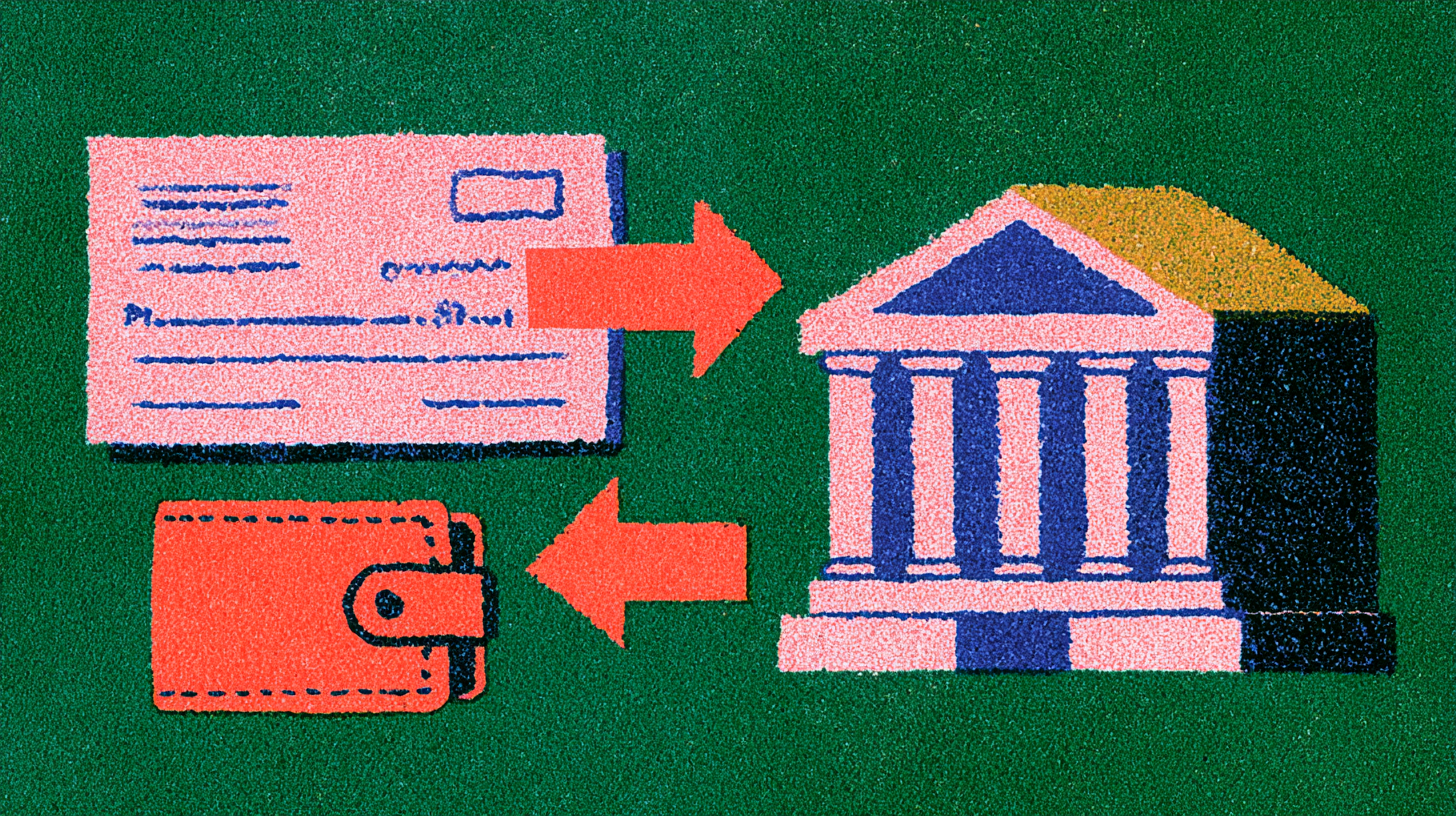
Financial Education
Direct deposit vs wire transfer: comparison guide for U.S. immigrants
8 min de lectura
Direct deposit vs wire transfer: comparison guide for U.S. immigrants
These payment methods are both available in the U.S. but they are often used for different purposes. Direct deposit is commonly used for paychecks, tax refunds, and government benefits, while wire transfers are more often used for urgent or high-value transfers between financial institutions.
Understanding the difference between direct deposit and wire transfers can help you avoid unnecessary fees, choose the right payment method for your situation, and manage your money more confidently.
What's the difference between direct deposit and wire transfer?
The biggest difference is the purpose they serve. Direct deposit is commonly used for recurring payments such as salaries, benefits, and tax refunds. Wire transfers are commonly used to move money quickly between financial institutions, particularly for large or time-sensitive transactions.
| Feature | Direct deposit | Wire transfer |
|---|---|---|
| Common use | Paychecks, benefits, tax refunds | Large or urgent transfers |
| Network used | ACH network | Wire transfer network |
| Speed | Typically 1–3 business days | Often same day or next business day |
| Typical cost | Often no fee to receive | Fees may apply |
| International transfers | Limited | Commonly used |
| Recurring payments | Yes | Less common |
| Setup required | Routing + account number | Bank details + recipient information |
How direct deposit works
Direct deposit is one of the most common payment methods in the United States, particularly for employees receiving wages from an employer. Instead of issuing a paper check, an employer sends the payment electronically to the employee's bank account through the ACH network.
To set up direct deposit you need to provide your employer: your bank's routing number and your personal account number.
How wire transfer works
A wire transfer is an electronic transfer of funds between financial institutions through secure financial networks like Fedwire or SWIFT. Unlike direct deposit, wire transfers are better suited for large one-time payments, urgent payments, real estate transactions, or international transfers.
When to use each one
Use direct deposit for:
- Receiving your paycheck
- IRS tax refunds
- Social security or unemployment benefits
- Recurring business payments
Use wire transfer for:
- Real estate payments (down payment, closing)
- Urgent international transfers
- High-value business payments
- When the recipient specifically requires a wire transfer
How to set up direct deposit with Común
With your Común account, you can set up direct deposit by providing your Común routing number and account number to your employer. Your Común account has unique routing and account numbers available in the app. Visit comun.app to learn more.
FAQ
Is direct deposit faster than wire transfer?
Not necessarily. Domestic wire transfers can be faster (same day), while direct deposits usually take 1-3 business days. However, many accounts offer early access to direct deposits up to 2 days early.
How much does it cost to set up direct deposit?
Setting up direct deposit is generally no fee. Employers use the ACH network to send payroll electronically at no charge to the employee.
Común is a financial technology company and not a bank. Banking services are provided by Community Federal Savings Bank, Member FDIC.






Thousands of immigrants are already achieving more with their money. You can too.
Comun is a financial technology company and not a bank. Banking services are provided by Community Federal Savings Bank; Member FDIC. The Comun Visa® Debit Card is issued by Community Federal Savings Bank, pursuant to a license from Visa U.S.A Inc. and may be used everywhere Visa Cards are accepted.
Comun is a fintech company and not a bank or licensed money transmitter.
* Results may vary. For a complete list of eligible IDs and application requirements, follow this link.
^ No minimums, no maintenance fees. ATM or transfer fees may apply. See app for fee details.
‡ Direct deposit funds are typically available when we receive the payment file, up to two days before the scheduled payment date. This early availability is not guaranteed.
** A service provided by Service UniTeller, Inc. Service UniTeller, Inc. is licensed in all states that require a license. Remittance fees start at $2.99 but may vary. Please check the app for more details. Comun Inc. may earn revenue from the conversion of foreign currencies.
† Funds in your account are FDIC insured up to $250,000 by ownership category through Community Federal Savings Bank (CFSB), Member FDIC, in the event CFSB fails.