Financial Education
Direct deposit vs wire transfer: comparison guide for U.S. immigrants
What is the difference between direct deposit and wire transfer? Learn when to use each, their costs, speeds, and how to set up direct deposit with your Común account.
8 min read

17 Jul 2026
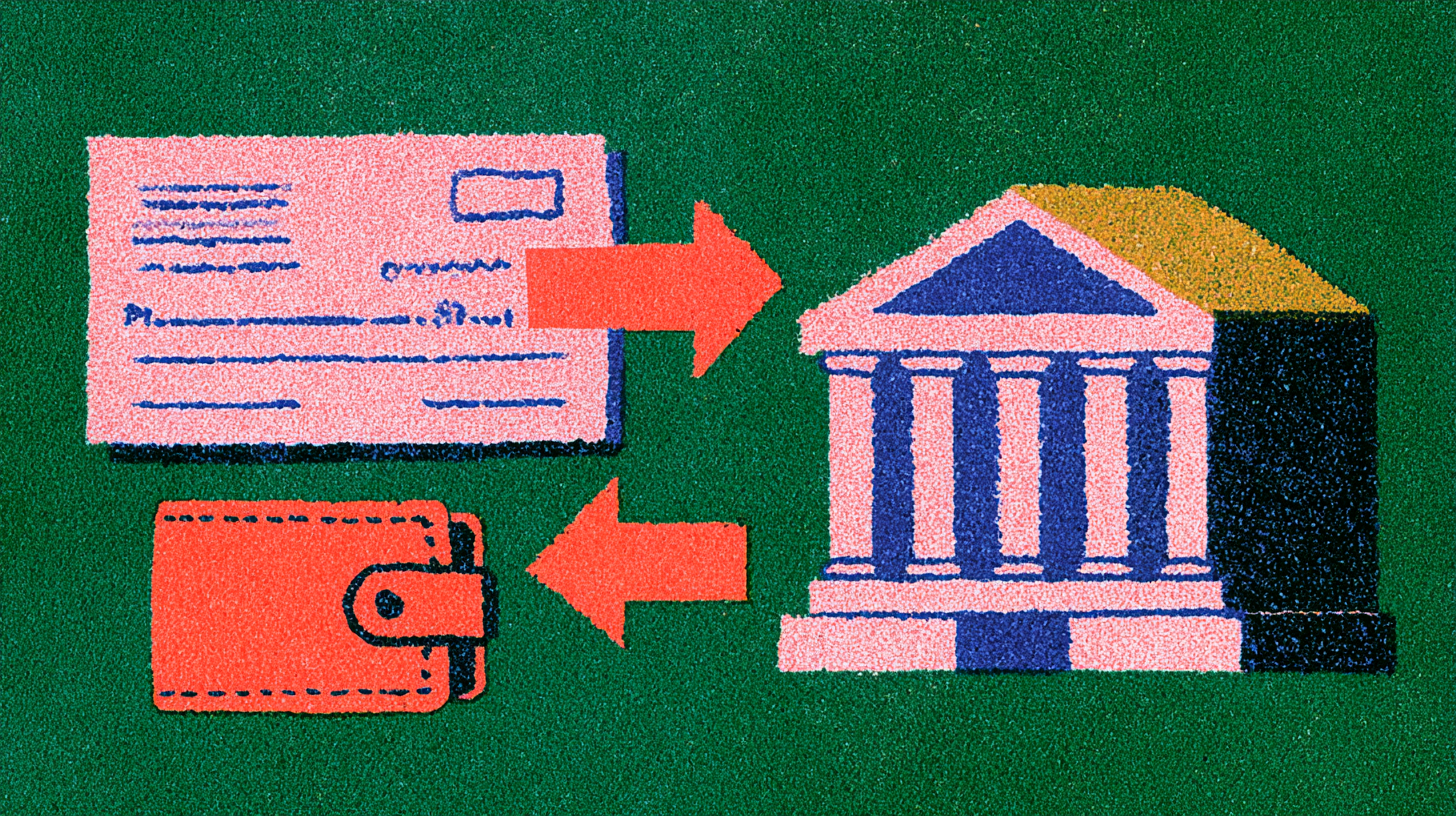
Direct deposit vs wire transfer: comparison guide for U.S. immigrants
These payment methods are both available in the U.S. but they are often used for different purposes. Direct deposit is commonly used for paychecks, tax refunds, and government benefits, while wire transfers are more often used for urgent or high-value transfers between financial institutions.
Understanding the difference between direct deposit and wire transfers can help you avoid unnecessary fees, choose the right payment method for your situation, and manage your money more confidently.
What's the difference between direct deposit and wire transfer?
The biggest difference is the purpose they serve. Direct deposit is commonly used for recurring payments such as salaries, benefits, and tax refunds. Wire transfers are commonly used to move money quickly between financial institutions, particularly for large or time-sensitive transactions.
| Feature | Direct deposit | Wire transfer |
|---|---|---|
| Common use | Paychecks, benefits, tax refunds | Large or urgent transfers |
| Network used | ACH network | Wire transfer network |
| Speed | Typically 1–3 business days | Often same day or next business day |
| Typical cost | Often no fee to receive | Fees may apply |
| International transfers | Limited | Commonly used |
| Recurring payments | Yes | Less common |
| Setup required | Routing + account number | Bank details + recipient information |
How direct deposit works
Direct deposit is one of the most common payment methods in the United States, particularly for employees receiving wages from an employer. Instead of issuing a paper check, an employer sends the payment electronically to the employee's bank account through the ACH network.
To set up direct deposit you need to provide your employer: your bank's routing number and your personal account number.
How wire transfer works
A wire transfer is an electronic transfer of funds between financial institutions through secure financial networks like Fedwire or SWIFT. Unlike direct deposit, wire transfers are better suited for large one-time payments, urgent payments, real estate transactions, or international transfers.
When to use each one
Use direct deposit for:
- Receiving your paycheck
- IRS tax refunds
- Social security or unemployment benefits
- Recurring business payments
Use wire transfer for:
- Real estate payments (down payment, closing)
- Urgent international transfers
- High-value business payments
- When the recipient specifically requires a wire transfer
How to set up direct deposit with Común
With your Común account, you can set up direct deposit by providing your Común routing number and account number to your employer. Your Común account has unique routing and account numbers available in the app. Visit comun.app to learn more.
FAQ
Is direct deposit faster than wire transfer?
Not necessarily. Domestic wire transfers can be faster (same day), while direct deposits usually take 1-3 business days. However, many accounts offer early access to direct deposits up to 2 days early.
How much does it cost to set up direct deposit?
Setting up direct deposit is generally no fee. Employers use the ACH network to send payroll electronically at no charge to the employee.
Común is a financial technology company and not a bank. Banking services are provided by Community Federal Savings Bank, Member FDIC.
About Común
Común aims to support the Latino community in the United States. It offers a debit account that can be opened with more than 100 valid Latin American IDs and an app available in Spanish.
Visit Común's website or download the app for free to learn more about the full offer and applicable terms.
Olivia Rhye
Community Partner

Checking account
How to Deposit Money Into Someone Else's Bank Account
8 min de lectura
Understanding the Basics
In today's connected world, being able to deposit money into someone else's bank account is a valuable skill. Whether you're helping a friend in need, managing household expenses, or running a business, understanding the ins and outs of transferring funds safely is essential. Bank-to-bank transfers are a popular method for moving money from one bank to another, using external transfer features on bank and credit union websites as viable options for these services. Comparing bank-to-bank transfers with other methods, like wire transfers and money transfer apps, is crucial, since there may be fees and limits to consider.
Different Methods of Depositing Money
There are many ways to deposit funds into someone else's bank account, including knowing the recipient's bank account details for electronic transfers, which is crucial for a smooth transaction:
- Cash Deposits: Making a cash deposit directly at a bank branch is straightforward, but it may be subject to limitations or restrictions due to security policies.
- Bank-to-Bank Transfers: Online bank transfers or wire transfers between bank accounts are commonly used for larger or urgent transfers.
- Third-Party Services: Using money transfer apps like Venmo, Apple Cash, and PayPal is a popular and easy way to send money electronically, instantly. These apps require users to create an account, link a payment source like a bank account or card, and make sure the recipient has an account with the same app — offering a convenient solution for quick transfers between people.
- Checks: Depositing a personal or cashier's check can be safer when transferring significant amounts.
This section can cover the benefits of each method, like minimum direct-deposit amounts or possible wire transfer fees, and expected timelines, from the same business day to a few business days for processing.
Step by Step: Depositing Cash and Checks
Depositing money into someone else's bank account can be essential for several reasons. People often need to transfer funds to pay rent, help family members, or settle bills directly into someone else's account. This process, which involves transferring money directly into someone else's bank account, usually through ACH transfers or wire transfers, is legal and regulated to prevent issues like money laundering. It's crucial to have accurate details like the recipient's bank account number and routing number. By following these detailed steps, you can make sure your transactions run smoothly and securely.
To deposit cash or a check, follow these steps:
- Gather the Necessary Information: Get the correct person's account number and financial institution details.
- Visit the Bank: At the bank branch, fill out a deposit slip with the recipient's account number and the cash or check amount.
- Verification: Some banks may require ID, especially if you're depositing into someone else's account.
- Receipt: Always get a receipt as proof of the cash deposit or check deposit, making sure the funds reach the recipient's bank account.
Online Transfers and Mobile Payments
Using online or mobile banking to deposit money offers convenience and speed. Here's how to use these platforms effectively:
- Setup: Make sure both parties have active online accounts. This may involve linking a debit card or setting up a mobile banking app.
- Complete the Transfer: To transfer money, use the recipient's bank account details or use various electronic methods, including apps like Venmo, PayPal, Zelle, or Western Union, for a seamless transaction experience.
- Confirmation: Both the sender and recipient should receive confirmation that the money has been deposited into the recipient's savings or checking account.
Privacy and Security Considerations
When sending money to someone else's bank account, keep these privacy and security measures in mind:
- Verify the Details: Double-check the recipient's account details, including the bank account number and routing number.
- Security Protocols: Use secure networks for online transactions to prevent data breaches.
- Monitor Transactions: Regularly review your bank statements to quickly catch any unauthorized transactions. Keep in mind the legal aspects and financial institutions' policies related to depositing money into someone else's account.
This is a process that can be mastered with careful attention to detail and security. By following the steps outlined above, you can make sure your money transfers are effective and secure. Remember, the key to successful financial transactions lies in thorough preparation and vigilant monitoring, making sure every transaction strengthens trust and security in our financial systems.

Legality and Compliance
Banks are legally required to report certain types of transactions to regulatory bodies to prevent and monitor illegal activity like money laundering. In the United States, for example, financial institutions must file a Currency Transaction Report (CTR) for cash transactions exceeding $10,000 in a single business day. Similarly, suspicious activity that may not meet CTR criteria but is unusual or has no apparent legal purpose must also be reported through Suspicious Activity Reports (SARs).
For depositors and recipients, this means any large transaction could lead to additional scrutiny. It's important for both parties to keep records of the source of funds and the purpose of the transaction, since these could be required in an investigation or audit. Being aware of these requirements helps ensure both parties maintain transparency and avoid unintentional legal complications.
Legal Implications of Transferring Money on Behalf of Others
When transferring money on behalf of others, individuals take on significant responsibilities and should be aware of the legal framework governing such activities. The main legal concern here is the risk of inadvertently engaging in unauthorized financial practices, such as operating as an unlicensed money transmitter, which can carry severe penalties, including fines and imprisonment. It's crucial to have clear agreements and records when handling financial transactions for someone else, particularly in business or caregiving scenarios.
Additionally, transferring money on behalf of others can expose a person to fraud risks. If funds are misused, both the person handling the transaction and the recipient could face legal action or financial losses. It's advisable to use documented methods and formal channels to transfer money to protect against misunderstandings or fraud, ensuring funds are used for their intended purpose.
Guidelines for International Transfers
International transfers aren't just more complex because of the involvement of multiple financial systems — they also come with stricter compliance measures. When sending money abroad, regulations from both the sender's and recipient's countries must be considered. Compliance requirements may include providing additional identification, disclosing the source of funds, and detailing the purpose of the transfer.
Currency conversion rates and fees are also significant factors in international transfers. Exchange rates can vary considerably depending on the financial institutions or services used, which could affect the amount received on the other end. Additionally, international wire transfers are subject to regulations like those imposed by the Office of Foreign Assets Control (OFAC) in the U.S., which can block transactions involving specific countries, individuals, or entities.
Understanding these guidelines helps ensure international money transfers run smoothly and legally, minimizing the risk of delays or legal issues and ensuring compliance with global regulatory standards.
Send Money to Your Home Country Safely⁴
Send money abroad with peace of mind with your Común account¹
Open your account in 3 minutes!
Conclusion
Depositing money into someone else's account is a process enriched with various methods, legal considerations, and practical steps to ensure safe and secure financial transactions. There are various methods, legal considerations, and practical steps to ensure safe and protected financial transactions when depositing money into someone else's account. Whether you choose to deposit cash at a bank branch, use online transfers, or make mobile payments, understanding the ins and outs of each method is crucial for effective money management.
This article has explored the legal frameworks that protect these transactions and the compliance measures needed for both domestic and international transfers, giving you the knowledge to navigate this space with confidence. Remember, the key to successful financial transactions lies in thorough preparation and vigilant monitoring, making sure every transaction strengthens trust and security in our financial systems. With this knowledge, you're well-equipped to handle the responsibilities of depositing money into someone else's account efficiently and ethically.
Financial Education
What is a wire transfer? A complete guide for 2026
8 min de lectura
What is a wire transfer? A complete guide for 2026
A wire transfer remains one of the most widely used methods for moving large amounts of money quickly through financial institutions. It is commonly used for urgent transactions, high-value payments, or international bank transfers that often involve additional verification procedures and transaction monitoring.
According to Federal Reserve Fedwire statistics, around 209.9 million wire transfers were processed in 2024, an 8.6% increase compared to the previous year.
What is a wire transfer?
A wire transfer is an electronic transfer of funds between financial institutions through secure financial networks. Wire transfers are commonly used for: sending large amounts of money, urgent domestic payments, international bank transfers, real estate transactions, business payments, emergency family transfers.
How long does a wire transfer take?
| Transfer Type | Typical Delivery Time |
|---|---|
| Domestic wire transfer | Same day or within hours |
| International wire transfer | Typically 1–5 business days |
| ACH transfer | Typically 1–3 business days |
| Remittance app transfer | Typically in minutes to 2 days |
How much does a wire transfer cost in 2026?
| Transfer Type | Average Cost |
|---|---|
| Domestic outgoing wire | $15–$35 |
| International outgoing wire | $35–$75 |
| Incoming international wire | $10–$20 |
| Exchange rate markup | 1%–4% depending on the provider |
Fees and exchange rate markups vary by bank, destination country, transfer amount, intermediary institutions, and payment method. Always review the total transfer cost before sending money internationally.
Advantages and disadvantages of wire transfers
Advantages:
- Speed for time-sensitive payments
- Higher transfer limits
- Secured financial infrastructure
- Useful for international banking
Disadvantages:
- Higher costs
- Transfers are difficult to reverse
- More banking information is required
- Longer processing for international transfers
Wire transfer vs. money transfer apps
| Feature | Wire Transfer | Digital Remittance App |
|---|---|---|
| Typical use | Large or time-sensitive transfers | Regular family or friend remittances |
| Average cost | Typically $15–$75 transfer fees | Usually lower — flat fees or 0.48%–1% |
| Speed | Same day to several days | Typically in minutes to 2 days |
| Currency conversion | Bank-set rate, markup typically 1–4% | Near mid-market rate, markup 0–1.4%, shown upfront |
| Setup process | More banking details required (routing, SWIFT/IBAN) | Usually app-based, quick mobile signup |
| Best for | High-value or business payments | Frequent personal transfers |
FAQ
Can I make a wire transfer without a bank account?
In general, wire transfers require both parties to have bank accounts. For transfers without a bank account, consider alternatives like remittance apps.
Is a wire transfer safe?
Yes, wire transfers use regulated banking systems with transaction records and tracking. However, they are difficult to reverse if incorrect information is entered.
When should I use a wire transfer instead of an app?
Wire transfers make sense for high-value, urgent, or institution-required payments. For regular remittances to family, digital apps typically offer lower cost and more convenience.
Común is a financial technology company and not a bank. Banking services are provided by Community Federal Savings Bank, Member FDIC. Remittance service provided by Service UniTeller, Inc.
Financial Education
Wire Transfers, ACH, and Other Money-Transfer Methods
8 min de lectura
ACH transfers are electronic bank transfers within the U.S., commonly used for payroll deposits and payments between accounts. With Común, receiving an ACH transfer is at no cost, and it usually takes 3–5 business days.
The ability to transfer money efficiently and securely is a cornerstone of economic interactions. This article explores the range of electronic transfer methods available today, comparing and contrasting wire transfers, Automated Clearing House (ACH) transfers, and other prevalent money-transfer mechanisms. By understanding the nuances of each international transfer method, from international money transfers to peer-to-peer platforms, individuals and businesses can navigate the complexities of financial transactions with confidence.
Wire Transfers: Speed and International Reach
Wire transfers stand out as a testament to the enduring value of fast, secure international money movement. Valued for their reliability, wire transfers allow individuals and businesses to transfer funds directly between bank accounts across the globe. The defining feature of wire transfers is their rapid processing, crucial for time-sensitive transactions. They leverage the vast international network of a financial institution, making it possible to send money to almost any country.
However, the efficiency and security of wire transfers come at a cost. They are generally associated with higher fees compared with other transfer methods, both for the sender and, occasionally, the recipient. These transactions also require the provision of precise and complete recipient bank details, including the bank name, account number, and routing numbers, ensuring that funds reach the intended destination without delays.
Despite the cost, the unmatched speed and security of wire transfers make them the preferred choice for large international transactions, where the assurance of timely and safe delivery outweighs the expense. Whether for business dealings, purchasing property abroad, or sending emergency funds, wire transfers offer a reliable solution, backed by the reputation and regulatory framework of traditional financial institutions.
ACH Transfers: Domestic Efficiency and Low Cost
The Automated Clearing House (ACH) network offers an efficient and economical alternative for domestic money transfers. ACH transfers encompass both direct deposits and direct payments, including payroll, government benefits, and bill payments. Unlike wire transfers, ACH transfers are processed in batches, which can lead to slower delivery speed, typically a few business days. However, the lower fees associated with ACH transfers make them an attractive option for routine domestic transactions. ACH transfers and wire transfers, while often mentioned together, serve distinct needs based on the urgency and geographic scope of the transaction.
The versatility of the ACH network extends beyond simple cost savings, providing a framework for a wide range of transactions beyond conventional check deposits and bill payments. This includes, but is not limited to, person-to-person (P2P) payments, business-to-business transactions, and even government-to-citizen payments such as tax refunds.
In addition, the arrival of same-day ACH processing marks a significant improvement in transaction speed, addressing one of the few drawbacks traditionally associated with remittance transfers through this method. Despite this advancement, the inherent delay in batch processing still makes ACH transfers less suitable for urgent transactions, positioning them as a preferred method for planned recurring payments where cost efficiency outweighs immediate fund availability.
The Rise of Digital Convenience:
Two methods stand out for their distinct approaches and unique benefits: person-to-person (P2P) transfers and traditional transactions at both banks and credit unions, and banks. P2P platforms like PayPal, Venmo, Cash App, and Google Pay have revolutionized the way we think about money transfers, offering a level of convenience and accessibility that aligns with the demands of the digital age. These platforms cater to a generation that values speed, simplicity, and the ability to transact on the go using only a smartphone. On the other hand, credit unions and banks represent the backbone of traditional financial transactions, providing a full suite of services ranging from everyday banking needs to complex international wire transfers.
Person-to-Person Transfers
As mentioned, platforms like PayPal, Venmo, Cash App, and Google Pay have become indispensable in the digital era, democratizing the process of sending and receiving money. These apps excel in user convenience, enabling transactions with just a smartphone. Linked to one’s bank account or debit card, they facilitate both domestic and, increasingly, international transfers.
While often free for basic services, they may charge small fees for instant transfers or currency exchange-rate conversion. The appeal of P2P platforms lies in their simplicity and the ability to transfer funds without needing the recipient’s banking details, only their phone number or email address.
Credit Unions and Banks: Traditional but Reliable
Credit unions and banks remain the backbone of the money-transfer ecosystem. Offering a range of services from direct deposits to international wire transfers, these institutions provide a secure, if sometimes more expensive, way to move funds. The choice between a bank and a credit union often comes down to the nature of the transaction—credit unions may offer lower fees and better exchange rates for their members, while banks might provide more comprehensive services for international and business transfers. Regardless of the choice, ensuring the transaction is completed with a reputable institution is paramount.
Deciding Between Money-Transfer Apps: Key Considerations
When comparing money transfer apps, several key factors should be considered to ensure the decision aligns with your personal or business financial needs. Here are the essential aspects to evaluate:
- Fees: Compare the associated costs for sending or receiving money, including fees for instant transfers or foreign-currency conversion charges.
- Transfer Limits: Check the maximum and minimum amounts you can send, as platforms vary widely in their limits.
- Geographic Availability: Not all apps are available in every country or support international transfers. Make sure the app meets your geographic requirements.
- Security: Investigate the security measures in place, such as encryption and fraud protection, to safeguard your financial information.
- User Experience: Consider the app’s ease of use, customer support availability, and any additional features such as bill splitting or social functionality.
- Delivery Speed: While some apps offer instant transfers, others may take a few business days. Choose based on how quickly you need the funds to be available.
- Exchange Rates and Currency Options: For international transfers, evaluate the exchange rates offered and which currencies are supported.
Común- Banking designed for your life in the U.S.
Open your bank account¹ in 3 minutes with your country ID²
By carefully considering these factors, users can select a money transfer app that best suits their financial transactions, balancing convenience, cost, and security. Whether sending money to a friend domestically or managing international business transactions, the right money transfer app can make all the difference in achieving a smooth and efficient money-transfer experience.
Emerging Technologies and Financial Innovations
The financial sector continues to evolve, with emerging technologies and innovations offering new ways to transfer money. Blockchain technology, for example, has given rise to cryptocurrencies, which promise faster international transfers without the need for traditional banking infrastructure. However, these methods come with their own set of challenges, including volatility and regulatory uncertainty. As these technologies develop, they may offer viable alternatives to traditional and electronic fund-transfer methods. Some developments include:
- Decentralized Finance (DeFi) Platforms: These platforms are reshaping financial transactions by enabling peer-to-peer lending, borrowing, and investing without traditional intermediaries, using blockchain technology to ensure security and transparency.
- Smart Contracts: These self-executing contracts with the terms of the agreement directly written into code can automate and secure the execution of financial transactions, reducing the need for intermediaries and increasing efficiency and trust.
- Digital Wallet and Mobile Payment Integration: Integrating digital wallets with mobile payment systems is streamlining the process of making transactions, making them more seamless and accessible, and is poised to reduce reliance on physical bank cards and cash even further.
Conclusion
The world of money-transfer methods is diverse, each with its own set of advantages, disadvantages, and best-use scenarios. From the rapid international reach of wire transfers to the domestic efficiency of ACH transactions and the convenience of money transfer apps, the choice of method depends on the specific needs of the transaction, including speed, cost, and geographic reach. As financial technologies continue to evolve, staying informed about these methods will enable individuals and businesses to make the best decisions for their money-transfer needs, ensuring that funds are transferred securely, efficiently, and cost-effectively.
What is an ACH transfer?
It's a type of electronic transfer that moves money between U.S. bank accounts, commonly used for payroll, bill payments, and transfers between banks.
How do I receive an ACH transfer into my Común account?
Use your account and routing number, found inside the app, to receive ACH transfers directly into your account. It's at no cost.
How long does an ACH transfer take?
Generally 3–5 business days. If you need your paycheck faster, direct deposit has no limit and is usually available sooner.
Frequently asked questions
Does receiving an ACH transfer in Común cost anything?
No, receiving ACH transfers into your Común account is at no cost.
What's the ACH transfer limit with Común?
Up to $1,000 per day and $10,000 per month.
Where do I find my account and routing number to receive an ACH transfer?
Both are available inside the Común app.
Is direct deposit faster than an ACH transfer?
Yes, direct deposit has no limit and is usually available faster than a standard ACH transfer.
Can I send money via ACH from my Común account to another bank?
The app shows you the transfer options available based on your account type.
What's the difference between ACH and a wire transfer?
ACH is usually free but slower (3–5 days); a wire transfer is generally faster but may have a fee.

Financial Education
What is ACH and why is it important for sending and receiving money in the U.S.?
8 min de lectura
If you need to make bank transfers in the United States, it will be useful to know what the ACH network is and understand its importance in the country’s banking system.
ACH (Automated Clearing House) is an Automated Clearing House that handles the processing of electronic transfers between U.S. accounts.
It is highly relevant for receiving direct payroll deposits, also known as ACH credits, and for processing recurring payments, due to several advantages compared to the traditional bank network, such as cost reduction and traceability of operations.
According to official sources, in 2024 the ACH payment network processed around 33.6 billion electronic payments, with a value close to $86.2 trillion, underscoring the importance of this method in the U.S. financial system.
On this occasion, we will explain in detail the advantages of this type of transaction and provide some recommendations so you can get the most out of them.
What is ACH and how does it work?
ACH or Automated Clearing House is a network that allows money to move between banks, credit unions, and other financial institutions in the United States, where the use of cash or checks is not necessary, because everything is processed electronically.
The central part of this system is NACHA (National Automated Clearing House Association), which oversees compliance with the rules and ensures transfers are carried out according to established security standards.
It is very likely that in your daily life you have already used the ACH system without noticing it. For example, for:
- Payroll deposits: every time you receive your salary in your bank account.
- Bill payments: to pay basic services such as electricity and internet automatically.
- Transfers between people: when you make an electronic transfer to a friend or to your own accounts.
Differences between ACH payments and other transfer methods
In the United States, there are different systems for moving money. In addition to the ACH network, you can rely on more traditional networks such as wire transfers and checks.
The main difference with other bank transfer systems is that ACH focuses on electronic, secure, and low-cost payments, which take longer than other options that tend to be more expensive; whereas ACH transfers are more suitable for recurring payments and direct deposits.
Below, we show you a comparative table so you can visualize the fundamental differences between ACH payments and other methods.
| ACH | Wire transfer | Check | |
|---|---|---|---|
| Transaction speed | From 1 to 2 business days | From minutes to hours | From 2 to 5 business days |
| Cost per transaction | Free or reduced | Variable, around $25 to $50 USD | There may be issuance costs |
| Geographic availability | Only within the United States | National and international | National and sometimes international |
| Most common use | Payroll payments, bills, transfers between accounts, automatic payments | Transfers of large amounts of urgent money | Traditional payments between people without access to a bank account |
Benefits and some recommendations when using ACH payments
One of the main advantages of ACH payments is the security involved in using this system to transfer money. This is because it is regulated by an organization called NACHA, which verifies each transaction based on financial system regulations, thereby reducing the chances of fraud.
Despite the trust that ACH transfers provide, they also present some limitations.
These are the most common benefits and limitations of the ACH system:
Benefits
- It is the lowest-cost method of transferring money, as transactions are free or have minimal fees
- Transactions are protected by NACHA regulations, which guarantees their security
- It is a system well-suited for processing recurring payments and subscriptions
- It is easy to track operations, because all are recorded in the banking system
Limitations
- Transactions take longer to complete. Generally, they are reflected the next day or up to two business days later
- International money transfers cannot be made, only within the United States
- Some banks may set daily limits, so it is not advisable for moving large amounts of money
If you need an alternative for making recurring payments and direct deposits to a bank account within the United States, the ACH network is a popular alternative due to its security standards and accessibility. But if you are looking for other types of financial services, you can consider more comprehensive options.
At Común we make your ACH payments easier
As you can see, ACH payments are a reliable option for making and receiving money transfers, as long as they are scheduled transactions within the United States and within the limits set by banks.
It is very important to have a reliable and transparent partner to move your money and manage your personal finances in a comprehensive and efficient way.
Meet Común, the platform that integrates the ACH network for direct deposits, payments, and transfers, and uses a service that has clear and visible rates in the mobile app.
Discover everything Común offers you!
- Open your account with a qualified official ID from your country of origin—we accept more than one hundred of them!
- Get a debit card and make purchases easily
- Deposit cash at hundreds of locations near you
- Make international money transfers for a fee starting at $2.99 USD, up to the available limits
- Be part of a service that speaks your language and understands the needs of immigrants working in the United States
Don’t wait any longer—open your account at Común!
Frequently Asked Questions (FAQ)
If you have questions about what ACH is and what it is for, consult our Frequently Asked Questions section.
How long does an ACH transfer take?
Generally, ACH transfers take 1 to 2 business days. It is also possible they are completed the same day if the bank offers the same-day ACH option.
How much does it cost to send money via ACH?
ACH transfers are usually free up to the applicable limits. Some banks charge a minimal fee, around $3 USD. It is a more economical option than a wire transfer, which can cost more than $50 USD.
Is it safe to use ACH for personal payments?
Yes, ACH transfers are regulated by the NACHA system, so they are easily traceable and protected with anti-fraud security measures.
Can I use ACH if I don’t have a bank account in the U.S.?
No, to send money through the ACH system you need an account number from a U.S. bank or credit union. Otherwise, you can resort to more accessible alternatives such as Venmo, PayPal, and Común.
What is an ACH payment?
An ACH payment is a money transfer processed through the ACH system and managed by NACHA (National Automated Clearinghouse Association).
What is a wire transfer?
A wire transfer is a payment method that allows money to be moved from one bank to another electronically, both nationally and internationally.

Community
How to Make a Bank Transfer Online | Común Guide
8 min de lectura
One of the great advantages of having an online account is being able to make bank transfers more quickly, easily, and securely. A bank transfer online is the sending of money from one account to another over the internet. You can do it by ACH (1-3 days, free), Zelle (instant, free), or wire transfer (same day, $15-$45). You only need the recipient’s account number or their phone/email if you use Zelle.
What is an online bank transfer?
An online bank transfer is the instruction you give your bank to move money from your account to another person’s or entity’s account, using digital channels (mobile app or website). There are several types of transfers, each with different speed, cost, and limit characteristics.
What types of bank transfers exist?
ACH Transfer
This is the standard method in the U.S. for transferring money between banks through the ACH (Automated Clearing House) payment network. It is free at most banks and funds arrive in 1-3 business days. Ideal for regular, non-urgent payments.
Zelle
An instant payment service between users of participating banks in the U.S. Transfers are free and instant (minutes). You only need the recipient’s phone number or email.
Wire Transfer
A direct transfer between banks domestically or internationally. It is the fastest method for large amounts (it can be same-day if initiated before the cutoff time). Typical cost: $15-$45 at traditional banks. Requires the recipient’s account number and routing number.
How do you make an online bank transfer step by step?
- Log in to your bank’s app or website
- Go to the "Transfers" or "Payments" section
- Select the type of transfer (ACH, Zelle, wire)
- Enter the recipient’s details: name, account number, and routing number (for ACH/wire) or phone/email (for Zelle)
- Enter the amount and date (immediate or scheduled)
- Review all details and confirm
- Save the transaction receipt
How much money can I transfer?
Limits vary by bank and account type. For ACH transfers, most banks allow between $1,000 and $10,000 per day for new users. With Zelle, the limit is set by your bank (Bank of America: $3,500/day; Wells Fargo: $2,500/day). Wire transfers typically have higher limits (up to $100,000 or more). For international transfers, limits are set by each service.
Frequently Asked Questions About Online Bank Transfers
How long does an online bank transfer take?
It depends on the method. Zelle: minutes. Standard ACH: 1-3 business days. Same-day ACH (premium option): hours. Domestic wire transfer: same day if initiated before the cutoff time (generally 3-4 PM local time). International wire transfer: 1-5 business days depending on the destination country.
What information do I need to make a transfer?
For ACH or wire transfer, you need: the recipient’s full name, bank account number, and routing number (9-digit routing number). For Zelle, the recipient’s registered phone number or email is enough. For international transfers, in addition to the receiving bank’s IBAN or SWIFT/BIC, you may also need CLABE (Mexico) or other local codes.
Can I cancel a bank transfer after sending it?
It depends on the type and how much time has passed. ACH: you can cancel if the bank has not yet processed it (typically within the first few hours). Zelle: not cancellable if the recipient is already registered. Wire transfer: difficult but possible if you act immediately; the bank charges a reversal fee. Always verify the recipient’s details before confirming any transfer.
Is there a limit to how many transfers I can make per month?
Banks may set limits on the number of transactions in addition to dollar limits. Some savings accounts limit you to 6 monthly transfers (Reg D regulation, although it was suspended in 2020). Checking accounts generally do not have a limit on the number of transfers. Check your account’s specific terms.
Are online bank transfers safe?
Yes, when you use regulated platforms. Banks use SSL encryption, two-factor authentication, and fraud monitoring. However, confirmed transfers are difficult to reverse, so always verify the recipient’s details. Be wary of any urgent transfer requests from people you do not know.
What do I need to receive a bank transfer?
To receive a transfer, you need a bank account with a routing number and account number. Común gives you both from the moment you open your account, with no SSN. Share your routing number and account number with whoever is sending you money, or your phone number if it is through Zelle.
International Money Transfers
What Are Remittances and How Do They Work from the U.S.?
8 min de lectura
Do you really know what remittances are? They are international money transfers made by people living and working abroad to family members or recipients in their home country.
For Latin American immigrants living in the United States, sending remittances is a crucial matter, as is having efficient financial services that allow them to send money to their families and friends quickly, safely, and at low cost.
According to recent sources, the flow of remittances from Mexico to the United States fell 12.4% year over year, which is attributed to recent immigration measures imposed by that country. For this reason, it is important that migrants have international money transfer services that understand their needs.
Why Do People Send Remittances?
For the families of migrant workers in the United States, remittances represent much more than a simple transfer of money, as they often become the main support for millions of people in Latin America.
These Are the Main Reasons to Send Remittances:
Household expense support (rent, utilities, food)
This category includes basic expenses such as food, rent, utility payments, and everything related to daily costs, highlighting the importance of remittances for recipient families.
Education and study tools
Includes payment of tuition, school supplies, transportation, preschool fees, and computing tools such as laptops or desktop computers.
Health and family emergencies
If any family member requires specialized medical care, remittances play a central role in covering hospitalization, medications, treatments, and more.
Targeted savings (e.g., family home improvements)
It is also common for migrants to use remittances to build or renovate their family homes, thereby improving their quality of life.
Unexpected expenses during travel or temporary stays
Remittances may also be useful to cover unexpected travel expenses, related to unforeseen illnesses, flight cancellations, or unplanned charges.
How Do Remittances Work and What Options Exist?
Currently, there are several remittance service options you can rely on to send money to your relatives.
Traditional banks, such as Bank of America and Wells Fargo, allow you to make remittance transfers through their digital banking services or directly at branches.
There are also specialized sending agencies, such as Western Union, one of the most widely used and longest-standing remittance services in the United States, with a global presence in more than 200 countries.
The information that traditional banks and agencies will generally require to send money includes:
- Beneficiary’s full name
- Beneficiary’s account number
- SWIFT code
- Receiving country
- Amount and currency
Finally, you can choose digital platforms, which allow you to send money through mobile apps and, in general, offer more competitive options regarding costs and delivery times.
Común is one of these platforms, integrating the fintech experience with various benefits, such as a digital account and an easy to use mobile app, that is available in Spanish. Común accepts more than 100 qualified official IDs from your country of origin to open an account and offers different options for receiving money: into a local bank account or cash pickup. With Común, send money to your relatives for clear and competitive rates, from $2.99 USD and send up to applicable limits.
These Are the Characteristics of Each Available Remittance Sending Option:
Traditional Banks
Traditional banks are a safe option to send money through wire transfer. The advantage is that they are fully established institutions in the U.S. financial system.
However, they have certain limitations, such as high fees, which can reach 60 USD depending on the bank. Additionally, transfers also tend to be slower, taking up to 5 business days.
To access this service, it is necessary to open a bank account at a traditional U.S. bank, or resort to sending cash directly at a branch.
Money Sending Agencies
Specialized agencies for international money transfer, such as Western Union, are also a reliable alternative you can use.
However, fees are usually high and exchange rates less competitive, similar to traditional banks. Although delivery times tend to be shorter.
Digital Platforms
If you are looking for an option to make international bank transfers, digital platforms are a great option. In addition to more accessible opening requirements, they offer far more competitive fees compared to the two previous alternatives.
Remember that Común offers you a comprehensive digital platform to connect with your loved ones in a simple and fair way.
Costs, Timeframes, and How to Save When Sending Remittances
The cost of sending remittances depends on three main factors:
- Sending fee: this is the commission charged by the provider for offering its sending services. This amount varies depending on the method, amount, receiving country, and involvement of intermediaries. The fee may be variable or fixed. One option is to choose a service with a fixed fee, to avoid paying more than expected.
- Exchange rate: a common practice among remittance services is not using the real market exchange rate, but adding a margin that reduces the total amount to be received.
For example, if the dollar price is 18 Mexican pesos, and the remittance service offers it at 17.50, when sending 500 USD, the total amount to be received will be reduced by 250 pesos.
- Possible charges to the recipient: Some traditional banks may charge fees for receiving transfers from foreign countries, so it is important to also verify the recipient’s conditions.
Good Savings Practices for Sending Remittances
To ensure your family receives the maximum amount possible, we recommend following these tips.
Check if there are margins in the exchange rate
The ideal choice is a provider that uses the real exchange rate or as close as possible. Otherwise, your recipient will receive a significantly smaller amount.
Prefer fixed and transparent fees
Understanding sending fees can be confusing, since several services use ranges that vary according to numerous criteria. The recommended approach is to look for a provider that offers fixed fees and with no hidden costs.
Always compare the amount received (not just the fee)
Remember that, in addition to the sending fee, you must consider the exchange rate and how much the amount to be received is reduced after applying this margin.
Avoid data errors to prevent delivery delays
Check your recipient’s information and make sure it is written correctly.
Consider the sending time and holidays in both countries
In many cases, transfers may be delayed if they are made on weekends or on holidays in either country.
Use platforms with support available in Spanish to resolve questions quickly
It is important to choose a service capable of answering your questions in your language and understanding your needs as a migrant.
Get Ready to Start Sending Remittances with Común
Every month, millions of dollars are sent from the United States to Latin America, representing an emotional and financial bridge between immigrant families and their homes, for whom remittances are a primary source of income.
Before choosing a remittance service, don’t forget to check the total amount your household will receive, considering the fee, exchange rate, and possible receiving charges. We recommend choosing a financial solution with transparent costs, support available in Spanish, and you can open your account with qualifying official ID from your country of origin.
Discover Común, the comprehensive platform that offers you low fees, with fees starting from $2.99, and send up to the applicable limits, and support available in Spanish. Open your account today and connect with your loved ones, send them money transparently.
Frequently Asked Questions (FAQ)
What happens if I don’t claim a remittance?
Remittances usually have a validity period established by the provider. Once that period expires, the money is not lost but the transaction may be canceled. In such cases, the sender may reissue it or request a refund depending on the provider’s policies.
What is the difference between a remittance and a transfer?
The main difference between the two lies in their intended purpose. Remittances are money transfers with a personal motive, commonly used to send money to relatives in other countries, whereas the purpose of a bank transfer can vary, ranging from commercial to personal payments, among others.

Financial Education
What Is Financial Freedom and How Can You Achieve It?
8 min de lectura
What Financial Freedom Means and How to Achieve It
Financial freedom is more than a simple definition — it's a state of life many aspire to reach. It's the ability to cover all your financial needs without being tied to a conventional job. Imagine a world where your decisions aren't dictated by your financial obligations, but by your desires and passions. That's financial freedom.
In a constantly changing world, where the retirement age keeps rising and working conditions keep getting more challenging, financial freedom has become an essential goal. It provides not just economic security, but also a better quality of life, freedom of choice, and the chance to pursue personal passions and projects without restrictions.
Steps to Achieve Financial Freedom
Cutting Expenses: Taking Control of Your Personal Finances
Before you can save or invest, it's essential to understand where your money is going. Keeping a detailed record of your expenses lets you identify areas where you could potentially save. Adopting a frugal lifestyle doesn't mean sacrificing your quality of life — it means making more informed decisions about your spending.
To stay on top of your personal or family finances, it's important to create a budget and review it regularly. A budget helps you categorize your income and expenses over a period of time — usually once or twice a month — so you can identify your necessary expenses versus your discretionary or luxury spending. This makes it easier to figure out which expenses you can cut to improve your financial stability.
One of the biggest problems with not having a budget is falling into the most common mistake that keeps us from achieving financial freedom: going into debt — spending more than you earn and constantly being "in the red," a hole that's hard to climb out of as debt grows over time. The secret is living below your means: rather than adopting a lifestyle that reflects your salary or your wants, the advice from many financial experts is to live frugally and spend less than you earn. This lets you save and invest more over time.
Saving: The Foundation of Financial Freedom
Saving isn't just about setting money aside — it's a mindset and a discipline that lays the groundwork for a healthy financial life. Dave Ramsey, a well-known financial expert, has developed a series of principles and steps that have helped millions find their way to financial freedom.
Dave Ramsey is famous for his "Baby Steps," a series of seven steps designed to guide people toward financial freedom. The first step — and perhaps the most crucial — is saving $1,000 as a starter emergency fund. This fund acts as a cushion against the unexpected, keeping people from going into debt over surprise expenses.
"Not having an emergency fund is an emergency in itself" is a popular Dave Ramsey saying, and if you've ever been in an unexpected situation that required funds you didn't have on hand, you can probably vouch for how true that is. And while $1,000 doesn't sound like a lot compared to the cost of many emergencies, the point of this emergency fund is to push a person to take that first step and start building financial discipline.
Investing: Generating Passive Income
Warren Buffett, one of the most successful investors in the world, has always emphasized the importance of investing in what you know and understanding the intrinsic value of your investments. His investing philosophy, which has been the cornerstone of his success, is built on several core principles that can serve as a guide for those seeking financial freedom:
- Invest in what you know: Buffett has always been a strong advocate for investing in companies and sectors you fully understand. If you can't explain in simple terms how a company makes money, it might not be the best fit for your portfolio.
- Look for value, not price: Buffett distinguishes between the price and the value of a stock. While price is what you pay, value is what you get. His approach is based on identifying companies that are undervalued relative to their true intrinsic value and that have long-term growth potential.
- The market is volatile, but don't get swept up in the panic: Buffett compares the stock market to an unpredictable neighbor named "Mr. Market." Some days Mr. Market is optimistic and offers high prices, while other days he's pessimistic and offers bargains. Rather than getting carried away by Mr. Market's emotions, Buffett suggests staying calm and focusing on the intrinsic value of your investments.
- Long-term investing: Buffett isn't chasing quick gains. Instead, he looks for companies with lasting competitive advantages and holds them for decades. His famous quote, "my favorite holding period is forever," reflects his long-term investing approach.
- Reinvesting dividends: One of the strategies behind Buffett's success is reinvesting dividends. By reinvesting dividends, you benefit from compound interest, which can lead to exponential growth in your investment over time.
Passive income — whether through dividends, rental income, or online businesses — is essential for financial freedom. This income, which doesn't require constant direct involvement, lets your money work for you, generating regular cash flow that can support a lifestyle free from the constraints of a conventional job. Warren Buffett's investing philosophy centers on patience, education, and a deep understanding of investments. By adopting these principles and focusing on generating passive income, you can chart a path toward true financial freedom.
Conclusion
Financial freedom is an ideal that goes beyond simply accumulating wealth — it's the manifestation of a balanced life where our decisions aren't dictated by economic pressures, but by our true passions and desires. Through the discipline of saving, wisdom in investing, and understanding our finances, we can move closer to this ideal. The teachings of experts like Dave Ramsey and Warren Buffett offer us a clear roadmap toward this goal. At the end of the day, financial freedom isn't just about money — it's about living a life with purpose, security, and genuine independence. It's a journey that requires commitment, education, and constant action, but the rewards, both tangible and intangible, are invaluable.

Living in the United States
5 Apps to Earn Money Fast in the United States
8 min de lectura
Are you looking for ways to make extra money from the comfort of your home or during your free time? Thanks to technology, it is now possible with just a mobile phone and an internet connection. In this article, we present five apps that will let you earn money quickly and easily.
You can earn money from your phone in the U.S. with paid surveys (Eureka Surveys, Google Opinion Rewards), freelance work (Fiverr), selling used items (Mercari), or driving for Uber or Lyft. With Común, you can receive all of those payments in an account without SSN, without monthly fees, and in Spanish.
Eureka Surveys or Survey Pop:
1. Eureka Surveys is a platform that lets you earn money by answering surveys in minutes on your own schedule. You will accumulate points that you can redeem for gift cards or cash through PayPal.
Google Opinion Rewards:
2. Google Opinion Rewards is an app created by Google that lets you earn money by answering short surveys. For each completed survey, you will receive a reward redeemable in Google Play.
Fiverr:
3. Fiverr is a freelance services platform where you can offer your skills and knowledge in exchange for money. You can find jobs in design, writing, digital marketing, programming, and more. Remember to connect your Común account to Fiverr.
Mercari:
4. Mercari is a buying and selling app where you can sell new or used items. The app keeps a small commission for each sale made.
Uber or Lyft:
5. If you have a car and free time, you can take advantage of transportation apps like Uber or Lyft to earn extra money as a driver.
Making money quickly is easier than it seems thanks to these apps. Remember that with Común you get a free checking account and a VISA debit card with access to more than 57,000 ATMs.

International Money Transfers
Alternatives for Sending Packages to Mexico from the United States
8 min de lectura
How to Send Packages from the United States to Mexico Without Complications
Being far from family and friends is one of the main challenges faced by immigrants living in the United States. Fortunately, sending mail is a way to maintain the bond with loved ones across borders.
In the United States there are several options for sending packages to Mexico. Below we explain the features of each service so you can choose the one that best fits your budget and needs.
Main Package Delivery Services from the United States to Mexico
There are two shipping options from the United States to Mexico: through USPS or private courier companies.
United States Postal Service (USPS)
These are the main United States Postal Service (USPS) shipping services and their characteristics. Please refer to their website for the most up-to-date information.
Priority Mail Express
- Delivery prices: starting at approximately $59.50 for standard international services.
- Time: 3–5 business days.
- Main features: offers express international delivery service, full tracking and limited insurance for certain types of packages.
Priority Mail
- Delivery prices: starting at $30.90 for standard international shipments.
- Time: 6–10 business days.
- Main features: offers full tracking and moderate prices. Ideal for medium-sized packages that need to be delivered quickly.
First-Class Mail
- Delivery prices: starting at $14.05 for envelopes.
- Time: varies between 7 and 20 business days depending on customs processing.
- Main features: an economical service ideal for sending documents and envelopes. In many cases tracking is only available until the package leaves the United States.
Private Courier Companies
There are also private courier company alternatives that offer excellent service and additional shipping options. Please refer to each courier’s website for most up-to-date information.
FedEx
- Delivery prices: rates vary by package size, but they offer flat rates for packages up to 15 kilograms and an additional charge for extra weight.
- Time: 3–5 days for express service.
- Main features: international coverage with home delivery and includes customs paperwork.
UPS
- Delivery prices: variable rates depending on package size and weight.
- Time: 2–5 business days.
- Main features: online tools for quoting and tracking packages plus strong presence in the United States.
DHL
- Delivery prices: international shipments starting at $50.
- Time: 2–5 business days with express service.
- Main features: international presence, fast home-delivery service and online rate calculator.
Below is a comparison table to help you view the information more clearly.
Company
Type of Service
Estimated Cost
Average Time
USPS
Priority Mail Express
From $59.50
3–5 business days
USPS
Priority Mail
From $30.90
6–10 business days
USPS
First-Class Mail
From $14.05 for envelopes
7–20 business days
FedEx
International Express Service
Prices vary depending on size and weight
3–5 business days
UPS
International Express Service
Prices vary depending on size and weight
2–5 business days
DHL
International Express Service
Prices vary depending on size and weight
2–5 business days
Factors That Affect the Price and Delivery Time of Your Package
As seen in the previous section, it is impossible to precisely estimate the shipping cost and time for each courier service from the U.S. to Mexico. Several factors influence the final result, explained below.
Package Weight and Size
This is the main factor that affects the final cost of an international shipment — the heavier and bulkier the package, the higher the rate. Also check whether the company has a maximum shipping weight.
ZIP Code and Destination Location
The final destination also matters. Sending a package to Mexico City is usually cheaper than to a rural area.
Type of Service Selected
Express or priority shipping services are faster and therefore more expensive.
Peak Seasons and Holidays
If you ship during Christmas, New Year or high-demand dates, expect possible delays or extra costs.
What Do You Need to Send Packages from the United States to Mexico?
Before going to your preferred shipping carrier’s office, make sure all information is ready to avoid delays and ensure your package reaches your loved ones without issues.
Step 1. Check Customs Restrictions
Make sure your package does not contain restricted items for entry into Mexico, such as perishable food, flammable liquids or counterfeit goods. If unsure, check customs rules.
Step 2. Pack and Label Your Package Properly
Use a proper box or purchase one at the post office. If the contents are fragile, protect them well and place the label correctly when closing the box.
Step 3. Verify the Recipient’s Information and ZIP Code
Double-check as many times as needed that recipient details (name, ZIP code, neighborhood) are accurate. Even small errors can send a package to the wrong place.
Step 4. Keep Your Tracking Number and Shipping Receipt
Finally, keep the tracking number and receipt; they let you track the package and clarify any issues if needed.
Tips to Save Money and Time on Your International Shipments
We understand how important it is for immigrants to send packages to Mexico from the United States. More than a packaged product, it represents birthday gifts, greetings from afar, and fulfilled dreams for the people you love most.
That’s why it’s important to follow these tips when sending a package to Mexico.
- Compare prices before shipping: remember that some services offer a flat rate, but the final cost depends on weight and size.
- Avoid weekends or holidays: in addition to being more expensive, shipping may face delays.
- Take advantage of promotions or loyalty programs: stay attentive to promotions offered by postal companies.
- Group shipments whenever possible: try sending several items in the same shipment instead of one by one.
Send Packages to Mexico and Manage Your Finances with Común
Sending packages to your loved ones in Mexico is a way to show them they’re still important to you. That’s why planning your shipments—and your finances—is essential.
Get to know Común, the digital platform that helps immigrants manage their money in the most accessible way, as you can open an account using a qualifying official identification from your home country.
Just as your packages travel with care, Común supports your financial well-being.
Open your account with Común and stay connected with your loved ones through remittances.
Frequently Asked Questions (FAQ)
If you still have questions, check the following section.
How long does a shipment from the United States to Mexico take?
It depends on the courier company, but in general, an express service takes 3 to 5 business days.
How do I track my package?
When you send your package, you’ll receive a tracking number so you can follow it until it reaches its destination. Some courier options only provide tracking until it leaves the United States.
What is the most economical way to send a package to Mexico?
The USPS First-Class Package International Service is ideal for economical shipments, though the delivery time is usually longer.

International Money Transfers
How to Make International Money Transfers: Options and Costs
8 min de lectura
As the reasons for transferring money internationally increase, so do the available methods. Whether you are sending remittances to your family, paying suppliers, or receiving payments from abroad, understanding how international transfers work will help you save time and money.
What is an international money transfer?
An international money transfer is the movement of funds from a bank account in one country to another account in a different country. It can be done through bank wire transfers, specialized remittance services (Western Union, Remitly, Wise), or platforms like Común that allow you to send money to Mexico directly from the app.
How to choose the best international transfer service?
To choose the best service, consider: the total cost (visible fee + exchange rate margin), delivery speed, available delivery methods (bank deposit, cash pickup), and whether they accept your documentation. Use comparison tools like Monito to see real-time options for your specific corridor.
Main options for sending money internationally from the U.S.
Bank wire transfer
Traditional, expensive method ($25-45 per transfer), takes 1-5 business days, requires the recipient’s full bank details: account number, SWIFT/BIC, IBAN, or CLABE (Mexico).
Specialized remittance services
Wise, Remitly, and Xoom offer fees lower than 3-5%, delivery from minutes to 3 days, and multiple delivery options. Wise uses the real market exchange rate. They require an SSN or ITIN in the U.S.
Común
Común allows you to send remittances to Mexico and Latin America starting at $2.99 without requiring an SSN. Ideal for newly arrived immigrants. Options for bank deposit, cash pickup at Oxxo or Walmart.
Frequently asked questions about international transfers
What is the cheapest way to make an international transfer?
Specialized remittance apps (Wise, Remitly, Xoom) are generally cheaper than traditional banks for international transfers. Wise is known for using the real market exchange rate with transparent fees. For specific destinations such as Mexico, platforms like Común offer transfers starting at $2.99. Use comparison tools like Monito to see the best real-time options for your specific corridor.
How long does an international transfer take?
It depends on the method and destination country. International bank wire transfers take 1-5 business days. Remittance apps can be almost instant for cash pickup, or 1-3 business days for bank deposit. Factors such as time zones, bank cutoff times, and the destination country’s compliance requirements affect arrival time.
What information do I need to make an international transfer?
For an international bank wire transfer, you need: the beneficiary’s full name, the receiving bank’s name and address, the receiving bank’s SWIFT/BIC code, and the beneficiary’s account number or IBAN. For Mexico, the interbank CLABE (18 digits) is used. For remittance apps like Común, sometimes the recipient’s phone number or bank name is enough.
Are there amount limits for international transfers?
Yes. Limits vary by service and user verification level. Remittance apps typically allow between $2,999 and $10,000 per day for verified users. Bank wire transfers can be larger but cost more ($25-45 per transaction). Anti-money-laundering regulations require reporting transfers over $10,000 to the IRS (CTR form).
Do I need an SSN to send money abroad from the U.S.?
It depends on the service. Wise, Remitly, and traditional banks require an SSN or ITIN for regulatory compliance. Platforms like Común do not require an SSN — they accept a passport or consular ID — and allow you to send remittances to Mexico and Latin America starting at $2.99. This is especially useful for newly arrived immigrants who do not yet have an SSN.
Are international transfers taxable?
Sending money abroad itself does not generate taxes in the U.S. However, if the money comes from undeclared income, that is the tax obligation to address. The IRS may require reporting foreign accounts (FBAR/FATCA) if you have more than $10,000 in foreign accounts at any point during the year.
Community
What You Need to Open an Account at Común¹
8 min de lectura
Unmatched Ease of Opening an Account
Opening a checking account with Común is simple and hassle-free, addressing the barriers to financial exclusion typically faced by the immigrant community. Accepting over 100 forms of identification², including social security numbers from Latin American countries, Común ensures that immigrants have access to essential banking services. The application process is quick, taking less than 5 minutes, and is free of additional or hidden fees, minimum balance requirements or monthly commissions. This inclusiveness is central to Común's mission of fostering financial stability and growth.
Mobile Deposit Options
Común: Común offers a convenient mobile deposit feature that allows users to deposit cash at more than 88,000 locations in the United States, including major retailers such as Walgreens, Dollar General and Walmart. This extensive network ensures that users can easily find a deposit location near them, making the process of adding money to their accounts simple and hassle-free.
Traditional Banking: Although many traditional banks offer mobile deposit options, they often restrict these to check deposits through a mobile app. Cash deposits typically require a visit to an ATM or bank branch, which can be less convenient and more time-consuming than Común's extensive cash deposit network.
Utility in Today's World: In today's fast-paced environment, the flexibility to deposit cash in a wide range of accessible locations is invaluable, especially for individuals who may not have easy access to traditional banking services or who work non-traditional hours when banks are closed.
International Remittances
Común: Común excels in facilitating international remittances⁴, allowing users to send money abroad quickly and with lower fees compared to many traditional banks and remittance services. The process is enhanced with real-time notifications, keeping the sender informed from the moment the money is sent until it is received.
Traditional Banking: Traditional banks generally offer international transfer services, but these can be expensive and slow, with transfers sometimes taking several days to complete. In addition, the fees associated with traditional bank remittances can be significantly higher.
Usefulness in Today's World: In a globalized economy, the ability to send money across borders quickly and affordably is crucial. Many families rely on remittances for financial support, and businesses need efficient ways to handle international transactions. Común's streamlined and cost-effective service effectively meets these modern demands.
Advance Salary Access
Común: Común offers the ability to connect wages to the application and receive payment up to two days in advance³. This feature incurs no additional fees, providing significant relief during financial emergencies or when planning ahead.
Traditional Banking: Some traditional banks have begun to offer similar features, but they are often tied to specific types of accounts or require a minimum balance. The accessibility and ease of use of early access to Común's salary is not always matched in traditional environments.
Usefulness in Today's World: With the rise of gig economy jobs and irregular pay schedules, having early access to wages can provide a buffer against financial instability. This feature is particularly valuable for those living paycheck to paycheck, offering a cushion that can help avoid overdraft fees and late payments.
Unlike traditional banking institutions, Común's innovative features are designed to meet the needs of today's diverse and mobile population, particularly benefiting the immigrant community in the U.S. By providing services that offer greater convenience, lower costs and greater accessibility, Común not only addresses common challenges faced by its users, but also empowers them toward greater financial freedom and stability. As we move toward a more interconnected and fast-paced world, the importance of responsive and inclusive financial services continues to grow, something Común is uniquely positioned to offer.
Robust Security and Customer Support
Security and customer support are paramount at Común. With FDIC-insured accounts and Visa protection on virtual Visa debit card transactions, Común customers can manage their funds with confidence. Innovative security features such as biometric logins and instant transaction notifications keep your money safe. In addition, Común offers 24/7 customer support in English and Spanish, ensuring that help is always available in your preferred language.
Commitment to Zero Fees and Upward Mobility
Común stands out not only for offering zero fees for account opening, monthly maintenance or minimum balances, but also for its commitment to helping its users move up the financial ladder. Común acts as a financial partner, supporting financial transactions without the burden of excessive fees. This commitment aligns with the goal of enabling upward mobility for immigrants, who contribute significantly to the U.S. economy.
Customized Features and Benefits
Común goes beyond traditional financial services by offering features designed to meet the unique needs of the immigrant community. Users can send money abroad with low or no fees, deposit cash at more than 88,000 locations nationwide, including free ATM withdrawals, and connect their accounts to popular payment apps such as CashApp and Venmo. Comun's platform also allows customers to receive their paychecks up to two days early through direct deposit, further enhancing their financial flexibility and stability.
Conclusion
Común is not just a financial services provider, but a platform dedicated to transforming the banking experience for immigrants in the U.S. With its user-focused design, commitment to financial freedom and robust features, Común is destined to become a vital tool for achieving financial stability and growth for its users. Whether you are looking to manage your daily finances or send money to loved ones abroad quickly and securely, Común offers a reliable, inclusive and efficient banking solution.
Foundational Moment: Did you know?
Founded by entrepreneurs Mark Selcow and Andres Santos in New York, Común was built to empower families and enable upward mobility, particularly for the immigrant family. The company has garnered significant investment from prominent firms such as Costanoa Ventures, FJ Labs and South Park Commons, underscoring the tremendous opportunity to serve the financial needs of immigrant families and improve the lives of every individual.

Financial Education
How to Endorse a Check: Your Safe and Detailed Step-by-Step Guide
8 min de lectura
Despite the fact that digital payment methods have gained significant relevance practically worldwide, checks remain essential for carrying out certain transactions, especially for people without a banking account.
According to recent data, 61% of Americans still use checks. However, 17% have been victims of check fraud.
Knowing how to endorse a check in the United States is a necessary security measure to prevent fraud. While it can be a confusing procedure, it is crucial to understand it in order to avoid issues.
In this article, we will explain step-by-step how to correctly endorse checks, as well as the information you need to write on the back in order to cash the stated amount.
What Is a Check Endorsement and Why Is It So Important in the U.S.?
A check endorsement is a signature on the back of the check that serves as authorization for it to be cashed at a financial institution.
Its main function is to validate the cashing of the check, as well as authorize the transfer of funds, or to transfer the right to another person.
Knowing how to endorse a check is essential because it is a primary security requirement in the U.S. financial system, serving as a protection measure for the holder and the deposited funds.
What Is the Correct Way to Endorse a Check, and Where Should You Sign?
Below, we show you how to complete the endorsement before cashing checks at the bank.
Step 1: Verify the Check Details
Make sure the details on the front of the check are correct, such as the payee’s name, the amount in numbers and words, and the banking institution.
Step 2: Locate the Endorsement Area
Turn the check over and locate the statement “Endorse Here” or “Do not write below this line.” Avoid writing below the marked area.
Step 3: Sign the Check Precisely
Sign the check in the designated box, according to the type of endorsement you require. Next, we will explain everything about the different types.
But what should you do if the payee’s name is incorrect?
Example of How to Endorse a Check if the Name Is Misspelled
If the payee’s name is incorrect, you should first sign as it appears and then sign again with the corrected name.
James Smit — James Smith
Step 4: Consider a Restrictive Endorsement (Highly Recommended!)
A restrictive endorsement is a security measure to prevent an unauthorized third party from cashing the check, as it limits the form of payment to a registered banking account. It is linked to the information provided on the back of the check.
Step 5: Multiple-Payee Endorsements
If the check is made out to more than one payee, one or all may need to sign the endorsement, depending on how it is written.
- Katy Adams and Mark Palmer: Signatures from both are required
- Katy Adams or Mark Palmer: One signature is sufficient
- Katy Adams and/or Mark Palmer: Depending on the intermediary bank, one or two signatures may be required
- Katy Adams, Mark Palmer, etc.: The bank determines whether one or all signatures are necessary
Types of Endorsements: Know the Options for Your Checks
Before endorsing your check, verify which type is most suitable depending on the transaction you need to perform. For example, a restrictive endorsement is a way to secure your money, just like using modern financial alternatives such as Común, a comprehensive service that gives you access to unified and efficient financial tools.
Blank Endorsement
A blank endorsement is carried out when the same payee cashes the check in cash. In this case, only the signature in the designated area is needed.
Restrictive Endorsement
A restrictive endorsement is a security measure to ensure that the funds are deposited into a specific banking account.
To do this, you must include the statement “for deposit only to” + bank name, account number, and signature.
This is the most recommended method for Común users who make deposits via mobile, as it provides protection for the check in case of loss and ensures that the money is deposited into the designated account.
Third-Party Endorsement
If the check will be cashed by a third party, it must be endorsed as follows.
Pay to the order of: (name of another person) + signature
It is important to exercise extreme caution with this type of endorsement. Use it only with trusted individuals, and in case of theft or loss of a check, report it to the financial institution immediately.
Business Endorsement
A business endorsement is made when a check is cashed in the name of a company. This requires including the full name of the company, followed by the signature of the authorized legal representative.
Mobile Deposit Endorsement
To deposit check funds through a mobile application or mobile banking, it must be endorsed as follows:
For mobile deposit only + your signature.
Deposit your endorsed check easily and securely using Común
Cashing checks is a process that requires special care and attention in order to avoid mistakes and setbacks that could affect the transaction.
This time, we learned the importance of correctly endorsing a check in the United States, as well as the different types that exist, according to the available cashing methods.
Now that you know how to fill out a check on the back, you can rely on Común to deposit the funds through the mobile app.
Skip the lines: Deposit your check from the app; availability of funds may vary.
Común offers you the necessary security to protect your money and personal data
It is an accessible platform for immigrants in the United States; request to open your account with documentation from your country
Get customer support in English and Spanish, available 24/7
Access a comprehensive mobile app to manage your personal finances in the simplest way
Común will not only make the check deposit process easier, but it will also transform your financial life in the United States. Open your account today and find out.
Frequently Asked Questions
Is it mandatory to endorse a check in the United States?
In most cases, yes, it is necessary. If you request a deposit through an ATM or application, the bank may not require an endorsement.
What happens if I sign the check incorrectly when endorsing it?
Avoid cross-outs or scratches and endorse the check again. If the bank rejects it, ask the issuer to issue a new one.
Can I endorse a check to another person?
You can endorse a check so that it can be cashed by another person with the statement “pay to order of” along with the payee’s name. However, this process is restricted according to each bank’s specific policies.
Is it safe to deposit a check with the mobile app?
It is safe to deposit a check through the Común mobile app, as your data is encrypted and it includes other security measures such as two-step verification.
Checking account
Común Account Security: Empowering Your Financial Journey
8 min de lectura
In a world where financial stability is crucial, Común stands out as a beacon of innovation in the traditional banking industry. Partnered with trusted banks like Community Federal Savings Bank, both FDIC Members, Común offers a secure foundation¹ for managing your finances. Here's how Común is changing the game for its customers and anyone seeking financial freedom and inclusion.
Partnered With Trusted Banks for Maximum Security
Común isn't just a fintech company¹ — it's a mission-driven platform designed to enable upward mobility through financial services. When you deposit with Común, you're guaranteed the same security as a traditional bank account, with deposits insured up to $250,000¹, ensuring financial stability for you and your family.
Safe and Fast Remittances
For many immigrant families and others, sending money back home to loved ones is essential. Común makes this process safe and fast, letting you meet your financial obligations with confidence. Licensed through Service UniTeller, Inc.⁴, Común ensures your remittances reach their destination quickly, giving you a better shot at financial stability.
Real-Time Notifications and Early Access to Funds
Stay informed with instant notifications — every transaction, every sign of activity is reported to you, giving you peace of mind. Común's unique early-access-to-payroll-deposits³ feature lets you manage your cash flow effectively, turning hard work into visible results sooner.
Visa-Enabled Security Worldwide
Común's Visa® debit card¹, processed through Visa USA Inc., ensures global acceptance and trust. Whether you're shopping locally or internationally, Común's banking solutions go with you everywhere, keeping your funds safe wherever you go.
Designed for Members' Unique Needs
Común is deeply committed to financial inclusion, designing products that meet the unique needs of its members — especially those who are just starting out or who struggle to connect with traditional banking channels. From simple account setup to learning how to manage your finances, Común is with you every step of the way.
Building a Community of Trust and Mobility
Común's mission goes beyond simple banking services — it's about building a community and helping millions of people navigate the complexities of financial systems. By offering tools that help you learn and grow, Común supports your journey toward achieving financial freedom.
Conclusion: Común
Común customers aren't just opening a bank account — they're joining a community dedicated to building financial stability and shaping a future where every hardworking person deserves a shot at upward mobility. Download the Común app this week to start your journey toward financial freedom, equipped with the best tools to help you navigate, connect, and thrive.
Living in the United States
What is the Alien Registration Number (A-Number)?
8 min de lectura
Alien Registration Number or A-Number: Everything you need to know if you’re in the United States
Immigrants living in the United States should become familiar with several terms and procedures to ensure their long-term stay in the country.
One way to compile all the information related to your immigration process is through the A-Number or Alien Registration Number. This identifier is assigned by the Department of Homeland Security (DHS) to foreign nationals residing in the country.
It’s very important to know this information, as it serves as the identification number for your immigration file.
In this article, we’ll explain what the Alien Registration Number is, what it’s used for, and why it’s so important for immigration procedures.
What is the Alien Registration Number (A-Number) and what is it for?
The first step to identifying an A-Number is knowing that it always begins with the letter “A” and contains 8 or 9 digits.
The main function of this number is to allow USCIS and other agencies to quickly track immigration cases and applications related to each person.
Here are some examples of when the A-Number is used:
- To track your permanent residence (Green Card) application.
- When you apply for a work permit (EAD).
- If you apply for an adjustment of status, your A-Number will be used to link your case file.
Where can you find the Alien Registration Number, and who receives it?
To locate your A-Number, you can check several official documents issued by USCIS or DHS, such as:
- Green Card
- Employment Authorization Document (EAD)
- USCIS notices
- Immigration court orders
How to identify the A-Number
Below we break down how the A-Number appears on various official documents.
Document
Location
Permanent Resident Card
On the front, next to “USCIS#” or “A#.”
Work Permit (EAD)
On the front
USCIS Notices
In the upper corner or near the applicant’s name
Immigration court documents
At the top of the document.
This is a unique number assigned only to individuals with formal and permanent files in U.S. immigration agencies, such as:
- Permanent residents (Green Card holders).
- Refugees or asylees.
- Adjustment of status or work permit applicants.
- Individuals with open cases before immigration court.
On the other hand, temporary visitors such as tourists, students, or non-immigrant visa holders do not receive an A-Number since their cases do not require a permanent immigration file.
Why is the Alien Registration Number important in immigration procedures?
The A-Number is a central identifier used in multiple immigration procedures needed to regularize your status in the country.
Here are the most common uses of the A-Number in immigration processes.
Tracking immigration cases (USCIS Case Status)
If you want to track the status of your pending applications, such as permanent residence, work permit, or adjustment of status, you need to enter your A-Number in the USCIS Case Status system.
This way, you can know exactly which stage your case is in and stay informed of updates to ensure your process stays on track.
Updating personal information
It’s essential to keep your immigration records updated. If you change your address, phone number, or legal name, your A-Number will help you update your information.
This helps ensure you receive official notifications and avoid delays in important procedures.
Avoiding mistakes in immigration processes
Since the A-Number functions as a unique identifier, it also helps avoid confusion between applicants with the same or similar names.
Be sure to use your A-Number correctly when filling out forms or official documents so that all your information stays under the same file and saves time when searching for a document or specific information.
In short, this number helps simplify the immigration process for immigrants and provides a sense of security and control during procedures that can often cause stress and uncertainty.
What to do if you don’t have or don’t remember your A-Number
If you don’t have an A-Number, remember that USCIS assigns one once you start an immigration process in the United States. If you already have one but can’t remember it, follow these tips to locate it.
- Check your official documents, such as your Green Card, work permit, or any forms submitted to USCIS.
- Log in to your USCIS online account and check the “manage your case” section.
- Call the USCIS Contact Center at 1-800-375-5283, explain that you can’t find your A-Number, and ask for assistance locating it.
Avoid using a fake A-Number, as this could cause problems with immigration authorities.
Organize your immigration life while managing your finances with Comun
As you can see, the A-Number is essential to staying organized during immigration procedures. It helps keep your documents together in one file, making them easier to locate and reducing the risk of delays caused by mistakes.
Another important aspect of immigrant life in the U.S. is having the right tools to keep personal finances organized.
Meet Comun, the platform designed to help immigrants manage their finances with ease.
Here are some of the benefits Comun offers:
- Open an account with a qualifying official identification from your home country.
- Send money to several countries with clear and competitive fees, up to the applicable limits.
- Access support in both Spanish and English.
Want to discover a truly fair and accessible financial service? Open your Comun account today!
Just as your A-Number helps you keep your immigration documents organized, Comun helps you maintain your financial stability in the United States.
Frequently Asked Questions (FAQ)
If you still have questions, check out our FAQ section.
What is the USCIS number? Is it the same as the A-Number?
The USCIS number appears on your permanent resident card or work permit. It’s actually the same identifier as your A-Number, which appears on these documents preceded by “USCIS#.”
What is the Alien Number?
The Alien Registration Number is the official name for the A-Number assigned by DHS or USCIS to individuals who are not U.S. citizens, allowing them to track their immigration process through a unique file.
Living in the United States
Identity theft in the U.S.: protection guide for immigrants
8 min de lectura
Identity theft happens when a person uses someone else’s personal information, such as a Social Security number (SSN), Individual Taxpayer Identification Number (ITIN), or financial account information, to commit fraud. Scammers often target immigrants through fake government agencies, employment offers, and immigration-related schemes designed to collect personal information. If identity theft happens, it is important to report it quickly through IdentityTheft.gov and to follow the recommended steps that may help reduce the damage.
Identity theft can happen to anyone, regardless of their immigration status. Knowing how to recognize the warning signs, respond quickly, and protect sensitive information can make recovering from identity theft easier.
This article is for informational purposes only. If you are a victim of identity theft, visit IdentityTheft.gov for official guidance.
What is identity theft and why are immigrants frequent targets?
Identity theft occurs when another person uses someone else's personal information without permission to open financial accounts, apply for credit, file tax returns, obtain employment, or commit other forms of fraud. In many cases, victims may not discover the problem until they receive unexpected bills, notice unfamiliar activity on their financial accounts, or are denied credit they never requested.
Immigrants are frequently targeted by scams designed to collect personal information. People who have recently arrived in the United States may also be less familiar with credit reports, fraud alerts, credit freezes, or official government procedures. Fraudsters may pretend to represent government agencies, immigration services, employers, financial institutions, or utility companies. These scams often pressure people into sharing an SSN, ITIN, passport information, debit card numbers, or online account credentials.
Sharing personal information does not automatically lead to identity theft, but it can give criminals the information they need to misuse someone's identity. That is why it is important to verify who is requesting personal information before providing it and to avoid responding to unsolicited phone calls, emails, text messages, or social media messages asking for sensitive information.
Identity theft is different from a financial scam. A scam may involve convincing someone to send money voluntarily. Identity theft involves using personal information without permission to impersonate another person or commit fraud in their name. In some situations, both can happen at the same time.
What are the warning signs of identity theft?
Identity theft often develops gradually. Small warning signs may appear weeks or even months before a victim realizes someone has been using their information. Therefore, it is important to pay attention to unexpected financial or tax notices.
The following situations are some common warning signs of identity theft.
| Warning sign | What it could mean |
|---|---|
| Unexpected bills or collection calls | Someone may have opened an account in your name. |
| Denial of a loan or financial account you never applied for | Your credit history may contain fraudulent activity. |
| IRS notice about income you did not earn | Someone may be using your SSN or ITIN for tax-related fraud or employment. |
| Mail stops arriving or unfamiliar mail appears | Someone may have changed your mailing address without your knowledge. |
| Unfamiliar accounts on your credit report | Financial accounts may have been opened using your personal information. |
| Charges you do not recognize on your account statement | Someone may have gained access to your financial account or payment information. |
Not every unfamiliar transaction means identity theft has occurred. Sometimes a merchant name appears differently on an account statement, or a family member may have made a purchase. Even so, unexpected activity should be reviewed as soon as possible so any unauthorized transactions can be reported promptly.
Another important warning sign is receiving verification codes, password reset emails, or notifications about accounts that were never created. These messages can indicate that someone is attempting to access an online account or register an account using your personal information.
Checking credit reports periodically may also help identify unfamiliar accounts before they become a more serious problem. Reviewing financial statements regularly, monitoring account activity, and responding quickly to unexpected notices can reduce the amount of time fraudulent activity goes unnoticed.
Finally, you should trust your instincts when something feels unusual. Receiving repeated phone calls requesting personal information, being pressured to confirm an SSN or ITIN, or being told that immediate payment is required to avoid legal consequences are all situations that deserve additional verification before sharing any sensitive information. These tactics are commonly used by scammers to collect the personal details needed to commit identity theft.
What should you do immediately if your identity is stolen?
If identity theft is suspected, acting quickly can help limit financial losses and make the recovery process easier. The Federal Trade Commission (FTC) recommends creating a recovery plan through IdentityTheft.gov as soon as possible. The site generates personalized steps based on the type of identity theft reported.
If a financial account may have been compromised, contact the financial institution immediately to report the suspicious activity to help secure the account. Changing passwords and enabling two-factor authentication on important accounts can also help prevent additional unauthorized access.
If someone may have opened credit accounts using your personal information, consider placing a fraud alert or credit freeze with the major credit bureaus. These tools can make it more difficult for someone to open new accounts in your name.
How to report identity theft to the FTC
The Federal Trade Commission allows identity theft victims to report the incident through IdentityTheft.gov at no cost. After answering a few questions, the website creates an FTC Identity Theft Report and provides a personalized recovery plan based on the situation.
Depending on the type of fraud, the recovery plan may recommend contacting financial institutions, disputing fraudulent accounts, placing a fraud alert or credit freeze, or reporting tax-related identity theft to the IRS.
Keep copies of any letters, emails, account statements, or case numbers related to the incident. Having well-documented and organized records can make it easier to resolve disputes with creditors or financial institutions.
How to protect your SSN or ITIN from identity theft
Protecting personal information starts with sharing it only when necessary. Before providing an SSN or ITIN, verify who is requesting it, why it is needed, and whether another form of identification can be accepted.
Avoid carrying documents that display an SSN or ITIN unless they are needed for a specific appointment. Store tax documents, identification numbers, and financial records in a secure location, and shred documents containing sensitive information before discarding them.
If you save your SSN or ITIN information digitally, try to use strong, unique passwords for your online accounts and enable two-factor authentication whenever it is available. Keeping devices updated with the latest security software may also reduce the risk of unauthorized access.
How to monitor your accounts for suspicious activity
Regular account monitoring is one of the most effective ways to detect identity theft early. Reviewing account activity, checking credit reports, and paying attention to unexpected notifications can help identify suspicious activity before it becomes a larger problem.
Transaction alerts can also make monitoring easier. Común's checking account includes instant transaction notifications, helping account holders to quickly identify purchases or transfers they do not recognize. The account also supports two-factor authentication.
If an unfamiliar transaction appears, it is important for you to review it as soon as possible and contact the financial institution if the activity cannot be verified. Responding promptly may reduce the impact of unauthorized transactions and help secure the account more quickly.
With Común, eligible customers can enable instant transaction alerts and two-factor authentication directly in the app. Monitoring your account activity regularly can help you spot unfamiliar transactions and respond quickly if something doesn't look right.
Eligible customers may be able to open a Común account using a valid passport, matrícula consular or more than 100 valid Latin American IDs. The account has no minimum balance requirements or monthly maintenance fees.
FAQ
How do I know if someone stole my identity?
Identity theft often becomes noticeable through unfamiliar charges, debt collection calls, accounts you never opened, or unexpected IRS notices. Checking your financial accounts and credit reports regularly can help you identify suspicious activity sooner.
What should I do first if my identity is stolen?
Start by reporting the incident at IdentityTheft.gov. The website creates an FTC Identity Theft Report and provides a personalized recovery plan. If financial accounts are affected, contact the companies involved as soon as possible.
Can someone steal my identity using my ITIN?
Yes. Although an ITIN cannot be used for every purpose that an SSN can, it may still be misused for tax-related fraud or other identity theft schemes. Protect your ITIN just as carefully as your SSN and only share it when necessary.
Is it free to report identity theft to the FTC?
Yes. Identity theft can be reported at IdentityTheft.gov at no cost. After submitting a report, the FTC provides recovery guidance and documentation that may help resolve fraudulent accounts and credit report issues.
How long does it take to fix identity theft damage?
Recovery time depends on the type of fraud and how quickly it is reported. Some issues can be resolved within weeks, while others, such as correcting credit reports or tax-related identity theft, may take longer. Acting promptly can help reduce delays.
Should I freeze my credit if my identity is stolen?
A credit freeze is one option the FTC recommends because it makes it more difficult for someone to open new credit accounts in your name. It is free to place and remove, and it does not affect existing financial accounts.
Común is a financial technology company and not a bank. Banking services are provided by Community Federal Savings Bank, Member FDIC. The Común Visa® Debit Card is issued by Community Federal Savings Bank, pursuant to a license from Visa U.S.A. Inc. and may be used everywhere Visa Cards are accepted.
No minimum balance requirements or monthly maintenance fees. ATM or transfer fees may apply. See app for fee details.
Direct deposit funds are typically available when we receive the payment file, up to two days before the scheduled payment date. This early availability is not guaranteed.
Funds in your account are FDIC insured up to applicable limits by ownership category through Community Federal Savings Bank (CFSB), Member FDIC, in the event CFSB fails.
Instant payments
Safe and fast ways to send money without a bank account
8 min de lectura
Did you know it is possible to send money without having a bank account? The lack of access to financial services is a problem that negatively affects the quality of life of thousands of immigrant workers in the United States.
For example, according to a recent survey, the rate of the Latino community in the United States without a bank account dropped from 15% to 10% over the last two years. However, it remains high compared to the national average of 4.5%.
While having a bank account facilitates financial transactions such as transfers, in-store payments, and online purchases, there are now alternatives that allow you to access banking services without needing an account.
Below, you will discover how to transfer money from one card to another without an app or bank account, as well as the safest and simplest methods available to you.
Sending Money Online
Not having a U.S. bank account is not an obstacle to sending money domestically or internationally, as there are methods widely used among immigrant workers who regularly send remittances and conduct other transactions using prepaid cards and cash payments.
International Money Transfer Providers
This is one of the most popular ways to send money without a bank account due to the accessibility, variety of payment methods, and broad coverage typically offered.
International money transfer providers are companies that specialize in facilitating money transfers from one country to another. The key features of these services include:
- Specialization in international money transfers, unlike traditional banks, which have certain limitations, such as high commissions, unfavorable exchange rates, extensive delivery time, and participation of intermediaries that increase costs.
- More affordable fees.
- Various sending methods.
- Multiple Money Transfers Locations
How to Send Money Without a Bank Account Through an International Transfer Platform
Comun allows you to send money to your loved ones for a modest transfer fee starting at USD 2.99 up to the applicable limits. It is very simple; just follow these steps:
1. Open your account with Comun; it will only take a few minutes!
2. Choose the most convenient delivery method for your recipient, such as cash pick up at a physical store like Oxxo, Grupo Elektra, 7 Eleven, and more.
3. You may also send money directly to a bank and have it picked up at one of its branches.
4. Track the delivery directly in your Comun mobile application.
Comun is an excellent option for our community, as it provides Spanish-language service, which is highly appreciated by the immigrant community. Open your account today and start sending money without complications.
What Information Do You Need to Send Money Without a Bank Account?
To send money without a bank account, you only need the following information about your recipient:
- Full name of the recipient, exactly as it appears on their official ID.
- Recipient’s phone number.
- If the transfer is made to a bank account, you will also need:
- Recipient’s address.
- Bank account number, depending on the receiving country.
P2P Services
P2P (peer-to-peer or person-to-person) services allow immediate money transfers between individuals without intermediaries. These options are useful for everyday needs such as paying rent, shared services, splitting transportation costs, and sending money to your relatives in the US or internationally.
How to Send Money Without a Card Using P2P Services
- Choose a reliable provider, such as Cash App or Venmo.
- Enter the recipient’s phone number in the mobile app.
- Confirm the transaction and track it.
Sending Money by Mail
Other alternatives involve sending a cashier’s check, a certified check, or a money order through the postal service.
Cashier’s Check
This type of check is issued with the bank’s funds. The customer must pay in cash or directly from their account, and the check is made payable to the recipient.
Certified Check
This check is issued using the customer’s funds. The issuer must have a bank account so that the bank can verify the availability of funds. The recipient may cash the check directly at a bank branch.
Money Order
Another way to send money without a bank account is by using a money order, which is a type of prepaid payment order. To do so, you will need to:
1. Go to a post office or authorized retailer, such as USPS or Walmart, to purchase a money order.
2. Write the beneficiary’s name in the “pay to the order of” section.
3. Write your name in the “purchaser” section.
4. Sign in the space designated for the purchaser, generally on the front of the document.
5. Keep the receipt with the serial number.
6. Pay the amount to be sent plus applicable service fee.
7. Send the money order via regular or certified mail.
8. Write the recipient’s address in the center of the envelope and the sender’s address in the upper left corner.
9. Purchase a postage stamp at the post office and attach it to the envelope.
10. Drop off the envelope at the post office.
The recipient may cash the money order at an authorized branch upon presenting valid personal identification.
The downside of this alternative is that it takes longer to arrive, as it relies on a traditional mailing method.
Sending Money With Prepaid Load
There are other options available to send money without a bank account, such as prepaid cards and mobile applications.
Reloadable Prepaid Cards
Reloadable prepaid cards function similarly to debit cards, with the main difference being that they are not linked to a bank account. They also allow you to pay for services and make online purchases.
To send money using a prepaid card, you only need to:
1. Identify an international money transfer service that supports prepaid cards, such as Western Union or MoneyGram.
2. Select your preferred provider and choose the prepaid card option on their website.
3. Enter the recipient’s information, making sure it is compatible with the selected platform.
4. Confirm the transfer and pay the amount plus the applicable service fee.
Done! The recipient will receive the money on the prepaid card as if it were a bank transfer.
Mobile Wallets/Applications
Lastly, you may opt for mobile wallets or applications that offer money transfer capabilities. Some examples include Cash App, Venmo, and Remitly, which provide access to an mobile app you can use to send and receive money.
These applications do not require a bank account and are user-friendly. Some also offer physical cards that function similarly to debit cards.
7 Essential Tips for Sending Money Without a Bank Account
1. Verify the Identity and Information of the Recipient
Ensure that the recipient’s information, such as name, account number, or phone number, is entered correctly. Any discrepancies could prevent the recipient from collecting the funds.
2. Compare Fees and Exchange Rates
Each provider has its own rates depending on the receiving country, amount, and exchange rate. Remember, with Comun you do not pay excessive fees, and you ensure your family receives more for less.
3. Know the Sending Limits
Some platforms have sending limits that should be considered before selecting a service. For instance, Western Union has a daily limit of USD 7,499, while Cash App allows up to USD 7,500 per week for verified accounts.
4. Keep All Receipts and Reference Numbers
Even though these methods are secure, it is important to keep receipts and reference numbers in case a clarification or issue arises.
5. Use Reputable and Secure Services
It is essential to ensure that you use a trusted service. Check online reviews and verify that the provider has an official website and/or physical offices.
6. Be Cautious of Scams
Unfortunately, scams are common around financial services. No legitimate institution will request passwords or verification data. Always access official websites. If in doubt, visit an authorized branch.
7. Consider Delivery Time
Most options allow you to complete transfers in minutes, but some may take several days. Consider this before choosing your preferred service.
Frequently Asked Questions
Is it safe to send money without a bank account?
Absolutely. Comun is backed by leading financial institutions to protect your funds up to the applicable limits. Additionally, you can track your transfer directly through the Comun mobile app.
How much does it cost to send money without a bank account?
Comun offers a transfer fee starting at USD 2.99, regardless of the amount you send up to the applicable limits. Your first transfer is commission-free!
How long does it take for the money to arrive?
Cash is typically available within approximately 1 hour at the selected store or bank branch.
What documents do I need to send/receive money without an account?
You need the full name of your recipient, and they must present official identification.
Financial Education
How to Use ATMs Safely in the U.S.
8 min de lectura
To use ATMs safely in the U.S.: choose ATMs in well-lit locations and at reputable banks, cover the keypad when entering your PIN, inspect the card reader for unusual devices (skimmers), and use ATMs within your bank's network to avoid fees. Acting with caution can protect you from the most common ATM fraud.
ATMs are an essential financial tool in the United States. However, they are also a frequent target for fraud and theft. Knowing the best safety practices can make the difference between a secure experience and a financial nightmare.
Choose the ATM Carefully
Choosing the right ATM is the first step toward a secure transaction. Prioritize ATMs located inside banks or large supermarkets, in well-lit areas, and with visible cameras. Avoid ATMs in isolated or poorly lit areas, or those that appear to be in bad condition. ATMs from recognized networks such as Allpoint, MoneyPass, or your own bank offer greater security and generally no additional fees. Común gives you access to more than 55,000 fee-free ATMs in the U.S. through the Allpoint network.
Visual Inspection: Spot Skimmers
Skimming is one of the most common forms of ATM fraud. Skimmers are illegal devices placed over the card reader to copy your card information. Before inserting your card: gently pull on the card reader — if it moves or seems loose, do not use that ATM. Check that the keypad is not raised or has unusual components. Look for small cameras or strange objects near the keypad. If anything looks out of the ordinary, use another ATM and report the suspicious one to the bank.
Always Protect Your PIN
Your PIN is the key to your account. When entering it: cover the keypad with your free hand even if no one is nearby — there may be hidden cameras. Never share your PIN with anyone, including bank employees. Memorize it and do not keep it written down near your card. If you forget your PIN, call the bank; never use the first number that comes to mind because you could lock your card. Change your PIN periodically, especially if you suspect it has been compromised.
During the Transaction
While using the ATM: keep your distance from strangers — no one needs to be close to you while you are completing your transaction. Do not accept help from strangers, even if they seem friendly. Know the amount you need to withdraw before you arrive at the ATM. Put away your cash and card before walking away. Make sure the ATM returns your card before you leave. If the ATM "swallows" your card, contact the bank immediately (there is a number on the ATM or on your card).
How to Avoid ATM Fees
ATM fees can add up quickly. To avoid them: use ATMs within your bank's or financial institution's network. Común offers access to the Allpoint network with more than 55,000 free ATMs in the U.S. If you use an out-of-network ATM, expect to pay between $2.50 and $5 per transaction, plus whatever your bank charges. Plan your withdrawals — taking out a larger amount less often reduces the number of fees. Consider paying with a debit card at stores that offer fee-free cash back.
What to Do If You Have an ATM Problem
If the ATM does not give you the money but deducted it from your account: keep the receipt or take a photo of the screen. Contact your bank immediately (the number is on your card). The bank will investigate and generally resolves the issue within 10 business days. If your card is retained by the ATM: do not leave until bank assistance arrives (they have rapid-response technicians). If you must leave, call the bank immediately to report it and block your card.
Frequently Asked Questions About Safe ATM Use
How do I know if an ATM has a skimmer installed?
Skimmers usually protrude slightly from the original card reader, have a different color or texture, or move when pressed. On the keypad, look for an extra layer placed over the original keypad. They may also install small cameras disguised as decorations. If you have doubts, do not use that ATM and report it by calling the number on the ATM.
Is it safe to use ATMs at night?
It depends on the location. An ATM inside a 24-hour store or in a well-lit bank lobby is safe at night. Avoid outdoor ATMs in isolated areas or on lightly traveled streets at night. If you urgently need cash at night, prefer 24-hour stores that offer cash back when you pay with debit.
What should I do if I am robbed while using the ATM?
Your safety comes first: do not resist and hand over the cash if you are threatened. As soon as you are safe: call 911, contact your bank to block the card immediately, and file a police report. With the police report, you can start a dispute process with your bank to recover stolen funds in some cases.
Do I have a daily ATM withdrawal limit?
Yes, all banks have daily ATM withdrawal limits. The standard limit at most banks in the U.S. is $300 to $1,000 per day. Común has set limits that you can check in the app. If you need to withdraw more, you can do so at multiple ATMs or contact the bank to request a temporary limit increase.
Can I use my Latin American debit card at ATMs in the U.S.?
Yes, if it has the Visa, Mastercard, or Maestro logo, it will work at most ATMs in the U.S. However, the fees can be high: international fee from the issuing bank (1-3%), U.S. ATM fee ($3-$5), and a currency conversion rate. For regular use in the U.S., it is more convenient to open a local account like Común to eliminate these costs.






Thousands of immigrants are already achieving more with their money. You can too.
Comun is a financial technology company and not a bank. Banking services are provided by Community Federal Savings Bank; Member FDIC. The Comun Visa® Debit Card is issued by Community Federal Savings Bank, pursuant to a license from Visa U.S.A Inc. and may be used everywhere Visa Cards are accepted.
Comun is a fintech company and not a bank or licensed money transmitter.
* Results may vary. For a complete list of eligible IDs and application requirements, follow this link.
^ No minimums, no maintenance fees. ATM or transfer fees may apply. See app for fee details.
‡ Direct deposit funds are typically available when we receive the payment file, up to two days before the scheduled payment date. This early availability is not guaranteed.
** A service provided by Service UniTeller, Inc. Service UniTeller, Inc. is licensed in all states that require a license. Remittance fees start at $2.99 but may vary. Please check the app for more details. Comun Inc. may earn revenue from the conversion of foreign currencies.
† Funds in your account are FDIC insured up to $250,000 by ownership category through Community Federal Savings Bank (CFSB), Member FDIC, in the event CFSB fails.