International Money Transfers
What banks does Zelle have in Mexico? A Complete Guide to Sending and Receiving Money from the U.S.
Does Zelle work in Mexico? Learn why it doesn't support U.S.-Mexico transfers and the best alternatives to send money to Mexico in 2026.
8 min read

16 Sep 2025

Have you heard of Zelle? It is a highly popular digital payments platform in the United States. It allows users with accounts at affiliated banks—whether traditional banks, digital banks, or credit unions to easily send and receive money.
In 2024 alone, Zelle reported 151 million enrolled accounts, including individuals and small businesses, reflecting its widespread adoption among U.S. users.
If you need to send money outside the United States easily, for example Mexico, you may be wondering which banks in Mexico support Zelle.
However, this platform does not have agreements with any banks in Mexico, and it is mandatory to have a U.S. banking account to access its services.
Nevertheless, there are other options as efficient as Zelle for sending money to Mexico, such as banking accounts with integrated remittance services and international money transfer applications.
Below, we explain how to receive money through Zelle, the benefits it offers for users in the United States, and the alternatives available for sending money to other countries.
What is Zelle and Is It Possible to Use It in Mexico?
Zelle is a digital payments service that facilitates P2P (peer-to-peer) transfers at certain partner banks within the United States.
It is known for being a fast service, with money transfers reflected within minutes, in addition to being free and having broad coverage throughout the U.S.
It operates through the mobile apps of participating banks, as it is directly integrated with them and only allows money transfers to other Zelle users.
But which bank in Mexico is compatible with Zelle? Unfortunately, it is not possible to send or receive money through this platform in Mexico, as it is not designed for international money transfers and only complies with the technological and regulatory standards of the U.S. financial system.
Which Banks in Mexico Use Zelle? Everything You Need to Know
No bank in Mexico is compatible with Zelle services, meaning that international money transfers cannot be made through this platform.
To use Zelle, you must have a U.S. banking account at one of the affiliated banks.
Here is a list of some of the major banks that support Zelle in the United States:
- Ally Bank
- Bank of America
- BMO Harris Bank
- Capital One
- Chase (JPMorgan Chase)
- Citibank
- Citizens Bank
- Discover Bank
- Fifth Third Bank
- FirstBank
- Frost Bank
- Huntington Bank
- PNC Bank
- Regions Bank
- TD Bank
- Truist Bank
- US Bank
- Wells Fargo
Although Comun is not integrated with Zelle, this does not limit its functionality, as it is a comprehensive personal finance solution that goes beyond just money transfers.
How to Send Money to Mexico with Zelle? Answers and Efficient Alternatives
If you need to send money to Mexico quickly, you will have to choose a different service than Zelle, as it only allows bank transfers between U.S. accounts.
The main reasons Zelle is not available in Mexico are:
- To register with Zelle, you must access the online banking platform of one of the affiliated U.S. banks.
- You also need a U.S. phone number or email address.
- Zelle is not a remittance or international payment platform, so it does not have the capacity to convert currencies or deposit funds in international banks.
- Zelle does not comply with the regulations of financial institutions in Mexico, such as Banxico and the CNBV.
If you have used Zelle to send money within the United States, you are likely looking for a similarly reliable system to make international money transfers.
U.S. Banking Accounts with Integrated Remittance Services
In addition to traditional banks, there are alternatives that offer integrated remittance services to facilitate money transfers to Mexico.
Comun is a platform that meets the needs of many people in the United States, especially the immigrant community, by allowing remittances to be sent to loved ones easily, at very low cost, and through a single mobile application.
International Money Transfer Platforms
Another alternative for making international money transfers is to use platforms specialized in this type of transaction.
Examples include:
- Wise: sends money between accounts using the real time exchange rate.
- Remitly: offers international money transfers with standard or instant delivery.
The advantage of these platforms is that a bank account is not required, and their operation is accessible. However, the money transfer fees vary depending on factors such as the amount to be sent and the exchange rate.
Traditional International Bank Transfers to Mexico
You can also opt to make money transfers through traditional banks, for which you will need the SWIFT code of the receiving institution in Mexico and the recipient’s banking details.
Although it is a secure option, it is also one of the most expensive, due to high fees and intermediaries that increase the cost.
For example, a U.S. bank like Bank of America charges a $45 USD fee plus an average of 1% to 3% exchange rate margin. Therefore, in a money transfer of $1000 USD, the recipient receives approximately 900 pesos MXN less than with specialized international money transfer platforms.
Cash Deposit/Withdrawal Services at Retail Networks
If the recipient does not have access to a banking account, you can choose a service for cash deposit and withdrawal at physical locations.
Some examples include:
- Western Union: global network for bank transfers and cash delivery
- MoneyGram: allows money transfers to banking accounts and in cash
- Comun: also allows quick cash transfers
Beyond Zelle: Comun Simplifies Your Financial Life in the U.S. and Your Money Transfers to Mexico
Although Zelle is a very effective service for sending and receiving money within the United States, it has limitations that prevent international money transfers, making it more suitable for citizens who need to make frequent payments within U.S. territory.
For the immigrant community in the United States, it is important to choose a solution that not only facilitates money transfers but also offers a complete, accessible, and easy-to-use finance platform.
Comun is the platform that will simplify your financial life in the United States, offering the following benefits:
- Open an account easily using your official ID from your country.
- Forget about traditional fees: no opening fee, no monthly maintenance fee, and no minimum balance required.
- No hidden charges for remittances: your first international money transfer is free, and afterward you pay a fee starting at $2.99 USD per transfer, up to the applicable limits.
- Customer support also available in Spanish.
- Integrate your finances and remittance service in a single mobile application, making Comun the most suitable option.
- Obtain a Visa debit card to make purchases in physical stores.
- Access an extensive cash management network and make deposits at thousands of locations near you.
Open your Comun account and access a financial service without complications.
Frequently Asked Questions
Do I need a U.S. account to use Zelle?
Yes, Zelle is only available through the online banking platforms of affiliated U.S. banks.
Can I send money to Mexico via Zelle if I have a U.S. account?
No, no bank in Mexico is compatible with Zelle.
What are the best alternatives to Zelle for sending money to Mexico?
Comun: a fintech platform that provides access to an account and remittance capabilities.
Does Comun offer Zelle for sending money to Mexico?
Comun is not connected to Zelle, but you can send money to Mexico for a fee starting at $2.99 USD per transfer up to the applicable limits.
How do I set Zelle to Spanish?
Since it is a service available through the affiliated bank apps, you must access their settings and select Spanish as the preferred language.
How do I download Zelle?
Go to the Play Store or App Store and search for Zelle. Remember, it is only available in the United States.
About Común
Común aims to support the Latino community in the United States. It offers a debit account that can be opened with more than 100 valid Latin American IDs and an app available in Spanish.
Visit Común's website or download the app for free to learn more about the full offer and applicable terms.
Olivia Rhye
Community Partner


Checking account
The Pros and Cons of Using Checks at Banks in the U.S. | Común
8 min de lectura
Cashing a Check at Your Own Bank
When it comes to cashing a check, one of the simplest options is visiting your own bank or financial institution. Here's a step-by-step process for depositing or cashing a check:
- Endorse the Check: Flip the check over and sign your name on the back in the area designated for endorsement. Make sure your signature matches what's on file with the bank.
- Visit Your Bank: Head to the local branch of the bank where you have an account. Bring a valid form of ID, like a driver's license or passport.
- Approach a Teller: Depending on your preference and the bank's options, you can present the check to a teller for processing or use an ATM equipped with check deposit functionality to get your money.
- Provide Necessary Information: If you're dealing with a teller, you may need to provide additional account information, like your account number, the issuing bank, and the check amount. For ATM deposits, follow the on-screen prompts to enter the relevant details.
- Confirm Deposit or Receive Cash: After processing, you'll receive confirmation of the deposit into your account or the cash in hand if you chose to cash the check.
'Cashing' a Check Electronically
Beyond traditional in-person methods, many banks offer electronic options for depositing checks. This convenient approach lets you deposit checks without visiting physical locations or even cash checks without ID. Here's how it works:
- Mobile Deposit: Most banks provide a mobile app that lets you deposit checks using your smartphone or tablet. Simply endorse the check, take photos of the front and back, and submit them through the app.
- Online Banking: Some banks offer online banking portals where you can scan and upload images of checks for deposit. This method generally follows steps similar to mobile deposit and is accessible through a web browser.
- Electronic Funds Transfer: In some cases, you may have the option to electronically transfer a check's funds directly to your account without needing physical processing.
Pros and Cons of Checking Accounts
Checking accounts serve as the hub for many financial transactions, offering both benefits and drawbacks. Understanding these pros and cons is crucial to effectively managing your resources.
Advantages of Having a Checking Account
- Convenience: Checking accounts provide a convenient way to access and manage your funds for everyday expenses, like paying bills and making purchases with a debit card.
- Writing Checks: With a checking account, you can issue checks to people or businesses, offering a secure, traceable payment method.
- Direct Deposit: Many employers offer direct deposit, letting your paychecks be automatically deposited into your checking account, providing quick access to money.
- Online Banking: Most banks offer online banking services for checking accounts, letting you monitor account activity, transfer money, and pay bills from the comfort of home or on the go.
- Overdraft Protection: Some checking accounts come with overdraft protection options, which can help prevent declined transactions and fees in the event of insufficient funds.
Disadvantages or Limitations of Checking Accounts
- Fees: Some checking and money market accounts may have monthly maintenance fees, overdraft fees, limited withdrawals, or ATM fees, which can reduce your balance if not carefully managed.
- Minimum Balance Requirements: Certain checking accounts require you to maintain a minimum balance to avoid fees, which can be a challenge for those living paycheck to paycheck.
- Limited Interest: While some checking accounts offer interest on balances, rates are typically lower compared to savings accounts, resulting in minimal earnings on your deposits.
- Fraud Risk: Issuing checks or using a debit card linked to your checking account exposes you to the risk of fraud or unauthorized transactions, requiring vigilance and prompt reporting of any suspicious activity.
By carefully weighing the advantages and disadvantages of checking accounts and considering key factors when selecting the right account, you can effectively manage your finances and get the most out of your banking experience.

Where to Cash a Check
When it comes to cashing a check, you have several options available, ranging from a traditional bank to a retail store. However, not all locations are equal, and it's essential to weigh the pros and cons of each option before making a decision.
- Banks: Your bank is often the simplest option for cashing a check. You can visit a branch or use an ATM equipped with check deposit functionality. Many banks and credit unions also offer mobile deposit options, letting you deposit checks using your smartphone.
- Retail Stores: Some retail stores, like supermarkets, convenience stores, and big-box retailers, offer check-cashing services for a fee. This can be a convenient option if you don't have a bank account or need access to cash outside of banking hours.
- Check-Cashing Stores: Dedicated check-cashing stores specialize in cashing checks for a fee. While these establishments provide quick access to cash, their fees can be higher compared to other options, reducing the amount you receive.
- Prepaid Debit Card: Certain prepaid debit cards let you load checks onto the card electronically, providing instant access to funds. This can be a convenient option if you regularly use prepaid cards for financial transactions.
Where to Avoid Cashing a Check Due to Potential Fees or Limitations
- Payday Lenders: Avoid cashing checks at payday loan establishments, since they often charge exorbitant fees and may engage in predatory lending practices.
- Pawn Shops: While some pawn shops offer check-cashing services, their fees can be high, and they may require collateral or impose additional charges and higher costs to cover transactions.
- High-Fee Retailers: Be careful when cashing checks at retailers that charge high fees for the service, since these fees can significantly reduce the amount of cash you receive.
When deciding where to cash a check, consider factors like convenience, fees, and access to money. Choose a reputable establishment and service with transparent fee structures to make sure you get the most value from your check-cashing experience.
Comparing Checking and Savings Accounts
Understanding the differences between checking and savings accounts is crucial for effective financial management. Here's a concise comparison:
Interest Rates and Benefits of Savings Accounts
- Interest Rates: A savings account generally offers higher interest rates compared to a checking account, making it ideal for growing your money over time.
- Benefits:
- Goal-Oriented Saving: Savings accounts are great for setting aside funds for specific goals.
- Safety Net: They provide a financial cushion for unexpected expenses.
- Access to Funds: While there may be a limit on withdrawals, savings accounts offer relatively easy access to your money.
Considerations for Having Both Accounts at the Same Bank
- Convenience: Managing both a savings and checking account at the same bank offers ease in transferring money, viewing balances, and accessing statement cycles and bundled services.
- Relationship Benefits: Some banks or credit unions offer perks for customers with multiple accounts, like higher interest rates or waived fees.
- Simplified Experience: Consolidating a savings and checking account simplifies banking tasks like bill payments and money transfers.
- Diversification: However, having accounts at different banks provides diversification and can mitigate risks associated with a single financial institution.
Ultimately, the decision to have a savings and checking account at the same bank or spread across multiple financial institutions depends on your preferences, financial goals, and banking needs.
Loading a Check Onto a Prepaid Card
Loading a check onto a prepaid card is a convenient alternative to traditional banking methods, offering flexibility and accessibility for people who may not have or prefer not to use traditional accounts. Let's briefly break down the process and considerations associated with this method.
Prepaid Cards and Their Suitability
- Prepaid Cards: Reloadable payment cards not linked to traditional bank accounts.
- Loading Checks: Prepaid card providers offer options to load checks electronically through mobile apps or online portals.
- Suitability: Ideal for those without a bank account or who prefer alternative financial services.
Pros and Cons of Using Prepaid Cards
Pros:
- Accessibility and convenience for loading checks.
- Control over spending and security features.
Cons:
- Monthly fees for various transactions.
- Limited features compared to traditional bank accounts.
- Reload limits and lack of FDIC insurance.
Consider the convenience and accessibility of prepaid cards for check transactions, keeping in mind the associated fees and limitations.
You Can Open a Checking Account With Común Right Now!
Open your checking account¹ in 3 minutes with your country's ID²
Conclusion
Navigating the check banking landscape today requires a balanced understanding of the advantages and disadvantages inherent to this payment method. While checks offer flexibility and accessibility, they also come with potential fees and security risks. By weighing the pros and cons outlined in this article and exploring alternative banking options, people can make informed decisions to optimize their financial and cash management strategies.
Community
Común Helps Latinos Save Hundreds of Dollars in Remittance Fees by Introducing Secure International Transfers
8 min de lectura
Starting today, all Común customers will have access to free international money transfers for a limited time. Afterward, the fee will start at $2.99.
Sending international money transfers, also known as remittances, can be costly given the additional fees consumers face from financial institutions and other non-bank service providers. This is a particularly relevant area for the Latino community. According to a recent report from the Inter-American Development Bank, remittances to Latin America and the Caribbean reached a record high in 2023, reaching $155 billion, a 9.5% increase compared with 2022 ($142 billion). At Común, we believe remittance sending should not come at a high cost. Today, we are pleased to announce that all Común customers can send money to Latin America at no cost for a limited time. Afterward, the fee will start at $2.99, lower than what other providers offer.
To put into perspective how much Latinos can save in fees with international money transfers, Común analyzed and compared the cost of using providers such as Western Union or Remitly versus Común. In addition, we wanted to know how customers interact with Común’s new money transfer feature, which became available in March 2024.
For the analysis, we first examined the average number of remittance transfers Común customers send monthly; in this case, it was two transfers. Using Común customer insights, the report analyzed the most common countries to which customers send money. Finally, we examined how much a consumer could save in remittance fees over a one-year and five-year period if they used Común versus Western Union or Remitly, assuming they sent two money transfers each month.
Key Findings
- Money transfer destinations for Común customers: Común customers were most likely to send remittances to Mexico, followed by Honduras, Guatemala, Colombia, and Nicaragua.
- Paying in person to send money internationally can cost hundreds of dollars: According to our analysis, assuming a person sends two remittances per month and pays in person (for example, by visiting a Western Union location), fees can total $960. By using a service like Común, users can save nearly $600 in fees over five years. In addition, Común customers have the convenience of sending remittances directly from their phones.
- Even if users can avoid paying in person and want to send remittances from a bank account, sending money abroad is still costly: Our analysis found that for users who want to send remittances directly from a U.S. bank account, using a service like Común instead of Western Union and Remitly can save consumers more than $20 in one year and $120 in five years.
| Countries with the Highest Remittance Transfers |
|---|
| Mexico |
| Honduras |
| Guatemala |
| Colombia |
| Nicaragua |
| Western Union | Western Union | Remitly | Comun | |
|---|---|---|---|---|
| Payment method | Pay in person, receive cash or in a bank account | Pay by bank transfer, receive cash | Pay by bank transfer, receive cash | Pay by bank transfer, receive cash |
| Delivery time | In minutes | 0-4 business days | 3-6 days | In minutes¹ |
| Variable fee | $8.00 | $3.99 | $3.99 | from $2.99 |
| Cost in fees over one year | $192.00 | $95.76 | $95.76 | $71.76 |
| Cost in fees over five years | $960.00 | $478.80 | $478.80 | $358.80 |
| Savings: How much consumers can save by sending remittances with Comun over one year | $120.24 | $24.00 | $24.00 | -- |
| Savings: How much consumers can save by sending remittances with Comun over five years | $601.20 | $120.00 | $120.00 | -- |
To learn more about Común and its latest remittance offer along with a bank account and debit card in the U.S., click here.
Methodology
Our analysis included several data points such as:
- To determine the most common countries to which Común customers send money and the average number of transfers each month, we examined customer usage between March 7, 2024, and April 15, 2024.
- To understand how much customers may end up paying to send international money transfers, we analyzed Western Union and Remitly fees. Our analysis examined how much an individual pays in remittance fees if 1) they pay in person, meaning they go into a Western Union location to send a transfer, and 2) they send money through their bank account, and the recipient picks up cash at the destination.
A service provided by Service UniTeller, Inc. Service UniTeller, Inc. is licensed in all states that require a license.
¹Delivery times may vary.
²Terms and conditions here. Terms and Conditions apply. Limited-time offer. Service UniTeller, Inc. is licensed in all states that require a license. Común, Inc. and/or Service UniTeller, Inc. may earn revenue from foreign currency conversion. Fees are subject to change. Service UniTeller, Inc. and/or Común, Inc. reserve the right, at any time, without notice, to add, modify, or cancel any and/or all terms of the promotion, or replace, in whole or in part, the promotion with another offer without any liability to Service UniTeller, Inc. and/or Común, Inc.

Financial Education
What Is Financial Freedom and How Can You Achieve It?
8 min de lectura
What Financial Freedom Means and How to Achieve It
Financial freedom is more than a simple definition — it's a state of life many aspire to reach. It's the ability to cover all your financial needs without being tied to a conventional job. Imagine a world where your decisions aren't dictated by your financial obligations, but by your desires and passions. That's financial freedom.
In a constantly changing world, where the retirement age keeps rising and working conditions keep getting more challenging, financial freedom has become an essential goal. It provides not just economic security, but also a better quality of life, freedom of choice, and the chance to pursue personal passions and projects without restrictions.
Steps to Achieve Financial Freedom
Cutting Expenses: Taking Control of Your Personal Finances
Before you can save or invest, it's essential to understand where your money is going. Keeping a detailed record of your expenses lets you identify areas where you could potentially save. Adopting a frugal lifestyle doesn't mean sacrificing your quality of life — it means making more informed decisions about your spending.
To stay on top of your personal or family finances, it's important to create a budget and review it regularly. A budget helps you categorize your income and expenses over a period of time — usually once or twice a month — so you can identify your necessary expenses versus your discretionary or luxury spending. This makes it easier to figure out which expenses you can cut to improve your financial stability.
One of the biggest problems with not having a budget is falling into the most common mistake that keeps us from achieving financial freedom: going into debt — spending more than you earn and constantly being "in the red," a hole that's hard to climb out of as debt grows over time. The secret is living below your means: rather than adopting a lifestyle that reflects your salary or your wants, the advice from many financial experts is to live frugally and spend less than you earn. This lets you save and invest more over time.
Saving: The Foundation of Financial Freedom
Saving isn't just about setting money aside — it's a mindset and a discipline that lays the groundwork for a healthy financial life. Dave Ramsey, a well-known financial expert, has developed a series of principles and steps that have helped millions find their way to financial freedom.
Dave Ramsey is famous for his "Baby Steps," a series of seven steps designed to guide people toward financial freedom. The first step — and perhaps the most crucial — is saving $1,000 as a starter emergency fund. This fund acts as a cushion against the unexpected, keeping people from going into debt over surprise expenses.
"Not having an emergency fund is an emergency in itself" is a popular Dave Ramsey saying, and if you've ever been in an unexpected situation that required funds you didn't have on hand, you can probably vouch for how true that is. And while $1,000 doesn't sound like a lot compared to the cost of many emergencies, the point of this emergency fund is to push a person to take that first step and start building financial discipline.
Investing: Generating Passive Income
Warren Buffett, one of the most successful investors in the world, has always emphasized the importance of investing in what you know and understanding the intrinsic value of your investments. His investing philosophy, which has been the cornerstone of his success, is built on several core principles that can serve as a guide for those seeking financial freedom:
- Invest in what you know: Buffett has always been a strong advocate for investing in companies and sectors you fully understand. If you can't explain in simple terms how a company makes money, it might not be the best fit for your portfolio.
- Look for value, not price: Buffett distinguishes between the price and the value of a stock. While price is what you pay, value is what you get. His approach is based on identifying companies that are undervalued relative to their true intrinsic value and that have long-term growth potential.
- The market is volatile, but don't get swept up in the panic: Buffett compares the stock market to an unpredictable neighbor named "Mr. Market." Some days Mr. Market is optimistic and offers high prices, while other days he's pessimistic and offers bargains. Rather than getting carried away by Mr. Market's emotions, Buffett suggests staying calm and focusing on the intrinsic value of your investments.
- Long-term investing: Buffett isn't chasing quick gains. Instead, he looks for companies with lasting competitive advantages and holds them for decades. His famous quote, "my favorite holding period is forever," reflects his long-term investing approach.
- Reinvesting dividends: One of the strategies behind Buffett's success is reinvesting dividends. By reinvesting dividends, you benefit from compound interest, which can lead to exponential growth in your investment over time.
Passive income — whether through dividends, rental income, or online businesses — is essential for financial freedom. This income, which doesn't require constant direct involvement, lets your money work for you, generating regular cash flow that can support a lifestyle free from the constraints of a conventional job. Warren Buffett's investing philosophy centers on patience, education, and a deep understanding of investments. By adopting these principles and focusing on generating passive income, you can chart a path toward true financial freedom.
Conclusion
Financial freedom is an ideal that goes beyond simply accumulating wealth — it's the manifestation of a balanced life where our decisions aren't dictated by economic pressures, but by our true passions and desires. Through the discipline of saving, wisdom in investing, and understanding our finances, we can move closer to this ideal. The teachings of experts like Dave Ramsey and Warren Buffett offer us a clear roadmap toward this goal. At the end of the day, financial freedom isn't just about money — it's about living a life with purpose, security, and genuine independence. It's a journey that requires commitment, education, and constant action, but the rewards, both tangible and intangible, are invaluable.
Instant payments
Person-to-Person Transfer Apps
8 min de lectura
Person-to-person (P2P) transfer apps let you send and receive money between individuals using just an email or phone number. With Común you can link an external debit card from another U.S. bank to send and receive payments right away.
What Are Person-to-Person Transfer Apps?
Person-to-person transfer apps, commonly known as P2P apps, are mobile platforms that allow users to send and receive money electronically without the need for traditional banking procedures. These apps simplify financial transactions by connecting users directly through their mobile devices, allowing them to transfer funds with just a few clicks, including person-to-person payments to split bills, make payments, or transfer funds between two parties with separate bank accounts. Peer-to-peer payments have become a popular feature of P2P apps, highlighting their role in the modern digital economy.
How P2P Transfer Apps Work
The process generally involves several key steps:
- Setup: Users download a P2P app from the app store, create an account, and link it to a bank account or credit/debit card.
- Transaction: To send money, the sender enters the recipient’s contact details and the amount to send. The app then transfers the specified amount from the sender’s account to the recipient’s account.
- Receipt: Recipients receive a notification of the funds, which they can keep in the app wallet or transfer to a bank account.
If you want to know more about some of the steps, we explain them here:
- How to Open a Bank Account in the United States, Step by Step
- How to Make International Transfers
- Different Transfer Methods
These apps leverage advanced technologies:
- Mobile Payment Technology: This includes secure digital wallets and payment systems that facilitate transactions over mobile networks.
- Internet Banking: Integration with online banking systems allows seamless direct debits and credits to and from bank accounts.
- Encryption and Security: Ensuring data privacy and security is crucial, so end-to-end encryption is used to protect transactions.
Evolution of Digital Payments
The concept of digital payments is not new, but it has evolved significantly with technological advances. The journey began with the introduction of internet banking, which later transformed into mobile banking, providing a foundation for the development of dedicated P2P payment platforms. Here are some examples of popular P2P apps you may already know:
- PayPal: Known for its robust security features, PayPal is widely used internationally and integrates seamlessly with many e-commerce platforms.
- Venmo: Popular in the U.S., Venmo combines social networking with financial transactions, showing a user transaction feed among friends.
- Cash App: Offers a simple interface and additional features such as direct deposit, investment options, and Bitcoin trading.
- Zelle: Integrated into many major U.S. banking apps, Zelle enables instant transfers without the need to install an app for bank customers.
Each of these apps reflects regional preferences and legal frameworks, which influence their functionality and adoption. Understanding these differences is crucial for users operating in multiple countries or considering international transactions.
Your best option as a Latino in the U.S. will always be Común.
Banking designed for your life in the U.S.
Open your bank account¹ in 3 minutes with your country ID²
- No fees for minimum balances
- Get paid up to 2 days early³
- Send money to your country securely
- and much more!
Guide to the Safe Use of Person-to-Person Payment Apps
Person-to-person payment apps (P2P) like PayPal, Venmo, and Cash App simplify financial transactions, allowing users to transfer money, manage accounts, and protect their financial activities with ease. Being aware of credit card fees when using these apps can ensure cost-effective transactions. Here is an essential guide to using these apps effectively, from setup to transaction execution, along with security tips.
Setting Up and Using P2P Payment Apps
- Download and Install the App: Start by downloading the chosen app from the App Store or Google Play. Make sure you download the official app by checking the developer details and reading user reviews.
- Account Creation: Open the app, choose to create a new account, and provide the required details, such as name, email, and phone number. Use a strong password and consider a password manager for added security.
- Linking Bank Accounts or Cards: In the app’s digital wallet section, add your bank account or credit/debit card. This step may include a verification process through a secure link to your online banking or a test transaction.
- Implement Security Measures: Enable two-factor authentication and biometric features such as fingerprint or facial recognition to strengthen access security.
Managing Transactions in P2P Apps
- Send Money: Use the app’s payment function to send money directly to another user’s account within the same provider by entering the correct recipient details (phone number, email, or username) and the amount. This feature allows you to transfer funds to other users easily, ensuring a smooth transaction process. Confirm all details before completing to avoid unauthorized transactions.
- Receive Money: Share the app-related details with the sender. Transaction completion times may vary depending on the app’s policy, which could affect when the funds are available.
- Fund Your Wallet: Add money to your app balance from a linked account, making sure the transfer is secure and from the correct source.
- Withdraw Funds: Transfer money from the app to your bank account, understanding that transfer times can range from instant to several business days.
Ensuring Security and Compliance
- Be alert to suspicious payment requests or phishing attempts. Fraudsters may imitate legitimate entities, requesting money or information. Report any suspicious activity to the app’s support team and the relevant authorities. Always verify recipient information to avoid mistakes or fraud. Verify unexpected payment requests through direct communication to avoid scams.
- Legal and Privacy Considerations: Understand the legal regulations governing P2P payments, including compliance with anti-fraud and anti-money-laundering laws. Be aware of how apps handle your data, especially regarding privacy settings and data sharing with third parties.
- Dispute Resolution and International Payments: Familiarize yourself with the app’s dispute resolution process. Cross-border transactions are subject to varying laws that could affect transaction parameters.
By adhering to these guidelines, users can effectively manage their financial transactions through P2P apps, ensuring both security and convenience. Always prioritize verification of transaction details and the recipient’s identity to maintain security and avoid potential financial losses.
Financial Management: A Guide to Efficient Use
Person-to-person payment apps have fundamentally changed the landscape of personal financial management. These mobile payment apps integrate seamlessly into personal budgeting strategies, making fund transfers easier while offering significant advantages for effective financial management. Financial institutions play a crucial role in facilitating P2P payments, ensuring funds are protected through FDIC insurance, which is vital for user security and trust in the fintech ecosystem.
Integrating P2P Payments into Personal Budgeting
P2P payment apps allow users to set spending limits, helping maintain financial discipline by limiting daily or monthly expenses, a key feature for those committed to a strict budget. These apps also provide instant digital records of all transactions, enabling users to track their spending habits over time.
This real-time tracking outperforms traditional banking methods, proving invaluable for on-the-fly budget adjustments. Additionally, many P2P apps come equipped with built-in budgeting tools that categorize expenses, allowing users to see their spending on necessities such as groceries, utilities, or dining out.
Advantages and Limitations of P2P Payment Apps
Using P2P payment apps is characterized by ease and speed, with transactions often completed in just a few seconds. These apps’ user-friendly interfaces simplify processes such as transferring money, paying bills, or splitting expenses like dinner checks or rent. Robust security features such as two-factor and multi-factor authentication, along with biometric authentication methods like fingerprint locks, help protect users from unauthorized transactions and other security risks. In addition, each transaction is logged and easily accessible, simplifying financial record management for personal or shared expenses.
Despite their many benefits, P2P payment apps have limitations. Transaction fees are a common concern, particularly for instant transfers to bank accounts or payments made with a credit card. Users may also encounter transfer limits, which can be restrictive for those handling larger sums. Security risks remain a persistent threat, especially if device security is compromised or users fall victim to scammers’ phishing schemes.
Understanding these advantages and limitations is crucial for users considering integrating P2P payment apps into their financial management practices. When used knowledgeably, these apps can significantly improve the convenience and efficiency of personal finances, allowing users to manage their transactions securely and effectively while navigating the potential pitfalls of digital payments.
Embracing Person-to-Person Apps
Person-to-person (P2P) payment apps represent a major advance in the way we manage and conduct financial transactions. By offering a convenient, fast, and user-friendly platform, these apps have not only simplified the process of sending and receiving money but have also incorporated robust mechanisms to secure and optimize personal financial management.
As we adopt these technologies, it is imperative that users remain informed about the operational complexities, potential fees, security measures, and privacy settings of their chosen P2P apps. Understanding these aspects ensures that users can leverage the technology responsibly and to its fullest potential, whether for everyday transactions, budgeting, or handling larger financial operations across borders.
What are P2P transfer apps?
They're apps that let you send and receive money directly between people, usually by linking a bank account or debit card.
How do I send or receive money from another person with Común?
You can link an external debit card from another U.S. bank (up to 2 cards in your first 60 days) to send and receive payments, even if you don't have funds in your Común balance.
What should I consider when using a P2P app?
Transfer speed, per-transaction limits, and which payment methods it accepts (debit card, credit card, or bank account) vary by app.
Frequently asked questions
Can I send money to someone without having a balance in my Común account?
Yes, if you have a linked external debit card, you can send money even without funds in your Común balance.
What cards can I link to my Común account?
Valid debit cards issued in the U.S., in your name, that allow sending and receiving funds. Credit and prepaid cards aren't accepted.
How many external cards can I add?
Up to 2 debit cards during your first 60 days with the account.
How does Común verify the external card is mine?
By sending a micro-deposit (less than $1.00) to the linked account, which you confirm in the app.
Why was my external card rejected?
Common reasons include the name not matching your account, the card being a credit card, or it not being issued in the U.S.
Is it safe to link an external card to my Común account?
Yes, Común never asks for your bank password or sensitive information during verification.
Instant payments
What is Venmo and how does it work? 2026 Guide
8 min de lectura
What is Venmo and how does it work? 2026 guide to understanding how Venmo works in the United States
Venmo is a digital payment app in the United States that allows people to send and receive money quickly from their phones. The platform works as a peer-to-peer (P2P) payment service, meaning users can transfer money to friends, family members, or other contacts using a linked bank account, debit card, or available balance within the app.
Over the last several years, Venmo has become one of the most widely recognized payment apps for splitting bills, paying rent, reimbursing friends, and handling everyday payments in the U.S.
What Is Venmo?
Venmo is a digital payment app for quick transfers between people who know each other. It is commonly used to split a restaurant bill, to pay rent between roommates or even for sharing costs for trips or events. Venmo operates within the United States and requires compatible payment methods such as U.S. bank accounts or debit cards.
Verified users can send up to $60,000 per week. Transfer limits vary based on account verification status and may change over time.
How does Venmo work?
To start using Venmo, users first need to download the mobile app on iPhone or Android and create an account using an email address or U.S. phone number. After setting up the account, users can connect a payment method such as: a U.S. bank account, a debit card, a credit card, or an existing Venmo balance.
Once the account is ready, users can search for another person on Venmo using their name, username, phone number, or QR code. From there, they can either send money or request a payment.
Venmo fees — Cost table
| Service | Possible fee |
|---|---|
| Standard bank transfer | No additional transfer fee |
| Instant transfer | 1.75% of the transfer amount |
| Payment funded by credit card | 3% fee may apply |
| Out-of-network ATM withdrawals | Additional fees may apply |
Venmo fees can change over time. Always review the latest information directly on Venmo's official website.
Is Venmo available in Spanish?
Venmo is not available in Spanish; the app operates entirely in English. However, you can make the app display in Spanish by changing your smartphone's system language. Venmo does not offer customer service in Spanish.
Can I use Venmo as an immigrant?
Venmo requires a U.S. bank account or debit card to work. If you do not have access to traditional banking services, it may be difficult to get started. Also, Venmo does not allow international remittances, so if you need to send money to family in Latin America, you will need a different service.
Venmo vs. Común — Direct comparison
| Feature | Venmo | Común (ComunPay) |
|---|---|---|
| Main function | P2P payments in the U.S. | P2P payments in the US, remittances and deposit accounts |
| Spanish-language support | No (English only) | Yes, fully bilingual app + 24/7 Spanish support |
| Ways to send money | Username, phone, email, or QR code | Phone number, email, @username, QR code |
| QR code payments | Yes | Yes |
| Remittances to Latin America | No | Yes |
| Part of a broader financial app | Yes, debit card and direct deposit | Yes, checking account, Visa debit card and remittance services |
When does it make sense to use Venmo?
Venmo may be useful if: your friends and family already use Venmo, you mainly need fast domestic payments in the U.S., and you have a linked U.S. bank account.
FAQ
Is Venmo available in Spanish?
No. Venmo operates entirely in English without Spanish customer support.
Can I send money to Mexico with Venmo?
No. Venmo only supports domestic transfers within the U.S.
How much does Venmo charge?
Standard bank transfers have no additional fee. Instant transfers carry a 1.75% fee. Credit card payments may have a 3% fee.
Is Venmo safe?
Venmo uses encryption and identity verification. However, like any P2P app, transactions are difficult to reverse once completed.
Común is a financial technology company and not a bank. Banking services are provided by Community Federal Savings Bank, Member FDIC. Peer-to-peer payments services are provided by Cross River Bank.
International Money Transfers
Which banks offer Zelle in Mexico? What you need to know in 2026
8 min de lectura
Which banks offer Zelle in Mexico? What you need to know in 2026
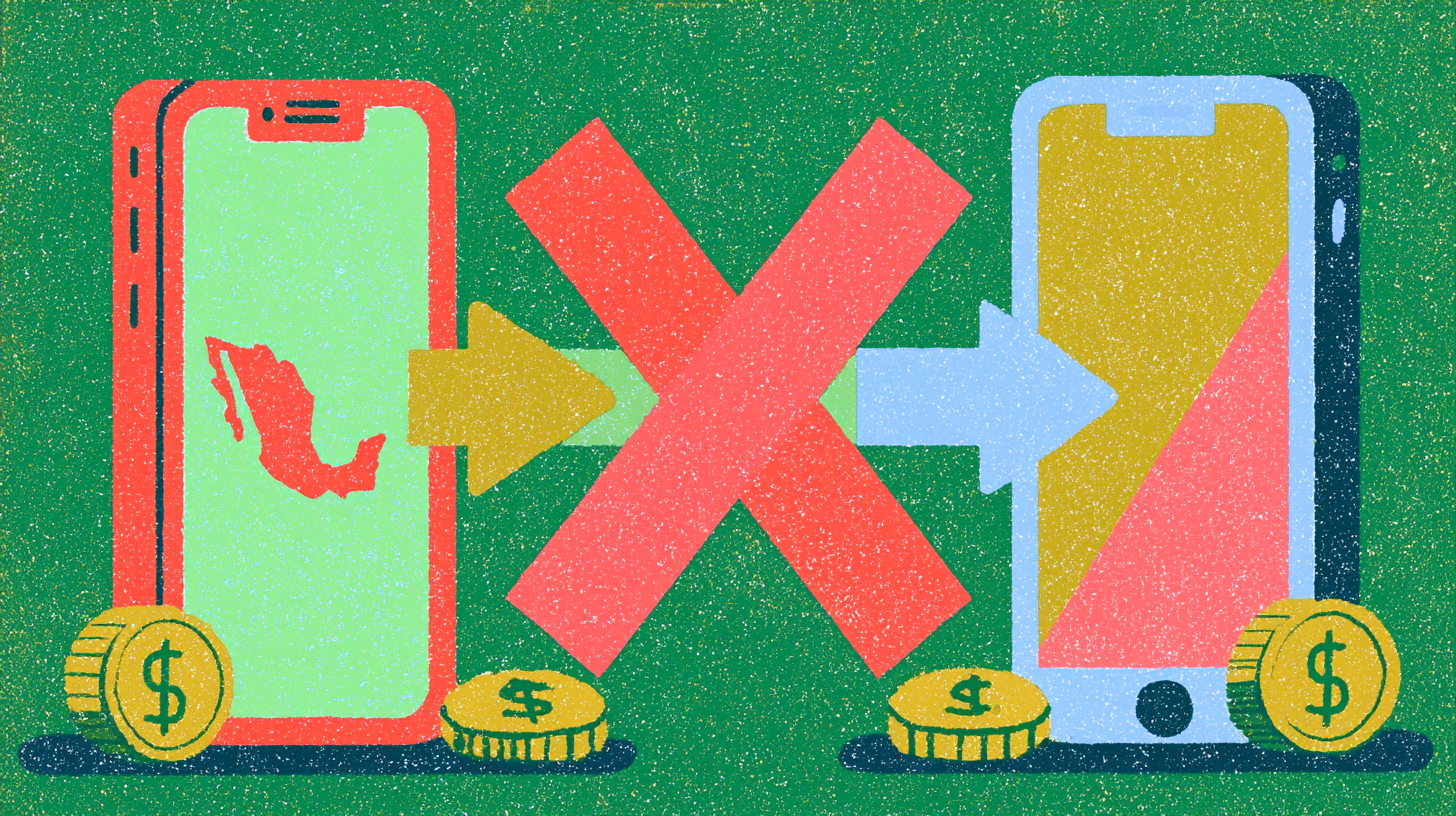
Zelle does not send money directly to Mexico. Zelle only works between eligible U.S. bank accounts and credit unions within the United States.
If you are looking into different methods for sending money to your family in Mexico, you may be searching for 'which banks offer Zelle in Mexico' or trying to understand if Zelle works internationally. This is a common misunderstanding for immigrant families in the U.S. No Mexican bank officially offers Zelle for receiving transfers from the U.S., and Zelle itself is not designed for international money transfers or currency conversion.
What is Zelle and how does it work?
Zelle is a digital payment service that facilitates peer-to-peer transfers at select partner banks in the United States. It is known for its speed, with transfers appearing in minutes, and for its extensive coverage across the U.S. Some U.S. financial institutions that support Zelle include Bank of America, Chase, Wells Fargo, Citi, PNC, and many more.
Why doesn't Zelle work for sending money to Mexico?
Cross-border money transfers require financial institutions, payment networks, regulatory approvals, identity verification procedures, and international settlement systems. Zelle was built around domestic payment systems in the U.S. Because of this, the service does not support direct transfers from U.S. bank accounts to recipients in Mexico.
Alternatives for sending money to Mexico from the U.S. (2026 comparison)
| Service | Typical starting fees | Delivery speed | Exchange rate model | Cash pickup |
|---|---|---|---|---|
| Remitly | Varies; ~$1.99+ for bank deposit to Mexico | Express: minutes to same day; Economy: 3–5 days | Exchange rate markup applies | Yes |
| Wise | From ~0.48% of transfer; shown upfront | Usually same day to 2 days | Mid-market rate, no markup | Limited (select corridors) |
| Xoom | Depends on payment method and destination | Minutes to 1 day | Exchange rate markup applies | Yes |
| Western Union | Varies widely by method and destination | Minutes to several days | Exchange rate markup applies | Yes (extensive agent network) |
| Común | Starts at $2.99 via UniTeller; may vary | Varies by destination and method | Rates displayed before transfer | Yes (depending on delivery option) |
Fees, exchange rates, and delivery times vary based on transfer amount, destination, funding method, and payout option. In 2026, a 1% federal excise tax applies to cash-funded transfers. Bank, debit, and credit card transfers are exempt.
How the new 1% tax on cash remittances affects transfers to Mexico
Starting in 2026, a 1% federal tax applies to certain remittance transfers. The tax applies when you pay with cash, money order, or cashier's check. Transfers funded from a U.S. bank account or with a U.S.-issued debit or credit card are exempt by law.
FAQ
Does Zelle work in Mexico?
No. Zelle does not support international transfers. There is no Mexican bank that offers Zelle for receiving money from the U.S.
What is the best app to send money to Mexico?
It depends on your specific situation. Común offers transfers starting at $2.99 with transparent pricing. Visit comun.app/remittances to learn more.
Remittance service provided by Service UniTeller, Inc. Remittance fees start at $2.99 but may vary. Común Inc. may earn revenue from the conversion of foreign currencies.

Financial Education
How to renew your ITIN: step-by-step guide
8 min de lectura
How to renew your ITIN: step-by-step guide
Your ITIN may have expired if you have not used it on a federal tax return for three consecutive tax years. To renew it, you must submit Form W-7 to the IRS, which is the same form used to apply for a new ITIN. You do not need to wait until tax season to start the renewal process, and you can submit your renewal before filing a tax return.
When does an ITIN expire?
An ITIN (Individual Taxpayer Identification Number) is a 9-digit tax processing number issued by the IRS. It is designed specifically for individuals who need to report income and file taxes in the United States but are ineligible for a Social Security Number (SSN).
An ITIN expires when it has not been used on a federal tax return for three consecutive tax years. The IRS explains that the expiration takes effect on December 31 of the third year of non-use.
An ITIN does not expire because time has passed, but because it has not been used for federal tax filing. Once expired, the number remains the same and can usually be renewed rather than replaced. An expired ITIN does not erase previous tax filings or financial records associated with it.
How do you know if your ITIN has expired?
One sign that an ITIN may have expired is not having filed a federal tax return with that number for several years. If three consecutive tax years have passed without using the ITIN, the number may no longer be active according to current IRS rules.
The IRS may also send a notice informing you that your ITIN needs to be renewed. Receiving a renewal notice does not mean there is a problem with your record. It simply means the IRS has determined that renewal is required before the number can be used again for tax filing purposes.
Tax software may also indicate that an ITIN has expired when preparing a return. If you are unsure if your ITIN has expired, checking IRS correspondence or reviewing past tax filings can also be a way to confirm status.
What happens if your ITIN expires?
An expired ITIN can delay the processing of a federal tax return. According to the IRS, certain tax credits and benefits associated with a return may not be available until the ITIN has been renewed.
An expired ITIN does not cancel previous tax filings, change your tax history, or create a new tax identity. The IRS maintains records associated with the original number even if that number has expired due to non-use.
An expired ITIN also does not automatically affect financial accounts that were opened using that number. However, an active ITIN may be required when completing future tax-related paperwork or applying for certain financial products and services.
If your ITIN has expired, the most practical step can be to start the renewal process before filing your next federal tax return. Taking action early can help avoid delays and additional paperwork during tax season.
What do you need to renew your ITIN?
To renew an ITIN, you must complete Form W-7 and mark it as a renewal application.
You also need documentation that proves identity and foreign status. The IRS lists acceptable documents in its official instructions, which include: passport, U.S. Citizenship and Immigration Services (USCIS) photo identification, visa issued by the U.S. Department of State, U.S. driver's license, foreign driver's license, foreign military identification card, national identification card (must contain name, photograph, address, date of birth, and expiration date), among others.
If your legal name has changed since your ITIN was issued, supporting documentation such as a marriage certificate or court order may be required.
How to renew your ITIN: step by step
1. Complete Form W-7
Fill out Form W-7 and indicate that you are renewing an existing ITIN. Make sure all personal details match your official documents.
2. Gather required documents
Collect identification documents that prove identity and foreign status. The IRS outlines acceptable documents in the Form W-7 instructions.
3. Attach supporting documentation
Include any additional documents required for your situation, such as name change records or prior IRS notices.
4. Submit your application
You can submit Form W-7 by mail, through an IRS-certified Acceptance Agent, or at select IRS Taxpayer Assistance Centers.
5. Wait for IRS processing
The IRS reviews the application and supporting documents before issuing confirmation. Keep copies of everything submitted for reference.
How long does ITIN renewal take?
Processing times vary throughout the year, but the IRS currently advises applicants to allow approximately seven to eleven weeks to receive notification regarding an ITIN application or renewal. Processing may take nine to eleven weeks during peak tax season or when applications are submitted from outside the United States.
Submitting a complete application can help prevent unnecessary delays. Applications that are missing required documents may take longer because the IRS must request additional information before processing can continue.
Can Común help me renew my ITIN?
Yes. Común's ITIN service helps with both new ITIN applications and ITIN renewals.
Común's ITIN service costs $199 and includes guidance throughout the renewal process. The service works with IRS-certified agents who help prepare the required paperwork, explain the requirements, and answer questions in Spanish.
The process can be completed from your phone, making it easier to organize documents and track progress without visiting multiple offices. Común also offers a money-back guarantee if the ITIN application is not approved according to the program terms.
FAQ
Do all ITINs expire?
Not all ITINs expire immediately or at the same time. An ITIN expires if it has not been used on a federal tax return for three consecutive tax years.
Can I renew my ITIN without filing taxes?
In some cases, yes. The IRS allows exceptions where Form W-7 can be submitted without a tax return depending on eligibility.
What form do I use to renew my ITIN?
You use Form W-7 for both new applications and renewals.
How long does it take to renew an ITIN in 2026?
The IRS estimates about seven weeks for processing. Processing may take approximately nine to eleven weeks during tax season or for certain international applications.
Can I still use my Común account if my ITIN expires?
An expired ITIN does not erase your financial history. If you have questions about how an expired ITIN may affect your specific account, contact Común directly for guidance.
What happens to my tax refund if my ITIN expires?
If an ITIN is expired, the IRS may delay processing a return until it is renewed. Certain tax benefits may not be available until the ITIN has been renewed, which can affect the timing of a refund.
Común is a financial technology company and not a bank. Banking services are provided by Community Federal Savings Bank, Member FDIC. The Común Visa® Debit Card is issued by Community Federal Savings Bank.

Living in the United States
How to Get a Driver’s License in the United States as a Foreign National
8 min de lectura
Driver’s license in the United States for foreign nationals: steps and requirements
Having a driver’s license makes everyday tasks easier, such as going to work, the supermarket, school, medical appointments, and more. This process is especially important for immigrants living in the United States, as it gives them independence and stability in the country.
Although the process to obtain a driver’s license varies in each state, foreign nationals do have the possibility and the right to obtain one. Below, we explain all the details so you can get this permit soon.
Can you drive with an international license in the United States?
If you have recently arrived in the United States and need to get around in your own car, you may temporarily use the driver’s license from your home country, as long as it is issued in English or accompanied by an international driving permit.
As a new driver in the United States, you must understand the difference between an international license and a local one: the former supplements your national license and allows you to drive in the U.S. for a few months; the latter is issued by the Department of Motor Vehicles (DMV) in each state and grants you a permanent permit to operate a motor vehicle in the country.
Regulations differ in each state: for example, in California you can drive with a valid foreign license until you become a resident. In contrast, in Texas your national license is valid for 90 days, and you must always carry your passport or visa.
Allowed period to drive with a foreign license
The maximum time allowed to drive with a foreign license varies depending on each state’s local regulations. In general, the period can range from 30 days to one year, from the day you arrive until you establish yourself as a permanent resident.
When is it necessary to apply for a U.S. driver’s license?
If you plan to live in the United States for a longer period, you need a U.S. driver’s license to drive. It is also essential if you plan to buy a car.
Also, remember that in some states the period to drive with a foreign license is limited, so you should consider applying for a U.S. license before that deadline expires.
Requirements to obtain a driver’s license in the U.S. as a foreign national
The requirements to obtain a driver’s license also vary by state, although the general structure is similar.
This is the documentation needed to obtain a driving permit in the United States.
- Valid passport or official identification: used as proof of identity.
- Proof of residency: can be a utility bill, rental agreement, or official letter showing your address.
- Immigration status or proof of legal presence: such as the Employment Authorization Document (EAD) or the I-20 form for students.
- Social Security Number (SSN) or an SSA ineligibility letter.
Keep in mind that states such as New York and Illinois allow applicants to obtain a driver’s license without considering immigration status.
Learn here how to send money without a bank account.
5 steps to apply for your U.S. driver’s license
Getting your driver’s license may seem like a complex and tedious process. In reality, you only need to stay organized and take the time to understand the guidelines.
Step 1. Gather your documents
Before going to a DMV office, make sure to prepare the required documents. In the previous section we outlined what you generally need, but remember to check for variations in the state where you live.
Step 2. Schedule an appointment at the DMV
Then, visit the DMV website and book an appointment. On the scheduled day, your documents will be reviewed and you will be given a date for the written exam.
Step 3. Take the written exam
The written exam evaluates your knowledge of traffic rules and road safety. Each state offers a driver’s manual to study for the test, and some are available in other languages, such as Spanish.
If you pass, you will receive a learner’s permit that will allow you to take the driving test under the guidance of an instructor.
Step 4. Take the driving test
The next step is probably the most challenging, as you must apply your theoretical knowledge in real driving practice. During the test, the instructor will evaluate your ability to follow traffic signs, park, turn, and follow safety rules.
Step 5. Pay the corresponding fees
Once you pass your driving test, you must pay a fee that varies by state. Initially, you will receive a temporary license and later receive your permanent license by mail.
Costs, timelines, and validity of a U.S. driver’s license
The cost of a driver’s license in the United States depends on each state, but generally includes the cost of the written exam, driving test, and issuance. The validity also varies by state, but it is usually between 4 and 8 years.
Additionally, a positive update for immigrants is that more states are removing immigration status requirements to issue a driver’s license; this is the case in California, New York, and Illinois.
If you have questions about the specific requirements in your state, check the updates on the official DMV website.
Drive toward your financial independence with Comun
Having a U.S. driver’s license represents another step toward achieving financial independence and making it easier to move around your city. Therefore, it is essential to understand the process to obtain one, as well as the differences in each state.
In other words, having a license simplifies and improves your life by making everyday tasks more accessible. Likewise, Comun is the financial platform that helps you manage your money safely and without complications.
Open your account with Comun and take the next step toward your independence in the United States. Manage your money with confidence, clarity, and support at every step.
Frequently Asked Questions (FAQ)
If you still have questions, check the following section.
How long can I drive with my foreign license in the U.S.?
The duration varies depending on the state you are in, but generally ranges from three months to one year.
What happens if my immigration status changes after I obtain my license?
If your immigration status changes after you obtain your driver’s license, it is recommended to update your information at the DMV. You may need to apply for a new license or present updated immigration documentation.
Is it valid to use an international license in all states?
Although the international driving permit (IDP) is accepted in most states, it must be accompanied by a valid national license. Additionally, there may be restrictions on how long it can be used in each state.
Can I get a driver’s license without a Social Security Number (SSN)?
Yes, it is possible to apply for a driver’s license without an SSN in several states. In this case, you must present an ineligibility letter issued by the Social Security Administration (SSA).

Immigration
Complete guide to preparing your immigration recommendation letter
8 min de lectura
Immigration procedures in the United States are often exhausting and confusing because of the number of requirements and the associated wait times.
You don’t have to feel alone during these processes: you can rely on a recommendation letter, which gathers family, community, or workplace support from people who truly trust your integrity and are willing to offer genuine backing that could bear on USCIS’s final decision.
Below is a user-friendly, practical guide on how to write an immigration recommendation letter, what it should include, mistakes to avoid, sample letters, and tips to convey credibility and improve your chances in a visa or Green Card process.
What is an immigration recommendation letter and why it matters
A recommendation letter is a personal document that supports U.S. immigration processes and is valued by USCIS. It serves as testimonial evidence of the applicant’s moral character, work ethic, and community contribution.
This supporting letter may be requested to complement documentation for various proceedings:
Permanent residence
Applicants commonly must show “good moral character,” employment stability, and community ties.
Asylum cases
The letter helps reinforce the applicant’s credibility and show they have support in the United States as a contributing community member.
Work visas such as EB-2 NIW
Professionals or researchers often need a recommendation letter from expert peers to substantiate their track record and expertise.
Naturalization
Recommendation letters are not always requested, but they can support evidence of the applicant’s good conduct.
Don’t confuse this with an employment or academic letter; the purpose of an immigration recommendation letter is to attest to the applicant’s good behavior and moral character.
Who can write an immigration recommendation letter?
An immigration recommendation letter should be written by someone with a genuine, close relationship to the applicant who can attest to their positive impact—through family, social, or workplace ties.
These are the main profiles you can ask for a recommendation letter:
Family members
They can testify to the applicant’s role in the family and commitment to loved ones.
Close friends
A close friend can focus on qualities like loyalty, honesty, and trustworthiness to emphasize the applicant’s human side.
Employers or colleagues
They provide key testimony of the applicant’s work ethic and professional responsibility.
Community or religious leaders
These individuals can speak to the applicant’s community involvement and positive impact.
Keep in mind that what matters most is not the recommender’s title, but their sincerity and credibility in vouching for the applicant’s reputation.
Steps and structure for writing an immigration recommendation letter
Although an immigration recommendation letter focuses on the applicant’s ethics and moral character, it is still a document evaluated for order and formality by U.S. authorities.
For that reason, be sure to include the following details.
Header and formal salutation
Include the applicant’s full name, address, date, and a formal salutation to USCIS or the relevant authority.
Sender’s introduction
The sender should state their full name and then explain their relationship to the applicant, how long they’ve known them, and the letter’s purpose.
Body of the letter
This is the most important part and should reflect aspects such as:
- Values: honesty, responsibility, solidarity, etc.
- Community involvement: volunteering, neighborhood activities, or initiatives to address local issues.
- Work ethic: punctuality, discipline, professional attitude, commitment, responsibility, and the applicant’s achievements, etc.
Include concrete examples to reinforce credibility, such as: “Alicia Martínez is known in the community as someone who looks out for others’ well-being, like the times she has actively taken part in trash-collection programs and efforts to help homeless children.”
Closing and signature
The sender should reaffirm support for the applicant and be open to being contacted to clarify any point, so contact details are necessary.
At the end, they should include their name and handwritten signature.
Sample immigration recommendation letter
Below is a reference letter template to make drafting your document easier.
Sender’s full name
Address
Phone number
Date
To the attention of U.S. Citizenship and Immigration Services (USCIS):
My name is [Sender’s name], and I have known [Applicant’s name] for [number of years] through our professional relationship at [describe job title and company]. I am honored to provide my testimony in support of their U.S. immigration process.
Over the time I have known them, I have observed qualities such as punctuality in reporting to work and professionalism toward both colleagues and clients.
I am confident that [the applicant] will be a valuable member of U.S. society because of their human values and professional capabilities.
I remain at your disposal and include my contact information in case any questions arise.
[Signature][Full name]
You can use this example as a base, but you should adapt it to the relationship between you and the recommender and add any additional information to convey authenticity and sincerity. Be sure to include the introduction, qualities, examples, and a formal closing.
Común, your financial ally in the United States
Here we’ve shown what an immigration support letter is and how to write one in Spanish, who can write it, its structure, and a practical example.
The main objective of a recommendation letter is to support you in U.S. immigration procedures; likewise, Común supports your financial life upon arrival in the country.
Discover the benefits of Común!
- Open your account easily with qualifying official ID from your country of origin.
- Mobile app in Spanish and English, designed for immigrants, with intuitive, transparent processes.
- Remittances to Latin America with clear, competitive fees, without complicated processes
Común is the financial service designed for immigrant communities in the United States. Open your account today and discover the ideal support for your finances!
Frequently Asked Questions (FAQ)
If you still have questions, see the section below:
How many recommendation letters do I need for immigration?
There is no specific number. A single well-written letter may be sufficient. For extraordinary-ability visas or National Interest Waivers (NIW), more than four may be required to support the applicant’s professional record.
What if I don’t have anyone to write my immigration letter?
You can ask an immigration attorney to prepare a statement explaining why no one is available to provide a letter.
Is it acceptable to submit a recommendation letter in Spanish?
Ideally, submit the letter in English or include a certified translation to avoid issues during the visa application.
International Money Transfers
Choosing the right remittance service provider for you
8 min de lectura
Choosing a remittance provider depends on the fee, the exchange rate, delivery speed, and pickup options available in the destination country. With Común, fees start at $2.99 and most transfers arrive within minutes.
Choosing the right remittance service provider for you
Every year, people all over the United States send remittances to support their family and friends back home. These transfers are more than just simple transactions, these are the economic lifeline for them. This is why choosing the right service provider for your remittances based on your needs is key to ensuring you and your loved ones have the support you need.
What is a remittance?
Simply put remittances are money transfers made by people who live and work in one country to family members, friends, or other beneficiaries who are residing in another country.
How do remittances work in the U.S.?
Sending a remittance from the U.S. follows a fairly standard process, these are the steps regardless of who is the remittance service provider:
- Initiate the transfer
The sender chooses a remittance service provider, then choose the payout method that is right for the recipient (such as: cash pickup, bank deposit, transfer, etc.), input the amount to send, and provides the recipient’s details. - Fund the transfer
Transfers typically be funded via debit card, bank account, cash (in-store), or sometimes with credit card. Fees vary widely across different remittance providers. - Exchange rate
This is where many senders lose money without realizing it. Some remittance providers convert USD to the recipient’s local currency using an exchange rate that may include a hidden markup over the mid-market rate. Some remittance service providers don’t charge commissions on the transfer as their business gains come strictly from exchange rates conversion. Understanding the exchange rate’s fees is also important when preparing to send remittances. - Settlement and payout
The money is delivered to the receiver through a partner bank, local agent, cash pickup or digital wallet. Depending on the provider, this can take from minutes to days.
The combination of fees + exchange rate markup is what ultimately determines the real cost of the remittances transfer. Many remittance providers advertise low fees when their business gains are achieved by offering a much weaker exchange rate, which results in reducing the amount your recipient actually receives.
Types of Remittance service providers in the U.S.
The U.S. remittance service provider market is diverse, and providers generally fall into the following categories:
1. Cash-to-Cash Money Transfer Operators (MTOs)
These are the traditional remittance companies with physical locations for in-person payments and cash pickups.
Examples: MoneyGram, Western Union, Walmart (MoneyGram at Walmart).
Pros: Physical accessibility, ideal for people without bank accounts.
Cons: Often higher service fees, a slower process, and often has exchange-rate markups.
2. Traditional Banks and Credit Unions
Some financial institutions offer international wire transfers through SWIFT processes for remittance programs.
Pros: Physical locations, direct bank-to-bank transfers.
Cons: Requires a bank account, usually the most expensive option (as SWIFT processes tend to have costly fees and exchange rates) and it could require longer processing times.
3. Digital-first Transfer Services
These companies operate entirely online or through mobile apps. They can be faster and more transparent.
Examples: Remitly, Felix, Comun, etc.
Pros: Convenience, speed, competitive fees, trackable transfers.
Cons: Limited cash pickup options in some regions.
Key things to look out for when selecting a remittance service provider
Choosing the right remittance service provider can have a significant impact on how much money actually reaches your loved ones. Between varying fees, differences in the exchange rate, documentation requirements, and the growing list of additional services, not all remittance providers offer the same services nor require the same things. Whether you send money home occasionally or on a weekly basis, it is important to choose a remittance provider that maximizes the value of what your loved ones receive.
1. Fees: What you pay up front (and what you don’t see)
Every remittance provider has some form of fees for providing their services, however not all fees are presented the same way (this is why it's important to fully understand the costs associated with your remittance).
What types of fees can potentially exist?
- Transfer fee: A flat or percentage-based amount charged per transaction.
- Payment method fees: Extra charges for using a credit card instead of a bank account.
- Payout method fees: Some providers charge more for cash pick-ups vs. bank deposits.
What could be an unexpected fee?
- For example, exchange rates can differ: Often the exchange rate you find while doing an online search is not the same exchange rate that will be charged by your chosen remittance service provider.
What to look for?
- A tool or calculator showing the final amount the recipient gets before you make the transfer.
- Transparent fee displays before you confirm the transaction.
- Providers that consistently keep both transfer fees and FX markups low.
In many cases, the cheapest provider isn’t the one with the lowest visible fee. It could be the one offering the most competitive exchange rate or a fixed fee that makes sense with your transfer activity. The best service provider will always be one that serves the specific needs you have.
2. Exchange Rates: Why does the exchange rate could play a key role when selecting a remittance service provider?
The exchange rate (or tipo de cambio) used by the provider determines how many pesos, quetzales, soles, or other currency your recipient will receive. When sending money abroad, senders can sometimes focus only on the visible fee (for example, a charge of $3.99 per transfer). But in many cases, the biggest cost can come in the exchange rate. If two companies offer the same fee but one has a weaker exchange rate, your family may receive less money.
For example: A difference of choosing an exchange rate with just 1 mexican peso less per USD could mean that the recipient would get $100 mexican pesos less on a $100 USD remittance.
Understanding the real costs of your remittance is essential to choosing the best remittance provider.
What questions can I ask myself before choosing the right remittances service provider?
- Do they use the mid-market exchange rate or do they add a margin?
- Is the rate fixed at the time you send the money?
- Do they offer promotional rates only for first-time customers?
What could be something to look out for?
- A low fee paired with a weak exchange rate.
- Big differences between their advertised rate and the actual payout amount.
- Exchange rates that fluctuate during the transfer.
Even a small difference in the exchange rate can significantly reduce the final amount your family or friends receive if you send a lot.
3. Documentation and requirements: Keep it simple and secure
Each remittance provider must comply with U.S. financial regulations, but their onboarding requirements vary from service provider to service provider.
What are some common documentation steps or documents needed?
- ID verification (e.g., driver’s license, passport, or state ID).
- Personal information such as date of birth and address.
- Recipient details (full name, destination country, payout method)
- In some cases, proof of funds or additional verification for large amounts
What to look for?
If a provider asks for excessive documentation or makes the process confusing, consider choosing one with smoother compliance systems. For example, some remittance services accept documentation without a United States passport when the sender can demonstrate residency in the United States.
4. Speed and reliability: How fast does the money arrive?
While some people prioritize low cost, others prioritize speed. This is completely impacted by the recipient's needs back home.
Transfer speeds vary by:
- Payment method (debit card vs. bank transfer vs. cash).
- Receiving method (bank deposit vs. mobile wallet vs. cash pickup)
- Provider’s infrastructure and local partnerships.
What can I focus on to ensure my transfer arrives quickly and safely?
- Real-time delivery estimates offered by the service provider.
- Clear differentiation between “instant,” “same-day,” and “next-day”.
- A track record of reliability, not just advertised promises.
When urgency hits speed matters, but always make sure your money is safe.
5. Security and trust: Your money must be safe
Choosing a remittance provider also requires confidence in the company’s ability to protect both your information and funds.
What are some key indicators of a trustworthy service provider?
- Licensing as a money transmitter in the U.S. For example, with Comun your funds in the Comun checking account are held at a FDIC insured partner bank.
- Secure encryption for payments.
- Fraud prevention tools and notifications.
- Positive customer reviews and transparent dispute resolution
To keep your money safe it is important to consider avoiding remittance providers with unclear credentials or repeated complaints about blocked transfers and delayed payouts.
6. Additional Services: Look beyond the transfer
A remittance provider is more than just a money-sending tool. Many now offer value-added features that can save you time or money.
Common additional services
- Bill payments directly for utilities services overseas
- Mobile top-ups.
- Multi-language customer support. Like Comun that is available in Spanish.
- Transaction histories and downloadable receipts.
- Rate alerts to notify you when the exchange rate is favourable.
What to look for?
- Tools that simplify your overall financial support for your family and friends.
- Support available that is adapted to your needs.
Extra services should add convenience not complexity. For example, at Comun you can either use your own debit card to fund the remittance, or open a Comun checking account if you don’t have a debit card.
Choose the right remittance service provider for your needs!
There’s no one-size-fits-all for a remittance service provider. Some people value speed, others care about the costs, while others need in-person services or cash pickup locations. To get the most out of your next transfer, focus on what matters to you whether it’s:
- Transparent fees.
- Competitive exchange rates.
- Simple documentation.
- Useful additional services.
- Strong security and customer support.
Taking a few minutes to compare the options with different service providers can make a significant difference in what your family and friends receive and how you optimize your finances according to your needs.
Comun offers remittances services where you can either use your own debit card, or open a checking account with Comun if you don’t have a debit card. With Comun there are no annual nor monthly fees. Furthermore, Comun’s services are available in Spanish. Download our app or reach out if you’d like to learn more about Comun.
What should I compare between remittance providers?
The transfer fee, the exchange rate offered, how long the money takes to arrive, and whether the recipient can pick it up in cash or only receive it into a bank account.
Why does the exchange rate matter, not just the fee?
Some providers advertise low fees but apply a less favorable exchange rate, which reduces the final amount your family receives. Común shows the exact amount before you confirm.
What delivery options does Común offer?
Bank account deposit or cash pickup at locations like Elektra and Oxxo in Mexico.
Frequently asked questions
What matters more, the fee or the exchange rate?
Both matter — a low fee with a poor exchange rate can end up costing more. Always check the final amount your family will receive.
How much does Común charge to send a remittance?
Starting at $2.99 per transfer, with your first transfer at no cost.
How do I know exactly how much my family will receive?
The app shows you the exact amount in the destination currency before you confirm the transfer.
Do all providers offer cash pickup?
No, it varies by provider and country; Común offers cash pickup at locations like Elektra and Oxxo in Mexico.
Is it faster to send to a bank account or pick up in cash?
Both options usually deliver the money within minutes, depending on the method chosen.
How do I verify a remittance provider is trustworthy?
Check that it's licensed in the states where it operates and that it shows the exchange rate and fees transparently before you confirm the transfer.

Instant payments
What is Venmo and how does it work? The Ultimate Guide for Immigrants to the United States
8 min de lectura
Have you heard of Venmo? It is a digital payment application that has gained popularity in the United States in recent years. According to recent data, in 2024 the mobile application reached 68.3 million active users, representing an 8.8% increase compared to 2023.
The importance this mobile application has acquired cannot be denied, which is why knowing what Venmo is in the United States can be very useful to send and receive money from family and friends quickly and securely.
As a foreign national living in the U.S., you must ensure that you choose a financial platform that meets your needs for sending money to your home country and making payments with ease.
In this guide, we clarify all your potential questions about how to use Venmo in other languages like Spanish, what it is for, the requirements to open an account, the benefits this mobile app offers, and also its limitations.
What Is Venmo and How Does It Work?
Venmo is a highly popular P2P (peer-to-peer) payment mobile application in the U.S. Its primary purpose is to facilitate the instant transfer of money between friends and family, in addition to allowing users to link bank accounts and cards.
Venmo’s business model is based on charging fees for services such as credit card transactions, instant transfers of money to bank accounts, and transactions using its physical card.
Some of the most common reasons immigrants use Venmo include:
- Paying monthly rent
- Receiving wages from occasional jobs
- Paying or receiving money from friends and family
- Lending or repaying money to acquaintances
Key Features of Venmo: What Can You Do With It in the U.S.?
To fully understand what Venmo is in the United States, it is important to explore the functionalities this P2P payment service offers its users to simplify their lives:
- Instant sending and receiving of money between Venmo users
These are the mobile app’s most important features, as it allows for instant transfers without charging a fee between Venmo users.
It also enables adding notes or emojis to identify each transaction and the option to use the mobile app’s balance or a linked bank account. - Use of Venmo Debit Card (Mastercard) for purchases
Venmo also offers a physical debit card for making purchases at brick-and-mortar establishments. It is valid at any merchant that accepts Mastercard within the United States.
Additionally, it includes an extra benefit: each purchase with the debit card accumulates cash back for greater savings. - Direct deposit for wages and benefits
You can use your Venmo account to receive your salary or other types of transfers. All you need is your personal QR code. - Bank transfers to bank accounts
Venmo offers two types of bank transfers: standard transfers, which are free and take one to three business days, and instant transfers, which incur a fee of approximately 1.75% and are completed within minutes. - Payments to businesses and merchants that accept Venmo
Another advantage of this service is the “Pay with Venmo” feature, which allows payments at physical or online businesses that accept Venmo.
This streamlines transactions and enables you to use the balance deposited in the application directly. - Social features: comments, “likes,” and bill-splitting
Lastly, one feature that makes Venmo more appealing is the ability to add comments, likes, and emojis.
This allows you to request payments from friends and family, add reminders, and split expenses among multiple users. - Business profiles for companies
Venmo allows small businesses and independent workers to create a business profile to receive payments directly into their account via username or QR code.
What Do I Need to Have Venmo? The Reality of Its Availability
Now that you know the benefits of this mobile application in detail, you probably want to learn the requirements to start using it.
Before learning how to pay with Venmo, remember that it only works in the United States.
These are the requirements to use Venmo:
- Have an Android or iOS phone
As it is a mobile application, you must have a compatible Android or iOS smartphone and download the mobile app from the corresponding store. - Register with a personal phone number
To register in the mobile app, you need a U.S. phone number and must reside in the country, as Venmo is only available there. You may also register with an email address. - Link your U.S. bank account
Linking a bank account isn't required to create your Venmo account; you can receive money and pay with your balance or a card. However, most features require a linked bank account. - Link a debit or credit card
Another option to access all Venmo’s features is linking a credit or debit card instead of a bank account. This allows you to use the card’s balance for transactions directly from the mobile app. - Verify your account
Account verification is required to access all Venmo features, to confirm users’ identities. Verified users can send up to $60,000 per week, but only if their SSN or ITIN has been confirmed. Non-verified users can send up to $299.99 per week.
To verify your account, Venmo will request the following:
- Full legal name
- Mailing address in the United States
- Date of birth
- SSN (Social Security Number) or ITIN
How to Transfer Money from Venmo to My Bank Account?
To transfer money from Venmo to your bank account, once it is linked and verified, follow these steps:
1. Log into your account through the mobile app and go to the “Me” tab.
2. Press the “Transfer” or “Add” button.
3. Enter or edit the amount you want to transfer to your bank account.
4. Select the transfer method: “Instant” or “up to 3 biz days,” noting any applicable fees.
5. Confirm the transfer details and complete the process.
If you want more options for depositing money into another person’s account, do not miss these recommendations.
Limitations of Venmo for Immigrants: Why Is It Not a Complete Solution?
The need for immigrants to have an integrated solution allowing access to digital payments, transfers, and other benefits increases daily. Therefore, while Venmo is a popular option for sending and receiving money in the U.S., it may present limitations for immigrants working in the country.
One limiting factor for immigrant communities is the language barrier in customer support. Because it is a service designed for U.S. residents, it is not optimized for people who speak a different language, such as Spanish. In addition, you should have a U.S. bank account.
Your best option may be to entrust your financial assets to a service offered in your language.
Comun: An Excellent Alternative to Venmo for the Immigrant Community in the U.S.
We present Comun, the solution for immigrants seeking to improve the way they send and receive money to family and friends.
Why Is Comun a Great Option for Immigrant Communities in the United States?
- Comun allows you to open an account with the official identification from your country.
- It is also a platform available in Spanish without complicated terms.
- Unlike Venmo, Comun enables you to send remittances to LATAM for an affordable fee starting at $2.99, subject to applicable limits.
- Access a mobile application to perform your transactions from the palm of your hand.
If you think accessing quality financial services in the U.S. is impossible for immigrants, open your Comun account today and forget about complications.
Disclosures:
“Comun is a financial technology company and not a bank. Banking services are provided by Community Federal Savings Bank; Member FDIC. The Comun Visa® Debit Card is issued by Community Federal Savings Bank, pursuant to a license from Visa U.S.A Inc. and may be used everywhere Visa Cards are accepted.”
“Funds in your account are FDIC insured up to $250,000 by ownership category through Community Federal Savings Bank (CFSB), Member FDIC, in the event CFSB fails.”
“A service provided by Service UniTeller, Inc. Service UniTeller, Inc. is licensed in all states that require a license.”
“Remittance fees start at $2.99 but may vary. Please check the app for more details.”
“Comun Inc. may earn revenue from the conversion of foreign currencies.”
“Direct deposit funds are typically available when we receive the payment file, up to two days before the scheduled payment date. This early availability is not guaranteed.”
Immigration
Benefits of Having an ITIN in the U.S. for Non-Citizens
8 min de lectura
How to get an ITIN
The ITIN is obtained through IRS Form W-7 along with identity and foreign status documentation. A passport is the only document that satisfies both requirements on its own. The process takes between 7 and 11 weeks.
1. It allows federal tax filing
The ITIN allows you to file tax returns with the IRS, including claiming credits such as the Child Tax Credit and the Earned Income Tax Credit.
2. Access to credit and financial services
Some banks and credit unions accept an ITIN as an alternative ID to an SSN for opening accounts. Platforms like Común do not require either an SSN or an ITIN.
3. It facilitates business operations
For entrepreneurs, the ITIN is vital for filing business taxes and applying for an Employer Identification Number (EIN).
4. It supports residence and immigration processes
Consistently filing taxes with an ITIN can demonstrate good moral character, a factor considered in some immigration cases.
5. It helps establish identity and secure income
In the absence of an SSN, the ITIN is recognized by financial institutions and government agencies as a valid identification number.
6. Access to state services and benefits
In some states, the ITIN allows access to a driver’s license, health insurance, or in-state college tuition rates.
7. It protects against tax identity theft
Using the ITIN consistently links your tax data to your identification number, reducing the risk that someone files a return in your name.
Frequently asked questions about ITIN benefits
What is the ITIN used for in daily life?
The ITIN allows you to file tax returns with the IRS, claim tax credits such as the Child Tax Credit, open bank accounts at institutions that accept it, and in some states access services such as driver’s licenses or in-state tuition. It is the tax identification number for those who do not qualify for an SSN.
Does the ITIN give me the same rights as an SSN?
No. The ITIN is exclusively for tax purposes. It does not authorize you to work legally in the U.S., does not generate Social Security credits, does not provide automatic access to federal benefits such as Medicare or unemployment, and is not equivalent to an SSN for most government procedures. It is a tool for tax inclusion, not immigration status.
Does filing taxes with an ITIN affect me in an immigration process?
In general, filing taxes with an ITIN can be beneficial in immigration processes because it demonstrates a history of tax compliance and “good moral character,” one of the criteria evaluated in some adjustment-of-status cases. However, the impact varies by case — consult an immigration attorney before using it as an immigration strategy.
Can I open a bank account with an ITIN?
Some banks do accept an ITIN. Bank of America and certain local banks have specific programs for ITIN holders. However, many large banks require an SSN. Alternatives like Común do not require either an SSN or an ITIN — they accept a passport, consular ID, or other Latin American IDs for immediate account opening.
Does the ITIN help me access credit in the U.S.?
Yes, partially. Some credit card issuers and lenders accept an ITIN. Certain mortgage programs (ITIN loans) allow you to buy a home without an SSN. Building credit history with an ITIN is possible, although more limited than with an SSN. Credit built with an ITIN generally does not automatically transfer if you later obtain an SSN.
How do I apply for an ITIN if I have never had one?
You submit IRS Form W-7 along with identity and foreign-status documentation — a passport is the only document that satisfies both requirements on its own. You can mail it with your tax return, go in person to an IRS Taxpayer Assistance Center, or apply through an authorized Certifying Acceptance Agent (CAA), which is the fastest and safest method.






Thousands of immigrants are already achieving more with their money. You can too.
Comun is a financial technology company and not a bank. Banking services are provided by Community Federal Savings Bank; Member FDIC. The Comun Visa® Debit Card is issued by Community Federal Savings Bank, pursuant to a license from Visa U.S.A Inc. and may be used everywhere Visa Cards are accepted.
Comun is a fintech company and not a bank or licensed money transmitter.
* Results may vary. For a complete list of eligible IDs and application requirements, follow this link.
^ No minimums, no maintenance fees. ATM or transfer fees may apply. See app for fee details.
‡ Direct deposit funds are typically available when we receive the payment file, up to two days before the scheduled payment date. This early availability is not guaranteed.
** A service provided by Service UniTeller, Inc. Service UniTeller, Inc. is licensed in all states that require a license. Remittance fees start at $2.99 but may vary. Please check the app for more details. Comun Inc. may earn revenue from the conversion of foreign currencies.
† Funds in your account are FDIC insured up to $250,000 by ownership category through Community Federal Savings Bank (CFSB), Member FDIC, in the event CFSB fails.