Financial Education
Popular apps to send money from the United States: 2026 comparison
Compare the best apps to send money within the U.S. and to Latin America in 2026. Venmo, Zelle, Cash App, Común, Wise, Remitly and more.
8 min read

30 Jul 2025
Popular apps to send money from the United States
The short answer is that it depends on what you're looking for. Whether you're splitting rent with a roommate, paying a friend back for dinner, or sending money home to your family in Mexico or Guatemala, there's an app for it. The key is selecting which one to use and when.
Sending Money from your phone
Today, millions of people living in the United States send money in minutes from their phones. This can be done to another person's bank account for someone sitting across the table from you at lunch or to a family member in a different country.
However, it is important to consider that not all apps work the same way, and choosing the right one for you could save you time or money. Some service providers offer fixed fees, while others offering international transfers include the cost in the exchange rate. This directly impacts how many pesos, quetzales, or lempiras your loved ones receive after the conversion.
How to compare money transfer apps?
It is recommended to look at three key factors that could impact the real cost of any transfer:
The transfer fee
The flat fee or percentage charge that is presented before the transaction is made. Some apps charge both a transfer fee and an exchange rate markup, while others charge only one. For domestic transfers within the United States, the fee is often the main cost to evaluate.
Speed
Faster delivery options could have a higher cost. Many apps offer a standard option that takes a few days at a lower cost, and an express option for more urgent transfers. For domestic transfers in the US, instant or same-day delivery is more common, though it may still carry an extra charge depending on the provider.
The exchange rate spread
For international transfers, this is the gap between the mid-market rate and the rate the app offers you. It is one of the most important cost drivers when sending money abroad. For domestic transfers in the US, there is no currency conversion, so this factor does not apply.
An overview of popular money transfer apps from the U.S.
| App | Cost | Speed | Transfer limits | Additional features | Coverage |
|---|---|---|---|---|---|
| Venmo | No fee (bank account/balance); 3% (credit card); instant transfer to bank: 1.75% (min $0.25, max $25) | Up to 1 day (standard); ~30 min (instant) | Up to $299.99/week (unverified); up to $60,000/week (verified) | Social payments feed; online and in-store purchases; Cash Card debit card | U.S. only |
| Zelle | No fee (some banks may apply fees) | Minutes | Limits vary by bank | Built into most major U.S. bank apps; no separate account needed | U.S. only |
| Cash App | No fee (bank account/debit card); 3% (credit card); instant transfer to bank: 0.5%–1.75% (min $0.25) | Standard: 1–3 business days; instant: ~minutes | Up to $7,500/week (verified users) | Cash Card debit; Bitcoin and stock investment; direct deposit | U.S. only |
| Común | No fee (U.S.); from $2.99 (international) | Instant to ~8 minutes (average) | $2,999/day · $4,999/7 days · $9,999/30 days · $19,999/90 days | Cash pickup and delivery; bank deposit and digital wallet; app in Spanish | U.S. and Latin America |
| Western Union | $3–$30+ (varies by amount, country, and method) | Minutes to several days (depends on method) | Up to $5,000 online | Cash pickup and delivery at 200+ country agent network; bank deposit and digital wallet | 200+ countries |
| Remitly | $0–$3.99 (varies by amount and method); first transfer may have a promotional rate | Express: minutes to same day; Economy: 3–5 business days | Up to $100,000 (verified U.S. users) | Express and Economy tiers; cash pickup; home delivery in select countries | 170+ countries |
| Wise | Variable fee from ~0.48%; mid-market rate with no markup | Instant to 2 days | Up to $1,000,000 per ACH transfer (verified) | Multi-currency account (40+ currencies); transparent fee shown before confirmation | 140+ countries |
| Revolut | No fee between Revolut users; Standard plan: no exchange fee up to $1,000/month on weekdays, then 0.5%; weekend transfers ~1% | Instant (Revolut-to-Revolut); up to 3–5 business days (external) | No preset maximum for most currencies | Savings tools; spending analytics; 25+ currency account; prepaid debit card | U.S., Europe, Latin America, Asia |
| PayPal | No fee (domestic, bank/balance); international personal transfers: 5% (min $0.99, max $4.99) + currency conversion spread 3–4% | Generally immediate | Up to $10,000 per transfer (verified accounts) | Accepted at millions of merchants globally; supports multiple linked payment methods | 200+ countries |
Data based on official provider sources as of April 28, 2026. Fees, limits, and exchange rates change frequently — always confirm current terms directly with each provider before sending. This table is for informational purposes only and does not constitute financial advice.
Reviewing six popular remittance apps in the U.S.
Sending money within the United States is not the same as sending money abroad. The costs and logistics work differently, especially when currency exchange comes into play.
1. Común
Común is a digital financial platform that offers services in Spanish and supports both domestic transfers and remittances to countries across Latin America. Users can receive direct deposits into a Común account and send money from the same balance. Transfers are typically completed within minutes, with an average delivery time of around eight minutes depending on the destination and method. Común also operates with cumulative transfer limits over time: $2,999/day · $4,999/7 days · $9,999/30 days · $19,999/90 days. To learn more visit comun.app/remittances.
2. Remitly
Remitly offers multiple delivery options, including bank deposits, cash pickup, and mobile wallets. The app tends to offer promotional exchange rates available for the first transfers; however ongoing transfers tend to include a different spread. It is important to review each service provider's exchange rate spread. Speed is flexible: Express transfers are faster but could come with a higher cost embedded in the rate.
3. Wise
Wise shows the mid-market rate and charges with a clearly defined fee. This model makes it easier to understand what you are paying. It is an app that users have reported to be useful when managing multiple currencies or sending money to different regions across the world.
4. Xoom
Xoom is part of PayPal, which can be convenient if you already use PayPal regularly. Transfers are generally quick to initiate and familiar for those who already know the platform. In some cases, exchange rates may include a wider spread compared to more specialized remittance providers, so it can be useful to check the rate offered on the day of the transfer.
5. Western Union
Its biggest advantage is cash pickup. Recipients can collect money in thousands of locations, which can be useful for those receiving the money who don't have bank accounts. The costs vary widely depending on how you send and receive money.
6. Felix Pago
Felix Pago operates through WhatsApp, which could simplify the transfer process for some users. It is primarily focused on transfers to Mexico, and pricing can be competitive in certain cases, though exchange rate spreads may vary depending on the transfer method and timing.
Which app works best for each country?
The reality is that it depends on specific needs, whether it is lower costs, delivery options or speed. Mexico is one of the largest recipients of remittances globally — most major apps support transfers from the United States to Mexico. Guatemala and Honduras are supported by several providers, including Común, Remitly, Western Union, and Xoom. Colombia and El Salvador are also served by a mix of providers.
What's the best exchange rate available right now?
It changes. Exchange rates fluctuate with currency markets, and provider margins shift with them as well. The recommended approach is to model your specific transfer before sending. Some app service providers offer tools to enter the amount and calculate the amount your recipient would actually receive.
What can I look out for when sending money?
Typos in recipient information:
These are the most common and costly errors. A wrong digit in a phone number or account number can delay a transfer for days or send money to the wrong person entirely.
Sending on a Friday afternoon or holiday weekend:
This often means that the money won't arrive until Monday or Tuesday, even for services that advertise same-day delivery.
Choosing the wrong delivery method:
A bank deposit doesn't help someone who doesn't have a bank account. A cash pickup location that's far from your recipient's town isn't convenient, no matter how fast the transfer is.
Not comparing rates for larger transfers:
The exchange rate spreads and fees directly affect the final amount the person receives.
FAQ
Which app charges the least?
It depends on the destination, amount, speed, and delivery method.
Which app is the fastest?
Speed can vary between domestic transfers within the United States and international remittances. Some providers offer faster delivery options that may come with an additional cost.
Can I send money without a bank account?
Some financial service providers like Común allow you to open an account with your home country's official ID which may be used to manage your finances and send money. Western Union also accepts cash payments at agent locations.
Are these apps safe?
Many money transfer apps operating in the United States are registered with financial authorities and are required to follow regulations related to consumer protection and anti-money laundering. Issues are often linked to user input rather than the platform itself.
The right app depends on what you need
The right app depends on what you need, and that can change over time. There is no single option that fits every situation. What tends to make the biggest difference over time is paying attention to the full picture, including fees, timing, and the final amount your recipient receives.
If you send money regularly to Latin America, it may be worth exploring options that combine everyday banking with remittances in one place. Visit comun.app to learn more.
Remittance service provided by Service UniTeller, Inc. Service UniTeller, Inc. is licensed in all states that require a license. Remittance fees start at $2.99 but may vary. Please check the app for more details. Comun Inc. may earn revenue from the conversion of foreign currencies.
About Común
Común aims to support the Latino community in the United States. It offers a debit account that can be opened with more than 100 valid Latin American IDs and an app available in Spanish.
Visit Común's website or download the app for free to learn more about the full offer and applicable terms.
Olivia Rhye
Community Partner


Checking account
What Is a Bank Account and What Are the Benefits of Having One?
8 min de lectura
A bank account is a financial account a customer holds at a bank. A bank account lets customers deposit and withdraw money, as well as write checks. That's why it's also called a checking account.
The advantages of having a bank account include:
- Easy access to your money — 24/7 banking access through the bank's website or app
- No need to carry cash
- The ability to earn interest on your deposits
- Building a credit history, which can matter when you want to apply for a loan in the future
How Do You Open a Bank Account?
Opening a bank account is relatively easy. You'll need to provide some personal information, like your name, date of birth, and address. You'll also be asked for ID — usually a Social Security Number (SSN) is enough. More modern banks, like Común, let you replace your SSN with a passport or consular ID. You may also be asked for documentation proving your address.
The Different Types of Bank Accounts Available
There are different bank accounts to choose from. The most common type is the checking account, which lets you deposit and withdraw money and write checks. A checking account is a great option if you want easy access to your money without carrying cash, since your account's debit card lets you pay at any business.
Another common type of bank account is the savings account. Savings accounts let you save money and earn interest on your deposits. It's a great option if you want to build up your savings over time.
There are also several specialized bank accounts, like accounts for students, seniors, and businesses. Be sure to research the different bank accounts available and choose the one that best fits your needs.
How to Manage a Checking Account Online
Many bank customers choose to manage their bank account online. You can do this through the bank's website or app. Managing your bank account online lets you access it 24 hours a day, 7 days a week.
Some things you can do online include:
- View your account balance and transaction history
- Transfer money between savings and checking accounts
- Pay bills
- Pay your credit card
- Deposit checks
- Set up banking alerts for specific events, like a low balance or a large deposit
What Does It Cost to Open a Bank Account in the United States?
Some accounts, like the one Común offers, come with no monthly fee and no minimum balance requirement. However, many banks do charge fees. These include some of the most popular banks in the United States: Bank of America, JPMorgan Chase, Citigroup, and Wells Fargo. Here are some of the fees they charge:
- Monthly service fee
- Minimum balance requirement
- Overdraft fee
- Check-cashing fee
Certain banks also limit Spanish-language support in their digital interfaces or customer service centers. Be sure to research the fees charged and the language support offered before opening an account with any bank.
FDIC Backing
The Federal Deposit Insurance Corporation (FDIC) is a government agency that insures consumer deposits at banks in its network. It's important to choose a bank with this backing, since you'll have up to $250,000 of your funds insured by the U.S. government if your bank fails.
The Benefits of Común
At Común, you'll find a checking account with no monthly fee and no minimum balance, in Spanish (from the mobile app to customer support), with the flexibility to apply using your passport, no matter your nationality. Opening an account is very easy, and you'll have 24/7 access, along with the ability to pay bills or deposit checks. Común is FDIC-insured, so your funds are protected up to $250,000 USD.
As with any financial service, be sure to research the different options available and choose the one that best fits your needs.
Financial Education
Digital wallet: what it is, how it works, and how to use it in the U.S.
8 min de lectura
If you’re looking for a safe, simple way to manage your money, a digital wallet could be the ideal complement to your finances. It’s a mobile application that lets you bring together your cards and other financial products in one place.
In recent years, it has become a key tool for digital money management due to its convenience and security.
Below we explain in detail what a digital wallet is, common uses, advantages, and some examples of the most popular digital wallets in the United States.
What is a digital wallet and how does it work?
A digital wallet is an application for Android- or iOS-compatible devices that securely stores credit or debit card details, or bank account information and lets you access it quickly and safely to make digital payments and other transactions.
How it works is simple: you register your banking information in the app, where it’s encrypted to keep it secure and prevent third-party access. This lets you make electronic payments in seconds through several methods—scanning a QR code, using a smartphone with NFC technology, or selecting the digital wallet at checkout for online purchases.
There is a wide variety of digital wallets in the United States; the most popular include Apple Pay, Google Wallet, Samsung Pay, and PayPal.
Most common uses of a digital wallet
A digital wallet simplifies day-to-day transactions for the thousands of immigrants living in the United States. These are the most common uses of this type of tool:
Pay in-store and online
Using a digital wallet in a store is easy as long as the merchant accepts contactless payments. In that case, simply enable NFC on your phone and hold it near the payment terminal. The payment will process automatically without entering additional information.
To pay online, first make sure you’ve added your bank accounts to the wallet’s mobile app. Then go to the product or service page and choose your digital wallet as the payment option. You may be prompted to enter an authentication factor for security.
Send money to family and friends
Another common use of digital wallets—especially among immigrant users in the U.S.—is sending remittances quickly to their home countries. Depending on the app, these can be less costly than traditional banks.
Store cards and documents
A digital wallet is also a handy organizational tool for keeping not only financial products like debit and credit cards, but also other digital items such as transit cards, tickets, and discount coupons.
Manage your money better
These applications also make it easy to keep your finances organized, create monthly budgets, and stay on top of day-to-day transactions.
4 advantages of using a digital wallet
Managing your financial products with a digital wallet has several notable benefits that can completely change how you make digital payments.
1. Security: lower theft risk compared with carrying cash.
Carrying cash is always riskier than digital options because of loss or theft. A digital wallet removes the need to depend on cash and streamlines payments online and in physical stores.
In addition, your personal information is encrypted so only you can access it. You can also add app-level security like biometrics and passcodes, facial recognition, and Touch ID.
2. Convenience: everything is on your phone, without carrying multiple cards.
Beyond avoiding cash, a digital wallet also means you don’t need to carry physical cards everywhere—you can add your accounts in the digital wallet app and pay from your mobile device.
3. Financial inclusion: ideal for immigrants without easy access to traditional banks.
A common challenge for immigrants newly arrived in the United States is meeting the requirements to open a traditional bank account. In contrast, a digital account would be far more accessible option for everyday essentials like receiving money, paying bills, and sending remittances to Latin America quickly and easily.
4. Financial control: lets you review expenses and organize money more clearly.
With a digital account, you can more easily track your money by enabling notifications on your phone to stay aware of every payment.
It can also log all your transactions and help maintain a monthly budget to ensure your money covers your U.S. expenses while supporting family in Latin America.
Examples of popular digital wallets in the United States
- Apple Pay
This is Apple’s official payments service and is built into all its products by default, such as iPhone and Apple Watch. One major advantage is that more than 85% of merchants in the United States accept it.
Its wide acceptance makes it very convenient for immigrants, whether for everyday shopping or paying monthly bills.
It also offers Apple Cash, which functions like a digital card and allows sending and receiving money, but it’s only available in the United States.
- Google Wallet
This is a virtual wallet available to Android mobile users. It’s a more complete option than its predecessor Google Pay, with features such as tap-to-pay.
It’s very useful for immigrants because it also stores official documents like licenses and various IDs.
- PayPal
PayPal is one of the most popular digital wallets not only in the U.S. but worldwide. It lets you store payment information easily, and sending money to other countries is straightforward thanks to its wide coverage.
- Cash App
Cash App is an application that lets registered users send and receive money. It may be a suitable alternative if you need a debit card and ATM withdrawals.
Manage your money as an immigrant with Común
In this article we showed you that a digital wallet is an application to store all your financial information in one place, plus the advantages, how they work, and the most popular brands in the United States.
If you want to simplify your finances, get to know Común, the platform that offers you:
- A checking account with clear, competitive fees.
- A debit card you can link to a digital wallet.
- Fast money transfers with affordable fees.
- Mobile banking available in Spanish and English
Open your Común account today with official ID from your country and start using your digital wallet to manage your money in the U.S.
Frequently asked questions
If you still have questions, see the section below.
What is the most reliable digital wallet?
You can choose options like Apple Pay, Google Wallet, and PayPal, as they have sufficient reputation for handling personal information.
How do I activate a digital wallet?
Download the application via Google Play or the App Store, create an account, add your cards, and complete the necessary verification.
Is it safe to use a digital wallet?
Yes, because they use encryption and tokenization to keep your information secure.
International Money Transfers
Choosing the right remittance service provider for you
8 min de lectura
Choosing a remittance provider depends on the fee, the exchange rate, delivery speed, and pickup options available in the destination country. With Común, fees start at $2.99 and most transfers arrive within minutes.
Choosing the right remittance service provider for you
Every year, people all over the United States send remittances to support their family and friends back home. These transfers are more than just simple transactions, these are the economic lifeline for them. This is why choosing the right service provider for your remittances based on your needs is key to ensuring you and your loved ones have the support you need.
What is a remittance?
Simply put remittances are money transfers made by people who live and work in one country to family members, friends, or other beneficiaries who are residing in another country.
How do remittances work in the U.S.?
Sending a remittance from the U.S. follows a fairly standard process, these are the steps regardless of who is the remittance service provider:
- Initiate the transfer
The sender chooses a remittance service provider, then choose the payout method that is right for the recipient (such as: cash pickup, bank deposit, transfer, etc.), input the amount to send, and provides the recipient’s details. - Fund the transfer
Transfers typically be funded via debit card, bank account, cash (in-store), or sometimes with credit card. Fees vary widely across different remittance providers. - Exchange rate
This is where many senders lose money without realizing it. Some remittance providers convert USD to the recipient’s local currency using an exchange rate that may include a hidden markup over the mid-market rate. Some remittance service providers don’t charge commissions on the transfer as their business gains come strictly from exchange rates conversion. Understanding the exchange rate’s fees is also important when preparing to send remittances. - Settlement and payout
The money is delivered to the receiver through a partner bank, local agent, cash pickup or digital wallet. Depending on the provider, this can take from minutes to days.
The combination of fees + exchange rate markup is what ultimately determines the real cost of the remittances transfer. Many remittance providers advertise low fees when their business gains are achieved by offering a much weaker exchange rate, which results in reducing the amount your recipient actually receives.
Types of Remittance service providers in the U.S.
The U.S. remittance service provider market is diverse, and providers generally fall into the following categories:
1. Cash-to-Cash Money Transfer Operators (MTOs)
These are the traditional remittance companies with physical locations for in-person payments and cash pickups.
Examples: MoneyGram, Western Union, Walmart (MoneyGram at Walmart).
Pros: Physical accessibility, ideal for people without bank accounts.
Cons: Often higher service fees, a slower process, and often has exchange-rate markups.
2. Traditional Banks and Credit Unions
Some financial institutions offer international wire transfers through SWIFT processes for remittance programs.
Pros: Physical locations, direct bank-to-bank transfers.
Cons: Requires a bank account, usually the most expensive option (as SWIFT processes tend to have costly fees and exchange rates) and it could require longer processing times.
3. Digital-first Transfer Services
These companies operate entirely online or through mobile apps. They can be faster and more transparent.
Examples: Remitly, Felix, Comun, etc.
Pros: Convenience, speed, competitive fees, trackable transfers.
Cons: Limited cash pickup options in some regions.
Key things to look out for when selecting a remittance service provider
Choosing the right remittance service provider can have a significant impact on how much money actually reaches your loved ones. Between varying fees, differences in the exchange rate, documentation requirements, and the growing list of additional services, not all remittance providers offer the same services nor require the same things. Whether you send money home occasionally or on a weekly basis, it is important to choose a remittance provider that maximizes the value of what your loved ones receive.
1. Fees: What you pay up front (and what you don’t see)
Every remittance provider has some form of fees for providing their services, however not all fees are presented the same way (this is why it's important to fully understand the costs associated with your remittance).
What types of fees can potentially exist?
- Transfer fee: A flat or percentage-based amount charged per transaction.
- Payment method fees: Extra charges for using a credit card instead of a bank account.
- Payout method fees: Some providers charge more for cash pick-ups vs. bank deposits.
What could be an unexpected fee?
- For example, exchange rates can differ: Often the exchange rate you find while doing an online search is not the same exchange rate that will be charged by your chosen remittance service provider.
What to look for?
- A tool or calculator showing the final amount the recipient gets before you make the transfer.
- Transparent fee displays before you confirm the transaction.
- Providers that consistently keep both transfer fees and FX markups low.
In many cases, the cheapest provider isn’t the one with the lowest visible fee. It could be the one offering the most competitive exchange rate or a fixed fee that makes sense with your transfer activity. The best service provider will always be one that serves the specific needs you have.
2. Exchange Rates: Why does the exchange rate could play a key role when selecting a remittance service provider?
The exchange rate (or tipo de cambio) used by the provider determines how many pesos, quetzales, soles, or other currency your recipient will receive. When sending money abroad, senders can sometimes focus only on the visible fee (for example, a charge of $3.99 per transfer). But in many cases, the biggest cost can come in the exchange rate. If two companies offer the same fee but one has a weaker exchange rate, your family may receive less money.
For example: A difference of choosing an exchange rate with just 1 mexican peso less per USD could mean that the recipient would get $100 mexican pesos less on a $100 USD remittance.
Understanding the real costs of your remittance is essential to choosing the best remittance provider.
What questions can I ask myself before choosing the right remittances service provider?
- Do they use the mid-market exchange rate or do they add a margin?
- Is the rate fixed at the time you send the money?
- Do they offer promotional rates only for first-time customers?
What could be something to look out for?
- A low fee paired with a weak exchange rate.
- Big differences between their advertised rate and the actual payout amount.
- Exchange rates that fluctuate during the transfer.
Even a small difference in the exchange rate can significantly reduce the final amount your family or friends receive if you send a lot.
3. Documentation and requirements: Keep it simple and secure
Each remittance provider must comply with U.S. financial regulations, but their onboarding requirements vary from service provider to service provider.
What are some common documentation steps or documents needed?
- ID verification (e.g., driver’s license, passport, or state ID).
- Personal information such as date of birth and address.
- Recipient details (full name, destination country, payout method)
- In some cases, proof of funds or additional verification for large amounts
What to look for?
If a provider asks for excessive documentation or makes the process confusing, consider choosing one with smoother compliance systems. For example, some remittance services accept documentation without a United States passport when the sender can demonstrate residency in the United States.
4. Speed and reliability: How fast does the money arrive?
While some people prioritize low cost, others prioritize speed. This is completely impacted by the recipient's needs back home.
Transfer speeds vary by:
- Payment method (debit card vs. bank transfer vs. cash).
- Receiving method (bank deposit vs. mobile wallet vs. cash pickup)
- Provider’s infrastructure and local partnerships.
What can I focus on to ensure my transfer arrives quickly and safely?
- Real-time delivery estimates offered by the service provider.
- Clear differentiation between “instant,” “same-day,” and “next-day”.
- A track record of reliability, not just advertised promises.
When urgency hits speed matters, but always make sure your money is safe.
5. Security and trust: Your money must be safe
Choosing a remittance provider also requires confidence in the company’s ability to protect both your information and funds.
What are some key indicators of a trustworthy service provider?
- Licensing as a money transmitter in the U.S. For example, with Comun your funds in the Comun checking account are held at a FDIC insured partner bank.
- Secure encryption for payments.
- Fraud prevention tools and notifications.
- Positive customer reviews and transparent dispute resolution
To keep your money safe it is important to consider avoiding remittance providers with unclear credentials or repeated complaints about blocked transfers and delayed payouts.
6. Additional Services: Look beyond the transfer
A remittance provider is more than just a money-sending tool. Many now offer value-added features that can save you time or money.
Common additional services
- Bill payments directly for utilities services overseas
- Mobile top-ups.
- Multi-language customer support. Like Comun that is available in Spanish.
- Transaction histories and downloadable receipts.
- Rate alerts to notify you when the exchange rate is favourable.
What to look for?
- Tools that simplify your overall financial support for your family and friends.
- Support available that is adapted to your needs.
Extra services should add convenience not complexity. For example, at Comun you can either use your own debit card to fund the remittance, or open a Comun checking account if you don’t have a debit card.
Choose the right remittance service provider for your needs!
There’s no one-size-fits-all for a remittance service provider. Some people value speed, others care about the costs, while others need in-person services or cash pickup locations. To get the most out of your next transfer, focus on what matters to you whether it’s:
- Transparent fees.
- Competitive exchange rates.
- Simple documentation.
- Useful additional services.
- Strong security and customer support.
Taking a few minutes to compare the options with different service providers can make a significant difference in what your family and friends receive and how you optimize your finances according to your needs.
Comun offers remittances services where you can either use your own debit card, or open a checking account with Comun if you don’t have a debit card. With Comun there are no annual nor monthly fees. Furthermore, Comun’s services are available in Spanish. Download our app or reach out if you’d like to learn more about Comun.
What should I compare between remittance providers?
The transfer fee, the exchange rate offered, how long the money takes to arrive, and whether the recipient can pick it up in cash or only receive it into a bank account.
Why does the exchange rate matter, not just the fee?
Some providers advertise low fees but apply a less favorable exchange rate, which reduces the final amount your family receives. Común shows the exact amount before you confirm.
What delivery options does Común offer?
Bank account deposit or cash pickup at locations like Elektra and Oxxo in Mexico.
Frequently asked questions
What matters more, the fee or the exchange rate?
Both matter — a low fee with a poor exchange rate can end up costing more. Always check the final amount your family will receive.
How much does Común charge to send a remittance?
Starting at $2.99 per transfer, with your first transfer at no cost.
How do I know exactly how much my family will receive?
The app shows you the exact amount in the destination currency before you confirm the transfer.
Do all providers offer cash pickup?
No, it varies by provider and country; Común offers cash pickup at locations like Elektra and Oxxo in Mexico.
Is it faster to send to a bank account or pick up in cash?
Both options usually deliver the money within minutes, depending on the method chosen.
How do I verify a remittance provider is trustworthy?
Check that it's licensed in the states where it operates and that it shows the exchange rate and fees transparently before you confirm the transfer.

Immigration
What is needed to obtain a Green Card in the United States?
8 min de lectura
Surely during your stay in the United States you have heard about the well-known Green Card or permanent resident card.
It is a document issued by the U.S. government that allows immigrants to reside and work legally and permanently.
For immigrants, obtaining it is of utmost importance, as it also opens the door to several benefits, such as legal protection, the right to purchase property, and the ability to apply for lawful permanent residence for family members.
Thousands of migrants in the United States often ask the big question: “How can I live legally in the United States?” We know how important it is for you to achieve better living conditions to support your family and loved ones. Therefore, below you’ll find a guide with practical steps, eligibility categories, and the documents needed to obtain a Green Card and change your life in the United States.
Eligibility categories for the Green Card
There are several paths to obtain a green card. To know which one to take, you need to be clear about both your immigration status and the eligibility category that applies to your profile.
Family-based Green Card
The first category refers to permanent residence granted through immediate family members who already have legal status in the United States.
It is divided as follows:
- Immediate relatives of U.S. citizens: spouses and unmarried children under 21.
You must wait for approval of Form I-130 and then apply for residence; there is no annual cap.
- Family preference category: unmarried children over 21 of citizens; spouses and children of permanent residents; married children of citizens; and siblings of citizens.
You must file Form I-485. For this, you must wait until your priority date becomes current on the Visa Bulletin. Otherwise, you can only file the I-130.
Employment-based Green Card
- EB-1 visa: individuals with extraordinary ability, such as distinguished professors or researchers.
- EB-2 visa: accomplished professionals with an advanced degree and exceptional ability.
- EB-3 visa: skilled workers, professionals, and “other workers.”
- EB-4 visa: special categories such as religious workers, U.S. government employees, members of the Armed Forces, among others.
- EB-5 visa: for investors who allocate substantial funds to businesses that create at least 10 jobs in the country.
Process to obtain a work-based visa
- The employer files the PERM Labor Certification, demonstrating that there are no qualified or available U.S. workers for the position. To do this, they must submit Form ETA-9089 to the Department of Labor.
- Once employment authorization is obtained, the employer must file Form I-140 with USCIS, along with the approved PERM certification.
- The employee must apply for adjustment of status via Form I-485 (if in the United States) or do consular processing at a U.S. embassy.
- For the EB-2 visa, applicants may choose the National Interest Waiver (NIW), which eliminates the need for PERM.
Remember that to work legally in the United States you must obtain an SSN. Before obtaining residence, migrants often use an ITIN to file their tax returns.
Green Card for special immigrants
- VAWA visa: victims of abuse by a U.S. citizen or permanent resident.
- SIJ visa: minors who have been abused or abandoned by their parents.
- In both cases, applicants must file Form I-360.
Green Card through refugee or asylee status
- People admitted through an asylum claim or refugee status, as well as their immediate family members.
- In both cases, applicants must be physically present in the United States for at least 1 year and then file Form I-485.
Other categories
In addition, there are other less common categories:
- Diversity Visa (Green Card Lottery): an annual lottery of up to 50,000 slots. Selectees receive a consular interview, though it does not guarantee a visa.
- Cuban Adjustment Act: a special adjustment program for Cuban nationals.
Each category has different eligibility requirements and processing times, so it is very important to consult U.S. government guidance and, if needed, seek the support of an immigration attorney.
Steps to apply for a Green Card
Once you know, in broad strokes, the requirements to obtain a Green Card, you need to be clear about the application process you must follow.
Determine eligibility
Before starting any process, review the categories above and determine which best fits your profile—family, employment, special immigrants, etc.
We recommend reviewing the Visa Bulletin to verify the documents required for your category and ensure you have them.
File the initial petition
Once you are clear on the category that applies to you, you must file the form indicated for that category, along with the required supporting documents, for example:
- Valid passport (required for any category).
- Evidence of the family relationship, such as birth or marriage certificates.
- Job offer letter.
Adjustment of status or consular processing
After your corresponding form is approved, you must apply for adjustment of status or consular processing and pay the fee required by the Department of State.
- If you are in the United States, file Form I-485 along with evidence of eligibility.
- If you are in another country, you must submit the DS-260 at a U.S. consulate. This is the immigrant visa application for permanent residence.
Interview and biometrics
In the next step, you must attend an adjustment-of-status appointment, at which USCIS will take your fingerprints, biometrics, photo, and signature.
You must also attend an interview to answer questions related to your eligibility category.
Receiving the Green Card
Finally, your Green Card will be mailed to your address. Make sure to check that all details are correct and keep it in a safe place.
After some time, you may apply for citizenship if you meet the necessary requirements.
Maintaining and renewing the Green Card
Once you have your green card in hand, you must keep track of renewal periods to avoid issues after the expiration date.
Renewal and replacement
- A regular Green Card is valid for 10 years.
- To replace your Green Card, you must file Form I-90 at least 6 months before the expiration date.
- The same form is also used in case of damage or loss.
Removal of conditions
- Applies to conditional residents with a 2-year Green Card, generally based on a recent marriage to a U.S. citizen.
- File Form I-751 for marriage-based cases or the corresponding form for your category.
- You must submit the documentation required by USCIS, as well as attend an additional interview.
Important rules
- If you change your address, be sure to report it to USCIS promptly.
- If for any reason you need to spend more than 6 consecutive months outside the United States, be sure to obtain a reentry permit (Advance Parole or Reentry Permit). Otherwise, you could risk losing your residence.
- Refrain from actions considered abandonment of residence, such as surrendering the card or voting in foreign countries.
- Keep an eye on your Green Card’s validity and renew it when appropriate.
Organize your financial life in the U.S. with Común
As you can see, the process of obtaining a Green Card is long and exhausting. Therefore, it is essential to understand the different categories, steps, forms, and the key points to maintain your permanent residence.
Another relevant point for improving your stay in the United States is having partners who understand your needs.
We present Común, the financial platform that addresses day-to-day needs through an intuitive mobile app, where you can easily open an account with qualifying official identification from your country of origin.
It also offers remittance services to several countries, helping your family receive more for less.
- Open a secure account with clear and competitive fees.
- Receive deposits and send remittances home.
- Get a debit card for daily expenses and financial control.
- Ability to save and plan your finances as you settle in the United States.
Open your account with Común today and get financial services tailored to you.
Frequently Asked Questions (FAQ)
If you still have questions, consult our FAQs.
Can I travel outside the U.S. while my application is in process?
You need to obtain Advance Parole (Form I-131), since leaving the country could cancel your application.
When can I apply for citizenship after obtaining a Green Card?
You must be a permanent resident for at least 5 years, or 3 if based on marriage, and have lived continuously in the United States and fulfilled tax obligations.
How long does the Green Card process take?
It depends on the category and whether you apply inside or outside the country. In general, the wait time is approximately 1 to 3 years.
How much does it cost to apply for a Green Card?
The cost varies by category. Check USCIS’s fee calculator to get a clear figure.
What is the difference between the I-485 and the DS-260?
The I-485 is the adjustment-of-status application to permanent resident filed within the United States, whereas the DS-260 is the immigrant visa application filed from another country.
What happens if your Green Card is denied?
You can appeal the decision via Form I-290B or refile the application.
Living in the United States
Everything You Need to Know About Bank Accounts in the
8 min de lectura
Bank Accounts
Having a bank account is essential for managing your financial life efficiently and offers numerous practical benefits. One of the main advantages is safe money storage. Unlike keeping cash at home, which can be vulnerable to theft, loss, and damage, money kept in a bank account is safe and protected. Additionally, bank accounts provide great convenience for everyday transactions. You can easily pay bills, receive direct deposits, withdraw cash, and make purchases with a debit card linked to your account. Modern banking also lets you manage your finances from virtually anywhere through online and mobile banking platforms.
Types of Bank Accounts: Checking and Savings
In the world of personal finance, understanding the different types of bank accounts is crucial.
- Checking Accounts: Checking accounts, often called personal checking accounts, are designed for everyday transactions like depositing money and debit card purchases. They frequently come with the option of direct deposits and online bill pay. Understanding the differences between checking and savings accounts is essential, especially when considering banking promotions and bonuses that often feature specific offers for opening new checking and savings accounts, including direct deposit requirements and minimum deposits to qualify for cash bonuses.
- Savings Accounts: Savings accounts, including specialized forms like a Barclays savings account, are meant for storing money over a longer period, often with the goal of building an emergency fund. These accounts may offer a higher interest rate and sometimes require a minimum balance. Combining checking and savings accounts can provide a comprehensive banking solution, offering both the flexibility of everyday transactions and the benefit of earning interest on long-term savings, which is particularly advantageous when banks offer promotions and bonuses for these accounts.
- Money Market and CD (Certificate of Deposit) Accounts: Generally offer higher annual percentage yields than regular savings accounts, locking in funds for a specified period to achieve better returns.
Understanding these options helps align banking services with your financial goals, whether you're considering opening a business checking account or a joint savings account at the same bank or credit union.
Opening Your First New Bank Account
To open an account, particularly a new online bank account, start by choosing the right financial institution — it could be an online-only bank, a traditional bank, or a credit union, depending on your financial needs and preferences. Consider factors like accessibility, customer service, fee structures, and the availability of online and mobile banking features when selecting where to open your account.
The process generally involves making an initial deposit, which can vary but is often a minimum opening deposit. Meeting the minimum deposit is crucial to qualify for account bonuses. Some institutions may require only a few dollars, while others may ask for a larger amount, especially for premium or specialized accounts. During the account-opening phase, you'll need to provide personal information like a Social Security Number or an Individual Taxpayer Identification Number, and a government-issued ID, like a passport or driver's license. This information helps the bank ensure compliance with regulatory requirements, including those related to money laundering.
Many banks offer bank account bonuses or a checking account bonus to new checking account customers, which can be an attractive incentive. Opening a personal checking account in America comes with specific bonuses and rewards, including cash bonuses for meeting certain requirements like a qualifying direct deposit. To qualify for these bonuses, customers often need to meet criteria like a minimum deposit within a certain timeframe and maintaining that balance for a specific period. For example, some financial institutions offer cash bonuses for setting up a qualifying direct deposit. This incentive often requires you to receive a regular payment, like a salary or a government benefit, directly into your new account within a certain period of opening the account. Be sure to understand the terms and conditions associated with these bonuses, like minimum balance requirements and the duration of direct deposits.
Additionally, ask about any potential fees associated with the account, like monthly maintenance fees, ATM usage fees, and overdraft charges. Sometimes, banks offer fee waivers under certain conditions, like maintaining a minimum balance or even by enrolling in direct deposit. It's also worth asking about the bank's overdraft policies. Some banks offer overdraft protection programs, which can keep you from incurring fees if you accidentally overdraw your account. This service can be a lifesaver for new account holders unfamiliar with managing their balance, but it typically comes at an additional cost.
Finally, consider the bank's customer service and support options. Reliable customer support can be invaluable, especially if you run into issues with your account or need guidance on using banking services. By carefully considering these aspects, you can ensure your first banking experience is positive and financially beneficial. Remember, the right bank for someone else might not be the right bank for you, so choose based on your specific circumstances and financial needs.
Común Is a Great Choice for Your Banking Needs in the USA
If you're looking for a reliable, modern banking solution in the United States, Común is the perfect choice for you. Común is a digital bank designed for everyone, especially the immigrant community, offering a hassle-free banking experience, no hidden charges, and Spanish-language tools that make managing your finances easier. With Común, you can open an account in minutes from your phone, get your complimentary debit card, and start enjoying benefits like no-cost transfers, direct deposits, and access to more than 55,000 fee-free ATMs nationwide. Plus, Común cares about your security, implementing advanced measures to protect your money and your data. Don't wait any longer — join the Común community for a banking experience that understands and supports your unique needs.
Open your checking account¹ in 3 minutes with your country's ID²
More Information About Bank Accounts in the United States
We explain your account number
Best practices for managing your account
Effective Account Management
Effectively managing bank accounts goes beyond simply monitoring balances — it involves a comprehensive approach to financial administration. This means understanding and reducing account fees, which can include monthly maintenance, ATM usage, and overdraft charges. One way to minimize these fees is by meeting minimum balance requirements or enrolling in direct deposit, since many banks offer fee waivers under these conditions.
Using online and mobile banking tools is essential for efficient financial management. These platforms allow real-time transaction monitoring, immediate fund transfers, and quick access to statements and banking documents, which can help with budgeting and tax preparation. Setting up automatic bill payments is another crucial feature, ensuring all payments are made on time, avoiding late fees and service interruptions.
For those managing multiple accounts, like a business checking account and a personal checking account, linking these accounts can simplify money management. It allows easier transfers between accounts and a consolidated view of finances, which is particularly beneficial for small business owners who need to keep personal and business expenses separate. Additionally, having multiple bank accounts can offer significant benefits, like separating funds for different purposes — such as everyday expenses, savings, and investments — and meeting individual or joint financial needs, including for international travel or business purposes.
Additionally, mobile banking has revolutionized access to financial services, letting users complete a variety of banking tasks from their devices, like checking balances, depositing checks remotely, and withdrawing cash from ATMs without a physical card. This convenience, however, needs to be balanced with diligent security practices to protect financial data.
Security and Protection
Account security is critical for protecting financial assets from potential threats like fraud and identity theft. Banks, whether online or traditional, implement robust security measures, including encryption, Secure Sockets Layer (SSL) certificates, and continuous monitoring for suspicious activity. However, responsibility also falls on the account holder to improve their personal security.
Enabling two-factor authentication adds an extra layer of security, significantly reducing the risk of unauthorized access. Using strong, complex passwords and changing them regularly are fundamental practices for securing online banking portals. Account holders should also be alert to phishing scams — fraudulent attempts to obtain sensitive information. Recognizing suspicious emails, links, or phone calls requesting personal banking information is crucial.
Regularly monitoring account activity is another proactive security measure. Many banks offer customizable alerts that immediately notify the account holder of unusual or large transactions, allowing quick action against unauthorized access. It's also advisable to frequently review transaction history to identify any irregularities that might indicate fraudulent activity. Additionally, understanding the latest banking security technologies and using all available tools provided by financial institutions can significantly improve the security of banking operations. These tools include biometric verifications, like fingerprint and facial recognition, which offer a higher level of security than traditional passwords.
By incorporating these advanced management and security practices, people can significantly improve both the efficiency and security of their banking experience, ensuring their financial assets are managed wisely and protected against potential threats.
Conclusion
Navigating the complexities of bank accounts — from choosing the right type to managing and securing them — can significantly impact your financial well-being. Understanding the various account types available, from personal and business checking accounts to savings and CD accounts, lets you make informed decisions that align with your financial goals. Opening your first account is a crucial step that lays the groundwork for building a robust financial future. By selecting the right financial institution, understanding fee structures, and taking advantage of incentives like account bonuses, you position yourself to maximize the benefits of banking.
Effective account management and vigilant security measures are essential to getting the most out of your banking experience. Using online and mobile banking tools not only provides convenience, but also lets you keep close oversight of your financial activities, ensuring your money works for you as efficiently as possible. Additionally, the importance of security can't be overstated — protecting your financial information from fraud and theft is paramount in today's digital age.
Ultimately, carefully managing and protecting your bank accounts is crucial to maintaining financial health and reaching your monetary goals. By adopting the practices outlined in this guide, you can confidently navigate the banking landscape, making informed decisions that strengthen your personal and business finances. Whether you're opening your first account or optimizing existing ones, remember that every step you take is a building block toward greater financial security and freedom.
Community
Común: Digital Banking for Immigrants in the U.S.
8 min de lectura
Común is a digital financial platform designed specifically for the immigrant community in the United States, letting you open an account with Latin American IDs, no Social Security Number required.
Común does not have branches, but it has a team that supports its customers 24 hours a day, 7 days a week, from the comfort of their homes, in three different languages.
Building a better future for immigrants in the U.S. is a core principle of Común’s mission. Accessible and easy-to-understand banking options are a key part of the immigrant journey. However, the options are scarce.
Complex, cumbersome, and expensive options are the norm. Activities that may seem trivial and intuitive to those born in the U.S. are overwhelming and confusing for a newly arrived immigrant. Everything from setting up direct deposit with an employer to sending money home, making payments for goods and services, or understanding how to build a credit score seems too complex for anyone who has never had to do this in the U.S., let alone at all.
Hidden fees and costly charges add another layer of stress when starting a financial life in the U.S. Between minimum account balances, monthly fees, overdraft charges, large check deposit fees, extortionate international transfer fees, and everything else, maintaining and using a bank account in the U.S. can be expensive. For manual laborers, this can represent a significant percentage of their wages.
The physical locations of traditional banks can also be scarce in some areas. Since opening a bank account or depositing a check or cash into the account must be done at a branch, this is a significant burden for someone living in a remote area. Many immigrants, sometimes working on remote farms or factories, live miles away from the nearest bank branch. Transportation costs to those branches add to the already high fees of using and maintaining an account.
Even if the banking services provided were more intuitive, digital, and lower cost, another major barrier remains. Obtaining the necessary documentation to open a bank account can also make access to fair and simple financial services difficult. Immigrants fortunate enough to have work authorization still need to gather important documentation that is not always available to them. For those who have come to the U.S. seeking asylum or better work opportunities through a more unconventional path, the documents required to open an account are often prohibitive.
Building a 100% digital banking platform to solve the issues mentioned above is part of what Común seeks to achieve because we believe in helping unlock social mobility. But a digital, low-cost, and intuitive platform is not enough. To navigate this process, immigrants need help, and help is best found in a Community that understands them when they need it most.
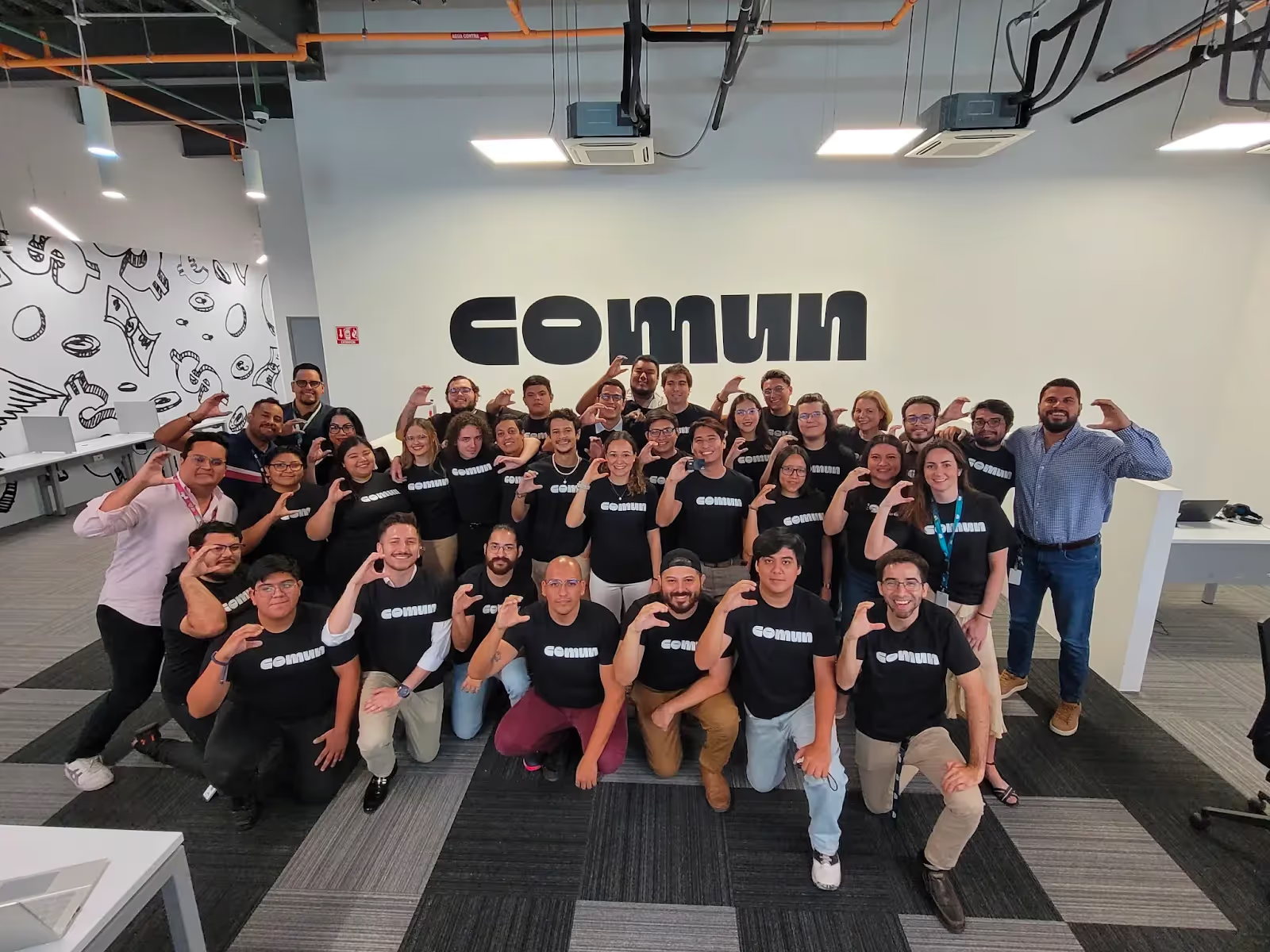
That is why not only our customers are part of our Community, but also the people who help them 24 hours a day, 7 days a week through our app, social media, WhatsApp, or by phone. Beyond solving an immediate problem, the support provided goes further. It teaches and educates, empathizes, and strives to foster a sense of Community among people who understand them, in terms they comprehend and in the language they speak. This is the core of true digital community banking. Our team helps them set up direct deposit, get refunds for charges they disagree with, and everything else.
At Común, the first step in this journey has already begun. Our team in Mérida, Mexico, is part of our Community and the one we seek to serve. They are an extension of our mission and our digital platform, and a necessary ingredient in unlocking social mobility for millions of immigrants in the U.S.
What makes Común different from a traditional bank?
Común accepts over 100 Latin American IDs (passport, consular ID, among others), doesn't require an SSN or ITIN, and doesn't charge a monthly fee or require a minimum balance.
How does Común specifically support the immigrant community?
With 100% Spanish-language support, an account opening process that takes minutes, and features built for common community needs, like low-cost remittances and cash deposit without needing a prior bank account.
What services does Común offer?
A checking account with a Visa debit card, international remittances starting at $2.99, cash deposit at over 88,000 locations, and direct deposit.
Frequently asked questions
Who is Común designed for?
For the Latin American immigrant community in the U.S. looking for accessible financial services without traditional documentation barriers.
What IDs does Común accept?
Over 100 Latin American IDs, including passports and consular IDs — no SSN or ITIN required.
Does Común charge an opening or maintenance fee?
No, there's no opening fee, monthly fee, or minimum balance required.
Is Común's support available in Spanish?
Yes, the app and customer support are available in Spanish.
How fast can I open my account?
The process takes about 3 minutes, with instant approval in most cases.
Does Común offer remittances to Latin America?
Yes, starting at $2.99 per transfer, with your first transfer at no cost.

Financial Education
Banking Services for Small Businesses: A Complete Guide
8 min de lectura
Small Businesses
Running a small business involves making numerous financial decisions, and choosing the right banking services is crucial for success. Separating personal assets from business assets in an LLC structure is important for protecting personal property in case of business bankruptcy. Community banks and modern financial platforms offer a variety of services tailored to meet small businesses' unique needs. This complete guide explores the essential banking services for small businesses, highlighting their benefits and how they can support growth and stability.
Understanding Different Types of Small Businesses and Their Banking Needs
Before exploring specific banking services, it's essential to understand the range of small businesses and their unique financial needs. Different types of small businesses — like sole proprietorships, partnerships, LLCs, corporations, nonprofits, home-based businesses, and startups — require tailored banking solutions to support their growth and stability. Keeping business and personal bank accounts separate offers benefits like accurate record-keeping, simplified tax preparation, better financial organization, and enhanced professionalism. By recognizing these differences, you can better appreciate how community banks and financial platforms like Común meet small business owners' diverse needs. This understanding lays the groundwork for selecting the most appropriate banking services to ensure financial health and success.
Business Checking and Savings Accounts
Having a dedicated business checking account is fundamental to managing your finances effectively. It lets you separate personal and business transactions, simplifying bookkeeping and ensuring clear financial records. Many banks offer business checking accounts with features like free transactions, low fees, and online banking capabilities.
When opening a business bank account, gather the required documentation, like your Employer Identification Number (EIN), and decide whether you want to apply online or visit a branch. Understanding the fees and essential steps to open the account is crucial.
A business savings account is also vital. It helps you set aside funds for future investments, emergencies, or growth opportunities. Look for accounts with competitive interest rates and flexible access to your funds.
Business Loans and Lines of Credit
Access to credit is often essential for small business growth. Community banks and other financial institutions provide various loan products, including term loans, lines of credit, and SBA loans. These financial products can help you finance new equipment, expand operations, or cover unexpected expenses.
- Term Loans: Term loans issue lump sums of capital that are repaid over fixed periods of time with predetermined interest rates. They're suited for large, one-time investments, like purchasing equipment or renovating a workspace. The predictable repayment schedule helps with budgeting and long-term planning.
- Lines of Credit: Lines of credit offer flexible borrowing options, letting you draw funds as needed and pay interest only on the amount you use. This flexibility can be a lifesaver during cash flow shortages or when financing immediate needs, like inventory purchases or emergency repairs. Lines of credit are revolving, meaning funds become available again as you repay them, making them an ongoing financial resource.
- SBA Loans: Small Business Administration (SBA) loans are partially government-guaranteed, making them more accessible to small businesses that might not qualify for traditional loans. They offer competitive interest rates and longer repayment terms, which can be particularly beneficial for startups and businesses with less-established credit histories.
Working with a community bank for loans and lines of credit means you benefit from personalized service. Bank representatives can provide tailored advice, helping you choose the right loan product for your needs and guiding you through the application process. This relationship-based approach ensures you get the support needed to grow your business sustainably.

Payment Processing, Payroll, and Cash Flow Management Services
Effective financial operations are critical to any small business's success. This includes processing payments, managing payroll, and ensuring efficient cash flow. Here's how comprehensive banking services can support these needs:
- Merchant Services: Merchant services are crucial for businesses that need to process customer payments. These services include credit card processing, point-of-sale (POS) systems, and online payment gateways. A reliable merchant services provider ensures transactions are processed quickly and securely, improving customer satisfaction and cash flow. By offering seamless payment solutions, banks help businesses deliver a better customer experience and streamline their revenue collection process.
- Payroll Services: Managing payroll can be complex and time-consuming. Many banks offer payroll services to simplify this process. These services handle everything from calculating wages and taxes to direct deposits and payroll tax filing. By outsourcing payroll, businesses can ensure accuracy and compliance with tax regulations, freeing up time to focus on core operations. Efficient payroll management not only saves time, but also helps maintain employee satisfaction by ensuring timely, accurate payments.
- Cash Management: Effective cash management is essential to maintaining healthy cash flow. Banks offer various cash management services, including remote deposit capture, ACH payments, and wire transfers. These tools help businesses efficiently manage incoming and outgoing funds, reducing time spent on manual processes and improving overall financial control. Proper cash management ensures businesses can meet their financial obligations and invest in growth opportunities without experiencing cash shortages.
By integrating these services, banks provide a comprehensive solution that supports small businesses in maintaining smooth, efficient financial operations.
Online and Mobile Banking
In today's digital age, online and mobile banking are indispensable. These services provide convenient access to your accounts, letting you monitor transactions, transfer funds, and pay bills anytime, anywhere.
- Digital Transformation: Community banks are adopting new technologies to improve the customer experience through online and mobile banking platforms. These platforms offer 24/7 access to your accounts, letting you manage your finances from the comfort of home or on the go. You can easily check balances, view transaction history, and transfer funds between accounts.
- Advanced Features: Many online and mobile banking services include features like bill pay, mobile check deposit, and budgeting tools. Bill pay lets you schedule payments to vendors and service providers directly from your account, ensuring timely payments and simplifying your bookkeeping. Mobile check deposit lets you deposit checks by taking a photo with your smartphone, saving trips to the bank.
- Security Measures: Online and mobile banking platforms use advanced security measures to protect customer data and ensure secure transactions. This includes encryption to protect information, multi-factor authentication to verify user identity, and regular security audits to identify and address potential vulnerabilities. Real-time fraud alerts help you quickly detect and respond to suspicious activity, improving your overall financial security.
Open your bank account¹ in 3 minutes with your country's ID²
Common Problems Small Businesses Face With Banking Services and Financial Health
While banking services are crucial to small business operations and growth, many small business owners face various challenges when managing their financial needs. Understanding these issues can help businesses make more informed decisions and find solutions that better fit their requirements.
- High Fees and Hidden Costs: Many small business owners find that banking services come with high fees, including monthly maintenance charges, transaction fees, and penalties for not maintaining a minimum balance. Hidden costs, like wire transfer fees, overdrafts, and additional services, can also add up, putting pressure on the business's cash flow.
- Limited Access to Credit: Securing loans and lines of credit can be particularly challenging for small businesses, especially startups or those with less-established credit histories. Traditional banks often have strict lending criteria, making it difficult for small business owners to access the funds they need for growth and operations.
- Inadequate Customer Service: Small business owners frequently report dissatisfaction with the customer service provided by their banks. Long wait times, lack of personalized service, and insufficient support for small-business-specific issues can hinder a business's ability to effectively manage its finances and resolve issues quickly.
- Complexity and Inaccessibility: Banking services can often be complex and difficult to navigate. Small business owners, who may not have extensive financial knowledge, can find it challenging to understand and use the full range of services offered. Additionally, inaccessibility to bank branches or limited online services can be a significant obstacle for businesses that require frequent banking interactions.
- Security Concerns: With the growing prevalence of cyber threats, security is a major concern for small businesses. Ensuring banking services offer robust security measures to protect sensitive financial data is crucial. However, not all banks offer the same level of security, leaving some businesses vulnerable to fraud and data breaches.
- Integration With Business Tools: Small businesses often use various tools and software to manage their operations, like accounting software and payment processing systems. Issues can arise when banking services don't integrate smoothly with these tools, leading to inefficiencies and increased administrative burden.
- Lack of Financial Education and Support: Many small business owners struggle with financial literacy, which affects their ability to make informed banking and financial decisions. Banks that don't offer enough financial education resources or support can leave business owners feeling overwhelmed and ill-prepared to manage their finances effectively.
- Limited Product Offerings: Some banks may not offer a wide range of products tailored to small businesses' specific needs. This can include specialized loan products, cash management services, or flexible payment solutions. Limited product offerings can restrict a business's ability to find suitable financial tools that support its growth and operational needs.
Understanding these common issues can help small business owners better navigate the challenges they face with banking services. By seeking out community banks or financial platforms like Común that prioritize transparency, customer service, security, and integration with business tools, small businesses can find banking solutions better suited to their needs and supportive of their financial success.
Conclusion:
Choosing the right banking services is essential for your small business's success and growth. From checking and savings accounts to loans, merchant services, and digital banking, the right financial products and support can help you manage your finances effectively and reach your business goals. By partnering with a community bank and leveraging platforms like Común you can access the tools and expertise needed to thrive in today's competitive market.
Integration and Support
Many community banks pride themselves on offering personalized service and financial advice. Building a relationship with your bank can provide valuable insight into managing your finances, accessing credit, and planning for future growth. Take advantage of workshops, seminars, and one-on-one consultations offered by your bank to improve your financial literacy and business knowledge.
For small businesses looking to leverage modern financial technology, integration with platforms like Común can improve their banking experience. Común offers a range of features tailored to small businesses, including instant notifications, secure login, and personalized customer support available seven days a week. By combining the strengths of traditional community banking with the convenience of digital banking, Común provides a comprehensive solution for managing your business finances.
Open your bank account¹ in 3 minutes with your country's ID²
International Money Transfers
Remittance services: how to send money to Latin America
8 min de lectura
Remittance services: sending money to Latin America
For millions of Latin Americans living in the United States, sending money back home is part of everyday life. For many, their families and friends back home often depend on fast and reliable remittances from the United States. Today, there are many service providers for sending money to Latin America available in the market, each offering different advantages and disadvantages and choosing the right one is key to make the most out of your hard-earned money. A useful approach is to understand how remittance pricing works, what factors affect the total cost, and how to compare the services based on your specific needs.
How to measure the real cost of a remittance?
The real cost of a remittance is determined by different elements:
- The transfer commission.
- The exchange rate being offered at the moment.
- Additional service fees.
- Delivery method.
- Transfer speed.
- Promotional pricing conditions.
In practice, the exchange rate often has the biggest impact on how much money the recipient actually receives. For example, two providers may advertise similar fees while delivering noticeably different final amounts because of the FX spread built into the exchange rate.
What is the FX spread?
The FX spread is the difference between:
- The real market exchange rate (this is also called the mid-market or interbank rate)
- The exchange rate the service provider gives you
This difference is where some remittance service providers generate revenue. The same reason why two services with the same "$0 fee" can have very different final costs.
The most popular remittance services used by Latin Americans in the U.S.
Different services work better for different types of users. Here you can find a general overview of the providers most commonly used by the Latino communities in the United States.
Western Union
Western Union is one of the largest remittance companies in the world, with an extensive cash pickup network across thousands of locations in Latin America.
Strengths:
- Large global network
- Cash pickup availability
- Multiple delivery methods
Limitations:
- Exchange rates may vary significantly
- Fees depend on payment method and destination
Ria Money Transfer
Ria Money Transfer offers payments from the US to more than 165 countries across the world, with delivery options including cash collection and delivery to either a mobile money wallet or bank account.
Strengths:
- Wide coverage
- Competitive options in some corridors
- Cash pickup availability
Limitations:
- Pricing varies depending on country and delivery method
- Exchange rate competitiveness changes daily
MoneyGram
MoneyGram is a service provider of international remittances that enables individuals to send and receive money internationally and domestically.
Strengths:
- Extensive cash pickup network
- Fast transfers in some cases
- Availability in multiple countries
Limitations:
- Fees and FX spreads can vary widely
- Final cost depends heavily on transfer method
Félix Pago
Félix Pago is a WhatsApp-based platform focused on servicing the Latino community in the U.S. to send money throughout Latin America.
Strengths:
- Mobile-first experience
- Speed and convenience
Limitations:
- Coverage and features may vary by destination
- Transfer economics depend on corridor and timing
- Not every user prefers chat-based transfers
Común
Común offers the possibility to open a debit account in the USA and send money home from Común's app or WhatsApp.
Strengths:
- Spanish-first app and customer support
- Convenient with a mobile-focused experience
- Promotional FX rate available on the first transfer
- Accepts more than 100 Latin American IDs to open a debit account
- Transparent fees
Limitations:
- Exchange rates and transfer costs vary daily
- The final recipient amount depends on the destination country, transfer method, and market conditions
Remittance services: a general comparison
Today, the remittance service provider market in the U.S. can be divided into two major categories:
Traditional remittance agencies
Companies that offer physical networks and cash pickup infrastructure. For example: Western Union, Ria Money Transfer or MoneyGram.
Fintech alternatives
These platforms focus on mobile experience, transparent pricing, digital account management, accessibility for immigrants in the U.S. and some offer Spanish-first experiences. Examples: Común and Félix Pago.
Why do comparisons matter?
Exchange rates change every day and promotional offers can also change. This is why it's important to compare what's the best service provider for your current situation. If possible, it is recommended to use a tool to have a better perspective on your remittance costs. For example Común has a live calculator at comun.app/compara designed to help you understand the exact conditions of your transfer.
Beyond the exchange rate
For many immigrants in the United States, choosing the best remittance services is not just based on who offers the best exchange rate. The accessibility to the services can shape the entire experience of sending money. Some people may not have a Social Security Number, a traditional U.S. bank account, or an easy way to verify their identity through conventional financial systems. Language can also play an important role for navigating financial apps especially with customer support and understanding the specific transfer policies. Being able to do financial transactions in a native language can make transactions feel less stressful.
The competitive market landscape in the U.S. makes it possible for Latin American immigrants to compare options for their remittances. Today, you can look beyond the exchange rate and consider factors like Spanish-language support, flexible identification requirements, mobile accessibility and transparency around fees and/or transfer conditions. The best remittance service provider is the one that offers pricing, services and access that fit your needs. Común's app is available in Spanish, accepts more than 100 Latin American IDs and offers transparent fees.
How to choose the right remittance service for your situation?
There is no universal "best" remittance provider. The right option depends on how often you send money, where you are sending it, how your recipient receives the funds, and what kind of financial access you have in the United States. Choosing based on your own priorities is often the best path.
If this is your first transfer
Many remittance services offer promotional pricing or preferred exchange rates for first-time users. These promotions can temporarily improve the amount received by your family, but they do not always reflect the long-term cost of using the platform.
For example, some digital services may offer stronger FX rates on the first transfer, while traditional providers occasionally waive transfer fees for new customers. However, the total value still depends on the exchange rate, transfer speed, and delivery method.
Before sending your first remittance, it is important to consider:
- The final amount your recipient will receive
- If the promotion applies to your destination country
- Delivery times
- Bank deposit vs cash pickup options
To compare exchange rates you can always use a tool, for example, comun.app/compara is designed to help people understand the cost of their transfer.
If you do not have an SSN
Access to financial services can vary significantly for immigrants in the United States, especially for people who do not have a Social Security Number. This can make onboarding slower or more complicated for recent immigrants, ITIN holders, or people primarily using foreign identification documents.
Some remittance service providers have adopted more flexible verification models. Común, for example, accepts more than 100 Latin American IDs. It is recommended to check with every institution their specific verification requirements.
If you send money regularly
People who send remittances every month can benefit more from consistency than from temporary promotions. For frequent senders, it can be useful to review:
- Ongoing exchange rates
- Fee transparency
- Recurring transfer options
- Convenience: for example mobile app or WhatsApp transfers
- Customer service availability
If your family depends on cash pickup
Cash pick-up continues to play a major role across many parts of Latin America, especially in smaller cities or rural communities where bank access may be limited.
Traditional remittance companies like Western Union, Ria Money Transfer, and MoneyGram offer large physical networks that allow recipients to collect money in person at supermarkets, convenience stores, banks, and local partner locations.
Before choosing a provider, it is helpful to verify:
- Whether cash pickup is available in the destination city
- Pickup hours and accessibility
- Transfer speed
- Identification requirements for recipients
- Maximum transfer limits
In some cases, the best service is simply the one your recipient can access easily. Común offers cash pick ups with options in some stores and banks.
If you prefer convenience: mobile-first experiences
Over the past years, mobile-first experiences have become popular given the convenience of being able to send remittances from one's mobile phone.
Digital-first services can offer:
- Faster onboarding
- Mobile transfers
- Real-time notifications
- Simpler account management
Platforms like Común and Félix Pago are examples of services designed around mobile experiences for Latino immigrants. For people who feel more comfortable managing their transfers from their phones, these platforms can feel faster and more convenient.
FAQ
What is the cheapest service to send remittances to Latin America?
There is no single service that is always the cheapest. Costs depend on exchange rates, transfer fees, destination country, payment method, and whether you qualify for a first-transfer promotion. The best way to verify your exact case is to compare providers.
What is the FX spread and why does it matter when sending remittances?
The FX spread is the difference between the real market exchange rate and the exchange rate offered by the remittance provider. A weaker exchange rate can reduce the amount your recipient receives.
How can I verify the real cost before sending a remittance?
The best way is to compare the total recipient amount, exchange rate, fees, and promotional conditions before sending money. Some service providers offer tools that calculate the costs before sending the remittance. Común's live comparison calculator is designed to help users verify this information in real time.
Do all remittance services offer cash pickup options?
No. Some remittance providers specialize in bank deposits or digital wallet transfers, while others maintain extensive cash pickup networks across Latin America. Before sending money, it is important to confirm how your recipient prefers to receive funds and whether pickup locations are accessible in their area.
Why do exchange rates change between remittance providers?
Each provider sets its own exchange rates based on market conditions, operating costs, transfer corridors, and promotional strategies. Because rates can change daily, comparing providers before each transfer can help users better understand the total cost of sending money.
Final thoughts
The remittance industry has changed significantly over the past decade, today sending money to Latin America is no longer limited to one type of service or provider. Immigrants in the United States can choose between traditional cash pickup networks, digital-first platforms, and hybrid financial services depending on what works best for their families.
For many people, the real value comes from the full experience from the convenience of usage, accessibility to the services and knowing exactly how much money will arrive can matter just as much as costs. Común offers transparent pricing, an app available in Spanish and a comparison tool that helps users review transfer costs before sending money.
Financial Education
Unrecognized charge on my debit card: what to do in the United States
8 min de lectura
Unrecognized charge on my debit card: What to do in the United States?
If you notice an unrecognized debit card charge, one of the first steps is to lock your card, verify whether the transaction was actually unauthorized, and contact your financial service provider immediately. If you are a Común debit card holder, you can report suspicious activity directly through the app, email, or WhatsApp support.
Seeing an unrecognized charge on your debit card can be stressful, especially if you rely on your account for rent, groceries, transportation, or sending money to family. Unauthorized transactions can happen for many reasons, and debit card users in the United States have certain protections under the Electronic Fund Transfer Act (EFTA) and Regulation E.
It is also important to understand that not every unfamiliar transaction is considered fraud. Some charges may come from subscriptions, merchants using different billing names, or purchases made by someone who had permission to use the card.
What is an 'unrecognized' vs 'unauthorized' charge?
An unrecognized debit card transaction
is a transaction you do not immediately recognize. This does not necessarily mean fraud occurred. Examples: a merchant billing under a different legal name, a forgotten subscription renewal, a delayed hotel or gas station authorization, a trial membership converting into a paid subscription, or a family member using the card.
An unauthorized charge
generally means someone used your debit card or account information without your permission. Examples: purchases made after your card was lost or stolen, online purchases you did not authorize, potentially fraudulent recurring charges, or transactions occurring after your credentials were compromised.
It is important to understand that if you voluntarily gave your card, PIN, password, or account access to a family member, partner, or friend, those transactions may not qualify as unauthorized under Regulation E.
How can I identify a suspicious charge?
Checklist for an unrecognized debit card charge:
- Review the merchant name carefully — many businesses process payments under a parent company or billing processor that looks unfamiliar
- Check the transaction date — some charges appear several days after the original purchase
- Look for recurring subscriptions — streaming platforms, delivery apps, gyms, and trial memberships commonly renew automatically
- Verify the location — some online merchants process payments from another state or country even when the transaction was legitimate
- Ask family members — a spouse, child, roommate, or trusted person could have used the card
- Watch for small 'test' charges — fraudsters sometimes attempt small transactions before attempting larger purchases
What to do right away if you notice an unauthorized charge?
1. Lock your card immediately
If your financial service provider offers a card lock feature, you can temporarily freeze your card to help prevent additional transactions while you review the activity further.
2. Report the transaction to your financial service provider
Reporting a potentially unauthorized transaction promptly helps preserve certain protections available under applicable law. If you use Común, you can contact support through:
- In-app chat
- Email: ayuda@comun.app
- WhatsApp: +1 646 600 5660
When reporting the transaction, try to include: the transaction amount, merchant name, transaction date, and why you believe the charge is unauthorized.
3. Document everything
Take screenshots and save records of suspicious transactions, text alerts or emails, merchant communications, and subscription cancellation confirmations.
4. Change passwords and security settings
If you suspect your account information was compromised: change your password, update your email password, enable Face ID or Touch ID, review connected devices, remove suspicious app access, and if your PIN may have been exposed, change it immediately.
5. File a police report if appropriate
If your wallet was stolen, your identity may have been compromised, or the situation involves significant financial loss, contacting law enforcement and filing a police report may help support your case.
Your rights as a US Debit Cardholder
Debit card protections in the United States are primarily governed by the Electronic Fund Transfer Act (EFTA) and Regulation E.
| When you report | Potential Maximum liability | Source |
|---|---|---|
| Within 2 business days of learning of the loss or theft | Up to $50 | Reg E §1005.6(b)(1) |
| More than 2 business days after learning of the loss or theft, but within 60 days after your statement sent | Up to $500 | Reg E §1005.6(b)(2) |
| More than 60 days after statement is sent | Liability may increase significantly | Reg E §1005.6(b)(3) |
| Visa Zero Liability (when applicable) | $0 for eligible unauthorized transactions | Visa policy terms and conditions apply |
Federal law may limit liability for unauthorized electronic fund transfers, but delays in reporting may reduce available protections.
What is the 'Visa Zero Liability' policy?
Visa's Zero Liability policy generally provides protection for eligible unauthorized transactions made with covered Visa debit cards, subject to applicable terms, conditions, and limitations.
Key aspects:
- Protection scope: may apply to certain unauthorized transactions involving lost, stolen, or fraudulently used cards
- No enrollment necessary: the policy applies automatically to eligible Visa cards without requiring special sign-up
- Prompt reporting: to qualify, you must promptly report potentially unauthorized transactions to your financial institution
- Limitations and exclusions: certain transactions, including commercial card or anonymous prepaid card transactions, may not be covered
How does the Común dispute process work?
Once you report an unrecognized or potentially unauthorized debit card transaction to Común, the investigation process may include several stages. Typical timelines may include:
- Initial review beginning within approximately 2 business days
- Potential provisional credit within applicable regulatory timeframes for qualifying disputes
- Extended investigations in certain situations
- Visa dispute or arbitration processes that may take up to approximately 90 days in some cases
What is not covered?
Some situations may not qualify as unauthorized transactions under Regulation E or Visa Zero Liability protections:
- Charges made by family or friends who had access to your card or account
- Transactions you approved but later disputed due to dissatisfaction
- Wallet-only customers without a Común debit card
- ComúnPay P2P transactions funded through external debit cards
- Cases involving negligence or false claims
How can I help prevent unauthorized charges?
Use card lock and unlock features:
Locking your card when not in use may help reduce unauthorized transactions.
Enable real-time transaction alerts:
Instant transaction notifications through the app can help you identify suspicious activity more quickly.
Use Face ID or Touch ID:
Biometric authentication features can help reduce unauthorized account access.
Protect your PIN:
Avoid sharing your PIN, even with people you trust. Never store it in unsecured notes apps or write it directly on your card.
Watch for phishing scams:
Fraudsters may impersonate banks through text messages, fake login pages, phone calls, or social media messages. Banks and service providers will not ask for your password or verification code through text message.
FAQ
What is an unrecognized charge on my debit card?
An unrecognized charge is a transaction you do not immediately recognize on your account. It does not always mean fraud occurred.
How long do I have to report an unrecognized charge?
Under Regulation E in the United States, reporting suspicious transactions promptly is important. Certain consumer protections may decrease after 2 business days and again after 60 days from the date the statement was sent.
Will I get my money back if I report an unauthorized charge?
It depends on the investigation results and whether the transaction qualifies as unauthorized. In some qualifying cases, consumers may receive reimbursement or provisional credit.
What happens if I let a family member use my card?
If you voluntarily shared your card, PIN, password, or account access, the resulting transactions may not qualify as unauthorized under Regulation E or applicable Visa Zero Liability policies.
How long does Común take to resolve a dispute?
Investigations may begin within approximately 2 business days. Some cases may be resolved more quickly, while more complex disputes or Visa dispute processes may take longer, including up to approximately 90 days in certain situations.
Final thoughts
An unrecognized charge on your debit card does not always mean fraud, but it is important to review unfamiliar transactions promptly. In the United States, Regulation E or the Visa Zero Liability protections can help limit your liability for qualifying unauthorized transactions, particularly when reported promptly.
Checking account
Común Account Security: Empowering Your Financial Journey
8 min de lectura
In a world where financial stability is crucial, Común stands out as a beacon of innovation in the traditional banking industry. Partnered with trusted banks like Community Federal Savings Bank, both FDIC Members, Común offers a secure foundation¹ for managing your finances. Here's how Común is changing the game for its customers and anyone seeking financial freedom and inclusion.
Partnered With Trusted Banks for Maximum Security
Común isn't just a fintech company¹ — it's a mission-driven platform designed to enable upward mobility through financial services. When you deposit with Común, you're guaranteed the same security as a traditional bank account, with deposits insured up to $250,000¹, ensuring financial stability for you and your family.
Safe and Fast Remittances
For many immigrant families and others, sending money back home to loved ones is essential. Común makes this process safe and fast, letting you meet your financial obligations with confidence. Licensed through Service UniTeller, Inc.⁴, Común ensures your remittances reach their destination quickly, giving you a better shot at financial stability.
Real-Time Notifications and Early Access to Funds
Stay informed with instant notifications — every transaction, every sign of activity is reported to you, giving you peace of mind. Común's unique early-access-to-payroll-deposits³ feature lets you manage your cash flow effectively, turning hard work into visible results sooner.
Visa-Enabled Security Worldwide
Común's Visa® debit card¹, processed through Visa USA Inc., ensures global acceptance and trust. Whether you're shopping locally or internationally, Común's banking solutions go with you everywhere, keeping your funds safe wherever you go.
Designed for Members' Unique Needs
Común is deeply committed to financial inclusion, designing products that meet the unique needs of its members — especially those who are just starting out or who struggle to connect with traditional banking channels. From simple account setup to learning how to manage your finances, Común is with you every step of the way.
Building a Community of Trust and Mobility
Común's mission goes beyond simple banking services — it's about building a community and helping millions of people navigate the complexities of financial systems. By offering tools that help you learn and grow, Común supports your journey toward achieving financial freedom.
Conclusion: Común
Común customers aren't just opening a bank account — they're joining a community dedicated to building financial stability and shaping a future where every hardworking person deserves a shot at upward mobility. Download the Común app this week to start your journey toward financial freedom, equipped with the best tools to help you navigate, connect, and thrive.

Financial Education
What to Do if Your Bank Account Is Compromised: Immediate Actions
8 min de lectura
If you suspect your account was compromised, act immediately: lock your card from the app, review your recent activity, and contact support. With Común, locking your card is instant and support is available 24/7.
Recognizing the Signs of Identity Theft and a Compromised Account
The first step is recognizing the signs that your bank account may have been compromised. Unusual or suspicious transactions, unexpected changes to your account details, and alerts or notifications from your bank that you didn't trigger are clear indicators. Getting text or email alerts about activity you didn't do can also mean your account has been hacked. Staying alert and regularly reviewing your account activity can help you catch these signs early if your bank account is hacked.
Immediate Actions to Take When You Notice Suspicious Activity
1. Contact Your Bank Immediately. If you suspect your account has been compromised, call your financial institution directly. Most banks have a dedicated fraud department that can freeze your account to prevent further unauthorized transactions. Acting quickly is crucial to protecting your hard-earned money.
2. Change Your Account Passwords. Immediately change your online account passwords and any other online accounts linked to your financial information. Make sure your new passwords are strong, unique, and different from passwords you've used before.
3. Monitor Your Account for Further Activity. Keep a close eye on your account for any additional suspicious activity. Regularly review your bank statement and account activity, and report any discrepancies to your bank. Setting up text and email alerts for transactions can help you stay on top of your account status.
Learn how to monitor your accounts here
4. Report the Fraud. File a report with your bank's fraud department. Also report the incident to the Federal Trade Commission (FTC) and consider filing a police report. This can help protect your credit report and prevent further identity theft.
Additional Precautions: Enable Two-Factor Authentication
[Image: homepage of bank app — keep image as-is]
To Prevent Future Incidents, Take These Additional Security Measures:
1. Secure Your Devices. Make sure your devices are protected with the latest antivirus protection and security updates. Avoid using public Wi-Fi for online banking.
2. Enable Two-Factor Authentication. Turn on two-factor authentication (2FA) for an extra layer of security on your bank accounts and other online accounts. This makes it harder for unauthorized users to access your accounts.
3. Be Careful What You Share. Be careful about the information you share online, and avoid providing sensitive information like your Social Security number through unsecured channels. Watch out for phishing emails and malicious links that can lead to a compromised account.
4. Use Strong, Unique Passwords. Make sure to use strong, unique passwords for all your other accounts. Avoid reusing the same password across multiple accounts, and change your passwords regularly.
5. Set Up Fraud Alerts. Consider setting up fraud alerts with your bank and credit bureaus. This can help you stay informed about any suspicious activity on your accounts.
We'll show you how to open a bank account in the United States
Común's Security Features
At Común, we prioritize the security of our customers' accounts, just like leading financial institutions. Our platform includes advanced security measures like encryption and real-time monitoring to protect your financial information. If you ever suspect fraudulent activity, our customer service team is available to help you right away. Just send us a message through the Común app, and we'll walk you through the steps needed to secure your account.
Open your bank account¹ in 3 minutes with your country's ID²
- No minimum balance fees
- Get paid up to 2 days early³
- Send money to your home country safely
- And much more!
Conclusion
Quick action is crucial when it comes to a compromised bank account. By recognizing the signs, taking immediate action, and using strong security features, you can protect your finances and regain control of your accounts. Stay alert and proactive to keep your bank account secure. Remember, responding quickly can prevent further losses and ensure your money stays in your hands.
What are the signs my account was compromised?
Transactions you don't recognize, unexpected changes to your account details, or alerts about activity you didn't start.
What should I do right away if my account was compromised?
Lock your card instantly from the app, review your recent activity, and contact support to report the suspicious activity.
How do I contact Común support in an emergency?
Through in-app chat, email, phone, or WhatsApp, available 24/7.
Frequently asked questions
How do I know if my account was hacked?
Common signs include transactions you don't recognize, changes to your contact details, or alerts about activity you didn't start.
Can I lock my Común card myself if I suspect fraud?
Yes, you can lock it instantly from the app without needing to call support first.
What should I check first if I think my account was compromised?
Review your recent activity in the app to identify any transaction you don't recognize.
How do I report suspicious activity on my Común account?
Contact support through chat, email, phone, or WhatsApp, available 24/7.
Am I responsible for fraudulent transactions if I report them quickly?
Reporting right away reduces your liability; exact protections depend on the circumstances.
How do I protect my account going forward?
Turn on app notifications, review your activity regularly, and never share your access codes, even with someone claiming to represent Común.

Financial Education
Practical guide to choosing the best savings account in the U.S. in 2025
8 min de lectura
Looking for an effective way to save money in the United States? For immigrants, opening a bank account is an essential step to adapt to the country’s pace of life and to access various everyday financial services, such as receiving payments, sending money, and saving.
For the latter, there are savings accounts which, unlike checking accounts, are a tool to safeguard money in a secure place and grow it through an interest rate or Annual Percentage Yield (“APY”).
More than a list of savings account options in the United States, below we present a practical, comprehensive guide so you can learn to compare key factors such as which banks pay higher interest in the USA, fees, and FDIC backing for greater security.
Best savings accounts in the United States in 2025
One of the qualities of the U.S. financial system is that it includes a large number of institutions offering savings accounts with different advantages and features.
Below, we list some of the high-yield savings accounts in 2025. Please check each bank for the most up-to-date information.
| Bank | Marcus by Goldman Sachs | SoFi Bank | Ally Bank | Capital One | Citi Bank |
|---|---|---|---|---|---|
| Estimated APY (September 2025) | 3.65% | Up to 4.50% under certain requirements | Up to 3.90% | Up to 3.50% | Up to 4.30% on High-Yield options |
| Minimum opening deposit | Not required | Not required | Not required | Not required | Not required |
| Main fees / charges | Clear and competitive fees | Some conditions are required to maintain the high APY | Limit of 10 withdrawals or early withdrawal penalty for the High-Yield CD | Meeting certain conditions is required to maintain the high APY | May require a minimum balance to avoid fees |
| FDIC insurance | FDIC member | FDIC member | FDIC member | FDIC member | FDIC member |
| Key benefit | Money transfers up to $100,000 USD to/from other banks | Use vaults to set money aside and enable round-ups | Access Allpoint or MoneyPass ATMs and up to $10 reimbursement for other ATMs | Digital access and branch access | Broad branch network |
| Suitable profile | People seeking simplicity and a good APY | Those looking to combine checking and savings | People seeking an easy-to-use digital platform | People seeking a hybrid experience with online and in-person service | People seeking a bank with global presence |
Key factors for choosing a savings account in the United States
Before choosing a savings account, it is very important to compare alternatives at traditional banks, such as Bank of America and Wells Fargo, and digital banks, such as Ally Bank and Capital One.
Annual Percentage Yield (APY)
APY (Annual Percentage Yield) indicates the annual return on your money. This percentage varies depending on the type of financial institution and the type of account.
For example, at traditional banks the APY may be under 1%, while on digital high-yield savings account options, you can obtain a return above 4%, under certain conditions.
Minimum deposits and balance requirements
Although many digital and hybrid banks do not require initial deposits, traditional banks often do. For example, U.S. Bank requires a minimum deposit of $25 USD to open an account.
Fees and hidden charges
Banks also frequently charge monthly maintenance fees, which can affect the return on your savings.
For example, Wells Fargo requires a minimum balance of $300 USD per month to avoid a $5 USD monthly fee.
Security: FDIC insurance
It is essential to verify that the bank you choose is a member of the FDIC (Federal Deposit Insurance Corporation), because this institution insures deposits up to $250,000 USD per depositor, per insured bank, for each account ownership category in the event of bank failure.
Access and ease of use
It is also very important to assess how easy it is to access the services of the institutions you consider. For example, whether they have mobile banking, access to ATM networks, the ability to make transfers and withdraw money, as well as the account-opening requirements requested for immigrants.
Types of savings accounts in the United States
In the United States there are several types of bank accounts to cover profiles with different expectations and lifestyles. It is essential to understand the particularities of each one so you can choose the most suitable option according to your needs.
These are the main bank account types in the U.S.
Traditional savings accounts
These are savings accounts offered by both traditional and digital banks to keep money with moderate interest rates.
Advantages
- It is possible to make direct deposits and withdraw money.
- Most do not require a minimum opening deposit.
Disadvantages
- Lower interest rates than high-yield options.
- Because of this, your money may lose value against inflation.
- Limited additional benefits compared with other options.
High-yield savings accounts (High-Yield Savings Account)
These are savings accounts distinguished by offering a considerably higher APY than traditional options.
Advantages
- Greater growth of your money, especially in the long term.
- Unlike Certificates of Deposit, these accounts allow you to withdraw money without penalties in most cases.
Disadvantages
- Sometimes it is necessary to maintain a minimum balance to access the highest APY.
- Rates vary over time.
- Not all institutions have physical branches.
Money Market Accounts
These are deposit accounts that combine some features of checking and savings accounts.
Advantages
- They provide greater flexibility and allow the use of checks and debit cards.
- They offer notable interest rates, especially for accounts with high balances.
Disadvantages
- They may require higher minimum balances to open an account or avoid monthly fees.
- Variable interest rates.
- Limits on withdrawals and money transfers at some banks.
Certificates of Deposit (CDs)
These are fixed-term investment instruments starting at 3 months, with a fixed interest rate.
Advantages
- Higher interest rates than regular savings accounts.
- Guaranteed return if you do not withdraw the money.
Disadvantages
- If you need to withdraw your money early, you will have to pay a penalty.
- Generally, you will need to invest a large amount of money to reach a good rate of return.
Tips to get the most out of your savings account
If you really want to see a positive impact on your personal finances, opening a bank account is not enough. You need to learn to use it strategically to see real results.
Follow these simple tips and maximize the potential of your savings account.
- Automate minimum monthly deposits to build discipline.
- Set clear savings goals to build an emergency fund.
- Do not use your savings account for daily expenses; try to have a separate account that allows you to carry out daily transactions easily.
- Look for banks that offer a debit card or integration with international transfers so you can send money to your country of origin without complications.
Manage and grow your money in the U.S. with Común
Throughout this article you learned what a savings account is, the key aspects for comparing and choosing your preferred option—APY, minimum deposit, fees, and FDIC protection—as well as tips to make the most of them and promote financial education.
Común is the financial option designed for immigrants who want to handle their money with clarity and confidence.
Discover why Común is an option designed for your needs:
- Open your checking account with qualifying official identification from your country of origin.
- Get a debit card for daily expenses.
- Send remittances easily to Mexico and other LATAM countries.
- Save and organize your money easily.
Open your account with Común today and start organizing your money safely and simply. Take the next step toward more stable finances in the United States!
Frequently Asked Questions (FAQ)
What is the minimum deposit to open a savings account?
It depends on the bank. Some do not require a minimum deposit, while traditional institutions usually request around $25 USD.
Do all savings accounts have FDIC insurance?
All accounts at FDIC-insured banks have insurance. Exceptions are fintechs that act as intermediaries.
Can a person without a Social Security Number open a savings account in the U.S.?
Many banks accept an ITIN instead of an SSN or, in some cases, a passport or official foreign ID. Please check with the corresponding bank for their identification requirements for opening an account.





Thousands of immigrants are already achieving more with their money. You can too.
Comun is a financial technology company and not a bank. Banking services are provided by Community Federal Savings Bank; Member FDIC. The Comun Visa® Debit Card is issued by Community Federal Savings Bank, pursuant to a license from Visa U.S.A Inc. and may be used everywhere Visa Cards are accepted.
Comun is a fintech company and not a bank or licensed money transmitter.
* Results may vary. For a complete list of eligible IDs and application requirements, follow this link.
^ No minimums, no maintenance fees. ATM or transfer fees may apply. See app for fee details.
‡ Direct deposit funds are typically available when we receive the payment file, up to two days before the scheduled payment date. This early availability is not guaranteed.
** A service provided by Service UniTeller, Inc. Service UniTeller, Inc. is licensed in all states that require a license. Remittance fees start at $2.99 but may vary. Please check the app for more details. Comun Inc. may earn revenue from the conversion of foreign currencies.
† Funds in your account are FDIC insured up to $250,000 by ownership category through Community Federal Savings Bank (CFSB), Member FDIC, in the event CFSB fails.