Immigration
O1 Visa Requirements in 2026: What You Need to Know
¿Sabes qué es la visa O1? Conoce la visa de talento extraordinario: requisitos de aplicación, documentos requeridos, tipos de visa y cuánto dura.
8 min read

07 Apr 2026

O1 Visa Requirements to Work in the United States
The United States offers a wide variety of visas to include as many profiles as possible that can contribute their knowledge to the country.
One example is the O1 visa, intended for foreign nationals who possess extraordinary abilities in fields such as science, sports, and the arts.
This visa has very specific criteria. Therefore, in this article, we explain the requirements established by the U.S. government to obtain it, the classification of O1 visa types, and the documents required during the application process.
If you are looking for an alternative to obtain a work visa in a highly competitive field, the O1 visa could open the door to a new life.
What Is the O1 Visa and Who Can Apply?
The O1 is a U.S. nonimmigrant visa aimed at foreign nationals with extraordinary abilities or outstanding achievements in specific areas.
The concept of “extraordinary ability” can seem a bit ambiguous, but in this context, USCIS refers to individuals who have reached such a level of excellence in their field that they have verifiable national or international recognition.
This visa is divided into two main categories:
O-1A Visa
For individuals with extraordinary achievements in science, education, business, or athletics.
O-1B Visa
For individuals with extraordinary ability in the arts, motion picture, or television industry.
As you can see, it is an immigration document that demands a high level of achievement from applicants in specific areas of work.
Main Requirements for the O1 Visa
To qualify for an O1 visa, applicants must meet a series of requirements established by USCIS.
Below are the main requirements for the two categories of this visa.
For the O-1A Visa
Applicants with outstanding achievements in science, education, business, or athletics must demonstrate they meet the following eligibility criteria:
- Having received significant recognition with national or international impact.
- Membership in prestigious associations that require outstanding achievements.
- Mentions or features in reputable media outlets.
- Having participated as a judge of the work of others in the same field.
- Being the author of published scientific articles.
- Having collaborated with distinguished organizations in the area of expertise.
- Evidence of a high salary or remuneration compared to others in the same field.
For the O-1B Visa
Applicants with outstanding achievements in the arts, film, or television industry can demonstrate eligibility if they meet the following requirements:
- Having received major awards, such as Grammy, Emmy, Oscar, or Nobel Prize.
- Participation in renowned productions.
- Being recognized by media and critics.
- Demonstrable commercial success or popularity.
- Having led prestigious projects.
It is important to note that it is not necessary to meet all these requirements, but the more criteria the applicant fulfills, the easier it will be to obtain the visa.
In both cases, applicants must have a job offer or a sponsor in the United States.
Documents and Evidence Commonly Submitted with the Application
In addition to meeting the criteria, the applicant must have the following documents to prepare a complete application.
Form I-129, Petition for a Nonimmigrant Worker
This form must be filed by the U.S. employer or agent and should include the following details:
- Full name of the beneficiary.
- Detailed description of the project.
- Expected duration and location of the project.
Letters of Recommendation
This letter is essential to support the applicant’s experience in their field. It must be issued by a group of peers, a union, or an expert entity.
Job Offer Letter or Employment Contract in the U.S.
It is a document signed by the applicant and the employer that sets out the terms and conditions of employment, responsibilities, and duration.
Additionally, the previously mentioned requirements can be supported with the following documentation:
- Copies of publications, articles, or press materials.
- Evidence of memberships, awards, or recognitions.
- Financial statements or evidence of high remuneration.
If you have any doubts about your application process, consult an immigration attorney who can help you determine whether your profile fits this type of visa, which is often considered an elite category. Keep in mind that there are other options such as the EB-1 and H-1B visas.
Find Opportunities in the U.S. with Support from Común
In this article, we explained that the O1 is the visa for individuals with extraordinary abilities, aimed at people with outstanding performance in science, sports, and the arts. We also covered the approval requirements and documentation needed to demonstrate that you belong to the groups covered by this work authorization.
Arriving in a new country to work involves many changes and learning to adapt to customs and regulations. When it comes to managing money effectively, it is essential that immigrants have access to quality financial services.
Discover Común, the financial platform that makes life easier for immigrants in the U.S.!
- Checking account with clear and competitive fees.
- International money transfers with affordable costs.
- Mobile app available in Spanish that accepts more than 100 official foreign identifications.
- Debit card for everyday purchases and payments.
Open your account with Común today and build your future in the U.S. with a financial platform designed for immigrants.
Frequently Asked Questions (FAQ)
Can You Obtain an O1 Visa Without a Sponsor?
No, the O1 visa always requires a sponsor to initiate the process. This sponsorship may be provided by a U.S. employer or an agency that acts as an intermediary between the applicant and contractors in the United States.
Although this visa cannot be self-petitioned, there is an option to hire an agent to submit the initial petition.
How Much Money Is Required for an Investor Visa in the United States?
The most common investor visa is the EB-5, which requires a minimum investment of $1,050,000 if the investment is made in a rural area or one with high unemployment.
A key requirement is that the project must create or maintain at least 10 full-time jobs in the United States.
Another investor visa option is the E-2, or treaty investment visa, which does not require a fixed amount but requires the applicant to prove that the investment is large enough to generate a positive impact.
Which Documents Carry the Most Weight for Approval?
The documents that usually carry the most weight for O1 visa approval are those that demonstrate sustained and verifiable recognition.
For example:
- Major awards.
- Publications in recognized media.
- Participation as a judge of others’ work.
- Membership in selective associations.
- Evidence of participation in well-known projects.
- Letters of recommendation from experts or field leaders.
Although it is not necessary to present all these documents, the more evidence there is, the greater the chances of approval.
How Long Does the O1 Visa Last and Can It Be Renewed?
The initial duration is 3 years, depending on the project. Extensions of 1 year can be requested as long as the requirements continue to be met.
About Común
Común aims to support the Latino community in the United States. It offers a debit account that can be opened with more than 100 valid Latin American IDs and an app available in Spanish.
Visit Común's website or download the app for free to learn more about the full offer and applicable terms.
Olivia Rhye
Community Partner

Immigration
EB-2 visa: requirements and how to apply in 2025
8 min de lectura
Obtaining permanent residence is the goal of millions of immigrants in the United States. The EB-2 visa is one of the most feasible paths to achieve it, since it not only grants the applicant the right to work legally, but to do so within their area of professional expertise.
This type of visa is intended to facilitate immigration for people with advanced university degrees or demonstrable exceptional ability.
If you have a professional career and several years of experience, you may qualify to obtain a Green Card through the EB-2 visa and gain strong job opportunities and stability in the U.S.
Below we explain the requirements to obtain the EB-2 visa, the differences between eligibility categories, and the step-by-step process to secure the pathway that could completely change your working life.
Learn more about the EB-2 visa and why it matters
There are several categories of work visas that can lead to a Green Card. One of them is the EB-2.
There are two routes to obtain this visa:
- With an employer sponsor:
Requires a U.S. employer to file through a process called PERM Labor Certification, which demonstrates the need for a foreign worker due to an insufficient number of qualified U.S. workers.
- With a National Interest Waiver (EB-2 NIW):
Employer involvement is not required; it can be filed as a self-petition showing the work has significant impact or is in the national interest of the United States.
This visa is aimed at professionals with advanced degrees in various fields or with exceptional ability.
The main advantages of the EB-2 over other visas are:
- It puts you on a path to permanent residence.
- It does not rely on capped lotteries.
- It allows you to advance professionally with greater freedom and financial stability.
Differences among the main U.S. employment visas
Understanding immigration procedures and visa application processes can be confusing because of the different categories and specific requirements for each.
Below is a comparison table of the EB-2, EB-3, and EB-5 visas.
EB-2 | EB-3 | EB-5
Approximate processing time with sponsor: at least 12–18 months. With NIW the time may be somewhat shorter. | About 1 to 3 years. | EB-5 processing times vary widely; consult USCIS directly.
Who can apply? Professionals with an advanced degree or exceptional ability. Applicants with skills of national interest. | Skilled workers Professionals with a bachelor’s degree Other workers | Foreign investors who make a minimum investment in a U.S. business and create at least 10 jobs.
Purpose of the visa Obtain permanent residence based on professional merit. NIW allows self-petition. | Obtain permanent residence for skilled workers or professionals. | Obtain permanent residence in exchange for a significant financial investment.
Approximate costs Form I-140: $715 Form I-485 (adjustment of status): $1,440 Consular processing: $325. | Same as EB-2 | $1.8 million standard investment. $900,000 reduced investment if the project is in a TEA area. Form I-526 / I-526E: $11,160 + $100 if investing via a Regional Center.
Main requirements With sponsor: employer files PERM and then Form I-140NIW: show work of national interest. | PERM approved by DOL Employer must file Form I-140Meet additional requirements for other workers. | Proof of lawful, traceable investment in at least the minimum amount. Evidence of creation or preservation of at least 10 jobs. Enter as a conditional resident. File Form I-829 to remove conditions.
| EB-2 | EB-3 | EB-5 | |
|---|---|---|---|
| Approximate processing time |
With sponsor: at least 12–18 months. With NIW the time may be somewhat shorter. |
About 1 to 3 years. | EB-5 processing times vary widely; consult USCIS directly. |
| Who can apply? |
Professionals with an advanced degree or exceptional ability. Applicants with skills of national interest. |
Skilled workers Professionals with a bachelor’s degree Other workers |
Foreign investors who make a minimum investment in a U.S. business and create at least 10 jobs. |
| Purpose of the visa |
Obtain permanent residence based on professional merit. NIW allows self-petition. |
Obtain permanent residence for skilled workers or professionals. | Obtain permanent residence in exchange for a significant financial investment. |
| Approximate costs |
Form I-140: $715 Form I-485 (adjustment of status): $1,440 Consular processing: $325. |
Same as EB-2 |
$1.8 million standard investment. $900,000 reduced investment (TEA area). Form I-526 / I-526E: $11,160 + $100 (Regional Center cases). |
| Main requirements |
With sponsor: employer files PERM and then Form I-140. NIW: show work of national interest. |
PERM approved by DOL. Employer must file Form I-140. Meet additional requirements for other workers. |
Proof of lawful, traceable investment of the minimum amount. Evidence of creation or preservation of at least 10 jobs. Enter as a conditional resident. File Form I-829 to remove conditions. |
What are the requirements to obtain the EB-2 visa?
It’s important to stress that applicants must meet specific requirements to obtain the EB-2 visa in any of its modalities.
These are requirements you cannot overlook:
Requirements via advanced academic degree
Holding an advanced degree is the most common way to obtain an EB-2 visa.
- An advanced degree is considered a master’s, doctorate, or post-doctoral degree.
- A person with a bachelor’s degree may apply, as long as they can show at least 5 years of experience.
Requirements via exceptional ability
Another alternative is to demonstrate exceptional ability in fields such as the arts, sciences, business, or others.
This means reaching a level of expertise significantly above ordinary. It must be shown with at least 3 types of documentary evidence:
- Recognitions: achievements, distinctions, and awards received.
- Work record: employer letters and proof of years of work experience.
- Memberships: belonging to associations that require meeting professional standards and merits.
National Interest Waiver (NIW)
Allows applying without a sponsor or labor certification.
These are the 3 criteria for the EB-2 NIW, according to USCIS:
- The endeavor has substantial merit.
- It has national importance for the United States.
- The applicant is well positioned to advance it.
This visa is widely used by researchers, physicians, businesspeople, and entrepreneurs who can contribute significantly to U.S. society.
How to apply for the EB-2 visa
Below are the key steps to obtain the EB-2 visa.
Determine eligibility
First, determine which subcategory fits your profile—advanced degree, exceptional ability, or NIW. Assess your background and each category’s characteristics to decide where to apply.
File the initial petition
Generally, you will file Form I-140, which the employer or the applicant (in the case of NIW) uses to start the visa process.
Adjustment of status or consular processing
For adjustment of status, file Form I-485 if the applicant is in the U.S. Otherwise, proceed via consular processing with the DS-260.
Interview and final decision
USCIS or the consulate will likely require an interview to verify your information and ask questions related to your profile. Once approved, the applicant ultimately obtains lawful permanent residence.
Once in the United States, open your account with Común
In this article, we reviewed what the EB-2 visa is, the requirements to apply, the sponsorship or NIW options, and the key steps in the process.
Although it may seem confusing or endless, it is also a step toward living and working legally in the U.S. and obtaining a residence card.
To start from scratch in a new country, you need allies who understand you.
Común is the financial platform built for immigrants newly arriving in the U.S. who want to manage their money safely. Send money from the United States to Latin America with clear, affordable fees. Your family can receive it directly in bank accounts or pick it up at selected physical locations.
Opening your account is very easy! The mobile app is available in Spanish and English. Comun accepts over 100 qualifying foreign government IDs, and was designed with you in mind.
Frequently Asked Questions (FAQ)
If you still have questions, see this section:
Can I include my family in the application?
If your petition is approved, you can include your spouse and unmarried children under 21.
How much does it cost to apply for the EB-2?
- I-140 (Immigrant Petition): $715.
- I-485: $1,440.
- USCIS Immigrant Fee (for Green Card issuance): $235.
What if my visa is denied?
You can file an appeal or start a new application.
Immigration
EB-3 visa: Requirements and how to apply in 2025
8 min de lectura
If you’re looking for a feasible way to live and work in the United States, you should know the details of the EB-3 visa, a permit that offers skilled workers, professionals, and other unskilled workers the possibility of accessing various job opportunities in the country.
This visa is the most common route to live and work legally in the U.S. because, unlike the EB-2, it covers a broader range of profiles. It also facilitates obtaining permanent residence.
The application process is often somewhat confusing and slow. Therefore, here we explain what the EB-3 visa is, its requirements, the employer’s role, benefits, processing time, costs, and the step-by-step process to apply.
What is the EB-3 visa and who qualifies?
The EB-3 is a visa category for obtaining a Green Card through authorization granted to foreign workers who have a job offer issued by a U.S. employer.
In turn, this visa is divided into three main categories:
- Skilled workers: individuals with at least 2 years of job experience in a given field.
- Professionals: individuals with a university degree equivalent to a U.S. bachelor’s degree, whose positions require academic training.
- Other (unskilled) workers: roles requiring less than 2 years of experience—generally positions requiring steady labor.
For any of these subcategories, the employer plays a central role by filing the labor certification (PERM) with the Department of Labor to show that no U.S. workers are available to fill the job.
Main EB-3 visa requirements
The EB-3 visa has specific requirements depending on the subcategory. Below is a comparative table.
| Requirements | Employer’s role |
|---|---|
| Skilled workers At least 2 years of work experience or specialized training. |
Prove that the position requires at least 2 years of experience or training. |
| Professionals University degree equivalent to a U.S. bachelor’s. |
Show that the position requires a bachelor’s and that the candidate meets it. |
| Other (unskilled) workers Less than 2 years of work experience. Ability to perform labor-intensive tasks. |
Indicate via PERM that the position requires under 2 years of experience and is not temporary or seasonal. |
Regardless of subcategory, a permanent job offer in the United States is always required. The employer must also complete DOL-approved labor certification showing the need to hire a foreign worker for the position.
Next, Form I-140 (Immigrant Petition for Alien Worker) is filed, in which the employer asks USCIS to classify the worker under an EB-3 category.
For example, if a medical practice needs a physician, it files Form I-140 to substantiate the candidate’s experience.
Benefits of meeting EB-3 visa requirements
Obtaining an EB-3 work visa brings several advantages not only for the applicant but also for their family, for example:
- Job stability in the U.S.
An EB-3 visa allows you to secure lawful employment with a U.S. company, helping you achieve financial stability and a better quality of life for your family.
- Pathway to lawful permanent residence.
The EB-3 is also a route for your immediate family to obtain a family-based Green Card, allowing you and your family to live legally in the United States.
- Opportunities for professional and personal growth.
Building a life in the United States brings benefits such as access to higher wages, a broader job market, education for your children, Social Security, and more. This enables long-term financial planning to acquire property and services needed for your family’s well-being.
How to apply for the EB-3 visa step by step
Step 1. Determine eligibility
First determine which of the three categories fits your profile and verify that you meet the requirements based on your education level, work experience, and the type of job you’re applying for.
Step 2. Labor certification (PERM)
The employer must then file the labor certification (PERM) with the Department of Labor (DOL) to show no U.S. workers are available for the position and that the offered wage meets legal standards. This step is essential; without approval the process cannot proceed.
Step 3. File Form I-140
Once PERM is approved, the employer must file the I-140 petition with USCIS to confirm the job relationship and the company’s financial ability to pay the worker’s wage.
Step 4. Adjustment of status or consular processing
After I-140 approval, wait for visa availability in the Visa Bulletin, then proceed accordingly:
- Adjustment of status: if you’re already in the U.S., file Form I-485
- Consular processing: if you’re outside the U.S., file Form DS-260 through the National Visa Center and attend an interview.
Común supports your daily financial life in the U.S.
Here we’ve shown what the EB-3 visa is, the requirements for each subcategory, the benefits, and the application process.
As you start your new life in the U.S., make sure you have an ally who understands you.
Común is a financial platform that helps you manage your everyday needs in the United States. Through the Común mobile app and an intuitive platform, you can create your checking account with a qualifying official identification from your home country. It also makes sending remittances to Latin America, simple and transparent, with clear and competitive fees, up to the applicable limits.
Open your Común account today and start managing your money in the U.S.
Frequently Asked Questions (FAQ)
If you still have questions, see this section.
How long does the EB-3 process take?
The timeline varies with workload, but the full process is estimated at roughly 1 to 3 years.
How much does the EB-3 visa cost in the United States?
- Form I-140: $715
- Form I-485 (adjustment of status): $1,440
- Form DS-260 (consular processing): $325 per applicant
Can I include my family with the EB-3 visa?
You can include your spouse and unmarried children under 21 to apply for residence as derivative beneficiaries and obtain the Green Card at the same time.
Do I need a job offer to apply?
Yes, the EB-3 always requires a job offer, unlike the EB-2 NIW subcategory.

Immigration
H-1B visa: what it is, requirements, and process explained for immigrants
8 min de lectura
Finding a path that gives you job opportunities in the United States can be hard work, especially if you’re unfamiliar with the different visa types offered by the U.S. government.
The H-1B visa is an option that could open the door to a new life in the U.S. In this guide, we explain what it is, what it’s for, who can apply, when it applies, and its benefits and limitations.
It’s essential to understand this visa’s features—as well as how it differs from other work visas—so you can ensure it fits your professional goals in the country.
With this information, you’ll be able to plan a strategy to obtain the visa and fully establish yourself in the United States.
What is the H-1B visa in the United States?
The H-1B visa is authorization granted to foreign workers to temporarily perform specialty occupations that generally require specialized knowledge and prior experience.
It is a nonimmigrant visa with an initial duration of 3 years and, in most cases, can be extended up to a maximum of 6 years.
There are exceptions, such as when the temporary worker is in the process of obtaining permanent residence, in which case the visa may be extended for a longer period.
4 main requirements to obtain the H-1B visa
Before starting the immigration process, you should know the H-1B requirements and verify that your background aligns with them to determine eligibility.
1. Minimum education level
To obtain an H-1B visa, you must have a higher education degree or its U.S. equivalent. The job offer must also be related to the specialty area of the degree presented.
2. Job offer from a U.S. employer
As with the EB-3 visa, the H-1B also requires a job offer from a U.S. employer, who must file Form I-129 with USCIS.
3. Common professions where it applies
Keep in mind that this visa is used for jobs requiring specialized knowledge, and openings most often arise in the following areas:
- Various branches of engineering.
- Information technology, such as programming, software development, etc.
- Sciences, such as chemistry, biology, and physics.
- Healthcare.
- Finance, economics, and accounting.
- Architecture, mathematics, and technical fields.
4. Annual visa cap and the lottery process.
Another key point is that this visa has an annual issuance cap, divided as follows:
- Regular H-1B: 65,000 per fiscal year.
- Advanced degree exemption: more than 20,000 for U.S. master’s and doctoral degrees.
Because filings often exceed these limits, USCIS established a selection system consisting of electronic registration and a random lottery.
The draw occurs in two phases: first the 65,000 regular slots are selected, and then 20,000 additional slots are drawn for U.S. advanced degree holders.
Between March and April, employers receive notification of the lottery results. If not selected, you may wait for a second round if quotas aren’t filled or, otherwise, apply the following year.
What is the H-1B application process?
Below is how the H-1B application process works.
1. Register in USCIS’s system
First, the U.S. employer must register the candidate on USCIS’s official site during the designated window, generally in March. The registration fee—listed on the same site—must also be paid.
If the candidate is selected, the employer receives a USCIS notice and can proceed to the next stage.
Note that before filing with USCIS, the employer must obtain a certified Labor Condition Application (LCA) from the Department of Labor (DOL).
2. Employer files the petition
After selection, the employer has 90 days to file Form I-129, Petition for a Nonimmigrant Worker, along with required documentation.
At this stage, it’s necessary to show the position is a specialty occupation and that the candidate meets the requirements.
3. USCIS review and approval
USCIS reviews the filing and, if needed, issues a Request for Evidence to seek additional information or clarification.
If everything is in order, the employer receives an approval notice, and the candidate proceeds with consular processing or a change-of-status request.
4. Consular processing or change of status
If the candidate is outside the U.S., they must attend a U.S. consulate, complete Form DS-160, and appear for a consular interview.
If the candidate is already in the U.S. under another status, the employer files the H-1B petition indicating the worker is in the United States.
In both cases, USCIS approval is required before visa issuance can proceed.
Benefits and limitations of the H-1B visa
H-1B holders enjoy several benefits that can improve their lives and those of their families; however, it’s also important to note the limitations.
Benefits
Lawful work in the United States
Although temporary, the H-1B allows you to work legally in the United States in your field of specialty. This can open many doors and strengthen your professional experience.
Potential path to permanent residence
H-1B workers may later pursue permanent residence (a Green Card) and extend benefits to immediate family members such as a spouse and unmarried children under 21.
Limitations
Maximum duration of 6 years
As noted, this visa does not automatically confer permanent residence; it lasts a maximum of 6 years. Still, it can be a first step toward it.
Employer dependency
This visa depends entirely on the employer extending the job offer and completing the filing process.
Annual cap
The visa is numerically capped, and filings typically exceed the annual cap, reducing the likelihood of selection.
To prevent these limits from becoming obstacles, consider planning ahead if you intend to pursue permanent residence. You can also evaluate other work visas, such as EB-2 and EB-3, which may be more suitable for long-term plans in the United States.
Take the next step on your immigration path with Común
Here we covered how to file for the H-1B visa, the requirements, benefits, limitations, and who it’s ideal for.
When you arrive in the United States, you’ll need an ally to help you manage your finances easily. Meet Común!
- Debit card for everyday purchases and payments.
- Fast money transfers to your home country.
- Secure payment options.
Open your Común account today and manage your money in the U.S.
Frequently asked questions
How do I go from H-1B to a Green Card?
Your employer must sponsor permanent residence under an employment-based category, file PERM with the DOL, and then file Form I-140.
How long does the H-1B last?
A maximum of 6 years.
How much does an H-1B visa cost?
Form I-129: from $460 to $780.
An anti-fraud fee may apply.

Financial Education
Digital Banks in the United States: How to Open Your Account Easily and Quickly
8 min de lectura
Digital Banks in the United States: A Clear Guide to Opening Your Account
Having access to affordable financial services with features that let you carry out multiple operations in one place is essential for immigrants living and working in the United States.
Digital banks are a comprehensive solution that combines financial management with mobile technology to streamline processes compared with traditional banks.
These features are especially beneficial for immigrants looking for an alternative to access services that are often less feasible through institutions with physical branches.
In this guide, we explain why you should consider integrating digital banking into your lifestyle, how to open an account, and options for digital banks in the United States.
What Is a Digital Account and How Does It Work?
A digital account is a financial product that operates entirely online through mobile applications and digital platforms (website), removing the need to travel to a physical location to complete banking operations.
Here are some benefits of digital accounts.
- Mobility and 24/7 access from anywhere: they are not limited to teller hours and allow transactions at any time and place.
- Convenience for making payments and international money transfers: they allow sending money within and outside the country quickly.
- Security and transaction control from the app: they include safeguards to prevent misuse of personal data and crimes such as fraud.
How to Open a Digital Account in the United States Step by Step
Opening a digital account is usually simpler than with traditional financial institutions—not only because it can be done from a mobile device, but also due to flexible requirements that allow immigrant communities to access financial services with the same quality standards.
These are the steps to open a digital account in the United States.
Required Documents
Unlike traditional banking services, you can open a digital account with documents you use day to day.
- Official identification from your home country (valid passport, consular ID, driver’s license).
- In some cases, proof of address in the United States.
Account Opening Process
Once you have your documents ready, follow these steps.
Step 1. Register on the digital platform/mobile app.
Go to the digital bank’s website or mobile application of your choice and enter your personal information to register.
Step 2. Identity Verification and Approval.
For security reasons, digital banks require an identity verification process that includes submitting an official ID, a selfie, and, in some cases, facial recognition.
Step 3. Account Activation and Access to the Mobile App.
Once the digital bank verifies your identity, you’ll receive an activation notice. Immediately afterward, you can access all services, set up direct deposits, send money in real time, and manage your finances.
U.S. Financial Platforms Recommended for Immigrants
If you’re wondering which digital platform for immigrants is ideal, there are several effective options, so it’s best to compare them and choose the one that best fits your expectations.
Común
Fees: Affordable fees for international money transfers to Latin America.
Ease of use: Open an account from a mobile device with a qualifying official identification from your home country.
Spanish support available: offers 24/7 customer service also available in Spanish via WhatsApp or the mobile app itself.
Mobile access: you have access to a mobile app for comprehensive financial management.
Zelle compatibility: not integrated.
Ally Bank
Fees: most accounts do not charge monthly maintenance fees. Approximately $20 for domestic wire transfers.
Ease of use: a 100% digital platform offering a mobile application and a website.
Spanish support: limited Spanish-language service.
Mobile access: service compatible with mobile devices.
Zelle compatibility: integrated.
Wells Fargo
Fees: maintenance and overdraft fees vary by account type.
Ease of use: offers mobile banking, online banking, and a digital assistant.
Spanish support: available.
Mobile access: full mobile features.
Zelle compatibility: integrated.
Revolut
Fees: charges a 1–3% fee for adding money via credit or debit card.
Ease of use: offers comprehensive, easy-to-use digital products.
Spanish support: you can change the app language, but there is no Spanish-language support.
Mobile access: fully available.
Zelle compatibility: not integrated.
Mercury
Fees: offers international USD transfers at no additional cost.
Ease of use: focused on corporate and tech companies.
Spanish support: not available.
Mobile access: fully available, but more focused on web dashboards.
Zelle compatibility: not integrated.
Cash App is another efficient financial platform—here we explain its benefits.
The Importance of Using Your Account Safely and Efficiently
Although digital platforms offer security measures to protect your assets, it’s always wise to keep the following recommendations in mind to reduce risks.
- Set up transaction notifications and security alerts: they help you stay on top of your activity and detect any suspicious behavior.
- Use strong passwords and enable two-step verification: this reduces the risk of falling victim to hackers.
- Review activity regularly and learn to identify suspicious alerts: check text messages and transaction notifications, and report any unrecognized charges immediately.
- Take advantage of the mobile app’s functionality for quick and reliable transfers: send and receive money easily within and outside the United States.
Discover Común, the Financial Option for Immigrants
In this article, we presented a practical alternative to traditional institutions so you can decide which digital bank in the United States fits your needs.
Común is not a bank, but a digital platform, it offers a mobile app and a debit card that work together to provide a service ideally for the immigrant community.
You can open an account with qualifying official identification from your home country and a mobile device to access the financial service you deserve.
Open your account with Común and start sending, receiving, and withdrawing money.
Frequently Asked Questions (FAQ)
If you still have questions, see the section below.
Can I open a digital account without a Social Security Number?
Unlike traditional banks, digital accounts often have more flexible requirements, and it may be possible to open one with a qualifying official identification from your home country and, in some cases, proof of address in the United States.
Are digital banks in the U.S. safe?
Yes, digital banks in the United States have security measures such as two-step verification and encryption. It’s advisable to apply all possible security measures, such as using a strong password and enabling notifications.

Living in the United States
5 Apps to Earn Money Fast in the United States
8 min de lectura
Are you looking for ways to make extra money from the comfort of your home or during your free time? Thanks to technology, it is now possible with just a mobile phone and an internet connection. In this article, we present five apps that will let you earn money quickly and easily.
You can earn money from your phone in the U.S. with paid surveys (Eureka Surveys, Google Opinion Rewards), freelance work (Fiverr), selling used items (Mercari), or driving for Uber or Lyft. With Común, you can receive all of those payments in an account without SSN, without monthly fees, and in Spanish.
Eureka Surveys or Survey Pop:
1. Eureka Surveys is a platform that lets you earn money by answering surveys in minutes on your own schedule. You will accumulate points that you can redeem for gift cards or cash through PayPal.
Google Opinion Rewards:
2. Google Opinion Rewards is an app created by Google that lets you earn money by answering short surveys. For each completed survey, you will receive a reward redeemable in Google Play.
Fiverr:
3. Fiverr is a freelance services platform where you can offer your skills and knowledge in exchange for money. You can find jobs in design, writing, digital marketing, programming, and more. Remember to connect your Común account to Fiverr.
Mercari:
4. Mercari is a buying and selling app where you can sell new or used items. The app keeps a small commission for each sale made.
Uber or Lyft:
5. If you have a car and free time, you can take advantage of transportation apps like Uber or Lyft to earn extra money as a driver.
Making money quickly is easier than it seems thanks to these apps. Remember that with Común you get a free checking account and a VISA debit card with access to more than 57,000 ATMs.
Instant payments
What is Venmo and how does it work? 2026 Guide
8 min de lectura
What is Venmo and how does it work? 2026 guide to understanding how Venmo works in the United States
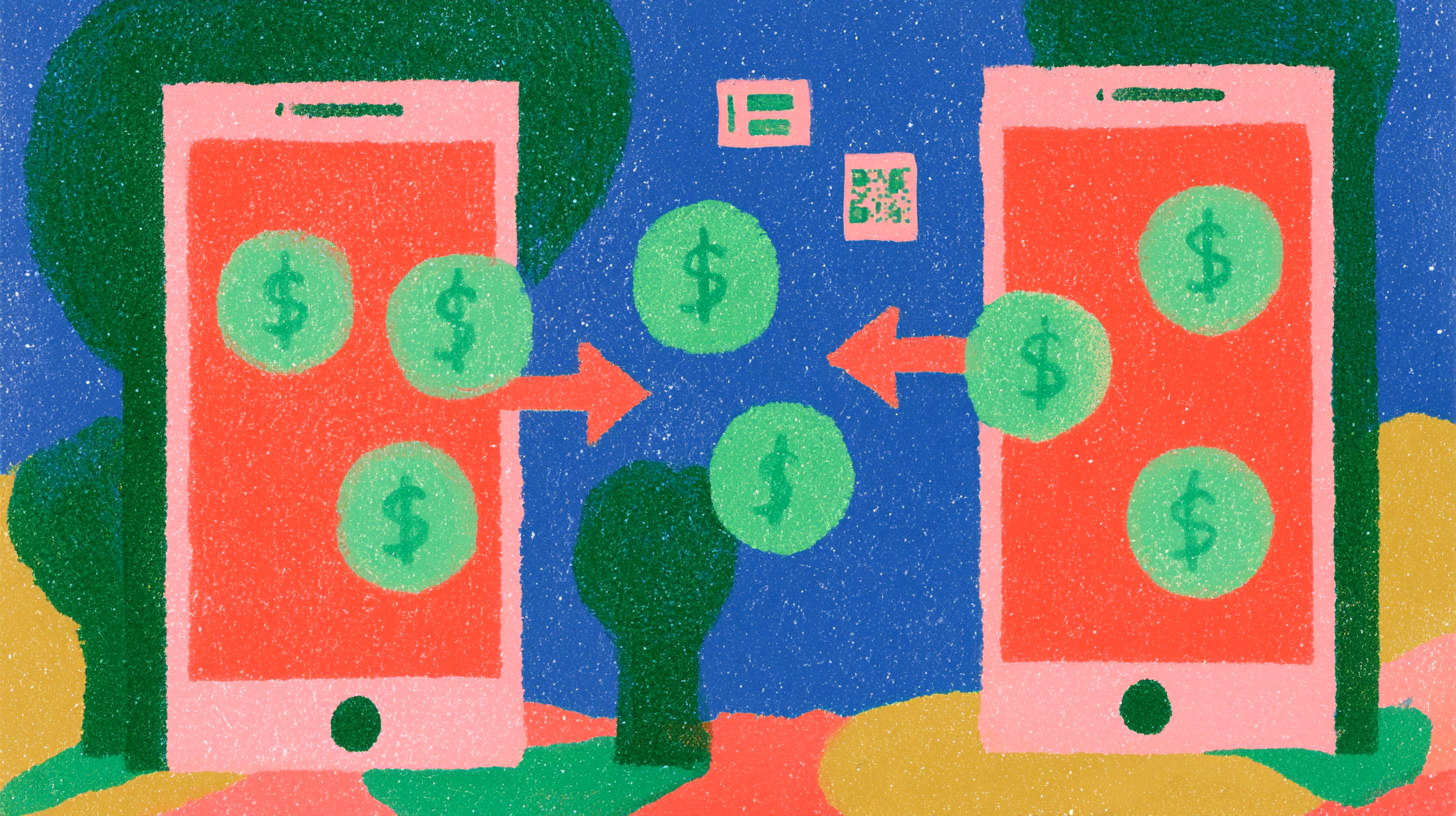
Venmo is a digital payment app in the United States that allows people to send and receive money quickly from their phones. The platform works as a peer-to-peer (P2P) payment service, meaning users can transfer money to friends, family members, or other contacts using a linked bank account, debit card, or available balance within the app.
Over the last several years, Venmo has become one of the most widely recognized payment apps for splitting bills, paying rent, reimbursing friends, and handling everyday payments in the U.S.
What Is Venmo?
Venmo is a digital payment app for quick transfers between people who know each other. It is commonly used to split a restaurant bill, to pay rent between roommates or even for sharing costs for trips or events. Venmo operates within the United States and requires compatible payment methods such as U.S. bank accounts or debit cards.
Verified users can send up to $60,000 per week. Transfer limits vary based on account verification status and may change over time.
How does Venmo work?
To start using Venmo, users first need to download the mobile app on iPhone or Android and create an account using an email address or U.S. phone number. After setting up the account, users can connect a payment method such as: a U.S. bank account, a debit card, a credit card, or an existing Venmo balance.
Once the account is ready, users can search for another person on Venmo using their name, username, phone number, or QR code. From there, they can either send money or request a payment.
Venmo fees — Cost table
| Service | Possible fee |
|---|---|
| Standard bank transfer | No additional transfer fee |
| Instant transfer | 1.75% of the transfer amount |
| Payment funded by credit card | 3% fee may apply |
| Out-of-network ATM withdrawals | Additional fees may apply |
Venmo fees can change over time. Always review the latest information directly on Venmo's official website.
Is Venmo available in Spanish?
Venmo is not available in Spanish; the app operates entirely in English. However, you can make the app display in Spanish by changing your smartphone's system language. Venmo does not offer customer service in Spanish.
Can I use Venmo as an immigrant?
Venmo requires a U.S. bank account or debit card to work. If you do not have access to traditional banking services, it may be difficult to get started. Also, Venmo does not allow international remittances, so if you need to send money to family in Latin America, you will need a different service.
Venmo vs. Común — Direct comparison
| Feature | Venmo | Común (ComunPay) |
|---|---|---|
| Main function | P2P payments in the U.S. | P2P payments in the US, remittances and deposit accounts |
| Spanish-language support | No (English only) | Yes, fully bilingual app + 24/7 Spanish support |
| Ways to send money | Username, phone, email, or QR code | Phone number, email, @username, QR code |
| QR code payments | Yes | Yes |
| Remittances to Latin America | No | Yes |
| Part of a broader financial app | Yes, debit card and direct deposit | Yes, checking account, Visa debit card and remittance services |
When does it make sense to use Venmo?
Venmo may be useful if: your friends and family already use Venmo, you mainly need fast domestic payments in the U.S., and you have a linked U.S. bank account.
FAQ
Is Venmo available in Spanish?
No. Venmo operates entirely in English without Spanish customer support.
Can I send money to Mexico with Venmo?
No. Venmo only supports domestic transfers within the U.S.
How much does Venmo charge?
Standard bank transfers have no additional fee. Instant transfers carry a 1.75% fee. Credit card payments may have a 3% fee.
Is Venmo safe?
Venmo uses encryption and identity verification. However, like any P2P app, transactions are difficult to reverse once completed.
Común is a financial technology company and not a bank. Banking services are provided by Community Federal Savings Bank, Member FDIC. Peer-to-peer payments services are provided by Cross River Bank.

Financial Education
How to fill out a money order: step-by-step guide
8 min de lectura
How to fill out a money order
A money order is a prepaid paper payment often used for rent, bills, or sending money securely through the mail. To fill one out correctly, you need to add the recipient's name, your information, sign the front, and keep the receipt for tracking or replacement purposes.
Money orders are still widely used in the United States, especially for situations where people need a secure paper payment method. Even in 2026, many landlords, utility companies, government offices, and individual recipients continue to accept or require money orders for certain payments.
For many people, especially immigrants, newcomers to the United States, or people without a traditional bank account, money orders can feel more accessible than personal checks. Filling out a money order incorrectly can cause delays, make the payment invalid, or create problems if the money order is lost. Knowing exactly what information to write and where to write it can help avoid unnecessary stress.
What is a money order?
A money order is a prepaid paper payment that works similarly to a check. Instead of drawing money directly from a bank account, you pay the full amount upfront when purchasing the money order.
Once completed, the money order can usually be:
- Mailed to a recipient
- Deposited into a bank account
- Cashed at approved locations
Because the payment is prepaid, money orders are often considered safer than mailing cash. Money orders are commonly used for:
- Rent payments
- Utility bills
- Government fees
- Payments sent through the mail
- Sending money to family members
- Situations where personal checks are not accepted
Most money orders also include a receipt or tracking number that can help verify whether the payment was cashed. Unlike many digital payment apps, money orders are not typically trackable in real time.
When to use a money order vs other options
Money orders can still make sense in certain situations, especially when:
- A landlord only accepts money orders
- You do not have a U.S. checking account
- You need to mail a secure payment
- The recipient does not use digital payment apps
- You do not want to share banking information
Where to buy a money order
USPS (United States Postal Service):
One of the most common places to buy money orders. Domestic money orders typically cost between $1.45 and $1.95. USPS money orders never expire.
Walmart:
Many Walmart locations offer money orders through MoneyGram services. Fees can be lower than traditional banks, although limits apply depending on the location.
Western Union:
Western Union locations also sell money orders. Some stores offer extended hours.
Banks and credit unions:
Some banks and credit unions issue money orders to account holders. Fees may vary depending on whether you already bank with the institution.
Step 1: Fill out the recipient's name
Write the recipient's full legal name in the "Pay to," "Pay to the Order of," or "Payee" section.
Tips:
- Write clearly using black or blue ink
- Double-check spelling
- Avoid nicknames unless specifically requested
- Do not leave this section blank
If the name is incorrect, the recipient may have trouble depositing or cashing the money order. Once the recipient's name is written, only that person should be able to cash or deposit the money order with valid identification.
Step 2: Fill out the sender's name and address
Write your own information in the purchaser or sender section. The form may ask for: full name, address, city and state, phone number. This helps identify who purchased the money order if there is a problem later.
Step 3: Sign the front and add a memo
Sign only where the purchaser or sender is instructed to sign on the front.
Do not sign the back.
The back is reserved for the recipient when they cash or deposit the money order.
Some money orders also include a memo or account number section. Examples: apartment number for rent, utility account number, invoice number, purpose of payment.
Step 4: Keep your receipt
The receipt usually contains: tracking information, serial number, purchase amount, date of purchase.
Keep the receipt until the money order has been cashed or deposited successfully. If the money order is lost, stolen, or delayed, the receipt may help you: request a replacement, verify whether it was cashed, contact customer support, file a claim.
Common mistakes to avoid
Leaving fields blank:
Fill out the money order completely before handing it over or mailing it.
Using incorrect recipient information:
Misspelled names or incorrect business information can delay the payment process.
Signing the back:
Only the recipient should sign the back of the money order.
Throwing away the receipt:
Always keep your receipt until the payment is confirmed.
Using pencil or unclear handwriting:
Use permanent ink and write clearly.
Mailing cash instead:
Money orders are generally safer than sending cash through the mail.
Alternatives to money orders (digital options)
Common digital alternatives include: Venmo, Cash App, bank transfers, debit card payment apps.
For people who regularly send money within the United States or to Latin America, Común offers digital transfer options through ComunPay.
ComunPay allows eligible users to send money using: payment links, QR codes, phone numbers, email addresses, usernames, debit cards. Unlike traditional mailed money orders, digital transfers inside apps can usually be tracked directly from the phone.
Común also offers international remittances to Latin America starting at $2.99.
Choosing the right payment option for your needs
Money orders continue to play an important role for many people in the United States, especially for rent payments, government forms, mailed payments, or situations where paper documentation is preferred. For everyday sending between family members, friends, or trusted contacts, digital payment tools may feel more practical and easier to track.
FAQ
How much does a money order cost?
Money orders typically cost between $1.45 and $10 depending on the issuer, amount, and location. USPS money orders commonly range from $1.45 to $1.95.
Can a money order be cashed by anyone?
No. Once the recipient's name is written, only that person should be able to cash or deposit it with valid identification.
How long is a money order valid?
Many money orders do not expire. USPS money orders do not expire.
What happens if I make a mistake on a money order?
Avoid crossing information out. Contact the issuer about replacement options.
Can I track a money order?
You can usually verify whether it was cashed by contacting the issuer with your receipt information.
What is a digital alternative to a money order?
Venmo, Cash App and ComunPay for peer-to-peer transfers. Común also offers international remittances to Latin America starting at $2.99.
Común is a financial technology company and not a bank. Banking services are provided by Community Federal Savings Bank, Member FDIC. The Común Visa® Debit Card is issued by Community Federal Savings Bank. Peer-to-peer payments services are provided by Cross River Bank. No minimums, no maintenance fees. Remittance service provided by Service UniTeller, Inc. Remittance fees start at $2.99 but may vary. Común Inc. may earn revenue from the conversion of foreign currencies.
Immigration
EB-2 visa: requirements and how to apply in 2025
8 min de lectura
Obtaining permanent residence is the goal of millions of immigrants in the United States. The EB-2 visa is one of the most feasible paths to achieve it, since it not only grants the applicant the right to work legally, but to do so within their area of professional expertise.
This type of visa is intended to facilitate immigration for people with advanced university degrees or demonstrable exceptional ability.
If you have a professional career and several years of experience, you may qualify to obtain a Green Card through the EB-2 visa and gain strong job opportunities and stability in the U.S.
Below we explain the requirements to obtain the EB-2 visa, the differences between eligibility categories, and the step-by-step process to secure the pathway that could completely change your working life.
Learn more about the EB-2 visa and why it matters
There are several categories of work visas that can lead to a Green Card. One of them is the EB-2.
There are two routes to obtain this visa:
- With an employer sponsor:
Requires a U.S. employer to file through a process called PERM Labor Certification, which demonstrates the need for a foreign worker due to an insufficient number of qualified U.S. workers.
- With a National Interest Waiver (EB-2 NIW):
Employer involvement is not required; it can be filed as a self-petition showing the work has significant impact or is in the national interest of the United States.
This visa is aimed at professionals with advanced degrees in various fields or with exceptional ability.
The main advantages of the EB-2 over other visas are:
- It puts you on a path to permanent residence.
- It does not rely on capped lotteries.
- It allows you to advance professionally with greater freedom and financial stability.
Differences among the main U.S. employment visas
Understanding immigration procedures and visa application processes can be confusing because of the different categories and specific requirements for each.
Below is a comparison table of the EB-2, EB-3, and EB-5 visas.
EB-2 | EB-3 | EB-5
Approximate processing time with sponsor: at least 12–18 months. With NIW the time may be somewhat shorter. | About 1 to 3 years. | EB-5 processing times vary widely; consult USCIS directly.
Who can apply? Professionals with an advanced degree or exceptional ability. Applicants with skills of national interest. | Skilled workers Professionals with a bachelor’s degree Other workers | Foreign investors who make a minimum investment in a U.S. business and create at least 10 jobs.
Purpose of the visa Obtain permanent residence based on professional merit. NIW allows self-petition. | Obtain permanent residence for skilled workers or professionals. | Obtain permanent residence in exchange for a significant financial investment.
Approximate costs Form I-140: $715 Form I-485 (adjustment of status): $1,440 Consular processing: $325. | Same as EB-2 | $1.8 million standard investment. $900,000 reduced investment if the project is in a TEA area. Form I-526 / I-526E: $11,160 + $100 if investing via a Regional Center.
Main requirements With sponsor: employer files PERM and then Form I-140NIW: show work of national interest. | PERM approved by DOL Employer must file Form I-140Meet additional requirements for other workers. | Proof of lawful, traceable investment in at least the minimum amount. Evidence of creation or preservation of at least 10 jobs. Enter as a conditional resident. File Form I-829 to remove conditions.
| EB-2 | EB-3 | EB-5 | |
|---|---|---|---|
| Approximate processing time |
With sponsor: at least 12–18 months. With NIW the time may be somewhat shorter. |
About 1 to 3 years. | EB-5 processing times vary widely; consult USCIS directly. |
| Who can apply? |
Professionals with an advanced degree or exceptional ability. Applicants with skills of national interest. |
Skilled workers Professionals with a bachelor’s degree Other workers |
Foreign investors who make a minimum investment in a U.S. business and create at least 10 jobs. |
| Purpose of the visa |
Obtain permanent residence based on professional merit. NIW allows self-petition. |
Obtain permanent residence for skilled workers or professionals. | Obtain permanent residence in exchange for a significant financial investment. |
| Approximate costs |
Form I-140: $715 Form I-485 (adjustment of status): $1,440 Consular processing: $325. |
Same as EB-2 |
$1.8 million standard investment. $900,000 reduced investment (TEA area). Form I-526 / I-526E: $11,160 + $100 (Regional Center cases). |
| Main requirements |
With sponsor: employer files PERM and then Form I-140. NIW: show work of national interest. |
PERM approved by DOL. Employer must file Form I-140. Meet additional requirements for other workers. |
Proof of lawful, traceable investment of the minimum amount. Evidence of creation or preservation of at least 10 jobs. Enter as a conditional resident. File Form I-829 to remove conditions. |
What are the requirements to obtain the EB-2 visa?
It’s important to stress that applicants must meet specific requirements to obtain the EB-2 visa in any of its modalities.
These are requirements you cannot overlook:
Requirements via advanced academic degree
Holding an advanced degree is the most common way to obtain an EB-2 visa.
- An advanced degree is considered a master’s, doctorate, or post-doctoral degree.
- A person with a bachelor’s degree may apply, as long as they can show at least 5 years of experience.
Requirements via exceptional ability
Another alternative is to demonstrate exceptional ability in fields such as the arts, sciences, business, or others.
This means reaching a level of expertise significantly above ordinary. It must be shown with at least 3 types of documentary evidence:
- Recognitions: achievements, distinctions, and awards received.
- Work record: employer letters and proof of years of work experience.
- Memberships: belonging to associations that require meeting professional standards and merits.
National Interest Waiver (NIW)
Allows applying without a sponsor or labor certification.
These are the 3 criteria for the EB-2 NIW, according to USCIS:
- The endeavor has substantial merit.
- It has national importance for the United States.
- The applicant is well positioned to advance it.
This visa is widely used by researchers, physicians, businesspeople, and entrepreneurs who can contribute significantly to U.S. society.
How to apply for the EB-2 visa
Below are the key steps to obtain the EB-2 visa.
Determine eligibility
First, determine which subcategory fits your profile—advanced degree, exceptional ability, or NIW. Assess your background and each category’s characteristics to decide where to apply.
File the initial petition
Generally, you will file Form I-140, which the employer or the applicant (in the case of NIW) uses to start the visa process.
Adjustment of status or consular processing
For adjustment of status, file Form I-485 if the applicant is in the U.S. Otherwise, proceed via consular processing with the DS-260.
Interview and final decision
USCIS or the consulate will likely require an interview to verify your information and ask questions related to your profile. Once approved, the applicant ultimately obtains lawful permanent residence.
Once in the United States, open your account with Común
In this article, we reviewed what the EB-2 visa is, the requirements to apply, the sponsorship or NIW options, and the key steps in the process.
Although it may seem confusing or endless, it is also a step toward living and working legally in the U.S. and obtaining a residence card.
To start from scratch in a new country, you need allies who understand you.
Común is the financial platform built for immigrants newly arriving in the U.S. who want to manage their money safely. Send money from the United States to Latin America with clear, affordable fees. Your family can receive it directly in bank accounts or pick it up at selected physical locations.
Opening your account is very easy! The mobile app is available in Spanish and English. Comun accepts over 100 qualifying foreign government IDs, and was designed with you in mind.
Frequently Asked Questions (FAQ)
If you still have questions, see this section:
Can I include my family in the application?
If your petition is approved, you can include your spouse and unmarried children under 21.
How much does it cost to apply for the EB-2?
- I-140 (Immigrant Petition): $715.
- I-485: $1,440.
- USCIS Immigrant Fee (for Green Card issuance): $235.
What if my visa is denied?
You can file an appeal or start a new application.

Financial Education
Which one is the best traditional bank in the United States? A Practical Guide for Immigrants
8 min de lectura
Having a bank account is an essential step for people arriving to work in the United States, since it makes it easier for them to manage their salaries and adapt to the country’s financial system.
This can be a complicated process, since in the United States there is a wide variety of financial institutions, such as traditional banks with hundreds of branches, digital banks, and credit unions.
Among the most well-known are Bank of America, Capital One, and Wells Fargo, which enjoy significant recognition in the country. However, it is not possible to name one as the best: this depends on the specific needs of users.
For example, immigrants in the United States look to prioritize ease of account opening, as well as the ability to send remittances to their loved ones.
In this article, we will explain which are the best banks in the U.S., their features, requirements, and everything you need to know before opening an account.
The 6 Best Banks in the United States in 2025
Below, we present a comparative table of the best banks in the U.S.
| Bank | Strengths | For Whom It Is Ideal |
|---|---|---|
| JP Morgan | Largest network of branches and ATMs, rewards available on credit card | People who want easy access to physical branches, along with a variety of financial products |
| Bank of America | Over 3,000 branches, bilingual service in Spanish and English | For those who prefer to communicate in Spanish and seek a bank with a solid reputation |
| Wells Fargo | Wide branch coverage, express international transfers | People looking for reliable options to send remittances |
| Citibank | International presence, global focus | Those who need to make frequent international money transfers |
| Capital One | No monthly fees and no minimum balance | Those seeking more accessible and digital options |
| PNC | Over 2,300 branches, mobile app for financial management | Those seeking to improve their personal financial management |
How to Choose the Best Bank to Open an Account
If you are about to start your financial life in the United States, choosing a bank where you open an account is a very important decision. Each has its own requirements and benefits, so you should look for the one that best fits your expectations.
These are the most relevant criteria you should analyze before choosing the best option for you.
Accepted Identification
Many banks request the SSN (Social Security Number) to process a bank account, while others accept alternatives such as the ITIN or a passport.
Support and Availability
Although some banks do offer support in other language, like Spanish, not all of them do. Verify that the institution you choose can clearly answer your questions.
Cash Deposits and Withdrawals
If you frequently receive cash payments, it is important that your bank allows you to make cash deposits at branches near you and without fees.
Transfers and Remittances
Sending remittances is a crucial issue for immigrants, so you should review the fees for international money transfers. These are often more expensive in traditional banks due to intermediaries and exchange rates.
Digital Security
Verify that the bank has security measures in digital banking, as well as backing from official institutions such as the FDIC.
5 Digital Finance Platforms in the United States
Beyond traditional banks, you can also turn to digital alternatives, which tend to be more accessible.
Digital banks or financial platforms are institutions that operate online through mobile apps and websites. They do not depend on physical branches and tend to make processes easier in favor of financial inclusion.
There are financial platforms focused on meeting the needs of immigrants in the United States, as they address gaps and obstacles of traditional banks with flexible account-opening requirements, accessible fees for remittance sending, and ease of depositing cash.
Común
Advantages: focused on the needs of immigrants, support available in Spanish, and has accessible account-opening requirements.
Disadvantages: it does not have physical branches or an ATM network, but you will always be able to access your digital money from the palm of your hand, without time restrictions; you can also withdraw and make cash deposits at thousands of locations in the United States.
Ally
Advantages: 100% digital bank with High Interest Rates (APY) on savings accounts.
Disadvantages: it is not possible to make direct deposits.
Axos
Advantages: offers various types of accounts and attainable options for students and immigrants.
Disadvantages: limited support in Spanish.
Chime
Advantages: offers accounts with no monthly fees, ATM network, and payroll advance.
Disadvantages: difficulty in making cash deposits.
Discover
Advantages: offers credit cards with rewards, checking and savings accounts without monthly fees.
Disadvantages: few cash deposit options, and it is not focused on the needs of immigrant communities.
Común: A financial platform for immigrants in the U.S.
As you can see, there is a variety of financial institutions you can turn to, and access to a full range of services such as cash deposits, transfers, financial management, etc.
That is why you must be clear about what you are looking for in a U.S. bank account and how you could meet your needs.
Most traditional banks tend to have stricter requirements and higher operating costs. For this reason, many immigrants consider digital financial platforms as an alternative, since they are often more accessible and designed with services that address their needs.
Común is a fintech platform that can support you in starting your financial journey in the United States, offering benefits such as:
- Open your account with the qualified official identification from your country of origin
- Forget about hidden fees and minimum balances
- Send money to your loved ones in Latin America for a fee starting at $2.99 USD (up to the applicable limits)
- Access a network of more than 88,000 locations for cash deposits and withdrawals
- Access Spanish-language support available 24 hours a day
- Get a Visa debit card
- Manage your finances from a comprehensive and easy-to-use mobile app
Open your account today and start sending money through Común’s mobile app.
Frequently Asked Questions
If you have more questions, check our FAQ section.
Which is the safest bank in the U.S.?
FDIC insurance is relevant to determine if a bank is safe. Traditional banks have this backing, as do digital banks like Revolut (through Sutton Bank) and fintech platforms such as Común.
Which bank charges fewer monthly fees for a bank account?
Many digital banks and fintech platforms, including Común, often offer competitive rates. This can be due to lower operating costs, since they do not maintain physical branches. However, fees and account features vary by provider.

International Money Transfers
The Impact of Money Transfer Apps on Global Remittances
8 min de lectura
The Global Impact of Mobile Money Transfer Apps
Money transfer apps have significantly altered the global remittance landscape, offering an accessible and efficient way for people to send money across borders. These apps have democratized financial services, especially in regions where traditional banking infrastructure is weak. By leveraging mobile technology, remittance services have become more inclusive, reaching remote and underserved communities.
Key Benefits
Accessibility: Money transfer apps are accessible to anyone with a smartphone and an internet connection, with no need for a physical bank.
Cost Efficiency: These apps often offer lower transaction fees compared to traditional remittance services, making it more affordable to send money internationally.
Speed: Transfers process almost instantly, reducing wait times for recipients.
Security: Advanced encryption methods and secure access provide robust protection against fraud and theft.
Impact of Mobile Money Apps on International Remittances
Mobile money apps have had a profound impact on international remittance flows. By simplifying the transfer process, these apps have increased the volume of remittances sent globally.
Accessibility and Financial Inclusion
One of mobile money apps' most significant contributions to international remittances is their role in promoting financial inclusion. Many remittance recipients in developing countries don't have access to traditional banking services. However, with the widespread adoption of mobile phones, even in remote areas, these people can now receive money directly into their mobile wallets. This not only eliminates the need for physical bank branches, but also provides a safe and convenient way for recipients to access their funds.
Reducing Transaction Costs
Another key impact of money apps on remittances is reducing transaction costs. Traditional remittance methods often involve high fees charged by banks and money transfer operators. These fees can eat into the funds sent, particularly for smaller amounts. Mobile money apps, on the other hand, generally offer lower fees, making it more affordable for migrants to send money to their families. By lowering the cost of remittances, these apps let migrants send larger amounts of money, increasing the total volume of remittances reaching recipient countries.
Speed and Convenience
Mobile money apps also offer unmatched speed and convenience compared to traditional remittance methods. Transactions can be initiated and completed in minutes, letting recipients access funds almost instantly. This is particularly beneficial in emergency situations, where quick access to funds can make a significant difference in a recipient's quality of life. Plus, the convenience of mobile money apps means migrants can send money anytime, from anywhere, without having to visit a physical location or work around bank or money transfer agent hours.
Empowering Recipients
Beyond the immediate financial benefits, mobile money apps empower recipients by giving them greater control over their finances. With funds deposited directly into their mobile wallets, recipients have the flexibility to use the money however they see fit, whether for daily expenses, savings, or investments. This financial autonomy can contribute to long-term economic stability and resilience, since recipients are better equipped to weather financial shocks and pursue opportunities for personal and economic growth.
More Stable Than Capital Flows
Remittances have proven to be more stable than other forms of financial inflows, like foreign direct investment (FDI) or portfolio investments.
Reasons for Stability
- Personal Nature: Remittances are usually sent for personal reasons, like supporting family members, making them less susceptible to economic fluctuations.
- Resilience: During economic downturns or crises, migrants often increase remittances to support their families, providing a steady flow of funds.
High Transaction Costs
Despite the advantages, high transaction costs remain a challenge in the remittance industry. Traditional services can charge fees ranging from 7% to 10% of the total amount sent, which is a significant burden for lower-income workers.
Efforts to Reduce Costs
- Regulatory Changes: Governments and international organizations are working to implement policies that reduce transaction fees.
- Technological Innovation: Advances in fintech, including blockchain and cryptocurrency, are helping reduce costs by cutting out intermediaries.
In short, the impact of mobile money apps on international remittances is multifaceted, spanning greater accessibility, lower transaction costs, increased speed and convenience, and recipient empowerment. As these apps continue to evolve and innovate, their role in facilitating cross-border transactions and promoting financial inclusion will likely become even more pronounced, further transforming the global remittance landscape for the better.
What to Consider When Sending Remittances
Sending remittances through mobile money apps offers convenience and efficiency, but it's essential to consider several factors to ensure a smooth, cost-effective transaction.
- Fees: Compare the fees charged by different money transfer apps to find the most affordable option. While some apps may offer low upfront fees, they may make up for it with less favorable exchange rates.
- Exchange Rates: Exchange rates can vary significantly between different money transfer apps and fluctuate throughout the day. Look for apps that offer competitive exchange rates to maximize the amount the recipient receives.
- Transfer Speed: Consider how quickly you need the money to reach the recipient. While many mobile money apps offer near-instant transfers in minutes, others may take longer, especially for transfers to remote areas or during periods of high transaction demand.
- Security Features: Make sure the money transfer app you choose has robust security measures to protect your funds and personal information. Look for features like two-factor authentication, encryption protocols, and fraud detection systems.
- Accessibility: Consider the app's accessibility for both sender and recipient. Choose an app that's easy to use and available in the languages spoken by both parties. Verify that the recipient can easily access the transferred funds, whether through a mobile wallet, bank account, or cash pickup location.
- Customer Support: Evaluate the customer support options provided by the money transfer app. Look for apps that offer responsive customer service channels, like phone support, live chat, or email.
- Reviews and Reputation: Research the money transfer app's reputation by reading reviews from other users and independent review platforms. Pay attention to feedback on reliability, transaction speed, customer service, and overall user experience. Choose a reputable app with a track record of safe, efficient money transfers to minimize the risk of issues.
- Regulatory Compliance: Make sure the money transfer app complies with relevant regulations and legal requirements in both the sender's and recipient's countries. Verify that the app follows anti-money laundering (AML) and know-your-customer (KYC) procedures to prevent illicit financial activity.
Sending the Money
Sending money through mobile apps is a straightforward process, but understanding the steps can help ensure a successful transaction.
Steps to Send Money
- Choose an App: Select a reliable money transfer app based on your needs.
- Set Up an Account: Sign up and verify your account with the necessary ID documents.
- Enter Transfer Details: Enter the recipient's information and the amount to send.
- Review and Confirm: Verify the details and confirm the transaction.
- Notification: Both sender and recipient typically receive notifications once the transfer is complete.
By carefully considering these factors when sending remittances through mobile money apps, you can ensure a smooth, cost-effective transfer experience while providing vital support to your loved ones across borders.
In the mobile remittance landscape, Común stands out as an emerging player, particularly serving the needs of the immigrant community in the United States¹. Recognizing the challenges immigrants face in accessing reliable financial services and building wealth in the U.S., Común has positioned itself as a solutions-oriented platform aimed at lowering barriers to entry and accelerating integration with the digital economy.
Let's Start With the Problem:
Living in the United States as a foreigner presents numerous challenges, made worse by a financial system that often overlooks immigrant communities' needs. Reliable financial services are essential for building wealth, yet millions of immigrants find themselves excluded from mainstream banking and financial opportunities.
Barriers to Entry:
- Documents: Immigrants are often less likely to have Social Security numbers (SSNs), a common requirement for accessing financial services.
- Language: Many financial institutions lack Spanish-language services, creating a communication barrier for Spanish-speaking immigrant customers.
- Cost: Financial services aimed at immigrants often come with exploitative pricing, further widening the economic gap.
Addressing the Structural Opportunity Gap:
Común recognizes the structural opportunity gap facing the immigrant community and aims to address it through innovative solutions tailored to their needs.
Común's Solution:
- Your Documents: Común is one of the only platforms that lets users apply with more than 100 Latin American IDs, removing the barrier posed by not having an SSN.
- Your Language: Común provides 100% bilingual customer service, with native Spanish speakers available 24/7 via chat, email, or phone, ensuring effective communication and support.
- Your Neighborhood: Común offers a network of thousands of locations for cash deposits and withdrawals, making financial transactions convenient and accessible for users.
Facts About Global Migration
Understanding the dynamics of global migration is essential to grasping the complexities of remittances and their impact on world economies. Here are key facts that shed light on the intricate relationship between migration and remittances:
- Global Migration Trends: Migration patterns have shifted over the past decade, with significant movements of people across regions and continents driven by factors like economic opportunity, conflict, and climate change.
- Top Remittance-Receiving Countries: Some countries receive the largest remittance inflows, often coinciding with regions facing economic challenges or political instability. Countries like India, China, and Mexico are among the top global remittance recipients.
- Top Remittance-Sending Countries: On the other hand, there are countries where most remittances originate, reflecting diaspora efforts to support family members and contribute to development in their countries of origin. The United States, Saudi Arabia, and the United Arab Emirates are prominent remittance-sending countries.
- Economic Impact of Remittances: Remittances play a crucial role in recipient countries' economies, contributing to GDP growth, poverty reduction, and increased household income. In many developing countries, remittances make up a significant share of national income.
- Cost of Sending Remittances: Despite their economic importance, sending remittances can be costly for migrants, with fees charged by money transfer operators and banks often eating into the funds sent. Efforts to reduce remittance costs are underway, aimed at maximizing benefits for senders and recipients.
- Remittance Growth Over Time: Global remittance volumes have been steadily increasing over the years, reflecting the growing number of migrants and the expansion of remittance corridors. This growth underscores the importance of remittances as a lifeline for millions of families worldwide.
- Migrant Contributions to Host Economies: Migrants don't just send money back to their home countries — they also contribute to their host countries' economies through labor participation, entrepreneurship, and consumer spending. Their contributions enrich cultural diversity and drive innovation and economic growth.
- Impact of Technology on Remittances: Technological advances, including the rise of mobile money apps and blockchain technology, have revolutionized the remittance industry, making transfers faster, cheaper, and more accessible. These innovations have empowered both migrants and recipients, letting them bypass traditional banking systems and intermediaries.
- Future Projections: Projections indicate continued growth in global migration and remittance flows, driven by demographic shifts, economic disparities, and geopolitical developments. Understanding these trends is essential for policymakers, financial institutions, and stakeholders to shape policies and initiatives that harness the positive impact of remittances while addressing challenges and barriers to access.
By recognizing the importance of migration and remittances, we can work toward building inclusive, sustainable financial systems that benefit individuals, families, and communities around the world.
Conclusion
In conclusion, money transfer apps have revolutionized global remittances, offering convenience, affordability, and accessibility. They close the gap between senders and recipients, empowering migrants and supporting families worldwide. As technology advances and regulations evolve, these apps will continue to shape the remittance landscape, fostering financial inclusion and economic growth. By embracing innovation and collaboration, we can harness the transformative power of mobile money apps to create a more equitable, prosperous global economy.

Financial Education
Money transfer scams in 2026: how to identify and avoid them
8 min de lectura
Money transfer scams in 2026: how to identify and avoid them
Money transfer scams continue to affect thousands of families across the United States, especially immigrant communities that regularly send money to loved ones abroad. In recent years, scammers have become more sophisticated, using fake banking apps, social media impersonation, AI-generated voices, and emotional manipulation to steal money and personal information.
According to recent data from the Federal Trade Commission (FTC), consumers reported losing $15.9 billion to fraud in 2025, with impersonation scams remaining the most commonly reported types of fraud.
For Latino immigrants in the U.S., these scams can feel especially stressful because they often involve urgent family situations, language barriers, or financial pressure.
What are money transfer scams?
Money transfer scams are fraudulent schemes designed to convince someone to send money or share sensitive financial information. These scams may happen through phone calls, text messages, WhatsApp, social media, fake banking apps, email phishing, or online marketplaces.
Most common scams in 2026
Bank impersonation scams:
Scammers pretend to be your bank, sending messages that look official asking if you authorized a transaction. They then call claiming to represent the bank and instruct you to transfer funds to 'reverse' fraud.
Government impersonation scams:
Someone claims to be from the IRS, Social Security, or immigration and threatens consequences if you don't pay immediately.
Marketplace scams:
Scammers on platforms like Facebook Marketplace request payment through transfers. After funds are sent, the item may never arrive.
Overpayment scams:
A scammer claims to have 'accidentally' sent money and asks for it back. Their original payment may later be reversed or prove fraudulent.
Romance/friendship scams:
Someone develops an online relationship and then asks for money for an 'emergency'.
AI-generated voice scams:
In 2026, scammers use AI to clone family members' voices and create false urgency by claiming to be in an emergency.
Red flags: how to recognize a scam
- They ask you to send money immediately or you'll 'lose' something
- They pressure you to keep the transaction secret
- The offer seems too good to be true
- They ask you to pay with hard-to-trace methods (gift cards, wire transfers, crypto)
- The phone number or email doesn't match the official one
- They unexpectedly ask you to confirm personal information
What to do if you were scammed
- Contact your financial institution immediately
- Report to the FTC at reportfraud.ftc.gov
- Save all evidence: screenshots, messages, phone numbers
- Change passwords and enable two-factor authentication
How Común protects your money
Común uses encryption and identity verification to protect transactions. If you receive a suspicious message claiming to be from Común, contact official support directly through the app or at ayuda@comun.app. Común will never ask for your password or verification code via text message.
FAQ
How do I know if a call is really from my bank?
Hang up and call the official number on the back of your card or the bank's official website. Legitimate banks will never ask you to transfer money to 'protect it'.
Can I get my money back if I was scammed?
It depends on the transfer method and how quickly you report. P2P transfers and wire transfers are difficult to reverse. Report immediately to your financial institution.
Común is a financial technology company and not a bank. Banking services are provided by Community Federal Savings Bank, Member FDIC.

Financial Education
Emergency Fund: Guide to Build It and Save in the U.S.
8 min de lectura
How to create an emergency fund and save in the U.S., step by step
If you’re new to the United States or facing financial challenges, it’s very important to have strategies to prepare for any eventuality.
An emergency fund is an excellent way to do this, and it also builds your financial literacy. It’s a cash reserve meant to cover unexpected expenses such as illness, job loss, home repairs, etc.
Having this cushion gives you peace of mind and removes uncertainty about the future, since it provides the liquidity you need to handle the unexpected.
You might think you need to earn a lot to build an emergency fund. Below, we’ll show that even with limited resources, you can start securing a future without financial complications.
What is an emergency fund and why is it key to your financial peace of mind?
Surely at some point during your time in the U.S., you’ve faced financial emergencies that made it hard to cover daily expenses—traffic fines, immigration procedures, illnesses, unemployment, repairs, etc.
An emergency fund is meant to support your finances precisely when those events occur. It’s savings set aside to handle all kinds of unforeseen expenses.
Beyond a stash of money, think of the emergency fund as a way to maintain peace of mind and reduce stress; it helps you preserve financial stability and avoid going into debt.
How much should you save in your emergency fund?
Knowing how to size an emergency fund is the first dilemma for many who aren’t used to long-term saving. While the ideal target is 3–6 months of basic expenses, if your income is limited you can start with small savings goals.
Below is a comparison of how your emergency fund would grow assuming expenses equal to 50% of total monthly income.
Monthly income
Approx. monthly expenses
3-month savings target
6-month savings target
$1,500
$750
$2,250
$4,500
$2,500
$1,250
$3,750
$7,500
$3,500
$1,750
$5,250
$10,500
Where should you keep your emergency fund so it’s safe and accessible?
It’s very important to choose a safe, easy-access place for your emergency fund and keep it separate from the money you use for daily expenses.
Today there’s a wide variety of savings accounts, both from traditional financial institutions and online platforms.
Whatever you choose, the following options are not recommended for storing your emergency fund.
- Cash at home
Whether under the mattress or in a piggy bank, keeping your emergency fund in cash is not a good idea for several reasons. First, there’s the risk of theft or loss. Also, the cash earns no interest and loses value to inflation. Another drawback is low accessibility if you need to cover expenses digitally.
While it’s true that opening a checking account can be challenging for immigrants in the U.S., there are accessible options so you don’t have to keep the emergency fund in cash.
- In high-risk investments
Although investments have advantages, high-risk ones involve sharp fluctuations that could cause losses. They also often require locking funds for a long period.
Simple strategies to build your emergency fund
If you’re new to personal finance, the first thing to know is that an emergency fund isn’t just for high earners. The key is to examine your lifestyle and spend according to a savings plan.
Step 1. Calculate your basic monthly expenses
The first step is to list all your fixed monthly expenses and the amount for each.
Example:
- Rent: $1,300
- Transportation (public or private): $100
- Tuition: $200
- Subscriptions: $50
Then list your variable expenses and calculate a budget. To be more accurate, track all your spending by category.
Example:
- Food: $300
- Leisure: $200
Finally, total your monthly spending. In the example above, monthly expenses add up to $2,100.
Step 2. Set your first goal
At first, reaching 3–6 months of expenses can sound impossible. You don’t have to give up what you enjoy—start with a small amount each month and increase gradually.
Your first savings target depends on your income, your expenses, and the resulting capacity to save.
Step 3. Adjust your budget and allocate a fixed percentage to savings
After doing the math, add “savings” as a fixed expense so you set that money aside every month.
Step 4. Automate with scheduled transfers
Ideally, open a new account so your emergency fund doesn’t mix with daily-use money.
An easy way to fund it is with automatic transfers so you don’t have to remember to move money each time.
Step 5. Review and raise your goal until you reach 3–6 months of expenses.
After a few months of hitting a small goal, reassess your budget and consider increasing your savings as you’re able.
Organize and protect your money with Común
As you can see, an emergency fund provides financial security for unexpected events. It’s also easy to start with small goals and increase gradually until you reach financial peace of mind.
The next step is choosing a safe place to keep your emergency fund secure.
Meet Común, the financial platform dedicated to making life easier for immigrants in the United States!
- Open your checking account at Común with a qualifying official ID from your country of origin.
- Send money to your family with clear, competitive fees.
Común is a financial platform designed to support your first steps toward financial stability in the U.S.
Open your account with Común today and start your emergency fund with a financial ally that truly understands you.
Frequently Asked Questions (FAQ)
If you still have questions, check this section.
Is it better to save for the emergency fund or pay debts first?
Having debts doesn’t prevent you from starting an emergency fund. Just include debt payments among your fixed monthly expenses and set your savings goal accordingly.
What happens if I use the fund and end up with no savings?
If you use your emergency fund for unexpected expenses, that’s fine—that’s its purpose. If you run it down, don’t worry; just start again based on your budget.
When should I use my emergency fund?
Your emergency fund is intended to cover unexpected events like medical bills, appliance breakdowns, layoffs, etc. When that happens, use it—and keep saving afterward.

International Money Transfers
How to make an international money transfer? Costs, times and requirements
8 min de lectura
International money transfers can be sent via bank wire, money transfer apps, or remittance services — each with different fees, speed, and delivery options. With Común, transfers to Latin America start at $2.99, with most arriving within minutes.
For immigrants in the United States, sending money to their home countries regularly is essential. Therefore, it is important to have access to affordable and accessible financial services.
If you want to know how to make an international money transfer, it is crucial to first compare the different providers of this service and choose the one that offers the most advantages for you and your family.
Comun stands out as a popular option among immigrants because it allows them to send money abroad from the United States, offering advantages in terms of cost, speed, and other key factors.
Below, we provide a comparison table that includes Comun and traditional financial institutions in the United States, such as Bank of America and Wells Fargo:
| Comun | Traditional Financial Institutions | |
|---|---|---|
| Fee | Transfer fee starting at 2.99 USD up to applicable limits | From 10 to 45 USD, depending on the bank |
| Intermediary fees | $0 USD | May generate extra fees from intermediary banks |
| Exchange rate | Competitive | Higher margin than official |
| Speed | Instant to a few minutes (average 8) | From 1 to 5 business days |
| Estimated total fee | 2.99 USD transfer fee + exchange rate, with no extra charges (The first transfer has no fee. Subsequent transfers have a fee starting at $2.99 USD, up to the applicable limit. ATM or intermediary charges may apply; check the app for more details). | From 20 to 60 USD, due to fees and less favorable exchange rates |
How Does an International Money Transfer Work?
The first point to understand is the types of bank transfers available, as this determines the final cost of sending an international money transfer.
In the United States, there are two types of international money transfers: through traditional banks or through specialized services for sending money abroad.
International Money Transfers via Traditional Banks
- Supported by official U.S. financial institutions and security measures, including:
- Identity verification (KYC/CIP) and ongoing AML monitoring (BSA).
- OFAC sanctions screening for senders and recipients.
- Consumer protections for remittances under Regulation E (pre-transfer disclosures, cancellation rights, and error resolution).
- Network and messaging security standards (e.g., SWIFT Customer Security Program).
- Multi-factor authentication and encryption for online banking access.
- A U.S. bank account is mandatory
- Operates through the SWIFT code
- Generates higher fees due to intermediaries
- Transfer time may take up to 5 business days
International Transfers via Specialized Applications
- Operates through digital networks connected with banks or physical branches in each recipient country
- Lower fees, as they do not use intermediaries and offer more competitive exchange rates
- Money transfers are completed within minutes or hours
- A U.S. bank account is not mandatory to use these services
Before paying unnecessary fees, make sure to choose the best international money transfer provider and make the most of your money.
Steps and Requirements for Making an International Money Transfer
Below, we outline what is needed to easily make an international bank transfer from the United States, whether you choose a traditional bank or a specialized application for this type of service:
1. Choose a Provider
Some of the traditional banks you can use are Chase, Bank of America, Capital Bank, Citibank, and Wells Fargo. If you don't have a US bank account, you'll need to make sure you have the necessary requirements to open an account, such as a Social Security Number (SSN). For the aforementioned banks, you can present an ITIN instead, along with a government-issued ID.
Another factor to consider is how long an international money transfer takes, as traditional banks usually take longer due to intermediaries involved in the process.
If you prefer a specialized application for international money transfers due to the flexibility they offer compared to banks, an excellent alternative is Comun, which allows you to transfer money from your phone without complications or intermediaries.
2. Create an Account
General Requirements for Opening an Account at a U.S. Bank
- Valid passport or immigration document
- Social Security Number (SSN)
- Individual Taxpayer Identification Number (ITIN)
- Proof of address in the United States
- Some banks require an initial deposit of approximately $25 USD
Depending on the bank, you may open the account online or by visiting a branch for data verification.
Requirements for Opening an Account with Comun
- Mobile phone compatible with Android or iOS
- Email address
- Official foreign identification
- Have a US residential address
In both cases, you will have access to a debit card and a mobile application that will allow you to make international money transfers and other transactions from the palm of your hand.
3. Enter Transaction Details
Once you activate your account, enter the information required for an international money transfer:
- Full name of your recipient, as it appears on their official ID
- Recipient’s phone number
- Recipient’s address (only if sending money to a bank account)
- Recipient’s account number (only if sending money to a bank account)
- SWIFT code (if transferring through a traditional bank)
Then, enter the amount you wish to send.
Comun and other specialized applications also allow cash pickup at physical locations, so your recipient does not need a bank account.
4. Review Costs and Rates
Next, review the international money transfer fees as well as the exchange rate, as these will impact the final amount your recipient receives.
The cost of an international money transfer depends on several factors, which we detail below.
5. Send the Money
Once you confirm that the information entered is correct, authorize the transfer, including any additional fees.
Comun allows you to track your transfers through its application, whether you choose to send money to a bank account or opt for cash pickup at a physical location.
Remember that transfer speed depends on the platform, and traditional banks can take up to 5 business days to complete these transactions.
6. Confirm Receipt
Finally, confirm with your recipient that the transfer was received within the stipulated timeframe. You can generate a transaction receipt directly in the mobile application.
Everything About the Cost of Sending Money Abroad from the U.S.
International money transfers are a common practice among immigrants in the United States.
That is why it is essential to detail the factors that influence the cost of transfers, as well as the best options for sending remittances to your family quickly and without complications.
These are the main factors to consider when calculating the cost of your international money transfers:
- Transfer Fees
International transfers incur a fee, which varies depending on the platform, whether it's a traditional bank or a specialized app.
Another factor that affects the fee level is the method used to send the money. The price can vary depending on whether the transaction is made through a website, an app, or at a physical branch.
International money transfer fees at traditional banks vary depending on the financial institution. Here are some examples:
- Bank of America: $45 USD
- Wells Fargo: from $25 to $40 USD
- Citibank: from $25 to $35 USD
- Truist Bank: $65 USD
On the other hand, some mobile applications offer international money transfer options for less than $3 USD, which is much more beneficial for the economy of foreign workers.
- Exchange Rate
The exchange rate also significantly impacts the final amount your recipient receives. It refers to the value applied by the platform when converting the dollar amount to the local currency.
Traditional banks generally use a lower rate than the official rate. For example, if the Mexican peso is officially 18.00, banks might apply approximately 17.20 MXN.
This means that if you send $300 USD, your recipient could receive about $13 less (240 MXN less), not counting the bank fees, which make the cost even higher.
- Hidden Fees
In addition to international money transfer fees, traditional banks may charge additional fees if intermediary banks are involved in processing the transfer.
We recommend checking all costs involved and choosing a competitive option that does not reduce the total amount your family will receive.
Comun is an excellent alternative for making international money transfers, as your first transfer fee is waived, and subsequent transfers have a fee starting at $2.99 USD per transfer, up to applicable limits, with no hidden fees or intermediaries.
Review our comparison table between traditional banks and Comun at the beginning of this article, and choose the best option for your money.
Want to Make Secure International Money Transfers? Do It Easily with Comun
In this article, we presented how to make an international money transfer from the United States through traditional banks or specialized applications such as Comun, an excellent choice for immigrants.
Comun is the solution for bringing immigrant families closer together through affordable and low-cost remittances.
Why Choose Comun for International Money Transfers?
- Easily open your account with official documentation from your country
- Send money to your family with a transfer fee starting at $2.99 USD, up to the applicable limits.
- Your money will arrive within minutes
- Access a mobile application and Visa debit card for better control of your finances
Discover an easy and fast way to access the financial services you deserve. Open your account with Comun and forget about complications.
What are the main ways to send money internationally?
Bank-to-bank wire transfers, dedicated money transfer apps, and remittance services are the three main options, each with different costs and delivery times.
What should I compare between international transfer options?
The fee, exchange rate, delivery speed, and whether the recipient needs a bank account or can pick up cash.
How does Común handle international transfers to Latin America?
Transfers start at $2.99, with your first transfer at no cost. Delivery options include bank deposit or cash pickup at locations like Elektra and Oxxo in Mexico, with most transfers arriving within minutes.
Frequently asked questions
What's the cheapest way to send money internationally?
It depends on the corridor and amount; always compare the fee AND the exchange rate, since a low fee can hide a worse exchange rate.
Do I need a bank account in the destination country to receive money?
Not always — some services, including Común, offer cash pickup options that don't require a bank account.
How long do international transfers usually take?
It varies by method — bank wires can take days, while modern remittance apps like Común often deliver within minutes.
Are international money transfers safe?
Yes, when using a licensed provider that's transparent about fees and exchange rates before you confirm.
What information do I need to send an international transfer?
Typically the recipient's name, destination country, and either their bank account details or pickup preference, depending on the method.
Does Común charge for international transfers?
Fees start at $2.99 per transfer, with your first transfer at no cost.
Living in the United States
Direct deposit vs wire transfer: comparison guide for U.S. immigrants
8 min de lectura
Direct deposit vs wire transfer: comparison guide for U.S. immigrants
These payment methods are both available in the U.S. but they are often used for different purposes. Direct deposit is commonly used for paychecks, tax refunds, and government benefits, while wire transfers are more often used for urgent or high-value transfers between financial institutions.
Understanding the difference between direct deposit and wire transfers can help you avoid unnecessary fees, choose the right payment method for your situation, and manage your money more confidently.
What's the difference between direct deposit and wire transfer?
The biggest difference is the purpose they serve. Direct deposit is commonly used for recurring payments such as salaries, benefits, and tax refunds. Wire transfers are commonly used to move money quickly between financial institutions, particularly for large or time-sensitive transactions.
| Feature | Direct deposit | Wire transfer |
|---|---|---|
| Common use | Paychecks, benefits, tax refunds | Large or urgent transfers |
| Network used | ACH network | Wire transfer network |
| Speed | Typically 1–3 business days | Often same day or next business day |
| Typical cost | Often no fee to receive | Fees may apply |
| International transfers | Limited | Commonly used |
| Recurring payments | Yes | Less common |
| Setup required | Routing + account number | Bank details + recipient information |
How direct deposit works
Direct deposit is one of the most common payment methods in the United States, particularly for employees receiving wages from an employer. Instead of issuing a paper check, an employer sends the payment electronically to the employee's bank account through the ACH network.
To set up direct deposit you need to provide your employer: your bank's routing number and your personal account number.
How wire transfer works
A wire transfer is an electronic transfer of funds between financial institutions through secure financial networks like Fedwire or SWIFT. Unlike direct deposit, wire transfers are better suited for large one-time payments, urgent payments, real estate transactions, or international transfers.
When to use each one
Use direct deposit for:
- Receiving your paycheck
- IRS tax refunds
- Social security or unemployment benefits
- Recurring business payments
Use wire transfer for:
- Real estate payments (down payment, closing)
- Urgent international transfers
- High-value business payments
- When the recipient specifically requires a wire transfer
How to set up direct deposit with Común
With your Común account, you can set up direct deposit by providing your Común routing number and account number to your employer. Your Común account has unique routing and account numbers available in the app. Visit comun.app to learn more.
FAQ
Is direct deposit faster than wire transfer?
Not necessarily. Domestic wire transfers can be faster (same day), while direct deposits usually take 1-3 business days. However, many accounts offer early access to direct deposits up to 2 days early.
How much does it cost to set up direct deposit?
Setting up direct deposit is generally no fee. Employers use the ACH network to send payroll electronically at no charge to the employee.
Común is a financial technology company and not a bank. Banking services are provided by Community Federal Savings Bank, Member FDIC.
Instant payments
Direct deposit vs wire transfer: comparison guide for U.S. immigrants
8 min de lectura
Direct deposit vs wire transfer: comparison guide for U.S. immigrants
These payment methods are both available in the U.S. but they are often used for different purposes. Direct deposit is commonly used for paychecks, tax refunds, and government benefits, while wire transfers are more often used for urgent or high-value transfers between financial institutions.
Understanding the difference between direct deposit and wire transfers can help you avoid unnecessary fees, choose the right payment method for your situation, and manage your money more confidently.
What's the difference between direct deposit and wire transfer?
The biggest difference is the purpose they serve. Direct deposit is commonly used for recurring payments such as salaries, benefits, and tax refunds. Wire transfers are commonly used to move money quickly between financial institutions, particularly for large or time-sensitive transactions.
| Feature | Direct deposit | Wire transfer |
|---|---|---|
| Common use | Paychecks, benefits, tax refunds | Large or urgent transfers |
| Network used | ACH network | Wire transfer network |
| Speed | Typically 1–3 business days | Often same day or next business day |
| Typical cost | Often no fee to receive | Fees may apply |
| International transfers | Limited | Commonly used |
| Recurring payments | Yes | Less common |
| Setup required | Routing + account number | Bank details + recipient information |
How direct deposit works
Direct deposit is one of the most common payment methods in the United States, particularly for employees receiving wages from an employer. Instead of issuing a paper check, an employer sends the payment electronically to the employee's bank account through the ACH network.
To set up direct deposit you need to provide your employer: your bank's routing number and your personal account number.
How wire transfer works
A wire transfer is an electronic transfer of funds between financial institutions through secure financial networks like Fedwire or SWIFT. Unlike direct deposit, wire transfers are better suited for large one-time payments, urgent payments, real estate transactions, or international transfers.
When to use each one
Use direct deposit for:
- Receiving your paycheck
- IRS tax refunds
- Social security or unemployment benefits
- Recurring business payments
Use wire transfer for:
- Real estate payments (down payment, closing)
- Urgent international transfers
- High-value business payments
- When the recipient specifically requires a wire transfer
How to set up direct deposit with Común
With your Común account, you can set up direct deposit by providing your Común routing number and account number to your employer. Your Común account has unique routing and account numbers available in the app. Visit comun.app to learn more.
FAQ
Is direct deposit faster than wire transfer?
Not necessarily. Domestic wire transfers can be faster (same day), while direct deposits usually take 1-3 business days. However, many accounts offer early access to direct deposits up to 2 days early.
How much does it cost to set up direct deposit?
Setting up direct deposit is generally no fee. Employers use the ACH network to send payroll electronically at no charge to the employee.
Común is a financial technology company and not a bank. Banking services are provided by Community Federal Savings Bank, Member FDIC.






Thousands of immigrants are already achieving more with their money. You can too.
Comun is a financial technology company and not a bank. Banking services are provided by Community Federal Savings Bank; Member FDIC. The Comun Visa® Debit Card is issued by Community Federal Savings Bank, pursuant to a license from Visa U.S.A Inc. and may be used everywhere Visa Cards are accepted.
Comun is a fintech company and not a bank or licensed money transmitter.
* Results may vary. For a complete list of eligible IDs and application requirements, follow this link.
^ No minimums, no maintenance fees. ATM or transfer fees may apply. See app for fee details.
‡ Direct deposit funds are typically available when we receive the payment file, up to two days before the scheduled payment date. This early availability is not guaranteed.
** A service provided by Service UniTeller, Inc. Service UniTeller, Inc. is licensed in all states that require a license. Remittance fees start at $2.99 but may vary. Please check the app for more details. Comun Inc. may earn revenue from the conversion of foreign currencies.
† Funds in your account are FDIC insured up to $250,000 by ownership category through Community Federal Savings Bank (CFSB), Member FDIC, in the event CFSB fails.