Financial Education
Exchange Rates and Currency Margins: A Simplified Explanation
Discover what exchange rates and currency margins (FX spread) are, and how they affect your financial transactions. Learn how these key concepts impact international travel, online shopping, and more
8 min read


Introduction: What Is the Foreign Exchange Market?
The foreign exchange (FX) market is the backbone of global trade, since it allows one currency to be exchanged for another. Whether you're traveling abroad, buying international products, or investing overseas, FX plays a crucial role in our financial lives. This article aims to demystify two key FX concepts: exchange rates and currency margins, explaining them in simple terms for new banking customers and anyone unfamiliar with these topics. Understanding these concepts is crucial for customers of Community Federal Savings Bank and other financial institutions that offer banking services.
What Is the Exchange Rate?
The exchange rate is the value of one currency in terms of another. For example, if 1 U.S. Dollar (USD) is worth 0.85 Euros (EUR), the exchange rate is 1 USD = 0.85 EUR. Exchange rates fluctuate based on supply and demand in the foreign exchange market. Several factors influence these rates, including:
- Supply and Demand: If a currency is in high demand, its value increases. Conversely, if there's more supply than demand, the currency's value decreases.
- Central Banks and Government Policies: Central banks, like the Federal Reserve in the U.S. or the European Central Bank, can influence exchange rates through interest rates and monetary policy. For example, higher interest rates offer better returns on investments in that currency, increasing demand and value.
How Do Exchange Rates Affect Us?
Exchange rates impact several aspects of our lives:
- International Travel: When you travel abroad, the amount of foreign currency you get for your money depends on the exchange rate. For Común customers, understanding exchange rates⁴ helps keep your money secure while traveling. Examples of fluctuating exchange rates include: 1 USD = 0.85 EUR or 1 USD = 109.75 Japanese Yen (JPY).
- Cost of Imported Products: Products priced in foreign currencies become more or less expensive depending on the exchange rate.
- International Business and Investment: Businesses dealing with international customers and suppliers, or investing abroad, are affected by exchange rate fluctuations, which influence their costs and revenue.
What Is the Currency Margin (FX Spread)?
The currency margin is the difference between the buy price and the sell price of a currency pair. The buy price is what buyers are willing to pay, while the sell price is what sellers are asking. The spread is essentially the cost of trading currencies.
For example, if the buy price for EUR/USD is 0.84 and the sell price is 0.86, the currency margin is 0.02. This margin is crucial because it represents the transaction cost of exchanging currencies, which is a key consideration for banks and financial institutions.
Why Does the Currency Margin Exist?
Several factors contribute to the existence of the currency margin:
- Market Liquidity: Greater liquidity (more buyers and sellers) generally results in a narrower margin. Lower liquidity leads to a wider margin.
- Currency Brokers and Financial Institutions: These intermediaries set the buy and sell prices, factoring in their profit margins.
- Transaction Costs: The costs of executing trades and maintaining currency inventories are also built into the margin.
How Does the Currency Margin Affect Transactions?
The currency margin impacts the cost of exchanging money. A smaller margin means lower costs, while a larger margin increases the cost. Here are some examples:
- Small Margin: If the buy-sell margin is small (for example, 0.01), the transaction cost is low, making it cheaper to exchange currency.
- Large Margin: A larger margin (for example, 0.05) means higher transaction costs.
To minimize the cost of exchanging currency, consider:
- Comparing Rates: Look for the best exchange rates and lowest margins, especially when using Community Federal Savings Bank banking services.
- Timing: Exchange money when market liquidity is high, typically during business hours in major financial centers.
Real-World Examples:
Understanding currency margins can help you make better financial decisions:
- Traveling Abroad: When exchanging money for a trip, the currency margin affects how much foreign currency you receive. Común¹ account holders can keep their money secure by understanding these margins.
- Online Shopping: Buying products on international websites involves currency conversion, where the margin influences the total cost.
To check the current exchange rate and currency margin, use online currency converters and financial news websites. Financial inclusion matters, and platforms like Común offer tools and support to help Latino immigrants and other users manage their money effectively.
Conclusion: Stay Informed
In summary, the exchange rate determines the value of one currency against another, while the currency margin is the cost of trading currencies. Understanding these concepts is essential for making informed financial decisions, whether you're a new banking customer or new to the world of FX. Stay informed and use this knowledge to navigate the complex world of currency exchange more effectively.
Additional Resources
- FDIC-Insured Banks: Make sure your funds are safe by choosing FDIC-insured banks like Común.
- Support and Security: Común offers customer support and security features to protect your personal information and funds.
- Remittances: For Latino families and immigrants, understanding exchange rates can help send money abroad efficiently.
Understanding exchange rates and currency margins can have a significant impact on your financial transactions. By staying informed, you can make better decisions and optimize your currency exchanges, improving your overall financial health.
About Común
Común aims to support the Latino community in the United States. It offers a debit account that can be opened with more than 100 valid Latin American IDs and an app available in Spanish.
Visit Común's website or download the app for free to learn more about the full offer and applicable terms.
Olivia Rhye
Community Partner

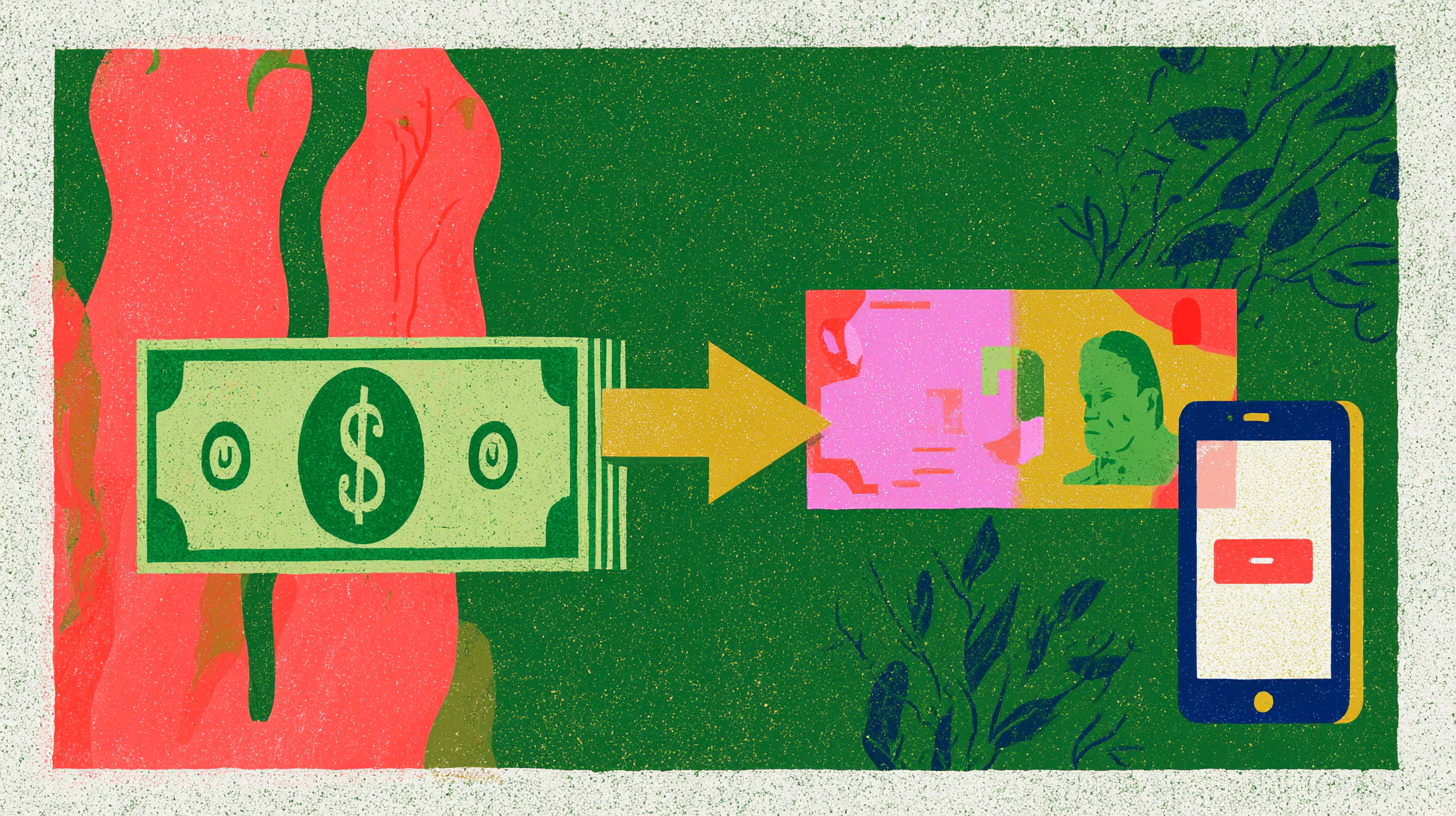
International Money Transfers
How to send money to Honduras from the U.S.
8 min de lectura
How to send money to Honduras from the U.S.
Sending money to Honduras from the U.S. usually takes minutes when using digital remittance services. Fees typically range from about $2.99 to $8 depending on the provider, payment method, and delivery option. Most transfers arrive the same day when sent to cash pickup or mobile wallets, depending on verification and processing conditions from each provider.
Hondurans in the U.S. sent over $9.74 billion home in 2024, according to Honduras's central bank. The World Bank estimates remittances represent roughly 26% of Honduras's GDP, making them one of the country's most important sources of household income. For many families, this money is part of monthly budgets that helps cover essential needs such as food, housing, healthcare, and education.
What is the cheapest way to send money to Honduras from the U.S.?
The answer depends on a few factors, including the fee charged to send, the exchange rate markup applied to the conversion, and how your recipient wants to receive the money. All three affect how many lempiras actually arrive on the other end.
Exchange rates vary by provider and are adjusted compared to the mid-market rate. This difference is called the exchange rate margin and can affect how much the recipient receives even when fees look low.
Exchange rate markups can quietly reduce what your family receives. Some providers advertise a $0 fee but apply a less competitive USD-to-lempira conversion rate, and that difference doesn't always show up clearly. Before confirming any transfer, it is recommended to check how many lempiras your recipient will actually get.
The delivery method also affects cost. Cash pickup options can have different pricing compared to bank deposits or mobile wallet transfers. Payment method also influences cost, since debit card, credit card, and bank transfer funding options are priced differently across providers.
Overall, the lowest-cost option depends on urgency, payout method in Honduras, funding method, and exchange rate conditions at the time of transfer.
When using Común remesas, you will be able to see and confirm exchange rate and fees before sending a transfer.
How long does it take to send money to Honduras?
Transfer times to Honduras vary depending on provider and payout method. Many digital transfers can arrive within minutes.
Cash pickup can be a fast delivery option across most providers because funds are made available for collection as soon as the transfer is processed and approved. Bank deposits may take longer, usually within the same day or up to one business day depending on processing times.
Timing can also change based on verification checks. First-time transfers or higher amounts often require identity verification under U.S. financial regulations, which can add extra processing time before the money is released.
Delivery speed is also affected by timing factors outside the provider's control. Weekends and public holidays in either the U.S. or Honduras can delay processing because some banking and payout networks operate only during business days.
Faster delivery options are often available, but they may be priced differently from standard transfers. In many services, selecting instant or expedited delivery can increase the total cost compared to slower options.
Best apps to send money to Honduras: comparison
Different apps and services offer different combinations of fees, speed, and convenience. The table below provides a quick comparison of common providers that are used for sending money from the U.S. to Honduras.
| Provider | Cost behavior | Delivery speed behavior | ID requirements |
|---|---|---|---|
| Común | Shows total cost before sending, including fee and exchange rate | Often supports near-instant delivery depending on payout method | Can accept alternative IDs depending on verification |
| Remitly | Cost varies by speed option and funding method, including economy vs express pricing | Offers both near-instant and next-day delivery depending on selection | Identity verification required, SSN not always required |
| Western Union | Pricing varies by funding method and payout option such as cash pickup or bank deposit | Delivery can range from minutes to next business day depending on method | ID verification required, SSN not always required |
| MoneyGram | Cost depends on how money is sent and received, including cash pickup vs bank transfer | Delivery ranges from minutes to next business day depending on corridor and method | ID verification required, SSN not always required |
| Xoom (PayPal) | Pricing depends on PayPal funding method and destination payout option | Delivery can range from minutes to 1 day depending on method | PayPal account required, verification may vary |
Fees and exchange rates change depending on payment method and transfer amount. It is important to verify with your selected provider the current fees and requirements.
How to send money to Honduras with Común: step by step
Sending money to Honduras with Común is done through a mobile app available in the United States. Inside the app, users can enter recipient information, choose an amount to send, and complete a transfer digitally step by step. The process is handled within the app and does not require visiting a physical location or using paper forms.
1. Create a Común account
You will need a valid ID for which you can use a passport or more than 100 valid Latin American IDs, a residential address in the US (you can use your phone's location for proof) and an active email address and phone number capable of receiving SMS. The first step is to download the Común App (available on iOS and Android), the next step is to open the app and select Sign Up / Solicitar Ahora. Enter your personal details and US residential address. Then, take a photo of your official ID and a quick selfie to verify your identity. Finally, submit your application for approval.
2. Add your recipient in Honduras
Once you have your Común account, from the main dashboard, tap on "Envía una Remesa". Select a saved recipient or add a new one by entering their required details (full name, ID type, ID number, and bank account/delivery method).
3. Enter the transfer amount
Type in the amount you want to send and confirm the currency. The app will show the exchange rate and total cost before confirming the transfer.
4. Pay and confirm
Complete payment using your selected funding method and review transfer details before sending. Transparency in fees and exchange rates is shown before final confirmation.
You can send money to Honduras from your Común app starting at $2.99, in minutes, with transparent fees and visible exchange rates before you confirm a transaction.
How much does Western Union charge to send money to Honduras?
Western Union fees for sending money to Honduras vary based on transfer amount, payment method, and delivery option. Typical fees for mid-size transfers may range from about 5 to 8 USD equivalent, with additional costs coming from exchange rate margins.
Costs can increase when using credit cards or selecting instant cash pickup options. Final pricing is shown during checkout and depends on the specific transaction setup.
Western Union offers both in-store and digital options, but pricing differences may apply depending on where the transfer is initiated.
Can I send money to Honduras without a Social Security Number?
Yes, some remittance providers allow sending money without a Social Security Number.
Requirements vary depending on provider policies and transaction amounts. Some services may request additional verification for higher transfer limits or first-time users.
Identity verification is still required to comply with financial regulations, even if an SSN is not needed. Some service providers like Común accept alternative forms of identification such as a passport or Latin American ID for account creation.
What do I need to send money to Honduras for the first time?
First-time transfers usually require basic personal and recipient information. This includes a valid government-issued identification, the full name of the recipient in Honduras, and the method they will use to receive the money, such as cash pickup, bank deposit, or mobile wallet depending on availability.
When sending cash in person or loading cash into a transfer service, you also need the physical money in U.S. dollars and a valid ID. The agent or service provider will use this information to create and process the transfer.
Most digital services accessed through apps also require account verification before the first transfer is completed. This step is required under financial regulations in the United States and is used to confirm identity and reduce fraud risk.
Once the account is set up and verified, future transfers usually take less time because sender details and recipient information are already saved in the system.
FAQ
What is the cheapest app to send money to Honduras?
The lowest cost depends on exchange rates and fees combined. Some apps like Común start from $2.99 per transfer, while others vary based on payment method and transfer size.
How long does a transfer to Honduras take?
Most transfers arrive within minutes when using cash pickup or mobile delivery options. Bank deposits may take up to one business day depending on processing times.
Can I send money to Honduras without a bank account?
Yes, some providers allow cash-based funding methods such as debit cards or cash top-ups at partner locations. A bank account is not always required depending on the service.
What is the maximum amount I can send to Honduras?
Transfer limits depend on the provider and verification level. Most services allow higher limits after identity verification is completed.
Is it safe to send money to Honduras online?
Digital remittance services use encrypted systems and identity verification to protect transactions. Safety also depends on using regulated providers and secure login practices.
What do I need to send money to Honduras for the first time?
You need valid identification, recipient information, and a payment method. Most platforms also require account verification before the first transfer can be completed.
Común is a financial technology company and not a bank. Banking services are provided by Community Federal Savings Bank, Member FDIC. The Común Visa® Debit Card is issued by Community Federal Savings Bank. Remittance service provided by Service UniTeller, Inc. Remittance fees start at $2.99 but may vary. Común Inc. may earn revenue from the conversion of foreign currencies.

Immigration
The 100 Questions about American Citizenship in Spanish
8 min de lectura
The 100 Questions about American Citizenship in Spanish
Reaching the point where you're preparing for the citizenship exam is already a major milestone. It reflects time, effort, and a commitment to building your future in the United States.
In this guide, you'll find the 100 civic questions for the U.S. Citizenship exam provided by the U.S. Citizenship and Immigration Services (USCIS), the government agency that reviews and processes citizenship applications. These are the questions from the civics test, translated into Spanish with their answers and organized by category aimed to support you while you prepare. The exam is administered by USCIS and is oral, not written. You'll be asked up to 10 questions out of the 100.
How does the US citizenship test work?
The U.S. citizenship exam generally consists of two parts, an English test and a civics test. Understanding how each one of them works could make the process feel more manageable. The English evaluation is conducted through an interview, in which an officer evaluates your English language skills through simple speaking, reading, and writing exercises. In the civics portion, the officer asks up to 10 questions out of a list of 100. They are about U.S. history, government, geography and holidays. To pass the test you must answer at least 6 of them correctly. It is important to consider that this entire part of the exam is oral.
If you do not pass a section the first time, you will usually have a second opportunity to retake the failed portion within 60 to 90 days. To start the application for citizenship, you must submit a form called Form N-400, which is the official application for naturalization, and as of 2026, the filing cost is $760, however, fees are subject to change.
Who can take the exam in Spanish?
If you are 65 or older and have been a permanent resident for at least 20 years, you may qualify to take the civics test in Spanish. This special rule, provided by USCIS, is designed to make the process more accessible for long-term residents. In this case, you do not need to study all 100 questions, you only need to study 20 of the 100 questions. In our list we will mark them with an asterisk (*). It is recommended to always consult and review the specific requirements of your own case with the corresponding authorities.
The 100 Official Citizenship Civics Test Questions (with answers in Spanish)
Here you will find the 100 official questions that USCIS may ask you during your citizenship exam, along with their answers in Spanish. However, keep in mind that the actual interview is conducted in English, unless you qualify for an exemption.
Part A: The American government (questions 1-57)
Principles of American Democracy (1–12)
1. What is the supreme law of the land?
- the Constitution
2. What does the Constitution do?
- sets up the government
- defines the government
- protects basic rights of Americans
3. The idea of self-government is in the first three words of the Constitution. What are these words?
- We the People
4. What is an amendment?
- a change (to the Constitution)
- an addition (to the Constitution)
5. What do we call the first ten amendments to the Constitution?
- the Bill of Rights
6. What is one right or freedom from the First Amendment?*
- speech
- religion
- assembly
- press
- petition the government
7. How many amendments does the Constitution have?
- twenty-seven (27)
8. What did the Declaration of Independence do?
- announced our independence (from Great Britain)
- declared our independence (from Great Britain)
- said that the United States is free (from Great Britain)
9. What are two rights in the Declaration of Independence?
- life
- liberty
- pursuit of happiness
10. What is freedom of religion?
- You can practice any religion, or not practice a religion.
11. What is the economic system in the United States?*
- capitalist economy
- market economy
12. What is the "rule of law"?
- Everyone must follow the law.
- Leaders must obey the law.
- Government must obey the law.
- No one is above the law.
System of Government (13–47)
13. Name one branch or part of the government.*
- Congress
- legislative
- President
- executive
- the courts
- judicial
14. What stops one branch of government from becoming too powerful?
- checks and balances
- separation of powers
15. Who is in charge of the executive branch?
- the President
16. Who makes federal laws?
- Congress
- Senate and House (of Representatives)
- (U.S. or national) legislature
17. What are the two parts of the U.S. Congress?*
- the Senate and House (of Representatives)
18. How many U.S. Senators are there?
- one hundred (100)
19. We elect a U.S. Senator for how many years?
- six (6)
20. Who is one of your state's U.S. Senators now?*
- Answers will vary.
- [District of Columbia residents and residents of U.S. territories should answer that D.C. (or the territory where the applicant lives) has no U.S. Senators.]
21. The House of Representatives has how many voting members?
- four hundred thirty-five (435)
22. We elect a U.S. Representative for how many years?
- two (2)
23. Name your U.S. Representative.
- Answers will vary.
- [Residents of territories with nonvoting Delegates or Resident Commissioners may provide the name of that Delegate or Commissioner. Also acceptable is any statement that the territory has no (voting) Representatives in Congress.]
24. Who does a U.S. Senator represent?
- all people of the state
25. Why do some states have more Representatives than other states?
- (because of) the state's population
- (because) they have more people
- (because) some states have more people
26. We elect a President for how many years?
- four (4)
27. In what month do we vote for President?*
- November
28. What is the name of the President of the United States now?*
- Visit uscis.gov/citizenship/testupdates for the name of the President of the United States.
29. What is the name of the Vice President of the United States now?
- Visit uscis.gov/citizenship/testupdates for the name of the Vice President of the United States.
30. If the President can no longer serve, who becomes President?
- the Vice President
31. If both the President and the Vice President can no longer serve, who becomes President?
- the Speaker of the House
32. Who is the Commander in Chief of the military?
- the President
33. Who signs bills to become laws?
- the President
34. Who vetoes bills?
- the President
35. What does the President's Cabinet do?
- advises the President
36. What are two Cabinet-level positions?
- Secretary of Agriculture
- Secretary of Commerce
- Secretary of Defense
- Secretary of Education
- Secretary of Energy
- Secretary of Health and Human Services
- Secretary of Homeland Security
- Secretary of Housing and Urban Development
- Secretary of the Interior
- Secretary of Labor
- Secretary of State
- Secretary of Transportation
- Secretary of the Treasury
- Secretary of Veterans Affairs
- Attorney General
- Vice President
37. What does the judicial branch do?
- reviews laws
- explains laws
- resolves disputes (disagreements)
- decides if a law goes against the Constitution
38. What is the highest court in the United States?
- the Supreme Court
39. How many justices are on the Supreme Court?
- Visit uscis.gov/citizenship/testupdates for the number of justices on the Supreme Court.
40. Who is the Chief Justice of the United States now?
- Visit uscis.gov/citizenship/testupdates for the name of the Chief Justice of the United States.
41. Under our Constitution, some powers belong to the federal government. What is one power of the federal government?
- to print money
- to declare war
- to create an army
- to make treaties
42. Under our Constitution, some powers belong to the states. What is one power of the states?
- provide schooling and education
- provide protection (police)
- provide safety (fire departments)
- give a driver's license
- approve zoning and land use
43. Who is the Governor of your state now?
- Answers will vary. [District of Columbia residents should answer that D.C. does not have a Governor.]
44. What is the capital of your state?*
- Answers will vary. [District of Columbia residents should answer that D.C. is not a state and does not have a capital. Residents of U.S. territories should name the capital of the territory.]
45. What are the two major political parties in the United States?*
- Democratic and Republican
46. What is the political party of the President now?
- Visit uscis.gov/citizenship/testupdates for the political party of the President.
47. What is the name of the Speaker of the House of Representatives now?
- Visit uscis.gov/citizenship/testupdates for the name of the Speaker of the House of Representatives.
Rights and responsibilities (48–57)
48. There are four amendments to the Constitution about who can vote. Describe one of them.
- Citizens eighteen (18) and older (can vote).
- You don't have to pay (a poll tax) to vote.
- Any citizen can vote. (Women and men can vote.)
- A male citizen of any race (can vote).
49. What is one responsibility that is only for United States citizens?*
- serve on a jury
- vote in a federal election
50. Name one right only for United States citizens.
- vote in a federal election
- run for federal office
51. What are two rights of everyone living in the United States?
- freedom of expression
- freedom of speech
- freedom of assembly
- freedom to petition the government
- freedom of religion
- the right to bear arms
52. What do we show loyalty to when we say the Pledge of Allegiance?
- the United States
- the flag
53. What is one promise you make when you become a United States citizen?
- give up loyalty to other countries
- defend the Constitution and laws of the United States
- obey the laws of the United States
- serve in the U.S. military (if needed)
- serve (do important work for) the nation (if needed)
- be loyal to the United States
54. How old do citizens have to be to vote for President?*
- eighteen (18) and older
55. What are two ways that Americans can participate in their democracy?
- vote
- join a political party
- help with a campaign
- join a civic group
- join a community group
- give an elected official your opinion on an issue
- call Senators and Representatives
- publicly support or oppose an issue or policy
- run for office
- write to a newspaper
56. When is the last day you can send in federal income tax forms?*
- April 15
57. When must all men register for the Selective Service?
- at age eighteen (18)
- between eighteen (18) and twenty-six (26)
Part B: American history (questions 58-87)
Colonial Period and Independence
58. What is one reason colonists came to America?
- freedom
- political liberty
- religious freedom
- economic opportunity
- practice their religion
- escape persecution
59. Who lived in America before the Europeans arrived?
- American Indians
- Native Americans
60. What group of people was taken to America and sold as slaves?
- Africans
- people from Africa
61. Why did the colonists fight the British?
- because of high taxes (taxation without representation)
- because the British army stayed in their houses (boarding, quartering)
- because they didn't have self-government
62. Who wrote the Declaration of Independence?
- (Thomas) Jefferson
63. When was the Declaration of Independence adopted?
- July 4, 1776
64. There were 13 original states. Name three.
- New Hampshire
- Massachusetts
- Rhode Island
- Connecticut
- New York
- New Jersey
- Pennsylvania
- Delaware
- Maryland
- Virginia
- North Carolina
- South Carolina
- Georgia
65. What happened at the Constitutional Convention?
- The Constitution was written.
- The Founding Fathers wrote the Constitution.
66. When was the Constitution written?
- 1787
67. The Federalist Papers supported the passage of the U.S. Constitution. Name one of the writers.
- (James) Madison
- (Alexander) Hamilton
- (John) Jay
- Publius
68. What is one thing Benjamin Franklin is famous for?
- U.S. diplomat
- oldest member of the Constitutional Convention
- first Postmaster General of the United States
- writer of "Poor Richard's Almanac"
- started the first free libraries
69. Who is the "Father of Our Country"?
- (George) Washington
70. Who was the first President?*
- (George) Washington
1800s
71. What territory did the United States buy from France in 1803?
- the Louisiana Territory
- Louisiana
72. Name one war fought by the United States in the 1800s.
- War of 1812
- Mexican-American War
- Civil War
- Spanish-American War
73. Name the U.S. war between the North and the South.
- the Civil War
- the War between the States
74. Name one problem that led to the Civil War.
- slavery
- economic reasons
- states' rights
75. What was one important thing that Abraham Lincoln did?*
- freed the slaves (Emancipation Proclamation)
- saved (or preserved) the Union
- led the United States during the Civil War
76. What did the Emancipation Proclamation do?
- freed the slaves
- freed slaves in the Confederacy
- freed slaves in the Confederate states
- freed slaves in most Southern states
77. What did Susan B. Anthony do?
- fought for women's rights
- fought for civil rights
Recent American History and Other Important Historical Information
78. Name one war fought by the United States in the 1900s.*
- World War I
- World War II
- Korean War
- Vietnam War
- (Persian) Gulf War
79. Who was President during World War I?
- (Woodrow) Wilson
80. Who was President during the Great Depression and World War II?
- (Franklin) Roosevelt
81. Who did the United States fight in World War II?
- Japan, Germany, and Italy
82. Before he was President, Eisenhower was a general. What war was he in?
- World War II
83. During the Cold War, what was the main concern of the United States?
- Communism
84. What movement tried to end racial discrimination?
- civil rights (movement)
85. What did Martin Luther King, Jr. do?*
- fought for civil rights
- worked for equality for all Americans
86. What major event happened on September 11, 2001, in the United States?
- Terrorists attacked the United States.
87. Name one American Indian tribe in the United States.
- [USCIS Officers will be supplied with a list of federally recognized American Indian tribes.]
- Cherokee
- Navajo
- Sioux
- Chippewa
- Choctaw
- Pueblo
- Apache
- Iroquois
- Creek
- Blackfeet
- Seminole
- Cheyenne
- Arawak
- Shawnee
- Mohegan
- Huron
- Oneida
- Lakota
- Crow
- Teton
- Hopi
- Inuit
Part C: Geography and civic integration (questions 88-100)
Geography
88. Name one of the two longest rivers in the United States.
- Missouri (River)
- Mississippi (River)
89. What ocean is on the West Coast of the United States?
- Pacific (Ocean)
90. What ocean is on the East Coast of the United States?
- Atlantic (Ocean)
91. Name one U.S. territory.
- Puerto Rico
- U.S. Virgin Islands
- American Samoa
- Northern Mariana Islands
- Guam
92. Name one state that borders Canada.
- Maine
- New Hampshire
- Vermont
- New York
- Pennsylvania
- Ohio
- Michigan
- Minnesota
- North Dakota
- Montana
- Idaho
- Washington
- Alaska
93. Name one state that borders Mexico.
- California
- Arizona
- New Mexico
- Texas
94. What is the capital of the United States?*
- Washington, D.C.
95. Where is the Statue of Liberty?*
- New York (Harbor)
- Liberty Island
- [Also acceptable are New Jersey, near New York City, and on the Hudson (River).]
Symbols
96. Why does the flag have 13 stripes?
- because there were 13 original colonies
- because the stripes represent the original colonies
97. Why does the flag have 50 stars?*
- because there is one star for each state
- because each star represents a state
- because there are 50 states
98. What is the name of the national anthem?
- The Star-Spangled Banner
Holidays
99. When do we celebrate Independence Day?*
- July 4
100. Name two national U.S. holidays.
- New Year's Day
- Martin Luther King, Jr. Day
- Presidents' Day
- Memorial Day
- Independence Day
- Labor Day
- Columbus Day
- Veterans Day
- Thanksgiving
- Christmas
Frequently Asked Questions about the Citizenship Exam
How many questions are asked on the citizenship exam?
During the civics portion, an officer from USCIS will ask up to 10 questions out of a list of 100. You need to answer at least 6 correctly to pass this part of the test.
Is the citizenship exam in English or Spanish?
The exam is conducted in English, including both the English and civics portions. However, applicants who qualify for the 65/20 exemption can take the civics test in Spanish. Make sure you verify if the exemption applies in your specific case with the corresponding authorities.
What happens if I don't pass the exam the first time?
If you fail either the English or civics section, you are given a second opportunity to retake the part you did not pass. This second interview typically takes place within 60 to 90 days.
How much does the citizenship exam cost in 2026?
The exam itself does not have a separate fee, but it is included in the naturalization application. As of 2026, the cost to file Form N-400 is $760, though it's always a good idea to verify updates directly with USCIS.
Do the citizenship exam questions change?
The list of questions is updated occasionally by USCIS. The current version is based on the reinstated 2008 civics test, which remains the standard as of 2026.
Can I study the citizenship questions in Spanish?
Yes, many applicants study the questions in Spanish to better understand the content. However, the actual exam is conducted in English unless you qualify for an exemption like the 65/20 rule.
5 Tips for Studying for and Passing Your Citizenship Exam
Preparing for the citizenship test doesn't have to feel overwhelming. Approaching it with a plan and consistency could be the key for a smoother experience. Here are some general tips we've enlisted for preparing for your citizenship exam:
Study by category, avoid trying to learn all of them at once.
Break the 100 questions into topics like history, government, and geography. This makes it easier to understand patterns instead of trying to memorize everything in one go.
Practice your answers out loud.
The exam is oral, so it's important to get comfortable saying your answers, not just recognizing them. This helps with confidence during the interview.
Start with questions that change.
Aim to focus first on answers that can vary, like the current president or your state's senators. Learning these early helps you avoid confusion later in the process.
Use flashcards and try to study with someone.
Flashcards are a great tool for repetition and reinforcing memory. If possible try practicing with a friend or family member to simulate the real experience of being asked questions.
Don't panic if you don't know everything.
You don't need a perfect score. You only need to answer 6 out of 10 questions correctly, so focus on being consistent, not perfect.
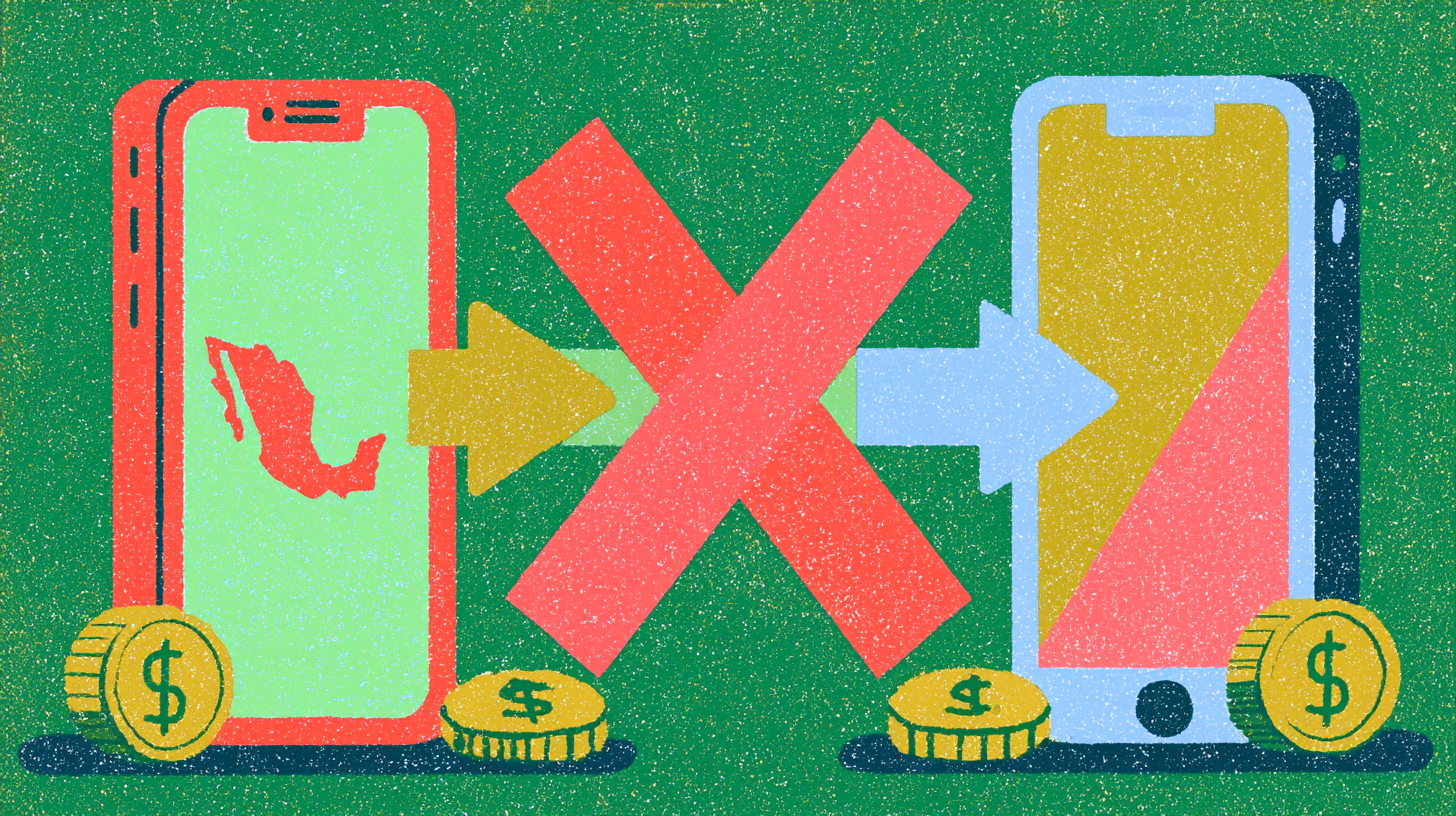
International Money Transfers
Which banks offer Zelle in Mexico? What you need to know in 2026
8 min de lectura
Which banks offer Zelle in Mexico? What you need to know in 2026
Zelle does not send money directly to Mexico. Zelle only works between eligible U.S. bank accounts and credit unions within the United States.
If you are looking into different methods for sending money to your family in Mexico, you may be searching for 'which banks offer Zelle in Mexico' or trying to understand if Zelle works internationally. This is a common misunderstanding for immigrant families in the U.S. No Mexican bank officially offers Zelle for receiving transfers from the U.S., and Zelle itself is not designed for international money transfers or currency conversion.
What is Zelle and how does it work?
Zelle is a digital payment service that facilitates peer-to-peer transfers at select partner banks in the United States. It is known for its speed, with transfers appearing in minutes, and for its extensive coverage across the U.S. Some U.S. financial institutions that support Zelle include Bank of America, Chase, Wells Fargo, Citi, PNC, and many more.
Why doesn't Zelle work for sending money to Mexico?
Cross-border money transfers require financial institutions, payment networks, regulatory approvals, identity verification procedures, and international settlement systems. Zelle was built around domestic payment systems in the U.S. Because of this, the service does not support direct transfers from U.S. bank accounts to recipients in Mexico.
Alternatives for sending money to Mexico from the U.S. (2026 comparison)
| Service | Typical starting fees | Delivery speed | Exchange rate model | Cash pickup |
|---|---|---|---|---|
| Remitly | Varies; ~$1.99+ for bank deposit to Mexico | Express: minutes to same day; Economy: 3–5 days | Exchange rate markup applies | Yes |
| Wise | From ~0.48% of transfer; shown upfront | Usually same day to 2 days | Mid-market rate, no markup | Limited (select corridors) |
| Xoom | Depends on payment method and destination | Minutes to 1 day | Exchange rate markup applies | Yes |
| Western Union | Varies widely by method and destination | Minutes to several days | Exchange rate markup applies | Yes (extensive agent network) |
| Común | Starts at $2.99 via UniTeller; may vary | Varies by destination and method | Rates displayed before transfer | Yes (depending on delivery option) |
Fees, exchange rates, and delivery times vary based on transfer amount, destination, funding method, and payout option. In 2026, a 1% federal excise tax applies to cash-funded transfers. Bank, debit, and credit card transfers are exempt.
How the new 1% tax on cash remittances affects transfers to Mexico
Starting in 2026, a 1% federal tax applies to certain remittance transfers. The tax applies when you pay with cash, money order, or cashier's check. Transfers funded from a U.S. bank account or with a U.S.-issued debit or credit card are exempt by law.
FAQ
Does Zelle work in Mexico?
No. Zelle does not support international transfers. There is no Mexican bank that offers Zelle for receiving money from the U.S.
What is the best app to send money to Mexico?
It depends on your specific situation. Común offers transfers starting at $2.99 with transparent pricing. Visit comun.app/remittances to learn more.
Remittance service provided by Service UniTeller, Inc. Remittance fees start at $2.99 but may vary. Común Inc. may earn revenue from the conversion of foreign currencies.
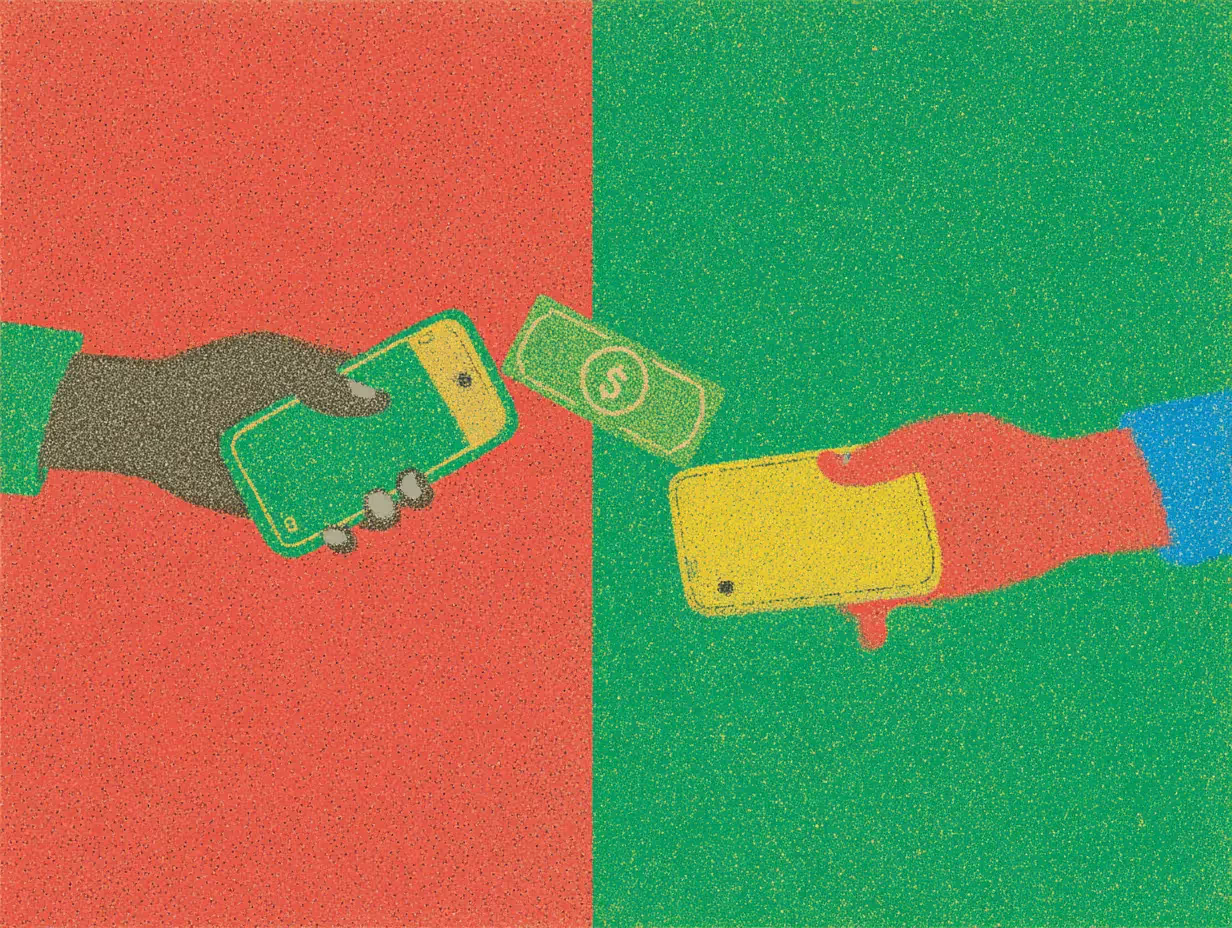
Checking account
How to Deposit Money Into Someone Else's Bank Account
8 min de lectura
Understanding the Basics
In today's connected world, being able to deposit money into someone else's bank account is a valuable skill. Whether you're helping a friend in need, managing household expenses, or running a business, understanding the ins and outs of transferring funds safely is essential. Bank-to-bank transfers are a popular method for moving money from one bank to another, using external transfer features on bank and credit union websites as viable options for these services. Comparing bank-to-bank transfers with other methods, like wire transfers and money transfer apps, is crucial, since there may be fees and limits to consider.
Different Methods of Depositing Money
There are many ways to deposit funds into someone else's bank account, including knowing the recipient's bank account details for electronic transfers, which is crucial for a smooth transaction:
- Cash Deposits: Making a cash deposit directly at a bank branch is straightforward, but it may be subject to limitations or restrictions due to security policies.
- Bank-to-Bank Transfers: Online bank transfers or wire transfers between bank accounts are commonly used for larger or urgent transfers.
- Third-Party Services: Using money transfer apps like Venmo, Apple Cash, and PayPal is a popular and easy way to send money electronically, instantly. These apps require users to create an account, link a payment source like a bank account or card, and make sure the recipient has an account with the same app — offering a convenient solution for quick transfers between people.
- Checks: Depositing a personal or cashier's check can be safer when transferring significant amounts.
This section can cover the benefits of each method, like minimum direct-deposit amounts or possible wire transfer fees, and expected timelines, from the same business day to a few business days for processing.
Step by Step: Depositing Cash and Checks
Depositing money into someone else's bank account can be essential for several reasons. People often need to transfer funds to pay rent, help family members, or settle bills directly into someone else's account. This process, which involves transferring money directly into someone else's bank account, usually through ACH transfers or wire transfers, is legal and regulated to prevent issues like money laundering. It's crucial to have accurate details like the recipient's bank account number and routing number. By following these detailed steps, you can make sure your transactions run smoothly and securely.
To deposit cash or a check, follow these steps:
- Gather the Necessary Information: Get the correct person's account number and financial institution details.
- Visit the Bank: At the bank branch, fill out a deposit slip with the recipient's account number and the cash or check amount.
- Verification: Some banks may require ID, especially if you're depositing into someone else's account.
- Receipt: Always get a receipt as proof of the cash deposit or check deposit, making sure the funds reach the recipient's bank account.
Online Transfers and Mobile Payments
Using online or mobile banking to deposit money offers convenience and speed. Here's how to use these platforms effectively:
- Setup: Make sure both parties have active online accounts. This may involve linking a debit card or setting up a mobile banking app.
- Complete the Transfer: To transfer money, use the recipient's bank account details or use various electronic methods, including apps like Venmo, PayPal, Zelle, or Western Union, for a seamless transaction experience.
- Confirmation: Both the sender and recipient should receive confirmation that the money has been deposited into the recipient's savings or checking account.
Privacy and Security Considerations
When sending money to someone else's bank account, keep these privacy and security measures in mind:
- Verify the Details: Double-check the recipient's account details, including the bank account number and routing number.
- Security Protocols: Use secure networks for online transactions to prevent data breaches.
- Monitor Transactions: Regularly review your bank statements to quickly catch any unauthorized transactions. Keep in mind the legal aspects and financial institutions' policies related to depositing money into someone else's account.
This is a process that can be mastered with careful attention to detail and security. By following the steps outlined above, you can make sure your money transfers are effective and secure. Remember, the key to successful financial transactions lies in thorough preparation and vigilant monitoring, making sure every transaction strengthens trust and security in our financial systems.

Legality and Compliance
Banks are legally required to report certain types of transactions to regulatory bodies to prevent and monitor illegal activity like money laundering. In the United States, for example, financial institutions must file a Currency Transaction Report (CTR) for cash transactions exceeding $10,000 in a single business day. Similarly, suspicious activity that may not meet CTR criteria but is unusual or has no apparent legal purpose must also be reported through Suspicious Activity Reports (SARs).
For depositors and recipients, this means any large transaction could lead to additional scrutiny. It's important for both parties to keep records of the source of funds and the purpose of the transaction, since these could be required in an investigation or audit. Being aware of these requirements helps ensure both parties maintain transparency and avoid unintentional legal complications.
Legal Implications of Transferring Money on Behalf of Others
When transferring money on behalf of others, individuals take on significant responsibilities and should be aware of the legal framework governing such activities. The main legal concern here is the risk of inadvertently engaging in unauthorized financial practices, such as operating as an unlicensed money transmitter, which can carry severe penalties, including fines and imprisonment. It's crucial to have clear agreements and records when handling financial transactions for someone else, particularly in business or caregiving scenarios.
Additionally, transferring money on behalf of others can expose a person to fraud risks. If funds are misused, both the person handling the transaction and the recipient could face legal action or financial losses. It's advisable to use documented methods and formal channels to transfer money to protect against misunderstandings or fraud, ensuring funds are used for their intended purpose.
Guidelines for International Transfers
International transfers aren't just more complex because of the involvement of multiple financial systems — they also come with stricter compliance measures. When sending money abroad, regulations from both the sender's and recipient's countries must be considered. Compliance requirements may include providing additional identification, disclosing the source of funds, and detailing the purpose of the transfer.
Currency conversion rates and fees are also significant factors in international transfers. Exchange rates can vary considerably depending on the financial institutions or services used, which could affect the amount received on the other end. Additionally, international wire transfers are subject to regulations like those imposed by the Office of Foreign Assets Control (OFAC) in the U.S., which can block transactions involving specific countries, individuals, or entities.
Understanding these guidelines helps ensure international money transfers run smoothly and legally, minimizing the risk of delays or legal issues and ensuring compliance with global regulatory standards.
Send Money to Your Home Country Safely⁴
Send money abroad with peace of mind with your Común account¹
Open your account in 3 minutes!
Conclusion
Depositing money into someone else's account is a process enriched with various methods, legal considerations, and practical steps to ensure safe and secure financial transactions. There are various methods, legal considerations, and practical steps to ensure safe and protected financial transactions when depositing money into someone else's account. Whether you choose to deposit cash at a bank branch, use online transfers, or make mobile payments, understanding the ins and outs of each method is crucial for effective money management.
This article has explored the legal frameworks that protect these transactions and the compliance measures needed for both domestic and international transfers, giving you the knowledge to navigate this space with confidence. Remember, the key to successful financial transactions lies in thorough preparation and vigilant monitoring, making sure every transaction strengthens trust and security in our financial systems. With this knowledge, you're well-equipped to handle the responsibilities of depositing money into someone else's account efficiently and ethically.
Living in the United States
Direct deposit vs wire transfer: comparison guide for U.S. immigrants
8 min de lectura
Direct deposit vs wire transfer: comparison guide for U.S. immigrants
These payment methods are both available in the U.S. but they are often used for different purposes. Direct deposit is commonly used for paychecks, tax refunds, and government benefits, while wire transfers are more often used for urgent or high-value transfers between financial institutions.
Understanding the difference between direct deposit and wire transfers can help you avoid unnecessary fees, choose the right payment method for your situation, and manage your money more confidently.
What's the difference between direct deposit and wire transfer?
The biggest difference is the purpose they serve. Direct deposit is commonly used for recurring payments such as salaries, benefits, and tax refunds. Wire transfers are commonly used to move money quickly between financial institutions, particularly for large or time-sensitive transactions.
| Feature | Direct deposit | Wire transfer |
|---|---|---|
| Common use | Paychecks, benefits, tax refunds | Large or urgent transfers |
| Network used | ACH network | Wire transfer network |
| Speed | Typically 1–3 business days | Often same day or next business day |
| Typical cost | Often no fee to receive | Fees may apply |
| International transfers | Limited | Commonly used |
| Recurring payments | Yes | Less common |
| Setup required | Routing + account number | Bank details + recipient information |
How direct deposit works
Direct deposit is one of the most common payment methods in the United States, particularly for employees receiving wages from an employer. Instead of issuing a paper check, an employer sends the payment electronically to the employee's bank account through the ACH network.
To set up direct deposit you need to provide your employer: your bank's routing number and your personal account number.
How wire transfer works
A wire transfer is an electronic transfer of funds between financial institutions through secure financial networks like Fedwire or SWIFT. Unlike direct deposit, wire transfers are better suited for large one-time payments, urgent payments, real estate transactions, or international transfers.
When to use each one
Use direct deposit for:
- Receiving your paycheck
- IRS tax refunds
- Social security or unemployment benefits
- Recurring business payments
Use wire transfer for:
- Real estate payments (down payment, closing)
- Urgent international transfers
- High-value business payments
- When the recipient specifically requires a wire transfer
How to set up direct deposit with Común
With your Común account, you can set up direct deposit by providing your Común routing number and account number to your employer. Your Común account has unique routing and account numbers available in the app. Visit comun.app to learn more.
FAQ
Is direct deposit faster than wire transfer?
Not necessarily. Domestic wire transfers can be faster (same day), while direct deposits usually take 1-3 business days. However, many accounts offer early access to direct deposits up to 2 days early.
How much does it cost to set up direct deposit?
Setting up direct deposit is generally no fee. Employers use the ACH network to send payroll electronically at no charge to the employee.
Común is a financial technology company and not a bank. Banking services are provided by Community Federal Savings Bank, Member FDIC.
.avif)
Financial Education
Your essential guide to the bank routing number in the U.S.
8 min de lectura
The bank routing number, or ABA Routing Number, is essential information for making money transfers. It is a 9-digit code used to identify each financial institution in the United States.
This code is so important because it ensures that electronic transactions are carried out correctly and that funds reach the designated bank.
In this article, we offer a complete guide to help you understand what a bank routing number is, what it does, where to find it, and how it is used in everyday electronic financial transactions.
What is a bank routing number (ABA), and why is it essential in the U.S. banking system?
An ABA routing number, or transit routing number, is a unique 9-digit code that serves as an identifier for each financial institution in the United States.
It differs from a bank account number in that an account number is personal, valid for the use of a single user only. By contrast, the routing number is a unique identifier for banks, credit unions, and digital banks.
The primary function of the routing number is to allow financial institutions to precisely identify which bank to send to or receive from during routine operations such as direct deposit of payroll, automatic payments (ACH), and electronic transfers.
It is important to note that this code is different from a bank account number and is not equivalent to the IBAN (International Bank Account Number), which is a set of numbers used especially in Europe to identify international bank accounts and is composed of the country code, check digits (the checksum of the bank account number), and a bank account number.
In the United States, however, the SWIFT/BIC code is used for international money transfers, not the IBAN.
Here are some crucial functions of the bank routing number in digital transactions.
Unique bank identification
The bank routing number helps prevent errors when identifying a specific bank and processing a transfer from one institution to another, even when they have similar names or many branches across the country.
Facilitates electronic transfers
This code is also indispensable so that ACH systems and wire transfers can send funds to the correct destination, quickly and securely.
Key for direct deposits
The ABA number is also essential for employers to make direct deposits, using that code together with the checking account number, without the need for checks or cash.
Automated bill payments
To set up automated payments for services such as electricity, water, and online subscriptions, you must provide the bank routing number so the billing system can process the transaction automatically.
Handling funds between banks
This number is also indispensable for transactions involving multiple financial institutions, such as interbank transfers or check clearing.
How to find a bank routing code and your bank account number
By now, the importance of the ABA number is clear. But how do you find a bank routing code? Knowing this information is the first step to making transfers correctly.
Likewise, it is essential to understand how to find your bank account number and to tell one number from the other to avoid confusion.
The routing number consists of 9 digits and identifies the bank. The account number has usually 10 to 12 digits and identifies the individual account within the bank.
To find your account number, look at the bottom of a check; it is the series of numbers that follows the routing number. You can also find it at the top of a statement or directly in the mobile application.
It is essential to make sure you have the correct routing number before making a transfer. Therefore, it is advisable to confirm it directly with your financial institution to avoid errors.
Many users ask where to find the routing number on a physical debit card. However, the routing number is not printed on such instrument because it is intended for digital transfers, not for payments at physical merchants.
These are the most common places to find the routing number for your bank or financial institution.
On your checks
Check the lower left corner of your personal or business checks; the routing number is the 9 digits shown there.Another relevant detail is the check number, which is usually at the top.
Mobile application
Another way to find this code is to access your mobile application and go to the transfers or direct deposit information section.
Bank statements
Check your latest bank statement, whether physical or digital; the routing number may appear in a section of that document.
Direct contact with your bank
If you have any doubt about the routing number, you can contact your bank by phone or visit a branch so they can clarify any questions before you make a bank transfer.
Your routing number and account: Key tools for your finances in the U.S. with Comun
Throughout this article, we have learned the importance of both the bank routing number and the bank account number in the U.S. financial system. Both are indispensable for carrying out fast and secure digital transactions.
Being clear about what a bank’s ABA number is not only lets you carry out digital transactions with ease but also gives you financial autonomy to allocate your resources toward the services you need for your well-being.
The U.S. financial system can seem complicated, especially for immigrant communities. That is why Comun seeks to streamline processes and offer transactions without complications.
- Receive and send money easily from your mobile application
- Integrate other applications and enhance your experience
- Access support available in Spanish and English
- Send international remittances with fees starting at $2.99 USD, up to the applicable limits.
- Get started with official ID from your country
Open your account today and discover an ally to manage your finances in the United States.
Frequently Asked Questions
If you have more questions, check our frequently asked questions section.
Where can I find my routing number if I don’t have checks?
You can find it on your account statement or by calling the bank directly.
What is the routing number for ACH transfers?
It is the code that identifies each bank and consists of 9 digits.
Is the routing number the same for all banks?
No. Each bank has a different routing number.
What is the routing number on a card?
The routing number does not appear on physical cards.
What is the routing number on a check?
It is found at the bottom of a check and consists of 9 digits.

Financial Education
Emergency Fund: Guide to Build It and Save in the U.S.
8 min de lectura
How to create an emergency fund and save in the U.S., step by step
If you’re new to the United States or facing financial challenges, it’s very important to have strategies to prepare for any eventuality.
An emergency fund is an excellent way to do this, and it also builds your financial literacy. It’s a cash reserve meant to cover unexpected expenses such as illness, job loss, home repairs, etc.
Having this cushion gives you peace of mind and removes uncertainty about the future, since it provides the liquidity you need to handle the unexpected.
You might think you need to earn a lot to build an emergency fund. Below, we’ll show that even with limited resources, you can start securing a future without financial complications.
What is an emergency fund and why is it key to your financial peace of mind?
Surely at some point during your time in the U.S., you’ve faced financial emergencies that made it hard to cover daily expenses—traffic fines, immigration procedures, illnesses, unemployment, repairs, etc.
An emergency fund is meant to support your finances precisely when those events occur. It’s savings set aside to handle all kinds of unforeseen expenses.
Beyond a stash of money, think of the emergency fund as a way to maintain peace of mind and reduce stress; it helps you preserve financial stability and avoid going into debt.
How much should you save in your emergency fund?
Knowing how to size an emergency fund is the first dilemma for many who aren’t used to long-term saving. While the ideal target is 3–6 months of basic expenses, if your income is limited you can start with small savings goals.
Below is a comparison of how your emergency fund would grow assuming expenses equal to 50% of total monthly income.
Monthly income
Approx. monthly expenses
3-month savings target
6-month savings target
$1,500
$750
$2,250
$4,500
$2,500
$1,250
$3,750
$7,500
$3,500
$1,750
$5,250
$10,500
Where should you keep your emergency fund so it’s safe and accessible?
It’s very important to choose a safe, easy-access place for your emergency fund and keep it separate from the money you use for daily expenses.
Today there’s a wide variety of savings accounts, both from traditional financial institutions and online platforms.
Whatever you choose, the following options are not recommended for storing your emergency fund.
- Cash at home
Whether under the mattress or in a piggy bank, keeping your emergency fund in cash is not a good idea for several reasons. First, there’s the risk of theft or loss. Also, the cash earns no interest and loses value to inflation. Another drawback is low accessibility if you need to cover expenses digitally.
While it’s true that opening a checking account can be challenging for immigrants in the U.S., there are accessible options so you don’t have to keep the emergency fund in cash.
- In high-risk investments
Although investments have advantages, high-risk ones involve sharp fluctuations that could cause losses. They also often require locking funds for a long period.
Simple strategies to build your emergency fund
If you’re new to personal finance, the first thing to know is that an emergency fund isn’t just for high earners. The key is to examine your lifestyle and spend according to a savings plan.
Step 1. Calculate your basic monthly expenses
The first step is to list all your fixed monthly expenses and the amount for each.
Example:
- Rent: $1,300
- Transportation (public or private): $100
- Tuition: $200
- Subscriptions: $50
Then list your variable expenses and calculate a budget. To be more accurate, track all your spending by category.
Example:
- Food: $300
- Leisure: $200
Finally, total your monthly spending. In the example above, monthly expenses add up to $2,100.
Step 2. Set your first goal
At first, reaching 3–6 months of expenses can sound impossible. You don’t have to give up what you enjoy—start with a small amount each month and increase gradually.
Your first savings target depends on your income, your expenses, and the resulting capacity to save.
Step 3. Adjust your budget and allocate a fixed percentage to savings
After doing the math, add “savings” as a fixed expense so you set that money aside every month.
Step 4. Automate with scheduled transfers
Ideally, open a new account so your emergency fund doesn’t mix with daily-use money.
An easy way to fund it is with automatic transfers so you don’t have to remember to move money each time.
Step 5. Review and raise your goal until you reach 3–6 months of expenses.
After a few months of hitting a small goal, reassess your budget and consider increasing your savings as you’re able.
Organize and protect your money with Común
As you can see, an emergency fund provides financial security for unexpected events. It’s also easy to start with small goals and increase gradually until you reach financial peace of mind.
The next step is choosing a safe place to keep your emergency fund secure.
Meet Común, the financial platform dedicated to making life easier for immigrants in the United States!
- Open your checking account at Común with a qualifying official ID from your country of origin.
- Send money to your family with clear, competitive fees.
Común is a financial platform designed to support your first steps toward financial stability in the U.S.
Open your account with Común today and start your emergency fund with a financial ally that truly understands you.
Frequently Asked Questions (FAQ)
If you still have questions, check this section.
Is it better to save for the emergency fund or pay debts first?
Having debts doesn’t prevent you from starting an emergency fund. Just include debt payments among your fixed monthly expenses and set your savings goal accordingly.
What happens if I use the fund and end up with no savings?
If you use your emergency fund for unexpected expenses, that’s fine—that’s its purpose. If you run it down, don’t worry; just start again based on your budget.
When should I use my emergency fund?
Your emergency fund is intended to cover unexpected events like medical bills, appliance breakdowns, layoffs, etc. When that happens, use it—and keep saving afterward.

Checking account
Transaction Limits and Declined Transactions: Understanding Why Your Transactions May Be Declined
8 min de lectura
Declined: Why?
Picture this: you're in the checkout line, ready to pay for your purchases. You've carefully budgeted for the week, and now it's time to swipe your card. But instead of the usual approval sound, you hear something different, and the cashier tells you your transaction has been declined. Embarrassed and confused, you reach for another card or cash, wondering what went wrong.
Transaction Limits
Every bank and financial institution imposes certain transaction limits to ensure security and manage risk. These limits can vary depending on the type of transaction:
- Daily Withdrawal Limits: There may be a limit on how much cash you can withdraw from an ATM in a single day.
- Purchase Limits: Transactions made with your debit or credit card may have a maximum limit per transaction or per day.
- Transfer Limits: Transfers between accounts, especially international ones, often have set limits to prevent fraud.
If your transaction exceeds these predefined limits, it will be declined. Always check your bank's policy on transaction limits and plan your transactions accordingly.
Incorrect PIN Entry and Fraud Protection Rules
Your Personal Identification Number (PIN) is crucial for authorizing transactions. However, if the PIN is entered incorrectly more than four times, the transaction will be automatically declined. This is a security measure to prevent unauthorized access to your account.
If you forget your PIN, you can easily retrieve it through your banking app in the cards section. Be sure to memorize it or store it securely to avoid repeated declines.
To protect customers against fraud, banks have rules to block transactions that appear suspicious. These can include:
- Unusual Spending Patterns: Large or out-of-the-ordinary transactions can trigger a block.
- Geographic Restrictions: Transactions from locations far from your usual activity may be flagged.
- Repeated Declines: Multiple declines or failed attempts can lead to a temporary block.
If you're planning a large purchase or traveling internationally, notify your bank in advance to avoid unnecessary declines.
Cash Deposits and Insufficient Balance
When depositing cash at an ATM, it's important to know that deposits generally can only be made into checking accounts and at specific ATMs like Allpoint+. Trying to deposit cash at a different ATM or into a savings account will result in an error. Always check the account type and ATM capabilities before attempting a deposit.
Additionally, one of the most common reasons for a declined transaction is insufficient balance. Make sure you have enough funds in your account before making a transaction. You can easily check your balance using your banking app. Regularly monitoring your account helps avoid declined transactions and possible overdraft fees.
Común - Banking Designed for Your Life in the USA
Open your bank account¹ in 3 minutes with your country's ID²
Card Activation or Card Locking
When you receive a new physical card, it must be activated before use. Until it's activated, any attempt to use the card will be declined. Activation can usually be done quickly through your banking app in the cards section. Follow your bank's instructions to make sure your card is ready to use.
On the other hand, for security reasons, you may need to lock your card if it's lost, stolen, or if you suspect fraudulent activity. This can easily be done through your banking app in the cards section. Locking the card prevents any unauthorized transactions and gives you control over your account's security.
[Image: credit card — keep as-is]
Understanding Declined Transactions
Beyond the common reasons, there are additional factors that can lead to a declined transaction:
- Credit Limit: If you've reached your card's credit limit, any additional transaction will be declined. You can request a credit limit increase from your card issuer if you frequently reach your limit.
- Incorrect Payment Information: Make sure the billing address, card number, and expiration date entered are correct. An incorrect credit card number or billing address will result in a declined transaction.
- Expired Card: Using an expired card will lead to a declined transaction. Always check the expiration date and update your payment method with a new card when needed.
- Suspected Fraud: Banks may decline transactions they suspect are fraudulent. This includes transactions in a different city or country. You can contact your bank to resolve fraud alerts and authorize the transaction.
- Insufficient Available Credit: For credit card transactions, make sure you have enough available credit to cover the purchase. Monitoring your remaining balance can help avoid declines.
- Temporary and Final Declines: Temporary declines (soft declines) are temporary and can be retried, while final declines (hard declines) are definitive and require contacting the issuing bank for resolution.
We'll teach you everything you need to know about bank accounts in the United States.
Conclusion
Understanding the reasons behind declined transactions can help you manage your finances more effectively and avoid unnecessary stress. By familiarizing yourself with transaction limits, using your PIN correctly, being aware of fraud protection measures, ensuring a sufficient balance, activating new cards, and knowing how to lock your card if needed, you can ensure smoother, safer banking experiences. Stay proactive with your banking habits and use the tools your bank provides to stay in control of your financial activity.
Financial Education
Direct deposit vs wire transfer: comparison guide for U.S. immigrants
8 min de lectura
Direct deposit vs wire transfer: comparison guide for U.S. immigrants
These payment methods are both available in the U.S. but they are often used for different purposes. Direct deposit is commonly used for paychecks, tax refunds, and government benefits, while wire transfers are more often used for urgent or high-value transfers between financial institutions.
Understanding the difference between direct deposit and wire transfers can help you avoid unnecessary fees, choose the right payment method for your situation, and manage your money more confidently.
What's the difference between direct deposit and wire transfer?
The biggest difference is the purpose they serve. Direct deposit is commonly used for recurring payments such as salaries, benefits, and tax refunds. Wire transfers are commonly used to move money quickly between financial institutions, particularly for large or time-sensitive transactions.
| Feature | Direct deposit | Wire transfer |
|---|---|---|
| Common use | Paychecks, benefits, tax refunds | Large or urgent transfers |
| Network used | ACH network | Wire transfer network |
| Speed | Typically 1–3 business days | Often same day or next business day |
| Typical cost | Often no fee to receive | Fees may apply |
| International transfers | Limited | Commonly used |
| Recurring payments | Yes | Less common |
| Setup required | Routing + account number | Bank details + recipient information |
How direct deposit works
Direct deposit is one of the most common payment methods in the United States, particularly for employees receiving wages from an employer. Instead of issuing a paper check, an employer sends the payment electronically to the employee's bank account through the ACH network.
To set up direct deposit you need to provide your employer: your bank's routing number and your personal account number.
How wire transfer works
A wire transfer is an electronic transfer of funds between financial institutions through secure financial networks like Fedwire or SWIFT. Unlike direct deposit, wire transfers are better suited for large one-time payments, urgent payments, real estate transactions, or international transfers.
When to use each one
Use direct deposit for:
- Receiving your paycheck
- IRS tax refunds
- Social security or unemployment benefits
- Recurring business payments
Use wire transfer for:
- Real estate payments (down payment, closing)
- Urgent international transfers
- High-value business payments
- When the recipient specifically requires a wire transfer
How to set up direct deposit with Común
With your Común account, you can set up direct deposit by providing your Común routing number and account number to your employer. Your Común account has unique routing and account numbers available in the app. Visit comun.app to learn more.
FAQ
Is direct deposit faster than wire transfer?
Not necessarily. Domestic wire transfers can be faster (same day), while direct deposits usually take 1-3 business days. However, many accounts offer early access to direct deposits up to 2 days early.
How much does it cost to set up direct deposit?
Setting up direct deposit is generally no fee. Employers use the ACH network to send payroll electronically at no charge to the employee.
Común is a financial technology company and not a bank. Banking services are provided by Community Federal Savings Bank, Member FDIC.
Instant payments
Direct deposit vs wire transfer: comparison guide for U.S. immigrants
8 min de lectura
Direct deposit vs wire transfer: comparison guide for U.S. immigrants
These payment methods are both available in the U.S. but they are often used for different purposes. Direct deposit is commonly used for paychecks, tax refunds, and government benefits, while wire transfers are more often used for urgent or high-value transfers between financial institutions.
Understanding the difference between direct deposit and wire transfers can help you avoid unnecessary fees, choose the right payment method for your situation, and manage your money more confidently.
What's the difference between direct deposit and wire transfer?
The biggest difference is the purpose they serve. Direct deposit is commonly used for recurring payments such as salaries, benefits, and tax refunds. Wire transfers are commonly used to move money quickly between financial institutions, particularly for large or time-sensitive transactions.
| Feature | Direct deposit | Wire transfer |
|---|---|---|
| Common use | Paychecks, benefits, tax refunds | Large or urgent transfers |
| Network used | ACH network | Wire transfer network |
| Speed | Typically 1–3 business days | Often same day or next business day |
| Typical cost | Often no fee to receive | Fees may apply |
| International transfers | Limited | Commonly used |
| Recurring payments | Yes | Less common |
| Setup required | Routing + account number | Bank details + recipient information |
How direct deposit works
Direct deposit is one of the most common payment methods in the United States, particularly for employees receiving wages from an employer. Instead of issuing a paper check, an employer sends the payment electronically to the employee's bank account through the ACH network.
To set up direct deposit you need to provide your employer: your bank's routing number and your personal account number.
How wire transfer works
A wire transfer is an electronic transfer of funds between financial institutions through secure financial networks like Fedwire or SWIFT. Unlike direct deposit, wire transfers are better suited for large one-time payments, urgent payments, real estate transactions, or international transfers.
When to use each one
Use direct deposit for:
- Receiving your paycheck
- IRS tax refunds
- Social security or unemployment benefits
- Recurring business payments
Use wire transfer for:
- Real estate payments (down payment, closing)
- Urgent international transfers
- High-value business payments
- When the recipient specifically requires a wire transfer
How to set up direct deposit with Común
With your Común account, you can set up direct deposit by providing your Común routing number and account number to your employer. Your Común account has unique routing and account numbers available in the app. Visit comun.app to learn more.
FAQ
Is direct deposit faster than wire transfer?
Not necessarily. Domestic wire transfers can be faster (same day), while direct deposits usually take 1-3 business days. However, many accounts offer early access to direct deposits up to 2 days early.
How much does it cost to set up direct deposit?
Setting up direct deposit is generally no fee. Employers use the ACH network to send payroll electronically at no charge to the employee.
Común is a financial technology company and not a bank. Banking services are provided by Community Federal Savings Bank, Member FDIC.
International Money Transfers
What are remittances?
8 min de lectura
Remittances are money transfers an immigrant sends to family back home. With Común, sending a remittance to Latin America costs as little as $2.99, with a competitive exchange rate and delivery within minutes in most cases.
Living and working abroad? Remittances might be for you if you want to send money to family members, friends, or other beneficiaries in another country.
Remittance is money transfers from one person to another, usually across borders. They are most commonly sent by immigrants who send a portion of their income to support their families back home. However, remittances can also be personal gifts, financial support, or payments between relatives or friends who maintain social or economic ties despite the distance.
Do you know the difference between a remittance and a bank transfer payment?
Remittances can be money transfers, however what is commonly understood as remittances are voluntary person-to-person transfers, usually between family members. For example: a worker in Texas sending money to their parents in Mexico, a nurse in Florida sending money to her siblings in Honduras, or a student helping their grandparents in Guatemala. Bank transfers on the other hand, can include payments between companies, international trade payments, foreign direct investment, loans between corporations, or government aid.
In summary, remittances are personal, cross-border, person-to-person transfers.
How can you send remittances from the United States to Latin American countries?
Today there are more options than ever to send money to Latin America from the U.S. The process is usually very simple:
#1 Choose a remittance provider
Your remittance service provider can be a financial mobile application, a traditional bank like Wells Fargo, a specialized money transfer service like Western Union or MoneyGram, or a fintech company like Remitly.
#2 Select the destination country and delivery method
Each company offers different delivery options depending on their services and local partnerships. Delivery options vary in cost depending on the provider and the urgency.
#3 Enter the amount and confirm the exchange rate and fee
The amount received by the recipient varies by the exchange rate used by the provider and the service fee they charge. Some companies might charge no fees, but their business model relies on the exchange rate markup.
#4 Pay for the remittance
With so many options available, remittances can be paid with various methods including:
- Bank account (ACH).
- Debit card.
- Credit card (often the most expensive).
- Cash
#5 The recipient receives the money
It can take minutes to days for the recipient to receive the funds, depending on how the funds are received or by the type of remittance provider used to send the remittance.
How much does it cost to send remittances from the United States?
The total cost depends on two main factors:
1. Service fees
This is the fee the provider charges to send the remittance. It can range from $0 to over $20 USD per transaction depending on the provider and payment method used.
- Bank account: typically the cheapest.
- Debit card: mid-range cost.
- Credit card: most expensive (fees + potential interest)
2. Exchange rate costs
Some companies have different exchange rates, making the remittance more expensive even if the service fee is advertised as “$0.” Sometimes the fee for the service provider is included within the added margins in exchange rates.
3. Other possible additional costs
These may include cash pickup fees, limits for high transaction amounts, or fees charged by participating banks. It is important to understand the fees in remittance costs to be able to manage your funds in a way that makes sense to you.
What should you consider before sending money abroad from the United States?
To choose the best option, you can always consider:
- Total costs (fee + exchange rate). Sometimes comparing only the fixed fee is not enough to fully understand the cost of a remittance or transfer.
- Delivery time. If the recipient needs the money the same day, it could be best to choose an quick service.
- Delivery method. Cash pickup can be useful if the recipient doesn’t have a bank account. Other options include bank deposit or digital wallets, which can be practical and low-cost.
- Convenience for the sender. If you send money frequently, it is recommended to evaluate apps that allow saved recipients, automatic payments, recurring transfers, or exchange-rate alerts or options that adjust and serve your needs.
- Limits and requirements. Not all money transfer service providers are the same. Some services require government-issued identification to provide their services, while others require a U.S. bank account and, in some cases, proof of identity (some providers accept foreign passports as proof of identity to send remittances if the sender can prove residency in the United States) for large transfers.
What Companies Offer Remittance Services from the United States?
In the U.S., there are several types of companies offering remittance services:
Traditional money transfer companies, for example: Western Union, MoneyGram, and Ria Money Transfer. These companies have physical branches in many locations. Fees could be higher than alternatives and the exchange rates can be less competitive.
Traditional banks: However, not all banks provide this service, but institutions like Bank of America and Wells Fargo allow international transfers through online banking or in-branch. However, it is important to consider that the fees can reach up to $60 USD depending on the bank, and transfers can take up to 5 business days. For this option, a bank account with the institution is needed or cash transfers are done directly at a branch.
Digital first companies (apps): Examples include Remitly, Wise, WorldRemit, and Xoom (from PayPal). These companies can offer more competitive pricing and faster transfers. These options are presented as an alternative to traditional banks or Western Union. Comun is one of these platforms, combining a fintech experience with extra benefits like a digital account and an easy-to-use app available in Spanish.
Convenience stores: For example, Walmart offers in-person remittance services. For example companies like Comun can also offer services like cash funding in retails or ATM locations. With a Comun open account you can deposit cash at one of over 90,000 retail locations (Walmart, 7-Eleven, Walgreens, and more) and then complete the remittances conveniently from your app.
What do I need to send remittances from the United States to Latin American countries?
Requirements vary by provider and they depend on:
-How the remittance is sent, and
-How the remittance is received.
For example, if sending money for cash pickup, the most important information is the recipient’s full legal name as it appears on their official ID, since they’ll potentially need to present it to pick up the money.
For a bank-to-bank international transfer, the essential information includes the bank details for the receiving account.
Traditional banks and companies like Western Union generally require:
- Recipient’s full name.
- Recipient’s account number.
- SWIFT code.
- Receiving country.
- Amount and currency
How can you send remittances using Comun?
Sending a remittance with Comun is very simple. You have two options at the palm of your hand, you can send it through the app or via WhatsApp. Here’s a detailed step by step on how to do it:
Through the Comun App
- Open your Comun app.
- Select “Transfer.”
- Select “International.”
- Under “How do you want to send your money?”, choose “Through the app.”
- You’ll see the current exchange rate.
- Select an existing recipient or add a new one.
*To add a recipient, you’ll need: full name as on their ID, phone number, and—if sending a bank transfer—their bank details.
- Confirm the recipient’s information.
- Choose the transfer method (bank deposit or cash pickup; options vary by country).
- Enter the sender’s ID type and ID number.
- Confirm transfer details.
- Enter the amount (the calculator shows the amount the recipient will receive in local currency and the transfer fee).
- Confirm the transaction.
And that’s it—your remittance is sent!
Through Comun’s WhatsApp
- Start from our website (by selecting “Send Money”), which will show the WhatsApp option — or.
- From the app, select “Transfer.”
- Select “International.”
- Choose “Via WhatsApp.”
- Follow the conversation flow.
- Choose “Send money.”
- Confirm the country.
- Enter the amount.
- You’ll receive a confirmation message showing the amount to be received in local currency.
- Choose the delivery method.
- Provide the recipient’s details: full name, ID type, ID number, and bank account (if applicable).
- Confirm your remittance.
- Verify your identity through the verification steps.
And you’re done—your remittance is sent!
Best Practices for Sending Remittances
To make sure your get the best out of your hard-earned money, it is recommended to keep some good practices in mind:
1. Verify the exchange-rate margin
Ideally, choose a provider that uses an exchange rate as close as possible to the real market rate as this impacts the actual amount your recipient will receive. Understanding transaction costs can help make better financial decisions for your needs.
2. Look for transparent, fixed fees
Comparing fees can be confusing because many services use variable pricing based on multiple factors. Ideally it is recommended to choose a provider that offers fixed fees and transparent pricing.
3. Consider timing and holidays in both countries
Keep in mind that transfers may be delayed during weekends or holidays in either country, so processing times may be slower than on regular business days.
What exactly is a remittance?
It's money a person sends from the country where they work back to their home country, typically to support family.
How do I send a remittance with Común?
In the app, select "Send a remittance," choose the destination country and delivery method, add the recipient, and confirm the amount and fee before sending.
Which countries can I send money to with Común?
Común supports remittances to Mexico and other Latin American countries; check the full list of available countries in the app.
Frequently asked questions
What's the difference between a remittance and a regular bank transfer?
A remittance is specifically designed for international transfers to family, usually with delivery methods like cash pickup or deposit to an account in the destination country.
How much does it cost to send a remittance with Común?
Starting at $2.99 per transfer, with your first transfer at no cost.
Do I need a Común account to send remittances?
Yes, remittances are sent from your Común account inside the app.
How long does a remittance take to arrive?
Most transfers arrive within minutes, depending on the country and delivery method.
Can I send remittances in cash, or only to a bank account?
Both options exist depending on the country; in Mexico, for example, you can use cash pickup at locations like Elektra or Oxxo.
Is it safe to send remittances through an app?
Común works with a licensed remittance provider and shows the full exchange rate before you confirm each transfer.
Financial Education
What to Do if Your Bank Account Is Compromised: Immediate Actions
8 min de lectura
If you suspect your account was compromised, act immediately: lock your card from the app, review your recent activity, and contact support. With Común, locking your card is instant and support is available 24/7.
Recognizing the Signs of Identity Theft and a Compromised Account
The first step is recognizing the signs that your bank account may have been compromised. Unusual or suspicious transactions, unexpected changes to your account details, and alerts or notifications from your bank that you didn't trigger are clear indicators. Getting text or email alerts about activity you didn't do can also mean your account has been hacked. Staying alert and regularly reviewing your account activity can help you catch these signs early if your bank account is hacked.
Immediate Actions to Take When You Notice Suspicious Activity
1. Contact Your Bank Immediately. If you suspect your account has been compromised, call your financial institution directly. Most banks have a dedicated fraud department that can freeze your account to prevent further unauthorized transactions. Acting quickly is crucial to protecting your hard-earned money.
2. Change Your Account Passwords. Immediately change your online account passwords and any other online accounts linked to your financial information. Make sure your new passwords are strong, unique, and different from passwords you've used before.
3. Monitor Your Account for Further Activity. Keep a close eye on your account for any additional suspicious activity. Regularly review your bank statement and account activity, and report any discrepancies to your bank. Setting up text and email alerts for transactions can help you stay on top of your account status.
Learn how to monitor your accounts here
4. Report the Fraud. File a report with your bank's fraud department. Also report the incident to the Federal Trade Commission (FTC) and consider filing a police report. This can help protect your credit report and prevent further identity theft.
Additional Precautions: Enable Two-Factor Authentication
[Image: homepage of bank app — keep image as-is]
To Prevent Future Incidents, Take These Additional Security Measures:
1. Secure Your Devices. Make sure your devices are protected with the latest antivirus protection and security updates. Avoid using public Wi-Fi for online banking.
2. Enable Two-Factor Authentication. Turn on two-factor authentication (2FA) for an extra layer of security on your bank accounts and other online accounts. This makes it harder for unauthorized users to access your accounts.
3. Be Careful What You Share. Be careful about the information you share online, and avoid providing sensitive information like your Social Security number through unsecured channels. Watch out for phishing emails and malicious links that can lead to a compromised account.
4. Use Strong, Unique Passwords. Make sure to use strong, unique passwords for all your other accounts. Avoid reusing the same password across multiple accounts, and change your passwords regularly.
5. Set Up Fraud Alerts. Consider setting up fraud alerts with your bank and credit bureaus. This can help you stay informed about any suspicious activity on your accounts.
We'll show you how to open a bank account in the United States
Común's Security Features
At Común, we prioritize the security of our customers' accounts, just like leading financial institutions. Our platform includes advanced security measures like encryption and real-time monitoring to protect your financial information. If you ever suspect fraudulent activity, our customer service team is available to help you right away. Just send us a message through the Común app, and we'll walk you through the steps needed to secure your account.
Open your bank account¹ in 3 minutes with your country's ID²
- No minimum balance fees
- Get paid up to 2 days early³
- Send money to your home country safely
- And much more!
Conclusion
Quick action is crucial when it comes to a compromised bank account. By recognizing the signs, taking immediate action, and using strong security features, you can protect your finances and regain control of your accounts. Stay alert and proactive to keep your bank account secure. Remember, responding quickly can prevent further losses and ensure your money stays in your hands.
What are the signs my account was compromised?
Transactions you don't recognize, unexpected changes to your account details, or alerts about activity you didn't start.
What should I do right away if my account was compromised?
Lock your card instantly from the app, review your recent activity, and contact support to report the suspicious activity.
How do I contact Común support in an emergency?
Through in-app chat, email, phone, or WhatsApp, available 24/7.
Frequently asked questions
How do I know if my account was hacked?
Common signs include transactions you don't recognize, changes to your contact details, or alerts about activity you didn't start.
Can I lock my Común card myself if I suspect fraud?
Yes, you can lock it instantly from the app without needing to call support first.
What should I check first if I think my account was compromised?
Review your recent activity in the app to identify any transaction you don't recognize.
How do I report suspicious activity on my Común account?
Contact support through chat, email, phone, or WhatsApp, available 24/7.
Am I responsible for fraudulent transactions if I report them quickly?
Reporting right away reduces your liability; exact protections depend on the circumstances.
How do I protect my account going forward?
Turn on app notifications, review your activity regularly, and never share your access codes, even with someone claiming to represent Común.






Thousands of immigrants are already achieving more with their money. You can too.
Comun is a financial technology company and not a bank. Banking services are provided by Community Federal Savings Bank; Member FDIC. The Comun Visa® Debit Card is issued by Community Federal Savings Bank, pursuant to a license from Visa U.S.A Inc. and may be used everywhere Visa Cards are accepted.
Comun is a fintech company and not a bank or licensed money transmitter.
* Results may vary. For a complete list of eligible IDs and application requirements, follow this link.
^ No minimums, no maintenance fees. ATM or transfer fees may apply. See app for fee details.
‡ Direct deposit funds are typically available when we receive the payment file, up to two days before the scheduled payment date. This early availability is not guaranteed.
** A service provided by Service UniTeller, Inc. Service UniTeller, Inc. is licensed in all states that require a license. Remittance fees start at $2.99 but may vary. Please check the app for more details. Comun Inc. may earn revenue from the conversion of foreign currencies.
† Funds in your account are FDIC insured up to $250,000 by ownership category through Community Federal Savings Bank (CFSB), Member FDIC, in the event CFSB fails.