Financial Education
Which one is the best traditional bank in the United States? A Practical Guide for Immigrants
Which is the best traditional bank in the United States? Compare fees, requirements, services, and which banks work best for immigrants.
8 min read

28 Nov 2025

Having a bank account is an essential step for people arriving to work in the United States, since it makes it easier for them to manage their salaries and adapt to the country’s financial system.
This can be a complicated process, since in the United States there is a wide variety of financial institutions, such as traditional banks with hundreds of branches, digital banks, and credit unions.
Among the most well-known are Bank of America, Capital One, and Wells Fargo, which enjoy significant recognition in the country. However, it is not possible to name one as the best: this depends on the specific needs of users.
For example, immigrants in the United States look to prioritize ease of account opening, as well as the ability to send remittances to their loved ones.
In this article, we will explain which are the best banks in the U.S., their features, requirements, and everything you need to know before opening an account.
The 6 Best Banks in the United States in 2025
Below, we present a comparative table of the best banks in the U.S.
| Bank | Strengths | For Whom It Is Ideal |
|---|---|---|
| JP Morgan | Largest network of branches and ATMs, rewards available on credit card | People who want easy access to physical branches, along with a variety of financial products |
| Bank of America | Over 3,000 branches, bilingual service in Spanish and English | For those who prefer to communicate in Spanish and seek a bank with a solid reputation |
| Wells Fargo | Wide branch coverage, express international transfers | People looking for reliable options to send remittances |
| Citibank | International presence, global focus | Those who need to make frequent international money transfers |
| Capital One | No monthly fees and no minimum balance | Those seeking more accessible and digital options |
| PNC | Over 2,300 branches, mobile app for financial management | Those seeking to improve their personal financial management |
How to Choose the Best Bank to Open an Account
If you are about to start your financial life in the United States, choosing a bank where you open an account is a very important decision. Each has its own requirements and benefits, so you should look for the one that best fits your expectations.
These are the most relevant criteria you should analyze before choosing the best option for you.
Accepted Identification
Many banks request the SSN (Social Security Number) to process a bank account, while others accept alternatives such as the ITIN or a passport.
Support and Availability
Although some banks do offer support in other language, like Spanish, not all of them do. Verify that the institution you choose can clearly answer your questions.
Cash Deposits and Withdrawals
If you frequently receive cash payments, it is important that your bank allows you to make cash deposits at branches near you and without fees.
Transfers and Remittances
Sending remittances is a crucial issue for immigrants, so you should review the fees for international money transfers. These are often more expensive in traditional banks due to intermediaries and exchange rates.
Digital Security
Verify that the bank has security measures in digital banking, as well as backing from official institutions such as the FDIC.
5 Digital Finance Platforms in the United States
Beyond traditional banks, you can also turn to digital alternatives, which tend to be more accessible.
Digital banks or financial platforms are institutions that operate online through mobile apps and websites. They do not depend on physical branches and tend to make processes easier in favor of financial inclusion.
There are financial platforms focused on meeting the needs of immigrants in the United States, as they address gaps and obstacles of traditional banks with flexible account-opening requirements, accessible fees for remittance sending, and ease of depositing cash.
Común
Advantages: focused on the needs of immigrants, support available in Spanish, and has accessible account-opening requirements.
Disadvantages: it does not have physical branches or an ATM network, but you will always be able to access your digital money from the palm of your hand, without time restrictions; you can also withdraw and make cash deposits at thousands of locations in the United States.
Ally
Advantages: 100% digital bank with High Interest Rates (APY) on savings accounts.
Disadvantages: it is not possible to make direct deposits.
Axos
Advantages: offers various types of accounts and attainable options for students and immigrants.
Disadvantages: limited support in Spanish.
Chime
Advantages: offers accounts with no monthly fees, ATM network, and payroll advance.
Disadvantages: difficulty in making cash deposits.
Discover
Advantages: offers credit cards with rewards, checking and savings accounts without monthly fees.
Disadvantages: few cash deposit options, and it is not focused on the needs of immigrant communities.
Común: A financial platform for immigrants in the U.S.
As you can see, there is a variety of financial institutions you can turn to, and access to a full range of services such as cash deposits, transfers, financial management, etc.
That is why you must be clear about what you are looking for in a U.S. bank account and how you could meet your needs.
Most traditional banks tend to have stricter requirements and higher operating costs. For this reason, many immigrants consider digital financial platforms as an alternative, since they are often more accessible and designed with services that address their needs.
Común is a fintech platform that can support you in starting your financial journey in the United States, offering benefits such as:
- Open your account with the qualified official identification from your country of origin
- Forget about hidden fees and minimum balances
- Send money to your loved ones in Latin America for a fee starting at $2.99 USD (up to the applicable limits)
- Access a network of more than 88,000 locations for cash deposits and withdrawals
- Access Spanish-language support available 24 hours a day
- Get a Visa debit card
- Manage your finances from a comprehensive and easy-to-use mobile app
Open your account today and start sending money through Común’s mobile app.
Frequently Asked Questions
If you have more questions, check our FAQ section.
Which is the safest bank in the U.S.?
FDIC insurance is relevant to determine if a bank is safe. Traditional banks have this backing, as do digital banks like Revolut (through Sutton Bank) and fintech platforms such as Común.
Which bank charges fewer monthly fees for a bank account?
Many digital banks and fintech platforms, including Común, often offer competitive rates. This can be due to lower operating costs, since they do not maintain physical branches. However, fees and account features vary by provider.
About Común
Común aims to support the Latino community in the United States. It offers a debit account that can be opened with more than 100 valid Latin American IDs and an app available in Spanish.
Visit Común's website or download the app for free to learn more about the full offer and applicable terms.
Olivia Rhye
Community Partner


International Money Transfers
How long does an international money transfer take? Business days, time zones, and type of transfer
8 min de lectura
If you need to send money to your home country from the United States, it is important to consider how long an international money transfer takes. In general, the processing time for this type of operation is usually 1 to 5 business days.
However, this depends on several factors, such as the payment system, the banks involved, the currency conversion, and the holidays in between.
That is why it is important to know the different types of international money transfers available, the advantages and disadvantages of each one, and, of course, how long they take to deliver the money to its destination.
Below, we offer you a guide to answer those questions so you can send money home as quickly and safely as possible.
What is an international money transfer and how long does it usually take?
First of all, an international transfer is the sending of money to a bank entity located outside the country of the originating account. Unlike domestic transfers, international transfers involve additional banking systems, such as the SWIFT networks, which can increase costs and processing times in many cases.
There are several factors that influence the total time an international money transfer takes, but in general, it takes 1 to 5 business days.
For example, one relevant aspect that influences this is the system used, whether SWIFT or SEPA, which have different conditions and characteristics.
SWIFT Transfers
The SWIFT system is the largest network: it connects thousands of traditional banks worldwide to send money from one country to another through secure mechanisms.
Characteristics of the SWIFT system
- In general, it takes 3 to 5 days to complete money transfers.
- The involvement of intermediary banks is common, which can generate additional fees.
- It is useful for sending money in different currencies, although it implies disadvantages in time and costs.
- To use this system, check the SWIFT code of the receiving bank.
SEPA Transfer
On the other hand, the SEPA system is focused on international money transfers within the European Union.
Characteristics of the SEPA system
- International money transfers are usually completed in 1 business day.
- Fees are more affordable compared to the SWIFT system.
- This system works exclusively in the SEPA area, and for transactions in euros.
As you can see, both the SWIFT and SEPA systems are useful for making international money transfers safely. Although for those living in the United States, the latter is not recommended due to its geographic limitations.
Here is a comparison table:
| SWIFT | SEPA | |
|---|---|---|
| Time | 3 to 5 business days | 1 business day |
| Cost | Expensive, due to the involvement of intermediaries | Affordable |
| Geographic availability | Worldwide | Exclusively in Europe |
Factors that influence the time of an international money transfer
The time an international money transfer takes is not fixed. It varies according to the type of transfer and other elements involved in the operation.
Here is what you need to know to estimate how long it will take for your money to reach your loved ones.
Payment system
So far, we have presented the SWIFT system, which takes 3 to 5 business days, and SEPA, which is generally reflected the next business day.
In addition, there are ACH (Automated Clearing House) transfers, which are a more common system in the U.S., characterized by being a more economical option, although the process usually takes 2 to 3 business days.
Intermediary banks
There are cases in which the financial institutions participating in an international money transfer do not have a direct relationship with each other, so they need to involve intermediary banks. This, in addition to increasing costs, lengthens transfer times, because it makes the operation take longer than usual.
Cut-off times and business days
Another essential aspect is the cut-off time banks have for executing transactions. If you send money after this time, the operation is processed the next business day.
Also, do not forget to take into account the holidays of both the sending country and the receiving country, which also extend the waiting time.
Currency conversion and destination country
When sending money from the United States to your home country in Latin America, the bank will need to make the corresponding currency exchange and apply an exchange rate. This also usually adds time to the international money transfer process.
Security verifications and compliance controls
Banks often carry out security checks to prevent money laundering and fraud, especially when large amounts are involved.
What information do you need to make an international money transfer?
You are almost ready to start sending money abroad. But first, it is very important that you make sure you have the necessary information to process this type of transfer. Otherwise, the transfer could be rejected or take longer than usual.
Sender’s information
You will need to provide your basic personal information: full name, bank account, official address, and phone number.
Beneficiary’s information
It is also essential to provide the details of the person who will receive the money: full name, recipient’s account number, address, and country of origin.
Bank codes
- IBAN: for transfers within the European Union.
- SWIFT/BIC code: for transfers in most of the world, including the United States.
Amount and currency
Indicate the amount of the transfer and the currency in which it will be received.
Purpose or payment reference
Finally, indicate the purpose of the transfer. It may be: maintenance payment, family support, family savings, etc.
How can you speed up an international money transfer?
We know that sending money to your family and loved ones is very important, which is why it is vital that you avoid mistakes and bad practices that could delay your transfers even more.
- Verify that the beneficiary’s details are complete and correct: check that your recipient’s details are written as they appear on their official identification.
- Make the transfer before the bank’s cut-off time: remember that doing it after this time causes the transfer to be processed the next business day.
- Avoid sending money on weekends or holidays: try to send money on business days to avoid delays.
- Consider using specialized remittance services with faster processes: there are alternative services that offer better conditions than traditional banks.
Make your international money transfers quickly and safely with Común
This time, we learned that international transfers are money transfers made from one country to another, and there are several factors involved in the time they take to be completed.
Are you looking for a way to send money home without complications?
Discover Común, the digital platform that connects you with your family through a service that understands your needs.
Make your first international money transfer, forget about hidden fees, and get transparent rate so your loved ones receive more for less.
Frequently Asked Questions (FAQ)
If you still have questions, check our FAQ.
What is the average time of an international money transfer?
Approximately 1 to 5 business days.
Why do some transfers take longer than usual?
It depends on the system used, the involvement of intermediaries, the currency exchange, and other factors. That is why you should make sure to check the estimated time before sending your money, to see if it fits your timing and needs.
Can I send money on weekends?
Yes, but it will be processed the next business day in most cases.

Community
How Common Makes Money: A Transparent Look at Our Business
8 min de lectura
Like most financial apps that don't charge a monthly fee, Común generates revenue mainly through interchange fees (a small fee paid by the merchant, not you, every time you use your debit card) and international remittance fees.
Founded by Mexican co-founders who themselves navigated the banking system as immigrants in the United States, Común brings a unique perspective to the challenges faced by its target audience.
Let’s look at how Común remains profitable through innovative revenue streams, cost-saving strategies, and a deep commitment to its customers, emphasizing how these factors contribute to the ease and benefits of virtual banking for newcomers to the financial world.
Revenue Streams: Banking Services
Común not only offers essential banking services¹, but also features such as international remittances⁴, which provide significant benefits for Común customers. Común monitors cash flows and payment channels to ensure efficient and secure transactions. Consumers often pay high remittance fees with other services, but Común offers a cost-effective alternative.
This service is crucial for immigrants who regularly send money home, increasing Común’s appeal as a banking solution that understands and responds to the specific financial dynamics of its users.
Cost-Saving Strategies: Financial Inclusion
The strategic absence of physical branches allows Común to minimize operating costs and maximize profits. Común allocates resources to expand its reach and improve financial services for Latina immigrant families. These savings are passed on to customers through lower fees and better rates, making financial services more accessible. Común’s digital platform makes banking easier to access, offering 24/7 services that make money management secure and efficient from any browser or app.
Company Values and Customer Relationship
Común champions financial inclusion, particularly within the Latino community, positioning itself among companies dedicated to serving Latino communities and enabling account setup with a variety of international IDs. This inclusivity strengthens trust and understanding between Común and its customers, fostering a supportive banking environment.
Competitive Advantage
By creating a customer-focused digital bank that offers services in Spanish and accepts nontraditional IDs, Común specifically addresses the barriers faced by Latino immigrants. This personalized service not only sets Común apart from its competitors, but also deepens customer loyalty and trust.
Target Audience
Común focuses on Latino immigrants, a group often overlooked by traditional banks. In its latest funding round, Común raised $5 million in June 2022 to further develop its services. By offering accessible and empathetic financial services, Común not only meets a significant market need, but also empowers its customers toward greater financial stability and integration into the U.S. economy. South Park Commons, along with Costanoa Ventures, has played a key role in supporting financial inclusion banking solutions for Latina immigrant families in the United States.
Conclusion
Virtual banks like Común present an easy-to-use, cost-effective, and inclusive alternative to traditional banking, particularly beneficial for those who are new to banking or marginalized by conventional financial institutions. By focusing on accessibility, cost efficiency, and customer-oriented services, Común not only maintains profitability, but also significantly improves the banking experience for its users.
If Común doesn't charge a monthly fee, how does it make money?
Mainly through interchange fees — a small fee the merchant pays (not the user) every time the debit card is used — and international remittance fees, which start at $2.99 per transfer.
Does this mean using Común is "free"?
Using your checking account (no monthly fee, no minimum balance) is at no cost to you. International remittances do have a fee, shown transparently before you confirm each transfer.
Why does it matter to understand how your financial provider makes money?
Understanding the business model helps confirm incentives are aligned — a provider that earns from interchange fees benefits from you using your card, not from charging you hidden fees.
Frequently asked questions
Does Común charge any hidden fees if there's no monthly fee?
No, using the checking account is at no cost; the only visible fee is for international remittances, shown before you confirm.
What's an interchange fee?
It's a small fee the merchant pays to the payment network (Visa) every time a customer uses their debit card — the user doesn't pay it.
Does Común make money from my remittances?
Yes, remittance fees (starting at $2.99) are one revenue source, shown transparently before each transfer.
Why do some banks charge a monthly fee and Común doesn't?
It depends on each institution's business model; Común relies more on interchange and remittance fees than account fees.
Does this affect the safety of my money?
No, your money is FDIC-protected up to $250,000 through Community Federal Savings Bank, regardless of Común's revenue model.
Where can I see exact fees before using them?
The app shows applicable fees (like remittance fees) before you confirm any transaction.

Checking account
What Is Online Banking?
8 min de lectura
Online banking refers to a financial institution with a digital presence on the web, accessible from different devices. Online banking has features that set it apart from other platforms — its main characteristic is that money and account management happen entirely online. Here are the main things that set it apart from traditional banking and other platforms — keep reading!
Features of Online Banking
Now that you know what online banking is, here are the different features it offers:
Convenience: You don't need to complete part of a transaction online and finish it in person at the bank. Online banking can offer 100% online transactions, depending on the institution.
Functionality: Banking today has improved the user experience to the point that most apps are user-friendly, offering a wide range of financial products and tools so users don't have to complete some confirmations in person at the branch.
Security: This is one of the aspects online banking has focused on most, and one of the factors that limited financial products for customers in the past. Today, there's a wide range of tools that make online transactions secure, including:
Banking software: Banks have internal software that protects users — in payment methods, IP location recognition, and payment processing and authentication.
Two-factor authentication: With mobile apps, security is properly guaranteed through online banking.
Security protocols: These are the steps required to access certain financial tools. Some protocols require two-factor verification, others use randomized codes depending on the bank's criteria.
Advantages of Online Banking
Over the years, online banking has optimized its digital processes, resulting in a number of benefits for users, including:
Time savings: You don't need to go to a bank branch to complete a transaction and wait to be helped after a long wait at the branch.
Better communication: Complaints are handled promptly on many platforms. Generally, the solution is found in one of the menus within the app. This is mainly due to the standardization of solutions for the most common issues regular users face, available as options within the platform.
Streamlined processes: The ease of acquiring financial products, choosing promotional cards, making both domestic and international transactions, and checking real-time spending make online banking an ideal option.
Ease of use: The options the platform offers make navigation within the app (for smartphones) or platform extremely user-friendly.
For these reasons, it's worth understanding the different operations related to online banking, including:
Opening a bank account online.
Making transfers online.
Getting benefits through online banking.
Setting up bill pay through your bank.
International Money Transfers
How to send money to Honduras from the U.S.
8 min de lectura
How to send money to Honduras from the U.S.
Sending money to Honduras from the U.S. usually takes minutes when using digital remittance services. Fees typically range from about $2.99 to $8 depending on the provider, payment method, and delivery option. Most transfers arrive the same day when sent to cash pickup or mobile wallets, depending on verification and processing conditions from each provider.
Hondurans in the U.S. sent over $9.74 billion home in 2024, according to Honduras's central bank. The World Bank estimates remittances represent roughly 26% of Honduras's GDP, making them one of the country's most important sources of household income. For many families, this money is part of monthly budgets that helps cover essential needs such as food, housing, healthcare, and education.
What is the cheapest way to send money to Honduras from the U.S.?
The answer depends on a few factors, including the fee charged to send, the exchange rate markup applied to the conversion, and how your recipient wants to receive the money. All three affect how many lempiras actually arrive on the other end.
Exchange rates vary by provider and are adjusted compared to the mid-market rate. This difference is called the exchange rate margin and can affect how much the recipient receives even when fees look low.
Exchange rate markups can quietly reduce what your family receives. Some providers advertise a $0 fee but apply a less competitive USD-to-lempira conversion rate, and that difference doesn't always show up clearly. Before confirming any transfer, it is recommended to check how many lempiras your recipient will actually get.
The delivery method also affects cost. Cash pickup options can have different pricing compared to bank deposits or mobile wallet transfers. Payment method also influences cost, since debit card, credit card, and bank transfer funding options are priced differently across providers.
Overall, the lowest-cost option depends on urgency, payout method in Honduras, funding method, and exchange rate conditions at the time of transfer.
When using Común remesas, you will be able to see and confirm exchange rate and fees before sending a transfer.
How long does it take to send money to Honduras?
Transfer times to Honduras vary depending on provider and payout method. Many digital transfers can arrive within minutes.
Cash pickup can be a fast delivery option across most providers because funds are made available for collection as soon as the transfer is processed and approved. Bank deposits may take longer, usually within the same day or up to one business day depending on processing times.
Timing can also change based on verification checks. First-time transfers or higher amounts often require identity verification under U.S. financial regulations, which can add extra processing time before the money is released.
Delivery speed is also affected by timing factors outside the provider's control. Weekends and public holidays in either the U.S. or Honduras can delay processing because some banking and payout networks operate only during business days.
Faster delivery options are often available, but they may be priced differently from standard transfers. In many services, selecting instant or expedited delivery can increase the total cost compared to slower options.
Best apps to send money to Honduras: comparison
Different apps and services offer different combinations of fees, speed, and convenience. The table below provides a quick comparison of common providers that are used for sending money from the U.S. to Honduras.
| Provider | Cost behavior | Delivery speed behavior | ID requirements |
|---|---|---|---|
| Común | Shows total cost before sending, including fee and exchange rate | Often supports near-instant delivery depending on payout method | Can accept alternative IDs depending on verification |
| Remitly | Cost varies by speed option and funding method, including economy vs express pricing | Offers both near-instant and next-day delivery depending on selection | Identity verification required, SSN not always required |
| Western Union | Pricing varies by funding method and payout option such as cash pickup or bank deposit | Delivery can range from minutes to next business day depending on method | ID verification required, SSN not always required |
| MoneyGram | Cost depends on how money is sent and received, including cash pickup vs bank transfer | Delivery ranges from minutes to next business day depending on corridor and method | ID verification required, SSN not always required |
| Xoom (PayPal) | Pricing depends on PayPal funding method and destination payout option | Delivery can range from minutes to 1 day depending on method | PayPal account required, verification may vary |
Fees and exchange rates change depending on payment method and transfer amount. It is important to verify with your selected provider the current fees and requirements.
How to send money to Honduras with Común: step by step
Sending money to Honduras with Común is done through a mobile app available in the United States. Inside the app, users can enter recipient information, choose an amount to send, and complete a transfer digitally step by step. The process is handled within the app and does not require visiting a physical location or using paper forms.
1. Create a Común account
You will need a valid ID for which you can use a passport or more than 100 valid Latin American IDs, a residential address in the US (you can use your phone's location for proof) and an active email address and phone number capable of receiving SMS. The first step is to download the Común App (available on iOS and Android), the next step is to open the app and select Sign Up / Solicitar Ahora. Enter your personal details and US residential address. Then, take a photo of your official ID and a quick selfie to verify your identity. Finally, submit your application for approval.
2. Add your recipient in Honduras
Once you have your Común account, from the main dashboard, tap on "Envía una Remesa". Select a saved recipient or add a new one by entering their required details (full name, ID type, ID number, and bank account/delivery method).
3. Enter the transfer amount
Type in the amount you want to send and confirm the currency. The app will show the exchange rate and total cost before confirming the transfer.
4. Pay and confirm
Complete payment using your selected funding method and review transfer details before sending. Transparency in fees and exchange rates is shown before final confirmation.
You can send money to Honduras from your Común app starting at $2.99, in minutes, with transparent fees and visible exchange rates before you confirm a transaction.
How much does Western Union charge to send money to Honduras?
Western Union fees for sending money to Honduras vary based on transfer amount, payment method, and delivery option. Typical fees for mid-size transfers may range from about 5 to 8 USD equivalent, with additional costs coming from exchange rate margins.
Costs can increase when using credit cards or selecting instant cash pickup options. Final pricing is shown during checkout and depends on the specific transaction setup.
Western Union offers both in-store and digital options, but pricing differences may apply depending on where the transfer is initiated.
Can I send money to Honduras without a Social Security Number?
Yes, some remittance providers allow sending money without a Social Security Number.
Requirements vary depending on provider policies and transaction amounts. Some services may request additional verification for higher transfer limits or first-time users.
Identity verification is still required to comply with financial regulations, even if an SSN is not needed. Some service providers like Común accept alternative forms of identification such as a passport or Latin American ID for account creation.
What do I need to send money to Honduras for the first time?
First-time transfers usually require basic personal and recipient information. This includes a valid government-issued identification, the full name of the recipient in Honduras, and the method they will use to receive the money, such as cash pickup, bank deposit, or mobile wallet depending on availability.
When sending cash in person or loading cash into a transfer service, you also need the physical money in U.S. dollars and a valid ID. The agent or service provider will use this information to create and process the transfer.
Most digital services accessed through apps also require account verification before the first transfer is completed. This step is required under financial regulations in the United States and is used to confirm identity and reduce fraud risk.
Once the account is set up and verified, future transfers usually take less time because sender details and recipient information are already saved in the system.
FAQ
What is the cheapest app to send money to Honduras?
The lowest cost depends on exchange rates and fees combined. Some apps like Común start from $2.99 per transfer, while others vary based on payment method and transfer size.
How long does a transfer to Honduras take?
Most transfers arrive within minutes when using cash pickup or mobile delivery options. Bank deposits may take up to one business day depending on processing times.
Can I send money to Honduras without a bank account?
Yes, some providers allow cash-based funding methods such as debit cards or cash top-ups at partner locations. A bank account is not always required depending on the service.
What is the maximum amount I can send to Honduras?
Transfer limits depend on the provider and verification level. Most services allow higher limits after identity verification is completed.
Is it safe to send money to Honduras online?
Digital remittance services use encrypted systems and identity verification to protect transactions. Safety also depends on using regulated providers and secure login practices.
What do I need to send money to Honduras for the first time?
You need valid identification, recipient information, and a payment method. Most platforms also require account verification before the first transfer can be completed.
Común is a financial technology company and not a bank. Banking services are provided by Community Federal Savings Bank, Member FDIC. The Común Visa® Debit Card is issued by Community Federal Savings Bank. Remittance service provided by Service UniTeller, Inc. Remittance fees start at $2.99 but may vary. Común Inc. may earn revenue from the conversion of foreign currencies.

Financial Education
How To Register Your Business As An Immigrant
8 min de lectura
Registering a business as an immigrant in the U.S. generally involves choosing a business structure, obtaining an EIN from the IRS, and registering with your state. You don't need an SSN to get an EIN — an ITIN or foreign status works for this process.
Starting a business as an immigrant in the U.S. is an exciting step toward financial independence and long-term success. Fortunately, you don’t need U.S. citizenship or a Social Security Number (SSN) to register a business. Many immigrants successfully operate businesses using an Individual Taxpayer Identification Number (ITIN) and other available options. This guide walks you through the key steps to officially register your business, get the right tax IDs, and open a business bank account.
If you choose a Sole Proprietorship, you may need to register a Doing Business As (DBA) name, which allows you to operate under a name different from your personal name. For an LLC or Corporation, you’ll need to check your state’s Secretary of State website to confirm that your chosen business name is available. Each state has specific rules about what names can be used, so ensure yours complies with local guidelines.
What business structure should I choose?
Common options include sole proprietorship (simplest, no separation between personal and business liability), and LLC (separates personal assets from business liability, more paperwork).
Do I need a Social Security Number to register a business?
No — you can obtain an EIN (Employer Identification Number) from the IRS using an ITIN or by mail/fax if you don't have either an SSN or ITIN yet.
What are the basic steps to register my business?
Choose a business name and structure, register with your state, obtain an EIN from the IRS, and open a business bank account once you have your EIN and formation documents.
Frequently asked questions
Can I start a business in the U.S. without a Social Security Number?
Yes, you can obtain an EIN using an ITIN, or through an alternate IRS process if you have neither.
What's the difference between a sole proprietorship and an LLC?
A sole proprietorship has no legal separation between you and the business; an LLC separates personal assets from business liability but requires more paperwork.
How do I get an EIN?
Apply directly through the IRS website or by mail/fax — it's free and doesn't require a lawyer.
Do I need a lawyer to register my business?
Not necessarily for a simple structure like a sole proprietorship, though an LLC may benefit from professional guidance depending on complexity.
Can I use my personal bank account for my new business?
It's generally recommended to separate personal and business finances once your business is registered, for cleaner bookkeeping and liability protection.
What documents do I need to keep once my business is registered?
Your EIN confirmation letter, formation documents (for an LLC), and any state registration certificates.

Immigration
What is needed to obtain a Green Card in the United States?
8 min de lectura
Surely during your stay in the United States you have heard about the well-known Green Card or permanent resident card.
It is a document issued by the U.S. government that allows immigrants to reside and work legally and permanently.
For immigrants, obtaining it is of utmost importance, as it also opens the door to several benefits, such as legal protection, the right to purchase property, and the ability to apply for lawful permanent residence for family members.
Thousands of migrants in the United States often ask the big question: “How can I live legally in the United States?” We know how important it is for you to achieve better living conditions to support your family and loved ones. Therefore, below you’ll find a guide with practical steps, eligibility categories, and the documents needed to obtain a Green Card and change your life in the United States.
Eligibility categories for the Green Card
There are several paths to obtain a green card. To know which one to take, you need to be clear about both your immigration status and the eligibility category that applies to your profile.
Family-based Green Card
The first category refers to permanent residence granted through immediate family members who already have legal status in the United States.
It is divided as follows:
- Immediate relatives of U.S. citizens: spouses and unmarried children under 21.
You must wait for approval of Form I-130 and then apply for residence; there is no annual cap.
- Family preference category: unmarried children over 21 of citizens; spouses and children of permanent residents; married children of citizens; and siblings of citizens.
You must file Form I-485. For this, you must wait until your priority date becomes current on the Visa Bulletin. Otherwise, you can only file the I-130.
Employment-based Green Card
- EB-1 visa: individuals with extraordinary ability, such as distinguished professors or researchers.
- EB-2 visa: accomplished professionals with an advanced degree and exceptional ability.
- EB-3 visa: skilled workers, professionals, and “other workers.”
- EB-4 visa: special categories such as religious workers, U.S. government employees, members of the Armed Forces, among others.
- EB-5 visa: for investors who allocate substantial funds to businesses that create at least 10 jobs in the country.
Process to obtain a work-based visa
- The employer files the PERM Labor Certification, demonstrating that there are no qualified or available U.S. workers for the position. To do this, they must submit Form ETA-9089 to the Department of Labor.
- Once employment authorization is obtained, the employer must file Form I-140 with USCIS, along with the approved PERM certification.
- The employee must apply for adjustment of status via Form I-485 (if in the United States) or do consular processing at a U.S. embassy.
- For the EB-2 visa, applicants may choose the National Interest Waiver (NIW), which eliminates the need for PERM.
Remember that to work legally in the United States you must obtain an SSN. Before obtaining residence, migrants often use an ITIN to file their tax returns.
Green Card for special immigrants
- VAWA visa: victims of abuse by a U.S. citizen or permanent resident.
- SIJ visa: minors who have been abused or abandoned by their parents.
- In both cases, applicants must file Form I-360.
Green Card through refugee or asylee status
- People admitted through an asylum claim or refugee status, as well as their immediate family members.
- In both cases, applicants must be physically present in the United States for at least 1 year and then file Form I-485.
Other categories
In addition, there are other less common categories:
- Diversity Visa (Green Card Lottery): an annual lottery of up to 50,000 slots. Selectees receive a consular interview, though it does not guarantee a visa.
- Cuban Adjustment Act: a special adjustment program for Cuban nationals.
Each category has different eligibility requirements and processing times, so it is very important to consult U.S. government guidance and, if needed, seek the support of an immigration attorney.
Steps to apply for a Green Card
Once you know, in broad strokes, the requirements to obtain a Green Card, you need to be clear about the application process you must follow.
Determine eligibility
Before starting any process, review the categories above and determine which best fits your profile—family, employment, special immigrants, etc.
We recommend reviewing the Visa Bulletin to verify the documents required for your category and ensure you have them.
File the initial petition
Once you are clear on the category that applies to you, you must file the form indicated for that category, along with the required supporting documents, for example:
- Valid passport (required for any category).
- Evidence of the family relationship, such as birth or marriage certificates.
- Job offer letter.
Adjustment of status or consular processing
After your corresponding form is approved, you must apply for adjustment of status or consular processing and pay the fee required by the Department of State.
- If you are in the United States, file Form I-485 along with evidence of eligibility.
- If you are in another country, you must submit the DS-260 at a U.S. consulate. This is the immigrant visa application for permanent residence.
Interview and biometrics
In the next step, you must attend an adjustment-of-status appointment, at which USCIS will take your fingerprints, biometrics, photo, and signature.
You must also attend an interview to answer questions related to your eligibility category.
Receiving the Green Card
Finally, your Green Card will be mailed to your address. Make sure to check that all details are correct and keep it in a safe place.
After some time, you may apply for citizenship if you meet the necessary requirements.
Maintaining and renewing the Green Card
Once you have your green card in hand, you must keep track of renewal periods to avoid issues after the expiration date.
Renewal and replacement
- A regular Green Card is valid for 10 years.
- To replace your Green Card, you must file Form I-90 at least 6 months before the expiration date.
- The same form is also used in case of damage or loss.
Removal of conditions
- Applies to conditional residents with a 2-year Green Card, generally based on a recent marriage to a U.S. citizen.
- File Form I-751 for marriage-based cases or the corresponding form for your category.
- You must submit the documentation required by USCIS, as well as attend an additional interview.
Important rules
- If you change your address, be sure to report it to USCIS promptly.
- If for any reason you need to spend more than 6 consecutive months outside the United States, be sure to obtain a reentry permit (Advance Parole or Reentry Permit). Otherwise, you could risk losing your residence.
- Refrain from actions considered abandonment of residence, such as surrendering the card or voting in foreign countries.
- Keep an eye on your Green Card’s validity and renew it when appropriate.
Organize your financial life in the U.S. with Común
As you can see, the process of obtaining a Green Card is long and exhausting. Therefore, it is essential to understand the different categories, steps, forms, and the key points to maintain your permanent residence.
Another relevant point for improving your stay in the United States is having partners who understand your needs.
We present Común, the financial platform that addresses day-to-day needs through an intuitive mobile app, where you can easily open an account with qualifying official identification from your country of origin.
It also offers remittance services to several countries, helping your family receive more for less.
- Open a secure account with clear and competitive fees.
- Receive deposits and send remittances home.
- Get a debit card for daily expenses and financial control.
- Ability to save and plan your finances as you settle in the United States.
Open your account with Común today and get financial services tailored to you.
Frequently Asked Questions (FAQ)
If you still have questions, consult our FAQs.
Can I travel outside the U.S. while my application is in process?
You need to obtain Advance Parole (Form I-131), since leaving the country could cancel your application.
When can I apply for citizenship after obtaining a Green Card?
You must be a permanent resident for at least 5 years, or 3 if based on marriage, and have lived continuously in the United States and fulfilled tax obligations.
How long does the Green Card process take?
It depends on the category and whether you apply inside or outside the country. In general, the wait time is approximately 1 to 3 years.
How much does it cost to apply for a Green Card?
The cost varies by category. Check USCIS’s fee calculator to get a clear figure.
What is the difference between the I-485 and the DS-260?
The I-485 is the adjustment-of-status application to permanent resident filed within the United States, whereas the DS-260 is the immigrant visa application filed from another country.
What happens if your Green Card is denied?
You can appeal the decision via Form I-290B or refile the application.
Community
Común: Digital Banking for Immigrants in the U.S.
8 min de lectura
Común is a digital financial platform designed specifically for the immigrant community in the United States, letting you open an account with Latin American IDs, no Social Security Number required.
Común does not have branches, but it has a team that supports its customers 24 hours a day, 7 days a week, from the comfort of their homes, in three different languages.
Building a better future for immigrants in the U.S. is a core principle of Común’s mission. Accessible and easy-to-understand banking options are a key part of the immigrant journey. However, the options are scarce.
Complex, cumbersome, and expensive options are the norm. Activities that may seem trivial and intuitive to those born in the U.S. are overwhelming and confusing for a newly arrived immigrant. Everything from setting up direct deposit with an employer to sending money home, making payments for goods and services, or understanding how to build a credit score seems too complex for anyone who has never had to do this in the U.S., let alone at all.
Hidden fees and costly charges add another layer of stress when starting a financial life in the U.S. Between minimum account balances, monthly fees, overdraft charges, large check deposit fees, extortionate international transfer fees, and everything else, maintaining and using a bank account in the U.S. can be expensive. For manual laborers, this can represent a significant percentage of their wages.
The physical locations of traditional banks can also be scarce in some areas. Since opening a bank account or depositing a check or cash into the account must be done at a branch, this is a significant burden for someone living in a remote area. Many immigrants, sometimes working on remote farms or factories, live miles away from the nearest bank branch. Transportation costs to those branches add to the already high fees of using and maintaining an account.
Even if the banking services provided were more intuitive, digital, and lower cost, another major barrier remains. Obtaining the necessary documentation to open a bank account can also make access to fair and simple financial services difficult. Immigrants fortunate enough to have work authorization still need to gather important documentation that is not always available to them. For those who have come to the U.S. seeking asylum or better work opportunities through a more unconventional path, the documents required to open an account are often prohibitive.
Building a 100% digital banking platform to solve the issues mentioned above is part of what Común seeks to achieve because we believe in helping unlock social mobility. But a digital, low-cost, and intuitive platform is not enough. To navigate this process, immigrants need help, and help is best found in a Community that understands them when they need it most.
That is why not only our customers are part of our Community, but also the people who help them 24 hours a day, 7 days a week through our app, social media, WhatsApp, or by phone. Beyond solving an immediate problem, the support provided goes further. It teaches and educates, empathizes, and strives to foster a sense of Community among people who understand them, in terms they comprehend and in the language they speak. This is the core of true digital community banking. Our team helps them set up direct deposit, get refunds for charges they disagree with, and everything else.
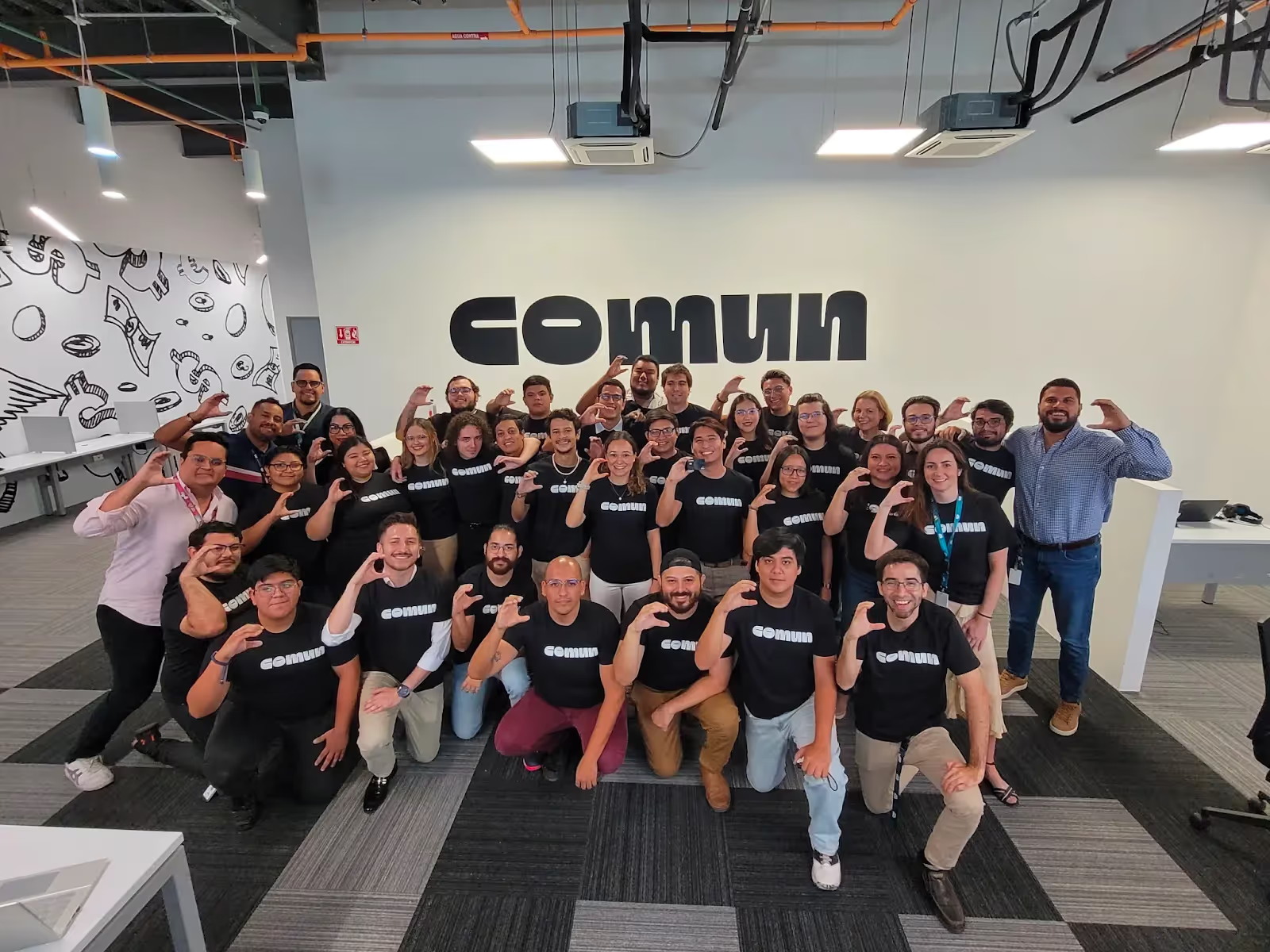
At Común, the first step in this journey has already begun. Our team in Mérida, Mexico, is part of our Community and the one we seek to serve. They are an extension of our mission and our digital platform, and a necessary ingredient in unlocking social mobility for millions of immigrants in the U.S.
What makes Común different from a traditional bank?
Común accepts over 100 Latin American IDs (passport, consular ID, among others), doesn't require an SSN or ITIN, and doesn't charge a monthly fee or require a minimum balance.
How does Común specifically support the immigrant community?
With 100% Spanish-language support, an account opening process that takes minutes, and features built for common community needs, like low-cost remittances and cash deposit without needing a prior bank account.
What services does Común offer?
A checking account with a Visa debit card, international remittances starting at $2.99, cash deposit at over 88,000 locations, and direct deposit.
Frequently asked questions
Who is Común designed for?
For the Latin American immigrant community in the U.S. looking for accessible financial services without traditional documentation barriers.
What IDs does Común accept?
Over 100 Latin American IDs, including passports and consular IDs — no SSN or ITIN required.
Does Común charge an opening or maintenance fee?
No, there's no opening fee, monthly fee, or minimum balance required.
Is Común's support available in Spanish?
Yes, the app and customer support are available in Spanish.
How fast can I open my account?
The process takes about 3 minutes, with instant approval in most cases.
Does Común offer remittances to Latin America?
Yes, starting at $2.99 per transfer, with your first transfer at no cost.
Checking account
What Is a Debit Card and How Does It Work?
8 min de lectura
A debit card is a bank card that lets you make purchases and withdraw money using funds available in your bank account. A debit card looks a lot like a credit card, but it works differently. When you use a debit card, the money is deducted directly from your bank account. That means you can only use the card if you have enough available funds — otherwise, the transaction won't go through.
Who Issues Debit Cards for Consumers?
Debit cards are issued by banks and are linked to individual checking accounts. You can get a debit card by opening a bank account at any bank or credit union that offers this service.
Many banking institutions also offer other digital services, like mobile and online banking, that let you manage your account over the internet or through a mobile device. In general, all banks offer services designed for people with different needs and income levels, giving nearly every adult access to banking.
Even though debit cards are easy to use, you should be careful with them. If you lose your card or it's stolen, report it to your bank immediately to prevent fraud or misuse. You should also regularly check your statements for fraudulent transactions or errors. With a bit of care, debit cards can be a useful tool for managing your money and making purchases online and in person.
How Can You Use Your Debit Card to Make Purchases or Withdraw Money From an ATM?
There are many ways to use a debit card to make purchases or withdraw money from an ATM.
To make a purchase, you can insert your card into the point-of-sale (POS) terminal and select "debit" as your payment method. Then enter your PIN and select the purchase amount.
To withdraw money from an ATM, insert your card into the machine's slot and select "checking/savings." Then enter your PIN and select the amount you want to withdraw.
You can also use your debit card to make payments online or by phone. To make an online payment, enter your card details on the merchant's website. To make a payment by phone, call the merchant's customer service number and provide your card details when asked.
What Protection Do Visa Debit Cards Have Against Unauthorized Charges?
If you have a Visa card, you're protected by Visa's Zero Liability policy. This policy guarantees you won't be held responsible for any unauthorized charges made with your card. That means if someone steals your card or uses it without your permission, you won't have to pay for those charges.
Visa's Zero Liability policy applies to all Visa cards, including debit and credit cards. It also applies to all transactions, including online and in-person transactions. This policy was put in place to help protect consumers against fraud and identity theft.
If you're a victim of fraud or identity theft, be sure to report it right away. You can call Visa's toll-free number 24/7 to report any incident. Visa will work with you to resolve the issue and help protect your money and identity.
What Are Virtual Debit Cards?
A virtual card is a card that isn't physical — it exists only in the digital world. Virtual cards are often used for online purchases, since they offer more security than using a regular debit card.
One of the benefits of virtual cards is that they can be used to limit how much money is spent on a purchase. For example, if you're buying something online and want to make sure you don't go over budget, you can use a virtual card instead of your regular credit or debit card. This can help you stay within budget and avoid racking up debt. Likewise, if your information is stolen during a transaction, the thief won't be able to access your other cards. This can help prevent fraud and keep your personal information safe.
If you're interested in getting a virtual card, there are a few things you should know. First, not all banks offer virtual cards, so you may need to open a new account at a bank that offers this service. Second, not all merchants accept virtual cards, so there may be some places where you can't use them. Finally, virtual cards sometimes come with associated fees, so be sure to read the terms and conditions before using one.
The Benefits of Común
When you get a checking account with Común, you'll get two debit cards: a physical one and a virtual one.
The physical card lets you make purchases at any business, and offers security thanks to its contactless capability and chip. This prevents your card details from being cloned or used for fraud.
The virtual card lets you make online purchases with more confidence, since contactless technology and chip protection aren't available on the internet — but if fraud does happen, the card can be canceled and replaced immediately. You can contact our support team anytime to report these cases.
Común debit cards work at more than 55,000 ATMs across the United States for deposits and withdrawals, and are protected by Visa's Zero Liability policy. That means any unauthorized charge won't be deducted from your checking account balance.

Checking account
What do I need to open a traditional bank account as an immigrant?
8 min de lectura
For immigrants in the United States, having a banking account has become a basic necessity to carry out all types of daily tasks, such as shopping in physical and online stores, receiving wages, sending transfers and remittances, opening a savings account, among other things.
Despite the importance that a banking account has for immigrants and U.S. citizens, there are still factors that hinder the immigrant community’s access to banking, such as high fees and required documentation.
According to FDIC data, among vulnerable groups without banking accounts (unbanked), Hispanics make up 9.5%. This shows a gap that disadvantages a significant portion of the population.
Access to financial services is an increasingly attainable right for immigrants in the U.S. In this article, we will explain step by step what is required to open an account at a bank and on digital platforms, as well as the advantages of these solutions.

4 Requirements to Open a Banking Account in the United States
It is true that financial services make users’ lives easier and, in some way, improve their quality of life. But, what is needed to open a banking account in the United States?
Opening a bank account, whether a checking account or another type, requires meeting a series of requirements and presenting documentation, which may vary depending on the financial institution.
Some of the difficulties immigrants face when opening a banking account are not having an SSN (Social Security Number) or tax documentation, as well as the lack of information in Spanish.
Fortunately, beyond traditional banks, there are currently alternative solutions such as Común, a financial platform dedicated to meeting the needs of people who seek accessible and efficient services.
In general, these are the most common required documents to access a banking account in the United States.
Social Security Number (SSN)
This is the most common requirement for opening an account. It is an identifier for people who reside and work legally in the United States, and it is required for banks to carry out the identity verification process.
Individual Taxpayer Identification Number (ITIN)
The ITIN is an alternative for people who do not qualify for the SSN, since some financial institutions accept it instead.
Identity Document
For this requirement, it is possible to present a passport, a driver’s license, a government-issued ID, or a consular ID card. Any of these documents must be valid and show both name and photograph.
Proof of Address
To prove your residence in the United States, you can present utility bills, such as electricity, or even a digital account statement.
Step by Step: How to Open a Banking Account in the U.S. with Foreign Identification
The number of requirements requested by traditional institutions tends to make access to banking difficult, especially for immigrants without the previously listed documentation.
If you are looking for a practical and simpler solution than traditional banking services, you can turn to options like Común, the platform that streamlines processes and offers fair financial services for everyone.
Access to these services is possible with official, qualified foreign documentation, which helps reduce the gap in access to banking for immigrants.
Choose a Secure Platform that Accepts Foreign Identifications
In general, traditional banks request the SSN or ITIN, so a convenient option is to choose a digital platform with more flexible requirements but with the same quality and seriousness in their processes.
Común is a platform that makes immigrants’ lives easier in the United States, as it allows you to open an account with official, qualified documentation from your country of origin and simplifies the sign-up process without complicated paperwork.
Download the Mobile App and Set Up Your Account available in Spanish
You only need a mobile device compatible with Android or iOS to download the application, where you will create your profile and enter your information.
Verify your identity with an official ID from your country
Then, carry out the identity verification with your official ID from your country of origin. To do this, you will need to take a picture of it and possibly take a selfie.
Activate Your Card and Start Using Your Account
Once you provide the necessary documentation, you will have access to a debit card to make purchases at various establishments and will be able to make transfers and receive payments.
Use Additional Features Such as Sending Remittances or Deposits at Stores
For immigrants, it is essential to have services that allow them to send remittances to their countries of origin, so you can also use this benefit, in addition to making direct deposits in physical stores near you.
Which Bank in the U.S. Allows Opening an Account with a Passport? More Accessible Alternatives
There are alternatives with more flexible account opening options, such as Bank of America, which accepts the ITIN in case you do not have an SSN. However, the processes tend to be longer and slower compared to other digital platforms, which facilitate the sign-up process by offering greater feasibility in their requirements.
Bank of America
Bank of America supports the opening of banking accounts in the United States for immigrants, because it allows opening an account with a valid passport or ITIN. However, it is necessary to go in person to a branch to complete the process.
Común
Común is a digital platform that allows opening an account with more than 100 foreign IDs or with a valid passport, which makes it easier to obtain an account for immigrants and send remittances to Latin America for an affordable fee; in addition to making cash deposits at more than 100 stores.
Wells Fargo
Wells Fargo also accepts a passport as the main ID, but may request an additional identification, such as a credit card or student ID.
Wise
Wise is a fintech that offers digital accounts in different currencies. It is possible to access its services with a passport, ITIN, or SSN.
Revolut
Revolut is another alternative for non-citizens in the United States, since it accepts a passport as identification; among other options, such as a driver’s license or national ID.
Why Común is Ideal for Opening Your Account in the U.S.?
Although the requirements to open an account may make it seem like an inaccessible process for many immigrants in the U.S., fortunately, there are also more accessible options.
If you are looking for a clear, reliable alternative available in Spanish, it is time to change your relationship with finances through Común: a service that truly understands your needs.
Why is Común Your Ally?
Forget about minimum deposits or monthly charges
Access a mobile app available in Spanish with a user-friendly interface
Send money to your home country for a fee starting at $2.99, up to the applicable limits
Deposit cash at a network of establishments near you
It has 24/7 customer support available in Spanish
Remember that Común offers you a service available in Spanish with simple processes. Open your account today and start using a service designed for you!

International Money Transfers
How to Make International Money Transfers: Options and Costs
8 min de lectura
As the reasons for transferring money internationally increase, so do the available methods. Whether you are sending remittances to your family, paying suppliers, or receiving payments from abroad, understanding how international transfers work will help you save time and money.
What is an international money transfer?
An international money transfer is the movement of funds from a bank account in one country to another account in a different country. It can be done through bank wire transfers, specialized remittance services (Western Union, Remitly, Wise), or platforms like Común that allow you to send money to Mexico directly from the app.
How to choose the best international transfer service?
To choose the best service, consider: the total cost (visible fee + exchange rate margin), delivery speed, available delivery methods (bank deposit, cash pickup), and whether they accept your documentation. Use comparison tools like Monito to see real-time options for your specific corridor.
Main options for sending money internationally from the U.S.
Bank wire transfer
Traditional, expensive method ($25-45 per transfer), takes 1-5 business days, requires the recipient’s full bank details: account number, SWIFT/BIC, IBAN, or CLABE (Mexico).
Specialized remittance services
Wise, Remitly, and Xoom offer fees lower than 3-5%, delivery from minutes to 3 days, and multiple delivery options. Wise uses the real market exchange rate. They require an SSN or ITIN in the U.S.
Común
Común allows you to send remittances to Mexico and Latin America starting at $2.99 without requiring an SSN. Ideal for newly arrived immigrants. Options for bank deposit, cash pickup at Oxxo or Walmart.
Frequently asked questions about international transfers
What is the cheapest way to make an international transfer?
Specialized remittance apps (Wise, Remitly, Xoom) are generally cheaper than traditional banks for international transfers. Wise is known for using the real market exchange rate with transparent fees. For specific destinations such as Mexico, platforms like Común offer transfers starting at $2.99. Use comparison tools like Monito to see the best real-time options for your specific corridor.
How long does an international transfer take?
It depends on the method and destination country. International bank wire transfers take 1-5 business days. Remittance apps can be almost instant for cash pickup, or 1-3 business days for bank deposit. Factors such as time zones, bank cutoff times, and the destination country’s compliance requirements affect arrival time.
What information do I need to make an international transfer?
For an international bank wire transfer, you need: the beneficiary’s full name, the receiving bank’s name and address, the receiving bank’s SWIFT/BIC code, and the beneficiary’s account number or IBAN. For Mexico, the interbank CLABE (18 digits) is used. For remittance apps like Común, sometimes the recipient’s phone number or bank name is enough.
Are there amount limits for international transfers?
Yes. Limits vary by service and user verification level. Remittance apps typically allow between $2,999 and $10,000 per day for verified users. Bank wire transfers can be larger but cost more ($25-45 per transaction). Anti-money-laundering regulations require reporting transfers over $10,000 to the IRS (CTR form).
Do I need an SSN to send money abroad from the U.S.?
It depends on the service. Wise, Remitly, and traditional banks require an SSN or ITIN for regulatory compliance. Platforms like Común do not require an SSN — they accept a passport or consular ID — and allow you to send remittances to Mexico and Latin America starting at $2.99. This is especially useful for newly arrived immigrants who do not yet have an SSN.
Are international transfers taxable?
Sending money abroad itself does not generate taxes in the U.S. However, if the money comes from undeclared income, that is the tax obligation to address. The IRS may require reporting foreign accounts (FBAR/FATCA) if you have more than $10,000 in foreign accounts at any point during the year.

International Money Transfers
The Impact of Money Transfer Apps on Global Remittances
8 min de lectura
The Global Impact of Mobile Money Transfer Apps
Money transfer apps have significantly altered the global remittance landscape, offering an accessible and efficient way for people to send money across borders. These apps have democratized financial services, especially in regions where traditional banking infrastructure is weak. By leveraging mobile technology, remittance services have become more inclusive, reaching remote and underserved communities.
Key Benefits
Accessibility: Money transfer apps are accessible to anyone with a smartphone and an internet connection, with no need for a physical bank.
Cost Efficiency: These apps often offer lower transaction fees compared to traditional remittance services, making it more affordable to send money internationally.
Speed: Transfers process almost instantly, reducing wait times for recipients.
Security: Advanced encryption methods and secure access provide robust protection against fraud and theft.
Impact of Mobile Money Apps on International Remittances
Mobile money apps have had a profound impact on international remittance flows. By simplifying the transfer process, these apps have increased the volume of remittances sent globally.
Accessibility and Financial Inclusion
One of mobile money apps' most significant contributions to international remittances is their role in promoting financial inclusion. Many remittance recipients in developing countries don't have access to traditional banking services. However, with the widespread adoption of mobile phones, even in remote areas, these people can now receive money directly into their mobile wallets. This not only eliminates the need for physical bank branches, but also provides a safe and convenient way for recipients to access their funds.
Reducing Transaction Costs
Another key impact of money apps on remittances is reducing transaction costs. Traditional remittance methods often involve high fees charged by banks and money transfer operators. These fees can eat into the funds sent, particularly for smaller amounts. Mobile money apps, on the other hand, generally offer lower fees, making it more affordable for migrants to send money to their families. By lowering the cost of remittances, these apps let migrants send larger amounts of money, increasing the total volume of remittances reaching recipient countries.
Speed and Convenience
Mobile money apps also offer unmatched speed and convenience compared to traditional remittance methods. Transactions can be initiated and completed in minutes, letting recipients access funds almost instantly. This is particularly beneficial in emergency situations, where quick access to funds can make a significant difference in a recipient's quality of life. Plus, the convenience of mobile money apps means migrants can send money anytime, from anywhere, without having to visit a physical location or work around bank or money transfer agent hours.
Empowering Recipients
Beyond the immediate financial benefits, mobile money apps empower recipients by giving them greater control over their finances. With funds deposited directly into their mobile wallets, recipients have the flexibility to use the money however they see fit, whether for daily expenses, savings, or investments. This financial autonomy can contribute to long-term economic stability and resilience, since recipients are better equipped to weather financial shocks and pursue opportunities for personal and economic growth.
More Stable Than Capital Flows
Remittances have proven to be more stable than other forms of financial inflows, like foreign direct investment (FDI) or portfolio investments.
Reasons for Stability
- Personal Nature: Remittances are usually sent for personal reasons, like supporting family members, making them less susceptible to economic fluctuations.
- Resilience: During economic downturns or crises, migrants often increase remittances to support their families, providing a steady flow of funds.
High Transaction Costs
Despite the advantages, high transaction costs remain a challenge in the remittance industry. Traditional services can charge fees ranging from 7% to 10% of the total amount sent, which is a significant burden for lower-income workers.
Efforts to Reduce Costs
- Regulatory Changes: Governments and international organizations are working to implement policies that reduce transaction fees.
- Technological Innovation: Advances in fintech, including blockchain and cryptocurrency, are helping reduce costs by cutting out intermediaries.
In short, the impact of mobile money apps on international remittances is multifaceted, spanning greater accessibility, lower transaction costs, increased speed and convenience, and recipient empowerment. As these apps continue to evolve and innovate, their role in facilitating cross-border transactions and promoting financial inclusion will likely become even more pronounced, further transforming the global remittance landscape for the better.
What to Consider When Sending Remittances
Sending remittances through mobile money apps offers convenience and efficiency, but it's essential to consider several factors to ensure a smooth, cost-effective transaction.
- Fees: Compare the fees charged by different money transfer apps to find the most affordable option. While some apps may offer low upfront fees, they may make up for it with less favorable exchange rates.
- Exchange Rates: Exchange rates can vary significantly between different money transfer apps and fluctuate throughout the day. Look for apps that offer competitive exchange rates to maximize the amount the recipient receives.
- Transfer Speed: Consider how quickly you need the money to reach the recipient. While many mobile money apps offer near-instant transfers in minutes, others may take longer, especially for transfers to remote areas or during periods of high transaction demand.
- Security Features: Make sure the money transfer app you choose has robust security measures to protect your funds and personal information. Look for features like two-factor authentication, encryption protocols, and fraud detection systems.
- Accessibility: Consider the app's accessibility for both sender and recipient. Choose an app that's easy to use and available in the languages spoken by both parties. Verify that the recipient can easily access the transferred funds, whether through a mobile wallet, bank account, or cash pickup location.
- Customer Support: Evaluate the customer support options provided by the money transfer app. Look for apps that offer responsive customer service channels, like phone support, live chat, or email.
- Reviews and Reputation: Research the money transfer app's reputation by reading reviews from other users and independent review platforms. Pay attention to feedback on reliability, transaction speed, customer service, and overall user experience. Choose a reputable app with a track record of safe, efficient money transfers to minimize the risk of issues.
- Regulatory Compliance: Make sure the money transfer app complies with relevant regulations and legal requirements in both the sender's and recipient's countries. Verify that the app follows anti-money laundering (AML) and know-your-customer (KYC) procedures to prevent illicit financial activity.
Sending the Money
Sending money through mobile apps is a straightforward process, but understanding the steps can help ensure a successful transaction.
Steps to Send Money
- Choose an App: Select a reliable money transfer app based on your needs.
- Set Up an Account: Sign up and verify your account with the necessary ID documents.
- Enter Transfer Details: Enter the recipient's information and the amount to send.
- Review and Confirm: Verify the details and confirm the transaction.
- Notification: Both sender and recipient typically receive notifications once the transfer is complete.
By carefully considering these factors when sending remittances through mobile money apps, you can ensure a smooth, cost-effective transfer experience while providing vital support to your loved ones across borders.
In the mobile remittance landscape, Común stands out as an emerging player, particularly serving the needs of the immigrant community in the United States¹. Recognizing the challenges immigrants face in accessing reliable financial services and building wealth in the U.S., Común has positioned itself as a solutions-oriented platform aimed at lowering barriers to entry and accelerating integration with the digital economy.
Let's Start With the Problem:
Living in the United States as a foreigner presents numerous challenges, made worse by a financial system that often overlooks immigrant communities' needs. Reliable financial services are essential for building wealth, yet millions of immigrants find themselves excluded from mainstream banking and financial opportunities.
Barriers to Entry:
- Documents: Immigrants are often less likely to have Social Security numbers (SSNs), a common requirement for accessing financial services.
- Language: Many financial institutions lack Spanish-language services, creating a communication barrier for Spanish-speaking immigrant customers.
- Cost: Financial services aimed at immigrants often come with exploitative pricing, further widening the economic gap.
Addressing the Structural Opportunity Gap:
Común recognizes the structural opportunity gap facing the immigrant community and aims to address it through innovative solutions tailored to their needs.
Común's Solution:
- Your Documents: Común is one of the only platforms that lets users apply with more than 100 Latin American IDs, removing the barrier posed by not having an SSN.
- Your Language: Común provides 100% bilingual customer service, with native Spanish speakers available 24/7 via chat, email, or phone, ensuring effective communication and support.
- Your Neighborhood: Común offers a network of thousands of locations for cash deposits and withdrawals, making financial transactions convenient and accessible for users.
Facts About Global Migration
Understanding the dynamics of global migration is essential to grasping the complexities of remittances and their impact on world economies. Here are key facts that shed light on the intricate relationship between migration and remittances:
- Global Migration Trends: Migration patterns have shifted over the past decade, with significant movements of people across regions and continents driven by factors like economic opportunity, conflict, and climate change.
- Top Remittance-Receiving Countries: Some countries receive the largest remittance inflows, often coinciding with regions facing economic challenges or political instability. Countries like India, China, and Mexico are among the top global remittance recipients.
- Top Remittance-Sending Countries: On the other hand, there are countries where most remittances originate, reflecting diaspora efforts to support family members and contribute to development in their countries of origin. The United States, Saudi Arabia, and the United Arab Emirates are prominent remittance-sending countries.
- Economic Impact of Remittances: Remittances play a crucial role in recipient countries' economies, contributing to GDP growth, poverty reduction, and increased household income. In many developing countries, remittances make up a significant share of national income.
- Cost of Sending Remittances: Despite their economic importance, sending remittances can be costly for migrants, with fees charged by money transfer operators and banks often eating into the funds sent. Efforts to reduce remittance costs are underway, aimed at maximizing benefits for senders and recipients.
- Remittance Growth Over Time: Global remittance volumes have been steadily increasing over the years, reflecting the growing number of migrants and the expansion of remittance corridors. This growth underscores the importance of remittances as a lifeline for millions of families worldwide.
- Migrant Contributions to Host Economies: Migrants don't just send money back to their home countries — they also contribute to their host countries' economies through labor participation, entrepreneurship, and consumer spending. Their contributions enrich cultural diversity and drive innovation and economic growth.
- Impact of Technology on Remittances: Technological advances, including the rise of mobile money apps and blockchain technology, have revolutionized the remittance industry, making transfers faster, cheaper, and more accessible. These innovations have empowered both migrants and recipients, letting them bypass traditional banking systems and intermediaries.
- Future Projections: Projections indicate continued growth in global migration and remittance flows, driven by demographic shifts, economic disparities, and geopolitical developments. Understanding these trends is essential for policymakers, financial institutions, and stakeholders to shape policies and initiatives that harness the positive impact of remittances while addressing challenges and barriers to access.
By recognizing the importance of migration and remittances, we can work toward building inclusive, sustainable financial systems that benefit individuals, families, and communities around the world.
Conclusion
In conclusion, money transfer apps have revolutionized global remittances, offering convenience, affordability, and accessibility. They close the gap between senders and recipients, empowering migrants and supporting families worldwide. As technology advances and regulations evolve, these apps will continue to shape the remittance landscape, fostering financial inclusion and economic growth. By embracing innovation and collaboration, we can harness the transformative power of mobile money apps to create a more equitable, prosperous global economy.
Financial Education
Banking Services for Small Businesses: A Complete Guide
8 min de lectura
Small Businesses
Running a small business involves making numerous financial decisions, and choosing the right banking services is crucial for success. Separating personal assets from business assets in an LLC structure is important for protecting personal property in case of business bankruptcy. Community banks and modern financial platforms offer a variety of services tailored to meet small businesses' unique needs. This complete guide explores the essential banking services for small businesses, highlighting their benefits and how they can support growth and stability.
Understanding Different Types of Small Businesses and Their Banking Needs
Before exploring specific banking services, it's essential to understand the range of small businesses and their unique financial needs. Different types of small businesses — like sole proprietorships, partnerships, LLCs, corporations, nonprofits, home-based businesses, and startups — require tailored banking solutions to support their growth and stability. Keeping business and personal bank accounts separate offers benefits like accurate record-keeping, simplified tax preparation, better financial organization, and enhanced professionalism. By recognizing these differences, you can better appreciate how community banks and financial platforms like Común meet small business owners' diverse needs. This understanding lays the groundwork for selecting the most appropriate banking services to ensure financial health and success.
Business Checking and Savings Accounts
Having a dedicated business checking account is fundamental to managing your finances effectively. It lets you separate personal and business transactions, simplifying bookkeeping and ensuring clear financial records. Many banks offer business checking accounts with features like free transactions, low fees, and online banking capabilities.
When opening a business bank account, gather the required documentation, like your Employer Identification Number (EIN), and decide whether you want to apply online or visit a branch. Understanding the fees and essential steps to open the account is crucial.
A business savings account is also vital. It helps you set aside funds for future investments, emergencies, or growth opportunities. Look for accounts with competitive interest rates and flexible access to your funds.
Business Loans and Lines of Credit
Access to credit is often essential for small business growth. Community banks and other financial institutions provide various loan products, including term loans, lines of credit, and SBA loans. These financial products can help you finance new equipment, expand operations, or cover unexpected expenses.
- Term Loans: Term loans issue lump sums of capital that are repaid over fixed periods of time with predetermined interest rates. They're suited for large, one-time investments, like purchasing equipment or renovating a workspace. The predictable repayment schedule helps with budgeting and long-term planning.
- Lines of Credit: Lines of credit offer flexible borrowing options, letting you draw funds as needed and pay interest only on the amount you use. This flexibility can be a lifesaver during cash flow shortages or when financing immediate needs, like inventory purchases or emergency repairs. Lines of credit are revolving, meaning funds become available again as you repay them, making them an ongoing financial resource.
- SBA Loans: Small Business Administration (SBA) loans are partially government-guaranteed, making them more accessible to small businesses that might not qualify for traditional loans. They offer competitive interest rates and longer repayment terms, which can be particularly beneficial for startups and businesses with less-established credit histories.
Working with a community bank for loans and lines of credit means you benefit from personalized service. Bank representatives can provide tailored advice, helping you choose the right loan product for your needs and guiding you through the application process. This relationship-based approach ensures you get the support needed to grow your business sustainably.

Payment Processing, Payroll, and Cash Flow Management Services
Effective financial operations are critical to any small business's success. This includes processing payments, managing payroll, and ensuring efficient cash flow. Here's how comprehensive banking services can support these needs:
- Merchant Services: Merchant services are crucial for businesses that need to process customer payments. These services include credit card processing, point-of-sale (POS) systems, and online payment gateways. A reliable merchant services provider ensures transactions are processed quickly and securely, improving customer satisfaction and cash flow. By offering seamless payment solutions, banks help businesses deliver a better customer experience and streamline their revenue collection process.
- Payroll Services: Managing payroll can be complex and time-consuming. Many banks offer payroll services to simplify this process. These services handle everything from calculating wages and taxes to direct deposits and payroll tax filing. By outsourcing payroll, businesses can ensure accuracy and compliance with tax regulations, freeing up time to focus on core operations. Efficient payroll management not only saves time, but also helps maintain employee satisfaction by ensuring timely, accurate payments.
- Cash Management: Effective cash management is essential to maintaining healthy cash flow. Banks offer various cash management services, including remote deposit capture, ACH payments, and wire transfers. These tools help businesses efficiently manage incoming and outgoing funds, reducing time spent on manual processes and improving overall financial control. Proper cash management ensures businesses can meet their financial obligations and invest in growth opportunities without experiencing cash shortages.
By integrating these services, banks provide a comprehensive solution that supports small businesses in maintaining smooth, efficient financial operations.
Online and Mobile Banking
In today's digital age, online and mobile banking are indispensable. These services provide convenient access to your accounts, letting you monitor transactions, transfer funds, and pay bills anytime, anywhere.
- Digital Transformation: Community banks are adopting new technologies to improve the customer experience through online and mobile banking platforms. These platforms offer 24/7 access to your accounts, letting you manage your finances from the comfort of home or on the go. You can easily check balances, view transaction history, and transfer funds between accounts.
- Advanced Features: Many online and mobile banking services include features like bill pay, mobile check deposit, and budgeting tools. Bill pay lets you schedule payments to vendors and service providers directly from your account, ensuring timely payments and simplifying your bookkeeping. Mobile check deposit lets you deposit checks by taking a photo with your smartphone, saving trips to the bank.
- Security Measures: Online and mobile banking platforms use advanced security measures to protect customer data and ensure secure transactions. This includes encryption to protect information, multi-factor authentication to verify user identity, and regular security audits to identify and address potential vulnerabilities. Real-time fraud alerts help you quickly detect and respond to suspicious activity, improving your overall financial security.
Open your bank account¹ in 3 minutes with your country's ID²
Common Problems Small Businesses Face With Banking Services and Financial Health
While banking services are crucial to small business operations and growth, many small business owners face various challenges when managing their financial needs. Understanding these issues can help businesses make more informed decisions and find solutions that better fit their requirements.
- High Fees and Hidden Costs: Many small business owners find that banking services come with high fees, including monthly maintenance charges, transaction fees, and penalties for not maintaining a minimum balance. Hidden costs, like wire transfer fees, overdrafts, and additional services, can also add up, putting pressure on the business's cash flow.
- Limited Access to Credit: Securing loans and lines of credit can be particularly challenging for small businesses, especially startups or those with less-established credit histories. Traditional banks often have strict lending criteria, making it difficult for small business owners to access the funds they need for growth and operations.
- Inadequate Customer Service: Small business owners frequently report dissatisfaction with the customer service provided by their banks. Long wait times, lack of personalized service, and insufficient support for small-business-specific issues can hinder a business's ability to effectively manage its finances and resolve issues quickly.
- Complexity and Inaccessibility: Banking services can often be complex and difficult to navigate. Small business owners, who may not have extensive financial knowledge, can find it challenging to understand and use the full range of services offered. Additionally, inaccessibility to bank branches or limited online services can be a significant obstacle for businesses that require frequent banking interactions.
- Security Concerns: With the growing prevalence of cyber threats, security is a major concern for small businesses. Ensuring banking services offer robust security measures to protect sensitive financial data is crucial. However, not all banks offer the same level of security, leaving some businesses vulnerable to fraud and data breaches.
- Integration With Business Tools: Small businesses often use various tools and software to manage their operations, like accounting software and payment processing systems. Issues can arise when banking services don't integrate smoothly with these tools, leading to inefficiencies and increased administrative burden.
- Lack of Financial Education and Support: Many small business owners struggle with financial literacy, which affects their ability to make informed banking and financial decisions. Banks that don't offer enough financial education resources or support can leave business owners feeling overwhelmed and ill-prepared to manage their finances effectively.
- Limited Product Offerings: Some banks may not offer a wide range of products tailored to small businesses' specific needs. This can include specialized loan products, cash management services, or flexible payment solutions. Limited product offerings can restrict a business's ability to find suitable financial tools that support its growth and operational needs.
Understanding these common issues can help small business owners better navigate the challenges they face with banking services. By seeking out community banks or financial platforms like Común that prioritize transparency, customer service, security, and integration with business tools, small businesses can find banking solutions better suited to their needs and supportive of their financial success.
Conclusion:
Choosing the right banking services is essential for your small business's success and growth. From checking and savings accounts to loans, merchant services, and digital banking, the right financial products and support can help you manage your finances effectively and reach your business goals. By partnering with a community bank and leveraging platforms like Común you can access the tools and expertise needed to thrive in today's competitive market.
Integration and Support
Many community banks pride themselves on offering personalized service and financial advice. Building a relationship with your bank can provide valuable insight into managing your finances, accessing credit, and planning for future growth. Take advantage of workshops, seminars, and one-on-one consultations offered by your bank to improve your financial literacy and business knowledge.
For small businesses looking to leverage modern financial technology, integration with platforms like Común can improve their banking experience. Común offers a range of features tailored to small businesses, including instant notifications, secure login, and personalized customer support available seven days a week. By combining the strengths of traditional community banking with the convenience of digital banking, Común provides a comprehensive solution for managing your business finances.
Open your bank account¹ in 3 minutes with your country's ID²





Thousands of immigrants are already achieving more with their money. You can too.
Comun is a financial technology company and not a bank. Banking services are provided by Community Federal Savings Bank; Member FDIC. The Comun Visa® Debit Card is issued by Community Federal Savings Bank, pursuant to a license from Visa U.S.A Inc. and may be used everywhere Visa Cards are accepted.
Comun is a fintech company and not a bank or licensed money transmitter.
* Results may vary. For a complete list of eligible IDs and application requirements, follow this link.
^ No minimums, no maintenance fees. ATM or transfer fees may apply. See app for fee details.
‡ Direct deposit funds are typically available when we receive the payment file, up to two days before the scheduled payment date. This early availability is not guaranteed.
** A service provided by Service UniTeller, Inc. Service UniTeller, Inc. is licensed in all states that require a license. Remittance fees start at $2.99 but may vary. Please check the app for more details. Comun Inc. may earn revenue from the conversion of foreign currencies.
† Funds in your account are FDIC insured up to $250,000 by ownership category through Community Federal Savings Bank (CFSB), Member FDIC, in the event CFSB fails.