Living in the United States
Best Free Online English Courses for Immigrants in the U.S.
Do you know the best way to learn English? We present platforms and mobile apps with beginner to advanced lessons, ideal for immigrants.
8 min read

18 Dec 2025
Some of the best English classes to learn online as an immigrant in the U.S.
Although moving to the United States brings a number of benefits due to the wide range of job opportunities available, it also presents challenges, such as the language barrier, which can limit opportunities for many immigrants who have not had access to formal language education.
While it may seem like a difficult goal to achieve, speaking English can make many aspects of daily life easier — such as getting a job, going to school, or handling important paperwork.
Fortunately, technology allows more people to learn English for free and easily, through platforms and mobile apps that offer lessons from anywhere. Below, we’ll show you some of the best options for immigrants who live or plan to live in the United States to learn English.
5 Reliable Platforms to Learn English from Scratch
For many people, taking in-person English classes isn’t always the best option due to cost, schedules, and transportation challenges. If you face any of these obstacles, you should know about practical alternatives from educational institutions and online platforms — ideal for those who prefer a more academic or progressive learning path.
Below, we present 5 reliable alternatives for learning English online.
British Council
This is one of the most prestigious English teaching institutions worldwide. Its platform offers a variety of courses for beginner, intermediate, and advanced students, segmented by skills: listening comprehension, grammar, writing, and conversation.
It stands out as a very complete option since students can supplement lessons with various materials such as podcasts, videos, and exercises prepared by certified English teachers.
Coursera
Coursera is a platform that offers free English courses in collaboration with prestigious universities, maintaining an academic and professional focus.
This is an excellent option if you’re looking to improve your English to access better job opportunities or refine specific skills to sound more like a native speaker.
BBC Learning English
This platform focuses on teaching English through current content, such as international and cultural news. It’s an ideal alternative for students who want to improve listening comprehension and expand their vocabulary.
USA Learns
This is an official U.S. government platform. It is specifically designed for people who want to acquire basic language skills to handle real-life situations such as visiting the doctor, ordering food, or completing immigration paperwork.
Alison
Alison is another dynamic alternative that offers a variety of free courses across different levels and practical skills. Students can also focus on specific areas, such as business English or preparation for certifications like the TOEFL.
Platform
Type of Course
Level
Main Benefit
British Council
Courses segmented by skills, general English.
From beginner to advanced.
Structured learning units with rich study materials.
Coursera
Academic and professional English.
From intermediate to advanced.
Courses focused on improving professional communication skills.
BBC Learning English
Everyday English.
From beginner to advanced.
Short lessons based on current topics.
USA Learns
Practical English.
Beginner.
Designed to equip students with the skills needed to communicate in everyday situations.
Alison
Business English and official certification preparation.
From beginner to advanced.
Offers the option to earn official digital certificates.
Mobile Applications to Learn English for Free
In addition to the options above, you can also explore other alternatives known for their flexibility in helping you learn English easily.
Mobile language-learning apps let users study anywhere, anytime, and serve as a fun complement to traditional courses.
Duolingo
Duolingo is the most famous and culturally influential app. It uses gamified lessons that unlock progressively as users acquire new skills. It’s ideal for building vocabulary.
Mondly
Mondly focuses on conversational practice and pronunciation using tools like voice recognition and artificial intelligence to interact with virtual characters.
Busuu
Busuu is one of the most comprehensive language-learning apps. In addition to structured lessons based on the Common European Framework, it allows students to interact with native speakers.
Memrise
Memrise focuses on improving listening comprehension and learning new vocabulary through videos of real-life situations presented by native English speakers.
HelloTalk
HelloTalk makes English practice easier by connecting people around the world interested in cultural and language exchange.
How to Choose the Right English Course for You
As you can see, there are many ways to learn and improve your English. Each has different approaches and benefits, so there’s no single “best option” — it depends on your level and specific needs.
Before deciding which online English course is best for you, consider these recommendations:
- Define your goals: be clear about why you want to learn or improve your English.
- Evaluate your current English level: whether you’re a beginner or already advanced.
- Compare platforms and apps: take time to find the one that best fits your needs.
- Review the course duration and format: make sure to organize your time so you can attend classes consistently and on schedule.
- Complement your study with conversation practice: it’s very important to engage with native speakers in real-life situations and different accents.
The most important factor in making language study effective is consistency, regardless of which platform you choose.
Practical Tips to Improve Your English Every Day
In addition to the classes on platforms or the interactive resources in apps, it’s important to incorporate strategies that help improve your confidence and fluency when communicating in English.
Here are some practical tips designed to make life easier for immigrants in the United States.
- Listen to English every day: whether on YouTube videos or movies. The goal isn’t to understand 100%, but to start getting used to the language.
- Practice with friends or coworkers: if you have people you trust, don’t hesitate to ask them for help.
- Apply what you’ve learned in your environment: mentally review your surroundings and try to name the things around you in English.
- Use technology to your advantage: rely on AI-powered tutors or platforms that offer automatic corrections.
Learning English and managing your finances with Comun are key steps to achieving your goals in the U.S.
In this article, we explained why learning English is important if you plan to live in the U.S., and showed you various platforms and apps designed to help you build essential language skills.
Fortunately, the immigrant community in the U.S. has allies dedicated to supporting them through their adaptation and growth in the country.
Discover Comun — the digital platform designed to meet the financial needs of immigrants.
At Comun, we believe every new learning step brings you closer to your dreams: learning English and organizing your money with Comun are steps toward achieving your goals in the United States.
Frequently Asked Questions (FAQ)
What is the best free online English course for beginners?
There are several English course options. If you have no prior knowledge, it’s recommended to start with British Council courses and complement with Duolingo.
How long does it take to learn basic English?
It depends on your consistency. If you dedicate even a small amount of time daily, you should notice improvement within three months.
What’s the best free method for adults to learn English?
There isn’t just one method to learn English. Try combining practice across different language skills using interactive platforms.
About Común
Común aims to support the Latino community in the United States. It offers a debit account that can be opened with more than 100 valid Latin American IDs and an app available in Spanish.
Visit Común's website or download the app for free to learn more about the full offer and applicable terms.
Olivia Rhye
Community Partner

Instant payments
Direct deposit vs wire transfer: comparison guide for U.S. immigrants
8 min de lectura
Direct deposit vs wire transfer: comparison guide for U.S. immigrants
These payment methods are both available in the U.S. but they are often used for different purposes. Direct deposit is commonly used for paychecks, tax refunds, and government benefits, while wire transfers are more often used for urgent or high-value transfers between financial institutions.
Understanding the difference between direct deposit and wire transfers can help you avoid unnecessary fees, choose the right payment method for your situation, and manage your money more confidently.
What's the difference between direct deposit and wire transfer?
The biggest difference is the purpose they serve. Direct deposit is commonly used for recurring payments such as salaries, benefits, and tax refunds. Wire transfers are commonly used to move money quickly between financial institutions, particularly for large or time-sensitive transactions.
| Feature | Direct deposit | Wire transfer |
|---|---|---|
| Common use | Paychecks, benefits, tax refunds | Large or urgent transfers |
| Network used | ACH network | Wire transfer network |
| Speed | Typically 1–3 business days | Often same day or next business day |
| Typical cost | Often no fee to receive | Fees may apply |
| International transfers | Limited | Commonly used |
| Recurring payments | Yes | Less common |
| Setup required | Routing + account number | Bank details + recipient information |
How direct deposit works
Direct deposit is one of the most common payment methods in the United States, particularly for employees receiving wages from an employer. Instead of issuing a paper check, an employer sends the payment electronically to the employee's bank account through the ACH network.
To set up direct deposit you need to provide your employer: your bank's routing number and your personal account number.
How wire transfer works
A wire transfer is an electronic transfer of funds between financial institutions through secure financial networks like Fedwire or SWIFT. Unlike direct deposit, wire transfers are better suited for large one-time payments, urgent payments, real estate transactions, or international transfers.
When to use each one
Use direct deposit for:
- Receiving your paycheck
- IRS tax refunds
- Social security or unemployment benefits
- Recurring business payments
Use wire transfer for:
- Real estate payments (down payment, closing)
- Urgent international transfers
- High-value business payments
- When the recipient specifically requires a wire transfer
How to set up direct deposit with Común
With your Común account, you can set up direct deposit by providing your Común routing number and account number to your employer. Your Común account has unique routing and account numbers available in the app. Visit comun.app to learn more.
FAQ
Is direct deposit faster than wire transfer?
Not necessarily. Domestic wire transfers can be faster (same day), while direct deposits usually take 1-3 business days. However, many accounts offer early access to direct deposits up to 2 days early.
How much does it cost to set up direct deposit?
Setting up direct deposit is generally no fee. Employers use the ACH network to send payroll electronically at no charge to the employee.
Común is a financial technology company and not a bank. Banking services are provided by Community Federal Savings Bank, Member FDIC.

Financial Education
Digital Banks in the United States: How to Open Your Account Easily and Quickly
8 min de lectura
Digital Banks in the United States: A Clear Guide to Opening Your Account
Having access to affordable financial services with features that let you carry out multiple operations in one place is essential for immigrants living and working in the United States.
Digital banks are a comprehensive solution that combines financial management with mobile technology to streamline processes compared with traditional banks.
These features are especially beneficial for immigrants looking for an alternative to access services that are often less feasible through institutions with physical branches.
In this guide, we explain why you should consider integrating digital banking into your lifestyle, how to open an account, and options for digital banks in the United States.
What Is a Digital Account and How Does It Work?
A digital account is a financial product that operates entirely online through mobile applications and digital platforms (website), removing the need to travel to a physical location to complete banking operations.
Here are some benefits of digital accounts.
- Mobility and 24/7 access from anywhere: they are not limited to teller hours and allow transactions at any time and place.
- Convenience for making payments and international money transfers: they allow sending money within and outside the country quickly.
- Security and transaction control from the app: they include safeguards to prevent misuse of personal data and crimes such as fraud.
How to Open a Digital Account in the United States Step by Step
Opening a digital account is usually simpler than with traditional financial institutions—not only because it can be done from a mobile device, but also due to flexible requirements that allow immigrant communities to access financial services with the same quality standards.
These are the steps to open a digital account in the United States.
Required Documents
Unlike traditional banking services, you can open a digital account with documents you use day to day.
- Official identification from your home country (valid passport, consular ID, driver’s license).
- In some cases, proof of address in the United States.
Account Opening Process
Once you have your documents ready, follow these steps.
Step 1. Register on the digital platform/mobile app.
Go to the digital bank’s website or mobile application of your choice and enter your personal information to register.
Step 2. Identity Verification and Approval.
For security reasons, digital banks require an identity verification process that includes submitting an official ID, a selfie, and, in some cases, facial recognition.
Step 3. Account Activation and Access to the Mobile App.
Once the digital bank verifies your identity, you’ll receive an activation notice. Immediately afterward, you can access all services, set up direct deposits, send money in real time, and manage your finances.
U.S. Financial Platforms Recommended for Immigrants
If you’re wondering which digital platform for immigrants is ideal, there are several effective options, so it’s best to compare them and choose the one that best fits your expectations.
Común
Fees: Affordable fees for international money transfers to Latin America.
Ease of use: Open an account from a mobile device with a qualifying official identification from your home country.
Spanish support available: offers 24/7 customer service also available in Spanish via WhatsApp or the mobile app itself.
Mobile access: you have access to a mobile app for comprehensive financial management.
Zelle compatibility: not integrated.
Ally Bank
Fees: most accounts do not charge monthly maintenance fees. Approximately $20 for domestic wire transfers.
Ease of use: a 100% digital platform offering a mobile application and a website.
Spanish support: limited Spanish-language service.
Mobile access: service compatible with mobile devices.
Zelle compatibility: integrated.
Wells Fargo
Fees: maintenance and overdraft fees vary by account type.
Ease of use: offers mobile banking, online banking, and a digital assistant.
Spanish support: available.
Mobile access: full mobile features.
Zelle compatibility: integrated.
Revolut
Fees: charges a 1–3% fee for adding money via credit or debit card.
Ease of use: offers comprehensive, easy-to-use digital products.
Spanish support: you can change the app language, but there is no Spanish-language support.
Mobile access: fully available.
Zelle compatibility: not integrated.
Mercury
Fees: offers international USD transfers at no additional cost.
Ease of use: focused on corporate and tech companies.
Spanish support: not available.
Mobile access: fully available, but more focused on web dashboards.
Zelle compatibility: not integrated.
Cash App is another efficient financial platform—here we explain its benefits.
The Importance of Using Your Account Safely and Efficiently
Although digital platforms offer security measures to protect your assets, it’s always wise to keep the following recommendations in mind to reduce risks.
- Set up transaction notifications and security alerts: they help you stay on top of your activity and detect any suspicious behavior.
- Use strong passwords and enable two-step verification: this reduces the risk of falling victim to hackers.
- Review activity regularly and learn to identify suspicious alerts: check text messages and transaction notifications, and report any unrecognized charges immediately.
- Take advantage of the mobile app’s functionality for quick and reliable transfers: send and receive money easily within and outside the United States.
Discover Común, the Financial Option for Immigrants
In this article, we presented a practical alternative to traditional institutions so you can decide which digital bank in the United States fits your needs.
Común is not a bank, but a digital platform, it offers a mobile app and a debit card that work together to provide a service ideally for the immigrant community.
You can open an account with qualifying official identification from your home country and a mobile device to access the financial service you deserve.
Open your account with Común and start sending, receiving, and withdrawing money.
Frequently Asked Questions (FAQ)
If you still have questions, see the section below.
Can I open a digital account without a Social Security Number?
Unlike traditional banks, digital accounts often have more flexible requirements, and it may be possible to open one with a qualifying official identification from your home country and, in some cases, proof of address in the United States.
Are digital banks in the U.S. safe?
Yes, digital banks in the United States have security measures such as two-step verification and encryption. It’s advisable to apply all possible security measures, such as using a strong password and enabling notifications.
Community
Común: Digital Banking for Immigrants in the U.S.
8 min de lectura
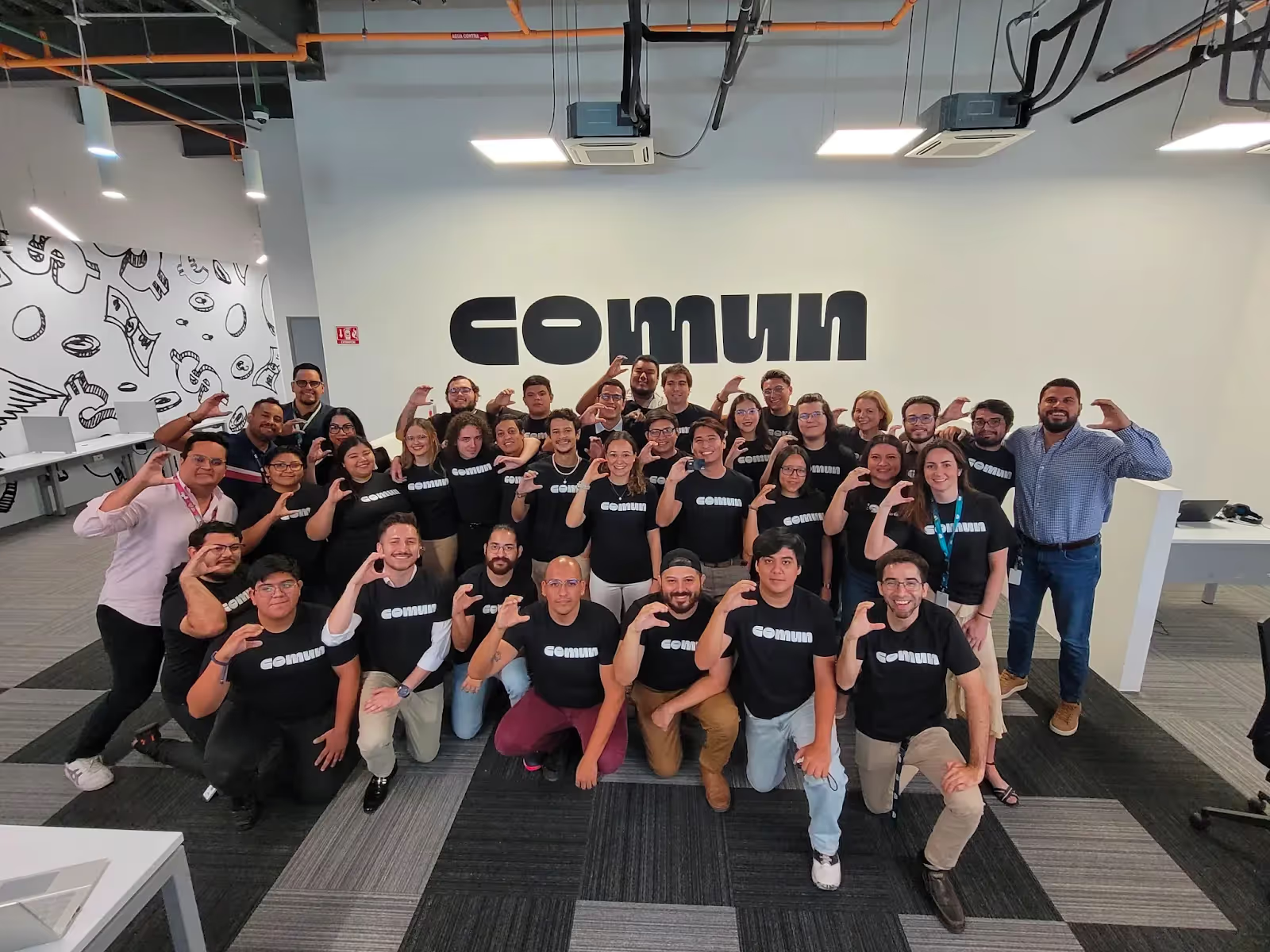
Común does not have branches, but it has a team that supports its customers 24 hours a day, 7 days a week, from the comfort of their homes, in three different languages.
Building a better future for immigrants in the U.S. is a core principle of Común’s mission. Accessible and easy-to-understand banking options are a key part of the immigrant journey. However, the options are scarce.
Complex, cumbersome, and expensive options are the norm. Activities that may seem trivial and intuitive to those born in the U.S. are overwhelming and confusing for a newly arrived immigrant. Everything from setting up direct deposit with an employer to sending money home, making payments for goods and services, or understanding how to build a credit score seems too complex for anyone who has never had to do this in the U.S., let alone at all.
Hidden fees and costly charges add another layer of stress when starting a financial life in the U.S. Between minimum account balances, monthly fees, overdraft charges, large check deposit fees, extortionate international transfer fees, and everything else, maintaining and using a bank account in the U.S. can be expensive. For manual laborers, this can represent a significant percentage of their wages.
The physical locations of traditional banks can also be scarce in some areas. Since opening a bank account or depositing a check or cash into the account must be done at a branch, this is a significant burden for someone living in a remote area. Many immigrants, sometimes working on remote farms or factories, live miles away from the nearest bank branch. Transportation costs to those branches add to the already high fees of using and maintaining an account.
Even if the banking services provided were more intuitive, digital, and lower cost, another major barrier remains. Obtaining the necessary documentation to open a bank account can also make access to fair and simple financial services difficult. Immigrants fortunate enough to have work authorization still need to gather important documentation that is not always available to them. For those who have come to the U.S. seeking asylum or better work opportunities through a more unconventional path, the documents required to open an account are often prohibitive.
Building a 100% digital banking platform to solve the issues mentioned above is part of what Común seeks to achieve because we believe in helping unlock social mobility. But a digital, low-cost, and intuitive platform is not enough. To navigate this process, immigrants need help, and help is best found in a Community that understands them when they need it most.
That is why not only our customers are part of our Community, but also the people who help them 24 hours a day, 7 days a week through our app, social media, WhatsApp, or by phone. Beyond solving an immediate problem, the support provided goes further. It teaches and educates, empathizes, and strives to foster a sense of Community among people who understand them, in terms they comprehend and in the language they speak. This is the core of true digital community banking. Our team helps them set up direct deposit, get refunds for charges they disagree with, and everything else.
At Común, the first step in this journey has already begun. Our team in Mérida, Mexico, is part of our Community and the one we seek to serve. They are an extension of our mission and our digital platform, and a necessary ingredient in unlocking social mobility for millions of immigrants in the U.S.

Financial Education
How to Create a Strict Household Budget
8 min de lectura
Why Are Family Budgets Essential?
Creating a strict household budget is essential for achieving financial stability and discipline. A well-planned family budget helps families manage their income, control their spending, and save for future goals. This article provides a comprehensive guide to setting up a rigorous budget, ensuring that every dollar is accounted for and used effectively.
Introduction: The Importance of a Strict Household Budget
In today’s fast-paced world, managing household finances can be challenging. Creating a budget is a fundamental step in managing personal finances. With the rising cost of living and various financial obligations, it is easy to lose control of spending. A strict household budget is crucial for maintaining financial discipline, reducing debt, and reaching long-term financial goals. By creating and sticking to a detailed budget, families can ensure that their financial resources are used wisely, leading to greater financial security and peace of mind.
Assessing Your Current Financial Situation
The first step in creating a strict household budget is to assess your current financial situation. This involves taking a detailed look at your income, expenses, debts, and savings. Calculating your net income is crucial for effective financial planning, as it represents your salary after tax and benefit deductions. Start by listing all sources of income, including salaries, bonuses, freelance work, and any other income sources. Next, categorize and list all expenses, including fixed expenses such as housing, utilities, and insurance, as well as variable expenses such as groceries, transportation, healthcare, entertainment, and miscellaneous costs.
It is important to be thorough and honest during this assessment. To begin, try tracking your spending for a month and identify patterns or areas where you may be overspending. This big-picture view will serve as the foundation for your budget, helping you identify where adjustments are needed to align your spending with your financial goals. Use tools like Google Sheets or a budgeting app to make this process easier and more organized.
Setting Clear Financial Goals, Including an Emergency Fund
Once you have a clear understanding of your financial situation, the next step is to set clear financial goals. These goals will improve your budgeting decisions and serve as a guide to keep you motivated. Financial goals can be short-term, such as saving for a vacation or paying off a credit card, or long-term, such as buying a home, funding your children’s education, or saving for retirement. A well-structured budget not only covers necessary expenses, but also allocates funds to build savings and discretionary spending, highlighting the role of savings in achieving financial stability.
When setting your financial goals, make sure they are SMART goals. SMART stands for specific, measurable, achievable, relevant, and time-bound. So instead of setting a general goal like “save money,” give yourself a clear objective such as “save $5,000 for an emergency fund in 9 months.” Setting SMART goals provides clarity and direction, making it easier to stay focused and committed to your budget. In addition, incorporating retirement accounts as part of your financial strategy is crucial for long-term financial security.
Creating Your Budget Plan
With your financial assessment and goals in place, it is time to create your budget plan. Start by prioritizing your spending, focusing on essentials like housing, utilities, food, transportation, and healthcare. Allocate a portion of your income to cover these essential costs first. Then, list your monthly expenses, categorizing them into fixed and variable types. Tracking household expenses is crucial; consider using online banking tools and personal finance apps to manage and categorize these expenses efficiently. Allocate funds for savings and debt repayment, ensuring that you are working toward your financial goals.
Consider using guidelines such as the 50-30-20 rule, where 50% of your income may go to needs, 30% to discretionary spending, and 20% to savings or even debt payments. Adjust these percentages based on your financial situation and specific goals. Use budgeting tools or apps to help you track your income and expenses, ensuring that you stay within your budget limits. Review and adjust your budget regularly as needed to accommodate changes in income or expenses. Before the start of each month, prepare a new budget to account for seasonal variations and upcoming specific expenses.
Implementing and Sticking to Your Budget
Creating a budget is just the beginning; the real challenge lies in sticking to it. To successfully implement your budget, develop habits that promote financial discipline. Start by automating your savings and bill payments. This ensures that you meet your financial obligations and savings goals without the temptation to spend the money elsewhere.
Understanding your net pay is crucial for effective financial planning. Track your expenses regularly to make sure you are sticking to your budget, especially when it comes to variable expenses. Use budgeting apps or spreadsheets to monitor your spending and make adjustments as needed. Avoid impulse purchases by making a shopping list and sticking to it. In addition, set aside a budget for unexpected expenses to ensure long-term financial stability. Look for ways to reduce expenses, such as cooking at home instead of eating out, canceling unused subscriptions, and looking for discounts when shopping.
Communicate openly with your family about your budget and financial goals. Encourage everyone to take part in the budgeting process and make it a team effort. Having a collective commitment to financial discipline will make it easier to stay on track and achieve your goals.
Here are five popular apps for tracking expenses and budgets:
- Mint: Mint is a budgeting app that allows users to track expenses, create budgets, and set financial goals. It categorizes transactions and provides insight into spending patterns. Using personal finance apps like Mint can efficiently track household expenses.
- YNAB (You Need A Budget): YNAB helps users create detailed budgets based on their income and expenses. It emphasizes giving every dollar a job and helps users plan for future expenses, encouraging proactive financial management.
- Personal Capital: Personal Capital is a wealth management tool that tracks expenses, budgets, and investments. It provides a comprehensive view of your financial health and offers tools for retirement planning.
- PocketGuard: PocketGuard improves your budgeting by showing how much discretionary income you have after accounting for bills, goals, and necessities. It categorizes expenses to help users identify areas where they can save money.
- Goodbudget: Goodbudget is a digital envelope budgeting app that allows users to divide their funds into different categories or "envelopes." This system helps users monitor their spending and ensure they stick to their budget limits for each category.
How Común Can Help With Budget Tracking
Comun offers several features that can complement these budgeting apps and improve your overall financial management:
- Instant notifications: Comun provides instant notifications for all transactions, helping users stay aware of their spending in real time.
- Detailed transaction history: Users can easily access their transaction history, making it easier to categorize expenses and monitor spending patterns.
- Expense categorization: The Comun app automatically categorizes expenses, which can be synced with budgeting apps like Mint for a complete view of your financial activity.
- Savings goals: Comun allows users to set and track savings goals, helping you stay motivated and on track to meet your financial objectives.
- Customer support: Comun offers top-tier customer service available 7 days a week by chat, email, or phone, providing users with support for any financial questions or issues.
By using Comun alongside these budgeting apps, users can achieve better financial discipline and stay on top of their budgeting and spending goals.
Conclusion: Achieving Financial Discipline and Security
Creating and maintaining a strict household budget takes effort and commitment, but the rewards are worth it. Saving money for various purposes, such as emergencies, major purchases, or enjoyable experiences, is crucial for financial stability. By assessing your financial situation, setting clear goals, creating a detailed budget plan, and sticking to it, you can achieve financial discipline and security. Understanding net income, including deductions such as health insurance from gross pay, is essential for creating an effective budget. A well-managed budget helps you control spending, reduce debt, and save for future goals, ultimately leading to a more secure and prosperous financial future for your family. Embrace the process, stay committed, and watch your financial health improve as you work toward your dreams.
By following these steps and maintaining financial discipline, you can take control of your household finances, reduce financial stress, and build a strong foundation for a secure future. A strict budget is not just about restricting spending; it is about making informed decisions that align with your financial goals and values. With dedication and perseverance, you can achieve financial stability and enjoy the peace of mind that comes with knowing your finances are under control.
Quick List: Measuring Your Budget Success
- Assess your financial situation:
- List all sources of income
- Categorize and list all expenses
- Track spending for a month
- Set clear financial goals:
- Define specific, measurable, achievable, relevant, and time-bound (SMART) goals
- Prioritize short-term and long-term goals
- Create your budget plan:
- Prioritize essential expenses (housing, utilities, food, transportation, healthcare)
- Allocate funds for savings and debt repayment
- Use the 50/30/20 rule as a guide
- Use budgeting tools or apps
- Implement and stick to your budget:
- Automate savings and bill payments
- Track expenses regularly
- Avoid impulse purchases
- Cut unnecessary expenses
- Communicate openly with your family about the budget
- Review and adjust regularly:
- Monitor income and expenses
- Make necessary adjustments to the budget
- Stay committed to your financial goals
By following this checklist, you can manage your budgeting efforts efficiently and get closer to achieving your financial goals.

Living in the United States
CR1 spouse visa: complete guide for Latin Americans marrying a U.S. citizen
8 min de lectura
CR1 spouse visa: complete guide for immigrants marrying a U.S. citizen
Getting married is a major milestone. When one spouse is a U.S. citizen and the other lives abroad, the immigration process can feel overwhelming, especially when you start seeing terms like IR1 visa, CR1 visa, Form I-130, NVC, and consular interview.
Whether your spouse is waiting in Mexico, Colombia, or another country in Latin America, understanding the process can help you reduce stress and prepare for each stage.
This guide explains the IR1 visa and CR1 visa process in plain language, including timelines, costs, required documents, and what to expect during the consular interview.
The guide is for informational purposes only and does not constitute legal advice.
What is the IR1 / CR1 spouse visa?
The IR1 and CR1 visas are both immigrant visas available to spouses of U.S. citizens, allowing them to enter the United States as lawful permanent residents. The key difference between them lies in the length of the marriage at the time of visa issuance. In both cases, permanent resident status begins upon entry into the U.S., and the physical green card is mailed to the holder shortly after arrival.
Who qualifies?
Generally, you may qualify if:
- You are legally married to a U.S. citizen
- The marriage is genuine and not solely for immigration purposes
- The U.S. citizen spouse files Form I-130 with USCIS
- Both spouses meet the documentation and eligibility requirements established by USCIS and the U.S. Department of State
- The U.S. citizen spouse must also generally demonstrate financial ability to support the immigrant spouse (Form I-864, Affidavit of Support), meeting at least 125% of the federal poverty guidelines
- The foreign spouse must not be inadmissible to the U.S. (e.g., due to certain criminal history, prior immigration violations, health grounds, etc.), or must obtain a waiver if applicable
Unlike fiancé visas, the IR1 / CR1 are designed for couples who are already legally married.
For many immigrant families, the process begins while one spouse remains in countries such as Mexico or Colombia and waits for consular processing at locations like Ciudad Juárez, Mexico City, or Bogotá.
IR1 vs CR1: what's the difference?
Although the IR1 and CR1 visas follow the same application process, they lead to different types of green cards. The key distinction is whether the marriage is less than two years old or at least two years old when the green card is issued.
| Feature | CR1 visa | IR1 visa |
|---|---|---|
| Marriage length | Less than 2 years | 2 years or longer |
| Green card type | Conditional permanent residence | Permanent residence |
| Green card validity | 2 years | 10 years |
| Additional filing required | Must later remove conditions | No removal of conditions required |
| Eligibility basis | Married to U.S. citizen | Married to U.S. citizen |
If the marriage is less than two years old when permanent residence is granted, the spouse typically receives conditional residence through a CR1 visa. Couples later file to remove those conditions. If the marriage is at least two years old, the spouse generally receives an IR1 visa and a standard permanent resident card.
IR1/CR1 vs K-3 vs K-1: which one do you need?
Before starting an application, it's important to understand which visa category matches your circumstances. IR1, CR1, K-1, and K-3 visas were created for different stages of a relationship.
IR1 or CR1
These visas are intended for couples who are already married. After approval and entry into the United States, the spouse becomes a permanent resident.
K-1 fiancé visa
The K-1 visa is for couples who are not married yet. The foreign fiancé enters the United States, the couple marries, and then applies for adjustment of status.
K-3 visa
Although the K-3 category still exists in immigration law, it is rarely used in practice today. Most married couples follow the IR1 or CR1 process instead.
For couples who are already married and living apart because of immigration processing, the spouse visa route is typically the path being considered.
Step-by-step application process
From start to finish, the IR1/CR1 process is designed to verify the relationship, review financial sponsorship, and confirm that the immigrant spouse is eligible for permanent residence. While the exact timeline varies, most couples move through the same series of steps before the visa is issued.
Step 1: File Form I-130
The U.S. citizen spouse begins the process by filing Form I-130, Petition for Alien Relative, with USCIS.
The purpose of the petition is to establish that a valid marital relationship exists.
Supporting evidence often includes:
- Marriage certificate
- Photos together
- Joint financial records
- Communication records
- Other evidence showing a bona fide marriage (a legal marriage entered into in good faith)
Step 2: USCIS review
USCIS reviews the petition and supporting documentation. If additional information is needed, USCIS may issue a Request for Evidence (RFE).
Once approved, the case is forwarded to the National Visa Center (NVC).
Step 3: National Visa Center processing
The NVC assigns a case number and requests additional forms, fees, civil documents, and financial sponsorship documentation.
This stage typically includes:
- Form DS-260
- Affidavit of Support (Form I-864)
- Civil documents
- Passport information
- Birth certificates
- Marriage records
Step 4: Medical examination
Before the interview, the immigrant spouse must complete a medical examination with an authorized panel physician. Required vaccinations may also apply.
Step 5: Consular interview
Once the case is complete, the interview is scheduled at the appropriate U.S. embassy or consulate.
For many applicants in Latin America, this may occur in:
- Ciudad Juárez, Mexico
- Mexico City, Mexico
- Bogotá, Colombia
- Guatemala City, Guatemala
- San Salvador, El Salvador
- Santo Domingo, Dominican Republic
Step 6: Enter the United States
If the visa is approved, the spouse can travel to the United States and enter as a permanent resident. The green card is then issued after arrival.
Required documents checklist
Document preparation is one of the most important parts of the IR1/CR1 process. Missing records, incomplete forms, or inconsistencies between documents can delay a case, so it helps to gather key paperwork as early as possible rather than waiting for each stage to begin.
Although every case is different, applicants commonly need:
- Valid passport
- Marriage certificate
- Birth certificate
- Form DS-260
- Form I-864 Affidavit of Support
- Passport-style photos
- Police certificates when required
- Medical examination results
- Evidence of a genuine marriage
- Financial documentation from the U.S. citizen spouse
Original documents and certified translations may be required depending on the country and specific case. Many of the documents required throughout the IR1/CR1 process will be reviewed more than once by different government agencies. Keeping organized copies and checking that names, dates, and personal information are consistent across records can be helpful.
Timeline and costs: what to expect
Time and cost are not determined by a single application fee. The process involves separate stages administered by USCIS, the National Visa Center, and a U.S. embassy or consulate, each with its own processing requirements and associated expenses.
Processing times can vary depending on:
- USCIS workload
- National Visa Center processing
- Consulate availability
- Requests for additional evidence
- Country-specific demand
Unlike some immigration categories, the IR1 and CR1 process does not have a fixed timeline. Some cases move faster than others, while others can take well over a year from filing to visa issuance.
Common costs
While costs are not fixed and every case is unique, the typical expenses you can expect may include:
- Form I-130 filing fee
- DS-260 immigrant visa fee
- Medical examination
- Vaccinations
- Translation services
- Document collection costs
- Travel expenses related to the interview
Government fees can change over time, so applicants should always verify the most updated costs directly through USCIS and the U.S. Department of State.
The consular interview: what to expect
The consular interview is the final major step before a spouse visa can be issued. By this stage, the government has already reviewed the petition, supporting documents, financial sponsorship forms, and medical examination results. The interview gives a consular officer an opportunity to verify the information in the application and address any remaining questions.
While every interview is unique, the officer may ask questions about:
- Your relationship history
- Your wedding
- Daily communication
- Future plans together
- Employment and finances
- Previous immigration history
The goal of the interview is to confirm that the marriage is genuine and that all eligibility requirements are met. If the visa is approved, the consular officer typically keeps the passport temporarily so the immigrant visa can be issued.
After arrival: building your financial life together
Receiving an IR1 visa or CR1 visa is a major milestone, but it is only the beginning of establishing life together in the United States.
Many newly arrived immigrants need to:
- Pay rent and utilities
- Build a financial history
- Send money to relatives in Latin America
- Manage everyday spending
- Receive direct deposit from an employer
A common challenge newly arrived immigrants face is opening a bank account before receiving a Social Security number.
How Común can help during the transition
For couples separated during the immigration process, Común offers remittance services for people in the United States who need to send money to family members in Latin America; they can do it directly from the app. This can be useful during the months of waiting between USCIS approval, NVC processing, and the visa interview.
When the immigrant spouse arrives in the United States, Común offers eligible customers the possibility of opening an account using a passport or more than 100 accepted Latin American IDs. Additionally, Común offers services for everyday payments, direct deposit acceptance available from day one, customer support in Spanish and a virtual debit card from day one of account opening.
Planning your transition to the United States
The IR1 visa and CR1 visa process can feel complicated at first, but understanding and preparing for each stage can make the process feel more manageable.
For many immigrant families, the journey can include months of waiting, collecting documents, attending medical appointments, and preparing for the consular interview. The process requires patience, but it also creates a pathway for spouses to build a life together in the United States.
While you wait, Común can help you send money to your spouse in Latin America from the app. When they arrive, eligible customers can open an account with a passport or more than 100 accepted Latin American IDs so that they can begin managing everyday finances while settling into life in the United States.
FAQ
What is the difference between an IR1 and a CR1 visa?
The main difference is the length of the marriage. A CR1 visa is generally issued when the marriage is less than two years old, while an IR1 visa applies when the marriage has reached at least two years.
How long does it take to get an IR1 or CR1 visa?
Processing times vary considerably depending on USCIS, the National Visa Center, and the consulate handling the case. Timelines should be verified through official government sources.
How much does the IR1 / CR1 visa cost in total?
Costs commonly include government filing fees, visa processing fees, medical exams, vaccinations, translations, and travel expenses. The exact total varies by case and country.
What documents do I need for the spouse visa application?
Applicants commonly need a passport, marriage certificate, birth certificate, financial sponsorship documents, visa application forms, medical examination records, and evidence supporting the marriage.
Can I work in the U.S. with an IR1 or CR1 visa?
Yes, after entering the United States as a permanent resident through an approved IR1 or CR1 visa.
What happens at the consular interview?
A consular officer reviews the application and asks questions about the relationship, eligibility, and supporting documentation. The purpose is to verify the information already submitted.
Do I need a lawyer for the IR1/CR1 application?
Some couples complete the process on their own, while others seek professional guidance. The decision often depends on the complexity of the case, prior immigration history, or other legal considerations.
Can I apply for IR1/CR1 from inside the United States?
The IR1 and CR1 categories are generally associated with consular processing abroad. Individuals already in the United States may have other immigration options depending on their circumstances. Because situations vary, reviewing official USCIS guidance is important.
Común is a financial technology company and not a bank. Banking services are provided by Community Federal Savings Bank, Member FDIC. The Común Visa® Debit Card is issued by Community Federal Savings Bank, pursuant to a license from Visa U.S.A. Inc. and may be used everywhere Visa Cards are accepted. Común is a financial technology company and not a bank or licensed money transmitter. Peer-to-peer payment services are provided by Cross River Bank. Remittance service provided by Service UniTeller, Inc. Remittance fees start at $2.99, but may vary. Común Inc. may earn revenue from the conversion of foreign currencies.

International Money Transfers
What Are Remittances and How Do They Work from the U.S.?
8 min de lectura
Do you really know what remittances are? They are international money transfers made by people living and working abroad to family members or recipients in their home country.
For Latin American immigrants living in the United States, sending remittances is a crucial matter, as is having efficient financial services that allow them to send money to their families and friends quickly, safely, and at low cost.
According to recent sources, the flow of remittances from Mexico to the United States fell 12.4% year over year, which is attributed to recent immigration measures imposed by that country. For this reason, it is important that migrants have international money transfer services that understand their needs.

Why Do People Send Remittances?
For the families of migrant workers in the United States, remittances represent much more than a simple transfer of money, as they often become the main support for millions of people in Latin America.
These Are the Main Reasons to Send Remittances:
Household expense support (rent, utilities, food)
This category includes basic expenses such as food, rent, utility payments, and everything related to daily costs, highlighting the importance of remittances for recipient families.
Education and study tools
Includes payment of tuition, school supplies, transportation, preschool fees, and computing tools such as laptops or desktop computers.
Health and family emergencies
If any family member requires specialized medical care, remittances play a central role in covering hospitalization, medications, treatments, and more.
Targeted savings (e.g., family home improvements)
It is also common for migrants to use remittances to build or renovate their family homes, thereby improving their quality of life.
Unexpected expenses during travel or temporary stays
Remittances may also be useful to cover unexpected travel expenses, related to unforeseen illnesses, flight cancellations, or unplanned charges.
How Do Remittances Work and What Options Exist?
Currently, there are several remittance service options you can rely on to send money to your relatives.
Traditional banks, such as Bank of America and Wells Fargo, allow you to make remittance transfers through their digital banking services or directly at branches.
There are also specialized sending agencies, such as Western Union, one of the most widely used and longest-standing remittance services in the United States, with a global presence in more than 200 countries.
The information that traditional banks and agencies will generally require to send money includes:
- Beneficiary’s full name
- Beneficiary’s account number
- SWIFT code
- Receiving country
- Amount and currency
Finally, you can choose digital platforms, which allow you to send money through mobile apps and, in general, offer more competitive options regarding costs and delivery times.
Común is one of these platforms, integrating the fintech experience with various benefits, such as a digital account and an easy to use mobile app, that is available in Spanish. Común accepts more than 100 qualified official IDs from your country of origin to open an account and offers different options for receiving money: into a local bank account or cash pickup. With Común, send money to your relatives for clear and competitive rates, from $2.99 USD and send up to applicable limits.
These Are the Characteristics of Each Available Remittance Sending Option:
Traditional Banks
Traditional banks are a safe option to send money through wire transfer. The advantage is that they are fully established institutions in the U.S. financial system.
However, they have certain limitations, such as high fees, which can reach 60 USD depending on the bank. Additionally, transfers also tend to be slower, taking up to 5 business days.
To access this service, it is necessary to open a bank account at a traditional U.S. bank, or resort to sending cash directly at a branch.
Money Sending Agencies
Specialized agencies for international money transfer, such as Western Union, are also a reliable alternative you can use.
However, fees are usually high and exchange rates less competitive, similar to traditional banks. Although delivery times tend to be shorter.
Digital Platforms
If you are looking for an option to make international bank transfers, digital platforms are a great option. In addition to more accessible opening requirements, they offer far more competitive fees compared to the two previous alternatives.
Remember that Común offers you a comprehensive digital platform to connect with your loved ones in a simple and fair way.
Costs, Timeframes, and How to Save When Sending Remittances
The cost of sending remittances depends on three main factors:
- Sending fee: this is the commission charged by the provider for offering its sending services. This amount varies depending on the method, amount, receiving country, and involvement of intermediaries. The fee may be variable or fixed. One option is to choose a service with a fixed fee, to avoid paying more than expected.
- Exchange rate: a common practice among remittance services is not using the real market exchange rate, but adding a margin that reduces the total amount to be received.
For example, if the dollar price is 18 Mexican pesos, and the remittance service offers it at 17.50, when sending 500 USD, the total amount to be received will be reduced by 250 pesos.
- Possible charges to the recipient: Some traditional banks may charge fees for receiving transfers from foreign countries, so it is important to also verify the recipient’s conditions.
Good Savings Practices for Sending Remittances
To ensure your family receives the maximum amount possible, we recommend following these tips.
Check if there are margins in the exchange rate
The ideal choice is a provider that uses the real exchange rate or as close as possible. Otherwise, your recipient will receive a significantly smaller amount.
Prefer fixed and transparent fees
Understanding sending fees can be confusing, since several services use ranges that vary according to numerous criteria. The recommended approach is to look for a provider that offers fixed fees and with no hidden costs.
Always compare the amount received (not just the fee)
Remember that, in addition to the sending fee, you must consider the exchange rate and how much the amount to be received is reduced after applying this margin.
Avoid data errors to prevent delivery delays
Check your recipient’s information and make sure it is written correctly.
Consider the sending time and holidays in both countries
In many cases, transfers may be delayed if they are made on weekends or on holidays in either country.
Use platforms with support available in Spanish to resolve questions quickly
It is important to choose a service capable of answering your questions in your language and understanding your needs as a migrant.
Get Ready to Start Sending Remittances with Común
Every month, millions of dollars are sent from the United States to Latin America, representing an emotional and financial bridge between immigrant families and their homes, for whom remittances are a primary source of income.
Before choosing a remittance service, don’t forget to check the total amount your household will receive, considering the fee, exchange rate, and possible receiving charges. We recommend choosing a financial solution with transparent costs, support available in Spanish, and you can open your account with qualifying official ID from your country of origin.
Discover Común, the comprehensive platform that offers you low fees, with fees starting from $2.99, and send up to the applicable limits, and support available in Spanish. Open your account today and connect with your loved ones, send them money transparently.
Frequently Asked Questions (FAQ)
What happens if I don’t claim a remittance?
Remittances usually have a validity period established by the provider. Once that period expires, the money is not lost but the transaction may be canceled. In such cases, the sender may reissue it or request a refund depending on the provider’s policies.
What is the difference between a remittance and a transfer?
The main difference between the two lies in their intended purpose. Remittances are money transfers with a personal motive, commonly used to send money to relatives in other countries, whereas the purpose of a bank transfer can vary, ranging from commercial to personal payments, among others.
Community
What You Need to Open an Account at Comun¹ 2
8 min de lectura
Unmatched Ease of Opening an Account
Opening a checking account with Comun is simple and hassle-free, addressing the barriers to financial exclusion typically faced by the immigrant community. Accepting over 100 forms of identification², including social security numbers from Latin American countries, Comun ensures that immigrants have access to essential banking services. The application process is quick, taking less than 5 minutes, and is free of additional or hidden fees, minimum balance requirements or monthly commissions. This inclusiveness is central to Comun's mission of fostering financial stability and growth.
Mobile Deposit Options
ComunComun offers a convenient mobile deposit feature that allows users to deposit cash at more than 88,000 locations in the United States, including major retailers such as Walgreens, Dollar General and Walmart. This extensive network ensures that users can easily find a deposit location near them, making the process of adding money to their accounts simple and hassle-free.
Traditional Banking: Although many traditional banks offer mobile deposit options, they often restrict these to check deposits through a mobile app. Cash deposits typically require a visit to an ATM or bank branch, which can be less convenient and more time-consuming than Comun's extensive cash deposit network.
Utility in Today's World: In today's fast-paced environment, the flexibility to deposit cash in a wide range of accessible locations is invaluable, especially for individuals who may not have easy access to traditional banking services or who work non-traditional hours when banks are closed.
International Remittances
ComunComun excels in facilitating international remittances⁴, allowing users to send money abroad quickly and with lower fees compared to many traditional banks and remittance services. The process is enhanced with real-time notifications, keeping the sender informed from the moment the money is sent until it is received.
Traditional Banking: Traditional banks generally offer international transfer services, but these can be expensive and slow, with transfers sometimes taking several days to complete. In addition, the fees associated with traditional bank remittances can be significantly higher.
Usefulness in Today's World: In a globalized economy, the ability to send money across borders quickly and affordably is crucial. Many families rely on remittances for financial support, and businesses need efficient ways to handle international transactions. Comun's streamlined and cost-effective service effectively meets these modern demands.
Advance Salary Access
Comun: Comun offers the ability to connect wages to the application and receive payment up to two days in advance³. This feature incurs no additional fees, providing significant relief during financial emergencies or when planning ahead.
Traditional Banking: Some traditional banks have begun to offer similar features, but they are often tied to specific types of accounts or require a minimum balance. The accessibility and ease of use of early access to Comun's salary is not always matched in traditional environments.
Usefulness in Today's World: With the rise of gig economy jobs and irregular pay schedules, having early access to wages can provide a buffer against financial instability. This feature is particularly valuable for those living paycheck to paycheck, offering a cushion that can help avoid overdraft fees and late payments.
Unlike traditional banking institutions, Comun's innovative features are designed to meet the needs of today's diverse and mobile population, particularly benefiting the immigrant community in the U.S. By providing services that offer greater convenience, lower costs and greater accessibility, Comun not only addresses common challenges faced by its users, but also empowers them toward greater financial freedom and stability. As we move toward a more interconnected and fast-paced world, the importance of responsive and inclusive financial services continues to grow, something Comun is uniquely positioned to offer.
Robust Security and Customer Support
Security and customer support are paramount at Comun. With FDIC-insured accounts and Visa protection on virtual Visa debit card transactions, Comun customers can manage their funds with confidence. Innovative security features such as biometric logins and instant transaction notifications keep your money safe. In addition, Comun offers 24/7 customer support in English and Spanish, ensuring that help is always available in your preferred language.
Commitment to Zero Fees and Upward Mobility
Comun stands out not only for offering zero fees for account opening, monthly maintenance or minimum balances, but also for its commitment to helping its users move up the financial ladder. Comun acts as a financial partner, supporting financial transactions without the burden of excessive fees. This commitment aligns with the goal of enabling upward mobility for immigrants, who contribute significantly to the U.S. economy.
Customized Features and Benefits
Comun goes beyond traditional financial services by offering features designed to meet the unique needs of the immigrant community. Users can send money abroad with low or no fees, deposit cash at more than 88,000 locations nationwide, including free ATM withdrawals, and connect their accounts to popular payment apps such as Zelle, CashApp and Venmo. Comun's platform also allows customers to receive their paychecks up to two days early through direct deposit, further enhancing their financial flexibility and stability.
Conclusion
Comun is not just a financial services provider, but a platform dedicated to transforming the banking experience for immigrants in the U.S. With its user-focused design, commitment to financial freedom and robust features, Comun is destined to become a vital tool for achieving financial stability and growth for its users. Whether you are looking to manage your daily finances or send money to loved ones abroad quickly and securely, Comun offers a reliable, inclusive and efficient banking solution.
Foundational Moment: Did you know?
Founded by entrepreneurs Mark Selcow and Andres Santos in New York, Comun was built to empower families and enable upward mobility, particularly for the immigrant family. The company has garnered significant investment from prominent firms such as Costanoa Ventures, FJ Labs and South Park Commons, underscoring the tremendous opportunity to serve the financial needs of immigrant families and improve the lives of every individual.

Financial Education
How to Endorse a Check: Your Safe and Detailed Step-by-Step Guide
8 min de lectura
Despite the fact that digital payment methods have gained significant relevance practically worldwide, checks remain essential for carrying out certain transactions, especially for people without a banking account.
According to recent data, 61% of Americans still use checks. However, 17% have been victims of check fraud.
Knowing how to endorse a check in the United States is a necessary security measure to prevent fraud. While it can be a confusing procedure, it is crucial to understand it in order to avoid issues.
In this article, we will explain step-by-step how to correctly endorse checks, as well as the information you need to write on the back in order to cash the stated amount.
What Is a Check Endorsement and Why Is It So Important in the U.S.?
A check endorsement is a signature on the back of the check that serves as authorization for it to be cashed at a financial institution.
Its main function is to validate the cashing of the check, as well as authorize the transfer of funds, or to transfer the right to another person.
Knowing how to endorse a check is essential because it is a primary security requirement in the U.S. financial system, serving as a protection measure for the holder and the deposited funds.
What Is the Correct Way to Endorse a Check, and Where Should You Sign?
Below, we show you how to complete the endorsement before cashing checks at the bank.
Step 1: Verify the Check Details
Make sure the details on the front of the check are correct, such as the payee’s name, the amount in numbers and words, and the banking institution.
Step 2: Locate the Endorsement Area
Turn the check over and locate the statement “Endorse Here” or “Do not write below this line.” Avoid writing below the marked area.
Step 3: Sign the Check Precisely
Sign the check in the designated box, according to the type of endorsement you require. Next, we will explain everything about the different types.
But what should you do if the payee’s name is incorrect?
Example of How to Endorse a Check if the Name Is Misspelled
If the payee’s name is incorrect, you should first sign as it appears and then sign again with the corrected name.
James Smit — James Smith
Step 4: Consider a Restrictive Endorsement (Highly Recommended!)
A restrictive endorsement is a security measure to prevent an unauthorized third party from cashing the check, as it limits the form of payment to a registered banking account. It is linked to the information provided on the back of the check.
Step 5: Multiple-Payee Endorsements
If the check is made out to more than one payee, one or all may need to sign the endorsement, depending on how it is written.
- Katy Adams and Mark Palmer: Signatures from both are required
- Katy Adams or Mark Palmer: One signature is sufficient
- Katy Adams and/or Mark Palmer: Depending on the intermediary bank, one or two signatures may be required
- Katy Adams, Mark Palmer, etc.: The bank determines whether one or all signatures are necessary
Types of Endorsements: Know the Options for Your Checks
Before endorsing your check, verify which type is most suitable depending on the transaction you need to perform. For example, a restrictive endorsement is a way to secure your money, just like using modern financial alternatives such as Común, a comprehensive service that gives you access to unified and efficient financial tools.
Blank Endorsement
A blank endorsement is carried out when the same payee cashes the check in cash. In this case, only the signature in the designated area is needed.
Restrictive Endorsement
A restrictive endorsement is a security measure to ensure that the funds are deposited into a specific banking account.
To do this, you must include the statement “for deposit only to” + bank name, account number, and signature.
This is the most recommended method for Común users who make deposits via mobile, as it provides protection for the check in case of loss and ensures that the money is deposited into the designated account.
Third-Party Endorsement
If the check will be cashed by a third party, it must be endorsed as follows.
Pay to the order of: (name of another person) + signature
It is important to exercise extreme caution with this type of endorsement. Use it only with trusted individuals, and in case of theft or loss of a check, report it to the financial institution immediately.
Business Endorsement
A business endorsement is made when a check is cashed in the name of a company. This requires including the full name of the company, followed by the signature of the authorized legal representative.
Mobile Deposit Endorsement
To deposit check funds through a mobile application or mobile banking, it must be endorsed as follows:
For mobile deposit only + your signature.
Deposit your endorsed check easily and securely using Común
Cashing checks is a process that requires special care and attention in order to avoid mistakes and setbacks that could affect the transaction.
This time, we learned the importance of correctly endorsing a check in the United States, as well as the different types that exist, according to the available cashing methods.
Now that you know how to fill out a check on the back, you can rely on Común to deposit the funds through the mobile app.
Skip the lines: Deposit your check from the app; availability of funds may vary.
Común offers you the necessary security to protect your money and personal data
It is an accessible platform for immigrants in the United States; request to open your account with documentation from your country
Get customer support in English and Spanish, available 24/7
Access a comprehensive mobile app to manage your personal finances in the simplest way
Común will not only make the check deposit process easier, but it will also transform your financial life in the United States. Open your account today and find out.
Frequently Asked Questions
Is it mandatory to endorse a check in the United States?
In most cases, yes, it is necessary. If you request a deposit through an ATM or application, the bank may not require an endorsement.
What happens if I sign the check incorrectly when endorsing it?
Avoid cross-outs or scratches and endorse the check again. If the bank rejects it, ask the issuer to issue a new one.
Can I endorse a check to another person?
You can endorse a check so that it can be cashed by another person with the statement “pay to order of” along with the payee’s name. However, this process is restricted according to each bank’s specific policies.
Is it safe to deposit a check with the mobile app?
It is safe to deposit a check through the Común mobile app, as your data is encrypted and it includes other security measures such as two-step verification.

Financial Education
What is a wire transfer? A complete guide for 2026
8 min de lectura
What is a wire transfer? A complete guide for 2026
A wire transfer remains one of the most widely used methods for moving large amounts of money quickly through financial institutions. It is commonly used for urgent transactions, high-value payments, or international bank transfers that often involve additional verification procedures and transaction monitoring.
According to Federal Reserve Fedwire statistics, around 209.9 million wire transfers were processed in 2024, an 8.6% increase compared to the previous year.
What is a wire transfer?
A wire transfer is an electronic transfer of funds between financial institutions through secure financial networks. Wire transfers are commonly used for: sending large amounts of money, urgent domestic payments, international bank transfers, real estate transactions, business payments, emergency family transfers.
How long does a wire transfer take?
| Transfer Type | Typical Delivery Time |
|---|---|
| Domestic wire transfer | Same day or within hours |
| International wire transfer | Typically 1–5 business days |
| ACH transfer | Typically 1–3 business days |
| Remittance app transfer | Typically in minutes to 2 days |
How much does a wire transfer cost in 2026?
| Transfer Type | Average Cost |
|---|---|
| Domestic outgoing wire | $15–$35 |
| International outgoing wire | $35–$75 |
| Incoming international wire | $10–$20 |
| Exchange rate markup | 1%–4% depending on the provider |
Fees and exchange rate markups vary by bank, destination country, transfer amount, intermediary institutions, and payment method. Always review the total transfer cost before sending money internationally.
Advantages and disadvantages of wire transfers
Advantages:
- Speed for time-sensitive payments
- Higher transfer limits
- Secured financial infrastructure
- Useful for international banking
Disadvantages:
- Higher costs
- Transfers are difficult to reverse
- More banking information is required
- Longer processing for international transfers
Wire transfer vs. money transfer apps
| Feature | Wire Transfer | Digital Remittance App |
|---|---|---|
| Typical use | Large or time-sensitive transfers | Regular family or friend remittances |
| Average cost | Typically $15–$75 transfer fees | Usually lower — flat fees or 0.48%–1% |
| Speed | Same day to several days | Typically in minutes to 2 days |
| Currency conversion | Bank-set rate, markup typically 1–4% | Near mid-market rate, markup 0–1.4%, shown upfront |
| Setup process | More banking details required (routing, SWIFT/IBAN) | Usually app-based, quick mobile signup |
| Best for | High-value or business payments | Frequent personal transfers |
FAQ
Can I make a wire transfer without a bank account?
In general, wire transfers require both parties to have bank accounts. For transfers without a bank account, consider alternatives like remittance apps.
Is a wire transfer safe?
Yes, wire transfers use regulated banking systems with transaction records and tracking. However, they are difficult to reverse if incorrect information is entered.
When should I use a wire transfer instead of an app?
Wire transfers make sense for high-value, urgent, or institution-required payments. For regular remittances to family, digital apps typically offer lower cost and more convenience.
Común is a financial technology company and not a bank. Banking services are provided by Community Federal Savings Bank, Member FDIC. Remittance service provided by Service UniTeller, Inc.

Immigration
What is needed to obtain a Green Card in the United States?
8 min de lectura
Surely during your stay in the United States you have heard about the well-known Green Card or permanent resident card.
It is a document issued by the U.S. government that allows immigrants to reside and work legally and permanently.
For immigrants, obtaining it is of utmost importance, as it also opens the door to several benefits, such as legal protection, the right to purchase property, and the ability to apply for lawful permanent residence for family members.
Thousands of migrants in the United States often ask the big question: “How can I live legally in the United States?” We know how important it is for you to achieve better living conditions to support your family and loved ones. Therefore, below you’ll find a guide with practical steps, eligibility categories, and the documents needed to obtain a Green Card and change your life in the United States.
Eligibility categories for the Green Card
There are several paths to obtain a green card. To know which one to take, you need to be clear about both your immigration status and the eligibility category that applies to your profile.
Family-based Green Card
The first category refers to permanent residence granted through immediate family members who already have legal status in the United States.
It is divided as follows:
- Immediate relatives of U.S. citizens: spouses and unmarried children under 21.
You must wait for approval of Form I-130 and then apply for residence; there is no annual cap.
- Family preference category: unmarried children over 21 of citizens; spouses and children of permanent residents; married children of citizens; and siblings of citizens.
You must file Form I-485. For this, you must wait until your priority date becomes current on the Visa Bulletin. Otherwise, you can only file the I-130.
Employment-based Green Card
- EB-1 visa: individuals with extraordinary ability, such as distinguished professors or researchers.
- EB-2 visa: accomplished professionals with an advanced degree and exceptional ability.
- EB-3 visa: skilled workers, professionals, and “other workers.”
- EB-4 visa: special categories such as religious workers, U.S. government employees, members of the Armed Forces, among others.
- EB-5 visa: for investors who allocate substantial funds to businesses that create at least 10 jobs in the country.
Process to obtain a work-based visa
- The employer files the PERM Labor Certification, demonstrating that there are no qualified or available U.S. workers for the position. To do this, they must submit Form ETA-9089 to the Department of Labor.
- Once employment authorization is obtained, the employer must file Form I-140 with USCIS, along with the approved PERM certification.
- The employee must apply for adjustment of status via Form I-485 (if in the United States) or do consular processing at a U.S. embassy.
- For the EB-2 visa, applicants may choose the National Interest Waiver (NIW), which eliminates the need for PERM.
Remember that to work legally in the United States you must obtain an SSN. Before obtaining residence, migrants often use an ITIN to file their tax returns.
Green Card for special immigrants
- VAWA visa: victims of abuse by a U.S. citizen or permanent resident.
- SIJ visa: minors who have been abused or abandoned by their parents.
- In both cases, applicants must file Form I-360.
Green Card through refugee or asylee status
- People admitted through an asylum claim or refugee status, as well as their immediate family members.
- In both cases, applicants must be physically present in the United States for at least 1 year and then file Form I-485.
Other categories
In addition, there are other less common categories:
- Diversity Visa (Green Card Lottery): an annual lottery of up to 50,000 slots. Selectees receive a consular interview, though it does not guarantee a visa.
- Cuban Adjustment Act: a special adjustment program for Cuban nationals.
Each category has different eligibility requirements and processing times, so it is very important to consult U.S. government guidance and, if needed, seek the support of an immigration attorney.
Steps to apply for a Green Card
Once you know, in broad strokes, the requirements to obtain a Green Card, you need to be clear about the application process you must follow.
Determine eligibility
Before starting any process, review the categories above and determine which best fits your profile—family, employment, special immigrants, etc.
We recommend reviewing the Visa Bulletin to verify the documents required for your category and ensure you have them.
File the initial petition
Once you are clear on the category that applies to you, you must file the form indicated for that category, along with the required supporting documents, for example:
- Valid passport (required for any category).
- Evidence of the family relationship, such as birth or marriage certificates.
- Job offer letter.
Adjustment of status or consular processing
After your corresponding form is approved, you must apply for adjustment of status or consular processing and pay the fee required by the Department of State.
- If you are in the United States, file Form I-485 along with evidence of eligibility.
- If you are in another country, you must submit the DS-260 at a U.S. consulate. This is the immigrant visa application for permanent residence.
Interview and biometrics
In the next step, you must attend an adjustment-of-status appointment, at which USCIS will take your fingerprints, biometrics, photo, and signature.
You must also attend an interview to answer questions related to your eligibility category.
Receiving the Green Card
Finally, your Green Card will be mailed to your address. Make sure to check that all details are correct and keep it in a safe place.
After some time, you may apply for citizenship if you meet the necessary requirements.
Maintaining and renewing the Green Card
Once you have your green card in hand, you must keep track of renewal periods to avoid issues after the expiration date.
Renewal and replacement
- A regular Green Card is valid for 10 years.
- To replace your Green Card, you must file Form I-90 at least 6 months before the expiration date.
- The same form is also used in case of damage or loss.
Removal of conditions
- Applies to conditional residents with a 2-year Green Card, generally based on a recent marriage to a U.S. citizen.
- File Form I-751 for marriage-based cases or the corresponding form for your category.
- You must submit the documentation required by USCIS, as well as attend an additional interview.
Important rules
- If you change your address, be sure to report it to USCIS promptly.
- If for any reason you need to spend more than 6 consecutive months outside the United States, be sure to obtain a reentry permit (Advance Parole or Reentry Permit). Otherwise, you could risk losing your residence.
- Refrain from actions considered abandonment of residence, such as surrendering the card or voting in foreign countries.
- Keep an eye on your Green Card’s validity and renew it when appropriate.
Organize your financial life in the U.S. with Común
As you can see, the process of obtaining a Green Card is long and exhausting. Therefore, it is essential to understand the different categories, steps, forms, and the key points to maintain your permanent residence.
Another relevant point for improving your stay in the United States is having partners who understand your needs.
We present Común, the financial platform that addresses day-to-day needs through an intuitive mobile app, where you can easily open an account with qualifying official identification from your country of origin.
It also offers remittance services to several countries, helping your family receive more for less.
- Open a secure account with clear and competitive fees.
- Receive deposits and send remittances home.
- Get a debit card for daily expenses and financial control.
- Ability to save and plan your finances as you settle in the United States.
Open your account with Común today and get financial services tailored to you.
Frequently Asked Questions (FAQ)
If you still have questions, consult our FAQs.
Can I travel outside the U.S. while my application is in process?
You need to obtain Advance Parole (Form I-131), since leaving the country could cancel your application.
When can I apply for citizenship after obtaining a Green Card?
You must be a permanent resident for at least 5 years, or 3 if based on marriage, and have lived continuously in the United States and fulfilled tax obligations.
How long does the Green Card process take?
It depends on the category and whether you apply inside or outside the country. In general, the wait time is approximately 1 to 3 years.
How much does it cost to apply for a Green Card?
The cost varies by category. Check USCIS’s fee calculator to get a clear figure.
What is the difference between the I-485 and the DS-260?
The I-485 is the adjustment-of-status application to permanent resident filed within the United States, whereas the DS-260 is the immigrant visa application filed from another country.
What happens if your Green Card is denied?
You can appeal the decision via Form I-290B or refile the application.

Financial Education
Emergency Fund: Guide to Build It and Save in the U.S.
8 min de lectura
How to create an emergency fund and save in the U.S., step by step
If you’re new to the United States or facing financial challenges, it’s very important to have strategies to prepare for any eventuality.
An emergency fund is an excellent way to do this, and it also builds your financial literacy. It’s a cash reserve meant to cover unexpected expenses such as illness, job loss, home repairs, etc.
Having this cushion gives you peace of mind and removes uncertainty about the future, since it provides the liquidity you need to handle the unexpected.
You might think you need to earn a lot to build an emergency fund. Below, we’ll show that even with limited resources, you can start securing a future without financial complications.
What is an emergency fund and why is it key to your financial peace of mind?
Surely at some point during your time in the U.S., you’ve faced financial emergencies that made it hard to cover daily expenses—traffic fines, immigration procedures, illnesses, unemployment, repairs, etc.
An emergency fund is meant to support your finances precisely when those events occur. It’s savings set aside to handle all kinds of unforeseen expenses.
Beyond a stash of money, think of the emergency fund as a way to maintain peace of mind and reduce stress; it helps you preserve financial stability and avoid going into debt.
How much should you save in your emergency fund?
Knowing how to size an emergency fund is the first dilemma for many who aren’t used to long-term saving. While the ideal target is 3–6 months of basic expenses, if your income is limited you can start with small savings goals.
Below is a comparison of how your emergency fund would grow assuming expenses equal to 50% of total monthly income.
Monthly income
Approx. monthly expenses
3-month savings target
6-month savings target
$1,500
$750
$2,250
$4,500
$2,500
$1,250
$3,750
$7,500
$3,500
$1,750
$5,250
$10,500
Where should you keep your emergency fund so it’s safe and accessible?
It’s very important to choose a safe, easy-access place for your emergency fund and keep it separate from the money you use for daily expenses.
Today there’s a wide variety of savings accounts, both from traditional financial institutions and online platforms.
Whatever you choose, the following options are not recommended for storing your emergency fund.
- Cash at home
Whether under the mattress or in a piggy bank, keeping your emergency fund in cash is not a good idea for several reasons. First, there’s the risk of theft or loss. Also, the cash earns no interest and loses value to inflation. Another drawback is low accessibility if you need to cover expenses digitally.
While it’s true that opening a checking account can be challenging for immigrants in the U.S., there are accessible options so you don’t have to keep the emergency fund in cash.
- In high-risk investments
Although investments have advantages, high-risk ones involve sharp fluctuations that could cause losses. They also often require locking funds for a long period.
Simple strategies to build your emergency fund
If you’re new to personal finance, the first thing to know is that an emergency fund isn’t just for high earners. The key is to examine your lifestyle and spend according to a savings plan.
Step 1. Calculate your basic monthly expenses
The first step is to list all your fixed monthly expenses and the amount for each.
Example:
- Rent: $1,300
- Transportation (public or private): $100
- Tuition: $200
- Subscriptions: $50
Then list your variable expenses and calculate a budget. To be more accurate, track all your spending by category.
Example:
- Food: $300
- Leisure: $200
Finally, total your monthly spending. In the example above, monthly expenses add up to $2,100.
Step 2. Set your first goal
At first, reaching 3–6 months of expenses can sound impossible. You don’t have to give up what you enjoy—start with a small amount each month and increase gradually.
Your first savings target depends on your income, your expenses, and the resulting capacity to save.
Step 3. Adjust your budget and allocate a fixed percentage to savings
After doing the math, add “savings” as a fixed expense so you set that money aside every month.
Step 4. Automate with scheduled transfers
Ideally, open a new account so your emergency fund doesn’t mix with daily-use money.
An easy way to fund it is with automatic transfers so you don’t have to remember to move money each time.
Step 5. Review and raise your goal until you reach 3–6 months of expenses.
After a few months of hitting a small goal, reassess your budget and consider increasing your savings as you’re able.
Organize and protect your money with Común
As you can see, an emergency fund provides financial security for unexpected events. It’s also easy to start with small goals and increase gradually until you reach financial peace of mind.
The next step is choosing a safe place to keep your emergency fund secure.
Meet Común, the financial platform dedicated to making life easier for immigrants in the United States!
- Open your checking account at Común with a qualifying official ID from your country of origin.
- Send money to your family with clear, competitive fees.
Común is a financial platform designed to support your first steps toward financial stability in the U.S.
Open your account with Común today and start your emergency fund with a financial ally that truly understands you.
Frequently Asked Questions (FAQ)
If you still have questions, check this section.
Is it better to save for the emergency fund or pay debts first?
Having debts doesn’t prevent you from starting an emergency fund. Just include debt payments among your fixed monthly expenses and set your savings goal accordingly.
What happens if I use the fund and end up with no savings?
If you use your emergency fund for unexpected expenses, that’s fine—that’s its purpose. If you run it down, don’t worry; just start again based on your budget.
When should I use my emergency fund?
Your emergency fund is intended to cover unexpected events like medical bills, appliance breakdowns, layoffs, etc. When that happens, use it—and keep saving afterward.

International Money Transfers
How to Make International Money Transfers: Options and Costs
8 min de lectura
As the reasons for transferring money internationally increase, so do the available methods. Whether you are sending remittances to your family, paying suppliers, or receiving payments from abroad, understanding how international transfers work will help you save time and money.
What is an international money transfer?
An international money transfer is the movement of funds from a bank account in one country to another account in a different country. It can be done through bank wire transfers, specialized remittance services (Western Union, Remitly, Wise), or platforms like Común that allow you to send money to Mexico directly from the app.
How to choose the best international transfer service?
To choose the best service, consider: the total cost (visible fee + exchange rate margin), delivery speed, available delivery methods (bank deposit, cash pickup), and whether they accept your documentation. Use comparison tools like Monito to see real-time options for your specific corridor.
Main options for sending money internationally from the U.S.
Bank wire transfer
Traditional, expensive method ($25-45 per transfer), takes 1-5 business days, requires the recipient’s full bank details: account number, SWIFT/BIC, IBAN, or CLABE (Mexico).
Specialized remittance services
Wise, Remitly, and Xoom offer fees lower than 3-5%, delivery from minutes to 3 days, and multiple delivery options. Wise uses the real market exchange rate. They require an SSN or ITIN in the U.S.
Común
Común allows you to send remittances to Mexico and Latin America starting at $2.99 without requiring an SSN. Ideal for newly arrived immigrants. Options for bank deposit, cash pickup at Oxxo or Walmart.
Frequently asked questions about international transfers
What is the cheapest way to make an international transfer?
Specialized remittance apps (Wise, Remitly, Xoom) are generally cheaper than traditional banks for international transfers. Wise is known for using the real market exchange rate with transparent fees. For specific destinations such as Mexico, platforms like Común offer transfers starting at $2.99. Use comparison tools like Monito to see the best real-time options for your specific corridor.
How long does an international transfer take?
It depends on the method and destination country. International bank wire transfers take 1-5 business days. Remittance apps can be almost instant for cash pickup, or 1-3 business days for bank deposit. Factors such as time zones, bank cutoff times, and the destination country’s compliance requirements affect arrival time.
What information do I need to make an international transfer?
For an international bank wire transfer, you need: the beneficiary’s full name, the receiving bank’s name and address, the receiving bank’s SWIFT/BIC code, and the beneficiary’s account number or IBAN. For Mexico, the interbank CLABE (18 digits) is used. For remittance apps like Común, sometimes the recipient’s phone number or bank name is enough.
Are there amount limits for international transfers?
Yes. Limits vary by service and user verification level. Remittance apps typically allow between $2,999 and $10,000 per day for verified users. Bank wire transfers can be larger but cost more ($25-45 per transaction). Anti-money-laundering regulations require reporting transfers over $10,000 to the IRS (CTR form).
Do I need an SSN to send money abroad from the U.S.?
It depends on the service. Wise, Remitly, and traditional banks require an SSN or ITIN for regulatory compliance. Platforms like Común do not require an SSN — they accept a passport or consular ID — and allow you to send remittances to Mexico and Latin America starting at $2.99. This is especially useful for newly arrived immigrants who do not yet have an SSN.
Are international transfers taxable?
Sending money abroad itself does not generate taxes in the U.S. However, if the money comes from undeclared income, that is the tax obligation to address. The IRS may require reporting foreign accounts (FBAR/FATCA) if you have more than $10,000 in foreign accounts at any point during the year.






Thousands of immigrants are already achieving more with their money. You can too.
Comun is a financial technology company and not a bank. Banking services are provided by Community Federal Savings Bank; Member FDIC. The Comun Visa® Debit Card is issued by Community Federal Savings Bank, pursuant to a license from Visa U.S.A Inc. and may be used everywhere Visa Cards are accepted.
Comun is a fintech company and not a bank or licensed money transmitter.
* Results may vary. For a complete list of eligible IDs and application requirements, follow this link.
^ No minimums, no maintenance fees. ATM or transfer fees may apply. See app for fee details.
‡ Direct deposit funds are typically available when we receive the payment file, up to two days before the scheduled payment date. This early availability is not guaranteed.
** A service provided by Service UniTeller, Inc. Service UniTeller, Inc. is licensed in all states that require a license. Remittance fees start at $2.99 but may vary. Please check the app for more details. Comun Inc. may earn revenue from the conversion of foreign currencies.
† Funds in your account are FDIC insured up to $250,000 by ownership category through Community Federal Savings Bank (CFSB), Member FDIC, in the event CFSB fails.