International Money Transfers
What Are Remittances and How Do They Work from the U.S.?
Remittances refer to the transfer of money by people working abroad to family or friends in their home country. These transfers are typically made through several channels, such as bank transfers, money transfer services such as Western Union or MoneyGram, online banking platforms, and mobile banking applications.
8 min read

20 Nov 2025

Do you really know what remittances are? They are international money transfers made by people living and working abroad to family members or recipients in their home country.
For Latin American immigrants living in the United States, sending remittances is a crucial matter, as is having efficient financial services that allow them to send money to their families and friends quickly, safely, and at low cost.
According to recent sources, the flow of remittances from Mexico to the United States fell 12.4% year over year, which is attributed to recent immigration measures imposed by that country. For this reason, it is important that migrants have international money transfer services that understand their needs.

Why Do People Send Remittances?
For the families of migrant workers in the United States, remittances represent much more than a simple transfer of money, as they often become the main support for millions of people in Latin America.
These Are the Main Reasons to Send Remittances:
Household expense support (rent, utilities, food)
This category includes basic expenses such as food, rent, utility payments, and everything related to daily costs, highlighting the importance of remittances for recipient families.
Education and study tools
Includes payment of tuition, school supplies, transportation, preschool fees, and computing tools such as laptops or desktop computers.
Health and family emergencies
If any family member requires specialized medical care, remittances play a central role in covering hospitalization, medications, treatments, and more.
Targeted savings (e.g., family home improvements)
It is also common for migrants to use remittances to build or renovate their family homes, thereby improving their quality of life.
Unexpected expenses during travel or temporary stays
Remittances may also be useful to cover unexpected travel expenses, related to unforeseen illnesses, flight cancellations, or unplanned charges.
How Do Remittances Work and What Options Exist?
Currently, there are several remittance service options you can rely on to send money to your relatives.
Traditional banks, such as Bank of America and Wells Fargo, allow you to make remittance transfers through their digital banking services or directly at branches.
There are also specialized sending agencies, such as Western Union, one of the most widely used and longest-standing remittance services in the United States, with a global presence in more than 200 countries.
The information that traditional banks and agencies will generally require to send money includes:
- Beneficiary’s full name
- Beneficiary’s account number
- SWIFT code
- Receiving country
- Amount and currency
Finally, you can choose digital platforms, which allow you to send money through mobile apps and, in general, offer more competitive options regarding costs and delivery times.
Común is one of these platforms, integrating the fintech experience with various benefits, such as a digital account and an easy to use mobile app, that is available in Spanish. Común accepts more than 100 qualified official IDs from your country of origin to open an account and offers different options for receiving money: into a local bank account or cash pickup. With Común, send money to your relatives for clear and competitive rates, from $2.99 USD and send up to applicable limits.
These Are the Characteristics of Each Available Remittance Sending Option:
Traditional Banks
Traditional banks are a safe option to send money through wire transfer. The advantage is that they are fully established institutions in the U.S. financial system.
However, they have certain limitations, such as high fees, which can reach 60 USD depending on the bank. Additionally, transfers also tend to be slower, taking up to 5 business days.
To access this service, it is necessary to open a bank account at a traditional U.S. bank, or resort to sending cash directly at a branch.
Money Sending Agencies
Specialized agencies for international money transfer, such as Western Union, are also a reliable alternative you can use.
However, fees are usually high and exchange rates less competitive, similar to traditional banks. Although delivery times tend to be shorter.
Digital Platforms
If you are looking for an option to make international bank transfers, digital platforms are a great option. In addition to more accessible opening requirements, they offer far more competitive fees compared to the two previous alternatives.
Remember that Común offers you a comprehensive digital platform to connect with your loved ones in a simple and fair way.
Costs, Timeframes, and How to Save When Sending Remittances
The cost of sending remittances depends on three main factors:
- Sending fee: this is the commission charged by the provider for offering its sending services. This amount varies depending on the method, amount, receiving country, and involvement of intermediaries. The fee may be variable or fixed. One option is to choose a service with a fixed fee, to avoid paying more than expected.
- Exchange rate: a common practice among remittance services is not using the real market exchange rate, but adding a margin that reduces the total amount to be received.
For example, if the dollar price is 18 Mexican pesos, and the remittance service offers it at 17.50, when sending 500 USD, the total amount to be received will be reduced by 250 pesos.
- Possible charges to the recipient: Some traditional banks may charge fees for receiving transfers from foreign countries, so it is important to also verify the recipient’s conditions.
Good Savings Practices for Sending Remittances
To ensure your family receives the maximum amount possible, we recommend following these tips.
Check if there are margins in the exchange rate
The ideal choice is a provider that uses the real exchange rate or as close as possible. Otherwise, your recipient will receive a significantly smaller amount.
Prefer fixed and transparent fees
Understanding sending fees can be confusing, since several services use ranges that vary according to numerous criteria. The recommended approach is to look for a provider that offers fixed fees and with no hidden costs.
Always compare the amount received (not just the fee)
Remember that, in addition to the sending fee, you must consider the exchange rate and how much the amount to be received is reduced after applying this margin.
Avoid data errors to prevent delivery delays
Check your recipient’s information and make sure it is written correctly.
Consider the sending time and holidays in both countries
In many cases, transfers may be delayed if they are made on weekends or on holidays in either country.
Use platforms with support available in Spanish to resolve questions quickly
It is important to choose a service capable of answering your questions in your language and understanding your needs as a migrant.
Get Ready to Start Sending Remittances with Común
Every month, millions of dollars are sent from the United States to Latin America, representing an emotional and financial bridge between immigrant families and their homes, for whom remittances are a primary source of income.
Before choosing a remittance service, don’t forget to check the total amount your household will receive, considering the fee, exchange rate, and possible receiving charges. We recommend choosing a financial solution with transparent costs, support available in Spanish, and you can open your account with qualifying official ID from your country of origin.
Discover Común, the comprehensive platform that offers you low fees, with fees starting from $2.99, and send up to the applicable limits, and support available in Spanish. Open your account today and connect with your loved ones, send them money transparently.
Frequently Asked Questions (FAQ)
What happens if I don’t claim a remittance?
Remittances usually have a validity period established by the provider. Once that period expires, the money is not lost but the transaction may be canceled. In such cases, the sender may reissue it or request a refund depending on the provider’s policies.
What is the difference between a remittance and a transfer?
The main difference between the two lies in their intended purpose. Remittances are money transfers with a personal motive, commonly used to send money to relatives in other countries, whereas the purpose of a bank transfer can vary, ranging from commercial to personal payments, among others.
About Común
Común aims to support the Latino community in the United States. It offers a debit account that can be opened with more than 100 valid Latin American IDs and an app available in Spanish.
Visit Común's website or download the app for free to learn more about the full offer and applicable terms.
Olivia Rhye
Community Partner


Living in the United States
Best Free Online English Courses for Immigrants in the U.S.
8 min de lectura
Some of the best English classes to learn online as an immigrant in the U.S.
Although moving to the United States brings a number of benefits due to the wide range of job opportunities available, it also presents challenges, such as the language barrier, which can limit opportunities for many immigrants who have not had access to formal language education.
While it may seem like a difficult goal to achieve, speaking English can make many aspects of daily life easier — such as getting a job, going to school, or handling important paperwork.
Fortunately, technology allows more people to learn English for free and easily, through platforms and mobile apps that offer lessons from anywhere. Below, we’ll show you some of the best options for immigrants who live or plan to live in the United States to learn English.
5 Reliable Platforms to Learn English from Scratch
For many people, taking in-person English classes isn’t always the best option due to cost, schedules, and transportation challenges. If you face any of these obstacles, you should know about practical alternatives from educational institutions and online platforms — ideal for those who prefer a more academic or progressive learning path.
Below, we present 5 reliable alternatives for learning English online.
British Council
This is one of the most prestigious English teaching institutions worldwide. Its platform offers a variety of courses for beginner, intermediate, and advanced students, segmented by skills: listening comprehension, grammar, writing, and conversation.
It stands out as a very complete option since students can supplement lessons with various materials such as podcasts, videos, and exercises prepared by certified English teachers.
Coursera
Coursera is a platform that offers free English courses in collaboration with prestigious universities, maintaining an academic and professional focus.
This is an excellent option if you’re looking to improve your English to access better job opportunities or refine specific skills to sound more like a native speaker.
BBC Learning English
This platform focuses on teaching English through current content, such as international and cultural news. It’s an ideal alternative for students who want to improve listening comprehension and expand their vocabulary.
USA Learns
This is an official U.S. government platform. It is specifically designed for people who want to acquire basic language skills to handle real-life situations such as visiting the doctor, ordering food, or completing immigration paperwork.
Alison
Alison is another dynamic alternative that offers a variety of free courses across different levels and practical skills. Students can also focus on specific areas, such as business English or preparation for certifications like the TOEFL.
Platform
Type of Course
Level
Main Benefit
British Council
Courses segmented by skills, general English.
From beginner to advanced.
Structured learning units with rich study materials.
Coursera
Academic and professional English.
From intermediate to advanced.
Courses focused on improving professional communication skills.
BBC Learning English
Everyday English.
From beginner to advanced.
Short lessons based on current topics.
USA Learns
Practical English.
Beginner.
Designed to equip students with the skills needed to communicate in everyday situations.
Alison
Business English and official certification preparation.
From beginner to advanced.
Offers the option to earn official digital certificates.
Mobile Applications to Learn English for Free
In addition to the options above, you can also explore other alternatives known for their flexibility in helping you learn English easily.
Mobile language-learning apps let users study anywhere, anytime, and serve as a fun complement to traditional courses.
Duolingo
Duolingo is the most famous and culturally influential app. It uses gamified lessons that unlock progressively as users acquire new skills. It’s ideal for building vocabulary.
Mondly
Mondly focuses on conversational practice and pronunciation using tools like voice recognition and artificial intelligence to interact with virtual characters.
Busuu
Busuu is one of the most comprehensive language-learning apps. In addition to structured lessons based on the Common European Framework, it allows students to interact with native speakers.
Memrise
Memrise focuses on improving listening comprehension and learning new vocabulary through videos of real-life situations presented by native English speakers.
HelloTalk
HelloTalk makes English practice easier by connecting people around the world interested in cultural and language exchange.
How to Choose the Right English Course for You
As you can see, there are many ways to learn and improve your English. Each has different approaches and benefits, so there’s no single “best option” — it depends on your level and specific needs.
Before deciding which online English course is best for you, consider these recommendations:
- Define your goals: be clear about why you want to learn or improve your English.
- Evaluate your current English level: whether you’re a beginner or already advanced.
- Compare platforms and apps: take time to find the one that best fits your needs.
- Review the course duration and format: make sure to organize your time so you can attend classes consistently and on schedule.
- Complement your study with conversation practice: it’s very important to engage with native speakers in real-life situations and different accents.
The most important factor in making language study effective is consistency, regardless of which platform you choose.
Practical Tips to Improve Your English Every Day
In addition to the classes on platforms or the interactive resources in apps, it’s important to incorporate strategies that help improve your confidence and fluency when communicating in English.
Here are some practical tips designed to make life easier for immigrants in the United States.
- Listen to English every day: whether on YouTube videos or movies. The goal isn’t to understand 100%, but to start getting used to the language.
- Practice with friends or coworkers: if you have people you trust, don’t hesitate to ask them for help.
- Apply what you’ve learned in your environment: mentally review your surroundings and try to name the things around you in English.
- Use technology to your advantage: rely on AI-powered tutors or platforms that offer automatic corrections.
Learning English and managing your finances with Comun are key steps to achieving your goals in the U.S.
In this article, we explained why learning English is important if you plan to live in the U.S., and showed you various platforms and apps designed to help you build essential language skills.
Fortunately, the immigrant community in the U.S. has allies dedicated to supporting them through their adaptation and growth in the country.
Discover Comun — the digital platform designed to meet the financial needs of immigrants.
At Comun, we believe every new learning step brings you closer to your dreams: learning English and organizing your money with Comun are steps toward achieving your goals in the United States.
Frequently Asked Questions (FAQ)
What is the best free online English course for beginners?
There are several English course options. If you have no prior knowledge, it’s recommended to start with British Council courses and complement with Duolingo.
How long does it take to learn basic English?
It depends on your consistency. If you dedicate even a small amount of time daily, you should notice improvement within three months.
What’s the best free method for adults to learn English?
There isn’t just one method to learn English. Try combining practice across different language skills using interactive platforms.

Community
Community Banking: Supporting Local Economies
8 min de lectura
Community banking focuses on meeting the financial needs of specific communities, often underserved by large traditional banks. Digital platforms like Común extend that approach to the immigrant community, with documentation requirements adapted to their reality.
Community Banks: Local Investment, Knowledge, and Education
Community banks are known for their personalized approach to banking. With a deep understanding of the local economy, these banks can offer financial products and services tailored to the specific needs of their customers. This localized knowledge allows them to provide better advice and more flexible solutions for individuals and businesses within the community.
In addition, they invest significantly in their local areas. They reinvest deposits back into the community through loans to local residents, small businesses, and organizations. This cycle of local investment promotes economic development and helps create jobs, contributing to the overall prosperity of the community. The relationships built between community banks and their customers go beyond simple transactions. These banks often participate in local events, support community projects, and contribute to charitable causes.
Their active involvement in the community strengthens trust and creates a sense of shared purpose and commitment to local well-being. In addition, community banks play a crucial role in providing financial education. By offering workshops, seminars, and one-on-one consultations, they help community members improve their financial literacy. This education empowers individuals to make informed decisions, manage their finances effectively, and plan for their future.
Común - Banking designed for your life in the USA
Open your bank account¹ in 3 minutes with your country ID²
Stability and Trust: Aspects of Community Banking
Stability and trust are the pillars of community banking, forming the foundation of the relationship between banks and their customers. These attributes are particularly crucial for ensuring economic resilience and fostering customer confidence, which together create a stable financial environment for both individuals and businesses.
Community banks tend to take a conservative approach to lending and investing, focusing on sustainable growth and prudent risk management. This strategy often makes them more resilient during economic downturns, allowing them to continue supporting their customers even in difficult times. The emphasis on building long-term relationships means that community banks are more likely to provide ongoing support during periods of financial instability, further fostering a stable financial environment.
Customer trust is significantly enhanced through the personalized service offered by community banks. Customers appreciate the ability to speak directly with bank representatives who understand their unique circumstances and needs, fostering a sense of reliability and security. In addition, community banks often prioritize transparency in their operations, from clear communication about fees and services to straightforward loan terms. This transparency builds customer trust and confidence in the bank’s integrity.
Active involvement in local communities also reinforces the trust customers place in community banks. By supporting local initiatives, sponsoring events, and participating in community activities, these banks demonstrate their commitment to the well-being of their customers and the broader community. This involvement not only strengthens the relationship between the bank and its customers, but also contributes to the overall prosperity of the community.
Financial security is another critical aspect of stability and trust in community banking. Deposits at community banks are typically insured by the Federal Deposit Insurance Corporation (FDIC), providing an additional layer of security for customers’ funds and assuring them that their money is protected. In addition, community banks often have robust fraud protection measures in place. Their local presence allows them to monitor and quickly address suspicious activity, further enhancing customers’ sense of security.
In short, the stability and trust that define community banking are essential to economic resilience, customer confidence, and financial security. These qualities enable community banks to effectively support their customers, even in difficult times, and maintain strong, lasting relationships within their communities.
How Integrating Común.app Improves Stability and Trust:
Stability and trust are fundamental to the success of community banking, fostering long-term relationships and financial security for customers. By integrating Común.app into their banking experience, users can enjoy the benefits of personalized service, financial security, and community support in a modern and convenient format. Here’s how integrating Común.app improves stability and trust in the community:
- Instant Access to Information: Común.app gives users instant access to account information, transaction history, and real-time notifications. This transparency helps customers stay informed and confident about their financial status, increasing trust in the platform.
- FDIC Insurance and Fraud Protection: Just like traditional community banks, Común.app accounts are FDIC insured, and the app includes robust security measures to protect against unauthorized transactions. This combination of security features ensures that customers’ funds are safe, reinforcing their trust in the digital banking service.
- User-Friendly Experience: Común.app provides a user-friendly experience with intuitive navigation and easy access to essential banking services. This accessibility builds customer trust, as users can manage their finances conveniently and efficiently.
- Personalized Customer Support: Común.app offers top-quality customer service available seven days a week via chat, email, or phone. This commitment to customer support reflects the personalized service of traditional community banks, fostering a sense of reliability and trust.
- Financial Inclusion and Community Focus: Común.app emphasizes financial inclusion, serving Latin American immigrants and other underserved communities. By offering services without the need for a Social Security Number and focusing on customer protection regardless of immigration status, Comun.app builds trust among its users and aligns with the community-centered values of traditional banks.
- Educational Resources: Común.app also provides educational resources to help users improve their financial literacy. By offering guidance on how to manage finances, understand banking services, and make informed decisions, Común.app empowers its users, increasing their confidence in the platform.
Choosing Común means choosing a trusted partner dedicated to supporting the financial well-being of its customers, just like a traditional community bank.
Banking designed for your life in the USA
Open your bank account¹ in 3 minutes with your country ID²
Technology and Innovation in Community Banking
Community banks are increasingly embracing digital transformation to improve the customer experience and stay competitive. By adopting online and mobile banking platforms, they provide customers with convenient access to their accounts, the ability to transfer funds, pay bills, and monitor transactions from anywhere at any time. These digital services offer a level of convenience that meets the expectations of modern tech-savvy customers.
The importance of keeping up with technological advances cannot be overstated. As customer needs evolve, community banks must continuously update their digital offerings to provide seamless and user-friendly experiences. This includes integrating features such as instant notifications, secure login options, and personalized financial tools. By doing so, they ensure they remain relevant and appealing to both existing and potential customers.
Cybersecurity
Alongside digital transformation, community banks are prioritizing cybersecurity to protect customer data and ensure secure transactions. Advanced encryption techniques protect sensitive information from unauthorized access. Multi-factor authentication adds an additional layer of security, requiring customers to verify their identities through multiple methods before accessing their accounts.
Security audits are carried out regularly to identify and address potential vulnerabilities. These audits help ensure that cybersecurity measures are up to date and effective against emerging threats. By implementing these robust security measures, community banks not only protect their customers, but also build and maintain trust, reinforcing their reputation as secure and reliable financial institutions.
Overall, technology and innovation in community banking are essential for improving customer satisfaction, increasing operational efficiency, and maintaining security in an increasingly digital world.
Conclusion
Community banks are indispensable to the health and vitality of local economies. Through personalized service, support for small businesses, investment in the community, relationship-building, financial education, and stability, these institutions create a strong economic foundation. By choosing a community bank, individuals and businesses can contribute to the growth and success of their local area, fostering a prosperous and interconnected community.
Key Benefits of Community Banks:
- Personalized Service: Tailored financial products and services.
- Support for Small Businesses: Loans and credit for local businesses.
- Community Investment: Reinvests deposits in the local economy.
- Relationship Building: Active participation in community events and causes.
- Financial Education: Workshops and consultations to improve financial literacy.
- Stability and Trust: Resilience during economic downturns.
By supporting community banks, you are supporting the growth and prosperity of your local economy.
What is community banking?
It's a financial services model focused on serving specific communities — geographic, cultural, or need-based — that often have less access to traditional banking.
How does community banking benefit local economies?
By making bank accounts, remittances, and savings more accessible, it helps more people participate in the formal economy instead of relying on informal services with higher fees.
How does this approach apply to the immigrant community in the U.S.?
Platforms like Común accept Latin American IDs instead of requiring an SSN, specifically addressing the documentation barriers this community faces.
Frequently asked questions
What sets community banking apart from a large traditional bank?
It focuses on the specific needs of a particular community, with adapted requirements and products, instead of a generic model.
Does community banking only exist for geographic communities?
No, it can also focus on cultural or need-based communities, like the immigrant community.
How does this help the local economy?
More people with formal banking access means less reliance on costly informal services, like check-cashing stores.
Is Común an example of community banking?
Común is a digital financial platform designed for the immigrant community, with documentation requirements adapted to that community.
What documentation requirements does Común adapt?
It accepts over 100 Latin American IDs instead of requiring a Social Security Number.
Does community banking have the same costs as traditional banking?
It varies by provider; many digital community banking platforms, including Común, don't charge a monthly fee or require a minimum balance.

Financial Education
What Is Financial Freedom and How Can You Achieve It?
8 min de lectura
What Financial Freedom Means and How to Achieve It
Financial freedom is more than a simple definition — it's a state of life many aspire to reach. It's the ability to cover all your financial needs without being tied to a conventional job. Imagine a world where your decisions aren't dictated by your financial obligations, but by your desires and passions. That's financial freedom.
In a constantly changing world, where the retirement age keeps rising and working conditions keep getting more challenging, financial freedom has become an essential goal. It provides not just economic security, but also a better quality of life, freedom of choice, and the chance to pursue personal passions and projects without restrictions.
Steps to Achieve Financial Freedom
Cutting Expenses: Taking Control of Your Personal Finances
Before you can save or invest, it's essential to understand where your money is going. Keeping a detailed record of your expenses lets you identify areas where you could potentially save. Adopting a frugal lifestyle doesn't mean sacrificing your quality of life — it means making more informed decisions about your spending.
To stay on top of your personal or family finances, it's important to create a budget and review it regularly. A budget helps you categorize your income and expenses over a period of time — usually once or twice a month — so you can identify your necessary expenses versus your discretionary or luxury spending. This makes it easier to figure out which expenses you can cut to improve your financial stability.
One of the biggest problems with not having a budget is falling into the most common mistake that keeps us from achieving financial freedom: going into debt — spending more than you earn and constantly being "in the red," a hole that's hard to climb out of as debt grows over time. The secret is living below your means: rather than adopting a lifestyle that reflects your salary or your wants, the advice from many financial experts is to live frugally and spend less than you earn. This lets you save and invest more over time.
Saving: The Foundation of Financial Freedom
Saving isn't just about setting money aside — it's a mindset and a discipline that lays the groundwork for a healthy financial life. Dave Ramsey, a well-known financial expert, has developed a series of principles and steps that have helped millions find their way to financial freedom.
Dave Ramsey is famous for his "Baby Steps," a series of seven steps designed to guide people toward financial freedom. The first step — and perhaps the most crucial — is saving $1,000 as a starter emergency fund. This fund acts as a cushion against the unexpected, keeping people from going into debt over surprise expenses.
"Not having an emergency fund is an emergency in itself" is a popular Dave Ramsey saying, and if you've ever been in an unexpected situation that required funds you didn't have on hand, you can probably vouch for how true that is. And while $1,000 doesn't sound like a lot compared to the cost of many emergencies, the point of this emergency fund is to push a person to take that first step and start building financial discipline.
Investing: Generating Passive Income
Warren Buffett, one of the most successful investors in the world, has always emphasized the importance of investing in what you know and understanding the intrinsic value of your investments. His investing philosophy, which has been the cornerstone of his success, is built on several core principles that can serve as a guide for those seeking financial freedom:
- Invest in what you know: Buffett has always been a strong advocate for investing in companies and sectors you fully understand. If you can't explain in simple terms how a company makes money, it might not be the best fit for your portfolio.
- Look for value, not price: Buffett distinguishes between the price and the value of a stock. While price is what you pay, value is what you get. His approach is based on identifying companies that are undervalued relative to their true intrinsic value and that have long-term growth potential.
- The market is volatile, but don't get swept up in the panic: Buffett compares the stock market to an unpredictable neighbor named "Mr. Market." Some days Mr. Market is optimistic and offers high prices, while other days he's pessimistic and offers bargains. Rather than getting carried away by Mr. Market's emotions, Buffett suggests staying calm and focusing on the intrinsic value of your investments.
- Long-term investing: Buffett isn't chasing quick gains. Instead, he looks for companies with lasting competitive advantages and holds them for decades. His famous quote, "my favorite holding period is forever," reflects his long-term investing approach.
- Reinvesting dividends: One of the strategies behind Buffett's success is reinvesting dividends. By reinvesting dividends, you benefit from compound interest, which can lead to exponential growth in your investment over time.
Passive income — whether through dividends, rental income, or online businesses — is essential for financial freedom. This income, which doesn't require constant direct involvement, lets your money work for you, generating regular cash flow that can support a lifestyle free from the constraints of a conventional job. Warren Buffett's investing philosophy centers on patience, education, and a deep understanding of investments. By adopting these principles and focusing on generating passive income, you can chart a path toward true financial freedom.
Conclusion
Financial freedom is an ideal that goes beyond simply accumulating wealth — it's the manifestation of a balanced life where our decisions aren't dictated by economic pressures, but by our true passions and desires. Through the discipline of saving, wisdom in investing, and understanding our finances, we can move closer to this ideal. The teachings of experts like Dave Ramsey and Warren Buffett offer us a clear roadmap toward this goal. At the end of the day, financial freedom isn't just about money — it's about living a life with purpose, security, and genuine independence. It's a journey that requires commitment, education, and constant action, but the rewards, both tangible and intangible, are invaluable.
.avif)
Financial Education
Your essential guide to the bank routing number in the U.S.
8 min de lectura
The bank routing number, or ABA Routing Number, is essential information for making money transfers. It is a 9-digit code used to identify each financial institution in the United States.
This code is so important because it ensures that electronic transactions are carried out correctly and that funds reach the designated bank.
In this article, we offer a complete guide to help you understand what a bank routing number is, what it does, where to find it, and how it is used in everyday electronic financial transactions.
What is a bank routing number (ABA), and why is it essential in the U.S. banking system?
An ABA routing number, or transit routing number, is a unique 9-digit code that serves as an identifier for each financial institution in the United States.
It differs from a bank account number in that an account number is personal, valid for the use of a single user only. By contrast, the routing number is a unique identifier for banks, credit unions, and digital banks.
The primary function of the routing number is to allow financial institutions to precisely identify which bank to send to or receive from during routine operations such as direct deposit of payroll, automatic payments (ACH), and electronic transfers.
It is important to note that this code is different from a bank account number and is not equivalent to the IBAN (International Bank Account Number), which is a set of numbers used especially in Europe to identify international bank accounts and is composed of the country code, check digits (the checksum of the bank account number), and a bank account number.
In the United States, however, the SWIFT/BIC code is used for international money transfers, not the IBAN.
Here are some crucial functions of the bank routing number in digital transactions.
Unique bank identification
The bank routing number helps prevent errors when identifying a specific bank and processing a transfer from one institution to another, even when they have similar names or many branches across the country.
Facilitates electronic transfers
This code is also indispensable so that ACH systems and wire transfers can send funds to the correct destination, quickly and securely.
Key for direct deposits
The ABA number is also essential for employers to make direct deposits, using that code together with the checking account number, without the need for checks or cash.
Automated bill payments
To set up automated payments for services such as electricity, water, and online subscriptions, you must provide the bank routing number so the billing system can process the transaction automatically.
Handling funds between banks
This number is also indispensable for transactions involving multiple financial institutions, such as interbank transfers or check clearing.
How to find a bank routing code and your bank account number
By now, the importance of the ABA number is clear. But how do you find a bank routing code? Knowing this information is the first step to making transfers correctly.
Likewise, it is essential to understand how to find your bank account number and to tell one number from the other to avoid confusion.
The routing number consists of 9 digits and identifies the bank. The account number has usually 10 to 12 digits and identifies the individual account within the bank.
To find your account number, look at the bottom of a check; it is the series of numbers that follows the routing number. You can also find it at the top of a statement or directly in the mobile application.
It is essential to make sure you have the correct routing number before making a transfer. Therefore, it is advisable to confirm it directly with your financial institution to avoid errors.
Many users ask where to find the routing number on a physical debit card. However, the routing number is not printed on such instrument because it is intended for digital transfers, not for payments at physical merchants.
These are the most common places to find the routing number for your bank or financial institution.
On your checks
Check the lower left corner of your personal or business checks; the routing number is the 9 digits shown there.Another relevant detail is the check number, which is usually at the top.
Mobile application
Another way to find this code is to access your mobile application and go to the transfers or direct deposit information section.
Bank statements
Check your latest bank statement, whether physical or digital; the routing number may appear in a section of that document.
Direct contact with your bank
If you have any doubt about the routing number, you can contact your bank by phone or visit a branch so they can clarify any questions before you make a bank transfer.
Your routing number and account: Key tools for your finances in the U.S. with Comun
Throughout this article, we have learned the importance of both the bank routing number and the bank account number in the U.S. financial system. Both are indispensable for carrying out fast and secure digital transactions.
Being clear about what a bank’s ABA number is not only lets you carry out digital transactions with ease but also gives you financial autonomy to allocate your resources toward the services you need for your well-being.
The U.S. financial system can seem complicated, especially for immigrant communities. That is why Comun seeks to streamline processes and offer transactions without complications.
- Receive and send money easily from your mobile application
- Integrate other applications and enhance your experience
- Access support available in Spanish and English
- Send international remittances with fees starting at $2.99 USD, up to the applicable limits.
- Get started with official ID from your country
Open your account today and discover an ally to manage your finances in the United States.
Frequently Asked Questions
If you have more questions, check our frequently asked questions section.
Where can I find my routing number if I don’t have checks?
You can find it on your account statement or by calling the bank directly.
What is the routing number for ACH transfers?
It is the code that identifies each bank and consists of 9 digits.
Is the routing number the same for all banks?
No. Each bank has a different routing number.
What is the routing number on a card?
The routing number does not appear on physical cards.
What is the routing number on a check?
It is found at the bottom of a check and consists of 9 digits.

Living in the United States
5 Apps to Earn Money Fast in the United States
8 min de lectura
Are you looking for ways to make extra money from the comfort of your home or during your free time? Thanks to technology, it is now possible with just a mobile phone and an internet connection. In this article, we present five apps that will let you earn money quickly and easily.
You can earn money from your phone in the U.S. with paid surveys (Eureka Surveys, Google Opinion Rewards), freelance work (Fiverr), selling used items (Mercari), or driving for Uber or Lyft. With Común, you can receive all of those payments in an account without SSN, without monthly fees, and in Spanish.
Eureka Surveys or Survey Pop:
1. Eureka Surveys is a platform that lets you earn money by answering surveys in minutes on your own schedule. You will accumulate points that you can redeem for gift cards or cash through PayPal.
Google Opinion Rewards:
2. Google Opinion Rewards is an app created by Google that lets you earn money by answering short surveys. For each completed survey, you will receive a reward redeemable in Google Play.
Fiverr:
3. Fiverr is a freelance services platform where you can offer your skills and knowledge in exchange for money. You can find jobs in design, writing, digital marketing, programming, and more. Remember to connect your Común account to Fiverr.
Mercari:
4. Mercari is a buying and selling app where you can sell new or used items. The app keeps a small commission for each sale made.
Uber or Lyft:
5. If you have a car and free time, you can take advantage of transportation apps like Uber or Lyft to earn extra money as a driver.
Making money quickly is easier than it seems thanks to these apps. Remember that with Común you get a free checking account and a VISA debit card with access to more than 57,000 ATMs.

Immigration
What is needed to obtain a Green Card in the United States?
8 min de lectura
Surely during your stay in the United States you have heard about the well-known Green Card or permanent resident card.
It is a document issued by the U.S. government that allows immigrants to reside and work legally and permanently.
For immigrants, obtaining it is of utmost importance, as it also opens the door to several benefits, such as legal protection, the right to purchase property, and the ability to apply for lawful permanent residence for family members.
Thousands of migrants in the United States often ask the big question: “How can I live legally in the United States?” We know how important it is for you to achieve better living conditions to support your family and loved ones. Therefore, below you’ll find a guide with practical steps, eligibility categories, and the documents needed to obtain a Green Card and change your life in the United States.
Eligibility categories for the Green Card
There are several paths to obtain a green card. To know which one to take, you need to be clear about both your immigration status and the eligibility category that applies to your profile.
Family-based Green Card
The first category refers to permanent residence granted through immediate family members who already have legal status in the United States.
It is divided as follows:
- Immediate relatives of U.S. citizens: spouses and unmarried children under 21.
You must wait for approval of Form I-130 and then apply for residence; there is no annual cap.
- Family preference category: unmarried children over 21 of citizens; spouses and children of permanent residents; married children of citizens; and siblings of citizens.
You must file Form I-485. For this, you must wait until your priority date becomes current on the Visa Bulletin. Otherwise, you can only file the I-130.
Employment-based Green Card
- EB-1 visa: individuals with extraordinary ability, such as distinguished professors or researchers.
- EB-2 visa: accomplished professionals with an advanced degree and exceptional ability.
- EB-3 visa: skilled workers, professionals, and “other workers.”
- EB-4 visa: special categories such as religious workers, U.S. government employees, members of the Armed Forces, among others.
- EB-5 visa: for investors who allocate substantial funds to businesses that create at least 10 jobs in the country.
Process to obtain a work-based visa
- The employer files the PERM Labor Certification, demonstrating that there are no qualified or available U.S. workers for the position. To do this, they must submit Form ETA-9089 to the Department of Labor.
- Once employment authorization is obtained, the employer must file Form I-140 with USCIS, along with the approved PERM certification.
- The employee must apply for adjustment of status via Form I-485 (if in the United States) or do consular processing at a U.S. embassy.
- For the EB-2 visa, applicants may choose the National Interest Waiver (NIW), which eliminates the need for PERM.
Remember that to work legally in the United States you must obtain an SSN. Before obtaining residence, migrants often use an ITIN to file their tax returns.
Green Card for special immigrants
- VAWA visa: victims of abuse by a U.S. citizen or permanent resident.
- SIJ visa: minors who have been abused or abandoned by their parents.
- In both cases, applicants must file Form I-360.
Green Card through refugee or asylee status
- People admitted through an asylum claim or refugee status, as well as their immediate family members.
- In both cases, applicants must be physically present in the United States for at least 1 year and then file Form I-485.
Other categories
In addition, there are other less common categories:
- Diversity Visa (Green Card Lottery): an annual lottery of up to 50,000 slots. Selectees receive a consular interview, though it does not guarantee a visa.
- Cuban Adjustment Act: a special adjustment program for Cuban nationals.
Each category has different eligibility requirements and processing times, so it is very important to consult U.S. government guidance and, if needed, seek the support of an immigration attorney.
Steps to apply for a Green Card
Once you know, in broad strokes, the requirements to obtain a Green Card, you need to be clear about the application process you must follow.
Determine eligibility
Before starting any process, review the categories above and determine which best fits your profile—family, employment, special immigrants, etc.
We recommend reviewing the Visa Bulletin to verify the documents required for your category and ensure you have them.
File the initial petition
Once you are clear on the category that applies to you, you must file the form indicated for that category, along with the required supporting documents, for example:
- Valid passport (required for any category).
- Evidence of the family relationship, such as birth or marriage certificates.
- Job offer letter.
Adjustment of status or consular processing
After your corresponding form is approved, you must apply for adjustment of status or consular processing and pay the fee required by the Department of State.
- If you are in the United States, file Form I-485 along with evidence of eligibility.
- If you are in another country, you must submit the DS-260 at a U.S. consulate. This is the immigrant visa application for permanent residence.
Interview and biometrics
In the next step, you must attend an adjustment-of-status appointment, at which USCIS will take your fingerprints, biometrics, photo, and signature.
You must also attend an interview to answer questions related to your eligibility category.
Receiving the Green Card
Finally, your Green Card will be mailed to your address. Make sure to check that all details are correct and keep it in a safe place.
After some time, you may apply for citizenship if you meet the necessary requirements.
Maintaining and renewing the Green Card
Once you have your green card in hand, you must keep track of renewal periods to avoid issues after the expiration date.
Renewal and replacement
- A regular Green Card is valid for 10 years.
- To replace your Green Card, you must file Form I-90 at least 6 months before the expiration date.
- The same form is also used in case of damage or loss.
Removal of conditions
- Applies to conditional residents with a 2-year Green Card, generally based on a recent marriage to a U.S. citizen.
- File Form I-751 for marriage-based cases or the corresponding form for your category.
- You must submit the documentation required by USCIS, as well as attend an additional interview.
Important rules
- If you change your address, be sure to report it to USCIS promptly.
- If for any reason you need to spend more than 6 consecutive months outside the United States, be sure to obtain a reentry permit (Advance Parole or Reentry Permit). Otherwise, you could risk losing your residence.
- Refrain from actions considered abandonment of residence, such as surrendering the card or voting in foreign countries.
- Keep an eye on your Green Card’s validity and renew it when appropriate.
Organize your financial life in the U.S. with Común
As you can see, the process of obtaining a Green Card is long and exhausting. Therefore, it is essential to understand the different categories, steps, forms, and the key points to maintain your permanent residence.
Another relevant point for improving your stay in the United States is having partners who understand your needs.
We present Común, the financial platform that addresses day-to-day needs through an intuitive mobile app, where you can easily open an account with qualifying official identification from your country of origin.
It also offers remittance services to several countries, helping your family receive more for less.
- Open a secure account with clear and competitive fees.
- Receive deposits and send remittances home.
- Get a debit card for daily expenses and financial control.
- Ability to save and plan your finances as you settle in the United States.
Open your account with Común today and get financial services tailored to you.
Frequently Asked Questions (FAQ)
If you still have questions, consult our FAQs.
Can I travel outside the U.S. while my application is in process?
You need to obtain Advance Parole (Form I-131), since leaving the country could cancel your application.
When can I apply for citizenship after obtaining a Green Card?
You must be a permanent resident for at least 5 years, or 3 if based on marriage, and have lived continuously in the United States and fulfilled tax obligations.
How long does the Green Card process take?
It depends on the category and whether you apply inside or outside the country. In general, the wait time is approximately 1 to 3 years.
How much does it cost to apply for a Green Card?
The cost varies by category. Check USCIS’s fee calculator to get a clear figure.
What is the difference between the I-485 and the DS-260?
The I-485 is the adjustment-of-status application to permanent resident filed within the United States, whereas the DS-260 is the immigrant visa application filed from another country.
What happens if your Green Card is denied?
You can appeal the decision via Form I-290B or refile the application.
Community
Común: Digital Banking for Immigrants in the U.S.
8 min de lectura
Común is a digital financial platform designed specifically for the immigrant community in the United States, letting you open an account with Latin American IDs, no Social Security Number required.
Común does not have branches, but it has a team that supports its customers 24 hours a day, 7 days a week, from the comfort of their homes, in three different languages.
Building a better future for immigrants in the U.S. is a core principle of Común’s mission. Accessible and easy-to-understand banking options are a key part of the immigrant journey. However, the options are scarce.
Complex, cumbersome, and expensive options are the norm. Activities that may seem trivial and intuitive to those born in the U.S. are overwhelming and confusing for a newly arrived immigrant. Everything from setting up direct deposit with an employer to sending money home, making payments for goods and services, or understanding how to build a credit score seems too complex for anyone who has never had to do this in the U.S., let alone at all.
Hidden fees and costly charges add another layer of stress when starting a financial life in the U.S. Between minimum account balances, monthly fees, overdraft charges, large check deposit fees, extortionate international transfer fees, and everything else, maintaining and using a bank account in the U.S. can be expensive. For manual laborers, this can represent a significant percentage of their wages.
The physical locations of traditional banks can also be scarce in some areas. Since opening a bank account or depositing a check or cash into the account must be done at a branch, this is a significant burden for someone living in a remote area. Many immigrants, sometimes working on remote farms or factories, live miles away from the nearest bank branch. Transportation costs to those branches add to the already high fees of using and maintaining an account.
Even if the banking services provided were more intuitive, digital, and lower cost, another major barrier remains. Obtaining the necessary documentation to open a bank account can also make access to fair and simple financial services difficult. Immigrants fortunate enough to have work authorization still need to gather important documentation that is not always available to them. For those who have come to the U.S. seeking asylum or better work opportunities through a more unconventional path, the documents required to open an account are often prohibitive.
Building a 100% digital banking platform to solve the issues mentioned above is part of what Común seeks to achieve because we believe in helping unlock social mobility. But a digital, low-cost, and intuitive platform is not enough. To navigate this process, immigrants need help, and help is best found in a Community that understands them when they need it most.
That is why not only our customers are part of our Community, but also the people who help them 24 hours a day, 7 days a week through our app, social media, WhatsApp, or by phone. Beyond solving an immediate problem, the support provided goes further. It teaches and educates, empathizes, and strives to foster a sense of Community among people who understand them, in terms they comprehend and in the language they speak. This is the core of true digital community banking. Our team helps them set up direct deposit, get refunds for charges they disagree with, and everything else.
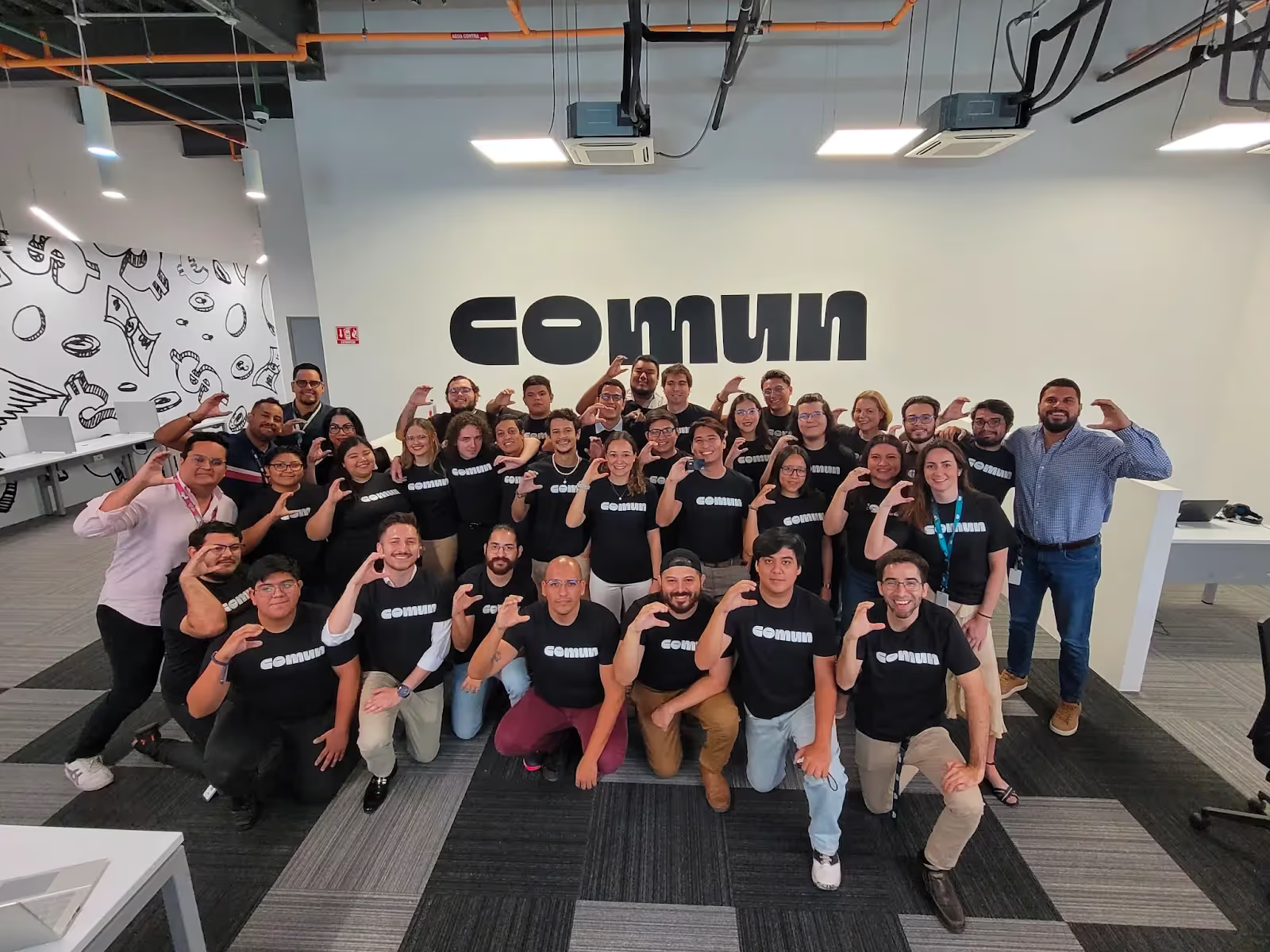
At Común, the first step in this journey has already begun. Our team in Mérida, Mexico, is part of our Community and the one we seek to serve. They are an extension of our mission and our digital platform, and a necessary ingredient in unlocking social mobility for millions of immigrants in the U.S.
What makes Común different from a traditional bank?
Común accepts over 100 Latin American IDs (passport, consular ID, among others), doesn't require an SSN or ITIN, and doesn't charge a monthly fee or require a minimum balance.
How does Común specifically support the immigrant community?
With 100% Spanish-language support, an account opening process that takes minutes, and features built for common community needs, like low-cost remittances and cash deposit without needing a prior bank account.
What services does Común offer?
A checking account with a Visa debit card, international remittances starting at $2.99, cash deposit at over 88,000 locations, and direct deposit.
Frequently asked questions
Who is Común designed for?
For the Latin American immigrant community in the U.S. looking for accessible financial services without traditional documentation barriers.
What IDs does Común accept?
Over 100 Latin American IDs, including passports and consular IDs — no SSN or ITIN required.
Does Común charge an opening or maintenance fee?
No, there's no opening fee, monthly fee, or minimum balance required.
Is Común's support available in Spanish?
Yes, the app and customer support are available in Spanish.
How fast can I open my account?
The process takes about 3 minutes, with instant approval in most cases.
Does Común offer remittances to Latin America?
Yes, starting at $2.99 per transfer, with your first transfer at no cost.
International Money Transfers
How to send money to Mexico via WhatsApp? Común vs. WhatsApp Pay
8 min de lectura
How to send money to Mexico via WhatsApp? Común vs. WhatsApp Pay
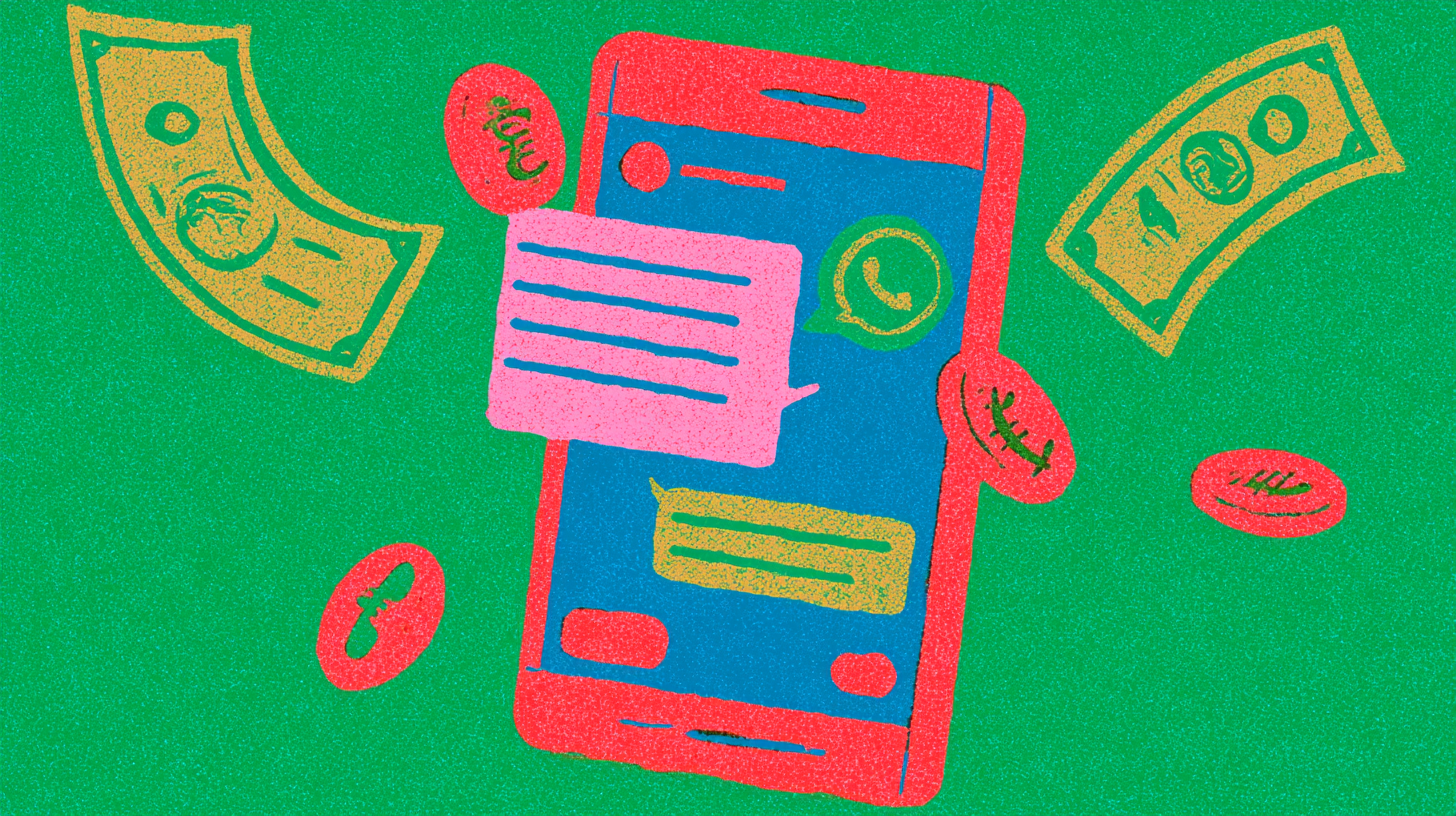
WhatsApp does not currently offer a service to send money directly from the United States to Mexico.
WhatsApp is one of the most popular ways to stay in touch with family and friends across borders. While the app supports payments in certain countries, its payment features are not available for sending money from the United States to Mexico.
However, for people living in the United States who are looking into sending money to Mexico, there are many different options available. From traditional service providers such as Western Union and MoneyGram to apps with instant international transfers like Wise, Remitly and Común.
Can I send money to Mexico via WhatsApp from the United States?
At this time, WhatsApp does not offer an official service that allows people in the United States to send money directly to recipients in Mexico through WhatsApp Pay. WhatsApp's payment functionality is only available in Brazil and India.
This means that you can still use WhatsApp every day to communicate with family and friends in Mexico, but you cannot transfer money from a U.S. account to a recipient in Mexico using WhatsApp Pay.
Some money transfer companies offer WhatsApp-based experiences that help initiate transfers, but those services are different from WhatsApp Pay itself. The actual transfer is processed through the remittance provider rather than through WhatsApp's native payment system.
What is WhatsApp Pay and how does it work?
WhatsApp Pay is a payment feature integrated into WhatsApp that allows eligible users to send and receive money without leaving the app. The service operates through local payment networks and financial partners in supported countries.
As of 2026, WhatsApp Pay is available in India and Brazil. It is not broadly available as a payment method in the United States, and it is not available as a direct remittance solution for sending money from the United States to Mexico.
Why can't I use WhatsApp to send money to Mexico?
Cross-border money transfers require financial institutions, payment networks, regulatory approvals, identity verification procedures, and international settlement systems. WhatsApp Pay was built around local payment systems in specific countries. Because of this, the service does not currently support direct remittances from U.S. bank accounts to recipients in Mexico.
This limitation often creates confusion because WhatsApp is widely used on both sides of the border. Messaging a family member in Mexico through WhatsApp is easy, but sending money through WhatsApp Pay is a different service with separate availability requirements.
How much does WhatsApp Pay charge for sending money?
There is no standard fee for sending money from the United States to Mexico through WhatsApp Pay because that service is not currently available.
If you're in the United States and need to send money to Mexico, you will need a remittance service provider. To compare the costs related to sending money to Mexico, it can be important to review: transfer fees, exchange rates, delivery methods, transfer speed, and recipient requirements.
What's the best way to send money to Mexico if not via WhatsApp?
There is no single answer because different money transfer methods work better for different situations. Bank transfers can be a familiar option for people who already have a checking account. Traditional remittance providers such as MoneyGram and Western Union offer multiple delivery methods, including bank deposits, cash pickup locations, and mobile wallets in some markets.
Digital remittance platforms have become increasingly popular because they offer the possibility of sending money directly from a smartphone. These services typically display the exchange rate, fees, and delivery method before the transfer is completed.
One option is Común through its remittances services, which allows eligible customers to send money to Mexico and other countries in Latin America directly from the Común app. Transfers start at $2.99, and many transfers are delivered on the same day depending on the destination and delivery method.
How to send money to Mexico with Común? (step by step)
1. Open the Común app on your phone.
Sign in to your account and navigate to the remittance section.
2. From the main page, select "Envía una Remesa".
Select the option on your app.
3. Choose your recipient or add a new one.
Provide the required details for the person receiving the transfer.
4. Enter the transfer amount.
Review the amount you want to send.
5. Review the transfer details.
Confirm the recipient information, delivery method, transfer amount, and estimated delivery timeframe.
6. Confirm the transfer.
Complete the transaction and wait for confirmation. Many transfers are delivered the same day, although delivery times may vary.
WhatsApp Pay vs. Común: a direct comparison
| Feature | WhatsApp Pay | Común |
|---|---|---|
| Send money from the United States to Mexico | No | Yes |
| Cross-border remittances | No | Yes |
| Starting transfer cost | Not available for U.S.-Mexico transfers | Starting at $2.99 |
| Delivery to recipients in Mexico | Not supported | Available |
| Transfer purpose | Domestic payments in supported countries | Money transfers to Mexico and Latin America |
WhatsApp Pay was created for payments within certain supported markets. Común remittance services make it possible to send money from the United States to recipients in Mexico and other countries in Latin America directly from the Común app.
A Común account can be opened with a passport or more than 100 Latin American IDs with no minimums or monthly fees.
FAQ
Can I send money to Mexico using WhatsApp?
No. WhatsApp does not currently provide an official service that allows users in the United States to send money directly to recipients in Mexico through WhatsApp Pay.
How does WhatsApp Pay work?
WhatsApp Pay allows eligible users in supported countries to send and receive money through WhatsApp using local payment networks and financial partners.
How long does it take for the money to arrive if I send it with Común?
Many transfers sent through Común are delivered on the same day. Delivery times may vary depending on the destination, delivery method, and recipient institution.
What do I need to send money to Mexico with Común?
You generally need a Común account, the recipient's information, the transfer amount, and any additional details required for the selected delivery method.
How much does it cost to send money to Mexico with Común?
Común international transfers start at $2.99. The total cost may vary depending on the transfer amount, destination, and exchange rate.
Is it safe to send money through apps from the United States?
Using a regulated money transfer provider can help protect your transaction through identity verification, encryption, fraud monitoring, and transaction tracking features.
Común is a financial technology company and not a bank. Banking services are provided by Community Federal Savings Bank, Member FDIC. Peer-to-peer payments services are provided by Cross River Bank. No minimums, no maintenance fees. Remittance service provided by Service UniTeller, Inc. Remittance fees start at $2.99 but may vary. Común Inc. may earn revenue from the conversion of foreign currencies.

Financial Education
Banking Services for Small Businesses: A Complete Guide
8 min de lectura
Small Businesses
Running a small business involves making numerous financial decisions, and choosing the right banking services is crucial for success. Separating personal assets from business assets in an LLC structure is important for protecting personal property in case of business bankruptcy. Community banks and modern financial platforms offer a variety of services tailored to meet small businesses' unique needs. This complete guide explores the essential banking services for small businesses, highlighting their benefits and how they can support growth and stability.
Understanding Different Types of Small Businesses and Their Banking Needs
Before exploring specific banking services, it's essential to understand the range of small businesses and their unique financial needs. Different types of small businesses — like sole proprietorships, partnerships, LLCs, corporations, nonprofits, home-based businesses, and startups — require tailored banking solutions to support their growth and stability. Keeping business and personal bank accounts separate offers benefits like accurate record-keeping, simplified tax preparation, better financial organization, and enhanced professionalism. By recognizing these differences, you can better appreciate how community banks and financial platforms like Común meet small business owners' diverse needs. This understanding lays the groundwork for selecting the most appropriate banking services to ensure financial health and success.
Business Checking and Savings Accounts
Having a dedicated business checking account is fundamental to managing your finances effectively. It lets you separate personal and business transactions, simplifying bookkeeping and ensuring clear financial records. Many banks offer business checking accounts with features like free transactions, low fees, and online banking capabilities.
When opening a business bank account, gather the required documentation, like your Employer Identification Number (EIN), and decide whether you want to apply online or visit a branch. Understanding the fees and essential steps to open the account is crucial.
A business savings account is also vital. It helps you set aside funds for future investments, emergencies, or growth opportunities. Look for accounts with competitive interest rates and flexible access to your funds.
Business Loans and Lines of Credit
Access to credit is often essential for small business growth. Community banks and other financial institutions provide various loan products, including term loans, lines of credit, and SBA loans. These financial products can help you finance new equipment, expand operations, or cover unexpected expenses.
- Term Loans: Term loans issue lump sums of capital that are repaid over fixed periods of time with predetermined interest rates. They're suited for large, one-time investments, like purchasing equipment or renovating a workspace. The predictable repayment schedule helps with budgeting and long-term planning.
- Lines of Credit: Lines of credit offer flexible borrowing options, letting you draw funds as needed and pay interest only on the amount you use. This flexibility can be a lifesaver during cash flow shortages or when financing immediate needs, like inventory purchases or emergency repairs. Lines of credit are revolving, meaning funds become available again as you repay them, making them an ongoing financial resource.
- SBA Loans: Small Business Administration (SBA) loans are partially government-guaranteed, making them more accessible to small businesses that might not qualify for traditional loans. They offer competitive interest rates and longer repayment terms, which can be particularly beneficial for startups and businesses with less-established credit histories.
Working with a community bank for loans and lines of credit means you benefit from personalized service. Bank representatives can provide tailored advice, helping you choose the right loan product for your needs and guiding you through the application process. This relationship-based approach ensures you get the support needed to grow your business sustainably.
Payment Processing, Payroll, and Cash Flow Management Services
Effective financial operations are critical to any small business's success. This includes processing payments, managing payroll, and ensuring efficient cash flow. Here's how comprehensive banking services can support these needs:
- Merchant Services: Merchant services are crucial for businesses that need to process customer payments. These services include credit card processing, point-of-sale (POS) systems, and online payment gateways. A reliable merchant services provider ensures transactions are processed quickly and securely, improving customer satisfaction and cash flow. By offering seamless payment solutions, banks help businesses deliver a better customer experience and streamline their revenue collection process.
- Payroll Services: Managing payroll can be complex and time-consuming. Many banks offer payroll services to simplify this process. These services handle everything from calculating wages and taxes to direct deposits and payroll tax filing. By outsourcing payroll, businesses can ensure accuracy and compliance with tax regulations, freeing up time to focus on core operations. Efficient payroll management not only saves time, but also helps maintain employee satisfaction by ensuring timely, accurate payments.
- Cash Management: Effective cash management is essential to maintaining healthy cash flow. Banks offer various cash management services, including remote deposit capture, ACH payments, and wire transfers. These tools help businesses efficiently manage incoming and outgoing funds, reducing time spent on manual processes and improving overall financial control. Proper cash management ensures businesses can meet their financial obligations and invest in growth opportunities without experiencing cash shortages.
By integrating these services, banks provide a comprehensive solution that supports small businesses in maintaining smooth, efficient financial operations.
Online and Mobile Banking
In today's digital age, online and mobile banking are indispensable. These services provide convenient access to your accounts, letting you monitor transactions, transfer funds, and pay bills anytime, anywhere.
- Digital Transformation: Community banks are adopting new technologies to improve the customer experience through online and mobile banking platforms. These platforms offer 24/7 access to your accounts, letting you manage your finances from the comfort of home or on the go. You can easily check balances, view transaction history, and transfer funds between accounts.
- Advanced Features: Many online and mobile banking services include features like bill pay, mobile check deposit, and budgeting tools. Bill pay lets you schedule payments to vendors and service providers directly from your account, ensuring timely payments and simplifying your bookkeeping. Mobile check deposit lets you deposit checks by taking a photo with your smartphone, saving trips to the bank.
- Security Measures: Online and mobile banking platforms use advanced security measures to protect customer data and ensure secure transactions. This includes encryption to protect information, multi-factor authentication to verify user identity, and regular security audits to identify and address potential vulnerabilities. Real-time fraud alerts help you quickly detect and respond to suspicious activity, improving your overall financial security.
Open your bank account¹ in 3 minutes with your country's ID²
Common Problems Small Businesses Face With Banking Services and Financial Health
While banking services are crucial to small business operations and growth, many small business owners face various challenges when managing their financial needs. Understanding these issues can help businesses make more informed decisions and find solutions that better fit their requirements.
- High Fees and Hidden Costs: Many small business owners find that banking services come with high fees, including monthly maintenance charges, transaction fees, and penalties for not maintaining a minimum balance. Hidden costs, like wire transfer fees, overdrafts, and additional services, can also add up, putting pressure on the business's cash flow.
- Limited Access to Credit: Securing loans and lines of credit can be particularly challenging for small businesses, especially startups or those with less-established credit histories. Traditional banks often have strict lending criteria, making it difficult for small business owners to access the funds they need for growth and operations.
- Inadequate Customer Service: Small business owners frequently report dissatisfaction with the customer service provided by their banks. Long wait times, lack of personalized service, and insufficient support for small-business-specific issues can hinder a business's ability to effectively manage its finances and resolve issues quickly.
- Complexity and Inaccessibility: Banking services can often be complex and difficult to navigate. Small business owners, who may not have extensive financial knowledge, can find it challenging to understand and use the full range of services offered. Additionally, inaccessibility to bank branches or limited online services can be a significant obstacle for businesses that require frequent banking interactions.
- Security Concerns: With the growing prevalence of cyber threats, security is a major concern for small businesses. Ensuring banking services offer robust security measures to protect sensitive financial data is crucial. However, not all banks offer the same level of security, leaving some businesses vulnerable to fraud and data breaches.
- Integration With Business Tools: Small businesses often use various tools and software to manage their operations, like accounting software and payment processing systems. Issues can arise when banking services don't integrate smoothly with these tools, leading to inefficiencies and increased administrative burden.
- Lack of Financial Education and Support: Many small business owners struggle with financial literacy, which affects their ability to make informed banking and financial decisions. Banks that don't offer enough financial education resources or support can leave business owners feeling overwhelmed and ill-prepared to manage their finances effectively.
- Limited Product Offerings: Some banks may not offer a wide range of products tailored to small businesses' specific needs. This can include specialized loan products, cash management services, or flexible payment solutions. Limited product offerings can restrict a business's ability to find suitable financial tools that support its growth and operational needs.
Understanding these common issues can help small business owners better navigate the challenges they face with banking services. By seeking out community banks or financial platforms like Común that prioritize transparency, customer service, security, and integration with business tools, small businesses can find banking solutions better suited to their needs and supportive of their financial success.
Conclusion:
Choosing the right banking services is essential for your small business's success and growth. From checking and savings accounts to loans, merchant services, and digital banking, the right financial products and support can help you manage your finances effectively and reach your business goals. By partnering with a community bank and leveraging platforms like Común you can access the tools and expertise needed to thrive in today's competitive market.
Integration and Support
Many community banks pride themselves on offering personalized service and financial advice. Building a relationship with your bank can provide valuable insight into managing your finances, accessing credit, and planning for future growth. Take advantage of workshops, seminars, and one-on-one consultations offered by your bank to improve your financial literacy and business knowledge.
For small businesses looking to leverage modern financial technology, integration with platforms like Común can improve their banking experience. Común offers a range of features tailored to small businesses, including instant notifications, secure login, and personalized customer support available seven days a week. By combining the strengths of traditional community banking with the convenience of digital banking, Común provides a comprehensive solution for managing your business finances.
Open your bank account¹ in 3 minutes with your country's ID²

Instant payments
How to send money to someone using Zelle from Común: 2026 guide
8 min de lectura
With Común you can link a debit card from another U.S. bank to your account — no Común physical card required — to send and receive money right away, even if you don't have funds in your balance.
How do I link an external card to my Común account?
In the app, go to the external cards section and add your debit card from another U.S. bank (Bank of America, Wells Fargo, Chase, or another). Común verifies the card is yours with a micro-deposit of less than $1.00 that you confirm in the app — we'll never ask for your bank password.
What can I do once the card is linked?
Send and receive payments and remittances using that card, even if your Común balance is $0. This is useful if you just opened your account and don't have your physical card yet, or if you prefer to keep your main money in another bank while using Común to move payments.
What cards can I link?
Valid debit cards, issued in the U.S., in your name, that allow sending and receiving funds. You can add up to 2 cards during your first 60 days with the account. Credit and prepaid cards aren't accepted.
Frequently asked questions
Do I need my physical Común card to send money?
No, if you have a linked external card, you can send and receive money right away without it.
Which banks can I link?
Any U.S. bank that issues debit cards in your name — Bank of America, Wells Fargo, Chase, and many others.
How does Común verify the card is mine?
With a micro-deposit of less than $1.00 to the linked account, which you confirm in the app. That money is yours to keep.
How many external cards can I add?
Up to 2 debit cards during your first 60 days with the account.
Why was my card rejected?
The most common reasons: the name doesn't match your account, it's a credit card, or it wasn't issued in the U.S.
Is it safe to link an external card?
Yes — Común never asks for your bank password or sensitive information during the process.

Checking account
What Is a Debit Card and How Does It Work?
8 min de lectura
A debit card is a bank card that lets you make purchases and withdraw money using funds available in your bank account. A debit card looks a lot like a credit card, but it works differently. When you use a debit card, the money is deducted directly from your bank account. That means you can only use the card if you have enough available funds — otherwise, the transaction won't go through.
Who Issues Debit Cards for Consumers?
Debit cards are issued by banks and are linked to individual checking accounts. You can get a debit card by opening a bank account at any bank or credit union that offers this service.
Many banking institutions also offer other digital services, like mobile and online banking, that let you manage your account over the internet or through a mobile device. In general, all banks offer services designed for people with different needs and income levels, giving nearly every adult access to banking.
Even though debit cards are easy to use, you should be careful with them. If you lose your card or it's stolen, report it to your bank immediately to prevent fraud or misuse. You should also regularly check your statements for fraudulent transactions or errors. With a bit of care, debit cards can be a useful tool for managing your money and making purchases online and in person.
How Can You Use Your Debit Card to Make Purchases or Withdraw Money From an ATM?
There are many ways to use a debit card to make purchases or withdraw money from an ATM.
To make a purchase, you can insert your card into the point-of-sale (POS) terminal and select "debit" as your payment method. Then enter your PIN and select the purchase amount.
To withdraw money from an ATM, insert your card into the machine's slot and select "checking/savings." Then enter your PIN and select the amount you want to withdraw.
You can also use your debit card to make payments online or by phone. To make an online payment, enter your card details on the merchant's website. To make a payment by phone, call the merchant's customer service number and provide your card details when asked.
What Protection Do Visa Debit Cards Have Against Unauthorized Charges?
If you have a Visa card, you're protected by Visa's Zero Liability policy. This policy guarantees you won't be held responsible for any unauthorized charges made with your card. That means if someone steals your card or uses it without your permission, you won't have to pay for those charges.
Visa's Zero Liability policy applies to all Visa cards, including debit and credit cards. It also applies to all transactions, including online and in-person transactions. This policy was put in place to help protect consumers against fraud and identity theft.
If you're a victim of fraud or identity theft, be sure to report it right away. You can call Visa's toll-free number 24/7 to report any incident. Visa will work with you to resolve the issue and help protect your money and identity.
What Are Virtual Debit Cards?
A virtual card is a card that isn't physical — it exists only in the digital world. Virtual cards are often used for online purchases, since they offer more security than using a regular debit card.
One of the benefits of virtual cards is that they can be used to limit how much money is spent on a purchase. For example, if you're buying something online and want to make sure you don't go over budget, you can use a virtual card instead of your regular credit or debit card. This can help you stay within budget and avoid racking up debt. Likewise, if your information is stolen during a transaction, the thief won't be able to access your other cards. This can help prevent fraud and keep your personal information safe.
If you're interested in getting a virtual card, there are a few things you should know. First, not all banks offer virtual cards, so you may need to open a new account at a bank that offers this service. Second, not all merchants accept virtual cards, so there may be some places where you can't use them. Finally, virtual cards sometimes come with associated fees, so be sure to read the terms and conditions before using one.
The Benefits of Común
When you get a checking account with Común, you'll get two debit cards: a physical one and a virtual one.
The physical card lets you make purchases at any business, and offers security thanks to its contactless capability and chip. This prevents your card details from being cloned or used for fraud.
The virtual card lets you make online purchases with more confidence, since contactless technology and chip protection aren't available on the internet — but if fraud does happen, the card can be canceled and replaced immediately. You can contact our support team anytime to report these cases.
Común debit cards work at more than 55,000 ATMs across the United States for deposits and withdrawals, and are protected by Visa's Zero Liability policy. That means any unauthorized charge won't be deducted from your checking account balance.

Immigration
Complete guide to preparing your immigration recommendation letter
8 min de lectura
Immigration procedures in the United States are often exhausting and confusing because of the number of requirements and the associated wait times.
You don’t have to feel alone during these processes: you can rely on a recommendation letter, which gathers family, community, or workplace support from people who truly trust your integrity and are willing to offer genuine backing that could bear on USCIS’s final decision.
Below is a user-friendly, practical guide on how to write an immigration recommendation letter, what it should include, mistakes to avoid, sample letters, and tips to convey credibility and improve your chances in a visa or Green Card process.
What is an immigration recommendation letter and why it matters
A recommendation letter is a personal document that supports U.S. immigration processes and is valued by USCIS. It serves as testimonial evidence of the applicant’s moral character, work ethic, and community contribution.
This supporting letter may be requested to complement documentation for various proceedings:
Permanent residence
Applicants commonly must show “good moral character,” employment stability, and community ties.
Asylum cases
The letter helps reinforce the applicant’s credibility and show they have support in the United States as a contributing community member.
Work visas such as EB-2 NIW
Professionals or researchers often need a recommendation letter from expert peers to substantiate their track record and expertise.
Naturalization
Recommendation letters are not always requested, but they can support evidence of the applicant’s good conduct.
Don’t confuse this with an employment or academic letter; the purpose of an immigration recommendation letter is to attest to the applicant’s good behavior and moral character.
Who can write an immigration recommendation letter?
An immigration recommendation letter should be written by someone with a genuine, close relationship to the applicant who can attest to their positive impact—through family, social, or workplace ties.
These are the main profiles you can ask for a recommendation letter:
Family members
They can testify to the applicant’s role in the family and commitment to loved ones.
Close friends
A close friend can focus on qualities like loyalty, honesty, and trustworthiness to emphasize the applicant’s human side.
Employers or colleagues
They provide key testimony of the applicant’s work ethic and professional responsibility.
Community or religious leaders
These individuals can speak to the applicant’s community involvement and positive impact.
Keep in mind that what matters most is not the recommender’s title, but their sincerity and credibility in vouching for the applicant’s reputation.
Steps and structure for writing an immigration recommendation letter
Although an immigration recommendation letter focuses on the applicant’s ethics and moral character, it is still a document evaluated for order and formality by U.S. authorities.
For that reason, be sure to include the following details.
Header and formal salutation
Include the applicant’s full name, address, date, and a formal salutation to USCIS or the relevant authority.
Sender’s introduction
The sender should state their full name and then explain their relationship to the applicant, how long they’ve known them, and the letter’s purpose.
Body of the letter
This is the most important part and should reflect aspects such as:
- Values: honesty, responsibility, solidarity, etc.
- Community involvement: volunteering, neighborhood activities, or initiatives to address local issues.
- Work ethic: punctuality, discipline, professional attitude, commitment, responsibility, and the applicant’s achievements, etc.
Include concrete examples to reinforce credibility, such as: “Alicia Martínez is known in the community as someone who looks out for others’ well-being, like the times she has actively taken part in trash-collection programs and efforts to help homeless children.”
Closing and signature
The sender should reaffirm support for the applicant and be open to being contacted to clarify any point, so contact details are necessary.
At the end, they should include their name and handwritten signature.
Sample immigration recommendation letter
Below is a reference letter template to make drafting your document easier.
Sender’s full name
Address
Phone number
Date
To the attention of U.S. Citizenship and Immigration Services (USCIS):
My name is [Sender’s name], and I have known [Applicant’s name] for [number of years] through our professional relationship at [describe job title and company]. I am honored to provide my testimony in support of their U.S. immigration process.
Over the time I have known them, I have observed qualities such as punctuality in reporting to work and professionalism toward both colleagues and clients.
I am confident that [the applicant] will be a valuable member of U.S. society because of their human values and professional capabilities.
I remain at your disposal and include my contact information in case any questions arise.
[Signature][Full name]
You can use this example as a base, but you should adapt it to the relationship between you and the recommender and add any additional information to convey authenticity and sincerity. Be sure to include the introduction, qualities, examples, and a formal closing.
Común, your financial ally in the United States
Here we’ve shown what an immigration support letter is and how to write one in Spanish, who can write it, its structure, and a practical example.
The main objective of a recommendation letter is to support you in U.S. immigration procedures; likewise, Común supports your financial life upon arrival in the country.
Discover the benefits of Común!
- Open your account easily with qualifying official ID from your country of origin.
- Mobile app in Spanish and English, designed for immigrants, with intuitive, transparent processes.
- Remittances to Latin America with clear, competitive fees, without complicated processes
Común is the financial service designed for immigrant communities in the United States. Open your account today and discover the ideal support for your finances!
Frequently Asked Questions (FAQ)
If you still have questions, see the section below:
How many recommendation letters do I need for immigration?
There is no specific number. A single well-written letter may be sufficient. For extraordinary-ability visas or National Interest Waivers (NIW), more than four may be required to support the applicant’s professional record.
What if I don’t have anyone to write my immigration letter?
You can ask an immigration attorney to prepare a statement explaining why no one is available to provide a letter.
Is it acceptable to submit a recommendation letter in Spanish?
Ideally, submit the letter in English or include a certified translation to avoid issues during the visa application.






Thousands of immigrants are already achieving more with their money. You can too.
Comun is a financial technology company and not a bank. Banking services are provided by Community Federal Savings Bank; Member FDIC. The Comun Visa® Debit Card is issued by Community Federal Savings Bank, pursuant to a license from Visa U.S.A Inc. and may be used everywhere Visa Cards are accepted.
Comun is a fintech company and not a bank or licensed money transmitter.
* Results may vary. For a complete list of eligible IDs and application requirements, follow this link.
^ No minimums, no maintenance fees. ATM or transfer fees may apply. See app for fee details.
‡ Direct deposit funds are typically available when we receive the payment file, up to two days before the scheduled payment date. This early availability is not guaranteed.
** A service provided by Service UniTeller, Inc. Service UniTeller, Inc. is licensed in all states that require a license. Remittance fees start at $2.99 but may vary. Please check the app for more details. Comun Inc. may earn revenue from the conversion of foreign currencies.
† Funds in your account are FDIC insured up to $250,000 by ownership category through Community Federal Savings Bank (CFSB), Member FDIC, in the event CFSB fails.