International Money Transfers
How to send money to Honduras from the U.S.
Compare costs, delivery times, and the best apps to send money to Honduras from the U.S. Transfers starting at $2.99 with Común.
8 min read

30 Jun 2026
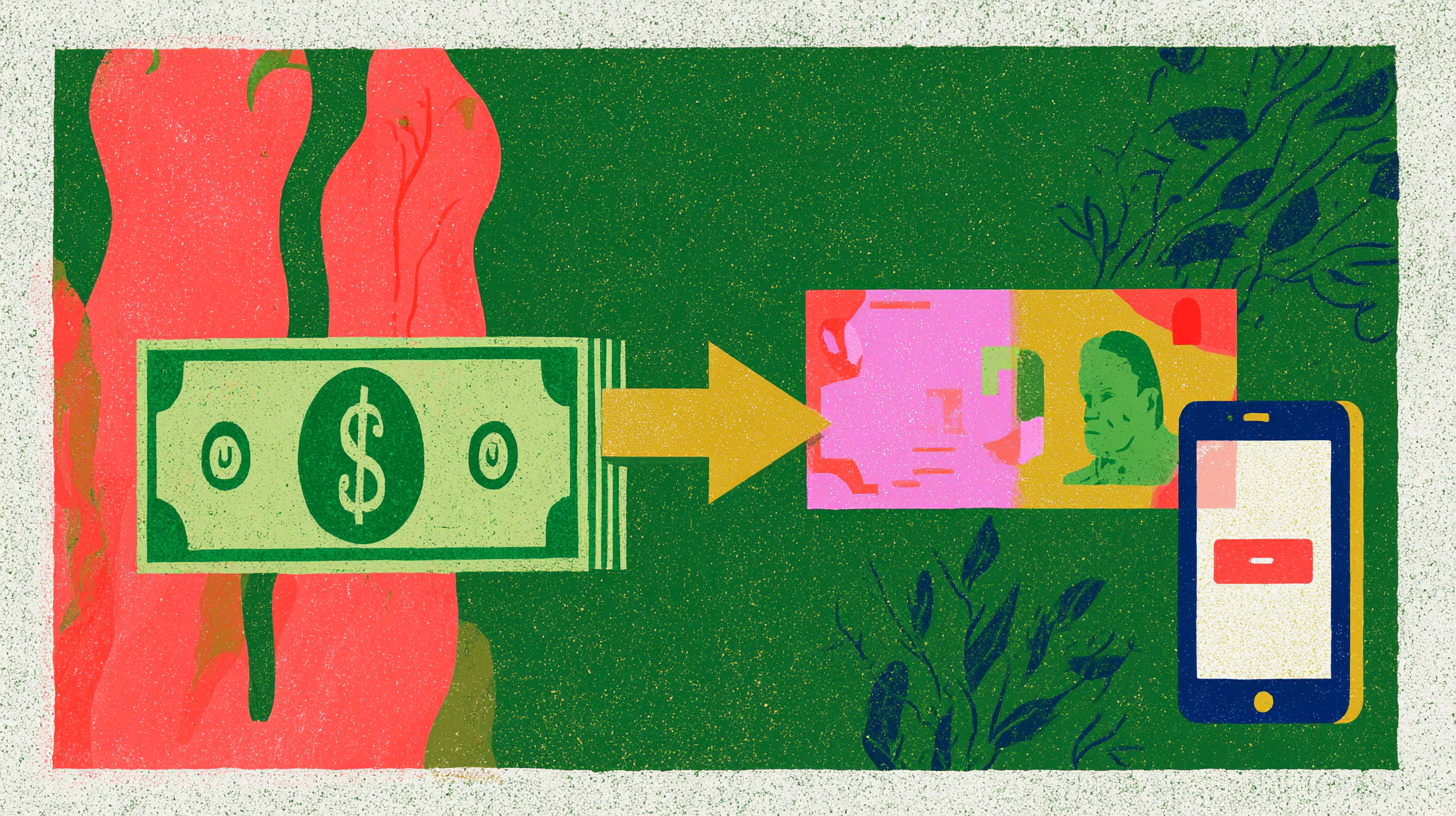
How to send money to Honduras from the U.S.
Sending money to Honduras from the U.S. usually takes minutes when using digital remittance services. Fees typically range from about $2.99 to $8 depending on the provider, payment method, and delivery option. Most transfers arrive the same day when sent to cash pickup or mobile wallets, depending on verification and processing conditions from each provider.
Hondurans in the U.S. sent over $9.74 billion home in 2024, according to Honduras's central bank. The World Bank estimates remittances represent roughly 26% of Honduras's GDP, making them one of the country's most important sources of household income. For many families, this money is part of monthly budgets that helps cover essential needs such as food, housing, healthcare, and education.
What is the cheapest way to send money to Honduras from the U.S.?
The answer depends on a few factors, including the fee charged to send, the exchange rate markup applied to the conversion, and how your recipient wants to receive the money. All three affect how many lempiras actually arrive on the other end.
Exchange rates vary by provider and are adjusted compared to the mid-market rate. This difference is called the exchange rate margin and can affect how much the recipient receives even when fees look low.
Exchange rate markups can quietly reduce what your family receives. Some providers advertise a $0 fee but apply a less competitive USD-to-lempira conversion rate, and that difference doesn't always show up clearly. Before confirming any transfer, it is recommended to check how many lempiras your recipient will actually get.
The delivery method also affects cost. Cash pickup options can have different pricing compared to bank deposits or mobile wallet transfers. Payment method also influences cost, since debit card, credit card, and bank transfer funding options are priced differently across providers.
Overall, the lowest-cost option depends on urgency, payout method in Honduras, funding method, and exchange rate conditions at the time of transfer.
When using Común remesas, you will be able to see and confirm exchange rate and fees before sending a transfer.
How long does it take to send money to Honduras?
Transfer times to Honduras vary depending on provider and payout method. Many digital transfers can arrive within minutes.
Cash pickup can be a fast delivery option across most providers because funds are made available for collection as soon as the transfer is processed and approved. Bank deposits may take longer, usually within the same day or up to one business day depending on processing times.
Timing can also change based on verification checks. First-time transfers or higher amounts often require identity verification under U.S. financial regulations, which can add extra processing time before the money is released.
Delivery speed is also affected by timing factors outside the provider's control. Weekends and public holidays in either the U.S. or Honduras can delay processing because some banking and payout networks operate only during business days.
Faster delivery options are often available, but they may be priced differently from standard transfers. In many services, selecting instant or expedited delivery can increase the total cost compared to slower options.
Best apps to send money to Honduras: comparison
Different apps and services offer different combinations of fees, speed, and convenience. The table below provides a quick comparison of common providers that are used for sending money from the U.S. to Honduras.
| Provider | Cost behavior | Delivery speed behavior | ID requirements |
|---|---|---|---|
| Común | Shows total cost before sending, including fee and exchange rate | Often supports near-instant delivery depending on payout method | Can accept alternative IDs depending on verification |
| Remitly | Cost varies by speed option and funding method, including economy vs express pricing | Offers both near-instant and next-day delivery depending on selection | Identity verification required, SSN not always required |
| Western Union | Pricing varies by funding method and payout option such as cash pickup or bank deposit | Delivery can range from minutes to next business day depending on method | ID verification required, SSN not always required |
| MoneyGram | Cost depends on how money is sent and received, including cash pickup vs bank transfer | Delivery ranges from minutes to next business day depending on corridor and method | ID verification required, SSN not always required |
| Xoom (PayPal) | Pricing depends on PayPal funding method and destination payout option | Delivery can range from minutes to 1 day depending on method | PayPal account required, verification may vary |
Fees and exchange rates change depending on payment method and transfer amount. It is important to verify with your selected provider the current fees and requirements.
How to send money to Honduras with Común: step by step
Sending money to Honduras with Común is done through a mobile app available in the United States. Inside the app, users can enter recipient information, choose an amount to send, and complete a transfer digitally step by step. The process is handled within the app and does not require visiting a physical location or using paper forms.
1. Create a Común account
You will need a valid ID for which you can use a passport or more than 100 valid Latin American IDs, a residential address in the US (you can use your phone's location for proof) and an active email address and phone number capable of receiving SMS. The first step is to download the Común App (available on iOS and Android), the next step is to open the app and select Sign Up / Solicitar Ahora. Enter your personal details and US residential address. Then, take a photo of your official ID and a quick selfie to verify your identity. Finally, submit your application for approval.
2. Add your recipient in Honduras
Once you have your Común account, from the main dashboard, tap on "Envía una Remesa". Select a saved recipient or add a new one by entering their required details (full name, ID type, ID number, and bank account/delivery method).
3. Enter the transfer amount
Type in the amount you want to send and confirm the currency. The app will show the exchange rate and total cost before confirming the transfer.
4. Pay and confirm
Complete payment using your selected funding method and review transfer details before sending. Transparency in fees and exchange rates is shown before final confirmation.
You can send money to Honduras from your Común app starting at $2.99, in minutes, with transparent fees and visible exchange rates before you confirm a transaction.
How much does Western Union charge to send money to Honduras?
Western Union fees for sending money to Honduras vary based on transfer amount, payment method, and delivery option. Typical fees for mid-size transfers may range from about 5 to 8 USD equivalent, with additional costs coming from exchange rate margins.
Costs can increase when using credit cards or selecting instant cash pickup options. Final pricing is shown during checkout and depends on the specific transaction setup.
Western Union offers both in-store and digital options, but pricing differences may apply depending on where the transfer is initiated.
Can I send money to Honduras without a Social Security Number?
Yes, some remittance providers allow sending money without a Social Security Number.
Requirements vary depending on provider policies and transaction amounts. Some services may request additional verification for higher transfer limits or first-time users.
Identity verification is still required to comply with financial regulations, even if an SSN is not needed. Some service providers like Común accept alternative forms of identification such as a passport or Latin American ID for account creation.
What do I need to send money to Honduras for the first time?
First-time transfers usually require basic personal and recipient information. This includes a valid government-issued identification, the full name of the recipient in Honduras, and the method they will use to receive the money, such as cash pickup, bank deposit, or mobile wallet depending on availability.
When sending cash in person or loading cash into a transfer service, you also need the physical money in U.S. dollars and a valid ID. The agent or service provider will use this information to create and process the transfer.
Most digital services accessed through apps also require account verification before the first transfer is completed. This step is required under financial regulations in the United States and is used to confirm identity and reduce fraud risk.
Once the account is set up and verified, future transfers usually take less time because sender details and recipient information are already saved in the system.
FAQ
What is the cheapest app to send money to Honduras?
The lowest cost depends on exchange rates and fees combined. Some apps like Común start from $2.99 per transfer, while others vary based on payment method and transfer size.
How long does a transfer to Honduras take?
Most transfers arrive within minutes when using cash pickup or mobile delivery options. Bank deposits may take up to one business day depending on processing times.
Can I send money to Honduras without a bank account?
Yes, some providers allow cash-based funding methods such as debit cards or cash top-ups at partner locations. A bank account is not always required depending on the service.
What is the maximum amount I can send to Honduras?
Transfer limits depend on the provider and verification level. Most services allow higher limits after identity verification is completed.
Is it safe to send money to Honduras online?
Digital remittance services use encrypted systems and identity verification to protect transactions. Safety also depends on using regulated providers and secure login practices.
What do I need to send money to Honduras for the first time?
You need valid identification, recipient information, and a payment method. Most platforms also require account verification before the first transfer can be completed.
Común is a financial technology company and not a bank. Banking services are provided by Community Federal Savings Bank, Member FDIC. The Común Visa® Debit Card is issued by Community Federal Savings Bank. Remittance service provided by Service UniTeller, Inc. Remittance fees start at $2.99 but may vary. Común Inc. may earn revenue from the conversion of foreign currencies.
About Común
Común aims to support the Latino community in the United States. It offers a debit account that can be opened with more than 100 valid Latin American IDs and an app available in Spanish.
Visit Común's website or download the app for free to learn more about the full offer and applicable terms.
Olivia Rhye
Community Partner


Instant payments
Discover how to sign up for Zelle and move your money without complications
8 min de lectura
Are you looking for an option to send and receive money within the United States? In the digital era, it is essential to have access to an immediate, secure, and free transfer service.
Sometimes sending and receiving money can be challenging due to high fees or limited access to the banking system. For this reason, knowing how to register for Zelle and learning about alternative solutions such as Comun will be extremely useful for sending money without complications through the most efficient services.
In this guide, we will explain what Zelle is, how to register, what requirements are necessary to send and receive money, and why Comun works as a complementary solution to expand your options when facing restrictions that could hinder your access to mobile payment services.
What Is Zelle and How Does It Work for Your Daily Payments?
Zelle is a digital P2P (peer-to-peer) payment service available in the United States. It is associated with more than 20,200 traditional and digital banks and credit unions, such as Bank of America, Wells Fargo, Ally Bank, Capital One, and Navy Federal Credit Union. Zelle is well known for its wide coverage and ease of transferring funds between users of this system.
Other advantages of Zelle include:
- Near-Instant Transfers
Users can receive their money within minutes. - Ease of Use
It is directly linked to bank applications, eliminating the need for an external app. - Security
It is backed directly by banking institutions, so you can be confident that your money will reach its destination. - Usage Fees
You can send and receive money without paying commissions to other Zelle users.
Please note that Zelle is only available within the United States. If you need to make international transfers, find the best options here.
How Does Zelle Work?
Zelle operates through its connection with their affiliated banks’ applications. To send and receive money, you must first verify that your bank is part of this service’s network.
If so, complete your registration directly through your bank’s online platform and begin sending and receiving money to your account using a phone number or email address.
Using Zelle is very practical for daily transactions such as paying rent or purchasing goods and services. It is also a secure way to send money to family and friends.
In addition to Zelle, there are other alternatives for sending and receiving money within the United States. Discover the 6 best mobile apps of 2025.
What Changed in Zelle in January 2025?
Zelle announced an important change in its application that took effect in April 2025. The change consists of eliminating transfers through its standalone app, as the service can now only be accessed through the online banking platforms of U.S. financial institutions integrated into its network.
If you wish to download the Zelle app, you may still use it to review your payment history.
How to Download Zelle to My Phone: Key Requirements to Register and Use It Without Complications
To have a Zelle account, you only need to meet the following requirements:
- U.S. Mobile Phone Number or Email Address
To use Zelle, you only need to register a phone number and an email address. Your contacts can use either of these to send you money easily. - U.S. Bank Account
Since Zelle operates directly through bank connections, having an account with one of the institutions integrated into its network is mandatory.
Check the list of banks that offer Zelle on their website and ensure you will be able to use the service in 2025. - Banking Application
Finally, you must download your financial institution’s mobile banking app, as you will access Zelle through it.
What Can I Do If I Cannot Open an Account in the United States ?
Sometimes, opening an account is not accessible for many individuals, whether due to lack of required documentation or insufficient credit history.
If this is your situation, Comun is a great alternative for sending money to your loved ones safely, quickly, and at low cost.
Comun is a platform that understands the needs of immigrant communities in the United States. Open your account today and experience an accessible alternative for your finances.
4 Simple Steps to Register for Zelle
If you are wondering how to open a Zelle account, simply follow these steps:
1. Open Your Bank’s Mobile Application (If It Is a Zelle Partner)
Once you verify that your bank works with Zelle, open the mobile application and register if you have not done so yet.
2. Locate the Transfers and Payments Section
In the main menu, click on the transfers and payments section, then select “Send Money with Zelle.”
3. Register Your U.S. Phone Number or Email Address
To send and receive money with Zelle, it is necessary to register a U.S. phone number and an email address.
4. Link Your Bank Account
Confirm your information and start sending and receiving money with Zelle quickly after completing a test transaction.
With Your Comun Account, Make and Receive Payments Easily and Quickly
Undoubtedly, Zelle is an excellent tool for bank transfers, offering a fast and very simple service to use. Although it is only available to users of participating banks, it has broad coverage.
While Zelle represents a practical solution for many users, it has limitations such as requiring an eligible U.S. bank account.
Comun, on the other hand, is an alternative solution that goes beyond traditional limitations, as it allows you to send international transfers using your official national identification. It is designed for immigrants in the United States and offers simplified financial management. This service provides you with:
- A debit card to make purchases at physical establishments
- Access to a mobile app for better financial control
- The ability to send remittances to your loved ones for a fee starting at $2.99 per transaction up to the applicable limits
- The opportunity to join our community that understands your needs
Download the Comun app and enjoy transparent, easy, and personalized finance designed for you.

Financial Education
What Is Financial Freedom and How Can You Achieve It?
8 min de lectura
What Financial Freedom Means and How to Achieve It
Financial freedom is more than a simple definition — it's a state of life many aspire to reach. It's the ability to cover all your financial needs without being tied to a conventional job. Imagine a world where your decisions aren't dictated by your financial obligations, but by your desires and passions. That's financial freedom.
In a constantly changing world, where the retirement age keeps rising and working conditions keep getting more challenging, financial freedom has become an essential goal. It provides not just economic security, but also a better quality of life, freedom of choice, and the chance to pursue personal passions and projects without restrictions.
Steps to Achieve Financial Freedom
Cutting Expenses: Taking Control of Your Personal Finances
Before you can save or invest, it's essential to understand where your money is going. Keeping a detailed record of your expenses lets you identify areas where you could potentially save. Adopting a frugal lifestyle doesn't mean sacrificing your quality of life — it means making more informed decisions about your spending.
To stay on top of your personal or family finances, it's important to create a budget and review it regularly. A budget helps you categorize your income and expenses over a period of time — usually once or twice a month — so you can identify your necessary expenses versus your discretionary or luxury spending. This makes it easier to figure out which expenses you can cut to improve your financial stability.
One of the biggest problems with not having a budget is falling into the most common mistake that keeps us from achieving financial freedom: going into debt — spending more than you earn and constantly being "in the red," a hole that's hard to climb out of as debt grows over time. The secret is living below your means: rather than adopting a lifestyle that reflects your salary or your wants, the advice from many financial experts is to live frugally and spend less than you earn. This lets you save and invest more over time.
Saving: The Foundation of Financial Freedom
Saving isn't just about setting money aside — it's a mindset and a discipline that lays the groundwork for a healthy financial life. Dave Ramsey, a well-known financial expert, has developed a series of principles and steps that have helped millions find their way to financial freedom.
Dave Ramsey is famous for his "Baby Steps," a series of seven steps designed to guide people toward financial freedom. The first step — and perhaps the most crucial — is saving $1,000 as a starter emergency fund. This fund acts as a cushion against the unexpected, keeping people from going into debt over surprise expenses.
"Not having an emergency fund is an emergency in itself" is a popular Dave Ramsey saying, and if you've ever been in an unexpected situation that required funds you didn't have on hand, you can probably vouch for how true that is. And while $1,000 doesn't sound like a lot compared to the cost of many emergencies, the point of this emergency fund is to push a person to take that first step and start building financial discipline.
Investing: Generating Passive Income
Warren Buffett, one of the most successful investors in the world, has always emphasized the importance of investing in what you know and understanding the intrinsic value of your investments. His investing philosophy, which has been the cornerstone of his success, is built on several core principles that can serve as a guide for those seeking financial freedom:
- Invest in what you know: Buffett has always been a strong advocate for investing in companies and sectors you fully understand. If you can't explain in simple terms how a company makes money, it might not be the best fit for your portfolio.
- Look for value, not price: Buffett distinguishes between the price and the value of a stock. While price is what you pay, value is what you get. His approach is based on identifying companies that are undervalued relative to their true intrinsic value and that have long-term growth potential.
- The market is volatile, but don't get swept up in the panic: Buffett compares the stock market to an unpredictable neighbor named "Mr. Market." Some days Mr. Market is optimistic and offers high prices, while other days he's pessimistic and offers bargains. Rather than getting carried away by Mr. Market's emotions, Buffett suggests staying calm and focusing on the intrinsic value of your investments.
- Long-term investing: Buffett isn't chasing quick gains. Instead, he looks for companies with lasting competitive advantages and holds them for decades. His famous quote, "my favorite holding period is forever," reflects his long-term investing approach.
- Reinvesting dividends: One of the strategies behind Buffett's success is reinvesting dividends. By reinvesting dividends, you benefit from compound interest, which can lead to exponential growth in your investment over time.
Passive income — whether through dividends, rental income, or online businesses — is essential for financial freedom. This income, which doesn't require constant direct involvement, lets your money work for you, generating regular cash flow that can support a lifestyle free from the constraints of a conventional job. Warren Buffett's investing philosophy centers on patience, education, and a deep understanding of investments. By adopting these principles and focusing on generating passive income, you can chart a path toward true financial freedom.
Conclusion
Financial freedom is an ideal that goes beyond simply accumulating wealth — it's the manifestation of a balanced life where our decisions aren't dictated by economic pressures, but by our true passions and desires. Through the discipline of saving, wisdom in investing, and understanding our finances, we can move closer to this ideal. The teachings of experts like Dave Ramsey and Warren Buffett offer us a clear roadmap toward this goal. At the end of the day, financial freedom isn't just about money — it's about living a life with purpose, security, and genuine independence. It's a journey that requires commitment, education, and constant action, but the rewards, both tangible and intangible, are invaluable.
Community
What You Need to Open a Común¹ Account
8 min de lectura
To open a Común account you need a valid, government-issued photo ID — passport, consular ID, or one of over 100 accepted Latin American IDs. No Social Security Number is required. The process is 100% online and takes about 3 minutes.
Común: Revolutionizing Financial Access for the Immigrant Community
Discover Común, a pioneering financial technology platform designed specifically to meet the needs of the immigrant community in the United States. Unlike traditional banking, Común offers a friendly digital banking experience focused on financial inclusion, low fees, and bilingual support, making financial services more inclusive and empowering.
Unmatched Ease When Opening an Account
Opening a checking account with Común is simple and hassle-free, addressing the barriers to financial exclusion the immigrant community typically faces. Accepting more than 100 forms of ID², including Social Security equivalents from Latin American countries, Común ensures immigrants have access to essential banking services. The application process is fast, taking under 5 minutes, and is free of additional or hidden fees, minimum balance requirements, or monthly charges. This inclusivity is central to Común's mission of fostering financial stability and growth.
Mobile Deposit Options
Común: Común offers a very convenient mobile deposit feature that lets users deposit cash at more than 88,000 locations across the United States, including major retailers like Walgreens, Dollar General, and Walmart. This extensive network ensures users can easily find a nearby deposit location, making the process of adding money to their accounts simple and hassle-free.
Traditional Banking: While many traditional banks offer mobile deposit options, they often restrict these to check deposits through a mobile app. Cash deposits typically require a visit to an ATM or bank branch, which can be less convenient and more time-consuming than Común's extensive cash deposit network.
Usefulness in Today's World: In today's fast-paced environment, the flexibility to deposit cash at a wide range of accessible locations is invaluable, especially for people who may not have easy access to traditional banking services or who work non-traditional hours when banks are closed.
International Remittances
Común: Común stands out in facilitating international remittances⁴, letting users send money abroad quickly and at lower fees compared to many traditional banks and remittance services. The process is enhanced with real-time notifications, keeping the sender informed from the moment the money is sent until it's received.
Traditional Banking: Traditional banks generally offer international transfer services, but these can be expensive and slow, with transfers sometimes taking several days to complete. Additionally, fees associated with traditional bank remittances can be significantly higher.
Usefulness in Today's World: In a globalized economy, the ability to send money across borders quickly and affordably is crucial. Many families rely on remittances for financial support, and businesses need efficient ways to handle international transactions. Común's streamlined, cost-effective service effectively meets these modern demands.
Early Access to Pay
Común: Común offers the ability to connect your paycheck to the app and get paid up to two days early³. This feature doesn't carry additional fees, providing significant relief during financial emergencies or when planning ahead.
Traditional Banking: Some traditional banks have started offering similar features, but they're often tied to specific account types or require a minimum balance. The accessibility and ease of use of Común's early pay access isn't always matched in traditional settings.
Usefulness in Today's World: With the rise of gig economy jobs and irregular pay schedules, having early access to wages can provide a buffer against financial instability. This feature is particularly valuable for those living paycheck to paycheck, offering a cushion that can help avoid overdraft fees and late payments.
Unlike traditional banking institutions, Común's innovative features are designed to meet the needs of today's diverse, mobile population, particularly benefiting the immigrant community in the U.S. By providing services that offer greater convenience, lower costs, and increased accessibility, Común doesn't just address the common challenges its users face — it also empowers them toward greater financial freedom and stability. As we move toward a more interconnected, fast-paced world, the importance of responsive, inclusive financial services keeps growing, something Común is uniquely positioned to deliver.

Robust Security and Customer Support
Security and customer support are paramount at Común. With FDIC-insured accounts and Visa protection on virtual Visa debit card transactions, Común customers can manage their funds with confidence. Innovative security features like biometric logins and instant transaction notifications keep your money safe. Plus, Común offers 24/7 customer support in English and Spanish, ensuring help is always available in your preferred language.
Commitment to Zero Fees and Upward Mobility
Común stands out not just for offering zero fees for opening an account, monthly maintenance, or minimum balances, but also for its commitment to helping its users achieve economic advancement. Común acts as a financial partner, supporting financial transactions without the burden of excessive fees. This commitment aligns with the goal of enabling upward mobility for immigrants, who contribute significantly to the U.S. economy.
Personalized Features and Benefits
Común goes beyond traditional financial services by offering features designed to meet the immigrant community's unique needs. Users can send money abroad at low or no cost, deposit cash at more than 88,000 locations nationwide, including free ATM withdrawals, and connect their accounts to popular payment apps like Cash App and Venmo. Común's platform also lets customers get paid up to two days early through direct deposit, further enhancing their flexibility and financial stability.
Conclusion
Común isn't just a financial services provider — it's a platform dedicated to transforming the banking experience for immigrants in the U.S. With its user-focused design, commitment to financial freedom, and robust features, Común is set to become a vital tool for its users' financial stability and growth. Whether you're looking to manage your day-to-day finances or send money to loved ones abroad quickly and safely, Común offers a reliable, inclusive, and efficient banking solution.
Founding Moment: Did You Know?
Founded by entrepreneurs Abiel Gutierrez and Andres Santos in New York, Común was built to empower families and enable upward mobility, particularly for immigrant families. The company has raised significant investment from notable firms like Costanoa Ventures, FJ Labs, and South Park Commons, underscoring the tremendous opportunity to serve immigrant families' financial needs and improve every person's life.
What documents do I need to open a Común account?
A valid government-issued photo ID: passport, consular ID, foreign driver's license, or one of over 100 accepted Latin American IDs. No Social Security Number or ITIN is required.
How long does the account opening process take?
About 3 minutes, entirely from your phone. Approval is instant in most cases.
Does it cost anything to open a Común account?
There's no opening fee, no monthly fee, and no minimum balance required.
Frequently asked questions
Can I open a Común account without a Social Security Number?
Yes, Común accepts a passport, consular ID, or other valid Latin American ID instead of a Social Security Number.
How long does it take to open the account?
The process takes about 3 minutes through the app, with instant approval in most cases.
Do I need proof of address to open the account?
Proof such as a utility bill or digital bank statement may be requested, depending on your situation.
Is there any cost to open or maintain the account?
No, there's no opening fee, monthly fee, or minimum balance required.
What do I get when I open my account?
A checking account and a Visa debit card, with access to direct deposit, remittances, and the cash-deposit network.
Can I open the account if I just arrived in the United States?
Yes, as long as you have a valid ID from your home country, you can open your account without needing U.S. credit history.

Living in the United States
Requirements to rent a house in the United States if you are an immigrant
8 min de lectura
One of the main challenges immigrants face in the U.S. is formalizing a lease, since property owners often require a series of documents that can turn the search process into a maze.
Examples might include credit scores, proof of income, background checks, and references that many immigrants do not yet have. However, there are proven strategies that make it easier for newcomers to obtain a lease in the United States.
If this sounds familiar, keep reading—we’ll explain in detail how to prepare to rent safely and avoid the typical obstacles immigrants encounter when establishing themselves in the U.S.
What do you need to rent in the United States?
Before you start searching for your next home, you should keep in mind the key requirements for renting an apartment in the U.S. These help the landlord confirm that the tenant is reliable and has sufficient financial solvency to pay rent on time and in full.
Below are the most requested items to sign a lease:
Personal identification
It’s very important to verify your legal identity. Landlords or real estate agents may ask for one or more of the following documents:
- Valid passport.
- Visa or resident card.
- Driver’s license.
- Social Security Number (SSN) or ITIN.
Financial solvency
To demonstrate you have sufficient solvency to cover the monthly rent, you can provide several documents, such as:
- Proof of income, such as pay stubs, tax returns, or bank statements.
- Employer letter or employment contract.
- It is also common to be asked for a security deposit equal to one month’s rent, which serves as a guarantee in case of damage to the property.
Credit history
Reviewing credit history is a crucial step for landlords and agents because it provides reliable evidence of the applicant’s financial behavior.
If you’ve been in the United States for a short time, you may not have a credit history. This article explains simple ways to start building one.
In that case, you may be asked for a credit report from an official agency or a signed authorization to check your credit score.
Local guarantors
If you lack sufficient evidence of solvency, you may be asked for a guarantor, who serves as a backstop if you cannot meet the lease terms.
Such a guarantor must reside in the United States and provide the following documents:
- Government-issued ID.
- Proof of income.
- Good credit history.
Renting in the United States: Process and leasing options for immigrants
Housing options in the U.S. are broad and adapt to all lifestyles, budgets, and immigration statuses.
Rental options you can find in the United States include:
- Furnished houses or apartments.
- Unfurnished houses or apartments.
- Individual rental.
- Shared rental.
Regardless of the type of property you’re looking for, we recommend following these steps to rent a house or apartment.
1. Explore and select the property
Take the time to review all property details and alternatives in different neighborhoods and cities. We recommend searching trusted sites such as Zillow, Realtor, or Apartments.com. Also ask friends or acquaintances who have gone through the process for referrals.
2. Evaluate the offer conditions
Carefully analyze the lease terms, such as price, property description, requirements, and restrictions.
3. Submit your rental application
When you find a home that meets your expectations, submit a rental application with your personal information, references, and authorization to check your credit history.
4. Visit the property
Before signing any contract or paying a deposit, it is essential to visit the property to ensure it matches the listing and is free from maintenance-related deterioration.
5. Submit the required documentation
If after the visit you are still interested in renting the property, the next step is to provide the previously mentioned documents, such as proof of income and government ID.
6. Review and sign the lease
The landlord will review your application and verify your documents. If approved, the final step is agreeing to and signing the lease terms, which set the rental conditions such as duration, cost, rules, and conditions for refunding the security deposit, among others.
Three key tips for a safe, hassle-free first rental
Finding your first rental in the U.S. can be a major challenge due to the number of requirements involved.
Below are some useful tips to help your search pay off as soon as possible.
Research the housing market
Use rental websites to research which areas are more affordable or best fit your lifestyle, ensuring you can cover not only rent but also day-to-day expenses.
Use multiple search methods
Don’t limit yourself to a single method. Alternate among websites, mobile applications, classifieds, and even the help of a real estate agent.
Avoid scams
It’s essential to stay alert to potential scams. Apply these tips and stay safe:
- Make sure the agent or brokerage is registered and has reliable references.
- Do not make any payment before personally visiting the property and having a contract formalized before a notary.
- Use only recognized platforms and portals.
- Be wary of last-minute offers or listings that seem “too good to be true.”
- Avoid using cash when finalizing the rental.
- Review each clause of the contract in detail before signing.
Considerations before choosing a home
Before choosing a house or apartment to rent, it’s important to consider several factors, for example:
- Location:
Location is one of the most relevant aspects when choosing a home. Beyond the city, consider the distance to your workplace and other frequent destinations.
- Neighborhood:
Research the type of neighborhood, safety, infrastructure, recreational areas, community profile, and any other information you consider significant for making a decision.
- Rental cost:
Make sure the rent fits within your means. Create a budget that includes your monthly income and expenses.
Below are tenants’ rights and obligations in the United States.
Payments and deposits
The tenant must pay the monthly rent and the agreed deposit on time. Both payments can be made by bank transfer, bank deposit, or check.
Maintenance and repairs
The landlord must ensure the property is in optimal condition and has all utilities. In turn, the tenant agrees to take care of the premises, keep them clean, and report any defects requiring maintenance.
Tenant legal protections
Tenants are protected by U.S. law against unfair practices, such as:
Refund of the security deposit if conditions are met.
Protection against unjustified or no-notice eviction.
Make your rent payments online safely and conveniently with Común
Renting your first home in the United States doesn’t have to be overwhelming. Take time to learn the most common requirements and consider alternative solutions like those in this article. This way, you’ll see it is possible to open the door to decent housing.
With the right preparation and tools, the rental process becomes much simpler and more accessible.
Rely on Común, a financial platform that addresses day-to-day needs in the United States, with an intuitive mobile app, so opening an account is quick and easy using qualifying official identification from your country of origin. It also makes it simple to send remittances up to the applicable limits to LATAM countries, so your family receives more, with competitive fees.
Discover Común, an excellent option dedicated to serving immigrant communities in the United States, with support available in Spanish.
Open your checking account today with a partner that understands your needs as an immigrant!
Frequently Asked Questions
If you still have questions, check our FAQs.
How much does rent cost in the United States?
The national average for rental housing is around $2,100 USD.
Where is it cheaper to live in the United States?
Cities such as Laredo, Texas, and Toledo, Ohio report the most affordable living costs.

Instant payments
How to send money to someone using Zelle from Común: 2026 guide
8 min de lectura
With Común you can link a debit card from another U.S. bank to your account — no Común physical card required — to send and receive money right away, even if you don't have funds in your balance.
How do I link an external card to my Común account?
In the app, go to the external cards section and add your debit card from another U.S. bank (Bank of America, Wells Fargo, Chase, or another). Común verifies the card is yours with a micro-deposit of less than $1.00 that you confirm in the app — we'll never ask for your bank password.
What can I do once the card is linked?
Send and receive payments and remittances using that card, even if your Común balance is $0. This is useful if you just opened your account and don't have your physical card yet, or if you prefer to keep your main money in another bank while using Común to move payments.
What cards can I link?
Valid debit cards, issued in the U.S., in your name, that allow sending and receiving funds. You can add up to 2 cards during your first 60 days with the account. Credit and prepaid cards aren't accepted.
Frequently asked questions
Do I need my physical Común card to send money?
No, if you have a linked external card, you can send and receive money right away without it.
Which banks can I link?
Any U.S. bank that issues debit cards in your name — Bank of America, Wells Fargo, Chase, and many others.
How does Común verify the card is mine?
With a micro-deposit of less than $1.00 to the linked account, which you confirm in the app. That money is yours to keep.
How many external cards can I add?
Up to 2 debit cards during your first 60 days with the account.
Why was my card rejected?
The most common reasons: the name doesn't match your account, it's a credit card, or it wasn't issued in the U.S.
Is it safe to link an external card?
Yes — Común never asks for your bank password or sensitive information during the process.
Financial Education
Digital Banks in the United States: How to Open Your Account Easily and Quickly
8 min de lectura
Digital Banks in the United States: A Clear Guide to Opening Your Account
Having access to affordable financial services with features that let you carry out multiple operations in one place is essential for immigrants living and working in the United States.
Digital banks are a comprehensive solution that combines financial management with mobile technology to streamline processes compared with traditional banks.
These features are especially beneficial for immigrants looking for an alternative to access services that are often less feasible through institutions with physical branches.
In this guide, we explain why you should consider integrating digital banking into your lifestyle, how to open an account, and options for digital banks in the United States.
What Is a Digital Account and How Does It Work?
A digital account is a financial product that operates entirely online through mobile applications and digital platforms (website), removing the need to travel to a physical location to complete banking operations.
Here are some benefits of digital accounts.
- Mobility and 24/7 access from anywhere: they are not limited to teller hours and allow transactions at any time and place.
- Convenience for making payments and international money transfers: they allow sending money within and outside the country quickly.
- Security and transaction control from the app: they include safeguards to prevent misuse of personal data and crimes such as fraud.
How to Open a Digital Account in the United States Step by Step
Opening a digital account is usually simpler than with traditional financial institutions—not only because it can be done from a mobile device, but also due to flexible requirements that allow immigrant communities to access financial services with the same quality standards.
These are the steps to open a digital account in the United States.
Required Documents
Unlike traditional banking services, you can open a digital account with documents you use day to day.
- Official identification from your home country (valid passport, consular ID, driver’s license).
- In some cases, proof of address in the United States.
Account Opening Process
Once you have your documents ready, follow these steps.
Step 1. Register on the digital platform/mobile app.
Go to the digital bank’s website or mobile application of your choice and enter your personal information to register.
Step 2. Identity Verification and Approval.
For security reasons, digital banks require an identity verification process that includes submitting an official ID, a selfie, and, in some cases, facial recognition.
Step 3. Account Activation and Access to the Mobile App.
Once the digital bank verifies your identity, you’ll receive an activation notice. Immediately afterward, you can access all services, set up direct deposits, send money in real time, and manage your finances.
U.S. Financial Platforms Recommended for Immigrants
If you’re wondering which digital platform for immigrants is ideal, there are several effective options, so it’s best to compare them and choose the one that best fits your expectations.
Común
Fees: Affordable fees for international money transfers to Latin America.
Ease of use: Open an account from a mobile device with a qualifying official identification from your home country.
Spanish support available: offers 24/7 customer service also available in Spanish via WhatsApp or the mobile app itself.
Mobile access: you have access to a mobile app for comprehensive financial management.
Zelle compatibility: not integrated.
Ally Bank
Fees: most accounts do not charge monthly maintenance fees. Approximately $20 for domestic wire transfers.
Ease of use: a 100% digital platform offering a mobile application and a website.
Spanish support: limited Spanish-language service.
Mobile access: service compatible with mobile devices.
Zelle compatibility: integrated.
Wells Fargo
Fees: maintenance and overdraft fees vary by account type.
Ease of use: offers mobile banking, online banking, and a digital assistant.
Spanish support: available.
Mobile access: full mobile features.
Zelle compatibility: integrated.
Revolut
Fees: charges a 1–3% fee for adding money via credit or debit card.
Ease of use: offers comprehensive, easy-to-use digital products.
Spanish support: you can change the app language, but there is no Spanish-language support.
Mobile access: fully available.
Zelle compatibility: not integrated.
Mercury
Fees: offers international USD transfers at no additional cost.
Ease of use: focused on corporate and tech companies.
Spanish support: not available.
Mobile access: fully available, but more focused on web dashboards.
Zelle compatibility: not integrated.
Cash App is another efficient financial platform—here we explain its benefits.
The Importance of Using Your Account Safely and Efficiently
Although digital platforms offer security measures to protect your assets, it’s always wise to keep the following recommendations in mind to reduce risks.
- Set up transaction notifications and security alerts: they help you stay on top of your activity and detect any suspicious behavior.
- Use strong passwords and enable two-step verification: this reduces the risk of falling victim to hackers.
- Review activity regularly and learn to identify suspicious alerts: check text messages and transaction notifications, and report any unrecognized charges immediately.
- Take advantage of the mobile app’s functionality for quick and reliable transfers: send and receive money easily within and outside the United States.
Discover Común, the Financial Option for Immigrants
In this article, we presented a practical alternative to traditional institutions so you can decide which digital bank in the United States fits your needs.
Común is not a bank, but a digital platform, it offers a mobile app and a debit card that work together to provide a service ideally for the immigrant community.
You can open an account with qualifying official identification from your home country and a mobile device to access the financial service you deserve.
Open your account with Común and start sending, receiving, and withdrawing money.
Frequently Asked Questions (FAQ)
If you still have questions, see the section below.
Can I open a digital account without a Social Security Number?
Unlike traditional banks, digital accounts often have more flexible requirements, and it may be possible to open one with a qualifying official identification from your home country and, in some cases, proof of address in the United States.
Are digital banks in the U.S. safe?
Yes, digital banks in the United States have security measures such as two-step verification and encryption. It’s advisable to apply all possible security measures, such as using a strong password and enabling notifications.

Financial Education
Quick guide on how to call Mexico from the USA
8 min de lectura
How to call Mexico from the United States easily and affordably
There’s no doubt about the impact the Mexican community has had in the United States due to the number of immigrants who have arrived in recent decades and who, despite the distance, need to stay in touch with their loved ones.
One of the most common points of confusion when making an international call has to do with the order of the required codes. However, with the right information, placing a call from the United States to Mexico is very simple.
Below, we’ll show you step by step how to dial, practical examples for major cities, as well as modern options to save money no matter how long you’re on the phone with your loved ones in Mexico.
Basic steps to call Mexico from the USA
To connect a phone call from the United States to Mexico, you need three basic pieces of information: the exit code, Mexico’s country code, and the local number.
These are the steps to call Mexico.
Dial the international prefix
011 from a U.S. landline or “+” from a mobile phone.
Add Mexico’s country code
The code is 52.
Dial the 10-digit national number
Include the area code plus the local number
Practical examples:
- Mexico City: 011 + 52 + 55 123 1234
- Guadalajara: 011 + 52 + 33 123 1234
- Monterrey: 011 + 52 + 81 123 1234
It’s important to clarify that it used to be necessary to add the prefix 1 for cell-phone calls, but this requirement was eliminated in 2019.
Area codes and example calls to Mexican cities
In Mexico, each city has an area code (lada) made up of 2 or 3 digits. Taking that into account, all Mexican phone numbers have 10 digits in total.
Below is a table with examples of how to dial from the United States to Mexico.
City
Area Code
Dialing example from the United States
Mexico City
55
011 + 52 + 55 + ########
Guadalajara
33
011 + 52 + 33 + ########
Monterrey
81
011 + 52 + 81 + ########
Puebla
222
011 + 52 + 222 + #######
Tijuana
664
011 + 52 + 664 + #######
León
477
011 + 52 + 477 + #######
Querétaro
442
011 + 52 + 442 + #######
Mérida
999
011 + 52 + 999 + #######
Cancún
998
011 + 52 + 998 + #######
Chihuahua
614
011 + 52 + 614 + #######
Modern and more affordable options for calling Mexico
Long-distance calling used to be very expensive, especially when made directly— a drawback for people who wanted to keep in touch with family abroad since costs were charged per minute.
Fortunately, today you can choose far more affordable alternatives that also offer unlimited minutes and other communication benefits such as messaging and video calls.
These are the most popular low-cost options for calling Mexico from the United States.
VoIP apps and services over Wi-Fi
VoIP (Voice over IP) apps are one of the most accessible alternatives for communicating with people worldwide.
The main advantage of mobile apps is that they allow domestic and international calls over a Wi-Fi or data connection. This significantly reduces costs and eliminates the need for local phone coverage, though a good internet connection is important.
WhatsApp is a popular app of this kind, given its large user base and a variety of features beyond calls, such as voice notes, voice dictation, video notes, and video calls.
Other similar alternatives include Skype, Google Voice, and Telegram.
International plans from your carrier
If you want to make long calls and not rely on Wi-Fi, a recommended alternative is to get an international plan with included or unlimited minutes to Mexico.
For example, Verizon Global Calling has a plan that includes unlimited minutes to Mexico and Canada.
If you’re still in Mexico, Telcel offers international roaming packages and eSIM for travelers.
Prepaid calling cards
Another solution for calling Mexico is using a prepaid calling card.
Here are some examples.
Company | Cost | Validity/Expiration Enjoy Prepaid | From 0.9¢/min to landlines, 2.9¢/min to mobiles. | After 183 days of inactivity. BOSS Revolution | 1.9¢/min to landlines and mobiles. | Credit remains while the user is active. Calling Card Plus | From 0.8¢/min to landlines and 2.5¢/min to mobiles. | Depends on the plan; may include per-minute rounding or a weekly charge.
Company
Cost
Validity/Expiration
Enjoy Prepaid
From 0.9¢/min to landlines, 2.9¢/min to mobiles.
After 183 days of inactivity.
BOSS Revolution
1.9¢/min to landlines and mobiles.
Credit remains while the user is active
Calling Card Plus
From 0.8¢/min to landlines and 2.5¢/min to mobiles.
Depends on the plan; may include per-minute rounding or a weekly charge.
Bundles with included minutes
A bundle is a package that, in addition to international calls, includes other related services. For example, Verizon Global Choice offers 300 minutes for $10 per month.
Practical tips for immigrants
Taking care of your finances is essential to stay in touch with your family in Mexico. Here are some tips to keep you connected.
- Use apps over Wi-Fi whenever possible: they’re a very affordable alternative, as long as you have a good internet connection.
- Compare rates from different companies: take time to review each provider’s international rates as well as specific terms.
- Consider family bundles or special plans for Mexico: given the geographic proximity between Mexico and the United States, there are several communication options designed for families who frequently contact relatives.
Stay connected with your family in Mexico thanks to Común
In this article, we showed you how to call Mexico from the United States with the correct code sequence, via mobile and landline. We also shared tips to keep in touch with your family through more accessible means such as mobile apps and international plans with minutes to Mexico.
In addition to staying in touch with family, Mexican immigrants also often need services that let them send money home.
- Discover the benefits of Común, the platform that brings you closer to the people you love most!
- Checking account with clear, competitive fees.
- Accessible international money transfers.
- Común’s mobile app is available in Spanish and accepts more than 100 eligible official IDs for account opening.
- Debit card for everyday purchases and payments.
Don’t lose touch with your country! Open your account with Común and connect with the financial platform dedicated to shortening the distance.
Frequently Asked Questions (FAQ)
If you still have questions, see this section.
What happens if I dial the number without the 011 prefix?
If you don’t dial 011 or “+” on mobile phones, your call won’t be recognized as international and will either connect as a local call or return an error.
Is it better to use apps or international calling plans?
It depends on your needs. Apps are an excellent alternative but depend on a good internet connection. International plans require a SIM, but they offer more stable calls along with other communication services.
Which option is best for saving money?
A very convenient option to save money is an app like WhatsApp, since it works over an internet connection.
How can I dial an 800 number from the United States to Mexico?
800 numbers are toll-free within Mexico, but from the United States they do carry a cost. To dial, you must enter the exit code and the country code.
Another option is to look for that institution’s alternate number for international calls.

Checking account
Open an Online Banking Account
8 min de lectura
Opening an online banking account is very easy these days. We’ll show you the key factors you should consider when choosing the digital bank that best fits your profile, since there are multiple options on the market. We’ll also explain how to open an online account effectively.
Opening an online banking account in the U.S. can be done in minutes from your cell phone. All you need is a valid ID, a U.S. phone number, and your address. Platforms like Común do not require an SSN and accept more than 100 Latin American IDs, making the process accessible for immigrants from day one.
What is online banking and what are its advantages?
Online banking consists of managing your money and carrying out financial transactions through the internet or a mobile app, without needing to visit a physical bank branch. This includes checking your balance, making transfers, paying bills, depositing checks, and more.
The main advantages are 24/7 availability, access from anywhere, no lines or office hours, and generally lower fees than traditional banks because they do not have physical infrastructure costs.
How to choose the best online bank for you
Not all online banks are the same, especially for immigrants. The most important factors to consider are:
- Opening requirements: do they ask for an SSN? Do they accept a passport or consular ID?
- Fees: monthly fee, minimum balance, ATM charges
- Language: do they offer support in Spanish?
- Security: is it backed by the FDIC?
- Features: Zelle, direct deposit, remittances, virtual card
Steps to open an online banking account
The general process for opening an online banking account in the U.S. is as follows:
- Download the chosen bank’s app
- Provide your full name, date of birth, and address
- Upload a photo of your ID (passport, national ID, consular ID)
- Verify your phone number with an SMS code
- Accept the terms and conditions
- Receive approval (usually instant or within minutes)
- Request your debit card and start using your account
Open an account without an SSN: options for immigrants
Many traditional banks require an SSN to open an account. However, Común allows you to open an account with a passport, consular ID, or other forms of Latin American identification. There is no minimum balance, no monthly fee, and the process is completely in Spanish. The account includes a VISA debit card, early direct deposit, and remittances starting at $2.99.
Frequently asked questions about opening an online banking account
Can I open an online bank account without going to a branch?
Yes. Digital banks like Común let you open an account 100% online from your phone, without visiting any branch. All you need is your ID and a U.S. phone number. The process takes about 3 minutes, and approval is instant in most cases.
What documents do I need to open an online bank account in the U.S.?
It depends on the bank. Traditional banks generally ask for an SSN or ITIN, photo ID, and proof of address. Común accepts more than 100 Latin American IDs — passport, consular ID, national ID — without needing an SSN or minimum balance. You only need a U.S. phone number and your current official identification.
Are online banking accounts safe?
Yes, if they are backed by the FDIC. Regulated digital banks in the U.S. offer the same level of protection as traditional banks: up to $250,000 per account holder insured federally. They also use SSL encryption, two-factor authentication, and anti-fraud systems. Común operates through Community Federal Savings Bank, an FDIC member.
Can I have more than one online bank account at the same time?
Yes, there is no legal limit. Many people have accounts at multiple banks: for example, one for everyday spending and another for savings. You can have a Común account for day-to-day use in the U.S. and keep your account in your home country to receive funds when you travel.
How long does it take for an online bank account to be activated?
Most digital banks approve the account within minutes. The physical card arrives by mail in 5-10 business days. However, the virtual card is available as soon as you are approved, allowing you to make online purchases or add the card to Apple Pay or Google Pay right away.
Can I receive my paycheck in an online banking account?
Yes. All online banking accounts that have a routing number and account number accept payroll direct deposit. Común has its own routing number and lets you generate a pre-filled form to give to your employer. Many digital accounts also advance the deposit up to 2 days before the official date.

Immigration
Benefits of Having an ITIN in the U.S. for Non-Citizens
8 min de lectura
How to get an ITIN
The ITIN is obtained through IRS Form W-7 along with identity and foreign status documentation. A passport is the only document that satisfies both requirements on its own. The process takes between 7 and 11 weeks.
1. It allows federal tax filing
The ITIN allows you to file tax returns with the IRS, including claiming credits such as the Child Tax Credit and the Earned Income Tax Credit.
2. Access to credit and financial services
Some banks and credit unions accept an ITIN as an alternative ID to an SSN for opening accounts. Platforms like Común do not require either an SSN or an ITIN.
3. It facilitates business operations
For entrepreneurs, the ITIN is vital for filing business taxes and applying for an Employer Identification Number (EIN).
4. It supports residence and immigration processes
Consistently filing taxes with an ITIN can demonstrate good moral character, a factor considered in some immigration cases.
5. It helps establish identity and secure income
In the absence of an SSN, the ITIN is recognized by financial institutions and government agencies as a valid identification number.
6. Access to state services and benefits
In some states, the ITIN allows access to a driver’s license, health insurance, or in-state college tuition rates.
7. It protects against tax identity theft
Using the ITIN consistently links your tax data to your identification number, reducing the risk that someone files a return in your name.
Frequently asked questions about ITIN benefits
What is the ITIN used for in daily life?
The ITIN allows you to file tax returns with the IRS, claim tax credits such as the Child Tax Credit, open bank accounts at institutions that accept it, and in some states access services such as driver’s licenses or in-state tuition. It is the tax identification number for those who do not qualify for an SSN.
Does the ITIN give me the same rights as an SSN?
No. The ITIN is exclusively for tax purposes. It does not authorize you to work legally in the U.S., does not generate Social Security credits, does not provide automatic access to federal benefits such as Medicare or unemployment, and is not equivalent to an SSN for most government procedures. It is a tool for tax inclusion, not immigration status.
Does filing taxes with an ITIN affect me in an immigration process?
In general, filing taxes with an ITIN can be beneficial in immigration processes because it demonstrates a history of tax compliance and “good moral character,” one of the criteria evaluated in some adjustment-of-status cases. However, the impact varies by case — consult an immigration attorney before using it as an immigration strategy.
Can I open a bank account with an ITIN?
Some banks do accept an ITIN. Bank of America and certain local banks have specific programs for ITIN holders. However, many large banks require an SSN. Alternatives like Común do not require either an SSN or an ITIN — they accept a passport, consular ID, or other Latin American IDs for immediate account opening.
Does the ITIN help me access credit in the U.S.?
Yes, partially. Some credit card issuers and lenders accept an ITIN. Certain mortgage programs (ITIN loans) allow you to buy a home without an SSN. Building credit history with an ITIN is possible, although more limited than with an SSN. Credit built with an ITIN generally does not automatically transfer if you later obtain an SSN.
How do I apply for an ITIN if I have never had one?
You submit IRS Form W-7 along with identity and foreign-status documentation — a passport is the only document that satisfies both requirements on its own. You can mail it with your tax return, go in person to an IRS Taxpayer Assistance Center, or apply through an authorized Certifying Acceptance Agent (CAA), which is the fastest and safest method.

Financial Education
How to renew your ITIN: step-by-step guide
8 min de lectura
How to renew your ITIN: step-by-step guide
Your ITIN may have expired if you have not used it on a federal tax return for three consecutive tax years. To renew it, you must submit Form W-7 to the IRS, which is the same form used to apply for a new ITIN. You do not need to wait until tax season to start the renewal process, and you can submit your renewal before filing a tax return.
When does an ITIN expire?
An ITIN (Individual Taxpayer Identification Number) is a 9-digit tax processing number issued by the IRS. It is designed specifically for individuals who need to report income and file taxes in the United States but are ineligible for a Social Security Number (SSN).
An ITIN expires when it has not been used on a federal tax return for three consecutive tax years. The IRS explains that the expiration takes effect on December 31 of the third year of non-use.
An ITIN does not expire because time has passed, but because it has not been used for federal tax filing. Once expired, the number remains the same and can usually be renewed rather than replaced. An expired ITIN does not erase previous tax filings or financial records associated with it.
How do you know if your ITIN has expired?
One sign that an ITIN may have expired is not having filed a federal tax return with that number for several years. If three consecutive tax years have passed without using the ITIN, the number may no longer be active according to current IRS rules.
The IRS may also send a notice informing you that your ITIN needs to be renewed. Receiving a renewal notice does not mean there is a problem with your record. It simply means the IRS has determined that renewal is required before the number can be used again for tax filing purposes.
Tax software may also indicate that an ITIN has expired when preparing a return. If you are unsure if your ITIN has expired, checking IRS correspondence or reviewing past tax filings can also be a way to confirm status.
What happens if your ITIN expires?
An expired ITIN can delay the processing of a federal tax return. According to the IRS, certain tax credits and benefits associated with a return may not be available until the ITIN has been renewed.
An expired ITIN does not cancel previous tax filings, change your tax history, or create a new tax identity. The IRS maintains records associated with the original number even if that number has expired due to non-use.
An expired ITIN also does not automatically affect financial accounts that were opened using that number. However, an active ITIN may be required when completing future tax-related paperwork or applying for certain financial products and services.
If your ITIN has expired, the most practical step can be to start the renewal process before filing your next federal tax return. Taking action early can help avoid delays and additional paperwork during tax season.
What do you need to renew your ITIN?
To renew an ITIN, you must complete Form W-7 and mark it as a renewal application.
You also need documentation that proves identity and foreign status. The IRS lists acceptable documents in its official instructions, which include: passport, U.S. Citizenship and Immigration Services (USCIS) photo identification, visa issued by the U.S. Department of State, U.S. driver's license, foreign driver's license, foreign military identification card, national identification card (must contain name, photograph, address, date of birth, and expiration date), among others.
If your legal name has changed since your ITIN was issued, supporting documentation such as a marriage certificate or court order may be required.
How to renew your ITIN: step by step
1. Complete Form W-7
Fill out Form W-7 and indicate that you are renewing an existing ITIN. Make sure all personal details match your official documents.
2. Gather required documents
Collect identification documents that prove identity and foreign status. The IRS outlines acceptable documents in the Form W-7 instructions.
3. Attach supporting documentation
Include any additional documents required for your situation, such as name change records or prior IRS notices.
4. Submit your application
You can submit Form W-7 by mail, through an IRS-certified Acceptance Agent, or at select IRS Taxpayer Assistance Centers.
5. Wait for IRS processing
The IRS reviews the application and supporting documents before issuing confirmation. Keep copies of everything submitted for reference.
How long does ITIN renewal take?
Processing times vary throughout the year, but the IRS currently advises applicants to allow approximately seven to eleven weeks to receive notification regarding an ITIN application or renewal. Processing may take nine to eleven weeks during peak tax season or when applications are submitted from outside the United States.
Submitting a complete application can help prevent unnecessary delays. Applications that are missing required documents may take longer because the IRS must request additional information before processing can continue.
Can Común help me renew my ITIN?
Yes. Común's ITIN service helps with both new ITIN applications and ITIN renewals.
Común's ITIN service costs $199 and includes guidance throughout the renewal process. The service works with IRS-certified agents who help prepare the required paperwork, explain the requirements, and answer questions in Spanish.
The process can be completed from your phone, making it easier to organize documents and track progress without visiting multiple offices. Común also offers a money-back guarantee if the ITIN application is not approved according to the program terms.
FAQ
Do all ITINs expire?
Not all ITINs expire immediately or at the same time. An ITIN expires if it has not been used on a federal tax return for three consecutive tax years.
Can I renew my ITIN without filing taxes?
In some cases, yes. The IRS allows exceptions where Form W-7 can be submitted without a tax return depending on eligibility.
What form do I use to renew my ITIN?
You use Form W-7 for both new applications and renewals.
How long does it take to renew an ITIN in 2026?
The IRS estimates about seven weeks for processing. Processing may take approximately nine to eleven weeks during tax season or for certain international applications.
Can I still use my Común account if my ITIN expires?
An expired ITIN does not erase your financial history. If you have questions about how an expired ITIN may affect your specific account, contact Común directly for guidance.
What happens to my tax refund if my ITIN expires?
If an ITIN is expired, the IRS may delay processing a return until it is renewed. Certain tax benefits may not be available until the ITIN has been renewed, which can affect the timing of a refund.
Común is a financial technology company and not a bank. Banking services are provided by Community Federal Savings Bank, Member FDIC. The Común Visa® Debit Card is issued by Community Federal Savings Bank.

Living in the United States
What are the school grades in the United States? Ages and equivalencies
8 min de lectura
Do you have children about to enter school in the United States? Understanding the U.S. education system is essential for adapting to a new culture and preparing for the differences compared with your country of origin.
Broadly speaking, the U.S. education system is divided into three stages: Elementary School, Middle School, and High School. Each plays a specific role in students’ academic journey. This system covers ages 5 through 18 and forms the central framework of schooling in the country.
In this article, we explain each of these stages and detail their purpose to demystify how students progress through the system and its educational levels in the United States.
Levels of the U.S. education system: Everything you need to know
In the United States, it is common for children to begin schooling around age 5. After kindergarten, it is divided into 12 grade levels.
Below, we show how the U.S. education system is structured.
Early childhood education
Early childhood education or preschool is not mandatory in the United States. However, it is common for children under age 5 to attend pre-K (preschool) or kindergarten.
These centers focus on young children’s cognitive development through play and early literacy activities. For this reason, there is no grading system. Kindergarten is offered through private and public options or via the Head Start social assistance program for low-income families.
Elementary school
After that, children will enter primary education or Elementary school starting around age 6, depending on the school district.
This level typically covers 1st through 5th grade and is characterized by the gradual introduction of more advanced knowledge, with the aim of building cognitive and social development through learning skills such as mathematics, science, and language, among others.
- Characteristics: students generally have the same teacher for almost all subjects, except for those requiring specialized knowledge, such as physical education.
- Grading system: it can vary by district, but it is common for students to be assessed using a letter scale—A, B, C, D, and F—or, alternatively, a numeric scale from 1 to 4.
- Approximate Ages: between 6 and 11.
Middle school (junior high school)
After finishing primary education, students continue with Middle school, which typically covers 6th through 8th grade. It is a transitional stage between primary and secondary education.
- Characteristics: students have a different teacher and classroom for each subject, which promotes independence and socialization.
- Grading system: the formal A through F system is typically being used.
- Approximate Ages: between 11 and 14.
High school
The next level is secondary school or High school, typically covering grades 9 through 12. It culminates in the High school diploma, a basic requirement to continue with higher education or enter the job market.
- Characteristics: in addition to required subjects such as English, math, and science, students can complement their education with electives and extracurricular activities.
- Grading system: both the A–F letter scale and the GPA (Grade Point Average) are generally used; GPA serves as an indicator of academic performance and is key for college admission.
- Approximate Ages: between 14 and 18.
Postsecondary education
Postsecondary or higher education in the United States includes different types of programs as well as private and public schools. Although it is not strictly mandatory, it provides more opportunities for good jobs and higher earnings.
These are the types of higher-education institutions in the U.S.
Public or private universities
- They offer a curriculum lasting approximately 4 years.
- Upon completion and passing of the program, graduates receive a Bachelor’s degree.
- The admission process depends on prior academic performance, reflected in the GPA.
- There are public universities funded by the government and private universities as well.
Community colleges
- These are public colleges offering educational programs that last 2 years.
- Upon completing this program, students earn an Associate’s degree, equivalent to a technical program.
- They are more accessible than a university, and admission rates are also higher.
If you need to send money to another country, explore some options and tips.
Technical or vocational institutions
- They focus on acquiring knowledge related to practical trades, such as nursing, graphic design, and programming.
- They also offer certificates to recognize completed studies.
The U.S. education system can be somewhat confusing compared with other countries, such as some in Latin America. Below is a comparison table to clarify general equivalencies, keeping in mind that there are variations in each country.
| Grade level in the United States | Typical Ages | Equivalence in Mexico |
|---|---|---|
| Preschool | 3–4 years | Preschool/kindergarten |
| Kindergarten | 5–6 years | Final year of preschool |
| 1st grade | 6–7 years | 1st year of elementary |
| 2nd grade | 7–8 years | 2nd year of elementary |
| 3rd grade | 8–9 years | 3rd year of elementary |
| 4th grade | 9–10 years | 4th year of elementary |
| 5th grade | 10–11 years | 5th year of elementary |
| 6th grade | 11–12 years | 6th year of elementary (start of Middle school in some countries) |
| 7th grade | 12–13 years | 1st year of Middle school |
| 8th grade | 13–14 years | 2nd year of Middle school |
| 9th grade | 14–15 years | 3rd year of Middle school (may be the final year of secundaria or 1st year of High school) |
| 10th grade | 15–16 years | 1st year of High school |
| 11th grade | 16–17 years | 2nd year of High school |
| 12th grade | 17–18 years | 3rd year of High school |
| Postsecondary education | 18 and up | University |
How does the school year work in the United States? Key aspects
The U.S. education system is characterized by flexibility to adapt to students’ abilities and interests in order to foster their full potential.
For this reason, it is common for students to be placed into specific classes according to their learning level, which may be more or less challenging.
- Placement depends on several factors, such as:
- How well the student understands English or their test scores—especially for foreign students
- Recommendations from parents/guardians
- Standardized test scores and prior academic performance
- Willingness to complete challenging assignments
- The student’s interest or motivation
- Teacher or counselor recommendation
- Examples of student work demonstrating their level of understanding and skills
Another relevant aspect to consider is the school calendar and schedule in the United States. These can vary by state and school district, but in general the school year begins in late August or early September and ends in late May or early June.
How to manage your finances in the United States with Común
As you can see, the U.S. education system is intentionally designed to guide students from basic education through higher studies and, afterward, into working life.
Each level has a clear function, which makes it easier for families, students, and educators to plan and provide support in order to make more informed decisions along the school path.
Without a doubt, your children’s education is one of the most important investments, because it is a way to secure their future.
Común is the ideal financial platform to help you manage tuition payments and handle school expenses for higher education.
Común is a financial platform with a mobile app that makes it easy to open accounts in the U.S. with a qualified official ID from your country of origin, send low-cost remittances, and provide bilingual Spanish and English language support for the immigrant community.
Learn about all the benefits of opening an account with Común for you and your family.
As an immigrant, Común allows you to open an account with a qualified official ID from your country, with no hidden fees and bilingual Spanish and English language support.
Frequently asked questions
If you still have questions, consult our Q&A section.
How do you enroll your child in school?
Go to the school district where you live to find out which school corresponds to your address. Complete the required documents and the enrollment application.
Requirements may vary by state or school district, so it is important to verify directly with your local school.
What is the difference between a public and a private school in the United States?
Public schools are funded by government tax revenues, while private schools are funded by tuition.
What do Freshman/Sophomore/Junior/Senior mean?
These are the terms used in U.S. high schools and universities to indicate year level
- Freshman: 1st year
- Sophomore: 2nd year
- Junior: 3rd year
- Senior: 4th year
What is needed to enter school in the United States?
- Minimum age depending on the level
- Birth certificate
- Up-to-date vaccination record
- Proof of residence in the district

Community
Investment Basics for Immigrants in the U.S.
8 min de lectura
The Importance of Investing for Immigrant Families
Investing is one of the most powerful tools for building long-term wealth. For immigrant families in the U.S., understanding investment basics can make the difference between merely surviving and financially thriving. In this guide, we explain the fundamental concepts you need to know before you start investing.
What is investing?
Investing means putting money into assets with the goal of growing it over time. Unlike saving, which keeps money safe but with low returns, investing takes on some risk in exchange for the possibility of higher gains. The most common assets are stocks (ownership stakes in companies), bonds (loans to governments or companies), mutual funds (diversified portfolios), and real estate.
Key concepts you need to understand
Risk and return
The higher the potential risk, the higher the return can be. Individual stocks are more volatile than government bonds. Index funds offer a balance between reduced risk through diversification and historically positive long-term returns.
Diversification
Do not put all your eggs in one basket. Spreading investments across multiple assets, sectors, and geographies reduces the risk that one bad investment will ruin your entire portfolio.
Compound interest
Compound interest is the phenomenon of earning interest on previously earned interest. An investor who starts at age 25 will reach retirement with significantly more money than someone who starts at 35, even if they contribute the same monthly amount.
Investment horizon
The length of time you plan to hold your investments affects which assets to choose. For goals more than 5 years away, you can take on more risk. For short-term goals, prefer more conservative options. Never invest money you need in the short term.
Frequently asked questions about investing for immigrants in the U.S.
Can an immigrant invest in the U.S. stock market?
Yes. Most brokers in the U.S. allow non-citizens to invest, including permanent residents and people with work visas (H-1B, L-1, etc.). Some brokers also accept non-residents. To open an investment account, you generally need a tax identification number (SSN or ITIN) and a U.S. bank account.
How much money can I start investing with in the U.S.?
Most modern brokers like Fidelity, Charles Schwab, and Robinhood have no minimum amount to open an account. You can buy fractional shares starting at $1. What matters is not the starting amount but consistency—investing $50-100 per month regularly produces better results than irregular large sums thanks to dollar-cost averaging (DCA).
What is an index fund and why is it recommended for beginners?
An index fund is a fund that tracks the performance of a stock market index such as the S&P 500. Instead of selecting individual stocks, you invest in a “basket” of the 500 largest companies in the U.S. They are popular for their low cost (fees of 0.03-0.20%), automatic diversification, and historical returns that have outperformed most active managers over the long term.
What happens to my investments if I move back to my country?
You can usually keep your U.S. investment account while abroad, although some brokers restrict nonresident accounts. When you sell, you will pay capital gains taxes in the U.S. (and possibly in your country of residence). Consult a tax advisor before leaving the country to plan the transition properly.
Is a 401(k) account the same as a regular investment account?
No. A 401(k) is a tax-advantaged retirement account generally offered by your employer—the contributions reduce your taxable income now, and the money grows tax-deferred until retirement. A regular investment account (brokerage account) does not have special tax advantages but also no withdrawal restrictions. Both are complementary tools for building wealth.
What are the most common mistakes beginner investors make?
The most common mistakes are: investing money you need in the short term (investments require a 3+ year horizon), selling when the market drops out of panic, not diversifying (putting everything in one company or sector), paying unnecessarily high fees, and not investing because you are “waiting for the perfect moment.” Discipline and consistency matter more than perfect market timing.





Thousands of immigrants are already achieving more with their money. You can too.
Comun is a financial technology company and not a bank. Banking services are provided by Community Federal Savings Bank; Member FDIC. The Comun Visa® Debit Card is issued by Community Federal Savings Bank, pursuant to a license from Visa U.S.A Inc. and may be used everywhere Visa Cards are accepted.
Comun is a fintech company and not a bank or licensed money transmitter.
* Results may vary. For a complete list of eligible IDs and application requirements, follow this link.
^ No minimums, no maintenance fees. ATM or transfer fees may apply. See app for fee details.
‡ Direct deposit funds are typically available when we receive the payment file, up to two days before the scheduled payment date. This early availability is not guaranteed.
** A service provided by Service UniTeller, Inc. Service UniTeller, Inc. is licensed in all states that require a license. Remittance fees start at $2.99 but may vary. Please check the app for more details. Comun Inc. may earn revenue from the conversion of foreign currencies.
† Funds in your account are FDIC insured up to $250,000 by ownership category through Community Federal Savings Bank (CFSB), Member FDIC, in the event CFSB fails.