Community
Learn how to manage your money, send money home with confidence, and build a secure financial future for you and your family.

Living in the United States
Back to School in the U.S.: A Guide for Immigrant Families
Starting a new school year in the U.S. means enrollment paperwork, supply lists, and new expenses — and it can look very different from school systems in Mexico, Colombia, Guatemala, El Salvador, or Honduras. This guide covers what to expect and how to prepare with confidence.
8 min read

Olivia Rhye
20 Jan 2024
Starting a new school year in the United States can involve several administrative and financial tasks. Enrollment requirements, school supply lists, transportation arrangements, meal programs, and extracurricular activities can vary between districts and schools.
For many immigrant families, the process may also involve adapting to a school system that works differently from those in Mexico, Colombia, Guatemala, El Salvador, Honduras, and other countries. Understanding how schools operate, what documents are typically required, and how to prepare financially can make the transition smoother.
This guide explains what to expect during the back to school season in the U.S., how school enrollment works, what supplies children may need, and how to prepare for the school year with confidence.
When does the school year start in the U.S.?
Unlike some countries that follow a national academic calendar, school start dates in the United States are generally determined by states, school districts, and local education authorities.
Most public schools begin classes between early August and early September.
The table below shows common start periods for several major states during the 2026 school year.
| State | Typical 2026 school start period |
|---|---|
| Alabama | Early August |
| Alaska | Mid-August |
| Arizona | Late July to early August |
| Arkansas | Mid-August |
| California | Early to mid-August |
| Colorado | Mid-August |
| Connecticut | Late August to early September |
| Delaware | Early September |
| Florida | Early to mid-August |
| Georgia | Early August |
| Hawaii | Early August |
| Idaho | Late August |
| Illinois | Late August |
| Indiana | Early to mid-August |
| Iowa | Late August |
| Kansas | Mid-August |
| Kentucky | Early to mid-August |
| Louisiana | Early August |
| Maine | Early September |
| Maryland | Early August |
| Massachusetts | Late August to early September |
| Michigan | Early September |
| Minnesota | Early September |
| Mississippi | Early August |
| Missouri | Late August |
| Montana | Early September |
| Nebraska | Mid-August |
| Nevada | Early August |
| New Hampshire | Early September |
| New Jersey | Early September |
| New Mexico | Early August |
| New York | Early September |
| North Carolina | Late August |
| North Dakota | Late August |
| Ohio | Late August |
| Oklahoma | Mid-August |
| Oregon | Early September |
| Pennsylvania | Late August |
| Rhode Island | Early September |
| South Carolina | Late August |
| South Dakota | Mid-August |
| Tennessee | Early to Mid-August |
| Texas | Early to mid-August |
| Utah | Mid-August |
| Vermont | Early September |
| Virginia | Mid to late August |
| Washington | Early September |
| West Virginia | Late August |
| Wisconsin | Early September |
| Wyoming | Late August |
Source: https://us-school-calendar.com/first-day-of-school-2026
The school year generally runs from August or September through May or June. Winter break, spring break, teacher workdays, and holidays are scheduled throughout the year.
Because school calendars can differ even within the same city, families should always verify dates directly with the local school district.
What differentiates the U.S. school system from those in Latin America?
One of the most noticeable differences is the strong role of local school districts. Curriculum decisions, school calendars, transportation policies, and enrollment procedures can vary from one district to another.
Schools are generally organized into:
- Elementary school
- Middle school or junior high school
- High school
Grade levels may differ slightly depending on the district.
Another difference involves parental communication. Schools frequently use online portals, email notifications, text messages, and mobile applications to share grades, attendance records, schedules, and announcements.
Parents may also encounter:
- Parent-teacher conferences
- School volunteer opportunities
- Individual learning plans
- English language support services
- After-school activities and sports programs
Students who arrive from another country may qualify for English learner services designed to support language development while continuing their academic education.
How to enroll your children: documents and process
Most public schools ask families to provide documents during enrollment that are typically used to confirm a child's age, home address, vaccination history, and prior education.
Commonly requested documents include:
- Birth certificate
- Passport
- Proof of address
- Immunization records
- Previous school records or transcripts when available
- Parent or guardian identification
Enrollment can be completed online, in person, or through a district enrollment center.
One of the most important facts for immigrant families to understand is that children have a constitutional right to attend public elementary and secondary schools regardless of their immigration status. This protection comes from the U.S. Supreme Court decision in Plyler v. Doe
As a result, public schools generally cannot deny enrollment solely because a child or parent lacks immigration documentation.
School districts may still request documents that establish residency within the district and verify a child's age, but immigration status is not a requirement for access to public education.
Families who recently arrived in the United States and do not yet have all prior school records should contact the district directly. Many schools have procedures for assisting students during the enrollment process while records are being obtained.
The U.S. school supply list: what to expect and how to optimize spending
School supply requirements in the United States are often determined by individual schools or teachers rather than a national standard. In addition to notebooks and pencils, families may be asked to provide classroom supplies such as tissues, disinfecting wipes, folders, headphones, calculators, or art materials depending on the grade level. Unlike some countries like Mexico's Becas Benito Juárez, children in the U.S. do not receive cash stipends for school supplies.
Teachers often publish detailed lists before the school year begins. Depending on the grade level, families may be asked to purchase:
- Notebooks
- Folders
- Pencils and pens
- Colored pencils
- Markers
- Glue sticks
- Scissors
- Tissues
- Hand sanitizer
- Backpacks
- Calculators
- Headphones or earbuds
Some classrooms also request community supplies that are shared among students.
When it comes to school supplies, the costs can add up quickly. However there are some strategies that may help reduce expenses:
- Compare prices across multiple retailers
- Purchase supplies gradually during summer sales
- Reuse items that remain in good condition from the previous year
- Check whether local organizations distribute supplies at no cost
- Review teacher lists carefully before making purchases
Some teachers provide additional guidance during the first weeks of school.
How to budget for back to school as an immigrant family
The total cost of a school year is often easier to manage when families plan for it as an ongoing expense rather than isolated expenses. A budget that covers the entire academic year can help reduce unexpected financial pressure.
When preparing a back to school budget, families may also need to consider:
- Transportation
- School meals
- Uniforms when required
- Sports participation fees
- Extracurricular activities
- Technology expenses
- Field trips
- Childcare before or after school
Creating a seasonal budget can make these expenses easier to manage. A useful approach can be to divide costs into three main categories:
Enrollment expenses
These may include uniforms, school supplies, and transportation arrangements before classes begin.
Monthly school expenses
Lunch money, transportation, activity fees, and classroom contributions that continue throughout the year.
Unexpected expenses
Field trips, special projects, replacement supplies, and school events can appear with limited notice.
Considering those three categories can help families avoid relying on emergency funds during the school year. However, it is always important to consider your context and plan according to your own needs.
School support programs for immigrant families
Accessing available school support programs can help reduce some of the challenges families face during the academic year. School districts frequently partner with local organizations to provide services that support student success both inside and outside the classroom. These resources can help families navigate academic, language, and financial barriers that may arise during the school year.
Available resources vary by location but may include:
School meal programs
Eligible students may qualify for breakfast and lunch programs offered through their school district.
English learning services
Students developing English skills may receive language instruction and academic support.
After-school programs
Schools, community centers, and nonprofit organizations often provide academic enrichment and recreational activities.
School supply assistance
Some districts, churches, and community organizations distribute backpacks and school supplies before the academic year begins.
Family resource centers
Certain districts maintain offices that help families access educational resources, translation services, and community support programs.
These programs are designed to help students participate fully in school regardless of their family's circumstances. Checking what is available locally can help families take advantage of resources that support learning, nutrition, and school involvement.
How Común helps you manage school year expenses
Back-to-school season can involve a wide range of financial responsibilities. School supplies, transportation costs, lunch expenses, extracurricular activities, and classroom contributions can create recurring expenses throughout the year.
For families who also support relatives abroad, the back-to-school season may extend beyond the United States. Some immigrants may contribute to support the educational expenses for children back home.
Común offers remittance services that allow eligible customers to send money to Latin America directly through the app, with fees starting at $2.99.
For everyday financial management, eligible customers can open an account using an ITIN, a passport, or more than 100 accepted Latin American IDs. Común also offers features that can help families manage school-year spending, including direct deposit, debit card access, and customer support in Spanish through the app with no mínimum balance requirements or monthly maintenance fees.
For group expenses such as field trips, classroom activities, sports teams, or shared school purchases, ComunPay can help parents collect and send payments directly from the app.
This school year, organizing expenses in one place can make it easier to track spending, support family members, and prepare for school-related costs throughout the year.
FAQ
Do I need immigration documents to enroll my children in school?
Public schools cannot deny enrollment solely because of a child's or parent's immigration status. School districts commonly request proof of age, residency, and immunization records, but immigration documentation is generally not required for enrollment.
When does the school year start in the U.S.?
Most schools begin classes between early August and early September. Exact dates vary by state, district, and school system.
Are school supply lists longer in the U.S. than in Latin America?
It depends. Teachers often provide detailed lists that may include classroom supplies, technology accessories, and shared materials used throughout the school year.
What vaccinations do my children need to enter school in the U.S.?
Vaccination requirements vary by state and school district. Schools typically provide a list of required immunizations during enrollment, and additional guidance may be available through local health departments.
How can I help my children with the language if they don't speak English when they arrive?
Many public schools offer English learning programs that provide language support while students continue learning grade-level subjects. Additional tutoring and community programs may also be available locally.
Are there financial aid programs for school supplies for low-income families?
Some school districts, nonprofit organizations, religious institutions, and community groups distribute school supplies or provide financial assistance before the academic year begins. Availability depends on the location and program requirements.

Community
How Common Makes Money: A Transparent Look at Our Business
8 min read

Founded by Mexican co-founders who themselves navigated the banking system as immigrants in the United States, Común brings a unique perspective to the challenges faced by its target audience.
Let’s look at how Común remains profitable through innovative revenue streams, cost-saving strategies, and a deep commitment to its customers, emphasizing how these factors contribute to the ease and benefits of virtual banking for newcomers to the financial world.
Revenue Streams: Banking Services
Común not only offers essential banking services¹, but also features such as international remittances⁴, which provide significant benefits for Común customers. Común monitors cash flows and payment channels to ensure efficient and secure transactions. Consumers often pay high remittance fees with other services, but Común offers a cost-effective alternative.
This service is crucial for immigrants who regularly send money home, increasing Común’s appeal as a banking solution that understands and responds to the specific financial dynamics of its users.
Cost-Saving Strategies: Financial Inclusion
The strategic absence of physical branches allows Común to minimize operating costs and maximize profits. Común allocates resources to expand its reach and improve financial services for Latina immigrant families. These savings are passed on to customers through lower fees and better rates, making financial services more accessible. Común’s digital platform makes banking easier to access, offering 24/7 services that make money management secure and efficient from any browser or app.
Company Values and Customer Relationship
Común champions financial inclusion, particularly within the Latino community, positioning itself among companies dedicated to serving Latino communities and enabling account setup with a variety of international IDs. This inclusivity strengthens trust and understanding between Común and its customers, fostering a supportive banking environment.
Competitive Advantage
By creating a customer-focused digital bank that offers services in Spanish and accepts nontraditional IDs, Común specifically addresses the barriers faced by Latino immigrants. This personalized service not only sets Común apart from its competitors, but also deepens customer loyalty and trust.
Target Audience
Común focuses on Latino immigrants, a group often overlooked by traditional banks. In its latest funding round, Común raised $5 million in June 2022 to further develop its services. By offering accessible and empathetic financial services, Común not only meets a significant market need, but also empowers its customers toward greater financial stability and integration into the U.S. economy. South Park Commons, along with Costanoa Ventures, has played a key role in supporting financial inclusion banking solutions for Latina immigrant families in the United States.
Conclusion
Virtual banks like Común present an easy-to-use, cost-effective, and inclusive alternative to traditional banking, particularly beneficial for those who are new to banking or marginalized by conventional financial institutions. By focusing on accessibility, cost efficiency, and customer-oriented services, Común not only maintains profitability, but also significantly improves the banking experience for its users.

Checking account
Joint Bank Accounts: Benefits and Considerations
8 min read
June 27, 2024
What Is a Joint Bank Account?
A joint bank account is a single account shared by two or more people, letting all account holders deposit, withdraw, and manage money from the same account. It's perfect for people who need to manage finances together, like spouses, parents and children, or business partners. Joint accounts can be set up as joint checking or joint savings accounts, depending on the co-owners' financial needs.
Click here to learn more about personal bank accounts in the U.S.
Benefits of Joint Bank Accounts
Managing shared expenses becomes much simpler with a joint account. Instead of juggling multiple accounts for different payments, you can handle household bills, car payments, mortgage payments, and other shared expenses from one place. This simplifies tracking and organizing your finances and reduces the need to transfer funds between separate accounts.
With a joint bank account, both account holders have access to the funds. This can be incredibly convenient in emergencies or when one partner is unavailable. For example, if a spouse is traveling or incapacitated, the other can still pay bills and manage shared expenses without delay. This equal access ensures financial management continues smoothly no matter the circumstances.
Open your account with Común now. Banking designed specifically for you.
Shared Financial Goals
Joint accounts are fantastic for working toward shared financial goals. Whether you're saving for a house, a vacation, or your child's education, having a joint account ensures both partners are on the same page and contributing toward these goals together. This shared approach can foster stronger financial planning and more cohesive spending and saving habits.
A joint bank account improves transparency and trust in relationships. It encourages open communication about finances and helps ensure both parties are aware of and agree on how money is being spent and saved. This can lead to better financial decisions and reduce the potential for misunderstandings or conflicts over money management.
In emergencies, a joint account ensures one partner can access funds if the other is incapacitated. This is especially important for older couples or those with health concerns, providing peace of mind that finances can be managed even in difficult times. Older parents and adult children can also benefit from this setup, ensuring necessary expenses are covered smoothly.
Considerations for Shared Accounts
Sharing an account means sharing individual control over your finances. It's important to have mutual agreements about spending and to trust your partner's financial decisions. This could be a drawback for those who prefer full autonomy over their money. Having both joint and separate accounts can balance shared financial management with personal spending autonomy.
Managing money together can sometimes lead to disagreements. To avoid conflict, set spending limits and have regular financial discussions to make sure both parties are on the same page. Clear communication is key to reducing potential disputes, and consulting a financial planner or wealth advisor can also help manage joint accounts effectively. Setting clear guidelines for deposits, withdrawals, and spending means deciding together how much each person will contribute to the joint account, whether a fixed amount or a percentage of income.
Rules for Spending and Saving
This can include setting rules for large withdrawals or purchases, requiring both partners' agreement to avoid disputes. Having a mutual understanding of how the account will be managed can prevent misunderstandings and foster a cooperative approach to money management.
Aligning Long-Term Financial Goals
Align your long-term financial goals, like saving for a house, retirement, or a child's education. Setting and working toward shared goals strengthens your financial partnership and provides clear direction for your joint account. Regularly review and adjust your goals as needed to stay on track and adapt to any changes in your financial situation.
Legal Aspects
Joint accounts come with legal responsibilities, like liability for overdrafts and debts. It's essential to have clear agreements, especially in business partnerships, to avoid legal complications. Understand the legal aspects and make sure both parties are aware of their responsibilities. The Federal Deposit Insurance Corporation (FDIC) insures joint accounts, but it's important to understand the coverage limits and implications.
Joint accounts can affect both account holders' credit scores. Responsible management and regular account monitoring are crucial to avoiding negative impacts on your credit. Make sure both partners are committed to maintaining good financial habits. Any debt incurred on the joint account will show up on both account holders' credit reports, so it's important to manage the account carefully.
Understanding the Legal and Tax Implications
Be aware of the legal and tax implications of having a joint bank account. In some cases, joint accounts can affect your individual credit standing and tax liabilities. Consult a financial planner or banking advisor to understand the impact on your personal finances, and make sure you comply with any legal requirements. This understanding helps you make informed decisions and avoid potential legal or financial issues.
Tips for Successfully Managing a Joint Bank Account
Communication is key, and regular financial discussions are essential. Talk openly about your financial goals, spending habits, and any concerns you may have. Schedule regular check-ins to review your joint account and discuss any changes in income, expenses, or savings goals. Open communication ensures both partners stay on top of the account's status and can address any issues promptly. Managing a joint bank account takes teamwork, communication, and clear guidelines. Here are some tips to help you navigate this financial arrangement smoothly:
- Keep Individual Accounts for Personal Spending. Keeping individual accounts for personal spending can help avoid conflict and ensure both partners have some financial independence. Separate checking and savings accounts can complement a joint account by providing a space for individual spending and saving. This setup lets each person manage their own money separately while still contributing to shared expenses through the joint account. It also reduces potential conflicts over personal purchases and spending habits. Introducing Común.app: for those looking to keep individual accounts alongside a joint account, Común.app offers a perfect solution. With Común.app, you can easily manage your personal finances while tracking your shared expenses. The app provides a user-friendly platform for budgeting, saving, and making payments, ensuring you have full control over your individual spending. This can be especially helpful for couples who want to balance shared financial goals with personal financial autonomy.
- Use Financial Tools and Resources. Make the most of the financial tools and resources available at your bank or financial institution. Many banks offer budgeting tools, financial planning services, and wealth advisors who can provide guidance on managing joint and separate accounts. These resources can help you and your partner stay on track with your financial goals and make informed decisions.
- Set Up a Contingency Plan. Have a contingency plan in case of emergencies or major life changes. Discuss what would happen if one partner becomes incapacitated, loses their job, or if the relationship changes. Having a clear plan ensures both partners are prepared for unforeseen circumstances and can keep managing the joint account effectively.
By following these tips, you can successfully manage your joint bank account, fostering a collaborative and transparent financial partnership. Remember, the key to a successful joint account is open communication, clear guidelines, and mutual respect.
We'll show you how to manage your personal accounts in the U.S. here
Conclusion
Joint bank accounts offer numerous benefits, from simplifying finances to fostering transparency and trust. However, they also require careful consideration and clear communication to avoid potential pitfalls. Weigh the pros and cons carefully and make sure both partners are on the same page before opening a joint account. Financial situations can change, so it's essential to stay flexible and adaptable. Regularly reassess your joint account setup and make adjustments as needed. Whether it's changing your contribution amounts, adjusting spending limits, or reevaluating your financial goals, staying adaptable ensures your joint account continues to meet both partners' needs.

Checking account
Debit Account in the United States
8 min read
November 1, 2022
In this article, we'll walk you through the advantages and requirements of having a debit account in the United States. It's worth noting that the world's financial center is New York, home to the most important payment hubs where the world's top-ranked financial institutions are connected. That's why having an account in the United States is essential if you do business globally.
Why Having a Debit Account in the United States Matters
Here are the advantages of having a debit account in the United States and what it means to have one — among the most notable benefits:
Cost: The cost to open an account in the U.S. is actually minimal, largely thanks to the digital account types available today. This gives you the ability to handle financial transactions smoothly with the people you want to do business with.
Requirements: Requirements are usually basic, as long as you're of legal age and have some form of address documentation. If you're a foreigner, it's possible to open an account in the United States without a long list of requirements or needing to be physically present.
Control: You can track fees, deductions, and payments made through the platform — for that, we recommend reading: How to Manage My Money in a Debit Account.
Ideal for Freelancers: If you do remote work, global companies typically require an account on some payment platform. For that, you'll need a U.S.-based account. That's why it's worth opening one, so you can meet the requirements of that payment platform.
Security: You get the security that comes with U.S. regulation. On top of that, funds are protected by the Federal Deposit Insurance Corporation (FDIC).
Options: There's a wide variety of ways to get a U.S. account, and among the main options is starting with a debit account, which offers alternatives for people who want an account without being a U.S. resident.
General Requirements to Open an Account in the United States
The requirements listed here are for opening a general account — keep in mind that requirements vary by account type. Among the requirements U.S. financial institutions typically ask for:
ID document: Issued by your country of residence's government (passport, national ID, or identity card depending on your country of origin).
Proof of residence: A current utility bill showing your physical address. It must include a zip code.
Email address: So the confirmation email can be sent this way if you open the account through a platform or app.
Mobile device: To authenticate transactions made through the bank's platform.
If you want to open an account in the United States, there are several options and account types available. Just choose the one that fits your needs, requirements, and that you can comfortably and securely meet the requirements for.

Community
Investment Basics for Immigrants in the U.S.
8 min read
The Importance of Investing for Immigrant Families
Investing is one of the most powerful tools for building long-term wealth. For immigrant families in the U.S., understanding investment basics can make the difference between merely surviving and financially thriving. In this guide, we explain the fundamental concepts you need to know before you start investing.
What is investing?
Investing means putting money into assets with the goal of growing it over time. Unlike saving, which keeps money safe but with low returns, investing takes on some risk in exchange for the possibility of higher gains. The most common assets are stocks (ownership stakes in companies), bonds (loans to governments or companies), mutual funds (diversified portfolios), and real estate.
Key concepts you need to understand
Risk and return
The higher the potential risk, the higher the return can be. Individual stocks are more volatile than government bonds. Index funds offer a balance between reduced risk through diversification and historically positive long-term returns.
Diversification
Do not put all your eggs in one basket. Spreading investments across multiple assets, sectors, and geographies reduces the risk that one bad investment will ruin your entire portfolio.
Compound interest
Compound interest is the phenomenon of earning interest on previously earned interest. An investor who starts at age 25 will reach retirement with significantly more money than someone who starts at 35, even if they contribute the same monthly amount.
Investment horizon
The length of time you plan to hold your investments affects which assets to choose. For goals more than 5 years away, you can take on more risk. For short-term goals, prefer more conservative options. Never invest money you need in the short term.
Frequently asked questions about investing for immigrants in the U.S.
Can an immigrant invest in the U.S. stock market?
Yes. Most brokers in the U.S. allow non-citizens to invest, including permanent residents and people with work visas (H-1B, L-1, etc.). Some brokers also accept non-residents. To open an investment account, you generally need a tax identification number (SSN or ITIN) and a U.S. bank account.
How much money can I start investing with in the U.S.?
Most modern brokers like Fidelity, Charles Schwab, and Robinhood have no minimum amount to open an account. You can buy fractional shares starting at $1. What matters is not the starting amount but consistency—investing $50-100 per month regularly produces better results than irregular large sums thanks to dollar-cost averaging (DCA).
What is an index fund and why is it recommended for beginners?
An index fund is a fund that tracks the performance of a stock market index such as the S&P 500. Instead of selecting individual stocks, you invest in a “basket” of the 500 largest companies in the U.S. They are popular for their low cost (fees of 0.03-0.20%), automatic diversification, and historical returns that have outperformed most active managers over the long term.
What happens to my investments if I move back to my country?
You can usually keep your U.S. investment account while abroad, although some brokers restrict nonresident accounts. When you sell, you will pay capital gains taxes in the U.S. (and possibly in your country of residence). Consult a tax advisor before leaving the country to plan the transition properly.
Is a 401(k) account the same as a regular investment account?
No. A 401(k) is a tax-advantaged retirement account generally offered by your employer—the contributions reduce your taxable income now, and the money grows tax-deferred until retirement. A regular investment account (brokerage account) does not have special tax advantages but also no withdrawal restrictions. Both are complementary tools for building wealth.
What are the most common mistakes beginner investors make?
The most common mistakes are: investing money you need in the short term (investments require a 3+ year horizon), selling when the market drops out of panic, not diversifying (putting everything in one company or sector), paying unnecessarily high fees, and not investing because you are “waiting for the perfect moment.” Discipline and consistency matter more than perfect market timing.

Community
Común Helps Latinos Save Hundreds of Dollars in Remittance Fees by Introducing Secure International Transfers
8 min read
April 30, 2024
Starting today, all Común customers will have access to free international money transfers for a limited time. Afterward, the fee will start at $2.99.
Sending international money transfers, also known as remittances, can be costly given the additional fees consumers face from financial institutions and other non-bank service providers. This is a particularly relevant area for the Latino community. According to a recent report from the Inter-American Development Bank, remittances to Latin America and the Caribbean reached a record high in 2023, reaching $155 billion, a 9.5% increase compared with 2022 ($142 billion). At Común, we believe remittance sending should not come at a high cost. Today, we are pleased to announce that all Común customers can send money to Latin America at no cost for a limited time. Afterward, the fee will start at $2.99, lower than what other providers offer.
To put into perspective how much Latinos can save in fees with international money transfers, Común analyzed and compared the cost of using providers such as Western Union or Remitly versus Común. In addition, we wanted to know how customers interact with Común’s new money transfer feature, which became available in March 2024.
For the analysis, we first examined the average number of remittance transfers Común customers send monthly; in this case, it was two transfers. Using Común customer insights, the report analyzed the most common countries to which customers send money. Finally, we examined how much a consumer could save in remittance fees over a one-year and five-year period if they used Común versus Western Union or Remitly, assuming they sent two money transfers each month.
Key Findings
- Money transfer destinations for Común customers: Común customers were most likely to send remittances to Mexico, followed by Honduras, Guatemala, Colombia, and Nicaragua.
- Paying in person to send money internationally can cost hundreds of dollars: According to our analysis, assuming a person sends two remittances per month and pays in person (for example, by visiting a Western Union location), fees can total $960. By using a service like Común, users can save nearly $600 in fees over five years. In addition, Común customers have the convenience of sending remittances directly from their phones.
- Even if users can avoid paying in person and want to send remittances from a bank account, sending money abroad is still costly: Our analysis found that for users who want to send remittances directly from a U.S. bank account, using a service like Común instead of Western Union and Remitly can save consumers more than $20 in one year and $120 in five years.
| Countries with the Highest Remittance Transfers |
|---|
| Mexico |
| Honduras |
| Guatemala |
| Colombia |
| Nicaragua |
| Western Union | Western Union | Remitly | Comun | |
|---|---|---|---|---|
| Payment method | Pay in person, receive cash or in a bank account | Pay by bank transfer, receive cash | Pay by bank transfer, receive cash | Pay by bank transfer, receive cash |
| Delivery time | In minutes | 0-4 business days | 3-6 days | In minutes¹ |
| Variable fee | $8.00 | $3.99 | $3.99 | from $2.99 |
| Cost in fees over one year | $192.00 | $95.76 | $95.76 | $71.76 |
| Cost in fees over five years | $960.00 | $478.80 | $478.80 | $358.80 |
| Savings: How much consumers can save by sending remittances with Comun over one year | $120.24 | $24.00 | $24.00 | -- |
| Savings: How much consumers can save by sending remittances with Comun over five years | $601.20 | $120.00 | $120.00 | -- |
To learn more about Común and its latest remittance offer along with a bank account and debit card in the U.S., click here.
Methodology
Our analysis included several data points such as:
- To determine the most common countries to which Común customers send money and the average number of transfers each month, we examined customer usage between March 7, 2024, and April 15, 2024.
- To understand how much customers may end up paying to send international money transfers, we analyzed Western Union and Remitly fees. Our analysis examined how much an individual pays in remittance fees if 1) they pay in person, meaning they go into a Western Union location to send a transfer, and 2) they send money through their bank account, and the recipient picks up cash at the destination.
A service provided by Service UniTeller, Inc. Service UniTeller, Inc. is licensed in all states that require a license.
¹Delivery times may vary.
²Terms and conditions here. Terms and Conditions apply. Limited-time offer. Service UniTeller, Inc. is licensed in all states that require a license. Común, Inc. and/or Service UniTeller, Inc. may earn revenue from foreign currency conversion. Fees are subject to change. Service UniTeller, Inc. and/or Común, Inc. reserve the right, at any time, without notice, to add, modify, or cancel any and/or all terms of the promotion, or replace, in whole or in part, the promotion with another offer without any liability to Service UniTeller, Inc. and/or Común, Inc.
Community
Común: Digital Banking for Immigrants in the U.S.
8 min read
May 29, 2024
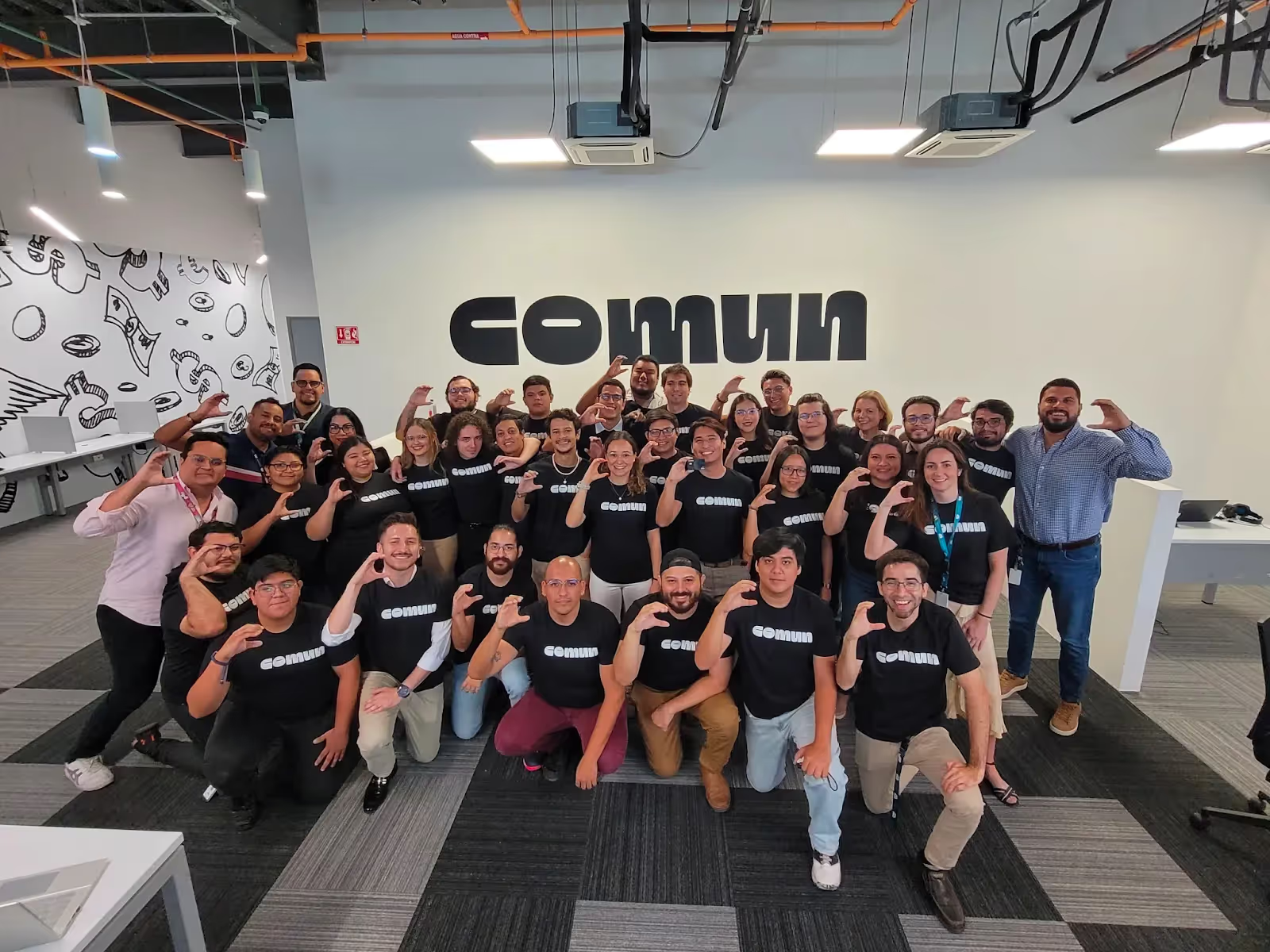
Común does not have branches, but it has a team that supports its customers 24 hours a day, 7 days a week, from the comfort of their homes, in three different languages.
Building a better future for immigrants in the U.S. is a core principle of Común’s mission. Accessible and easy-to-understand banking options are a key part of the immigrant journey. However, the options are scarce.
Complex, cumbersome, and expensive options are the norm. Activities that may seem trivial and intuitive to those born in the U.S. are overwhelming and confusing for a newly arrived immigrant. Everything from setting up direct deposit with an employer to sending money home, making payments for goods and services, or understanding how to build a credit score seems too complex for anyone who has never had to do this in the U.S., let alone at all.
Hidden fees and costly charges add another layer of stress when starting a financial life in the U.S. Between minimum account balances, monthly fees, overdraft charges, large check deposit fees, extortionate international transfer fees, and everything else, maintaining and using a bank account in the U.S. can be expensive. For manual laborers, this can represent a significant percentage of their wages.
The physical locations of traditional banks can also be scarce in some areas. Since opening a bank account or depositing a check or cash into the account must be done at a branch, this is a significant burden for someone living in a remote area. Many immigrants, sometimes working on remote farms or factories, live miles away from the nearest bank branch. Transportation costs to those branches add to the already high fees of using and maintaining an account.
Even if the banking services provided were more intuitive, digital, and lower cost, another major barrier remains. Obtaining the necessary documentation to open a bank account can also make access to fair and simple financial services difficult. Immigrants fortunate enough to have work authorization still need to gather important documentation that is not always available to them. For those who have come to the U.S. seeking asylum or better work opportunities through a more unconventional path, the documents required to open an account are often prohibitive.
Building a 100% digital banking platform to solve the issues mentioned above is part of what Común seeks to achieve because we believe in helping unlock social mobility. But a digital, low-cost, and intuitive platform is not enough. To navigate this process, immigrants need help, and help is best found in a Community that understands them when they need it most.
That is why not only our customers are part of our Community, but also the people who help them 24 hours a day, 7 days a week through our app, social media, WhatsApp, or by phone. Beyond solving an immediate problem, the support provided goes further. It teaches and educates, empathizes, and strives to foster a sense of Community among people who understand them, in terms they comprehend and in the language they speak. This is the core of true digital community banking. Our team helps them set up direct deposit, connect to Zelle, get refunds for charges they disagree with, and everything else.
At Común, the first step in this journey has already begun. Our team in Mérida, Mexico, is part of our Community and the one we seek to serve. They are an extension of our mission and our digital platform, and a necessary ingredient in unlocking social mobility for millions of immigrants in the U.S.

International Money Transfers
How to Make International Money Transfers: Options and Costs
8 min read
May 7, 2024
As the reasons for transferring money internationally increase, so do the available methods. Whether you are sending remittances to your family, paying suppliers, or receiving payments from abroad, understanding how international transfers work will help you save time and money.
What is an international money transfer?
An international money transfer is the movement of funds from a bank account in one country to another account in a different country. It can be done through bank wire transfers, specialized remittance services (Western Union, Remitly, Wise), or platforms like Común that allow you to send money to Mexico directly from the app.
How to choose the best international transfer service?
To choose the best service, consider: the total cost (visible fee + exchange rate margin), delivery speed, available delivery methods (bank deposit, cash pickup), and whether they accept your documentation. Use comparison tools like Monito to see real-time options for your specific corridor.
Main options for sending money internationally from the U.S.
Bank wire transfer
Traditional, expensive method ($25-45 per transfer), takes 1-5 business days, requires the recipient’s full bank details: account number, SWIFT/BIC, IBAN, or CLABE (Mexico).
Specialized remittance services
Wise, Remitly, and Xoom offer fees lower than 3-5%, delivery from minutes to 3 days, and multiple delivery options. Wise uses the real market exchange rate. They require an SSN or ITIN in the U.S.
Común
Común allows you to send remittances to Mexico and Latin America starting at $2.99 without requiring an SSN. Ideal for newly arrived immigrants. Options for bank deposit, cash pickup at Oxxo or Walmart.
Frequently asked questions about international transfers
What is the cheapest way to make an international transfer?
Specialized remittance apps (Wise, Remitly, Xoom) are generally cheaper than traditional banks for international transfers. Wise is known for using the real market exchange rate with transparent fees. For specific destinations such as Mexico, platforms like Común offer transfers starting at $2.99. Use comparison tools like Monito to see the best real-time options for your specific corridor.
How long does an international transfer take?
It depends on the method and destination country. International bank wire transfers take 1-5 business days. Remittance apps can be almost instant for cash pickup, or 1-3 business days for bank deposit. Factors such as time zones, bank cutoff times, and the destination country’s compliance requirements affect arrival time.
What information do I need to make an international transfer?
For an international bank wire transfer, you need: the beneficiary’s full name, the receiving bank’s name and address, the receiving bank’s SWIFT/BIC code, and the beneficiary’s account number or IBAN. For Mexico, the interbank CLABE (18 digits) is used. For remittance apps like Común, sometimes the recipient’s phone number or bank name is enough.
Are there amount limits for international transfers?
Yes. Limits vary by service and user verification level. Remittance apps typically allow between $2,999 and $10,000 per day for verified users. Bank wire transfers can be larger but cost more ($25-45 per transaction). Anti-money-laundering regulations require reporting transfers over $10,000 to the IRS (CTR form).
Do I need an SSN to send money abroad from the U.S.?
It depends on the service. Wise, Remitly, and traditional banks require an SSN or ITIN for regulatory compliance. Platforms like Común do not require an SSN — they accept a passport or consular ID — and allow you to send remittances to Mexico and Latin America starting at $2.99. This is especially useful for newly arrived immigrants who do not yet have an SSN.
Are international transfers taxable?
Sending money abroad itself does not generate taxes in the U.S. However, if the money comes from undeclared income, that is the tax obligation to address. The IRS may require reporting foreign accounts (FBAR/FATCA) if you have more than $10,000 in foreign accounts at any point during the year.
Financial Education
Wire Transfers, ACH, and Other Money-Transfer Methods
8 min read
May 5, 2024
The ability to transfer money efficiently and securely is a cornerstone of economic interactions. This article explores the range of electronic transfer methods available today, comparing and contrasting wire transfers, Automated Clearing House (ACH) transfers, and other prevalent money-transfer mechanisms. By understanding the nuances of each international transfer method, from international money transfers to peer-to-peer platforms, individuals and businesses can navigate the complexities of financial transactions with confidence.
Wire Transfers: Speed and International Reach
Wire transfers stand out as a testament to the enduring value of fast, secure international money movement. Valued for their reliability, wire transfers allow individuals and businesses to transfer funds directly between bank accounts across the globe. The defining feature of wire transfers is their rapid processing, crucial for time-sensitive transactions. They leverage the vast international network of a financial institution, making it possible to send money to almost any country.
However, the efficiency and security of wire transfers come at a cost. They are generally associated with higher fees compared with other transfer methods, both for the sender and, occasionally, the recipient. These transactions also require the provision of precise and complete recipient bank details, including the bank name, account number, and routing numbers, ensuring that funds reach the intended destination without delays.
Despite the cost, the unmatched speed and security of wire transfers make them the preferred choice for large international transactions, where the assurance of timely and safe delivery outweighs the expense. Whether for business dealings, purchasing property abroad, or sending emergency funds, wire transfers offer a reliable solution, backed by the reputation and regulatory framework of traditional financial institutions.
ACH Transfers: Domestic Efficiency and Low Cost
The Automated Clearing House (ACH) network offers an efficient and economical alternative for domestic money transfers. ACH transfers encompass both direct deposits and direct payments, including payroll, government benefits, and bill payments. Unlike wire transfers, ACH transfers are processed in batches, which can lead to slower delivery speed, typically a few business days. However, the lower fees associated with ACH transfers make them an attractive option for routine domestic transactions. ACH transfers and wire transfers, while often mentioned together, serve distinct needs based on the urgency and geographic scope of the transaction.
The versatility of the ACH network extends beyond simple cost savings, providing a framework for a wide range of transactions beyond conventional check deposits and bill payments. This includes, but is not limited to, person-to-person (P2P) payments, business-to-business transactions, and even government-to-citizen payments such as tax refunds.
In addition, the arrival of same-day ACH processing marks a significant improvement in transaction speed, addressing one of the few drawbacks traditionally associated with remittance transfers through this method. Despite this advancement, the inherent delay in batch processing still makes ACH transfers less suitable for urgent transactions, positioning them as a preferred method for planned recurring payments where cost efficiency outweighs immediate fund availability.
The Rise of Digital Convenience:
Two methods stand out for their distinct approaches and unique benefits: person-to-person (P2P) transfers and traditional transactions at both banks and credit unions, and banks. P2P platforms like PayPal, Venmo, Cash App, and Google Pay have revolutionized the way we think about money transfers, offering a level of convenience and accessibility that aligns with the demands of the digital age. These platforms cater to a generation that values speed, simplicity, and the ability to transact on the go using only a smartphone. On the other hand, credit unions and banks represent the backbone of traditional financial transactions, providing a full suite of services ranging from everyday banking needs to complex international wire transfers.
Person-to-Person Transfers
As mentioned, platforms like PayPal, Venmo, Cash App, and Google Pay have become indispensable in the digital era, democratizing the process of sending and receiving money. These apps excel in user convenience, enabling transactions with just a smartphone. Linked to one’s bank account or debit card, they facilitate both domestic and, increasingly, international transfers.
While often free for basic services, they may charge small fees for instant transfers or currency exchange-rate conversion. The appeal of P2P platforms lies in their simplicity and the ability to transfer funds without needing the recipient’s banking details, only their phone number or email address.
Credit Unions and Banks: Traditional but Reliable
Credit unions and banks remain the backbone of the money-transfer ecosystem. Offering a range of services from direct deposits to international wire transfers, these institutions provide a secure, if sometimes more expensive, way to move funds. The choice between a bank and a credit union often comes down to the nature of the transaction—credit unions may offer lower fees and better exchange rates for their members, while banks might provide more comprehensive services for international and business transfers. Regardless of the choice, ensuring the transaction is completed with a reputable institution is paramount.
Deciding Between Money-Transfer Apps: Key Considerations
When comparing money transfer apps, several key factors should be considered to ensure the decision aligns with your personal or business financial needs. Here are the essential aspects to evaluate:
- Fees: Compare the associated costs for sending or receiving money, including fees for instant transfers or foreign-currency conversion charges.
- Transfer Limits: Check the maximum and minimum amounts you can send, as platforms vary widely in their limits.
- Geographic Availability: Not all apps are available in every country or support international transfers. Make sure the app meets your geographic requirements.
- Security: Investigate the security measures in place, such as encryption and fraud protection, to safeguard your financial information.
- User Experience: Consider the app’s ease of use, customer support availability, and any additional features such as bill splitting or social functionality.
- Delivery Speed: While some apps offer instant transfers, others may take a few business days. Choose based on how quickly you need the funds to be available.
- Exchange Rates and Currency Options: For international transfers, evaluate the exchange rates offered and which currencies are supported.
Común- Banking designed for your life in the U.S.
Open your bank account¹ in 3 minutes with your country ID²
By carefully considering these factors, users can select a money transfer app that best suits their financial transactions, balancing convenience, cost, and security. Whether sending money to a friend domestically or managing international business transactions, the right money transfer app can make all the difference in achieving a smooth and efficient money-transfer experience.
Emerging Technologies and Financial Innovations
The financial sector continues to evolve, with emerging technologies and innovations offering new ways to transfer money. Blockchain technology, for example, has given rise to cryptocurrencies, which promise faster international transfers without the need for traditional banking infrastructure. However, these methods come with their own set of challenges, including volatility and regulatory uncertainty. As these technologies develop, they may offer viable alternatives to traditional and electronic fund-transfer methods. Some developments include:
- Decentralized Finance (DeFi) Platforms: These platforms are reshaping financial transactions by enabling peer-to-peer lending, borrowing, and investing without traditional intermediaries, using blockchain technology to ensure security and transparency.
- Smart Contracts: These self-executing contracts with the terms of the agreement directly written into code can automate and secure the execution of financial transactions, reducing the need for intermediaries and increasing efficiency and trust.
- Digital Wallet and Mobile Payment Integration: Integrating digital wallets with mobile payment systems is streamlining the process of making transactions, making them more seamless and accessible, and is poised to reduce reliance on physical bank cards and cash even further.
Conclusion
The world of money-transfer methods is diverse, each with its own set of advantages, disadvantages, and best-use scenarios. From the rapid international reach of wire transfers to the domestic efficiency of ACH transactions and the convenience of money transfer apps, the choice of method depends on the specific needs of the transaction, including speed, cost, and geographic reach. As financial technologies continue to evolve, staying informed about these methods will enable individuals and businesses to make the best decisions for their money-transfer needs, ensuring that funds are transferred securely, efficiently, and cost-effectively.






Thousands of immigrants are already achieving more with their money. You can too.
Comun is a financial technology company and not a bank. Banking services are provided by Community Federal Savings Bank; Member FDIC. The Comun Visa® Debit Card is issued by Community Federal Savings Bank, pursuant to a license from Visa U.S.A Inc. and may be used everywhere Visa Cards are accepted.
Results may vary. For a complete list of eligible IDs and application requirements, follow this link.
No minimums, no maintenance fees. ATM or transfer fees may apply. See app for fee details.
Direct deposit funds are typically available when we receive the payment file, up to two days before the scheduled payment date. This early availability is not guaranteed.
A service provided by Service UniTeller, Inc. Service UniTeller, Inc. is licensed in all states that require a license.
Remittance fees start at $2.99 but may vary. Please check the app for more details.
Comun Inc. may earn revenue from the conversion of foreign currencies.
Funds in your account are FDIC insured up to $250,000 by ownership category through Community Federal Savings Bank (CFSB), Member FDIC, in the event CFSB fails.