Community
Learn how to manage your money, send money home with confidence, and build a secure financial future for you and your family.

Living in the United States
Back to School in the U.S.: A Guide for Immigrant Families
Starting a new school year in the U.S. means enrollment paperwork, supply lists, and new expenses — and it can look very different from school systems in Mexico, Colombia, Guatemala, El Salvador, or Honduras. This guide covers what to expect and how to prepare with confidence.
8 min read

Olivia Rhye
20 Jan 2024
Starting a new school year in the United States can involve several administrative and financial tasks. Enrollment requirements, school supply lists, transportation arrangements, meal programs, and extracurricular activities can vary between districts and schools.
For many immigrant families, the process may also involve adapting to a school system that works differently from those in Mexico, Colombia, Guatemala, El Salvador, Honduras, and other countries. Understanding how schools operate, what documents are typically required, and how to prepare financially can make the transition smoother.
This guide explains what to expect during the back to school season in the U.S., how school enrollment works, what supplies children may need, and how to prepare for the school year with confidence.
When does the school year start in the U.S.?
Unlike some countries that follow a national academic calendar, school start dates in the United States are generally determined by states, school districts, and local education authorities.
Most public schools begin classes between early August and early September.
The table below shows common start periods for several major states during the 2026 school year.
| State | Typical 2026 school start period |
|---|---|
| Alabama | Early August |
| Alaska | Mid-August |
| Arizona | Late July to early August |
| Arkansas | Mid-August |
| California | Early to mid-August |
| Colorado | Mid-August |
| Connecticut | Late August to early September |
| Delaware | Early September |
| Florida | Early to mid-August |
| Georgia | Early August |
| Hawaii | Early August |
| Idaho | Late August |
| Illinois | Late August |
| Indiana | Early to mid-August |
| Iowa | Late August |
| Kansas | Mid-August |
| Kentucky | Early to mid-August |
| Louisiana | Early August |
| Maine | Early September |
| Maryland | Early August |
| Massachusetts | Late August to early September |
| Michigan | Early September |
| Minnesota | Early September |
| Mississippi | Early August |
| Missouri | Late August |
| Montana | Early September |
| Nebraska | Mid-August |
| Nevada | Early August |
| New Hampshire | Early September |
| New Jersey | Early September |
| New Mexico | Early August |
| New York | Early September |
| North Carolina | Late August |
| North Dakota | Late August |
| Ohio | Late August |
| Oklahoma | Mid-August |
| Oregon | Early September |
| Pennsylvania | Late August |
| Rhode Island | Early September |
| South Carolina | Late August |
| South Dakota | Mid-August |
| Tennessee | Early to Mid-August |
| Texas | Early to mid-August |
| Utah | Mid-August |
| Vermont | Early September |
| Virginia | Mid to late August |
| Washington | Early September |
| West Virginia | Late August |
| Wisconsin | Early September |
| Wyoming | Late August |
Source: https://us-school-calendar.com/first-day-of-school-2026
The school year generally runs from August or September through May or June. Winter break, spring break, teacher workdays, and holidays are scheduled throughout the year.
Because school calendars can differ even within the same city, families should always verify dates directly with the local school district.
What differentiates the U.S. school system from those in Latin America?
One of the most noticeable differences is the strong role of local school districts. Curriculum decisions, school calendars, transportation policies, and enrollment procedures can vary from one district to another.
Schools are generally organized into:
- Elementary school
- Middle school or junior high school
- High school
Grade levels may differ slightly depending on the district.
Another difference involves parental communication. Schools frequently use online portals, email notifications, text messages, and mobile applications to share grades, attendance records, schedules, and announcements.
Parents may also encounter:
- Parent-teacher conferences
- School volunteer opportunities
- Individual learning plans
- English language support services
- After-school activities and sports programs
Students who arrive from another country may qualify for English learner services designed to support language development while continuing their academic education.
How to enroll your children: documents and process
Most public schools ask families to provide documents during enrollment that are typically used to confirm a child's age, home address, vaccination history, and prior education.
Commonly requested documents include:
- Birth certificate
- Passport
- Proof of address
- Immunization records
- Previous school records or transcripts when available
- Parent or guardian identification
Enrollment can be completed online, in person, or through a district enrollment center.
One of the most important facts for immigrant families to understand is that children have a constitutional right to attend public elementary and secondary schools regardless of their immigration status. This protection comes from the U.S. Supreme Court decision in Plyler v. Doe
As a result, public schools generally cannot deny enrollment solely because a child or parent lacks immigration documentation.
School districts may still request documents that establish residency within the district and verify a child's age, but immigration status is not a requirement for access to public education.
Families who recently arrived in the United States and do not yet have all prior school records should contact the district directly. Many schools have procedures for assisting students during the enrollment process while records are being obtained.
The U.S. school supply list: what to expect and how to optimize spending
School supply requirements in the United States are often determined by individual schools or teachers rather than a national standard. In addition to notebooks and pencils, families may be asked to provide classroom supplies such as tissues, disinfecting wipes, folders, headphones, calculators, or art materials depending on the grade level. Unlike some countries like Mexico's Becas Benito Juárez, children in the U.S. do not receive cash stipends for school supplies.
Teachers often publish detailed lists before the school year begins. Depending on the grade level, families may be asked to purchase:
- Notebooks
- Folders
- Pencils and pens
- Colored pencils
- Markers
- Glue sticks
- Scissors
- Tissues
- Hand sanitizer
- Backpacks
- Calculators
- Headphones or earbuds
Some classrooms also request community supplies that are shared among students.
When it comes to school supplies, the costs can add up quickly. However there are some strategies that may help reduce expenses:
- Compare prices across multiple retailers
- Purchase supplies gradually during summer sales
- Reuse items that remain in good condition from the previous year
- Check whether local organizations distribute supplies at no cost
- Review teacher lists carefully before making purchases
Some teachers provide additional guidance during the first weeks of school.
How to budget for back to school as an immigrant family
The total cost of a school year is often easier to manage when families plan for it as an ongoing expense rather than isolated expenses. A budget that covers the entire academic year can help reduce unexpected financial pressure.
When preparing a back to school budget, families may also need to consider:
- Transportation
- School meals
- Uniforms when required
- Sports participation fees
- Extracurricular activities
- Technology expenses
- Field trips
- Childcare before or after school
Creating a seasonal budget can make these expenses easier to manage. A useful approach can be to divide costs into three main categories:
Enrollment expenses
These may include uniforms, school supplies, and transportation arrangements before classes begin.
Monthly school expenses
Lunch money, transportation, activity fees, and classroom contributions that continue throughout the year.
Unexpected expenses
Field trips, special projects, replacement supplies, and school events can appear with limited notice.
Considering those three categories can help families avoid relying on emergency funds during the school year. However, it is always important to consider your context and plan according to your own needs.
School support programs for immigrant families
Accessing available school support programs can help reduce some of the challenges families face during the academic year. School districts frequently partner with local organizations to provide services that support student success both inside and outside the classroom. These resources can help families navigate academic, language, and financial barriers that may arise during the school year.
Available resources vary by location but may include:
School meal programs
Eligible students may qualify for breakfast and lunch programs offered through their school district.
English learning services
Students developing English skills may receive language instruction and academic support.
After-school programs
Schools, community centers, and nonprofit organizations often provide academic enrichment and recreational activities.
School supply assistance
Some districts, churches, and community organizations distribute backpacks and school supplies before the academic year begins.
Family resource centers
Certain districts maintain offices that help families access educational resources, translation services, and community support programs.
These programs are designed to help students participate fully in school regardless of their family's circumstances. Checking what is available locally can help families take advantage of resources that support learning, nutrition, and school involvement.
How Común helps you manage school year expenses
Back-to-school season can involve a wide range of financial responsibilities. School supplies, transportation costs, lunch expenses, extracurricular activities, and classroom contributions can create recurring expenses throughout the year.
For families who also support relatives abroad, the back-to-school season may extend beyond the United States. Some immigrants may contribute to support the educational expenses for children back home.
Común offers remittance services that allow eligible customers to send money to Latin America directly through the app, with fees starting at $2.99.
For everyday financial management, eligible customers can open an account using an ITIN, a passport, or more than 100 accepted Latin American IDs. Común also offers features that can help families manage school-year spending, including direct deposit, debit card access, and customer support in Spanish through the app with no mínimum balance requirements or monthly maintenance fees.
For group expenses such as field trips, classroom activities, sports teams, or shared school purchases, ComunPay can help parents collect and send payments directly from the app.
This school year, organizing expenses in one place can make it easier to track spending, support family members, and prepare for school-related costs throughout the year.
FAQ
Do I need immigration documents to enroll my children in school?
Public schools cannot deny enrollment solely because of a child's or parent's immigration status. School districts commonly request proof of age, residency, and immunization records, but immigration documentation is generally not required for enrollment.
When does the school year start in the U.S.?
Most schools begin classes between early August and early September. Exact dates vary by state, district, and school system.
Are school supply lists longer in the U.S. than in Latin America?
It depends. Teachers often provide detailed lists that may include classroom supplies, technology accessories, and shared materials used throughout the school year.
What vaccinations do my children need to enter school in the U.S.?
Vaccination requirements vary by state and school district. Schools typically provide a list of required immunizations during enrollment, and additional guidance may be available through local health departments.
How can I help my children with the language if they don't speak English when they arrive?
Many public schools offer English learning programs that provide language support while students continue learning grade-level subjects. Additional tutoring and community programs may also be available locally.
Are there financial aid programs for school supplies for low-income families?
Some school districts, nonprofit organizations, religious institutions, and community groups distribute school supplies or provide financial assistance before the academic year begins. Availability depends on the location and program requirements.

Financial Education
How to Create a Strict Household Budget
8 min read

Why Are Family Budgets Essential?
Creating a strict household budget is essential for achieving financial stability and discipline. A well-planned family budget helps families manage their income, control their spending, and save for future goals. This article provides a comprehensive guide to setting up a rigorous budget, ensuring that every dollar is accounted for and used effectively.
Introduction: The Importance of a Strict Household Budget
In today’s fast-paced world, managing household finances can be challenging. Creating a budget is a fundamental step in managing personal finances. With the rising cost of living and various financial obligations, it is easy to lose control of spending. A strict household budget is crucial for maintaining financial discipline, reducing debt, and reaching long-term financial goals. By creating and sticking to a detailed budget, families can ensure that their financial resources are used wisely, leading to greater financial security and peace of mind.
Assessing Your Current Financial Situation
The first step in creating a strict household budget is to assess your current financial situation. This involves taking a detailed look at your income, expenses, debts, and savings. Calculating your net income is crucial for effective financial planning, as it represents your salary after tax and benefit deductions. Start by listing all sources of income, including salaries, bonuses, freelance work, and any other income sources. Next, categorize and list all expenses, including fixed expenses such as housing, utilities, and insurance, as well as variable expenses such as groceries, transportation, healthcare, entertainment, and miscellaneous costs.
It is important to be thorough and honest during this assessment. To begin, try tracking your spending for a month and identify patterns or areas where you may be overspending. This big-picture view will serve as the foundation for your budget, helping you identify where adjustments are needed to align your spending with your financial goals. Use tools like Google Sheets or a budgeting app to make this process easier and more organized.
Setting Clear Financial Goals, Including an Emergency Fund
Once you have a clear understanding of your financial situation, the next step is to set clear financial goals. These goals will improve your budgeting decisions and serve as a guide to keep you motivated. Financial goals can be short-term, such as saving for a vacation or paying off a credit card, or long-term, such as buying a home, funding your children’s education, or saving for retirement. A well-structured budget not only covers necessary expenses, but also allocates funds to build savings and discretionary spending, highlighting the role of savings in achieving financial stability.
When setting your financial goals, make sure they are SMART goals. SMART stands for specific, measurable, achievable, relevant, and time-bound. So instead of setting a general goal like “save money,” give yourself a clear objective such as “save $5,000 for an emergency fund in 9 months.” Setting SMART goals provides clarity and direction, making it easier to stay focused and committed to your budget. In addition, incorporating retirement accounts as part of your financial strategy is crucial for long-term financial security.
Creating Your Budget Plan
With your financial assessment and goals in place, it is time to create your budget plan. Start by prioritizing your spending, focusing on essentials like housing, utilities, food, transportation, and healthcare. Allocate a portion of your income to cover these essential costs first. Then, list your monthly expenses, categorizing them into fixed and variable types. Tracking household expenses is crucial; consider using online banking tools and personal finance apps to manage and categorize these expenses efficiently. Allocate funds for savings and debt repayment, ensuring that you are working toward your financial goals.
Consider using guidelines such as the 50-30-20 rule, where 50% of your income may go to needs, 30% to discretionary spending, and 20% to savings or even debt payments. Adjust these percentages based on your financial situation and specific goals. Use budgeting tools or apps to help you track your income and expenses, ensuring that you stay within your budget limits. Review and adjust your budget regularly as needed to accommodate changes in income or expenses. Before the start of each month, prepare a new budget to account for seasonal variations and upcoming specific expenses.
Implementing and Sticking to Your Budget
Creating a budget is just the beginning; the real challenge lies in sticking to it. To successfully implement your budget, develop habits that promote financial discipline. Start by automating your savings and bill payments. This ensures that you meet your financial obligations and savings goals without the temptation to spend the money elsewhere.
Understanding your net pay is crucial for effective financial planning. Track your expenses regularly to make sure you are sticking to your budget, especially when it comes to variable expenses. Use budgeting apps or spreadsheets to monitor your spending and make adjustments as needed. Avoid impulse purchases by making a shopping list and sticking to it. In addition, set aside a budget for unexpected expenses to ensure long-term financial stability. Look for ways to reduce expenses, such as cooking at home instead of eating out, canceling unused subscriptions, and looking for discounts when shopping.
Communicate openly with your family about your budget and financial goals. Encourage everyone to take part in the budgeting process and make it a team effort. Having a collective commitment to financial discipline will make it easier to stay on track and achieve your goals.
Here are five popular apps for tracking expenses and budgets:
- Mint: Mint is a budgeting app that allows users to track expenses, create budgets, and set financial goals. It categorizes transactions and provides insight into spending patterns. Using personal finance apps like Mint can efficiently track household expenses.
- YNAB (You Need A Budget): YNAB helps users create detailed budgets based on their income and expenses. It emphasizes giving every dollar a job and helps users plan for future expenses, encouraging proactive financial management.
- Personal Capital: Personal Capital is a wealth management tool that tracks expenses, budgets, and investments. It provides a comprehensive view of your financial health and offers tools for retirement planning.
- PocketGuard: PocketGuard improves your budgeting by showing how much discretionary income you have after accounting for bills, goals, and necessities. It categorizes expenses to help users identify areas where they can save money.
- Goodbudget: Goodbudget is a digital envelope budgeting app that allows users to divide their funds into different categories or "envelopes." This system helps users monitor their spending and ensure they stick to their budget limits for each category.
How Común Can Help With Budget Tracking
Comun offers several features that can complement these budgeting apps and improve your overall financial management:
- Instant notifications: Comun provides instant notifications for all transactions, helping users stay aware of their spending in real time.
- Detailed transaction history: Users can easily access their transaction history, making it easier to categorize expenses and monitor spending patterns.
- Expense categorization: The Comun app automatically categorizes expenses, which can be synced with budgeting apps like Mint for a complete view of your financial activity.
- Savings goals: Comun allows users to set and track savings goals, helping you stay motivated and on track to meet your financial objectives.
- Customer support: Comun offers top-tier customer service available 7 days a week by chat, email, or phone, providing users with support for any financial questions or issues.
By using Comun alongside these budgeting apps, users can achieve better financial discipline and stay on top of their budgeting and spending goals.
Conclusion: Achieving Financial Discipline and Security
Creating and maintaining a strict household budget takes effort and commitment, but the rewards are worth it. Saving money for various purposes, such as emergencies, major purchases, or enjoyable experiences, is crucial for financial stability. By assessing your financial situation, setting clear goals, creating a detailed budget plan, and sticking to it, you can achieve financial discipline and security. Understanding net income, including deductions such as health insurance from gross pay, is essential for creating an effective budget. A well-managed budget helps you control spending, reduce debt, and save for future goals, ultimately leading to a more secure and prosperous financial future for your family. Embrace the process, stay committed, and watch your financial health improve as you work toward your dreams.
By following these steps and maintaining financial discipline, you can take control of your household finances, reduce financial stress, and build a strong foundation for a secure future. A strict budget is not just about restricting spending; it is about making informed decisions that align with your financial goals and values. With dedication and perseverance, you can achieve financial stability and enjoy the peace of mind that comes with knowing your finances are under control.
Quick List: Measuring Your Budget Success
- Assess your financial situation:
- List all sources of income
- Categorize and list all expenses
- Track spending for a month
- Set clear financial goals:
- Define specific, measurable, achievable, relevant, and time-bound (SMART) goals
- Prioritize short-term and long-term goals
- Create your budget plan:
- Prioritize essential expenses (housing, utilities, food, transportation, healthcare)
- Allocate funds for savings and debt repayment
- Use the 50/30/20 rule as a guide
- Use budgeting tools or apps
- Implement and stick to your budget:
- Automate savings and bill payments
- Track expenses regularly
- Avoid impulse purchases
- Cut unnecessary expenses
- Communicate openly with your family about the budget
- Review and adjust regularly:
- Monitor income and expenses
- Make necessary adjustments to the budget
- Stay committed to your financial goals
By following this checklist, you can manage your budgeting efforts efficiently and get closer to achieving your financial goals.

Financial Education
How to Use ATMs Safely in the U.S.
8 min read
May 6, 2024
To use ATMs safely in the U.S.: choose ATMs in well-lit locations and at reputable banks, cover the keypad when entering your PIN, inspect the card reader for unusual devices (skimmers), and use ATMs within your bank's network to avoid fees. Acting with caution can protect you from the most common ATM fraud.
ATMs are an essential financial tool in the United States. However, they are also a frequent target for fraud and theft. Knowing the best safety practices can make the difference between a secure experience and a financial nightmare.
Choose the ATM Carefully
Choosing the right ATM is the first step toward a secure transaction. Prioritize ATMs located inside banks or large supermarkets, in well-lit areas, and with visible cameras. Avoid ATMs in isolated or poorly lit areas, or those that appear to be in bad condition. ATMs from recognized networks such as Allpoint, MoneyPass, or your own bank offer greater security and generally no additional fees. Común gives you access to more than 55,000 fee-free ATMs in the U.S. through the Allpoint network.
Visual Inspection: Spot Skimmers
Skimming is one of the most common forms of ATM fraud. Skimmers are illegal devices placed over the card reader to copy your card information. Before inserting your card: gently pull on the card reader — if it moves or seems loose, do not use that ATM. Check that the keypad is not raised or has unusual components. Look for small cameras or strange objects near the keypad. If anything looks out of the ordinary, use another ATM and report the suspicious one to the bank.
Always Protect Your PIN
Your PIN is the key to your account. When entering it: cover the keypad with your free hand even if no one is nearby — there may be hidden cameras. Never share your PIN with anyone, including bank employees. Memorize it and do not keep it written down near your card. If you forget your PIN, call the bank; never use the first number that comes to mind because you could lock your card. Change your PIN periodically, especially if you suspect it has been compromised.
During the Transaction
While using the ATM: keep your distance from strangers — no one needs to be close to you while you are completing your transaction. Do not accept help from strangers, even if they seem friendly. Know the amount you need to withdraw before you arrive at the ATM. Put away your cash and card before walking away. Make sure the ATM returns your card before you leave. If the ATM "swallows" your card, contact the bank immediately (there is a number on the ATM or on your card).
How to Avoid ATM Fees
ATM fees can add up quickly. To avoid them: use ATMs within your bank's or financial institution's network. Común offers access to the Allpoint network with more than 55,000 free ATMs in the U.S. If you use an out-of-network ATM, expect to pay between $2.50 and $5 per transaction, plus whatever your bank charges. Plan your withdrawals — taking out a larger amount less often reduces the number of fees. Consider paying with a debit card at stores that offer fee-free cash back.
What to Do If You Have an ATM Problem
If the ATM does not give you the money but deducted it from your account: keep the receipt or take a photo of the screen. Contact your bank immediately (the number is on your card). The bank will investigate and generally resolves the issue within 10 business days. If your card is retained by the ATM: do not leave until bank assistance arrives (they have rapid-response technicians). If you must leave, call the bank immediately to report it and block your card.
Frequently Asked Questions About Safe ATM Use
How do I know if an ATM has a skimmer installed?
Skimmers usually protrude slightly from the original card reader, have a different color or texture, or move when pressed. On the keypad, look for an extra layer placed over the original keypad. They may also install small cameras disguised as decorations. If you have doubts, do not use that ATM and report it by calling the number on the ATM.
Is it safe to use ATMs at night?
It depends on the location. An ATM inside a 24-hour store or in a well-lit bank lobby is safe at night. Avoid outdoor ATMs in isolated areas or on lightly traveled streets at night. If you urgently need cash at night, prefer 24-hour stores that offer cash back when you pay with debit.
What should I do if I am robbed while using the ATM?
Your safety comes first: do not resist and hand over the cash if you are threatened. As soon as you are safe: call 911, contact your bank to block the card immediately, and file a police report. With the police report, you can start a dispute process with your bank to recover stolen funds in some cases.
Do I have a daily ATM withdrawal limit?
Yes, all banks have daily ATM withdrawal limits. The standard limit at most banks in the U.S. is $300 to $1,000 per day. Común has set limits that you can check in the app. If you need to withdraw more, you can do so at multiple ATMs or contact the bank to request a temporary limit increase.
Can I use my Latin American debit card at ATMs in the U.S.?
Yes, if it has the Visa, Mastercard, or Maestro logo, it will work at most ATMs in the U.S. However, the fees can be high: international fee from the issuing bank (1-3%), U.S. ATM fee ($3-$5), and a currency conversion rate. For regular use in the U.S., it is more convenient to open a local account like Común to eliminate these costs.

Financial Education
How to Set Up Bill Pay in Online Banking
8 min read
October 26, 2022
Banking security systems often decrease once transactions become recurring in the same destination account. This process is called enrollment, and it can be useful for speeding up payment and debt processes. In this article we will tell you why it is necessary to enroll payments, and which protocols are used by platforms to establish payment enrollment.
Why Is It Useful to Enroll Payments in Online Banking?
We will point out the aspects that make it necessary to enroll payments on the bank platform where you keep your money, and the reasons are as follows:
- Security levels: It is necessary that you establish which people or services you make frequent, occasional, or one-time payments to. In this way, some will need to be controlled through security factors such as coordinates, random codes, or another authentication element required by the bank.
- Practicality: You have the ability to speed up the payments you make through your app. That way you do not have to wait for additional security elements to complete them.
- Avoid duplicate tasks: With enrollment you do not need to have the details on hand to make the transfer (deposit or payment) to the account. It is simply stored in a database. Then, by simply selecting the service or person you are going to pay, you can select it with one click and streamline the process.
- Control: By enrolling the account you can view the person or institution. You can also remove it from your database if you determine that the payment is no longer recurring. The process of removing it from the database involves a small protocol. The purpose is to ensure that you are truly ending your financial relationship with the person or entity that owns the account.
Requirements to Enroll Payments in Online Banking
One of the requirements for carrying out this process is having, in the bank platform’s database, the ability to speed up the deposit or payment process. To do so, you must have the following:
- The same mobile phone: Used to authenticate banking operations.
- Have some additional two-factor authentication elements granted by the bank under its security protocols (in some cases this requirement is optional).
- Email address: This applies if an authentication code is sent through this channel.
How to Enroll Payments in Online Banking
At first, enrollment can be somewhat cumbersome. But you will get used to doing it and establishing the criteria that indicate payments or deposits are recurring. For this, it is necessary to explain the general enrollment steps, which are the following.
Steps to Add the List.
- Log in to the bank platform by entering your username and password.
- After entering the platform or app, find the "Enroll payments" option in your bank’s menu and click it.
- It will display a list of the people you have enrolled; if it is empty, it is time to add to the list.
- Find the "Add" option
When Adding, do the following.
- Select the payment category.
- Enter details such as: First and last name, ID card or ID (depending on the region), account number.
- Accept the details and an authentication code will be sent to you (by email or through your mobile phone).
- Enter the code sent.
- Done! You now have the account number enrolled.
a
Checking account
What do I need to open a traditional bank account as an immigrant?
8 min read
November 28, 2024
For immigrants in the United States, having a banking account has become a basic necessity to carry out all types of daily tasks, such as shopping in physical and online stores, receiving wages, sending transfers and remittances, opening a savings account, among other things.
Despite the importance that a banking account has for immigrants and U.S. citizens, there are still factors that hinder the immigrant community’s access to banking, such as high fees and required documentation.
According to FDIC data, among vulnerable groups without banking accounts (unbanked), Hispanics make up 9.5%. This shows a gap that disadvantages a significant portion of the population.
Access to financial services is an increasingly attainable right for immigrants in the U.S. In this article, we will explain step by step what is required to open an account at a bank and on digital platforms, as well as the advantages of these solutions.

4 Requirements to Open a Banking Account in the United States
It is true that financial services make users’ lives easier and, in some way, improve their quality of life. But, what is needed to open a banking account in the United States?
Opening a bank account, whether a checking account or another type, requires meeting a series of requirements and presenting documentation, which may vary depending on the financial institution.
Some of the difficulties immigrants face when opening a banking account are not having an SSN (Social Security Number) or tax documentation, as well as the lack of information in Spanish.
Fortunately, beyond traditional banks, there are currently alternative solutions such as Común, a financial platform dedicated to meeting the needs of people who seek accessible and efficient services.
In general, these are the most common required documents to access a banking account in the United States.
Social Security Number (SSN)
This is the most common requirement for opening an account. It is an identifier for people who reside and work legally in the United States, and it is required for banks to carry out the identity verification process.
Individual Taxpayer Identification Number (ITIN)
The ITIN is an alternative for people who do not qualify for the SSN, since some financial institutions accept it instead.
Identity Document
For this requirement, it is possible to present a passport, a driver’s license, a government-issued ID, or a consular ID card. Any of these documents must be valid and show both name and photograph.
Proof of Address
To prove your residence in the United States, you can present utility bills, such as electricity, or even a digital account statement.
Step by Step: How to Open a Banking Account in the U.S. with Foreign Identification
The number of requirements requested by traditional institutions tends to make access to banking difficult, especially for immigrants without the previously listed documentation.
If you are looking for a practical and simpler solution than traditional banking services, you can turn to options like Común, the platform that streamlines processes and offers fair financial services for everyone.
Access to these services is possible with official, qualified foreign documentation, which helps reduce the gap in access to banking for immigrants.
Choose a Secure Platform that Accepts Foreign Identifications
In general, traditional banks request the SSN or ITIN, so a convenient option is to choose a digital platform with more flexible requirements but with the same quality and seriousness in their processes.
Común is a platform that makes immigrants’ lives easier in the United States, as it allows you to open an account with official, qualified documentation from your country of origin and simplifies the sign-up process without complicated paperwork.
Download the Mobile App and Set Up Your Account available in Spanish
You only need a mobile device compatible with Android or iOS to download the application, where you will create your profile and enter your information.
Verify your identity with an official ID from your country
Then, carry out the identity verification with your official ID from your country of origin. To do this, you will need to take a picture of it and possibly take a selfie.
Activate Your Card and Start Using Your Account
Once you provide the necessary documentation, you will have access to a debit card to make purchases at various establishments and will be able to make transfers and receive payments.
Use Additional Features Such as Sending Remittances or Deposits at Stores
For immigrants, it is essential to have services that allow them to send remittances to their countries of origin, so you can also use this benefit, in addition to making direct deposits in physical stores near you.
Which Bank in the U.S. Allows Opening an Account with a Passport? More Accessible Alternatives
There are alternatives with more flexible account opening options, such as Bank of America, which accepts the ITIN in case you do not have an SSN. However, the processes tend to be longer and slower compared to other digital platforms, which facilitate the sign-up process by offering greater feasibility in their requirements.
Bank of America
Bank of America supports the opening of banking accounts in the United States for immigrants, because it allows opening an account with a valid passport or ITIN. However, it is necessary to go in person to a branch to complete the process.
Común
Común is a digital platform that allows opening an account with more than 100 foreign IDs or with a valid passport, which makes it easier to obtain an account for immigrants and send remittances to Latin America for an affordable fee; in addition to making cash deposits at more than 100 stores.
Wells Fargo
Wells Fargo also accepts a passport as the main ID, but may request an additional identification, such as a credit card or student ID.
Wise
Wise is a fintech that offers digital accounts in different currencies. It is possible to access its services with a passport, ITIN, or SSN.
Revolut
Revolut is another alternative for non-citizens in the United States, since it accepts a passport as identification; among other options, such as a driver’s license or national ID.
Why Común is Ideal for Opening Your Account in the U.S.?
Although the requirements to open an account may make it seem like an inaccessible process for many immigrants in the U.S., fortunately, there are also more accessible options.
If you are looking for a clear, reliable alternative available in Spanish, it is time to change your relationship with finances through Común: a service that truly understands your needs.
Why is Común Your Ally?
Forget about minimum deposits or monthly charges
Access a mobile app available in Spanish with a user-friendly interface
Send money to your home country for a fee starting at $2.99, up to the applicable limits
Deposit cash at a network of establishments near you
It has 24/7 customer support available in Spanish
Remember that Común offers you a service available in Spanish with simple processes. Open your account today and start using a service designed for you!

Financial Education
How to Handle Lost or Stolen Checks: Steps and Precautions
8 min read
June 19, 2024
What Is a Check and How Do You Cash It?
Checks are used as a form of payment, allowing individuals and businesses to transfer funds without the need for physical cash. A check is a specific amount of money from the check writer's account assigned to a check recipient (the payee). The check is typically written, dated, and signed, acting as an instrument that directs a bank to pay a recipient.
Before cashing a check, make sure all the details are correct and the check is valid. Verify the payee name, the written amount, the date, and the issuer’s signature. Also sign your name on the back of the check in the designated endorsement area, as this is required for banks to process checks. Take the endorsed check to your bank or use an ATM or mobile banking app if your financial institution offers check deposit services. You may also be asked to provide valid identification.
If you are depositing it, fill out a deposit slip if necessary, and the funds will be credited to your account. If you are cashing it, the bank will give you the amount in cash after deducting any applicable fees. If you deposited the check, it may take a few days for the check to clear and for the funds to become available in your account, depending on your bank’s policies.
Find more information about what a check is and how to cash it here.
Realizing a Check Is Missing: Stay Calm and Act Fast
Losing a check can feel overwhelming, especially if you are new to banking. The first step in handling a lost or stolen check is to stay calm. Panicking will not help, and thinking clearly and quickly is your best ally here. Take a moment to retrace your steps. Sometimes, the check may simply be misplaced rather than lost. Check all possible places where it might be. If it truly has disappeared, it is time to act quickly to prevent any potential misuse of your bank account or savings account.
Contact Your Bank: The First Line of Defense
Your bank or credit union is your best friend in this situation. As soon as you realize a check is missing, contact your bank immediately and begin monitoring bank accounts for signs of identity theft. Most financial institutions have a dedicated customer service line for such emergencies. Be ready to provide account information such as the check number, amount, and the date it was issued. The faster you notify them, the better they can help protect your account from fraudulent activity and identity theft.
Request a Stop Payment on a Lost or Stolen Check
After informing your bank, the next crucial step is to request a stop payment on the lost check. This action prevents the check from being processed if someone tries to cash it. Make sure to file a stop payment request for the lost or stolen check. There may be a fee for this service, but it is a small price to pay for the security it provides. Be sure to obtain confirmation from the bank that the stop payment has been successfully placed on your bank account.
File a Police Report: When to Involve Authorities for Identity Theft
If you suspect your check was stolen, it is important to file a police report with your local police department. This step not only helps with the theft investigation, but also provides you with a record of the incident, which can be useful for bank claims and insurance purposes. When filing the report, provide all relevant details, including any suspicions you may have about mail theft or check fraud. Reporting the incident to the appropriate government agency can also be beneficial in cases of identity theft.
Prevent Future Problems: Best Practices for Check Security
Prevention is always better than cure. To avoid losing checks in the future, consider these best practices:
Keep checks in a safe place: Store your checkbook in a secure but easily accessible location. Keeping it out of sight from prying eyes can help prevent potential theft. Consider using a locked drawer or a safe for added security.
Use electronic payments: Whenever possible, opt for direct deposit or electronic transfers, which are more secure and convenient. Direct deposits not only simplify your payments, but also reduce the risks associated with physical checks, such as mail theft or check fraud. Many financial institutions offer premium accounts with direct deposit options, ensuring your funds are transferred securely and quickly. In addition, you may earn a higher annual percentage yield on your savings and checking balances based on your direct deposit activity and qualifying deposits. To qualify for specific interest rates, you can use direct deposit, which includes payroll, pension, or government payments.
Regularly monitor your accounts: Frequently review your bank statements and account activity for unauthorized transactions or signs of check washing attempts. Set up alerts with your bank or credit union to notify you of any unusual activity. This vigilance is crucial for both your checking and savings balances, helping you detect fraudulent activity early and take immediate action.
Shred old checks: Properly dispose of old or unused checks by shredding them to prevent any misuse. Counterfeit checks are a common problem, and shredding helps keep a secure paper trail. Make sure any document containing your account number or payment information is completely destroyed before discarding it.
Be cautious with the mail: Avoid sending checks through outgoing mail, as this can expose you to the risk of mail theft. Instead, deposit them directly at the post office to ensure they are handled securely. For added security, consider using certified mail for important payments to create a traceable record of your transaction. Alternatively, use P2P transfers or electronic transfers to send money to friends, family, or anyone with a bank account in the U.S., highlighting the speed, simplicity, and security of these transactions.
Educate yourself about check fraud: Familiarize yourself with common check fraud schemes, such as check washing and counterfeit checks. Understanding these threats can help you recognize suspicious activity and protect your finances more effectively.
Protect your account information: Keep your account number, mobile number, and other personal details confidential. Sharing this information carelessly can make you a target for fraud. Always verify the identity of anyone requesting your account details.
By following these steps, you can effectively handle and prevent problems with lost or stolen checks. Remember, acting quickly and keeping your bank informed are key to protecting your finances and preventing someone from attempting fraud using your account information. Adopting these best practices will help you maintain a secure financial environment and give you peace of mind.
Now that you know how to handle lost or stolen checks, it is time to take control of your finances with ease. At Comun.app, we offer secure and easy-to-use solutions so you can manage your money without complications. Open your account in minutes and start enjoying the benefits!
Checking account
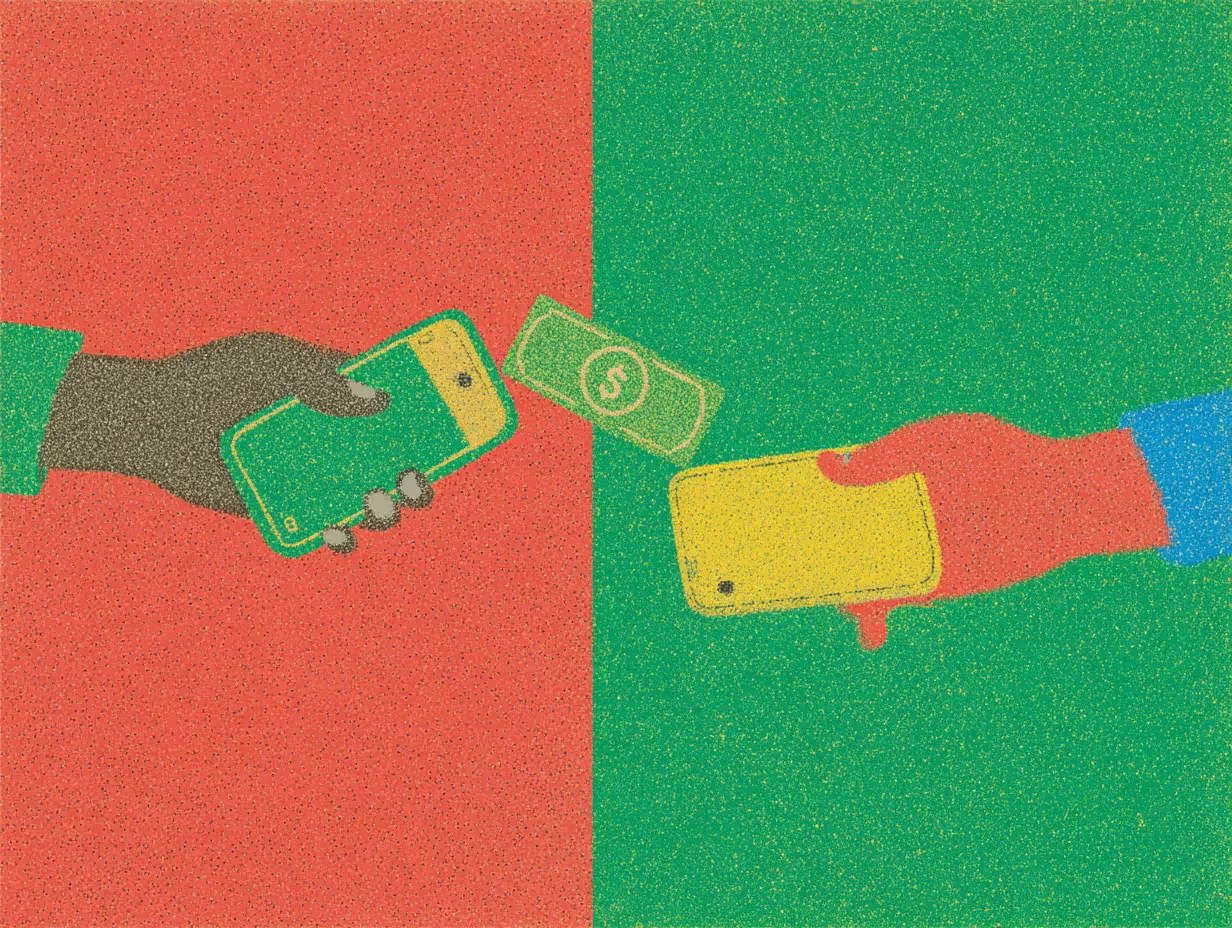
How to Deposit Money Into Someone Else's Bank Account
8 min read
June 2, 2024
Understanding the Basics
In today's connected world, being able to deposit money into someone else's bank account is a valuable skill. Whether you're helping a friend in need, managing household expenses, or running a business, understanding the ins and outs of transferring funds safely is essential. Bank-to-bank transfers are a popular method for moving money from one bank to another, using external transfer features on bank and credit union websites as viable options for these services. Comparing bank-to-bank transfers with other methods, like wire transfers and money transfer apps, is crucial, since there may be fees and limits to consider.
Different Methods of Depositing Money
There are many ways to deposit funds into someone else's bank account, including knowing the recipient's bank account details for electronic transfers, which is crucial for a smooth transaction:
- Cash Deposits: Making a cash deposit directly at a bank branch is straightforward, but it may be subject to limitations or restrictions due to security policies.
- Bank-to-Bank Transfers: Online bank transfers or wire transfers between bank accounts are commonly used for larger or urgent transfers.
- Third-Party Services: Using money transfer apps like Venmo, Apple Cash, and PayPal is a popular and easy way to send money electronically, instantly. These apps require users to create an account, link a payment source like a bank account or card, and make sure the recipient has an account with the same app — offering a convenient solution for quick transfers between people.
- Checks: Depositing a personal or cashier's check can be safer when transferring significant amounts.
This section can cover the benefits of each method, like minimum direct-deposit amounts or possible wire transfer fees, and expected timelines, from the same business day to a few business days for processing.
Step by Step: Depositing Cash and Checks
Depositing money into someone else's bank account can be essential for several reasons. People often need to transfer funds to pay rent, help family members, or settle bills directly into someone else's account. This process, which involves transferring money directly into someone else's bank account, usually through ACH transfers or wire transfers, is legal and regulated to prevent issues like money laundering. It's crucial to have accurate details like the recipient's bank account number and routing number. By following these detailed steps, you can make sure your transactions run smoothly and securely.
To deposit cash or a check, follow these steps:
- Gather the Necessary Information: Get the correct person's account number and financial institution details.
- Visit the Bank: At the bank branch, fill out a deposit slip with the recipient's account number and the cash or check amount.
- Verification: Some banks may require ID, especially if you're depositing into someone else's account.
- Receipt: Always get a receipt as proof of the cash deposit or check deposit, making sure the funds reach the recipient's bank account.
Online Transfers and Mobile Payments
Using online or mobile banking to deposit money offers convenience and speed. Here's how to use these platforms effectively:
- Setup: Make sure both parties have active online accounts. This may involve linking a debit card or setting up a mobile banking app.
- Complete the Transfer: To transfer money, use the recipient's bank account details or use various electronic methods, including apps like Venmo, PayPal, Zelle, or Western Union, for a seamless transaction experience.
- Confirmation: Both the sender and recipient should receive confirmation that the money has been deposited into the recipient's savings or checking account.
Privacy and Security Considerations
When sending money to someone else's bank account, keep these privacy and security measures in mind:
- Verify the Details: Double-check the recipient's account details, including the bank account number and routing number.
- Security Protocols: Use secure networks for online transactions to prevent data breaches.
- Monitor Transactions: Regularly review your bank statements to quickly catch any unauthorized transactions. Keep in mind the legal aspects and financial institutions' policies related to depositing money into someone else's account.
This is a process that can be mastered with careful attention to detail and security. By following the steps outlined above, you can make sure your money transfers are effective and secure. Remember, the key to successful financial transactions lies in thorough preparation and vigilant monitoring, making sure every transaction strengthens trust and security in our financial systems.
Legality and Compliance
Banks are legally required to report certain types of transactions to regulatory bodies to prevent and monitor illegal activity like money laundering. In the United States, for example, financial institutions must file a Currency Transaction Report (CTR) for cash transactions exceeding $10,000 in a single business day. Similarly, suspicious activity that may not meet CTR criteria but is unusual or has no apparent legal purpose must also be reported through Suspicious Activity Reports (SARs).
For depositors and recipients, this means any large transaction could lead to additional scrutiny. It's important for both parties to keep records of the source of funds and the purpose of the transaction, since these could be required in an investigation or audit. Being aware of these requirements helps ensure both parties maintain transparency and avoid unintentional legal complications.
Legal Implications of Transferring Money on Behalf of Others
When transferring money on behalf of others, individuals take on significant responsibilities and should be aware of the legal framework governing such activities. The main legal concern here is the risk of inadvertently engaging in unauthorized financial practices, such as operating as an unlicensed money transmitter, which can carry severe penalties, including fines and imprisonment. It's crucial to have clear agreements and records when handling financial transactions for someone else, particularly in business or caregiving scenarios.
Additionally, transferring money on behalf of others can expose a person to fraud risks. If funds are misused, both the person handling the transaction and the recipient could face legal action or financial losses. It's advisable to use documented methods and formal channels to transfer money to protect against misunderstandings or fraud, ensuring funds are used for their intended purpose.
Guidelines for International Transfers
International transfers aren't just more complex because of the involvement of multiple financial systems — they also come with stricter compliance measures. When sending money abroad, regulations from both the sender's and recipient's countries must be considered. Compliance requirements may include providing additional identification, disclosing the source of funds, and detailing the purpose of the transfer.
Currency conversion rates and fees are also significant factors in international transfers. Exchange rates can vary considerably depending on the financial institutions or services used, which could affect the amount received on the other end. Additionally, international wire transfers are subject to regulations like those imposed by the Office of Foreign Assets Control (OFAC) in the U.S., which can block transactions involving specific countries, individuals, or entities.
Understanding these guidelines helps ensure international money transfers run smoothly and legally, minimizing the risk of delays or legal issues and ensuring compliance with global regulatory standards.
Send Money to Your Home Country Safely⁴
Send money abroad with peace of mind with your Común account¹
Open your account in 3 minutes!
Conclusion
Depositing money into someone else's account is a process enriched with various methods, legal considerations, and practical steps to ensure safe and secure financial transactions. There are various methods, legal considerations, and practical steps to ensure safe and protected financial transactions when depositing money into someone else's account. Whether you choose to deposit cash at a bank branch, use online transfers, or make mobile payments, understanding the ins and outs of each method is crucial for effective money management.
This article has explored the legal frameworks that protect these transactions and the compliance measures needed for both domestic and international transfers, giving you the knowledge to navigate this space with confidence. Remember, the key to successful financial transactions lies in thorough preparation and vigilant monitoring, making sure every transaction strengthens trust and security in our financial systems. With this knowledge, you're well-equipped to handle the responsibilities of depositing money into someone else's account efficiently and ethically.
Financial Education
How to Cash a Check: A Step-by-Step Process
8 min read
April 29, 2024
In the world of finance, the ability to cash a check efficiently and securely is a fundamental necessity. From payroll checks to tax refund checks, the mechanism of turning these paper promises into real purchasing power is a critical aspect of financial management. This article provides a guide on what a check is, how to cash it, and where to do so, ensuring you are well equipped to navigate this process.
What Is a Check?
A check is a written, dated, and signed instrument that orders a bank to pay a specific amount of money from the issuer’s account to the person or entity whose name is written on the check. The recipient (payee) then deposits or cashes the check to access the funds.
Checks are a traditional form of payment that allow individuals and businesses to make transactions without the need for immediate cash exchange. They can be used for a wide range of payments, from personal gifts to payroll and business transactions.
Checks offer a traceable payment method, providing a paper trail that can be useful for accounting and tax purposes. They remain a fundamental component of financial transactions, offering a combination of security, convenience, and versatility. Despite the rise of digital payments, the relevance of various types of checks persists, serving diverse needs from everyday payments to significant financial dealings. Here are the different types of checks:
- Personal Checks: These are the most common type, issued by individuals and generally drawn from a checking account. They are used to pay bills, rent, or transfer money to family and friends.
- Cashier’s Checks: These are issued by banks themselves, guaranteeing funds are available because the bank holds the amount until the check is cashed. They are often used in major transactions, such as down payments on a house.
- Certified Checks: These are personal checks verified by a bank. The bank certifies that the signature is genuine and that the issuer has sufficient funds in their account to cover the check amount at the time of issuance.
- Money Orders: These are a prepaid payment method, similar to checks but generally considered safer because they require upfront payment. Money orders are widely accepted and can be purchased at banks, post offices, and even some retail stores.
- Traveler’s Checks: These are preprinted fixed-amount checks designed to allow travelers to carry money without cash. They can be exchanged for local currency at banks, exchange offices, or some retailers and are protected against loss or theft.
- Government Checks: These include tax refunds, Social Security benefits, and other payments issued by the government. These are considered very secure, as they are backed by the government.
From personal to certified checks, each type plays a specific role, ensuring that individuals and businesses have the flexibility to manage their money securely and efficiently. Despite the growing prevalence of digital finance, checks continue to hold their place, offering an indispensable option for a wide variety of financial dealings. Understanding the functionality and usefulness of different types of checks remains key to optimizing financial transactions and strategies.
How to Cash Your Check
The journey from receiving a check to turning it into cash or depositing it into your bank account is simplified by understanding a few key steps. Using advances in banking technology and the expertise of bank tellers, let us dive into the methodical approach to accessing your funds.
Step 1: Endorse Your Check
Start by endorsing your check, a necessary step that indicates your intent to cash or deposit it. Turn the check over and sign your name in the specified area on the back.
Step 2: Prepare Your Identification
Having a valid form of identification is crucial. This could be a driver’s license, a government-issued ID, or any other official identification, ensuring that the check is cashed or deposited by its legitimate owner.
Step 3: Choose Where to Cash the Check
Your options include a local bank or credit union, where checking accounts often provide lower fees for account holders, or a check-cashing service for those without a bank account. In addition, certain retailers and grocery stores with a customer service desk may offer check-cashing services, usually for a small fee.
Step 4: Present Your Check and Identification
At your chosen location, present the endorsed check and your ID. The teller or service representative will verify your identity and the check’s authenticity.
Step 5: Decide Between Cash or Deposit
Choose whether you want to cash the check or deposit it into your account. This decision may affect whether you opt for a direct deposit into a linked bank account, use mobile deposit options, or even load funds onto a prepaid debit card.
Step 6: Complete the Transaction
The teller processes your check based on your decision. Deposits may require a short wait for funds to become available, while cashing it provides immediate access to your money.
Step 7: Obtain a Receipt
Always make sure to get a receipt after the transaction. This serves as a record of your action, important for personal financial tracking and potential inquiries.
Cashing your check is a straightforward process when you follow these essential steps, from endorsement to choosing your cashing location. Each stage is designed to ensure access to your funds is secure, convenient, and tailored to your financial needs, highlighting the importance of understanding your banking options.
Where to Cash Your Check and the Associated Fees
Identifying a reliable and efficient place to cash your check, whether it involves government checks, insurance settlement checks, or two-party personal checks, is paramount. The landscape offers several avenues, each with its own set of benefits and considerations.
Banks and Credit Unions
Traditional and secure, if the check is drawn against an account at the same institution, cashing it is typically free. These places are ideal for those with their own bank accounts, offering services such as cashing cashier’s checks and government and payroll checks. Associated Fees: If you have an account at the bank or credit union where the check was drawn, cashing a check is generally free. Some banks may still charge a fee if the check comes from a different bank, but this is increasingly uncommon.
Check-Cashing Services
A viable option for immediate needs or for individuals without bank accounts, though often accompanied by fees. Check-cashing stores and services such as Ingo Money provide versatility but may involve check-cashing limits or higher fees. Associated Fees: These services are convenient but often come with higher fees. They may charge a flat fee plus a percentage of the check amount, which can range from 1% to 4% or more. For example, cashing a $1,000 check at a service that charges 2% would cost $20.
Retail Stores
A very convenient option, many stores and gas stations now offer check cashing for a flat fee or a percentage of the check amount. This can be particularly helpful for cashing checks such as payroll or government checks on the go. Associated Fees: Some supermarkets and convenience stores cash checks for a fee, which may be lower than check-cashing services. Fees at retailers are often a flat fee (for example, $3 to $6 for checks up to a certain dollar amount) plus an additional fee for larger amounts.
Digital Options
Mobile deposits and services linked to PayPal accounts or prepaid cards allow you to deposit checks without visiting a bank. This method suits those comfortable with digital banking, offering a way to deposit checks directly into a linked account or prepaid card. Associated Fees: If there are fees, they are often structured similarly to Ingo Money or PayPal services for immediate access, but they are usually waived if you are willing to wait for the standard clearing time.
The decision spans traditional banking institutions, check-cashing services, retail points of sale, and innovative digital platforms, each catering to different needs and preferences. Whether you prioritize convenience, low fees, or immediate access to cash, there is a tailored option for your situation. As we move toward an increasingly digital world, the value of the physical check remains undeniable in its usefulness and necessity.
Conclusion
Cashing a check efficiently depends on understanding your options and the associated fees. Whether you prefer the traditional security of a bank or credit union, the convenience of a check-cashing service, or the modern approach of mobile deposits, the key is to weigh these options against your immediate financial needs and the costs involved. By integrating money-saving strategies, such as avoiding high fees and opting for direct deposit, you can ensure a smooth and stress-free process while making the most of your financial resources.

Instant payments
How to send money to someone using Zelle from Común: 2026 guide
8 min read
July 7, 2024
How to send money to someone using Zelle from Común
If you arrived at this page looking for …[+10832 chars]







Thousands of immigrants are already achieving more with their money. You can too.
Comun is a financial technology company and not a bank. Banking services are provided by Community Federal Savings Bank; Member FDIC. The Comun Visa® Debit Card is issued by Community Federal Savings Bank, pursuant to a license from Visa U.S.A Inc. and may be used everywhere Visa Cards are accepted.
Results may vary. For a complete list of eligible IDs and application requirements, follow this link.
No minimums, no maintenance fees. ATM or transfer fees may apply. See app for fee details.
Direct deposit funds are typically available when we receive the payment file, up to two days before the scheduled payment date. This early availability is not guaranteed.
A service provided by Service UniTeller, Inc. Service UniTeller, Inc. is licensed in all states that require a license.
Remittance fees start at $2.99 but may vary. Please check the app for more details.
Comun Inc. may earn revenue from the conversion of foreign currencies.
Funds in your account are FDIC insured up to $250,000 by ownership category through Community Federal Savings Bank (CFSB), Member FDIC, in the event CFSB fails.