Financial Education
How to Cash a Check: A Step-by-Step Process
In the world of finance, the ability to cash a check efficiently and securely is a fundamental necessity. From payroll.
8 min read

29 Apr 2024

With Común you can cash a check without going to a bank: take a photo of it in the app and the money is deposited into your account at no cost. You can also use the network of over 88,000 cash-deposit locations if you prefer to cash it in person.
In the world of finance, the ability to cash a check efficiently and securely is a fundamental necessity. From payroll checks to tax refund checks, the mechanism of turning these paper promises into real purchasing power is a critical aspect of financial management. This article provides a guide on what a check is, how to cash it, and where to do so, ensuring you are well equipped to navigate this process.
What Is a Check?
A check is a written, dated, and signed instrument that orders a bank to pay a specific amount of money from the issuer’s account to the person or entity whose name is written on the check. The recipient (payee) then deposits or cashes the check to access the funds.
Checks are a traditional form of payment that allow individuals and businesses to make transactions without the need for immediate cash exchange. They can be used for a wide range of payments, from personal gifts to payroll and business transactions.
Checks offer a traceable payment method, providing a paper trail that can be useful for accounting and tax purposes. They remain a fundamental component of financial transactions, offering a combination of security, convenience, and versatility. Despite the rise of digital payments, the relevance of various types of checks persists, serving diverse needs from everyday payments to significant financial dealings. Here are the different types of checks:
- Personal Checks: These are the most common type, issued by individuals and generally drawn from a checking account. They are used to pay bills, rent, or transfer money to family and friends.
- Cashier’s Checks: These are issued by banks themselves, guaranteeing funds are available because the bank holds the amount until the check is cashed. They are often used in major transactions, such as down payments on a house.
- Certified Checks: These are personal checks verified by a bank. The bank certifies that the signature is genuine and that the issuer has sufficient funds in their account to cover the check amount at the time of issuance.
- Money Orders: These are a prepaid payment method, similar to checks but generally considered safer because they require upfront payment. Money orders are widely accepted and can be purchased at banks, post offices, and even some retail stores.
- Traveler’s Checks: These are preprinted fixed-amount checks designed to allow travelers to carry money without cash. They can be exchanged for local currency at banks, exchange offices, or some retailers and are protected against loss or theft.
- Government Checks: These include tax refunds, Social Security benefits, and other payments issued by the government. These are considered very secure, as they are backed by the government.
From personal to certified checks, each type plays a specific role, ensuring that individuals and businesses have the flexibility to manage their money securely and efficiently. Despite the growing prevalence of digital finance, checks continue to hold their place, offering an indispensable option for a wide variety of financial dealings. Understanding the functionality and usefulness of different types of checks remains key to optimizing financial transactions and strategies.
How to Cash Your Check
The journey from receiving a check to turning it into cash or depositing it into your bank account is simplified by understanding a few key steps. Using advances in banking technology and the expertise of bank tellers, let us dive into the methodical approach to accessing your funds.
Step 1: Endorse Your Check
Start by endorsing your check, a necessary step that indicates your intent to cash or deposit it. Turn the check over and sign your name in the specified area on the back.
Step 2: Prepare Your Identification
Having a valid form of identification is crucial. This could be a driver’s license, a government-issued ID, or any other official identification, ensuring that the check is cashed or deposited by its legitimate owner.
Step 3: Choose Where to Cash the Check
Your options include a local bank or credit union, where checking accounts often provide lower fees for account holders, or a check-cashing service for those without a bank account. In addition, certain retailers and grocery stores with a customer service desk may offer check-cashing services, usually for a small fee.
Step 4: Present Your Check and Identification
At your chosen location, present the endorsed check and your ID. The teller or service representative will verify your identity and the check’s authenticity.
Step 5: Decide Between Cash or Deposit
Choose whether you want to cash the check or deposit it into your account. This decision may affect whether you opt for a direct deposit into a linked bank account, use mobile deposit options, or even load funds onto a prepaid debit card.
Step 6: Complete the Transaction
The teller processes your check based on your decision. Deposits may require a short wait for funds to become available, while cashing it provides immediate access to your money.
Step 7: Obtain a Receipt
Always make sure to get a receipt after the transaction. This serves as a record of your action, important for personal financial tracking and potential inquiries.
Cashing your check is a straightforward process when you follow these essential steps, from endorsement to choosing your cashing location. Each stage is designed to ensure access to your funds is secure, convenient, and tailored to your financial needs, highlighting the importance of understanding your banking options.
Where to Cash Your Check and the Associated Fees
Identifying a reliable and efficient place to cash your check, whether it involves government checks, insurance settlement checks, or two-party personal checks, is paramount. The landscape offers several avenues, each with its own set of benefits and considerations.
Banks and Credit Unions
Traditional and secure, if the check is drawn against an account at the same institution, cashing it is typically free. These places are ideal for those with their own bank accounts, offering services such as cashing cashier’s checks and government and payroll checks. Associated Fees: If you have an account at the bank or credit union where the check was drawn, cashing a check is generally free. Some banks may still charge a fee if the check comes from a different bank, but this is increasingly uncommon.
Check-Cashing Services
A viable option for immediate needs or for individuals without bank accounts, though often accompanied by fees. Check-cashing stores and services such as Ingo Money provide versatility but may involve check-cashing limits or higher fees. Associated Fees: These services are convenient but often come with higher fees. They may charge a flat fee plus a percentage of the check amount, which can range from 1% to 4% or more. For example, cashing a $1,000 check at a service that charges 2% would cost $20.
Retail Stores
A very convenient option, many stores and gas stations now offer check cashing for a flat fee or a percentage of the check amount. This can be particularly helpful for cashing checks such as payroll or government checks on the go. Associated Fees: Some supermarkets and convenience stores cash checks for a fee, which may be lower than check-cashing services. Fees at retailers are often a flat fee (for example, $3 to $6 for checks up to a certain dollar amount) plus an additional fee for larger amounts.
Digital Options
Mobile deposits and services linked to PayPal accounts or prepaid cards allow you to deposit checks without visiting a bank. This method suits those comfortable with digital banking, offering a way to deposit checks directly into a linked account or prepaid card. Associated Fees: If there are fees, they are often structured similarly to Ingo Money or PayPal services for immediate access, but they are usually waived if you are willing to wait for the standard clearing time.
The decision spans traditional banking institutions, check-cashing services, retail points of sale, and innovative digital platforms, each catering to different needs and preferences. Whether you prioritize convenience, low fees, or immediate access to cash, there is a tailored option for your situation. As we move toward an increasingly digital world, the value of the physical check remains undeniable in its usefulness and necessity.
Conclusion
Cashing a check efficiently depends on understanding your options and the associated fees. Whether you prefer the traditional security of a bank or credit union, the convenience of a check-cashing service, or the modern approach of mobile deposits, the key is to weigh these options against your immediate financial needs and the costs involved. By integrating money-saving strategies, such as avoiding high fees and opting for direct deposit, you can ensure a smooth and stress-free process while making the most of your financial resources.
How do I cash a check with the Común app?
Open the app, go to the check deposit section, take a photo of the front and back (make sure it's signed in the endorsement area), and confirm the amount. Mobile check deposit is at no cost.
How long does it take for the check funds to show up?
Timing varies depending on the amount and your account history; the app shows you an estimate before you confirm the deposit.
What are my options if I don't want to use mobile deposit?
Común has a network of over 88,000 cash-deposit locations, and you can withdraw at AllPoint+ ATMs at no cost (3 free withdrawals a month, then $2.50 per withdrawal).
Frequently asked questions
Does cashing a check through the Común app cost anything?
No, mobile check deposit through the app is at no cost.
What do I need to deposit a check through the app?
Just your phone with the Común app, the physical check signed in the endorsement area, and good lighting for the photo.
Can I cash any type of check with Común?
The app guides you through the process; make sure the check is current, properly signed, and has complete information before photographing it.
What happens if my check deposit is rejected?
The app will notify you if there's an issue with the deposit; check that the check's details are legible and complete.
Can I withdraw the cash from a deposited check at an ATM?
Yes, once the deposit shows in your account, you can withdraw at any AllPoint+ ATM at no cost (up to 3 times a month).
Does Común charge for each check I deposit?
No, mobile check deposit has no fee.
About Común
Común aims to support the Latino community in the United States. It offers a debit account that can be opened with more than 100 valid Latin American IDs and an app available in Spanish.
Visit Común's website or download the app for free to learn more about the full offer and applicable terms.
Olivia Rhye
Community Partner

Community
What You Need to Open an Account at Común¹
8 min de lectura
Unmatched Ease of Opening an Account
Opening a checking account with Común is simple and hassle-free, addressing the barriers to financial exclusion typically faced by the immigrant community. Accepting over 100 forms of identification², including social security numbers from Latin American countries, Común ensures that immigrants have access to essential banking services. The application process is quick, taking less than 5 minutes, and is free of additional or hidden fees, minimum balance requirements or monthly commissions. This inclusiveness is central to Común's mission of fostering financial stability and growth.
Mobile Deposit Options
Común: Común offers a convenient mobile deposit feature that allows users to deposit cash at more than 88,000 locations in the United States, including major retailers such as Walgreens, Dollar General and Walmart. This extensive network ensures that users can easily find a deposit location near them, making the process of adding money to their accounts simple and hassle-free.
Traditional Banking: Although many traditional banks offer mobile deposit options, they often restrict these to check deposits through a mobile app. Cash deposits typically require a visit to an ATM or bank branch, which can be less convenient and more time-consuming than Común's extensive cash deposit network.
Utility in Today's World: In today's fast-paced environment, the flexibility to deposit cash in a wide range of accessible locations is invaluable, especially for individuals who may not have easy access to traditional banking services or who work non-traditional hours when banks are closed.
International Remittances
Común: Común excels in facilitating international remittances⁴, allowing users to send money abroad quickly and with lower fees compared to many traditional banks and remittance services. The process is enhanced with real-time notifications, keeping the sender informed from the moment the money is sent until it is received.
Traditional Banking: Traditional banks generally offer international transfer services, but these can be expensive and slow, with transfers sometimes taking several days to complete. In addition, the fees associated with traditional bank remittances can be significantly higher.
Usefulness in Today's World: In a globalized economy, the ability to send money across borders quickly and affordably is crucial. Many families rely on remittances for financial support, and businesses need efficient ways to handle international transactions. Común's streamlined and cost-effective service effectively meets these modern demands.
Advance Salary Access
Común: Común offers the ability to connect wages to the application and receive payment up to two days in advance³. This feature incurs no additional fees, providing significant relief during financial emergencies or when planning ahead.
Traditional Banking: Some traditional banks have begun to offer similar features, but they are often tied to specific types of accounts or require a minimum balance. The accessibility and ease of use of early access to Común's salary is not always matched in traditional environments.
Usefulness in Today's World: With the rise of gig economy jobs and irregular pay schedules, having early access to wages can provide a buffer against financial instability. This feature is particularly valuable for those living paycheck to paycheck, offering a cushion that can help avoid overdraft fees and late payments.
Unlike traditional banking institutions, Común's innovative features are designed to meet the needs of today's diverse and mobile population, particularly benefiting the immigrant community in the U.S. By providing services that offer greater convenience, lower costs and greater accessibility, Común not only addresses common challenges faced by its users, but also empowers them toward greater financial freedom and stability. As we move toward a more interconnected and fast-paced world, the importance of responsive and inclusive financial services continues to grow, something Común is uniquely positioned to offer.
Robust Security and Customer Support
Security and customer support are paramount at Común. With FDIC-insured accounts and Visa protection on virtual Visa debit card transactions, Común customers can manage their funds with confidence. Innovative security features such as biometric logins and instant transaction notifications keep your money safe. In addition, Común offers 24/7 customer support in English and Spanish, ensuring that help is always available in your preferred language.
Commitment to Zero Fees and Upward Mobility
Común stands out not only for offering zero fees for account opening, monthly maintenance or minimum balances, but also for its commitment to helping its users move up the financial ladder. Común acts as a financial partner, supporting financial transactions without the burden of excessive fees. This commitment aligns with the goal of enabling upward mobility for immigrants, who contribute significantly to the U.S. economy.
Customized Features and Benefits
Común goes beyond traditional financial services by offering features designed to meet the unique needs of the immigrant community. Users can send money abroad with low or no fees, deposit cash at more than 88,000 locations nationwide, including free ATM withdrawals, and connect their accounts to popular payment apps such as CashApp and Venmo. Comun's platform also allows customers to receive their paychecks up to two days early through direct deposit, further enhancing their financial flexibility and stability.
Conclusion
Común is not just a financial services provider, but a platform dedicated to transforming the banking experience for immigrants in the U.S. With its user-focused design, commitment to financial freedom and robust features, Común is destined to become a vital tool for achieving financial stability and growth for its users. Whether you are looking to manage your daily finances or send money to loved ones abroad quickly and securely, Común offers a reliable, inclusive and efficient banking solution.
Foundational Moment: Did you know?
Founded by entrepreneurs Mark Selcow and Andres Santos in New York, Común was built to empower families and enable upward mobility, particularly for the immigrant family. The company has garnered significant investment from prominent firms such as Costanoa Ventures, FJ Labs and South Park Commons, underscoring the tremendous opportunity to serve the financial needs of immigrant families and improve the lives of every individual.
International Money Transfers
Which banks offer Zelle in Mexico? What you need to know in 2026
8 min de lectura
Which banks offer Zelle in Mexico? What you need to know in 2026
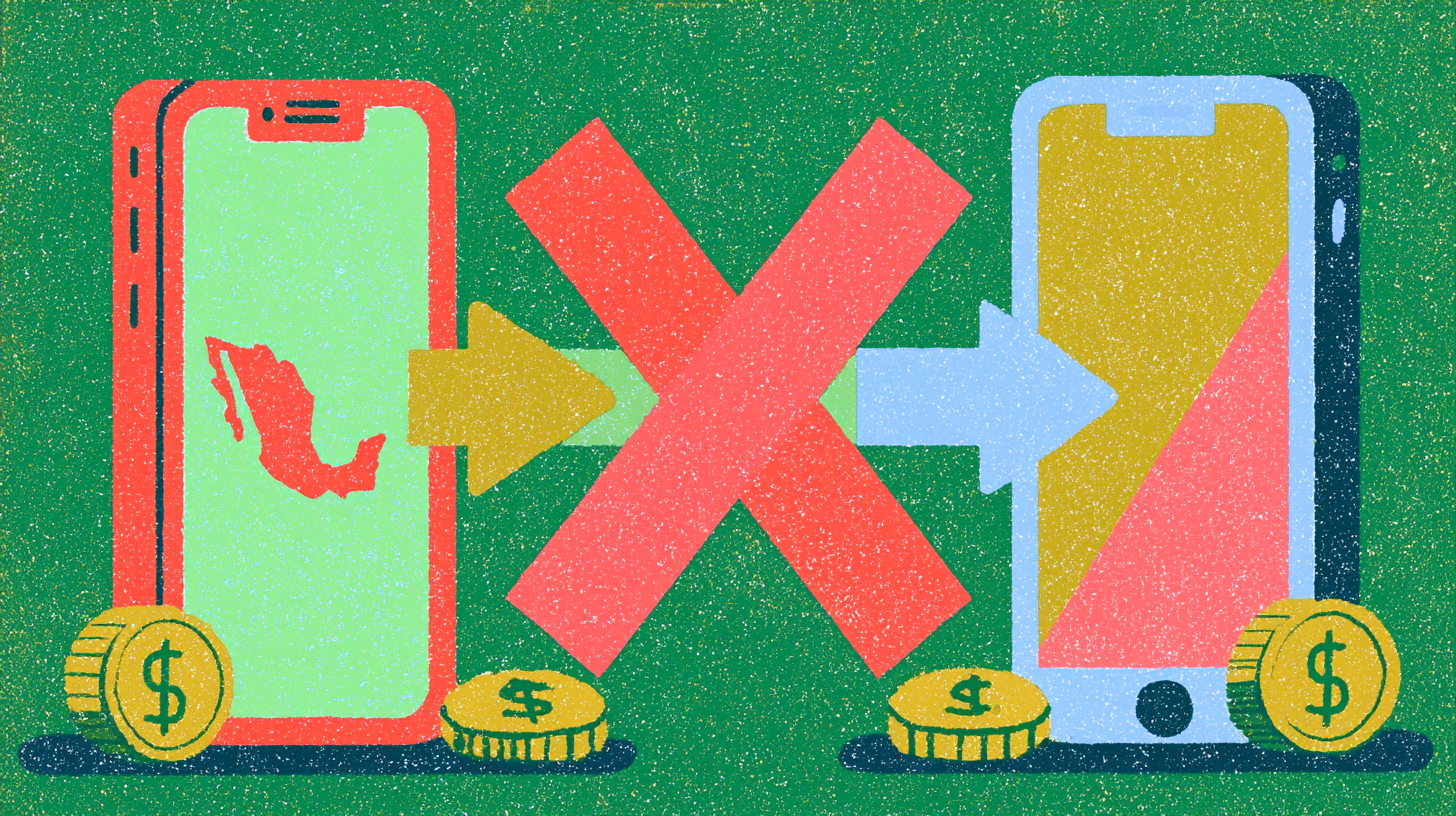
Zelle does not send money directly to Mexico. Zelle only works between eligible U.S. bank accounts and credit unions within the United States.
If you are looking into different methods for sending money to your family in Mexico, you may be searching for 'which banks offer Zelle in Mexico' or trying to understand if Zelle works internationally. This is a common misunderstanding for immigrant families in the U.S. No Mexican bank officially offers Zelle for receiving transfers from the U.S., and Zelle itself is not designed for international money transfers or currency conversion.
What is Zelle and how does it work?
Zelle is a digital payment service that facilitates peer-to-peer transfers at select partner banks in the United States. It is known for its speed, with transfers appearing in minutes, and for its extensive coverage across the U.S. Some U.S. financial institutions that support Zelle include Bank of America, Chase, Wells Fargo, Citi, PNC, and many more.
Why doesn't Zelle work for sending money to Mexico?
Cross-border money transfers require financial institutions, payment networks, regulatory approvals, identity verification procedures, and international settlement systems. Zelle was built around domestic payment systems in the U.S. Because of this, the service does not support direct transfers from U.S. bank accounts to recipients in Mexico.
Alternatives for sending money to Mexico from the U.S. (2026 comparison)
| Service | Typical starting fees | Delivery speed | Exchange rate model | Cash pickup |
|---|---|---|---|---|
| Remitly | Varies; ~$1.99+ for bank deposit to Mexico | Express: minutes to same day; Economy: 3–5 days | Exchange rate markup applies | Yes |
| Wise | From ~0.48% of transfer; shown upfront | Usually same day to 2 days | Mid-market rate, no markup | Limited (select corridors) |
| Xoom | Depends on payment method and destination | Minutes to 1 day | Exchange rate markup applies | Yes |
| Western Union | Varies widely by method and destination | Minutes to several days | Exchange rate markup applies | Yes (extensive agent network) |
| Común | Starts at $2.99 via UniTeller; may vary | Varies by destination and method | Rates displayed before transfer | Yes (depending on delivery option) |
Fees, exchange rates, and delivery times vary based on transfer amount, destination, funding method, and payout option. In 2026, a 1% federal excise tax applies to cash-funded transfers. Bank, debit, and credit card transfers are exempt.
How the new 1% tax on cash remittances affects transfers to Mexico
Starting in 2026, a 1% federal tax applies to certain remittance transfers. The tax applies when you pay with cash, money order, or cashier's check. Transfers funded from a U.S. bank account or with a U.S.-issued debit or credit card are exempt by law.
FAQ
Does Zelle work in Mexico?
No. Zelle does not support international transfers. There is no Mexican bank that offers Zelle for receiving money from the U.S.
What is the best app to send money to Mexico?
It depends on your specific situation. Común offers transfers starting at $2.99 with transparent pricing. Visit comun.app/remittances to learn more.
Remittance service provided by Service UniTeller, Inc. Remittance fees start at $2.99 but may vary. Común Inc. may earn revenue from the conversion of foreign currencies.

International Money Transfers
How to make an international money transfer? Costs, times and requirements
8 min de lectura
International money transfers can be sent via bank wire, money transfer apps, or remittance services — each with different fees, speed, and delivery options. With Común, transfers to Latin America start at $2.99, with most arriving within minutes.
For immigrants in the United States, sending money to their home countries regularly is essential. Therefore, it is important to have access to affordable and accessible financial services.
If you want to know how to make an international money transfer, it is crucial to first compare the different providers of this service and choose the one that offers the most advantages for you and your family.
Comun stands out as a popular option among immigrants because it allows them to send money abroad from the United States, offering advantages in terms of cost, speed, and other key factors.
Below, we provide a comparison table that includes Comun and traditional financial institutions in the United States, such as Bank of America and Wells Fargo:
| Comun | Traditional Financial Institutions | |
|---|---|---|
| Fee | Transfer fee starting at 2.99 USD up to applicable limits | From 10 to 45 USD, depending on the bank |
| Intermediary fees | $0 USD | May generate extra fees from intermediary banks |
| Exchange rate | Competitive | Higher margin than official |
| Speed | Instant to a few minutes (average 8) | From 1 to 5 business days |
| Estimated total fee | 2.99 USD transfer fee + exchange rate, with no extra charges (The first transfer has no fee. Subsequent transfers have a fee starting at $2.99 USD, up to the applicable limit. ATM or intermediary charges may apply; check the app for more details). | From 20 to 60 USD, due to fees and less favorable exchange rates |
How Does an International Money Transfer Work?
The first point to understand is the types of bank transfers available, as this determines the final cost of sending an international money transfer.
In the United States, there are two types of international money transfers: through traditional banks or through specialized services for sending money abroad.
International Money Transfers via Traditional Banks
- Supported by official U.S. financial institutions and security measures, including:
- Identity verification (KYC/CIP) and ongoing AML monitoring (BSA).
- OFAC sanctions screening for senders and recipients.
- Consumer protections for remittances under Regulation E (pre-transfer disclosures, cancellation rights, and error resolution).
- Network and messaging security standards (e.g., SWIFT Customer Security Program).
- Multi-factor authentication and encryption for online banking access.
- A U.S. bank account is mandatory
- Operates through the SWIFT code
- Generates higher fees due to intermediaries
- Transfer time may take up to 5 business days
International Transfers via Specialized Applications
- Operates through digital networks connected with banks or physical branches in each recipient country
- Lower fees, as they do not use intermediaries and offer more competitive exchange rates
- Money transfers are completed within minutes or hours
- A U.S. bank account is not mandatory to use these services
Before paying unnecessary fees, make sure to choose the best international money transfer provider and make the most of your money.
Steps and Requirements for Making an International Money Transfer
Below, we outline what is needed to easily make an international bank transfer from the United States, whether you choose a traditional bank or a specialized application for this type of service:
1. Choose a Provider
Some of the traditional banks you can use are Chase, Bank of America, Capital Bank, Citibank, and Wells Fargo. If you don't have a US bank account, you'll need to make sure you have the necessary requirements to open an account, such as a Social Security Number (SSN). For the aforementioned banks, you can present an ITIN instead, along with a government-issued ID.
Another factor to consider is how long an international money transfer takes, as traditional banks usually take longer due to intermediaries involved in the process.
If you prefer a specialized application for international money transfers due to the flexibility they offer compared to banks, an excellent alternative is Comun, which allows you to transfer money from your phone without complications or intermediaries.
2. Create an Account
General Requirements for Opening an Account at a U.S. Bank
- Valid passport or immigration document
- Social Security Number (SSN)
- Individual Taxpayer Identification Number (ITIN)
- Proof of address in the United States
- Some banks require an initial deposit of approximately $25 USD
Depending on the bank, you may open the account online or by visiting a branch for data verification.
Requirements for Opening an Account with Comun
- Mobile phone compatible with Android or iOS
- Email address
- Official foreign identification
- Have a US residential address
In both cases, you will have access to a debit card and a mobile application that will allow you to make international money transfers and other transactions from the palm of your hand.
3. Enter Transaction Details
Once you activate your account, enter the information required for an international money transfer:
- Full name of your recipient, as it appears on their official ID
- Recipient’s phone number
- Recipient’s address (only if sending money to a bank account)
- Recipient’s account number (only if sending money to a bank account)
- SWIFT code (if transferring through a traditional bank)
Then, enter the amount you wish to send.
Comun and other specialized applications also allow cash pickup at physical locations, so your recipient does not need a bank account.
4. Review Costs and Rates
Next, review the international money transfer fees as well as the exchange rate, as these will impact the final amount your recipient receives.
The cost of an international money transfer depends on several factors, which we detail below.
5. Send the Money
Once you confirm that the information entered is correct, authorize the transfer, including any additional fees.
Comun allows you to track your transfers through its application, whether you choose to send money to a bank account or opt for cash pickup at a physical location.
Remember that transfer speed depends on the platform, and traditional banks can take up to 5 business days to complete these transactions.
6. Confirm Receipt
Finally, confirm with your recipient that the transfer was received within the stipulated timeframe. You can generate a transaction receipt directly in the mobile application.
Everything About the Cost of Sending Money Abroad from the U.S.
International money transfers are a common practice among immigrants in the United States.
That is why it is essential to detail the factors that influence the cost of transfers, as well as the best options for sending remittances to your family quickly and without complications.
These are the main factors to consider when calculating the cost of your international money transfers:
- Transfer Fees
International transfers incur a fee, which varies depending on the platform, whether it's a traditional bank or a specialized app.
Another factor that affects the fee level is the method used to send the money. The price can vary depending on whether the transaction is made through a website, an app, or at a physical branch.
International money transfer fees at traditional banks vary depending on the financial institution. Here are some examples:
- Bank of America: $45 USD
- Wells Fargo: from $25 to $40 USD
- Citibank: from $25 to $35 USD
- Truist Bank: $65 USD
On the other hand, some mobile applications offer international money transfer options for less than $3 USD, which is much more beneficial for the economy of foreign workers.
- Exchange Rate
The exchange rate also significantly impacts the final amount your recipient receives. It refers to the value applied by the platform when converting the dollar amount to the local currency.
Traditional banks generally use a lower rate than the official rate. For example, if the Mexican peso is officially 18.00, banks might apply approximately 17.20 MXN.
This means that if you send $300 USD, your recipient could receive about $13 less (240 MXN less), not counting the bank fees, which make the cost even higher.
- Hidden Fees
In addition to international money transfer fees, traditional banks may charge additional fees if intermediary banks are involved in processing the transfer.
We recommend checking all costs involved and choosing a competitive option that does not reduce the total amount your family will receive.
Comun is an excellent alternative for making international money transfers, as your first transfer fee is waived, and subsequent transfers have a fee starting at $2.99 USD per transfer, up to applicable limits, with no hidden fees or intermediaries.
Review our comparison table between traditional banks and Comun at the beginning of this article, and choose the best option for your money.
Want to Make Secure International Money Transfers? Do It Easily with Comun
In this article, we presented how to make an international money transfer from the United States through traditional banks or specialized applications such as Comun, an excellent choice for immigrants.
Comun is the solution for bringing immigrant families closer together through affordable and low-cost remittances.
Why Choose Comun for International Money Transfers?
- Easily open your account with official documentation from your country
- Send money to your family with a transfer fee starting at $2.99 USD, up to the applicable limits.
- Your money will arrive within minutes
- Access a mobile application and Visa debit card for better control of your finances
Discover an easy and fast way to access the financial services you deserve. Open your account with Comun and forget about complications.
What are the main ways to send money internationally?
Bank-to-bank wire transfers, dedicated money transfer apps, and remittance services are the three main options, each with different costs and delivery times.
What should I compare between international transfer options?
The fee, exchange rate, delivery speed, and whether the recipient needs a bank account or can pick up cash.
How does Común handle international transfers to Latin America?
Transfers start at $2.99, with your first transfer at no cost. Delivery options include bank deposit or cash pickup at locations like Elektra and Oxxo in Mexico, with most transfers arriving within minutes.
Frequently asked questions
What's the cheapest way to send money internationally?
It depends on the corridor and amount; always compare the fee AND the exchange rate, since a low fee can hide a worse exchange rate.
Do I need a bank account in the destination country to receive money?
Not always — some services, including Común, offer cash pickup options that don't require a bank account.
How long do international transfers usually take?
It varies by method — bank wires can take days, while modern remittance apps like Común often deliver within minutes.
Are international money transfers safe?
Yes, when using a licensed provider that's transparent about fees and exchange rates before you confirm.
What information do I need to send an international transfer?
Typically the recipient's name, destination country, and either their bank account details or pickup preference, depending on the method.
Does Común charge for international transfers?
Fees start at $2.99 per transfer, with your first transfer at no cost.

International Money Transfers
How long does an international money transfer take? Business days, time zones, and type of transfer
8 min de lectura
If you need to send money to your home country from the United States, it is important to consider how long an international money transfer takes. In general, the processing time for this type of operation is usually 1 to 5 business days.
However, this depends on several factors, such as the payment system, the banks involved, the currency conversion, and the holidays in between.
That is why it is important to know the different types of international money transfers available, the advantages and disadvantages of each one, and, of course, how long they take to deliver the money to its destination.
Below, we offer you a guide to answer those questions so you can send money home as quickly and safely as possible.
What is an international money transfer and how long does it usually take?
First of all, an international transfer is the sending of money to a bank entity located outside the country of the originating account. Unlike domestic transfers, international transfers involve additional banking systems, such as the SWIFT networks, which can increase costs and processing times in many cases.
There are several factors that influence the total time an international money transfer takes, but in general, it takes 1 to 5 business days.
For example, one relevant aspect that influences this is the system used, whether SWIFT or SEPA, which have different conditions and characteristics.
SWIFT Transfers
The SWIFT system is the largest network: it connects thousands of traditional banks worldwide to send money from one country to another through secure mechanisms.
Characteristics of the SWIFT system
- In general, it takes 3 to 5 days to complete money transfers.
- The involvement of intermediary banks is common, which can generate additional fees.
- It is useful for sending money in different currencies, although it implies disadvantages in time and costs.
- To use this system, check the SWIFT code of the receiving bank.
SEPA Transfer
On the other hand, the SEPA system is focused on international money transfers within the European Union.
Characteristics of the SEPA system
- International money transfers are usually completed in 1 business day.
- Fees are more affordable compared to the SWIFT system.
- This system works exclusively in the SEPA area, and for transactions in euros.
As you can see, both the SWIFT and SEPA systems are useful for making international money transfers safely. Although for those living in the United States, the latter is not recommended due to its geographic limitations.
Here is a comparison table:
| SWIFT | SEPA | |
|---|---|---|
| Time | 3 to 5 business days | 1 business day |
| Cost | Expensive, due to the involvement of intermediaries | Affordable |
| Geographic availability | Worldwide | Exclusively in Europe |
Factors that influence the time of an international money transfer
The time an international money transfer takes is not fixed. It varies according to the type of transfer and other elements involved in the operation.
Here is what you need to know to estimate how long it will take for your money to reach your loved ones.
Payment system
So far, we have presented the SWIFT system, which takes 3 to 5 business days, and SEPA, which is generally reflected the next business day.
In addition, there are ACH (Automated Clearing House) transfers, which are a more common system in the U.S., characterized by being a more economical option, although the process usually takes 2 to 3 business days.
Intermediary banks
There are cases in which the financial institutions participating in an international money transfer do not have a direct relationship with each other, so they need to involve intermediary banks. This, in addition to increasing costs, lengthens transfer times, because it makes the operation take longer than usual.
Cut-off times and business days
Another essential aspect is the cut-off time banks have for executing transactions. If you send money after this time, the operation is processed the next business day.
Also, do not forget to take into account the holidays of both the sending country and the receiving country, which also extend the waiting time.
Currency conversion and destination country
When sending money from the United States to your home country in Latin America, the bank will need to make the corresponding currency exchange and apply an exchange rate. This also usually adds time to the international money transfer process.
Security verifications and compliance controls
Banks often carry out security checks to prevent money laundering and fraud, especially when large amounts are involved.
What information do you need to make an international money transfer?
You are almost ready to start sending money abroad. But first, it is very important that you make sure you have the necessary information to process this type of transfer. Otherwise, the transfer could be rejected or take longer than usual.
Sender’s information
You will need to provide your basic personal information: full name, bank account, official address, and phone number.
Beneficiary’s information
It is also essential to provide the details of the person who will receive the money: full name, recipient’s account number, address, and country of origin.
Bank codes
- IBAN: for transfers within the European Union.
- SWIFT/BIC code: for transfers in most of the world, including the United States.
Amount and currency
Indicate the amount of the transfer and the currency in which it will be received.
Purpose or payment reference
Finally, indicate the purpose of the transfer. It may be: maintenance payment, family support, family savings, etc.
How can you speed up an international money transfer?
We know that sending money to your family and loved ones is very important, which is why it is vital that you avoid mistakes and bad practices that could delay your transfers even more.
- Verify that the beneficiary’s details are complete and correct: check that your recipient’s details are written as they appear on their official identification.
- Make the transfer before the bank’s cut-off time: remember that doing it after this time causes the transfer to be processed the next business day.
- Avoid sending money on weekends or holidays: try to send money on business days to avoid delays.
- Consider using specialized remittance services with faster processes: there are alternative services that offer better conditions than traditional banks.
Make your international money transfers quickly and safely with Común
This time, we learned that international transfers are money transfers made from one country to another, and there are several factors involved in the time they take to be completed.
Are you looking for a way to send money home without complications?
Discover Común, the digital platform that connects you with your family through a service that understands your needs.
Make your first international money transfer, forget about hidden fees, and get transparent rate so your loved ones receive more for less.
Frequently Asked Questions (FAQ)
If you still have questions, check our FAQ.
What is the average time of an international money transfer?
Approximately 1 to 5 business days.
Why do some transfers take longer than usual?
It depends on the system used, the involvement of intermediaries, the currency exchange, and other factors. That is why you should make sure to check the estimated time before sending your money, to see if it fits your timing and needs.
Can I send money on weekends?
Yes, but it will be processed the next business day in most cases.

Living in the United States
The cheapest states to rent in the United States in 2026
8 min de lectura
The cheapest states to rent in the United States in 2026
Based on recent rental market data, West Virginia continues to rank among the lowest-cost states for renters, with a 2025 Fair Market Rent of approximately $801 per month for a one-bedroom apartment. Arkansas and Mississippi also remain among the most affordable states to rent, with estimated one-bedroom Fair Market Rents of roughly $811 and $910 per month respectively. Other states frequently appearing among the cheapest states to rent include Oklahoma, Kansas, Iowa, Alabama, Indiana, Wyoming, and Ohio.
The national average asking rent for a one-bedroom apartment in the US sits at around $1,576 per month — a figure that can consume a significant share of the household's income. However, the average masks the variations across the country.
Why do rent prices vary so much by state?
Rent prices are not a single national market, they are thousands of local ones. The gap between the cheapest and most expensive states may be more than $1,600/month for a comparable unit. Several structural factors explain why a one-bedroom in Iowa can cost a fraction of what it does in California:
- Housing supply and construction pace. States with fewer building restrictions and lower land costs tend to have more available units, which keeps prices more accessible.
- Local economy and wages. Higher-income cities attract more renters competing for the same units, pushing prices up.
- Urban vs. rural mix. A state dominated by mid-sized cities will register lower averages than one anchored by major coastal cities.
- Regulatory environment. Zoning laws, permitting processes, and landlord-tenant regulations influence how fast housing supply can respond to demand.
- Climate and geography. Desirable coastal cities or warmer climates attract more people, which drives up rents over time.
The 10 cheapest states to rent in the U.S. in 2026
1. West Virginia — 1BR FMR: ~$801/month
West Virginia holds the lowest 1-bedroom Fair Market Rent of any state in the US at $801/month. The median rent statewide sits around $883/month across all unit types, with West Virginia apartments running roughly 41.6% less expensive than the national 2BR average. In 2024, 64.8% of leased homes in West Virginia rented for less than $1,000/month.
2. Arkansas — 1BR FMR: ~$811/month
Arkansas is consistently cited among the states with the lowest rent in the US. The 2025 HUD Fair Market Rent for a 1-bedroom is $811/month, and the state's apartments run roughly 41.4% less expensive than the national 2BR average. In 2024, 51.9% of leased homes in Arkansas rented for less than $1,000/month.
3. Mississippi — 1BR FMR: ~$910/month
The 2025 HUD Fair Market Rent for a 1-bedroom is $910/month, and some market-rate data places average 1BR asking rents lower, around $785–$825/month. In Jackson, the state capital, a 1-bedroom apartment may average around $785/month. The state has a notable Latino community in agricultural and food-processing hubs.
4. Oklahoma — 1BR avg: ~$850–$875/month
Oklahoma may offer some of the most affordable urban rent in the country. Oklahoma City's average 1BR rent sits around $875/month, ranking among the cheapest large cities to rent in the US. The state's housing index sits at approximately 67.9, meaning homes and rentals cost about 32% less than they do nationally.
5. Kansas — 1BR FMR: ~$885/month
Kansas delivers consistent affordability, with a 2025 HUD Fair Market Rent for a 1-bedroom at $885/month, roughly 35.6% below the national 2BR average. The median home price in Wichita, Kansas' largest city, was approximately $198,000 in Q1 2026.
6. Iowa — 1BR FMR: ~$839/month
The 2025 HUD Fair Market Rent for a 1-bedroom is $839/month, with Iowa apartments running 38.3% less expensive than the national 2BR average. Iowa households spend just 17% of their income on housing, the lowest share of any state in the country.
7. Alabama — 1BR FMR: ~$905/month
Alabama's apartments run roughly 36.4% less expensive than the national 2BR average. The 2025 HUD Fair Market Rent for a 1-bedroom is $905/month. The median home price of approximately $179,400 is among the lowest in the country. In 2024, 42.8% of leased homes in Alabama rented for less than $1,000/month.
8. Indiana — 1BR avg: ~$900–$950/month
Indiana sits comfortably in the affordable tier, with average 1BR rents well below $1,000/month in most markets. Indianapolis offers sub-$1,000 rents in a metro with a job market ranging from logistics, healthcare, technology, to life sciences. Indianapolis' growing Latino community has made the city an increasingly relevant destination for immigrant families relocating to the Midwest.
9. Wyoming — 1BR FMR: ~$836/month
Wyoming's sparse population keeps rental demand low and rents affordable. The 2025 HUD Fair Market Rent for a 1-bedroom is $836/month. In 2024, 50.2% of leased homes in Wyoming rented for less than $1,000/month. Wyoming has no state income tax.
10. Ohio — 1BR avg: ~$950–$1,000/month
Average 1BR rents hover near $950–$1,000/month while the state's cost of living runs roughly 8–9% below the national average. Ohio's combination of major metro accessibility and rental affordability makes it a compelling option.
Comparison table of the cheapest states to rent in the US (2026)
| State | 1BR FMR / Avg. Rent | vs. National 1BR FMR (~$1,393) | Cost of Living Index |
|---|---|---|---|
| West Virginia | $801 (FMR) | ~42% less | 83.2–86.6 |
| Arkansas | $811 (FMR) | ~42% less | 87.6 |
| Mississippi | $910 (FMR) | ~35% less | 83.3 |
| Oklahoma | ~$850–$875 (market) | ~37–39% less | 85.5–88.8 |
| Kansas | $885 (FMR) | ~36% less | 89.0 |
| Iowa | $839 (FMR) | ~40% less | 90.4 |
| Wyoming | $836 (FMR) | ~40% less | 92.3 |
| Alabama | $905 (FMR) | ~35% less | 89.3 |
| Indiana | ~$900–$950 (market) | ~32–35% less | 90.1 |
| Ohio | ~$950–$1,000 (market) | ~28–32% less | 91.2 |
1BR FMR = HUD Fair Market Rent FY2025. National 1BR FMR baseline: $1,393. Market-rate averages from PropertyCEO. Cost of Living Index from costoflivingbystate.com (C2ER Q1 2026). All figures are estimates and may vary by city, unit type, and data provider.
How to choose the right State for your budget and lifestyle?
Rent-to-income ratio, not just the rent number:
Some cheap-rent states also have lower wages. Mississippi, for example, ranks near the bottom for rent in dollars, but can rank near the top in terms of what percentage rent makes up of earned income.
Job availability in your field:
Employment opportunities can vary significantly from state to state. States such as Ohio, Indiana, and Alabama tend to have more diversified economies. For remote workers, lower-cost states may provide greater financial flexibility.
Community and support networks:
For immigrants and families relocating to a new area, access to established communities can make a major difference. Cities with growing Latino populations, bilingual services, and community organizations may help newcomers feel more connected.
Climate and weather risk:
States in the Midwest can experience colder winters and higher heating costs, while Southern states may bring higher air conditioning expenses. Some regions may also face increased risks related to hurricanes, tornadoes, or flooding.
Compare the total cost of living:
Rent is only one part of a household budget. Groceries, utilities, transportation, healthcare, childcare, and taxes can also vary significantly by state.
Manage your finances in any state with Común
Moving to a more affordable state may help reduce financial pressure, but managing your money efficiently remains important no matter where you live. Visit Común's website or download the app to learn more.
FAQ
What is the cheapest state to rent in the US in 2026?
Based on HUD Fair Market Rent data, West Virginia has the lowest 1BR FMR of any state at $801/month and the lowest median rent overall at approximately $883/month.
Which states have the lowest average rent for an apartment?
The states with the lowest average apartment rent in 2026 are West Virginia, Arkansas, Iowa, Wyoming, Mississippi, Oklahoma, Kansas, Alabama, and Indiana. Average 1-bedroom rents in these states range from approximately $785 to $950/month.
How much should I budget for rent in the US?
The commonly cited guideline is to spend no more than 30% of gross monthly income on rent. In the cheapest states, where 1BR rents may run $800–$900/month, the same guideline requires roughly $2,667–$3,000/month in gross income.

Immigration
O1 Visa Requirements in 2026: What You Need to Know
8 min de lectura
O1 Visa Requirements to Work in the United States
The United States offers a wide variety of visas to include as many profiles as possible that can contribute their knowledge to the country.
One example is the O1 visa, intended for foreign nationals who possess extraordinary abilities in fields such as science, sports, and the arts.
This visa has very specific criteria. Therefore, in this article, we explain the requirements established by the U.S. government to obtain it, the classification of O1 visa types, and the documents required during the application process.
If you are looking for an alternative to obtain a work visa in a highly competitive field, the O1 visa could open the door to a new life.
What Is the O1 Visa and Who Can Apply?
The O1 is a U.S. nonimmigrant visa aimed at foreign nationals with extraordinary abilities or outstanding achievements in specific areas.
The concept of “extraordinary ability” can seem a bit ambiguous, but in this context, USCIS refers to individuals who have reached such a level of excellence in their field that they have verifiable national or international recognition.
This visa is divided into two main categories:
O-1A Visa
For individuals with extraordinary achievements in science, education, business, or athletics.
O-1B Visa
For individuals with extraordinary ability in the arts, motion picture, or television industry.
As you can see, it is an immigration document that demands a high level of achievement from applicants in specific areas of work.
Main Requirements for the O1 Visa
To qualify for an O1 visa, applicants must meet a series of requirements established by USCIS.
Below are the main requirements for the two categories of this visa.
For the O-1A Visa
Applicants with outstanding achievements in science, education, business, or athletics must demonstrate they meet the following eligibility criteria:
- Having received significant recognition with national or international impact.
- Membership in prestigious associations that require outstanding achievements.
- Mentions or features in reputable media outlets.
- Having participated as a judge of the work of others in the same field.
- Being the author of published scientific articles.
- Having collaborated with distinguished organizations in the area of expertise.
- Evidence of a high salary or remuneration compared to others in the same field.
For the O-1B Visa
Applicants with outstanding achievements in the arts, film, or television industry can demonstrate eligibility if they meet the following requirements:
- Having received major awards, such as Grammy, Emmy, Oscar, or Nobel Prize.
- Participation in renowned productions.
- Being recognized by media and critics.
- Demonstrable commercial success or popularity.
- Having led prestigious projects.
It is important to note that it is not necessary to meet all these requirements, but the more criteria the applicant fulfills, the easier it will be to obtain the visa.
In both cases, applicants must have a job offer or a sponsor in the United States.
Documents and Evidence Commonly Submitted with the Application
In addition to meeting the criteria, the applicant must have the following documents to prepare a complete application.
Form I-129, Petition for a Nonimmigrant Worker
This form must be filed by the U.S. employer or agent and should include the following details:
- Full name of the beneficiary.
- Detailed description of the project.
- Expected duration and location of the project.
Letters of Recommendation
This letter is essential to support the applicant’s experience in their field. It must be issued by a group of peers, a union, or an expert entity.
Job Offer Letter or Employment Contract in the U.S.
It is a document signed by the applicant and the employer that sets out the terms and conditions of employment, responsibilities, and duration.
Additionally, the previously mentioned requirements can be supported with the following documentation:
- Copies of publications, articles, or press materials.
- Evidence of memberships, awards, or recognitions.
- Financial statements or evidence of high remuneration.
If you have any doubts about your application process, consult an immigration attorney who can help you determine whether your profile fits this type of visa, which is often considered an elite category. Keep in mind that there are other options such as the EB-1 and H-1B visas.
Find Opportunities in the U.S. with Support from Común
In this article, we explained that the O1 is the visa for individuals with extraordinary abilities, aimed at people with outstanding performance in science, sports, and the arts. We also covered the approval requirements and documentation needed to demonstrate that you belong to the groups covered by this work authorization.
Arriving in a new country to work involves many changes and learning to adapt to customs and regulations. When it comes to managing money effectively, it is essential that immigrants have access to quality financial services.
Discover Común, the financial platform that makes life easier for immigrants in the U.S.!
- Checking account with clear and competitive fees.
- International money transfers with affordable costs.
- Mobile app available in Spanish that accepts more than 100 official foreign identifications.
- Debit card for everyday purchases and payments.
Open your account with Común today and build your future in the U.S. with a financial platform designed for immigrants.
Frequently Asked Questions (FAQ)
Can You Obtain an O1 Visa Without a Sponsor?
No, the O1 visa always requires a sponsor to initiate the process. This sponsorship may be provided by a U.S. employer or an agency that acts as an intermediary between the applicant and contractors in the United States.
Although this visa cannot be self-petitioned, there is an option to hire an agent to submit the initial petition.
How Much Money Is Required for an Investor Visa in the United States?
The most common investor visa is the EB-5, which requires a minimum investment of $1,050,000 if the investment is made in a rural area or one with high unemployment.
A key requirement is that the project must create or maintain at least 10 full-time jobs in the United States.
Another investor visa option is the E-2, or treaty investment visa, which does not require a fixed amount but requires the applicant to prove that the investment is large enough to generate a positive impact.
Which Documents Carry the Most Weight for Approval?
The documents that usually carry the most weight for O1 visa approval are those that demonstrate sustained and verifiable recognition.
For example:
- Major awards.
- Publications in recognized media.
- Participation as a judge of others’ work.
- Membership in selective associations.
- Evidence of participation in well-known projects.
- Letters of recommendation from experts or field leaders.
Although it is not necessary to present all these documents, the more evidence there is, the greater the chances of approval.
How Long Does the O1 Visa Last and Can It Be Renewed?
The initial duration is 3 years, depending on the project. Extensions of 1 year can be requested as long as the requirements continue to be met.
Instant payments
Learn how to use Cash App for your finances in the U.S.
8 min de lectura
The popularity of digital personal finance applications continues to grow among users in the United States. According to recent data, 8 out of 10 Americans have embraced the digital economy by using financial applications for purchases, digital payments, online banking, and more.
Cash App is one effective alternative to facilitate personal finance management. In 2024, it recorded 57 million monthly active users and $16.2 billion in earnings.
If you're curious to know what Cash App is, how it works, all its benefits, and its associated fees, below we provide all the details so you can decide whether it is the best option to meet your needs.
What Is Cash App and What Is It Used For?
Cash App is an alternative to traditional banking that operates through a mobile financial services application. Its functionality is highly versatile, as it not only allows users to send and receive money but also to make purchases and receive direct deposits from payroll.
The application was developed by Block Inc. (formerly Square Inc.) and aims to offer a comprehensive and more accessible service through digital solutions.
To open an account on Cash App, you must meet certain requirements, such as having a Social Security Number (SSN) and a U.S. bank account.
Cash App: How It Works, What Features It Offers, and What Fees It Charges
Cash App is available through its official mobile application, in which you must complete the registration and verification process to access all available features. Once completed, you may link a bank account if needed.
You will also have a Cash Tag: a unique username that allows you to send and receive money easily.
The following are the main features offered by the Cash App application:
Sending and Receiving Money
Cash App allows instant transfers between users of the application free of charge (free instant transfers; standard network fees may still apply).
Cash Card
This is a free debit card linked to your balance. It allows you to make online and in-store purchases and withdraw cash from ATMs.
QR Code
Pay directly in physical stores using a QR code.
Cash App Pay
A payment method that allows users to complete transactions in online stores and directly through the application.
Cash Boosts
You can obtain discounts at selected physical and online establishments.
Fees for Using Cash App
Although many of Cash App’s features are free, such as account maintenance, use of the Cash Card, and transfers between Cash App accounts. Below is a table with some of the main fees and charges associated with the aforementioned features:
| Service | Cost |
|---|---|
| Instant transfer to bank card | 0.5 % to 1.75 % |
| Standard transfer (1 to 3 days) | Free |
| ATM withdrawals | 2.50 USD per withdrawal |
Cash App registration requirements
If you want to use Cash App to control your finances, make sure you meet the following requirements:
Have a U.S. phone number
You can also use an email to verify your identity.
Reside in the United States or England
Cash App is only available in the United States and the United Kingdom. The application and information are available in English only.
Have a bank account
It is recommended if you want to have access to all the functions of the application.
Do the identity verification
This will allow you to access features such as sending or receiving more than 1,000 USD over 30 calendar days and applying for the Cash Card.
But remember that to perform identity verification you need:
- Full name
- Birthdate
- Social Security Number (SSN)
How secure is Cash App? : 9 important considerations
The issue of security is one of the most relevant in relation to financial services applications. You should always verify that your provider has the necessary measures in place to keep your assets and personal data safe.
For its part, Cash App has the following security measures, among others:
Multifactor authentication
Cash App requests identity authentication via email or SMS. In addition, it allows you to activate a PIN or biometry to log in.
End-to-end encryption
Your personal data stored in Cash App is secure through TLS/E2E.
System for the detection and prevention of illegal activities
Cash App has implemented technologies trained to detect unusual behavior and prevent fraud, such as machine learning and algorithms.
Subsequent payment monitoring
The application has an additional monitoring system to do a double check and detect unusual activities.
Although the above features offer some certainty regarding the application's security measures, it's always important to take into account some considerations:
Turn off automatic login
To prevent an outsider from accessing your account without your authorization, avoid using automatic login. Instead, use strong, unique passwords and enable 2-step authentication.
Beware of fraud
Stay alert to scams, either by phone or email. Never give out personal information or passwords through these means. If you need to contact application support, do so through official means.
Keep active alerts
Cash App allows you to receive alerts for your transactions directly on your cell phone. Make sure to keep them active.
Verify data before making transfers
Send money only to people you know and verify their information before confirming the operation, since once the money has been sent, it is not possible to recover it.
Activate the PIN to carry out transactions
You have the option of activating the PIN or biometric data to confirm your transfers before doing them, and avoid the use of your application by third parties in case of theft or loss.
Are you looking for more than just a payment app? Comun is your financial ally in the U.S. UU.
There is no doubt that Cash App is a popular alternative among those looking for a fairly comprehensive and easy-to-use financial solution.
But if you are looking for a financial ally that offers a simple and secure experience, with customer service and a platform also available in Spanish, we present Comun.
Comun goes beyond traditional limitations, so that immigrant communities in the United States have access to quality financial services, without complications. With Comun you can:
- Receive and send money conveniently, without complications and without the need for a traditional bank account.
- Open your Comun account with the qualified Official Identification of your country of origin.
- Get a simple mobile application for hassle-free daily international money transfers.
Open your Comun account today and breaks down the barriers of traditional financial services, language and cultural ones.
FAQs
If you still have questions about what Cash App is for and its features, check out our frequently asked questions.
What are Cash Boosts in Cash App?
These are instant discounts available on the Cash Card. To activate them, enter the mobile application and select “Cash Card”, followed by “Add Boost” and “Save Boost”. Select the discount you are interested in and it will be applied when you pay with your debit card.
What happens if I receive a lot of money through Cash App?
Some necessary checks may be activated starting at $1000.
How much is the maximum that can be sent via Cash App?
1000 USD over 30 calendar days for unverified users; if you verify your user, you can increase this limit to 20,000 USD.
What is Cashtag in the Cash App?
This is a unique username that is used so that other users of the application can send you money. It starts with the $ symbol followed by an identifier.
.png)
Financial Education
What is a W-2 form? Complete 2026 guide for immigrant workers in the U.S.
8 min de lectura
What is a W-2 form? Complete 2026 guide for immigrant workers in the U.S.
A W-2 form is one of the most important tax documents employees receive in the United States. If you worked for an employer during the year, your W-2 shows how much money you earned and how much money was withheld for taxes.
For many immigrant workers, this may also be the first time dealing with U.S. tax documents. Understanding how to read a W-2, when you should receive it, and what to do if something is incorrect can help you file taxes more confidently and avoid delays during tax season.
This article is for informational purposes only and does not constitute legal or tax advice. It is recommended to consult a qualified tax professional for guidance specific to your situation.
What is a W-2 form?
A W-2 form, officially called the Wage and Tax Statement, is a tax document employers send to employees every year. The form reports: total wages earned, federal income taxes withheld, Social Security and Medicare taxes withheld, state or local tax withholdings if applicable.
The IRS requires employers to provide a W-2 to employees who earned wages during the tax year. You typically receive a W-2 if you are considered an employee of a company. Independent contractors and certain gig workers generally receive Form 1099 rather than a W-2.
When should you receive your W-2?
Employers must send W-2 forms to employees by January 31 of the year following the reported tax year. If you haven't received your W-2 by early February, contact your employer. If you still don't receive it, you can contact the IRS for assistance.
What information does the W-2 contain?
- Box 1: Wages, tips, and other compensation
- Box 2: Federal income tax withheld
- Box 3: Social Security wages
- Box 4: Social Security tax withheld
- Box 5: Medicare wages
- Box 6: Medicare tax withheld
- Boxes 15–17: State tax information
W-2 vs. 1099: what is the difference?
| W-2 employee | 1099 contractor |
|---|---|
| Employer withholds taxes | Worker usually pays taxes independently |
| May receive benefits | Usually no employer benefits |
| Employer generally has greater control over work duties | Worker has more independence |
| Receives W-2 in January | Receives 1099-NEC if eligible |
Can ITIN holders get a W-2?
Yes. Employees can receive a W-2 using an ITIN instead of an SSN. If you are legally working in the U.S. with work authorization but do not yet have an SSN, you can use your ITIN for tax purposes. However, remember that an ITIN does not authorize employment on its own. For more information about ITINs, visit comun.app/itin.
What to do if your W-2 has errors?
If you find errors on your W-2, such as an incorrect name, SSN/ITIN, or incorrect figures: contact your employer immediately to request a corrected W-2 (Form W-2c), wait for the corrected W-2 before filing your tax return, if you cannot get a correct W-2 in time, the IRS has procedures to help you.
FAQ
What is the W-2 form?
It is the Wage and Tax Statement your employer sends you each January, showing how much you earned and how much you paid in taxes the previous year.
When will I receive my W-2?
No later than January 31 of the year following the reported tax year.
What do I do if I don't receive my W-2?
First contact your employer. If unresolved, you can contact the IRS for assistance.
This article is for informational purposes only and does not constitute legal or tax advice. Común is a financial technology company and not a bank. Banking services are provided by Community Federal Savings Bank, Member FDIC.
Community
What You Need to Open an Account at Comun¹ 3
8 min de lectura
Unmatched Ease of Opening an Account
Opening a checking account with Comun is simple and hassle-free, addressing the barriers to financial exclusion typically faced by the immigrant community. Accepting over 100 forms of identification², including social security numbers from Latin American countries, Comun ensures that immigrants have access to essential banking services. The application process is quick, taking less than 5 minutes, and is free of additional or hidden fees, minimum balance requirements or monthly commissions. This inclusiveness is central to Comun's mission of fostering financial stability and growth.
Mobile Deposit Options
ComunComun offers a convenient mobile deposit feature that allows users to deposit cash at more than 88,000 locations in the United States, including major retailers such as Walgreens, Dollar General and Walmart. This extensive network ensures that users can easily find a deposit location near them, making the process of adding money to their accounts simple and hassle-free.
Traditional Banking: Although many traditional banks offer mobile deposit options, they often restrict these to check deposits through a mobile app. Cash deposits typically require a visit to an ATM or bank branch, which can be less convenient and more time-consuming than Comun's extensive cash deposit network.
Utility in Today's World: In today's fast-paced environment, the flexibility to deposit cash in a wide range of accessible locations is invaluable, especially for individuals who may not have easy access to traditional banking services or who work non-traditional hours when banks are closed.
International Remittances
ComunComun excels in facilitating international remittances⁴, allowing users to send money abroad quickly and with lower fees compared to many traditional banks and remittance services. The process is enhanced with real-time notifications, keeping the sender informed from the moment the money is sent until it is received.
Traditional Banking: Traditional banks generally offer international transfer services, but these can be expensive and slow, with transfers sometimes taking several days to complete. In addition, the fees associated with traditional bank remittances can be significantly higher.
Usefulness in Today's World: In a globalized economy, the ability to send money across borders quickly and affordably is crucial. Many families rely on remittances for financial support, and businesses need efficient ways to handle international transactions. Comun's streamlined and cost-effective service effectively meets these modern demands.
Advance Salary Access
Comun: Comun offers the ability to connect wages to the application and receive payment up to two days in advance³. This feature incurs no additional fees, providing significant relief during financial emergencies or when planning ahead.
Traditional Banking: Some traditional banks have begun to offer similar features, but they are often tied to specific types of accounts or require a minimum balance. The accessibility and ease of use of early access to Comun's salary is not always matched in traditional environments.
Usefulness in Today's World: With the rise of gig economy jobs and irregular pay schedules, having early access to wages can provide a buffer against financial instability. This feature is particularly valuable for those living paycheck to paycheck, offering a cushion that can help avoid overdraft fees and late payments.
Unlike traditional banking institutions, Comun's innovative features are designed to meet the needs of today's diverse and mobile population, particularly benefiting the immigrant community in the U.S. By providing services that offer greater convenience, lower costs and greater accessibility, Comun not only addresses common challenges faced by its users, but also empowers them toward greater financial freedom and stability. As we move toward a more interconnected and fast-paced world, the importance of responsive and inclusive financial services continues to grow, something Comun is uniquely positioned to offer.
Robust Security and Customer Support
Security and customer support are paramount at Comun. With FDIC-insured accounts and Visa protection on virtual Visa debit card transactions, Comun customers can manage their funds with confidence. Innovative security features such as biometric logins and instant transaction notifications keep your money safe. In addition, Comun offers 24/7 customer support in English and Spanish, ensuring that help is always available in your preferred language.
Commitment to Zero Fees and Upward Mobility
Comun stands out not only for offering zero fees for account opening, monthly maintenance or minimum balances, but also for its commitment to helping its users move up the financial ladder. Comun acts as a financial partner, supporting financial transactions without the burden of excessive fees. This commitment aligns with the goal of enabling upward mobility for immigrants, who contribute significantly to the U.S. economy.
Customized Features and Benefits
Comun goes beyond traditional financial services by offering features designed to meet the unique needs of the immigrant community. Users can send money abroad with low or no fees, deposit cash at more than 88,000 locations nationwide, including free ATM withdrawals, and connect their accounts to popular payment apps such as Zelle, CashApp and Venmo. Comun's platform also allows customers to receive their paychecks up to two days early through direct deposit, further enhancing their financial flexibility and stability.
Conclusion
Comun is not just a financial services provider, but a platform dedicated to transforming the banking experience for immigrants in the U.S. With its user-focused design, commitment to financial freedom and robust features, Comun is destined to become a vital tool for achieving financial stability and growth for its users. Whether you are looking to manage your daily finances or send money to loved ones abroad quickly and securely, Comun offers a reliable, inclusive and efficient banking solution.
Foundational Moment: Did you know?
Founded by entrepreneurs Mark Selcow and Andres Santos in New York, Comun was built to empower families and enable upward mobility, particularly for the immigrant family. The company has garnered significant investment from prominent firms such as Costanoa Ventures, FJ Labs and South Park Commons, underscoring the tremendous opportunity to serve the financial needs of immigrant families and improve the lives of every individual.
Financial Education
The Future of Banking Services: Trends to Watch
8 min de lectura
What Today's Banking Customers Want
Today's banking consumers are no longer satisfied with just basic financial transactions. They want seamless digital experiences, personalized services, and round-the-clock accessibility. With the spread of smartphones and internet connectivity, customers expect banking services to be available at their fingertips, anytime and anywhere. They also demand transparency, security, and efficiency in every interaction with their financial institutions.
Understanding and meeting these changing needs is crucial for banks to attract and retain new customers in an increasingly competitive landscape.
Better Experiences Are Essential for Deposit Growth and Customer Loyalty
In an era where switching banks is easier than ever, delivering a superior customer experience has become essential for deposit growth and maintaining customer loyalty. Banks that prioritize user-friendly interfaces, intuitive mobile apps, and responsive customer support are more likely to succeed in building solutions integrated with customer data. Beyond the transactional aspect, customers value proactive financial advice, personalized product recommendations, and tailored communication.
By investing in emerging technologies that improve customer experiences, many banks can build stronger relationships with their customers and position themselves as trusted financial organizations for the long term.
Technological and Industry Shifts
In banking, the traditional advantages that once set institutions apart are gradually eroding. With the rise of fintech startups and tech giants entering the financial services space, banks face unprecedented competition. Legacy systems and processes that used to be barriers to entry are now being disrupted by innovative technologies and agile business models.
Banking Designed for Your Life in the USA
Open your bank account¹ in 3 minutes with your country's ID²
Banking Is Losing Its Traditional Advantages
Historically, banks held monopolies on financial services due to their physical presence, regulatory barriers, and established customer trust. However, the arrival of digital banking and the spread of online-only banks have challenged this status quo. Traditional advantages like branch networks and long-standing reputations are no longer as significant in a digital era where convenience and efficiency come first.
Technological Advances Shaping the Banking Industry
Technological advances are driving profound change in the banking industry, redefining how financial services are delivered and consumed. From artificial intelligence (AI) and machine learning to blockchain and cloud computing, banks are leveraging cutting-edge technologies to streamline operations, improve security, and improve customer experiences.
AI and Data Advances Accelerating Transformation Possibilities
AI and data analytics are revolutionizing banking by letting institutions gain deeper insight into customer behavior, automate repetitive tasks, and personalize offers at scale. Chatbots powered by natural language processing (NLP) provide instant customer support, while predictive analytics algorithms help identify trends and proactively mitigate risk.
Seamless Technology and Platform Integration Is a Top Priority
Seamless technology and platform integration is essential for banks to deliver cohesive, omnichannel experiences to their customers. Whether through mobile banking apps, online banking portals, or in-branch interactions, customers expect consistent, intuitive interfaces that smoothly meet their financial needs across various touchpoints.
[Video embed — keep as-is: https://www.youtube.com/watch?v=V4FKKe5Zs2A]
Embracing Responsible AI (GenAI)
As banks adopt AI and automation, it's crucial to do so responsibly, considering ethical implications and potential biases. Responsible AI, often called GenAI, involves ensuring fairness, transparency, and accountability in AI-driven decision-making processes. By adopting ethical AI frameworks and governance principles, banks can build trust with customers and mitigate risks associated with AI deployment.
Innovations in AI and data analysis are driving transformative possibilities, while seamless technology and platform integration is now a top priority. Banks must also embrace responsible Generative AI (GenAI) to stay ahead.
Banking as a Service (BaaS)
As traditional banking models evolve, Banking as a Service (BaaS) is emerging as a key trend reshaping the financial landscape. This section explores the key aspects of BaaS, from emerging industry trends to competitive arenas and business models, offering insight into the future of banking.
Emerging Trends in the BaaS Banking Industry
- Collaboration Over Competition: Traditional banks are increasingly partnering with fintech startups and third-party providers to offer specialized financial services. This collaborative approach lets banks leverage innovative technologies and expand their service offerings without needing extensive infrastructure investment.
- API-Driven Ecosystems: Application Programming Interfaces (APIs) play a central role in BaaS, enabling seamless integration of banking services into third-party apps and platforms. Open banking initiatives around the world are driving the adoption of standardized APIs, fostering a more interconnected financial ecosystem.
- Platformization of Banking: Banking services are shifting from product-centric models to platform-centric models, where banks act as enablers of financial transactions rather than just service providers. Platforms offer a diverse range of financial products and services curated from multiple providers, giving customers greater choice and flexibility.
Competitive Arenas and Emerging Business Models in Banking
- Digital Challenger Banks: Digital-only banks, or challenger banks, are disrupting the traditional banking landscape with their agile operations, innovative products, and customer-first approach. These agile startups leverage technology to deliver superior user experiences and challenge incumbents in key market segments. Such is the case with the Común app, which offers financial services for immigrants living in the U.S.
- Embedded Finance: Embedded finance refers to integrating financial services into non-financial apps, like e-commerce platforms, ride-share apps, and social networks. By embedding banking functionality directly into everyday activities, financial transactions become seamless and frictionless for users.
Banking Designed for Your Life in the USA
Open your bank account¹ in 3 minutes with your country's ID²
A Look at the Bigger Picture: Everyday Banking
- Mobile-First Solutions: Everyday banking is increasingly mobile-centric, with customers preferring the convenience of managing their finances on the go. Mobile banking apps offer a wide range of features, including account management, bill payments, peer-to-peer transfers, and financial insights, meeting customers' diverse needs.
- Personalization and Predictive Analytics: Banks are leveraging data analytics and AI algorithms to personalize their offerings and anticipate customer needs. By analyzing transactional data and behavioral patterns, banks can deliver personalized product recommendations, tailored financial advice, and proactive alerts, improving customer engagement and satisfaction.
Discover the Future of Banking: Embrace BaaS Innovations Today for Financial Evolution and Empowerment
- Enhanced Customer Experiences: BaaS lets banks deliver enhanced customer experiences by leveraging innovative technologies and partnerships. From frictionless onboarding experiences to personalized financial solutions, BaaS empowers customers to reach their financial goals more effectively.
- Financial Inclusion and Accessibility: BaaS has the potential to drive financial inclusion by extending banking services to underserved and unbanked populations. Through partnerships with fintechs and leveraging digital channels, banks can reach previously inaccessible markets and provide essential financial services to those who need them.
- Agility and Innovation: Embracing BaaS lets banks innovate quickly and adapt to changing market dynamics. By leveraging outside expertise and resources, banks can accelerate the development and rollout of new products and services, stay ahead of the competition, and meet changing customer expectations.
Everyday banking remains the biggest arena, and the future of banking will see financial evolution and empowerment through BaaS innovations.
Regulatory and Compliance Considerations
This section explores the imperative nature of investing in regulatory compliance, the importance of anticipating regulatory action, and the impact of regulatory developments on BaaS. It also discusses predictions for the future of BaaS in light of these regulatory considerations.
Investing in Regulatory Compliance Is Imperative
- Compliance Frameworks: Banks and BaaS providers must establish robust compliance frameworks to adhere to regulatory requirements and industry standards. This includes implementing Know Your Customer (KYC) procedures, anti-money laundering (AML) measures, and data protection protocols to safeguard customer information and mitigate financial risks.
- Risk Management: Investing in risk management practices is essential to navigate regulatory complexities and protect against potential threats. By conducting regular risk assessments and implementing risk mitigation strategies, banks can ensure regulatory compliance while maintaining operational resilience.
Anticipating Regulatory Action
- Proactive Compliance Measures: Anticipating regulatory action lets banks stay ahead of compliance requirements and mitigate regulatory risks effectively. By closely monitoring regulatory developments, engaging with regulatory authorities, and participating in industry forums, banks can proactively address emerging regulatory challenges and adapt their compliance strategies accordingly.
- Regulatory Engagement: Establishing open communication channels with regulatory authorities fosters collaboration and transparency, letting banks address regulatory concerns and seek guidance on compliance matters. By actively engaging with regulators, banks can demonstrate their commitment to regulatory compliance and build trust within the regulatory community.
Regulatory Developments Impacting BaaS
- Global Regulatory Landscape: Regulatory developments, like open banking initiatives and data protection regulations, have a significant impact on the BaaS ecosystem. Financial service providers must stay on top of regulatory changes across different jurisdictions and adapt their operations accordingly to ensure compliance with local laws and regulations.
- Compliance Challenges: Regulatory requirements related to data privacy, cybersecurity, and consumer protection pose significant challenges for BaaS providers. Meeting complex regulatory frameworks requires substantial investment in resources and expertise, demanding a proactive approach to effectively address regulatory concerns.
Banking Designed for Your Life in the USA
Open your bank account¹ in 3 minutes with your country's ID²
Predictions for the Future of BaaS
- Regulatory Evolution: The future of BaaS is expected to be shaped by ongoing regulatory evolution, with regulators adapting existing frameworks to address emerging risks and challenges. Predictions suggest regulators will focus on improving consumer protection, promoting market competition, and fostering innovation within the BaaS ecosystem.
- Regulatory Harmonization: As the BaaS landscape continues to evolve, there's a growing need for regulatory harmonization across different jurisdictions to facilitate cross-border operations and ensure a level playing field for market participants. Predictions indicate regulators will collaborate to standardize regulatory requirements and promote interoperability within the BaaS ecosystem.
- Compliance Innovation: Innovations in regulatory technology (RegTech) are expected to play a significant role in driving compliance innovation within the BaaS industry. Predictions suggest BaaS providers will leverage RegTech solutions to automate compliance processes, improve regulatory reporting capabilities, and enhance overall regulatory efficiency.
Investing in regulatory compliance is crucial, since regulatory actions and developments significantly impact BaaS. Predicting future regulatory landscapes helps institutions stay prepared and compliant.
Conclusion
The future of banking services is marked by technological innovation, shifting customer preferences, and evolving regulations. Banking as a Service (BaaS) is reshaping the industry, offering new avenues for collaboration and innovation. Embracing BaaS today unlocks new opportunities to improve customer experiences and drive economic growth.
Regulatory compliance is crucial. Banks must invest in compliance frameworks and anticipate regulatory changes to mitigate risks effectively. Looking ahead, success in banking will depend on agility, innovation, and customer focus. By staying on top of trends, leveraging technology, and prioritizing compliance, banks can thrive in the digital era.

Financial Education
What Is Direct Deposit?
8 min de lectura
Direct deposit is an electronic transfer that deposits your paycheck or benefits straight into your bank account, with no physical check required. It's the most common way employers pay in the U.S. With Común, you can receive your direct deposit and access your money up to 2 days before payday.
Direct Deposit Definition
Direct deposit is an electronic funds transfer method that lets an entity — an employer, the government, etc. — deposit money directly into the recipient's bank account. Unlike paper checks, this process eliminates the need to issue, deliver, and cash physical checks, saving time and resources.
Common Uses of Direct Deposit
- Employee payroll: One of the best-known uses of direct deposit is payroll management at companies. Instead of issuing checks to each employee, companies can deposit wages directly into employees' bank accounts.
- Government payments: Governments also use direct deposit to distribute payments to citizens, such as pensions, unemployment benefits, and tax refunds.
- Money transfers: People can also use direct deposit to send and receive money between bank accounts, making it easier to handle transactions and payments between friends, family, and businesses.
Advantages of Direct Deposit
- Speed: One of the biggest advantages of direct deposit is how fast the funds transfer happens. Direct deposits generally process faster than paper checks, letting recipients access their money sooner.
- Security: Direct deposit is a safer method than paper checks, since it reduces the risk of theft, loss, or check fraud.
- Time and resource savings: By eliminating the need to issue, deliver, and cash physical checks, both companies and recipients save time and resources. Direct deposit is also more environmentally friendly, since it reduces the amount of paper used in financial transactions.
- Control over your money: Direct deposit lets recipients access their money quickly and conveniently, giving them more control over their personal finances.
How to Set Up Direct Deposit
With mobile apps like Común, you can connect your direct deposit to your bank account in seconds. Común lets you connect your direct deposit right from the Común app, or if you'd rather your employer handle it, Común gives you a pre-filled form to hand to your employer. On top of the convenience, connecting your direct deposit with Común means the Común app gets you your pay up to two days early.
Conclusion
Direct deposit is a modern financial solution that offers speed, security, and convenience when transferring funds. Whether for payroll, government payments, or personal transfers, direct deposit has become a preferred way to handle transactions and manage money. Ultimately, this method simplifies our financial lives so we can focus on what really matters.
FAQ Schema (translate the JSON-LD block too — paste into the same embed)
Marcela/Eduardo: this post already has an FAQPage schema embed in Spanish. Translated version below — swap the text field, keep the JSON structure identical.
Q: What is direct deposit?
A: Direct deposit is an electronic transfer that sends your paycheck or benefits straight to your bank account, with no physical check needed. It's the most common way employers pay in the U.S.
Q: How do I set up direct deposit with Común?
A: To set up direct deposit with Común, you need your account number and routing number. You'll find them in the Común app, in your account section. Share them with your employer or HR.
Q: How long does direct deposit take to arrive?
A: Direct deposit usually arrives on the payday your employer sets. With Común, you can get paid up to 2 days early.
Q: Do I need an SSN to receive direct deposit?
A: Not necessarily. With Común, you can open an account using official ID from your home country and receive direct deposit without an SSN.
Q: What's the difference between direct deposit and a bank transfer?
A: Direct deposit is initiated automatically by your employer or payer every pay period. A bank transfer is something you initiate manually from your account. Direct deposit is faster and requires nothing further from you once it's set up.
Q: Is direct deposit safe?
A: Yes. Direct deposit is safer than a physical check because the money goes straight to your account with no risk of loss or theft. Común accounts are backed by CFSB, Member FDIC.

Living in the United States
CR1 spouse visa: complete guide for Latin Americans marrying a U.S. citizen
8 min de lectura
CR1 spouse visa: complete guide for immigrants marrying a U.S. citizen
Getting married is a major milestone. When one spouse is a U.S. citizen and the other lives abroad, the immigration process can feel overwhelming, especially when you start seeing terms like IR1 visa, CR1 visa, Form I-130, NVC, and consular interview.
Whether your spouse is waiting in Mexico, Colombia, or another country in Latin America, understanding the process can help you reduce stress and prepare for each stage.
This guide explains the IR1 visa and CR1 visa process in plain language, including timelines, costs, required documents, and what to expect during the consular interview.
The guide is for informational purposes only and does not constitute legal advice.
What is the IR1 / CR1 spouse visa?
The IR1 and CR1 visas are both immigrant visas available to spouses of U.S. citizens, allowing them to enter the United States as lawful permanent residents. The key difference between them lies in the length of the marriage at the time of visa issuance. In both cases, permanent resident status begins upon entry into the U.S., and the physical green card is mailed to the holder shortly after arrival.
Who qualifies?
Generally, you may qualify if:
- You are legally married to a U.S. citizen
- The marriage is genuine and not solely for immigration purposes
- The U.S. citizen spouse files Form I-130 with USCIS
- Both spouses meet the documentation and eligibility requirements established by USCIS and the U.S. Department of State
- The U.S. citizen spouse must also generally demonstrate financial ability to support the immigrant spouse (Form I-864, Affidavit of Support), meeting at least 125% of the federal poverty guidelines
- The foreign spouse must not be inadmissible to the U.S. (e.g., due to certain criminal history, prior immigration violations, health grounds, etc.), or must obtain a waiver if applicable
Unlike fiancé visas, the IR1 / CR1 are designed for couples who are already legally married.
For many immigrant families, the process begins while one spouse remains in countries such as Mexico or Colombia and waits for consular processing at locations like Ciudad Juárez, Mexico City, or Bogotá.
IR1 vs CR1: what's the difference?
Although the IR1 and CR1 visas follow the same application process, they lead to different types of green cards. The key distinction is whether the marriage is less than two years old or at least two years old when the green card is issued.
| Feature | CR1 visa | IR1 visa |
|---|---|---|
| Marriage length | Less than 2 years | 2 years or longer |
| Green card type | Conditional permanent residence | Permanent residence |
| Green card validity | 2 years | 10 years |
| Additional filing required | Must later remove conditions | No removal of conditions required |
| Eligibility basis | Married to U.S. citizen | Married to U.S. citizen |
If the marriage is less than two years old when permanent residence is granted, the spouse typically receives conditional residence through a CR1 visa. Couples later file to remove those conditions. If the marriage is at least two years old, the spouse generally receives an IR1 visa and a standard permanent resident card.
IR1/CR1 vs K-3 vs K-1: which one do you need?
Before starting an application, it's important to understand which visa category matches your circumstances. IR1, CR1, K-1, and K-3 visas were created for different stages of a relationship.
IR1 or CR1
These visas are intended for couples who are already married. After approval and entry into the United States, the spouse becomes a permanent resident.
K-1 fiancé visa
The K-1 visa is for couples who are not married yet. The foreign fiancé enters the United States, the couple marries, and then applies for adjustment of status.
K-3 visa
Although the K-3 category still exists in immigration law, it is rarely used in practice today. Most married couples follow the IR1 or CR1 process instead.
For couples who are already married and living apart because of immigration processing, the spouse visa route is typically the path being considered.
Step-by-step application process
From start to finish, the IR1/CR1 process is designed to verify the relationship, review financial sponsorship, and confirm that the immigrant spouse is eligible for permanent residence. While the exact timeline varies, most couples move through the same series of steps before the visa is issued.
Step 1: File Form I-130
The U.S. citizen spouse begins the process by filing Form I-130, Petition for Alien Relative, with USCIS.
The purpose of the petition is to establish that a valid marital relationship exists.
Supporting evidence often includes:
- Marriage certificate
- Photos together
- Joint financial records
- Communication records
- Other evidence showing a bona fide marriage (a legal marriage entered into in good faith)
Step 2: USCIS review
USCIS reviews the petition and supporting documentation. If additional information is needed, USCIS may issue a Request for Evidence (RFE).
Once approved, the case is forwarded to the National Visa Center (NVC).
Step 3: National Visa Center processing
The NVC assigns a case number and requests additional forms, fees, civil documents, and financial sponsorship documentation.
This stage typically includes:
- Form DS-260
- Affidavit of Support (Form I-864)
- Civil documents
- Passport information
- Birth certificates
- Marriage records
Step 4: Medical examination
Before the interview, the immigrant spouse must complete a medical examination with an authorized panel physician. Required vaccinations may also apply.
Step 5: Consular interview
Once the case is complete, the interview is scheduled at the appropriate U.S. embassy or consulate.
For many applicants in Latin America, this may occur in:
- Ciudad Juárez, Mexico
- Mexico City, Mexico
- Bogotá, Colombia
- Guatemala City, Guatemala
- San Salvador, El Salvador
- Santo Domingo, Dominican Republic
Step 6: Enter the United States
If the visa is approved, the spouse can travel to the United States and enter as a permanent resident. The green card is then issued after arrival.
Required documents checklist
Document preparation is one of the most important parts of the IR1/CR1 process. Missing records, incomplete forms, or inconsistencies between documents can delay a case, so it helps to gather key paperwork as early as possible rather than waiting for each stage to begin.
Although every case is different, applicants commonly need:
- Valid passport
- Marriage certificate
- Birth certificate
- Form DS-260
- Form I-864 Affidavit of Support
- Passport-style photos
- Police certificates when required
- Medical examination results
- Evidence of a genuine marriage
- Financial documentation from the U.S. citizen spouse
Original documents and certified translations may be required depending on the country and specific case. Many of the documents required throughout the IR1/CR1 process will be reviewed more than once by different government agencies. Keeping organized copies and checking that names, dates, and personal information are consistent across records can be helpful.
Timeline and costs: what to expect
Time and cost are not determined by a single application fee. The process involves separate stages administered by USCIS, the National Visa Center, and a U.S. embassy or consulate, each with its own processing requirements and associated expenses.
Processing times can vary depending on:
- USCIS workload
- National Visa Center processing
- Consulate availability
- Requests for additional evidence
- Country-specific demand
Unlike some immigration categories, the IR1 and CR1 process does not have a fixed timeline. Some cases move faster than others, while others can take well over a year from filing to visa issuance.
Common costs
While costs are not fixed and every case is unique, the typical expenses you can expect may include:
- Form I-130 filing fee
- DS-260 immigrant visa fee
- Medical examination
- Vaccinations
- Translation services
- Document collection costs
- Travel expenses related to the interview
Government fees can change over time, so applicants should always verify the most updated costs directly through USCIS and the U.S. Department of State.
The consular interview: what to expect
The consular interview is the final major step before a spouse visa can be issued. By this stage, the government has already reviewed the petition, supporting documents, financial sponsorship forms, and medical examination results. The interview gives a consular officer an opportunity to verify the information in the application and address any remaining questions.
While every interview is unique, the officer may ask questions about:
- Your relationship history
- Your wedding
- Daily communication
- Future plans together
- Employment and finances
- Previous immigration history
The goal of the interview is to confirm that the marriage is genuine and that all eligibility requirements are met. If the visa is approved, the consular officer typically keeps the passport temporarily so the immigrant visa can be issued.
After arrival: building your financial life together
Receiving an IR1 visa or CR1 visa is a major milestone, but it is only the beginning of establishing life together in the United States.
Many newly arrived immigrants need to:
- Pay rent and utilities
- Build a financial history
- Send money to relatives in Latin America
- Manage everyday spending
- Receive direct deposit from an employer
A common challenge newly arrived immigrants face is opening a bank account before receiving a Social Security number.
How Común can help during the transition
For couples separated during the immigration process, Común offers remittance services for people in the United States who need to send money to family members in Latin America; they can do it directly from the app. This can be useful during the months of waiting between USCIS approval, NVC processing, and the visa interview.
When the immigrant spouse arrives in the United States, Común offers eligible customers the possibility of opening an account using a passport or more than 100 accepted Latin American IDs. Additionally, Común offers services for everyday payments, direct deposit acceptance available from day one, customer support in Spanish and a virtual debit card from day one of account opening.
Planning your transition to the United States
The IR1 visa and CR1 visa process can feel complicated at first, but understanding and preparing for each stage can make the process feel more manageable.
For many immigrant families, the journey can include months of waiting, collecting documents, attending medical appointments, and preparing for the consular interview. The process requires patience, but it also creates a pathway for spouses to build a life together in the United States.
While you wait, Común can help you send money to your spouse in Latin America from the app. When they arrive, eligible customers can open an account with a passport or more than 100 accepted Latin American IDs so that they can begin managing everyday finances while settling into life in the United States.
FAQ
What is the difference between an IR1 and a CR1 visa?
The main difference is the length of the marriage. A CR1 visa is generally issued when the marriage is less than two years old, while an IR1 visa applies when the marriage has reached at least two years.
How long does it take to get an IR1 or CR1 visa?
Processing times vary considerably depending on USCIS, the National Visa Center, and the consulate handling the case. Timelines should be verified through official government sources.
How much does the IR1 / CR1 visa cost in total?
Costs commonly include government filing fees, visa processing fees, medical exams, vaccinations, translations, and travel expenses. The exact total varies by case and country.
What documents do I need for the spouse visa application?
Applicants commonly need a passport, marriage certificate, birth certificate, financial sponsorship documents, visa application forms, medical examination records, and evidence supporting the marriage.
Can I work in the U.S. with an IR1 or CR1 visa?
Yes, after entering the United States as a permanent resident through an approved IR1 or CR1 visa.
What happens at the consular interview?
A consular officer reviews the application and asks questions about the relationship, eligibility, and supporting documentation. The purpose is to verify the information already submitted.
Do I need a lawyer for the IR1/CR1 application?
Some couples complete the process on their own, while others seek professional guidance. The decision often depends on the complexity of the case, prior immigration history, or other legal considerations.
Can I apply for IR1/CR1 from inside the United States?
The IR1 and CR1 categories are generally associated with consular processing abroad. Individuals already in the United States may have other immigration options depending on their circumstances. Because situations vary, reviewing official USCIS guidance is important.
Común is a financial technology company and not a bank. Banking services are provided by Community Federal Savings Bank, Member FDIC. The Común Visa® Debit Card is issued by Community Federal Savings Bank, pursuant to a license from Visa U.S.A. Inc. and may be used everywhere Visa Cards are accepted. Común is a financial technology company and not a bank or licensed money transmitter. Peer-to-peer payment services are provided by Cross River Bank. Remittance service provided by Service UniTeller, Inc. Remittance fees start at $2.99, but may vary. Común Inc. may earn revenue from the conversion of foreign currencies.

Community
Using Your Digital Card From Day One: A Step-by-Step Guide
8 min de lectura
¿Por Qué Configurar una Tarjeta Digital?
Tu tarjeta digital está disponible para su uso tan pronto como financies tu cuenta, ofreciendo varias ventajas:
- Acceso Instantáneo: No hay período de espera para una tarjeta física.
- Conveniencia: Realiza compras en línea fácilmente en comerciantes populares como Amazon, Walmart y más.
- Flexibilidad: Usa la tarjeta digital para varias transacciones, incluyendo depósitos en efectivo con un código de barras en tu aplicación.
Configuración de Tu Tarjeta Digital
Sigue estos pasos para configurar y comenzar a usar tu tarjeta digital con Común¹:
1. Financia Tu Cuenta
Asegúrate de que tu cuenta bancaria esté financiada. Este paso es crucial, ya que tu tarjeta digital solo estará disponible después de que la cuenta tenga fondos.
2. Accede a la Tarjeta Digital
Abre tu aplicación bancaria Común y navega hasta la página principal.Busca el botón “Administrar tarjetas” en la esquina superior izquierda de la página principal.
3. Ver Detalles de la Tarjeta
Haz clic en “Administrar tarjetas” para acceder a las opciones de gestión de tarjetas.Para ver los detalles de tu tarjeta, haz clic en “Ver información de la tarjeta”.
4. Usando Tu Tarjeta Digital para Compras en Línea
Con los detalles de tu tarjeta visibles, ahora puedes usar tu tarjeta de débito digital para hacer compras en línea. Simplemente ingresa la información de la tarjeta en el proceso de pago en cualquier sitio web que acepte pagos con tarjeta de crédito o débito, incluidos grandes minoristas como Amazon y Walmart.
5. Depositar Efectivo
No necesitas esperar tu tarjeta física para depositar efectivo. Usa el código de barras en tu aplicación para hacer depósitos en efectivo en lugares compatibles.
Beneficios e Inconvenientes de Usar una Tarjeta Digital
Seguridad: Las tarjetas digitales ofrecen una capa adicional de seguridad para transacciones en línea. Se pueden bloquear o reemplazar fácilmente si se ven comprometidas, reduciendo el riesgo de robo de identidad y transacciones no autorizadas.
Uso Inmediato: Comienza a comprar en línea o deposita efectivo sin esperar tu tarjeta física.
Control: Gestiona los detalles de tu tarjeta directamente desde tu aplicación Común, lo que facilita el seguimiento de gastos y la actualización de información según sea necesario.
Conveniencia: No es necesario llevar una tarjeta física, lo que reduce el riesgo de perderla.
Inconvenientes Potenciales de Usar una Tarjeta Digital
Aceptación Limitada: Algunos comerciantes pueden no aceptar tarjetas digitales, especialmente para transacciones en tienda donde se requiere una tarjeta física.
Dependencia de la Tecnología: El acceso a tu tarjeta digital depende de tener tu dispositivo móvil y conexión a internet. Si pierdes tu teléfono, te lo roban o se queda sin batería, podría ser difícil acceder a los detalles de tu tarjeta.
Transición a Tarjeta Física: Una vez que llegue tu tarjeta física, necesitarás activarla y actualizar cualquier método de pago guardado, lo que puede ser un paso adicional.
Riesgos de Seguridad Potenciales: Aunque las tarjetas digitales son generalmente seguras, no son inmunes a ataques de phishing u otras estafas en línea. Es esencial estar alerta y practicar buenos hábitos de seguridad.
Why Set Up a Digital Card?
Your digital card is available to use as soon as you fund your account, offering several advantages:
- Instant Access: No waiting period for a physical card.
- Convenience: Easily make online purchases at popular merchants like Amazon, Walmart, and more.
- Flexibility: Use the digital card for various transactions, including cash deposits using a barcode in your app.
Setting Up Your Digital Card
Follow these steps to set up and start using your digital card with Común¹:
1. Fund Your Account
Make sure your bank account is funded. This step is crucial, since your digital card will only be available once the account has funds.
2. Access the Digital Card
Open your Común banking app and navigate to the home page. Look for the "Manage cards" button in the top left corner of the home page.
3. View Card Details
Click "Manage cards" to access card management options. To view your card details, click "View card information."
4. Using Your Digital Card for Online Purchases
With your card details visible, you can now use your digital debit card to make online purchases. Simply enter your card information at checkout on any website that accepts credit or debit card payments, including major retailers like Amazon and Walmart.
5. Depositing Cash
You don't need to wait for your physical card to deposit cash. Use the barcode in your app to make cash deposits at supported locations.
Benefits and Drawbacks of Using a Digital Card
Security: Digital cards offer an extra layer of security for online transactions. They can be easily locked or replaced if compromised, reducing the risk of identity theft and unauthorized transactions.
Immediate Use: Start shopping online or depositing cash without waiting for your physical card.
Control: Manage your card details directly from your Común app, making it easy to track spending and update information as needed.
Convenience: No need to carry a physical card, reducing the risk of losing it.
Potential Drawbacks of Using a Digital Card
Limited Acceptance: Some merchants may not accept digital cards, especially for in-store transactions where a physical card is required.
Technology Dependence: Access to your digital card depends on having your mobile device and an internet connection. If you lose your phone, it's stolen, or the battery dies, it could be difficult to access your card details.
Transition to a Physical Card: Once your physical card arrives, you'll need to activate it and update any saved payment methods, which can be an extra step.
Potential Security Risks: While digital cards are generally secure, they aren't immune to phishing attacks or other online scams. It's essential to stay alert and practice good security habits.
How to Avoid the Drawbacks of a Digital Card
While digital cards offer many benefits, being aware of potential drawbacks and mitigating them ensures a smooth, secure experience. Here are some tips on how to avoid common issues associated with digital cards:
Confirm Merchant Acceptance:
Before making a purchase, especially in-store, confirm that the merchant accepts digital cards or mobile wallet payments like Google Pay or Apple Pay. For online purchases, most major retailers will accept digital cards without issue.
Prepare for Technology Dependence:
Always have a backup plan. Keep a secondary payment method, like a physical card or another digital wallet, available in case your mobile device isn't accessible. Charge your phone regularly and consider carrying a portable charger.
Smooth Transition to a Physical Card:
When your physical card arrives, activate it right away and update your payment information across all your regular services. This includes updating saved card details on online shopping sites and digital wallets to ensure continuity.
Improve Security Measures:
Protect your digital card against phishing attacks by only entering card details on trusted websites. Use a secure browser extension or app to generate unique digital card numbers for different transactions, adding an extra layer of security.
Enable notifications for all transactions to monitor for any unauthorized activity. This helps you quickly detect and respond to any suspicious transactions.
Stay Informed and Proactive:
Regularly review your account settings and transaction history in the Común app to stay on top of your finances.
Set spending limits on your digital card to manage your budget and avoid overspending. Keeping an eye on your available balance ensures you don't face declined transactions due to insufficient funds.
Use Customer Support:
If you run into any issues or have questions about using your digital card, don't hesitate to contact Común customer service. They can provide additional assistance and help you resolve any issues quickly.
Get your digital card with Común right now!
Open your bank account¹ in 3 minutes with your country's ID²
Integrating Digital Cards With Digital Wallets
For added convenience, you can integrate your digital card with digital wallets like Google Pay and Apple Pay. This lets you use your digital card for both online and in-store purchases without needing the physical card. Simply add your digital card details to your preferred digital wallet app and start spending safely and conveniently.
Managing Your Digital Card
Using your digital card effectively means staying on top of your account settings and spending limits. Here are some tips for managing your digital card:
- Monitor Transactions: Regularly review your transaction details in your Común app to make sure all charges are correct.
- Set Spending Limits: Control your spending by setting limits on your digital card, helping you avoid overspending and better manage your budget.
- Update Payment Information: Keep your payment information up to date, especially if you receive a new digital card or need to change your billing address.
Conclusion
Setting up and using your digital card from day one is a simple process that offers immediate access and convenience. While there are numerous benefits, including greater security and instant availability, it's important to be aware of potential drawbacks. By understanding both the pros and cons, you can make informed decisions about how best to use your digital card.
Take advantage of the ease of modern banking by activating your digital card today and enjoy the benefits of instant access to your funds. Whether you're making online purchases or depositing cash, your digital card provides a flexible, secure way to manage your finances. Visit Común to learn more about setting up your digital card and explore other innovative banking solutions we offer.






Thousands of immigrants are already achieving more with their money. You can too.
Comun is a financial technology company and not a bank. Banking services are provided by Community Federal Savings Bank; Member FDIC. The Comun Visa® Debit Card is issued by Community Federal Savings Bank, pursuant to a license from Visa U.S.A Inc. and may be used everywhere Visa Cards are accepted.
Comun is a fintech company and not a bank or licensed money transmitter.
* Results may vary. For a complete list of eligible IDs and application requirements, follow this link.
^ No minimums, no maintenance fees. ATM or transfer fees may apply. See app for fee details.
‡ Direct deposit funds are typically available when we receive the payment file, up to two days before the scheduled payment date. This early availability is not guaranteed.
** A service provided by Service UniTeller, Inc. Service UniTeller, Inc. is licensed in all states that require a license. Remittance fees start at $2.99 but may vary. Please check the app for more details. Comun Inc. may earn revenue from the conversion of foreign currencies.
† Funds in your account are FDIC insured up to $250,000 by ownership category through Community Federal Savings Bank (CFSB), Member FDIC, in the event CFSB fails.