Living in the United States
The cheapest states to rent in the United States in 2026
Looking for more affordable housing? The 10 cheapest states to rent in the U.S. in 2026: West Virginia, Arkansas, Oklahoma, Kansas, Indiana and more.
8 min read


The cheapest states to rent in the United States in 2026
Based on recent rental market data, West Virginia continues to rank among the lowest-cost states for renters, with a 2025 Fair Market Rent of approximately $801 per month for a one-bedroom apartment. Arkansas and Mississippi also remain among the most affordable states to rent, with estimated one-bedroom Fair Market Rents of roughly $811 and $910 per month respectively. Other states frequently appearing among the cheapest states to rent include Oklahoma, Kansas, Iowa, Alabama, Indiana, Wyoming, and Ohio.
The national average asking rent for a one-bedroom apartment in the US sits at around $1,576 per month — a figure that can consume a significant share of the household's income. However, the average masks the variations across the country.
Why do rent prices vary so much by state?
Rent prices are not a single national market, they are thousands of local ones. The gap between the cheapest and most expensive states may be more than $1,600/month for a comparable unit. Several structural factors explain why a one-bedroom in Iowa can cost a fraction of what it does in California:
- Housing supply and construction pace. States with fewer building restrictions and lower land costs tend to have more available units, which keeps prices more accessible.
- Local economy and wages. Higher-income cities attract more renters competing for the same units, pushing prices up.
- Urban vs. rural mix. A state dominated by mid-sized cities will register lower averages than one anchored by major coastal cities.
- Regulatory environment. Zoning laws, permitting processes, and landlord-tenant regulations influence how fast housing supply can respond to demand.
- Climate and geography. Desirable coastal cities or warmer climates attract more people, which drives up rents over time.
The 10 cheapest states to rent in the U.S. in 2026
1. West Virginia — 1BR FMR: ~$801/month
West Virginia holds the lowest 1-bedroom Fair Market Rent of any state in the US at $801/month. The median rent statewide sits around $883/month across all unit types, with West Virginia apartments running roughly 41.6% less expensive than the national 2BR average. In 2024, 64.8% of leased homes in West Virginia rented for less than $1,000/month.
2. Arkansas — 1BR FMR: ~$811/month
Arkansas is consistently cited among the states with the lowest rent in the US. The 2025 HUD Fair Market Rent for a 1-bedroom is $811/month, and the state's apartments run roughly 41.4% less expensive than the national 2BR average. In 2024, 51.9% of leased homes in Arkansas rented for less than $1,000/month.
3. Mississippi — 1BR FMR: ~$910/month
The 2025 HUD Fair Market Rent for a 1-bedroom is $910/month, and some market-rate data places average 1BR asking rents lower, around $785–$825/month. In Jackson, the state capital, a 1-bedroom apartment may average around $785/month. The state has a notable Latino community in agricultural and food-processing hubs.
4. Oklahoma — 1BR avg: ~$850–$875/month
Oklahoma may offer some of the most affordable urban rent in the country. Oklahoma City's average 1BR rent sits around $875/month, ranking among the cheapest large cities to rent in the US. The state's housing index sits at approximately 67.9, meaning homes and rentals cost about 32% less than they do nationally.
5. Kansas — 1BR FMR: ~$885/month
Kansas delivers consistent affordability, with a 2025 HUD Fair Market Rent for a 1-bedroom at $885/month, roughly 35.6% below the national 2BR average. The median home price in Wichita, Kansas' largest city, was approximately $198,000 in Q1 2026.
6. Iowa — 1BR FMR: ~$839/month
The 2025 HUD Fair Market Rent for a 1-bedroom is $839/month, with Iowa apartments running 38.3% less expensive than the national 2BR average. Iowa households spend just 17% of their income on housing, the lowest share of any state in the country.
7. Alabama — 1BR FMR: ~$905/month
Alabama's apartments run roughly 36.4% less expensive than the national 2BR average. The 2025 HUD Fair Market Rent for a 1-bedroom is $905/month. The median home price of approximately $179,400 is among the lowest in the country. In 2024, 42.8% of leased homes in Alabama rented for less than $1,000/month.
8. Indiana — 1BR avg: ~$900–$950/month
Indiana sits comfortably in the affordable tier, with average 1BR rents well below $1,000/month in most markets. Indianapolis offers sub-$1,000 rents in a metro with a job market ranging from logistics, healthcare, technology, to life sciences. Indianapolis' growing Latino community has made the city an increasingly relevant destination for immigrant families relocating to the Midwest.
9. Wyoming — 1BR FMR: ~$836/month
Wyoming's sparse population keeps rental demand low and rents affordable. The 2025 HUD Fair Market Rent for a 1-bedroom is $836/month. In 2024, 50.2% of leased homes in Wyoming rented for less than $1,000/month. Wyoming has no state income tax.
10. Ohio — 1BR avg: ~$950–$1,000/month
Average 1BR rents hover near $950–$1,000/month while the state's cost of living runs roughly 8–9% below the national average. Ohio's combination of major metro accessibility and rental affordability makes it a compelling option.
Comparison table of the cheapest states to rent in the US (2026)
| State | 1BR FMR / Avg. Rent | vs. National 1BR FMR (~$1,393) | Cost of Living Index |
|---|---|---|---|
| West Virginia | $801 (FMR) | ~42% less | 83.2–86.6 |
| Arkansas | $811 (FMR) | ~42% less | 87.6 |
| Mississippi | $910 (FMR) | ~35% less | 83.3 |
| Oklahoma | ~$850–$875 (market) | ~37–39% less | 85.5–88.8 |
| Kansas | $885 (FMR) | ~36% less | 89.0 |
| Iowa | $839 (FMR) | ~40% less | 90.4 |
| Wyoming | $836 (FMR) | ~40% less | 92.3 |
| Alabama | $905 (FMR) | ~35% less | 89.3 |
| Indiana | ~$900–$950 (market) | ~32–35% less | 90.1 |
| Ohio | ~$950–$1,000 (market) | ~28–32% less | 91.2 |
1BR FMR = HUD Fair Market Rent FY2025. National 1BR FMR baseline: $1,393. Market-rate averages from PropertyCEO. Cost of Living Index from costoflivingbystate.com (C2ER Q1 2026). All figures are estimates and may vary by city, unit type, and data provider.
How to choose the right State for your budget and lifestyle?
Rent-to-income ratio, not just the rent number:
Some cheap-rent states also have lower wages. Mississippi, for example, ranks near the bottom for rent in dollars, but can rank near the top in terms of what percentage rent makes up of earned income.
Job availability in your field:
Employment opportunities can vary significantly from state to state. States such as Ohio, Indiana, and Alabama tend to have more diversified economies. For remote workers, lower-cost states may provide greater financial flexibility.
Community and support networks:
For immigrants and families relocating to a new area, access to established communities can make a major difference. Cities with growing Latino populations, bilingual services, and community organizations may help newcomers feel more connected.
Climate and weather risk:
States in the Midwest can experience colder winters and higher heating costs, while Southern states may bring higher air conditioning expenses. Some regions may also face increased risks related to hurricanes, tornadoes, or flooding.
Compare the total cost of living:
Rent is only one part of a household budget. Groceries, utilities, transportation, healthcare, childcare, and taxes can also vary significantly by state.
Manage your finances in any state with Común
Moving to a more affordable state may help reduce financial pressure, but managing your money efficiently remains important no matter where you live. Visit Común's website or download the app to learn more.
FAQ
What is the cheapest state to rent in the US in 2026?
Based on HUD Fair Market Rent data, West Virginia has the lowest 1BR FMR of any state at $801/month and the lowest median rent overall at approximately $883/month.
Which states have the lowest average rent for an apartment?
The states with the lowest average apartment rent in 2026 are West Virginia, Arkansas, Iowa, Wyoming, Mississippi, Oklahoma, Kansas, Alabama, and Indiana. Average 1-bedroom rents in these states range from approximately $785 to $950/month.
How much should I budget for rent in the US?
The commonly cited guideline is to spend no more than 30% of gross monthly income on rent. In the cheapest states, where 1BR rents may run $800–$900/month, the same guideline requires roughly $2,667–$3,000/month in gross income.
About Común
Común aims to support the Latino community in the United States. It offers a debit account that can be opened with more than 100 valid Latin American IDs and an app available in Spanish.
Visit Común's website or download the app for free to learn more about the full offer and applicable terms.
Olivia Rhye
Community Partner

Living in the United States
What is the Alien Registration Number (A-Number)?
8 min de lectura
Alien Registration Number or A-Number: Everything you need to know if you’re in the United States
Immigrants living in the United States should become familiar with several terms and procedures to ensure their long-term stay in the country.
One way to compile all the information related to your immigration process is through the A-Number or Alien Registration Number. This identifier is assigned by the Department of Homeland Security (DHS) to foreign nationals residing in the country.
It’s very important to know this information, as it serves as the identification number for your immigration file.
In this article, we’ll explain what the Alien Registration Number is, what it’s used for, and why it’s so important for immigration procedures.
What is the Alien Registration Number (A-Number) and what is it for?
The first step to identifying an A-Number is knowing that it always begins with the letter “A” and contains 8 or 9 digits.
The main function of this number is to allow USCIS and other agencies to quickly track immigration cases and applications related to each person.
Here are some examples of when the A-Number is used:
- To track your permanent residence (Green Card) application.
- When you apply for a work permit (EAD).
- If you apply for an adjustment of status, your A-Number will be used to link your case file.
Where can you find the Alien Registration Number, and who receives it?
To locate your A-Number, you can check several official documents issued by USCIS or DHS, such as:
- Green Card
- Employment Authorization Document (EAD)
- USCIS notices
- Immigration court orders
How to identify the A-Number
Below we break down how the A-Number appears on various official documents.
Document
Location
Permanent Resident Card
On the front, next to “USCIS#” or “A#.”
Work Permit (EAD)
On the front
USCIS Notices
In the upper corner or near the applicant’s name
Immigration court documents
At the top of the document.
This is a unique number assigned only to individuals with formal and permanent files in U.S. immigration agencies, such as:
- Permanent residents (Green Card holders).
- Refugees or asylees.
- Adjustment of status or work permit applicants.
- Individuals with open cases before immigration court.
On the other hand, temporary visitors such as tourists, students, or non-immigrant visa holders do not receive an A-Number since their cases do not require a permanent immigration file.
Why is the Alien Registration Number important in immigration procedures?
The A-Number is a central identifier used in multiple immigration procedures needed to regularize your status in the country.
Here are the most common uses of the A-Number in immigration processes.
Tracking immigration cases (USCIS Case Status)
If you want to track the status of your pending applications, such as permanent residence, work permit, or adjustment of status, you need to enter your A-Number in the USCIS Case Status system.
This way, you can know exactly which stage your case is in and stay informed of updates to ensure your process stays on track.
Updating personal information
It’s essential to keep your immigration records updated. If you change your address, phone number, or legal name, your A-Number will help you update your information.
This helps ensure you receive official notifications and avoid delays in important procedures.
Avoiding mistakes in immigration processes
Since the A-Number functions as a unique identifier, it also helps avoid confusion between applicants with the same or similar names.
Be sure to use your A-Number correctly when filling out forms or official documents so that all your information stays under the same file and saves time when searching for a document or specific information.
In short, this number helps simplify the immigration process for immigrants and provides a sense of security and control during procedures that can often cause stress and uncertainty.
What to do if you don’t have or don’t remember your A-Number
If you don’t have an A-Number, remember that USCIS assigns one once you start an immigration process in the United States. If you already have one but can’t remember it, follow these tips to locate it.
- Check your official documents, such as your Green Card, work permit, or any forms submitted to USCIS.
- Log in to your USCIS online account and check the “manage your case” section.
- Call the USCIS Contact Center at 1-800-375-5283, explain that you can’t find your A-Number, and ask for assistance locating it.
Avoid using a fake A-Number, as this could cause problems with immigration authorities.
Organize your immigration life while managing your finances with Comun
As you can see, the A-Number is essential to staying organized during immigration procedures. It helps keep your documents together in one file, making them easier to locate and reducing the risk of delays caused by mistakes.
Another important aspect of immigrant life in the U.S. is having the right tools to keep personal finances organized.
Meet Comun, the platform designed to help immigrants manage their finances with ease.
Here are some of the benefits Comun offers:
- Open an account with a qualifying official identification from your home country.
- Send money to several countries with clear and competitive fees, up to the applicable limits.
- Access support in both Spanish and English.
Want to discover a truly fair and accessible financial service? Open your Comun account today!
Just as your A-Number helps you keep your immigration documents organized, Comun helps you maintain your financial stability in the United States.
Frequently Asked Questions (FAQ)
If you still have questions, check out our FAQ section.
What is the USCIS number? Is it the same as the A-Number?
The USCIS number appears on your permanent resident card or work permit. It’s actually the same identifier as your A-Number, which appears on these documents preceded by “USCIS#.”
What is the Alien Number?
The Alien Registration Number is the official name for the A-Number assigned by DHS or USCIS to individuals who are not U.S. citizens, allowing them to track their immigration process through a unique file.
Community
How Common Makes Money: A Transparent Look at Our Business
8 min de lectura
Like most financial apps that don't charge a monthly fee, Común generates revenue mainly through interchange fees (a small fee paid by the merchant, not you, every time you use your debit card) and international remittance fees.
Founded by Mexican co-founders who themselves navigated the banking system as immigrants in the United States, Común brings a unique perspective to the challenges faced by its target audience.
Let’s look at how Común remains profitable through innovative revenue streams, cost-saving strategies, and a deep commitment to its customers, emphasizing how these factors contribute to the ease and benefits of virtual banking for newcomers to the financial world.
Revenue Streams: Banking Services
Común not only offers essential banking services¹, but also features such as international remittances⁴, which provide significant benefits for Común customers. Común monitors cash flows and payment channels to ensure efficient and secure transactions. Consumers often pay high remittance fees with other services, but Común offers a cost-effective alternative.
This service is crucial for immigrants who regularly send money home, increasing Común’s appeal as a banking solution that understands and responds to the specific financial dynamics of its users.
Cost-Saving Strategies: Financial Inclusion
The strategic absence of physical branches allows Común to minimize operating costs and maximize profits. Común allocates resources to expand its reach and improve financial services for Latina immigrant families. These savings are passed on to customers through lower fees and better rates, making financial services more accessible. Común’s digital platform makes banking easier to access, offering 24/7 services that make money management secure and efficient from any browser or app.
Company Values and Customer Relationship
Común champions financial inclusion, particularly within the Latino community, positioning itself among companies dedicated to serving Latino communities and enabling account setup with a variety of international IDs. This inclusivity strengthens trust and understanding between Común and its customers, fostering a supportive banking environment.
Competitive Advantage
By creating a customer-focused digital bank that offers services in Spanish and accepts nontraditional IDs, Común specifically addresses the barriers faced by Latino immigrants. This personalized service not only sets Común apart from its competitors, but also deepens customer loyalty and trust.
Target Audience
Común focuses on Latino immigrants, a group often overlooked by traditional banks. In its latest funding round, Común raised $5 million in June 2022 to further develop its services. By offering accessible and empathetic financial services, Común not only meets a significant market need, but also empowers its customers toward greater financial stability and integration into the U.S. economy. South Park Commons, along with Costanoa Ventures, has played a key role in supporting financial inclusion banking solutions for Latina immigrant families in the United States.
Conclusion
Virtual banks like Común present an easy-to-use, cost-effective, and inclusive alternative to traditional banking, particularly beneficial for those who are new to banking or marginalized by conventional financial institutions. By focusing on accessibility, cost efficiency, and customer-oriented services, Común not only maintains profitability, but also significantly improves the banking experience for its users.
If Común doesn't charge a monthly fee, how does it make money?
Mainly through interchange fees — a small fee the merchant pays (not the user) every time the debit card is used — and international remittance fees, which start at $2.99 per transfer.
Does this mean using Común is "free"?
Using your checking account (no monthly fee, no minimum balance) is at no cost to you. International remittances do have a fee, shown transparently before you confirm each transfer.
Why does it matter to understand how your financial provider makes money?
Understanding the business model helps confirm incentives are aligned — a provider that earns from interchange fees benefits from you using your card, not from charging you hidden fees.
Frequently asked questions
Does Común charge any hidden fees if there's no monthly fee?
No, using the checking account is at no cost; the only visible fee is for international remittances, shown before you confirm.
What's an interchange fee?
It's a small fee the merchant pays to the payment network (Visa) every time a customer uses their debit card — the user doesn't pay it.
Does Común make money from my remittances?
Yes, remittance fees (starting at $2.99) are one revenue source, shown transparently before each transfer.
Why do some banks charge a monthly fee and Común doesn't?
It depends on each institution's business model; Común relies more on interchange and remittance fees than account fees.
Does this affect the safety of my money?
No, your money is FDIC-protected up to $250,000 through Community Federal Savings Bank, regardless of Común's revenue model.
Where can I see exact fees before using them?
The app shows applicable fees (like remittance fees) before you confirm any transaction.
Financial Education
We explain your bank account number in 2026: a guide for immigrants
8 min de lectura
What is a bank account number and understanding bank account numbers: A 2026 guide for immigrants
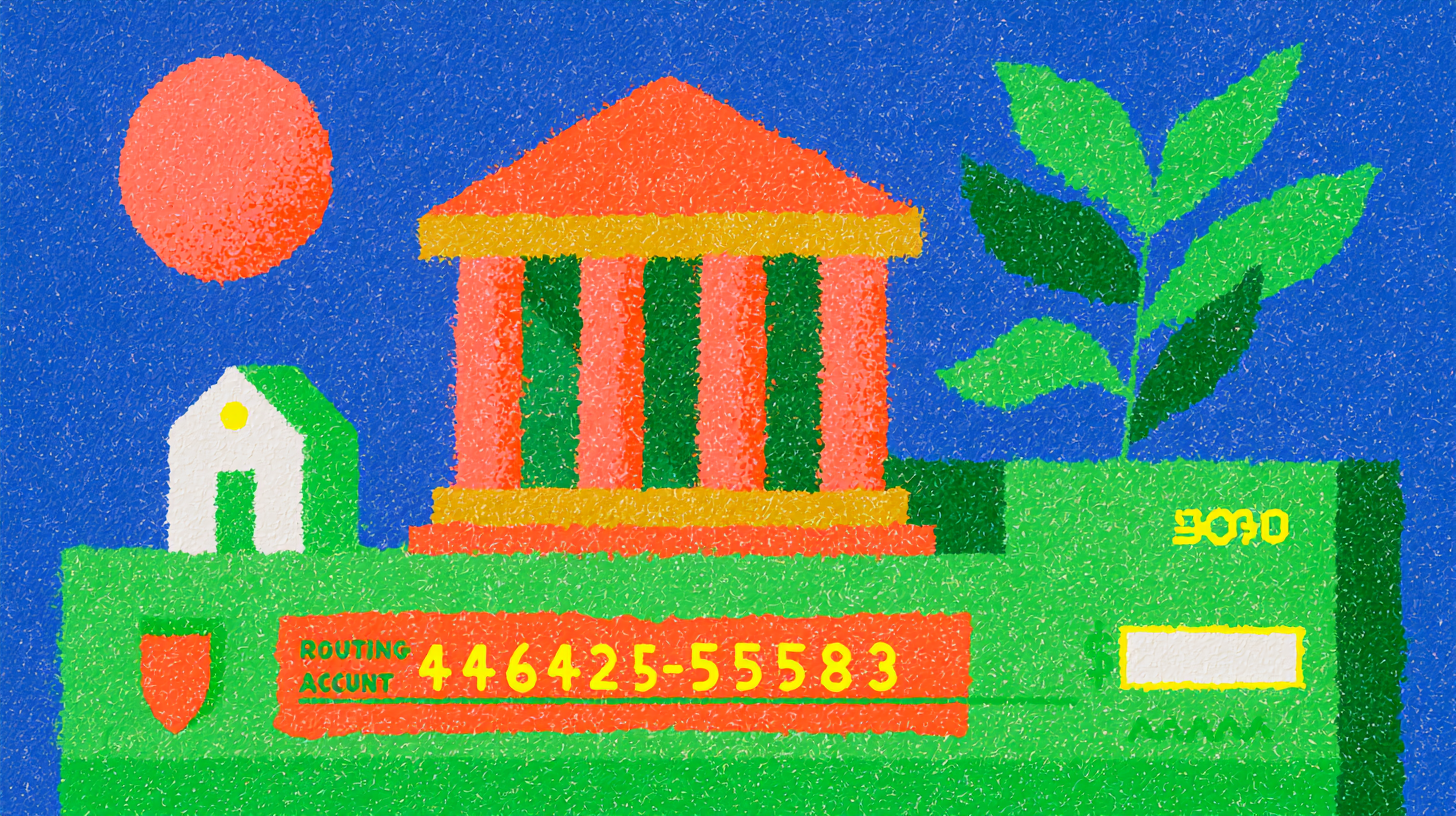
If you recently opened your first bank account in the U.S. or received account and routing numbers you do not fully understand, learning what these numbers mean can make everyday banking much easier. These numbers are commonly used for direct deposits, tax refunds, ACH transfers, and automatic bill payments.
Your bank account number works as the identifier for your personal account within the banking system. Combined with your routing number, it helps employers, government agencies, and payment platforms send money to the correct place securely.
What is a bank account number?
A bank account number is a unique sequence of digits assigned to an account holder by a financial institution. It functions much like a physical address for your account within the broader banking network, distinguishing your account from others and ensuring that transactions are accurately processed.
Structure of a bank account number
The format of bank account numbers varies by financial institution, but generally includes several key components:
- Bank code/institution number: identifies the financial institution
- Branch code/sort code: identifies the specific branch where the account was opened
- Account number: the unique identifier for your personal account
- Check digits: help detect typing errors
What is the bank account number used for?
- Payroll direct deposits
- IRS tax refunds
- ACH transfers between banks
- Automatic bill payments
- Identity verification with financial institutions
Account number vs. routing number: what is the difference?
Routing number:
A 9-digit code that identifies the bank or financial institution. It is the same for all customers at the same bank.
Account number:
Unique to your specific account. No one else at the bank has the same account number as you.
When setting up a direct deposit, you generally need to provide BOTH: your bank's routing number and your personal account number.
Where do you find your account number?
- On your checkbook checks (bottom section)
- In your bank's mobile app (account information section)
- On bank statements
- By contacting your bank's customer service
How to protect your account number
- Share it only with trusted entities like your employer or the IRS
- Monitor your account regularly for unauthorized activity
- Do not post it on social media or unsecured emails
- If you suspect your account number was compromised, contact your bank immediately
FAQ
Does my account number change if I lose my debit card?
Generally no. Your card number is different from your bank account number. When you lose your card, the bank issues a new card with a different number but your bank account number generally remains the same.
Can I have more than one account number at the same bank?
Yes. If you have multiple accounts (e.g., checking and savings) at the same institution, each account has its own unique number but they will share the same routing number.
Común is a financial technology company and not a bank. Banking services are provided by Community Federal Savings Bank, Member FDIC.

Checking account
The Pros and Cons of Using Checks at Banks in the U.S. | Común
8 min de lectura
Cashing a Check at Your Own Bank
When it comes to cashing a check, one of the simplest options is visiting your own bank or financial institution. Here's a step-by-step process for depositing or cashing a check:
- Endorse the Check: Flip the check over and sign your name on the back in the area designated for endorsement. Make sure your signature matches what's on file with the bank.
- Visit Your Bank: Head to the local branch of the bank where you have an account. Bring a valid form of ID, like a driver's license or passport.
- Approach a Teller: Depending on your preference and the bank's options, you can present the check to a teller for processing or use an ATM equipped with check deposit functionality to get your money.
- Provide Necessary Information: If you're dealing with a teller, you may need to provide additional account information, like your account number, the issuing bank, and the check amount. For ATM deposits, follow the on-screen prompts to enter the relevant details.
- Confirm Deposit or Receive Cash: After processing, you'll receive confirmation of the deposit into your account or the cash in hand if you chose to cash the check.
'Cashing' a Check Electronically
Beyond traditional in-person methods, many banks offer electronic options for depositing checks. This convenient approach lets you deposit checks without visiting physical locations or even cash checks without ID. Here's how it works:
- Mobile Deposit: Most banks provide a mobile app that lets you deposit checks using your smartphone or tablet. Simply endorse the check, take photos of the front and back, and submit them through the app.
- Online Banking: Some banks offer online banking portals where you can scan and upload images of checks for deposit. This method generally follows steps similar to mobile deposit and is accessible through a web browser.
- Electronic Funds Transfer: In some cases, you may have the option to electronically transfer a check's funds directly to your account without needing physical processing.
Pros and Cons of Checking Accounts
Checking accounts serve as the hub for many financial transactions, offering both benefits and drawbacks. Understanding these pros and cons is crucial to effectively managing your resources.
Advantages of Having a Checking Account
- Convenience: Checking accounts provide a convenient way to access and manage your funds for everyday expenses, like paying bills and making purchases with a debit card.
- Writing Checks: With a checking account, you can issue checks to people or businesses, offering a secure, traceable payment method.
- Direct Deposit: Many employers offer direct deposit, letting your paychecks be automatically deposited into your checking account, providing quick access to money.
- Online Banking: Most banks offer online banking services for checking accounts, letting you monitor account activity, transfer money, and pay bills from the comfort of home or on the go.
- Overdraft Protection: Some checking accounts come with overdraft protection options, which can help prevent declined transactions and fees in the event of insufficient funds.
Disadvantages or Limitations of Checking Accounts
- Fees: Some checking and money market accounts may have monthly maintenance fees, overdraft fees, limited withdrawals, or ATM fees, which can reduce your balance if not carefully managed.
- Minimum Balance Requirements: Certain checking accounts require you to maintain a minimum balance to avoid fees, which can be a challenge for those living paycheck to paycheck.
- Limited Interest: While some checking accounts offer interest on balances, rates are typically lower compared to savings accounts, resulting in minimal earnings on your deposits.
- Fraud Risk: Issuing checks or using a debit card linked to your checking account exposes you to the risk of fraud or unauthorized transactions, requiring vigilance and prompt reporting of any suspicious activity.
By carefully weighing the advantages and disadvantages of checking accounts and considering key factors when selecting the right account, you can effectively manage your finances and get the most out of your banking experience.
Where to Cash a Check
When it comes to cashing a check, you have several options available, ranging from a traditional bank to a retail store. However, not all locations are equal, and it's essential to weigh the pros and cons of each option before making a decision.
- Banks: Your bank is often the simplest option for cashing a check. You can visit a branch or use an ATM equipped with check deposit functionality. Many banks and credit unions also offer mobile deposit options, letting you deposit checks using your smartphone.
- Retail Stores: Some retail stores, like supermarkets, convenience stores, and big-box retailers, offer check-cashing services for a fee. This can be a convenient option if you don't have a bank account or need access to cash outside of banking hours.
- Check-Cashing Stores: Dedicated check-cashing stores specialize in cashing checks for a fee. While these establishments provide quick access to cash, their fees can be higher compared to other options, reducing the amount you receive.
- Prepaid Debit Card: Certain prepaid debit cards let you load checks onto the card electronically, providing instant access to funds. This can be a convenient option if you regularly use prepaid cards for financial transactions.
Where to Avoid Cashing a Check Due to Potential Fees or Limitations
- Payday Lenders: Avoid cashing checks at payday loan establishments, since they often charge exorbitant fees and may engage in predatory lending practices.
- Pawn Shops: While some pawn shops offer check-cashing services, their fees can be high, and they may require collateral or impose additional charges and higher costs to cover transactions.
- High-Fee Retailers: Be careful when cashing checks at retailers that charge high fees for the service, since these fees can significantly reduce the amount of cash you receive.
When deciding where to cash a check, consider factors like convenience, fees, and access to money. Choose a reputable establishment and service with transparent fee structures to make sure you get the most value from your check-cashing experience.
Comparing Checking and Savings Accounts
Understanding the differences between checking and savings accounts is crucial for effective financial management. Here's a concise comparison:
Interest Rates and Benefits of Savings Accounts
- Interest Rates: A savings account generally offers higher interest rates compared to a checking account, making it ideal for growing your money over time.
- Benefits:
- Goal-Oriented Saving: Savings accounts are great for setting aside funds for specific goals.
- Safety Net: They provide a financial cushion for unexpected expenses.
- Access to Funds: While there may be a limit on withdrawals, savings accounts offer relatively easy access to your money.
Considerations for Having Both Accounts at the Same Bank
- Convenience: Managing both a savings and checking account at the same bank offers ease in transferring money, viewing balances, and accessing statement cycles and bundled services.
- Relationship Benefits: Some banks or credit unions offer perks for customers with multiple accounts, like higher interest rates or waived fees.
- Simplified Experience: Consolidating a savings and checking account simplifies banking tasks like bill payments and money transfers.
- Diversification: However, having accounts at different banks provides diversification and can mitigate risks associated with a single financial institution.
Ultimately, the decision to have a savings and checking account at the same bank or spread across multiple financial institutions depends on your preferences, financial goals, and banking needs.
Loading a Check Onto a Prepaid Card
Loading a check onto a prepaid card is a convenient alternative to traditional banking methods, offering flexibility and accessibility for people who may not have or prefer not to use traditional accounts. Let's briefly break down the process and considerations associated with this method.
Prepaid Cards and Their Suitability
- Prepaid Cards: Reloadable payment cards not linked to traditional bank accounts.
- Loading Checks: Prepaid card providers offer options to load checks electronically through mobile apps or online portals.
- Suitability: Ideal for those without a bank account or who prefer alternative financial services.
Pros and Cons of Using Prepaid Cards
Pros:
- Accessibility and convenience for loading checks.
- Control over spending and security features.
Cons:
- Monthly fees for various transactions.
- Limited features compared to traditional bank accounts.
- Reload limits and lack of FDIC insurance.
Consider the convenience and accessibility of prepaid cards for check transactions, keeping in mind the associated fees and limitations.
You Can Open a Checking Account With Común Right Now!
Open your checking account¹ in 3 minutes with your country's ID²
Conclusion
Navigating the check banking landscape today requires a balanced understanding of the advantages and disadvantages inherent to this payment method. While checks offer flexibility and accessibility, they also come with potential fees and security risks. By weighing the pros and cons outlined in this article and exploring alternative banking options, people can make informed decisions to optimize their financial and cash management strategies.

Financial Education
Overdraft Fees on Bank Accounts: How to Manage and Avoid Them
8 min de lectura
How Does an Overdraft Happen on a Bank Account?
Overdrafts happen for various reasons. Sometimes it's an accidental oversight — maybe you forgot about an automatic payment or miscalculated your available balance. Common reasons include unexpected expenses, delayed direct deposits, or simply losing track of your spending. Understanding these causes can help you avoid overdrafts and keep a positive account balance.
What Are the Consequences of Overdrafts and Overdraft Fees?
Overdrafts can be more than just a hassle — they often come with substantial overdraft fees. Financial institutions typically charge an overdraft fee for each transaction that overdraws your account. Some banks only charge overdraft fees if a customer overdraws by a certain amount, or provide grace periods where no fees are charged if the customer replenishes their account quickly after an overdraft. These fees can add up fast if you're not careful.
Additionally, overdrafts can disrupt your financial health. They can lead to a negative balance, making it harder to cover transactions for essential needs and future purchases. If you overdraft frequently, it could even affect your credit score, which could impact your ability to get loans or other financial products in the future. Frequent overdrafts can also result in multiple overdraft fees, further compounding your finances.
Tips to Avoid Overdrafts
Avoiding overdrafts is about being proactive. Here are some practical tips:
Keep an Eye on Your Spending: Keep a close watch on your account balance and transactions. Use online banking or mobile deposit apps to monitor your spending in real time.
Set Up Low-Balance Alerts: Most banks offer low-balance alerts that notify you when your available funds are low. Setting up these alerts can give you a heads-up before an overdraft happens.
Keep a Cushion: Try to keep a cushion of extra funds in your checking account. Even a small cushion can prevent overdrafts caused by unexpected expenses.
Link to Savings: Consider linking your checking account to a savings account. This way, if your checking account runs out of funds, money can be automatically transferred from your savings to cover the shortfall.
Monitor Pending Transactions: Be aware of any pending transactions that aren't yet reflected in your account balance. This includes debit card transactions and automated payments. Making sure you have enough money in your account to cover pending transactions can help avoid overdrafts.
Set Up Direct Deposit: Setting up direct deposit can help maintain a minimum balance in your account, potentially avoiding monthly maintenance fees and other charges. Direct deposit can also be an option for waiving certain fees offered by banks.
Learn how to manage your bank account
Managing an Overdraft if It Happens
Sometimes, despite your best efforts, an overdraft can happen. Here's what to do if it happens to you:
Act Quickly: As soon as you realize you've overdrafted, deposit or transfer money into your account to cover the negative balance. Having enough money in your account to cover transactions is crucial to avoiding further overdrafts. This can minimize fees and prevent additional transactions from causing more overdrafts.
Contact Your Bank: Reach out to your financial institution's customer service. They may waive the overdraft fee if it's your first time or if you have a good banking history.
Review Your Spending: Look at what caused the overdraft and adjust your budget to avoid repeating the mistake. Consider setting up stricter monitoring or additional alerts to stay on top of your account balances.
Pay Off Overdrafts Promptly: Make sure any overdrafts and associated fees are paid off as soon as possible to avoid additional fees or returned transactions.
Scams That Can Result in Overdrafts
Beyond the usual causes of overdrafts, like accidental spending or unexpected expenses, there are numerous scams that can lead to overdraft situations. These scams often involve fraudulent checks and deceptive tactics that drain your account, resulting in negative balances and multiple overdraft fees. Here are some common scams to be aware of to protect your financial health.
Online Purchase Scams: In online purchase scams, scammers pose as legitimate buyers or sellers in online marketplaces. A scammer might send a check as payment for an item you're selling, which then bounces after you've shipped the item. Alternatively, you might receive a check for a purchase you made, only to find out it's fake, leading to an overdraft when the funds are withdrawn from your account.
Phishing Scams: Phishing scams involve scammers sending emails, texts, or phone calls posing as a bank or other trusted entity. They trick you into providing your account information, which they then use to withdraw funds or write fraudulent checks. This can lead to overdrafts if your account is drained without your knowledge.
Charity Scams: Scammers often exploit goodwill by posing as charitable organizations, especially during times of crisis. They send checks as a "refund" for a previous donation or as an overpayment, asking you to return part of the money. The check bounces, and you end up with an overdraft and lost funds.
Advance Fee Scams: In advance fee scams, scammers promise large sums of money, like lottery winnings or an inheritance, in exchange for a smaller upfront fee. They send a check to cover the fee, which you deposit and then send back the "fee." The check bounces, causing an overdraft and a loss of the amount sent.
Fraudulent Refund Scams: Scammers contact you claiming to be from a company you recently did business with, claiming there was an overpayment or billing error. They send a check and ask for a partial refund. When the check bounces, you're left with an overdraft and out-of-pocket expenses.
Romance Scams: In romance scams, scammers build a fake relationship with their victims, often online. Eventually, they ask for money, sometimes sending a check first to "prove" they're legitimate. When the check bounces, the victim is left with an overdraft and the emotional and financial fallout of the scam.
Contractor Scams: Fake contractors offer services like home repairs or improvements. They ask for an upfront payment, often sending a check as partial payment. Once the check bounces, you're left with an overdraft and no completed work.
Job Offer Scams: Scammers offer fake jobs and send a check for equipment or initial expenses, asking you to send back a portion. When the check bounces, you're left with an overdraft and no job.
Travel Scams: In travel scams, scammers offer discounted trips or vacation packages. They send a check for supposed travel expenses, asking you to send part of it back or to another party. The check bounces, leading to an overdraft and no vacation.
Using Overdraft Protection Services
Overdraft protection generally involves linking your checking account to another account, like a linked savings account or a line of credit. If you overdraft your checking account, funds are automatically transferred from the linked account to cover the transaction.
The main advantage is avoiding the high fees associated with overdrafts. However, there may be a transfer fee for the overdraft protection itself, and it can encourage spending beyond your means if not used responsibly. Not all overdraft protection plans are the same. Carefully review the terms and conditions, and choose one that fits your habits and financial needs. It's important to understand the overdraft coverage options provided by your financial institution. Look for services that offer coverage for debit card purchases, ATM transactions, and other charges associated with insufficient funds. Financial institutions play a crucial role in offering these services.
Using the right tools can make managing your finances much easier and help you avoid the stress of overdrafts. Común.app is designed to help you stay on top of your finances with features that can help prevent overdrafts.
- Real-Time Balance Monitoring: Común.app provides real-time updates on your account balances, ensuring you always know how much money you have available.
- Low-Balance Alerts: Set up low-balance alerts to get notified when your funds are running low, helping you avoid overdrafts before they happen.
- Automatic Transfers: Link your checking account to your savings account within Común.app to enable automatic transfers. This way, if your checking account balance gets too low, funds can be transferred from your savings to cover transactions.
- Spending Insights: Común.app offers insights into your spending habits, helping you identify areas where you might be overspending and need to cut back to maintain a positive balance.
By integrating Común.app into your financial routine, you can take proactive steps to manage your money effectively, avoid overdraft fees, and keep your account in good standing.
Conclusion
Overdrafts on bank accounts can be a significant financial burden, but with the right knowledge and tools, you can effectively manage and avoid them. Understanding what overdrafts are and their potential consequences is the first step toward proactive financial management. Even if an overdraft happens, acting quickly, contacting your bank, and reviewing your spending habits can help minimize the impact and prevent future issues. Additionally, being aware of various scams that can lead to overdrafts, like online purchase scams, phishing scams, and advance fee scams, can protect you from falling victim to these fraudulent schemes.
Using tools like Común can further simplify your financial management. With features like real-time balance monitoring, low-balance alerts, automatic transfers, and spending insights, Común.app helps you stay on top of your finances and avoid the stress of overdrafts. By incorporating these strategies and resources into your financial routine, you can maintain a healthy account balance, avoid unnecessary fees, and ensure your financial well-being.
Conclusión
Los sobregiros en cuentas bancarias pueden ser una carga financiera significativa, pero con el conocimiento y las herramientas adecuadas, puedes gestionarlos y evitarlos eficazmente. Entender qué son los sobregiros y sus posibles consecuencias es el primer paso hacia la gestión financiera proactiva. Incluso si ocurre un sobregiro, actuar rápidamente, comunicarte con tu banco y revisar tus hábitos de gasto puede ayudarte a minimizar el impacto y prevenir problemas futuros. Además, ser consciente de varias estafas que pueden llevar a sobregiros, como estafas de compras en línea, estafas de phishing y estafas de tarifas por adelantado, puede protegerte de caer víctima de estos esquemas fraudulentos.
Usar herramientas como Común puede simplificar aún más tu gestión financiera. Con características como monitoreo de saldo en tiempo real, alertas de saldo bajo, transferencias automáticas y perspectivas de gastos, Común.app te ayuda a mantenerte al tanto de tus finanzas y evitar el estrés de los sobregiros. Al integrar estas estrategias y recursos en tu rutina financiera, puedes mantener un saldo saludable en tu cuenta, evitar tarifas innecesarias y asegurar tu bienestar financiero.
Immigration
Bank Fees for Immigrants: Common vs. Competitors
8 min de lectura
For immigrants in the U.S., bank fees can amount to hundreds of dollars a year. Común stands out by offering a monthly-fee-free account, no minimum balance, and no SSN requirement. Compared with competitors like Seis and Majority, Común eliminates fixed fees while still providing full services in Spanish.
Choosing the right bank account can save you hundreds of dollars a year. For the immigrant community in the U.S., comparing fees is especially important because many traditional accounts charge fees that directly affect the monthly budget. We analyzed the main options available.
Fees at Traditional Banks
Major U.S. banks such as Bank of America, Chase, and Wells Fargo charge between $6 and $25 per month to maintain a checking account, with minimum balance requirements of $1,500 to $25,000 to avoid those fees. They also charge overdraft fees ($35 per transaction), out-of-network ATM withdrawal fees ($2.50-$5 per withdrawal), and international transfer fees ($25-$45 per wire transfer). For a newly arrived immigrant without credit history or a high balance, these costs add up quickly.
Común: No-Fee Account for Immigrants
Común offers a checking account with no monthly fee, no minimum balance required, and no overdraft penalty in many cases. It does not require an SSN — it accepts a passport, consular ID, and more than 100 Latin American IDs. Customer service is completely in Spanish. Account opening takes minutes from a mobile phone. It allows instant domestic transfers at no cost between Común users. It is the option designed specifically for the Latino community in the U.S.
Majority: Monthly Membership with International Benefits
Majority charges $5.99 per month as a base membership (down from $14.99). In return, it offers unlimited international calls to selected countries, roaming mobile data in more than 50 countries, and discounts at participating merchants. If you actively use international calling and travel benefits, the membership may be worth it. However, if you only need a basic bank account, you are paying for services you may not use.
Seis: Account for Visa Workers
Seis is designed for expats and visa workers in the U.S. It offers an account without an SSN using a visa and passport. Fees vary by plan: the basic account has limits on the number of free transactions. It is more geared toward professionals with work visas (H-1B, L-1) than the immigrant community at large. Its interface is available in multiple languages, including Spanish.
Direct Fee Comparison
In terms of monthly fee, Común charges $0, Majority charges $5.99/month, and traditional banks charge between $6 and $25. The minimum balance requirement is $0 at Común, $0 at Majority, and between $1,500 and $25,000 at traditional banks. Regarding SSN requirement, Común does not require it, Majority does not either, while traditional banks generally do. All three have FDIC or equivalent deposit protection.
Which Option Is Best for You?
If you are looking for the account with the lowest total fees and do not need unlimited international calls, Común is the most economical option. If you travel frequently or call abroad often, Majority’s membership may be worth it. Traditional banks only make sense if you already have the required minimum balance or if you need specific services such as mortgages or investment accounts.
Frequently Asked Questions About Bank Fees
What bank fees are most common in the U.S.?
The most common are: monthly maintenance fee ($6-$25), overdraft fee ($35 per transaction), out-of-network ATM fee ($2.50-$5), and international wire transfer fees ($25-$45). Digital banks like Común eliminate most of these fees.
Can I avoid bank fees at a traditional bank?
Yes, usually by maintaining a monthly minimum balance (which varies by bank and account type), receiving direct payroll deposit, or being a student. However, for immigrants without credit history or with variable income, meeting these requirements can be difficult at first.
Are ATM fees unavoidable?
No. Multiple digital banks offer free access to ATM networks (Allpoint, MoneyPass) with thousands of fee-free locations across the U.S. Común provides access to fee-free ATMs within its network. Outside the network, typical charges are $2.50-$5 from the ATM plus whatever your bank charges.
What is an overdraft fee and how can I avoid it?
An overdraft fee occurs when you spend more money than you have in your account and the bank covers the difference by charging you a penalty (typically $35). You can avoid it by activating low-balance alerts, linking a savings account as backup, or choosing a bank that does not charge overdraft fees — some digital accounts decline the transaction instead of charging a penalty.
Is it worth paying a monthly membership for a bank account?
It depends on the included benefits. A $5.99-$14.99 monthly membership may be worth it if it includes services you actively use (international calling, travel insurance, cashback). If you only need an account for deposits, payments, and transfers, a free account like Común is more cost-effective.
Financial Education
How to Handle Lost or Stolen Checks: Steps and Precautions
8 min de lectura
If you lost a check or it was stolen, contact your financial institution right away to request a stop payment. With Común you can lock your card instantly from the app and reach support 24/7 by chat, email, phone, or WhatsApp.
What Is a Check and How Do You Cash It?
Checks are used as a form of payment, allowing individuals and businesses to transfer funds without the need for physical cash. A check is a specific amount of money from the check writer's account assigned to a check recipient (the payee). The check is typically written, dated, and signed, acting as an instrument that directs a bank to pay a recipient.
Before cashing a check, make sure all the details are correct and the check is valid. Verify the payee name, the written amount, the date, and the issuer’s signature. Also sign your name on the back of the check in the designated endorsement area, as this is required for banks to process checks. Take the endorsed check to your bank or use an ATM or mobile banking app if your financial institution offers check deposit services. You may also be asked to provide valid identification.
If you are depositing it, fill out a deposit slip if necessary, and the funds will be credited to your account. If you are cashing it, the bank will give you the amount in cash after deducting any applicable fees. If you deposited the check, it may take a few days for the check to clear and for the funds to become available in your account, depending on your bank’s policies.
Find more information about what a check is and how to cash it here.
Realizing a Check Is Missing: Stay Calm and Act Fast
Losing a check can feel overwhelming, especially if you are new to banking. The first step in handling a lost or stolen check is to stay calm. Panicking will not help, and thinking clearly and quickly is your best ally here. Take a moment to retrace your steps. Sometimes, the check may simply be misplaced rather than lost. Check all possible places where it might be. If it truly has disappeared, it is time to act quickly to prevent any potential misuse of your bank account or savings account.
Contact Your Bank: The First Line of Defense
Your bank or credit union is your best friend in this situation. As soon as you realize a check is missing, contact your bank immediately and begin monitoring bank accounts for signs of identity theft. Most financial institutions have a dedicated customer service line for such emergencies. Be ready to provide account information such as the check number, amount, and the date it was issued. The faster you notify them, the better they can help protect your account from fraudulent activity and identity theft.
Request a Stop Payment on a Lost or Stolen Check
After informing your bank, the next crucial step is to request a stop payment on the lost check. This action prevents the check from being processed if someone tries to cash it. Make sure to file a stop payment request for the lost or stolen check. There may be a fee for this service, but it is a small price to pay for the security it provides. Be sure to obtain confirmation from the bank that the stop payment has been successfully placed on your bank account.
File a Police Report: When to Involve Authorities for Identity Theft
If you suspect your check was stolen, it is important to file a police report with your local police department. This step not only helps with the theft investigation, but also provides you with a record of the incident, which can be useful for bank claims and insurance purposes. When filing the report, provide all relevant details, including any suspicions you may have about mail theft or check fraud. Reporting the incident to the appropriate government agency can also be beneficial in cases of identity theft.
Prevent Future Problems: Best Practices for Check Security
Prevention is always better than cure. To avoid losing checks in the future, consider these best practices:
Keep checks in a safe place: Store your checkbook in a secure but easily accessible location. Keeping it out of sight from prying eyes can help prevent potential theft. Consider using a locked drawer or a safe for added security.
Use electronic payments: Whenever possible, opt for direct deposit or electronic transfers, which are more secure and convenient. Direct deposits not only simplify your payments, but also reduce the risks associated with physical checks, such as mail theft or check fraud. Many financial institutions offer premium accounts with direct deposit options, ensuring your funds are transferred securely and quickly. In addition, you may earn a higher annual percentage yield on your savings and checking balances based on your direct deposit activity and qualifying deposits. To qualify for specific interest rates, you can use direct deposit, which includes payroll, pension, or government payments.
Regularly monitor your accounts: Frequently review your bank statements and account activity for unauthorized transactions or signs of check washing attempts. Set up alerts with your bank or credit union to notify you of any unusual activity. This vigilance is crucial for both your checking and savings balances, helping you detect fraudulent activity early and take immediate action.
Shred old checks: Properly dispose of old or unused checks by shredding them to prevent any misuse. Counterfeit checks are a common problem, and shredding helps keep a secure paper trail. Make sure any document containing your account number or payment information is completely destroyed before discarding it.
Be cautious with the mail: Avoid sending checks through outgoing mail, as this can expose you to the risk of mail theft. Instead, deposit them directly at the post office to ensure they are handled securely. For added security, consider using certified mail for important payments to create a traceable record of your transaction. Alternatively, use P2P transfers or electronic transfers to send money to friends, family, or anyone with a bank account in the U.S., highlighting the speed, simplicity, and security of these transactions.
Educate yourself about check fraud: Familiarize yourself with common check fraud schemes, such as check washing and counterfeit checks. Understanding these threats can help you recognize suspicious activity and protect your finances more effectively.
Protect your account information: Keep your account number, mobile number, and other personal details confidential. Sharing this information carelessly can make you a target for fraud. Always verify the identity of anyone requesting your account details.
By following these steps, you can effectively handle and prevent problems with lost or stolen checks. Remember, acting quickly and keeping your bank informed are key to protecting your finances and preventing someone from attempting fraud using your account information. Adopting these best practices will help you maintain a secure financial environment and give you peace of mind.
Now that you know how to handle lost or stolen checks, it is time to take control of your finances with ease. At Comun.app, we offer secure and easy-to-use solutions so you can manage your money without complications. Open your account in minutes and start enjoying the benefits!
What do I do if I lost a check or it was stolen?
Contact your financial institution right away to report the loss and request a stop payment. Also let the person who issued the check know, since they may need to issue a new one.
How do I lock my card if I suspect fraud?
You can lock your card instantly from the Común app, no phone call needed. Review your recent activity and report any transaction you don't recognize.
How do I contact Común support for an urgent issue?
Común offers 24/7 support through in-app chat, email, phone, and WhatsApp.
Frequently asked questions
What should I do first if I lost a check?
Contact your financial institution right away to request a stop payment, and let the person who issued it know.
Can I lock my Común card myself?
Yes, you can lock it instantly from the app without needing to speak with support first.
How do I report a transaction I don't recognize?
Contact Común support through chat, email, phone, or WhatsApp, available 24/7.
Am I liable if someone cashes a stolen check with a forged signature?
Generally not, if you report it right away to your financial institution; exact protections vary by case.
What do I do if my lost check was already cashed by someone else?
Contact your financial institution and the check issuer right away to start a claim.
How do I prevent losing checks in the future?
Consider receiving payments via direct deposit or electronic transfer instead of paper checks, and store any checks you do receive somewhere secure.
Financial Education
Online Banking Security: Protect Your Account Information
8 min de lectura
Protecting your information in online banking starts with simple good habits: use unique passwords, turn on two-factor verification when available, and check your activity often. With Común you can lock your card instantly from the app if something looks suspicious.
The convenience of managing your financial transactions online through digital banking has become increasingly popular. However, with the rise of digital banking comes the need for greater security to protect personal and financial information. Here's how you can safeguard your bank account information while enjoying the benefits of online and mobile banking. Aiming for the most secure online banking possible is essential, since it involves implementing industry-standard security technology, multi-factor authentication, alert notifications, and encouraging people to take proactive security measures.
Understanding Online Banking
Online banking, offered by most traditional banks, credit unions, and online-only banks, lets customers pay bills, transfer funds, and manage their financial accounts over the internet. Whether you're dealing with a large bank or a local credit union, these institutions offer secure online banking services tailored to their customers' needs. This can be accessed through a bank's website or a mobile banking app, offering the convenience of banking anytime, anywhere. As banking has evolved, security measures to protect online bank account information must also advance.
Common Threats in Online Banking
Online banking security is paramount, since various threats could compromise your bank accounts. Common online threats include:
- Phishing Scams: Identity thieves send fraudulent communications, often by email, to access your online banking information.
- Malware: Malicious software designed to infiltrate your device and steal data related to your financial accounts.
- Identity Theft: Criminals can use personal information to open new accounts or access existing ones.
- Data Breach: A significant risk where sensitive information is accessed without authorization, potentially affecting numerous accounts.
Understanding these risks is crucial to maintaining online banking security. Banks and credit unions often update their security features to protect against such threats, making it important for users to follow recommended security measures. Keeping online banking secure is a collective effort involving secure banking technology, vigilant fraud monitoring, and informed users who are aware of risks like phishing scams and hacking attacks.
Regain Control and Peace of Mind With Común's Security Measures
- Log In Easily and Securely: Use Face ID or Touch ID for quick access to your Común account.
- Get Instant Notifications: Stay on top of your purchases with instant alerts from Común.
- Manage Your Card With Ease: Freeze and unfreeze your Común card whenever you need to.
Open your bank account¹ in 3 minutes with your country's ID²
Your Money Is in Good Hands With Común
- FDIC-Insured: Funds in your Común account are insured up to $250,000 by Community Federal Savings Bank, Member FDIC.
- VISA Protections: Your Común card is protected by VISA's guarantee against unauthorized charges.
Monitoring and Protecting Your Accounts
Regularly monitoring your account balances and transactions is vital. Set up banking alerts through your financial institution to notify you of any unauthorized transactions. When banking online, especially on public Wi-Fi networks, it's a good idea to use a Virtual Private Network (VPN) to secure the connection and protect your data from being intercepted. Also, make sure all devices used for online banking have secure software and are regularly updated.
Most banks, including credit unions and traditional banks, use robust banking security measures to protect online and mobile banking operations. However, responsibility also falls on the customer to use trusted mobile banking apps, available from sources like Google Play or the App Store, emphasizing the importance of security when choosing apps, and to contact the bank right away if any suspicious activity is detected. The Federal Deposit Insurance Corporation (FDIC) plays a crucial role in improving online banking security and protection by insuring money at online banks and protecting customer data security, thereby safeguarding customer funds and privacy.
The Importance of Strong Passwords
Online banking security starts with strong, unique passwords. Creating strong passwords means using a combination of at least 12 characters, including uppercase letters, lowercase letters, numbers, and symbols. Avoid using the same password across multiple online accounts, and update your passwords regularly to protect your bank account information. A password manager can help generate and securely store these passwords. It's crucial to apply this practice to all accounts, especially your savings account, to protect it from unauthorized access and potential hacking threats.
The Role of Encryption in More Secure Online Banking
Encryption serves as a critical layer of security to protect your account information while banking online. When you access your bank account through a bank's website or a mobile banking app, your personal and financial information is encrypted. This encryption makes it harder for hackers to intercept and decode data during transmission between your device and your bank's servers, keeping online banking secure.
Technologies like SSL (Secure Socket Layer) and HTTPS (Hyper Text Transfer Protocol Secure) are fundamental to ensuring a secure connection when banking online. These security measures are used by most banks and credit unions to protect financial transactions. To verify a secure connection, users can look for the lock symbol in their browser's address bar on banking websites, confirming the presence of HTTPS, which indicates web communication is protected by encryption.
Staying Educated on the Latest Security Trends
Staying informed about the latest security features and trends is crucial for anyone using online and mobile banking platforms. Traditional banks, online banks, and credit unions continually update their security protocols to counter emerging threats and ensure secure online banking. By regularly reading updates from your financial institution and taking advantage of resources like banking alerts and advice from bank representatives, you can improve your ability to protect your bank accounts from unauthorized transactions and identity theft.
Additionally, using a Virtual Private Network (VPN) can add an extra layer of security when accessing your financial information on public Wi-Fi networks. A VPN creates a secure, private connection over a less secure network, like public Wi-Fi, ensuring your online banking activities are protected from prying eyes.
Enrolling in two-factor authentication (2FA) or multi-factor authentication (MFA) is another strong security measure recommended by most banks. This approach requires more than one form of verification to access your online bank account, significantly reducing the risk of unauthorized access.
By understanding the importance of these security practices and adopting measures like using strong, unique passwords, regularly updating them through a password manager, and monitoring your account balances, you can safeguard your financial life and enjoy the benefits of digital banking with confidence. Whether you need to transfer money, pay bills, or simply check your savings or money market accounts, being proactive about online security can protect you from potential cyber threats and improve your overall online banking experience.
Protect Your Account
In conclusion, the growing popularity of online and mobile banking requires robust security practices to protect sensitive personal and financial information. By understanding various threats like phishing, malware, and data breaches, and using strong security measures like strong, unique passwords, encryption, and multi-factor authentication, people can significantly improve their online banking security.
It's also crucial for users to stay informed about the latest security trends and updates provided by their financial institutions. Taking proactive steps, like using a VPN on public networks and regularly monitoring account activity, helps ensure a secure, efficient digital banking experience. By adopting these practices, users can protect their financial transactions and personal details, maintaining peace of mind while enjoying the convenience of modern banking technology.
What are good security practices for online banking?
Use unique, hard-to-guess passwords, avoid accessing your account over public wifi, and review your activity regularly.
What security features does Común offer?
Instant card lock from the app, PIN or Face ID login, and 24/7 support through chat, email, phone, or WhatsApp.
How do I recognize a fraud or phishing attempt?
Be wary of urgent messages asking you to confirm information or click links. Común will never ask for your password or access codes by message or phone call.
Frequently asked questions
What is two-factor verification and why does it matter?
It's an extra layer of security that requires a second code beyond your password, making it harder for someone else to access your account even if they have your password.
Is it safe to use public wifi to check my bank account?
It's not recommended — use mobile data or a secure network when accessing financial information.
How do I lock my Común card if I suspect something's wrong?
Directly from the app, instantly, with no need to call support.
Will Común ask for my password by phone or message?
No, never. If someone asks for it claiming to be from Común, it's a fraud attempt.
How often should I check my bank activity?
Ideally every few days, to catch any activity you don't recognize as early as possible.
What do I do if I get a suspicious message asking for my information?
Don't reply or click any links — contact Común support directly through the app's official channels.

Checking account
Open an Online Banking Account
8 min de lectura
Opening an online banking account is very easy these days. We’ll show you the key factors you should consider when choosing the digital bank that best fits your profile, since there are multiple options on the market. We’ll also explain how to open an online account effectively.
Opening an online banking account in the U.S. can be done in minutes from your cell phone. All you need is a valid ID, a U.S. phone number, and your address. Platforms like Común do not require an SSN and accept more than 100 Latin American IDs, making the process accessible for immigrants from day one.
What is online banking and what are its advantages?
Online banking consists of managing your money and carrying out financial transactions through the internet or a mobile app, without needing to visit a physical bank branch. This includes checking your balance, making transfers, paying bills, depositing checks, and more.
The main advantages are 24/7 availability, access from anywhere, no lines or office hours, and generally lower fees than traditional banks because they do not have physical infrastructure costs.
How to choose the best online bank for you
Not all online banks are the same, especially for immigrants. The most important factors to consider are:
- Opening requirements: do they ask for an SSN? Do they accept a passport or consular ID?
- Fees: monthly fee, minimum balance, ATM charges
- Language: do they offer support in Spanish?
- Security: is it backed by the FDIC?
- Features: Zelle, direct deposit, remittances, virtual card
Steps to open an online banking account
The general process for opening an online banking account in the U.S. is as follows:
- Download the chosen bank’s app
- Provide your full name, date of birth, and address
- Upload a photo of your ID (passport, national ID, consular ID)
- Verify your phone number with an SMS code
- Accept the terms and conditions
- Receive approval (usually instant or within minutes)
- Request your debit card and start using your account
Open an account without an SSN: options for immigrants
Many traditional banks require an SSN to open an account. However, Común allows you to open an account with a passport, consular ID, or other forms of Latin American identification. There is no minimum balance, no monthly fee, and the process is completely in Spanish. The account includes a VISA debit card, early direct deposit, and remittances starting at $2.99.
Frequently asked questions about opening an online banking account
Can I open an online bank account without going to a branch?
Yes. Digital banks like Común let you open an account 100% online from your phone, without visiting any branch. All you need is your ID and a U.S. phone number. The process takes about 3 minutes, and approval is instant in most cases.
What documents do I need to open an online bank account in the U.S.?
It depends on the bank. Traditional banks generally ask for an SSN or ITIN, photo ID, and proof of address. Común accepts more than 100 Latin American IDs — passport, consular ID, national ID — without needing an SSN or minimum balance. You only need a U.S. phone number and your current official identification.
Are online banking accounts safe?
Yes, if they are backed by the FDIC. Regulated digital banks in the U.S. offer the same level of protection as traditional banks: up to $250,000 per account holder insured federally. They also use SSL encryption, two-factor authentication, and anti-fraud systems. Común operates through Community Federal Savings Bank, an FDIC member.
Can I have more than one online bank account at the same time?
Yes, there is no legal limit. Many people have accounts at multiple banks: for example, one for everyday spending and another for savings. You can have a Común account for day-to-day use in the U.S. and keep your account in your home country to receive funds when you travel.
How long does it take for an online bank account to be activated?
Most digital banks approve the account within minutes. The physical card arrives by mail in 5-10 business days. However, the virtual card is available as soon as you are approved, allowing you to make online purchases or add the card to Apple Pay or Google Pay right away.
Can I receive my paycheck in an online banking account?
Yes. All online banking accounts that have a routing number and account number accept payroll direct deposit. Común has its own routing number and lets you generate a pre-filled form to give to your employer. Many digital accounts also advance the deposit up to 2 days before the official date.
Instant payments
Learn how to use Cash App for your finances in the U.S.
8 min de lectura
The popularity of digital personal finance applications continues to grow among users in the United States. According to recent data, 8 out of 10 Americans have embraced the digital economy by using financial applications for purchases, digital payments, online banking, and more.
Cash App is one effective alternative to facilitate personal finance management. In 2024, it recorded 57 million monthly active users and $16.2 billion in earnings.
If you're curious to know what Cash App is, how it works, all its benefits, and its associated fees, below we provide all the details so you can decide whether it is the best option to meet your needs.
What Is Cash App and What Is It Used For?
Cash App is an alternative to traditional banking that operates through a mobile financial services application. Its functionality is highly versatile, as it not only allows users to send and receive money but also to make purchases and receive direct deposits from payroll.
The application was developed by Block Inc. (formerly Square Inc.) and aims to offer a comprehensive and more accessible service through digital solutions.
To open an account on Cash App, you must meet certain requirements, such as having a Social Security Number (SSN) and a U.S. bank account.
Cash App: How It Works, What Features It Offers, and What Fees It Charges
Cash App is available through its official mobile application, in which you must complete the registration and verification process to access all available features. Once completed, you may link a bank account if needed.
You will also have a Cash Tag: a unique username that allows you to send and receive money easily.
The following are the main features offered by the Cash App application:
Sending and Receiving Money
Cash App allows instant transfers between users of the application free of charge (free instant transfers; standard network fees may still apply).
Cash Card
This is a free debit card linked to your balance. It allows you to make online and in-store purchases and withdraw cash from ATMs.
QR Code
Pay directly in physical stores using a QR code.
Cash App Pay
A payment method that allows users to complete transactions in online stores and directly through the application.
Cash Boosts
You can obtain discounts at selected physical and online establishments.
Fees for Using Cash App
Although many of Cash App’s features are free, such as account maintenance, use of the Cash Card, and transfers between Cash App accounts. Below is a table with some of the main fees and charges associated with the aforementioned features:
| Service | Cost |
|---|---|
| Instant transfer to bank card | 0.5 % to 1.75 % |
| Standard transfer (1 to 3 days) | Free |
| ATM withdrawals | 2.50 USD per withdrawal |
Cash App registration requirements
If you want to use Cash App to control your finances, make sure you meet the following requirements:
Have a U.S. phone number
You can also use an email to verify your identity.
Reside in the United States or England
Cash App is only available in the United States and the United Kingdom. The application and information are available in English only.
Have a bank account
It is recommended if you want to have access to all the functions of the application.
Do the identity verification
This will allow you to access features such as sending or receiving more than 1,000 USD over 30 calendar days and applying for the Cash Card.
But remember that to perform identity verification you need:
- Full name
- Birthdate
- Social Security Number (SSN)
How secure is Cash App? : 9 important considerations
The issue of security is one of the most relevant in relation to financial services applications. You should always verify that your provider has the necessary measures in place to keep your assets and personal data safe.
For its part, Cash App has the following security measures, among others:
Multifactor authentication
Cash App requests identity authentication via email or SMS. In addition, it allows you to activate a PIN or biometry to log in.
End-to-end encryption
Your personal data stored in Cash App is secure through TLS/E2E.
System for the detection and prevention of illegal activities
Cash App has implemented technologies trained to detect unusual behavior and prevent fraud, such as machine learning and algorithms.
Subsequent payment monitoring
The application has an additional monitoring system to do a double check and detect unusual activities.
Although the above features offer some certainty regarding the application's security measures, it's always important to take into account some considerations:
Turn off automatic login
To prevent an outsider from accessing your account without your authorization, avoid using automatic login. Instead, use strong, unique passwords and enable 2-step authentication.
Beware of fraud
Stay alert to scams, either by phone or email. Never give out personal information or passwords through these means. If you need to contact application support, do so through official means.
Keep active alerts
Cash App allows you to receive alerts for your transactions directly on your cell phone. Make sure to keep them active.
Verify data before making transfers
Send money only to people you know and verify their information before confirming the operation, since once the money has been sent, it is not possible to recover it.
Activate the PIN to carry out transactions
You have the option of activating the PIN or biometric data to confirm your transfers before doing them, and avoid the use of your application by third parties in case of theft or loss.
Are you looking for more than just a payment app? Comun is your financial ally in the U.S. UU.
There is no doubt that Cash App is a popular alternative among those looking for a fairly comprehensive and easy-to-use financial solution.
But if you are looking for a financial ally that offers a simple and secure experience, with customer service and a platform also available in Spanish, we present Comun.
Comun goes beyond traditional limitations, so that immigrant communities in the United States have access to quality financial services, without complications. With Comun you can:
- Receive and send money conveniently, without complications and without the need for a traditional bank account.
- Open your Comun account with the qualified Official Identification of your country of origin.
- Get a simple mobile application for hassle-free daily international money transfers.
Open your Comun account today and breaks down the barriers of traditional financial services, language and cultural ones.
FAQs
If you still have questions about what Cash App is for and its features, check out our frequently asked questions.
What are Cash Boosts in Cash App?
These are instant discounts available on the Cash Card. To activate them, enter the mobile application and select “Cash Card”, followed by “Add Boost” and “Save Boost”. Select the discount you are interested in and it will be applied when you pay with your debit card.
What happens if I receive a lot of money through Cash App?
Some necessary checks may be activated starting at $1000.
How much is the maximum that can be sent via Cash App?
1000 USD over 30 calendar days for unverified users; if you verify your user, you can increase this limit to 20,000 USD.
What is Cashtag in the Cash App?
This is a unique username that is used so that other users of the application can send you money. It starts with the $ symbol followed by an identifier.

Financial Education
How To Register Your Business As An Immigrant
8 min de lectura
Registering a business as an immigrant in the U.S. generally involves choosing a business structure, obtaining an EIN from the IRS, and registering with your state. You don't need an SSN to get an EIN — an ITIN or foreign status works for this process.
Starting a business as an immigrant in the U.S. is an exciting step toward financial independence and long-term success. Fortunately, you don’t need U.S. citizenship or a Social Security Number (SSN) to register a business. Many immigrants successfully operate businesses using an Individual Taxpayer Identification Number (ITIN) and other available options. This guide walks you through the key steps to officially register your business, get the right tax IDs, and open a business bank account.
If you choose a Sole Proprietorship, you may need to register a Doing Business As (DBA) name, which allows you to operate under a name different from your personal name. For an LLC or Corporation, you’ll need to check your state’s Secretary of State website to confirm that your chosen business name is available. Each state has specific rules about what names can be used, so ensure yours complies with local guidelines.
What business structure should I choose?
Common options include sole proprietorship (simplest, no separation between personal and business liability), and LLC (separates personal assets from business liability, more paperwork).
Do I need a Social Security Number to register a business?
No — you can obtain an EIN (Employer Identification Number) from the IRS using an ITIN or by mail/fax if you don't have either an SSN or ITIN yet.
What are the basic steps to register my business?
Choose a business name and structure, register with your state, obtain an EIN from the IRS, and open a business bank account once you have your EIN and formation documents.
Frequently asked questions
Can I start a business in the U.S. without a Social Security Number?
Yes, you can obtain an EIN using an ITIN, or through an alternate IRS process if you have neither.
What's the difference between a sole proprietorship and an LLC?
A sole proprietorship has no legal separation between you and the business; an LLC separates personal assets from business liability but requires more paperwork.
How do I get an EIN?
Apply directly through the IRS website or by mail/fax — it's free and doesn't require a lawyer.
Do I need a lawyer to register my business?
Not necessarily for a simple structure like a sole proprietorship, though an LLC may benefit from professional guidance depending on complexity.
Can I use my personal bank account for my new business?
It's generally recommended to separate personal and business finances once your business is registered, for cleaner bookkeeping and liability protection.
What documents do I need to keep once my business is registered?
Your EIN confirmation letter, formation documents (for an LLC), and any state registration certificates.
Immigration
H-1B visa: what it is, requirements, and process explained for immigrants
8 min de lectura
Finding a path that gives you job opportunities in the United States can be hard work, especially if you’re unfamiliar with the different visa types offered by the U.S. government.
The H-1B visa is an option that could open the door to a new life in the U.S. In this guide, we explain what it is, what it’s for, who can apply, when it applies, and its benefits and limitations.
It’s essential to understand this visa’s features—as well as how it differs from other work visas—so you can ensure it fits your professional goals in the country.
With this information, you’ll be able to plan a strategy to obtain the visa and fully establish yourself in the United States.
What is the H-1B visa in the United States?
The H-1B visa is authorization granted to foreign workers to temporarily perform specialty occupations that generally require specialized knowledge and prior experience.
It is a nonimmigrant visa with an initial duration of 3 years and, in most cases, can be extended up to a maximum of 6 years.
There are exceptions, such as when the temporary worker is in the process of obtaining permanent residence, in which case the visa may be extended for a longer period.
4 main requirements to obtain the H-1B visa
Before starting the immigration process, you should know the H-1B requirements and verify that your background aligns with them to determine eligibility.
1. Minimum education level
To obtain an H-1B visa, you must have a higher education degree or its U.S. equivalent. The job offer must also be related to the specialty area of the degree presented.
2. Job offer from a U.S. employer
As with the EB-3 visa, the H-1B also requires a job offer from a U.S. employer, who must file Form I-129 with USCIS.
3. Common professions where it applies
Keep in mind that this visa is used for jobs requiring specialized knowledge, and openings most often arise in the following areas:
- Various branches of engineering.
- Information technology, such as programming, software development, etc.
- Sciences, such as chemistry, biology, and physics.
- Healthcare.
- Finance, economics, and accounting.
- Architecture, mathematics, and technical fields.
4. Annual visa cap and the lottery process.
Another key point is that this visa has an annual issuance cap, divided as follows:
- Regular H-1B: 65,000 per fiscal year.
- Advanced degree exemption: more than 20,000 for U.S. master’s and doctoral degrees.
Because filings often exceed these limits, USCIS established a selection system consisting of electronic registration and a random lottery.
The draw occurs in two phases: first the 65,000 regular slots are selected, and then 20,000 additional slots are drawn for U.S. advanced degree holders.
Between March and April, employers receive notification of the lottery results. If not selected, you may wait for a second round if quotas aren’t filled or, otherwise, apply the following year.
What is the H-1B application process?
Below is how the H-1B application process works.
1. Register in USCIS’s system
First, the U.S. employer must register the candidate on USCIS’s official site during the designated window, generally in March. The registration fee—listed on the same site—must also be paid.
If the candidate is selected, the employer receives a USCIS notice and can proceed to the next stage.
Note that before filing with USCIS, the employer must obtain a certified Labor Condition Application (LCA) from the Department of Labor (DOL).
2. Employer files the petition
After selection, the employer has 90 days to file Form I-129, Petition for a Nonimmigrant Worker, along with required documentation.
At this stage, it’s necessary to show the position is a specialty occupation and that the candidate meets the requirements.
3. USCIS review and approval
USCIS reviews the filing and, if needed, issues a Request for Evidence to seek additional information or clarification.
If everything is in order, the employer receives an approval notice, and the candidate proceeds with consular processing or a change-of-status request.
4. Consular processing or change of status
If the candidate is outside the U.S., they must attend a U.S. consulate, complete Form DS-160, and appear for a consular interview.
If the candidate is already in the U.S. under another status, the employer files the H-1B petition indicating the worker is in the United States.
In both cases, USCIS approval is required before visa issuance can proceed.
Benefits and limitations of the H-1B visa
H-1B holders enjoy several benefits that can improve their lives and those of their families; however, it’s also important to note the limitations.
Benefits
Lawful work in the United States
Although temporary, the H-1B allows you to work legally in the United States in your field of specialty. This can open many doors and strengthen your professional experience.
Potential path to permanent residence
H-1B workers may later pursue permanent residence (a Green Card) and extend benefits to immediate family members such as a spouse and unmarried children under 21.
Limitations
Maximum duration of 6 years
As noted, this visa does not automatically confer permanent residence; it lasts a maximum of 6 years. Still, it can be a first step toward it.
Employer dependency
This visa depends entirely on the employer extending the job offer and completing the filing process.
Annual cap
The visa is numerically capped, and filings typically exceed the annual cap, reducing the likelihood of selection.
To prevent these limits from becoming obstacles, consider planning ahead if you intend to pursue permanent residence. You can also evaluate other work visas, such as EB-2 and EB-3, which may be more suitable for long-term plans in the United States.
Take the next step on your immigration path with Común
Here we covered how to file for the H-1B visa, the requirements, benefits, limitations, and who it’s ideal for.
When you arrive in the United States, you’ll need an ally to help you manage your finances easily. Meet Común!
- Debit card for everyday purchases and payments.
- Fast money transfers to your home country.
- Secure payment options.
Open your Común account today and manage your money in the U.S.
Frequently asked questions
How do I go from H-1B to a Green Card?
Your employer must sponsor permanent residence under an employment-based category, file PERM with the DOL, and then file Form I-140.
How long does the H-1B last?
A maximum of 6 years.
How much does an H-1B visa cost?
Form I-129: from $460 to $780.
An anti-fraud fee may apply.





Thousands of immigrants are already achieving more with their money. You can too.
Comun is a financial technology company and not a bank. Banking services are provided by Community Federal Savings Bank; Member FDIC. The Comun Visa® Debit Card is issued by Community Federal Savings Bank, pursuant to a license from Visa U.S.A Inc. and may be used everywhere Visa Cards are accepted.
Comun is a fintech company and not a bank or licensed money transmitter.
* Results may vary. For a complete list of eligible IDs and application requirements, follow this link.
^ No minimums, no maintenance fees. ATM or transfer fees may apply. See app for fee details.
‡ Direct deposit funds are typically available when we receive the payment file, up to two days before the scheduled payment date. This early availability is not guaranteed.
** A service provided by Service UniTeller, Inc. Service UniTeller, Inc. is licensed in all states that require a license. Remittance fees start at $2.99 but may vary. Please check the app for more details. Comun Inc. may earn revenue from the conversion of foreign currencies.
† Funds in your account are FDIC insured up to $250,000 by ownership category through Community Federal Savings Bank (CFSB), Member FDIC, in the event CFSB fails.