Financial Education
What Is Direct Deposit?
What is direct deposit and how does it work in the U.S.? How to set it up, routing and account numbers, and benefits for immigrants.
8 min read

20 Apr 2023
Direct deposit is an electronic transfer that deposits your paycheck or benefits straight into your bank account, with no physical check required. It's the most common way employers pay in the U.S. With Común, you can receive your direct deposit and access your money up to 2 days before payday.
Direct Deposit Definition
Direct deposit is an electronic funds transfer method that lets an entity — an employer, the government, etc. — deposit money directly into the recipient's bank account. Unlike paper checks, this process eliminates the need to issue, deliver, and cash physical checks, saving time and resources.
Common Uses of Direct Deposit
- Employee payroll: One of the best-known uses of direct deposit is payroll management at companies. Instead of issuing checks to each employee, companies can deposit wages directly into employees' bank accounts.
- Government payments: Governments also use direct deposit to distribute payments to citizens, such as pensions, unemployment benefits, and tax refunds.
- Money transfers: People can also use direct deposit to send and receive money between bank accounts, making it easier to handle transactions and payments between friends, family, and businesses.
Advantages of Direct Deposit
- Speed: One of the biggest advantages of direct deposit is how fast the funds transfer happens. Direct deposits generally process faster than paper checks, letting recipients access their money sooner.
- Security: Direct deposit is a safer method than paper checks, since it reduces the risk of theft, loss, or check fraud.
- Time and resource savings: By eliminating the need to issue, deliver, and cash physical checks, both companies and recipients save time and resources. Direct deposit is also more environmentally friendly, since it reduces the amount of paper used in financial transactions.
- Control over your money: Direct deposit lets recipients access their money quickly and conveniently, giving them more control over their personal finances.
How to Set Up Direct Deposit
With mobile apps like Común, you can connect your direct deposit to your bank account in seconds. Común lets you connect your direct deposit right from the Común app, or if you'd rather your employer handle it, Común gives you a pre-filled form to hand to your employer. On top of the convenience, connecting your direct deposit with Común means the Común app gets you your pay up to two days early.
Conclusion
Direct deposit is a modern financial solution that offers speed, security, and convenience when transferring funds. Whether for payroll, government payments, or personal transfers, direct deposit has become a preferred way to handle transactions and manage money. Ultimately, this method simplifies our financial lives so we can focus on what really matters.
FAQ Schema (translate the JSON-LD block too — paste into the same embed)
Marcela/Eduardo: this post already has an FAQPage schema embed in Spanish. Translated version below — swap the text field, keep the JSON structure identical.
Q: What is direct deposit?
A: Direct deposit is an electronic transfer that sends your paycheck or benefits straight to your bank account, with no physical check needed. It's the most common way employers pay in the U.S.
Q: How do I set up direct deposit with Común?
A: To set up direct deposit with Común, you need your account number and routing number. You'll find them in the Común app, in your account section. Share them with your employer or HR.
Q: How long does direct deposit take to arrive?
A: Direct deposit usually arrives on the payday your employer sets. With Común, you can get paid up to 2 days early.
Q: Do I need an SSN to receive direct deposit?
A: Not necessarily. With Común, you can open an account using official ID from your home country and receive direct deposit without an SSN.
Q: What's the difference between direct deposit and a bank transfer?
A: Direct deposit is initiated automatically by your employer or payer every pay period. A bank transfer is something you initiate manually from your account. Direct deposit is faster and requires nothing further from you once it's set up.
Q: Is direct deposit safe?
A: Yes. Direct deposit is safer than a physical check because the money goes straight to your account with no risk of loss or theft. Común accounts are backed by CFSB, Member FDIC.
About Común
Común aims to support the Latino community in the United States. It offers a debit account that can be opened with more than 100 valid Latin American IDs and an app available in Spanish.
Visit Común's website or download the app for free to learn more about the full offer and applicable terms.
Olivia Rhye
Community Partner

.avif)
Immigration
What is SSN? Everything you need to know if you are a resident in the U.S.
8 min de lectura
An SSN (Social Security Number) is a 9-digit number issued by the U.S. government. It is required for working legally, filing taxes, and accessing financial services in the United States. As an immigrant, you may apply for an SSN if you have an eligible visa or Green Card — or use an ITIN as an alternative. If you have newly arrived in the U.S., you likely have questions about how to handle certain procedures. Therefore, we will explain what the SSN is, what it is for, how to apply for it, how much it costs, and what the benefits are of having this identifier.
What is the Social Security Number (SSN)?
The Social Security Number (SSN) is a series of 9 digits issued by the Social Security Administration (SSA, or Administración del Seguro Social in Spanish). It is issued to citizens, permanent residents, and eligible temporary residents, in accordance with their immigration status.
Its main function is to serve as a unique identification number that allows the government to track specific data for each person, such as their income, financial information, and employment history. This makes it possible to determine, in each particular case, eligibility to access Social Security benefits such as retirement, disability, among others.
In addition to facilitating access to these benefits, the Social Security card serves as official identification for employment onboarding, driver’s licenses (in some states), and opening bank accounts.
How to obtain the Social Security Number in the United States?
An important point about the Social Security Number in the U.S. is that there are three different types:
- For citizens born in the United States
- For citizens born abroad
- For non-citizens with lawful resident status
In the case of lawful permanent residents, it is necessary to obtain a Green Card or a visa with valid work authorization issued by the Department of Homeland Security (DHS), such as H-1B or L-1.
The process of obtaining the SSN varies depending on immigration characteristics. If you requested the SSN during your visa processing—through the “Application for Immigrant Visa and Alien Registration” form or the DS-260 electronic format, “Immigrant Visa Electronic Application”—DHS will contact the Social Security Administration directly to carry out the process.
Get your SSN in just 4 steps
If you did not request the SSN during your visa process, the first thing you should do is gather the following documentation:
- A valid passport with the Machine Readable Immigrant Visa (MRIV) or a Permanent Resident Card (Form I-551)
- Birth certificate
Once you have gathered the documentation, follow these steps:
- Download and complete the SS-5 application
- Go to an SSA office
- Present the original documents
- Wait 7 to 14 days to receive the Social Security card by mail
What to do if your SSN card is lost?
If your Social Security card is lost, it is important to take security measures immediately to avoid identity theft, fraud, or misuse of your personal data.
Report the theft or loss of this document to the police and then file a complaint with the Federal Trade Commission (FTC).
Afterwards, go to the Social Security Administration, complete the SS-5 form again, and bring the corresponding documents for replacement of the card.
Avoid carrying the card with you unless necessary and keep it in a safe place. Generally, you do not need to present your physical card but rather the number, which does not change even if you replace the card.
5 benefits of having an SSN
If you are still wondering what the SSN is for, you should know that this document provides multiple benefits of different kinds, such as the following:
1. Employment
For permanent residents, the greatest benefit of the SSN is that it grants work authorization, enables income tracking, as well as the payment of taxes and legal obligations. Presenting this document is an indispensable requirement during formal hiring processes in the United States.
2. Credit
The SSN is also typically required to apply for loans and credit from banks and financial institutions in the United States; in this way you can access assets such as real estate, a car, or other types of services.
3. Banking services
Accessing financial services is essential for immigrant workers in the United States, whether to receive wages or send money to their countries of origin. Generally, the SSN is a requirement to access a bank account and credit and debit cards, among other services.
4. Government benefits
There are other benefits available, such as unemployment insurance in the event of dismissal, and access to retirement and Medicare starting at age 65, for eligible permanent residents.
5. Taxes
The SSN functions as the taxpayer’s personal identification number, which makes it easier to file tax returns and report income and expenses. Another alternative for residents who do not have an SSN is the ITIN, issued by the Internal Revenue Service (IRS), which serves to fulfill tax obligations and grants other benefits.
In short, the Social Security Number—beyond being an administrative procedure—facilitates economic and social integration in the United States because it serves to track income and expenses and facilitates access to basic rights such as work, health, and banking, which are essential for integrating into society.
How much does it cost to get an SSN?
It is important to clarify that the Social Security card process does not involve any cost, whether you do it for the first time or as a replacement due to theft or loss.
Stay alert to potential fraud and avoid making payments to unauthorized third parties. If you have any doubts, go directly to your local Social Security office and report any suspicious activity.
Read more: Don’t miss our guide to investment basics for immigrants
Simplify your financial life upon arriving in the United States with Comun
As you can see, the SSN is highly relevant to establishing a stable life in the United States because it facilitates access to work, health services, and financial products that are essential for carrying out daily tasks such as payments and money transfers.
Comun is a financial platform designed to make life easier for immigrants in the United States by facilitating their integration into the financial system from day one.
- Open your account with an official ID from your country of origin
- Receive a Visa debit card and make purchases easily in physical stores and online
- Access a mobile application and manage your finances from the palm of your hand
- Send remittances to your home country for a fee starting at $2.99 USD, up to the applicable limits
- Forget about hidden fees and complicated processes
- Access support available in Spanish and English
With Comun, discover the most accessible way to manage your finances for everyday life in the United States.
Frequently Asked Questions
If you still have questions, consult our Frequently Asked Questions section.
What should I do if someone uses my SSN without permission?
Report immediately at IdentityTheft.gov and place a fraud alert.
How many times can I replace my SSN card?
Up to 3 times per year and a maximum of 10 times in your lifetime.
Is it mandatory to have an SSN to open an account with Comun?
Comun allows you to open an account with official ID from your country.
.avif)
Financial Education
The Definitive Guide to Managing Checks in the Digital Age
8 min de lectura
The shift from physical to digital checks marks a significant transformation in financial services, driven largely by technological advances and the widespread adoption of mobile devices and online banking platforms. This shift reflects a broader trend in the digital era, where convenience and efficiency come first. The importance and benefits of having a checking account in this context can't be overstated, since it enables direct deposit and check deposit through ATMs, saving users significant time and money.
How Banks and Financial Institutions Are Adapting
Banks and financial institutions have been at the forefront of this digital shift. Recognizing their customers' needs and preferences, these institutions have invested heavily in developing secure, user-friendly online banking services and mobile apps. These platforms let users complete a wide range of transactions that traditionally required a visit to a bank branch. Now, customers can access their bank accounts and manage payroll checks through direct deposit — a feature that improves the efficiency of receiving paychecks and issuing personal checks directly from their smartphones or computers. This functionality doesn't just simplify the process — it also makes it accessible anytime, anywhere, removing the physical limitations of traditional banking.
Convenience and Accessibility
The integration of online and mobile banking solutions has made financial services more accessible, letting users complete transactions remotely. One example is the PayPal app, which lets users deposit checks into their PayPal account using a photo, accessing their money for free within 10 days or instantly for a fee. This is particularly beneficial for users who need to deposit payroll checks without the delay of mail services or the inconvenience of visiting a physical bank or check-cashing store. For people living in areas without easy access to traditional banking facilities, or those with mobility issues, these digital options provide essential financial access, improving their ability to manage personal finances efficiently.
Enhanced Security Features
Along with convenience, security is a priority in the evolution of digital check processing. Financial institutions have implemented sophisticated security measures to protect users and their transactions. These include encryption, two-factor authentication, and secure sockets layer (SSL) technology, which protect data transmitted during online and mobile banking sessions. Additionally, features like automated fraud detection systems monitor unusual activity, helping prevent unauthorized access and transactions.
Verification processes for digital check transactions have also become more robust. Digital checks often require multi-factor authentication, which can include biometrics (like fingerprint or facial recognition), security questions, or mobile code confirmation. These layers of security help ensure only authorized users can issue, cash, or deposit checks, significantly reducing the risk of fraud.
The shift to digital check processing through online banking and mobile devices illustrates a broader trend in financial transactions toward greater technology integration, prioritizing user convenience and security. As this trend continues, we can expect these platforms to evolve even further, offering more features and efficiencies for managing financial transactions in the digital age.

Navigating Check-Cashing Services and Fees in the Digital Age
Traditional banks continue to offer check-cashing services at their branches, but the rise of digital platforms has diversified how consumers can cash a check and access their money. For those without a bank account, a check-cashing service provides a vital option for turning checks into cash, often at physical locations. Digital services like PayPal let users deposit checks directly into their PayPal accounts just by taking a photo of the check, making a PayPal account an essential tool for digital check deposits. Mobile apps like Ingo Money offer similar services, allowing check deposits directly to prepaid cards, PayPal accounts, or even as Amazon credit. These tools offer a level of convenience and speed traditional banks often can't match, since they skip the need to visit a physical location.
Understanding Check-Cashing Fees
Each check-cashing option has its own set of fees. Traditional banks may charge non-customers a fee to cash checks, and these fees can be particularly high for personal or third-party checks. Grocery stores and check-cashing stores typically charge a percentage of the check amount, which can vary widely depending on the type and amount of the check. Services like Western Union also facilitate check cashing, but often with higher fees, especially for instant-cash services.
Digital platforms vary in their fee structures. PayPal, for example, offers free check deposit if the user is willing to wait a few days for funds to settle, but a faster-access option is available for a small fee. Ingo Money also charges fees for instant access but offers a fee-free option if the user is willing to wait for funds.
Reducing Costs and Increasing Convenience With Digital Solutions
Digital solutions offer significant advantages in terms of reducing check-cashing costs and increasing convenience. By enabling direct deposits into checking accounts or onto prepaid cards like the Walmart MoneyCard, these digital platforms eliminate the need for physical check-cashing locations. This not only saves on the cost associated with cashing checks at physical locations, but also reduces the time spent processing transactions.
Additionally, the ability to deposit checks anytime, anywhere via a mobile device or computer means funds are available faster and without the inconvenience or expense of traveling to a bank or check-cashing store. This accessibility is particularly beneficial for people in remote areas or those with mobility issues, for whom visiting a physical location is a challenge.
In summary, the digital transformation of check-cashing services has given consumers a wider range of options for accessing their money quickly and securely, often at lower costs than traditional methods. The convenience of digital platforms extends to the ability to send money quickly and securely, further improving the user experience in managing financial transactions. As technology continues to advance, we can expect further innovations that will improve the efficiency and convenience of these financial transactions.
The Role of Third-Party Checks in Modern Financial Transactions
Handling third-party checks and pre-printed checks is critical within the digital banking framework. These checks, essential for numerous transactions like payroll payments and government payments, must be managed with strict security measures to ensure the integrity of financial processes.
Handling Third-Party Checks
Third-party checks involve transferring funds from the payer to an intermediary recipient, who then endorses the check to another party, known as third-party check endorsement. This process is particularly useful when the original recipient needs to endorse a third-party check to someone else, either because they lack valid ID or face limitations that prevent them from cashing the check themselves. The complex nature of these transactions requires rigorous verification processes. Financial institutions require valid ID from anyone attempting to cash or deposit third-party checks to verify their legitimacy. Both the original recipient and the endorser must sign, explicitly authorizing the transfer of funds. This verification helps mitigate risks like fraud, which are higher with third-party checks due to the multiple parties involved.
Managing Pre-Printed Checks
Pre-printed checks are commonly used for direct deposit of payroll and government benefits. They include fixed details like the issuing bank's name, the amount, and the recipient's account information, which are printed by the financial institution or company issuing the check. These checks are usually processed through specialized check-cashing services, which use advanced digital scanning technology to validate the check's details against secure databases, ensuring the payment comes from a legitimate source and is deposited into the correct bank account.
Modern Solutions in Check Cashing
Digital solutions have revolutionized how checks are processed, improving convenience and reducing check-cashing fees. Online banking platforms and mobile devices enable check deposits through mobile check deposit services. These platforms, like those offered by banks and financial services like PayPal and Ingo Money, let users cash checks by taking a photo and uploading it through an app. This method not only streamlines the processing of two-party personal checks and government checks, but also speeds up the availability of funds in checking accounts or on prepaid cards like the Walmart MoneyCard.
In conclusion, the digital transformation in handling third-party and pre-printed checks is improving security, reducing fees, and increasing convenience across the board. This shift doesn't just respond to growing demand for more efficient financial services — it also reflects broader trends toward digitization across every aspect of banking and financial transactions.
Embracing Digital Change in Check Management
The transformation of check management in the digital age is a clear reflection of the broader trend toward technology-driven financial services. This evolution presents a unique mix of challenges and opportunities. As we've explored, the shift from physical to digital checks brings improved security, greater convenience, and significant cost savings, making it an essential trend for both consumers and financial institutions.
The future of check management depends on deeper integration of innovative technologies. Banks and financial institutions are continually improving their digital services to offer users smoother experiences. Innovations like blockchain and artificial intelligence are poised to redefine security and efficiency in financial transactions, offering even more robust protections against fraud and errors.
For individuals, the ability to manage checks through mobile devices and online platforms means easier access to their finances, less time spent on manual processes, and reduced fees associated with traditional check-cashing services. For businesses and financial institutions, digital check processing reduces administrative burden and speeds up capital flow, improving economic efficiency.
In summary, managing checks in the digital age involves a dynamic mix of adapting to current technologies and anticipating the future needs of the financial market. This ongoing evolution promises to make financial management more accessible, secure, and efficient for everyone involved.

Financial Education
How to deposit money into someone else's bank account: 5 updated methods (2026)
8 min de lectura
How to deposit money into someone else's bank account: 5 updated methods (2026)
In 2026, there are more ways than ever to send money to another bank account, but each option works differently. Some methods require a routing and account number, while others only need a phone number, email, or QR code.
5 ways of depositing money into someone else's bank account
| Method | What You Need From the Recipient | Speed | Typical Cost | Best For |
|---|---|---|---|---|
| Bank branch deposit | Full name + account number | Same day or next business day | Usually no fee | Paying rent, helping family |
| ACH bank transfer | Routing number + account number | 1–3 business days | Often free | Transfers between financial institutions |
| P2P apps | Phone number, email, username, or QR code | Minutes to 1 business day | Often free | Everyday payments and splitting expenses |
| Wire transfer | Full bank details and identity information | Same day | Fees vary by financial institution | Urgent or high-value transfers |
| Check deposit | Recipient's name and mailing/deposit information | Several business days | Usually low or no fee | Documented or scheduled payments |
Bank branch deposits
One of the simplest ways to deposit money into someone else's account is by visiting their bank branch directly. To deposit money at a branch, you generally need: the recipient's full name, the recipient's account number, and the cash or check you want to deposit.
ACH bank transfer
ACH transfers are electronic bank-to-bank transfers through the Automated Clearing House network. To send an ACH transfer to another person's account, you need: the recipient's bank routing number and account number.
P2P payment apps
Peer-to-peer payment apps like Común's Pay, Venmo, Cash App, and Zelle allow you to send money quickly to another person using just a phone number, email, username, or QR code.
Wire transfer
Wire transfers are electronic bank-to-bank transfers that complete quickly, usually the same business day for domestic transfers. They are typically used for large amounts or urgent payments.
Check deposit
You can also write a personal check to another person. This option is slower than digital methods but can be useful for documented or scheduled payments.
FAQ
Can I deposit cash into someone else's bank account?
It depends on the bank. Some banks allow cash deposits into third-party accounts at a branch, while others may restrict it due to fraud prevention policies.
What is the fastest way to send money to another account?
P2P apps like Común's Pay, Venmo, and Zelle are generally the fastest for everyday transfers. Wire transfers are faster for large amounts.
Común is a financial technology company and not a bank. Banking services are provided by Community Federal Savings Bank, Member FDIC. Peer-to-peer payments services are provided by Cross River Bank.
Financial Education
We explain your bank account number in 2026: a guide for immigrants
8 min de lectura
What is a bank account number and understanding bank account numbers: A 2026 guide for immigrants
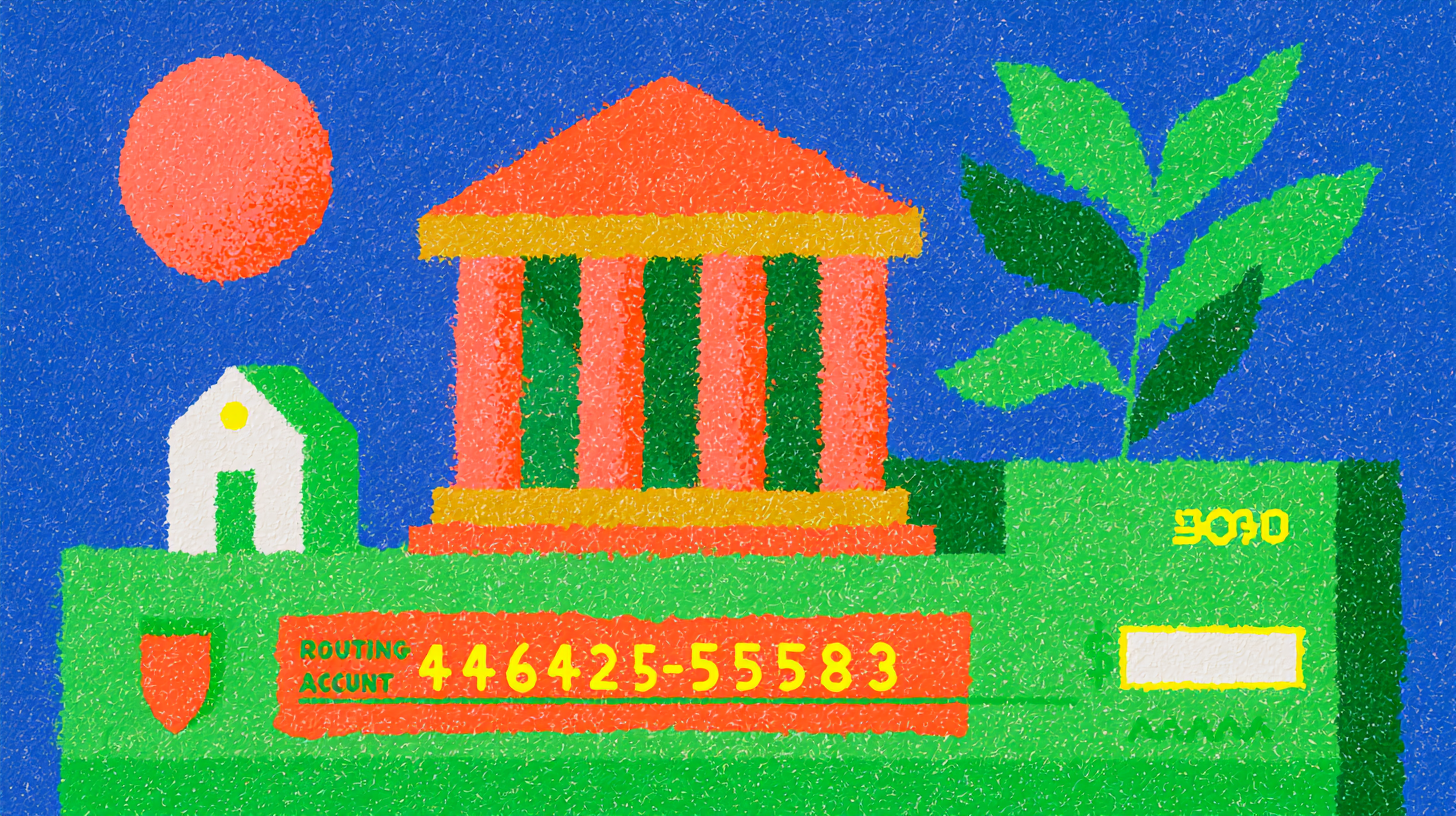
If you recently opened your first bank account in the U.S. or received account and routing numbers you do not fully understand, learning what these numbers mean can make everyday banking much easier. These numbers are commonly used for direct deposits, tax refunds, ACH transfers, and automatic bill payments.
Your bank account number works as the identifier for your personal account within the banking system. Combined with your routing number, it helps employers, government agencies, and payment platforms send money to the correct place securely.
What is a bank account number?
A bank account number is a unique sequence of digits assigned to an account holder by a financial institution. It functions much like a physical address for your account within the broader banking network, distinguishing your account from others and ensuring that transactions are accurately processed.
Structure of a bank account number
The format of bank account numbers varies by financial institution, but generally includes several key components:
- Bank code/institution number: identifies the financial institution
- Branch code/sort code: identifies the specific branch where the account was opened
- Account number: the unique identifier for your personal account
- Check digits: help detect typing errors
What is the bank account number used for?
- Payroll direct deposits
- IRS tax refunds
- ACH transfers between banks
- Automatic bill payments
- Identity verification with financial institutions
Account number vs. routing number: what is the difference?
Routing number:
A 9-digit code that identifies the bank or financial institution. It is the same for all customers at the same bank.
Account number:
Unique to your specific account. No one else at the bank has the same account number as you.
When setting up a direct deposit, you generally need to provide BOTH: your bank's routing number and your personal account number.
Where do you find your account number?
- On your checkbook checks (bottom section)
- In your bank's mobile app (account information section)
- On bank statements
- By contacting your bank's customer service
How to protect your account number
- Share it only with trusted entities like your employer or the IRS
- Monitor your account regularly for unauthorized activity
- Do not post it on social media or unsecured emails
- If you suspect your account number was compromised, contact your bank immediately
FAQ
Does my account number change if I lose my debit card?
Generally no. Your card number is different from your bank account number. When you lose your card, the bank issues a new card with a different number but your bank account number generally remains the same.
Can I have more than one account number at the same bank?
Yes. If you have multiple accounts (e.g., checking and savings) at the same institution, each account has its own unique number but they will share the same routing number.
Común is a financial technology company and not a bank. Banking services are provided by Community Federal Savings Bank, Member FDIC.
Community
How Common Makes Money: A Transparent Look at Our Business
8 min de lectura
Like most financial apps that don't charge a monthly fee, Común generates revenue mainly through interchange fees (a small fee paid by the merchant, not you, every time you use your debit card) and international remittance fees.
Founded by Mexican co-founders who themselves navigated the banking system as immigrants in the United States, Común brings a unique perspective to the challenges faced by its target audience.
Let’s look at how Común remains profitable through innovative revenue streams, cost-saving strategies, and a deep commitment to its customers, emphasizing how these factors contribute to the ease and benefits of virtual banking for newcomers to the financial world.
Revenue Streams: Banking Services
Común not only offers essential banking services¹, but also features such as international remittances⁴, which provide significant benefits for Común customers. Común monitors cash flows and payment channels to ensure efficient and secure transactions. Consumers often pay high remittance fees with other services, but Común offers a cost-effective alternative.
This service is crucial for immigrants who regularly send money home, increasing Común’s appeal as a banking solution that understands and responds to the specific financial dynamics of its users.
Cost-Saving Strategies: Financial Inclusion
The strategic absence of physical branches allows Común to minimize operating costs and maximize profits. Común allocates resources to expand its reach and improve financial services for Latina immigrant families. These savings are passed on to customers through lower fees and better rates, making financial services more accessible. Común’s digital platform makes banking easier to access, offering 24/7 services that make money management secure and efficient from any browser or app.
Company Values and Customer Relationship
Común champions financial inclusion, particularly within the Latino community, positioning itself among companies dedicated to serving Latino communities and enabling account setup with a variety of international IDs. This inclusivity strengthens trust and understanding between Común and its customers, fostering a supportive banking environment.
Competitive Advantage
By creating a customer-focused digital bank that offers services in Spanish and accepts nontraditional IDs, Común specifically addresses the barriers faced by Latino immigrants. This personalized service not only sets Común apart from its competitors, but also deepens customer loyalty and trust.
Target Audience
Común focuses on Latino immigrants, a group often overlooked by traditional banks. In its latest funding round, Común raised $5 million in June 2022 to further develop its services. By offering accessible and empathetic financial services, Común not only meets a significant market need, but also empowers its customers toward greater financial stability and integration into the U.S. economy. South Park Commons, along with Costanoa Ventures, has played a key role in supporting financial inclusion banking solutions for Latina immigrant families in the United States.
Conclusion
Virtual banks like Común present an easy-to-use, cost-effective, and inclusive alternative to traditional banking, particularly beneficial for those who are new to banking or marginalized by conventional financial institutions. By focusing on accessibility, cost efficiency, and customer-oriented services, Común not only maintains profitability, but also significantly improves the banking experience for its users.
If Común doesn't charge a monthly fee, how does it make money?
Mainly through interchange fees — a small fee the merchant pays (not the user) every time the debit card is used — and international remittance fees, which start at $2.99 per transfer.
Does this mean using Común is "free"?
Using your checking account (no monthly fee, no minimum balance) is at no cost to you. International remittances do have a fee, shown transparently before you confirm each transfer.
Why does it matter to understand how your financial provider makes money?
Understanding the business model helps confirm incentives are aligned — a provider that earns from interchange fees benefits from you using your card, not from charging you hidden fees.
Frequently asked questions
Does Común charge any hidden fees if there's no monthly fee?
No, using the checking account is at no cost; the only visible fee is for international remittances, shown before you confirm.
What's an interchange fee?
It's a small fee the merchant pays to the payment network (Visa) every time a customer uses their debit card — the user doesn't pay it.
Does Común make money from my remittances?
Yes, remittance fees (starting at $2.99) are one revenue source, shown transparently before each transfer.
Why do some banks charge a monthly fee and Común doesn't?
It depends on each institution's business model; Común relies more on interchange and remittance fees than account fees.
Does this affect the safety of my money?
No, your money is FDIC-protected up to $250,000 through Community Federal Savings Bank, regardless of Común's revenue model.
Where can I see exact fees before using them?
The app shows applicable fees (like remittance fees) before you confirm any transaction.
Financial Education
How to Cash a Check: A Step-by-Step Process
8 min de lectura
With Común you can cash a check without going to a bank: take a photo of it in the app and the money is deposited into your account at no cost. You can also use the network of over 88,000 cash-deposit locations if you prefer to cash it in person.
In the world of finance, the ability to cash a check efficiently and securely is a fundamental necessity. From payroll checks to tax refund checks, the mechanism of turning these paper promises into real purchasing power is a critical aspect of financial management. This article provides a guide on what a check is, how to cash it, and where to do so, ensuring you are well equipped to navigate this process.
What Is a Check?
A check is a written, dated, and signed instrument that orders a bank to pay a specific amount of money from the issuer’s account to the person or entity whose name is written on the check. The recipient (payee) then deposits or cashes the check to access the funds.
Checks are a traditional form of payment that allow individuals and businesses to make transactions without the need for immediate cash exchange. They can be used for a wide range of payments, from personal gifts to payroll and business transactions.
Checks offer a traceable payment method, providing a paper trail that can be useful for accounting and tax purposes. They remain a fundamental component of financial transactions, offering a combination of security, convenience, and versatility. Despite the rise of digital payments, the relevance of various types of checks persists, serving diverse needs from everyday payments to significant financial dealings. Here are the different types of checks:
- Personal Checks: These are the most common type, issued by individuals and generally drawn from a checking account. They are used to pay bills, rent, or transfer money to family and friends.
- Cashier’s Checks: These are issued by banks themselves, guaranteeing funds are available because the bank holds the amount until the check is cashed. They are often used in major transactions, such as down payments on a house.
- Certified Checks: These are personal checks verified by a bank. The bank certifies that the signature is genuine and that the issuer has sufficient funds in their account to cover the check amount at the time of issuance.
- Money Orders: These are a prepaid payment method, similar to checks but generally considered safer because they require upfront payment. Money orders are widely accepted and can be purchased at banks, post offices, and even some retail stores.
- Traveler’s Checks: These are preprinted fixed-amount checks designed to allow travelers to carry money without cash. They can be exchanged for local currency at banks, exchange offices, or some retailers and are protected against loss or theft.
- Government Checks: These include tax refunds, Social Security benefits, and other payments issued by the government. These are considered very secure, as they are backed by the government.
From personal to certified checks, each type plays a specific role, ensuring that individuals and businesses have the flexibility to manage their money securely and efficiently. Despite the growing prevalence of digital finance, checks continue to hold their place, offering an indispensable option for a wide variety of financial dealings. Understanding the functionality and usefulness of different types of checks remains key to optimizing financial transactions and strategies.
How to Cash Your Check
The journey from receiving a check to turning it into cash or depositing it into your bank account is simplified by understanding a few key steps. Using advances in banking technology and the expertise of bank tellers, let us dive into the methodical approach to accessing your funds.
Step 1: Endorse Your Check
Start by endorsing your check, a necessary step that indicates your intent to cash or deposit it. Turn the check over and sign your name in the specified area on the back.
Step 2: Prepare Your Identification
Having a valid form of identification is crucial. This could be a driver’s license, a government-issued ID, or any other official identification, ensuring that the check is cashed or deposited by its legitimate owner.
Step 3: Choose Where to Cash the Check
Your options include a local bank or credit union, where checking accounts often provide lower fees for account holders, or a check-cashing service for those without a bank account. In addition, certain retailers and grocery stores with a customer service desk may offer check-cashing services, usually for a small fee.
Step 4: Present Your Check and Identification
At your chosen location, present the endorsed check and your ID. The teller or service representative will verify your identity and the check’s authenticity.
Step 5: Decide Between Cash or Deposit
Choose whether you want to cash the check or deposit it into your account. This decision may affect whether you opt for a direct deposit into a linked bank account, use mobile deposit options, or even load funds onto a prepaid debit card.
Step 6: Complete the Transaction
The teller processes your check based on your decision. Deposits may require a short wait for funds to become available, while cashing it provides immediate access to your money.
Step 7: Obtain a Receipt
Always make sure to get a receipt after the transaction. This serves as a record of your action, important for personal financial tracking and potential inquiries.
Cashing your check is a straightforward process when you follow these essential steps, from endorsement to choosing your cashing location. Each stage is designed to ensure access to your funds is secure, convenient, and tailored to your financial needs, highlighting the importance of understanding your banking options.
Where to Cash Your Check and the Associated Fees
Identifying a reliable and efficient place to cash your check, whether it involves government checks, insurance settlement checks, or two-party personal checks, is paramount. The landscape offers several avenues, each with its own set of benefits and considerations.
Banks and Credit Unions
Traditional and secure, if the check is drawn against an account at the same institution, cashing it is typically free. These places are ideal for those with their own bank accounts, offering services such as cashing cashier’s checks and government and payroll checks. Associated Fees: If you have an account at the bank or credit union where the check was drawn, cashing a check is generally free. Some banks may still charge a fee if the check comes from a different bank, but this is increasingly uncommon.
Check-Cashing Services
A viable option for immediate needs or for individuals without bank accounts, though often accompanied by fees. Check-cashing stores and services such as Ingo Money provide versatility but may involve check-cashing limits or higher fees. Associated Fees: These services are convenient but often come with higher fees. They may charge a flat fee plus a percentage of the check amount, which can range from 1% to 4% or more. For example, cashing a $1,000 check at a service that charges 2% would cost $20.
Retail Stores
A very convenient option, many stores and gas stations now offer check cashing for a flat fee or a percentage of the check amount. This can be particularly helpful for cashing checks such as payroll or government checks on the go. Associated Fees: Some supermarkets and convenience stores cash checks for a fee, which may be lower than check-cashing services. Fees at retailers are often a flat fee (for example, $3 to $6 for checks up to a certain dollar amount) plus an additional fee for larger amounts.
Digital Options
Mobile deposits and services linked to PayPal accounts or prepaid cards allow you to deposit checks without visiting a bank. This method suits those comfortable with digital banking, offering a way to deposit checks directly into a linked account or prepaid card. Associated Fees: If there are fees, they are often structured similarly to Ingo Money or PayPal services for immediate access, but they are usually waived if you are willing to wait for the standard clearing time.
The decision spans traditional banking institutions, check-cashing services, retail points of sale, and innovative digital platforms, each catering to different needs and preferences. Whether you prioritize convenience, low fees, or immediate access to cash, there is a tailored option for your situation. As we move toward an increasingly digital world, the value of the physical check remains undeniable in its usefulness and necessity.
Conclusion
Cashing a check efficiently depends on understanding your options and the associated fees. Whether you prefer the traditional security of a bank or credit union, the convenience of a check-cashing service, or the modern approach of mobile deposits, the key is to weigh these options against your immediate financial needs and the costs involved. By integrating money-saving strategies, such as avoiding high fees and opting for direct deposit, you can ensure a smooth and stress-free process while making the most of your financial resources.
How do I cash a check with the Común app?
Open the app, go to the check deposit section, take a photo of the front and back (make sure it's signed in the endorsement area), and confirm the amount. Mobile check deposit is at no cost.
How long does it take for the check funds to show up?
Timing varies depending on the amount and your account history; the app shows you an estimate before you confirm the deposit.
What are my options if I don't want to use mobile deposit?
Común has a network of over 88,000 cash-deposit locations, and you can withdraw at AllPoint+ ATMs at no cost (3 free withdrawals a month, then $2.50 per withdrawal).
Frequently asked questions
Does cashing a check through the Común app cost anything?
No, mobile check deposit through the app is at no cost.
What do I need to deposit a check through the app?
Just your phone with the Común app, the physical check signed in the endorsement area, and good lighting for the photo.
Can I cash any type of check with Común?
The app guides you through the process; make sure the check is current, properly signed, and has complete information before photographing it.
What happens if my check deposit is rejected?
The app will notify you if there's an issue with the deposit; check that the check's details are legible and complete.
Can I withdraw the cash from a deposited check at an ATM?
Yes, once the deposit shows in your account, you can withdraw at any AllPoint+ ATM at no cost (up to 3 times a month).
Does Común charge for each check I deposit?
No, mobile check deposit has no fee.
Immigration
How to Create a Resume in the United States: Step-by-Step + Template
8 min de lectura
Practical Guide + Template to Create Your Resume in the United States
Getting a stable and well-paid job is the main goal of thousands of immigrants who come to the United States in search of a better quality of life.
For this reason, it’s essential to have an optimized resume (“CV”) that summarizes personal information, work experience, academic background, and all relevant details for recruiters and hiring managers.
You’ve probably faced the challenge of writing and refining a CV to apply for a job in your home country.
However, knowing the standards in Latin America is not enough, as U.S. resumes have key differences, such as length and focus on measurable results.
Mastering a new resume format can be challenging, and the process can be frustrating if you don’t hear back after sending multiple applications.
This doesn’t necessarily mean you lack the required skills — your resume might simply need some adjustments to get noticed by U.S. recruiters.
In this article, we aim to make the process easier for immigrant job seekers through a complete guide and sample resumes that will help you create your own by the end of the reading.
Differences Between a U.S. Resume and a Latin American CV
Even if you know how to write a resume in Latin America, it’s essential to understand the key differences compared to the U.S. standard.
Here are the main differences between a professional CV in Latin America and a U.S. resume.
- Length
In Latin America, it’s common to see two-page CVs, while the American resume is usually limited to one page.
- Focus on Quantifiable Achievements
U.S. recruiters look for quantifiable data and measurable results, while in Latin America it’s more common to include task descriptions and responsibilities.
- No Photo, Age, or Marital Status
To prevent discrimination, U.S. resumes do not typically include a photo, age, or nationality.
- Use of Keywords to Pass ATS Filters
The use of ATS (Applicant Tracking Systems) to detect keywords is widespread among U.S. companies.
- Format
While Latin American CVs often use colorful or elaborate designs, U.S. recruiters prefer minimalist formats to make information easier to read.
Understanding these differences is crucial for immigrants, as it increases the chances of being considered by both recruiters and automated systems.
7 Steps to Create a Resume in the United States
Here’s a step-by-step guide to writing a strong U.S. resume that passes ATS filters and captures recruiters’ attention.
Step 1. Choose the Right Format
Avoid flashy designs, as they can make reading difficult and hurt your ATS score. Choose a clean, organized, and easy-to-scan format.
Step 2. Fill in Your Contact Information
Include your full name, U.S. phone number, professional email address, and LinkedIn profile link.
Remember that you do not need to include a photo, date of birth, or marital status.
Step 3. Write Your Professional Summary
Your profile should be concise and include relevant keywords. This section should be a short paragraph summarizing your work history, interests, achievements, and career goals.
Step 4. Clearly Present Your Work Experience
It’s essential to list your work experience clearly and in chronological order.
- Use bullet points to list your most recent positions, including company name, job title, start and end dates.
- Highlight measurable achievements in each position.
To write your professional achievements, use the XYZ formula, structured as follows:
- X: what you did
- Y: how you did it
- Z: the result achieved.
For example:
“Improved the brand’s visual identity through an e-commerce rebranding project, reducing cart abandonment by 50%.”
Step 5. Your Education
List your academic background, including institution name, degree, and attendance dates.
Step 6. Highlight Your Skills
The skills section is key to making your resume stand out.
It’s recommended to separate this section into soft skills and technical skills.
- Soft skills: communication, teamwork, time management, attention to detail.
- Technical skills: design and editing software.
Step 7. Optional Sections
Depending on the vacancy and your profile, you can include additional sections, such as languages, certifications, or volunteer experience.
This information can set you apart from other candidates, as it gives you additional skills that could be relevant to the position.
Example of a U.S. Resume
Here’s an example of how an optimized resume should look, according to U.S. company standards.
On this page, you can download CV templates in English to customize yours according to your experience.
The last step is to adapt this example to your own professional profile and career path, which may differ depending on whether you are a recent graduate or already have experience.
- Recent graduate: if you have no experience, focus on your academic background, highlighting valuable projects, professional internships, volunteer work, and personal projects.
- Professional with experience: adapt the example to your own work history and use the XYZ formula to highlight your professional achievements.
Common Mistakes to Avoid When Writing a Resume in the U.S.
Here are some things to avoid when writing your resume.
- Using the same resume for every job: try to tailor your resume to the job you are applying for.
- Including a photo or unnecessary personal details: remember that in the United States, this data is irrelevant.
- Poorly translating key terms: if you have doubts about how to translate a term from Spanish to English, consult a translator or compare different sources on the internet.
- Making it too long: your resume should not exceed one page; otherwise, it may be discarded even if you have the necessary skills.
- Using a graphic-heavy design that doesn’t pass ATS filters: you may think that recruiters like resume templates with eye-catching designs, but the truth is that they are unlikely to pass ATS filters.
Común, Your Ally for Financial Stability in the United States
Having a strong resume is key to successfully entering the U.S. job market.
Just as a resume opens the door to great job opportunities, Común opens the door to financial stability for immigrants.
Discover Común, the option designed to serve the needs of immigrant communities in the U.S., with service available in Spanish.
Discover All the Benefits of Común!
- Open a checking account with a qualifying official identification from your home country.
- Mobile app available in Spanish and English.
- Easily receive payments from employers, cash checks, and send international money transfers to Latin America.
Discover Común, the option dedicated to meeting the needs of immigrant communities in the United States with services available in Spanish.
Frequently Asked Questions (FAQ)
If you still have questions, check out the next section.
Is It Necessary to Include References in the Resume?
It’s not necessary to include references in your resume, as companies usually request them later in the hiring process.
What Are the 3 Most Important Details in a Resume?
The 3 most important details are: contact information, professional experience, and skills.
What Language Should My Resume Be In When Applying in the U.S.?
The resume format used in the U.S. is becoming common in other countries, so the language should match the job posting.
Community
What You Need to Open a Común¹ Account
8 min de lectura
To open a Común account you need a valid, government-issued photo ID — passport, consular ID, or one of over 100 accepted Latin American IDs. No Social Security Number is required. The process is 100% online and takes about 3 minutes.
Común: Revolutionizing Financial Access for the Immigrant Community
Discover Común, a pioneering financial technology platform designed specifically to meet the needs of the immigrant community in the United States. Unlike traditional banking, Común offers a friendly digital banking experience focused on financial inclusion, low fees, and bilingual support, making financial services more inclusive and empowering.
Unmatched Ease When Opening an Account
Opening a checking account with Común is simple and hassle-free, addressing the barriers to financial exclusion the immigrant community typically faces. Accepting more than 100 forms of ID², including Social Security equivalents from Latin American countries, Común ensures immigrants have access to essential banking services. The application process is fast, taking under 5 minutes, and is free of additional or hidden fees, minimum balance requirements, or monthly charges. This inclusivity is central to Común's mission of fostering financial stability and growth.
Mobile Deposit Options
Común: Común offers a very convenient mobile deposit feature that lets users deposit cash at more than 88,000 locations across the United States, including major retailers like Walgreens, Dollar General, and Walmart. This extensive network ensures users can easily find a nearby deposit location, making the process of adding money to their accounts simple and hassle-free.
Traditional Banking: While many traditional banks offer mobile deposit options, they often restrict these to check deposits through a mobile app. Cash deposits typically require a visit to an ATM or bank branch, which can be less convenient and more time-consuming than Común's extensive cash deposit network.
Usefulness in Today's World: In today's fast-paced environment, the flexibility to deposit cash at a wide range of accessible locations is invaluable, especially for people who may not have easy access to traditional banking services or who work non-traditional hours when banks are closed.
International Remittances
Común: Común stands out in facilitating international remittances⁴, letting users send money abroad quickly and at lower fees compared to many traditional banks and remittance services. The process is enhanced with real-time notifications, keeping the sender informed from the moment the money is sent until it's received.
Traditional Banking: Traditional banks generally offer international transfer services, but these can be expensive and slow, with transfers sometimes taking several days to complete. Additionally, fees associated with traditional bank remittances can be significantly higher.
Usefulness in Today's World: In a globalized economy, the ability to send money across borders quickly and affordably is crucial. Many families rely on remittances for financial support, and businesses need efficient ways to handle international transactions. Común's streamlined, cost-effective service effectively meets these modern demands.
Early Access to Pay
Común: Común offers the ability to connect your paycheck to the app and get paid up to two days early³. This feature doesn't carry additional fees, providing significant relief during financial emergencies or when planning ahead.
Traditional Banking: Some traditional banks have started offering similar features, but they're often tied to specific account types or require a minimum balance. The accessibility and ease of use of Común's early pay access isn't always matched in traditional settings.
Usefulness in Today's World: With the rise of gig economy jobs and irregular pay schedules, having early access to wages can provide a buffer against financial instability. This feature is particularly valuable for those living paycheck to paycheck, offering a cushion that can help avoid overdraft fees and late payments.
Unlike traditional banking institutions, Común's innovative features are designed to meet the needs of today's diverse, mobile population, particularly benefiting the immigrant community in the U.S. By providing services that offer greater convenience, lower costs, and increased accessibility, Común doesn't just address the common challenges its users face — it also empowers them toward greater financial freedom and stability. As we move toward a more interconnected, fast-paced world, the importance of responsive, inclusive financial services keeps growing, something Común is uniquely positioned to deliver.

Robust Security and Customer Support
Security and customer support are paramount at Común. With FDIC-insured accounts and Visa protection on virtual Visa debit card transactions, Común customers can manage their funds with confidence. Innovative security features like biometric logins and instant transaction notifications keep your money safe. Plus, Común offers 24/7 customer support in English and Spanish, ensuring help is always available in your preferred language.
Commitment to Zero Fees and Upward Mobility
Común stands out not just for offering zero fees for opening an account, monthly maintenance, or minimum balances, but also for its commitment to helping its users achieve economic advancement. Común acts as a financial partner, supporting financial transactions without the burden of excessive fees. This commitment aligns with the goal of enabling upward mobility for immigrants, who contribute significantly to the U.S. economy.
Personalized Features and Benefits
Común goes beyond traditional financial services by offering features designed to meet the immigrant community's unique needs. Users can send money abroad at low or no cost, deposit cash at more than 88,000 locations nationwide, including free ATM withdrawals, and connect their accounts to popular payment apps like Cash App and Venmo. Común's platform also lets customers get paid up to two days early through direct deposit, further enhancing their flexibility and financial stability.
Conclusion
Común isn't just a financial services provider — it's a platform dedicated to transforming the banking experience for immigrants in the U.S. With its user-focused design, commitment to financial freedom, and robust features, Común is set to become a vital tool for its users' financial stability and growth. Whether you're looking to manage your day-to-day finances or send money to loved ones abroad quickly and safely, Común offers a reliable, inclusive, and efficient banking solution.
Founding Moment: Did You Know?
Founded by entrepreneurs Abiel Gutierrez and Andres Santos in New York, Común was built to empower families and enable upward mobility, particularly for immigrant families. The company has raised significant investment from notable firms like Costanoa Ventures, FJ Labs, and South Park Commons, underscoring the tremendous opportunity to serve immigrant families' financial needs and improve every person's life.
What documents do I need to open a Común account?
A valid government-issued photo ID: passport, consular ID, foreign driver's license, or one of over 100 accepted Latin American IDs. No Social Security Number or ITIN is required.
How long does the account opening process take?
About 3 minutes, entirely from your phone. Approval is instant in most cases.
Does it cost anything to open a Común account?
There's no opening fee, no monthly fee, and no minimum balance required.
Frequently asked questions
Can I open a Común account without a Social Security Number?
Yes, Común accepts a passport, consular ID, or other valid Latin American ID instead of a Social Security Number.
How long does it take to open the account?
The process takes about 3 minutes through the app, with instant approval in most cases.
Do I need proof of address to open the account?
Proof such as a utility bill or digital bank statement may be requested, depending on your situation.
Is there any cost to open or maintain the account?
No, there's no opening fee, monthly fee, or minimum balance required.
What do I get when I open my account?
A checking account and a Visa debit card, with access to direct deposit, remittances, and the cash-deposit network.
Can I open the account if I just arrived in the United States?
Yes, as long as you have a valid ID from your home country, you can open your account without needing U.S. credit history.

Instant payments
What is Venmo and how does it work? The Ultimate Guide for Immigrants to the United States
8 min de lectura
Have you heard of Venmo? It is a digital payment application that has gained popularity in the United States in recent years. According to recent data, in 2024 the mobile application reached 68.3 million active users, representing an 8.8% increase compared to 2023.
The importance this mobile application has acquired cannot be denied, which is why knowing what Venmo is in the United States can be very useful to send and receive money from family and friends quickly and securely.
As a foreign national living in the U.S., you must ensure that you choose a financial platform that meets your needs for sending money to your home country and making payments with ease.
In this guide, we clarify all your potential questions about how to use Venmo in other languages like Spanish, what it is for, the requirements to open an account, the benefits this mobile app offers, and also its limitations.
What Is Venmo and How Does It Work?
Venmo is a highly popular P2P (peer-to-peer) payment mobile application in the U.S. Its primary purpose is to facilitate the instant transfer of money between friends and family, in addition to allowing users to link bank accounts and cards.
Venmo’s business model is based on charging fees for services such as credit card transactions, instant transfers of money to bank accounts, and transactions using its physical card.
Some of the most common reasons immigrants use Venmo include:
- Paying monthly rent
- Receiving wages from occasional jobs
- Paying or receiving money from friends and family
- Lending or repaying money to acquaintances
Key Features of Venmo: What Can You Do With It in the U.S.?
To fully understand what Venmo is in the United States, it is important to explore the functionalities this P2P payment service offers its users to simplify their lives:
- Instant sending and receiving of money between Venmo users
These are the mobile app’s most important features, as it allows for instant transfers without charging a fee between Venmo users.
It also enables adding notes or emojis to identify each transaction and the option to use the mobile app’s balance or a linked bank account. - Use of Venmo Debit Card (Mastercard) for purchases
Venmo also offers a physical debit card for making purchases at brick-and-mortar establishments. It is valid at any merchant that accepts Mastercard within the United States.
Additionally, it includes an extra benefit: each purchase with the debit card accumulates cash back for greater savings. - Direct deposit for wages and benefits
You can use your Venmo account to receive your salary or other types of transfers. All you need is your personal QR code. - Bank transfers to bank accounts
Venmo offers two types of bank transfers: standard transfers, which are free and take one to three business days, and instant transfers, which incur a fee of approximately 1.75% and are completed within minutes. - Payments to businesses and merchants that accept Venmo
Another advantage of this service is the “Pay with Venmo” feature, which allows payments at physical or online businesses that accept Venmo.
This streamlines transactions and enables you to use the balance deposited in the application directly. - Social features: comments, “likes,” and bill-splitting
Lastly, one feature that makes Venmo more appealing is the ability to add comments, likes, and emojis.
This allows you to request payments from friends and family, add reminders, and split expenses among multiple users. - Business profiles for companies
Venmo allows small businesses and independent workers to create a business profile to receive payments directly into their account via username or QR code.
What Do I Need to Have Venmo? The Reality of Its Availability
Now that you know the benefits of this mobile application in detail, you probably want to learn the requirements to start using it.
Before learning how to pay with Venmo, remember that it only works in the United States.
These are the requirements to use Venmo:
- Have an Android or iOS phone
As it is a mobile application, you must have a compatible Android or iOS smartphone and download the mobile app from the corresponding store. - Register with a personal phone number
To register in the mobile app, you need a U.S. phone number and must reside in the country, as Venmo is only available there. You may also register with an email address. - Link your U.S. bank account
Linking a bank account isn't required to create your Venmo account; you can receive money and pay with your balance or a card. However, most features require a linked bank account. - Link a debit or credit card
Another option to access all Venmo’s features is linking a credit or debit card instead of a bank account. This allows you to use the card’s balance for transactions directly from the mobile app. - Verify your account
Account verification is required to access all Venmo features, to confirm users’ identities. Verified users can send up to $60,000 per week, but only if their SSN or ITIN has been confirmed. Non-verified users can send up to $299.99 per week.
To verify your account, Venmo will request the following:
- Full legal name
- Mailing address in the United States
- Date of birth
- SSN (Social Security Number) or ITIN
How to Transfer Money from Venmo to My Bank Account?
To transfer money from Venmo to your bank account, once it is linked and verified, follow these steps:
1. Log into your account through the mobile app and go to the “Me” tab.
2. Press the “Transfer” or “Add” button.
3. Enter or edit the amount you want to transfer to your bank account.
4. Select the transfer method: “Instant” or “up to 3 biz days,” noting any applicable fees.
5. Confirm the transfer details and complete the process.
If you want more options for depositing money into another person’s account, do not miss these recommendations.
Limitations of Venmo for Immigrants: Why Is It Not a Complete Solution?
The need for immigrants to have an integrated solution allowing access to digital payments, transfers, and other benefits increases daily. Therefore, while Venmo is a popular option for sending and receiving money in the U.S., it may present limitations for immigrants working in the country.
One limiting factor for immigrant communities is the language barrier in customer support. Because it is a service designed for U.S. residents, it is not optimized for people who speak a different language, such as Spanish. In addition, you should have a U.S. bank account.
Your best option may be to entrust your financial assets to a service offered in your language.
Comun: An Excellent Alternative to Venmo for the Immigrant Community in the U.S.
We present Comun, the solution for immigrants seeking to improve the way they send and receive money to family and friends.
Why Is Comun a Great Option for Immigrant Communities in the United States?
- Comun allows you to open an account with the official identification from your country.
- It is also a platform available in Spanish without complicated terms.
- Unlike Venmo, Comun enables you to send remittances to LATAM for an affordable fee starting at $2.99, subject to applicable limits.
- Access a mobile application to perform your transactions from the palm of your hand.
If you think accessing quality financial services in the U.S. is impossible for immigrants, open your Comun account today and forget about complications.
Disclosures:
“Comun is a financial technology company and not a bank. Banking services are provided by Community Federal Savings Bank; Member FDIC. The Comun Visa® Debit Card is issued by Community Federal Savings Bank, pursuant to a license from Visa U.S.A Inc. and may be used everywhere Visa Cards are accepted.”
“Funds in your account are FDIC insured up to $250,000 by ownership category through Community Federal Savings Bank (CFSB), Member FDIC, in the event CFSB fails.”
“A service provided by Service UniTeller, Inc. Service UniTeller, Inc. is licensed in all states that require a license.”
“Remittance fees start at $2.99 but may vary. Please check the app for more details.”
“Comun Inc. may earn revenue from the conversion of foreign currencies.”
“Direct deposit funds are typically available when we receive the payment file, up to two days before the scheduled payment date. This early availability is not guaranteed.”

Financial Education
Quick guide on how to call Mexico from the USA
8 min de lectura
How to call Mexico from the United States easily and affordably
There’s no doubt about the impact the Mexican community has had in the United States due to the number of immigrants who have arrived in recent decades and who, despite the distance, need to stay in touch with their loved ones.
One of the most common points of confusion when making an international call has to do with the order of the required codes. However, with the right information, placing a call from the United States to Mexico is very simple.
Below, we’ll show you step by step how to dial, practical examples for major cities, as well as modern options to save money no matter how long you’re on the phone with your loved ones in Mexico.
Basic steps to call Mexico from the USA
To connect a phone call from the United States to Mexico, you need three basic pieces of information: the exit code, Mexico’s country code, and the local number.
These are the steps to call Mexico.
Dial the international prefix
011 from a U.S. landline or “+” from a mobile phone.
Add Mexico’s country code
The code is 52.
Dial the 10-digit national number
Include the area code plus the local number
Practical examples:
- Mexico City: 011 + 52 + 55 123 1234
- Guadalajara: 011 + 52 + 33 123 1234
- Monterrey: 011 + 52 + 81 123 1234
It’s important to clarify that it used to be necessary to add the prefix 1 for cell-phone calls, but this requirement was eliminated in 2019.
Area codes and example calls to Mexican cities
In Mexico, each city has an area code (lada) made up of 2 or 3 digits. Taking that into account, all Mexican phone numbers have 10 digits in total.
Below is a table with examples of how to dial from the United States to Mexico.
City
Area Code
Dialing example from the United States
Mexico City
55
011 + 52 + 55 + ########
Guadalajara
33
011 + 52 + 33 + ########
Monterrey
81
011 + 52 + 81 + ########
Puebla
222
011 + 52 + 222 + #######
Tijuana
664
011 + 52 + 664 + #######
León
477
011 + 52 + 477 + #######
Querétaro
442
011 + 52 + 442 + #######
Mérida
999
011 + 52 + 999 + #######
Cancún
998
011 + 52 + 998 + #######
Chihuahua
614
011 + 52 + 614 + #######
Modern and more affordable options for calling Mexico
Long-distance calling used to be very expensive, especially when made directly— a drawback for people who wanted to keep in touch with family abroad since costs were charged per minute.
Fortunately, today you can choose far more affordable alternatives that also offer unlimited minutes and other communication benefits such as messaging and video calls.
These are the most popular low-cost options for calling Mexico from the United States.
VoIP apps and services over Wi-Fi
VoIP (Voice over IP) apps are one of the most accessible alternatives for communicating with people worldwide.
The main advantage of mobile apps is that they allow domestic and international calls over a Wi-Fi or data connection. This significantly reduces costs and eliminates the need for local phone coverage, though a good internet connection is important.
WhatsApp is a popular app of this kind, given its large user base and a variety of features beyond calls, such as voice notes, voice dictation, video notes, and video calls.
Other similar alternatives include Skype, Google Voice, and Telegram.
International plans from your carrier
If you want to make long calls and not rely on Wi-Fi, a recommended alternative is to get an international plan with included or unlimited minutes to Mexico.
For example, Verizon Global Calling has a plan that includes unlimited minutes to Mexico and Canada.
If you’re still in Mexico, Telcel offers international roaming packages and eSIM for travelers.
Prepaid calling cards
Another solution for calling Mexico is using a prepaid calling card.
Here are some examples.
Company | Cost | Validity/Expiration Enjoy Prepaid | From 0.9¢/min to landlines, 2.9¢/min to mobiles. | After 183 days of inactivity. BOSS Revolution | 1.9¢/min to landlines and mobiles. | Credit remains while the user is active. Calling Card Plus | From 0.8¢/min to landlines and 2.5¢/min to mobiles. | Depends on the plan; may include per-minute rounding or a weekly charge.
Company
Cost
Validity/Expiration
Enjoy Prepaid
From 0.9¢/min to landlines, 2.9¢/min to mobiles.
After 183 days of inactivity.
BOSS Revolution
1.9¢/min to landlines and mobiles.
Credit remains while the user is active
Calling Card Plus
From 0.8¢/min to landlines and 2.5¢/min to mobiles.
Depends on the plan; may include per-minute rounding or a weekly charge.
Bundles with included minutes
A bundle is a package that, in addition to international calls, includes other related services. For example, Verizon Global Choice offers 300 minutes for $10 per month.
Practical tips for immigrants
Taking care of your finances is essential to stay in touch with your family in Mexico. Here are some tips to keep you connected.
- Use apps over Wi-Fi whenever possible: they’re a very affordable alternative, as long as you have a good internet connection.
- Compare rates from different companies: take time to review each provider’s international rates as well as specific terms.
- Consider family bundles or special plans for Mexico: given the geographic proximity between Mexico and the United States, there are several communication options designed for families who frequently contact relatives.
Stay connected with your family in Mexico thanks to Común
In this article, we showed you how to call Mexico from the United States with the correct code sequence, via mobile and landline. We also shared tips to keep in touch with your family through more accessible means such as mobile apps and international plans with minutes to Mexico.
In addition to staying in touch with family, Mexican immigrants also often need services that let them send money home.
- Discover the benefits of Común, the platform that brings you closer to the people you love most!
- Checking account with clear, competitive fees.
- Accessible international money transfers.
- Común’s mobile app is available in Spanish and accepts more than 100 eligible official IDs for account opening.
- Debit card for everyday purchases and payments.
Don’t lose touch with your country! Open your account with Común and connect with the financial platform dedicated to shortening the distance.
Frequently Asked Questions (FAQ)
If you still have questions, see this section.
What happens if I dial the number without the 011 prefix?
If you don’t dial 011 or “+” on mobile phones, your call won’t be recognized as international and will either connect as a local call or return an error.
Is it better to use apps or international calling plans?
It depends on your needs. Apps are an excellent alternative but depend on a good internet connection. International plans require a SIM, but they offer more stable calls along with other communication services.
Which option is best for saving money?
A very convenient option to save money is an app like WhatsApp, since it works over an internet connection.
How can I dial an 800 number from the United States to Mexico?
800 numbers are toll-free within Mexico, but from the United States they do carry a cost. To dial, you must enter the exit code and the country code.
Another option is to look for that institution’s alternate number for international calls.
International Money Transfers
Money Transfers: From Traditional Methods to Digital Innovations
8 min de lectura
Money transfers have evolved from traditional methods like checks and money orders to instant digital solutions. With Común, most international remittances arrive within minutes, with no need to visit a branch.
The financial evolution of money transfer methods from traditional practices to digital innovations marks a crucial shift, revolutionizing how we think about and manage our finances in our bank accounts and beyond. This transition isn't just about technological advancement — it reflects a fundamental shift in user expectations, security standards, and global connectivity, especially in international money transfers and seamless bank account integration.
Accelerating Transactions: The Digital Revolution in Money Transfers
The rise of digital platforms and money transfer apps has transformed the speed and accessibility of transactions. Where bank transfers between financial institutions once took days to complete, digital innovations now enable instant money transfers, letting users transfer money around the world in just a few business days or even instantly. This monumental shift in convenience lets users send money or transfer funds from one bank account to another 24/7, without the traditional visit to a bank or credit union.
These changes encapsulate the journey from traditional methods like bank transfers and bank-to-bank transfers to the digital innovations now dominating our financial ecosystem. As we continue exploring these developments, it's clear that ways of transferring money — from using a debit card for instant transfers to leveraging payment app capabilities like Google Pay and Apple Pay — aren't just evolving, they're being redefined for a new era of global connectivity and digital empowerment, making money transfer apps an indispensable tool in our daily lives.
Navigating International Money Transfers: Considerations
Additionally, the rise of mobile apps, from money transfer services like Cash App to full banking apps, has democratized access to financial services. These platforms offer user-friendly interfaces that simplify the money transfer process, whether sending money abroad through international transfers or managing domestic transfers between checking and savings accounts within the same bank. This broadens financial inclusion, letting even those with a basic savings account or checking account participate easily in bank transfers and person-to-person payments.
It's equally important to have a solid understanding of the regulatory framework surrounding international money transfers. This includes being aware of anti-money laundering (AML) laws and the various transfer limits imposed by different countries. These regulations are designed to prevent financial crimes and ensure the security of cross-border transactions. Following these laws not only helps avoid legal complications, but also ensures your transactions process without unnecessary delays.
In addition to choosing the right service and understanding regulations, it's also helpful to be aware of the exchange rates offered by different services. Exchange rates can significantly affect the final amount received on the other end, especially for large transactions. It's also crucial to consider delivery times, especially if the transfer is time-sensitive. While some services can transfer funds almost instantly, others may take several business days. This can be particularly important in emergency situations or when making payments with strict deadlines.
Exploring Different Money Transfer Options: Wire, ACH, and Beyond
Digital advances have also introduced a new level of security and transparency to money transfers. With modern encryption and authentication technologies, including features like fraud detection, financial transactions — whether internal transfers, external transfers, or even online payments for online purchases — are safer than ever.
Money transfer apps have become a safe haven for personal finances, offering real-time transaction tracking and ensuring that transferring money — from a linked bank account via Automated Clearing House (ACH) transfers or direct deposit — stays secure and straightforward. ACH transfers stand out for domestic efficiency and cost-effectiveness, ideal for regular payments like salaries and bills. Additionally, traditional methods like checks, cash deposits, and money orders retain their usefulness for specific scenarios, offering tangible options in a predominantly digital world.
The Rise of Person-to-Person (P2P) Money Transfer Apps
P2P transfer apps have fundamentally transformed how we exchange money, making transactions as simple as sending a message. These apps let users send funds directly to others, using just an email address or phone number, eliminating the need for intermediaries. Among the many options available, several apps have gained prominence, each standing out for its distinctive features.
For example, some apps are celebrated for their integration with social networks, enhancing the social aspect of money transfers. Others prioritize security, offering advanced encryption and authentication methods to protect transactions. There are also apps designed to facilitate cross-border payments by simplifying the process of sending money internationally, offering competitive exchange rates and low fees. This diversity ensures there's a P2P transfer app suited to practically every need and preference, reflecting the dynamic, user-centered evolution of financial technology.
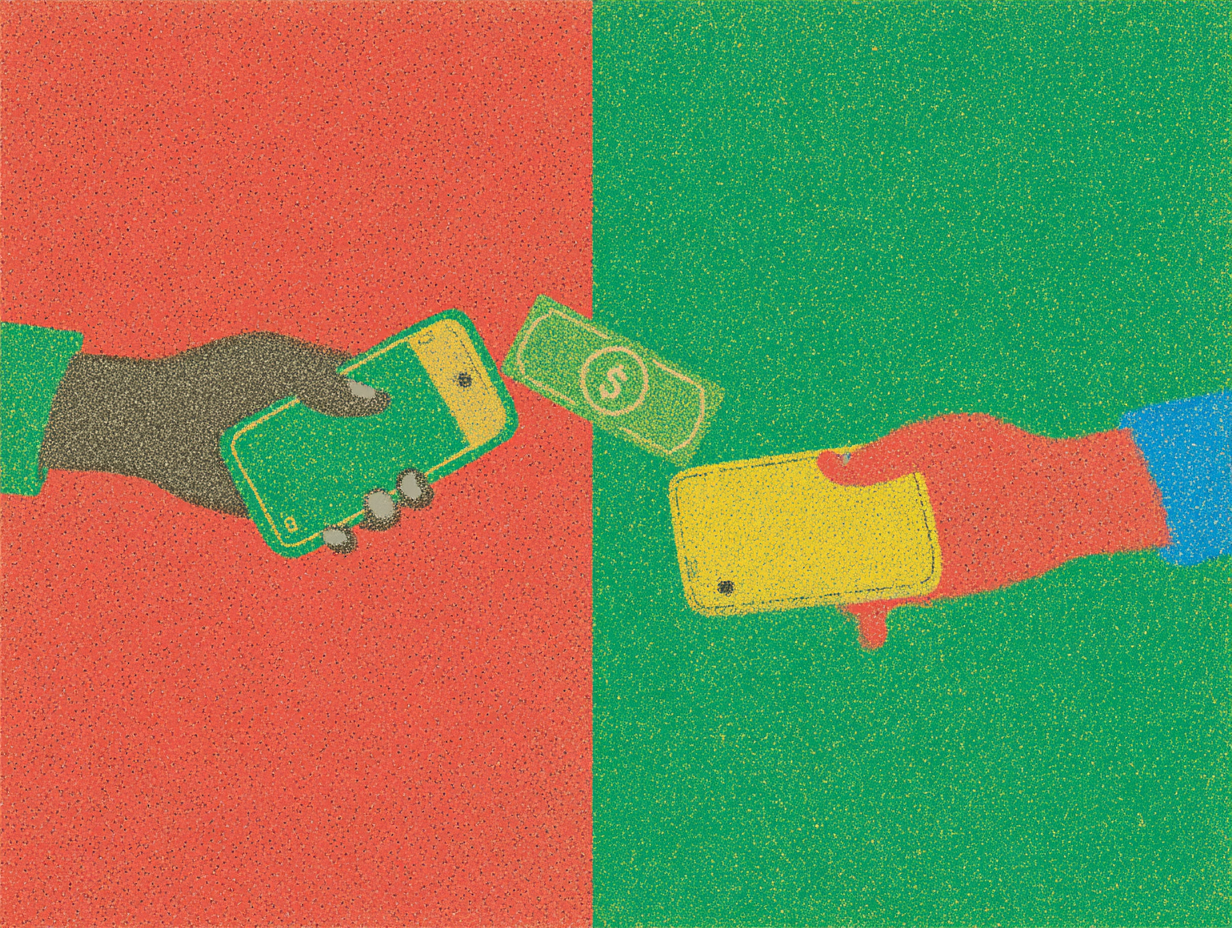
Decoding the Costs: Fees in Money Transfers
The rise of mobile apps, from money transfer services like Cash App to full banking apps, has democratized access to financial services. These platforms offer user-friendly interfaces that simplify the money transfer process, whether sending money abroad through international transfers or managing domestic transfers between checking and savings accounts within the same bank. This broadens financial inclusion, letting even those with a basic savings account or checking account participate easily in bank transfers and person-to-person payments.
Understanding the fees associated with money transfers is pivotal for managing your finances effectively and avoiding unexpected costs. The fee landscape for transfers can vary significantly, spanning service charges, transaction fees, and currency conversion fees, among others. Transparency around these fees is crucial — so it's essential to choose services that offer clear, straightforward information about all the costs involved.
Service charges and transaction fees are often the most visible costs associated with transferring money. These can vary widely depending on the provider and transfer method chosen. For example, traditional bank transfers might carry higher fees compared to online platforms or mobile apps. Currency conversion fees also play a significant role, especially for international transfers, where money needs to be exchanged from one currency to another. Some services build their profit into the exchange rate offered, making it less favorable than the market rate. This practice underscores the importance of scrutinizing the exchange rates provided, not just the explicit fees.
This approach not only helps you make informed decisions, but also helps avoid hidden charges that can add up. To minimize these costs, adopting strategies like selecting the transfer method best suited to your needs — considering factors like speed, destination, and amount — and diligently comparing providers to find the best rates and lowest fees can lead to significant savings. By prioritizing transparency and using cost-minimizing strategies, users can navigate the complexities of money transfers more confidently and economically.
Send abroad with peace of mind with your Común account¹
Open your account in 3 minutes!
Conclusion
In conclusion, the shift from traditional methods to digital innovations in money transfers represents a significant advancement in financial management. Digital platforms and money transfer apps have revolutionized how we send money, providing unprecedented convenience, speed, and security. From seamless bank account transfers to the global reach of international money transfers, these digital solutions offer a full range of services that meet our diverse financial needs.
By emphasizing transparency, these platforms minimize hidden fees, making it easier than ever to manage our savings and checking accounts. Additionally, innovations like instant transfers and robust fraud detection technology have made money transfer apps a reliable option for consumers. As we continue embracing these digital advances, the essence of mastering money transfers lies in leveraging technology to enhance our personal finance capabilities, ensuring we can navigate the complexities of modern financial transactions with confidence and cost-effectively.
How have money transfers changed over time?
From checks, money orders, and bank transfers that took days, to mobile apps that process payments and remittances in minutes.
What advantages do digital transfers have over traditional methods?
Greater speed, real-time tracking, and the ability to send money without leaving home. With Común, you can send a remittance from the app anytime.
Are traditional methods still useful?
Yes, checks and cash are still relevant in certain cases, such as when the recipient doesn't have a digital bank account.
Frequently asked questions
Why are digital transfers faster than traditional ones?
Because they use real-time processing networks, instead of the multi-day cycles of traditional banking methods.
Do I need to visit a branch to send money with Común?
No, the entire process happens through the app, with no need to visit any physical location.
Are traditional methods like checks still valid?
Yes, they're still useful in certain cases, though digital apps tend to be faster and more convenient.
How fast does a remittance sent through Común arrive?
Most arrive within minutes, depending on the country and delivery method.
Can I track my transfer in real time?
Yes, the app shows you your transfer's status while it's being processed.
Is sending money digitally safer than by check?
Both methods have different protections; digital apps usually offer additional verification and encryption.

Financial Education
What is the FDIC?
8 min de lectura
The FDIC (Federal Deposit Insurance Corporation) protects bank deposits in the U.S. up to $250,000 per depositor, per ownership category, in case the bank fails. Común deposits are protected up to that amount through Community Federal Savings Bank (CFSB), Member FDIC.
The Federal Deposit Insurance Corporation (FDIC) is a government agency that insures consumer deposits at FDIC-insured banks. This means that if your bank fails, the FDIC will reimburse your lost deposits.
The FDIC was created in 1933 in response to the bank failures of the Great Depression. More than 1,300 banks failed between 1929 and 1933, causing many people to lose their money. It's a self-funded government agency, meaning it gets its funding from the banks it insures.
The FDIC insures consumer deposits up to $250,000 per account. This includes deposit accounts and savings accounts, as well as money market accounts.
The advantages of FDIC insurance are:
- Your deposits are guaranteed up to $250,000 per account
- You can access your money at any time — 24 hours a day, 7 days a week
- Your money is safe even if your bank fails
- Your bank doesn't have to be located in your city or state
- There's no fee to join the FDIC or for your bank to be FDIC-insured
- The FDIC has existed since 1933 and has never failed to reimburse depositors
If you're interested in opening an account at an FDIC-insured bank, visit the FDIC website and use the bank finder tool to locate one near you. Some of the most popular FDIC-protected banks include:
- Bank of America
- JPMorgan Chase
- Citigroup
- Wells Fargo
- Capital One
- HSBC
- Ally Bank
- SunTrust Bank
- PNC Bank
What is the FDIC?
It's a U.S. government agency that insures deposits at member banks, protecting account holders in case the financial institution fails.
How much does the FDIC protect?
Up to $250,000 per depositor, per ownership category, at each insured bank.
Is my money in Común protected by the FDIC?
Yes. Deposits in your Común account are protected up to $250,000 through Community Federal Savings Bank (CFSB), Member FDIC.
Frequently asked questions
What happens to my money if the bank fails?
If the bank is FDIC-insured, your deposits are protected up to $250,000 per ownership category.
Do all banks have FDIC protection?
Not all — verify the institution is FDIC-insured before depositing your money.
Is Común a bank?
No, Común is a financial technology company; banking services are provided by Community Federal Savings Bank, Member FDIC.
Do I need to do anything to get FDIC protection?
No, protection automatically applies to deposits at FDIC member banks.
Does FDIC protection cover investments or just deposits?
It only covers deposits (checking, savings, CDs) — it doesn't cover investments like stocks or funds.
How do I check if my money is protected?
Look for the "Member FDIC" logo or mention in your account's terms or your provider's app.






Thousands of immigrants are already achieving more with their money. You can too.
Comun is a financial technology company and not a bank. Banking services are provided by Community Federal Savings Bank; Member FDIC. The Comun Visa® Debit Card is issued by Community Federal Savings Bank, pursuant to a license from Visa U.S.A Inc. and may be used everywhere Visa Cards are accepted.
Comun is a fintech company and not a bank or licensed money transmitter.
* Results may vary. For a complete list of eligible IDs and application requirements, follow this link.
^ No minimums, no maintenance fees. ATM or transfer fees may apply. See app for fee details.
‡ Direct deposit funds are typically available when we receive the payment file, up to two days before the scheduled payment date. This early availability is not guaranteed.
** A service provided by Service UniTeller, Inc. Service UniTeller, Inc. is licensed in all states that require a license. Remittance fees start at $2.99 but may vary. Please check the app for more details. Comun Inc. may earn revenue from the conversion of foreign currencies.
† Funds in your account are FDIC insured up to $250,000 by ownership category through Community Federal Savings Bank (CFSB), Member FDIC, in the event CFSB fails.