Financial Education
Overdraft Fees on Bank Accounts: How to Manage and Avoid Them
Let's start with the basics. An overdraft on a bank account happens when you spend more money than you have available in your checking account. This can happen with debit card transactions, debit card purchases, ATM withdrawals, or automatic payments that exceed your account balance.
8 min read

28 Jun 2024

How Does an Overdraft Happen on a Bank Account?
Overdrafts happen for various reasons. Sometimes it's an accidental oversight — maybe you forgot about an automatic payment or miscalculated your available balance. Common reasons include unexpected expenses, delayed direct deposits, or simply losing track of your spending. Understanding these causes can help you avoid overdrafts and keep a positive account balance.
What Are the Consequences of Overdrafts and Overdraft Fees?
Overdrafts can be more than just a hassle — they often come with substantial overdraft fees. Financial institutions typically charge an overdraft fee for each transaction that overdraws your account. Some banks only charge overdraft fees if a customer overdraws by a certain amount, or provide grace periods where no fees are charged if the customer replenishes their account quickly after an overdraft. These fees can add up fast if you're not careful.
Additionally, overdrafts can disrupt your financial health. They can lead to a negative balance, making it harder to cover transactions for essential needs and future purchases. If you overdraft frequently, it could even affect your credit score, which could impact your ability to get loans or other financial products in the future. Frequent overdrafts can also result in multiple overdraft fees, further compounding your finances.
Tips to Avoid Overdrafts
Avoiding overdrafts is about being proactive. Here are some practical tips:
Keep an Eye on Your Spending: Keep a close watch on your account balance and transactions. Use online banking or mobile deposit apps to monitor your spending in real time.
Set Up Low-Balance Alerts: Most banks offer low-balance alerts that notify you when your available funds are low. Setting up these alerts can give you a heads-up before an overdraft happens.
Keep a Cushion: Try to keep a cushion of extra funds in your checking account. Even a small cushion can prevent overdrafts caused by unexpected expenses.
Link to Savings: Consider linking your checking account to a savings account. This way, if your checking account runs out of funds, money can be automatically transferred from your savings to cover the shortfall.
Monitor Pending Transactions: Be aware of any pending transactions that aren't yet reflected in your account balance. This includes debit card transactions and automated payments. Making sure you have enough money in your account to cover pending transactions can help avoid overdrafts.
Set Up Direct Deposit: Setting up direct deposit can help maintain a minimum balance in your account, potentially avoiding monthly maintenance fees and other charges. Direct deposit can also be an option for waiving certain fees offered by banks.
Learn how to manage your bank account
Managing an Overdraft if It Happens
Sometimes, despite your best efforts, an overdraft can happen. Here's what to do if it happens to you:
Act Quickly: As soon as you realize you've overdrafted, deposit or transfer money into your account to cover the negative balance. Having enough money in your account to cover transactions is crucial to avoiding further overdrafts. This can minimize fees and prevent additional transactions from causing more overdrafts.
Contact Your Bank: Reach out to your financial institution's customer service. They may waive the overdraft fee if it's your first time or if you have a good banking history.
Review Your Spending: Look at what caused the overdraft and adjust your budget to avoid repeating the mistake. Consider setting up stricter monitoring or additional alerts to stay on top of your account balances.
Pay Off Overdrafts Promptly: Make sure any overdrafts and associated fees are paid off as soon as possible to avoid additional fees or returned transactions.
Scams That Can Result in Overdrafts
Beyond the usual causes of overdrafts, like accidental spending or unexpected expenses, there are numerous scams that can lead to overdraft situations. These scams often involve fraudulent checks and deceptive tactics that drain your account, resulting in negative balances and multiple overdraft fees. Here are some common scams to be aware of to protect your financial health.
Online Purchase Scams: In online purchase scams, scammers pose as legitimate buyers or sellers in online marketplaces. A scammer might send a check as payment for an item you're selling, which then bounces after you've shipped the item. Alternatively, you might receive a check for a purchase you made, only to find out it's fake, leading to an overdraft when the funds are withdrawn from your account.
Phishing Scams: Phishing scams involve scammers sending emails, texts, or phone calls posing as a bank or other trusted entity. They trick you into providing your account information, which they then use to withdraw funds or write fraudulent checks. This can lead to overdrafts if your account is drained without your knowledge.
Charity Scams: Scammers often exploit goodwill by posing as charitable organizations, especially during times of crisis. They send checks as a "refund" for a previous donation or as an overpayment, asking you to return part of the money. The check bounces, and you end up with an overdraft and lost funds.
Advance Fee Scams: In advance fee scams, scammers promise large sums of money, like lottery winnings or an inheritance, in exchange for a smaller upfront fee. They send a check to cover the fee, which you deposit and then send back the "fee." The check bounces, causing an overdraft and a loss of the amount sent.
Fraudulent Refund Scams: Scammers contact you claiming to be from a company you recently did business with, claiming there was an overpayment or billing error. They send a check and ask for a partial refund. When the check bounces, you're left with an overdraft and out-of-pocket expenses.
Romance Scams: In romance scams, scammers build a fake relationship with their victims, often online. Eventually, they ask for money, sometimes sending a check first to "prove" they're legitimate. When the check bounces, the victim is left with an overdraft and the emotional and financial fallout of the scam.
Contractor Scams: Fake contractors offer services like home repairs or improvements. They ask for an upfront payment, often sending a check as partial payment. Once the check bounces, you're left with an overdraft and no completed work.
Job Offer Scams: Scammers offer fake jobs and send a check for equipment or initial expenses, asking you to send back a portion. When the check bounces, you're left with an overdraft and no job.
Travel Scams: In travel scams, scammers offer discounted trips or vacation packages. They send a check for supposed travel expenses, asking you to send part of it back or to another party. The check bounces, leading to an overdraft and no vacation.
Using Overdraft Protection Services
Overdraft protection generally involves linking your checking account to another account, like a linked savings account or a line of credit. If you overdraft your checking account, funds are automatically transferred from the linked account to cover the transaction.
The main advantage is avoiding the high fees associated with overdrafts. However, there may be a transfer fee for the overdraft protection itself, and it can encourage spending beyond your means if not used responsibly. Not all overdraft protection plans are the same. Carefully review the terms and conditions, and choose one that fits your habits and financial needs. It's important to understand the overdraft coverage options provided by your financial institution. Look for services that offer coverage for debit card purchases, ATM transactions, and other charges associated with insufficient funds. Financial institutions play a crucial role in offering these services.
Using the right tools can make managing your finances much easier and help you avoid the stress of overdrafts. Común.app is designed to help you stay on top of your finances with features that can help prevent overdrafts.
- Real-Time Balance Monitoring: Común.app provides real-time updates on your account balances, ensuring you always know how much money you have available.
- Low-Balance Alerts: Set up low-balance alerts to get notified when your funds are running low, helping you avoid overdrafts before they happen.
- Automatic Transfers: Link your checking account to your savings account within Común.app to enable automatic transfers. This way, if your checking account balance gets too low, funds can be transferred from your savings to cover transactions.
- Spending Insights: Común.app offers insights into your spending habits, helping you identify areas where you might be overspending and need to cut back to maintain a positive balance.
By integrating Común.app into your financial routine, you can take proactive steps to manage your money effectively, avoid overdraft fees, and keep your account in good standing.
Conclusion
Overdrafts on bank accounts can be a significant financial burden, but with the right knowledge and tools, you can effectively manage and avoid them. Understanding what overdrafts are and their potential consequences is the first step toward proactive financial management. Even if an overdraft happens, acting quickly, contacting your bank, and reviewing your spending habits can help minimize the impact and prevent future issues. Additionally, being aware of various scams that can lead to overdrafts, like online purchase scams, phishing scams, and advance fee scams, can protect you from falling victim to these fraudulent schemes.
Using tools like Común can further simplify your financial management. With features like real-time balance monitoring, low-balance alerts, automatic transfers, and spending insights, Común.app helps you stay on top of your finances and avoid the stress of overdrafts. By incorporating these strategies and resources into your financial routine, you can maintain a healthy account balance, avoid unnecessary fees, and ensure your financial well-being.
Conclusión
Los sobregiros en cuentas bancarias pueden ser una carga financiera significativa, pero con el conocimiento y las herramientas adecuadas, puedes gestionarlos y evitarlos eficazmente. Entender qué son los sobregiros y sus posibles consecuencias es el primer paso hacia la gestión financiera proactiva. Incluso si ocurre un sobregiro, actuar rápidamente, comunicarte con tu banco y revisar tus hábitos de gasto puede ayudarte a minimizar el impacto y prevenir problemas futuros. Además, ser consciente de varias estafas que pueden llevar a sobregiros, como estafas de compras en línea, estafas de phishing y estafas de tarifas por adelantado, puede protegerte de caer víctima de estos esquemas fraudulentos.
Usar herramientas como Común puede simplificar aún más tu gestión financiera. Con características como monitoreo de saldo en tiempo real, alertas de saldo bajo, transferencias automáticas y perspectivas de gastos, Común.app te ayuda a mantenerte al tanto de tus finanzas y evitar el estrés de los sobregiros. Al integrar estas estrategias y recursos en tu rutina financiera, puedes mantener un saldo saludable en tu cuenta, evitar tarifas innecesarias y asegurar tu bienestar financiero.
About Común
Común aims to support the Latino community in the United States. It offers a debit account that can be opened with more than 100 valid Latin American IDs and an app available in Spanish.
Visit Común's website or download the app for free to learn more about the full offer and applicable terms.
Olivia Rhye
Community Partner


Community
Using Your Digital Card From Day One: A Step-by-Step Guide
8 min de lectura
¿Por Qué Configurar una Tarjeta Digital?
Tu tarjeta digital está disponible para su uso tan pronto como financies tu cuenta, ofreciendo varias ventajas:
- Acceso Instantáneo: No hay período de espera para una tarjeta física.
- Conveniencia: Realiza compras en línea fácilmente en comerciantes populares como Amazon, Walmart y más.
- Flexibilidad: Usa la tarjeta digital para varias transacciones, incluyendo depósitos en efectivo con un código de barras en tu aplicación.
Configuración de Tu Tarjeta Digital
Sigue estos pasos para configurar y comenzar a usar tu tarjeta digital con Común¹:
1. Financia Tu Cuenta
Asegúrate de que tu cuenta bancaria esté financiada. Este paso es crucial, ya que tu tarjeta digital solo estará disponible después de que la cuenta tenga fondos.
2. Accede a la Tarjeta Digital
Abre tu aplicación bancaria Común y navega hasta la página principal.Busca el botón “Administrar tarjetas” en la esquina superior izquierda de la página principal.
3. Ver Detalles de la Tarjeta
Haz clic en “Administrar tarjetas” para acceder a las opciones de gestión de tarjetas.Para ver los detalles de tu tarjeta, haz clic en “Ver información de la tarjeta”.
4. Usando Tu Tarjeta Digital para Compras en Línea
Con los detalles de tu tarjeta visibles, ahora puedes usar tu tarjeta de débito digital para hacer compras en línea. Simplemente ingresa la información de la tarjeta en el proceso de pago en cualquier sitio web que acepte pagos con tarjeta de crédito o débito, incluidos grandes minoristas como Amazon y Walmart.
5. Depositar Efectivo
No necesitas esperar tu tarjeta física para depositar efectivo. Usa el código de barras en tu aplicación para hacer depósitos en efectivo en lugares compatibles.
Beneficios e Inconvenientes de Usar una Tarjeta Digital
Seguridad: Las tarjetas digitales ofrecen una capa adicional de seguridad para transacciones en línea. Se pueden bloquear o reemplazar fácilmente si se ven comprometidas, reduciendo el riesgo de robo de identidad y transacciones no autorizadas.
Uso Inmediato: Comienza a comprar en línea o deposita efectivo sin esperar tu tarjeta física.
Control: Gestiona los detalles de tu tarjeta directamente desde tu aplicación Común, lo que facilita el seguimiento de gastos y la actualización de información según sea necesario.
Conveniencia: No es necesario llevar una tarjeta física, lo que reduce el riesgo de perderla.
Inconvenientes Potenciales de Usar una Tarjeta Digital
Aceptación Limitada: Algunos comerciantes pueden no aceptar tarjetas digitales, especialmente para transacciones en tienda donde se requiere una tarjeta física.
Dependencia de la Tecnología: El acceso a tu tarjeta digital depende de tener tu dispositivo móvil y conexión a internet. Si pierdes tu teléfono, te lo roban o se queda sin batería, podría ser difícil acceder a los detalles de tu tarjeta.
Transición a Tarjeta Física: Una vez que llegue tu tarjeta física, necesitarás activarla y actualizar cualquier método de pago guardado, lo que puede ser un paso adicional.
Riesgos de Seguridad Potenciales: Aunque las tarjetas digitales son generalmente seguras, no son inmunes a ataques de phishing u otras estafas en línea. Es esencial estar alerta y practicar buenos hábitos de seguridad.
Why Set Up a Digital Card?
Your digital card is available to use as soon as you fund your account, offering several advantages:
- Instant Access: No waiting period for a physical card.
- Convenience: Easily make online purchases at popular merchants like Amazon, Walmart, and more.
- Flexibility: Use the digital card for various transactions, including cash deposits using a barcode in your app.
Setting Up Your Digital Card
Follow these steps to set up and start using your digital card with Común¹:
1. Fund Your Account
Make sure your bank account is funded. This step is crucial, since your digital card will only be available once the account has funds.
2. Access the Digital Card
Open your Común banking app and navigate to the home page. Look for the "Manage cards" button in the top left corner of the home page.
3. View Card Details
Click "Manage cards" to access card management options. To view your card details, click "View card information."
4. Using Your Digital Card for Online Purchases
With your card details visible, you can now use your digital debit card to make online purchases. Simply enter your card information at checkout on any website that accepts credit or debit card payments, including major retailers like Amazon and Walmart.
5. Depositing Cash
You don't need to wait for your physical card to deposit cash. Use the barcode in your app to make cash deposits at supported locations.
Benefits and Drawbacks of Using a Digital Card
Security: Digital cards offer an extra layer of security for online transactions. They can be easily locked or replaced if compromised, reducing the risk of identity theft and unauthorized transactions.
Immediate Use: Start shopping online or depositing cash without waiting for your physical card.
Control: Manage your card details directly from your Común app, making it easy to track spending and update information as needed.
Convenience: No need to carry a physical card, reducing the risk of losing it.
Potential Drawbacks of Using a Digital Card
Limited Acceptance: Some merchants may not accept digital cards, especially for in-store transactions where a physical card is required.
Technology Dependence: Access to your digital card depends on having your mobile device and an internet connection. If you lose your phone, it's stolen, or the battery dies, it could be difficult to access your card details.
Transition to a Physical Card: Once your physical card arrives, you'll need to activate it and update any saved payment methods, which can be an extra step.
Potential Security Risks: While digital cards are generally secure, they aren't immune to phishing attacks or other online scams. It's essential to stay alert and practice good security habits.
How to Avoid the Drawbacks of a Digital Card
While digital cards offer many benefits, being aware of potential drawbacks and mitigating them ensures a smooth, secure experience. Here are some tips on how to avoid common issues associated with digital cards:
Confirm Merchant Acceptance:
Before making a purchase, especially in-store, confirm that the merchant accepts digital cards or mobile wallet payments like Google Pay or Apple Pay. For online purchases, most major retailers will accept digital cards without issue.
Prepare for Technology Dependence:
Always have a backup plan. Keep a secondary payment method, like a physical card or another digital wallet, available in case your mobile device isn't accessible. Charge your phone regularly and consider carrying a portable charger.
Smooth Transition to a Physical Card:
When your physical card arrives, activate it right away and update your payment information across all your regular services. This includes updating saved card details on online shopping sites and digital wallets to ensure continuity.
Improve Security Measures:
Protect your digital card against phishing attacks by only entering card details on trusted websites. Use a secure browser extension or app to generate unique digital card numbers for different transactions, adding an extra layer of security.
Enable notifications for all transactions to monitor for any unauthorized activity. This helps you quickly detect and respond to any suspicious transactions.
Stay Informed and Proactive:
Regularly review your account settings and transaction history in the Común app to stay on top of your finances.
Set spending limits on your digital card to manage your budget and avoid overspending. Keeping an eye on your available balance ensures you don't face declined transactions due to insufficient funds.
Use Customer Support:
If you run into any issues or have questions about using your digital card, don't hesitate to contact Común customer service. They can provide additional assistance and help you resolve any issues quickly.
Get your digital card with Común right now!
Open your bank account¹ in 3 minutes with your country's ID²
Integrating Digital Cards With Digital Wallets
For added convenience, you can integrate your digital card with digital wallets like Google Pay and Apple Pay. This lets you use your digital card for both online and in-store purchases without needing the physical card. Simply add your digital card details to your preferred digital wallet app and start spending safely and conveniently.
Managing Your Digital Card
Using your digital card effectively means staying on top of your account settings and spending limits. Here are some tips for managing your digital card:
- Monitor Transactions: Regularly review your transaction details in your Común app to make sure all charges are correct.
- Set Spending Limits: Control your spending by setting limits on your digital card, helping you avoid overspending and better manage your budget.
- Update Payment Information: Keep your payment information up to date, especially if you receive a new digital card or need to change your billing address.
Conclusion
Setting up and using your digital card from day one is a simple process that offers immediate access and convenience. While there are numerous benefits, including greater security and instant availability, it's important to be aware of potential drawbacks. By understanding both the pros and cons, you can make informed decisions about how best to use your digital card.
Take advantage of the ease of modern banking by activating your digital card today and enjoy the benefits of instant access to your funds. Whether you're making online purchases or depositing cash, your digital card provides a flexible, secure way to manage your finances. Visit Común to learn more about setting up your digital card and explore other innovative banking solutions we offer.

Financial Education
What is a certified check and how can you make sure it’s valid?
8 min de lectura
What is a certified check and how does it work?
Certified checks are a common form of payment for thousands of immigrants living in the United States, especially for major purchases such as rent payments, buying a car, and legal settlements.
However, it is not always clear why the certification process matters and how it differs from other types of checks.
A certified check is a physical payment order that has been reviewed in advance by a financial institution to ensure there are sufficient funds in the issuer’s bank account. This is the fundamental reason it’s considered a safer form of payment than a personal check.
Below, we explain in detail what a certified check is, how it works, and why it’s important to understand the differences from other types of checks.
What is a certified check?
A certified check is a type of check with guaranteed funds, since the issuing bank has verified the money exists in the checking or personal account.
This makes it a safer form of payment than personal checks, because the bank sets aside the amount to be paid so it can be collected by the payee.
How is a certified check issued?
Issuing a certified check is a straightforward process you can complete directly at the financial institution of your choice.
- The customer requests the check
The account holder must go to a bank and request a certified check, specifying the payee and the amount.
- Customer identification
You must present an official ID to verify that you are the holder of the savings or checking account from which the funds will be drawn.
- The bank freezes the amount in the account
The bank then certifies there are sufficient funds to cover the check and freezes them to ensure the payee can cash it.
- Signature certification
You must sign the check before finishing the process so the bank can confirm the signature matches the one on file.
Affixing the certification stamp
Finally, once the bank has verified the funds and the signature, it places a certification stamp to document completion of the process.
Differences between a certified check and a cashier’s check
A cashier’s check is another way to make secure payments using a physical instrument. In this case, the bank branch issues the check after receiving the customer’s payment, so the funds come from the bank itself.
Below is a comparison between a cashier’s check and a certified check.
Cashier’s check
Certified check
Security
High; the bank verifies sufficient funds and places a hold for the payee.
Very high; the check is backed by the bank and does not depend on the issuer’s account.
Cost
At some banks they have no cost at others up to approximately $15.
Depends on the bank; typically $10–$20.
Issuance time
At the branch, after funds are verified.
Immediate.
When is a certified check typically required?
A certified check is commonly used for significant transactions or large amounts. This gives the recipient assurance that funds are available.
- Paying an apartment security deposit.
When finalizing a lease or purchasing an apartment, the landlord or agent may request payment via certified check to guarantee funds.
- Buying a used car.
Whether dealing directly with owners or dealerships, a certified check can be a suitable option because of the security it provides.
- Closing an important contract or legal settlement.
For example, to pay fees, settlements, or indemnities, certified checks provide security for both parties.
- For tuition or school fees.
Some educational institutions accept certified checks as a form of payment, especially for international or first-time payments.
Do you know what to do if a check is stolen or lost? We explain it here!
Practical tips for using certified checks safely
While certified checks are among the safest payment methods due to the bank’s verification process, there are still fraud attempts using forged documents.
With this in mind, keep these tips in mind to avoid becoming a victim of check fraud.
How to know if a check has funds and avoid scams
- Verify with the issuing bank.
Call the bank directly and provide the check number, account holder, and amount; ask them to confirm authenticity and that funds are guaranteed. Make sure you call the bank’s official number, not the one printed on the check.
- Be alert if you receive an overpayment check.
A common scam is sending a check for more than the amount due and asking for the difference in cash. Confirm the check’s validity with the bank before proceeding.
- Wait for the check to clear before handing over any goods.
Clearing can take 3–10 days. Make sure the funds have fully settled and are not just on hold.
- Avoid accepting checks from unknown parties.
Whenever possible, accept checks only from people you trust. If you must take a check, follow the security measures above.
Manage your money securely with Común
In this article we explained what a certified check is, how it’s issued, how it differs from cashier’s checks, and how to use this payment method safely.
While certified checks can be a good payment option, a checking account in the U.S. is a much more secure and practical way to manage money.
Meet Común, your financial ally in the United States!
Send, receive, and cash money within and outside the United States. Our platform lets you move your money easily, quickly, and securely. You need a qualifying official ID from your country of origin to get started.
Open your account with Común today and discover a financial platform tailored to you.
Frequently Asked Questions (FAQ)
Where can I get a certified check in the United States?
You can request certified checks at financial institutions such as banks, credit unions, and some digital banks.
How much does it cost to get a certified check at the bank?
The cost depends on the bank but is typically between $10 and $15.
What other types of checks exist in the U.S. besides certified checks?
Other types of checks in the United States include: Money order; Personal check; Cashier’s check.
Community
Común: Digital Banking for Immigrants in the U.S.
8 min de lectura
Común is a digital financial platform designed specifically for the immigrant community in the United States, letting you open an account with Latin American IDs, no Social Security Number required.
Común does not have branches, but it has a team that supports its customers 24 hours a day, 7 days a week, from the comfort of their homes, in three different languages.
Building a better future for immigrants in the U.S. is a core principle of Común’s mission. Accessible and easy-to-understand banking options are a key part of the immigrant journey. However, the options are scarce.
Complex, cumbersome, and expensive options are the norm. Activities that may seem trivial and intuitive to those born in the U.S. are overwhelming and confusing for a newly arrived immigrant. Everything from setting up direct deposit with an employer to sending money home, making payments for goods and services, or understanding how to build a credit score seems too complex for anyone who has never had to do this in the U.S., let alone at all.
Hidden fees and costly charges add another layer of stress when starting a financial life in the U.S. Between minimum account balances, monthly fees, overdraft charges, large check deposit fees, extortionate international transfer fees, and everything else, maintaining and using a bank account in the U.S. can be expensive. For manual laborers, this can represent a significant percentage of their wages.
The physical locations of traditional banks can also be scarce in some areas. Since opening a bank account or depositing a check or cash into the account must be done at a branch, this is a significant burden for someone living in a remote area. Many immigrants, sometimes working on remote farms or factories, live miles away from the nearest bank branch. Transportation costs to those branches add to the already high fees of using and maintaining an account.
Even if the banking services provided were more intuitive, digital, and lower cost, another major barrier remains. Obtaining the necessary documentation to open a bank account can also make access to fair and simple financial services difficult. Immigrants fortunate enough to have work authorization still need to gather important documentation that is not always available to them. For those who have come to the U.S. seeking asylum or better work opportunities through a more unconventional path, the documents required to open an account are often prohibitive.
Building a 100% digital banking platform to solve the issues mentioned above is part of what Común seeks to achieve because we believe in helping unlock social mobility. But a digital, low-cost, and intuitive platform is not enough. To navigate this process, immigrants need help, and help is best found in a Community that understands them when they need it most.
That is why not only our customers are part of our Community, but also the people who help them 24 hours a day, 7 days a week through our app, social media, WhatsApp, or by phone. Beyond solving an immediate problem, the support provided goes further. It teaches and educates, empathizes, and strives to foster a sense of Community among people who understand them, in terms they comprehend and in the language they speak. This is the core of true digital community banking. Our team helps them set up direct deposit, get refunds for charges they disagree with, and everything else.
At Común, the first step in this journey has already begun. Our team in Mérida, Mexico, is part of our Community and the one we seek to serve. They are an extension of our mission and our digital platform, and a necessary ingredient in unlocking social mobility for millions of immigrants in the U.S.
What makes Común different from a traditional bank?
Común accepts over 100 Latin American IDs (passport, consular ID, among others), doesn't require an SSN or ITIN, and doesn't charge a monthly fee or require a minimum balance.
How does Común specifically support the immigrant community?
With 100% Spanish-language support, an account opening process that takes minutes, and features built for common community needs, like low-cost remittances and cash deposit without needing a prior bank account.
What services does Común offer?
A checking account with a Visa debit card, international remittances starting at $2.99, cash deposit at over 88,000 locations, and direct deposit.
Frequently asked questions
Who is Común designed for?
For the Latin American immigrant community in the U.S. looking for accessible financial services without traditional documentation barriers.
What IDs does Común accept?
Over 100 Latin American IDs, including passports and consular IDs — no SSN or ITIN required.
Does Común charge an opening or maintenance fee?
No, there's no opening fee, monthly fee, or minimum balance required.
Is Común's support available in Spanish?
Yes, the app and customer support are available in Spanish.
How fast can I open my account?
The process takes about 3 minutes, with instant approval in most cases.
Does Común offer remittances to Latin America?
Yes, starting at $2.99 per transfer, with your first transfer at no cost.

Living in the United States
What are the school grades in the United States? Ages and equivalencies
8 min de lectura
Do you have children about to enter school in the United States? Understanding the U.S. education system is essential for adapting to a new culture and preparing for the differences compared with your country of origin.
Broadly speaking, the U.S. education system is divided into three stages: Elementary School, Middle School, and High School. Each plays a specific role in students’ academic journey. This system covers ages 5 through 18 and forms the central framework of schooling in the country.
In this article, we explain each of these stages and detail their purpose to demystify how students progress through the system and its educational levels in the United States.
Levels of the U.S. education system: Everything you need to know
In the United States, it is common for children to begin schooling around age 5. After kindergarten, it is divided into 12 grade levels.
Below, we show how the U.S. education system is structured.
Early childhood education
Early childhood education or preschool is not mandatory in the United States. However, it is common for children under age 5 to attend pre-K (preschool) or kindergarten.
These centers focus on young children’s cognitive development through play and early literacy activities. For this reason, there is no grading system. Kindergarten is offered through private and public options or via the Head Start social assistance program for low-income families.
Elementary school
After that, children will enter primary education or Elementary school starting around age 6, depending on the school district.
This level typically covers 1st through 5th grade and is characterized by the gradual introduction of more advanced knowledge, with the aim of building cognitive and social development through learning skills such as mathematics, science, and language, among others.
- Characteristics: students generally have the same teacher for almost all subjects, except for those requiring specialized knowledge, such as physical education.
- Grading system: it can vary by district, but it is common for students to be assessed using a letter scale—A, B, C, D, and F—or, alternatively, a numeric scale from 1 to 4.
- Approximate Ages: between 6 and 11.
Middle school (junior high school)
After finishing primary education, students continue with Middle school, which typically covers 6th through 8th grade. It is a transitional stage between primary and secondary education.
- Characteristics: students have a different teacher and classroom for each subject, which promotes independence and socialization.
- Grading system: the formal A through F system is typically being used.
- Approximate Ages: between 11 and 14.
High school
The next level is secondary school or High school, typically covering grades 9 through 12. It culminates in the High school diploma, a basic requirement to continue with higher education or enter the job market.
- Characteristics: in addition to required subjects such as English, math, and science, students can complement their education with electives and extracurricular activities.
- Grading system: both the A–F letter scale and the GPA (Grade Point Average) are generally used; GPA serves as an indicator of academic performance and is key for college admission.
- Approximate Ages: between 14 and 18.
Postsecondary education
Postsecondary or higher education in the United States includes different types of programs as well as private and public schools. Although it is not strictly mandatory, it provides more opportunities for good jobs and higher earnings.
These are the types of higher-education institutions in the U.S.
Public or private universities
- They offer a curriculum lasting approximately 4 years.
- Upon completion and passing of the program, graduates receive a Bachelor’s degree.
- The admission process depends on prior academic performance, reflected in the GPA.
- There are public universities funded by the government and private universities as well.
Community colleges
- These are public colleges offering educational programs that last 2 years.
- Upon completing this program, students earn an Associate’s degree, equivalent to a technical program.
- They are more accessible than a university, and admission rates are also higher.
If you need to send money to another country, explore some options and tips.
Technical or vocational institutions
- They focus on acquiring knowledge related to practical trades, such as nursing, graphic design, and programming.
- They also offer certificates to recognize completed studies.
The U.S. education system can be somewhat confusing compared with other countries, such as some in Latin America. Below is a comparison table to clarify general equivalencies, keeping in mind that there are variations in each country.
| Grade level in the United States | Typical Ages | Equivalence in Mexico |
|---|---|---|
| Preschool | 3–4 years | Preschool/kindergarten |
| Kindergarten | 5–6 years | Final year of preschool |
| 1st grade | 6–7 years | 1st year of elementary |
| 2nd grade | 7–8 years | 2nd year of elementary |
| 3rd grade | 8–9 years | 3rd year of elementary |
| 4th grade | 9–10 years | 4th year of elementary |
| 5th grade | 10–11 years | 5th year of elementary |
| 6th grade | 11–12 years | 6th year of elementary (start of Middle school in some countries) |
| 7th grade | 12–13 years | 1st year of Middle school |
| 8th grade | 13–14 years | 2nd year of Middle school |
| 9th grade | 14–15 years | 3rd year of Middle school (may be the final year of secundaria or 1st year of High school) |
| 10th grade | 15–16 years | 1st year of High school |
| 11th grade | 16–17 years | 2nd year of High school |
| 12th grade | 17–18 years | 3rd year of High school |
| Postsecondary education | 18 and up | University |
How does the school year work in the United States? Key aspects
The U.S. education system is characterized by flexibility to adapt to students’ abilities and interests in order to foster their full potential.
For this reason, it is common for students to be placed into specific classes according to their learning level, which may be more or less challenging.
- Placement depends on several factors, such as:
- How well the student understands English or their test scores—especially for foreign students
- Recommendations from parents/guardians
- Standardized test scores and prior academic performance
- Willingness to complete challenging assignments
- The student’s interest or motivation
- Teacher or counselor recommendation
- Examples of student work demonstrating their level of understanding and skills
Another relevant aspect to consider is the school calendar and schedule in the United States. These can vary by state and school district, but in general the school year begins in late August or early September and ends in late May or early June.
How to manage your finances in the United States with Común
As you can see, the U.S. education system is intentionally designed to guide students from basic education through higher studies and, afterward, into working life.
Each level has a clear function, which makes it easier for families, students, and educators to plan and provide support in order to make more informed decisions along the school path.
Without a doubt, your children’s education is one of the most important investments, because it is a way to secure their future.
Común is the ideal financial platform to help you manage tuition payments and handle school expenses for higher education.
Común is a financial platform with a mobile app that makes it easy to open accounts in the U.S. with a qualified official ID from your country of origin, send low-cost remittances, and provide bilingual Spanish and English language support for the immigrant community.
Learn about all the benefits of opening an account with Común for you and your family.
As an immigrant, Común allows you to open an account with a qualified official ID from your country, with no hidden fees and bilingual Spanish and English language support.
Frequently asked questions
If you still have questions, consult our Q&A section.
How do you enroll your child in school?
Go to the school district where you live to find out which school corresponds to your address. Complete the required documents and the enrollment application.
Requirements may vary by state or school district, so it is important to verify directly with your local school.
What is the difference between a public and a private school in the United States?
Public schools are funded by government tax revenues, while private schools are funded by tuition.
What do Freshman/Sophomore/Junior/Senior mean?
These are the terms used in U.S. high schools and universities to indicate year level
- Freshman: 1st year
- Sophomore: 2nd year
- Junior: 3rd year
- Senior: 4th year
What is needed to enter school in the United States?
- Minimum age depending on the level
- Birth certificate
- Up-to-date vaccination record
- Proof of residence in the district
Checking account
Transaction Limits and Declined Transactions: Understanding Why Your Transactions May Be Declined
8 min de lectura
Declined: Why?
Picture this: you're in the checkout line, ready to pay for your purchases. You've carefully budgeted for the week, and now it's time to swipe your card. But instead of the usual approval sound, you hear something different, and the cashier tells you your transaction has been declined. Embarrassed and confused, you reach for another card or cash, wondering what went wrong.
Transaction Limits
Every bank and financial institution imposes certain transaction limits to ensure security and manage risk. These limits can vary depending on the type of transaction:
- Daily Withdrawal Limits: There may be a limit on how much cash you can withdraw from an ATM in a single day.
- Purchase Limits: Transactions made with your debit or credit card may have a maximum limit per transaction or per day.
- Transfer Limits: Transfers between accounts, especially international ones, often have set limits to prevent fraud.
If your transaction exceeds these predefined limits, it will be declined. Always check your bank's policy on transaction limits and plan your transactions accordingly.
Incorrect PIN Entry and Fraud Protection Rules
Your Personal Identification Number (PIN) is crucial for authorizing transactions. However, if the PIN is entered incorrectly more than four times, the transaction will be automatically declined. This is a security measure to prevent unauthorized access to your account.
If you forget your PIN, you can easily retrieve it through your banking app in the cards section. Be sure to memorize it or store it securely to avoid repeated declines.
To protect customers against fraud, banks have rules to block transactions that appear suspicious. These can include:
- Unusual Spending Patterns: Large or out-of-the-ordinary transactions can trigger a block.
- Geographic Restrictions: Transactions from locations far from your usual activity may be flagged.
- Repeated Declines: Multiple declines or failed attempts can lead to a temporary block.
If you're planning a large purchase or traveling internationally, notify your bank in advance to avoid unnecessary declines.
Cash Deposits and Insufficient Balance
When depositing cash at an ATM, it's important to know that deposits generally can only be made into checking accounts and at specific ATMs like Allpoint+. Trying to deposit cash at a different ATM or into a savings account will result in an error. Always check the account type and ATM capabilities before attempting a deposit.
Additionally, one of the most common reasons for a declined transaction is insufficient balance. Make sure you have enough funds in your account before making a transaction. You can easily check your balance using your banking app. Regularly monitoring your account helps avoid declined transactions and possible overdraft fees.
Común - Banking Designed for Your Life in the USA
Open your bank account¹ in 3 minutes with your country's ID²
Card Activation or Card Locking
When you receive a new physical card, it must be activated before use. Until it's activated, any attempt to use the card will be declined. Activation can usually be done quickly through your banking app in the cards section. Follow your bank's instructions to make sure your card is ready to use.
On the other hand, for security reasons, you may need to lock your card if it's lost, stolen, or if you suspect fraudulent activity. This can easily be done through your banking app in the cards section. Locking the card prevents any unauthorized transactions and gives you control over your account's security.
[Image: credit card — keep as-is]
Understanding Declined Transactions
Beyond the common reasons, there are additional factors that can lead to a declined transaction:
- Credit Limit: If you've reached your card's credit limit, any additional transaction will be declined. You can request a credit limit increase from your card issuer if you frequently reach your limit.
- Incorrect Payment Information: Make sure the billing address, card number, and expiration date entered are correct. An incorrect credit card number or billing address will result in a declined transaction.
- Expired Card: Using an expired card will lead to a declined transaction. Always check the expiration date and update your payment method with a new card when needed.
- Suspected Fraud: Banks may decline transactions they suspect are fraudulent. This includes transactions in a different city or country. You can contact your bank to resolve fraud alerts and authorize the transaction.
- Insufficient Available Credit: For credit card transactions, make sure you have enough available credit to cover the purchase. Monitoring your remaining balance can help avoid declines.
- Temporary and Final Declines: Temporary declines (soft declines) are temporary and can be retried, while final declines (hard declines) are definitive and require contacting the issuing bank for resolution.
We'll teach you everything you need to know about bank accounts in the United States.
Conclusion
Understanding the reasons behind declined transactions can help you manage your finances more effectively and avoid unnecessary stress. By familiarizing yourself with transaction limits, using your PIN correctly, being aware of fraud protection measures, ensuring a sufficient balance, activating new cards, and knowing how to lock your card if needed, you can ensure smoother, safer banking experiences. Stay proactive with your banking habits and use the tools your bank provides to stay in control of your financial activity.
Immigration
What Is the ITIN and How to Get It in the U.S.? | Comprehensive Guide
8 min de lectura
The ITIN (Individual Taxpayer Identification Number) is the IRS tax identification number for people who must file tax returns in the U.S. but cannot obtain an SSN. It is used only for tax purposes; it does not authorize work in the U.S. or entitle you to Social Security benefits. It is requested using Form W-7.
What is the ITIN?
The ITIN is a tax identification number issued by the U.S. Internal Revenue Service (IRS). It is designed for people who are required to file federal tax returns but do not qualify for a Social Security number (SSN). It consists of 9 digits and always begins with the number 9 (format: 9XX-XX-XXXX).
Who needs an ITIN?
- Undocumented immigrants who work and earn income in the U.S.
- Nonresident aliens with income or real estate transactions in the U.S.
- Dependents or spouses of U.S. citizens or residents who do not qualify for an SSN
- Foreign students and scholars with taxable income in the U.S.
- People who claimed tax treaty benefits
What the ITIN is for
The ITIN allows you to file federal and state tax returns, claim tax credits (such as the Child Tax Credit), open bank accounts at some banks that accept it as an alternative ID to the SSN, and comply with tax obligations while working in the U.S. without an SSN.
How do you apply for an ITIN?
To get an ITIN, you must complete Form W-7 (Application for IRS Individual Taxpayer Identification Number). You need to submit identity and foreign-status documents—the passport is the only document that satisfies both requirements. You can send it together with your tax return by mail, in person at an IRS Taxpayer Assistance Center, or through an authorized Certifying Acceptance Agent (CAA). The process takes between 7 and 11 weeks.
ITIN vs. SSN: key differences
The SSN is issued by the Social Security Administration and authorizes legal work, accumulation of Social Security credits, and access to all financial services. The ITIN is issued by the IRS, is for tax purposes only, does not authorize work, does not generate Social Security credits, and has more limited access to financial services. If you qualify for an SSN, you should not apply for an ITIN.
Do I need an ITIN to open a bank account?
Not always. Some banks accept an ITIN as tax identification to open accounts. However, many traditional banks still require an SSN. Común does not require either an SSN or an ITIN—it accepts your passport or consular ID card to open a full checking account. For most newly arrived immigrants, Común is the most direct route to having a bank account without waiting for an ITIN.
Frequently asked questions about the ITIN
How long does it take to get an ITIN?
The IRS says the process takes between 7 and 11 weeks from the time it receives the complete application. If you submit the application during tax season (January-April), it can take up to 14 weeks. Using a Certifying Acceptance Agent (CAA) can speed up the process because they certify original documents without needing to send them to the IRS.
Does the ITIN allow me to work legally in the U.S.?
No. The ITIN is only a tax number and does not authorize you to work in the U.S. or change your immigration status. Employers must ask for an SSN or work authorization documents (EAD) to hire you legally. The ITIN only serves for filing taxes and certain financial procedures.
Does the ITIN expire?
Yes. ITINs that have not been used on tax returns in the last 3 consecutive years expire. They also expire depending on the year they were issued (the IRS renews them in blocks). If your ITIN has expired, you must renew it with a new W-7 before filing your next tax return.
Can the ITIN help me build credit history in the U.S.?
Limitedly. Some lenders and credit card issuers accept ITINs for applications. Banks such as Bank of America have specific card programs for ITIN holders. However, credit built with an ITIN does not automatically transfer if you later obtain an SSN—you will need to establish the link with the credit bureaus.
Do I need an ITIN to receive the Child Tax Credit?
The parent can use an ITIN to claim the credit, but the children for whom the credit is claimed must have SSNs. Children born in the U.S. automatically have SSNs. The parent’s ITIN is sufficient to file the tax return and claim the credit for qualifying children.
Can I apply for an ITIN without a passport?
The passport is the only document that by itself satisfies both requirements (identity + foreign status). Without a passport, you need two documents: one identity document (DNI, consular ID card, foreign driver’s license) plus one that proves foreign status (visa, alien registration). The IRS may reject the application if the combination is not sufficient.

Community
Community Banking: Supporting Local Economies
8 min de lectura
Community banking focuses on meeting the financial needs of specific communities, often underserved by large traditional banks. Digital platforms like Común extend that approach to the immigrant community, with documentation requirements adapted to their reality.
Community Banks: Local Investment, Knowledge, and Education
Community banks are known for their personalized approach to banking. With a deep understanding of the local economy, these banks can offer financial products and services tailored to the specific needs of their customers. This localized knowledge allows them to provide better advice and more flexible solutions for individuals and businesses within the community.
In addition, they invest significantly in their local areas. They reinvest deposits back into the community through loans to local residents, small businesses, and organizations. This cycle of local investment promotes economic development and helps create jobs, contributing to the overall prosperity of the community. The relationships built between community banks and their customers go beyond simple transactions. These banks often participate in local events, support community projects, and contribute to charitable causes.
Their active involvement in the community strengthens trust and creates a sense of shared purpose and commitment to local well-being. In addition, community banks play a crucial role in providing financial education. By offering workshops, seminars, and one-on-one consultations, they help community members improve their financial literacy. This education empowers individuals to make informed decisions, manage their finances effectively, and plan for their future.
Común - Banking designed for your life in the USA
Open your bank account¹ in 3 minutes with your country ID²
Stability and Trust: Aspects of Community Banking
Stability and trust are the pillars of community banking, forming the foundation of the relationship between banks and their customers. These attributes are particularly crucial for ensuring economic resilience and fostering customer confidence, which together create a stable financial environment for both individuals and businesses.
Community banks tend to take a conservative approach to lending and investing, focusing on sustainable growth and prudent risk management. This strategy often makes them more resilient during economic downturns, allowing them to continue supporting their customers even in difficult times. The emphasis on building long-term relationships means that community banks are more likely to provide ongoing support during periods of financial instability, further fostering a stable financial environment.
Customer trust is significantly enhanced through the personalized service offered by community banks. Customers appreciate the ability to speak directly with bank representatives who understand their unique circumstances and needs, fostering a sense of reliability and security. In addition, community banks often prioritize transparency in their operations, from clear communication about fees and services to straightforward loan terms. This transparency builds customer trust and confidence in the bank’s integrity.
Active involvement in local communities also reinforces the trust customers place in community banks. By supporting local initiatives, sponsoring events, and participating in community activities, these banks demonstrate their commitment to the well-being of their customers and the broader community. This involvement not only strengthens the relationship between the bank and its customers, but also contributes to the overall prosperity of the community.
Financial security is another critical aspect of stability and trust in community banking. Deposits at community banks are typically insured by the Federal Deposit Insurance Corporation (FDIC), providing an additional layer of security for customers’ funds and assuring them that their money is protected. In addition, community banks often have robust fraud protection measures in place. Their local presence allows them to monitor and quickly address suspicious activity, further enhancing customers’ sense of security.
In short, the stability and trust that define community banking are essential to economic resilience, customer confidence, and financial security. These qualities enable community banks to effectively support their customers, even in difficult times, and maintain strong, lasting relationships within their communities.
How Integrating Común.app Improves Stability and Trust:
Stability and trust are fundamental to the success of community banking, fostering long-term relationships and financial security for customers. By integrating Común.app into their banking experience, users can enjoy the benefits of personalized service, financial security, and community support in a modern and convenient format. Here’s how integrating Común.app improves stability and trust in the community:
- Instant Access to Information: Común.app gives users instant access to account information, transaction history, and real-time notifications. This transparency helps customers stay informed and confident about their financial status, increasing trust in the platform.
- FDIC Insurance and Fraud Protection: Just like traditional community banks, Común.app accounts are FDIC insured, and the app includes robust security measures to protect against unauthorized transactions. This combination of security features ensures that customers’ funds are safe, reinforcing their trust in the digital banking service.
- User-Friendly Experience: Común.app provides a user-friendly experience with intuitive navigation and easy access to essential banking services. This accessibility builds customer trust, as users can manage their finances conveniently and efficiently.
- Personalized Customer Support: Común.app offers top-quality customer service available seven days a week via chat, email, or phone. This commitment to customer support reflects the personalized service of traditional community banks, fostering a sense of reliability and trust.
- Financial Inclusion and Community Focus: Común.app emphasizes financial inclusion, serving Latin American immigrants and other underserved communities. By offering services without the need for a Social Security Number and focusing on customer protection regardless of immigration status, Comun.app builds trust among its users and aligns with the community-centered values of traditional banks.
- Educational Resources: Común.app also provides educational resources to help users improve their financial literacy. By offering guidance on how to manage finances, understand banking services, and make informed decisions, Común.app empowers its users, increasing their confidence in the platform.
Choosing Común means choosing a trusted partner dedicated to supporting the financial well-being of its customers, just like a traditional community bank.
Banking designed for your life in the USA
Open your bank account¹ in 3 minutes with your country ID²
Technology and Innovation in Community Banking
Community banks are increasingly embracing digital transformation to improve the customer experience and stay competitive. By adopting online and mobile banking platforms, they provide customers with convenient access to their accounts, the ability to transfer funds, pay bills, and monitor transactions from anywhere at any time. These digital services offer a level of convenience that meets the expectations of modern tech-savvy customers.
The importance of keeping up with technological advances cannot be overstated. As customer needs evolve, community banks must continuously update their digital offerings to provide seamless and user-friendly experiences. This includes integrating features such as instant notifications, secure login options, and personalized financial tools. By doing so, they ensure they remain relevant and appealing to both existing and potential customers.
Cybersecurity
Alongside digital transformation, community banks are prioritizing cybersecurity to protect customer data and ensure secure transactions. Advanced encryption techniques protect sensitive information from unauthorized access. Multi-factor authentication adds an additional layer of security, requiring customers to verify their identities through multiple methods before accessing their accounts.
Security audits are carried out regularly to identify and address potential vulnerabilities. These audits help ensure that cybersecurity measures are up to date and effective against emerging threats. By implementing these robust security measures, community banks not only protect their customers, but also build and maintain trust, reinforcing their reputation as secure and reliable financial institutions.
Overall, technology and innovation in community banking are essential for improving customer satisfaction, increasing operational efficiency, and maintaining security in an increasingly digital world.
Conclusion
Community banks are indispensable to the health and vitality of local economies. Through personalized service, support for small businesses, investment in the community, relationship-building, financial education, and stability, these institutions create a strong economic foundation. By choosing a community bank, individuals and businesses can contribute to the growth and success of their local area, fostering a prosperous and interconnected community.
Key Benefits of Community Banks:
- Personalized Service: Tailored financial products and services.
- Support for Small Businesses: Loans and credit for local businesses.
- Community Investment: Reinvests deposits in the local economy.
- Relationship Building: Active participation in community events and causes.
- Financial Education: Workshops and consultations to improve financial literacy.
- Stability and Trust: Resilience during economic downturns.
By supporting community banks, you are supporting the growth and prosperity of your local economy.
What is community banking?
It's a financial services model focused on serving specific communities — geographic, cultural, or need-based — that often have less access to traditional banking.
How does community banking benefit local economies?
By making bank accounts, remittances, and savings more accessible, it helps more people participate in the formal economy instead of relying on informal services with higher fees.
How does this approach apply to the immigrant community in the U.S.?
Platforms like Común accept Latin American IDs instead of requiring an SSN, specifically addressing the documentation barriers this community faces.
Frequently asked questions
What sets community banking apart from a large traditional bank?
It focuses on the specific needs of a particular community, with adapted requirements and products, instead of a generic model.
Does community banking only exist for geographic communities?
No, it can also focus on cultural or need-based communities, like the immigrant community.
How does this help the local economy?
More people with formal banking access means less reliance on costly informal services, like check-cashing stores.
Is Común an example of community banking?
Común is a digital financial platform designed for the immigrant community, with documentation requirements adapted to that community.
What documentation requirements does Común adapt?
It accepts over 100 Latin American IDs instead of requiring a Social Security Number.
Does community banking have the same costs as traditional banking?
It varies by provider; many digital community banking platforms, including Común, don't charge a monthly fee or require a minimum balance.

Financial Education
How to transfer money between banks? 2026 guide
8 min de lectura
How to transfer money between banks
To transfer money between banks in the United States, you can use an ACH transfer, wire transfer, online bank transfer, peer-to-peer payment app, or a fintech app connected through Plaid. The right option will depend on how quickly you need the money to arrive, how much you are sending, and the transfer fees.
Some bank transfers take minutes, while others can take several business days. Wire transfers are typically faster for large payments, ACH transfers are commonly used for everyday banking, and P2P apps are often used for sending money between friends or family members.
Quick comparison: 6 methods at a glance
| Method | Speed | Typical fees | Common use |
|---|---|---|---|
| ACH transfer | 1–3 business days | Typically no fee | Everyday bank transfers |
| Wire transfer | Same day | Fees vary by financial institution | High value or time-sensitive payments |
| Online bank transfer | Instant to same day | Typically no fee | Transfers between accounts at the same institution |
| Plaid-linked transfer | 1–3 business days | Typically no fee | Linking external accounts to apps |
| P2P payment apps | Seconds to hours | Varies by app | Sending money to another person |
| In-person branch transfer | Same day to several days | Varies by financial institution | In-person assistance or high-value transfers |
ACH transfer
ACH transfers are one of the most common ways to transfer money between banks in the United States. ACH stands for Automated Clearing House, the electronic network financial institutions use to process transfers between accounts. This method is commonly used for paying bills, sending payroll deposits, and moving money between personal accounts.
Wire transfer
Wire transfers are electronic transfers of funds between financial institutions through secure financial networks. They are typically used for larger amounts, urgent payments, real estate transactions, and business payments. Domestic wire transfers generally process the same business day. Fees vary significantly by institution.
Online bank transfer
Many banks allow customers to transfer money between their own accounts instantly or same-day through their app or online portal. This is commonly used for moving money between a checking and savings account at the same institution.
P2P payment apps
Peer-to-peer payment apps like Venmo, Cash App, Zelle, and Común's Pay allow users to send money quickly using just a phone number, email, or QR code. They are ideal for everyday payments between people who know each other.
How long does a bank transfer take?
Times vary: ACH transfers typically take 1 to 3 business days. Domestic wire transfers can complete the same business day. Transfers between accounts at the same institution can be instant. P2P apps can be instant or take up to 1 business day.
How much do banks charge for transfers?
Fees vary widely by institution and method. ACH transfers are generally no fee. Domestic wire transfers can cost $15–$35. International wire transfers can cost $35–$75. P2P apps are generally no fee for standard transfers.
FAQ
Can I transfer money between banks without a fee?
Yes, ACH transfers are generally no fee. Many P2P apps also offer standard transfers without a fee.
How long does an ACH transfer take?
Generally 1 to 3 business days, although same-day ACH is available at some institutions.
What do I need to make a wire transfer?
You generally need the recipient's bank account number and routing number, and for international wires, the SWIFT/IBAN code.
Común is a financial technology company and not a bank. Banking services are provided by Community Federal Savings Bank, Member FDIC. Peer-to-peer payments services are provided by Cross River Bank.
International Money Transfers
Which banks offer Zelle in Mexico? What you need to know in 2026
8 min de lectura
Which banks offer Zelle in Mexico? What you need to know in 2026
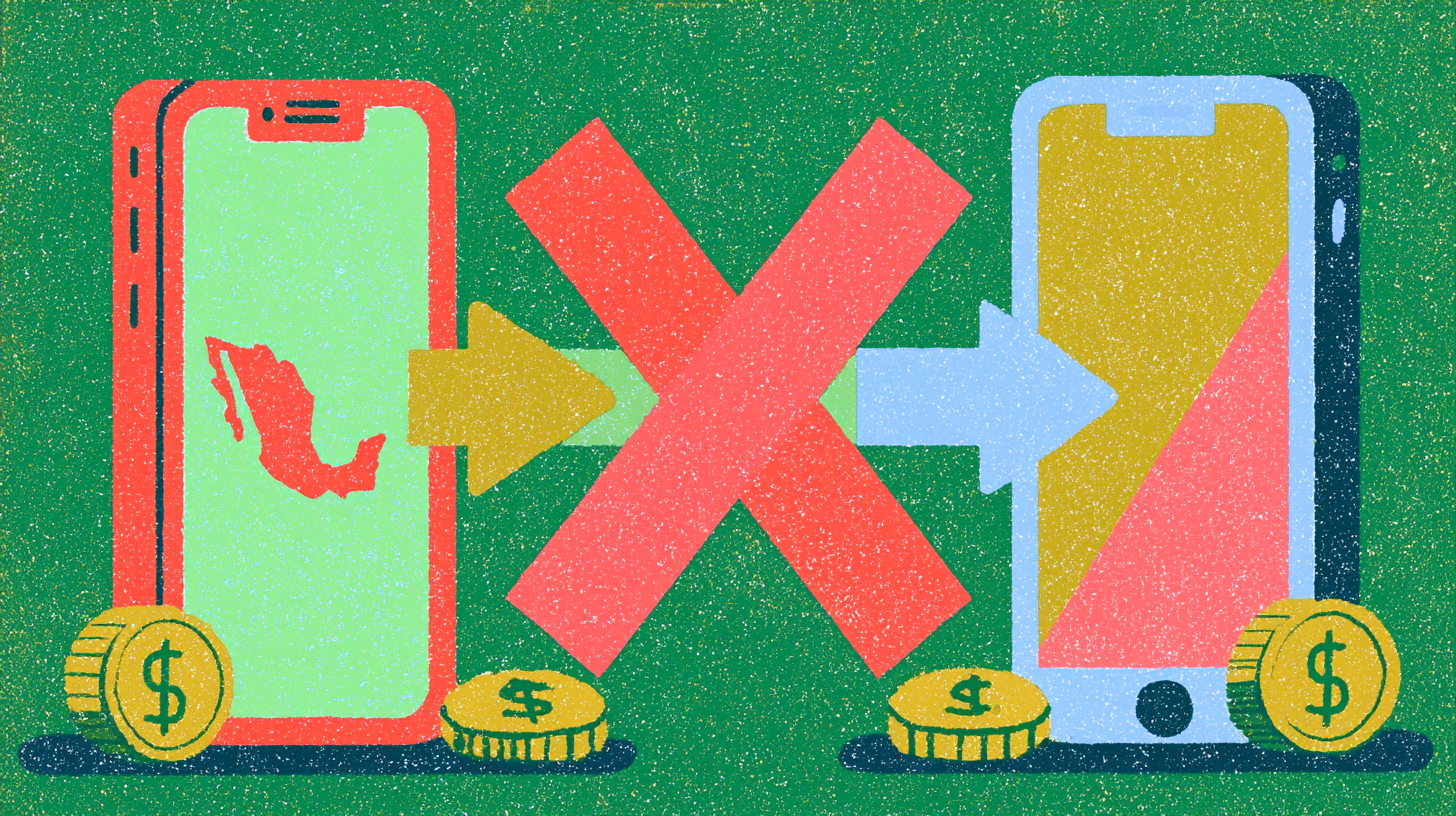
Zelle does not send money directly to Mexico. Zelle only works between eligible U.S. bank accounts and credit unions within the United States.
If you are looking into different methods for sending money to your family in Mexico, you may be searching for 'which banks offer Zelle in Mexico' or trying to understand if Zelle works internationally. This is a common misunderstanding for immigrant families in the U.S. No Mexican bank officially offers Zelle for receiving transfers from the U.S., and Zelle itself is not designed for international money transfers or currency conversion.
What is Zelle and how does it work?
Zelle is a digital payment service that facilitates peer-to-peer transfers at select partner banks in the United States. It is known for its speed, with transfers appearing in minutes, and for its extensive coverage across the U.S. Some U.S. financial institutions that support Zelle include Bank of America, Chase, Wells Fargo, Citi, PNC, and many more.
Why doesn't Zelle work for sending money to Mexico?
Cross-border money transfers require financial institutions, payment networks, regulatory approvals, identity verification procedures, and international settlement systems. Zelle was built around domestic payment systems in the U.S. Because of this, the service does not support direct transfers from U.S. bank accounts to recipients in Mexico.
Alternatives for sending money to Mexico from the U.S. (2026 comparison)
| Service | Typical starting fees | Delivery speed | Exchange rate model | Cash pickup |
|---|---|---|---|---|
| Remitly | Varies; ~$1.99+ for bank deposit to Mexico | Express: minutes to same day; Economy: 3–5 days | Exchange rate markup applies | Yes |
| Wise | From ~0.48% of transfer; shown upfront | Usually same day to 2 days | Mid-market rate, no markup | Limited (select corridors) |
| Xoom | Depends on payment method and destination | Minutes to 1 day | Exchange rate markup applies | Yes |
| Western Union | Varies widely by method and destination | Minutes to several days | Exchange rate markup applies | Yes (extensive agent network) |
| Común | Starts at $2.99 via UniTeller; may vary | Varies by destination and method | Rates displayed before transfer | Yes (depending on delivery option) |
Fees, exchange rates, and delivery times vary based on transfer amount, destination, funding method, and payout option. In 2026, a 1% federal excise tax applies to cash-funded transfers. Bank, debit, and credit card transfers are exempt.
How the new 1% tax on cash remittances affects transfers to Mexico
Starting in 2026, a 1% federal tax applies to certain remittance transfers. The tax applies when you pay with cash, money order, or cashier's check. Transfers funded from a U.S. bank account or with a U.S.-issued debit or credit card are exempt by law.
FAQ
Does Zelle work in Mexico?
No. Zelle does not support international transfers. There is no Mexican bank that offers Zelle for receiving money from the U.S.
What is the best app to send money to Mexico?
It depends on your specific situation. Común offers transfers starting at $2.99 with transparent pricing. Visit comun.app/remittances to learn more.
Remittance service provided by Service UniTeller, Inc. Remittance fees start at $2.99 but may vary. Común Inc. may earn revenue from the conversion of foreign currencies.

Immigration
O1 Visa Requirements in 2026: What You Need to Know
8 min de lectura
O1 Visa Requirements to Work in the United States
The United States offers a wide variety of visas to include as many profiles as possible that can contribute their knowledge to the country.
One example is the O1 visa, intended for foreign nationals who possess extraordinary abilities in fields such as science, sports, and the arts.
This visa has very specific criteria. Therefore, in this article, we explain the requirements established by the U.S. government to obtain it, the classification of O1 visa types, and the documents required during the application process.
If you are looking for an alternative to obtain a work visa in a highly competitive field, the O1 visa could open the door to a new life.
What Is the O1 Visa and Who Can Apply?
The O1 is a U.S. nonimmigrant visa aimed at foreign nationals with extraordinary abilities or outstanding achievements in specific areas.
The concept of “extraordinary ability” can seem a bit ambiguous, but in this context, USCIS refers to individuals who have reached such a level of excellence in their field that they have verifiable national or international recognition.
This visa is divided into two main categories:
O-1A Visa
For individuals with extraordinary achievements in science, education, business, or athletics.
O-1B Visa
For individuals with extraordinary ability in the arts, motion picture, or television industry.
As you can see, it is an immigration document that demands a high level of achievement from applicants in specific areas of work.
Main Requirements for the O1 Visa
To qualify for an O1 visa, applicants must meet a series of requirements established by USCIS.
Below are the main requirements for the two categories of this visa.
For the O-1A Visa
Applicants with outstanding achievements in science, education, business, or athletics must demonstrate they meet the following eligibility criteria:
- Having received significant recognition with national or international impact.
- Membership in prestigious associations that require outstanding achievements.
- Mentions or features in reputable media outlets.
- Having participated as a judge of the work of others in the same field.
- Being the author of published scientific articles.
- Having collaborated with distinguished organizations in the area of expertise.
- Evidence of a high salary or remuneration compared to others in the same field.
For the O-1B Visa
Applicants with outstanding achievements in the arts, film, or television industry can demonstrate eligibility if they meet the following requirements:
- Having received major awards, such as Grammy, Emmy, Oscar, or Nobel Prize.
- Participation in renowned productions.
- Being recognized by media and critics.
- Demonstrable commercial success or popularity.
- Having led prestigious projects.
It is important to note that it is not necessary to meet all these requirements, but the more criteria the applicant fulfills, the easier it will be to obtain the visa.
In both cases, applicants must have a job offer or a sponsor in the United States.
Documents and Evidence Commonly Submitted with the Application
In addition to meeting the criteria, the applicant must have the following documents to prepare a complete application.
Form I-129, Petition for a Nonimmigrant Worker
This form must be filed by the U.S. employer or agent and should include the following details:
- Full name of the beneficiary.
- Detailed description of the project.
- Expected duration and location of the project.
Letters of Recommendation
This letter is essential to support the applicant’s experience in their field. It must be issued by a group of peers, a union, or an expert entity.
Job Offer Letter or Employment Contract in the U.S.
It is a document signed by the applicant and the employer that sets out the terms and conditions of employment, responsibilities, and duration.
Additionally, the previously mentioned requirements can be supported with the following documentation:
- Copies of publications, articles, or press materials.
- Evidence of memberships, awards, or recognitions.
- Financial statements or evidence of high remuneration.
If you have any doubts about your application process, consult an immigration attorney who can help you determine whether your profile fits this type of visa, which is often considered an elite category. Keep in mind that there are other options such as the EB-1 and H-1B visas.
Find Opportunities in the U.S. with Support from Común
In this article, we explained that the O1 is the visa for individuals with extraordinary abilities, aimed at people with outstanding performance in science, sports, and the arts. We also covered the approval requirements and documentation needed to demonstrate that you belong to the groups covered by this work authorization.
Arriving in a new country to work involves many changes and learning to adapt to customs and regulations. When it comes to managing money effectively, it is essential that immigrants have access to quality financial services.
Discover Común, the financial platform that makes life easier for immigrants in the U.S.!
- Checking account with clear and competitive fees.
- International money transfers with affordable costs.
- Mobile app available in Spanish that accepts more than 100 official foreign identifications.
- Debit card for everyday purchases and payments.
Open your account with Común today and build your future in the U.S. with a financial platform designed for immigrants.
Frequently Asked Questions (FAQ)
Can You Obtain an O1 Visa Without a Sponsor?
No, the O1 visa always requires a sponsor to initiate the process. This sponsorship may be provided by a U.S. employer or an agency that acts as an intermediary between the applicant and contractors in the United States.
Although this visa cannot be self-petitioned, there is an option to hire an agent to submit the initial petition.
How Much Money Is Required for an Investor Visa in the United States?
The most common investor visa is the EB-5, which requires a minimum investment of $1,050,000 if the investment is made in a rural area or one with high unemployment.
A key requirement is that the project must create or maintain at least 10 full-time jobs in the United States.
Another investor visa option is the E-2, or treaty investment visa, which does not require a fixed amount but requires the applicant to prove that the investment is large enough to generate a positive impact.
Which Documents Carry the Most Weight for Approval?
The documents that usually carry the most weight for O1 visa approval are those that demonstrate sustained and verifiable recognition.
For example:
- Major awards.
- Publications in recognized media.
- Participation as a judge of others’ work.
- Membership in selective associations.
- Evidence of participation in well-known projects.
- Letters of recommendation from experts or field leaders.
Although it is not necessary to present all these documents, the more evidence there is, the greater the chances of approval.
How Long Does the O1 Visa Last and Can It Be Renewed?
The initial duration is 3 years, depending on the project. Extensions of 1 year can be requested as long as the requirements continue to be met.

Immigration
What happens if I don’t renew my permanent visa? Discover everything about the Green Card in the U.S.
8 min de lectura
Have you just obtained your permanent residence in the United States? Without a doubt, it’s a great achievement for every immigrant who has gone through the immigration process for a long time, though it also comes with a series of responsibilities and restrictions.
A recurring issue within the immigrant community is the general lack of awareness about the risks that can affect their legal status if they don’t act appropriately in the country.
In this article, we aim to keep you informed about these restrictions and provide practical advice to maintain your permanent residence smoothly.
Legal restrictions and rights as a permanent resident
The first thing you should understand is that being a resident is not the same as being a U.S. citizen, as there are clear legal differences that set them apart.
These are the main restrictions you should keep in mind.
You cannot vote in federal elections
Unlike U.S. citizenship, permanent resident status does not grant the right to participate in federal or state elections, which is a disadvantage in exercising voting rights.
Certain public jobs are restricted
Although permanent residents can work for the U.S. government, some positions are only available to citizens, particularly those related to national security or public trust roles.
Possibility of losing status for serious crimes
While obeying the law is mandatory regardless of your immigration status, it’s important to remember that committing crimes such as fraud or drug trafficking can lead to the revocation of your Green Card.
Risks of losing the Green Card due to absences or immigration errors
One of the key requirements you must keep in mind from the moment you began your Green Card process is the obligation to maintain continuous residence in the United States before and after approval.
Keep these risk scenarios in mind to avoid problems with U.S. immigration authorities.
- Leaving the country for more than 6 months without justification may raise suspicion of abandoning residence: if you need to leave the U.S. for more than 6 months, apply for Form I-131, which declares your intention to return.
- Stays outside the U.S. longer than one year can cause automatic loss of status: prolonged absences are generally considered abandonment of permanent residence. Form I-131 allows you to remain abroad for up to two years.
- Failing to file taxes or lying on tax returns can be grounds for revocation: the Internal Revenue Service (IRS) and U.S. Citizenship and Immigration Services (USCIS) may revoke lawful permanent resident status if they detect irregularities in tax payments.
It is advisable to plan your trips abroad in advance and, if necessary, obtain a reentry permit before leaving. Also, stay up to date with your tax payments and seek legal advice if needed.
Limitations on sponsoring family members and obtaining benefits
One of the main advantages of having a Green Card is the ability to sponsor family members for the same status. However, unlike U.S. citizens, residents have access to limited eligibility categories.
- You can only sponsor a spouse and unmarried children under 21: these relatives are considered “preference” categories and must wait until visa slots become available.
- Parents and siblings cannot be sponsored (only citizens can do so): in this case, the only option is to obtain U.S. citizenship.
- Waiting times are long depending on the country of origin: the process can take longer for applicants from high-demand countries, such as Mexico.
Although permanent residence offers certain benefits for holders, these restrictions can be frustrating for immigrants seeking family reunification hindered by regulations.
Tips to protect your status as a permanent resident
It’s true that there are risks that can lead to losing your permanent residence, but most can be avoided with good practices and responsibility.
Keep these tips in mind to avoid problems with the U.S. government.
Always meet your tax obligations
Stay current with your annual tax filings; remember that the deadline is usually April 15 each year. It is essential to meet this requirement, even if you spend time outside the country, to demonstrate your responsibility as a permanent resident.
Maintain a clear residence and ties in the U.S.
It is essential that your main residence is in the United States and that you can show clear ties in the country, such as work, studies, or family.
Avoid long absences and consult before traveling
As mentioned before, being away for more than 6 months may be interpreted as abandoning permanent residence. Try to leave the country only in emergencies, after applying for Form I-131.
Consider applying for citizenship if you meet the requirements
After 5 years as a permanent resident without extended absences and meeting other legal requirements, you can apply for citizenship and remove these restrictions.
Although naturalization is a long process with several steps, it is the most practical path to long-term stability in the country and full rights.
Común supports your financial life as an immigrant
In this article, we explained the “fine print” of the permanent resident card, showing you the risk factors that could lead to losing your status, as well as its benefits.
A common concern for immigrants seeking permanent residence is staying connected with their loved ones despite the distance. Común is the fintech platform that helps you organize your money and send support easily.
Discover all the benefits of Común!
- Checking account with clear and competitive fees.
- Affordable international money transfers.
- Mobile app available in Spanish that accepts more than 100 qualifying official identifications from your home country.
- Debit card for everyday purchases and payments.
Open your account with Común today and manage your money in the U.S. with clarity and confidence.
Frequently Asked Questions (FAQ)
If you still have questions, check the following section.
What’s the difference between a Green Card and residency?
The Green Card, or permanent resident card, is the physical document that certifies that a person holds lawful permanent residence. Residency, on the other hand, is the status granting the right to remain in the country indefinitely.
How long does a Green Card last?
The Green Card is valid for 10 years and can be renewed indefinitely as long as requirements are met. For conditional residency, it lasts 2 years, after which you must apply to remove the condition to renew it for 10 years.
What happens if I don’t renew my permanent visa?
If you don’t renew your permanent residence, your status remains valid, but you might face issues reentering the country, at work, or when handling legal procedures. It’s best to keep this document current to avoid complications.
International Money Transfers
How to send money to Mexico via WhatsApp? Común vs. WhatsApp Pay
8 min de lectura
How to send money to Mexico via WhatsApp? Común vs. WhatsApp Pay
WhatsApp does not currently offer a service to send money directly from the United States to Mexico.
WhatsApp is one of the most popular ways to stay in touch with family and friends across borders. While the app supports payments in certain countries, its payment features are not available for sending money from the United States to Mexico.
However, for people living in the United States who are looking into sending money to Mexico, there are many different options available. From traditional service providers such as Western Union and MoneyGram to apps with instant international transfers like Wise, Remitly and Común.
Can I send money to Mexico via WhatsApp from the United States?
At this time, WhatsApp does not offer an official service that allows people in the United States to send money directly to recipients in Mexico through WhatsApp Pay. WhatsApp's payment functionality is only available in Brazil and India.
This means that you can still use WhatsApp every day to communicate with family and friends in Mexico, but you cannot transfer money from a U.S. account to a recipient in Mexico using WhatsApp Pay.
Some money transfer companies offer WhatsApp-based experiences that help initiate transfers, but those services are different from WhatsApp Pay itself. The actual transfer is processed through the remittance provider rather than through WhatsApp's native payment system.
What is WhatsApp Pay and how does it work?
WhatsApp Pay is a payment feature integrated into WhatsApp that allows eligible users to send and receive money without leaving the app. The service operates through local payment networks and financial partners in supported countries.
As of 2026, WhatsApp Pay is available in India and Brazil. It is not broadly available as a payment method in the United States, and it is not available as a direct remittance solution for sending money from the United States to Mexico.
Why can't I use WhatsApp to send money to Mexico?
Cross-border money transfers require financial institutions, payment networks, regulatory approvals, identity verification procedures, and international settlement systems. WhatsApp Pay was built around local payment systems in specific countries. Because of this, the service does not currently support direct remittances from U.S. bank accounts to recipients in Mexico.
This limitation often creates confusion because WhatsApp is widely used on both sides of the border. Messaging a family member in Mexico through WhatsApp is easy, but sending money through WhatsApp Pay is a different service with separate availability requirements.
How much does WhatsApp Pay charge for sending money?
There is no standard fee for sending money from the United States to Mexico through WhatsApp Pay because that service is not currently available.
If you're in the United States and need to send money to Mexico, you will need a remittance service provider. To compare the costs related to sending money to Mexico, it can be important to review: transfer fees, exchange rates, delivery methods, transfer speed, and recipient requirements.
What's the best way to send money to Mexico if not via WhatsApp?
There is no single answer because different money transfer methods work better for different situations. Bank transfers can be a familiar option for people who already have a checking account. Traditional remittance providers such as MoneyGram and Western Union offer multiple delivery methods, including bank deposits, cash pickup locations, and mobile wallets in some markets.
Digital remittance platforms have become increasingly popular because they offer the possibility of sending money directly from a smartphone. These services typically display the exchange rate, fees, and delivery method before the transfer is completed.
One option is Común through its remittances services, which allows eligible customers to send money to Mexico and other countries in Latin America directly from the Común app. Transfers start at $2.99, and many transfers are delivered on the same day depending on the destination and delivery method.
How to send money to Mexico with Común? (step by step)
1. Open the Común app on your phone.
Sign in to your account and navigate to the remittance section.
2. From the main page, select "Envía una Remesa".
Select the option on your app.
3. Choose your recipient or add a new one.
Provide the required details for the person receiving the transfer.
4. Enter the transfer amount.
Review the amount you want to send.
5. Review the transfer details.
Confirm the recipient information, delivery method, transfer amount, and estimated delivery timeframe.
6. Confirm the transfer.
Complete the transaction and wait for confirmation. Many transfers are delivered the same day, although delivery times may vary.
WhatsApp Pay vs. Común: a direct comparison
| Feature | WhatsApp Pay | Común |
|---|---|---|
| Send money from the United States to Mexico | No | Yes |
| Cross-border remittances | No | Yes |
| Starting transfer cost | Not available for U.S.-Mexico transfers | Starting at $2.99 |
| Delivery to recipients in Mexico | Not supported | Available |
| Transfer purpose | Domestic payments in supported countries | Money transfers to Mexico and Latin America |
WhatsApp Pay was created for payments within certain supported markets. Común remittance services make it possible to send money from the United States to recipients in Mexico and other countries in Latin America directly from the Común app.
A Común account can be opened with a passport or more than 100 Latin American IDs with no minimums or monthly fees.
FAQ
Can I send money to Mexico using WhatsApp?
No. WhatsApp does not currently provide an official service that allows users in the United States to send money directly to recipients in Mexico through WhatsApp Pay.
How does WhatsApp Pay work?
WhatsApp Pay allows eligible users in supported countries to send and receive money through WhatsApp using local payment networks and financial partners.
How long does it take for the money to arrive if I send it with Común?
Many transfers sent through Común are delivered on the same day. Delivery times may vary depending on the destination, delivery method, and recipient institution.
What do I need to send money to Mexico with Común?
You generally need a Común account, the recipient's information, the transfer amount, and any additional details required for the selected delivery method.
How much does it cost to send money to Mexico with Común?
Común international transfers start at $2.99. The total cost may vary depending on the transfer amount, destination, and exchange rate.
Is it safe to send money through apps from the United States?
Using a regulated money transfer provider can help protect your transaction through identity verification, encryption, fraud monitoring, and transaction tracking features.
Común is a financial technology company and not a bank. Banking services are provided by Community Federal Savings Bank, Member FDIC. Peer-to-peer payments services are provided by Cross River Bank. No minimums, no maintenance fees. Remittance service provided by Service UniTeller, Inc. Remittance fees start at $2.99 but may vary. Común Inc. may earn revenue from the conversion of foreign currencies.





Thousands of immigrants are already achieving more with their money. You can too.
Comun is a financial technology company and not a bank. Banking services are provided by Community Federal Savings Bank; Member FDIC. The Comun Visa® Debit Card is issued by Community Federal Savings Bank, pursuant to a license from Visa U.S.A Inc. and may be used everywhere Visa Cards are accepted.
Comun is a fintech company and not a bank or licensed money transmitter.
* Results may vary. For a complete list of eligible IDs and application requirements, follow this link.
^ No minimums, no maintenance fees. ATM or transfer fees may apply. See app for fee details.
‡ Direct deposit funds are typically available when we receive the payment file, up to two days before the scheduled payment date. This early availability is not guaranteed.
** A service provided by Service UniTeller, Inc. Service UniTeller, Inc. is licensed in all states that require a license. Remittance fees start at $2.99 but may vary. Please check the app for more details. Comun Inc. may earn revenue from the conversion of foreign currencies.
† Funds in your account are FDIC insured up to $250,000 by ownership category through Community Federal Savings Bank (CFSB), Member FDIC, in the event CFSB fails.