Living in the United States
How to Make Money Fast in the United States
Making money fast can be a necessity at any point in life, and for Latinos in the United States it can be an even.
8 min read

17 Apr 2023

Earning extra money fast in the U.S. is possible through survey apps, flexible freelance work, or referrals. With Común's referral program, you earn a cash reward for every person you invite who opens an account.
Making money fast can be a necessity at any point in life, and for Latinos in the United States it can be an even greater challenge. But don’t worry, in this post we’ll give you some ideas and tips so you can make money quickly and improve your financial situation.
1. Find temporary jobs
Temporary jobs are a good option for making money quickly. Many companies hire temporary workers to cover demand during certain times of the year, such as the holiday season or tax season. Look on job websites like Indeed, Glassdoor, or Monster to find temporary jobs in your area.
2. Become a rideshare driver
If you have a car and a valid driver’s license, consider becoming a rideshare driver for services like Uber or Lyft. These services let you work on your own schedule and make money quickly. Plus, you can work as much or as little as you want.
3. Sell your skills
If you have skills you can sell, such as computer repair, graphic design, or language teaching, you can use online platforms like Fiverr or Upwork to connect with people who need your services. These platforms charge a commission for each completed job, but you can set your own prices and work on projects based on your availability.
4. Do yard work or cleaning jobs
Many people need help with yard work or cleaning, and this can be a good option for making money quickly. You can offer your services in your neighborhood or on websites like Craigslist. Make sure you have the right equipment and a good attitude to win regular customers.
5. Sell items you no longer need
Selling items you no longer need is a quick way to get extra cash. You can sell them online through websites like eBay or Amazon, or in person at a garage sale or flea market. If you have valuable items you no longer use, this can be an excellent option for making money quickly.
Remember that these are just some ideas for making money quickly. You can also look for jobs in the hospitality or customer service industry, offer house cleaning services, or take online surveys to earn extra money. The important thing is to find an option that fits your skills and needs.
Remember to connect your Común account to your job so you can receive your pay as quickly as possible — up to two days early. In your Común checking account, you can keep the income from your work at no cost and with the highest possible security.
Común debit cards are compatible with more than 57,000 ATMs in the United States for deposits and withdrawals, and they include Visa’s zero-liability protection policy. This means that any unauthorized charge will not be deducted from the balance in your checking account. Likewise, your bank account is insured by the FDIC up to $250,000 like any other legal bank.
Good luck!
How can I earn extra money fast?
Paid survey apps, flexible freelance work (driving, deliveries, task apps), and financial app referral programs are common ways to generate extra income without a full-time job.
How does Común's referral program work?
Invite someone with your unique link from the app's home screen. When that person opens a full debit account and completes their first qualifying outflow, you both receive a cash reward — credited to your account within 5 days.
How much can I earn by referring people?
The reward amount can vary based on the current promotion; check the active terms inside the referral section of the app.
Frequently asked questions
Do I need to do anything special to join Común's referral program?
Just share your unique link from the referral button on the app's home screen — referrals outside that link don't qualify.
When do I get my reward for referring someone?
Within 5 calendar days after your referral completes a First Qualifying Outflow.
Is there a limit to how many people I can refer?
The current terms and conditions detail the limits; check them in the app before sharing broadly.
What happens if my referral doesn't complete the process?
The reward is only credited if the referral opens the account, gets approved, and completes a First Qualifying Outflow.
Can I refer myself with another account?
No, self-referral and fraudulent or abusive activity aren't eligible for rewards.
What other quick ways exist to generate income besides referrals?
Paid survey apps and flexible freelance work are other common options, though they typically generate less than a primary income.
About Común
Común aims to support the Latino community in the United States. It offers a debit account that can be opened with more than 100 valid Latin American IDs and an app available in Spanish.
Visit Común's website or download the app for free to learn more about the full offer and applicable terms.
Olivia Rhye
Community Partner


Checking account
How to Identify Where to Deposit Cash
8 min de lectura
To deposit cash with Común, open the app, go to the "Cash" section and then "Deposit" to see all nearby locations on the map. You can generate a barcode and deposit without needing your physical card.
Depositing cash into your Común account is simple and convenient. Whether you prefer using your physical card at an AllPoint+ ATM or generating a barcode in the app, here is a step-by-step guide to help you understand both methods.
Using a Physical Card
Step 1: Wait for Your Physical Card
After opening your online bank account, your physical debit card will be mailed to your home. This usually takes 7 to 10 business days.
Step 2: Activate Your Card
Before you can use your card, make sure to activate it through the Común app. Your card must be active for any transaction.
Step 3: Locate an AllPoint+ ATM
AllPoint+ ATMs are part of a broad network of ATMs, perfect for cash deposits. Here is how to find one:
- Open the Común app.
- Go to the "Move Money" section.
- Use the map to locate the nearest AllPoint+ ATM. These machines are usually found at popular retail locations.
Step 4: Deposit Cash at an AllPoint+ ATM
Once you are at the ATM:
- Insert your activated card.
- Follow the on-screen instructions to deposit cash into your checking account. Please note that deposits can only be made into checking accounts, not savings accounts.
- Make sure your deposit is within the limits: up to $250 per deposit and up to $1,000 per day, including deposits and withdrawals.
Tip: If there are no AllPoint+ ATMs near you, do not worry. You can also deposit cash using a barcode at many other locations!
Using the Barcode in the App
Step 1: Generate a Barcode
Here is how to generate a barcode in the Común app:
- Open the app and go to the "Cash" section.
- Select the option to generate a barcode for deposit.
- The barcode will appear on your screen, ready to use.
Step 2: Find Locations That Accept the Barcode
To find a nearby location that accepts the barcode:
- In the "Cash" section, look for the list of participating locations.
- You can also use the map feature to find the nearest store.
Step 3: Using the Barcode
Take your barcode to a participating location and show it to the cashier. They will scan the barcode, allowing you to deposit your cash.
Important Details:
- Expiration: The barcode expires after 15 minutes, but you can generate as many as you need.
- Limits: Keep in mind the deposit limits that may apply when using the barcode method.
Troubleshooting ATM Transactions
Problems Depositing Money
When troubleshooting ATM transactions, especially problems depositing money, it is important to make sure you are using an AllPoint+ ATM, since these machines do not charge fees for deposits. Your physical card must be activated; if it is not, you can easily activate it from the app. Also, make sure you enter the correct PIN. If you do not remember your PIN, you can view it or change it in the app settings section. Verify that your deposit is within the limits, which are up to $250 per deposit and up to $1,000 per day. Finally, always select "checking account," since Común accounts are checking accounts, not savings accounts.
Problems Withdrawing Money
If you run into problems withdrawing money, first make sure you have enough balance by checking your balance in the app before making a withdrawal. Use an AllPoint+ ATM to avoid withdrawal fees, since other ATMs may charge a fee. Enter the correct PIN; if you do not remember your PIN, you can view it or change it in the app settings section. Verify that your withdrawal is within the limits, which are up to $250 per withdrawal and up to $1,000 per day, including deposits and withdrawals. If you continue having problems, contact us through the chat in your app for more help.
Alternative Deposit Methods
If you cannot find a nearby store to deposit cash, Común offers other options:
- Receive Money: Use apps like Zelle, CashApp, Venmo, or PayPal.
- Direct Deposit: Set up direct deposit with your employer.
- External Transfers: Send money to your Común account from an external bank or other financial institutions.
Additional Tips and Information
Fraud Prevention
Always keep your account number and PIN secure. Do not share this information with anyone to avoid unauthorized transactions.
Know Your Limits
Be aware of the deposit amount limits. For example, you can only deposit up to $250 per deposit and up to $1,000 per day. This helps you manage your funds and avoid any unexpected issues.
Use Común Features
The Común app provides a map to find the nearest ATMs and stores that accept barcodes for deposits. This feature helps you quickly locate convenient deposit points.
Stay up to date with the latest features and benefits offered by Común through the app, ensuring you get the most out of your online banking experience.
Cash Deposit Fees
Depositing cash at an AllPoint+ ATM has no fees, while other ATMs may charge a fee. Always check for possible fees before making a deposit.
Mobile Check Deposits
In addition to cash deposits, Común also supports mobile check deposits, adding more flexibility to the way you manage your money..
Conclusion
In short, depositing cash into a bank account is a practical decision driven by safety, convenience, possible earnings, financial management, and legal compliance. By understanding these reasons, people can make informed decisions about how to handle and manage their cash effectively, ensuring financial stability and growth.
Whether you use your physical card at an AllPoint+ ATM or a barcode in the app, depositing cash into your Común account is simple and convenient. Always make sure your card is activated, check nearby locations, and keep deposit limits in mind. With these steps, you will be able to manage your cash deposits effortlessly.
Do not worry, if there are no locations near you, you can also deposit with a barcode at many more locations! Visit Común for more details and get started with your deposits today.
By understanding the process and using the tools provided by Común, you will be able to handle your cash deposits effectively and ensure your funds are always accessible.
How do I find where to deposit cash near me?
In the app, go to "Cash" → "Deposit" to see the map with all available locations. Choose the closest one; if the location allows it, you can generate a code to deposit without a card.
Is there a limit on how much cash I can deposit?
Most stores have a $500 limit per transaction, though some allow higher amounts. If you deposit more than $300 at Walgreens or Walmart, you'll be asked for a U.S. government-issued ID.
What do I do if there's no location near me?
Check other locations on the app's map, or deposit at an AllPoint+ network ATM, which also accepts cash deposits.
Frequently asked questions
Do I need my physical card to deposit cash?
Not always — at many locations you can generate a barcode in the app and deposit using only your phone.
How much cash can I deposit per transaction?
Most stores have a $500 limit, though it can vary by location.
Do I need ID to deposit cash?
If you deposit more than $300 at stores like Walgreens or Walmart, you'll be asked for a U.S. government-issued ID.
Does depositing cash cost anything?
The cost can vary by store; check the details directly on the app's map before depositing.
Can I deposit cash at an ATM?
Yes, ATMs in the AllPoint+ network also accept cash deposits.
How do I know if a nearby location accepts Común deposits?
The map inside the "Cash" → "Deposit" section of the app shows you in real time which nearby locations accept deposits.

Immigration
EB-3 visa: Requirements and how to apply in 2025
8 min de lectura
If you’re looking for a feasible way to live and work in the United States, you should know the details of the EB-3 visa, a permit that offers skilled workers, professionals, and other unskilled workers the possibility of accessing various job opportunities in the country.
This visa is the most common route to live and work legally in the U.S. because, unlike the EB-2, it covers a broader range of profiles. It also facilitates obtaining permanent residence.
The application process is often somewhat confusing and slow. Therefore, here we explain what the EB-3 visa is, its requirements, the employer’s role, benefits, processing time, costs, and the step-by-step process to apply.
What is the EB-3 visa and who qualifies?
The EB-3 is a visa category for obtaining a Green Card through authorization granted to foreign workers who have a job offer issued by a U.S. employer.
In turn, this visa is divided into three main categories:
- Skilled workers: individuals with at least 2 years of job experience in a given field.
- Professionals: individuals with a university degree equivalent to a U.S. bachelor’s degree, whose positions require academic training.
- Other (unskilled) workers: roles requiring less than 2 years of experience—generally positions requiring steady labor.
For any of these subcategories, the employer plays a central role by filing the labor certification (PERM) with the Department of Labor to show that no U.S. workers are available to fill the job.
Main EB-3 visa requirements
The EB-3 visa has specific requirements depending on the subcategory. Below is a comparative table.
| Requirements | Employer’s role |
|---|---|
| Skilled workers At least 2 years of work experience or specialized training. |
Prove that the position requires at least 2 years of experience or training. |
| Professionals University degree equivalent to a U.S. bachelor’s. |
Show that the position requires a bachelor’s and that the candidate meets it. |
| Other (unskilled) workers Less than 2 years of work experience. Ability to perform labor-intensive tasks. |
Indicate via PERM that the position requires under 2 years of experience and is not temporary or seasonal. |
Regardless of subcategory, a permanent job offer in the United States is always required. The employer must also complete DOL-approved labor certification showing the need to hire a foreign worker for the position.
Next, Form I-140 (Immigrant Petition for Alien Worker) is filed, in which the employer asks USCIS to classify the worker under an EB-3 category.
For example, if a medical practice needs a physician, it files Form I-140 to substantiate the candidate’s experience.
Benefits of meeting EB-3 visa requirements
Obtaining an EB-3 work visa brings several advantages not only for the applicant but also for their family, for example:
- Job stability in the U.S.
An EB-3 visa allows you to secure lawful employment with a U.S. company, helping you achieve financial stability and a better quality of life for your family.
- Pathway to lawful permanent residence.
The EB-3 is also a route for your immediate family to obtain a family-based Green Card, allowing you and your family to live legally in the United States.
- Opportunities for professional and personal growth.
Building a life in the United States brings benefits such as access to higher wages, a broader job market, education for your children, Social Security, and more. This enables long-term financial planning to acquire property and services needed for your family’s well-being.
How to apply for the EB-3 visa step by step
Step 1. Determine eligibility
First determine which of the three categories fits your profile and verify that you meet the requirements based on your education level, work experience, and the type of job you’re applying for.
Step 2. Labor certification (PERM)
The employer must then file the labor certification (PERM) with the Department of Labor (DOL) to show no U.S. workers are available for the position and that the offered wage meets legal standards. This step is essential; without approval the process cannot proceed.
Step 3. File Form I-140
Once PERM is approved, the employer must file the I-140 petition with USCIS to confirm the job relationship and the company’s financial ability to pay the worker’s wage.
Step 4. Adjustment of status or consular processing
After I-140 approval, wait for visa availability in the Visa Bulletin, then proceed accordingly:
- Adjustment of status: if you’re already in the U.S., file Form I-485
- Consular processing: if you’re outside the U.S., file Form DS-260 through the National Visa Center and attend an interview.
Común supports your daily financial life in the U.S.
Here we’ve shown what the EB-3 visa is, the requirements for each subcategory, the benefits, and the application process.
As you start your new life in the U.S., make sure you have an ally who understands you.
Común is a financial platform that helps you manage your everyday needs in the United States. Through the Común mobile app and an intuitive platform, you can create your checking account with a qualifying official identification from your home country. It also makes sending remittances to Latin America, simple and transparent, with clear and competitive fees, up to the applicable limits.
Open your Común account today and start managing your money in the U.S.
Frequently Asked Questions (FAQ)
If you still have questions, see this section.
How long does the EB-3 process take?
The timeline varies with workload, but the full process is estimated at roughly 1 to 3 years.
How much does the EB-3 visa cost in the United States?
- Form I-140: $715
- Form I-485 (adjustment of status): $1,440
- Form DS-260 (consular processing): $325 per applicant
Can I include my family with the EB-3 visa?
You can include your spouse and unmarried children under 21 to apply for residence as derivative beneficiaries and obtain the Green Card at the same time.
Do I need a job offer to apply?
Yes, the EB-3 always requires a job offer, unlike the EB-2 NIW subcategory.

Immigration
The 100 Questions about American Citizenship in Spanish
8 min de lectura
The 100 Questions about American Citizenship in Spanish
Reaching the point where you're preparing for the citizenship exam is already a major milestone. It reflects time, effort, and a commitment to building your future in the United States.
In this guide, you'll find the 100 civic questions for the U.S. Citizenship exam provided by the U.S. Citizenship and Immigration Services (USCIS), the government agency that reviews and processes citizenship applications. These are the questions from the civics test, translated into Spanish with their answers and organized by category aimed to support you while you prepare. The exam is administered by USCIS and is oral, not written. You'll be asked up to 10 questions out of the 100.
How does the US citizenship test work?
The U.S. citizenship exam generally consists of two parts, an English test and a civics test. Understanding how each one of them works could make the process feel more manageable. The English evaluation is conducted through an interview, in which an officer evaluates your English language skills through simple speaking, reading, and writing exercises. In the civics portion, the officer asks up to 10 questions out of a list of 100. They are about U.S. history, government, geography and holidays. To pass the test you must answer at least 6 of them correctly. It is important to consider that this entire part of the exam is oral.
If you do not pass a section the first time, you will usually have a second opportunity to retake the failed portion within 60 to 90 days. To start the application for citizenship, you must submit a form called Form N-400, which is the official application for naturalization, and as of 2026, the filing cost is $760, however, fees are subject to change.
Who can take the exam in Spanish?
If you are 65 or older and have been a permanent resident for at least 20 years, you may qualify to take the civics test in Spanish. This special rule, provided by USCIS, is designed to make the process more accessible for long-term residents. In this case, you do not need to study all 100 questions, you only need to study 20 of the 100 questions. In our list we will mark them with an asterisk (*). It is recommended to always consult and review the specific requirements of your own case with the corresponding authorities.
The 100 Official Citizenship Civics Test Questions (with answers in Spanish)
Here you will find the 100 official questions that USCIS may ask you during your citizenship exam, along with their answers in Spanish. However, keep in mind that the actual interview is conducted in English, unless you qualify for an exemption.
Part A: The American government (questions 1-57)
Principles of American Democracy (1–12)
1. What is the supreme law of the land?
- the Constitution
2. What does the Constitution do?
- sets up the government
- defines the government
- protects basic rights of Americans
3. The idea of self-government is in the first three words of the Constitution. What are these words?
- We the People
4. What is an amendment?
- a change (to the Constitution)
- an addition (to the Constitution)
5. What do we call the first ten amendments to the Constitution?
- the Bill of Rights
6. What is one right or freedom from the First Amendment?*
- speech
- religion
- assembly
- press
- petition the government
7. How many amendments does the Constitution have?
- twenty-seven (27)
8. What did the Declaration of Independence do?
- announced our independence (from Great Britain)
- declared our independence (from Great Britain)
- said that the United States is free (from Great Britain)
9. What are two rights in the Declaration of Independence?
- life
- liberty
- pursuit of happiness
10. What is freedom of religion?
- You can practice any religion, or not practice a religion.
11. What is the economic system in the United States?*
- capitalist economy
- market economy
12. What is the "rule of law"?
- Everyone must follow the law.
- Leaders must obey the law.
- Government must obey the law.
- No one is above the law.
System of Government (13–47)
13. Name one branch or part of the government.*
- Congress
- legislative
- President
- executive
- the courts
- judicial
14. What stops one branch of government from becoming too powerful?
- checks and balances
- separation of powers
15. Who is in charge of the executive branch?
- the President
16. Who makes federal laws?
- Congress
- Senate and House (of Representatives)
- (U.S. or national) legislature
17. What are the two parts of the U.S. Congress?*
- the Senate and House (of Representatives)
18. How many U.S. Senators are there?
- one hundred (100)
19. We elect a U.S. Senator for how many years?
- six (6)
20. Who is one of your state's U.S. Senators now?*
- Answers will vary.
- [District of Columbia residents and residents of U.S. territories should answer that D.C. (or the territory where the applicant lives) has no U.S. Senators.]
21. The House of Representatives has how many voting members?
- four hundred thirty-five (435)
22. We elect a U.S. Representative for how many years?
- two (2)
23. Name your U.S. Representative.
- Answers will vary.
- [Residents of territories with nonvoting Delegates or Resident Commissioners may provide the name of that Delegate or Commissioner. Also acceptable is any statement that the territory has no (voting) Representatives in Congress.]
24. Who does a U.S. Senator represent?
- all people of the state
25. Why do some states have more Representatives than other states?
- (because of) the state's population
- (because) they have more people
- (because) some states have more people
26. We elect a President for how many years?
- four (4)
27. In what month do we vote for President?*
- November
28. What is the name of the President of the United States now?*
- Visit uscis.gov/citizenship/testupdates for the name of the President of the United States.
29. What is the name of the Vice President of the United States now?
- Visit uscis.gov/citizenship/testupdates for the name of the Vice President of the United States.
30. If the President can no longer serve, who becomes President?
- the Vice President
31. If both the President and the Vice President can no longer serve, who becomes President?
- the Speaker of the House
32. Who is the Commander in Chief of the military?
- the President
33. Who signs bills to become laws?
- the President
34. Who vetoes bills?
- the President
35. What does the President's Cabinet do?
- advises the President
36. What are two Cabinet-level positions?
- Secretary of Agriculture
- Secretary of Commerce
- Secretary of Defense
- Secretary of Education
- Secretary of Energy
- Secretary of Health and Human Services
- Secretary of Homeland Security
- Secretary of Housing and Urban Development
- Secretary of the Interior
- Secretary of Labor
- Secretary of State
- Secretary of Transportation
- Secretary of the Treasury
- Secretary of Veterans Affairs
- Attorney General
- Vice President
37. What does the judicial branch do?
- reviews laws
- explains laws
- resolves disputes (disagreements)
- decides if a law goes against the Constitution
38. What is the highest court in the United States?
- the Supreme Court
39. How many justices are on the Supreme Court?
- Visit uscis.gov/citizenship/testupdates for the number of justices on the Supreme Court.
40. Who is the Chief Justice of the United States now?
- Visit uscis.gov/citizenship/testupdates for the name of the Chief Justice of the United States.
41. Under our Constitution, some powers belong to the federal government. What is one power of the federal government?
- to print money
- to declare war
- to create an army
- to make treaties
42. Under our Constitution, some powers belong to the states. What is one power of the states?
- provide schooling and education
- provide protection (police)
- provide safety (fire departments)
- give a driver's license
- approve zoning and land use
43. Who is the Governor of your state now?
- Answers will vary. [District of Columbia residents should answer that D.C. does not have a Governor.]
44. What is the capital of your state?*
- Answers will vary. [District of Columbia residents should answer that D.C. is not a state and does not have a capital. Residents of U.S. territories should name the capital of the territory.]
45. What are the two major political parties in the United States?*
- Democratic and Republican
46. What is the political party of the President now?
- Visit uscis.gov/citizenship/testupdates for the political party of the President.
47. What is the name of the Speaker of the House of Representatives now?
- Visit uscis.gov/citizenship/testupdates for the name of the Speaker of the House of Representatives.
Rights and responsibilities (48–57)
48. There are four amendments to the Constitution about who can vote. Describe one of them.
- Citizens eighteen (18) and older (can vote).
- You don't have to pay (a poll tax) to vote.
- Any citizen can vote. (Women and men can vote.)
- A male citizen of any race (can vote).
49. What is one responsibility that is only for United States citizens?*
- serve on a jury
- vote in a federal election
50. Name one right only for United States citizens.
- vote in a federal election
- run for federal office
51. What are two rights of everyone living in the United States?
- freedom of expression
- freedom of speech
- freedom of assembly
- freedom to petition the government
- freedom of religion
- the right to bear arms
52. What do we show loyalty to when we say the Pledge of Allegiance?
- the United States
- the flag
53. What is one promise you make when you become a United States citizen?
- give up loyalty to other countries
- defend the Constitution and laws of the United States
- obey the laws of the United States
- serve in the U.S. military (if needed)
- serve (do important work for) the nation (if needed)
- be loyal to the United States
54. How old do citizens have to be to vote for President?*
- eighteen (18) and older
55. What are two ways that Americans can participate in their democracy?
- vote
- join a political party
- help with a campaign
- join a civic group
- join a community group
- give an elected official your opinion on an issue
- call Senators and Representatives
- publicly support or oppose an issue or policy
- run for office
- write to a newspaper
56. When is the last day you can send in federal income tax forms?*
- April 15
57. When must all men register for the Selective Service?
- at age eighteen (18)
- between eighteen (18) and twenty-six (26)
Part B: American history (questions 58-87)
Colonial Period and Independence
58. What is one reason colonists came to America?
- freedom
- political liberty
- religious freedom
- economic opportunity
- practice their religion
- escape persecution
59. Who lived in America before the Europeans arrived?
- American Indians
- Native Americans
60. What group of people was taken to America and sold as slaves?
- Africans
- people from Africa
61. Why did the colonists fight the British?
- because of high taxes (taxation without representation)
- because the British army stayed in their houses (boarding, quartering)
- because they didn't have self-government
62. Who wrote the Declaration of Independence?
- (Thomas) Jefferson
63. When was the Declaration of Independence adopted?
- July 4, 1776
64. There were 13 original states. Name three.
- New Hampshire
- Massachusetts
- Rhode Island
- Connecticut
- New York
- New Jersey
- Pennsylvania
- Delaware
- Maryland
- Virginia
- North Carolina
- South Carolina
- Georgia
65. What happened at the Constitutional Convention?
- The Constitution was written.
- The Founding Fathers wrote the Constitution.
66. When was the Constitution written?
- 1787
67. The Federalist Papers supported the passage of the U.S. Constitution. Name one of the writers.
- (James) Madison
- (Alexander) Hamilton
- (John) Jay
- Publius
68. What is one thing Benjamin Franklin is famous for?
- U.S. diplomat
- oldest member of the Constitutional Convention
- first Postmaster General of the United States
- writer of "Poor Richard's Almanac"
- started the first free libraries
69. Who is the "Father of Our Country"?
- (George) Washington
70. Who was the first President?*
- (George) Washington
1800s
71. What territory did the United States buy from France in 1803?
- the Louisiana Territory
- Louisiana
72. Name one war fought by the United States in the 1800s.
- War of 1812
- Mexican-American War
- Civil War
- Spanish-American War
73. Name the U.S. war between the North and the South.
- the Civil War
- the War between the States
74. Name one problem that led to the Civil War.
- slavery
- economic reasons
- states' rights
75. What was one important thing that Abraham Lincoln did?*
- freed the slaves (Emancipation Proclamation)
- saved (or preserved) the Union
- led the United States during the Civil War
76. What did the Emancipation Proclamation do?
- freed the slaves
- freed slaves in the Confederacy
- freed slaves in the Confederate states
- freed slaves in most Southern states
77. What did Susan B. Anthony do?
- fought for women's rights
- fought for civil rights
Recent American History and Other Important Historical Information
78. Name one war fought by the United States in the 1900s.*
- World War I
- World War II
- Korean War
- Vietnam War
- (Persian) Gulf War
79. Who was President during World War I?
- (Woodrow) Wilson
80. Who was President during the Great Depression and World War II?
- (Franklin) Roosevelt
81. Who did the United States fight in World War II?
- Japan, Germany, and Italy
82. Before he was President, Eisenhower was a general. What war was he in?
- World War II
83. During the Cold War, what was the main concern of the United States?
- Communism
84. What movement tried to end racial discrimination?
- civil rights (movement)
85. What did Martin Luther King, Jr. do?*
- fought for civil rights
- worked for equality for all Americans
86. What major event happened on September 11, 2001, in the United States?
- Terrorists attacked the United States.
87. Name one American Indian tribe in the United States.
- [USCIS Officers will be supplied with a list of federally recognized American Indian tribes.]
- Cherokee
- Navajo
- Sioux
- Chippewa
- Choctaw
- Pueblo
- Apache
- Iroquois
- Creek
- Blackfeet
- Seminole
- Cheyenne
- Arawak
- Shawnee
- Mohegan
- Huron
- Oneida
- Lakota
- Crow
- Teton
- Hopi
- Inuit
Part C: Geography and civic integration (questions 88-100)
Geography
88. Name one of the two longest rivers in the United States.
- Missouri (River)
- Mississippi (River)
89. What ocean is on the West Coast of the United States?
- Pacific (Ocean)
90. What ocean is on the East Coast of the United States?
- Atlantic (Ocean)
91. Name one U.S. territory.
- Puerto Rico
- U.S. Virgin Islands
- American Samoa
- Northern Mariana Islands
- Guam
92. Name one state that borders Canada.
- Maine
- New Hampshire
- Vermont
- New York
- Pennsylvania
- Ohio
- Michigan
- Minnesota
- North Dakota
- Montana
- Idaho
- Washington
- Alaska
93. Name one state that borders Mexico.
- California
- Arizona
- New Mexico
- Texas
94. What is the capital of the United States?*
- Washington, D.C.
95. Where is the Statue of Liberty?*
- New York (Harbor)
- Liberty Island
- [Also acceptable are New Jersey, near New York City, and on the Hudson (River).]
Symbols
96. Why does the flag have 13 stripes?
- because there were 13 original colonies
- because the stripes represent the original colonies
97. Why does the flag have 50 stars?*
- because there is one star for each state
- because each star represents a state
- because there are 50 states
98. What is the name of the national anthem?
- The Star-Spangled Banner
Holidays
99. When do we celebrate Independence Day?*
- July 4
100. Name two national U.S. holidays.
- New Year's Day
- Martin Luther King, Jr. Day
- Presidents' Day
- Memorial Day
- Independence Day
- Labor Day
- Columbus Day
- Veterans Day
- Thanksgiving
- Christmas
Frequently Asked Questions about the Citizenship Exam
How many questions are asked on the citizenship exam?
During the civics portion, an officer from USCIS will ask up to 10 questions out of a list of 100. You need to answer at least 6 correctly to pass this part of the test.
Is the citizenship exam in English or Spanish?
The exam is conducted in English, including both the English and civics portions. However, applicants who qualify for the 65/20 exemption can take the civics test in Spanish. Make sure you verify if the exemption applies in your specific case with the corresponding authorities.
What happens if I don't pass the exam the first time?
If you fail either the English or civics section, you are given a second opportunity to retake the part you did not pass. This second interview typically takes place within 60 to 90 days.
How much does the citizenship exam cost in 2026?
The exam itself does not have a separate fee, but it is included in the naturalization application. As of 2026, the cost to file Form N-400 is $760, though it's always a good idea to verify updates directly with USCIS.
Do the citizenship exam questions change?
The list of questions is updated occasionally by USCIS. The current version is based on the reinstated 2008 civics test, which remains the standard as of 2026.
Can I study the citizenship questions in Spanish?
Yes, many applicants study the questions in Spanish to better understand the content. However, the actual exam is conducted in English unless you qualify for an exemption like the 65/20 rule.
5 Tips for Studying for and Passing Your Citizenship Exam
Preparing for the citizenship test doesn't have to feel overwhelming. Approaching it with a plan and consistency could be the key for a smoother experience. Here are some general tips we've enlisted for preparing for your citizenship exam:
Study by category, avoid trying to learn all of them at once.
Break the 100 questions into topics like history, government, and geography. This makes it easier to understand patterns instead of trying to memorize everything in one go.
Practice your answers out loud.
The exam is oral, so it's important to get comfortable saying your answers, not just recognizing them. This helps with confidence during the interview.
Start with questions that change.
Aim to focus first on answers that can vary, like the current president or your state's senators. Learning these early helps you avoid confusion later in the process.
Use flashcards and try to study with someone.
Flashcards are a great tool for repetition and reinforcing memory. If possible try practicing with a friend or family member to simulate the real experience of being asked questions.
Don't panic if you don't know everything.
You don't need a perfect score. You only need to answer 6 out of 10 questions correctly, so focus on being consistent, not perfect.

Checking account
Open an Online Banking Account
8 min de lectura
Opening an online banking account is very easy these days. We’ll show you the key factors you should consider when choosing the digital bank that best fits your profile, since there are multiple options on the market. We’ll also explain how to open an online account effectively.
Opening an online banking account in the U.S. can be done in minutes from your cell phone. All you need is a valid ID, a U.S. phone number, and your address. Platforms like Común do not require an SSN and accept more than 100 Latin American IDs, making the process accessible for immigrants from day one.
What is online banking and what are its advantages?
Online banking consists of managing your money and carrying out financial transactions through the internet or a mobile app, without needing to visit a physical bank branch. This includes checking your balance, making transfers, paying bills, depositing checks, and more.
The main advantages are 24/7 availability, access from anywhere, no lines or office hours, and generally lower fees than traditional banks because they do not have physical infrastructure costs.
How to choose the best online bank for you
Not all online banks are the same, especially for immigrants. The most important factors to consider are:
- Opening requirements: do they ask for an SSN? Do they accept a passport or consular ID?
- Fees: monthly fee, minimum balance, ATM charges
- Language: do they offer support in Spanish?
- Security: is it backed by the FDIC?
- Features: Zelle, direct deposit, remittances, virtual card
Steps to open an online banking account
The general process for opening an online banking account in the U.S. is as follows:
- Download the chosen bank’s app
- Provide your full name, date of birth, and address
- Upload a photo of your ID (passport, national ID, consular ID)
- Verify your phone number with an SMS code
- Accept the terms and conditions
- Receive approval (usually instant or within minutes)
- Request your debit card and start using your account
Open an account without an SSN: options for immigrants
Many traditional banks require an SSN to open an account. However, Común allows you to open an account with a passport, consular ID, or other forms of Latin American identification. There is no minimum balance, no monthly fee, and the process is completely in Spanish. The account includes a VISA debit card, early direct deposit, and remittances starting at $2.99.
Frequently asked questions about opening an online banking account
Can I open an online bank account without going to a branch?
Yes. Digital banks like Común let you open an account 100% online from your phone, without visiting any branch. All you need is your ID and a U.S. phone number. The process takes about 3 minutes, and approval is instant in most cases.
What documents do I need to open an online bank account in the U.S.?
It depends on the bank. Traditional banks generally ask for an SSN or ITIN, photo ID, and proof of address. Común accepts more than 100 Latin American IDs — passport, consular ID, national ID — without needing an SSN or minimum balance. You only need a U.S. phone number and your current official identification.
Are online banking accounts safe?
Yes, if they are backed by the FDIC. Regulated digital banks in the U.S. offer the same level of protection as traditional banks: up to $250,000 per account holder insured federally. They also use SSL encryption, two-factor authentication, and anti-fraud systems. Común operates through Community Federal Savings Bank, an FDIC member.
Can I have more than one online bank account at the same time?
Yes, there is no legal limit. Many people have accounts at multiple banks: for example, one for everyday spending and another for savings. You can have a Común account for day-to-day use in the U.S. and keep your account in your home country to receive funds when you travel.
How long does it take for an online bank account to be activated?
Most digital banks approve the account within minutes. The physical card arrives by mail in 5-10 business days. However, the virtual card is available as soon as you are approved, allowing you to make online purchases or add the card to Apple Pay or Google Pay right away.
Can I receive my paycheck in an online banking account?
Yes. All online banking accounts that have a routing number and account number accept payroll direct deposit. Común has its own routing number and lets you generate a pre-filled form to give to your employer. Many digital accounts also advance the deposit up to 2 days before the official date.

Living in the United States
How to Buy a House in the United States as an Immigrant: Everything You Need to Know
8 min de lectura
Buying a house in the U.S. is a process that is not legally restricted for the immigrant population. However, it is more complicated for this group due to certain specific requirements requested.
According to a recent article, obtaining financing is more difficult for immigrants due to obstacles such as lack of credit history, immigration status, and the need to have an SSN or ITIN.
If you plan to live in the United States and believe you are far from meeting the necessary requirements to buy a house there, below we present the complete guide so you can acquire a property for the first time.
Is It Possible to Buy a House in the United States as a Foreigner?
Unlike several Latin American countries, in the USA it is possible to acquire a property without being a U.S. citizen, as long as a series of requirements are met to carry out the purchase process.
This process is completely legal and increasingly common, as it is possible with good financial preparation and the necessary documentation. According to Realtor, during 2024 more than 43,700 homes were acquired by immigrants. This confirms the viability of the transaction.
Although it is not necessary to have citizenship or permanent residence to buy a house, it is true that immigration status and the fulfillment of other requirements can influence the steps to access mortgage loans and other financing options.
Requirements to Buy a House in the United States
The first step in buying real estate in the United States is to gather the requested documentation and have the financial solvency needed to cover the price of the property.
Identity Documents
These are the essential documents you must gather before buying a house.
Passport
You must present your valid passport and visa as primary identifications that will serve to validate your identity.
Tax Identification Number
Generally, lenders request the SSN, but if you do not have one, it is also possible to present the ITIN.
Financial Preparation
If you have the price of the property in cash, it will be much easier to complete the purchase process. Otherwise, you must undertake the appropriate financial preparation to access financing programs suitable for you.
This is the step-by-step process we recommend you follow to ensure you can cover the installments of your first house in the United States.
Proof of Income
It is essential that you can prove stable income to obtain a mortgage, since lenders want to ensure that applicants are able to cover monthly installments and other payments associated with the purchase of a property.
Immigrants have the option of presenting documents issued inside and outside the country, but they must be translated and certified.
Employment Letters
An employment letter issued by the employer is a common way to prove income.
This document must include:
- Company name and contact details
- Applicant’s position
- Date of entry into the company
- Annual or hourly salary
- Signature and position of the issuer
Banking Account
The lender may also request bank statements from the last 3 months to verify steady income consistent with the declared salary. In addition, they evaluate the existence of overdrafts and the applicant’s savings capacity.
Funds Available for Down Payment and Closing
It is essential that you demonstrate solvency to cover the following payments.
- Down payment: ranges from 3% to 20% of the property value, depending on the type of loan
- Closing costs: notary fees, insurance, and loan fees
7 Steps to Buy a House in the United States
Step 1: Research the real estate market and define where you would like to buy
Before choosing a property, research the real estate market, the average price in each area, and access to basic services in the neighborhood of your interest. States like Texas are characterized by an 18% lower cost of living than the national average and a high presence of the immigrant community.
Below we show you a comparative table of the range of housing prices in different cities, according to Zillow.
Price table
| States / cities | Apartment | House |
|---|---|---|
| New York | 94,000 - 110,000,000 USD | 250,000 - 70,000,000 USD |
| Florida | 145,000 - 85,000,000 USD | 40,000 - 285,000,000 USD |
| Texas | 20,000 - 17,000,000 USD | 20,000 - 64,000,000 USD |
| Los Ángeles | 250,000 - 20,500,000 USD | 115,000 - 177,000,000 USD |
Step 2: Calculate How Much You Can Spend and Set Your Budget
It is very important that you carry out an analysis of your payment capacity, according to your income and monthly expenses.
Calculate how much money you spend per month and whether you will be able to cover the corresponding installments with the remaining money, as well as the amount you have saved at the moment.
Step 3: Choose a Real Estate Agent with Experience in International Clients
A real estate agent with experience in international clients will be of great help in streamlining the process, as they know well the special requirements as well as the most common barriers faced by immigrants. In addition, the real estate agent can help you with negotiation and with comparing housing prices.
Step 4: Request a Mortgage Pre-Approval if You Plan to Finance the Purchase
It is not mandatory to request mortgage pre-approval, although it does offer you certain benefits, such as greater solidity when presenting an offer, in addition to showing you the amount the bank could lend you.
Step 5: Visit Properties and Make a Formal Offer for the One You Are Interested In
Once you find a property ideal for your lifestyle, your real estate agent must prepare a formal written offer, which can be accepted, rejected, or renegotiated by the owner.
Generally, a guarantee deposit is delivered to endorse the purchase commitment.
Step 6: Carry Out the Inspection and Professional Appraisal of the Property
The inspection is vital to detect structural problems that affect the value of the house and to carry out the official appraisal that will be confirmed by the bank.
Step 7: Sign the Documents and Make the Final Payment at Closing
On the long-awaited closing day, you must sign a series of documents and carry out the following procedures:
- Mortgage signing, if applicable
- Signing of the property transfer
- Transfer of down payment and closing costs
- Registration of deeds in your name
Welcome to your new home!
Discover How Much It Costs to Buy a House in the United States
One of the most common mistakes of first-time buyers is calculating long-term payments based on the listed price, without considering the additional costs of the U.S. real estate market, such as:
Additional Costs to Consider
- Property taxes
- Home insurance
- Closing costs
Practical Tips for a Safe Purchase
Buying a house is a very important decision, which is why we recommend taking the necessary time to research and review all the details of the transaction.
In addition, it is advisable to have a banking account with real-time notifications and support in your language. This will help you better manage your finances and verify your income.
Común Helps You Prepare to Buy Your House in the United States
As you can see, buying a home in the United States is completely viable for immigrants, as long as they have the correct information, the support of experienced professionals, and proper financial planning.
Opening a banking account brings you closer to fulfilling the American dream, since it allows you to safely receive your salary and verify your income in the country.
Open your account today at Común with a qualifying official ID from your country of origin, organize your finances, and take the first step toward your new home.

Financial Education
Why was my bank transaction declined? Causes and solutions in 2026
8 min de lectura
Why was my bank transaction declined? Causes and solutions in 2026
Bank transactions are usually declined for one of these reasons: insufficient funds, daily transfer limits, suspected fraud, incorrect payment information, expired cards, or unusual account activity. In some cases, your bank may temporarily block a payment to protect your account, even if there's sufficient money available.
If your debit card, ACH transfer, ATM withdrawal, or online payment was rejected, the fastest solution is identifying whether the issue is caused by a transaction limit, a fraud alert, or a technical restriction on the account.
Top 10 reasons why your transaction was declined
1. Insufficient funds
This is still one of the most common causes. Even if you recently deposited money, funds may still be pending or unavailable. What you can do: check your available balance (not just current balance), review pending transactions.
2. Daily limit reached
Most accounts have daily transaction limits for debit cards, ATM withdrawals, and ACH transfers. What you can do: verify your limits in your bank's app or contact support.
3. Automatic fraud alert
Security systems may block transactions that seem unusual, such as purchases in a different location. What you can do: check if you received a confirmation SMS and respond to authorize the transaction.
4. Incorrect information
An incorrect card number, expiration date, CVV, or billing address can cause rejection. What you can do: verify the information entered and correct it.
5. Expired card
If your card has expired, transactions will be automatically rejected. What you can do: request a replacement card from your bank.
6. Blocked account
Your account may be temporarily blocked due to suspicious activity. What you can do: contact your bank directly.
7. Unsupported merchant
Some merchants or purchase types may be restricted by your bank. What you can do: use a different payment method or contact your bank.
8. Monthly ACH limit
ACH transfers have monthly limits in addition to daily ones. What you can do: verify your ACH limits and wait for the next cycle if you've reached them.
9. Inactive account
Accounts with no activity for an extended period may be flagged. What you can do: contact your bank to reactivate the account.
10. International transactions not enabled
Many debit cards don't come with international transactions enabled by default. What you can do: contact your bank to enable international payments.
Transaction types and their limits
| Transaction type | How it works | Common limitation |
|---|---|---|
| Debit card | Uses money from your checking account | Daily purchase or ATM limit |
| Credit card | Uses borrowed credit from the issuer | Credit limit or available credit |
| ACH transfer | Bank-to-bank electronic transfer | Daily or monthly ACH transfer cap |
Fraud alert vs. transaction limit: how to tell the difference
| Sign | Likely fraud alert | Likely transaction limit |
|---|---|---|
| Sudden block after travel | Yes | Sometimes |
| Transaction amount identical to your limit | No | Yes |
| Verification text message received | Yes | Rare |
| Small transactions also failing | Possibly | Less common |
| Decline happens at same amount repeatedly | Unlikely | Likely |
FAQ
Why was my card declined if I have money?
It could be a daily limit, a fraud alert, or a technical restriction. Check your bank's app or contact support for more details.
How do I check my transaction limits?
Most banking apps show transaction limits in the settings or transfers section. You can also contact your bank's support.
Común is a financial technology company and not a bank. Banking services are provided by Community Federal Savings Bank, Member FDIC.
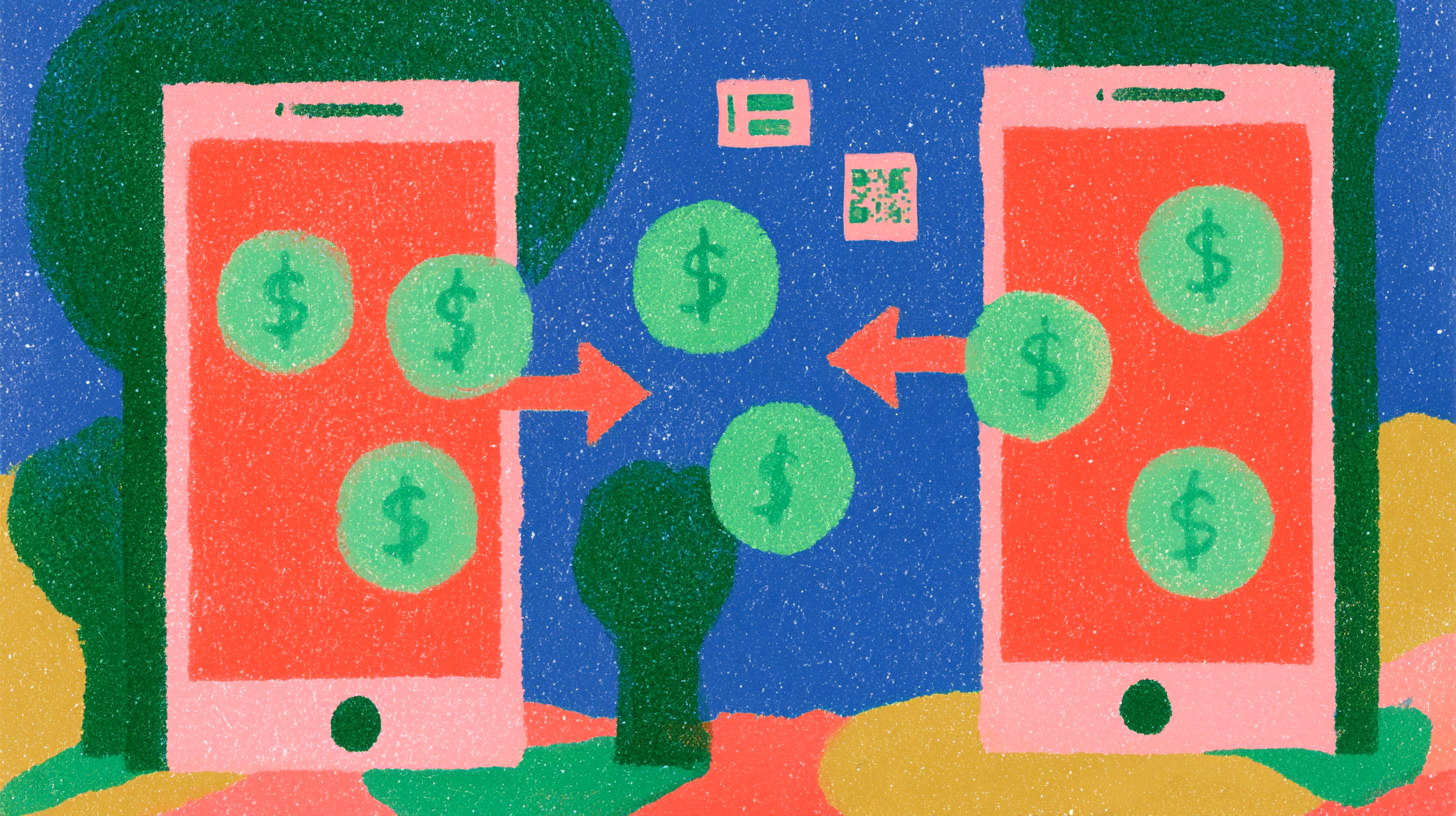
Instant payments
What is Venmo and how does it work? 2026 Guide
8 min de lectura
What is Venmo and how does it work? 2026 guide to understanding how Venmo works in the United States
Venmo is a digital payment app in the United States that allows people to send and receive money quickly from their phones. The platform works as a peer-to-peer (P2P) payment service, meaning users can transfer money to friends, family members, or other contacts using a linked bank account, debit card, or available balance within the app.
Over the last several years, Venmo has become one of the most widely recognized payment apps for splitting bills, paying rent, reimbursing friends, and handling everyday payments in the U.S.
What Is Venmo?
Venmo is a digital payment app for quick transfers between people who know each other. It is commonly used to split a restaurant bill, to pay rent between roommates or even for sharing costs for trips or events. Venmo operates within the United States and requires compatible payment methods such as U.S. bank accounts or debit cards.
Verified users can send up to $60,000 per week. Transfer limits vary based on account verification status and may change over time.
How does Venmo work?
To start using Venmo, users first need to download the mobile app on iPhone or Android and create an account using an email address or U.S. phone number. After setting up the account, users can connect a payment method such as: a U.S. bank account, a debit card, a credit card, or an existing Venmo balance.
Once the account is ready, users can search for another person on Venmo using their name, username, phone number, or QR code. From there, they can either send money or request a payment.
Venmo fees — Cost table
| Service | Possible fee |
|---|---|
| Standard bank transfer | No additional transfer fee |
| Instant transfer | 1.75% of the transfer amount |
| Payment funded by credit card | 3% fee may apply |
| Out-of-network ATM withdrawals | Additional fees may apply |
Venmo fees can change over time. Always review the latest information directly on Venmo's official website.
Is Venmo available in Spanish?
Venmo is not available in Spanish; the app operates entirely in English. However, you can make the app display in Spanish by changing your smartphone's system language. Venmo does not offer customer service in Spanish.
Can I use Venmo as an immigrant?
Venmo requires a U.S. bank account or debit card to work. If you do not have access to traditional banking services, it may be difficult to get started. Also, Venmo does not allow international remittances, so if you need to send money to family in Latin America, you will need a different service.
Venmo vs. Común — Direct comparison
| Feature | Venmo | Común (ComunPay) |
|---|---|---|
| Main function | P2P payments in the U.S. | P2P payments in the US, remittances and deposit accounts |
| Spanish-language support | No (English only) | Yes, fully bilingual app + 24/7 Spanish support |
| Ways to send money | Username, phone, email, or QR code | Phone number, email, @username, QR code |
| QR code payments | Yes | Yes |
| Remittances to Latin America | No | Yes |
| Part of a broader financial app | Yes, debit card and direct deposit | Yes, checking account, Visa debit card and remittance services |
When does it make sense to use Venmo?
Venmo may be useful if: your friends and family already use Venmo, you mainly need fast domestic payments in the U.S., and you have a linked U.S. bank account.
FAQ
Is Venmo available in Spanish?
No. Venmo operates entirely in English without Spanish customer support.
Can I send money to Mexico with Venmo?
No. Venmo only supports domestic transfers within the U.S.
How much does Venmo charge?
Standard bank transfers have no additional fee. Instant transfers carry a 1.75% fee. Credit card payments may have a 3% fee.
Is Venmo safe?
Venmo uses encryption and identity verification. However, like any P2P app, transactions are difficult to reverse once completed.
Común is a financial technology company and not a bank. Banking services are provided by Community Federal Savings Bank, Member FDIC. Peer-to-peer payments services are provided by Cross River Bank.

Community
Investment Basics for Immigrants in the U.S.
8 min de lectura
The Importance of Investing for Immigrant Families
Investing is one of the most powerful tools for building long-term wealth. For immigrant families in the U.S., understanding investment basics can make the difference between merely surviving and financially thriving. In this guide, we explain the fundamental concepts you need to know before you start investing.
What is investing?
Investing means putting money into assets with the goal of growing it over time. Unlike saving, which keeps money safe but with low returns, investing takes on some risk in exchange for the possibility of higher gains. The most common assets are stocks (ownership stakes in companies), bonds (loans to governments or companies), mutual funds (diversified portfolios), and real estate.
Key concepts you need to understand
Risk and return
The higher the potential risk, the higher the return can be. Individual stocks are more volatile than government bonds. Index funds offer a balance between reduced risk through diversification and historically positive long-term returns.
Diversification
Do not put all your eggs in one basket. Spreading investments across multiple assets, sectors, and geographies reduces the risk that one bad investment will ruin your entire portfolio.
Compound interest
Compound interest is the phenomenon of earning interest on previously earned interest. An investor who starts at age 25 will reach retirement with significantly more money than someone who starts at 35, even if they contribute the same monthly amount.
Investment horizon
The length of time you plan to hold your investments affects which assets to choose. For goals more than 5 years away, you can take on more risk. For short-term goals, prefer more conservative options. Never invest money you need in the short term.
Frequently asked questions about investing for immigrants in the U.S.
Can an immigrant invest in the U.S. stock market?
Yes. Most brokers in the U.S. allow non-citizens to invest, including permanent residents and people with work visas (H-1B, L-1, etc.). Some brokers also accept non-residents. To open an investment account, you generally need a tax identification number (SSN or ITIN) and a U.S. bank account.
How much money can I start investing with in the U.S.?
Most modern brokers like Fidelity, Charles Schwab, and Robinhood have no minimum amount to open an account. You can buy fractional shares starting at $1. What matters is not the starting amount but consistency—investing $50-100 per month regularly produces better results than irregular large sums thanks to dollar-cost averaging (DCA).
What is an index fund and why is it recommended for beginners?
An index fund is a fund that tracks the performance of a stock market index such as the S&P 500. Instead of selecting individual stocks, you invest in a “basket” of the 500 largest companies in the U.S. They are popular for their low cost (fees of 0.03-0.20%), automatic diversification, and historical returns that have outperformed most active managers over the long term.
What happens to my investments if I move back to my country?
You can usually keep your U.S. investment account while abroad, although some brokers restrict nonresident accounts. When you sell, you will pay capital gains taxes in the U.S. (and possibly in your country of residence). Consult a tax advisor before leaving the country to plan the transition properly.
Is a 401(k) account the same as a regular investment account?
No. A 401(k) is a tax-advantaged retirement account generally offered by your employer—the contributions reduce your taxable income now, and the money grows tax-deferred until retirement. A regular investment account (brokerage account) does not have special tax advantages but also no withdrawal restrictions. Both are complementary tools for building wealth.
What are the most common mistakes beginner investors make?
The most common mistakes are: investing money you need in the short term (investments require a 3+ year horizon), selling when the market drops out of panic, not diversifying (putting everything in one company or sector), paying unnecessarily high fees, and not investing because you are “waiting for the perfect moment.” Discipline and consistency matter more than perfect market timing.

Immigration
What happens if I don’t renew my permanent visa? Discover everything about the Green Card in the U.S.
8 min de lectura
Have you just obtained your permanent residence in the United States? Without a doubt, it’s a great achievement for every immigrant who has gone through the immigration process for a long time, though it also comes with a series of responsibilities and restrictions.
A recurring issue within the immigrant community is the general lack of awareness about the risks that can affect their legal status if they don’t act appropriately in the country.
In this article, we aim to keep you informed about these restrictions and provide practical advice to maintain your permanent residence smoothly.
Legal restrictions and rights as a permanent resident
The first thing you should understand is that being a resident is not the same as being a U.S. citizen, as there are clear legal differences that set them apart.
These are the main restrictions you should keep in mind.
You cannot vote in federal elections
Unlike U.S. citizenship, permanent resident status does not grant the right to participate in federal or state elections, which is a disadvantage in exercising voting rights.
Certain public jobs are restricted
Although permanent residents can work for the U.S. government, some positions are only available to citizens, particularly those related to national security or public trust roles.
Possibility of losing status for serious crimes
While obeying the law is mandatory regardless of your immigration status, it’s important to remember that committing crimes such as fraud or drug trafficking can lead to the revocation of your Green Card.
Risks of losing the Green Card due to absences or immigration errors
One of the key requirements you must keep in mind from the moment you began your Green Card process is the obligation to maintain continuous residence in the United States before and after approval.
Keep these risk scenarios in mind to avoid problems with U.S. immigration authorities.
- Leaving the country for more than 6 months without justification may raise suspicion of abandoning residence: if you need to leave the U.S. for more than 6 months, apply for Form I-131, which declares your intention to return.
- Stays outside the U.S. longer than one year can cause automatic loss of status: prolonged absences are generally considered abandonment of permanent residence. Form I-131 allows you to remain abroad for up to two years.
- Failing to file taxes or lying on tax returns can be grounds for revocation: the Internal Revenue Service (IRS) and U.S. Citizenship and Immigration Services (USCIS) may revoke lawful permanent resident status if they detect irregularities in tax payments.
It is advisable to plan your trips abroad in advance and, if necessary, obtain a reentry permit before leaving. Also, stay up to date with your tax payments and seek legal advice if needed.
Limitations on sponsoring family members and obtaining benefits
One of the main advantages of having a Green Card is the ability to sponsor family members for the same status. However, unlike U.S. citizens, residents have access to limited eligibility categories.
- You can only sponsor a spouse and unmarried children under 21: these relatives are considered “preference” categories and must wait until visa slots become available.
- Parents and siblings cannot be sponsored (only citizens can do so): in this case, the only option is to obtain U.S. citizenship.
- Waiting times are long depending on the country of origin: the process can take longer for applicants from high-demand countries, such as Mexico.
Although permanent residence offers certain benefits for holders, these restrictions can be frustrating for immigrants seeking family reunification hindered by regulations.
Tips to protect your status as a permanent resident
It’s true that there are risks that can lead to losing your permanent residence, but most can be avoided with good practices and responsibility.
Keep these tips in mind to avoid problems with the U.S. government.
Always meet your tax obligations
Stay current with your annual tax filings; remember that the deadline is usually April 15 each year. It is essential to meet this requirement, even if you spend time outside the country, to demonstrate your responsibility as a permanent resident.
Maintain a clear residence and ties in the U.S.
It is essential that your main residence is in the United States and that you can show clear ties in the country, such as work, studies, or family.
Avoid long absences and consult before traveling
As mentioned before, being away for more than 6 months may be interpreted as abandoning permanent residence. Try to leave the country only in emergencies, after applying for Form I-131.
Consider applying for citizenship if you meet the requirements
After 5 years as a permanent resident without extended absences and meeting other legal requirements, you can apply for citizenship and remove these restrictions.
Although naturalization is a long process with several steps, it is the most practical path to long-term stability in the country and full rights.
Común supports your financial life as an immigrant
In this article, we explained the “fine print” of the permanent resident card, showing you the risk factors that could lead to losing your status, as well as its benefits.
A common concern for immigrants seeking permanent residence is staying connected with their loved ones despite the distance. Común is the fintech platform that helps you organize your money and send support easily.
Discover all the benefits of Común!
- Checking account with clear and competitive fees.
- Affordable international money transfers.
- Mobile app available in Spanish that accepts more than 100 qualifying official identifications from your home country.
- Debit card for everyday purchases and payments.
Open your account with Común today and manage your money in the U.S. with clarity and confidence.
Frequently Asked Questions (FAQ)
If you still have questions, check the following section.
What’s the difference between a Green Card and residency?
The Green Card, or permanent resident card, is the physical document that certifies that a person holds lawful permanent residence. Residency, on the other hand, is the status granting the right to remain in the country indefinitely.
How long does a Green Card last?
The Green Card is valid for 10 years and can be renewed indefinitely as long as requirements are met. For conditional residency, it lasts 2 years, after which you must apply to remove the condition to renew it for 10 years.
What happens if I don’t renew my permanent visa?
If you don’t renew your permanent residence, your status remains valid, but you might face issues reentering the country, at work, or when handling legal procedures. It’s best to keep this document current to avoid complications.

Financial Education
Quick guide on how to call Mexico from the USA
8 min de lectura
How to call Mexico from the United States easily and affordably
There’s no doubt about the impact the Mexican community has had in the United States due to the number of immigrants who have arrived in recent decades and who, despite the distance, need to stay in touch with their loved ones.
One of the most common points of confusion when making an international call has to do with the order of the required codes. However, with the right information, placing a call from the United States to Mexico is very simple.
Below, we’ll show you step by step how to dial, practical examples for major cities, as well as modern options to save money no matter how long you’re on the phone with your loved ones in Mexico.
Basic steps to call Mexico from the USA
To connect a phone call from the United States to Mexico, you need three basic pieces of information: the exit code, Mexico’s country code, and the local number.
These are the steps to call Mexico.
Dial the international prefix
011 from a U.S. landline or “+” from a mobile phone.
Add Mexico’s country code
The code is 52.
Dial the 10-digit national number
Include the area code plus the local number
Practical examples:
- Mexico City: 011 + 52 + 55 123 1234
- Guadalajara: 011 + 52 + 33 123 1234
- Monterrey: 011 + 52 + 81 123 1234
It’s important to clarify that it used to be necessary to add the prefix 1 for cell-phone calls, but this requirement was eliminated in 2019.
Area codes and example calls to Mexican cities
In Mexico, each city has an area code (lada) made up of 2 or 3 digits. Taking that into account, all Mexican phone numbers have 10 digits in total.
Below is a table with examples of how to dial from the United States to Mexico.
City
Area Code
Dialing example from the United States
Mexico City
55
011 + 52 + 55 + ########
Guadalajara
33
011 + 52 + 33 + ########
Monterrey
81
011 + 52 + 81 + ########
Puebla
222
011 + 52 + 222 + #######
Tijuana
664
011 + 52 + 664 + #######
León
477
011 + 52 + 477 + #######
Querétaro
442
011 + 52 + 442 + #######
Mérida
999
011 + 52 + 999 + #######
Cancún
998
011 + 52 + 998 + #######
Chihuahua
614
011 + 52 + 614 + #######
Modern and more affordable options for calling Mexico
Long-distance calling used to be very expensive, especially when made directly— a drawback for people who wanted to keep in touch with family abroad since costs were charged per minute.
Fortunately, today you can choose far more affordable alternatives that also offer unlimited minutes and other communication benefits such as messaging and video calls.
These are the most popular low-cost options for calling Mexico from the United States.
VoIP apps and services over Wi-Fi
VoIP (Voice over IP) apps are one of the most accessible alternatives for communicating with people worldwide.
The main advantage of mobile apps is that they allow domestic and international calls over a Wi-Fi or data connection. This significantly reduces costs and eliminates the need for local phone coverage, though a good internet connection is important.
WhatsApp is a popular app of this kind, given its large user base and a variety of features beyond calls, such as voice notes, voice dictation, video notes, and video calls.
Other similar alternatives include Skype, Google Voice, and Telegram.
International plans from your carrier
If you want to make long calls and not rely on Wi-Fi, a recommended alternative is to get an international plan with included or unlimited minutes to Mexico.
For example, Verizon Global Calling has a plan that includes unlimited minutes to Mexico and Canada.
If you’re still in Mexico, Telcel offers international roaming packages and eSIM for travelers.
Prepaid calling cards
Another solution for calling Mexico is using a prepaid calling card.
Here are some examples.
Company | Cost | Validity/Expiration Enjoy Prepaid | From 0.9¢/min to landlines, 2.9¢/min to mobiles. | After 183 days of inactivity. BOSS Revolution | 1.9¢/min to landlines and mobiles. | Credit remains while the user is active. Calling Card Plus | From 0.8¢/min to landlines and 2.5¢/min to mobiles. | Depends on the plan; may include per-minute rounding or a weekly charge.
Company
Cost
Validity/Expiration
Enjoy Prepaid
From 0.9¢/min to landlines, 2.9¢/min to mobiles.
After 183 days of inactivity.
BOSS Revolution
1.9¢/min to landlines and mobiles.
Credit remains while the user is active
Calling Card Plus
From 0.8¢/min to landlines and 2.5¢/min to mobiles.
Depends on the plan; may include per-minute rounding or a weekly charge.
Bundles with included minutes
A bundle is a package that, in addition to international calls, includes other related services. For example, Verizon Global Choice offers 300 minutes for $10 per month.
Practical tips for immigrants
Taking care of your finances is essential to stay in touch with your family in Mexico. Here are some tips to keep you connected.
- Use apps over Wi-Fi whenever possible: they’re a very affordable alternative, as long as you have a good internet connection.
- Compare rates from different companies: take time to review each provider’s international rates as well as specific terms.
- Consider family bundles or special plans for Mexico: given the geographic proximity between Mexico and the United States, there are several communication options designed for families who frequently contact relatives.
Stay connected with your family in Mexico thanks to Común
In this article, we showed you how to call Mexico from the United States with the correct code sequence, via mobile and landline. We also shared tips to keep in touch with your family through more accessible means such as mobile apps and international plans with minutes to Mexico.
In addition to staying in touch with family, Mexican immigrants also often need services that let them send money home.
- Discover the benefits of Común, the platform that brings you closer to the people you love most!
- Checking account with clear, competitive fees.
- Accessible international money transfers.
- Común’s mobile app is available in Spanish and accepts more than 100 eligible official IDs for account opening.
- Debit card for everyday purchases and payments.
Don’t lose touch with your country! Open your account with Común and connect with the financial platform dedicated to shortening the distance.
Frequently Asked Questions (FAQ)
If you still have questions, see this section.
What happens if I dial the number without the 011 prefix?
If you don’t dial 011 or “+” on mobile phones, your call won’t be recognized as international and will either connect as a local call or return an error.
Is it better to use apps or international calling plans?
It depends on your needs. Apps are an excellent alternative but depend on a good internet connection. International plans require a SIM, but they offer more stable calls along with other communication services.
Which option is best for saving money?
A very convenient option to save money is an app like WhatsApp, since it works over an internet connection.
How can I dial an 800 number from the United States to Mexico?
800 numbers are toll-free within Mexico, but from the United States they do carry a cost. To dial, you must enter the exit code and the country code.
Another option is to look for that institution’s alternate number for international calls.

Immigration
What Is the ITIN and How to Get It in the U.S.? | Comprehensive Guide
8 min de lectura
The ITIN (Individual Taxpayer Identification Number) is the IRS tax identification number for people who must file tax returns in the U.S. but cannot obtain an SSN. It is used only for tax purposes; it does not authorize work in the U.S. or entitle you to Social Security benefits. It is requested using Form W-7.
What is the ITIN?
The ITIN is a tax identification number issued by the U.S. Internal Revenue Service (IRS). It is designed for people who are required to file federal tax returns but do not qualify for a Social Security number (SSN). It consists of 9 digits and always begins with the number 9 (format: 9XX-XX-XXXX).
Who needs an ITIN?
- Undocumented immigrants who work and earn income in the U.S.
- Nonresident aliens with income or real estate transactions in the U.S.
- Dependents or spouses of U.S. citizens or residents who do not qualify for an SSN
- Foreign students and scholars with taxable income in the U.S.
- People who claimed tax treaty benefits
What the ITIN is for
The ITIN allows you to file federal and state tax returns, claim tax credits (such as the Child Tax Credit), open bank accounts at some banks that accept it as an alternative ID to the SSN, and comply with tax obligations while working in the U.S. without an SSN.
How do you apply for an ITIN?
To get an ITIN, you must complete Form W-7 (Application for IRS Individual Taxpayer Identification Number). You need to submit identity and foreign-status documents—the passport is the only document that satisfies both requirements. You can send it together with your tax return by mail, in person at an IRS Taxpayer Assistance Center, or through an authorized Certifying Acceptance Agent (CAA). The process takes between 7 and 11 weeks.
ITIN vs. SSN: key differences
The SSN is issued by the Social Security Administration and authorizes legal work, accumulation of Social Security credits, and access to all financial services. The ITIN is issued by the IRS, is for tax purposes only, does not authorize work, does not generate Social Security credits, and has more limited access to financial services. If you qualify for an SSN, you should not apply for an ITIN.
Do I need an ITIN to open a bank account?
Not always. Some banks accept an ITIN as tax identification to open accounts. However, many traditional banks still require an SSN. Común does not require either an SSN or an ITIN—it accepts your passport or consular ID card to open a full checking account. For most newly arrived immigrants, Común is the most direct route to having a bank account without waiting for an ITIN.
Frequently asked questions about the ITIN
How long does it take to get an ITIN?
The IRS says the process takes between 7 and 11 weeks from the time it receives the complete application. If you submit the application during tax season (January-April), it can take up to 14 weeks. Using a Certifying Acceptance Agent (CAA) can speed up the process because they certify original documents without needing to send them to the IRS.
Does the ITIN allow me to work legally in the U.S.?
No. The ITIN is only a tax number and does not authorize you to work in the U.S. or change your immigration status. Employers must ask for an SSN or work authorization documents (EAD) to hire you legally. The ITIN only serves for filing taxes and certain financial procedures.
Does the ITIN expire?
Yes. ITINs that have not been used on tax returns in the last 3 consecutive years expire. They also expire depending on the year they were issued (the IRS renews them in blocks). If your ITIN has expired, you must renew it with a new W-7 before filing your next tax return.
Can the ITIN help me build credit history in the U.S.?
Limitedly. Some lenders and credit card issuers accept ITINs for applications. Banks such as Bank of America have specific card programs for ITIN holders. However, credit built with an ITIN does not automatically transfer if you later obtain an SSN—you will need to establish the link with the credit bureaus.
Do I need an ITIN to receive the Child Tax Credit?
The parent can use an ITIN to claim the credit, but the children for whom the credit is claimed must have SSNs. Children born in the U.S. automatically have SSNs. The parent’s ITIN is sufficient to file the tax return and claim the credit for qualifying children.
Can I apply for an ITIN without a passport?
The passport is the only document that by itself satisfies both requirements (identity + foreign status). Without a passport, you need two documents: one identity document (DNI, consular ID card, foreign driver’s license) plus one that proves foreign status (visa, alien registration). The IRS may reject the application if the combination is not sufficient.
Financial Education
Best Practices for Managing Your Bank Account
8 min de lectura
Managing your bank account efficiently means checking your activity regularly, avoiding unnecessary fees, and using digital tools. With Común there's no monthly fee, no minimum balance, and you can do almost everything from the app.
Managing your bank accounts efficiently involves understanding best practices for handling them, using your bank or credit union’s resources, and making informed financial decisions. This article will explore essential strategies from choosing the right type of bank and balancing your checking account to taking advantage of your bank’s mobile banking app for optimal account management.
Understanding Your Account
Explore different types of bank accounts, such as checking accounts, savings accounts, and money market accounts at various financial institutions. Learn about their specific uses, from everyday spending with a debit card to saving money for future goals through a high-yield savings account. Master how to monitor checking account balances and track financial transactions using your bank’s mobile banking app, ensuring effective cash management.
Click here to learn more about your account number
Setting Up Account Alerts
Mobile banking alerts are essential tools in the digital banking era, as they increase your awareness of account activity and help with financial management. Use strong security practices to manage your online account, such as using secure passwords and enabling two-factor authentication. Use your bank’s mobile app security features to protect against unauthorized access and ensure the safety of your financial transactions.
When setting up alerts, you can receive notifications for various events, such as when your balance falls below a certain threshold, which helps prevent overdraft fees. Alerts for large deposits or withdrawals can also help monitor fraudulent transactions, especially important across multiple bank accounts at different financial institutions.
In addition, many banks and credit unions now offer customizable alert options, allowing you to receive updates on account balances at set times or even unusual card activity, further securing your financial transactions and helping maintain good cash flow management.
Budgeting and Tracking Spending
An effective budget is crucial for financial stability, and modern money management tools are designed to meet this need by providing detailed insight into your variable and fixed expenses. These tools sync with your bank accounts to automatically categorize transactions, making it easier to track where your money goes and identify areas for potential savings.
Using direct deposits strategically can automate much of your financial planning, ensuring essential expenses such as monthly bills are covered automatically, while also directing money into separate savings accounts designated for specific goals such as saving for an emergency fund or building up a down payment. This direct deposit setup not only simplifies financial management, but also helps maintain discipline in achieving your financial goals.
Using Automatic Savings Tools
Automatic savings tools are vital for building financial resilience without requiring constant manual intervention. Setting up transfers between your checking account and high-yield savings accounts can significantly improve your savings efforts by taking advantage of the higher interest rates offered by these accounts. These tools can be programmed to transfer a fixed amount or a percentage of your monthly income directly into a savings or investment account, ensuring that saving becomes a continuous part of your financial routine.
In addition, some banks offer features such as “round-up” programs, where everyday transactions are rounded up to the nearest dollar and the difference is transferred into a separate savings account, effectively turning every purchase into a savings opportunity. Discussing these options provides a clear view of how automatic savings tools not only help achieve long-term financial goals, but also more effectively manage day-to-day financial health.

Minimizing Fees
Understanding and minimizing the fees associated with bank accounts is crucial to maintaining your financial health. Monthly service fees, minimum balance requirements, overdraft fees, and other charges can quickly erode your savings if not managed properly. It is important to regularly review the terms and conditions of each bank account, as banks often change their fee structures. One effective strategy is to keep a certain balance in the account that exempts some of these fees.
Also consider using a bank or credit union that offers fee-free checking and savings options. Tools like fee-analysis apps can help identify potential savings by suggesting changes in how you manage your accounts or even recommending a switch to a different financial institution that offers lower fees. This proactive approach ensures that you are always ahead of unnecessary expenses, preserving more of your hard-earned money.
Common Fees:
- Monthly Service Fees: Charged for account maintenance, applicable to many checking and savings accounts.
- Minimum Balance Requirement Fees: Incurred when account balances fall below a specified threshold.
- Overdraft Fees: Charged when transactions exceed the account balance.
- ATM Fees: Applied when using ATMs outside your bank’s network.
- Transaction Fees: Some accounts charge fees for certain types of transactions, such as wire transfers or even excessive withdrawals.
Strategies to Avoid Fees:
- Maintain Minimum Balances: Keep your account above the required minimum to avoid monthly fees.
- Use In-Network ATMs: Withdraw cash from ATMs within your bank’s network to avoid fees.
- Set Up Alerts: Monitor your account balances and receive notifications to prevent overdrafts.
- Choose the Right Account Type: Opt for bank accounts that fit your financial habits, such as accounts with no monthly fees or accounts that offer fee waivers with direct deposit.
- Link Accounts: Link your checking and savings accounts to automatically cover shortfalls and avoid overdraft fees.
- Review Account Terms Regularly: Stay up to date on any changes to your bank’s fee structure and terms of service.
- Negotiate Fees: Some banks may waive fees if you discuss your account options with them, especially if you are a long-time customer with multiple accounts.
By implementing these strategies, you can minimize or even eliminate many of the fees typically associated with managing bank accounts. This proactive approach not only helps save money, but also improves your overall financial health.
You Can Open Your Checking Account at Común with a VISA Card¹ and No Absurd Charges
Open your checking account¹ in just 3 minutes with your country’s ID².
Accepted documents from across LATAM:
- Passport
- ID card
- Driver’s license
- Consular ID
- Visa
- And many more!
Unmatched benefits:
- $0 opening fee
- $0 minimum balance
- $0 monthly fee
Learn more about our services
We explain how to open a checking account in the United States
Regular Review and Reassessment
Consistently reviewing and reassessing your financial goals and bank account setup is key to adapting to changes in your financial situation and market conditions. This should include checking whether savings account interest rates are competitive, evaluating the benefits of having multiple accounts, and assessing whether your current bank meets your needs.
Regular reassessment can help identify opportunities to consolidate accounts, thereby simplifying finances and potentially reducing fees. In addition, consider setting reminders to review all direct deposits and automatic payments annually to ensure they align with your current financial goals and cash flow needs. This regular review helps avoid financial complacency, ensuring your banking arrangements are always optimized for your current financial situation and savings goals.
Linking Accounts for Simplified Management
Linking your various bank accounts, whether at the same financial institution or across multiple ones, can greatly improve your ability to manage finances smoothly. This can make transfers between accounts easier, such as moving funds from a checking account to a savings account, which can be essential for managing monthly cash flow or saving for planned expenses like vacations or holiday spending.
In addition, many financial institutions now offer sophisticated online and mobile tools that provide a unified view of all your accounts, even if they are at different banks. This integration can help you better understand your overall financial picture, making it easier to make informed decisions about where to allocate funds. Also, having a central hub for managing multiple accounts can reduce the time spent logging into several separate accounts and improve the accuracy of your budgeting and financial tracking.
Conclusion
Efficiently managing your bank accounts is not just about protecting your funds, but also about optimizing your financial operations to support your personal and financial goals. Throughout this article, we explored a variety of strategies, from choosing the right type of account to taking advantage of advanced mobile banking tools. These practices are designed to improve your financial understanding, reduce unnecessary fees, and enhance overall cash flow management.
Finally, as we discussed, using alerts, understanding your bank’s fee structure, and employing automatic savings tools are all fundamental aspects of maintaining strong financial health. Regular reviews and strategic account linking further simplify the management process, allowing for a smoother financial journey. By implementing these best practices, you can make your bank accounts work harder for you, turning everyday banking into a powerful tool for achieving long-term stability and success.
How can I manage my bank account more efficiently?
Check your activity often, avoid avoidable fees (like overdrafts), and use your app's digital tools to track your spending.
What fees should I avoid?
Monthly maintenance fees, minimum balance charges, and out-of-network ATM fees. With Común, none of these apply, and you get free withdrawals on the AllPoint+ network.
What Común tools help me manage my money?
Mobile check deposit, cash deposit at over 88,000 locations, and real-time activity notifications from the app.
Frequently asked questions
How do I avoid unnecessary bank fees?
Choose an account with no monthly fee or minimum balance, like Común's, and avoid overdrafts by checking your balance regularly.
How often should I check my bank account?
Ideally every few days, to stay on top of your spending and catch any unexpected charges.
Does Común charge a monthly fee?
No, there's no monthly fee and no minimum balance required.
How do I deposit cash with Común?
Through the network of over 88,000 locations available on the app's map.
Can I withdraw money without paying a fee?
Yes, at AllPoint+ network ATMs you get 3 free withdrawals a month.
What tool helps me track my spending?
Real-time activity notifications inside the app show you every transaction instantly.





Thousands of immigrants are already achieving more with their money. You can too.
Comun is a financial technology company and not a bank. Banking services are provided by Community Federal Savings Bank; Member FDIC. The Comun Visa® Debit Card is issued by Community Federal Savings Bank, pursuant to a license from Visa U.S.A Inc. and may be used everywhere Visa Cards are accepted.
Comun is a fintech company and not a bank or licensed money transmitter.
* Results may vary. For a complete list of eligible IDs and application requirements, follow this link.
^ No minimums, no maintenance fees. ATM or transfer fees may apply. See app for fee details.
‡ Direct deposit funds are typically available when we receive the payment file, up to two days before the scheduled payment date. This early availability is not guaranteed.
** A service provided by Service UniTeller, Inc. Service UniTeller, Inc. is licensed in all states that require a license. Remittance fees start at $2.99 but may vary. Please check the app for more details. Comun Inc. may earn revenue from the conversion of foreign currencies.
† Funds in your account are FDIC insured up to $250,000 by ownership category through Community Federal Savings Bank (CFSB), Member FDIC, in the event CFSB fails.