Checking account
What’s the difference between a savings account and a checking account?
Checking vs. savings accounts: differences, benefits, and goals of each. Choose the right account for your needs as an immigrant in the U.S.
8 min read

17 Dec 2025

Difference Between a Savings Account and a Checking Account
Need a safe, simple way to manage your money? It’s important to understand the different bank account types offered by U.S. financial institutions and digital platforms.
Two primary examples are savings accounts and checking accounts. While common in the U.S., they differ in important ways especially relevant when you’re new to managing money in a new country.
It’s easy to assume both accounts do the same thing. Below, we detail what each account is, the main differences, comparisons, and examples.
What is a checking account?
A checking account is one of the most popular financial products. It’s designed for frequent transactions: receiving pay, sending transfers, and paying at physical and online merchants.
These are the main benefits of opening a checking account:
- Allows frequent deposits and withdrawals.
- Includes a debit card for purchases.
- Makes bill payments and transfers easy.
- Ideal for day-to-day income and expense management.
- Access to mobile/online banking.
- Some still offer paper checks for secure payments.
What is a checking account used for?
A checking account has multiple functions, for example:
- Receive your paycheck via direct deposit—securely and quickly.
- Pay utilities like electricity, water, or internet.
- Make purchases online or in stores.
- Withdraw cash at ATMs or participating retailers.
- Send money transfers to others easily.
- Track your money in real time.
In short, this account type covers everyday needs with simple, accessible tools.
Here’s where you can learn about different checking account types and their features.
What is a savings account?
Unlike checking, a savings account is for setting money aside longer term and growing it through interest.
Advantages of a savings account:
- Fewer routine transactions; focused on building funds.
- Can earn interest on your balance.
- Useful for mid- to long-term goals.
- Generally limits monthly withdrawals.
- Ideal for an emergency fund or setting aside money for unexpected expenses.
Key differences between checking and savings
Though different, both accounts complement each other to cover short-, mid-, and long-term financial needs.
These are the main differences between them.
Access and usage
- Checking: money is available anytime for daily transactions—transfers, cash withdrawals, and bill payments via cards and digital channels.
- Savings: access is more limited because the goal is saving and growth; transfers are still possible.
Interest earnings
- Checking: most don’t pay interest; those that do tend to offer very low rates.
- Savings: the core feature is interest over time—protecting and growing funds without high-risk investing.
Learn about joint bank accounts, an excellent way to manage finances as a team.
Primary purpose
- Checking: mainly for short-term holding to cover daily expenses, receive wages, and make purchases with a debit card.
- Savings: to keep money safe and earn interest so it doesn’t lose value to inflation; a reserve for emergencies or long-term plans like trips, celebrations, or moves.
Costs and requirements
- Checking: many have monthly maintenance fees, often waived with a minimum balance or regular direct deposits.
- Savings: typically fewer fees than checking, but may require a minimum balance to avoid charges; some require keeping funds for a set period before withdrawal.
As you can see, the decision to open a checking or savings account depends on your needs. However, combining both is a strategic decision for financial management. On the one hand, a checking account allows you to keep up with daily payments, while a savings account is designed to plan for the future and keep your money separate.
Manage your money in the U.S. with Común
In this article, you learned the difference between checking (for daily transactions) and savings (for growing money over time to meet future goals).
Immigrants arriving in the U.S. need bank accounts that offer security and trust, yet often face hurdles due to strict requirements that disadvantage many in the community.
Meet Común, the checking account that understands immigrants’ needs!
Here are some benefits that await you:
- Checking account with clear, competitive fees.
- International money transfers with affordable costs.
- Mobile app also available in Spanish and accepts 100+ qualifying official IDs for account opening.
- Debit card for everyday purchases and payments.
Open your Común account today and organize your money in the U.S.
Frequently Asked Questions (FAQ)
If you still have questions, check out our FAQ section.
Which is better, checking or savings?
It depends on your needs. If you're looking for an account for everyday transactions, such as transfers and deposits, receiving paychecks, and making utility payments, a checking account may be an option. If you want to save your money for the long term, consider a savings account.
Can I have both checking and savings?
Yes, you can separate your goals and organize your money. Use a checking account that supports domestic and international transfers with clear, affordable fees, and keep a savings account to plan long-term.
Which account suits newly arrived immigrants best?
Común is a financial platform with accessible onboarding requirements and fair, competitive pricing.
About Común
Común aims to support the Latino community in the United States. It offers a debit account that can be opened with more than 100 valid Latin American IDs and an app available in Spanish.
Visit Común's website or download the app for free to learn more about the full offer and applicable terms.
Olivia Rhye
Community Partner


Checking account
What Is a Checking Account and Why Do You Need One?
8 min de lectura
Checking accounts are an essential tool for managing your personal finances, and the main type of account you'll use day-to-day in the United States. In this article, we'll walk you through everything you need to know about them and how to choose the best option for you.
What Is a Checking Account and Why Do You Need One?
A checking account is a type of bank account that lets you deposit and withdraw money easily. It's the account most commonly used for everyday transactions like paying bills, making purchases, and receiving your paycheck. You need one because it gives you a safe place to keep your money and lets you handle financial transactions efficiently.
Advantages of Having a Checking Account
Checking accounts offer several advantages:
- First, they give you a safe place to keep your money.
- Second, they make managing your finances easier by letting you complete transactions easily.
- Third, many checking accounts offer additional services like debit cards, checks, and access to online and mobile banking.
Differences Between Checking Accounts and Savings Accounts
While a checking account is designed for everyday transactions, a savings account is designed for storing money long-term. Savings accounts usually offer higher interest rates, letting you earn money on your savings. However, they aren't as accessible as checking accounts and may have restrictions on how many transactions you can make.
Common Requirements to Open a Checking Account
Required Documentation
To open a checking account, you'll generally need to provide a photo ID, proof of address, and your Social Security number or tax ID number.
At Común, online banking for immigrants in the United States, the main documents you'll need are:
- Official ID from your home country
- A tax ID number like an ITIN or Social Security number (SSN)
- Proof of address in the United States, such as a bill in your name showing your address within U.S. territory
Opening a checking account with Común is 100% online and can be done in under 5 minutes.
Minimum Deposit and Other Conditions
Some banks require a minimum deposit to open a checking account. They may also charge fees if your balance drops below a certain level. For example, Chase Bank offers the Chase Total Checking account, and Citi Bank offers the Citi Basic Banking Package, both of which include access to thousands of ATMs and online and mobile banking service. However, like many other traditional banks, they charge a monthly service fee of around $8 to $12 unless you meet certain average monthly balance requirements or a minimum amount deposited through monthly direct deposits. On top of that, they may charge overdraft fees of $39 or more.
With Común, however, there's no minimum deposit amount, no minimum monthly balance, and no monthly service fee — and no hidden costs in the fine print.
What They Don't Tell You About Checking Accounts in the United States
You can generally access the funds in your account through ATM withdrawals, checks, electronic transfers, and debit cards. It's important to know, though, that each bank may charge fees for each of these operations, so it's worth knowing them before opening an account so you can compare your options and find what's most practical for you.
Many banks also require an initial deposit to open a checking account. The amount varies by bank, but can range from $25 to $100. Común's checking account has no such cost — the initial deposit required to open one is $0.
Checking accounts can also come with fees beyond the monthly maintenance fee, like ATM fees, overdraft fees, and more. Some banks waive the monthly fee if you maintain a minimum balance or have regular direct deposit. With Común, you can deposit and withdraw cash at no cost at more than 55,000 ATMs across the United States, found at places like Walgreens, CVS, Target, and more.
Some banks offer overdraft protection that keeps checks from bouncing or your debit card from being declined if you don't have enough money in your account. This service can come with high fees, though, so it's important to understand the terms.
And if you're living in the 21st century, access to online and mobile banking lets you check your balance, pay bills, deposit checks, and transfer money from anywhere.
One special feature of checking accounts is FDIC insurance. Banks in the U.S. are typically insured by the Federal Deposit Insurance Corporation (FDIC). This means that even if the bank fails, your money — up to $250,000 — is protected. Común's accounts, for example, are FDIC-insured up to $250,000 through partner bank Community Federal Savings Bank (CFSB).
Checking accounts are an essential tool for managing your personal finances. They give you a safe place to keep your money and let you handle financial transactions efficiently. When choosing a checking account, you should consider factors like fees, services offered, the bank's location and reputation, and interest rates. With the right information, you can choose the checking account that best fits your needs.
If you're looking to open a checking account and get a debit card, what are you waiting for? Do it with Común.

Checking account
What do I need to open a traditional bank account as an immigrant?
8 min de lectura
For immigrants in the United States, having a banking account has become a basic necessity to carry out all types of daily tasks, such as shopping in physical and online stores, receiving wages, sending transfers and remittances, opening a savings account, among other things.
Despite the importance that a banking account has for immigrants and U.S. citizens, there are still factors that hinder the immigrant community’s access to banking, such as high fees and required documentation.
According to FDIC data, among vulnerable groups without banking accounts (unbanked), Hispanics make up 9.5%. This shows a gap that disadvantages a significant portion of the population.
Access to financial services is an increasingly attainable right for immigrants in the U.S. In this article, we will explain step by step what is required to open an account at a bank and on digital platforms, as well as the advantages of these solutions.
4 Requirements to Open a Banking Account in the United States
It is true that financial services make users’ lives easier and, in some way, improve their quality of life. But, what is needed to open a banking account in the United States?
Opening a bank account, whether a checking account or another type, requires meeting a series of requirements and presenting documentation, which may vary depending on the financial institution.
Some of the difficulties immigrants face when opening a banking account are not having an SSN (Social Security Number) or tax documentation, as well as the lack of information in Spanish.
Fortunately, beyond traditional banks, there are currently alternative solutions such as Común, a financial platform dedicated to meeting the needs of people who seek accessible and efficient services.
In general, these are the most common required documents to access a banking account in the United States.
Social Security Number (SSN)
This is the most common requirement for opening an account. It is an identifier for people who reside and work legally in the United States, and it is required for banks to carry out the identity verification process.
Individual Taxpayer Identification Number (ITIN)
The ITIN is an alternative for people who do not qualify for the SSN, since some financial institutions accept it instead.
Identity Document
For this requirement, it is possible to present a passport, a driver’s license, a government-issued ID, or a consular ID card. Any of these documents must be valid and show both name and photograph.
Proof of Address
To prove your residence in the United States, you can present utility bills, such as electricity, or even a digital account statement.
Step by Step: How to Open a Banking Account in the U.S. with Foreign Identification
The number of requirements requested by traditional institutions tends to make access to banking difficult, especially for immigrants without the previously listed documentation.
If you are looking for a practical and simpler solution than traditional banking services, you can turn to options like Común, the platform that streamlines processes and offers fair financial services for everyone.
Access to these services is possible with official, qualified foreign documentation, which helps reduce the gap in access to banking for immigrants.
Choose a Secure Platform that Accepts Foreign Identifications
In general, traditional banks request the SSN or ITIN, so a convenient option is to choose a digital platform with more flexible requirements but with the same quality and seriousness in their processes.
Común is a platform that makes immigrants’ lives easier in the United States, as it allows you to open an account with official, qualified documentation from your country of origin and simplifies the sign-up process without complicated paperwork.
Download the Mobile App and Set Up Your Account available in Spanish
You only need a mobile device compatible with Android or iOS to download the application, where you will create your profile and enter your information.
Verify your identity with an official ID from your country
Then, carry out the identity verification with your official ID from your country of origin. To do this, you will need to take a picture of it and possibly take a selfie.
Activate Your Card and Start Using Your Account
Once you provide the necessary documentation, you will have access to a debit card to make purchases at various establishments and will be able to make transfers and receive payments.
Use Additional Features Such as Sending Remittances or Deposits at Stores
For immigrants, it is essential to have services that allow them to send remittances to their countries of origin, so you can also use this benefit, in addition to making direct deposits in physical stores near you.
Which Bank in the U.S. Allows Opening an Account with a Passport? More Accessible Alternatives
There are alternatives with more flexible account opening options, such as Bank of America, which accepts the ITIN in case you do not have an SSN. However, the processes tend to be longer and slower compared to other digital platforms, which facilitate the sign-up process by offering greater feasibility in their requirements.
Bank of America
Bank of America supports the opening of banking accounts in the United States for immigrants, because it allows opening an account with a valid passport or ITIN. However, it is necessary to go in person to a branch to complete the process.
Común
Común is a digital platform that allows opening an account with more than 100 foreign IDs or with a valid passport, which makes it easier to obtain an account for immigrants and send remittances to Latin America for an affordable fee; in addition to making cash deposits at more than 100 stores.
Wells Fargo
Wells Fargo also accepts a passport as the main ID, but may request an additional identification, such as a credit card or student ID.
Wise
Wise is a fintech that offers digital accounts in different currencies. It is possible to access its services with a passport, ITIN, or SSN.
Revolut
Revolut is another alternative for non-citizens in the United States, since it accepts a passport as identification; among other options, such as a driver’s license or national ID.
Why Común is Ideal for Opening Your Account in the U.S.?
Although the requirements to open an account may make it seem like an inaccessible process for many immigrants in the U.S., fortunately, there are also more accessible options.
If you are looking for a clear, reliable alternative available in Spanish, it is time to change your relationship with finances through Común: a service that truly understands your needs.
Why is Común Your Ally?
Forget about minimum deposits or monthly charges
Access a mobile app available in Spanish with a user-friendly interface
Send money to your home country for a fee starting at $2.99, up to the applicable limits
Deposit cash at a network of establishments near you
It has 24/7 customer support available in Spanish
Remember that Común offers you a service available in Spanish with simple processes. Open your account today and start using a service designed for you!
International Money Transfers
Which banks offer Zelle in Mexico? What you need to know in 2026
8 min de lectura
Which banks offer Zelle in Mexico? What you need to know in 2026
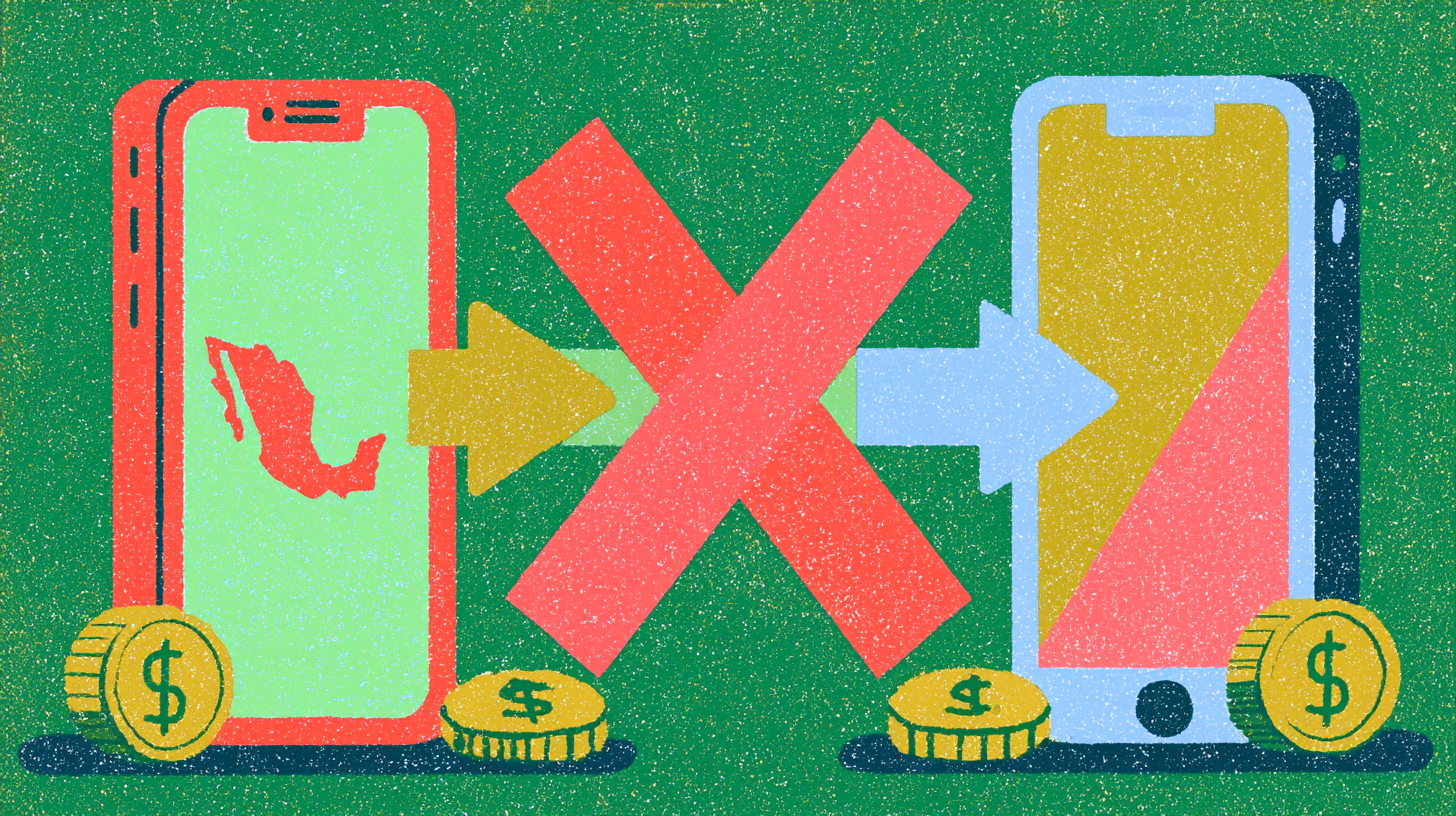
Zelle does not send money directly to Mexico. Zelle only works between eligible U.S. bank accounts and credit unions within the United States.
If you are looking into different methods for sending money to your family in Mexico, you may be searching for 'which banks offer Zelle in Mexico' or trying to understand if Zelle works internationally. This is a common misunderstanding for immigrant families in the U.S. No Mexican bank officially offers Zelle for receiving transfers from the U.S., and Zelle itself is not designed for international money transfers or currency conversion.
What is Zelle and how does it work?
Zelle is a digital payment service that facilitates peer-to-peer transfers at select partner banks in the United States. It is known for its speed, with transfers appearing in minutes, and for its extensive coverage across the U.S. Some U.S. financial institutions that support Zelle include Bank of America, Chase, Wells Fargo, Citi, PNC, and many more.
Why doesn't Zelle work for sending money to Mexico?
Cross-border money transfers require financial institutions, payment networks, regulatory approvals, identity verification procedures, and international settlement systems. Zelle was built around domestic payment systems in the U.S. Because of this, the service does not support direct transfers from U.S. bank accounts to recipients in Mexico.
Alternatives for sending money to Mexico from the U.S. (2026 comparison)
| Service | Typical starting fees | Delivery speed | Exchange rate model | Cash pickup |
|---|---|---|---|---|
| Remitly | Varies; ~$1.99+ for bank deposit to Mexico | Express: minutes to same day; Economy: 3–5 days | Exchange rate markup applies | Yes |
| Wise | From ~0.48% of transfer; shown upfront | Usually same day to 2 days | Mid-market rate, no markup | Limited (select corridors) |
| Xoom | Depends on payment method and destination | Minutes to 1 day | Exchange rate markup applies | Yes |
| Western Union | Varies widely by method and destination | Minutes to several days | Exchange rate markup applies | Yes (extensive agent network) |
| Común | Starts at $2.99 via UniTeller; may vary | Varies by destination and method | Rates displayed before transfer | Yes (depending on delivery option) |
Fees, exchange rates, and delivery times vary based on transfer amount, destination, funding method, and payout option. In 2026, a 1% federal excise tax applies to cash-funded transfers. Bank, debit, and credit card transfers are exempt.
How the new 1% tax on cash remittances affects transfers to Mexico
Starting in 2026, a 1% federal tax applies to certain remittance transfers. The tax applies when you pay with cash, money order, or cashier's check. Transfers funded from a U.S. bank account or with a U.S.-issued debit or credit card are exempt by law.
FAQ
Does Zelle work in Mexico?
No. Zelle does not support international transfers. There is no Mexican bank that offers Zelle for receiving money from the U.S.
What is the best app to send money to Mexico?
It depends on your specific situation. Común offers transfers starting at $2.99 with transparent pricing. Visit comun.app/remittances to learn more.
Remittance service provided by Service UniTeller, Inc. Remittance fees start at $2.99 but may vary. Común Inc. may earn revenue from the conversion of foreign currencies.
.avif)
Instant payments
How do I send money through Xoom? Your complete 7-step guide
8 min de lectura
Today, sending money to other countries has become a basic need for millions of immigrants living in the United States.
According to the IDFR ( International Day of Family Remittances) campaign in 2025, over the last decade, immigrants sent around 5 trillion dollars in remittances to their countries of origin, which are essential for food, housing, health, and other basic expenses.
To meet this need, there are applications such as Xoom, a PayPal service for transferring money using various payment methods and in a secure manner.
In this guide, we will review how to send money with Xoom step by step, its main features, and some alternatives to connect with your family outside the U.S.
What is Xoom, and is it safe to send money with this service?
Xoom is a digital transfer network owned by PayPal that operates entirely online and offers different sending options to facilitate transactions.
It has become one of the most popular options for making international digital money transfers, due to the backing provided by PayPal, which gives users a sense of security.
In addition to PayPal’s backing, Xoom has high security standards for transferring money, such as SSL encryption and the VeriSign seal.
Additionally, its services are available to send money from the United States to more than 70 countries, including Mexico, Guatemala, Honduras, Peru, among others.
7 detailed steps to send money with Xoom
To send money through Xoom, just follow the steps below.
Access Xoom (web or mobile application) and sign in or register
You can choose to log in via the website www.xoom.com or the mobile application. Once there, sign in or open an account with your email address. You can also use your PayPal account to access.
Select the destination country and the amount to send
Choose the country to which you want to send the transfer. Then you will see the sending options available for the selected destination.
Choose the sending method
Xoom offers the following payment methods:
- Bank deposit
- Cash pickup at physical locations, such as Oxxo or Elektra
- Mobile top-up
- Bill payment
- Cash delivery
Provide the recipient’s details
The information you must enter is:
- Full name, as it appears on their official ID
- Address
- Phone number
- Bank account (if applicable, depending on the sending method)
Select your payment method
Next, enter the amount you want to send and select the payment method, among which are:
- Linked bank account
- Debit card or credit card
- Available balance in your PayPal account
Review and confirm the transaction
Before confirming the transfer, Xoom will display the details so you can verify they are correct, along with the amount corresponding to fees, as well as the exchange rate used for the currency conversion.
Track your transfer with the tracking number
Obtain a tracking number and check the status of your transfer directly in Xoom’s application or website.
Key aspects to consider when using Xoom
Although Xoom is a popular alternative for making fast and secure transfers, it is important to consider several aspects before choosing this option.
Sending fees
Xoom’s sending fees are not fixed; they depend on the destination country, the amount to send, and the payment method.
Generally, the most expensive method is with a credit card and the least expensive is through an account.
| Platform | Fee | Exchange rate | Delivery time | Delivery options |
|---|---|---|---|---|
| Xoom | From 2.99 USD, depending on the sending type | Less favorable | Minutes to hours | Bank deposit, cash pickup, home delivery |
| Común | Fee starting at 2.99 USD, up to the applicable limits | Competitive (Clarification: Results may vary depending on destination country and sending method) | Minutes | Cash pickup, bank deposit |
Exchange rate
The exchange rate can be another drawback because, in addition to being calculated directly on Xoom’s platform, it varies depending on the selected transfer method.
Sending limits
Xoom imposes sending limits that depend on each account’s verification level. For unverified users residing in the U.S., the daily limit is $2,999 USD. By contrast, verified users can send up to $10,000 or $50,000 USD per day, depending on their verification level.
Receiving options
Xoom has different receiving options, but they may vary depending on the destination country.
In general, it is possible to send money for cash pickup at different payout locations, by bank deposit, top-up, or bill payment.
Security and reliability
Xoom is backed by PayPal, in addition to SSL/TLS encryption to protect your financial information and anti-fraud monitoring to ensure your money reaches its destination.
Delivery times
Generally, money transfers via debit card and cash are reflected within minutes. However, other sending methods, such as bank deposit, can take from 1 business day.
The total time will appear before you confirm your transaction in Xoom’s application or on its website.
Accessibility
Xoom is also available in Spanish and, overall, is easy for migrants in the United States to use.
Modern alternatives to sending money with Xoom: Why is Común a smart choice?
Sending money outside the U.S. is essential, as is having efficient international transfer services such as Xoom. However, there are also more innovative options that offer you greater advantages and lower costs so that your family and friends receive much more.
Común is an innovative and comprehensive financial service that meets the financial needs of users living in the United States, especially immigrants. Unlike Xoom, Común has a specialized focus and transparent fees.
With Común:
- Open your account with an official ID from your country; more than 100 identifications are accepted.
- After your first free transfer, pay a fee starting at $2.99 USD per transfer, up to the applicable limits.
- Access customer service in Spanish and English, available 24/7.
- Get a Visa debit card to make purchases at physical merchants.
- Manage your finances from Común’s mobile platform, where you can sync your external bank account and manage your finances from the Común platform.
Still unsure which option is most convenient for sending money? Discover Común and get to know the easy and safe side of finance.
Frequently asked questions
If you want to learn more, see our FAQ section
How do I send money from Mexico to the United States using Xoom?
It is not possible to send money from Mexico through Xoom, since it only allows transfers from the United States, Canada, and other European countries.
How long does it take for money to arrive via Xoom?
Depending on the sending method, it ranges from minutes to up to 3 business days.
Is it safe to use Común to send money to Latin America?
Yes, Común has the necessary security measures in place to keep your money and personal data safe.
Can I use Común even if I don’t have a PayPal account?
Yes, Común is an independent platform from PayPal, and you can open an account with official ID from your country.
Can I make cash deposits if I don’t have a bank account in the U.S.?
Yes, Común allows you to deposit cash at numerous locations near you.
Checking account
What do I need to open a traditional bank account as an immigrant?
8 min de lectura
For immigrants in the United States, having a banking account has become a basic necessity to carry out all types of daily tasks, such as shopping in physical and online stores, receiving wages, sending transfers and remittances, opening a savings account, among other things.
Despite the importance that a banking account has for immigrants and U.S. citizens, there are still factors that hinder the immigrant community’s access to banking, such as high fees and required documentation.
According to FDIC data, among vulnerable groups without banking accounts (unbanked), Hispanics make up 9.5%. This shows a gap that disadvantages a significant portion of the population.
Access to financial services is an increasingly attainable right for immigrants in the U.S. In this article, we will explain step by step what is required to open an account at a bank and on digital platforms, as well as the advantages of these solutions.
4 Requirements to Open a Banking Account in the United States
It is true that financial services make users’ lives easier and, in some way, improve their quality of life. But, what is needed to open a banking account in the United States?
Opening a bank account, whether a checking account or another type, requires meeting a series of requirements and presenting documentation, which may vary depending on the financial institution.
Some of the difficulties immigrants face when opening a banking account are not having an SSN (Social Security Number) or tax documentation, as well as the lack of information in Spanish.
Fortunately, beyond traditional banks, there are currently alternative solutions such as Común, a financial platform dedicated to meeting the needs of people who seek accessible and efficient services.
In general, these are the most common required documents to access a banking account in the United States.
Social Security Number (SSN)
This is the most common requirement for opening an account. It is an identifier for people who reside and work legally in the United States, and it is required for banks to carry out the identity verification process.
Individual Taxpayer Identification Number (ITIN)
The ITIN is an alternative for people who do not qualify for the SSN, since some financial institutions accept it instead.
Identity Document
For this requirement, it is possible to present a passport, a driver’s license, a government-issued ID, or a consular ID card. Any of these documents must be valid and show both name and photograph.
Proof of Address
To prove your residence in the United States, you can present utility bills, such as electricity, or even a digital account statement.
Step by Step: How to Open a Banking Account in the U.S. with Foreign Identification
The number of requirements requested by traditional institutions tends to make access to banking difficult, especially for immigrants without the previously listed documentation.
If you are looking for a practical and simpler solution than traditional banking services, you can turn to options like Común, the platform that streamlines processes and offers fair financial services for everyone.
Access to these services is possible with official, qualified foreign documentation, which helps reduce the gap in access to banking for immigrants.
Choose a Secure Platform that Accepts Foreign Identifications
In general, traditional banks request the SSN or ITIN, so a convenient option is to choose a digital platform with more flexible requirements but with the same quality and seriousness in their processes.
Común is a platform that makes immigrants’ lives easier in the United States, as it allows you to open an account with official, qualified documentation from your country of origin and simplifies the sign-up process without complicated paperwork.
Download the Mobile App and Set Up Your Account available in Spanish
You only need a mobile device compatible with Android or iOS to download the application, where you will create your profile and enter your information.
Verify your identity with an official ID from your country
Then, carry out the identity verification with your official ID from your country of origin. To do this, you will need to take a picture of it and possibly take a selfie.
Activate Your Card and Start Using Your Account
Once you provide the necessary documentation, you will have access to a debit card to make purchases at various establishments and will be able to make transfers and receive payments.
Use Additional Features Such as Sending Remittances or Deposits at Stores
For immigrants, it is essential to have services that allow them to send remittances to their countries of origin, so you can also use this benefit, in addition to making direct deposits in physical stores near you.
Which Bank in the U.S. Allows Opening an Account with a Passport? More Accessible Alternatives
There are alternatives with more flexible account opening options, such as Bank of America, which accepts the ITIN in case you do not have an SSN. However, the processes tend to be longer and slower compared to other digital platforms, which facilitate the sign-up process by offering greater feasibility in their requirements.
Bank of America
Bank of America supports the opening of banking accounts in the United States for immigrants, because it allows opening an account with a valid passport or ITIN. However, it is necessary to go in person to a branch to complete the process.
Común
Común is a digital platform that allows opening an account with more than 100 foreign IDs or with a valid passport, which makes it easier to obtain an account for immigrants and send remittances to Latin America for an affordable fee; in addition to making cash deposits at more than 100 stores.
Wells Fargo
Wells Fargo also accepts a passport as the main ID, but may request an additional identification, such as a credit card or student ID.
Wise
Wise is a fintech that offers digital accounts in different currencies. It is possible to access its services with a passport, ITIN, or SSN.
Revolut
Revolut is another alternative for non-citizens in the United States, since it accepts a passport as identification; among other options, such as a driver’s license or national ID.
Why Común is Ideal for Opening Your Account in the U.S.?
Although the requirements to open an account may make it seem like an inaccessible process for many immigrants in the U.S., fortunately, there are also more accessible options.
If you are looking for a clear, reliable alternative available in Spanish, it is time to change your relationship with finances through Común: a service that truly understands your needs.
Why is Común Your Ally?
Forget about minimum deposits or monthly charges
Access a mobile app available in Spanish with a user-friendly interface
Send money to your home country for a fee starting at $2.99, up to the applicable limits
Deposit cash at a network of establishments near you
It has 24/7 customer support available in Spanish
Remember that Común offers you a service available in Spanish with simple processes. Open your account today and start using a service designed for you!

International Money Transfers
The Impact of Money Transfer Apps on Global Remittances
8 min de lectura
The Global Impact of Mobile Money Transfer Apps
Money transfer apps have significantly altered the global remittance landscape, offering an accessible and efficient way for people to send money across borders. These apps have democratized financial services, especially in regions where traditional banking infrastructure is weak. By leveraging mobile technology, remittance services have become more inclusive, reaching remote and underserved communities.
Key Benefits
Accessibility: Money transfer apps are accessible to anyone with a smartphone and an internet connection, with no need for a physical bank.
Cost Efficiency: These apps often offer lower transaction fees compared to traditional remittance services, making it more affordable to send money internationally.
Speed: Transfers process almost instantly, reducing wait times for recipients.
Security: Advanced encryption methods and secure access provide robust protection against fraud and theft.
Impact of Mobile Money Apps on International Remittances
Mobile money apps have had a profound impact on international remittance flows. By simplifying the transfer process, these apps have increased the volume of remittances sent globally.
Accessibility and Financial Inclusion
One of mobile money apps' most significant contributions to international remittances is their role in promoting financial inclusion. Many remittance recipients in developing countries don't have access to traditional banking services. However, with the widespread adoption of mobile phones, even in remote areas, these people can now receive money directly into their mobile wallets. This not only eliminates the need for physical bank branches, but also provides a safe and convenient way for recipients to access their funds.
Reducing Transaction Costs
Another key impact of money apps on remittances is reducing transaction costs. Traditional remittance methods often involve high fees charged by banks and money transfer operators. These fees can eat into the funds sent, particularly for smaller amounts. Mobile money apps, on the other hand, generally offer lower fees, making it more affordable for migrants to send money to their families. By lowering the cost of remittances, these apps let migrants send larger amounts of money, increasing the total volume of remittances reaching recipient countries.
Speed and Convenience
Mobile money apps also offer unmatched speed and convenience compared to traditional remittance methods. Transactions can be initiated and completed in minutes, letting recipients access funds almost instantly. This is particularly beneficial in emergency situations, where quick access to funds can make a significant difference in a recipient's quality of life. Plus, the convenience of mobile money apps means migrants can send money anytime, from anywhere, without having to visit a physical location or work around bank or money transfer agent hours.
Empowering Recipients
Beyond the immediate financial benefits, mobile money apps empower recipients by giving them greater control over their finances. With funds deposited directly into their mobile wallets, recipients have the flexibility to use the money however they see fit, whether for daily expenses, savings, or investments. This financial autonomy can contribute to long-term economic stability and resilience, since recipients are better equipped to weather financial shocks and pursue opportunities for personal and economic growth.
More Stable Than Capital Flows
Remittances have proven to be more stable than other forms of financial inflows, like foreign direct investment (FDI) or portfolio investments.
Reasons for Stability
- Personal Nature: Remittances are usually sent for personal reasons, like supporting family members, making them less susceptible to economic fluctuations.
- Resilience: During economic downturns or crises, migrants often increase remittances to support their families, providing a steady flow of funds.
High Transaction Costs
Despite the advantages, high transaction costs remain a challenge in the remittance industry. Traditional services can charge fees ranging from 7% to 10% of the total amount sent, which is a significant burden for lower-income workers.
Efforts to Reduce Costs
- Regulatory Changes: Governments and international organizations are working to implement policies that reduce transaction fees.
- Technological Innovation: Advances in fintech, including blockchain and cryptocurrency, are helping reduce costs by cutting out intermediaries.
In short, the impact of mobile money apps on international remittances is multifaceted, spanning greater accessibility, lower transaction costs, increased speed and convenience, and recipient empowerment. As these apps continue to evolve and innovate, their role in facilitating cross-border transactions and promoting financial inclusion will likely become even more pronounced, further transforming the global remittance landscape for the better.
What to Consider When Sending Remittances
Sending remittances through mobile money apps offers convenience and efficiency, but it's essential to consider several factors to ensure a smooth, cost-effective transaction.
- Fees: Compare the fees charged by different money transfer apps to find the most affordable option. While some apps may offer low upfront fees, they may make up for it with less favorable exchange rates.
- Exchange Rates: Exchange rates can vary significantly between different money transfer apps and fluctuate throughout the day. Look for apps that offer competitive exchange rates to maximize the amount the recipient receives.
- Transfer Speed: Consider how quickly you need the money to reach the recipient. While many mobile money apps offer near-instant transfers in minutes, others may take longer, especially for transfers to remote areas or during periods of high transaction demand.
- Security Features: Make sure the money transfer app you choose has robust security measures to protect your funds and personal information. Look for features like two-factor authentication, encryption protocols, and fraud detection systems.
- Accessibility: Consider the app's accessibility for both sender and recipient. Choose an app that's easy to use and available in the languages spoken by both parties. Verify that the recipient can easily access the transferred funds, whether through a mobile wallet, bank account, or cash pickup location.
- Customer Support: Evaluate the customer support options provided by the money transfer app. Look for apps that offer responsive customer service channels, like phone support, live chat, or email.
- Reviews and Reputation: Research the money transfer app's reputation by reading reviews from other users and independent review platforms. Pay attention to feedback on reliability, transaction speed, customer service, and overall user experience. Choose a reputable app with a track record of safe, efficient money transfers to minimize the risk of issues.
- Regulatory Compliance: Make sure the money transfer app complies with relevant regulations and legal requirements in both the sender's and recipient's countries. Verify that the app follows anti-money laundering (AML) and know-your-customer (KYC) procedures to prevent illicit financial activity.
Sending the Money
Sending money through mobile apps is a straightforward process, but understanding the steps can help ensure a successful transaction.
Steps to Send Money
- Choose an App: Select a reliable money transfer app based on your needs.
- Set Up an Account: Sign up and verify your account with the necessary ID documents.
- Enter Transfer Details: Enter the recipient's information and the amount to send.
- Review and Confirm: Verify the details and confirm the transaction.
- Notification: Both sender and recipient typically receive notifications once the transfer is complete.
By carefully considering these factors when sending remittances through mobile money apps, you can ensure a smooth, cost-effective transfer experience while providing vital support to your loved ones across borders.
In the mobile remittance landscape, Común stands out as an emerging player, particularly serving the needs of the immigrant community in the United States¹. Recognizing the challenges immigrants face in accessing reliable financial services and building wealth in the U.S., Común has positioned itself as a solutions-oriented platform aimed at lowering barriers to entry and accelerating integration with the digital economy.
Let's Start With the Problem:
Living in the United States as a foreigner presents numerous challenges, made worse by a financial system that often overlooks immigrant communities' needs. Reliable financial services are essential for building wealth, yet millions of immigrants find themselves excluded from mainstream banking and financial opportunities.
Barriers to Entry:
- Documents: Immigrants are often less likely to have Social Security numbers (SSNs), a common requirement for accessing financial services.
- Language: Many financial institutions lack Spanish-language services, creating a communication barrier for Spanish-speaking immigrant customers.
- Cost: Financial services aimed at immigrants often come with exploitative pricing, further widening the economic gap.
Addressing the Structural Opportunity Gap:
Común recognizes the structural opportunity gap facing the immigrant community and aims to address it through innovative solutions tailored to their needs.
Común's Solution:
- Your Documents: Común is one of the only platforms that lets users apply with more than 100 Latin American IDs, removing the barrier posed by not having an SSN.
- Your Language: Común provides 100% bilingual customer service, with native Spanish speakers available 24/7 via chat, email, or phone, ensuring effective communication and support.
- Your Neighborhood: Común offers a network of thousands of locations for cash deposits and withdrawals, making financial transactions convenient and accessible for users.
Facts About Global Migration
Understanding the dynamics of global migration is essential to grasping the complexities of remittances and their impact on world economies. Here are key facts that shed light on the intricate relationship between migration and remittances:
- Global Migration Trends: Migration patterns have shifted over the past decade, with significant movements of people across regions and continents driven by factors like economic opportunity, conflict, and climate change.
- Top Remittance-Receiving Countries: Some countries receive the largest remittance inflows, often coinciding with regions facing economic challenges or political instability. Countries like India, China, and Mexico are among the top global remittance recipients.
- Top Remittance-Sending Countries: On the other hand, there are countries where most remittances originate, reflecting diaspora efforts to support family members and contribute to development in their countries of origin. The United States, Saudi Arabia, and the United Arab Emirates are prominent remittance-sending countries.
- Economic Impact of Remittances: Remittances play a crucial role in recipient countries' economies, contributing to GDP growth, poverty reduction, and increased household income. In many developing countries, remittances make up a significant share of national income.
- Cost of Sending Remittances: Despite their economic importance, sending remittances can be costly for migrants, with fees charged by money transfer operators and banks often eating into the funds sent. Efforts to reduce remittance costs are underway, aimed at maximizing benefits for senders and recipients.
- Remittance Growth Over Time: Global remittance volumes have been steadily increasing over the years, reflecting the growing number of migrants and the expansion of remittance corridors. This growth underscores the importance of remittances as a lifeline for millions of families worldwide.
- Migrant Contributions to Host Economies: Migrants don't just send money back to their home countries — they also contribute to their host countries' economies through labor participation, entrepreneurship, and consumer spending. Their contributions enrich cultural diversity and drive innovation and economic growth.
- Impact of Technology on Remittances: Technological advances, including the rise of mobile money apps and blockchain technology, have revolutionized the remittance industry, making transfers faster, cheaper, and more accessible. These innovations have empowered both migrants and recipients, letting them bypass traditional banking systems and intermediaries.
- Future Projections: Projections indicate continued growth in global migration and remittance flows, driven by demographic shifts, economic disparities, and geopolitical developments. Understanding these trends is essential for policymakers, financial institutions, and stakeholders to shape policies and initiatives that harness the positive impact of remittances while addressing challenges and barriers to access.
By recognizing the importance of migration and remittances, we can work toward building inclusive, sustainable financial systems that benefit individuals, families, and communities around the world.
Conclusion
In conclusion, money transfer apps have revolutionized global remittances, offering convenience, affordability, and accessibility. They close the gap between senders and recipients, empowering migrants and supporting families worldwide. As technology advances and regulations evolve, these apps will continue to shape the remittance landscape, fostering financial inclusion and economic growth. By embracing innovation and collaboration, we can harness the transformative power of mobile money apps to create a more equitable, prosperous global economy.

Immigration
ITIN vs. SSN: What's the Difference and Why Does It Matter?
8 min de lectura
What Is an SSN?
A Social Security Number (SSN) is a unique nine-digit code assigned by the U.S. Social Security Administration (SSA) to citizens, permanent residents, and certain eligible temporary residents. Originally designed to manage Social Security benefits, the SSN is now widely used for tax filing, credit history, and access to government services.
People must submit their SSN application to the address provided by the Social Security Administration.
Key facts about SSNs:
- Eligibility: U.S. citizens, permanent residents, and certain non-citizens authorized to work are eligible for an SSN.
- Uses: SSNs are used for employment, tax filing, Social Security benefits, and access to government services.
- Financial access: SSNs are often required to open bank accounts, apply for credit, and get loans.
An Individual Taxpayer Identification Number (ITIN) is also a nine-digit number, but it's issued by the IRS (Internal Revenue Service) rather than the SSA. People must file Form W-7 to apply for an ITIN. The ITIN is specifically for people who are required to file U.S. tax returns but aren't eligible for an SSN. This includes non-citizens without legal work authorization in the U.S., foreign investors, and dependents of U.S. citizens or residents.
An ITIN is required to file a U.S. tax return and is also used to submit a federal tax return.
Key facts about ITINs:
- Eligibility: ITINs are available to non-citizens who are required to file U.S. taxes but don't qualify for an SSN.
- Uses: ITINs are used solely for tax filing purposes and don't authorize work or provide eligibility for Social Security benefits.
- Financial access: While ITINs can be used to open bank accounts and apply for credit at some institutions, they don't grant the same level of access as an SSN.
Differences Between ITIN and SSN
The main difference between an ITIN and an SSN comes down to who can get them and what they're used for:
- Eligibility:
- SSN: Issued to U.S. citizens, permanent residents, and certain temporary residents authorized to work.
- ITIN: Issued to non-citizens who are required to file taxes but aren't eligible for an SSN. The number of days present in the U.S. affects residency status for tax purposes.
- Purpose:
- SSN: Used for a wide range of activities, including employment, tax filing, and access to Social Security benefits.
- ITIN: Used exclusively for tax filing and reporting by non-citizens without SSNs. An Employer Identification Number (EIN) is used for business entities, estates, and trusts.
- Legal status:
- SSN: Grants work eligibility and access to certain government benefits.
- ITIN: Does not grant work authorization or eligibility for Social Security benefits.
- Access to financial services:
- SSN: Provides broader access to financial services, including easier access to credit, loans, and government benefits.
- ITIN: While it can be used to open bank accounts and access some financial services, options are more limited compared to what's available with an SSN.
ITIN vs. SSN: Why Does the Difference Matter?
Understanding the difference between an ITIN and an SSN matters for several reasons:
- Tax compliance: Knowing which number to use is crucial for filing taxes correctly. Using the wrong identifier can result in errors, penalties, or delays in processing refunds. For U.S. citizens or residents, it's essential to use the correct identifier, such as an SSN or an Adoption Taxpayer Identification Number (ATIN), when an SSN can't be obtained in time for tax filing.
- Access to financial services: The type of tax ID you have can affect your access to banking, credit, and other financial services. For example, some banks and credit unions accept ITINs, while others may require an SSN.
- Employment eligibility: An SSN is required to work legally in the U.S. If you're a non-citizen without work authorization, applying for an SSN can lead to legal complications. In those cases, an ITIN is the appropriate identifier for tax purposes.
- Government benefits: An SSN is required to receive Social Security benefits and other government services, which aren't accessible with an ITIN.
Conclusion
Both the ITIN and the SSN play critical roles in the U.S. financial and tax systems, but they serve different populations and purposes. Understanding the differences between these identifiers is essential for anyone navigating tax filing, financial access, and legal employment in the U.S. Whether you're a U.S. citizen, a non-citizen authorized to work, or a foreign investor, knowing which number you need — and why — can help you avoid potential legal issues and ensure you have the financial access your circumstances require.
Instant payments
Learn how to use Cash App for your finances in the U.S.
8 min de lectura
The popularity of digital personal finance applications continues to grow among users in the United States. According to recent data, 8 out of 10 Americans have embraced the digital economy by using financial applications for purchases, digital payments, online banking, and more.
Cash App is one effective alternative to facilitate personal finance management. In 2024, it recorded 57 million monthly active users and $16.2 billion in earnings.
If you're curious to know what Cash App is, how it works, all its benefits, and its associated fees, below we provide all the details so you can decide whether it is the best option to meet your needs.
What Is Cash App and What Is It Used For?
Cash App is an alternative to traditional banking that operates through a mobile financial services application. Its functionality is highly versatile, as it not only allows users to send and receive money but also to make purchases and receive direct deposits from payroll.
The application was developed by Block Inc. (formerly Square Inc.) and aims to offer a comprehensive and more accessible service through digital solutions.
To open an account on Cash App, you must meet certain requirements, such as having a Social Security Number (SSN) and a U.S. bank account.
Cash App: How It Works, What Features It Offers, and What Fees It Charges
Cash App is available through its official mobile application, in which you must complete the registration and verification process to access all available features. Once completed, you may link a bank account if needed.
You will also have a Cash Tag: a unique username that allows you to send and receive money easily.
The following are the main features offered by the Cash App application:
Sending and Receiving Money
Cash App allows instant transfers between users of the application free of charge (free instant transfers; standard network fees may still apply).
Cash Card
This is a free debit card linked to your balance. It allows you to make online and in-store purchases and withdraw cash from ATMs.
QR Code
Pay directly in physical stores using a QR code.
Cash App Pay
A payment method that allows users to complete transactions in online stores and directly through the application.
Cash Boosts
You can obtain discounts at selected physical and online establishments.
Fees for Using Cash App
Although many of Cash App’s features are free, such as account maintenance, use of the Cash Card, and transfers between Cash App accounts. Below is a table with some of the main fees and charges associated with the aforementioned features:
| Service | Cost |
|---|---|
| Instant transfer to bank card | 0.5 % to 1.75 % |
| Standard transfer (1 to 3 days) | Free |
| ATM withdrawals | 2.50 USD per withdrawal |
Cash App registration requirements
If you want to use Cash App to control your finances, make sure you meet the following requirements:
Have a U.S. phone number
You can also use an email to verify your identity.
Reside in the United States or England
Cash App is only available in the United States and the United Kingdom. The application and information are available in English only.
Have a bank account
It is recommended if you want to have access to all the functions of the application.
Do the identity verification
This will allow you to access features such as sending or receiving more than 1,000 USD over 30 calendar days and applying for the Cash Card.
But remember that to perform identity verification you need:
- Full name
- Birthdate
- Social Security Number (SSN)
How secure is Cash App? : 9 important considerations
The issue of security is one of the most relevant in relation to financial services applications. You should always verify that your provider has the necessary measures in place to keep your assets and personal data safe.
For its part, Cash App has the following security measures, among others:
Multifactor authentication
Cash App requests identity authentication via email or SMS. In addition, it allows you to activate a PIN or biometry to log in.
End-to-end encryption
Your personal data stored in Cash App is secure through TLS/E2E.
System for the detection and prevention of illegal activities
Cash App has implemented technologies trained to detect unusual behavior and prevent fraud, such as machine learning and algorithms.
Subsequent payment monitoring
The application has an additional monitoring system to do a double check and detect unusual activities.
Although the above features offer some certainty regarding the application's security measures, it's always important to take into account some considerations:
Turn off automatic login
To prevent an outsider from accessing your account without your authorization, avoid using automatic login. Instead, use strong, unique passwords and enable 2-step authentication.
Beware of fraud
Stay alert to scams, either by phone or email. Never give out personal information or passwords through these means. If you need to contact application support, do so through official means.
Keep active alerts
Cash App allows you to receive alerts for your transactions directly on your cell phone. Make sure to keep them active.
Verify data before making transfers
Send money only to people you know and verify their information before confirming the operation, since once the money has been sent, it is not possible to recover it.
Activate the PIN to carry out transactions
You have the option of activating the PIN or biometric data to confirm your transfers before doing them, and avoid the use of your application by third parties in case of theft or loss.
Are you looking for more than just a payment app? Comun is your financial ally in the U.S. UU.
There is no doubt that Cash App is a popular alternative among those looking for a fairly comprehensive and easy-to-use financial solution.
But if you are looking for a financial ally that offers a simple and secure experience, with customer service and a platform also available in Spanish, we present Comun.
Comun goes beyond traditional limitations, so that immigrant communities in the United States have access to quality financial services, without complications. With Comun you can:
- Receive and send money conveniently, without complications and without the need for a traditional bank account.
- Open your Comun account with the qualified Official Identification of your country of origin.
- Get a simple mobile application for hassle-free daily international money transfers.
Open your Comun account today and breaks down the barriers of traditional financial services, language and cultural ones.
FAQs
If you still have questions about what Cash App is for and its features, check out our frequently asked questions.
What are Cash Boosts in Cash App?
These are instant discounts available on the Cash Card. To activate them, enter the mobile application and select “Cash Card”, followed by “Add Boost” and “Save Boost”. Select the discount you are interested in and it will be applied when you pay with your debit card.
What happens if I receive a lot of money through Cash App?
Some necessary checks may be activated starting at $1000.
How much is the maximum that can be sent via Cash App?
1000 USD over 30 calendar days for unverified users; if you verify your user, you can increase this limit to 20,000 USD.
What is Cashtag in the Cash App?
This is a unique username that is used so that other users of the application can send you money. It starts with the $ symbol followed by an identifier.
Instant payments
Person-to-Person Transfer Apps
8 min de lectura
What Are Person-to-Person Transfer Apps?
Person-to-person transfer apps, commonly known as P2P apps, are mobile platforms that allow users to send and receive money electronically without the need for traditional banking procedures. These apps simplify financial transactions by connecting users directly through their mobile devices, allowing them to transfer funds with just a few clicks, including person-to-person payments to split bills, make payments, or transfer funds between two parties with separate bank accounts. Peer-to-peer payments have become a popular feature of P2P apps, highlighting their role in the modern digital economy.
How P2P Transfer Apps Work
The process generally involves several key steps:
- Setup: Users download a P2P app from the app store, create an account, and link it to a bank account or credit/debit card.
- Transaction: To send money, the sender enters the recipient’s contact details and the amount to send. The app then transfers the specified amount from the sender’s account to the recipient’s account.
- Receipt: Recipients receive a notification of the funds, which they can keep in the app wallet or transfer to a bank account.
If you want to know more about some of the steps, we explain them here:
- How to Open a Bank Account in the United States, Step by Step
- How to Make International Transfers
- Different Transfer Methods
These apps leverage advanced technologies:
- Mobile Payment Technology: This includes secure digital wallets and payment systems that facilitate transactions over mobile networks.
- Internet Banking: Integration with online banking systems allows seamless direct debits and credits to and from bank accounts.
- Encryption and Security: Ensuring data privacy and security is crucial, so end-to-end encryption is used to protect transactions.
Evolution of Digital Payments
The concept of digital payments is not new, but it has evolved significantly with technological advances. The journey began with the introduction of internet banking, which later transformed into mobile banking, providing a foundation for the development of dedicated P2P payment platforms. Here are some examples of popular P2P apps you may already know:
- PayPal: Known for its robust security features, PayPal is widely used internationally and integrates seamlessly with many e-commerce platforms.
- Venmo: Popular in the U.S., Venmo combines social networking with financial transactions, showing a user transaction feed among friends.
- Cash App: Offers a simple interface and additional features such as direct deposit, investment options, and Bitcoin trading.
- Zelle: Integrated into many major U.S. banking apps, Zelle enables instant transfers without the need to install an app for bank customers.
Each of these apps reflects regional preferences and legal frameworks, which influence their functionality and adoption. Understanding these differences is crucial for users operating in multiple countries or considering international transactions.
Your best option as a Latino in the U.S. will always be Común.
Banking designed for your life in the U.S.
Open your bank account¹ in 3 minutes with your country ID²
- No fees for minimum balances
- Get paid up to 2 days early³
- Send money to your country securely
- and much more!
Guide to the Safe Use of Person-to-Person Payment Apps
Person-to-person payment apps (P2P) like PayPal, Venmo, and Cash App simplify financial transactions, allowing users to transfer money, manage accounts, and protect their financial activities with ease. Being aware of credit card fees when using these apps can ensure cost-effective transactions. Here is an essential guide to using these apps effectively, from setup to transaction execution, along with security tips.
Setting Up and Using P2P Payment Apps
- Download and Install the App: Start by downloading the chosen app from the App Store or Google Play. Make sure you download the official app by checking the developer details and reading user reviews.
- Account Creation: Open the app, choose to create a new account, and provide the required details, such as name, email, and phone number. Use a strong password and consider a password manager for added security.
- Linking Bank Accounts or Cards: In the app’s digital wallet section, add your bank account or credit/debit card. This step may include a verification process through a secure link to your online banking or a test transaction.
- Implement Security Measures: Enable two-factor authentication and biometric features such as fingerprint or facial recognition to strengthen access security.
Managing Transactions in P2P Apps
- Send Money: Use the app’s payment function to send money directly to another user’s account within the same provider by entering the correct recipient details (phone number, email, or username) and the amount. This feature allows you to transfer funds to other users easily, ensuring a smooth transaction process. Confirm all details before completing to avoid unauthorized transactions.
- Receive Money: Share the app-related details with the sender. Transaction completion times may vary depending on the app’s policy, which could affect when the funds are available.
- Fund Your Wallet: Add money to your app balance from a linked account, making sure the transfer is secure and from the correct source.
- Withdraw Funds: Transfer money from the app to your bank account, understanding that transfer times can range from instant to several business days.
Ensuring Security and Compliance
- Be alert to suspicious payment requests or phishing attempts. Fraudsters may imitate legitimate entities, requesting money or information. Report any suspicious activity to the app’s support team and the relevant authorities. Always verify recipient information to avoid mistakes or fraud. Verify unexpected payment requests through direct communication to avoid scams.
- Legal and Privacy Considerations: Understand the legal regulations governing P2P payments, including compliance with anti-fraud and anti-money-laundering laws. Be aware of how apps handle your data, especially regarding privacy settings and data sharing with third parties.
- Dispute Resolution and International Payments: Familiarize yourself with the app’s dispute resolution process. Cross-border transactions are subject to varying laws that could affect transaction parameters.
By adhering to these guidelines, users can effectively manage their financial transactions through P2P apps, ensuring both security and convenience. Always prioritize verification of transaction details and the recipient’s identity to maintain security and avoid potential financial losses.
Financial Management: A Guide to Efficient Use
Person-to-person payment apps have fundamentally changed the landscape of personal financial management. These mobile payment apps integrate seamlessly into personal budgeting strategies, making fund transfers easier while offering significant advantages for effective financial management. Financial institutions play a crucial role in facilitating P2P payments, ensuring funds are protected through FDIC insurance, which is vital for user security and trust in the fintech ecosystem.
Integrating P2P Payments into Personal Budgeting
P2P payment apps allow users to set spending limits, helping maintain financial discipline by limiting daily or monthly expenses, a key feature for those committed to a strict budget. These apps also provide instant digital records of all transactions, enabling users to track their spending habits over time.
This real-time tracking outperforms traditional banking methods, proving invaluable for on-the-fly budget adjustments. Additionally, many P2P apps come equipped with built-in budgeting tools that categorize expenses, allowing users to see their spending on necessities such as groceries, utilities, or dining out.
Advantages and Limitations of P2P Payment Apps
Using P2P payment apps is characterized by ease and speed, with transactions often completed in just a few seconds. These apps’ user-friendly interfaces simplify processes such as transferring money, paying bills, or splitting expenses like dinner checks or rent. Robust security features such as two-factor and multi-factor authentication, along with biometric authentication methods like fingerprint locks, help protect users from unauthorized transactions and other security risks. In addition, each transaction is logged and easily accessible, simplifying financial record management for personal or shared expenses.
Despite their many benefits, P2P payment apps have limitations. Transaction fees are a common concern, particularly for instant transfers to bank accounts or payments made with a credit card. Users may also encounter transfer limits, which can be restrictive for those handling larger sums. Security risks remain a persistent threat, especially if device security is compromised or users fall victim to scammers’ phishing schemes.
Understanding these advantages and limitations is crucial for users considering integrating P2P payment apps into their financial management practices. When used knowledgeably, these apps can significantly improve the convenience and efficiency of personal finances, allowing users to manage their transactions securely and effectively while navigating the potential pitfalls of digital payments.
Embracing Person-to-Person Apps
Person-to-person (P2P) payment apps represent a major advance in the way we manage and conduct financial transactions. By offering a convenient, fast, and user-friendly platform, these apps have not only simplified the process of sending and receiving money but have also incorporated robust mechanisms to secure and optimize personal financial management.
As we adopt these technologies, it is imperative that users remain informed about the operational complexities, potential fees, security measures, and privacy settings of their chosen P2P apps. Understanding these aspects ensures that users can leverage the technology responsibly and to its fullest potential, whether for everyday transactions, budgeting, or handling larger financial operations across borders.
Checking account
Común Account Security: Empowering Your Financial Journey
8 min de lectura
In a world where financial stability is crucial, Común stands out as a beacon of innovation in the traditional banking industry. Partnered with trusted banks like Community Federal Savings Bank, both FDIC Members, Común offers a secure foundation¹ for managing your finances. Here's how Común is changing the game for its customers and anyone seeking financial freedom and inclusion.
Partnered With Trusted Banks for Maximum Security
Común isn't just a fintech company¹ — it's a mission-driven platform designed to enable upward mobility through financial services. When you deposit with Común, you're guaranteed the same security as a traditional bank account, with deposits insured up to $250,000¹, ensuring financial stability for you and your family.
Safe and Fast Remittances
For many immigrant families and others, sending money back home to loved ones is essential. Común makes this process safe and fast, letting you meet your financial obligations with confidence. Licensed through Service UniTeller, Inc.⁴, Común ensures your remittances reach their destination quickly, giving you a better shot at financial stability.
Real-Time Notifications and Early Access to Funds
Stay informed with instant notifications — every transaction, every sign of activity is reported to you, giving you peace of mind. Común's unique early-access-to-payroll-deposits³ feature lets you manage your cash flow effectively, turning hard work into visible results sooner.
Visa-Enabled Security Worldwide
Común's Visa® debit card¹, processed through Visa USA Inc., ensures global acceptance and trust. Whether you're shopping locally or internationally, Común's banking solutions go with you everywhere, keeping your funds safe wherever you go.
Designed for Members' Unique Needs
Común is deeply committed to financial inclusion, designing products that meet the unique needs of its members — especially those who are just starting out or who struggle to connect with traditional banking channels. From simple account setup to learning how to manage your finances, Común is with you every step of the way.
Building a Community of Trust and Mobility
Común's mission goes beyond simple banking services — it's about building a community and helping millions of people navigate the complexities of financial systems. By offering tools that help you learn and grow, Común supports your journey toward achieving financial freedom.
Conclusion: Común
Común customers aren't just opening a bank account — they're joining a community dedicated to building financial stability and shaping a future where every hardworking person deserves a shot at upward mobility. Download the Común app this week to start your journey toward financial freedom, equipped with the best tools to help you navigate, connect, and thrive.
Instant payments
Discover how to sign up for Zelle and move your money without complications
8 min de lectura
Are you looking for an option to send and receive money within the United States? In the digital era, it is essential to have access to an immediate, secure, and free transfer service.
Sometimes sending and receiving money can be challenging due to high fees or limited access to the banking system. For this reason, knowing how to register for Zelle and learning about alternative solutions such as Comun will be extremely useful for sending money without complications through the most efficient services.
In this guide, we will explain what Zelle is, how to register, what requirements are necessary to send and receive money, and why Comun works as a complementary solution to expand your options when facing restrictions that could hinder your access to mobile payment services.
What Is Zelle and How Does It Work for Your Daily Payments?
Zelle is a digital P2P (peer-to-peer) payment service available in the United States. It is associated with more than 20,200 traditional and digital banks and credit unions, such as Bank of America, Wells Fargo, Ally Bank, Capital One, and Navy Federal Credit Union. Zelle is well known for its wide coverage and ease of transferring funds between users of this system.
Other advantages of Zelle include:
- Near-Instant Transfers
Users can receive their money within minutes. - Ease of Use
It is directly linked to bank applications, eliminating the need for an external app. - Security
It is backed directly by banking institutions, so you can be confident that your money will reach its destination. - Usage Fees
You can send and receive money without paying commissions to other Zelle users.
Please note that Zelle is only available within the United States. If you need to make international transfers, find the best options here.
How Does Zelle Work?
Zelle operates through its connection with their affiliated banks’ applications. To send and receive money, you must first verify that your bank is part of this service’s network.
If so, complete your registration directly through your bank’s online platform and begin sending and receiving money to your account using a phone number or email address.
Using Zelle is very practical for daily transactions such as paying rent or purchasing goods and services. It is also a secure way to send money to family and friends.
In addition to Zelle, there are other alternatives for sending and receiving money within the United States. Discover the 6 best mobile apps of 2025.
What Changed in Zelle in January 2025?
Zelle announced an important change in its application that took effect in April 2025. The change consists of eliminating transfers through its standalone app, as the service can now only be accessed through the online banking platforms of U.S. financial institutions integrated into its network.
If you wish to download the Zelle app, you may still use it to review your payment history.
How to Download Zelle to My Phone: Key Requirements to Register and Use It Without Complications
To have a Zelle account, you only need to meet the following requirements:
- U.S. Mobile Phone Number or Email Address
To use Zelle, you only need to register a phone number and an email address. Your contacts can use either of these to send you money easily. - U.S. Bank Account
Since Zelle operates directly through bank connections, having an account with one of the institutions integrated into its network is mandatory.
Check the list of banks that offer Zelle on their website and ensure you will be able to use the service in 2025. - Banking Application
Finally, you must download your financial institution’s mobile banking app, as you will access Zelle through it.
What Can I Do If I Cannot Open an Account in the United States ?
Sometimes, opening an account is not accessible for many individuals, whether due to lack of required documentation or insufficient credit history.
If this is your situation, Comun is a great alternative for sending money to your loved ones safely, quickly, and at low cost.
Comun is a platform that understands the needs of immigrant communities in the United States. Open your account today and experience an accessible alternative for your finances.
4 Simple Steps to Register for Zelle
If you are wondering how to open a Zelle account, simply follow these steps:
1. Open Your Bank’s Mobile Application (If It Is a Zelle Partner)
Once you verify that your bank works with Zelle, open the mobile application and register if you have not done so yet.
2. Locate the Transfers and Payments Section
In the main menu, click on the transfers and payments section, then select “Send Money with Zelle.”
3. Register Your U.S. Phone Number or Email Address
To send and receive money with Zelle, it is necessary to register a U.S. phone number and an email address.
4. Link Your Bank Account
Confirm your information and start sending and receiving money with Zelle quickly after completing a test transaction.
With Your Comun Account, Make and Receive Payments Easily and Quickly
Undoubtedly, Zelle is an excellent tool for bank transfers, offering a fast and very simple service to use. Although it is only available to users of participating banks, it has broad coverage.
While Zelle represents a practical solution for many users, it has limitations such as requiring an eligible U.S. bank account.
Comun, on the other hand, is an alternative solution that goes beyond traditional limitations, as it allows you to send international transfers using your official national identification. It is designed for immigrants in the United States and offers simplified financial management. This service provides you with:
- A debit card to make purchases at physical establishments
- Access to a mobile app for better financial control
- The ability to send remittances to your loved ones for a fee starting at $2.99 per transaction up to the applicable limits
- The opportunity to join our community that understands your needs
Download the Comun app and enjoy transparent, easy, and personalized finance designed for you.

Living in the United States
CR1 spouse visa: complete guide for Latin Americans marrying a U.S. citizen
8 min de lectura
CR1 spouse visa: complete guide for immigrants marrying a U.S. citizen
Getting married is a major milestone. When one spouse is a U.S. citizen and the other lives abroad, the immigration process can feel overwhelming, especially when you start seeing terms like IR1 visa, CR1 visa, Form I-130, NVC, and consular interview.
Whether your spouse is waiting in Mexico, Colombia, or another country in Latin America, understanding the process can help you reduce stress and prepare for each stage.
This guide explains the IR1 visa and CR1 visa process in plain language, including timelines, costs, required documents, and what to expect during the consular interview.
The guide is for informational purposes only and does not constitute legal advice.
What is the IR1 / CR1 spouse visa?
The IR1 and CR1 visas are both immigrant visas available to spouses of U.S. citizens, allowing them to enter the United States as lawful permanent residents. The key difference between them lies in the length of the marriage at the time of visa issuance. In both cases, permanent resident status begins upon entry into the U.S., and the physical green card is mailed to the holder shortly after arrival.
Who qualifies?
Generally, you may qualify if:
- You are legally married to a U.S. citizen
- The marriage is genuine and not solely for immigration purposes
- The U.S. citizen spouse files Form I-130 with USCIS
- Both spouses meet the documentation and eligibility requirements established by USCIS and the U.S. Department of State
- The U.S. citizen spouse must also generally demonstrate financial ability to support the immigrant spouse (Form I-864, Affidavit of Support), meeting at least 125% of the federal poverty guidelines
- The foreign spouse must not be inadmissible to the U.S. (e.g., due to certain criminal history, prior immigration violations, health grounds, etc.), or must obtain a waiver if applicable
Unlike fiancé visas, the IR1 / CR1 are designed for couples who are already legally married.
For many immigrant families, the process begins while one spouse remains in countries such as Mexico or Colombia and waits for consular processing at locations like Ciudad Juárez, Mexico City, or Bogotá.
IR1 vs CR1: what's the difference?
Although the IR1 and CR1 visas follow the same application process, they lead to different types of green cards. The key distinction is whether the marriage is less than two years old or at least two years old when the green card is issued.
| Feature | CR1 visa | IR1 visa |
|---|---|---|
| Marriage length | Less than 2 years | 2 years or longer |
| Green card type | Conditional permanent residence | Permanent residence |
| Green card validity | 2 years | 10 years |
| Additional filing required | Must later remove conditions | No removal of conditions required |
| Eligibility basis | Married to U.S. citizen | Married to U.S. citizen |
If the marriage is less than two years old when permanent residence is granted, the spouse typically receives conditional residence through a CR1 visa. Couples later file to remove those conditions. If the marriage is at least two years old, the spouse generally receives an IR1 visa and a standard permanent resident card.
IR1/CR1 vs K-3 vs K-1: which one do you need?
Before starting an application, it's important to understand which visa category matches your circumstances. IR1, CR1, K-1, and K-3 visas were created for different stages of a relationship.
IR1 or CR1
These visas are intended for couples who are already married. After approval and entry into the United States, the spouse becomes a permanent resident.
K-1 fiancé visa
The K-1 visa is for couples who are not married yet. The foreign fiancé enters the United States, the couple marries, and then applies for adjustment of status.
K-3 visa
Although the K-3 category still exists in immigration law, it is rarely used in practice today. Most married couples follow the IR1 or CR1 process instead.
For couples who are already married and living apart because of immigration processing, the spouse visa route is typically the path being considered.
Step-by-step application process
From start to finish, the IR1/CR1 process is designed to verify the relationship, review financial sponsorship, and confirm that the immigrant spouse is eligible for permanent residence. While the exact timeline varies, most couples move through the same series of steps before the visa is issued.
Step 1: File Form I-130
The U.S. citizen spouse begins the process by filing Form I-130, Petition for Alien Relative, with USCIS.
The purpose of the petition is to establish that a valid marital relationship exists.
Supporting evidence often includes:
- Marriage certificate
- Photos together
- Joint financial records
- Communication records
- Other evidence showing a bona fide marriage (a legal marriage entered into in good faith)
Step 2: USCIS review
USCIS reviews the petition and supporting documentation. If additional information is needed, USCIS may issue a Request for Evidence (RFE).
Once approved, the case is forwarded to the National Visa Center (NVC).
Step 3: National Visa Center processing
The NVC assigns a case number and requests additional forms, fees, civil documents, and financial sponsorship documentation.
This stage typically includes:
- Form DS-260
- Affidavit of Support (Form I-864)
- Civil documents
- Passport information
- Birth certificates
- Marriage records
Step 4: Medical examination
Before the interview, the immigrant spouse must complete a medical examination with an authorized panel physician. Required vaccinations may also apply.
Step 5: Consular interview
Once the case is complete, the interview is scheduled at the appropriate U.S. embassy or consulate.
For many applicants in Latin America, this may occur in:
- Ciudad Juárez, Mexico
- Mexico City, Mexico
- Bogotá, Colombia
- Guatemala City, Guatemala
- San Salvador, El Salvador
- Santo Domingo, Dominican Republic
Step 6: Enter the United States
If the visa is approved, the spouse can travel to the United States and enter as a permanent resident. The green card is then issued after arrival.
Required documents checklist
Document preparation is one of the most important parts of the IR1/CR1 process. Missing records, incomplete forms, or inconsistencies between documents can delay a case, so it helps to gather key paperwork as early as possible rather than waiting for each stage to begin.
Although every case is different, applicants commonly need:
- Valid passport
- Marriage certificate
- Birth certificate
- Form DS-260
- Form I-864 Affidavit of Support
- Passport-style photos
- Police certificates when required
- Medical examination results
- Evidence of a genuine marriage
- Financial documentation from the U.S. citizen spouse
Original documents and certified translations may be required depending on the country and specific case. Many of the documents required throughout the IR1/CR1 process will be reviewed more than once by different government agencies. Keeping organized copies and checking that names, dates, and personal information are consistent across records can be helpful.
Timeline and costs: what to expect
Time and cost are not determined by a single application fee. The process involves separate stages administered by USCIS, the National Visa Center, and a U.S. embassy or consulate, each with its own processing requirements and associated expenses.
Processing times can vary depending on:
- USCIS workload
- National Visa Center processing
- Consulate availability
- Requests for additional evidence
- Country-specific demand
Unlike some immigration categories, the IR1 and CR1 process does not have a fixed timeline. Some cases move faster than others, while others can take well over a year from filing to visa issuance.
Common costs
While costs are not fixed and every case is unique, the typical expenses you can expect may include:
- Form I-130 filing fee
- DS-260 immigrant visa fee
- Medical examination
- Vaccinations
- Translation services
- Document collection costs
- Travel expenses related to the interview
Government fees can change over time, so applicants should always verify the most updated costs directly through USCIS and the U.S. Department of State.
The consular interview: what to expect
The consular interview is the final major step before a spouse visa can be issued. By this stage, the government has already reviewed the petition, supporting documents, financial sponsorship forms, and medical examination results. The interview gives a consular officer an opportunity to verify the information in the application and address any remaining questions.
While every interview is unique, the officer may ask questions about:
- Your relationship history
- Your wedding
- Daily communication
- Future plans together
- Employment and finances
- Previous immigration history
The goal of the interview is to confirm that the marriage is genuine and that all eligibility requirements are met. If the visa is approved, the consular officer typically keeps the passport temporarily so the immigrant visa can be issued.
After arrival: building your financial life together
Receiving an IR1 visa or CR1 visa is a major milestone, but it is only the beginning of establishing life together in the United States.
Many newly arrived immigrants need to:
- Pay rent and utilities
- Build a financial history
- Send money to relatives in Latin America
- Manage everyday spending
- Receive direct deposit from an employer
A common challenge newly arrived immigrants face is opening a bank account before receiving a Social Security number.
How Común can help during the transition
For couples separated during the immigration process, Común offers remittance services for people in the United States who need to send money to family members in Latin America; they can do it directly from the app. This can be useful during the months of waiting between USCIS approval, NVC processing, and the visa interview.
When the immigrant spouse arrives in the United States, Común offers eligible customers the possibility of opening an account using a passport or more than 100 accepted Latin American IDs. Additionally, Común offers services for everyday payments, direct deposit acceptance available from day one, customer support in Spanish and a virtual debit card from day one of account opening.
Planning your transition to the United States
The IR1 visa and CR1 visa process can feel complicated at first, but understanding and preparing for each stage can make the process feel more manageable.
For many immigrant families, the journey can include months of waiting, collecting documents, attending medical appointments, and preparing for the consular interview. The process requires patience, but it also creates a pathway for spouses to build a life together in the United States.
While you wait, Común can help you send money to your spouse in Latin America from the app. When they arrive, eligible customers can open an account with a passport or more than 100 accepted Latin American IDs so that they can begin managing everyday finances while settling into life in the United States.
FAQ
What is the difference between an IR1 and a CR1 visa?
The main difference is the length of the marriage. A CR1 visa is generally issued when the marriage is less than two years old, while an IR1 visa applies when the marriage has reached at least two years.
How long does it take to get an IR1 or CR1 visa?
Processing times vary considerably depending on USCIS, the National Visa Center, and the consulate handling the case. Timelines should be verified through official government sources.
How much does the IR1 / CR1 visa cost in total?
Costs commonly include government filing fees, visa processing fees, medical exams, vaccinations, translations, and travel expenses. The exact total varies by case and country.
What documents do I need for the spouse visa application?
Applicants commonly need a passport, marriage certificate, birth certificate, financial sponsorship documents, visa application forms, medical examination records, and evidence supporting the marriage.
Can I work in the U.S. with an IR1 or CR1 visa?
Yes, after entering the United States as a permanent resident through an approved IR1 or CR1 visa.
What happens at the consular interview?
A consular officer reviews the application and asks questions about the relationship, eligibility, and supporting documentation. The purpose is to verify the information already submitted.
Do I need a lawyer for the IR1/CR1 application?
Some couples complete the process on their own, while others seek professional guidance. The decision often depends on the complexity of the case, prior immigration history, or other legal considerations.
Can I apply for IR1/CR1 from inside the United States?
The IR1 and CR1 categories are generally associated with consular processing abroad. Individuals already in the United States may have other immigration options depending on their circumstances. Because situations vary, reviewing official USCIS guidance is important.
Común is a financial technology company and not a bank. Banking services are provided by Community Federal Savings Bank, Member FDIC. The Común Visa® Debit Card is issued by Community Federal Savings Bank, pursuant to a license from Visa U.S.A. Inc. and may be used everywhere Visa Cards are accepted. Común is a financial technology company and not a bank or licensed money transmitter. Peer-to-peer payment services are provided by Cross River Bank. Remittance service provided by Service UniTeller, Inc. Remittance fees start at $2.99, but may vary. Común Inc. may earn revenue from the conversion of foreign currencies.
Community
What You Need to Open a Común¹ Account
8 min de lectura
Común: Revolutionizing Financial Access for the Immigrant Community
Discover Común, a pioneering financial technology platform designed specifically to meet the needs of the immigrant community in the United States. Unlike traditional banking, Común offers a friendly digital banking experience focused on financial inclusion, low fees, and bilingual support, making financial services more inclusive and empowering.
Unmatched Ease When Opening an Account
Opening a checking account with Común is simple and hassle-free, addressing the barriers to financial exclusion the immigrant community typically faces. Accepting more than 100 forms of ID², including Social Security equivalents from Latin American countries, Común ensures immigrants have access to essential banking services. The application process is fast, taking under 5 minutes, and is free of additional or hidden fees, minimum balance requirements, or monthly charges. This inclusivity is central to Común's mission of fostering financial stability and growth.
Mobile Deposit Options
Común: Común offers a very convenient mobile deposit feature that lets users deposit cash at more than 88,000 locations across the United States, including major retailers like Walgreens, Dollar General, and Walmart. This extensive network ensures users can easily find a nearby deposit location, making the process of adding money to their accounts simple and hassle-free.
Traditional Banking: While many traditional banks offer mobile deposit options, they often restrict these to check deposits through a mobile app. Cash deposits typically require a visit to an ATM or bank branch, which can be less convenient and more time-consuming than Común's extensive cash deposit network.
Usefulness in Today's World: In today's fast-paced environment, the flexibility to deposit cash at a wide range of accessible locations is invaluable, especially for people who may not have easy access to traditional banking services or who work non-traditional hours when banks are closed.
International Remittances
Común: Común stands out in facilitating international remittances⁴, letting users send money abroad quickly and at lower fees compared to many traditional banks and remittance services. The process is enhanced with real-time notifications, keeping the sender informed from the moment the money is sent until it's received.
Traditional Banking: Traditional banks generally offer international transfer services, but these can be expensive and slow, with transfers sometimes taking several days to complete. Additionally, fees associated with traditional bank remittances can be significantly higher.
Usefulness in Today's World: In a globalized economy, the ability to send money across borders quickly and affordably is crucial. Many families rely on remittances for financial support, and businesses need efficient ways to handle international transactions. Común's streamlined, cost-effective service effectively meets these modern demands.
Early Access to Pay
Común: Común offers the ability to connect your paycheck to the app and get paid up to two days early³. This feature doesn't carry additional fees, providing significant relief during financial emergencies or when planning ahead.
Traditional Banking: Some traditional banks have started offering similar features, but they're often tied to specific account types or require a minimum balance. The accessibility and ease of use of Común's early pay access isn't always matched in traditional settings.
Usefulness in Today's World: With the rise of gig economy jobs and irregular pay schedules, having early access to wages can provide a buffer against financial instability. This feature is particularly valuable for those living paycheck to paycheck, offering a cushion that can help avoid overdraft fees and late payments.
Unlike traditional banking institutions, Común's innovative features are designed to meet the needs of today's diverse, mobile population, particularly benefiting the immigrant community in the U.S. By providing services that offer greater convenience, lower costs, and increased accessibility, Común doesn't just address the common challenges its users face — it also empowers them toward greater financial freedom and stability. As we move toward a more interconnected, fast-paced world, the importance of responsive, inclusive financial services keeps growing, something Común is uniquely positioned to deliver.

Robust Security and Customer Support
Security and customer support are paramount at Común. With FDIC-insured accounts and Visa protection on virtual Visa debit card transactions, Común customers can manage their funds with confidence. Innovative security features like biometric logins and instant transaction notifications keep your money safe. Plus, Común offers 24/7 customer support in English and Spanish, ensuring help is always available in your preferred language.
Commitment to Zero Fees and Upward Mobility
Común stands out not just for offering zero fees for opening an account, monthly maintenance, or minimum balances, but also for its commitment to helping its users achieve economic advancement. Común acts as a financial partner, supporting financial transactions without the burden of excessive fees. This commitment aligns with the goal of enabling upward mobility for immigrants, who contribute significantly to the U.S. economy.
Personalized Features and Benefits
Común goes beyond traditional financial services by offering features designed to meet the immigrant community's unique needs. Users can send money abroad at low or no cost, deposit cash at more than 88,000 locations nationwide, including free ATM withdrawals, and connect their accounts to popular payment apps like Cash App and Venmo. Común's platform also lets customers get paid up to two days early through direct deposit, further enhancing their flexibility and financial stability.
Conclusion
Común isn't just a financial services provider — it's a platform dedicated to transforming the banking experience for immigrants in the U.S. With its user-focused design, commitment to financial freedom, and robust features, Común is set to become a vital tool for its users' financial stability and growth. Whether you're looking to manage your day-to-day finances or send money to loved ones abroad quickly and safely, Común offers a reliable, inclusive, and efficient banking solution.
Founding Moment: Did You Know?
Founded by entrepreneurs Abiel Gutierrez and Andres Santos in New York, Común was built to empower families and enable upward mobility, particularly for immigrant families. The company has raised significant investment from notable firms like Costanoa Ventures, FJ Labs, and South Park Commons, underscoring the tremendous opportunity to serve immigrant families' financial needs and improve every person's life.

Living in the United States
How to Make Money Fast in the United States
8 min de lectura
Making money fast can be a necessity at any point in life, and for Latinos in the United States it can be an even greater challenge. But don’t worry, in this post we’ll give you some ideas and tips so you can make money quickly and improve your financial situation.
1. Find temporary jobs
Temporary jobs are a good option for making money quickly. Many companies hire temporary workers to cover demand during certain times of the year, such as the holiday season or tax season. Look on job websites like Indeed, Glassdoor, or Monster to find temporary jobs in your area.
2. Become a rideshare driver
If you have a car and a valid driver’s license, consider becoming a rideshare driver for services like Uber or Lyft. These services let you work on your own schedule and make money quickly. Plus, you can work as much or as little as you want.
3. Sell your skills
If you have skills you can sell, such as computer repair, graphic design, or language teaching, you can use online platforms like Fiverr or Upwork to connect with people who need your services. These platforms charge a commission for each completed job, but you can set your own prices and work on projects based on your availability.
4. Do yard work or cleaning jobs
Many people need help with yard work or cleaning, and this can be a good option for making money quickly. You can offer your services in your neighborhood or on websites like Craigslist. Make sure you have the right equipment and a good attitude to win regular customers.
5. Sell items you no longer need
Selling items you no longer need is a quick way to get extra cash. You can sell them online through websites like eBay or Amazon, or in person at a garage sale or flea market. If you have valuable items you no longer use, this can be an excellent option for making money quickly.
Remember that these are just some ideas for making money quickly. You can also look for jobs in the hospitality or customer service industry, offer house cleaning services, or take online surveys to earn extra money. The important thing is to find an option that fits your skills and needs.
Remember to connect your Común account to your job so you can receive your pay as quickly as possible — up to two days early. In your Común checking account, you can keep the income from your work at no cost and with the highest possible security.
Común debit cards are compatible with more than 57,000 ATMs in the United States for deposits and withdrawals, and they include Visa’s zero-liability protection policy. This means that any unauthorized charge will not be deducted from the balance in your checking account. Likewise, your bank account is insured by the FDIC up to $250,000 like any other legal bank.
Good luck!





Thousands of immigrants are already achieving more with their money. You can too.
Comun is a financial technology company and not a bank. Banking services are provided by Community Federal Savings Bank; Member FDIC. The Comun Visa® Debit Card is issued by Community Federal Savings Bank, pursuant to a license from Visa U.S.A Inc. and may be used everywhere Visa Cards are accepted.
Comun is a fintech company and not a bank or licensed money transmitter.
* Results may vary. For a complete list of eligible IDs and application requirements, follow this link.
^ No minimums, no maintenance fees. ATM or transfer fees may apply. See app for fee details.
‡ Direct deposit funds are typically available when we receive the payment file, up to two days before the scheduled payment date. This early availability is not guaranteed.
** A service provided by Service UniTeller, Inc. Service UniTeller, Inc. is licensed in all states that require a license. Remittance fees start at $2.99 but may vary. Please check the app for more details. Comun Inc. may earn revenue from the conversion of foreign currencies.
† Funds in your account are FDIC insured up to $250,000 by ownership category through Community Federal Savings Bank (CFSB), Member FDIC, in the event CFSB fails.