Financial Education
How to fill out a money order: step-by-step guide
Step-by-step guide to filling out a money order correctly in the U.S.: what to write, where to sign, how to keep your receipt, and what digital alternatives exist.
8 min read

22 Jun 2026
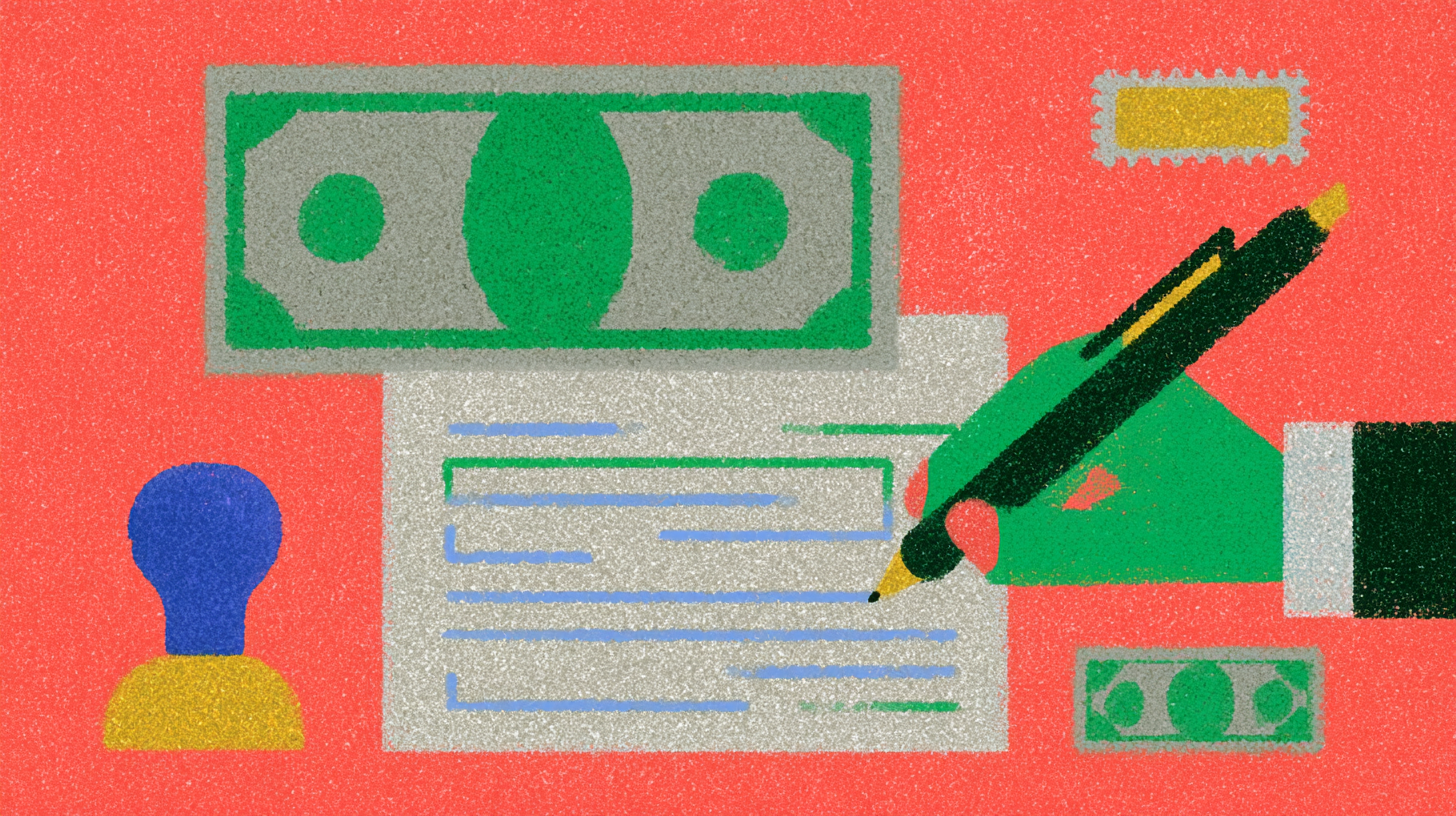
How to fill out a money order
A money order is a prepaid paper payment often used for rent, bills, or sending money securely through the mail. To fill one out correctly, you need to add the recipient's name, your information, sign the front, and keep the receipt for tracking or replacement purposes.
Money orders are still widely used in the United States, especially for situations where people need a secure paper payment method. Even in 2026, many landlords, utility companies, government offices, and individual recipients continue to accept or require money orders for certain payments.
For many people, especially immigrants, newcomers to the United States, or people without a traditional bank account, money orders can feel more accessible than personal checks. Filling out a money order incorrectly can cause delays, make the payment invalid, or create problems if the money order is lost. Knowing exactly what information to write and where to write it can help avoid unnecessary stress.
What is a money order?
A money order is a prepaid paper payment that works similarly to a check. Instead of drawing money directly from a bank account, you pay the full amount upfront when purchasing the money order.
Once completed, the money order can usually be:
- Mailed to a recipient
- Deposited into a bank account
- Cashed at approved locations
Because the payment is prepaid, money orders are often considered safer than mailing cash. Money orders are commonly used for:
- Rent payments
- Utility bills
- Government fees
- Payments sent through the mail
- Sending money to family members
- Situations where personal checks are not accepted
Most money orders also include a receipt or tracking number that can help verify whether the payment was cashed. Unlike many digital payment apps, money orders are not typically trackable in real time.
When to use a money order vs other options
Money orders can still make sense in certain situations, especially when:
- A landlord only accepts money orders
- You do not have a U.S. checking account
- You need to mail a secure payment
- The recipient does not use digital payment apps
- You do not want to share banking information
Where to buy a money order
USPS (United States Postal Service):
One of the most common places to buy money orders. Domestic money orders typically cost between $1.45 and $1.95. USPS money orders never expire.
Walmart:
Many Walmart locations offer money orders through MoneyGram services. Fees can be lower than traditional banks, although limits apply depending on the location.
Western Union:
Western Union locations also sell money orders. Some stores offer extended hours.
Banks and credit unions:
Some banks and credit unions issue money orders to account holders. Fees may vary depending on whether you already bank with the institution.
Step 1: Fill out the recipient's name
Write the recipient's full legal name in the "Pay to," "Pay to the Order of," or "Payee" section.
Tips:
- Write clearly using black or blue ink
- Double-check spelling
- Avoid nicknames unless specifically requested
- Do not leave this section blank
If the name is incorrect, the recipient may have trouble depositing or cashing the money order. Once the recipient's name is written, only that person should be able to cash or deposit the money order with valid identification.
Step 2: Fill out the sender's name and address
Write your own information in the purchaser or sender section. The form may ask for: full name, address, city and state, phone number. This helps identify who purchased the money order if there is a problem later.
Step 3: Sign the front and add a memo
Sign only where the purchaser or sender is instructed to sign on the front.
Do not sign the back.
The back is reserved for the recipient when they cash or deposit the money order.
Some money orders also include a memo or account number section. Examples: apartment number for rent, utility account number, invoice number, purpose of payment.
Step 4: Keep your receipt
The receipt usually contains: tracking information, serial number, purchase amount, date of purchase.
Keep the receipt until the money order has been cashed or deposited successfully. If the money order is lost, stolen, or delayed, the receipt may help you: request a replacement, verify whether it was cashed, contact customer support, file a claim.
Common mistakes to avoid
Leaving fields blank:
Fill out the money order completely before handing it over or mailing it.
Using incorrect recipient information:
Misspelled names or incorrect business information can delay the payment process.
Signing the back:
Only the recipient should sign the back of the money order.
Throwing away the receipt:
Always keep your receipt until the payment is confirmed.
Using pencil or unclear handwriting:
Use permanent ink and write clearly.
Mailing cash instead:
Money orders are generally safer than sending cash through the mail.
Alternatives to money orders (digital options)
Common digital alternatives include: Venmo, Cash App, bank transfers, debit card payment apps.
For people who regularly send money within the United States or to Latin America, Común offers digital transfer options through ComunPay.
ComunPay allows eligible users to send money using: payment links, QR codes, phone numbers, email addresses, usernames, debit cards. Unlike traditional mailed money orders, digital transfers inside apps can usually be tracked directly from the phone.
Común also offers international remittances to Latin America starting at $2.99.
Choosing the right payment option for your needs
Money orders continue to play an important role for many people in the United States, especially for rent payments, government forms, mailed payments, or situations where paper documentation is preferred. For everyday sending between family members, friends, or trusted contacts, digital payment tools may feel more practical and easier to track.
FAQ
How much does a money order cost?
Money orders typically cost between $1.45 and $10 depending on the issuer, amount, and location. USPS money orders commonly range from $1.45 to $1.95.
Can a money order be cashed by anyone?
No. Once the recipient's name is written, only that person should be able to cash or deposit it with valid identification.
How long is a money order valid?
Many money orders do not expire. USPS money orders do not expire.
What happens if I make a mistake on a money order?
Avoid crossing information out. Contact the issuer about replacement options.
Can I track a money order?
You can usually verify whether it was cashed by contacting the issuer with your receipt information.
What is a digital alternative to a money order?
Venmo, Cash App and ComunPay for peer-to-peer transfers. Común also offers international remittances to Latin America starting at $2.99.
Común is a financial technology company and not a bank. Banking services are provided by Community Federal Savings Bank, Member FDIC. The Común Visa® Debit Card is issued by Community Federal Savings Bank. Peer-to-peer payments services are provided by Cross River Bank. No minimums, no maintenance fees. Remittance service provided by Service UniTeller, Inc. Remittance fees start at $2.99 but may vary. Común Inc. may earn revenue from the conversion of foreign currencies.
About Común
Común aims to support the Latino community in the United States. It offers a debit account that can be opened with more than 100 valid Latin American IDs and an app available in Spanish.
Visit Común's website or download the app for free to learn more about the full offer and applicable terms.
Olivia Rhye
Community Partner


Financial Education
How to Cash a Check: A Step-by-Step Process
8 min de lectura
With Común you can cash a check without going to a bank: take a photo of it in the app and the money is deposited into your account at no cost. You can also use the network of over 88,000 cash-deposit locations if you prefer to cash it in person.
In the world of finance, the ability to cash a check efficiently and securely is a fundamental necessity. From payroll checks to tax refund checks, the mechanism of turning these paper promises into real purchasing power is a critical aspect of financial management. This article provides a guide on what a check is, how to cash it, and where to do so, ensuring you are well equipped to navigate this process.
What Is a Check?
A check is a written, dated, and signed instrument that orders a bank to pay a specific amount of money from the issuer’s account to the person or entity whose name is written on the check. The recipient (payee) then deposits or cashes the check to access the funds.
Checks are a traditional form of payment that allow individuals and businesses to make transactions without the need for immediate cash exchange. They can be used for a wide range of payments, from personal gifts to payroll and business transactions.
Checks offer a traceable payment method, providing a paper trail that can be useful for accounting and tax purposes. They remain a fundamental component of financial transactions, offering a combination of security, convenience, and versatility. Despite the rise of digital payments, the relevance of various types of checks persists, serving diverse needs from everyday payments to significant financial dealings. Here are the different types of checks:
- Personal Checks: These are the most common type, issued by individuals and generally drawn from a checking account. They are used to pay bills, rent, or transfer money to family and friends.
- Cashier’s Checks: These are issued by banks themselves, guaranteeing funds are available because the bank holds the amount until the check is cashed. They are often used in major transactions, such as down payments on a house.
- Certified Checks: These are personal checks verified by a bank. The bank certifies that the signature is genuine and that the issuer has sufficient funds in their account to cover the check amount at the time of issuance.
- Money Orders: These are a prepaid payment method, similar to checks but generally considered safer because they require upfront payment. Money orders are widely accepted and can be purchased at banks, post offices, and even some retail stores.
- Traveler’s Checks: These are preprinted fixed-amount checks designed to allow travelers to carry money without cash. They can be exchanged for local currency at banks, exchange offices, or some retailers and are protected against loss or theft.
- Government Checks: These include tax refunds, Social Security benefits, and other payments issued by the government. These are considered very secure, as they are backed by the government.
From personal to certified checks, each type plays a specific role, ensuring that individuals and businesses have the flexibility to manage their money securely and efficiently. Despite the growing prevalence of digital finance, checks continue to hold their place, offering an indispensable option for a wide variety of financial dealings. Understanding the functionality and usefulness of different types of checks remains key to optimizing financial transactions and strategies.
How to Cash Your Check
The journey from receiving a check to turning it into cash or depositing it into your bank account is simplified by understanding a few key steps. Using advances in banking technology and the expertise of bank tellers, let us dive into the methodical approach to accessing your funds.
Step 1: Endorse Your Check
Start by endorsing your check, a necessary step that indicates your intent to cash or deposit it. Turn the check over and sign your name in the specified area on the back.
Step 2: Prepare Your Identification
Having a valid form of identification is crucial. This could be a driver’s license, a government-issued ID, or any other official identification, ensuring that the check is cashed or deposited by its legitimate owner.
Step 3: Choose Where to Cash the Check
Your options include a local bank or credit union, where checking accounts often provide lower fees for account holders, or a check-cashing service for those without a bank account. In addition, certain retailers and grocery stores with a customer service desk may offer check-cashing services, usually for a small fee.
Step 4: Present Your Check and Identification
At your chosen location, present the endorsed check and your ID. The teller or service representative will verify your identity and the check’s authenticity.
Step 5: Decide Between Cash or Deposit
Choose whether you want to cash the check or deposit it into your account. This decision may affect whether you opt for a direct deposit into a linked bank account, use mobile deposit options, or even load funds onto a prepaid debit card.
Step 6: Complete the Transaction
The teller processes your check based on your decision. Deposits may require a short wait for funds to become available, while cashing it provides immediate access to your money.
Step 7: Obtain a Receipt
Always make sure to get a receipt after the transaction. This serves as a record of your action, important for personal financial tracking and potential inquiries.
Cashing your check is a straightforward process when you follow these essential steps, from endorsement to choosing your cashing location. Each stage is designed to ensure access to your funds is secure, convenient, and tailored to your financial needs, highlighting the importance of understanding your banking options.
Where to Cash Your Check and the Associated Fees
Identifying a reliable and efficient place to cash your check, whether it involves government checks, insurance settlement checks, or two-party personal checks, is paramount. The landscape offers several avenues, each with its own set of benefits and considerations.
Banks and Credit Unions
Traditional and secure, if the check is drawn against an account at the same institution, cashing it is typically free. These places are ideal for those with their own bank accounts, offering services such as cashing cashier’s checks and government and payroll checks. Associated Fees: If you have an account at the bank or credit union where the check was drawn, cashing a check is generally free. Some banks may still charge a fee if the check comes from a different bank, but this is increasingly uncommon.
Check-Cashing Services
A viable option for immediate needs or for individuals without bank accounts, though often accompanied by fees. Check-cashing stores and services such as Ingo Money provide versatility but may involve check-cashing limits or higher fees. Associated Fees: These services are convenient but often come with higher fees. They may charge a flat fee plus a percentage of the check amount, which can range from 1% to 4% or more. For example, cashing a $1,000 check at a service that charges 2% would cost $20.
Retail Stores
A very convenient option, many stores and gas stations now offer check cashing for a flat fee or a percentage of the check amount. This can be particularly helpful for cashing checks such as payroll or government checks on the go. Associated Fees: Some supermarkets and convenience stores cash checks for a fee, which may be lower than check-cashing services. Fees at retailers are often a flat fee (for example, $3 to $6 for checks up to a certain dollar amount) plus an additional fee for larger amounts.
Digital Options
Mobile deposits and services linked to PayPal accounts or prepaid cards allow you to deposit checks without visiting a bank. This method suits those comfortable with digital banking, offering a way to deposit checks directly into a linked account or prepaid card. Associated Fees: If there are fees, they are often structured similarly to Ingo Money or PayPal services for immediate access, but they are usually waived if you are willing to wait for the standard clearing time.
The decision spans traditional banking institutions, check-cashing services, retail points of sale, and innovative digital platforms, each catering to different needs and preferences. Whether you prioritize convenience, low fees, or immediate access to cash, there is a tailored option for your situation. As we move toward an increasingly digital world, the value of the physical check remains undeniable in its usefulness and necessity.
Conclusion
Cashing a check efficiently depends on understanding your options and the associated fees. Whether you prefer the traditional security of a bank or credit union, the convenience of a check-cashing service, or the modern approach of mobile deposits, the key is to weigh these options against your immediate financial needs and the costs involved. By integrating money-saving strategies, such as avoiding high fees and opting for direct deposit, you can ensure a smooth and stress-free process while making the most of your financial resources.
How do I cash a check with the Común app?
Open the app, go to the check deposit section, take a photo of the front and back (make sure it's signed in the endorsement area), and confirm the amount. Mobile check deposit is at no cost.
How long does it take for the check funds to show up?
Timing varies depending on the amount and your account history; the app shows you an estimate before you confirm the deposit.
What are my options if I don't want to use mobile deposit?
Común has a network of over 88,000 cash-deposit locations, and you can withdraw at AllPoint+ ATMs at no cost (3 free withdrawals a month, then $2.50 per withdrawal).
Frequently asked questions
Does cashing a check through the Común app cost anything?
No, mobile check deposit through the app is at no cost.
What do I need to deposit a check through the app?
Just your phone with the Común app, the physical check signed in the endorsement area, and good lighting for the photo.
Can I cash any type of check with Común?
The app guides you through the process; make sure the check is current, properly signed, and has complete information before photographing it.
What happens if my check deposit is rejected?
The app will notify you if there's an issue with the deposit; check that the check's details are legible and complete.
Can I withdraw the cash from a deposited check at an ATM?
Yes, once the deposit shows in your account, you can withdraw at any AllPoint+ ATM at no cost (up to 3 times a month).
Does Común charge for each check I deposit?
No, mobile check deposit has no fee.

Financial Education
How to Endorse a Check: Your Safe and Detailed Step-by-Step Guide
8 min de lectura
Despite the fact that digital payment methods have gained significant relevance practically worldwide, checks remain essential for carrying out certain transactions, especially for people without a banking account.
According to recent data, 61% of Americans still use checks. However, 17% have been victims of check fraud.
Knowing how to endorse a check in the United States is a necessary security measure to prevent fraud. While it can be a confusing procedure, it is crucial to understand it in order to avoid issues.
In this article, we will explain step-by-step how to correctly endorse checks, as well as the information you need to write on the back in order to cash the stated amount.
What Is a Check Endorsement and Why Is It So Important in the U.S.?
A check endorsement is a signature on the back of the check that serves as authorization for it to be cashed at a financial institution.
Its main function is to validate the cashing of the check, as well as authorize the transfer of funds, or to transfer the right to another person.
Knowing how to endorse a check is essential because it is a primary security requirement in the U.S. financial system, serving as a protection measure for the holder and the deposited funds.
What Is the Correct Way to Endorse a Check, and Where Should You Sign?
Below, we show you how to complete the endorsement before cashing checks at the bank.
Step 1: Verify the Check Details
Make sure the details on the front of the check are correct, such as the payee’s name, the amount in numbers and words, and the banking institution.
Step 2: Locate the Endorsement Area
Turn the check over and locate the statement “Endorse Here” or “Do not write below this line.” Avoid writing below the marked area.
Step 3: Sign the Check Precisely
Sign the check in the designated box, according to the type of endorsement you require. Next, we will explain everything about the different types.
But what should you do if the payee’s name is incorrect?
Example of How to Endorse a Check if the Name Is Misspelled
If the payee’s name is incorrect, you should first sign as it appears and then sign again with the corrected name.
James Smit — James Smith
Step 4: Consider a Restrictive Endorsement (Highly Recommended!)
A restrictive endorsement is a security measure to prevent an unauthorized third party from cashing the check, as it limits the form of payment to a registered banking account. It is linked to the information provided on the back of the check.
Step 5: Multiple-Payee Endorsements
If the check is made out to more than one payee, one or all may need to sign the endorsement, depending on how it is written.
- Katy Adams and Mark Palmer: Signatures from both are required
- Katy Adams or Mark Palmer: One signature is sufficient
- Katy Adams and/or Mark Palmer: Depending on the intermediary bank, one or two signatures may be required
- Katy Adams, Mark Palmer, etc.: The bank determines whether one or all signatures are necessary
Types of Endorsements: Know the Options for Your Checks
Before endorsing your check, verify which type is most suitable depending on the transaction you need to perform. For example, a restrictive endorsement is a way to secure your money, just like using modern financial alternatives such as Común, a comprehensive service that gives you access to unified and efficient financial tools.
Blank Endorsement
A blank endorsement is carried out when the same payee cashes the check in cash. In this case, only the signature in the designated area is needed.
Restrictive Endorsement
A restrictive endorsement is a security measure to ensure that the funds are deposited into a specific banking account.
To do this, you must include the statement “for deposit only to” + bank name, account number, and signature.
This is the most recommended method for Común users who make deposits via mobile, as it provides protection for the check in case of loss and ensures that the money is deposited into the designated account.
Third-Party Endorsement
If the check will be cashed by a third party, it must be endorsed as follows.
Pay to the order of: (name of another person) + signature
It is important to exercise extreme caution with this type of endorsement. Use it only with trusted individuals, and in case of theft or loss of a check, report it to the financial institution immediately.
Business Endorsement
A business endorsement is made when a check is cashed in the name of a company. This requires including the full name of the company, followed by the signature of the authorized legal representative.
Mobile Deposit Endorsement
To deposit check funds through a mobile application or mobile banking, it must be endorsed as follows:
For mobile deposit only + your signature.
Deposit your endorsed check easily and securely using Común
Cashing checks is a process that requires special care and attention in order to avoid mistakes and setbacks that could affect the transaction.
This time, we learned the importance of correctly endorsing a check in the United States, as well as the different types that exist, according to the available cashing methods.
Now that you know how to fill out a check on the back, you can rely on Común to deposit the funds through the mobile app.
Skip the lines: Deposit your check from the app; availability of funds may vary.
Común offers you the necessary security to protect your money and personal data
It is an accessible platform for immigrants in the United States; request to open your account with documentation from your country
Get customer support in English and Spanish, available 24/7
Access a comprehensive mobile app to manage your personal finances in the simplest way
Común will not only make the check deposit process easier, but it will also transform your financial life in the United States. Open your account today and find out.
Frequently Asked Questions
Is it mandatory to endorse a check in the United States?
In most cases, yes, it is necessary. If you request a deposit through an ATM or application, the bank may not require an endorsement.
What happens if I sign the check incorrectly when endorsing it?
Avoid cross-outs or scratches and endorse the check again. If the bank rejects it, ask the issuer to issue a new one.
Can I endorse a check to another person?
You can endorse a check so that it can be cashed by another person with the statement “pay to order of” along with the payee’s name. However, this process is restricted according to each bank’s specific policies.
Is it safe to deposit a check with the mobile app?
It is safe to deposit a check through the Común mobile app, as your data is encrypted and it includes other security measures such as two-step verification.

Financial Education
What is ACH and why is it important for sending and receiving money in the U.S.?
8 min de lectura
If you need to make bank transfers in the United States, it will be useful to know what the ACH network is and understand its importance in the country’s banking system.
ACH (Automated Clearing House) is an Automated Clearing House that handles the processing of electronic transfers between U.S. accounts.
It is highly relevant for receiving direct payroll deposits, also known as ACH credits, and for processing recurring payments, due to several advantages compared to the traditional bank network, such as cost reduction and traceability of operations.
According to official sources, in 2024 the ACH payment network processed around 33.6 billion electronic payments, with a value close to $86.2 trillion, underscoring the importance of this method in the U.S. financial system.
On this occasion, we will explain in detail the advantages of this type of transaction and provide some recommendations so you can get the most out of them.
What is ACH and how does it work?
ACH or Automated Clearing House is a network that allows money to move between banks, credit unions, and other financial institutions in the United States, where the use of cash or checks is not necessary, because everything is processed electronically.
The central part of this system is NACHA (National Automated Clearing House Association), which oversees compliance with the rules and ensures transfers are carried out according to established security standards.
It is very likely that in your daily life you have already used the ACH system without noticing it. For example, for:
- Payroll deposits: every time you receive your salary in your bank account.
- Bill payments: to pay basic services such as electricity and internet automatically.
- Transfers between people: when you make an electronic transfer to a friend or to your own accounts.
Differences between ACH payments and other transfer methods
In the United States, there are different systems for moving money. In addition to the ACH network, you can rely on more traditional networks such as wire transfers and checks.
The main difference with other bank transfer systems is that ACH focuses on electronic, secure, and low-cost payments, which take longer than other options that tend to be more expensive; whereas ACH transfers are more suitable for recurring payments and direct deposits.
Below, we show you a comparative table so you can visualize the fundamental differences between ACH payments and other methods.
| ACH | Wire transfer | Check | |
|---|---|---|---|
| Transaction speed | From 1 to 2 business days | From minutes to hours | From 2 to 5 business days |
| Cost per transaction | Free or reduced | Variable, around $25 to $50 USD | There may be issuance costs |
| Geographic availability | Only within the United States | National and international | National and sometimes international |
| Most common use | Payroll payments, bills, transfers between accounts, automatic payments | Transfers of large amounts of urgent money | Traditional payments between people without access to a bank account |
Benefits and some recommendations when using ACH payments
One of the main advantages of ACH payments is the security involved in using this system to transfer money. This is because it is regulated by an organization called NACHA, which verifies each transaction based on financial system regulations, thereby reducing the chances of fraud.
Despite the trust that ACH transfers provide, they also present some limitations.
These are the most common benefits and limitations of the ACH system:
Benefits
- It is the lowest-cost method of transferring money, as transactions are free or have minimal fees
- Transactions are protected by NACHA regulations, which guarantees their security
- It is a system well-suited for processing recurring payments and subscriptions
- It is easy to track operations, because all are recorded in the banking system
Limitations
- Transactions take longer to complete. Generally, they are reflected the next day or up to two business days later
- International money transfers cannot be made, only within the United States
- Some banks may set daily limits, so it is not advisable for moving large amounts of money
If you need an alternative for making recurring payments and direct deposits to a bank account within the United States, the ACH network is a popular alternative due to its security standards and accessibility. But if you are looking for other types of financial services, you can consider more comprehensive options.
At Común we make your ACH payments easier
As you can see, ACH payments are a reliable option for making and receiving money transfers, as long as they are scheduled transactions within the United States and within the limits set by banks.
It is very important to have a reliable and transparent partner to move your money and manage your personal finances in a comprehensive and efficient way.
Meet Común, the platform that integrates the ACH network for direct deposits, payments, and transfers, and uses a service that has clear and visible rates in the mobile app.
Discover everything Común offers you!
- Open your account with a qualified official ID from your country of origin—we accept more than one hundred of them!
- Get a debit card and make purchases easily
- Deposit cash at hundreds of locations near you
- Make international money transfers for a fee starting at $2.99 USD, up to the available limits
- Be part of a service that speaks your language and understands the needs of immigrants working in the United States
Don’t wait any longer—open your account at Común!
Frequently Asked Questions (FAQ)
If you have questions about what ACH is and what it is for, consult our Frequently Asked Questions section.
How long does an ACH transfer take?
Generally, ACH transfers take 1 to 2 business days. It is also possible they are completed the same day if the bank offers the same-day ACH option.
How much does it cost to send money via ACH?
ACH transfers are usually free up to the applicable limits. Some banks charge a minimal fee, around $3 USD. It is a more economical option than a wire transfer, which can cost more than $50 USD.
Is it safe to use ACH for personal payments?
Yes, ACH transfers are regulated by the NACHA system, so they are easily traceable and protected with anti-fraud security measures.
Can I use ACH if I don’t have a bank account in the U.S.?
No, to send money through the ACH system you need an account number from a U.S. bank or credit union. Otherwise, you can resort to more accessible alternatives such as Venmo, PayPal, and Común.
What is an ACH payment?
An ACH payment is a money transfer processed through the ACH system and managed by NACHA (National Automated Clearinghouse Association).
What is a wire transfer?
A wire transfer is a payment method that allows money to be moved from one bank to another electronically, both nationally and internationally.
Financial Education
Wire Transfers, ACH, and Other Money-Transfer Methods
8 min de lectura
ACH transfers are electronic bank transfers within the U.S., commonly used for payroll deposits and payments between accounts. With Común, receiving an ACH transfer is at no cost, and it usually takes 3–5 business days.
The ability to transfer money efficiently and securely is a cornerstone of economic interactions. This article explores the range of electronic transfer methods available today, comparing and contrasting wire transfers, Automated Clearing House (ACH) transfers, and other prevalent money-transfer mechanisms. By understanding the nuances of each international transfer method, from international money transfers to peer-to-peer platforms, individuals and businesses can navigate the complexities of financial transactions with confidence.
Wire Transfers: Speed and International Reach
Wire transfers stand out as a testament to the enduring value of fast, secure international money movement. Valued for their reliability, wire transfers allow individuals and businesses to transfer funds directly between bank accounts across the globe. The defining feature of wire transfers is their rapid processing, crucial for time-sensitive transactions. They leverage the vast international network of a financial institution, making it possible to send money to almost any country.
However, the efficiency and security of wire transfers come at a cost. They are generally associated with higher fees compared with other transfer methods, both for the sender and, occasionally, the recipient. These transactions also require the provision of precise and complete recipient bank details, including the bank name, account number, and routing numbers, ensuring that funds reach the intended destination without delays.
Despite the cost, the unmatched speed and security of wire transfers make them the preferred choice for large international transactions, where the assurance of timely and safe delivery outweighs the expense. Whether for business dealings, purchasing property abroad, or sending emergency funds, wire transfers offer a reliable solution, backed by the reputation and regulatory framework of traditional financial institutions.
ACH Transfers: Domestic Efficiency and Low Cost
The Automated Clearing House (ACH) network offers an efficient and economical alternative for domestic money transfers. ACH transfers encompass both direct deposits and direct payments, including payroll, government benefits, and bill payments. Unlike wire transfers, ACH transfers are processed in batches, which can lead to slower delivery speed, typically a few business days. However, the lower fees associated with ACH transfers make them an attractive option for routine domestic transactions. ACH transfers and wire transfers, while often mentioned together, serve distinct needs based on the urgency and geographic scope of the transaction.
The versatility of the ACH network extends beyond simple cost savings, providing a framework for a wide range of transactions beyond conventional check deposits and bill payments. This includes, but is not limited to, person-to-person (P2P) payments, business-to-business transactions, and even government-to-citizen payments such as tax refunds.
In addition, the arrival of same-day ACH processing marks a significant improvement in transaction speed, addressing one of the few drawbacks traditionally associated with remittance transfers through this method. Despite this advancement, the inherent delay in batch processing still makes ACH transfers less suitable for urgent transactions, positioning them as a preferred method for planned recurring payments where cost efficiency outweighs immediate fund availability.
The Rise of Digital Convenience:
Two methods stand out for their distinct approaches and unique benefits: person-to-person (P2P) transfers and traditional transactions at both banks and credit unions, and banks. P2P platforms like PayPal, Venmo, Cash App, and Google Pay have revolutionized the way we think about money transfers, offering a level of convenience and accessibility that aligns with the demands of the digital age. These platforms cater to a generation that values speed, simplicity, and the ability to transact on the go using only a smartphone. On the other hand, credit unions and banks represent the backbone of traditional financial transactions, providing a full suite of services ranging from everyday banking needs to complex international wire transfers.
Person-to-Person Transfers
As mentioned, platforms like PayPal, Venmo, Cash App, and Google Pay have become indispensable in the digital era, democratizing the process of sending and receiving money. These apps excel in user convenience, enabling transactions with just a smartphone. Linked to one’s bank account or debit card, they facilitate both domestic and, increasingly, international transfers.
While often free for basic services, they may charge small fees for instant transfers or currency exchange-rate conversion. The appeal of P2P platforms lies in their simplicity and the ability to transfer funds without needing the recipient’s banking details, only their phone number or email address.
Credit Unions and Banks: Traditional but Reliable
Credit unions and banks remain the backbone of the money-transfer ecosystem. Offering a range of services from direct deposits to international wire transfers, these institutions provide a secure, if sometimes more expensive, way to move funds. The choice between a bank and a credit union often comes down to the nature of the transaction—credit unions may offer lower fees and better exchange rates for their members, while banks might provide more comprehensive services for international and business transfers. Regardless of the choice, ensuring the transaction is completed with a reputable institution is paramount.
Deciding Between Money-Transfer Apps: Key Considerations
When comparing money transfer apps, several key factors should be considered to ensure the decision aligns with your personal or business financial needs. Here are the essential aspects to evaluate:
- Fees: Compare the associated costs for sending or receiving money, including fees for instant transfers or foreign-currency conversion charges.
- Transfer Limits: Check the maximum and minimum amounts you can send, as platforms vary widely in their limits.
- Geographic Availability: Not all apps are available in every country or support international transfers. Make sure the app meets your geographic requirements.
- Security: Investigate the security measures in place, such as encryption and fraud protection, to safeguard your financial information.
- User Experience: Consider the app’s ease of use, customer support availability, and any additional features such as bill splitting or social functionality.
- Delivery Speed: While some apps offer instant transfers, others may take a few business days. Choose based on how quickly you need the funds to be available.
- Exchange Rates and Currency Options: For international transfers, evaluate the exchange rates offered and which currencies are supported.
Común- Banking designed for your life in the U.S.
Open your bank account¹ in 3 minutes with your country ID²
By carefully considering these factors, users can select a money transfer app that best suits their financial transactions, balancing convenience, cost, and security. Whether sending money to a friend domestically or managing international business transactions, the right money transfer app can make all the difference in achieving a smooth and efficient money-transfer experience.
Emerging Technologies and Financial Innovations
The financial sector continues to evolve, with emerging technologies and innovations offering new ways to transfer money. Blockchain technology, for example, has given rise to cryptocurrencies, which promise faster international transfers without the need for traditional banking infrastructure. However, these methods come with their own set of challenges, including volatility and regulatory uncertainty. As these technologies develop, they may offer viable alternatives to traditional and electronic fund-transfer methods. Some developments include:
- Decentralized Finance (DeFi) Platforms: These platforms are reshaping financial transactions by enabling peer-to-peer lending, borrowing, and investing without traditional intermediaries, using blockchain technology to ensure security and transparency.
- Smart Contracts: These self-executing contracts with the terms of the agreement directly written into code can automate and secure the execution of financial transactions, reducing the need for intermediaries and increasing efficiency and trust.
- Digital Wallet and Mobile Payment Integration: Integrating digital wallets with mobile payment systems is streamlining the process of making transactions, making them more seamless and accessible, and is poised to reduce reliance on physical bank cards and cash even further.
Conclusion
The world of money-transfer methods is diverse, each with its own set of advantages, disadvantages, and best-use scenarios. From the rapid international reach of wire transfers to the domestic efficiency of ACH transactions and the convenience of money transfer apps, the choice of method depends on the specific needs of the transaction, including speed, cost, and geographic reach. As financial technologies continue to evolve, staying informed about these methods will enable individuals and businesses to make the best decisions for their money-transfer needs, ensuring that funds are transferred securely, efficiently, and cost-effectively.
What is an ACH transfer?
It's a type of electronic transfer that moves money between U.S. bank accounts, commonly used for payroll, bill payments, and transfers between banks.
How do I receive an ACH transfer into my Común account?
Use your account and routing number, found inside the app, to receive ACH transfers directly into your account. It's at no cost.
How long does an ACH transfer take?
Generally 3–5 business days. If you need your paycheck faster, direct deposit has no limit and is usually available sooner.
Frequently asked questions
Does receiving an ACH transfer in Común cost anything?
No, receiving ACH transfers into your Común account is at no cost.
What's the ACH transfer limit with Común?
Up to $1,000 per day and $10,000 per month.
Where do I find my account and routing number to receive an ACH transfer?
Both are available inside the Común app.
Is direct deposit faster than an ACH transfer?
Yes, direct deposit has no limit and is usually available faster than a standard ACH transfer.
Can I send money via ACH from my Común account to another bank?
The app shows you the transfer options available based on your account type.
What's the difference between ACH and a wire transfer?
ACH is usually free but slower (3–5 days); a wire transfer is generally faster but may have a fee.
Instant payments
5 Best Apps to Send Money in the United States
8 min de lectura
In the digital age, sending and receiving money has become easier and faster than ever. Mobile apps let us transfer funds to friends, family, and businesses with just a few taps on our phone. In this article, we introduce you to the best and most popular apps for sending money safely and efficiently.
1. Zelle:
Zelle is a money transfer application developed by a consortium of U.S. banks that allows users to send and receive money directly between bank accounts. Since it's linked to bank accounts, Zelle offers a fast and secure way to transfer money without needing a third-party app. To use Zelle, you only need an email address or mobile phone number and an account at a participating bank. Although it's the most popular option in the U.S. right now, it still has a lot of work to do to improve accessibility in Spanish.
2. Común:
Of the apps on this list, Común is without a doubt the best for the Latino community in the United States. The Común app experience is entirely in Spanish, clear, and fast. It has 100% Spanish-language customer service. With phone lines, chat, and text messages, Común is the most accessible app for sending money when questions come up. Aside from unlimited person-to-person transfers, Común also offers a bank account and guides to help you connect Común with Paypal, Venmo, and Cashapp. That way, in addition to being one of the best apps for sending money, with Común you can connect to all the apps on this list. Común accounts are FDIC-insured up to $250,000.
3. PayPal:
PayPal is, without a doubt, one of the most well-known and widely used online payment applications in the world. With a global presence in more than 200 countries, it lets users send and receive money in different currencies. Beyond person-to-person transfers, it's also widely used for online payments at stores and e-commerce platforms. It has a buyer and seller protection feature that provides extra security for transactions.
4. Cash App:
Cash App, developed by Square, is another popular application for sending and receiving money in the United States. With Cash App, you can link your debit or credit card to make fast payments to friends and businesses. It also lets you buy and sell cryptocurrencies like Bitcoin and offers a rewards program called "Boosts," which provides discounts at select stores.
5. Venmo:
Venmo is an app owned by PayPal, especially popular among young people in the United States. It lets you send and receive money quickly between friends and acquaintances, even with personalized messages and emojis. Although Venmo is free for personal transfers, it charges a small fee to receive payments for services or sales. A distinctive feature of Venmo is its social component, since it lets users see and comment on their friends' public transactions.
Sending and receiving money has never been easier with these popular, reliable apps. Each one offers unique features and advantages, from PayPal's global presence to the flexibility and accessibility of Común. Make sure to research and compare the different apps to find the one that best fits your needs and preferences. Start sending money quickly and safely today!
Común — The Option for Immigrants Without an SSN
Común is a digital bank account designed specifically for the Latin American community in the U.S. It lets you open an account without an SSN using a passport or consular ID. It includes Zelle compatibility for instant, free domestic transfers. Customer service is entirely in Spanish. No monthly fees, no minimum balance required. It's the most accessible option for immigrants who need a complete banking solution from day one.
Frequently Asked Questions About Money-Sending Apps
What is the cheapest app to send money in the U.S.?
Zelle is free for sending between users within the U.S. Venmo and Cash App are also free for standard transfers between users. For international transfers, Wise offers the most transparent and competitive fees on the market.
Can I use these apps without a Social Security Number?
Venmo, Cash App, and Zelle require an SSN for full verification. Común does not require an SSN — it accepts a passport, consular ID, and more than 100 Latin American IDs. Wise in the U.S. requires an SSN or ITIN for regulatory compliance.
How long does it take for the money to arrive?
Zelle and Venmo (between users) are instant. Cash App Instant is too. Standard bank transfers take 1–3 business days. Wise takes 1–3 days depending on the destination country. Común with Zelle is instant for transfers within the U.S.
Are these apps safe?
Yes, all of the ones mentioned use encryption and standard security protocols. Común, Zelle, Venmo, and Cash App have additional protection depending on the backing bank. Money in FDIC accounts is protected up to $250,000. Never send money to strangers — transfers are irreversible.
Financial Education
How does cashback reward work? 3 practical tips to make the most of it and improve your finances
8 min de lectura
One way to improve personal finances and optimize expenses is to apply modern, automated savings alternatives linked to daily purchases through various payment methods.
Los programas de recompensas con reembolso son una alternativa para que tu dinero rinda más, ya que ofrecen recompensas que te permiten obtener reembolsos en tus compras.
There are different ways to access these types of benefits: through automatic promotions from some credit cards, shopping platforms that reward users for shopping at their partner stores, and certain mobile applications that credit cashback for purchases like fuel.
Knowing and applying these strategies will help you improve your financial management and reduce your worries. Comun is the platform that helps you improve your financial relationship and make your life easier.
Below, we’ll explain how cashback reward works and share some tips to get the most out of it with the right financial platforms.
What is cashback and how does it work?
Cashback can be understood as a discount on your purchases. You earn cashback after buying a qualifying product or at a participating store.
Cashback appears in everyday purchases — for example, when you go to a café and pay with an eligible card, when you shop through an app that offers this benefit, or when you pay for gas with a cashback-enabled card.
Although the ultimate goal of cashback is to reduce part of the cost, it has some differences compared to traditional discounts.
Cashback Reward
Traditional discounts
Definition
Returns a percentage of your purchases after you make them.
Reduces a product’s price before purchase.
Advantages
- Generates passive savings, even with regular prices. Some programs combine other additional benefits.
- Immediate savings.
- Available to all users, please note some might require registration.
Disadvantages
The cashback reward can take several days or weeks to be credited. Available only with participating cards or mobile apps.
- Availability depends on each store or seller.
- Most discounts cannot be combined with other promotions.
The cashback reward varies depending on the financial institution or program offering it. To calculate it, use the following formula if cashback reward is by percentage:
Total Cashback Reward = (purchase amount) × (cashback percentage)
For example, if your debit or credit card offers 2% cashback and you spend $100, you get $2 back.
Here are the some of the ways to receive the cashback reward, depending on the program:
- Automatic deposit into the same account used.
- Balance accumulated in points until reaching a minimum withdrawal amount.
- As a credit valid for future purchases.
Benefits of cashback reward for your personal finances
Cashback reward is a very useful tool to make the most of every dollar spent, saving amounts that might seem small at first but make a difference later when buying essentials.
Therefore, cashback reward encourages financial education by promoting consistency and smart shopping habits.
Here are some practical advantages of cashback reward:
- You recover part of your spending: every time you make a purchase, you could earn some money back.
- Better expense control: generally, cashback reward providers offer a mobile app where you can view your expenses by category.
- Take advantage of offers without hurting your budget: cashback rewards you for making your usual purchases without falling into compulsive spending habits.
Remember that consistency is key when using cashback reward to ease future expenses such as gas, groceries, or medicine — and to increase your ability to save and send more money to your loved ones in your home country.
3 practical tips to use cashback reward wisely
Using cashback reward is itself a smart way to handle daily purchases. Keep these tips in mind to make the most of this benefit.
1. Make regular purchases like groceries, transport, or planned services
Use cashback reward only for purchases already included in your budget. This allows you to earn rewards from items you always buy, without falling into poor spending habits.
2. Avoid buying unnecessary things just to get cashback reward
The fact that a product offers a cashback reward, no matter how high, isn’t reason enough to buy it if you don’t really need it.
3. Track the money you get back each month
It’s advisable to track how much cashback you earned each month and ensure it’s credited back correctly, which helps you know exactly how much you’re saving and motivates you to maintain good financial habits.
You can use spreadsheets or cashback reward mobile apps that include financial management tools to help with this.
Move your money easily with Comun
In this article, we explained what cashback reward means, its benefits, how it works, and ways to use it wisely.
The habit of saving is essential, especially for immigrants living in the United States who seek to improve their quality of life and that of their families. While cashback reward helps optimize regular purchases, Comun simplifies financial management through a comprehensive platform.
Comun is the financial platform designed to ease financial management for immigrants in the United States.
Discover all the benefits Comun has for you!
- Send money from the United States to Latin America with clear and competitive fees, up to the applicable limits.
- You can open an account with a qualifying official identification from your home country.
- Access your financial history from an intuitive and friendly mobile app.
- Get a debit card to cover your daily expenses.
Remember that managing the savings you earn through cashback reward will allow you to support your family’s projects and goals.
Turn your cashback reward into more opportunities for you and your family.
Frequently Asked Questions (FAQ)
If you still have questions, check the section below.
Can I use cashback reward for my daily expenses?
Yes, cashback reward is designed to give you a percentage back from everyday purchases such as gas, groceries, and public transportation. However, it’s not recommended to use cashback reward as motivation to make unnecessary purchases.
Do I need a credit card to get cashback ?
Although credit cards are one of the most common ways to earn cashback reward, they are not required — there are other alternatives such as debit cards with cashback or digital accounts, as well as platforms like Rakuten, Ibotta, Upside, or Honey.
What is cashback on credit cards?
Cashback on credit cards is a way to earn a percentage of cashback for your purchases. Some financial institutions also offer bonuses or additional benefits. If you use a credit card, make sure to pay the full balance to avoid interest charges.
What is cashback on debit cards?
It’s a benefit that gives you a percentage of your purchases back directly to your debit card.
Instant payments
Direct deposit vs wire transfer: comparison guide for U.S. immigrants
8 min de lectura
Direct deposit vs wire transfer: comparison guide for U.S. immigrants
These payment methods are both available in the U.S. but they are often used for different purposes. Direct deposit is commonly used for paychecks, tax refunds, and government benefits, while wire transfers are more often used for urgent or high-value transfers between financial institutions.
Understanding the difference between direct deposit and wire transfers can help you avoid unnecessary fees, choose the right payment method for your situation, and manage your money more confidently.
What's the difference between direct deposit and wire transfer?
The biggest difference is the purpose they serve. Direct deposit is commonly used for recurring payments such as salaries, benefits, and tax refunds. Wire transfers are commonly used to move money quickly between financial institutions, particularly for large or time-sensitive transactions.
| Feature | Direct deposit | Wire transfer |
|---|---|---|
| Common use | Paychecks, benefits, tax refunds | Large or urgent transfers |
| Network used | ACH network | Wire transfer network |
| Speed | Typically 1–3 business days | Often same day or next business day |
| Typical cost | Often no fee to receive | Fees may apply |
| International transfers | Limited | Commonly used |
| Recurring payments | Yes | Less common |
| Setup required | Routing + account number | Bank details + recipient information |
How direct deposit works
Direct deposit is one of the most common payment methods in the United States, particularly for employees receiving wages from an employer. Instead of issuing a paper check, an employer sends the payment electronically to the employee's bank account through the ACH network.
To set up direct deposit you need to provide your employer: your bank's routing number and your personal account number.
How wire transfer works
A wire transfer is an electronic transfer of funds between financial institutions through secure financial networks like Fedwire or SWIFT. Unlike direct deposit, wire transfers are better suited for large one-time payments, urgent payments, real estate transactions, or international transfers.
When to use each one
Use direct deposit for:
- Receiving your paycheck
- IRS tax refunds
- Social security or unemployment benefits
- Recurring business payments
Use wire transfer for:
- Real estate payments (down payment, closing)
- Urgent international transfers
- High-value business payments
- When the recipient specifically requires a wire transfer
How to set up direct deposit with Común
With your Común account, you can set up direct deposit by providing your Común routing number and account number to your employer. Your Común account has unique routing and account numbers available in the app. Visit comun.app to learn more.
FAQ
Is direct deposit faster than wire transfer?
Not necessarily. Domestic wire transfers can be faster (same day), while direct deposits usually take 1-3 business days. However, many accounts offer early access to direct deposits up to 2 days early.
How much does it cost to set up direct deposit?
Setting up direct deposit is generally no fee. Employers use the ACH network to send payroll electronically at no charge to the employee.
Común is a financial technology company and not a bank. Banking services are provided by Community Federal Savings Bank, Member FDIC.

Immigration
H-1B visa: what it is, requirements, and process explained for immigrants
8 min de lectura
Finding a path that gives you job opportunities in the United States can be hard work, especially if you’re unfamiliar with the different visa types offered by the U.S. government.
The H-1B visa is an option that could open the door to a new life in the U.S. In this guide, we explain what it is, what it’s for, who can apply, when it applies, and its benefits and limitations.
It’s essential to understand this visa’s features—as well as how it differs from other work visas—so you can ensure it fits your professional goals in the country.
With this information, you’ll be able to plan a strategy to obtain the visa and fully establish yourself in the United States.
What is the H-1B visa in the United States?
The H-1B visa is authorization granted to foreign workers to temporarily perform specialty occupations that generally require specialized knowledge and prior experience.
It is a nonimmigrant visa with an initial duration of 3 years and, in most cases, can be extended up to a maximum of 6 years.
There are exceptions, such as when the temporary worker is in the process of obtaining permanent residence, in which case the visa may be extended for a longer period.
4 main requirements to obtain the H-1B visa
Before starting the immigration process, you should know the H-1B requirements and verify that your background aligns with them to determine eligibility.
1. Minimum education level
To obtain an H-1B visa, you must have a higher education degree or its U.S. equivalent. The job offer must also be related to the specialty area of the degree presented.
2. Job offer from a U.S. employer
As with the EB-3 visa, the H-1B also requires a job offer from a U.S. employer, who must file Form I-129 with USCIS.
3. Common professions where it applies
Keep in mind that this visa is used for jobs requiring specialized knowledge, and openings most often arise in the following areas:
- Various branches of engineering.
- Information technology, such as programming, software development, etc.
- Sciences, such as chemistry, biology, and physics.
- Healthcare.
- Finance, economics, and accounting.
- Architecture, mathematics, and technical fields.
4. Annual visa cap and the lottery process.
Another key point is that this visa has an annual issuance cap, divided as follows:
- Regular H-1B: 65,000 per fiscal year.
- Advanced degree exemption: more than 20,000 for U.S. master’s and doctoral degrees.
Because filings often exceed these limits, USCIS established a selection system consisting of electronic registration and a random lottery.
The draw occurs in two phases: first the 65,000 regular slots are selected, and then 20,000 additional slots are drawn for U.S. advanced degree holders.
Between March and April, employers receive notification of the lottery results. If not selected, you may wait for a second round if quotas aren’t filled or, otherwise, apply the following year.
What is the H-1B application process?
Below is how the H-1B application process works.
1. Register in USCIS’s system
First, the U.S. employer must register the candidate on USCIS’s official site during the designated window, generally in March. The registration fee—listed on the same site—must also be paid.
If the candidate is selected, the employer receives a USCIS notice and can proceed to the next stage.
Note that before filing with USCIS, the employer must obtain a certified Labor Condition Application (LCA) from the Department of Labor (DOL).
2. Employer files the petition
After selection, the employer has 90 days to file Form I-129, Petition for a Nonimmigrant Worker, along with required documentation.
At this stage, it’s necessary to show the position is a specialty occupation and that the candidate meets the requirements.
3. USCIS review and approval
USCIS reviews the filing and, if needed, issues a Request for Evidence to seek additional information or clarification.
If everything is in order, the employer receives an approval notice, and the candidate proceeds with consular processing or a change-of-status request.
4. Consular processing or change of status
If the candidate is outside the U.S., they must attend a U.S. consulate, complete Form DS-160, and appear for a consular interview.
If the candidate is already in the U.S. under another status, the employer files the H-1B petition indicating the worker is in the United States.
In both cases, USCIS approval is required before visa issuance can proceed.
Benefits and limitations of the H-1B visa
H-1B holders enjoy several benefits that can improve their lives and those of their families; however, it’s also important to note the limitations.
Benefits
Lawful work in the United States
Although temporary, the H-1B allows you to work legally in the United States in your field of specialty. This can open many doors and strengthen your professional experience.
Potential path to permanent residence
H-1B workers may later pursue permanent residence (a Green Card) and extend benefits to immediate family members such as a spouse and unmarried children under 21.
Limitations
Maximum duration of 6 years
As noted, this visa does not automatically confer permanent residence; it lasts a maximum of 6 years. Still, it can be a first step toward it.
Employer dependency
This visa depends entirely on the employer extending the job offer and completing the filing process.
Annual cap
The visa is numerically capped, and filings typically exceed the annual cap, reducing the likelihood of selection.
To prevent these limits from becoming obstacles, consider planning ahead if you intend to pursue permanent residence. You can also evaluate other work visas, such as EB-2 and EB-3, which may be more suitable for long-term plans in the United States.
Take the next step on your immigration path with Común
Here we covered how to file for the H-1B visa, the requirements, benefits, limitations, and who it’s ideal for.
When you arrive in the United States, you’ll need an ally to help you manage your finances easily. Meet Común!
- Debit card for everyday purchases and payments.
- Fast money transfers to your home country.
- Secure payment options.
Open your Común account today and manage your money in the U.S.
Frequently asked questions
How do I go from H-1B to a Green Card?
Your employer must sponsor permanent residence under an employment-based category, file PERM with the DOL, and then file Form I-140.
How long does the H-1B last?
A maximum of 6 years.
How much does an H-1B visa cost?
Form I-129: from $460 to $780.
An anti-fraud fee may apply.

Financial Education
Which one is the best traditional bank in the United States? A Practical Guide for Immigrants
8 min de lectura
Having a bank account is an essential step for people arriving to work in the United States, since it makes it easier for them to manage their salaries and adapt to the country’s financial system.
This can be a complicated process, since in the United States there is a wide variety of financial institutions, such as traditional banks with hundreds of branches, digital banks, and credit unions.
Among the most well-known are Bank of America, Capital One, and Wells Fargo, which enjoy significant recognition in the country. However, it is not possible to name one as the best: this depends on the specific needs of users.
For example, immigrants in the United States look to prioritize ease of account opening, as well as the ability to send remittances to their loved ones.
In this article, we will explain which are the best banks in the U.S., their features, requirements, and everything you need to know before opening an account.
The 6 Best Banks in the United States in 2025
Below, we present a comparative table of the best banks in the U.S.
| Bank | Strengths | For Whom It Is Ideal |
|---|---|---|
| JP Morgan | Largest network of branches and ATMs, rewards available on credit card | People who want easy access to physical branches, along with a variety of financial products |
| Bank of America | Over 3,000 branches, bilingual service in Spanish and English | For those who prefer to communicate in Spanish and seek a bank with a solid reputation |
| Wells Fargo | Wide branch coverage, express international transfers | People looking for reliable options to send remittances |
| Citibank | International presence, global focus | Those who need to make frequent international money transfers |
| Capital One | No monthly fees and no minimum balance | Those seeking more accessible and digital options |
| PNC | Over 2,300 branches, mobile app for financial management | Those seeking to improve their personal financial management |
How to Choose the Best Bank to Open an Account
If you are about to start your financial life in the United States, choosing a bank where you open an account is a very important decision. Each has its own requirements and benefits, so you should look for the one that best fits your expectations.
These are the most relevant criteria you should analyze before choosing the best option for you.
Accepted Identification
Many banks request the SSN (Social Security Number) to process a bank account, while others accept alternatives such as the ITIN or a passport.
Support and Availability
Although some banks do offer support in other language, like Spanish, not all of them do. Verify that the institution you choose can clearly answer your questions.
Cash Deposits and Withdrawals
If you frequently receive cash payments, it is important that your bank allows you to make cash deposits at branches near you and without fees.
Transfers and Remittances
Sending remittances is a crucial issue for immigrants, so you should review the fees for international money transfers. These are often more expensive in traditional banks due to intermediaries and exchange rates.
Digital Security
Verify that the bank has security measures in digital banking, as well as backing from official institutions such as the FDIC.
5 Digital Finance Platforms in the United States
Beyond traditional banks, you can also turn to digital alternatives, which tend to be more accessible.
Digital banks or financial platforms are institutions that operate online through mobile apps and websites. They do not depend on physical branches and tend to make processes easier in favor of financial inclusion.
There are financial platforms focused on meeting the needs of immigrants in the United States, as they address gaps and obstacles of traditional banks with flexible account-opening requirements, accessible fees for remittance sending, and ease of depositing cash.
Común
Advantages: focused on the needs of immigrants, support available in Spanish, and has accessible account-opening requirements.
Disadvantages: it does not have physical branches or an ATM network, but you will always be able to access your digital money from the palm of your hand, without time restrictions; you can also withdraw and make cash deposits at thousands of locations in the United States.
Ally
Advantages: 100% digital bank with High Interest Rates (APY) on savings accounts.
Disadvantages: it is not possible to make direct deposits.
Axos
Advantages: offers various types of accounts and attainable options for students and immigrants.
Disadvantages: limited support in Spanish.
Chime
Advantages: offers accounts with no monthly fees, ATM network, and payroll advance.
Disadvantages: difficulty in making cash deposits.
Discover
Advantages: offers credit cards with rewards, checking and savings accounts without monthly fees.
Disadvantages: few cash deposit options, and it is not focused on the needs of immigrant communities.
Común: A financial platform for immigrants in the U.S.
As you can see, there is a variety of financial institutions you can turn to, and access to a full range of services such as cash deposits, transfers, financial management, etc.
That is why you must be clear about what you are looking for in a U.S. bank account and how you could meet your needs.
Most traditional banks tend to have stricter requirements and higher operating costs. For this reason, many immigrants consider digital financial platforms as an alternative, since they are often more accessible and designed with services that address their needs.
Común is a fintech platform that can support you in starting your financial journey in the United States, offering benefits such as:
- Open your account with the qualified official identification from your country of origin
- Forget about hidden fees and minimum balances
- Send money to your loved ones in Latin America for a fee starting at $2.99 USD (up to the applicable limits)
- Access a network of more than 88,000 locations for cash deposits and withdrawals
- Access Spanish-language support available 24 hours a day
- Get a Visa debit card
- Manage your finances from a comprehensive and easy-to-use mobile app
Open your account today and start sending money through Común’s mobile app.
Frequently Asked Questions
If you have more questions, check our FAQ section.
Which is the safest bank in the U.S.?
FDIC insurance is relevant to determine if a bank is safe. Traditional banks have this backing, as do digital banks like Revolut (through Sutton Bank) and fintech platforms such as Común.
Which bank charges fewer monthly fees for a bank account?
Many digital banks and fintech platforms, including Común, often offer competitive rates. This can be due to lower operating costs, since they do not maintain physical branches. However, fees and account features vary by provider.

Immigration
How to Create a Resume in the United States: Step-by-Step + Template
8 min de lectura
Practical Guide + Template to Create Your Resume in the United States
Getting a stable and well-paid job is the main goal of thousands of immigrants who come to the United States in search of a better quality of life.
For this reason, it’s essential to have an optimized resume (“CV”) that summarizes personal information, work experience, academic background, and all relevant details for recruiters and hiring managers.
You’ve probably faced the challenge of writing and refining a CV to apply for a job in your home country.
However, knowing the standards in Latin America is not enough, as U.S. resumes have key differences, such as length and focus on measurable results.
Mastering a new resume format can be challenging, and the process can be frustrating if you don’t hear back after sending multiple applications.
This doesn’t necessarily mean you lack the required skills — your resume might simply need some adjustments to get noticed by U.S. recruiters.
In this article, we aim to make the process easier for immigrant job seekers through a complete guide and sample resumes that will help you create your own by the end of the reading.
Differences Between a U.S. Resume and a Latin American CV
Even if you know how to write a resume in Latin America, it’s essential to understand the key differences compared to the U.S. standard.
Here are the main differences between a professional CV in Latin America and a U.S. resume.
- Length
In Latin America, it’s common to see two-page CVs, while the American resume is usually limited to one page.
- Focus on Quantifiable Achievements
U.S. recruiters look for quantifiable data and measurable results, while in Latin America it’s more common to include task descriptions and responsibilities.
- No Photo, Age, or Marital Status
To prevent discrimination, U.S. resumes do not typically include a photo, age, or nationality.
- Use of Keywords to Pass ATS Filters
The use of ATS (Applicant Tracking Systems) to detect keywords is widespread among U.S. companies.
- Format
While Latin American CVs often use colorful or elaborate designs, U.S. recruiters prefer minimalist formats to make information easier to read.
Understanding these differences is crucial for immigrants, as it increases the chances of being considered by both recruiters and automated systems.
7 Steps to Create a Resume in the United States
Here’s a step-by-step guide to writing a strong U.S. resume that passes ATS filters and captures recruiters’ attention.
Step 1. Choose the Right Format
Avoid flashy designs, as they can make reading difficult and hurt your ATS score. Choose a clean, organized, and easy-to-scan format.
Step 2. Fill in Your Contact Information
Include your full name, U.S. phone number, professional email address, and LinkedIn profile link.
Remember that you do not need to include a photo, date of birth, or marital status.
Step 3. Write Your Professional Summary
Your profile should be concise and include relevant keywords. This section should be a short paragraph summarizing your work history, interests, achievements, and career goals.
Step 4. Clearly Present Your Work Experience
It’s essential to list your work experience clearly and in chronological order.
- Use bullet points to list your most recent positions, including company name, job title, start and end dates.
- Highlight measurable achievements in each position.
To write your professional achievements, use the XYZ formula, structured as follows:
- X: what you did
- Y: how you did it
- Z: the result achieved.
For example:
“Improved the brand’s visual identity through an e-commerce rebranding project, reducing cart abandonment by 50%.”
Step 5. Your Education
List your academic background, including institution name, degree, and attendance dates.
Step 6. Highlight Your Skills
The skills section is key to making your resume stand out.
It’s recommended to separate this section into soft skills and technical skills.
- Soft skills: communication, teamwork, time management, attention to detail.
- Technical skills: design and editing software.
Step 7. Optional Sections
Depending on the vacancy and your profile, you can include additional sections, such as languages, certifications, or volunteer experience.
This information can set you apart from other candidates, as it gives you additional skills that could be relevant to the position.
Example of a U.S. Resume
Here’s an example of how an optimized resume should look, according to U.S. company standards.
On this page, you can download CV templates in English to customize yours according to your experience.
The last step is to adapt this example to your own professional profile and career path, which may differ depending on whether you are a recent graduate or already have experience.
- Recent graduate: if you have no experience, focus on your academic background, highlighting valuable projects, professional internships, volunteer work, and personal projects.
- Professional with experience: adapt the example to your own work history and use the XYZ formula to highlight your professional achievements.
Common Mistakes to Avoid When Writing a Resume in the U.S.
Here are some things to avoid when writing your resume.
- Using the same resume for every job: try to tailor your resume to the job you are applying for.
- Including a photo or unnecessary personal details: remember that in the United States, this data is irrelevant.
- Poorly translating key terms: if you have doubts about how to translate a term from Spanish to English, consult a translator or compare different sources on the internet.
- Making it too long: your resume should not exceed one page; otherwise, it may be discarded even if you have the necessary skills.
- Using a graphic-heavy design that doesn’t pass ATS filters: you may think that recruiters like resume templates with eye-catching designs, but the truth is that they are unlikely to pass ATS filters.
Común, Your Ally for Financial Stability in the United States
Having a strong resume is key to successfully entering the U.S. job market.
Just as a resume opens the door to great job opportunities, Común opens the door to financial stability for immigrants.
Discover Común, the option designed to serve the needs of immigrant communities in the U.S., with service available in Spanish.
Discover All the Benefits of Común!
- Open a checking account with a qualifying official identification from your home country.
- Mobile app available in Spanish and English.
- Easily receive payments from employers, cash checks, and send international money transfers to Latin America.
Discover Común, the option dedicated to meeting the needs of immigrant communities in the United States with services available in Spanish.
Frequently Asked Questions (FAQ)
If you still have questions, check out the next section.
Is It Necessary to Include References in the Resume?
It’s not necessary to include references in your resume, as companies usually request them later in the hiring process.
What Are the 3 Most Important Details in a Resume?
The 3 most important details are: contact information, professional experience, and skills.
What Language Should My Resume Be In When Applying in the U.S.?
The resume format used in the U.S. is becoming common in other countries, so the language should match the job posting.
Financial Education
How to fill out a check in the United States in 5 simple steps (+ Example)
8 min de lectura
Have you ever filled out a check? Although most transactions today are digital, knowing how to fill out a check is essential—especially if you are just beginning your financial life.
According to recent data, one-third of Americans paid by check in 2024, demonstrating that checks still play an important role in the U.S. economy.
You might consider checks an outdated payment method; the reality is that they are useful in specific situations. For that reason, we will explain what a check is, the different types of checks, and how to complete them properly.
What Is a Check and What Is It Used For?
Despite the digital era, checks remain a relevant traditional payment method due to their formality and traceability. They are used for rent payments, purchases, and service payments.
Additionally, checks are a common payment method among the immigrant community, who often use them while adapting to the U.S. banking system.
But what exactly is a check and what are its characteristics? It is a physical document issued by an individual or business (the drawer) to order a bank to pay a specified amount to a third party. For the payment to be processed, the drawer must have sufficient funds in their checking account.
In general, a check contains the following information:
- Name of the drawer, whether an individual or a business
- Name of the payee
- Financial institution where the money will be drawn
- Amount to be paid, both in numbers and in words
- Signatures of the drawer
What Are the Different Types of Checks?
There are different types of checks in the United States. In this case, we will focus on the personal check, although you may choose the option that best suits your needs.
Personal Check
A personal check is a payment order issued by an individual to another individual using the funds in a checking account.
What Is a Personal Check Used For?
The most common uses for personal checks include:
- Rent and utility payments
- Purchase of everyday goods
- Legal agreements requiring documentary support
Certified Check
A certified check serves the same purpose as a personal check but is reviewed and guaranteed by the issuing bank, which verifies that the drawer has sufficient funds and holds them until the check is cashed.
A certified check provides certainty of available funds, making it a more secure method for making and receiving payments.
Cashier’s Check
Unlike a personal check, a cashier’s check is issued directly by the bank, offering greater security for the payee, as the bank is responsible for issuing and safeguarding the funds.
To obtain a cashier’s check, the drawer must visit a bank branch and pay the amount to be transferred. The bank then issues the check in the name of the payee, guaranteeing that it can be cashed using the institution’s own funds and not a personal account.
It is commonly used for high-value purchases such as homes and vehicles.
Money Order
While not strictly a check, it is a traditional payment method with similar functionality.
A money order is a financial instrument that allows funds to be sent via traditional mail using a certified check, which must be purchased and paid for by the drawer at an authorized location.
It allows secure money transfers without requiring a bank account.
How to Fill Out a Check in the U.S.
Before issuing this type of payment order, you must know how to do it properly. Below is an example of how to fill out a check easily, starting from step one:
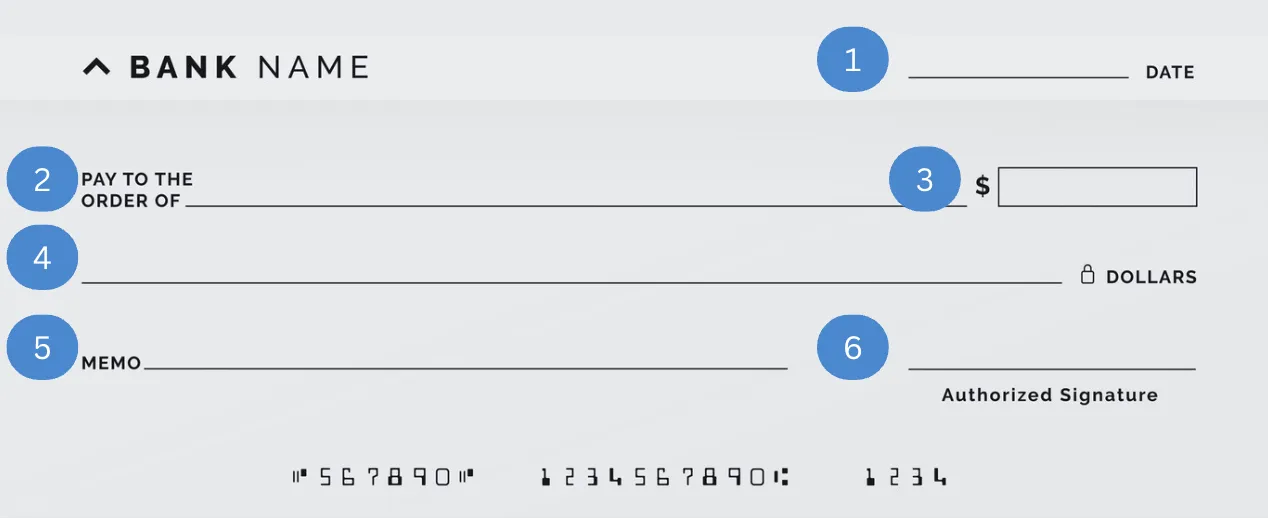
1. Write the Date
Remember that in the United States, the date format is mm/dd/yyyy.
2. Payee’s Name
Write the full name of the person to whom you are issuing the check, exactly as it appears on their official identification.
3. Amount in Numbers
Write the numerical amount clearly.
4. Amount in Words
Write the amount in words, including cents.
5. Add a Memo
You may include a note specifying the reason for the payment.
6. Sign the Check
Sign the check legibly in the space designated for the drawer.
7. Review the Information
Ensure that all information is accurate to avoid issues for the payee when cashing the check.
It is essential to complete checks legibly, without strike-throughs or corrections, as these may invalidate the document.
How to Correctly Write Numbers in Words on a Check
Writing amounts in words may be confusing when dealing with U.S. dollars. The following points should be kept in mind:
- Dollar amounts must be written in full words
- Cents must be written as fractions
- Avoid using dollar symbols or similar notations
- If there is leftover space at the end of the line, draw a line to prevent fraud
- For example, $1,000.75 is written as: One thousand and 75/100 dollars
Cash Checks and Manage Your Money Easily with Comun
As you can see, knowing how to fill out a check is useful for sending and receiving money in the United States. It is a reliable and accessible alternative if you do not have a banking account.
However, issuing and cashing a check can also require significant time and effort. That’s why you can skip the trip to the bank, avoid wasting time or money on gas, and cash your check directly from your phone using Comun—no lines, no questions, no complications.
Discover Comun, the only platform designed to serve the needs of immigrant communities in the United States, with support available in Spanish.
Why Choose Comun?
- Open your account with an official ID from your country
- Access a mobile app specifically designed for immigrants in the U.S.
- Make payments, receive your salary, and manage your finances
- Send money to your loved ones in LATAM for just a $2.99 transfer fee
Frequently Asked Questions
Still have questions about how to fill out a personal check? See our FAQ section.
What if I Make a Mistake Filling Out a Check?
If there are strike-throughs or inconsistencies in the amounts, the check must be voided and a new one used.
How Do I Void a Check?
Write the word VOID in large letters on the front of the check.
What Information Appears on the Back of a Check?
The back of the check contains the endorsement, meaning the payee’s signature for cashing the check.
Immigration
Bank Fees for Immigrants: Common vs. Competitors
8 min de lectura
For immigrants in the U.S., bank fees can amount to hundreds of dollars a year. Común stands out by offering a monthly-fee-free account, no minimum balance, and no SSN requirement. Compared with competitors like Seis and Majority, Común eliminates fixed fees while still providing full services in Spanish.
Choosing the right bank account can save you hundreds of dollars a year. For the immigrant community in the U.S., comparing fees is especially important because many traditional accounts charge fees that directly affect the monthly budget. We analyzed the main options available.
Fees at Traditional Banks
Major U.S. banks such as Bank of America, Chase, and Wells Fargo charge between $6 and $25 per month to maintain a checking account, with minimum balance requirements of $1,500 to $25,000 to avoid those fees. They also charge overdraft fees ($35 per transaction), out-of-network ATM withdrawal fees ($2.50-$5 per withdrawal), and international transfer fees ($25-$45 per wire transfer). For a newly arrived immigrant without credit history or a high balance, these costs add up quickly.
Común: No-Fee Account for Immigrants
Común offers a checking account with no monthly fee, no minimum balance required, and no overdraft penalty in many cases. It does not require an SSN — it accepts a passport, consular ID, and more than 100 Latin American IDs. Customer service is completely in Spanish. Account opening takes minutes from a mobile phone. It includes Zelle compatibility for free, instant domestic transfers. It is the option designed specifically for the Latino community in the U.S.
Majority: Monthly Membership with International Benefits
Majority charges $5.99 per month as a base membership (down from $14.99). In return, it offers unlimited international calls to selected countries, roaming mobile data in more than 50 countries, and discounts at participating merchants. If you actively use international calling and travel benefits, the membership may be worth it. However, if you only need a basic bank account, you are paying for services you may not use.
Seis: Account for Visa Workers
Seis is designed for expats and visa workers in the U.S. It offers an account without an SSN using a visa and passport. Fees vary by plan: the basic account has limits on the number of free transactions. It is more geared toward professionals with work visas (H-1B, L-1) than the immigrant community at large. Its interface is available in multiple languages, including Spanish.
Direct Fee Comparison
In terms of monthly fee, Común charges $0, Majority charges $5.99/month, and traditional banks charge between $6 and $25. The minimum balance requirement is $0 at Común, $0 at Majority, and between $1,500 and $25,000 at traditional banks. Regarding SSN requirement, Común does not require it, Majority does not either, while traditional banks generally do. All three have FDIC or equivalent deposit protection.
Which Option Is Best for You?
If you are looking for the account with the lowest total fees and do not need unlimited international calls, Común is the most economical option. If you travel frequently or call abroad often, Majority’s membership may be worth it. Traditional banks only make sense if you already have the required minimum balance or if you need specific services such as mortgages or investment accounts.
Frequently Asked Questions About Bank Fees
What bank fees are most common in the U.S.?
The most common are: monthly maintenance fee ($6-$25), overdraft fee ($35 per transaction), out-of-network ATM fee ($2.50-$5), and international wire transfer fees ($25-$45). Digital banks like Común eliminate most of these fees.
Can I avoid bank fees at a traditional bank?
Yes, usually by maintaining a monthly minimum balance (which varies by bank and account type), receiving direct payroll deposit, or being a student. However, for immigrants without credit history or with variable income, meeting these requirements can be difficult at first.
Are ATM fees unavoidable?
No. Multiple digital banks offer free access to ATM networks (Allpoint, MoneyPass) with thousands of fee-free locations across the U.S. Común provides access to fee-free ATMs within its network. Outside the network, typical charges are $2.50-$5 from the ATM plus whatever your bank charges.
What is an overdraft fee and how can I avoid it?
An overdraft fee occurs when you spend more money than you have in your account and the bank covers the difference by charging you a penalty (typically $35). You can avoid it by activating low-balance alerts, linking a savings account as backup, or choosing a bank that does not charge overdraft fees — some digital accounts decline the transaction instead of charging a penalty.
Is it worth paying a monthly membership for a bank account?
It depends on the included benefits. A $5.99-$14.99 monthly membership may be worth it if it includes services you actively use (international calling, travel insurance, cashback). If you only need an account for deposits, payments, and transfers, a free account like Común is more cost-effective.

Financial Education
Banking Services for Small Businesses: A Complete Guide
8 min de lectura
Small Businesses
Running a small business involves making numerous financial decisions, and choosing the right banking services is crucial for success. Separating personal assets from business assets in an LLC structure is important for protecting personal property in case of business bankruptcy. Community banks and modern financial platforms offer a variety of services tailored to meet small businesses' unique needs. This complete guide explores the essential banking services for small businesses, highlighting their benefits and how they can support growth and stability.
Understanding Different Types of Small Businesses and Their Banking Needs
Before exploring specific banking services, it's essential to understand the range of small businesses and their unique financial needs. Different types of small businesses — like sole proprietorships, partnerships, LLCs, corporations, nonprofits, home-based businesses, and startups — require tailored banking solutions to support their growth and stability. Keeping business and personal bank accounts separate offers benefits like accurate record-keeping, simplified tax preparation, better financial organization, and enhanced professionalism. By recognizing these differences, you can better appreciate how community banks and financial platforms like Común meet small business owners' diverse needs. This understanding lays the groundwork for selecting the most appropriate banking services to ensure financial health and success.
Business Checking and Savings Accounts
Having a dedicated business checking account is fundamental to managing your finances effectively. It lets you separate personal and business transactions, simplifying bookkeeping and ensuring clear financial records. Many banks offer business checking accounts with features like free transactions, low fees, and online banking capabilities.
When opening a business bank account, gather the required documentation, like your Employer Identification Number (EIN), and decide whether you want to apply online or visit a branch. Understanding the fees and essential steps to open the account is crucial.
A business savings account is also vital. It helps you set aside funds for future investments, emergencies, or growth opportunities. Look for accounts with competitive interest rates and flexible access to your funds.
Business Loans and Lines of Credit
Access to credit is often essential for small business growth. Community banks and other financial institutions provide various loan products, including term loans, lines of credit, and SBA loans. These financial products can help you finance new equipment, expand operations, or cover unexpected expenses.
- Term Loans: Term loans issue lump sums of capital that are repaid over fixed periods of time with predetermined interest rates. They're suited for large, one-time investments, like purchasing equipment or renovating a workspace. The predictable repayment schedule helps with budgeting and long-term planning.
- Lines of Credit: Lines of credit offer flexible borrowing options, letting you draw funds as needed and pay interest only on the amount you use. This flexibility can be a lifesaver during cash flow shortages or when financing immediate needs, like inventory purchases or emergency repairs. Lines of credit are revolving, meaning funds become available again as you repay them, making them an ongoing financial resource.
- SBA Loans: Small Business Administration (SBA) loans are partially government-guaranteed, making them more accessible to small businesses that might not qualify for traditional loans. They offer competitive interest rates and longer repayment terms, which can be particularly beneficial for startups and businesses with less-established credit histories.
Working with a community bank for loans and lines of credit means you benefit from personalized service. Bank representatives can provide tailored advice, helping you choose the right loan product for your needs and guiding you through the application process. This relationship-based approach ensures you get the support needed to grow your business sustainably.

Payment Processing, Payroll, and Cash Flow Management Services
Effective financial operations are critical to any small business's success. This includes processing payments, managing payroll, and ensuring efficient cash flow. Here's how comprehensive banking services can support these needs:
- Merchant Services: Merchant services are crucial for businesses that need to process customer payments. These services include credit card processing, point-of-sale (POS) systems, and online payment gateways. A reliable merchant services provider ensures transactions are processed quickly and securely, improving customer satisfaction and cash flow. By offering seamless payment solutions, banks help businesses deliver a better customer experience and streamline their revenue collection process.
- Payroll Services: Managing payroll can be complex and time-consuming. Many banks offer payroll services to simplify this process. These services handle everything from calculating wages and taxes to direct deposits and payroll tax filing. By outsourcing payroll, businesses can ensure accuracy and compliance with tax regulations, freeing up time to focus on core operations. Efficient payroll management not only saves time, but also helps maintain employee satisfaction by ensuring timely, accurate payments.
- Cash Management: Effective cash management is essential to maintaining healthy cash flow. Banks offer various cash management services, including remote deposit capture, ACH payments, and wire transfers. These tools help businesses efficiently manage incoming and outgoing funds, reducing time spent on manual processes and improving overall financial control. Proper cash management ensures businesses can meet their financial obligations and invest in growth opportunities without experiencing cash shortages.
By integrating these services, banks provide a comprehensive solution that supports small businesses in maintaining smooth, efficient financial operations.
Online and Mobile Banking
In today's digital age, online and mobile banking are indispensable. These services provide convenient access to your accounts, letting you monitor transactions, transfer funds, and pay bills anytime, anywhere.
- Digital Transformation: Community banks are adopting new technologies to improve the customer experience through online and mobile banking platforms. These platforms offer 24/7 access to your accounts, letting you manage your finances from the comfort of home or on the go. You can easily check balances, view transaction history, and transfer funds between accounts.
- Advanced Features: Many online and mobile banking services include features like bill pay, mobile check deposit, and budgeting tools. Bill pay lets you schedule payments to vendors and service providers directly from your account, ensuring timely payments and simplifying your bookkeeping. Mobile check deposit lets you deposit checks by taking a photo with your smartphone, saving trips to the bank.
- Security Measures: Online and mobile banking platforms use advanced security measures to protect customer data and ensure secure transactions. This includes encryption to protect information, multi-factor authentication to verify user identity, and regular security audits to identify and address potential vulnerabilities. Real-time fraud alerts help you quickly detect and respond to suspicious activity, improving your overall financial security.
Open your bank account¹ in 3 minutes with your country's ID²
Common Problems Small Businesses Face With Banking Services and Financial Health
While banking services are crucial to small business operations and growth, many small business owners face various challenges when managing their financial needs. Understanding these issues can help businesses make more informed decisions and find solutions that better fit their requirements.
- High Fees and Hidden Costs: Many small business owners find that banking services come with high fees, including monthly maintenance charges, transaction fees, and penalties for not maintaining a minimum balance. Hidden costs, like wire transfer fees, overdrafts, and additional services, can also add up, putting pressure on the business's cash flow.
- Limited Access to Credit: Securing loans and lines of credit can be particularly challenging for small businesses, especially startups or those with less-established credit histories. Traditional banks often have strict lending criteria, making it difficult for small business owners to access the funds they need for growth and operations.
- Inadequate Customer Service: Small business owners frequently report dissatisfaction with the customer service provided by their banks. Long wait times, lack of personalized service, and insufficient support for small-business-specific issues can hinder a business's ability to effectively manage its finances and resolve issues quickly.
- Complexity and Inaccessibility: Banking services can often be complex and difficult to navigate. Small business owners, who may not have extensive financial knowledge, can find it challenging to understand and use the full range of services offered. Additionally, inaccessibility to bank branches or limited online services can be a significant obstacle for businesses that require frequent banking interactions.
- Security Concerns: With the growing prevalence of cyber threats, security is a major concern for small businesses. Ensuring banking services offer robust security measures to protect sensitive financial data is crucial. However, not all banks offer the same level of security, leaving some businesses vulnerable to fraud and data breaches.
- Integration With Business Tools: Small businesses often use various tools and software to manage their operations, like accounting software and payment processing systems. Issues can arise when banking services don't integrate smoothly with these tools, leading to inefficiencies and increased administrative burden.
- Lack of Financial Education and Support: Many small business owners struggle with financial literacy, which affects their ability to make informed banking and financial decisions. Banks that don't offer enough financial education resources or support can leave business owners feeling overwhelmed and ill-prepared to manage their finances effectively.
- Limited Product Offerings: Some banks may not offer a wide range of products tailored to small businesses' specific needs. This can include specialized loan products, cash management services, or flexible payment solutions. Limited product offerings can restrict a business's ability to find suitable financial tools that support its growth and operational needs.
Understanding these common issues can help small business owners better navigate the challenges they face with banking services. By seeking out community banks or financial platforms like Común that prioritize transparency, customer service, security, and integration with business tools, small businesses can find banking solutions better suited to their needs and supportive of their financial success.
Conclusion:
Choosing the right banking services is essential for your small business's success and growth. From checking and savings accounts to loans, merchant services, and digital banking, the right financial products and support can help you manage your finances effectively and reach your business goals. By partnering with a community bank and leveraging platforms like Común you can access the tools and expertise needed to thrive in today's competitive market.
Integration and Support
Many community banks pride themselves on offering personalized service and financial advice. Building a relationship with your bank can provide valuable insight into managing your finances, accessing credit, and planning for future growth. Take advantage of workshops, seminars, and one-on-one consultations offered by your bank to improve your financial literacy and business knowledge.
For small businesses looking to leverage modern financial technology, integration with platforms like Común can improve their banking experience. Común offers a range of features tailored to small businesses, including instant notifications, secure login, and personalized customer support available seven days a week. By combining the strengths of traditional community banking with the convenience of digital banking, Común provides a comprehensive solution for managing your business finances.
Open your bank account¹ in 3 minutes with your country's ID²
Financial Education
What is ACH and why is it important for sending and receiving money in the U.S.?
8 min de lectura
If you need to make bank transfers in the United States, it will be useful to know what the ACH network is and understand its importance in the country’s banking system.
ACH (Automated Clearing House) is an Automated Clearing House that handles the processing of electronic transfers between U.S. accounts.
It is highly relevant for receiving direct payroll deposits, also known as ACH credits, and for processing recurring payments, due to several advantages compared to the traditional bank network, such as cost reduction and traceability of operations.
According to official sources, in 2024 the ACH payment network processed around 33.6 billion electronic payments, with a value close to $86.2 trillion, underscoring the importance of this method in the U.S. financial system.
On this occasion, we will explain in detail the advantages of this type of transaction and provide some recommendations so you can get the most out of them.
What is ACH and how does it work?
ACH or Automated Clearing House is a network that allows money to move between banks, credit unions, and other financial institutions in the United States, where the use of cash or checks is not necessary, because everything is processed electronically.
The central part of this system is NACHA (National Automated Clearing House Association), which oversees compliance with the rules and ensures transfers are carried out according to established security standards.
It is very likely that in your daily life you have already used the ACH system without noticing it. For example, for:
- Payroll deposits: every time you receive your salary in your bank account.
- Bill payments: to pay basic services such as electricity and internet automatically.
- Transfers between people: when you make an electronic transfer to a friend or to your own accounts.
Differences between ACH payments and other transfer methods
In the United States, there are different systems for moving money. In addition to the ACH network, you can rely on more traditional networks such as wire transfers and checks.
The main difference with other bank transfer systems is that ACH focuses on electronic, secure, and low-cost payments, which take longer than other options that tend to be more expensive; whereas ACH transfers are more suitable for recurring payments and direct deposits.
Below, we show you a comparative table so you can visualize the fundamental differences between ACH payments and other methods.
| ACH | Wire transfer | Check | |
|---|---|---|---|
| Transaction speed | From 1 to 2 business days | From minutes to hours | From 2 to 5 business days |
| Cost per transaction | Free or reduced | Variable, around $25 to $50 USD | There may be issuance costs |
| Geographic availability | Only within the United States | National and international | National and sometimes international |
| Most common use | Payroll payments, bills, transfers between accounts, automatic payments | Transfers of large amounts of urgent money | Traditional payments between people without access to a bank account |
Benefits and some recommendations when using ACH payments
One of the main advantages of ACH payments is the security involved in using this system to transfer money. This is because it is regulated by an organization called NACHA, which verifies each transaction based on financial system regulations, thereby reducing the chances of fraud.
Despite the trust that ACH transfers provide, they also present some limitations.
These are the most common benefits and limitations of the ACH system:
Benefits
- It is the lowest-cost method of transferring money, as transactions are free or have minimal fees
- Transactions are protected by NACHA regulations, which guarantees their security
- It is a system well-suited for processing recurring payments and subscriptions
- It is easy to track operations, because all are recorded in the banking system
Limitations
- Transactions take longer to complete. Generally, they are reflected the next day or up to two business days later
- International money transfers cannot be made, only within the United States
- Some banks may set daily limits, so it is not advisable for moving large amounts of money
If you need an alternative for making recurring payments and direct deposits to a bank account within the United States, the ACH network is a popular alternative due to its security standards and accessibility. But if you are looking for other types of financial services, you can consider more comprehensive options.
At Común we make your ACH payments easier
As you can see, ACH payments are a reliable option for making and receiving money transfers, as long as they are scheduled transactions within the United States and within the limits set by banks.
It is very important to have a reliable and transparent partner to move your money and manage your personal finances in a comprehensive and efficient way.
Meet Común, the platform that integrates the ACH network for direct deposits, payments, and transfers, and uses a service that has clear and visible rates in the mobile app.
Discover everything Común offers you!
- Open your account with a qualified official ID from your country of origin—we accept more than one hundred of them!
- Get a debit card and make purchases easily
- Deposit cash at hundreds of locations near you
- Make international money transfers for a fee starting at $2.99 USD, up to the available limits
- Be part of a service that speaks your language and understands the needs of immigrants working in the United States
Don’t wait any longer—open your account at Común!
Frequently Asked Questions (FAQ)
If you have questions about what ACH is and what it is for, consult our Frequently Asked Questions section.
How long does an ACH transfer take?
Generally, ACH transfers take 1 to 2 business days. It is also possible they are completed the same day if the bank offers the same-day ACH option.
How much does it cost to send money via ACH?
ACH transfers are usually free up to the applicable limits. Some banks charge a minimal fee, around $3 USD. It is a more economical option than a wire transfer, which can cost more than $50 USD.
Is it safe to use ACH for personal payments?
Yes, ACH transfers are regulated by the NACHA system, so they are easily traceable and protected with anti-fraud security measures.
Can I use ACH if I don’t have a bank account in the U.S.?
No, to send money through the ACH system you need an account number from a U.S. bank or credit union. Otherwise, you can resort to more accessible alternatives such as Venmo, PayPal, and Común.
What is an ACH payment?
An ACH payment is a money transfer processed through the ACH system and managed by NACHA (National Automated Clearinghouse Association).
What is a wire transfer?
A wire transfer is a payment method that allows money to be moved from one bank to another electronically, both nationally and internationally.
International Money Transfers
Choosing the right remittance service provider for you
8 min de lectura
Choosing a remittance provider depends on the fee, the exchange rate, delivery speed, and pickup options available in the destination country. With Común, fees start at $2.99 and most transfers arrive within minutes.
Choosing the right remittance service provider for you
Every year, people all over the United States send remittances to support their family and friends back home. These transfers are more than just simple transactions, these are the economic lifeline for them. This is why choosing the right service provider for your remittances based on your needs is key to ensuring you and your loved ones have the support you need.
What is a remittance?
Simply put remittances are money transfers made by people who live and work in one country to family members, friends, or other beneficiaries who are residing in another country.
How do remittances work in the U.S.?
Sending a remittance from the U.S. follows a fairly standard process, these are the steps regardless of who is the remittance service provider:
- Initiate the transfer
The sender chooses a remittance service provider, then choose the payout method that is right for the recipient (such as: cash pickup, bank deposit, transfer, etc.), input the amount to send, and provides the recipient’s details. - Fund the transfer
Transfers typically be funded via debit card, bank account, cash (in-store), or sometimes with credit card. Fees vary widely across different remittance providers. - Exchange rate
This is where many senders lose money without realizing it. Some remittance providers convert USD to the recipient’s local currency using an exchange rate that may include a hidden markup over the mid-market rate. Some remittance service providers don’t charge commissions on the transfer as their business gains come strictly from exchange rates conversion. Understanding the exchange rate’s fees is also important when preparing to send remittances. - Settlement and payout
The money is delivered to the receiver through a partner bank, local agent, cash pickup or digital wallet. Depending on the provider, this can take from minutes to days.
The combination of fees + exchange rate markup is what ultimately determines the real cost of the remittances transfer. Many remittance providers advertise low fees when their business gains are achieved by offering a much weaker exchange rate, which results in reducing the amount your recipient actually receives.
Types of Remittance service providers in the U.S.
The U.S. remittance service provider market is diverse, and providers generally fall into the following categories:
1. Cash-to-Cash Money Transfer Operators (MTOs)
These are the traditional remittance companies with physical locations for in-person payments and cash pickups.
Examples: MoneyGram, Western Union, Walmart (MoneyGram at Walmart).
Pros: Physical accessibility, ideal for people without bank accounts.
Cons: Often higher service fees, a slower process, and often has exchange-rate markups.
2. Traditional Banks and Credit Unions
Some financial institutions offer international wire transfers through SWIFT processes for remittance programs.
Pros: Physical locations, direct bank-to-bank transfers.
Cons: Requires a bank account, usually the most expensive option (as SWIFT processes tend to have costly fees and exchange rates) and it could require longer processing times.
3. Digital-first Transfer Services
These companies operate entirely online or through mobile apps. They can be faster and more transparent.
Examples: Remitly, Felix, Comun, etc.
Pros: Convenience, speed, competitive fees, trackable transfers.
Cons: Limited cash pickup options in some regions.
Key things to look out for when selecting a remittance service provider
Choosing the right remittance service provider can have a significant impact on how much money actually reaches your loved ones. Between varying fees, differences in the exchange rate, documentation requirements, and the growing list of additional services, not all remittance providers offer the same services nor require the same things. Whether you send money home occasionally or on a weekly basis, it is important to choose a remittance provider that maximizes the value of what your loved ones receive.
1. Fees: What you pay up front (and what you don’t see)
Every remittance provider has some form of fees for providing their services, however not all fees are presented the same way (this is why it's important to fully understand the costs associated with your remittance).
What types of fees can potentially exist?
- Transfer fee: A flat or percentage-based amount charged per transaction.
- Payment method fees: Extra charges for using a credit card instead of a bank account.
- Payout method fees: Some providers charge more for cash pick-ups vs. bank deposits.
What could be an unexpected fee?
- For example, exchange rates can differ: Often the exchange rate you find while doing an online search is not the same exchange rate that will be charged by your chosen remittance service provider.
What to look for?
- A tool or calculator showing the final amount the recipient gets before you make the transfer.
- Transparent fee displays before you confirm the transaction.
- Providers that consistently keep both transfer fees and FX markups low.
In many cases, the cheapest provider isn’t the one with the lowest visible fee. It could be the one offering the most competitive exchange rate or a fixed fee that makes sense with your transfer activity. The best service provider will always be one that serves the specific needs you have.
2. Exchange Rates: Why does the exchange rate could play a key role when selecting a remittance service provider?
The exchange rate (or tipo de cambio) used by the provider determines how many pesos, quetzales, soles, or other currency your recipient will receive. When sending money abroad, senders can sometimes focus only on the visible fee (for example, a charge of $3.99 per transfer). But in many cases, the biggest cost can come in the exchange rate. If two companies offer the same fee but one has a weaker exchange rate, your family may receive less money.
For example: A difference of choosing an exchange rate with just 1 mexican peso less per USD could mean that the recipient would get $100 mexican pesos less on a $100 USD remittance.
Understanding the real costs of your remittance is essential to choosing the best remittance provider.
What questions can I ask myself before choosing the right remittances service provider?
- Do they use the mid-market exchange rate or do they add a margin?
- Is the rate fixed at the time you send the money?
- Do they offer promotional rates only for first-time customers?
What could be something to look out for?
- A low fee paired with a weak exchange rate.
- Big differences between their advertised rate and the actual payout amount.
- Exchange rates that fluctuate during the transfer.
Even a small difference in the exchange rate can significantly reduce the final amount your family or friends receive if you send a lot.
3. Documentation and requirements: Keep it simple and secure
Each remittance provider must comply with U.S. financial regulations, but their onboarding requirements vary from service provider to service provider.
What are some common documentation steps or documents needed?
- ID verification (e.g., driver’s license, passport, or state ID).
- Personal information such as date of birth and address.
- Recipient details (full name, destination country, payout method)
- In some cases, proof of funds or additional verification for large amounts
What to look for?
If a provider asks for excessive documentation or makes the process confusing, consider choosing one with smoother compliance systems. For example, some remittance services accept documentation without a United States passport when the sender can demonstrate residency in the United States.
4. Speed and reliability: How fast does the money arrive?
While some people prioritize low cost, others prioritize speed. This is completely impacted by the recipient's needs back home.
Transfer speeds vary by:
- Payment method (debit card vs. bank transfer vs. cash).
- Receiving method (bank deposit vs. mobile wallet vs. cash pickup)
- Provider’s infrastructure and local partnerships.
What can I focus on to ensure my transfer arrives quickly and safely?
- Real-time delivery estimates offered by the service provider.
- Clear differentiation between “instant,” “same-day,” and “next-day”.
- A track record of reliability, not just advertised promises.
When urgency hits speed matters, but always make sure your money is safe.
5. Security and trust: Your money must be safe
Choosing a remittance provider also requires confidence in the company’s ability to protect both your information and funds.
What are some key indicators of a trustworthy service provider?
- Licensing as a money transmitter in the U.S. For example, with Comun your funds in the Comun checking account are held at a FDIC insured partner bank.
- Secure encryption for payments.
- Fraud prevention tools and notifications.
- Positive customer reviews and transparent dispute resolution
To keep your money safe it is important to consider avoiding remittance providers with unclear credentials or repeated complaints about blocked transfers and delayed payouts.
6. Additional Services: Look beyond the transfer
A remittance provider is more than just a money-sending tool. Many now offer value-added features that can save you time or money.
Common additional services
- Bill payments directly for utilities services overseas
- Mobile top-ups.
- Multi-language customer support. Like Comun that is available in Spanish.
- Transaction histories and downloadable receipts.
- Rate alerts to notify you when the exchange rate is favourable.
What to look for?
- Tools that simplify your overall financial support for your family and friends.
- Support available that is adapted to your needs.
Extra services should add convenience not complexity. For example, at Comun you can either use your own debit card to fund the remittance, or open a Comun checking account if you don’t have a debit card.
Choose the right remittance service provider for your needs!
There’s no one-size-fits-all for a remittance service provider. Some people value speed, others care about the costs, while others need in-person services or cash pickup locations. To get the most out of your next transfer, focus on what matters to you whether it’s:
- Transparent fees.
- Competitive exchange rates.
- Simple documentation.
- Useful additional services.
- Strong security and customer support.
Taking a few minutes to compare the options with different service providers can make a significant difference in what your family and friends receive and how you optimize your finances according to your needs.
Comun offers remittances services where you can either use your own debit card, or open a checking account with Comun if you don’t have a debit card. With Comun there are no annual nor monthly fees. Furthermore, Comun’s services are available in Spanish. Download our app or reach out if you’d like to learn more about Comun.
What should I compare between remittance providers?
The transfer fee, the exchange rate offered, how long the money takes to arrive, and whether the recipient can pick it up in cash or only receive it into a bank account.
Why does the exchange rate matter, not just the fee?
Some providers advertise low fees but apply a less favorable exchange rate, which reduces the final amount your family receives. Común shows the exact amount before you confirm.
What delivery options does Común offer?
Bank account deposit or cash pickup at locations like Elektra and Oxxo in Mexico.
Frequently asked questions
What matters more, the fee or the exchange rate?
Both matter — a low fee with a poor exchange rate can end up costing more. Always check the final amount your family will receive.
How much does Común charge to send a remittance?
Starting at $2.99 per transfer, with your first transfer at no cost.
How do I know exactly how much my family will receive?
The app shows you the exact amount in the destination currency before you confirm the transfer.
Do all providers offer cash pickup?
No, it varies by provider and country; Común offers cash pickup at locations like Elektra and Oxxo in Mexico.
Is it faster to send to a bank account or pick up in cash?
Both options usually deliver the money within minutes, depending on the method chosen.
How do I verify a remittance provider is trustworthy?
Check that it's licensed in the states where it operates and that it shows the exchange rate and fees transparently before you confirm the transfer.

International Money Transfers
What banks does Zelle have in Mexico? A Complete Guide to Sending and Receiving Money from the U.S.
8 min de lectura
Have you heard of Zelle? It is a highly popular digital payments platform in the United States. It allows users with accounts at affiliated banks—whether traditional banks, digital banks, or credit unions to easily send and receive money.
In 2024 alone, Zelle reported 151 million enrolled accounts, including individuals and small businesses, reflecting its widespread adoption among U.S. users.
If you need to send money outside the United States easily, for example Mexico, you may be wondering which banks in Mexico support Zelle.
However, this platform does not have agreements with any banks in Mexico, and it is mandatory to have a U.S. banking account to access its services.
Nevertheless, there are other options as efficient as Zelle for sending money to Mexico, such as banking accounts with integrated remittance services and international money transfer applications.
Below, we explain how to receive money through Zelle, the benefits it offers for users in the United States, and the alternatives available for sending money to other countries.
What is Zelle and Is It Possible to Use It in Mexico?
Zelle is a digital payments service that facilitates P2P (peer-to-peer) transfers at certain partner banks within the United States.
It is known for being a fast service, with money transfers reflected within minutes, in addition to being free and having broad coverage throughout the U.S.
It operates through the mobile apps of participating banks, as it is directly integrated with them and only allows money transfers to other Zelle users.
But which bank in Mexico is compatible with Zelle? Unfortunately, it is not possible to send or receive money through this platform in Mexico, as it is not designed for international money transfers and only complies with the technological and regulatory standards of the U.S. financial system.
Which Banks in Mexico Use Zelle? Everything You Need to Know
No bank in Mexico is compatible with Zelle services, meaning that international money transfers cannot be made through this platform.
To use Zelle, you must have a U.S. banking account at one of the affiliated banks.
Here is a list of some of the major banks that support Zelle in the United States:
- Ally Bank
- Bank of America
- BMO Harris Bank
- Capital One
- Chase (JPMorgan Chase)
- Citibank
- Citizens Bank
- Discover Bank
- Fifth Third Bank
- FirstBank
- Frost Bank
- Huntington Bank
- PNC Bank
- Regions Bank
- TD Bank
- Truist Bank
- US Bank
- Wells Fargo
Although Comun is not integrated with Zelle, this does not limit its functionality, as it is a comprehensive personal finance solution that goes beyond just money transfers.
How to Send Money to Mexico with Zelle? Answers and Efficient Alternatives
If you need to send money to Mexico quickly, you will have to choose a different service than Zelle, as it only allows bank transfers between U.S. accounts.
The main reasons Zelle is not available in Mexico are:
- To register with Zelle, you must access the online banking platform of one of the affiliated U.S. banks.
- You also need a U.S. phone number or email address.
- Zelle is not a remittance or international payment platform, so it does not have the capacity to convert currencies or deposit funds in international banks.
- Zelle does not comply with the regulations of financial institutions in Mexico, such as Banxico and the CNBV.
If you have used Zelle to send money within the United States, you are likely looking for a similarly reliable system to make international money transfers.
U.S. Banking Accounts with Integrated Remittance Services
In addition to traditional banks, there are alternatives that offer integrated remittance services to facilitate money transfers to Mexico.
Comun is a platform that meets the needs of many people in the United States, especially the immigrant community, by allowing remittances to be sent to loved ones easily, at very low cost, and through a single mobile application.
International Money Transfer Platforms
Another alternative for making international money transfers is to use platforms specialized in this type of transaction.
Examples include:
- Wise: sends money between accounts using the real time exchange rate.
- Remitly: offers international money transfers with standard or instant delivery.
The advantage of these platforms is that a bank account is not required, and their operation is accessible. However, the money transfer fees vary depending on factors such as the amount to be sent and the exchange rate.
Traditional International Bank Transfers to Mexico
You can also opt to make money transfers through traditional banks, for which you will need the SWIFT code of the receiving institution in Mexico and the recipient’s banking details.
Although it is a secure option, it is also one of the most expensive, due to high fees and intermediaries that increase the cost.
For example, a U.S. bank like Bank of America charges a $45 USD fee plus an average of 1% to 3% exchange rate margin. Therefore, in a money transfer of $1000 USD, the recipient receives approximately 900 pesos MXN less than with specialized international money transfer platforms.
Cash Deposit/Withdrawal Services at Retail Networks
If the recipient does not have access to a banking account, you can choose a service for cash deposit and withdrawal at physical locations.
Some examples include:
- Western Union: global network for bank transfers and cash delivery
- MoneyGram: allows money transfers to banking accounts and in cash
- Comun: also allows quick cash transfers
Beyond Zelle: Comun Simplifies Your Financial Life in the U.S. and Your Money Transfers to Mexico
Although Zelle is a very effective service for sending and receiving money within the United States, it has limitations that prevent international money transfers, making it more suitable for citizens who need to make frequent payments within U.S. territory.
For the immigrant community in the United States, it is important to choose a solution that not only facilitates money transfers but also offers a complete, accessible, and easy-to-use finance platform.
Comun is the platform that will simplify your financial life in the United States, offering the following benefits:
- Open an account easily using your official ID from your country.
- Forget about traditional fees: no opening fee, no monthly maintenance fee, and no minimum balance required.
- No hidden charges for remittances: your first international money transfer is free, and afterward you pay a fee starting at $2.99 USD per transfer, up to the applicable limits.
- Customer support also available in Spanish.
- Integrate your finances and remittance service in a single mobile application, making Comun the most suitable option.
- Obtain a Visa debit card to make purchases in physical stores.
- Access an extensive cash management network and make deposits at thousands of locations near you.
Open your Comun account and access a financial service without complications.
Frequently Asked Questions
Do I need a U.S. account to use Zelle?
Yes, Zelle is only available through the online banking platforms of affiliated U.S. banks.
Can I send money to Mexico via Zelle if I have a U.S. account?
No, no bank in Mexico is compatible with Zelle.
What are the best alternatives to Zelle for sending money to Mexico?
Comun: a fintech platform that provides access to an account and remittance capabilities.
Does Comun offer Zelle for sending money to Mexico?
Comun is not connected to Zelle, but you can send money to Mexico for a fee starting at $2.99 USD per transfer up to the applicable limits.
How do I set Zelle to Spanish?
Since it is a service available through the affiliated bank apps, you must access their settings and select Spanish as the preferred language.
How do I download Zelle?
Go to the Play Store or App Store and search for Zelle. Remember, it is only available in the United States.
Community
What You Need to Open an Account at Comun¹ 4
8 min de lectura
Unmatched Ease of Opening an Account
Opening a checking account with Comun is simple and hassle-free, addressing the barriers to financial exclusion typically faced by the immigrant community. Accepting over 100 forms of identification², including social security numbers from Latin American countries, Comun ensures that immigrants have access to essential banking services. The application process is quick, taking less than 5 minutes, and is free of additional or hidden fees, minimum balance requirements or monthly commissions. This inclusiveness is central to Comun's mission of fostering financial stability and growth.
Mobile Deposit Options
ComunComun offers a convenient mobile deposit feature that allows users to deposit cash at more than 88,000 locations in the United States, including major retailers such as Walgreens, Dollar General and Walmart. This extensive network ensures that users can easily find a deposit location near them, making the process of adding money to their accounts simple and hassle-free.
Traditional Banking: Although many traditional banks offer mobile deposit options, they often restrict these to check deposits through a mobile app. Cash deposits typically require a visit to an ATM or bank branch, which can be less convenient and more time-consuming than Comun's extensive cash deposit network.
Utility in Today's World: In today's fast-paced environment, the flexibility to deposit cash in a wide range of accessible locations is invaluable, especially for individuals who may not have easy access to traditional banking services or who work non-traditional hours when banks are closed.
International Remittances
ComunComun excels in facilitating international remittances⁴, allowing users to send money abroad quickly and with lower fees compared to many traditional banks and remittance services. The process is enhanced with real-time notifications, keeping the sender informed from the moment the money is sent until it is received.
Traditional Banking: Traditional banks generally offer international transfer services, but these can be expensive and slow, with transfers sometimes taking several days to complete. In addition, the fees associated with traditional bank remittances can be significantly higher.
Usefulness in Today's World: In a globalized economy, the ability to send money across borders quickly and affordably is crucial. Many families rely on remittances for financial support, and businesses need efficient ways to handle international transactions. Comun's streamlined and cost-effective service effectively meets these modern demands.
Advance Salary Access
Comun: Comun offers the ability to connect wages to the application and receive payment up to two days in advance³. This feature incurs no additional fees, providing significant relief during financial emergencies or when planning ahead.
Traditional Banking: Some traditional banks have begun to offer similar features, but they are often tied to specific types of accounts or require a minimum balance. The accessibility and ease of use of early access to Comun's salary is not always matched in traditional environments.
Usefulness in Today's World: With the rise of gig economy jobs and irregular pay schedules, having early access to wages can provide a buffer against financial instability. This feature is particularly valuable for those living paycheck to paycheck, offering a cushion that can help avoid overdraft fees and late payments.
Unlike traditional banking institutions, Comun's innovative features are designed to meet the needs of today's diverse and mobile population, particularly benefiting the immigrant community in the U.S. By providing services that offer greater convenience, lower costs and greater accessibility, Comun not only addresses common challenges faced by its users, but also empowers them toward greater financial freedom and stability. As we move toward a more interconnected and fast-paced world, the importance of responsive and inclusive financial services continues to grow, something Comun is uniquely positioned to offer.
Robust Security and Customer Support
Security and customer support are paramount at Comun. With FDIC-insured accounts and Visa protection on virtual Visa debit card transactions, Comun customers can manage their funds with confidence. Innovative security features such as biometric logins and instant transaction notifications keep your money safe. In addition, Comun offers 24/7 customer support in English and Spanish, ensuring that help is always available in your preferred language.
Commitment to Zero Fees and Upward Mobility
Comun stands out not only for offering zero fees for account opening, monthly maintenance or minimum balances, but also for its commitment to helping its users move up the financial ladder. Comun acts as a financial partner, supporting financial transactions without the burden of excessive fees. This commitment aligns with the goal of enabling upward mobility for immigrants, who contribute significantly to the U.S. economy.
Customized Features and Benefits
Comun goes beyond traditional financial services by offering features designed to meet the unique needs of the immigrant community. Users can send money abroad with low or no fees, deposit cash at more than 88,000 locations nationwide, including free ATM withdrawals, and connect their accounts to popular payment apps such as Zelle, CashApp and Venmo. Comun's platform also allows customers to receive their paychecks up to two days early through direct deposit, further enhancing their financial flexibility and stability.
Conclusion
Comun is not just a financial services provider, but a platform dedicated to transforming the banking experience for immigrants in the U.S. With its user-focused design, commitment to financial freedom and robust features, Comun is destined to become a vital tool for achieving financial stability and growth for its users. Whether you are looking to manage your daily finances or send money to loved ones abroad quickly and securely, Comun offers a reliable, inclusive and efficient banking solution.
Foundational Moment: Did you know?
Founded by entrepreneurs Mark Selcow and Andres Santos in New York, Comun was built to empower families and enable upward mobility, particularly for the immigrant family. The company has garnered significant investment from prominent firms such as Costanoa Ventures, FJ Labs and South Park Commons, underscoring the tremendous opportunity to serve the financial needs of immigrant families and improve the lives of every individual.






Thousands of immigrants are already achieving more with their money. You can too.
Comun is a financial technology company and not a bank. Banking services are provided by Community Federal Savings Bank; Member FDIC. The Comun Visa® Debit Card is issued by Community Federal Savings Bank, pursuant to a license from Visa U.S.A Inc. and may be used everywhere Visa Cards are accepted.
Comun is a fintech company and not a bank or licensed money transmitter.
* Results may vary. For a complete list of eligible IDs and application requirements, follow this link.
^ No minimums, no maintenance fees. ATM or transfer fees may apply. See app for fee details.
‡ Direct deposit funds are typically available when we receive the payment file, up to two days before the scheduled payment date. This early availability is not guaranteed.
** A service provided by Service UniTeller, Inc. Service UniTeller, Inc. is licensed in all states that require a license. Remittance fees start at $2.99 but may vary. Please check the app for more details. Comun Inc. may earn revenue from the conversion of foreign currencies.
† Funds in your account are FDIC insured up to $250,000 by ownership category through Community Federal Savings Bank (CFSB), Member FDIC, in the event CFSB fails.