Community
Learn how to manage your money, send money home with confidence, and build a secure financial future for you and your family.

Financial Education
Digital wallet: what it is, how it works, and how to use it in the U.S.
8 min read

Olivia Rhye
20 Jan 2024
If you’re looking for a safe, simple way to manage your money, a digital wallet could be the ideal complement to your finances. It’s a mobile application that lets you bring together your cards and other financial products in one place.
In recent years, it has become a key tool for digital money management due to its convenience and security.
Below we explain in detail what a digital wallet is, common uses, advantages, and some examples of the most popular digital wallets in the United States.
What is a digital wallet and how does it work?
A digital wallet is an application for Android- or iOS-compatible devices that securely stores credit or debit card details, or bank account information and lets you access it quickly and safely to make digital payments and other transactions.
How it works is simple: you register your banking information in the app, where it’s encrypted to keep it secure and prevent third-party access. This lets you make electronic payments in seconds through several methods—scanning a QR code, using a smartphone with NFC technology, or selecting the digital wallet at checkout for online purchases.
There is a wide variety of digital wallets in the United States; the most popular include Apple Pay, Google Wallet, Samsung Pay, and PayPal.
Most common uses of a digital wallet
A digital wallet simplifies day-to-day transactions for the thousands of immigrants living in the United States. These are the most common uses of this type of tool:
Pay in-store and online
Using a digital wallet in a store is easy as long as the merchant accepts contactless payments. In that case, simply enable NFC on your phone and hold it near the payment terminal. The payment will process automatically without entering additional information.
To pay online, first make sure you’ve added your bank accounts to the wallet’s mobile app. Then go to the product or service page and choose your digital wallet as the payment option. You may be prompted to enter an authentication factor for security.
Send money to family and friends
Another common use of digital wallets—especially among immigrant users in the U.S.—is sending remittances quickly to their home countries. Depending on the app, these can be less costly than traditional banks.
Store cards and documents
A digital wallet is also a handy organizational tool for keeping not only financial products like debit and credit cards, but also other digital items such as transit cards, tickets, and discount coupons.
Manage your money better
These applications also make it easy to keep your finances organized, create monthly budgets, and stay on top of day-to-day transactions.
4 advantages of using a digital wallet
Managing your financial products with a digital wallet has several notable benefits that can completely change how you make digital payments.
1. Security: lower theft risk compared with carrying cash.
Carrying cash is always riskier than digital options because of loss or theft. A digital wallet removes the need to depend on cash and streamlines payments online and in physical stores.
In addition, your personal information is encrypted so only you can access it. You can also add app-level security like biometrics and passcodes, facial recognition, and Touch ID.
2. Convenience: everything is on your phone, without carrying multiple cards.
Beyond avoiding cash, a digital wallet also means you don’t need to carry physical cards everywhere—you can add your accounts in the digital wallet app and pay from your mobile device.
3. Financial inclusion: ideal for immigrants without easy access to traditional banks.
A common challenge for immigrants newly arrived in the United States is meeting the requirements to open a traditional bank account. In contrast, a digital account would be far more accessible option for everyday essentials like receiving money, paying bills, and sending remittances to Latin America quickly and easily.
4. Financial control: lets you review expenses and organize money more clearly.
With a digital account, you can more easily track your money by enabling notifications on your phone to stay aware of every payment.
It can also log all your transactions and help maintain a monthly budget to ensure your money covers your U.S. expenses while supporting family in Latin America.
Examples of popular digital wallets in the United States
- Apple Pay
This is Apple’s official payments service and is built into all its products by default, such as iPhone and Apple Watch. One major advantage is that more than 85% of merchants in the United States accept it.
Its wide acceptance makes it very convenient for immigrants, whether for everyday shopping or paying monthly bills.
It also offers Apple Cash, which functions like a digital card and allows sending and receiving money, but it’s only available in the United States.
- Google Wallet
This is a virtual wallet available to Android mobile users. It’s a more complete option than its predecessor Google Pay, with features such as tap-to-pay.
It’s very useful for immigrants because it also stores official documents like licenses and various IDs.
- PayPal
PayPal is one of the most popular digital wallets not only in the U.S. but worldwide. It lets you store payment information easily, and sending money to other countries is straightforward thanks to its wide coverage.
- Cash App
Cash App is an application that lets registered users send and receive money. It may be a suitable alternative if you need a debit card and ATM withdrawals.
Manage your money as an immigrant with Común
In this article we showed you that a digital wallet is an application to store all your financial information in one place, plus the advantages, how they work, and the most popular brands in the United States.
If you want to simplify your finances, get to know Común, the platform that offers you:
- A checking account with clear, competitive fees.
- A debit card you can link to a digital wallet.
- Fast money transfers with affordable fees.
- Mobile banking available in Spanish and English
Open your Común account today with official ID from your country and start using your digital wallet to manage your money in the U.S.
Frequently asked questions
If you still have questions, see the section below.
What is the most reliable digital wallet?
You can choose options like Apple Pay, Google Wallet, and PayPal, as they have sufficient reputation for handling personal information.
How do I activate a digital wallet?
Download the application via Google Play or the App Store, create an account, add your cards, and complete the necessary verification.
Is it safe to use a digital wallet?
Yes, because they use encryption and tokenization to keep your information secure.
Financial Education
Digital wallet: what it is, how it works, and how to use it in the U.S.
8 min read

November 28, 2025
If you’re looking for a safe, simple way to manage your money, a digital wallet could be the ideal complement to your finances. It’s a mobile application that lets you bring together your cards and other financial products in one place.
In recent years, it has become a key tool for digital money management due to its convenience and security.
Below we explain in detail what a digital wallet is, common uses, advantages, and some examples of the most popular digital wallets in the United States.
What is a digital wallet and how does it work?
A digital wallet is an application for Android- or iOS-compatible devices that securely stores credit or debit card details, or bank account information and lets you access it quickly and safely to make digital payments and other transactions.
How it works is simple: you register your banking information in the app, where it’s encrypted to keep it secure and prevent third-party access. This lets you make electronic payments in seconds through several methods—scanning a QR code, using a smartphone with NFC technology, or selecting the digital wallet at checkout for online purchases.
There is a wide variety of digital wallets in the United States; the most popular include Apple Pay, Google Wallet, Samsung Pay, and PayPal.
Most common uses of a digital wallet
A digital wallet simplifies day-to-day transactions for the thousands of immigrants living in the United States. These are the most common uses of this type of tool:
Pay in-store and online
Using a digital wallet in a store is easy as long as the merchant accepts contactless payments. In that case, simply enable NFC on your phone and hold it near the payment terminal. The payment will process automatically without entering additional information.
To pay online, first make sure you’ve added your bank accounts to the wallet’s mobile app. Then go to the product or service page and choose your digital wallet as the payment option. You may be prompted to enter an authentication factor for security.
Send money to family and friends
Another common use of digital wallets—especially among immigrant users in the U.S.—is sending remittances quickly to their home countries. Depending on the app, these can be less costly than traditional banks.
Store cards and documents
A digital wallet is also a handy organizational tool for keeping not only financial products like debit and credit cards, but also other digital items such as transit cards, tickets, and discount coupons.
Manage your money better
These applications also make it easy to keep your finances organized, create monthly budgets, and stay on top of day-to-day transactions.
4 advantages of using a digital wallet
Managing your financial products with a digital wallet has several notable benefits that can completely change how you make digital payments.
1. Security: lower theft risk compared with carrying cash.
Carrying cash is always riskier than digital options because of loss or theft. A digital wallet removes the need to depend on cash and streamlines payments online and in physical stores.
In addition, your personal information is encrypted so only you can access it. You can also add app-level security like biometrics and passcodes, facial recognition, and Touch ID.
2. Convenience: everything is on your phone, without carrying multiple cards.
Beyond avoiding cash, a digital wallet also means you don’t need to carry physical cards everywhere—you can add your accounts in the digital wallet app and pay from your mobile device.
3. Financial inclusion: ideal for immigrants without easy access to traditional banks.
A common challenge for immigrants newly arrived in the United States is meeting the requirements to open a traditional bank account. In contrast, a digital account would be far more accessible option for everyday essentials like receiving money, paying bills, and sending remittances to Latin America quickly and easily.
4. Financial control: lets you review expenses and organize money more clearly.
With a digital account, you can more easily track your money by enabling notifications on your phone to stay aware of every payment.
It can also log all your transactions and help maintain a monthly budget to ensure your money covers your U.S. expenses while supporting family in Latin America.
Examples of popular digital wallets in the United States
- Apple Pay
This is Apple’s official payments service and is built into all its products by default, such as iPhone and Apple Watch. One major advantage is that more than 85% of merchants in the United States accept it.
Its wide acceptance makes it very convenient for immigrants, whether for everyday shopping or paying monthly bills.
It also offers Apple Cash, which functions like a digital card and allows sending and receiving money, but it’s only available in the United States.
- Google Wallet
This is a virtual wallet available to Android mobile users. It’s a more complete option than its predecessor Google Pay, with features such as tap-to-pay.
It’s very useful for immigrants because it also stores official documents like licenses and various IDs.
- PayPal
PayPal is one of the most popular digital wallets not only in the U.S. but worldwide. It lets you store payment information easily, and sending money to other countries is straightforward thanks to its wide coverage.
- Cash App
Cash App is an application that lets registered users send and receive money. It may be a suitable alternative if you need a debit card and ATM withdrawals.
Manage your money as an immigrant with Común
In this article we showed you that a digital wallet is an application to store all your financial information in one place, plus the advantages, how they work, and the most popular brands in the United States.
If you want to simplify your finances, get to know Común, the platform that offers you:
- A checking account with clear, competitive fees.
- A debit card you can link to a digital wallet.
- Fast money transfers with affordable fees.
- Mobile banking available in Spanish and English
Open your Común account today with official ID from your country and start using your digital wallet to manage your money in the U.S.
Frequently asked questions
If you still have questions, see the section below.
What is the most reliable digital wallet?
You can choose options like Apple Pay, Google Wallet, and PayPal, as they have sufficient reputation for handling personal information.
How do I activate a digital wallet?
Download the application via Google Play or the App Store, create an account, add your cards, and complete the necessary verification.
Is it safe to use a digital wallet?
Yes, because they use encryption and tokenization to keep your information secure.

Living in the United States
Learn about the 11 U.S. holidays and how they affect you
8 min read
November 28, 2025
Starting a life in the United States means adapting to a new culture and customs that can interfere with everyday activities such as going to school, working, and carrying out important banking transactions.
Knowing the month-by-month celebrations in the United States lets you plan ahead—especially if you need to send remittances to your home country, plan trips, or make important payments.
This guide explains the main U.S. holidays, the differences between state and federal holidays, and how they affect work, school, and banking hours.
What are holidays in the United States?
U.S. holidays are special dates commemorating historical or cultural events. They may be observed at the federal or state level.
- Federal holidays
These are declared by the federal government. On these dates, banks, government offices, and federal services close. One example is Independence Day.
- State holidays
These are declared by state governments and apply only within that state.
Labor laws do not mandate overtime or premium pay on holidays, but some employers offer holiday pay.
Time off is only mandatory for federal employees; in the private sector it depends entirely on the employer. In some industries—such as tourism and hospitality—it’s common to work on holidays, with compensation determined by the company.
List of national holidays in 2025
There are 11 federal holidays in the United States to keep in mind. On these dates, banks and government offices typically close. This can delay remittance transfers.
Be sure to schedule transfers in advance so they don’t overlap with U.S. holidays and your money arrives without issues.
New Year’s Day – January 1
Celebration of the start of the year. Banks and public offices remain closed.
Martin Luther King Jr. Day – third Monday in January
Honors the memory of civil-rights leader Martin Luther King Jr.
Presidents Day – third Monday in February
Commemoration honoring George Washington and all U.S. presidents.
Memorial Day – last Monday in May
Commemorates members of the Armed Forces who died in service.
Juneteenth – June 19
Marks the end of slavery in the United States.
Independence Day – July 4
Celebration of the Declaration of Independence. One of the most important holidays.
Labor Day – first Monday in September
Celebration dedicated to the nation’s workers.
Columbus Day – second Monday in October
Marks Christopher Columbus’s arrival in the Americas in 1492.
Veterans Day – November 11
Commemoration recognizing all who served in the Armed Forces.
Thanksgiving Day – fourth Thursday in November
A family tradition dedicated to giving thanks for the harvest and the good moments of the year.
Christmas Day – December 25
The birth of Jesus; a widely observed religious and cultural celebration.
How holidays impact immigrants and families
Knowing what’s celebrated today in the United States helps you plan your day and be aware of possible workplace benefits you might be eligible for.
Work:
If you work in sectors such as hospitality, restaurants, or cleaning, you may have to work on holidays. Ask your employer whether double pay, shift changes, or other compensation applies.
Finances:
On federal holidays, banks and post offices close, which can delay financial operations such as deposits and international transfers. If you need to send money to family, do so before these dates.
Schools and procedures:
Public and private schools close on federal holidays. USCIS staff also do not work, so immigration processes are delayed.
Tips to organize your money and time
Don’t let holidays catch you off guard. Set aside a monthly budget for travel, daily expenses, and other activities.
Keep a payment calendar that accounts for holidays so you can make payments without setbacks.
Culturally important celebrations in the U.S. for immigrants
Beyond official dates, there are others that matter culturally to immigrant communities. They may not significantly affect institutions or businesses, but they’re still worth noting if you plan to budget for a celebration.
Battle of Puebla – May 5
A date that has also gained relevance among U.S. residents. Although many mistakenly link it to Mexico’s Independence Day, it actually commemorates victory over the French army.
Mother’s Day
In the U.S. it’s observed on the second Sunday in May, though immigrant communities may choose the customary date in their countries of origin.
Father’s Day
Observed on the third Sunday in June, though it can vary. It’s a day of family togetherness for many immigrants.
Halloween – October 31
A tradition that crosses borders; it’s very popular among immigrant communities who enjoy dressing up and having fun with kids.
Valentine’s Day – February 14
A popular holiday to celebrate love and friendship, spend time together, and give and receive gifts.
Day of the Dead – November 1–2
A Mexican tradition honoring the departed through altars, food, flowers, and music.
Organize your finances on holidays and send your money with Común
This article outlined the U.S. holidays and how they affect public and private operating hours.
Holidays shouldn’t keep you from meeting your financial obligations. Make sure you have an ally to help you plan your budget.
Get to know all the benefits of Común!
Transfer money from the United States to Latin America with clear, competitive fees, up to applicable limits (check terms in Común’s mobile app).
Discover the platform designed for immigrants—with shared interests, language, and goals: bringing families closer through accessible, secure financial solutions.
Open your Común checking account today and manage your money in the U.S. safely and without complications.
Frequently Asked Questions (FAQ)
If you still have questions, see this section.
What happens with banks and remittances on holidays?
On national holidays, banks and post offices are closed. This means money transfers can take 1–2 extra days to complete.
Do all workers receive extra pay on holidays?
The law doesn’t require double pay on holidays, but some employers offer this benefit.
What are the most important holidays for the immigrant community?
For immigrant communities, the most relevant holidays include Christmas, Mother’s Day, and the Day of the Dead, among others.

Immigration
What is an immigration sponsor? 4 requirements to be a sponsor in the U.S.
8 min read
November 28, 2025
For immigrants in the United States, finding a legal way to remain in the country indefinitely can be a long and confusing process. That’s why it’s important to know all the alternatives to help pave the way toward lawful permanent residence.
Getting a sponsor is a path that can help you regularize your immigration status in the United States. A sponsor is a person who assumes legal and financial responsibility for someone who is in the process of regularizing their documents in the country.
Below, we explain in detail what a sponsor is, the income table to sponsor a family member in 2025, and all the forms and documents needed to formalize this process.
What does it mean to be a sponsor in the United States?
In simple terms, a sponsor is a person who takes on legal and financial sponsorship of someone who is in the process of obtaining an immigrant visa or a Green Card.
It’s a measure by which the U.S. Government, through USCIS, ensures the sponsored person will not become a public charge, since sponsorship entails the sponsor’s financial and legal responsibility.
During this process, some terms can be confused and are worth clarifying—namely sponsor and petitioner.
- Petitioner: the person who files the initial application with USCIS.
- Sponsor: the person who provides financial and legal support for the immigrant. If the petitioner doesn’t meet the requirements, a joint sponsor can be added.
On the other hand, there are two relevant forms you should know during this process.
- Form I-864 (Affidavit of Support):
This form is generally used for permanent resident visas, employment-based visas, or family-based Green Cards for immediate relatives.
- Form I-134 (Declaration of Financial Support):
This form is required for temporary or nonimmigrant visas—for example, a tourist or fiancé(e) visa.
4 requirements to be a sponsor in the U.S.
These are the requirements your sponsor must meet to proceed:
- Be a U.S. citizen or lawful permanent resident.
- Be at least 18 years old.
- Live in the United States (have a domicile there).
- Meet the minimum income requirements.
Regarding income requirements, sponsors must meet the minimums set by the Department of Health and Human Services (HHS), which requires household income above 125% of the federal poverty guideline.
Household size includes the sponsor, their spouse, dependent children, and the sponsored immigrant.
Below is a comparative table with the minimum figures by household size.
| Household size | For sponsors on active duty in the U.S. Armed Forces sponsoring a spouse or child | All other sponsors | Alaska | Hawaii |
|---|---|---|---|---|
| 2 | $21,150 | $26,437 | $33,037 | $30,400 |
| 3 | $26,650 | $33,312 | $41,637 | $38,312 |
| 4 | $32,150 | $40,187 | $50,237 | $46,225 |
| 5 | $37,650 | $47,062 | $58,837 | $54,137 |
| 6 | $43,150 | $53,937 | $67,437 | $62,050 |
| 7 | $48,650 | $60,812 | $76,037 | $69,962 |
| 8 | $54,150 | $67,687 | $84,637 | $77,875 |
| Each additional person | $5,500 | $6,875 | $8,600 | $7,913 |
If the sponsor does not meet these minimum incomes, you can turn to a joint sponsor or a household member.
It’s also important to consider some special cases.
- Sponsors with TPS (Temporary Protected Status): cannot be sponsors because they are not permanent residents.
- Humanitarian parole: not eligible to be sponsors unless they obtain permanent residence.
- Armed Forces: U.S. citizens serving in the Armed Forces have more flexible income minimums to sponsor immediate relatives.
What are a sponsor’s responsibilities and how long do they last?
To formalize sponsorship, the sponsor must sign an affidavit committing to provide legal and financial support.
Sponsor’s legal obligations
By signing the affidavit of support, the sponsor commits to providing the financial resources necessary so the sponsored person does not become a public charge.
If the immigrant receives public assistance, such as Medicaid, the U.S. Government may require the sponsor to reimburse those funds.
Duration of sponsorship
Sponsorship has no fixed duration, but it can end when:
- The immigrant adjusts status and obtains permanent residence.
- The immigrant accrues 40 quarters of work and proves it to Social Security.
- The immigrant permanently leaves the country.
Cases where sponsorship does not end
In marriage-based sponsorship, divorce does not terminate the sponsor’s obligations. The same applies if the parties stop living in the same household.
5 documents and forms you need to be a sponsor
Finally, it’s essential to know the documents needed to formalize sponsorship and to assess your sponsor’s eligibility.
Form I-864 or I-134, as applicable
This form serves as an affidavit in which the sponsor commits to meeting their economic and legal obligations to the sponsored person.
There is no fee to file these forms. Unless filed from outside the U.S. through the National Visa Center, in which case Form I-864 costs $120.
Proof of citizenship or permanent residence
The sponsor must present documents proving U.S. citizenship or lawful permanent residence—for example, a passport, Green Card copy, or naturalization certificate.
Tax returns or proof of income
You must provide the most recent annual tax return (Form 1040) and proof of income.
Employer letter, if needed
An employer letter may also be required to confirm the sponsor’s position, salary, and length of employment.
Proof of U.S. domicile
The sponsor must show a U.S. domicile and residence there. Deeds or utility bills can serve as proof.
Organize your finances in the U.S. with Común
Throughout this article, we reviewed in detail what a sponsor is—a person who assumes legal and financial responsibility for an immigrant—as well as the minimum income table and required documents.
Even with a sponsor’s support, it’s important to continue legalizing your situation in the country and to obtain steady work and income.
To that end, it’s vital to manage money well and have fair financial services suited to you.
Discover all the benefits of Común, the financial platform created for immigrants!
- Open your account with qualifying official ID from your country of origin.
- Use the mobile app available in Spanish, transparent and easy to understand.
- Send remittances to LATAM countries with clear and competitive fees.
Open your Común account today and organize your personal finances with clarity and security.
Frequently Asked Questions (FAQ)
If you still have questions, consult our FAQs.
Can I be a sponsor if I don’t have sufficient income?
If your income does not reach 125% of the Poverty Guidelines, you can look for a joint sponsor who must meet the same requirements—per the Federal Poverty Guidelines published annually by the Department of Health and Human Services (HHS).
What happens if the immigrant receives public benefits?
The primary sponsor and joint sponsor are responsible for reimbursing the Government for any public assistance the sponsored immigrant receives.

Living in the United States
Requirements to rent a house in the United States if you are an immigrant
8 min read
November 28, 2025
One of the main challenges immigrants face in the U.S. is formalizing a lease, since property owners often require a series of documents that can turn the search process into a maze.
Examples might include credit scores, proof of income, background checks, and references that many immigrants do not yet have. However, there are proven strategies that make it easier for newcomers to obtain a lease in the United States.
If this sounds familiar, keep reading—we’ll explain in detail how to prepare to rent safely and avoid the typical obstacles immigrants encounter when establishing themselves in the U.S.
What do you need to rent in the United States?
Before you start searching for your next home, you should keep in mind the key requirements for renting an apartment in the U.S. These help the landlord confirm that the tenant is reliable and has sufficient financial solvency to pay rent on time and in full.
Below are the most requested items to sign a lease:
Personal identification
It’s very important to verify your legal identity. Landlords or real estate agents may ask for one or more of the following documents:
- Valid passport.
- Visa or resident card.
- Driver’s license.
- Social Security Number (SSN) or ITIN.
Financial solvency
To demonstrate you have sufficient solvency to cover the monthly rent, you can provide several documents, such as:
- Proof of income, such as pay stubs, tax returns, or bank statements.
- Employer letter or employment contract.
- It is also common to be asked for a security deposit equal to one month’s rent, which serves as a guarantee in case of damage to the property.
Credit history
Reviewing credit history is a crucial step for landlords and agents because it provides reliable evidence of the applicant’s financial behavior.
If you’ve been in the United States for a short time, you may not have a credit history. This article explains simple ways to start building one.
In that case, you may be asked for a credit report from an official agency or a signed authorization to check your credit score.
Local guarantors
If you lack sufficient evidence of solvency, you may be asked for a guarantor, who serves as a backstop if you cannot meet the lease terms.
Such a guarantor must reside in the United States and provide the following documents:
- Government-issued ID.
- Proof of income.
- Good credit history.
Renting in the United States: Process and leasing options for immigrants
Housing options in the U.S. are broad and adapt to all lifestyles, budgets, and immigration statuses.
Rental options you can find in the United States include:
- Furnished houses or apartments.
- Unfurnished houses or apartments.
- Individual rental.
- Shared rental.
Regardless of the type of property you’re looking for, we recommend following these steps to rent a house or apartment.
1. Explore and select the property
Take the time to review all property details and alternatives in different neighborhoods and cities. We recommend searching trusted sites such as Zillow, Realtor, or Apartments.com. Also ask friends or acquaintances who have gone through the process for referrals.
2. Evaluate the offer conditions
Carefully analyze the lease terms, such as price, property description, requirements, and restrictions.
3. Submit your rental application
When you find a home that meets your expectations, submit a rental application with your personal information, references, and authorization to check your credit history.
4. Visit the property
Before signing any contract or paying a deposit, it is essential to visit the property to ensure it matches the listing and is free from maintenance-related deterioration.
5. Submit the required documentation
If after the visit you are still interested in renting the property, the next step is to provide the previously mentioned documents, such as proof of income and government ID.
6. Review and sign the lease
The landlord will review your application and verify your documents. If approved, the final step is agreeing to and signing the lease terms, which set the rental conditions such as duration, cost, rules, and conditions for refunding the security deposit, among others.
Three key tips for a safe, hassle-free first rental
Finding your first rental in the U.S. can be a major challenge due to the number of requirements involved.
Below are some useful tips to help your search pay off as soon as possible.
Research the housing market
Use rental websites to research which areas are more affordable or best fit your lifestyle, ensuring you can cover not only rent but also day-to-day expenses.
Use multiple search methods
Don’t limit yourself to a single method. Alternate among websites, mobile applications, classifieds, and even the help of a real estate agent.
Avoid scams
It’s essential to stay alert to potential scams. Apply these tips and stay safe:
- Make sure the agent or brokerage is registered and has reliable references.
- Do not make any payment before personally visiting the property and having a contract formalized before a notary.
- Use only recognized platforms and portals.
- Be wary of last-minute offers or listings that seem “too good to be true.”
- Avoid using cash when finalizing the rental.
- Review each clause of the contract in detail before signing.
Considerations before choosing a home
Before choosing a house or apartment to rent, it’s important to consider several factors, for example:
- Location:
Location is one of the most relevant aspects when choosing a home. Beyond the city, consider the distance to your workplace and other frequent destinations.
- Neighborhood:
Research the type of neighborhood, safety, infrastructure, recreational areas, community profile, and any other information you consider significant for making a decision.
- Rental cost:
Make sure the rent fits within your means. Create a budget that includes your monthly income and expenses.
Below are tenants’ rights and obligations in the United States.
Payments and deposits
The tenant must pay the monthly rent and the agreed deposit on time. Both payments can be made by bank transfer, bank deposit, or check.
Maintenance and repairs
The landlord must ensure the property is in optimal condition and has all utilities. In turn, the tenant agrees to take care of the premises, keep them clean, and report any defects requiring maintenance.
Tenant legal protections
Tenants are protected by U.S. law against unfair practices, such as:
Refund of the security deposit if conditions are met.
Protection against unjustified or no-notice eviction.
Make your rent payments online safely and conveniently with Común
Renting your first home in the United States doesn’t have to be overwhelming. Take time to learn the most common requirements and consider alternative solutions like those in this article. This way, you’ll see it is possible to open the door to decent housing.
With the right preparation and tools, the rental process becomes much simpler and more accessible.
Rely on Común, a financial platform that addresses day-to-day needs in the United States, with an intuitive mobile app, so opening an account is quick and easy using qualifying official identification from your country of origin. It also makes it simple to send remittances up to the applicable limits to LATAM countries, so your family receives more, with competitive fees.
Discover Común, an excellent option dedicated to serving immigrant communities in the United States, with support available in Spanish.
Open your checking account today with a partner that understands your needs as an immigrant!
Frequently Asked Questions
If you still have questions, check our FAQs.
How much does rent cost in the United States?
The national average for rental housing is around $2,100 USD.
Where is it cheaper to live in the United States?
Cities such as Laredo, Texas, and Toledo, Ohio report the most affordable living costs.

Financial Education
Which one is the best traditional bank in the United States? A Practical Guide for Immigrants
8 min read
November 28, 2025
Having a bank account is an essential step for people arriving to work in the United States, since it makes it easier for them to manage their salaries and adapt to the country’s financial system.
This can be a complicated process, since in the United States there is a wide variety of financial institutions, such as traditional banks with hundreds of branches, digital banks, and credit unions.
Among the most well-known are Bank of America, Capital One, and Wells Fargo, which enjoy significant recognition in the country. However, it is not possible to name one as the best: this depends on the specific needs of users.
For example, immigrants in the United States look to prioritize ease of account opening, as well as the ability to send remittances to their loved ones.
In this article, we will explain which are the best banks in the U.S., their features, requirements, and everything you need to know before opening an account.
The 6 Best Banks in the United States in 2025
Below, we present a comparative table of the best banks in the U.S.
| Bank | Strengths | For Whom It Is Ideal |
|---|---|---|
| JP Morgan | Largest network of branches and ATMs, rewards available on credit card | People who want easy access to physical branches, along with a variety of financial products |
| Bank of America | Over 3,000 branches, bilingual service in Spanish and English | For those who prefer to communicate in Spanish and seek a bank with a solid reputation |
| Wells Fargo | Wide branch coverage, express international transfers | People looking for reliable options to send remittances |
| Citibank | International presence, global focus | Those who need to make frequent international money transfers |
| Capital One | No monthly fees and no minimum balance | Those seeking more accessible and digital options |
| PNC | Over 2,300 branches, mobile app for financial management | Those seeking to improve their personal financial management |
How to Choose the Best Bank to Open an Account
If you are about to start your financial life in the United States, choosing a bank where you open an account is a very important decision. Each has its own requirements and benefits, so you should look for the one that best fits your expectations.
These are the most relevant criteria you should analyze before choosing the best option for you.
Accepted Identification
Many banks request the SSN (Social Security Number) to process a bank account, while others accept alternatives such as the ITIN or a passport.
Support and Availability
Although some banks do offer support in other language, like Spanish, not all of them do. Verify that the institution you choose can clearly answer your questions.
Cash Deposits and Withdrawals
If you frequently receive cash payments, it is important that your bank allows you to make cash deposits at branches near you and without fees.
Transfers and Remittances
Sending remittances is a crucial issue for immigrants, so you should review the fees for international money transfers. These are often more expensive in traditional banks due to intermediaries and exchange rates.
Digital Security
Verify that the bank has security measures in digital banking, as well as backing from official institutions such as the FDIC.
5 Digital Finance Platforms in the United States
Beyond traditional banks, you can also turn to digital alternatives, which tend to be more accessible.
Digital banks or financial platforms are institutions that operate online through mobile apps and websites. They do not depend on physical branches and tend to make processes easier in favor of financial inclusion.
There are financial platforms focused on meeting the needs of immigrants in the United States, as they address gaps and obstacles of traditional banks with flexible account-opening requirements, accessible fees for remittance sending, and ease of depositing cash.
Común
Advantages: focused on the needs of immigrants, support available in Spanish, and has accessible account-opening requirements.
Disadvantages: it does not have physical branches or an ATM network, but you will always be able to access your digital money from the palm of your hand, without time restrictions; you can also withdraw and make cash deposits at thousands of locations in the United States.
Ally
Advantages: 100% digital bank with High Interest Rates (APY) on savings accounts.
Disadvantages: it is not possible to make direct deposits.
Axos
Advantages: offers various types of accounts and attainable options for students and immigrants.
Disadvantages: limited support in Spanish.
Chime
Advantages: offers accounts with no monthly fees, ATM network, and payroll advance.
Disadvantages: difficulty in making cash deposits.
Discover
Advantages: offers credit cards with rewards, checking and savings accounts without monthly fees.
Disadvantages: few cash deposit options, and it is not focused on the needs of immigrant communities.
Común: A financial platform for immigrants in the U.S.
As you can see, there is a variety of financial institutions you can turn to, and access to a full range of services such as cash deposits, transfers, financial management, etc.
That is why you must be clear about what you are looking for in a U.S. bank account and how you could meet your needs.
Most traditional banks tend to have stricter requirements and higher operating costs. For this reason, many immigrants consider digital financial platforms as an alternative, since they are often more accessible and designed with services that address their needs.
Común is a fintech platform that can support you in starting your financial journey in the United States, offering benefits such as:
- Open your account with the qualified official identification from your country of origin
- Forget about hidden fees and minimum balances
- Send money to your loved ones in Latin America for a fee starting at $2.99 USD (up to the applicable limits)
- Access a network of more than 88,000 locations for cash deposits and withdrawals
- Access Spanish-language support available 24 hours a day
- Get a Visa debit card
- Manage your finances from a comprehensive and easy-to-use mobile app
Open your account today and start sending money through Común’s mobile app.
Frequently Asked Questions
If you have more questions, check our FAQ section.
Which is the safest bank in the U.S.?
FDIC insurance is relevant to determine if a bank is safe. Traditional banks have this backing, as do digital banks like Revolut (through Sutton Bank) and fintech platforms such as Común.
Which bank charges fewer monthly fees for a bank account?
Many digital banks and fintech platforms, including Común, often offer competitive rates. This can be due to lower operating costs, since they do not maintain physical branches. However, fees and account features vary by provider.

Immigration
Complete guide to preparing your immigration recommendation letter
8 min read
November 20, 2025
Immigration procedures in the United States are often exhausting and confusing because of the number of requirements and the associated wait times.
You don’t have to feel alone during these processes: you can rely on a recommendation letter, which gathers family, community, or workplace support from people who truly trust your integrity and are willing to offer genuine backing that could bear on USCIS’s final decision.
Below is a user-friendly, practical guide on how to write an immigration recommendation letter, what it should include, mistakes to avoid, sample letters, and tips to convey credibility and improve your chances in a visa or Green Card process.
What is an immigration recommendation letter and why it matters
A recommendation letter is a personal document that supports U.S. immigration processes and is valued by USCIS. It serves as testimonial evidence of the applicant’s moral character, work ethic, and community contribution.
This supporting letter may be requested to complement documentation for various proceedings:
Permanent residence
Applicants commonly must show “good moral character,” employment stability, and community ties.
Asylum cases
The letter helps reinforce the applicant’s credibility and show they have support in the United States as a contributing community member.
Work visas such as EB-2 NIW
Professionals or researchers often need a recommendation letter from expert peers to substantiate their track record and expertise.
Naturalization
Recommendation letters are not always requested, but they can support evidence of the applicant’s good conduct.
Don’t confuse this with an employment or academic letter; the purpose of an immigration recommendation letter is to attest to the applicant’s good behavior and moral character.
Who can write an immigration recommendation letter?
An immigration recommendation letter should be written by someone with a genuine, close relationship to the applicant who can attest to their positive impact—through family, social, or workplace ties.
These are the main profiles you can ask for a recommendation letter:
Family members
They can testify to the applicant’s role in the family and commitment to loved ones.
Close friends
A close friend can focus on qualities like loyalty, honesty, and trustworthiness to emphasize the applicant’s human side.
Employers or colleagues
They provide key testimony of the applicant’s work ethic and professional responsibility.
Community or religious leaders
These individuals can speak to the applicant’s community involvement and positive impact.
Keep in mind that what matters most is not the recommender’s title, but their sincerity and credibility in vouching for the applicant’s reputation.
Steps and structure for writing an immigration recommendation letter
Although an immigration recommendation letter focuses on the applicant’s ethics and moral character, it is still a document evaluated for order and formality by U.S. authorities.
For that reason, be sure to include the following details.
Header and formal salutation
Include the applicant’s full name, address, date, and a formal salutation to USCIS or the relevant authority.
Sender’s introduction
The sender should state their full name and then explain their relationship to the applicant, how long they’ve known them, and the letter’s purpose.
Body of the letter
This is the most important part and should reflect aspects such as:
- Values: honesty, responsibility, solidarity, etc.
- Community involvement: volunteering, neighborhood activities, or initiatives to address local issues.
- Work ethic: punctuality, discipline, professional attitude, commitment, responsibility, and the applicant’s achievements, etc.
Include concrete examples to reinforce credibility, such as: “Alicia Martínez is known in the community as someone who looks out for others’ well-being, like the times she has actively taken part in trash-collection programs and efforts to help homeless children.”
Closing and signature
The sender should reaffirm support for the applicant and be open to being contacted to clarify any point, so contact details are necessary.
At the end, they should include their name and handwritten signature.
Sample immigration recommendation letter
Below is a reference letter template to make drafting your document easier.
Sender’s full name
Address
Phone number
Date
To the attention of U.S. Citizenship and Immigration Services (USCIS):
My name is [Sender’s name], and I have known [Applicant’s name] for [number of years] through our professional relationship at [describe job title and company]. I am honored to provide my testimony in support of their U.S. immigration process.
Over the time I have known them, I have observed qualities such as punctuality in reporting to work and professionalism toward both colleagues and clients.
I am confident that [the applicant] will be a valuable member of U.S. society because of their human values and professional capabilities.
I remain at your disposal and include my contact information in case any questions arise.
[Signature][Full name]
You can use this example as a base, but you should adapt it to the relationship between you and the recommender and add any additional information to convey authenticity and sincerity. Be sure to include the introduction, qualities, examples, and a formal closing.
Común, your financial ally in the United States
Here we’ve shown what an immigration support letter is and how to write one in Spanish, who can write it, its structure, and a practical example.
The main objective of a recommendation letter is to support you in U.S. immigration procedures; likewise, Común supports your financial life upon arrival in the country.
Discover the benefits of Común!
- Open your account easily with qualifying official ID from your country of origin.
- Mobile app in Spanish and English, designed for immigrants, with intuitive, transparent processes.
- Remittances to Latin America with clear, competitive fees, without complicated processes
Común is the financial service designed for immigrant communities in the United States. Open your account today and discover the ideal support for your finances!
Frequently Asked Questions (FAQ)
If you still have questions, see the section below:
How many recommendation letters do I need for immigration?
There is no specific number. A single well-written letter may be sufficient. For extraordinary-ability visas or National Interest Waivers (NIW), more than four may be required to support the applicant’s professional record.
What if I don’t have anyone to write my immigration letter?
You can ask an immigration attorney to prepare a statement explaining why no one is available to provide a letter.
Is it acceptable to submit a recommendation letter in Spanish?
Ideally, submit the letter in English or include a certified translation to avoid issues during the visa application.

Immigration
EB-2 visa: requirements and how to apply in 2025
8 min read
November 20, 2025
Obtaining permanent residence is the goal of millions of immigrants in the United States. The EB-2 visa is one of the most feasible paths to achieve it, since it not only grants the applicant the right to work legally, but to do so within their area of professional expertise.
This type of visa is intended to facilitate immigration for people with advanced university degrees or demonstrable exceptional ability.
If you have a professional career and several years of experience, you may qualify to obtain a Green Card through the EB-2 visa and gain strong job opportunities and stability in the U.S.
Below we explain the requirements to obtain the EB-2 visa, the differences between eligibility categories, and the step-by-step process to secure the pathway that could completely change your working life.
Learn more about the EB-2 visa and why it matters
There are several categories of work visas that can lead to a Green Card. One of them is the EB-2.
There are two routes to obtain this visa:
- With an employer sponsor:
Requires a U.S. employer to file through a process called PERM Labor Certification, which demonstrates the need for a foreign worker due to an insufficient number of qualified U.S. workers.
- With a National Interest Waiver (EB-2 NIW):
Employer involvement is not required; it can be filed as a self-petition showing the work has significant impact or is in the national interest of the United States.
This visa is aimed at professionals with advanced degrees in various fields or with exceptional ability.
The main advantages of the EB-2 over other visas are:
- It puts you on a path to permanent residence.
- It does not rely on capped lotteries.
- It allows you to advance professionally with greater freedom and financial stability.
Differences among the main U.S. employment visas
Understanding immigration procedures and visa application processes can be confusing because of the different categories and specific requirements for each.
Below is a comparison table of the EB-2, EB-3, and EB-5 visas.
EB-2 | EB-3 | EB-5
Approximate processing time with sponsor: at least 12–18 months. With NIW the time may be somewhat shorter. | About 1 to 3 years. | EB-5 processing times vary widely; consult USCIS directly.
Who can apply? Professionals with an advanced degree or exceptional ability. Applicants with skills of national interest. | Skilled workers Professionals with a bachelor’s degree Other workers | Foreign investors who make a minimum investment in a U.S. business and create at least 10 jobs.
Purpose of the visa Obtain permanent residence based on professional merit. NIW allows self-petition. | Obtain permanent residence for skilled workers or professionals. | Obtain permanent residence in exchange for a significant financial investment.
Approximate costs Form I-140: $715 Form I-485 (adjustment of status): $1,440 Consular processing: $325. | Same as EB-2 | $1.8 million standard investment. $900,000 reduced investment if the project is in a TEA area. Form I-526 / I-526E: $11,160 + $100 if investing via a Regional Center.
Main requirements With sponsor: employer files PERM and then Form I-140NIW: show work of national interest. | PERM approved by DOL Employer must file Form I-140Meet additional requirements for other workers. | Proof of lawful, traceable investment in at least the minimum amount. Evidence of creation or preservation of at least 10 jobs. Enter as a conditional resident. File Form I-829 to remove conditions.
| EB-2 | EB-3 | EB-5 | |
|---|---|---|---|
| Approximate processing time |
With sponsor: at least 12–18 months. With NIW the time may be somewhat shorter. |
About 1 to 3 years. | EB-5 processing times vary widely; consult USCIS directly. |
| Who can apply? |
Professionals with an advanced degree or exceptional ability. Applicants with skills of national interest. |
Skilled workers Professionals with a bachelor’s degree Other workers |
Foreign investors who make a minimum investment in a U.S. business and create at least 10 jobs. |
| Purpose of the visa |
Obtain permanent residence based on professional merit. NIW allows self-petition. |
Obtain permanent residence for skilled workers or professionals. | Obtain permanent residence in exchange for a significant financial investment. |
| Approximate costs |
Form I-140: $715 Form I-485 (adjustment of status): $1,440 Consular processing: $325. |
Same as EB-2 |
$1.8 million standard investment. $900,000 reduced investment (TEA area). Form I-526 / I-526E: $11,160 + $100 (Regional Center cases). |
| Main requirements |
With sponsor: employer files PERM and then Form I-140. NIW: show work of national interest. |
PERM approved by DOL. Employer must file Form I-140. Meet additional requirements for other workers. |
Proof of lawful, traceable investment of the minimum amount. Evidence of creation or preservation of at least 10 jobs. Enter as a conditional resident. File Form I-829 to remove conditions. |
What are the requirements to obtain the EB-2 visa?
It’s important to stress that applicants must meet specific requirements to obtain the EB-2 visa in any of its modalities.
These are requirements you cannot overlook:
Requirements via advanced academic degree
Holding an advanced degree is the most common way to obtain an EB-2 visa.
- An advanced degree is considered a master’s, doctorate, or post-doctoral degree.
- A person with a bachelor’s degree may apply, as long as they can show at least 5 years of experience.
Requirements via exceptional ability
Another alternative is to demonstrate exceptional ability in fields such as the arts, sciences, business, or others.
This means reaching a level of expertise significantly above ordinary. It must be shown with at least 3 types of documentary evidence:
- Recognitions: achievements, distinctions, and awards received.
- Work record: employer letters and proof of years of work experience.
- Memberships: belonging to associations that require meeting professional standards and merits.
National Interest Waiver (NIW)
Allows applying without a sponsor or labor certification.
These are the 3 criteria for the EB-2 NIW, according to USCIS:
- The endeavor has substantial merit.
- It has national importance for the United States.
- The applicant is well positioned to advance it.
This visa is widely used by researchers, physicians, businesspeople, and entrepreneurs who can contribute significantly to U.S. society.
How to apply for the EB-2 visa
Below are the key steps to obtain the EB-2 visa.
Determine eligibility
First, determine which subcategory fits your profile—advanced degree, exceptional ability, or NIW. Assess your background and each category’s characteristics to decide where to apply.
File the initial petition
Generally, you will file Form I-140, which the employer or the applicant (in the case of NIW) uses to start the visa process.
Adjustment of status or consular processing
For adjustment of status, file Form I-485 if the applicant is in the U.S. Otherwise, proceed via consular processing with the DS-260.
Interview and final decision
USCIS or the consulate will likely require an interview to verify your information and ask questions related to your profile. Once approved, the applicant ultimately obtains lawful permanent residence.
Once in the United States, open your account with Común
In this article, we reviewed what the EB-2 visa is, the requirements to apply, the sponsorship or NIW options, and the key steps in the process.
Although it may seem confusing or endless, it is also a step toward living and working legally in the U.S. and obtaining a residence card.
To start from scratch in a new country, you need allies who understand you.
Común is the financial platform built for immigrants newly arriving in the U.S. who want to manage their money safely. Send money from the United States to Latin America with clear, affordable fees. Your family can receive it directly in bank accounts or pick it up at selected physical locations.
Opening your account is very easy! The mobile app is available in Spanish and English. Comun accepts over 100 qualifying foreign government IDs, and was designed with you in mind.
Frequently Asked Questions (FAQ)
If you still have questions, see this section:
Can I include my family in the application?
If your petition is approved, you can include your spouse and unmarried children under 21.
How much does it cost to apply for the EB-2?
- I-140 (Immigrant Petition): $715.
- I-485: $1,440.
- USCIS Immigrant Fee (for Green Card issuance): $235.
What if my visa is denied?
You can file an appeal or start a new application.

Immigration
EB-3 visa: Requirements and how to apply in 2025
8 min read
November 20, 2025
If you’re looking for a feasible way to live and work in the United States, you should know the details of the EB-3 visa, a permit that offers skilled workers, professionals, and other unskilled workers the possibility of accessing various job opportunities in the country.
This visa is the most common route to live and work legally in the U.S. because, unlike the EB-2, it covers a broader range of profiles. It also facilitates obtaining permanent residence.
The application process is often somewhat confusing and slow. Therefore, here we explain what the EB-3 visa is, its requirements, the employer’s role, benefits, processing time, costs, and the step-by-step process to apply.
What is the EB-3 visa and who qualifies?
The EB-3 is a visa category for obtaining a Green Card through authorization granted to foreign workers who have a job offer issued by a U.S. employer.
In turn, this visa is divided into three main categories:
- Skilled workers: individuals with at least 2 years of job experience in a given field.
- Professionals: individuals with a university degree equivalent to a U.S. bachelor’s degree, whose positions require academic training.
- Other (unskilled) workers: roles requiring less than 2 years of experience—generally positions requiring steady labor.
For any of these subcategories, the employer plays a central role by filing the labor certification (PERM) with the Department of Labor to show that no U.S. workers are available to fill the job.
Main EB-3 visa requirements
The EB-3 visa has specific requirements depending on the subcategory. Below is a comparative table.
| Requirements | Employer’s role |
|---|---|
| Skilled workers At least 2 years of work experience or specialized training. |
Prove that the position requires at least 2 years of experience or training. |
| Professionals University degree equivalent to a U.S. bachelor’s. |
Show that the position requires a bachelor’s and that the candidate meets it. |
| Other (unskilled) workers Less than 2 years of work experience. Ability to perform labor-intensive tasks. |
Indicate via PERM that the position requires under 2 years of experience and is not temporary or seasonal. |
Regardless of subcategory, a permanent job offer in the United States is always required. The employer must also complete DOL-approved labor certification showing the need to hire a foreign worker for the position.
Next, Form I-140 (Immigrant Petition for Alien Worker) is filed, in which the employer asks USCIS to classify the worker under an EB-3 category.
For example, if a medical practice needs a physician, it files Form I-140 to substantiate the candidate’s experience.
Benefits of meeting EB-3 visa requirements
Obtaining an EB-3 work visa brings several advantages not only for the applicant but also for their family, for example:
- Job stability in the U.S.
An EB-3 visa allows you to secure lawful employment with a U.S. company, helping you achieve financial stability and a better quality of life for your family.
- Pathway to lawful permanent residence.
The EB-3 is also a route for your immediate family to obtain a family-based Green Card, allowing you and your family to live legally in the United States.
- Opportunities for professional and personal growth.
Building a life in the United States brings benefits such as access to higher wages, a broader job market, education for your children, Social Security, and more. This enables long-term financial planning to acquire property and services needed for your family’s well-being.
How to apply for the EB-3 visa step by step
Step 1. Determine eligibility
First determine which of the three categories fits your profile and verify that you meet the requirements based on your education level, work experience, and the type of job you’re applying for.
Step 2. Labor certification (PERM)
The employer must then file the labor certification (PERM) with the Department of Labor (DOL) to show no U.S. workers are available for the position and that the offered wage meets legal standards. This step is essential; without approval the process cannot proceed.
Step 3. File Form I-140
Once PERM is approved, the employer must file the I-140 petition with USCIS to confirm the job relationship and the company’s financial ability to pay the worker’s wage.
Step 4. Adjustment of status or consular processing
After I-140 approval, wait for visa availability in the Visa Bulletin, then proceed accordingly:
- Adjustment of status: if you’re already in the U.S., file Form I-485
- Consular processing: if you’re outside the U.S., file Form DS-260 through the National Visa Center and attend an interview.
Común supports your daily financial life in the U.S.
Here we’ve shown what the EB-3 visa is, the requirements for each subcategory, the benefits, and the application process.
As you start your new life in the U.S., make sure you have an ally who understands you.
Común is a financial platform that helps you manage your everyday needs in the United States. Through the Común mobile app and an intuitive platform, you can create your checking account with a qualifying official identification from your home country. It also makes sending remittances to Latin America, simple and transparent, with clear and competitive fees, up to the applicable limits.
Open your Común account today and start managing your money in the U.S.
Frequently Asked Questions (FAQ)
If you still have questions, see this section.
How long does the EB-3 process take?
The timeline varies with workload, but the full process is estimated at roughly 1 to 3 years.
How much does the EB-3 visa cost in the United States?
- Form I-140: $715
- Form I-485 (adjustment of status): $1,440
- Form DS-260 (consular processing): $325 per applicant
Can I include my family with the EB-3 visa?
You can include your spouse and unmarried children under 21 to apply for residence as derivative beneficiaries and obtain the Green Card at the same time.
Do I need a job offer to apply?
Yes, the EB-3 always requires a job offer, unlike the EB-2 NIW subcategory.
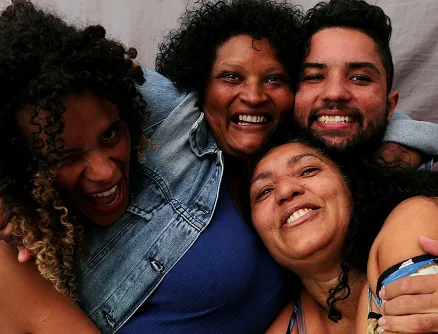






Thousands of immigrants are already achieving more with their money. You can too.
Comun is a financial technology company and not a bank. Banking services are provided by Community Federal Savings Bank; Member FDIC. The Comun Visa® Debit Card is issued by Community Federal Savings Bank, pursuant to a license from Visa U.S.A Inc. and may be used everywhere Visa Cards are accepted.
Results may vary. For a complete list of eligible IDs and application requirements, follow this link.
No minimums, no maintenance fees. ATM or transfer fees may apply. See app for fee details.
Direct deposit funds are typically available when we receive the payment file, up to two days before the scheduled payment date. This early availability is not guaranteed.
A service provided by Service UniTeller, Inc. Service UniTeller, Inc. is licensed in all states that require a license.
Remittance fees start at $2.99 but may vary. Please check the app for more details.
Comun Inc. may earn revenue from the conversion of foreign currencies.
Funds in your account are FDIC insured up to $250,000 by ownership category through Community Federal Savings Bank (CFSB), Member FDIC, in the event CFSB fails.