Living in the United States
Cheapest cities to live in the United States in 2026
2026 guide to the 10 most affordable U.S. cities: cost of living, rent, employment, and Latino communities. Cleveland, Detroit, Brownsville and more.
8 min read

Cheapest Cities to Live in the United States (2026)
Living in large metropolitan areas such as New York City, Los Angeles, or Miami can be expensive, especially when it comes to housing, transportation, and everyday expenses. For many people, including recent immigrants, young professionals, and families trying to build financial stability, the affordability of a place may play an important role when deciding where to live in the United States.
There are cities across the country where the overall cost of living can be lower while still offering access to jobs, public services, universities, and established communities. Cities such as Cleveland, Detroit, Toledo, Wichita, and Memphis are often recognized among the more affordable cities to live in the United States due to their relatively lower housing costs and cost-of-living indexes.
This guide explores some of the more affordable cities to live in the U.S., the factors that influence affordability, and considerations that may help when choosing a city that fits your budget, lifestyle, and long-term goals.
Factors that influence the cost of living in cities in the U.S.
Housing and rent
Housing is usually one of the largest expenses for households in the U.S. The national median home price ranges from approximately $408,800 to $437,000. In major metropolitan areas, average rents can exceed $2,000/month. In the most affordable cities, median home prices can be as low as $75,000–$150,000, and one-bedroom apartments often rent for $600–$900/month.
Utilities and groceries
Utility costs such as electricity, water, internet, and heating can vary depending on the region and climate. Grocery prices can also differ between cities depending on transportation costs, local agriculture, and overall demand.
Transportation and mobility
In some larger cities, public transportation may reduce the need for a car. In smaller or more spread-out cities, owning a vehicle may be more needed, which can add costs such as gas, insurance, parking, and maintenance.
Job Opportunities and Salaries
A lower cost of living may not always translate into greater affordability if local salaries are significantly lower. According to the U.S. Census Bureau, the national median household income was approximately $83,730 in 2024.
The 10 most affordable cities to live in the United States
1. Cleveland, OH
Cleveland consistently ranks among the most affordable large cities in the United States. Its overall cost of living runs approximately 7–17% below the national average, with housing costs particularly low. Median home prices range from roughly $105,000 to $150,000, a fraction of the national median. The city's economy is anchored in healthcare and advanced manufacturing, with the Cleveland Clinic and University Hospitals serving as two of the region's largest employers. Cleveland is also home to approximately 49,500 Hispanic residents, making it the second-largest Latino community of any city in Ohio, with established Puerto Rican, Mexican, and Central American communities.
2. Detroit, MI
Detroit stands out for its exceptionally low housing purchase prices. Houzeo reports a median sale price of $82,000, while Redfin records a higher median of $104,000 as of March 2026. Significant investment in downtown revitalization, automotive industry jobs, and a growing startup scene have improved its economic outlook.
3. Toledo, OH
Toledo is one of the lower-cost cities in the Midwest. Redfin puts Toledo's median sale price at $111,000 as of February 2026, noting that Toledo's median is 68% lower than the national average. Manufacturing, healthcare, and logistics remain important parts of the local economy, and the city has an established Latino community with access to Spanish-speaking services.
4. Wichita, KS
Wichita's cost of living is 12% lower than the national average, with housing 35% cheaper than the U.S. average. The median household income is $63,072. Redfin reports a median sale price of $235,000 in March 2026. The aerospace and manufacturing industries are major employers.
5. Memphis, TN
Memphis's overall cost of living is 11% lower than the national average. Redfin reports a median sale price of $170,000 in February 2026, noting Memphis's median is 51% lower than the national average. Average rents for a one-bedroom are typically in the $800–$950 range. Memphis is a logistics and distribution hub — FedEx is headquartered there.
6. Tulsa, OK
Tulsa is often viewed as one of the more affordable cities in the South-Central United States, with housing costs remaining below those in many larger U.S. metros. The city gained national attention through the Tulsa Remote program. Energy, healthcare, and finance continue to be important industries in the local economy.
7. Knoxville, TN
Knoxville's cost of living is 14% lower than the national average. The city combines lower overall costs with access to universities, healthcare systems, and outdoor recreation in the Appalachian region. Redfin reports a median sale price of $307,000 in March 2026.
8. Birmingham, AL
Birmingham is frequently recognized as one of the more affordable cities in the Southeast. Healthcare remains one of the city's largest industries, particularly because of the University of Alabama at Birmingham and its medical network. Housing prices and rental costs may remain lower than those found in many larger Southern metropolitan areas.
9. Indianapolis, IN
Indianapolis is often categorized as a lower-cost mid-sized city. The city has continued expanding in sectors such as logistics, healthcare, and technology, while maintaining housing prices that are often lower than those in coastal metropolitan areas. Indianapolis also has a growing Latino community and multiple immigrant support organizations.
10. Brownsville, TX
Brownsville is often highlighted for its affordability and strong connection to Latin American culture. Located within the U.S.-Mexico border, the city has one of the largest Spanish-speaking populations in the country (94% Hispanic), which may make everyday life more accessible for recent immigrants and bilingual families.
Comparison Table: Cost of Living by City (2026)
| State | 1BR FMR / Avg. Rent | vs. National 1BR FMR (~$1,393) | Cost of Living Index |
|---|---|---|---|
| West Virginia | $801 (FMR) | ~42% less | 83.2–86.6 |
| Arkansas | $811 (FMR) | ~42% less | 87.6 |
| Mississippi | $910 (FMR) | ~35% less | 83.3 |
| Oklahoma | ~$850–$875 (market) | ~37–39% less | 85.5–88.8 |
| Kansas | $885 (FMR) | ~36% less | 89.0 |
| Iowa | $839 (FMR) | ~40% less | 90.4 |
| Wyoming | $836 (FMR) | ~40% less | 92.3 |
| Alabama | $905 (FMR) | ~35% less | 89.3 |
| Indiana | ~$900–$950 (market) | ~32–35% less | 90.1 |
| Ohio | ~$950–$1,000 (market) | ~28–32% less | 91.2 |
1BR FMR = HUD Fair Market Rent FY2025. National 1BR FMR baseline: $1,393. Market-rate averages from PropertyCEO. Cost of Living Index from costoflivingbystate.com (C2ER Q1 2026). All figures are estimates and may vary by city, unit type, and data provider.
How to choose the ideal city?
An affordable city may look attractive on paper, but the best option can still vary depending on your personal situation, work opportunities, and long-term goals.
Family budget:
For most households, housing remains the largest monthly expense. Neighborhood-level costs may vary significantly within the same city.
Community and support networks:
For many immigrants, having access to a strong community network can make the transition to a new city easier. Cities with established Latino communities may offer more Spanish-speaking services, cultural organizations, churches, restaurants, and local businesses.
Job availability:
A lower cost of living may not always translate into greater financial stability if local salaries and job opportunities are limited. For remote workers, choosing a lower-cost city may also provide more flexibility.
Access to services and education:
Before moving, it may help to consider commute times, fuel costs, access to public transit, and proximity to schools, grocery stores, and healthcare services.
Manage your finances in the US with Común
Choosing an affordable city is only one part of building a stable life in the United States. Común offers a debit account that can be opened with more than 100 valid Latin American IDs. The app and services are available in Spanish and users can conveniently send money from their phone to 10+ countries in Latin America. Visit comun.app to learn more.
FAQs
What is the cheapest city to live in the US?
Based on 2026 cost-of-living data, Cleveland, OH and Detroit, MI rank among the cheapest large cities in the United States, with cost-of-living indexes well below the national average.
Where can you find the most affordable housing in the US?
The most affordable housing markets in 2026 tend to be in the Midwest and South, particularly in Ohio, Michigan, Tennessee, Alabama, and Oklahoma.
Which cities offer a balance between employment and affordability?
Indianapolis, IN and Knoxville, TN are frequently cited for combining affordability with strong job markets.
How do I calculate the cost of living before moving to a new city?
Start with the three largest expenses: housing, transportation, and food. Use tools like the C2ER Cost of Living Index or Numbeo's city comparison tool to compare cities side by side.
Which cities have the largest Latino communities and affordable cost of living?
Brownsville, TX has a 94% Hispanic population and a cost of living approximately 12–16% below the national average. Toledo, OH, Cleveland, and Indianapolis also have established Latino communities and Spanish-language services.
About Común
Común aims to support the Latino community in the United States. It offers a debit account that can be opened with more than 100 valid Latin American IDs and an app available in Spanish.
Visit Común's website or download the app for free to learn more about the full offer and applicable terms.
Olivia Rhye
Community Partner


Living in the United States
Requirements to rent a house in the United States if you are an immigrant
8 min de lectura
One of the main challenges immigrants face in the U.S. is formalizing a lease, since property owners often require a series of documents that can turn the search process into a maze.
Examples might include credit scores, proof of income, background checks, and references that many immigrants do not yet have. However, there are proven strategies that make it easier for newcomers to obtain a lease in the United States.
If this sounds familiar, keep reading—we’ll explain in detail how to prepare to rent safely and avoid the typical obstacles immigrants encounter when establishing themselves in the U.S.
What do you need to rent in the United States?
Before you start searching for your next home, you should keep in mind the key requirements for renting an apartment in the U.S. These help the landlord confirm that the tenant is reliable and has sufficient financial solvency to pay rent on time and in full.
Below are the most requested items to sign a lease:
Personal identification
It’s very important to verify your legal identity. Landlords or real estate agents may ask for one or more of the following documents:
- Valid passport.
- Visa or resident card.
- Driver’s license.
- Social Security Number (SSN) or ITIN.
Financial solvency
To demonstrate you have sufficient solvency to cover the monthly rent, you can provide several documents, such as:
- Proof of income, such as pay stubs, tax returns, or bank statements.
- Employer letter or employment contract.
- It is also common to be asked for a security deposit equal to one month’s rent, which serves as a guarantee in case of damage to the property.
Credit history
Reviewing credit history is a crucial step for landlords and agents because it provides reliable evidence of the applicant’s financial behavior.
If you’ve been in the United States for a short time, you may not have a credit history. This article explains simple ways to start building one.
In that case, you may be asked for a credit report from an official agency or a signed authorization to check your credit score.
Local guarantors
If you lack sufficient evidence of solvency, you may be asked for a guarantor, who serves as a backstop if you cannot meet the lease terms.
Such a guarantor must reside in the United States and provide the following documents:
- Government-issued ID.
- Proof of income.
- Good credit history.
Renting in the United States: Process and leasing options for immigrants
Housing options in the U.S. are broad and adapt to all lifestyles, budgets, and immigration statuses.
Rental options you can find in the United States include:
- Furnished houses or apartments.
- Unfurnished houses or apartments.
- Individual rental.
- Shared rental.
Regardless of the type of property you’re looking for, we recommend following these steps to rent a house or apartment.
1. Explore and select the property
Take the time to review all property details and alternatives in different neighborhoods and cities. We recommend searching trusted sites such as Zillow, Realtor, or Apartments.com. Also ask friends or acquaintances who have gone through the process for referrals.
2. Evaluate the offer conditions
Carefully analyze the lease terms, such as price, property description, requirements, and restrictions.
3. Submit your rental application
When you find a home that meets your expectations, submit a rental application with your personal information, references, and authorization to check your credit history.
4. Visit the property
Before signing any contract or paying a deposit, it is essential to visit the property to ensure it matches the listing and is free from maintenance-related deterioration.
5. Submit the required documentation
If after the visit you are still interested in renting the property, the next step is to provide the previously mentioned documents, such as proof of income and government ID.
6. Review and sign the lease
The landlord will review your application and verify your documents. If approved, the final step is agreeing to and signing the lease terms, which set the rental conditions such as duration, cost, rules, and conditions for refunding the security deposit, among others.
Three key tips for a safe, hassle-free first rental
Finding your first rental in the U.S. can be a major challenge due to the number of requirements involved.
Below are some useful tips to help your search pay off as soon as possible.
Research the housing market
Use rental websites to research which areas are more affordable or best fit your lifestyle, ensuring you can cover not only rent but also day-to-day expenses.
Use multiple search methods
Don’t limit yourself to a single method. Alternate among websites, mobile applications, classifieds, and even the help of a real estate agent.
Avoid scams
It’s essential to stay alert to potential scams. Apply these tips and stay safe:
- Make sure the agent or brokerage is registered and has reliable references.
- Do not make any payment before personally visiting the property and having a contract formalized before a notary.
- Use only recognized platforms and portals.
- Be wary of last-minute offers or listings that seem “too good to be true.”
- Avoid using cash when finalizing the rental.
- Review each clause of the contract in detail before signing.
Considerations before choosing a home
Before choosing a house or apartment to rent, it’s important to consider several factors, for example:
- Location:
Location is one of the most relevant aspects when choosing a home. Beyond the city, consider the distance to your workplace and other frequent destinations.
- Neighborhood:
Research the type of neighborhood, safety, infrastructure, recreational areas, community profile, and any other information you consider significant for making a decision.
- Rental cost:
Make sure the rent fits within your means. Create a budget that includes your monthly income and expenses.
Below are tenants’ rights and obligations in the United States.
Payments and deposits
The tenant must pay the monthly rent and the agreed deposit on time. Both payments can be made by bank transfer, bank deposit, or check.
Maintenance and repairs
The landlord must ensure the property is in optimal condition and has all utilities. In turn, the tenant agrees to take care of the premises, keep them clean, and report any defects requiring maintenance.
Tenant legal protections
Tenants are protected by U.S. law against unfair practices, such as:
Refund of the security deposit if conditions are met.
Protection against unjustified or no-notice eviction.
Make your rent payments online safely and conveniently with Común
Renting your first home in the United States doesn’t have to be overwhelming. Take time to learn the most common requirements and consider alternative solutions like those in this article. This way, you’ll see it is possible to open the door to decent housing.
With the right preparation and tools, the rental process becomes much simpler and more accessible.
Rely on Común, a financial platform that addresses day-to-day needs in the United States, with an intuitive mobile app, so opening an account is quick and easy using qualifying official identification from your country of origin. It also makes it simple to send remittances up to the applicable limits to LATAM countries, so your family receives more, with competitive fees.
Discover Común, an excellent option dedicated to serving immigrant communities in the United States, with support available in Spanish.
Open your checking account today with a partner that understands your needs as an immigrant!
Frequently Asked Questions
If you still have questions, check our FAQs.
How much does rent cost in the United States?
The national average for rental housing is around $2,100 USD.
Where is it cheaper to live in the United States?
Cities such as Laredo, Texas, and Toledo, Ohio report the most affordable living costs.

Living in the United States
What is the best health insurance in the United States? Complete guide
8 min de lectura
What is the best health insurance in the United States?
Having health coverage is essential to ensure you receive care when you need it. It’s also a way to invest in your future by preventing large out-of-pocket expenses from costly procedures.
There are many health insurance options in the U.S., so there isn’t a single “best” plan—what’s best depends on your needs and budget.
Although access to healthcare is a basic need, enrolling in a plan can be confusing for immigrant communities.
Below you’ll find a comparison of the main health insurance options in the U.S., key evaluation criteria, and answers to frequent questions—so you can choose the best option to protect you and your family.
Factors to consider when choosing health insurance
Before choosing a plan, carefully assess your personal and family needs, as well as benefits, medical terms, and the features of each option.
Key points to keep in mind before signing anything.
- Coverage level.
Some plans cover only basic services, while others offer comprehensive coverage including hospitalization, specialist visits, and prescription drugs. Review your medical needs (and your family’s) to gauge the right level.
- Monthly premium cost. Coverage level affects the monthly price. Make sure the amount is sustainable for your long-term budget.
- Deductibles and copays.
You must understand both before enrolling. The deductible is what you pay out of pocket before your plan starts paying; the copay is the fixed amount you pay each time you use a covered service.
- Provider network.
Check that the plan includes a robust network of hospitals and clinics near your home or work, so you can access care when needed.
- Eligibility requirements.
As an immigrant in the U.S., note that some plans require certain immigration status, state residency, and/or income qualifications.
- Additional benefits.
Also review extras such as preventive care, mental health, wellness programs, and maternity coverage.
Remember: a low price doesn’t automatically mean the best option—it must fit your (and your family’s) specific needs.
Health insurance options in the United States
The U.S. health insurance market includes a range of public and private plans.
Here are key options you should know.
- Health insurance via the Marketplace (ACA).
Plans under the Affordable Care Act (ACA) are offered through federal/state marketplaces. They must include essential health benefits and prescription coverage. Income-based subsidies may lower costs.
- Medicaid.
A public program for people with low incomes; covers children, pregnant people, people with disabilities, and families. Usually no premium; some services may have small copays.
- Medicare.
A program for people 65+ (and some with disabilities). It’s divided as follows:
- Part A: hospital inpatient.
- Part B: medical services. Part C: Medicare Advantage (private insurers) that can bundle extra benefits.
- Private plans and employer-sponsored insurance.
Private coverage can be purchased directly or provided as an employer benefit. These plans vary in coverage levels and typically include broad provider networks.
Comparison of common health insurance options
Remember: beyond a policy, a health plan is protection for you and your family—take the time to choose well.
Here’s a comparative table of major U.S. health plan types.
Plan type
Who it serves
Approx. costs
Primary coverage
ACA Marketplace
People without employer private insurance.
Costs vary by coverage; income-based subsidies can lower premiums.
Essential benefits: hospitalization, preventive care, prescriptions, emergency care, etc.
Medicaid
People with low incomes.
Generally no premium; small copays for some services.
Broad medical and hospital coverage nationwide.
Medicare
People 65+ and certain disabilities.
- Part A: per-period deductibles.
- Part B: monthly premium ~$185.
Hospital and medical services coverage
Employer-sponsored private insurance
Workers (and dependents) covered by employers.
Costs include premiums, deductibles, and copays—vary by plan.
Hospital, specialists, prescriptions, emergency services, etc.
Don’t forget: as an immigrant in the U.S., verify eligibility rules related to immigration status.
Manage your finances in the U.S. with Común
In this article, we covered what to consider before enrolling, the different plan types, and how to compare benefits.
There’s no single “best” plan—it depends on your personal and family needs and budget.
Beyond medical costs, immigrants need safe financial services to manage their money.
Común is the financial platform you’ve been looking for—discover the benefits!
- Checking account with clear, competitive fees.
- International money transfers at affordable costs.
- Mobile app available in Spanish that accepts 100+ official IDs for account opening.
- Debit card for everyday purchases and payments.
Open your Común account today and manage U.S. medical bills simply and transparently.
Frequently Asked Questions (FAQ)
If you still have questions, see the section below.
What is the number-one health insurer in the U.S.?
Among the top U.S. health insurers are:
- Cigna.
- Aetna.
- Blue Cross Blue Shield.
- Ambetter.
- Anthem.
Is health insurance mandatory in the U.S.?
It isn’t required at the federal level, but some states—like California and New Jersey—mandate coverage or impose penalties.
Where can I officially compare health plans?
Official sources include: HealthCare.gov (federal Marketplace to view/compare/enroll); Finder.Healthcare.gov (to find off-Marketplace plans); Medicare.gov (compare Medicare plans by ZIP code).
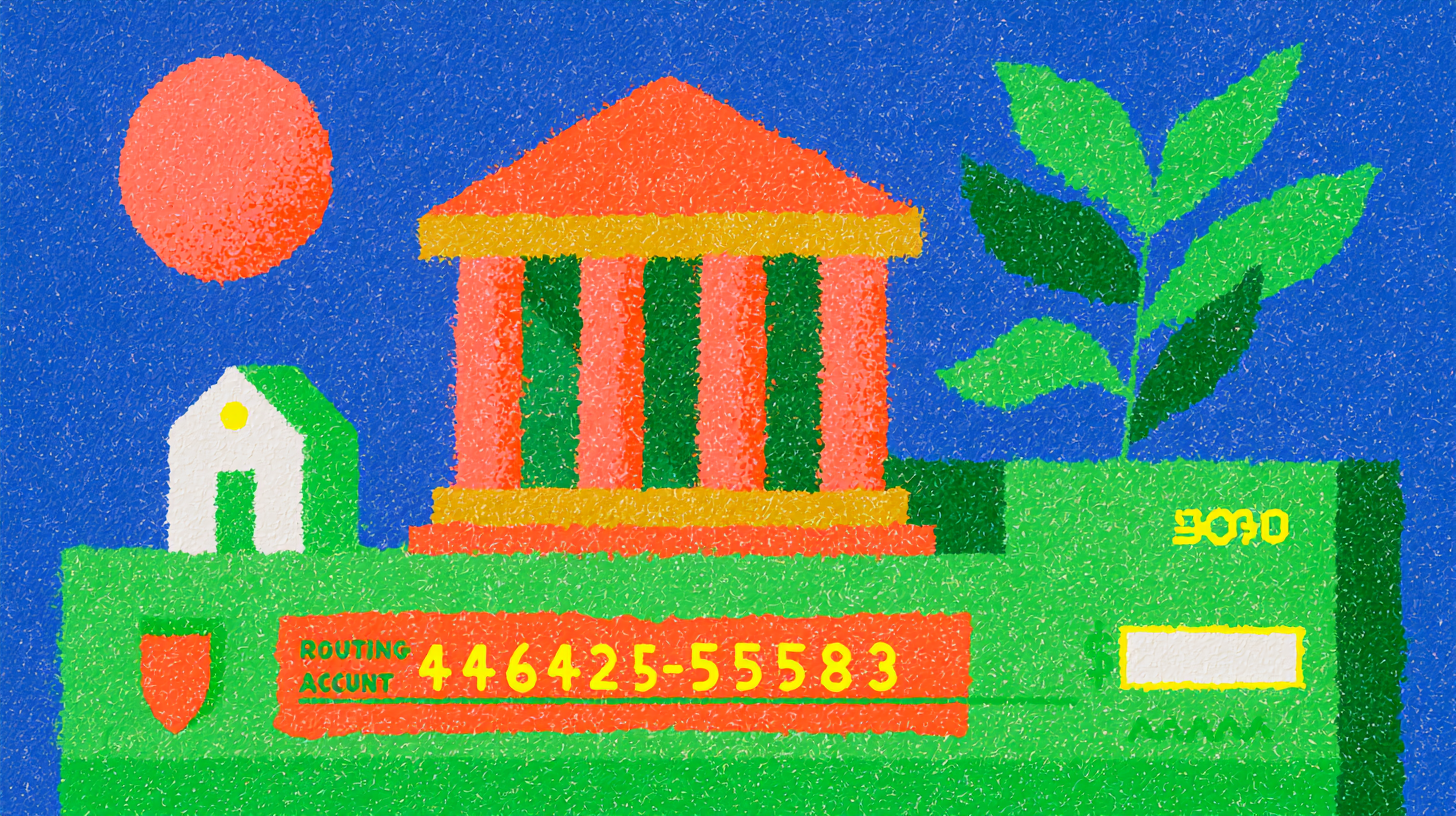
Financial Education
We explain your bank account number in 2026: a guide for immigrants
8 min de lectura
What is a bank account number and understanding bank account numbers: A 2026 guide for immigrants
If you recently opened your first bank account in the U.S. or received account and routing numbers you do not fully understand, learning what these numbers mean can make everyday banking much easier. These numbers are commonly used for direct deposits, tax refunds, ACH transfers, and automatic bill payments.
Your bank account number works as the identifier for your personal account within the banking system. Combined with your routing number, it helps employers, government agencies, and payment platforms send money to the correct place securely.
What is a bank account number?
A bank account number is a unique sequence of digits assigned to an account holder by a financial institution. It functions much like a physical address for your account within the broader banking network, distinguishing your account from others and ensuring that transactions are accurately processed.
Structure of a bank account number
The format of bank account numbers varies by financial institution, but generally includes several key components:
- Bank code/institution number: identifies the financial institution
- Branch code/sort code: identifies the specific branch where the account was opened
- Account number: the unique identifier for your personal account
- Check digits: help detect typing errors
What is the bank account number used for?
- Payroll direct deposits
- IRS tax refunds
- ACH transfers between banks
- Automatic bill payments
- Identity verification with financial institutions
Account number vs. routing number: what is the difference?
Routing number:
A 9-digit code that identifies the bank or financial institution. It is the same for all customers at the same bank.
Account number:
Unique to your specific account. No one else at the bank has the same account number as you.
When setting up a direct deposit, you generally need to provide BOTH: your bank's routing number and your personal account number.
Where do you find your account number?
- On your checkbook checks (bottom section)
- In your bank's mobile app (account information section)
- On bank statements
- By contacting your bank's customer service
How to protect your account number
- Share it only with trusted entities like your employer or the IRS
- Monitor your account regularly for unauthorized activity
- Do not post it on social media or unsecured emails
- If you suspect your account number was compromised, contact your bank immediately
FAQ
Does my account number change if I lose my debit card?
Generally no. Your card number is different from your bank account number. When you lose your card, the bank issues a new card with a different number but your bank account number generally remains the same.
Can I have more than one account number at the same bank?
Yes. If you have multiple accounts (e.g., checking and savings) at the same institution, each account has its own unique number but they will share the same routing number.
Común is a financial technology company and not a bank. Banking services are provided by Community Federal Savings Bank, Member FDIC.

Financial Education
How to deposit money into someone else's bank account: 5 updated methods (2026)
8 min de lectura
How to deposit money into someone else's bank account: 5 updated methods (2026)
In 2026, there are more ways than ever to send money to another bank account, but each option works differently. Some methods require a routing and account number, while others only need a phone number, email, or QR code.
5 ways of depositing money into someone else's bank account
| Method | What You Need From the Recipient | Speed | Typical Cost | Best For |
|---|---|---|---|---|
| Bank branch deposit | Full name + account number | Same day or next business day | Usually no fee | Paying rent, helping family |
| ACH bank transfer | Routing number + account number | 1–3 business days | Often free | Transfers between financial institutions |
| P2P apps | Phone number, email, username, or QR code | Minutes to 1 business day | Often free | Everyday payments and splitting expenses |
| Wire transfer | Full bank details and identity information | Same day | Fees vary by financial institution | Urgent or high-value transfers |
| Check deposit | Recipient's name and mailing/deposit information | Several business days | Usually low or no fee | Documented or scheduled payments |
Bank branch deposits
One of the simplest ways to deposit money into someone else's account is by visiting their bank branch directly. To deposit money at a branch, you generally need: the recipient's full name, the recipient's account number, and the cash or check you want to deposit.
ACH bank transfer
ACH transfers are electronic bank-to-bank transfers through the Automated Clearing House network. To send an ACH transfer to another person's account, you need: the recipient's bank routing number and account number.
P2P payment apps
Peer-to-peer payment apps like Común's Pay, Venmo, Cash App, and Zelle allow you to send money quickly to another person using just a phone number, email, username, or QR code.
Wire transfer
Wire transfers are electronic bank-to-bank transfers that complete quickly, usually the same business day for domestic transfers. They are typically used for large amounts or urgent payments.
Check deposit
You can also write a personal check to another person. This option is slower than digital methods but can be useful for documented or scheduled payments.
FAQ
Can I deposit cash into someone else's bank account?
It depends on the bank. Some banks allow cash deposits into third-party accounts at a branch, while others may restrict it due to fraud prevention policies.
What is the fastest way to send money to another account?
P2P apps like Común's Pay, Venmo, and Zelle are generally the fastest for everyday transfers. Wire transfers are faster for large amounts.
Común is a financial technology company and not a bank. Banking services are provided by Community Federal Savings Bank, Member FDIC. Peer-to-peer payments services are provided by Cross River Bank.

Living in the United States
Websites for finding jobs in the USA: 2026 guide for immigrant workers
8 min de lectura
Websites for finding jobs in the USA (2026 guide for immigrant workers)
An essential guide for finding a job in the USA. The search for a job in a new country can be a challenge, many processes may feel new or unfamiliar. However, in 2026 there are plenty of online resources to help with the process, one of the most commonly used resources is online job platforms. For many Spanish-speaking employment seekers in the USA whether recently arrived or supporting a family, there are employment opportunities available, the key is to know where to find them.
To help with the search, we have created a guide designed as a practical, curated overview of the most relevant websites for finding jobs in the United States. We hope to provide useful context on which platform works best depending on your situation.
The 10 best websites for finding jobs in the USA
1. Indeed
A practical starting point
Among all job platforms in the United States, Indeed continues to be the most widely used, especially for people looking for entry level or widely available opportunities. Its main advantage is volume. It gathers thousands of listings across industries from restaurants, warehouses, cleaning services, retail, to customer service. The platform allows users to apply for many positions directly through the app or website.
However, this same ease of use means competition is high. Users of the platform have reported that, for better chances of success, it is important to apply early and consistently.
Available in Spanish?
Indeed is fully available in Spanish, it is one of the most complete Spanish experiences among all websites for finding jobs in the USA.
2. LinkedIn
For professional and office roles
LinkedIn is more about building a professional presence. Therefore it is very important to have a well structured profile with recommendations and references to all previous experiences to attract potential opportunities.
This platform is commonly used for roles in administration, marketing, finance, and technology. The platform is generally more focused on professional and corporate roles than hourly positions. It is also important to consider that finding a job through it tends to take some time.
Available in Spanish?
LinkedIn is partially available in Spanish. It allows you to change the interface to Spanish, including menus and profile sections. However, most job postings in the USA and recruiter interactions are still primarily in English.
3. Glassdoor
For researching companies
Glassdoor is not just a job board; it is a decision-making tool. While it does include job listings, its real value lies in the information it provides about companies. Users can see salary ranges, employee reviews, and even details about the interview process.
For someone unfamiliar with the U.S. labor market, this can be helpful when evaluating workplace conditions and company culture and help identify companies with better working conditions. Many job seekers use Glassdoor alongside other job search websites in English and Spanish to confirm whether a job is worth pursuing before applying.
Available in Spanish?
Glassdoor is partially available in Spanish. It offers some Spanish interface options and content, but the experience is mixed. The reviews and salary data are often in English, depending on the company. It is still useful, but not fully localized.
4. ZipRecruiter
Faster matching with less effort
ZipRecruiter focuses on simplifying the job search by using technology to match candidates with relevant opportunities. Instead of spending hours browsing, users receive recommendations based on their profile, and in some cases, some employers may contact candidates directly.
This approach is particularly helpful for candidates with some work experience who want to save time and avoid repetitive applications. It reflects how job platforms in the United States are evolving toward more automated and personalized systems.
Available in Spanish?
ZipRecruiter is mostly in English. It is primarily an English-language platform.
5. SimplyHired
Useful for understanding salaries
SimplyHired plays a valuable supporting role. It aggregates listings from multiple sources and provides salary estimates that help job seekers understand what a position typically pays.
For newcomers trying to navigate where to find work in the USA, this information is especially useful. It helps with comparing offers and may help job seekers better understand local ranges.
Available in Spanish?
SimplyHired is partially available in Spanish. It has some Spanish interface support and localized search options. However, like other platforms, many listings remain in English.
6. USAJobs
The official path to government work
USAJobs is the official federal employment portal. It offers access to government positions, which are known for stability, structured hiring processes, and strong benefits.
However, it is important to be realistic about accessibility. Most roles require legal residency or U.S. citizenship, which may limit eligibility for some applicants.
Available in Spanish?
USAJobs offers limited Spanish support. It is mainly in English, as it is the official government portal.
7. FlexJobs
A path to find remote work
As remote work continues to grow, FlexJobs has become one of the most reliable platforms in this space. Unlike larger job boards, it focuses on curated listings, which may help reduce exposure to fraudulent or low-quality listings.
This makes it particularly useful for people looking for flexibility, whether they are freelancers, parents, or simply prefer not to work in a traditional office setting. In the context of websites for finding jobs in the USA, it stands out for prioritizing quality over quantity.
Available in Spanish?
FlexJobs operates almost entirely in English.
8. Upwork
A practical option for remote income
Upwork allows users to work as independent contractors, offering services in areas such as writing, programming, design, and digital marketing. It has become one of the most relevant platforms for remote work, especially as companies increasingly hire global talent.
While it requires time to build a profile and reputation, some users use it to generate freelance or supplemental income and open doors to long-term clients. It is particularly useful for people with digital skills who are looking for flexibility.
Available in Spanish?
Upwork offers a Spanish interface, which makes it more accessible than many remote platforms. However, most clients post jobs in English.
9. Fiverr
For turning skills into income
Fiverr offers a slightly different model from Upwork. Instead of applying to jobs, users create service listings and set their own prices, allowing clients to find them directly.
It is commonly used for creative work and as a source of side income, but it can also grow into a full-time opportunity. Within the broader landscape of job search websites in English and Spanish, Fiverr stands out for its flexibility and accessibility.
Available in Spanish?
Fiverr also supports Spanish in its interface. Since you create your own service listings, you can write them in Spanish, English, or both, which gives you flexibility depending on your target clients.
10. The Muse
A more curated, culture-focused option
The Muse is smaller than other platforms but offers a more curated experience. It focuses on companies that prioritize workplace culture and transparency, giving candidates a clearer idea of what to expect.
This makes it particularly appealing for younger professionals or those looking for a better long-term fit rather than just immediate employment. While it may not be the first stop for most job seekers, it can be a valuable complement to larger platforms.
Available in Spanish?
The Muse is primarily an English-language platform with no full Spanish interface.
Choosing the right platform for your situation
These platforms are useful within their unique context, the key to making the most out of them is understanding what they offer and how they fit in your situation. Someone looking for quick, entry-level work will likely benefit most from Indeed, while a candidate pursuing a long-term professional career should prioritize LinkedIn. Those interested in flexibility or remote income may find better results through FlexJobs, Upwork, or Fiverr, while individuals seeking long-term stability may consider USAJobs if they meet the requirements.
In practice, the most effective strategy is not to rely on a single platform. Combining two or three of these tools creates a more balanced approach and may improve job search efficiency.
How to apply without an SSN or with an ITIN
When exploring websites for finding jobs in the USA, one practical question often comes up early in the process: what happens if you don't yet have a Social Security Number (SSN)? In most formal employment situations, an SSN is required because employers use it for payroll and tax reporting. However, during the application stage, many platforms still allow you to apply without entering one.
If you already have legal work authorization but are waiting for your SSN, you can:
- Typically move forward in the hiring process, if the employer allows, and provide the number later
- In some cases, employers may accept an Individual Taxpayer Identification Number (ITIN) for tax purposes (although it does not replace work authorization)
The key distinction is that an ITIN allows you to comply with tax obligations, but it does not grant permission to work.
Requirements can vary depending on the employer and the type of role, therefore it is important to confirm what documentation will be needed once you move forward in the hiring process.
Tips for preparing your application
Using the right job platforms in the United States is the first part of the process. How you present yourself still plays a major role in whether you get a response.
- A strong resume should be clear, concise, and tailored to the type of job you are applying for
- In the U.S., resumes are typically one page and focus on skills and results rather than long descriptions
- Adjusting your resume to include keywords from the job description may help resumes align with automated application systems used by some employers
When it comes to interviews, preparation is just as important:
- Employers often expect candidates to explain their experience clearly and give examples of past work
- If you are not fluent in English, practicing common questions in advance can help you feel more confident
Applying regularly, following up when appropriate, and staying organized throughout the process may help improve consistency throughout the job search.
After you get the job: getting paid
Once you are successful and you find work in the United States, it is important to know how and where you are getting paid. Most employers rely on direct deposits, which requires access to a U.S. bank account. For many immigrants, this can be a challenge. Some financial institutions and fintech platforms offer products designed for individuals who may have limited access to traditional banking services. From traditional banks to digital platforms it's important to learn about their requirements and their offers. For example, with Común you can open a debit account using a passport or more than 100 valid Latin American IDs and Común's app is available in Spanish.
Frequently Asked Questions
Do I need a work permit to work in the United States?
Yes. To work legally in the U.S., you must have valid work authorization. This typically comes in the form of a work permit (Employment Authorization Document, or EAD) or a visa that allows employment.
What types of work permits are available for immigrants?
There are several common pathways depending on your situation. Temporary work visas like the H-2A (agricultural work) and H-2B (seasonal non-agricultural work) are frequently used. Professional visas such as the H-1B apply to specialized roles, while other options like TPS (Temporary Protected Status) or asylum-based work permits may apply depending on your country of origin and circumstances.
Each option has specific requirements, so it is important to verify eligibility with the official authorities.
Can I work in the United States if I don't speak English?
Yes, it is possible. Many jobs, especially in construction, cleaning, manufacturing, agriculture, and restaurants do not require advanced English. In cities with large Latino populations, it is common to find Spanish-speaking work environments.
However, improving your English can significantly expand your opportunities and increase your earning potential over time.
What are employment agencies?
Employment agencies, also known as staffing agencies, act as intermediaries between companies and job seekers. They help match candidates with available positions, often for temporary, seasonal, or entry-level roles.
For many newly arrived immigrants, these agencies may help some job seekers connect with available opportunities, especially if someone does not yet have a strong professional network in the United States.
Final thoughts
The key to navigating the U.S. job market in 2026 is not just knowing the websites for finding jobs in the USA, but understanding how to use them strategically. Each platform serves a different purpose, and choosing the right one may help better organize search and identify opportunities aligned with goals and experience. We wish you the best of luck in your job seeking process!

Living in the United States
The cheapest states to rent in the United States in 2026
8 min de lectura
The cheapest states to rent in the United States in 2026
Based on recent rental market data, West Virginia continues to rank among the lowest-cost states for renters, with a 2025 Fair Market Rent of approximately $801 per month for a one-bedroom apartment. Arkansas and Mississippi also remain among the most affordable states to rent, with estimated one-bedroom Fair Market Rents of roughly $811 and $910 per month respectively. Other states frequently appearing among the cheapest states to rent include Oklahoma, Kansas, Iowa, Alabama, Indiana, Wyoming, and Ohio.
The national average asking rent for a one-bedroom apartment in the US sits at around $1,576 per month — a figure that can consume a significant share of the household's income. However, the average masks the variations across the country.
Why do rent prices vary so much by state?
Rent prices are not a single national market, they are thousands of local ones. The gap between the cheapest and most expensive states may be more than $1,600/month for a comparable unit. Several structural factors explain why a one-bedroom in Iowa can cost a fraction of what it does in California:
- Housing supply and construction pace. States with fewer building restrictions and lower land costs tend to have more available units, which keeps prices more accessible.
- Local economy and wages. Higher-income cities attract more renters competing for the same units, pushing prices up.
- Urban vs. rural mix. A state dominated by mid-sized cities will register lower averages than one anchored by major coastal cities.
- Regulatory environment. Zoning laws, permitting processes, and landlord-tenant regulations influence how fast housing supply can respond to demand.
- Climate and geography. Desirable coastal cities or warmer climates attract more people, which drives up rents over time.
The 10 cheapest states to rent in the U.S. in 2026
1. West Virginia — 1BR FMR: ~$801/month
West Virginia holds the lowest 1-bedroom Fair Market Rent of any state in the US at $801/month. The median rent statewide sits around $883/month across all unit types, with West Virginia apartments running roughly 41.6% less expensive than the national 2BR average. In 2024, 64.8% of leased homes in West Virginia rented for less than $1,000/month.
2. Arkansas — 1BR FMR: ~$811/month
Arkansas is consistently cited among the states with the lowest rent in the US. The 2025 HUD Fair Market Rent for a 1-bedroom is $811/month, and the state's apartments run roughly 41.4% less expensive than the national 2BR average. In 2024, 51.9% of leased homes in Arkansas rented for less than $1,000/month.
3. Mississippi — 1BR FMR: ~$910/month
The 2025 HUD Fair Market Rent for a 1-bedroom is $910/month, and some market-rate data places average 1BR asking rents lower, around $785–$825/month. In Jackson, the state capital, a 1-bedroom apartment may average around $785/month. The state has a notable Latino community in agricultural and food-processing hubs.
4. Oklahoma — 1BR avg: ~$850–$875/month
Oklahoma may offer some of the most affordable urban rent in the country. Oklahoma City's average 1BR rent sits around $875/month, ranking among the cheapest large cities to rent in the US. The state's housing index sits at approximately 67.9, meaning homes and rentals cost about 32% less than they do nationally.
5. Kansas — 1BR FMR: ~$885/month
Kansas delivers consistent affordability, with a 2025 HUD Fair Market Rent for a 1-bedroom at $885/month, roughly 35.6% below the national 2BR average. The median home price in Wichita, Kansas' largest city, was approximately $198,000 in Q1 2026.
6. Iowa — 1BR FMR: ~$839/month
The 2025 HUD Fair Market Rent for a 1-bedroom is $839/month, with Iowa apartments running 38.3% less expensive than the national 2BR average. Iowa households spend just 17% of their income on housing, the lowest share of any state in the country.
7. Alabama — 1BR FMR: ~$905/month
Alabama's apartments run roughly 36.4% less expensive than the national 2BR average. The 2025 HUD Fair Market Rent for a 1-bedroom is $905/month. The median home price of approximately $179,400 is among the lowest in the country. In 2024, 42.8% of leased homes in Alabama rented for less than $1,000/month.
8. Indiana — 1BR avg: ~$900–$950/month
Indiana sits comfortably in the affordable tier, with average 1BR rents well below $1,000/month in most markets. Indianapolis offers sub-$1,000 rents in a metro with a job market ranging from logistics, healthcare, technology, to life sciences. Indianapolis' growing Latino community has made the city an increasingly relevant destination for immigrant families relocating to the Midwest.
9. Wyoming — 1BR FMR: ~$836/month
Wyoming's sparse population keeps rental demand low and rents affordable. The 2025 HUD Fair Market Rent for a 1-bedroom is $836/month. In 2024, 50.2% of leased homes in Wyoming rented for less than $1,000/month. Wyoming has no state income tax.
10. Ohio — 1BR avg: ~$950–$1,000/month
Average 1BR rents hover near $950–$1,000/month while the state's cost of living runs roughly 8–9% below the national average. Ohio's combination of major metro accessibility and rental affordability makes it a compelling option.
Comparison table of the cheapest states to rent in the US (2026)
| State | 1BR FMR / Avg. Rent | vs. National 1BR FMR (~$1,393) | Cost of Living Index |
|---|---|---|---|
| West Virginia | $801 (FMR) | ~42% less | 83.2–86.6 |
| Arkansas | $811 (FMR) | ~42% less | 87.6 |
| Mississippi | $910 (FMR) | ~35% less | 83.3 |
| Oklahoma | ~$850–$875 (market) | ~37–39% less | 85.5–88.8 |
| Kansas | $885 (FMR) | ~36% less | 89.0 |
| Iowa | $839 (FMR) | ~40% less | 90.4 |
| Wyoming | $836 (FMR) | ~40% less | 92.3 |
| Alabama | $905 (FMR) | ~35% less | 89.3 |
| Indiana | ~$900–$950 (market) | ~32–35% less | 90.1 |
| Ohio | ~$950–$1,000 (market) | ~28–32% less | 91.2 |
1BR FMR = HUD Fair Market Rent FY2025. National 1BR FMR baseline: $1,393. Market-rate averages from PropertyCEO. Cost of Living Index from costoflivingbystate.com (C2ER Q1 2026). All figures are estimates and may vary by city, unit type, and data provider.
How to choose the right State for your budget and lifestyle?
Rent-to-income ratio, not just the rent number:
Some cheap-rent states also have lower wages. Mississippi, for example, ranks near the bottom for rent in dollars, but can rank near the top in terms of what percentage rent makes up of earned income.
Job availability in your field:
Employment opportunities can vary significantly from state to state. States such as Ohio, Indiana, and Alabama tend to have more diversified economies. For remote workers, lower-cost states may provide greater financial flexibility.
Community and support networks:
For immigrants and families relocating to a new area, access to established communities can make a major difference. Cities with growing Latino populations, bilingual services, and community organizations may help newcomers feel more connected.
Climate and weather risk:
States in the Midwest can experience colder winters and higher heating costs, while Southern states may bring higher air conditioning expenses. Some regions may also face increased risks related to hurricanes, tornadoes, or flooding.
Compare the total cost of living:
Rent is only one part of a household budget. Groceries, utilities, transportation, healthcare, childcare, and taxes can also vary significantly by state.
Manage your finances in any state with Común
Moving to a more affordable state may help reduce financial pressure, but managing your money efficiently remains important no matter where you live. Visit Común's website or download the app to learn more.
FAQ
What is the cheapest state to rent in the US in 2026?
Based on HUD Fair Market Rent data, West Virginia has the lowest 1BR FMR of any state at $801/month and the lowest median rent overall at approximately $883/month.
Which states have the lowest average rent for an apartment?
The states with the lowest average apartment rent in 2026 are West Virginia, Arkansas, Iowa, Wyoming, Mississippi, Oklahoma, Kansas, Alabama, and Indiana. Average 1-bedroom rents in these states range from approximately $785 to $950/month.
How much should I budget for rent in the US?
The commonly cited guideline is to spend no more than 30% of gross monthly income on rent. In the cheapest states, where 1BR rents may run $800–$900/month, the same guideline requires roughly $2,667–$3,000/month in gross income.

Living in the United States
Halloween and Día de Muertos: A Guide for Latino Families in the U.S.
8 min de lectura
Halloween and Día de Muertos fall on consecutive dates, October 31 through November 2, but they come from completely different traditions. Halloween has Celtic origins and is widely celebrated in the United States with costumes, trick-or-treating, candy, and spooky decorations. Día de Muertos is a celebration in Mexico that honors relatives who have passed, centered on ofrendas, favorite foods, and marigold flowers.
Because the two celebrations happen at nearly the same time, it's easy to wonder how they relate to each other. One focuses on costumes and neighborhood traditions, while the other is a time to remember loved ones who have passed. Many Latino families in the United States celebrate both, each with its own meaning. Understanding what makes each tradition unique can help preserve their significance while enjoying both.
What is Día de Muertos and where does it come from?
Día de Muertos is a Mexican tradition that honors the memory of relatives and loved ones who have died, observed on November 1 and 2. Its roots go back to pre-Hispanic cultures in Mesoamerica, including the Mexica, Maya, and Purépecha peoples, who saw death as a continuation of life rather than an ending. Over centuries, these Indigenous practices blended with Catholic traditions brought by Spanish colonizers, creating the celebration recognized today.
Families build ofrendas at home or at gravesites, placing photos, favorite dishes, candles, and marigolds to welcome the spirits back for a visit. UNESCO inscribed the celebration on its Representative List of the Intangible Cultural Heritage of Humanity in 2008, after originally proclaiming it in 2003. The holiday is about celebrating the lives of the people who have passed. Families gather, tell stories, prepare their favorite dishes, play their favorite music, and build ofrendas.
Some regions in Mexico celebrate slightly differently. In Michoacán, families spend the night at the cemetery with candles and food. In Oaxaca, comparsas (costumed parades) fill the streets. However, the heart of the celebration is honoring those who have passed by celebrating their lives.
What is Halloween and how is it celebrated in the U.S.?
Halloween is a tradition celebrated widely in the United States on October 31, a day when people wear costumes, children go trick-or-treating, families and friends carve pumpkins, and decorate their homes with haunted house decorations. It has roots in ancient Celtic festivals and later Christian observances, but in its modern form it is mostly a secular, community-based holiday for children and neighborhoods.
Halloween is widely celebrated across the United States, but it is not a federal public holiday, so schools and most workplaces stay open. Kids often dress up for school during the day and go trick-or-treating door to door in the evening. Neighborhoods decorate their yards with pumpkins, cobwebs, and lights weeks in advance.
For many Latino families in the United States, Halloween is one of the first traditions children experience at school and in their neighborhoods. Costume parades, classroom activities, and trick-or-treating are common parts of the celebration.
Halloween vs. Día de Muertos: key differences
Halloween and Día de Muertos take place within days of each other, which can make them easy to confuse. While both are widely celebrated during fall, they have different histories, traditions, and meanings. Being familiar with those differences can help you understand each better and celebrate accordingly.
- Purpose:
Halloween is playful and focuses on costumes and candy. Día de Muertos is a remembrance of loved ones who have passed. - Origin:
Halloween developed from Celtic and Christian traditions in Europe and later took its modern form in the U.S. On the other hand, Día de Muertos comes from Indigenous Mesoamerican beliefs blended with Catholic practice. - Symbols:
Halloween decorations include pumpkins, ghosts, and skeletons as spooky themes. Día de Muertos centers on marigolds, candles, pan de muerto and offerings with specific meanings. - Mood:
Halloween aims to scare or entertain. Día de Muertos aims to honor and reconnect, often with warmth rather than fear. - Status in the U.S.:
Halloween is a widely observed cultural tradition, not an official public holiday. Día de Muertos is increasingly recognized in U.S. cities with large Latino populations, through parades, museum exhibits, and school programs, though it is not a national holiday either.
Although the celebrations take place during the same time of year, each has its own history and purpose. Many families choose to celebrate both while preserving and embracing the traditions and cultural meaning of each one.
How to celebrate Día de Muertos in the United States
Día de Muertos is celebrated in many parts of the United States, especially in communities with a strong Mexican and Latino presence. Cultural centers, museums, schools, and community organizations often host public altars, festivals, parades, and educational events during the days leading up to November 1 and 2. These events offer an opportunity to learn about the tradition and take part in local celebrations.
Many families also observe Día de Muertos at home. The way it is celebrated varies from one household to another, but common traditions include:
- Setting up an ofrenda with photos and personal items of relatives who have passed.
- Preparing a favorite meal or drink of the person being remembered.
- Sharing stories and family memories with children and other relatives.
- Visiting a local Día de Muertos festival, museum exhibit, or community altar.
- Buying traditional foods such as pan de muerto from a nearby Mexican bakery or grocery store during the season.
Because Halloween and Día de Muertos take place within the same week, many families participate in both. Children may go trick-or-treating on October 31 while the family gathers on November 1 or 2 to remember loved ones and continue Día de Muertos traditions.
How to set up a traditional ofrenda
The ofrenda is built to welcome the spirits of deceased loved ones back for a visit. While designs vary by region and family, most ofrendas include the same elements that follow the tradition:
- Photos:
Pictures of the relatives being honored, placed at the center or top level. - Cempasúchil (marigold) flowers:
Their scent and bright color are believed to guide spirits back home. They're the most traditional flower for the occasion. - Pan de muerto:
A sweet bread shaped like bones, representing an offering shared with the departed. - Favorite foods and drinks:
Whatever the honored person enjoyed most in life, from mole to coffee to a favorite tequila. - Candles:
To light the path back for the spirit and represent hope. - Papel picado:
Cut tissue paper banners representing the wind and the connection between life and death. - Sugar skulls (calaveras):
Decorative and symbolic, representing the deceased with color rather than fear. - Salt and water:
Salt to purify the soul on its journey, water to quench its thirst after traveling.
Ofrendas are often arranged on two or three levels, symbolizing heaven, purgatory, and earth. But there is no single correct way to build one. Some families also include religious images, incense or seasonal fruit. However, it is very important to add something that had a special meaning for the person being remembered. That could be personal belongings, clothes, perfumes, but when you don’t have the items accessible, they can still be represented through colors, music or symbolic gestures. What matters is creating a space that reflects the memory of the loved ones being honored.
How to send money home so your family can celebrate Día de Muertos
Preparing for Día de Muertos often means buying flowers, candles, pan de muerto, ingredients for family recipes, and other items used to build an ofrenda. For families celebrating in Mexico or other parts of Latin America, money sent from relatives in the United States can help cover those seasonal expenses and support the holiday preparations.
If you plan to send money for the celebration, it's a good idea to do it before the end of October so your family has enough time to shop before November 1. Común Remittances allows eligible customers to send money from the United States to Mexico and other Latin American countries, with transfer fees starting at $2.99. Transfers typically arrive in less than 10 minutes, and money can be sent through the app without visiting a physical location. Eligible customers may be able to apply for a Común account with a valid passport, matrícula consular card, or more than 100 valid Latin American IDs.
Even from thousands of miles away, you can celebrate Día de Muertos whether it's in the US or by supporting your loved ones back home. Marigolds and pan de muerto make the celebration special but what matters most is honoring those who have passed by celebrating their lives in any way that you might find meaningful.
FAQ
What is the difference between Halloween and Día de Muertos?
Halloween is a tradition widely celebrated in the United States, focused on costumes, candy, and spooky fun, celebrated October 31. Día de Muertos is a Mexican tradition that honors deceased loved ones through ofrendas, food, and flowers, celebrated on November 1 and 2.
Is Día de Muertos celebrated in the United States?
Yes. Cities with large Latino populations hold public festivals, parades, and museum exhibits for Día de Muertos. Many families also celebrate at home with a private ofrenda.
What goes on a Día de Muertos ofrenda?
An ofrenda can include photos of the deceased, marigold flowers, pan de muerto, favorite foods and drinks, candles, papel picado, and sugar skulls. Salt and water are often included to represent purification and rest after the spirit's journey.
What do families in Mexico typically buy to prepare for Día de Muertos?
Marigolds, candles, pan de muerto, ingredients for the meal being offered, and materials for the ofrenda. Many families in the U.S. send money home to help with these costs.
How do I explain Día de Muertos to my U.S.-born children?
Focus on remembrance rather than fear. Share photos and stories about relatives who have passed, and let kids help build the ofrenda so they understand it as a way of keeping memory alive, not something scary.
What flowers are traditional for Día de Muertos?
Cempasúchil, also known as marigold, is the most traditional flower. Its bright color and strong scent are believed to guide spirits to the ofrenda so they can enjoy their favorite meal or drink.
Común is a financial technology company and not a bank. Banking services are provided by Community Federal Savings Bank, Member FDIC. The Común Visa® Debit Card is issued by Community Federal Savings Bank, pursuant to a license from Visa U.S.A. Inc. and may be used everywhere Visa debit cards are accepted.
Remittance service provided by Service UniTeller, Inc. Service UniTeller, Inc. is licensed in all states that require a license.
Remittance fees start at $2.99, but may vary. Please check the app for more details.
Común Inc. may earn revenue from the conversion of foreign currencies.

Checking account
Común Account Security: Empowering Your Financial Journey
8 min de lectura
In a world where financial stability is crucial, Común stands out as a beacon of innovation in the traditional banking industry. Partnered with trusted banks like Community Federal Savings Bank, both FDIC Members, Común offers a secure foundation¹ for managing your finances. Here's how Común is changing the game for its customers and anyone seeking financial freedom and inclusion.
Partnered With Trusted Banks for Maximum Security
Común isn't just a fintech company¹ — it's a mission-driven platform designed to enable upward mobility through financial services. When you deposit with Común, you're guaranteed the same security as a traditional bank account, with deposits insured up to $250,000¹, ensuring financial stability for you and your family.
Safe and Fast Remittances
For many immigrant families and others, sending money back home to loved ones is essential. Común makes this process safe and fast, letting you meet your financial obligations with confidence. Licensed through Service UniTeller, Inc.⁴, Común ensures your remittances reach their destination quickly, giving you a better shot at financial stability.
Real-Time Notifications and Early Access to Funds
Stay informed with instant notifications — every transaction, every sign of activity is reported to you, giving you peace of mind. Común's unique early-access-to-payroll-deposits³ feature lets you manage your cash flow effectively, turning hard work into visible results sooner.
Visa-Enabled Security Worldwide
Común's Visa® debit card¹, processed through Visa USA Inc., ensures global acceptance and trust. Whether you're shopping locally or internationally, Común's banking solutions go with you everywhere, keeping your funds safe wherever you go.
Designed for Members' Unique Needs
Común is deeply committed to financial inclusion, designing products that meet the unique needs of its members — especially those who are just starting out or who struggle to connect with traditional banking channels. From simple account setup to learning how to manage your finances, Común is with you every step of the way.
Building a Community of Trust and Mobility
Común's mission goes beyond simple banking services — it's about building a community and helping millions of people navigate the complexities of financial systems. By offering tools that help you learn and grow, Común supports your journey toward achieving financial freedom.
Conclusion: Común
Común customers aren't just opening a bank account — they're joining a community dedicated to building financial stability and shaping a future where every hardworking person deserves a shot at upward mobility. Download the Común app this week to start your journey toward financial freedom, equipped with the best tools to help you navigate, connect, and thrive.

Immigration
What is needed to obtain a Green Card in the United States?
8 min de lectura
Surely during your stay in the United States you have heard about the well-known Green Card or permanent resident card.
It is a document issued by the U.S. government that allows immigrants to reside and work legally and permanently.
For immigrants, obtaining it is of utmost importance, as it also opens the door to several benefits, such as legal protection, the right to purchase property, and the ability to apply for lawful permanent residence for family members.
Thousands of migrants in the United States often ask the big question: “How can I live legally in the United States?” We know how important it is for you to achieve better living conditions to support your family and loved ones. Therefore, below you’ll find a guide with practical steps, eligibility categories, and the documents needed to obtain a Green Card and change your life in the United States.
Eligibility categories for the Green Card
There are several paths to obtain a green card. To know which one to take, you need to be clear about both your immigration status and the eligibility category that applies to your profile.
Family-based Green Card
The first category refers to permanent residence granted through immediate family members who already have legal status in the United States.
It is divided as follows:
- Immediate relatives of U.S. citizens: spouses and unmarried children under 21.
You must wait for approval of Form I-130 and then apply for residence; there is no annual cap.
- Family preference category: unmarried children over 21 of citizens; spouses and children of permanent residents; married children of citizens; and siblings of citizens.
You must file Form I-485. For this, you must wait until your priority date becomes current on the Visa Bulletin. Otherwise, you can only file the I-130.
Employment-based Green Card
- EB-1 visa: individuals with extraordinary ability, such as distinguished professors or researchers.
- EB-2 visa: accomplished professionals with an advanced degree and exceptional ability.
- EB-3 visa: skilled workers, professionals, and “other workers.”
- EB-4 visa: special categories such as religious workers, U.S. government employees, members of the Armed Forces, among others.
- EB-5 visa: for investors who allocate substantial funds to businesses that create at least 10 jobs in the country.
Process to obtain a work-based visa
- The employer files the PERM Labor Certification, demonstrating that there are no qualified or available U.S. workers for the position. To do this, they must submit Form ETA-9089 to the Department of Labor.
- Once employment authorization is obtained, the employer must file Form I-140 with USCIS, along with the approved PERM certification.
- The employee must apply for adjustment of status via Form I-485 (if in the United States) or do consular processing at a U.S. embassy.
- For the EB-2 visa, applicants may choose the National Interest Waiver (NIW), which eliminates the need for PERM.
Remember that to work legally in the United States you must obtain an SSN. Before obtaining residence, migrants often use an ITIN to file their tax returns.
Green Card for special immigrants
- VAWA visa: victims of abuse by a U.S. citizen or permanent resident.
- SIJ visa: minors who have been abused or abandoned by their parents.
- In both cases, applicants must file Form I-360.
Green Card through refugee or asylee status
- People admitted through an asylum claim or refugee status, as well as their immediate family members.
- In both cases, applicants must be physically present in the United States for at least 1 year and then file Form I-485.
Other categories
In addition, there are other less common categories:
- Diversity Visa (Green Card Lottery): an annual lottery of up to 50,000 slots. Selectees receive a consular interview, though it does not guarantee a visa.
- Cuban Adjustment Act: a special adjustment program for Cuban nationals.
Each category has different eligibility requirements and processing times, so it is very important to consult U.S. government guidance and, if needed, seek the support of an immigration attorney.
Steps to apply for a Green Card
Once you know, in broad strokes, the requirements to obtain a Green Card, you need to be clear about the application process you must follow.
Determine eligibility
Before starting any process, review the categories above and determine which best fits your profile—family, employment, special immigrants, etc.
We recommend reviewing the Visa Bulletin to verify the documents required for your category and ensure you have them.
File the initial petition
Once you are clear on the category that applies to you, you must file the form indicated for that category, along with the required supporting documents, for example:
- Valid passport (required for any category).
- Evidence of the family relationship, such as birth or marriage certificates.
- Job offer letter.
Adjustment of status or consular processing
After your corresponding form is approved, you must apply for adjustment of status or consular processing and pay the fee required by the Department of State.
- If you are in the United States, file Form I-485 along with evidence of eligibility.
- If you are in another country, you must submit the DS-260 at a U.S. consulate. This is the immigrant visa application for permanent residence.
Interview and biometrics
In the next step, you must attend an adjustment-of-status appointment, at which USCIS will take your fingerprints, biometrics, photo, and signature.
You must also attend an interview to answer questions related to your eligibility category.
Receiving the Green Card
Finally, your Green Card will be mailed to your address. Make sure to check that all details are correct and keep it in a safe place.
After some time, you may apply for citizenship if you meet the necessary requirements.
Maintaining and renewing the Green Card
Once you have your green card in hand, you must keep track of renewal periods to avoid issues after the expiration date.
Renewal and replacement
- A regular Green Card is valid for 10 years.
- To replace your Green Card, you must file Form I-90 at least 6 months before the expiration date.
- The same form is also used in case of damage or loss.
Removal of conditions
- Applies to conditional residents with a 2-year Green Card, generally based on a recent marriage to a U.S. citizen.
- File Form I-751 for marriage-based cases or the corresponding form for your category.
- You must submit the documentation required by USCIS, as well as attend an additional interview.
Important rules
- If you change your address, be sure to report it to USCIS promptly.
- If for any reason you need to spend more than 6 consecutive months outside the United States, be sure to obtain a reentry permit (Advance Parole or Reentry Permit). Otherwise, you could risk losing your residence.
- Refrain from actions considered abandonment of residence, such as surrendering the card or voting in foreign countries.
- Keep an eye on your Green Card’s validity and renew it when appropriate.
Organize your financial life in the U.S. with Común
As you can see, the process of obtaining a Green Card is long and exhausting. Therefore, it is essential to understand the different categories, steps, forms, and the key points to maintain your permanent residence.
Another relevant point for improving your stay in the United States is having partners who understand your needs.
We present Común, the financial platform that addresses day-to-day needs through an intuitive mobile app, where you can easily open an account with qualifying official identification from your country of origin.
It also offers remittance services to several countries, helping your family receive more for less.
- Open a secure account with clear and competitive fees.
- Receive deposits and send remittances home.
- Get a debit card for daily expenses and financial control.
- Ability to save and plan your finances as you settle in the United States.
Open your account with Común today and get financial services tailored to you.
Frequently Asked Questions (FAQ)
If you still have questions, consult our FAQs.
Can I travel outside the U.S. while my application is in process?
You need to obtain Advance Parole (Form I-131), since leaving the country could cancel your application.
When can I apply for citizenship after obtaining a Green Card?
You must be a permanent resident for at least 5 years, or 3 if based on marriage, and have lived continuously in the United States and fulfilled tax obligations.
How long does the Green Card process take?
It depends on the category and whether you apply inside or outside the country. In general, the wait time is approximately 1 to 3 years.
How much does it cost to apply for a Green Card?
The cost varies by category. Check USCIS’s fee calculator to get a clear figure.
What is the difference between the I-485 and the DS-260?
The I-485 is the adjustment-of-status application to permanent resident filed within the United States, whereas the DS-260 is the immigrant visa application filed from another country.
What happens if your Green Card is denied?
You can appeal the decision via Form I-290B or refile the application.

Financial Education
Which one is the best traditional bank in the United States? A Practical Guide for Immigrants
8 min de lectura
Having a bank account is an essential step for people arriving to work in the United States, since it makes it easier for them to manage their salaries and adapt to the country’s financial system.
This can be a complicated process, since in the United States there is a wide variety of financial institutions, such as traditional banks with hundreds of branches, digital banks, and credit unions.
Among the most well-known are Bank of America, Capital One, and Wells Fargo, which enjoy significant recognition in the country. However, it is not possible to name one as the best: this depends on the specific needs of users.
For example, immigrants in the United States look to prioritize ease of account opening, as well as the ability to send remittances to their loved ones.
In this article, we will explain which are the best banks in the U.S., their features, requirements, and everything you need to know before opening an account.
The 6 Best Banks in the United States in 2025
Below, we present a comparative table of the best banks in the U.S.
| Bank | Strengths | For Whom It Is Ideal |
|---|---|---|
| JP Morgan | Largest network of branches and ATMs, rewards available on credit card | People who want easy access to physical branches, along with a variety of financial products |
| Bank of America | Over 3,000 branches, bilingual service in Spanish and English | For those who prefer to communicate in Spanish and seek a bank with a solid reputation |
| Wells Fargo | Wide branch coverage, express international transfers | People looking for reliable options to send remittances |
| Citibank | International presence, global focus | Those who need to make frequent international money transfers |
| Capital One | No monthly fees and no minimum balance | Those seeking more accessible and digital options |
| PNC | Over 2,300 branches, mobile app for financial management | Those seeking to improve their personal financial management |
How to Choose the Best Bank to Open an Account
If you are about to start your financial life in the United States, choosing a bank where you open an account is a very important decision. Each has its own requirements and benefits, so you should look for the one that best fits your expectations.
These are the most relevant criteria you should analyze before choosing the best option for you.
Accepted Identification
Many banks request the SSN (Social Security Number) to process a bank account, while others accept alternatives such as the ITIN or a passport.
Support and Availability
Although some banks do offer support in other language, like Spanish, not all of them do. Verify that the institution you choose can clearly answer your questions.
Cash Deposits and Withdrawals
If you frequently receive cash payments, it is important that your bank allows you to make cash deposits at branches near you and without fees.
Transfers and Remittances
Sending remittances is a crucial issue for immigrants, so you should review the fees for international money transfers. These are often more expensive in traditional banks due to intermediaries and exchange rates.
Digital Security
Verify that the bank has security measures in digital banking, as well as backing from official institutions such as the FDIC.
5 Digital Finance Platforms in the United States
Beyond traditional banks, you can also turn to digital alternatives, which tend to be more accessible.
Digital banks or financial platforms are institutions that operate online through mobile apps and websites. They do not depend on physical branches and tend to make processes easier in favor of financial inclusion.
There are financial platforms focused on meeting the needs of immigrants in the United States, as they address gaps and obstacles of traditional banks with flexible account-opening requirements, accessible fees for remittance sending, and ease of depositing cash.
Común
Advantages: focused on the needs of immigrants, support available in Spanish, and has accessible account-opening requirements.
Disadvantages: it does not have physical branches or an ATM network, but you will always be able to access your digital money from the palm of your hand, without time restrictions; you can also withdraw and make cash deposits at thousands of locations in the United States.
Ally
Advantages: 100% digital bank with High Interest Rates (APY) on savings accounts.
Disadvantages: it is not possible to make direct deposits.
Axos
Advantages: offers various types of accounts and attainable options for students and immigrants.
Disadvantages: limited support in Spanish.
Chime
Advantages: offers accounts with no monthly fees, ATM network, and payroll advance.
Disadvantages: difficulty in making cash deposits.
Discover
Advantages: offers credit cards with rewards, checking and savings accounts without monthly fees.
Disadvantages: few cash deposit options, and it is not focused on the needs of immigrant communities.
Común: A financial platform for immigrants in the U.S.
As you can see, there is a variety of financial institutions you can turn to, and access to a full range of services such as cash deposits, transfers, financial management, etc.
That is why you must be clear about what you are looking for in a U.S. bank account and how you could meet your needs.
Most traditional banks tend to have stricter requirements and higher operating costs. For this reason, many immigrants consider digital financial platforms as an alternative, since they are often more accessible and designed with services that address their needs.
Común is a fintech platform that can support you in starting your financial journey in the United States, offering benefits such as:
- Open your account with the qualified official identification from your country of origin
- Forget about hidden fees and minimum balances
- Send money to your loved ones in Latin America for a fee starting at $2.99 USD (up to the applicable limits)
- Access a network of more than 88,000 locations for cash deposits and withdrawals
- Access Spanish-language support available 24 hours a day
- Get a Visa debit card
- Manage your finances from a comprehensive and easy-to-use mobile app
Open your account today and start sending money through Común’s mobile app.
Frequently Asked Questions
If you have more questions, check our FAQ section.
Which is the safest bank in the U.S.?
FDIC insurance is relevant to determine if a bank is safe. Traditional banks have this backing, as do digital banks like Revolut (through Sutton Bank) and fintech platforms such as Común.
Which bank charges fewer monthly fees for a bank account?
Many digital banks and fintech platforms, including Común, often offer competitive rates. This can be due to lower operating costs, since they do not maintain physical branches. However, fees and account features vary by provider.
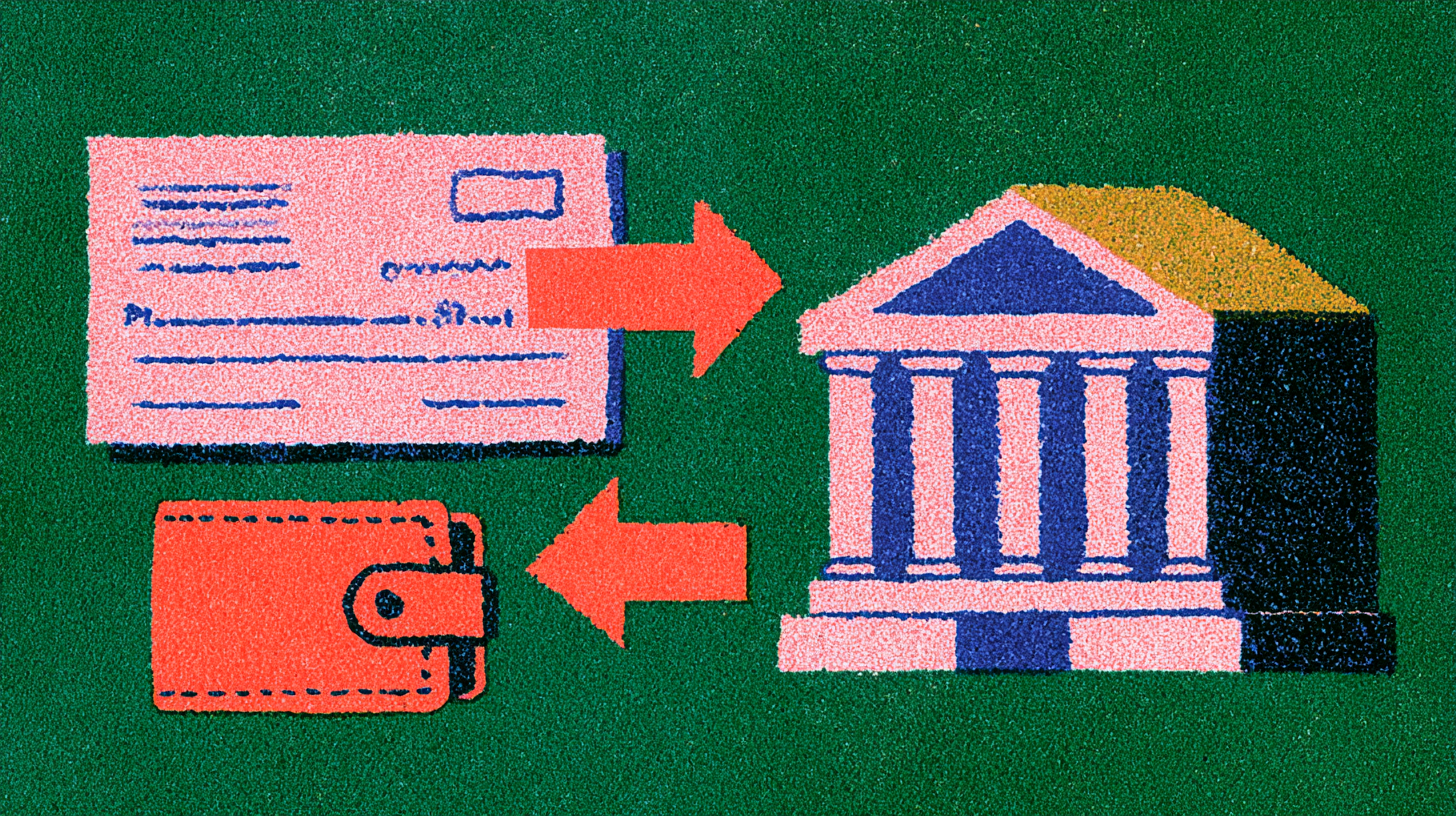
Financial Education
Direct deposit vs wire transfer: comparison guide for U.S. immigrants
8 min de lectura
Direct deposit vs wire transfer: comparison guide for U.S. immigrants
These payment methods are both available in the U.S. but they are often used for different purposes. Direct deposit is commonly used for paychecks, tax refunds, and government benefits, while wire transfers are more often used for urgent or high-value transfers between financial institutions.
Understanding the difference between direct deposit and wire transfers can help you avoid unnecessary fees, choose the right payment method for your situation, and manage your money more confidently.
What's the difference between direct deposit and wire transfer?
The biggest difference is the purpose they serve. Direct deposit is commonly used for recurring payments such as salaries, benefits, and tax refunds. Wire transfers are commonly used to move money quickly between financial institutions, particularly for large or time-sensitive transactions.
| Feature | Direct deposit | Wire transfer |
|---|---|---|
| Common use | Paychecks, benefits, tax refunds | Large or urgent transfers |
| Network used | ACH network | Wire transfer network |
| Speed | Typically 1–3 business days | Often same day or next business day |
| Typical cost | Often no fee to receive | Fees may apply |
| International transfers | Limited | Commonly used |
| Recurring payments | Yes | Less common |
| Setup required | Routing + account number | Bank details + recipient information |
How direct deposit works
Direct deposit is one of the most common payment methods in the United States, particularly for employees receiving wages from an employer. Instead of issuing a paper check, an employer sends the payment electronically to the employee's bank account through the ACH network.
To set up direct deposit you need to provide your employer: your bank's routing number and your personal account number.
How wire transfer works
A wire transfer is an electronic transfer of funds between financial institutions through secure financial networks like Fedwire or SWIFT. Unlike direct deposit, wire transfers are better suited for large one-time payments, urgent payments, real estate transactions, or international transfers.
When to use each one
Use direct deposit for:
- Receiving your paycheck
- IRS tax refunds
- Social security or unemployment benefits
- Recurring business payments
Use wire transfer for:
- Real estate payments (down payment, closing)
- Urgent international transfers
- High-value business payments
- When the recipient specifically requires a wire transfer
How to set up direct deposit with Común
With your Común account, you can set up direct deposit by providing your Común routing number and account number to your employer. Your Común account has unique routing and account numbers available in the app. Visit comun.app to learn more.
FAQ
Is direct deposit faster than wire transfer?
Not necessarily. Domestic wire transfers can be faster (same day), while direct deposits usually take 1-3 business days. However, many accounts offer early access to direct deposits up to 2 days early.
How much does it cost to set up direct deposit?
Setting up direct deposit is generally no fee. Employers use the ACH network to send payroll electronically at no charge to the employee.
Común is a financial technology company and not a bank. Banking services are provided by Community Federal Savings Bank, Member FDIC.

Financial Education
How to fill out a check in the United States in 5 simple steps (+ Example)
8 min de lectura
Have you ever filled out a check? Although most transactions today are digital, knowing how to fill out a check is essential—especially if you are just beginning your financial life.
According to recent data, one-third of Americans paid by check in 2024, demonstrating that checks still play an important role in the U.S. economy.
You might consider checks an outdated payment method; the reality is that they are useful in specific situations. For that reason, we will explain what a check is, the different types of checks, and how to complete them properly.
What Is a Check and What Is It Used For?
Despite the digital era, checks remain a relevant traditional payment method due to their formality and traceability. They are used for rent payments, purchases, and service payments.
Additionally, checks are a common payment method among the immigrant community, who often use them while adapting to the U.S. banking system.
But what exactly is a check and what are its characteristics? It is a physical document issued by an individual or business (the drawer) to order a bank to pay a specified amount to a third party. For the payment to be processed, the drawer must have sufficient funds in their checking account.
In general, a check contains the following information:
- Name of the drawer, whether an individual or a business
- Name of the payee
- Financial institution where the money will be drawn
- Amount to be paid, both in numbers and in words
- Signatures of the drawer
What Are the Different Types of Checks?
There are different types of checks in the United States. In this case, we will focus on the personal check, although you may choose the option that best suits your needs.
Personal Check
A personal check is a payment order issued by an individual to another individual using the funds in a checking account.
What Is a Personal Check Used For?
The most common uses for personal checks include:
- Rent and utility payments
- Purchase of everyday goods
- Legal agreements requiring documentary support
Certified Check
A certified check serves the same purpose as a personal check but is reviewed and guaranteed by the issuing bank, which verifies that the drawer has sufficient funds and holds them until the check is cashed.
A certified check provides certainty of available funds, making it a more secure method for making and receiving payments.
Cashier’s Check
Unlike a personal check, a cashier’s check is issued directly by the bank, offering greater security for the payee, as the bank is responsible for issuing and safeguarding the funds.
To obtain a cashier’s check, the drawer must visit a bank branch and pay the amount to be transferred. The bank then issues the check in the name of the payee, guaranteeing that it can be cashed using the institution’s own funds and not a personal account.
It is commonly used for high-value purchases such as homes and vehicles.
Money Order
While not strictly a check, it is a traditional payment method with similar functionality.
A money order is a financial instrument that allows funds to be sent via traditional mail using a certified check, which must be purchased and paid for by the drawer at an authorized location.
It allows secure money transfers without requiring a bank account.
How to Fill Out a Check in the U.S.
Before issuing this type of payment order, you must know how to do it properly. Below is an example of how to fill out a check easily, starting from step one:
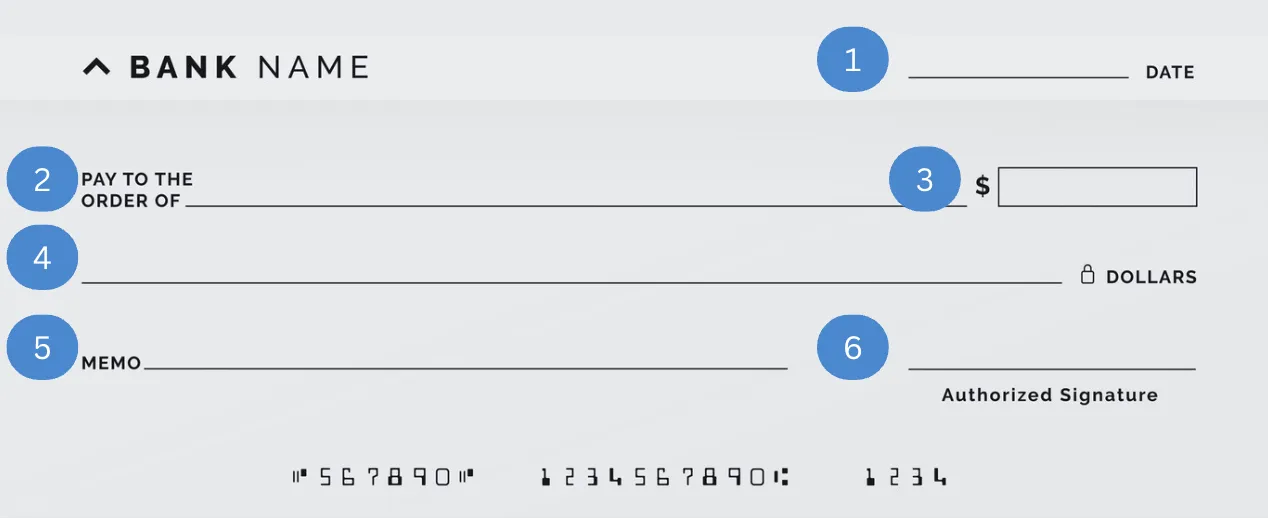
1. Write the Date
Remember that in the United States, the date format is mm/dd/yyyy.
2. Payee’s Name
Write the full name of the person to whom you are issuing the check, exactly as it appears on their official identification.
3. Amount in Numbers
Write the numerical amount clearly.
4. Amount in Words
Write the amount in words, including cents.
5. Add a Memo
You may include a note specifying the reason for the payment.
6. Sign the Check
Sign the check legibly in the space designated for the drawer.
7. Review the Information
Ensure that all information is accurate to avoid issues for the payee when cashing the check.
It is essential to complete checks legibly, without strike-throughs or corrections, as these may invalidate the document.
How to Correctly Write Numbers in Words on a Check
Writing amounts in words may be confusing when dealing with U.S. dollars. The following points should be kept in mind:
- Dollar amounts must be written in full words
- Cents must be written as fractions
- Avoid using dollar symbols or similar notations
- If there is leftover space at the end of the line, draw a line to prevent fraud
- For example, $1,000.75 is written as: One thousand and 75/100 dollars
Cash Checks and Manage Your Money Easily with Comun
As you can see, knowing how to fill out a check is useful for sending and receiving money in the United States. It is a reliable and accessible alternative if you do not have a banking account.
However, issuing and cashing a check can also require significant time and effort. That’s why you can skip the trip to the bank, avoid wasting time or money on gas, and cash your check directly from your phone using Comun—no lines, no questions, no complications.
Discover Comun, the only platform designed to serve the needs of immigrant communities in the United States, with support available in Spanish.
Why Choose Comun?
- Open your account with an official ID from your country
- Access a mobile app specifically designed for immigrants in the U.S.
- Make payments, receive your salary, and manage your finances
- Send money to your loved ones in LATAM for just a $2.99 transfer fee
Frequently Asked Questions
Still have questions about how to fill out a personal check? See our FAQ section.
What if I Make a Mistake Filling Out a Check?
If there are strike-throughs or inconsistencies in the amounts, the check must be voided and a new one used.
How Do I Void a Check?
Write the word VOID in large letters on the front of the check.
What Information Appears on the Back of a Check?
The back of the check contains the endorsement, meaning the payee’s signature for cashing the check.





Thousands of immigrants are already achieving more with their money. You can too.
Comun is a financial technology company and not a bank. Banking services are provided by Community Federal Savings Bank; Member FDIC. The Comun Visa® Debit Card is issued by Community Federal Savings Bank, pursuant to a license from Visa U.S.A Inc. and may be used everywhere Visa Cards are accepted.
Comun is a fintech company and not a bank or licensed money transmitter.
* Results may vary. For a complete list of eligible IDs and application requirements, follow this link.
^ No minimums, no maintenance fees. ATM or transfer fees may apply. See app for fee details.
‡ Direct deposit funds are typically available when we receive the payment file, up to two days before the scheduled payment date. This early availability is not guaranteed.
** A service provided by Service UniTeller, Inc. Service UniTeller, Inc. is licensed in all states that require a license. Remittance fees start at $2.99 but may vary. Please check the app for more details. Comun Inc. may earn revenue from the conversion of foreign currencies.
† Funds in your account are FDIC insured up to $250,000 by ownership category through Community Federal Savings Bank (CFSB), Member FDIC, in the event CFSB fails.