Financial Education
What is cashback and how does it work? A 2026 Guide
Cashback gives you back a percentage of what you spend on eligible purchases. Learn what it is, how it works, the types available in 2026, and how to use it without overspending.
8 min read

What is cashback and how does it work? A 2026 Guide
Cashback is a rewards system that gives you back a percentage of the money you spend on eligible purchases. In simple terms, when you buy something using certain credit cards, debit cards, apps, or rewards programs, you may get a percentage of your money back on purchases, though it is usually credited to your account rather than handed over as physical cash.
If you recently moved to the United States or are learning how the financial system works, you may have heard the term 'cashback' while shopping at places like Walmart, Target, gas stations, supermarkets, or online stores.
For many people, cashback can become a practical tool to manage everyday expenses such as groceries, transportation, gas, and household purchases. While the amounts may seem small at first, they can add up over time when used consistently and responsibly.
What is cashback?
Cashback is a type of financial reward that returns a percentage of your purchase after you spend money with a participating payment method or rewards platform.
For example:
- If you spend $100 at the supermarket using a card that offers 2% cashback, you may receive $2 back
- If a cashback app offers 5% cashback at a participating gas station and you spend $60 on fuel, you may receive $3 back
Unlike traditional discounts, cashback usually happens after the purchase is completed. The Consumer Financial Protection Bureau (CFPB) explains that cashback rewards are commonly offered through credit cards and loyalty programs as an incentive for spending.
How does cashback work?
Cashback programs generally follow a simple process:
- You make an eligible cashback purchase using the participating card, app, or rewards account
- The transaction is recorded by the provider
- A percentage of that purchase is returned to you as cashback
The reward may appear as:
- Statement credit
- Bank deposit
- Gift card
- Rewards balance
- Redeemable points
- Store credit
Some cashback rewards appear within a few days, while others may take an entire billing cycle or longer to process. There are often minimum redemption thresholds before you can claim your cashback. Certain programs may include expiration dates. It is also important to understand that not every purchase qualifies for cashback.
Cashback vs. traditional discounts
While cashback and traditional discounts can both help consumers save money, they work in different ways. A traditional discount lowers the price immediately at checkout, while cashback returns part of the money after the purchase has already been completed.
| Cashback | Traditional Discount |
|---|---|
| Money is returned after the purchase | Price is reduced before purchase |
| Usually linked to cards, apps, or loyalty programs | Usually available directly in-store |
| Rewards may take days or weeks to process | Savings are immediate |
| May help track expenses digitally | Does not usually include tracking tools |
| Often limited to eligible categories or stores | Depends on store promotions |
Types of cashback in 2026
Not all cashback programs work the same way. Before signing up for a cashback program, it is important to review details such as annual fees, interest rates, minimum redemption, expiration policies, and spending categories.
Fixed-rate cashback
This type gives the same cashback percentage on all purchases. Example: 1.5% cashback on everything you buy. This structure is simple because you do not need to track categories or rotating offers.
Category-based cashback
Some cards or apps offer higher cashback percentages in specific categories such as supermarkets, restaurants, gas stations, or streaming subscriptions. For example: 3% on groceries, 2% on gas, 1% on all other purchases.
Rotating cashback categories
Some providers change cashback categories every few months. One quarter may focus on gas stations and grocery stores; another may include online shopping and travel purchases. These programs sometimes require manual activation each quarter.
Welcome bonuses
Certain credit cards offer introductory cashback bonuses if you spend a minimum amount during the first months after opening the account. For example: spend $500 in the first 3 months and receive $150 cashback bonus. The Federal Trade Commission recommends reviewing terms carefully before applying for financial products with promotional offers.
Where can you get cashback in the United States?
Credit cards:
Many credit cards in the U.S. include cashback rewards. Some examples include products from Discover, Chase, Capital One, and American Express. Some cards focus on categories like dining or travel, while others offer flat-rate cashback.
Debit cards:
Some financial institutions offer cashback debit cards, although rewards are usually smaller than those offered by credit cards. This may appeal to people who prefer avoiding debt or credit card interest.
Cashback apps:
Several mobile apps partner with retailers and offer cashback rewards for purchases. Examples include Rakuten, Ibotta, Upside, and Honey. These apps may provide cashback for grocery shopping, online purchases, gas stations, and restaurants.
Store loyalty programs:
Retailers sometimes offer cashback or store rewards through membership programs. For example, supermarkets, pharmacies, and warehouse stores may return store credit or savings points after purchases.
Cashback vs. points vs. miles: Which is better?
Although they are often grouped together under the category of 'rewards,' each one works differently and can be useful depending on a person's spending habits, financial goals, and lifestyle.
Cashback programs generally return a percentage of the money spent on eligible purchases. Points systems usually assign a numerical value to purchases that can later be redeemed for products, gift cards, discounts, or services. Travel miles are typically associated with airlines, hotels, or travel-focused credit cards.
| Cashback | Points | Miles |
|---|---|---|
| Returns money | Rewards system value | Travel-focused rewards |
| Flexible spending | Often redeemed in specific ecosystems | Usually tied to airlines or hotels |
| Reward after spending | Redemption values vary | Best for frequent travelers |
| Common for everyday purchases | May include gift cards or products | Often used for traveling |
For many people, especially those focused on getting some value on their everyday expenses such as groceries, transportation, gas, or household purchases, cashback can feel more useful as the reward is directly connected to money rather than conversion systems or travel programs.
3 practical tips for using cashback responsibly
1. Use cashback for purchases you already planned
Focus on recurring expenses such as groceries, gas, transportation, and utility bills. This helps you avoid overspending simply to earn rewards.
2. Don't buy things you don't need
A cashback offer does not automatically make a purchase worthwhile. For example, spending $200 to earn $4 cashback may not help your finances if the purchase was unnecessary.
3. Track your cashback earnings
Many apps and financial platforms allow you to monitor spending categories, cashback totals, and monthly rewards. Tracking your rewards can help you understand your spending patterns and maintain financial goals.
Does Común offer cashback?
No. Común does not currently offer cashback programs.
However, Común provides tools and resources that offer guidance for Latin American immigrants navigating the U.S. financial system.
While cashback might be useful for some people, it is important to pay attention to commissions, as savings when commissions are included might not be as strong as initially perceived. When comparing financial tools in the United States, cashback is only one factor to consider. Fees, commissions, account accessibility, and transparency can also affect your financial experience over time.
Común's cost for opening a debit account is $0, same as the $0 minimum balance and $0 monthly commission for the debit account.
FAQ
What is cashback and how does it work?
Cashback is a rewards system that returns a percentage of your purchases after you spend money using eligible cards, apps, or loyalty programs.
How is cashback calculated?
Cashback is usually calculated as a percentage of the purchase amount. For example, if you spend $100 and your cashback rate is 2%, you receive $2 back.
Where can I get cashback in the United States?
Cashback is commonly available through credit cards, debit cards, shopping apps, and retailer loyalty programs.
What is the difference between cashback and points?
Cashback returns money directly, while points are part of rewards systems that may only be redeemed for specific products, gift cards, or services.
Does Común offer cashback?
No. Común currently does not offer cashback.
Is cashback taxable?
In many cases, cashback earned through purchases is generally treated as a rebate rather than taxable income. However, tax treatment may vary depending on how rewards are earned. The IRS recommends consulting a tax professional for specific situations.
About Común
Común aims to support the Latino community in the United States. It offers a debit account that can be opened with more than 100 valid Latin American IDs and an app available in Spanish.
Visit Común's website or download the app for free to learn more about the full offer and applicable terms.
Olivia Rhye
Community Partner

.avif)
Financial Education
The Definitive Guide to Managing Checks in the Digital Age
8 min de lectura
The shift from physical to digital checks marks a significant transformation in financial services, driven largely by technological advances and the widespread adoption of mobile devices and online banking platforms. This shift reflects a broader trend in the digital era, where convenience and efficiency come first. The importance and benefits of having a checking account in this context can't be overstated, since it enables direct deposit and check deposit through ATMs, saving users significant time and money.
How Banks and Financial Institutions Are Adapting
Banks and financial institutions have been at the forefront of this digital shift. Recognizing their customers' needs and preferences, these institutions have invested heavily in developing secure, user-friendly online banking services and mobile apps. These platforms let users complete a wide range of transactions that traditionally required a visit to a bank branch. Now, customers can access their bank accounts and manage payroll checks through direct deposit — a feature that improves the efficiency of receiving paychecks and issuing personal checks directly from their smartphones or computers. This functionality doesn't just simplify the process — it also makes it accessible anytime, anywhere, removing the physical limitations of traditional banking.
Convenience and Accessibility
The integration of online and mobile banking solutions has made financial services more accessible, letting users complete transactions remotely. One example is the PayPal app, which lets users deposit checks into their PayPal account using a photo, accessing their money for free within 10 days or instantly for a fee. This is particularly beneficial for users who need to deposit payroll checks without the delay of mail services or the inconvenience of visiting a physical bank or check-cashing store. For people living in areas without easy access to traditional banking facilities, or those with mobility issues, these digital options provide essential financial access, improving their ability to manage personal finances efficiently.
Enhanced Security Features
Along with convenience, security is a priority in the evolution of digital check processing. Financial institutions have implemented sophisticated security measures to protect users and their transactions. These include encryption, two-factor authentication, and secure sockets layer (SSL) technology, which protect data transmitted during online and mobile banking sessions. Additionally, features like automated fraud detection systems monitor unusual activity, helping prevent unauthorized access and transactions.
Verification processes for digital check transactions have also become more robust. Digital checks often require multi-factor authentication, which can include biometrics (like fingerprint or facial recognition), security questions, or mobile code confirmation. These layers of security help ensure only authorized users can issue, cash, or deposit checks, significantly reducing the risk of fraud.
The shift to digital check processing through online banking and mobile devices illustrates a broader trend in financial transactions toward greater technology integration, prioritizing user convenience and security. As this trend continues, we can expect these platforms to evolve even further, offering more features and efficiencies for managing financial transactions in the digital age.

Navigating Check-Cashing Services and Fees in the Digital Age
Traditional banks continue to offer check-cashing services at their branches, but the rise of digital platforms has diversified how consumers can cash a check and access their money. For those without a bank account, a check-cashing service provides a vital option for turning checks into cash, often at physical locations. Digital services like PayPal let users deposit checks directly into their PayPal accounts just by taking a photo of the check, making a PayPal account an essential tool for digital check deposits. Mobile apps like Ingo Money offer similar services, allowing check deposits directly to prepaid cards, PayPal accounts, or even as Amazon credit. These tools offer a level of convenience and speed traditional banks often can't match, since they skip the need to visit a physical location.
Understanding Check-Cashing Fees
Each check-cashing option has its own set of fees. Traditional banks may charge non-customers a fee to cash checks, and these fees can be particularly high for personal or third-party checks. Grocery stores and check-cashing stores typically charge a percentage of the check amount, which can vary widely depending on the type and amount of the check. Services like Western Union also facilitate check cashing, but often with higher fees, especially for instant-cash services.
Digital platforms vary in their fee structures. PayPal, for example, offers free check deposit if the user is willing to wait a few days for funds to settle, but a faster-access option is available for a small fee. Ingo Money also charges fees for instant access but offers a fee-free option if the user is willing to wait for funds.
Reducing Costs and Increasing Convenience With Digital Solutions
Digital solutions offer significant advantages in terms of reducing check-cashing costs and increasing convenience. By enabling direct deposits into checking accounts or onto prepaid cards like the Walmart MoneyCard, these digital platforms eliminate the need for physical check-cashing locations. This not only saves on the cost associated with cashing checks at physical locations, but also reduces the time spent processing transactions.
Additionally, the ability to deposit checks anytime, anywhere via a mobile device or computer means funds are available faster and without the inconvenience or expense of traveling to a bank or check-cashing store. This accessibility is particularly beneficial for people in remote areas or those with mobility issues, for whom visiting a physical location is a challenge.
In summary, the digital transformation of check-cashing services has given consumers a wider range of options for accessing their money quickly and securely, often at lower costs than traditional methods. The convenience of digital platforms extends to the ability to send money quickly and securely, further improving the user experience in managing financial transactions. As technology continues to advance, we can expect further innovations that will improve the efficiency and convenience of these financial transactions.
The Role of Third-Party Checks in Modern Financial Transactions
Handling third-party checks and pre-printed checks is critical within the digital banking framework. These checks, essential for numerous transactions like payroll payments and government payments, must be managed with strict security measures to ensure the integrity of financial processes.
Handling Third-Party Checks
Third-party checks involve transferring funds from the payer to an intermediary recipient, who then endorses the check to another party, known as third-party check endorsement. This process is particularly useful when the original recipient needs to endorse a third-party check to someone else, either because they lack valid ID or face limitations that prevent them from cashing the check themselves. The complex nature of these transactions requires rigorous verification processes. Financial institutions require valid ID from anyone attempting to cash or deposit third-party checks to verify their legitimacy. Both the original recipient and the endorser must sign, explicitly authorizing the transfer of funds. This verification helps mitigate risks like fraud, which are higher with third-party checks due to the multiple parties involved.
Managing Pre-Printed Checks
Pre-printed checks are commonly used for direct deposit of payroll and government benefits. They include fixed details like the issuing bank's name, the amount, and the recipient's account information, which are printed by the financial institution or company issuing the check. These checks are usually processed through specialized check-cashing services, which use advanced digital scanning technology to validate the check's details against secure databases, ensuring the payment comes from a legitimate source and is deposited into the correct bank account.
Modern Solutions in Check Cashing
Digital solutions have revolutionized how checks are processed, improving convenience and reducing check-cashing fees. Online banking platforms and mobile devices enable check deposits through mobile check deposit services. These platforms, like those offered by banks and financial services like PayPal and Ingo Money, let users cash checks by taking a photo and uploading it through an app. This method not only streamlines the processing of two-party personal checks and government checks, but also speeds up the availability of funds in checking accounts or on prepaid cards like the Walmart MoneyCard.
In conclusion, the digital transformation in handling third-party and pre-printed checks is improving security, reducing fees, and increasing convenience across the board. This shift doesn't just respond to growing demand for more efficient financial services — it also reflects broader trends toward digitization across every aspect of banking and financial transactions.
Embracing Digital Change in Check Management
The transformation of check management in the digital age is a clear reflection of the broader trend toward technology-driven financial services. This evolution presents a unique mix of challenges and opportunities. As we've explored, the shift from physical to digital checks brings improved security, greater convenience, and significant cost savings, making it an essential trend for both consumers and financial institutions.
The future of check management depends on deeper integration of innovative technologies. Banks and financial institutions are continually improving their digital services to offer users smoother experiences. Innovations like blockchain and artificial intelligence are poised to redefine security and efficiency in financial transactions, offering even more robust protections against fraud and errors.
For individuals, the ability to manage checks through mobile devices and online platforms means easier access to their finances, less time spent on manual processes, and reduced fees associated with traditional check-cashing services. For businesses and financial institutions, digital check processing reduces administrative burden and speeds up capital flow, improving economic efficiency.
In summary, managing checks in the digital age involves a dynamic mix of adapting to current technologies and anticipating the future needs of the financial market. This ongoing evolution promises to make financial management more accessible, secure, and efficient for everyone involved.
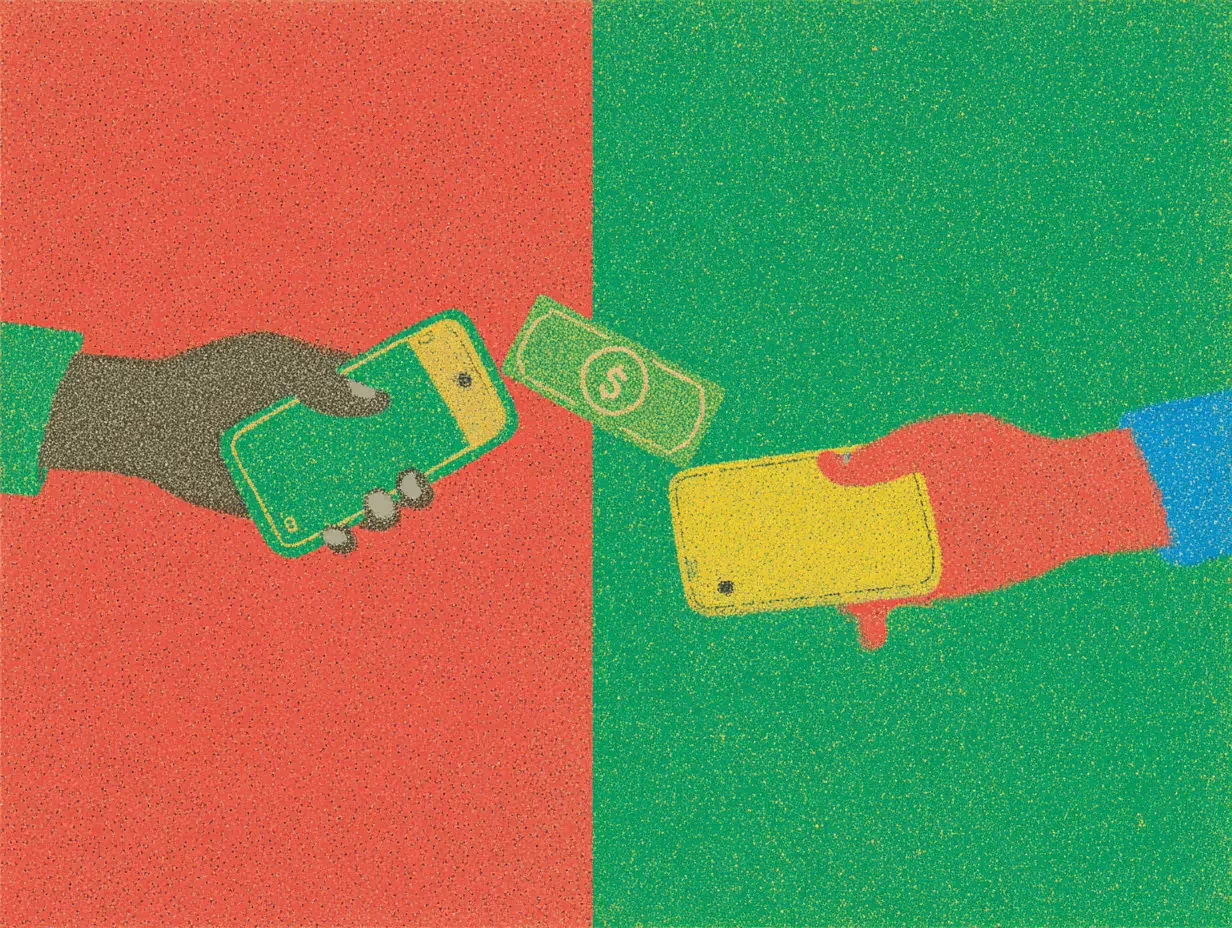
Instant payments
Person-to-Person Transfer Apps
8 min de lectura
Person-to-person (P2P) transfer apps let you send and receive money between individuals using just an email or phone number. With Común you can link an external debit card from another U.S. bank to send and receive payments right away.
What Are Person-to-Person Transfer Apps?
Person-to-person transfer apps, commonly known as P2P apps, are mobile platforms that allow users to send and receive money electronically without the need for traditional banking procedures. These apps simplify financial transactions by connecting users directly through their mobile devices, allowing them to transfer funds with just a few clicks, including person-to-person payments to split bills, make payments, or transfer funds between two parties with separate bank accounts. Peer-to-peer payments have become a popular feature of P2P apps, highlighting their role in the modern digital economy.
How P2P Transfer Apps Work
The process generally involves several key steps:
- Setup: Users download a P2P app from the app store, create an account, and link it to a bank account or credit/debit card.
- Transaction: To send money, the sender enters the recipient’s contact details and the amount to send. The app then transfers the specified amount from the sender’s account to the recipient’s account.
- Receipt: Recipients receive a notification of the funds, which they can keep in the app wallet or transfer to a bank account.
If you want to know more about some of the steps, we explain them here:
- How to Open a Bank Account in the United States, Step by Step
- How to Make International Transfers
- Different Transfer Methods
These apps leverage advanced technologies:
- Mobile Payment Technology: This includes secure digital wallets and payment systems that facilitate transactions over mobile networks.
- Internet Banking: Integration with online banking systems allows seamless direct debits and credits to and from bank accounts.
- Encryption and Security: Ensuring data privacy and security is crucial, so end-to-end encryption is used to protect transactions.
Evolution of Digital Payments
The concept of digital payments is not new, but it has evolved significantly with technological advances. The journey began with the introduction of internet banking, which later transformed into mobile banking, providing a foundation for the development of dedicated P2P payment platforms. Here are some examples of popular P2P apps you may already know:
- PayPal: Known for its robust security features, PayPal is widely used internationally and integrates seamlessly with many e-commerce platforms.
- Venmo: Popular in the U.S., Venmo combines social networking with financial transactions, showing a user transaction feed among friends.
- Cash App: Offers a simple interface and additional features such as direct deposit, investment options, and Bitcoin trading.
- Zelle: Integrated into many major U.S. banking apps, Zelle enables instant transfers without the need to install an app for bank customers.
Each of these apps reflects regional preferences and legal frameworks, which influence their functionality and adoption. Understanding these differences is crucial for users operating in multiple countries or considering international transactions.
Your best option as a Latino in the U.S. will always be Común.
Banking designed for your life in the U.S.
Open your bank account¹ in 3 minutes with your country ID²
- No fees for minimum balances
- Get paid up to 2 days early³
- Send money to your country securely
- and much more!
Guide to the Safe Use of Person-to-Person Payment Apps
Person-to-person payment apps (P2P) like PayPal, Venmo, and Cash App simplify financial transactions, allowing users to transfer money, manage accounts, and protect their financial activities with ease. Being aware of credit card fees when using these apps can ensure cost-effective transactions. Here is an essential guide to using these apps effectively, from setup to transaction execution, along with security tips.
Setting Up and Using P2P Payment Apps
- Download and Install the App: Start by downloading the chosen app from the App Store or Google Play. Make sure you download the official app by checking the developer details and reading user reviews.
- Account Creation: Open the app, choose to create a new account, and provide the required details, such as name, email, and phone number. Use a strong password and consider a password manager for added security.
- Linking Bank Accounts or Cards: In the app’s digital wallet section, add your bank account or credit/debit card. This step may include a verification process through a secure link to your online banking or a test transaction.
- Implement Security Measures: Enable two-factor authentication and biometric features such as fingerprint or facial recognition to strengthen access security.
Managing Transactions in P2P Apps
- Send Money: Use the app’s payment function to send money directly to another user’s account within the same provider by entering the correct recipient details (phone number, email, or username) and the amount. This feature allows you to transfer funds to other users easily, ensuring a smooth transaction process. Confirm all details before completing to avoid unauthorized transactions.
- Receive Money: Share the app-related details with the sender. Transaction completion times may vary depending on the app’s policy, which could affect when the funds are available.
- Fund Your Wallet: Add money to your app balance from a linked account, making sure the transfer is secure and from the correct source.
- Withdraw Funds: Transfer money from the app to your bank account, understanding that transfer times can range from instant to several business days.
Ensuring Security and Compliance
- Be alert to suspicious payment requests or phishing attempts. Fraudsters may imitate legitimate entities, requesting money or information. Report any suspicious activity to the app’s support team and the relevant authorities. Always verify recipient information to avoid mistakes or fraud. Verify unexpected payment requests through direct communication to avoid scams.
- Legal and Privacy Considerations: Understand the legal regulations governing P2P payments, including compliance with anti-fraud and anti-money-laundering laws. Be aware of how apps handle your data, especially regarding privacy settings and data sharing with third parties.
- Dispute Resolution and International Payments: Familiarize yourself with the app’s dispute resolution process. Cross-border transactions are subject to varying laws that could affect transaction parameters.
By adhering to these guidelines, users can effectively manage their financial transactions through P2P apps, ensuring both security and convenience. Always prioritize verification of transaction details and the recipient’s identity to maintain security and avoid potential financial losses.
Financial Management: A Guide to Efficient Use
Person-to-person payment apps have fundamentally changed the landscape of personal financial management. These mobile payment apps integrate seamlessly into personal budgeting strategies, making fund transfers easier while offering significant advantages for effective financial management. Financial institutions play a crucial role in facilitating P2P payments, ensuring funds are protected through FDIC insurance, which is vital for user security and trust in the fintech ecosystem.
Integrating P2P Payments into Personal Budgeting
P2P payment apps allow users to set spending limits, helping maintain financial discipline by limiting daily or monthly expenses, a key feature for those committed to a strict budget. These apps also provide instant digital records of all transactions, enabling users to track their spending habits over time.
This real-time tracking outperforms traditional banking methods, proving invaluable for on-the-fly budget adjustments. Additionally, many P2P apps come equipped with built-in budgeting tools that categorize expenses, allowing users to see their spending on necessities such as groceries, utilities, or dining out.
Advantages and Limitations of P2P Payment Apps
Using P2P payment apps is characterized by ease and speed, with transactions often completed in just a few seconds. These apps’ user-friendly interfaces simplify processes such as transferring money, paying bills, or splitting expenses like dinner checks or rent. Robust security features such as two-factor and multi-factor authentication, along with biometric authentication methods like fingerprint locks, help protect users from unauthorized transactions and other security risks. In addition, each transaction is logged and easily accessible, simplifying financial record management for personal or shared expenses.
Despite their many benefits, P2P payment apps have limitations. Transaction fees are a common concern, particularly for instant transfers to bank accounts or payments made with a credit card. Users may also encounter transfer limits, which can be restrictive for those handling larger sums. Security risks remain a persistent threat, especially if device security is compromised or users fall victim to scammers’ phishing schemes.
Understanding these advantages and limitations is crucial for users considering integrating P2P payment apps into their financial management practices. When used knowledgeably, these apps can significantly improve the convenience and efficiency of personal finances, allowing users to manage their transactions securely and effectively while navigating the potential pitfalls of digital payments.
Embracing Person-to-Person Apps
Person-to-person (P2P) payment apps represent a major advance in the way we manage and conduct financial transactions. By offering a convenient, fast, and user-friendly platform, these apps have not only simplified the process of sending and receiving money but have also incorporated robust mechanisms to secure and optimize personal financial management.
As we adopt these technologies, it is imperative that users remain informed about the operational complexities, potential fees, security measures, and privacy settings of their chosen P2P apps. Understanding these aspects ensures that users can leverage the technology responsibly and to its fullest potential, whether for everyday transactions, budgeting, or handling larger financial operations across borders.
What are P2P transfer apps?
They're apps that let you send and receive money directly between people, usually by linking a bank account or debit card.
How do I send or receive money from another person with Común?
You can link an external debit card from another U.S. bank (up to 2 cards in your first 60 days) to send and receive payments, even if you don't have funds in your Común balance.
What should I consider when using a P2P app?
Transfer speed, per-transaction limits, and which payment methods it accepts (debit card, credit card, or bank account) vary by app.
Frequently asked questions
Can I send money to someone without having a balance in my Común account?
Yes, if you have a linked external debit card, you can send money even without funds in your Común balance.
What cards can I link to my Común account?
Valid debit cards issued in the U.S., in your name, that allow sending and receiving funds. Credit and prepaid cards aren't accepted.
How many external cards can I add?
Up to 2 debit cards during your first 60 days with the account.
How does Común verify the external card is mine?
By sending a micro-deposit (less than $1.00) to the linked account, which you confirm in the app.
Why was my external card rejected?
Common reasons include the name not matching your account, the card being a credit card, or it not being issued in the U.S.
Is it safe to link an external card to my Común account?
Yes, Común never asks for your bank password or sensitive information during verification.

Instant payments
What is Cash App and how does it work?
8 min de lectura
What is Cash App and how does it work?
Cash App is a peer-to-peer (P2P) payment app that allows users in the United States and the United Kingdom to send and receive money digitally. Over time, Cash App has expanded beyond transfers and now also offers features such as debit cards, direct deposits, savings tools, and investing options.
If you recently moved to the United States or are exploring digital financial tools, you have probably heard of Cash App. The app is widely used for sending money between friends, paying for purchases, and managing certain financial activities directly from a smartphone.
For many immigrants in the United States, understanding how Cash App works is important because it may appear similar to a traditional bank account, but it is not exactly the same thing.
What is Cash App?
Cash App is a mobile financial app that allows users to send, receive, store, and spend money digitally through their phones. The app is commonly used for:
- Sending money to friends or family
- Receiving payments
- Paying for purchases
- Using a debit card linked to your balance
- Receiving direct deposits
- Buying stocks or Bitcoin
Unlike traditional banks, Cash App primarily operates through its mobile app rather than physical branches.
How does Cash App work?
To start using Cash App, you need to download the app, create an account with a U.S. phone number or email, and link a bank account or debit card. Once the account is set up, you can send or request money by searching for another person by their $Cashtag, phone number, email, or QR code.
Standard transfers typically arrive in 1 to 3 business days to a linked bank account. Instant transfers to a debit card usually carry a percentage-based fee.
How much does Cash App charge? — Fee table
| Service | Typical Cost |
|---|---|
| Standard bank transfer (1–3 business days) | No additional fee |
| Instant transfer to debit card | Percentage-based fee |
| Sending money using linked credit card | Additional fee may apply |
| ATM withdrawals | Fee may apply depending on conditions |
| Account opening | No monthly fee |
Fees and terms may change over time. Always review the official Cash App website before using financial services.
Is Cash App safe?
Cash App uses encryption and security features like Face ID and Touch ID. However, like any P2P payment platform, it is important to use it only with people you know. Once sent, money generally cannot be recovered if the transaction went to the wrong person.
Is Cash App available in Spanish?
Spanish-language support availability on Cash App may vary. The app's primary experience is mainly in English, which can be a limitation for users who prefer to operate in Spanish.
Can an immigrant open a Cash App account?
Cash App has its own eligibility requirements for account opening. Requirements may include a U.S. phone number or email address, and additional verification information may be required. It is recommended to review Cash App's current terms directly.
Limitations of Cash App for Latino immigrants
- Does not support international remittances to Latin America
- Spanish-language experience may be limited
- May not accept Latin American IDs for account opening
- No dedicated 24/7 Spanish-language support
Cash App vs. Común — Quick comparison
| Feature | Cash App | Común |
|---|---|---|
| P2P payments in the U.S. | Yes | Yes |
| Debit card | Yes | Yes |
| Stock and Bitcoin investing | Yes | No |
| Remittances to Latin America | No | Yes |
| Spanish-language experience | Spanish-language support availability varies | Yes |
| Payroll direct deposit | Yes | Yes |
| Open account with Latin American IDs | Eligibility requirements apply | Yes |
| Monthly maintenance fee | Varies by service usage | No monthly maintenance commission |
| Minimum balance requirement | Not always required | $0 |
FAQ
Is Cash App available in Spanish?
The app primarily operates in English. Spanish-language support availability may vary.
Can I send money to Mexico with Cash App?
No. Cash App does not support international money transfers to Mexico or other Latin American countries.
How much does Cash App charge for instant transfers?
Cash App charges a percentage-based fee for instant transfers to a debit card. Verify current fees on the official Cash App website.
Is Cash App safe?
Cash App uses encryption and identity verification. However, P2P transfers are difficult to reverse. Use it only with people you know and trust.
What is the difference between Cash App and Común?
Cash App focuses on domestic payments in the U.S. Común also offers domestic payments but additionally includes remittances to Latin America, full Spanish-language support, and the ability to open an account with more than 100 Latin American IDs.
Común is a financial technology company and not a bank. Banking services are provided by Community Federal Savings Bank, Member FDIC. Peer-to-peer payments services are provided by Cross River Bank. No minimums, no monthly maintenance commission.

Checking account
What Is a Checking Account and Why Do You Need One?
8 min de lectura
Checking accounts are an essential tool for managing your personal finances, and the main type of account you'll use day-to-day in the United States. In this article, we'll walk you through everything you need to know about them and how to choose the best option for you.
What Is a Checking Account and Why Do You Need One?
A checking account is a type of bank account that lets you deposit and withdraw money easily. It's the account most commonly used for everyday transactions like paying bills, making purchases, and receiving your paycheck. You need one because it gives you a safe place to keep your money and lets you handle financial transactions efficiently.
Advantages of Having a Checking Account
Checking accounts offer several advantages:
- First, they give you a safe place to keep your money.
- Second, they make managing your finances easier by letting you complete transactions easily.
- Third, many checking accounts offer additional services like debit cards, checks, and access to online and mobile banking.
Differences Between Checking Accounts and Savings Accounts
While a checking account is designed for everyday transactions, a savings account is designed for storing money long-term. Savings accounts usually offer higher interest rates, letting you earn money on your savings. However, they aren't as accessible as checking accounts and may have restrictions on how many transactions you can make.
Common Requirements to Open a Checking Account
Required Documentation
To open a checking account, you'll generally need to provide a photo ID, proof of address, and your Social Security number or tax ID number.
At Común, online banking for immigrants in the United States, the main documents you'll need are:
- Official ID from your home country
- A tax ID number like an ITIN or Social Security number (SSN)
- Proof of address in the United States, such as a bill in your name showing your address within U.S. territory
Opening a checking account with Común is 100% online and can be done in under 5 minutes.
Minimum Deposit and Other Conditions
Some banks require a minimum deposit to open a checking account. They may also charge fees if your balance drops below a certain level. For example, Chase Bank offers the Chase Total Checking account, and Citi Bank offers the Citi Basic Banking Package, both of which include access to thousands of ATMs and online and mobile banking service. However, like many other traditional banks, they charge a monthly service fee of around $8 to $12 unless you meet certain average monthly balance requirements or a minimum amount deposited through monthly direct deposits. On top of that, they may charge overdraft fees of $39 or more.
With Común, however, there's no minimum deposit amount, no minimum monthly balance, and no monthly service fee — and no hidden costs in the fine print.
What They Don't Tell You About Checking Accounts in the United States
You can generally access the funds in your account through ATM withdrawals, checks, electronic transfers, and debit cards. It's important to know, though, that each bank may charge fees for each of these operations, so it's worth knowing them before opening an account so you can compare your options and find what's most practical for you.
Many banks also require an initial deposit to open a checking account. The amount varies by bank, but can range from $25 to $100. Común's checking account has no such cost — the initial deposit required to open one is $0.
Checking accounts can also come with fees beyond the monthly maintenance fee, like ATM fees, overdraft fees, and more. Some banks waive the monthly fee if you maintain a minimum balance or have regular direct deposit. With Común, you can deposit and withdraw cash at no cost at more than 55,000 ATMs across the United States, found at places like Walgreens, CVS, Target, and more.
Some banks offer overdraft protection that keeps checks from bouncing or your debit card from being declined if you don't have enough money in your account. This service can come with high fees, though, so it's important to understand the terms.
And if you're living in the 21st century, access to online and mobile banking lets you check your balance, pay bills, deposit checks, and transfer money from anywhere.
One special feature of checking accounts is FDIC insurance. Banks in the U.S. are typically insured by the Federal Deposit Insurance Corporation (FDIC). This means that even if the bank fails, your money — up to $250,000 — is protected. Común's accounts, for example, are FDIC-insured up to $250,000 through partner bank Community Federal Savings Bank (CFSB).
Checking accounts are an essential tool for managing your personal finances. They give you a safe place to keep your money and let you handle financial transactions efficiently. When choosing a checking account, you should consider factors like fees, services offered, the bank's location and reputation, and interest rates. With the right information, you can choose the checking account that best fits your needs.
If you're looking to open a checking account and get a debit card, what are you waiting for? Do it with Común.
Financial Education
How to renew your ITIN: step-by-step guide
8 min de lectura
How to renew your ITIN: step-by-step guide
Your ITIN may have expired if you have not used it on a federal tax return for three consecutive tax years. To renew it, you must submit Form W-7 to the IRS, which is the same form used to apply for a new ITIN. You do not need to wait until tax season to start the renewal process, and you can submit your renewal before filing a tax return.
When does an ITIN expire?
An ITIN (Individual Taxpayer Identification Number) is a 9-digit tax processing number issued by the IRS. It is designed specifically for individuals who need to report income and file taxes in the United States but are ineligible for a Social Security Number (SSN).
An ITIN expires when it has not been used on a federal tax return for three consecutive tax years. The IRS explains that the expiration takes effect on December 31 of the third year of non-use.
An ITIN does not expire because time has passed, but because it has not been used for federal tax filing. Once expired, the number remains the same and can usually be renewed rather than replaced. An expired ITIN does not erase previous tax filings or financial records associated with it.
How do you know if your ITIN has expired?
One sign that an ITIN may have expired is not having filed a federal tax return with that number for several years. If three consecutive tax years have passed without using the ITIN, the number may no longer be active according to current IRS rules.
The IRS may also send a notice informing you that your ITIN needs to be renewed. Receiving a renewal notice does not mean there is a problem with your record. It simply means the IRS has determined that renewal is required before the number can be used again for tax filing purposes.
Tax software may also indicate that an ITIN has expired when preparing a return. If you are unsure if your ITIN has expired, checking IRS correspondence or reviewing past tax filings can also be a way to confirm status.
What happens if your ITIN expires?
An expired ITIN can delay the processing of a federal tax return. According to the IRS, certain tax credits and benefits associated with a return may not be available until the ITIN has been renewed.
An expired ITIN does not cancel previous tax filings, change your tax history, or create a new tax identity. The IRS maintains records associated with the original number even if that number has expired due to non-use.
An expired ITIN also does not automatically affect financial accounts that were opened using that number. However, an active ITIN may be required when completing future tax-related paperwork or applying for certain financial products and services.
If your ITIN has expired, the most practical step can be to start the renewal process before filing your next federal tax return. Taking action early can help avoid delays and additional paperwork during tax season.
What do you need to renew your ITIN?
To renew an ITIN, you must complete Form W-7 and mark it as a renewal application.
You also need documentation that proves identity and foreign status. The IRS lists acceptable documents in its official instructions, which include: passport, U.S. Citizenship and Immigration Services (USCIS) photo identification, visa issued by the U.S. Department of State, U.S. driver's license, foreign driver's license, foreign military identification card, national identification card (must contain name, photograph, address, date of birth, and expiration date), among others.
If your legal name has changed since your ITIN was issued, supporting documentation such as a marriage certificate or court order may be required.
How to renew your ITIN: step by step
1. Complete Form W-7
Fill out Form W-7 and indicate that you are renewing an existing ITIN. Make sure all personal details match your official documents.
2. Gather required documents
Collect identification documents that prove identity and foreign status. The IRS outlines acceptable documents in the Form W-7 instructions.
3. Attach supporting documentation
Include any additional documents required for your situation, such as name change records or prior IRS notices.
4. Submit your application
You can submit Form W-7 by mail, through an IRS-certified Acceptance Agent, or at select IRS Taxpayer Assistance Centers.
5. Wait for IRS processing
The IRS reviews the application and supporting documents before issuing confirmation. Keep copies of everything submitted for reference.
How long does ITIN renewal take?
Processing times vary throughout the year, but the IRS currently advises applicants to allow approximately seven to eleven weeks to receive notification regarding an ITIN application or renewal. Processing may take nine to eleven weeks during peak tax season or when applications are submitted from outside the United States.
Submitting a complete application can help prevent unnecessary delays. Applications that are missing required documents may take longer because the IRS must request additional information before processing can continue.
Can Común help me renew my ITIN?
Yes. Común's ITIN service helps with both new ITIN applications and ITIN renewals.
Común's ITIN service costs $199 and includes guidance throughout the renewal process. The service works with IRS-certified agents who help prepare the required paperwork, explain the requirements, and answer questions in Spanish.
The process can be completed from your phone, making it easier to organize documents and track progress without visiting multiple offices. Común also offers a money-back guarantee if the ITIN application is not approved according to the program terms.
FAQ
Do all ITINs expire?
Not all ITINs expire immediately or at the same time. An ITIN expires if it has not been used on a federal tax return for three consecutive tax years.
Can I renew my ITIN without filing taxes?
In some cases, yes. The IRS allows exceptions where Form W-7 can be submitted without a tax return depending on eligibility.
What form do I use to renew my ITIN?
You use Form W-7 for both new applications and renewals.
How long does it take to renew an ITIN in 2026?
The IRS estimates about seven weeks for processing. Processing may take approximately nine to eleven weeks during tax season or for certain international applications.
Can I still use my Común account if my ITIN expires?
An expired ITIN does not erase your financial history. If you have questions about how an expired ITIN may affect your specific account, contact Común directly for guidance.
What happens to my tax refund if my ITIN expires?
If an ITIN is expired, the IRS may delay processing a return until it is renewed. Certain tax benefits may not be available until the ITIN has been renewed, which can affect the timing of a refund.
Común is a financial technology company and not a bank. Banking services are provided by Community Federal Savings Bank, Member FDIC. The Común Visa® Debit Card is issued by Community Federal Savings Bank.

Community
Investment Basics for Immigrants in the U.S.
8 min de lectura
The Importance of Investing for Immigrant Families
Investing is one of the most powerful tools for building long-term wealth. For immigrant families in the U.S., understanding investment basics can make the difference between merely surviving and financially thriving. In this guide, we explain the fundamental concepts you need to know before you start investing.
What is investing?
Investing means putting money into assets with the goal of growing it over time. Unlike saving, which keeps money safe but with low returns, investing takes on some risk in exchange for the possibility of higher gains. The most common assets are stocks (ownership stakes in companies), bonds (loans to governments or companies), mutual funds (diversified portfolios), and real estate.
Key concepts you need to understand
Risk and return
The higher the potential risk, the higher the return can be. Individual stocks are more volatile than government bonds. Index funds offer a balance between reduced risk through diversification and historically positive long-term returns.
Diversification
Do not put all your eggs in one basket. Spreading investments across multiple assets, sectors, and geographies reduces the risk that one bad investment will ruin your entire portfolio.
Compound interest
Compound interest is the phenomenon of earning interest on previously earned interest. An investor who starts at age 25 will reach retirement with significantly more money than someone who starts at 35, even if they contribute the same monthly amount.
Investment horizon
The length of time you plan to hold your investments affects which assets to choose. For goals more than 5 years away, you can take on more risk. For short-term goals, prefer more conservative options. Never invest money you need in the short term.
Frequently asked questions about investing for immigrants in the U.S.
Can an immigrant invest in the U.S. stock market?
Yes. Most brokers in the U.S. allow non-citizens to invest, including permanent residents and people with work visas (H-1B, L-1, etc.). Some brokers also accept non-residents. To open an investment account, you generally need a tax identification number (SSN or ITIN) and a U.S. bank account.
How much money can I start investing with in the U.S.?
Most modern brokers like Fidelity, Charles Schwab, and Robinhood have no minimum amount to open an account. You can buy fractional shares starting at $1. What matters is not the starting amount but consistency—investing $50-100 per month regularly produces better results than irregular large sums thanks to dollar-cost averaging (DCA).
What is an index fund and why is it recommended for beginners?
An index fund is a fund that tracks the performance of a stock market index such as the S&P 500. Instead of selecting individual stocks, you invest in a “basket” of the 500 largest companies in the U.S. They are popular for their low cost (fees of 0.03-0.20%), automatic diversification, and historical returns that have outperformed most active managers over the long term.
What happens to my investments if I move back to my country?
You can usually keep your U.S. investment account while abroad, although some brokers restrict nonresident accounts. When you sell, you will pay capital gains taxes in the U.S. (and possibly in your country of residence). Consult a tax advisor before leaving the country to plan the transition properly.
Is a 401(k) account the same as a regular investment account?
No. A 401(k) is a tax-advantaged retirement account generally offered by your employer—the contributions reduce your taxable income now, and the money grows tax-deferred until retirement. A regular investment account (brokerage account) does not have special tax advantages but also no withdrawal restrictions. Both are complementary tools for building wealth.
What are the most common mistakes beginner investors make?
The most common mistakes are: investing money you need in the short term (investments require a 3+ year horizon), selling when the market drops out of panic, not diversifying (putting everything in one company or sector), paying unnecessarily high fees, and not investing because you are “waiting for the perfect moment.” Discipline and consistency matter more than perfect market timing.
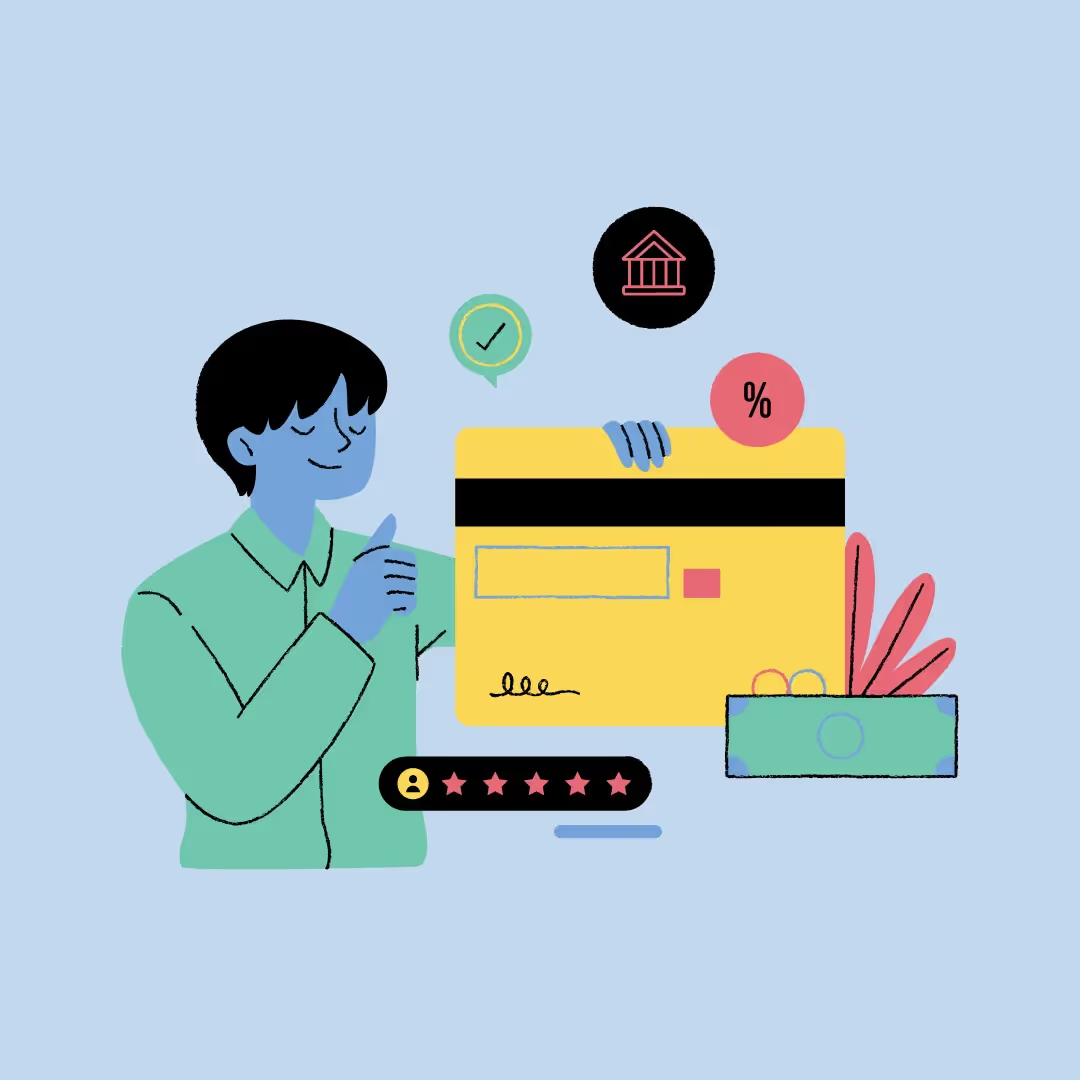
Community
What You Need to Open an Account at Comun¹ 3
8 min de lectura
Unmatched Ease of Opening an Account
Opening a checking account with Comun is simple and hassle-free, addressing the barriers to financial exclusion typically faced by the immigrant community. Accepting over 100 forms of identification², including social security numbers from Latin American countries, Comun ensures that immigrants have access to essential banking services. The application process is quick, taking less than 5 minutes, and is free of additional or hidden fees, minimum balance requirements or monthly commissions. This inclusiveness is central to Comun's mission of fostering financial stability and growth.
Mobile Deposit Options
ComunComun offers a convenient mobile deposit feature that allows users to deposit cash at more than 88,000 locations in the United States, including major retailers such as Walgreens, Dollar General and Walmart. This extensive network ensures that users can easily find a deposit location near them, making the process of adding money to their accounts simple and hassle-free.
Traditional Banking: Although many traditional banks offer mobile deposit options, they often restrict these to check deposits through a mobile app. Cash deposits typically require a visit to an ATM or bank branch, which can be less convenient and more time-consuming than Comun's extensive cash deposit network.
Utility in Today's World: In today's fast-paced environment, the flexibility to deposit cash in a wide range of accessible locations is invaluable, especially for individuals who may not have easy access to traditional banking services or who work non-traditional hours when banks are closed.
International Remittances
ComunComun excels in facilitating international remittances⁴, allowing users to send money abroad quickly and with lower fees compared to many traditional banks and remittance services. The process is enhanced with real-time notifications, keeping the sender informed from the moment the money is sent until it is received.
Traditional Banking: Traditional banks generally offer international transfer services, but these can be expensive and slow, with transfers sometimes taking several days to complete. In addition, the fees associated with traditional bank remittances can be significantly higher.
Usefulness in Today's World: In a globalized economy, the ability to send money across borders quickly and affordably is crucial. Many families rely on remittances for financial support, and businesses need efficient ways to handle international transactions. Comun's streamlined and cost-effective service effectively meets these modern demands.
Advance Salary Access
Comun: Comun offers the ability to connect wages to the application and receive payment up to two days in advance³. This feature incurs no additional fees, providing significant relief during financial emergencies or when planning ahead.
Traditional Banking: Some traditional banks have begun to offer similar features, but they are often tied to specific types of accounts or require a minimum balance. The accessibility and ease of use of early access to Comun's salary is not always matched in traditional environments.
Usefulness in Today's World: With the rise of gig economy jobs and irregular pay schedules, having early access to wages can provide a buffer against financial instability. This feature is particularly valuable for those living paycheck to paycheck, offering a cushion that can help avoid overdraft fees and late payments.
Unlike traditional banking institutions, Comun's innovative features are designed to meet the needs of today's diverse and mobile population, particularly benefiting the immigrant community in the U.S. By providing services that offer greater convenience, lower costs and greater accessibility, Comun not only addresses common challenges faced by its users, but also empowers them toward greater financial freedom and stability. As we move toward a more interconnected and fast-paced world, the importance of responsive and inclusive financial services continues to grow, something Comun is uniquely positioned to offer.
Robust Security and Customer Support
Security and customer support are paramount at Comun. With FDIC-insured accounts and Visa protection on virtual Visa debit card transactions, Comun customers can manage their funds with confidence. Innovative security features such as biometric logins and instant transaction notifications keep your money safe. In addition, Comun offers 24/7 customer support in English and Spanish, ensuring that help is always available in your preferred language.
Commitment to Zero Fees and Upward Mobility
Comun stands out not only for offering zero fees for account opening, monthly maintenance or minimum balances, but also for its commitment to helping its users move up the financial ladder. Comun acts as a financial partner, supporting financial transactions without the burden of excessive fees. This commitment aligns with the goal of enabling upward mobility for immigrants, who contribute significantly to the U.S. economy.
Customized Features and Benefits
Comun goes beyond traditional financial services by offering features designed to meet the unique needs of the immigrant community. Users can send money abroad with low or no fees, deposit cash at more than 88,000 locations nationwide, including free ATM withdrawals, and connect their accounts to popular payment apps such as Zelle, CashApp and Venmo. Comun's platform also allows customers to receive their paychecks up to two days early through direct deposit, further enhancing their financial flexibility and stability.
Conclusion
Comun is not just a financial services provider, but a platform dedicated to transforming the banking experience for immigrants in the U.S. With its user-focused design, commitment to financial freedom and robust features, Comun is destined to become a vital tool for achieving financial stability and growth for its users. Whether you are looking to manage your daily finances or send money to loved ones abroad quickly and securely, Comun offers a reliable, inclusive and efficient banking solution.
Foundational Moment: Did you know?
Founded by entrepreneurs Mark Selcow and Andres Santos in New York, Comun was built to empower families and enable upward mobility, particularly for the immigrant family. The company has garnered significant investment from prominent firms such as Costanoa Ventures, FJ Labs and South Park Commons, underscoring the tremendous opportunity to serve the financial needs of immigrant families and improve the lives of every individual.
Checking account
What Is a Debit Card and How Does It Work?
8 min de lectura
A debit card is a bank card that lets you make purchases and withdraw money using funds available in your bank account. A debit card looks a lot like a credit card, but it works differently. When you use a debit card, the money is deducted directly from your bank account. That means you can only use the card if you have enough available funds — otherwise, the transaction won't go through.
Who Issues Debit Cards for Consumers?
Debit cards are issued by banks and are linked to individual checking accounts. You can get a debit card by opening a bank account at any bank or credit union that offers this service.
Many banking institutions also offer other digital services, like mobile and online banking, that let you manage your account over the internet or through a mobile device. In general, all banks offer services designed for people with different needs and income levels, giving nearly every adult access to banking.
Even though debit cards are easy to use, you should be careful with them. If you lose your card or it's stolen, report it to your bank immediately to prevent fraud or misuse. You should also regularly check your statements for fraudulent transactions or errors. With a bit of care, debit cards can be a useful tool for managing your money and making purchases online and in person.
How Can You Use Your Debit Card to Make Purchases or Withdraw Money From an ATM?
There are many ways to use a debit card to make purchases or withdraw money from an ATM.
To make a purchase, you can insert your card into the point-of-sale (POS) terminal and select "debit" as your payment method. Then enter your PIN and select the purchase amount.
To withdraw money from an ATM, insert your card into the machine's slot and select "checking/savings." Then enter your PIN and select the amount you want to withdraw.
You can also use your debit card to make payments online or by phone. To make an online payment, enter your card details on the merchant's website. To make a payment by phone, call the merchant's customer service number and provide your card details when asked.
What Protection Do Visa Debit Cards Have Against Unauthorized Charges?
If you have a Visa card, you're protected by Visa's Zero Liability policy. This policy guarantees you won't be held responsible for any unauthorized charges made with your card. That means if someone steals your card or uses it without your permission, you won't have to pay for those charges.
Visa's Zero Liability policy applies to all Visa cards, including debit and credit cards. It also applies to all transactions, including online and in-person transactions. This policy was put in place to help protect consumers against fraud and identity theft.
If you're a victim of fraud or identity theft, be sure to report it right away. You can call Visa's toll-free number 24/7 to report any incident. Visa will work with you to resolve the issue and help protect your money and identity.
What Are Virtual Debit Cards?
A virtual card is a card that isn't physical — it exists only in the digital world. Virtual cards are often used for online purchases, since they offer more security than using a regular debit card.
One of the benefits of virtual cards is that they can be used to limit how much money is spent on a purchase. For example, if you're buying something online and want to make sure you don't go over budget, you can use a virtual card instead of your regular credit or debit card. This can help you stay within budget and avoid racking up debt. Likewise, if your information is stolen during a transaction, the thief won't be able to access your other cards. This can help prevent fraud and keep your personal information safe.
If you're interested in getting a virtual card, there are a few things you should know. First, not all banks offer virtual cards, so you may need to open a new account at a bank that offers this service. Second, not all merchants accept virtual cards, so there may be some places where you can't use them. Finally, virtual cards sometimes come with associated fees, so be sure to read the terms and conditions before using one.
The Benefits of Común
When you get a checking account with Común, you'll get two debit cards: a physical one and a virtual one.
The physical card lets you make purchases at any business, and offers security thanks to its contactless capability and chip. This prevents your card details from being cloned or used for fraud.
The virtual card lets you make online purchases with more confidence, since contactless technology and chip protection aren't available on the internet — but if fraud does happen, the card can be canceled and replaced immediately. You can contact our support team anytime to report these cases.
Común debit cards work at more than 55,000 ATMs across the United States for deposits and withdrawals, and are protected by Visa's Zero Liability policy. That means any unauthorized charge won't be deducted from your checking account balance.

Immigration
How to apply for a credit card as an immigrant in the U.S. in 2026
8 min de lectura
How to apply for a credit card as an immigrant in the U.S. in 2026
Applying for a credit card in the United States as an immigrant is possible, even if you don't have a Social Security number (SSN) or established credit history. This guide provides general information about the process and shares helpful tips.
What do you need to apply for a credit card in the U.S.?
Applying for a credit card in the U.S. is generally a straightforward process. Issuers typically request documentation for identity verification and risk assessment purposes. Requirements may vary by issuer, but you can generally expect the following:
Identification
- Full legal name
- Date of birth (must be 18+)
- U.S. address (some institutions may accept applicants with a U.S. mailing address)
- Government-issued ID (for example, passport or driver's license)
Tax ID number
You'll typically need one of the following: SSN or ITIN (Individual Taxpayer Identification Number) issued by the IRS. It's important to note that not all credit card issuers accept ITINs. However, some financial institutions and fintech providers may offer alternatives.
Income information
- Annual income (employment, self-employment, or other sources)
- Employer name (may be requested)
Credit history
- Credit score (for example, FICO) may be reviewed
- Existing loans, credit cards, and payment history
Contact information
- Phone number and email address
Can I apply for a credit card without a Social Security number?
Yes. Some credit card issuers accept an ITIN instead of a Social Security Number. You can apply for an ITIN by submitting Form W-7 to the IRS.
It is recommended to look for service providers whose requirements match your current needs and documentation. For example, you may be able to open an account with Común using more than 100 valid Latin American IDs, which can be a helpful first step before applying for a credit card.
Step by step: How to apply for your first credit card
Step 1: Open a bank account in the U.S.
Before applying for credit, while not always required, it is generally recommended to open a debit account in the U.S. Having one may improve your chances of approval and help simplify the process. It can also help demonstrate income activity and provide a way to make payments on your credit account.
Look for service providers whose requirements align with your current documentation status. For example, some traditional banks may accept an ITIN to open a debit account. Others, such as Común, offer the ability to open a debit account online with more than 100 valid Latin American IDs. Visit comun.app to learn more.
Step 2: Build a basic financial history
To begin establishing a financial footprint in the U.S., it is often suggested to use a debit account consistently. This may include receiving direct deposits and maintaining regular account activity. While this does not create a credit history on its own, it may help establish a relationship with financial institutions and may support access to credit-building products.
Step 3: Choose the correct card type
Secured credit cards:
These cards typically require a refundable deposit, for example, $200. The deposit usually becomes your credit limit. This structure helps reduce risk for the issuer and may make approval more accessible.
Credit cards for individuals with limited or no credit history:
These credit cards are designed for individuals without an established credit history. They may not require a deposit but can have stricter approval criteria. Some issuers may offer products that accept an ITIN.
Step 4: Submit your application
To submit your application, depending on the issuer you may apply online or at a bank branch. You will typically be required to provide personal details, such as your name, address, date of birth, an SSN or ITIN and your income information.
It is generally recommended to avoid submitting multiple applications in a short period of time, as each application may result in a 'hard inquiry' which can temporarily impact your credit score.
Differences between a credit card and a debit card
Debit card:
- Uses your own money (that you deposit or transfer)
- Does not involve borrowing money
- Can help manage daily spending and receive deposits
- Does not typically build credit history on its own
- May serve as a practical and accessible first step into the U.S. financial system
Credit card:
- Uses borrowed money from a bank
- Requires repayment (ideally in full each month)
- Activity may be reported to credit bureaus
- Can help build your credit history and score over time
Tips to help reduce the likelihood of application rejection
- If possible, avoid applying for multiple credit cards at the same time
- You could consider starting with a secured card if you don't have a credit history
- It is recommended to have an active debit account before applying
- Verify that your information matches across all documents
- Try to keep your expectations realistic about your first credit limit — approval matters more than the amount
Frequently asked questions about applying for a credit card as an immigrant
How long does it take to build credit?
You may generate your first credit score within approximately 3 to 6 months after opening a credit account.
Can I apply for a credit card without documentation?
In most cases, to apply for a credit card you'll need some form of identification, such as a passport, and an ITIN. Some institutions offer options for individuals without an SSN, but applications without any documentation are generally not accepted.
What is a credit score?
A credit score is a number that reflects how you manage credit, based on your payment history and use of borrowed money.
Can I be denied a credit card because I'm an immigrant?
No. Lenders generally don't deny applications based on immigration status alone. However, an application may not be approved if you don't have a credit history, sufficient income, or the required identification requested by the issuer.
Does my credit history from another country count in the U.S.?
In most cases, no. Most U.S. lenders don't have access to international credit data, so you'll need to start building credit history in the U.S.
In summary
Starting somewhere can make the process feel more manageable. For many people, building credit in the U.S. begins with something simple such as opening a debit account. Común offers a debit account that can be opened with more than 100 valid Latin American IDs, with an app available in Spanish. Visit comun.app to learn more.
Financial Education
We Explain Your Bank Account Number: What It Means and Why It Matters
8 min de lectura
When you open a bank account, you receive a unique identifier known as a bank account number. This number is crucial for ensuring financial transactions like deposits, withdrawals, or transfers are routed to the correct account within the banking system. This article will dig into what your bank account number represents, how it's structured, and its importance in your financial activities.
What Is a Bank Account Number?
A bank account number is a unique sequence of digits assigned to an account holder by a financial institution. It works much like a physical address for your account within the broader network of financial institutions, distinguishing your account from others and ensuring transactions are recorded accurately.
Structure of a Bank Account Number
The structure of a bank account number varies by financial institution and country, but generally includes several key components:
- Bank Code/Institution Number: Identifies the specific financial institution. This code is nationally recognized and crucial for routing related banking transactions.
- Branch Code/Sort Code: This digit sequence identifies the exact bank branch where your account was established, essential for internal fund routing and operational clarity.
- Account Number: This is the unique identifier for your personal account within the bank. It's critical for distinguishing your account among millions of others within the same bank.
- Check Digits: Often included in account numbers to provide error-checking capabilities, these help ensure numbers are entered correctly and transactions are routed accurately.
Importance of Your Bank Account Number
- Transaction Accuracy: Your account number is vital for accuracy in financial transactions, ensuring money is sent or received correctly, whether you're setting up direct deposits, managing bill payments, or executing other bank-related financial transactions.
- Security: The uniqueness of your account number adds a significant layer of security, protecting against fraud and ensuring funds aren't misdirected.
- Financial Management: Understanding and managing your bank account numbers, whether for checking, savings, or other account types, helps with efficient financial management and security measures like preventing identity theft.
- International Transactions: For transactions beyond domestic borders, the international bank account number (IBAN) and bank identification code (BIC) are used alongside your account number to facilitate international payments and identify relevant financial institutions globally.
Managing Your Bank Account Number
While a bank account number is a powerful tool for managing financial transactions, it also requires careful handling:
- Keep It Confidential: Treat your bank account number with the same level of security as sensitive data like your Social Security number. Avoid sharing it publicly or through unsecured channels.
- Monitor Your Accounts: Regularly review your bank statement and transaction history through online banking platforms to catch any unauthorized activity early.
- Use Secure Networks: Make sure any online banking is done over secure, encrypted connections. Public Wi-Fi is vulnerable and can expose your banking information to theft.
- Familiarize Yourself With Your Bank's Protocols: Knowing your financial institution's security protocols is crucial. This includes everything from routing numbers for paper checks to using multi-factor ID to grant access to online accounts.
Your bank account number is more than just a sequence of digits — it's a crucial part of your financial identity, essential for directing and protecting the flow of your money. By understanding how your account number works and implementing robust security measures, you can secure your financial health and keep your funds safe. Whether you're receiving a paper check, setting up a direct deposit, or making online transactions, the integrity of your bank account number is paramount.
Things to Know: Bank Account Number vs. Routing Number
Bank account numbers and routing numbers are both critical components of the banking system, but they serve different purposes and have distinct characteristics. Understanding the difference between these two numbers is important for handling financial transactions effectively. Here's how they differ:
A bank account number uniquely identifies an individual's personal account within a bank. It specifies where funds should be deposited or withdrawn.
- Every Number Is Different: Each bank account number is unique to the account holder within a particular bank. No two accounts at the same bank share the same account number.
- Length and Structure: The length and structure can vary by bank and country, typically ranging from 8 to 12 digits in most countries. Some countries may use longer formats.
A routing number (also known as a sort code in some countries) identifies the bank itself, and sometimes the branch where the account is held. It's used to route money transfers like direct deposits and bill payments to the correct bank.
- Consistency: A routing number is consistent across all customers of a bank branch, or even the entire bank, depending on the institution's size and the country's banking system.
- Length and Structure: In the United States, for example, routing numbers are 9-digit codes established by the American Bankers Association. In the UK, similar numbers called sort codes are 6 digits long and formatted in three pairs.
Additionally, the geographic validity of these numbers varies. A bank account number is valid across the entire bank and doesn't change even if the account holder moves to another branch, unless the banking system specifies otherwise. A routing number, on the other hand, is often specific to a region or branch, particularly in larger banking systems like those in the United States. This specificity helps manage and route payments accurately within the complex network of branches and banks.
When setting up processes like automatic bill payments or direct deposits, both numbers are generally required. The routing number first guides the payment to the correct bank or branch, ensuring the institution is properly identified. The bank account number is then used to route the funds to the individual's specific account. Together, these numbers work to streamline financial transactions, making them secure and efficient across the banking network.
Conclusion
In conclusion, understanding the purpose of your bank account number is crucial. This also comes with understanding its distinction from a routing number to effectively manage your finances and ensure the security and accuracy of your transactions. A bank account number serves as a unique identifier for your specific account within a financial institution, playing a vital role in correctly directing funds, whether for deposits, withdrawals, or automatic bill payments. A routing number, on the other hand, identifies the financial institution and sometimes the specific branch, essential for routing transactions to the correct bank.
The geographic validity of these numbers — where the bank account number stays constant across branches while the routing number can vary by region or branch — highlights the complexity and structured approach banks use to manage and route payments. Both numbers are indispensable in modern banking, from setting up direct deposits to processing paper checks and making secure online transactions.
By maintaining a solid understanding of how these numbers work and applying rigorous security measures, like keeping your information confidential and monitoring account activity, you can protect your financial health and ensure your banking interactions are both smooth and secure. This knowledge not only empowers you to manage your accounts more effectively, but also protects you from potential fraud and errors in an increasingly digital world.
Living in the United States
5 Apps to Earn Money Fast in the United States
8 min de lectura
Are you looking for ways to make extra money from the comfort of your home or during your free time? Thanks to technology, it is now possible with just a mobile phone and an internet connection. In this article, we present five apps that will let you earn money quickly and easily.
You can earn money from your phone in the U.S. with paid surveys (Eureka Surveys, Google Opinion Rewards), freelance work (Fiverr), selling used items (Mercari), or driving for Uber or Lyft. With Común, you can receive all of those payments in an account without SSN, without monthly fees, and in Spanish.
Eureka Surveys or Survey Pop:
1. Eureka Surveys is a platform that lets you earn money by answering surveys in minutes on your own schedule. You will accumulate points that you can redeem for gift cards or cash through PayPal.
Google Opinion Rewards:
2. Google Opinion Rewards is an app created by Google that lets you earn money by answering short surveys. For each completed survey, you will receive a reward redeemable in Google Play.
Fiverr:
3. Fiverr is a freelance services platform where you can offer your skills and knowledge in exchange for money. You can find jobs in design, writing, digital marketing, programming, and more. Remember to connect your Común account to Fiverr.
Mercari:
4. Mercari is a buying and selling app where you can sell new or used items. The app keeps a small commission for each sale made.
Uber or Lyft:
5. If you have a car and free time, you can take advantage of transportation apps like Uber or Lyft to earn extra money as a driver.
Making money quickly is easier than it seems thanks to these apps. Remember that with Común you get a free checking account and a VISA debit card with access to more than 57,000 ATMs.

Living in the United States
What are the school grades in the United States? Ages and equivalencies
8 min de lectura
Do you have children about to enter school in the United States? Understanding the U.S. education system is essential for adapting to a new culture and preparing for the differences compared with your country of origin.
Broadly speaking, the U.S. education system is divided into three stages: Elementary School, Middle School, and High School. Each plays a specific role in students’ academic journey. This system covers ages 5 through 18 and forms the central framework of schooling in the country.
In this article, we explain each of these stages and detail their purpose to demystify how students progress through the system and its educational levels in the United States.
Levels of the U.S. education system: Everything you need to know
In the United States, it is common for children to begin schooling around age 5. After kindergarten, it is divided into 12 grade levels.
Below, we show how the U.S. education system is structured.
Early childhood education
Early childhood education or preschool is not mandatory in the United States. However, it is common for children under age 5 to attend pre-K (preschool) or kindergarten.
These centers focus on young children’s cognitive development through play and early literacy activities. For this reason, there is no grading system. Kindergarten is offered through private and public options or via the Head Start social assistance program for low-income families.
Elementary school
After that, children will enter primary education or Elementary school starting around age 6, depending on the school district.
This level typically covers 1st through 5th grade and is characterized by the gradual introduction of more advanced knowledge, with the aim of building cognitive and social development through learning skills such as mathematics, science, and language, among others.
- Characteristics: students generally have the same teacher for almost all subjects, except for those requiring specialized knowledge, such as physical education.
- Grading system: it can vary by district, but it is common for students to be assessed using a letter scale—A, B, C, D, and F—or, alternatively, a numeric scale from 1 to 4.
- Approximate Ages: between 6 and 11.
Middle school (junior high school)
After finishing primary education, students continue with Middle school, which typically covers 6th through 8th grade. It is a transitional stage between primary and secondary education.
- Characteristics: students have a different teacher and classroom for each subject, which promotes independence and socialization.
- Grading system: the formal A through F system is typically being used.
- Approximate Ages: between 11 and 14.
High school
The next level is secondary school or High school, typically covering grades 9 through 12. It culminates in the High school diploma, a basic requirement to continue with higher education or enter the job market.
- Characteristics: in addition to required subjects such as English, math, and science, students can complement their education with electives and extracurricular activities.
- Grading system: both the A–F letter scale and the GPA (Grade Point Average) are generally used; GPA serves as an indicator of academic performance and is key for college admission.
- Approximate Ages: between 14 and 18.
Postsecondary education
Postsecondary or higher education in the United States includes different types of programs as well as private and public schools. Although it is not strictly mandatory, it provides more opportunities for good jobs and higher earnings.
These are the types of higher-education institutions in the U.S.
Public or private universities
- They offer a curriculum lasting approximately 4 years.
- Upon completion and passing of the program, graduates receive a Bachelor’s degree.
- The admission process depends on prior academic performance, reflected in the GPA.
- There are public universities funded by the government and private universities as well.
Community colleges
- These are public colleges offering educational programs that last 2 years.
- Upon completing this program, students earn an Associate’s degree, equivalent to a technical program.
- They are more accessible than a university, and admission rates are also higher.
If you need to send money to another country, explore some options and tips.
Technical or vocational institutions
- They focus on acquiring knowledge related to practical trades, such as nursing, graphic design, and programming.
- They also offer certificates to recognize completed studies.
The U.S. education system can be somewhat confusing compared with other countries, such as some in Latin America. Below is a comparison table to clarify general equivalencies, keeping in mind that there are variations in each country.
| Grade level in the United States | Typical Ages | Equivalence in Mexico |
|---|---|---|
| Preschool | 3–4 years | Preschool/kindergarten |
| Kindergarten | 5–6 years | Final year of preschool |
| 1st grade | 6–7 years | 1st year of elementary |
| 2nd grade | 7–8 years | 2nd year of elementary |
| 3rd grade | 8–9 years | 3rd year of elementary |
| 4th grade | 9–10 years | 4th year of elementary |
| 5th grade | 10–11 years | 5th year of elementary |
| 6th grade | 11–12 years | 6th year of elementary (start of Middle school in some countries) |
| 7th grade | 12–13 years | 1st year of Middle school |
| 8th grade | 13–14 years | 2nd year of Middle school |
| 9th grade | 14–15 years | 3rd year of Middle school (may be the final year of secundaria or 1st year of High school) |
| 10th grade | 15–16 years | 1st year of High school |
| 11th grade | 16–17 years | 2nd year of High school |
| 12th grade | 17–18 years | 3rd year of High school |
| Postsecondary education | 18 and up | University |
How does the school year work in the United States? Key aspects
The U.S. education system is characterized by flexibility to adapt to students’ abilities and interests in order to foster their full potential.
For this reason, it is common for students to be placed into specific classes according to their learning level, which may be more or less challenging.
- Placement depends on several factors, such as:
- How well the student understands English or their test scores—especially for foreign students
- Recommendations from parents/guardians
- Standardized test scores and prior academic performance
- Willingness to complete challenging assignments
- The student’s interest or motivation
- Teacher or counselor recommendation
- Examples of student work demonstrating their level of understanding and skills
Another relevant aspect to consider is the school calendar and schedule in the United States. These can vary by state and school district, but in general the school year begins in late August or early September and ends in late May or early June.
How to manage your finances in the United States with Común
As you can see, the U.S. education system is intentionally designed to guide students from basic education through higher studies and, afterward, into working life.
Each level has a clear function, which makes it easier for families, students, and educators to plan and provide support in order to make more informed decisions along the school path.
Without a doubt, your children’s education is one of the most important investments, because it is a way to secure their future.
Común is the ideal financial platform to help you manage tuition payments and handle school expenses for higher education.
Común is a financial platform with a mobile app that makes it easy to open accounts in the U.S. with a qualified official ID from your country of origin, send low-cost remittances, and provide bilingual Spanish and English language support for the immigrant community.
Learn about all the benefits of opening an account with Común for you and your family.
As an immigrant, Común allows you to open an account with a qualified official ID from your country, with no hidden fees and bilingual Spanish and English language support.
Frequently asked questions
If you still have questions, consult our Q&A section.
How do you enroll your child in school?
Go to the school district where you live to find out which school corresponds to your address. Complete the required documents and the enrollment application.
Requirements may vary by state or school district, so it is important to verify directly with your local school.
What is the difference between a public and a private school in the United States?
Public schools are funded by government tax revenues, while private schools are funded by tuition.
What do Freshman/Sophomore/Junior/Senior mean?
These are the terms used in U.S. high schools and universities to indicate year level
- Freshman: 1st year
- Sophomore: 2nd year
- Junior: 3rd year
- Senior: 4th year
What is needed to enter school in the United States?
- Minimum age depending on the level
- Birth certificate
- Up-to-date vaccination record
- Proof of residence in the district






Thousands of immigrants are already achieving more with their money. You can too.
Comun is a financial technology company and not a bank. Banking services are provided by Community Federal Savings Bank; Member FDIC. The Comun Visa® Debit Card is issued by Community Federal Savings Bank, pursuant to a license from Visa U.S.A Inc. and may be used everywhere Visa Cards are accepted.
Comun is a fintech company and not a bank or licensed money transmitter.
* Results may vary. For a complete list of eligible IDs and application requirements, follow this link.
^ No minimums, no maintenance fees. ATM or transfer fees may apply. See app for fee details.
‡ Direct deposit funds are typically available when we receive the payment file, up to two days before the scheduled payment date. This early availability is not guaranteed.
** A service provided by Service UniTeller, Inc. Service UniTeller, Inc. is licensed in all states that require a license. Remittance fees start at $2.99 but may vary. Please check the app for more details. Comun Inc. may earn revenue from the conversion of foreign currencies.
† Funds in your account are FDIC insured up to $250,000 by ownership category through Community Federal Savings Bank (CFSB), Member FDIC, in the event CFSB fails.