Community
Learn how to manage your money, send money home with confidence, and build a secure financial future for you and your family.

Living in the United States
Back to School in the U.S.: A Guide for Immigrant Families
Starting a new school year in the U.S. means enrollment paperwork, supply lists, and new expenses — and it can look very different from school systems in Mexico, Colombia, Guatemala, El Salvador, or Honduras. This guide covers what to expect and how to prepare with confidence.
8 min read

Olivia Rhye
20 Jan 2024
Starting a new school year in the United States can involve several administrative and financial tasks. Enrollment requirements, school supply lists, transportation arrangements, meal programs, and extracurricular activities can vary between districts and schools.
For many immigrant families, the process may also involve adapting to a school system that works differently from those in Mexico, Colombia, Guatemala, El Salvador, Honduras, and other countries. Understanding how schools operate, what documents are typically required, and how to prepare financially can make the transition smoother.
This guide explains what to expect during the back to school season in the U.S., how school enrollment works, what supplies children may need, and how to prepare for the school year with confidence.
When does the school year start in the U.S.?
Unlike some countries that follow a national academic calendar, school start dates in the United States are generally determined by states, school districts, and local education authorities.
Most public schools begin classes between early August and early September.
The table below shows common start periods for several major states during the 2026 school year.
| State | Typical 2026 school start period |
|---|---|
| Alabama | Early August |
| Alaska | Mid-August |
| Arizona | Late July to early August |
| Arkansas | Mid-August |
| California | Early to mid-August |
| Colorado | Mid-August |
| Connecticut | Late August to early September |
| Delaware | Early September |
| Florida | Early to mid-August |
| Georgia | Early August |
| Hawaii | Early August |
| Idaho | Late August |
| Illinois | Late August |
| Indiana | Early to mid-August |
| Iowa | Late August |
| Kansas | Mid-August |
| Kentucky | Early to mid-August |
| Louisiana | Early August |
| Maine | Early September |
| Maryland | Early August |
| Massachusetts | Late August to early September |
| Michigan | Early September |
| Minnesota | Early September |
| Mississippi | Early August |
| Missouri | Late August |
| Montana | Early September |
| Nebraska | Mid-August |
| Nevada | Early August |
| New Hampshire | Early September |
| New Jersey | Early September |
| New Mexico | Early August |
| New York | Early September |
| North Carolina | Late August |
| North Dakota | Late August |
| Ohio | Late August |
| Oklahoma | Mid-August |
| Oregon | Early September |
| Pennsylvania | Late August |
| Rhode Island | Early September |
| South Carolina | Late August |
| South Dakota | Mid-August |
| Tennessee | Early to Mid-August |
| Texas | Early to mid-August |
| Utah | Mid-August |
| Vermont | Early September |
| Virginia | Mid to late August |
| Washington | Early September |
| West Virginia | Late August |
| Wisconsin | Early September |
| Wyoming | Late August |
Source: https://us-school-calendar.com/first-day-of-school-2026
The school year generally runs from August or September through May or June. Winter break, spring break, teacher workdays, and holidays are scheduled throughout the year.
Because school calendars can differ even within the same city, families should always verify dates directly with the local school district.
What differentiates the U.S. school system from those in Latin America?
One of the most noticeable differences is the strong role of local school districts. Curriculum decisions, school calendars, transportation policies, and enrollment procedures can vary from one district to another.
Schools are generally organized into:
- Elementary school
- Middle school or junior high school
- High school
Grade levels may differ slightly depending on the district.
Another difference involves parental communication. Schools frequently use online portals, email notifications, text messages, and mobile applications to share grades, attendance records, schedules, and announcements.
Parents may also encounter:
- Parent-teacher conferences
- School volunteer opportunities
- Individual learning plans
- English language support services
- After-school activities and sports programs
Students who arrive from another country may qualify for English learner services designed to support language development while continuing their academic education.
How to enroll your children: documents and process
Most public schools ask families to provide documents during enrollment that are typically used to confirm a child's age, home address, vaccination history, and prior education.
Commonly requested documents include:
- Birth certificate
- Passport
- Proof of address
- Immunization records
- Previous school records or transcripts when available
- Parent or guardian identification
Enrollment can be completed online, in person, or through a district enrollment center.
One of the most important facts for immigrant families to understand is that children have a constitutional right to attend public elementary and secondary schools regardless of their immigration status. This protection comes from the U.S. Supreme Court decision in Plyler v. Doe
As a result, public schools generally cannot deny enrollment solely because a child or parent lacks immigration documentation.
School districts may still request documents that establish residency within the district and verify a child's age, but immigration status is not a requirement for access to public education.
Families who recently arrived in the United States and do not yet have all prior school records should contact the district directly. Many schools have procedures for assisting students during the enrollment process while records are being obtained.
The U.S. school supply list: what to expect and how to optimize spending
School supply requirements in the United States are often determined by individual schools or teachers rather than a national standard. In addition to notebooks and pencils, families may be asked to provide classroom supplies such as tissues, disinfecting wipes, folders, headphones, calculators, or art materials depending on the grade level. Unlike some countries like Mexico's Becas Benito Juárez, children in the U.S. do not receive cash stipends for school supplies.
Teachers often publish detailed lists before the school year begins. Depending on the grade level, families may be asked to purchase:
- Notebooks
- Folders
- Pencils and pens
- Colored pencils
- Markers
- Glue sticks
- Scissors
- Tissues
- Hand sanitizer
- Backpacks
- Calculators
- Headphones or earbuds
Some classrooms also request community supplies that are shared among students.
When it comes to school supplies, the costs can add up quickly. However there are some strategies that may help reduce expenses:
- Compare prices across multiple retailers
- Purchase supplies gradually during summer sales
- Reuse items that remain in good condition from the previous year
- Check whether local organizations distribute supplies at no cost
- Review teacher lists carefully before making purchases
Some teachers provide additional guidance during the first weeks of school.
How to budget for back to school as an immigrant family
The total cost of a school year is often easier to manage when families plan for it as an ongoing expense rather than isolated expenses. A budget that covers the entire academic year can help reduce unexpected financial pressure.
When preparing a back to school budget, families may also need to consider:
- Transportation
- School meals
- Uniforms when required
- Sports participation fees
- Extracurricular activities
- Technology expenses
- Field trips
- Childcare before or after school
Creating a seasonal budget can make these expenses easier to manage. A useful approach can be to divide costs into three main categories:
Enrollment expenses
These may include uniforms, school supplies, and transportation arrangements before classes begin.
Monthly school expenses
Lunch money, transportation, activity fees, and classroom contributions that continue throughout the year.
Unexpected expenses
Field trips, special projects, replacement supplies, and school events can appear with limited notice.
Considering those three categories can help families avoid relying on emergency funds during the school year. However, it is always important to consider your context and plan according to your own needs.
School support programs for immigrant families
Accessing available school support programs can help reduce some of the challenges families face during the academic year. School districts frequently partner with local organizations to provide services that support student success both inside and outside the classroom. These resources can help families navigate academic, language, and financial barriers that may arise during the school year.
Available resources vary by location but may include:
School meal programs
Eligible students may qualify for breakfast and lunch programs offered through their school district.
English learning services
Students developing English skills may receive language instruction and academic support.
After-school programs
Schools, community centers, and nonprofit organizations often provide academic enrichment and recreational activities.
School supply assistance
Some districts, churches, and community organizations distribute backpacks and school supplies before the academic year begins.
Family resource centers
Certain districts maintain offices that help families access educational resources, translation services, and community support programs.
These programs are designed to help students participate fully in school regardless of their family's circumstances. Checking what is available locally can help families take advantage of resources that support learning, nutrition, and school involvement.
How Común helps you manage school year expenses
Back-to-school season can involve a wide range of financial responsibilities. School supplies, transportation costs, lunch expenses, extracurricular activities, and classroom contributions can create recurring expenses throughout the year.
For families who also support relatives abroad, the back-to-school season may extend beyond the United States. Some immigrants may contribute to support the educational expenses for children back home.
Común offers remittance services that allow eligible customers to send money to Latin America directly through the app, with fees starting at $2.99.
For everyday financial management, eligible customers can open an account using an ITIN, a passport, or more than 100 accepted Latin American IDs. Común also offers features that can help families manage school-year spending, including direct deposit, debit card access, and customer support in Spanish through the app with no mínimum balance requirements or monthly maintenance fees.
For group expenses such as field trips, classroom activities, sports teams, or shared school purchases, ComunPay can help parents collect and send payments directly from the app.
This school year, organizing expenses in one place can make it easier to track spending, support family members, and prepare for school-related costs throughout the year.
FAQ
Do I need immigration documents to enroll my children in school?
Public schools cannot deny enrollment solely because of a child's or parent's immigration status. School districts commonly request proof of age, residency, and immunization records, but immigration documentation is generally not required for enrollment.
When does the school year start in the U.S.?
Most schools begin classes between early August and early September. Exact dates vary by state, district, and school system.
Are school supply lists longer in the U.S. than in Latin America?
It depends. Teachers often provide detailed lists that may include classroom supplies, technology accessories, and shared materials used throughout the school year.
What vaccinations do my children need to enter school in the U.S.?
Vaccination requirements vary by state and school district. Schools typically provide a list of required immunizations during enrollment, and additional guidance may be available through local health departments.
How can I help my children with the language if they don't speak English when they arrive?
Many public schools offer English learning programs that provide language support while students continue learning grade-level subjects. Additional tutoring and community programs may also be available locally.
Are there financial aid programs for school supplies for low-income families?
Some school districts, nonprofit organizations, religious institutions, and community groups distribute school supplies or provide financial assistance before the academic year begins. Availability depends on the location and program requirements.

Living in the United States
Websites for finding jobs in the USA: 2026 guide for immigrant workers
8 min read

November 13, 2025
Websites for finding jobs in the USA (2026 guide for immigrant workers)
An essential guide for finding a job in the USA. The search for a job in a new country can be a challenge, many processes may feel new or unfamiliar. However, in 2026 there are plenty of online resources to help with the process, one of the most commonly used resources is online job platforms. For many Spanish-speaking employment seekers in the USA whether recently arrived or supporting a family, there are employment opportunities available, the key is to know where to find them.
To help with the search, we have created a guide designed as a practical, curated overview of the most relevant websites for finding jobs in the United States. We hope to provide useful context on which platform works best depending on your situation.
The 10 best websites for finding jobs in the USA
1. Indeed
A practical starting point
Among all job platforms in the United States, Indeed continues to be the most widely used, especially for people looking for entry level or widely available opportunities. Its main advantage is volume. It gathers thousands of listings across industries from restaurants, warehouses, cleaning services, retail, to customer service. The platform allows users to apply for many positions directly through the app or website.
However, this same ease of use means competition is high. Users of the platform have reported that, for better chances of success, it is important to apply early and consistently.
Available in Spanish?
Indeed is fully available in Spanish, it is one of the most complete Spanish experiences among all websites for finding jobs in the USA.
2. LinkedIn
For professional and office roles
LinkedIn is more about building a professional presence. Therefore it is very important to have a well structured profile with recommendations and references to all previous experiences to attract potential opportunities.
This platform is commonly used for roles in administration, marketing, finance, and technology. The platform is generally more focused on professional and corporate roles than hourly positions. It is also important to consider that finding a job through it tends to take some time.
Available in Spanish?
LinkedIn is partially available in Spanish. It allows you to change the interface to Spanish, including menus and profile sections. However, most job postings in the USA and recruiter interactions are still primarily in English.
3. Glassdoor
For researching companies
Glassdoor is not just a job board; it is a decision-making tool. While it does include job listings, its real value lies in the information it provides about companies. Users can see salary ranges, employee reviews, and even details about the interview process.
For someone unfamiliar with the U.S. labor market, this can be helpful when evaluating workplace conditions and company culture and help identify companies with better working conditions. Many job seekers use Glassdoor alongside other job search websites in English and Spanish to confirm whether a job is worth pursuing before applying.
Available in Spanish?
Glassdoor is partially available in Spanish. It offers some Spanish interface options and content, but the experience is mixed. The reviews and salary data are often in English, depending on the company. It is still useful, but not fully localized.
4. ZipRecruiter
Faster matching with less effort
ZipRecruiter focuses on simplifying the job search by using technology to match candidates with relevant opportunities. Instead of spending hours browsing, users receive recommendations based on their profile, and in some cases, some employers may contact candidates directly.
This approach is particularly helpful for candidates with some work experience who want to save time and avoid repetitive applications. It reflects how job platforms in the United States are evolving toward more automated and personalized systems.
Available in Spanish?
ZipRecruiter is mostly in English. It is primarily an English-language platform.
5. SimplyHired
Useful for understanding salaries
SimplyHired plays a valuable supporting role. It aggregates listings from multiple sources and provides salary estimates that help job seekers understand what a position typically pays.
For newcomers trying to navigate where to find work in the USA, this information is especially useful. It helps with comparing offers and may help job seekers better understand local ranges.
Available in Spanish?
SimplyHired is partially available in Spanish. It has some Spanish interface support and localized search options. However, like other platforms, many listings remain in English.
6. USAJobs
The official path to government work
USAJobs is the official federal employment portal. It offers access to government positions, which are known for stability, structured hiring processes, and strong benefits.
However, it is important to be realistic about accessibility. Most roles require legal residency or U.S. citizenship, which may limit eligibility for some applicants.
Available in Spanish?
USAJobs offers limited Spanish support. It is mainly in English, as it is the official government portal.
7. FlexJobs
A path to find remote work
As remote work continues to grow, FlexJobs has become one of the most reliable platforms in this space. Unlike larger job boards, it focuses on curated listings, which may help reduce exposure to fraudulent or low-quality listings.
This makes it particularly useful for people looking for flexibility, whether they are freelancers, parents, or simply prefer not to work in a traditional office setting. In the context of websites for finding jobs in the USA, it stands out for prioritizing quality over quantity.
Available in Spanish?
FlexJobs operates almost entirely in English.
8. Upwork
A practical option for remote income
Upwork allows users to work as independent contractors, offering services in areas such as writing, programming, design, and digital marketing. It has become one of the most relevant platforms for remote work, especially as companies increasingly hire global talent.
While it requires time to build a profile and reputation, some users use it to generate freelance or supplemental income and open doors to long-term clients. It is particularly useful for people with digital skills who are looking for flexibility.
Available in Spanish?
Upwork offers a Spanish interface, which makes it more accessible than many remote platforms. However, most clients post jobs in English.
9. Fiverr
For turning skills into income
Fiverr offers a slightly different model from Upwork. Instead of applying to jobs, users create service listings and set their own prices, allowing clients to find them directly.
It is commonly used for creative work and as a source of side income, but it can also grow into a full-time opportunity. Within the broader landscape of job search websites in English and Spanish, Fiverr stands out for its flexibility and accessibility.
Available in Spanish?
Fiverr also supports Spanish in its interface. Since you create your own service listings, you can write them in Spanish, English, or both, which gives you flexibility depending on your target clients.
10. The Muse
A more curated, culture-focused option
The Muse is smaller than other platforms but offers a more curated experience. It focuses on companies that prioritize workplace culture and transparency, giving candidates a clearer idea of what to expect.
This makes it particularly appealing for younger professionals or those looking for a better long-term fit rather than just immediate employment. While it may not be the first stop for most job seekers, it can be a valuable complement to larger platforms.
Available in Spanish?
The Muse is primarily an English-language platform with no full Spanish interface.
Choosing the right platform for your situation
These platforms are useful within their unique context, the key to making the most out of them is understanding what they offer and how they fit in your situation. Someone looking for quick, entry-level work will likely benefit most from Indeed, while a candidate pursuing a long-term professional career should prioritize LinkedIn. Those interested in flexibility or remote income may find better results through FlexJobs, Upwork, or Fiverr, while individuals seeking long-term stability may consider USAJobs if they meet the requirements.
In practice, the most effective strategy is not to rely on a single platform. Combining two or three of these tools creates a more balanced approach and may improve job search efficiency.
How to apply without an SSN or with an ITIN
When exploring websites for finding jobs in the USA, one practical question often comes up early in the process: what happens if you don't yet have a Social Security Number (SSN)? In most formal employment situations, an SSN is required because employers use it for payroll and tax reporting. However, during the application stage, many platforms still allow you to apply without entering one.
If you already have legal work authorization but are waiting for your SSN, you can:
- Typically move forward in the hiring process, if the employer allows, and provide the number later
- In some cases, employers may accept an Individual Taxpayer Identification Number (ITIN) for tax purposes (although it does not replace work authorization)
The key distinction is that an ITIN allows you to comply with tax obligations, but it does not grant permission to work.
Requirements can vary depending on the employer and the type of role, therefore it is important to confirm what documentation will be needed once you move forward in the hiring process.
Tips for preparing your application
Using the right job platforms in the United States is the first part of the process. How you present yourself still plays a major role in whether you get a response.
- A strong resume should be clear, concise, and tailored to the type of job you are applying for
- In the U.S., resumes are typically one page and focus on skills and results rather than long descriptions
- Adjusting your resume to include keywords from the job description may help resumes align with automated application systems used by some employers
When it comes to interviews, preparation is just as important:
- Employers often expect candidates to explain their experience clearly and give examples of past work
- If you are not fluent in English, practicing common questions in advance can help you feel more confident
Applying regularly, following up when appropriate, and staying organized throughout the process may help improve consistency throughout the job search.
After you get the job: getting paid
Once you are successful and you find work in the United States, it is important to know how and where you are getting paid. Most employers rely on direct deposits, which requires access to a U.S. bank account. For many immigrants, this can be a challenge. Some financial institutions and fintech platforms offer products designed for individuals who may have limited access to traditional banking services. From traditional banks to digital platforms it's important to learn about their requirements and their offers. For example, with Común you can open a debit account using a passport or more than 100 valid Latin American IDs and Común's app is available in Spanish.
Frequently Asked Questions
Do I need a work permit to work in the United States?
Yes. To work legally in the U.S., you must have valid work authorization. This typically comes in the form of a work permit (Employment Authorization Document, or EAD) or a visa that allows employment.
What types of work permits are available for immigrants?
There are several common pathways depending on your situation. Temporary work visas like the H-2A (agricultural work) and H-2B (seasonal non-agricultural work) are frequently used. Professional visas such as the H-1B apply to specialized roles, while other options like TPS (Temporary Protected Status) or asylum-based work permits may apply depending on your country of origin and circumstances.
Each option has specific requirements, so it is important to verify eligibility with the official authorities.
Can I work in the United States if I don't speak English?
Yes, it is possible. Many jobs, especially in construction, cleaning, manufacturing, agriculture, and restaurants do not require advanced English. In cities with large Latino populations, it is common to find Spanish-speaking work environments.
However, improving your English can significantly expand your opportunities and increase your earning potential over time.
What are employment agencies?
Employment agencies, also known as staffing agencies, act as intermediaries between companies and job seekers. They help match candidates with available positions, often for temporary, seasonal, or entry-level roles.
For many newly arrived immigrants, these agencies may help some job seekers connect with available opportunities, especially if someone does not yet have a strong professional network in the United States.
Final thoughts
The key to navigating the U.S. job market in 2026 is not just knowing the websites for finding jobs in the USA, but understanding how to use them strategically. Each platform serves a different purpose, and choosing the right one may help better organize search and identify opportunities aligned with goals and experience. We wish you the best of luck in your job seeking process!
.avif)
Financial Education
Your essential guide to the bank routing number in the U.S.
8 min read
November 13, 2025
The bank routing number, or ABA Routing Number, is essential information for making money transfers. It is a 9-digit code used to identify each financial institution in the United States.
This code is so important because it ensures that electronic transactions are carried out correctly and that funds reach the designated bank.
In this article, we offer a complete guide to help you understand what a bank routing number is, what it does, where to find it, and how it is used in everyday electronic financial transactions.
What is a bank routing number (ABA), and why is it essential in the U.S. banking system?
An ABA routing number, or transit routing number, is a unique 9-digit code that serves as an identifier for each financial institution in the United States.
It differs from a bank account number in that an account number is personal, valid for the use of a single user only. By contrast, the routing number is a unique identifier for banks, credit unions, and digital banks.
The primary function of the routing number is to allow financial institutions to precisely identify which bank to send to or receive from during routine operations such as direct deposit of payroll, automatic payments (ACH), and electronic transfers.
It is important to note that this code is different from a bank account number and is not equivalent to the IBAN (International Bank Account Number), which is a set of numbers used especially in Europe to identify international bank accounts and is composed of the country code, check digits (the checksum of the bank account number), and a bank account number.
In the United States, however, the SWIFT/BIC code is used for international money transfers, not the IBAN.
Here are some crucial functions of the bank routing number in digital transactions.
Unique bank identification
The bank routing number helps prevent errors when identifying a specific bank and processing a transfer from one institution to another, even when they have similar names or many branches across the country.
Facilitates electronic transfers
This code is also indispensable so that ACH systems and wire transfers can send funds to the correct destination, quickly and securely.
Key for direct deposits
The ABA number is also essential for employers to make direct deposits, using that code together with the checking account number, without the need for checks or cash.
Automated bill payments
To set up automated payments for services such as electricity, water, and online subscriptions, you must provide the bank routing number so the billing system can process the transaction automatically.
Handling funds between banks
This number is also indispensable for transactions involving multiple financial institutions, such as interbank transfers or check clearing.
How to find a bank routing code and your bank account number
By now, the importance of the ABA number is clear. But how do you find a bank routing code? Knowing this information is the first step to making transfers correctly.
Likewise, it is essential to understand how to find your bank account number and to tell one number from the other to avoid confusion.
The routing number consists of 9 digits and identifies the bank. The account number has usually 10 to 12 digits and identifies the individual account within the bank.
To find your account number, look at the bottom of a check; it is the series of numbers that follows the routing number. You can also find it at the top of a statement or directly in the mobile application.
It is essential to make sure you have the correct routing number before making a transfer. Therefore, it is advisable to confirm it directly with your financial institution to avoid errors.
Many users ask where to find the routing number on a physical debit card. However, the routing number is not printed on such instrument because it is intended for digital transfers, not for payments at physical merchants.
These are the most common places to find the routing number for your bank or financial institution.
On your checks
Check the lower left corner of your personal or business checks; the routing number is the 9 digits shown there.Another relevant detail is the check number, which is usually at the top.
Mobile application
Another way to find this code is to access your mobile application and go to the transfers or direct deposit information section.
Bank statements
Check your latest bank statement, whether physical or digital; the routing number may appear in a section of that document.
Direct contact with your bank
If you have any doubt about the routing number, you can contact your bank by phone or visit a branch so they can clarify any questions before you make a bank transfer.
Your routing number and account: Key tools for your finances in the U.S. with Comun
Throughout this article, we have learned the importance of both the bank routing number and the bank account number in the U.S. financial system. Both are indispensable for carrying out fast and secure digital transactions.
Being clear about what a bank’s ABA number is not only lets you carry out digital transactions with ease but also gives you financial autonomy to allocate your resources toward the services you need for your well-being.
The U.S. financial system can seem complicated, especially for immigrant communities. That is why Comun seeks to streamline processes and offer transactions without complications.
- Receive and send money easily from your mobile application
- Integrate other applications and enhance your experience
- Access support available in Spanish and English
- Send international remittances with fees starting at $2.99 USD, up to the applicable limits.
- Get started with official ID from your country
Open your account today and discover an ally to manage your finances in the United States.
Frequently Asked Questions
If you have more questions, check our frequently asked questions section.
Where can I find my routing number if I don’t have checks?
You can find it on your account statement or by calling the bank directly.
What is the routing number for ACH transfers?
It is the code that identifies each bank and consists of 9 digits.
Is the routing number the same for all banks?
No. Each bank has a different routing number.
What is the routing number on a card?
The routing number does not appear on physical cards.
What is the routing number on a check?
It is found at the bottom of a check and consists of 9 digits.
.avif)
Financial Education
What is a wire transfer? A complete guide to sending money in the U.S.
8 min read
November 13, 2025
Every day, millions of people in the United States rely on different methods to send money safely and quickly, whether within the country or, in the case of immigrants, to their countries of origin.
The wire transfer is one of the most popular methods for sending money through financial institutions that provide backing and traceability to ensure the recipient receives the funds.
According to Federal Reserve (Fedwire) data, in 2024 there were 209.9 million wire transfers, representing 8.6% growth compared to the prior year.
Today, the dynamism of the financial system has led to different solutions for making domestic and international money transfers. That is why it is important to understand what a wire transfer is, how it works, and its advantages and disadvantages.
How does a bank transfer or wire transfer work?
A bank transfer or wire transfer is an electronic method of sending money from one bank account to another in real time and without the need for cash. It is especially advisable for transmitting large amounts when extra security is required.
The mechanism for using this transfer service is as follows.
Initiation by the sender
To make an electronic transfer, the sender must initiate the process, either in person (at a bank) or digitally (through a mobile application).
At the beginning of the process, it is necessary to provide the recipient’s information in order to complete the transaction.
Sending of instructions
The bank or financial institution verifies and validates the funds, as well as their sufficiency or insufficiency in the sender’s bank account.
Receipt and crediting
Once the information has been validated, the funds are sent to the indicated account through secure networks according to the type of money transfer.
- Fedwire: a system operated by the National Reserve, for transfers of large amounts of money within the United States
- CHIPS: a system operated by The Clearing House, for international transfers
Advantages and disadvantages of bank transfers (Wire Transfers)
Making a wire transfer has several pros and cons, such as the following.
Advantages
Speed
In the case of domestic wire transfers, the money is deposited within minutes or in less than one business day, making it advisable for urgent payments.
For international bank transfers, the time can range from 1 to 3 business days, so you should consider this limitation if you need to send money outside the United States.
Security
Money moves through official U.S. networks, which provides certainty and facilitates tracking. It also reduces the risk of fraud and scams by dispensing with traditional payment methods such as cash or checks.
Ideal for large amounts
Compared with other transfer platforms (such as Zelle, Western Union, and ACH transfers), wire transfers do not have send limits that are as low, making them ideal for moving large amounts of funds safely and quickly.
Traceability
When a wire transfer is made, each movement is recorded through the networks used, making it easy to trace the money if any issue arises during the process.
Disadvantages
Cost
Banks charge transfer fees that are considerably higher compared with other alternatives.
The cost of domestic transfers ranges from $15 to $30 USD, while international transfers can exceed $50 USD if intermediary institutions must participate in the process.
Irreversibility
If an error is made or you are the victim of fraud, a transfer cannot be reversed. In addition, the bank is not responsible for erroneous electronic payments that were duly authorized.
Detailed information required
To complete the transfer, precise information is required, such as the SWIFT code and the recipient’s name. If a figure is incorrect, the operation will still be carried out.
There are more accessible alternatives for making electronic transfers, such as Común, which provides access to a mobile application and a debit card, with simple procedures. In addition, Común account funds are FDIC insured up to the applicable limits through an FDIC-insured bank.
Required information and how to make a Wire Transfer effectively
Before making an electronic transfer, it is crucial to gather the necessary information so that your money reaches its destination without issues.
Essential data to send a wire transfer
Recipient’s full name
Make sure to write it exactly as it appears on their account.
Name of the receiving bank
Write the bank’s full name, without acronyms or abbreviations.
Routing number (ABA) for domestic transfers in the U.S.
It is a 9-digit code that identifies each bank in the United States.
SWIFT/BIC code for international transfers
It is an international identifier for each bank.
Bank account number or IBAN for international transfers
The IBAN is an international code that includes the country identifier, the bank identifier, and the bank account number.
Exact amount to send
It is very important to verify the amount to be sent, because an erroneous operation cannot be canceled.
Tips for a successful and secure transfer
Before making this type of transfer, it is essential to keep some recommendations in mind to avoid issues or errors that could affect your finances.
Double-check all information
Take the time to ensure you have entered exact and correct information, since once a transfer is authorized, it cannot be reversed.
Understand all associated fees before sending
Transfer fees depend on various factors, such as the issuing bank, amount, and—if international transfers are involved—the participation of intermediaries and the exchange rate used.
It is very important to understand all costs involved in a wire transfer, as in some cases the figure can be quite high and not very competitive.
Use reliable and transparent platforms
Ensure that your bank is a reliable institution and has appropriate security measures to handle large amounts of money. Identify whether it has FDIC backing to insure bank deposits in the United States.
Stay alert to possible fraud
Avoid sharing personal information with strangers, as well as passwords or verification codes. If you have any doubts or receive a suspicious call, contact the financial institution directly.
Común: The solution for your transfers in the U.S.
Now that you know what a wire transfer is, you will see that it is very useful for moving money, especially when large amounts are involved and a secure, fast method is sought. However, there are modern alternatives that make sending money easier.
Común offers a more accessible alternative that simplifies money management, especially for immigrants in the United States.
In addition, it offers a simple platform for making domestic and international transfers for a fee starting at $2.99 USD, up to the applicable limits.
Discover an easier way to manage your finances from the palm of your hand. Download the Común mobile app and transfer money without complications.
Frequently Asked Questions
What is the difference between a bank transfer and a wire transfer?
A bank transfer is the general way to refer to any type of digital movement of money. A wire transfer refers to the network used to carry it out. There are also ACH (Automated Clearing House) transfers and mobile payments.
How long does it take to process a wire transfer?
For domestic transfers, they are usually completed the same day if initiated before the cut-off time. After that time, they take about one business day.
International transfers usually take 1 to 3 business days.
Can I cancel a wire transfer once it has been sent?
No, it is not possible to cancel a wire transfer once it has been fully processed.
Are there amount limits for wire transfers?
There is no set limit; it depends on each bank. However, the permitted amounts are higher than with other alternatives.
.avif)
Immigration
What is SSN? Everything you need to know if you are a resident in the U.S.
8 min read
November 13, 2025
An SSN (Social Security Number) is a 9-digit number issued by the U.S. government. It is required for working legally, filing taxes, and accessing financial services in the United States. As an immigrant, you may apply for an SSN if you have an eligible visa or Green Card — or use an ITIN as an alternative. If you have newly arrived in the U.S., you likely have questions about how to handle certain procedures. Therefore, we will explain what the SSN is, what it is for, how to apply for it, how much it costs, and what the benefits are of having this identifier.
What is the Social Security Number (SSN)?
The Social Security Number (SSN) is a series of 9 digits issued by the Social Security Administration (SSA, or Administración del Seguro Social in Spanish). It is issued to citizens, permanent residents, and eligible temporary residents, in accordance with their immigration status.
Its main function is to serve as a unique identification number that allows the government to track specific data for each person, such as their income, financial information, and employment history. This makes it possible to determine, in each particular case, eligibility to access Social Security benefits such as retirement, disability, among others.
In addition to facilitating access to these benefits, the Social Security card serves as official identification for employment onboarding, driver’s licenses (in some states), and opening bank accounts.
How to obtain the Social Security Number in the United States?
An important point about the Social Security Number in the U.S. is that there are three different types:
- For citizens born in the United States
- For citizens born abroad
- For non-citizens with lawful resident status
In the case of lawful permanent residents, it is necessary to obtain a Green Card or a visa with valid work authorization issued by the Department of Homeland Security (DHS), such as H-1B or L-1.
The process of obtaining the SSN varies depending on immigration characteristics. If you requested the SSN during your visa processing—through the “Application for Immigrant Visa and Alien Registration” form or the DS-260 electronic format, “Immigrant Visa Electronic Application”—DHS will contact the Social Security Administration directly to carry out the process.
Get your SSN in just 4 steps
If you did not request the SSN during your visa process, the first thing you should do is gather the following documentation:
- A valid passport with the Machine Readable Immigrant Visa (MRIV) or a Permanent Resident Card (Form I-551)
- Birth certificate
Once you have gathered the documentation, follow these steps:
- Download and complete the SS-5 application
- Go to an SSA office
- Present the original documents
- Wait 7 to 14 days to receive the Social Security card by mail
What to do if your SSN card is lost?
If your Social Security card is lost, it is important to take security measures immediately to avoid identity theft, fraud, or misuse of your personal data.
Report the theft or loss of this document to the police and then file a complaint with the Federal Trade Commission (FTC).
Afterwards, go to the Social Security Administration, complete the SS-5 form again, and bring the corresponding documents for replacement of the card.
Avoid carrying the card with you unless necessary and keep it in a safe place. Generally, you do not need to present your physical card but rather the number, which does not change even if you replace the card.
5 benefits of having an SSN
If you are still wondering what the SSN is for, you should know that this document provides multiple benefits of different kinds, such as the following:
1. Employment
For permanent residents, the greatest benefit of the SSN is that it grants work authorization, enables income tracking, as well as the payment of taxes and legal obligations. Presenting this document is an indispensable requirement during formal hiring processes in the United States.
2. Credit
The SSN is also typically required to apply for loans and credit from banks and financial institutions in the United States; in this way you can access assets such as real estate, a car, or other types of services.
3. Banking services
Accessing financial services is essential for immigrant workers in the United States, whether to receive wages or send money to their countries of origin. Generally, the SSN is a requirement to access a bank account and credit and debit cards, among other services.
4. Government benefits
There are other benefits available, such as unemployment insurance in the event of dismissal, and access to retirement and Medicare starting at age 65, for eligible permanent residents.
5. Taxes
The SSN functions as the taxpayer’s personal identification number, which makes it easier to file tax returns and report income and expenses. Another alternative for residents who do not have an SSN is the ITIN, issued by the Internal Revenue Service (IRS), which serves to fulfill tax obligations and grants other benefits.
In short, the Social Security Number—beyond being an administrative procedure—facilitates economic and social integration in the United States because it serves to track income and expenses and facilitates access to basic rights such as work, health, and banking, which are essential for integrating into society.
How much does it cost to get an SSN?
It is important to clarify that the Social Security card process does not involve any cost, whether you do it for the first time or as a replacement due to theft or loss.
Stay alert to potential fraud and avoid making payments to unauthorized third parties. If you have any doubts, go directly to your local Social Security office and report any suspicious activity.
Read more: Don’t miss our guide to investment basics for immigrants
Simplify your financial life upon arriving in the United States with Comun
As you can see, the SSN is highly relevant to establishing a stable life in the United States because it facilitates access to work, health services, and financial products that are essential for carrying out daily tasks such as payments and money transfers.
Comun is a financial platform designed to make life easier for immigrants in the United States by facilitating their integration into the financial system from day one.
- Open your account with an official ID from your country of origin
- Receive a Visa debit card and make purchases easily in physical stores and online
- Access a mobile application and manage your finances from the palm of your hand
- Send remittances to your home country for a fee starting at $2.99 USD, up to the applicable limits
- Forget about hidden fees and complicated processes
- Access support available in Spanish and English
With Comun, discover the most accessible way to manage your finances for everyday life in the United States.
Frequently Asked Questions
If you still have questions, consult our Frequently Asked Questions section.
What should I do if someone uses my SSN without permission?
Report immediately at IdentityTheft.gov and place a fraud alert.
How many times can I replace my SSN card?
Up to 3 times per year and a maximum of 10 times in your lifetime.
Is it mandatory to have an SSN to open an account with Comun?
Comun allows you to open an account with official ID from your country.
.avif)
Instant payments
How do I send money through Xoom? Your complete 7-step guide
8 min read
November 13, 2025
Today, sending money to other countries has become a basic need for millions of immigrants living in the United States.
According to the IDFR ( International Day of Family Remittances) campaign in 2025, over the last decade, immigrants sent around 5 trillion dollars in remittances to their countries of origin, which are essential for food, housing, health, and other basic expenses.
To meet this need, there are applications such as Xoom, a PayPal service for transferring money using various payment methods and in a secure manner.
In this guide, we will review how to send money with Xoom step by step, its main features, and some alternatives to connect with your family outside the U.S.
What is Xoom, and is it safe to send money with this service?
Xoom is a digital transfer network owned by PayPal that operates entirely online and offers different sending options to facilitate transactions.
It has become one of the most popular options for making international digital money transfers, due to the backing provided by PayPal, which gives users a sense of security.
In addition to PayPal’s backing, Xoom has high security standards for transferring money, such as SSL encryption and the VeriSign seal.
Additionally, its services are available to send money from the United States to more than 70 countries, including Mexico, Guatemala, Honduras, Peru, among others.
7 detailed steps to send money with Xoom
To send money through Xoom, just follow the steps below.
Access Xoom (web or mobile application) and sign in or register
You can choose to log in via the website www.xoom.com or the mobile application. Once there, sign in or open an account with your email address. You can also use your PayPal account to access.
Select the destination country and the amount to send
Choose the country to which you want to send the transfer. Then you will see the sending options available for the selected destination.
Choose the sending method
Xoom offers the following payment methods:
- Bank deposit
- Cash pickup at physical locations, such as Oxxo or Elektra
- Mobile top-up
- Bill payment
- Cash delivery
Provide the recipient’s details
The information you must enter is:
- Full name, as it appears on their official ID
- Address
- Phone number
- Bank account (if applicable, depending on the sending method)
Select your payment method
Next, enter the amount you want to send and select the payment method, among which are:
- Linked bank account
- Debit card or credit card
- Available balance in your PayPal account
Review and confirm the transaction
Before confirming the transfer, Xoom will display the details so you can verify they are correct, along with the amount corresponding to fees, as well as the exchange rate used for the currency conversion.
Track your transfer with the tracking number
Obtain a tracking number and check the status of your transfer directly in Xoom’s application or website.
Key aspects to consider when using Xoom
Although Xoom is a popular alternative for making fast and secure transfers, it is important to consider several aspects before choosing this option.
Sending fees
Xoom’s sending fees are not fixed; they depend on the destination country, the amount to send, and the payment method.
Generally, the most expensive method is with a credit card and the least expensive is through an account.
| Platform | Fee | Exchange rate | Delivery time | Delivery options |
|---|---|---|---|---|
| Xoom | From 2.99 USD, depending on the sending type | Less favorable | Minutes to hours | Bank deposit, cash pickup, home delivery |
| Común | Fee starting at 2.99 USD, up to the applicable limits | Competitive (Clarification: Results may vary depending on destination country and sending method) | Minutes | Cash pickup, bank deposit |
Exchange rate
The exchange rate can be another drawback because, in addition to being calculated directly on Xoom’s platform, it varies depending on the selected transfer method.
Sending limits
Xoom imposes sending limits that depend on each account’s verification level. For unverified users residing in the U.S., the daily limit is $2,999 USD. By contrast, verified users can send up to $10,000 or $50,000 USD per day, depending on their verification level.
Receiving options
Xoom has different receiving options, but they may vary depending on the destination country.
In general, it is possible to send money for cash pickup at different payout locations, by bank deposit, top-up, or bill payment.
Security and reliability
Xoom is backed by PayPal, in addition to SSL/TLS encryption to protect your financial information and anti-fraud monitoring to ensure your money reaches its destination.
Delivery times
Generally, money transfers via debit card and cash are reflected within minutes. However, other sending methods, such as bank deposit, can take from 1 business day.
The total time will appear before you confirm your transaction in Xoom’s application or on its website.
Accessibility
Xoom is also available in Spanish and, overall, is easy for migrants in the United States to use.
Modern alternatives to sending money with Xoom: Why is Común a smart choice?
Sending money outside the U.S. is essential, as is having efficient international transfer services such as Xoom. However, there are also more innovative options that offer you greater advantages and lower costs so that your family and friends receive much more.
Común is an innovative and comprehensive financial service that meets the financial needs of users living in the United States, especially immigrants. Unlike Xoom, Común has a specialized focus and transparent fees.
With Común:
- Open your account with an official ID from your country; more than 100 identifications are accepted.
- After your first free transfer, pay a fee starting at $2.99 USD per transfer, up to the applicable limits.
- Access customer service in Spanish and English, available 24/7.
- Get a Visa debit card to make purchases at physical merchants.
- Manage your finances from Común’s mobile platform, where you can sync your external bank account and manage your finances from the Común platform.
Still unsure which option is most convenient for sending money? Discover Común and get to know the easy and safe side of finance.
Frequently asked questions
If you want to learn more, see our FAQ section
How do I send money from Mexico to the United States using Xoom?
It is not possible to send money from Mexico through Xoom, since it only allows transfers from the United States, Canada, and other European countries.
How long does it take for money to arrive via Xoom?
Depending on the sending method, it ranges from minutes to up to 3 business days.
Is it safe to use Común to send money to Latin America?
Yes, Común has the necessary security measures in place to keep your money and personal data safe.
Can I use Común even if I don’t have a PayPal account?
Yes, Común is an independent platform from PayPal, and you can open an account with official ID from your country.
Can I make cash deposits if I don’t have a bank account in the U.S.?
Yes, Común allows you to deposit cash at numerous locations near you.

Instant payments
Discover how to sign up for Zelle and move your money without complications
8 min read
September 16, 2025
Are you looking for an option to send and receive money within the United States? In the digital era, it is essential to have access to an immediate, secure, and free transfer service.
Sometimes sending and receiving money can be challenging due to high fees or limited access to the banking system. For this reason, knowing how to register for Zelle and learning about alternative solutions such as Comun will be extremely useful for sending money without complications through the most efficient services.
In this guide, we will explain what Zelle is, how to register, what requirements are necessary to send and receive money, and why Comun works as a complementary solution to expand your options when facing restrictions that could hinder your access to mobile payment services.
What Is Zelle and How Does It Work for Your Daily Payments?
Zelle is a digital P2P (peer-to-peer) payment service available in the United States. It is associated with more than 20,200 traditional and digital banks and credit unions, such as Bank of America, Wells Fargo, Ally Bank, Capital One, and Navy Federal Credit Union. Zelle is well known for its wide coverage and ease of transferring funds between users of this system.
Other advantages of Zelle include:
- Near-Instant Transfers
Users can receive their money within minutes. - Ease of Use
It is directly linked to bank applications, eliminating the need for an external app. - Security
It is backed directly by banking institutions, so you can be confident that your money will reach its destination. - Usage Fees
You can send and receive money without paying commissions to other Zelle users.
Please note that Zelle is only available within the United States. If you need to make international transfers, find the best options here.
How Does Zelle Work?
Zelle operates through its connection with their affiliated banks’ applications. To send and receive money, you must first verify that your bank is part of this service’s network.
If so, complete your registration directly through your bank’s online platform and begin sending and receiving money to your account using a phone number or email address.
Using Zelle is very practical for daily transactions such as paying rent or purchasing goods and services. It is also a secure way to send money to family and friends.
In addition to Zelle, there are other alternatives for sending and receiving money within the United States. Discover the 6 best mobile apps of 2025.
What Changed in Zelle in January 2025?
Zelle announced an important change in its application that took effect in April 2025. The change consists of eliminating transfers through its standalone app, as the service can now only be accessed through the online banking platforms of U.S. financial institutions integrated into its network.
If you wish to download the Zelle app, you may still use it to review your payment history.
How to Download Zelle to My Phone: Key Requirements to Register and Use It Without Complications
To have a Zelle account, you only need to meet the following requirements:
- U.S. Mobile Phone Number or Email Address
To use Zelle, you only need to register a phone number and an email address. Your contacts can use either of these to send you money easily. - U.S. Bank Account
Since Zelle operates directly through bank connections, having an account with one of the institutions integrated into its network is mandatory.
Check the list of banks that offer Zelle on their website and ensure you will be able to use the service in 2025. - Banking Application
Finally, you must download your financial institution’s mobile banking app, as you will access Zelle through it.
What Can I Do If I Cannot Open an Account in the United States ?
Sometimes, opening an account is not accessible for many individuals, whether due to lack of required documentation or insufficient credit history.
If this is your situation, Comun is a great alternative for sending money to your loved ones safely, quickly, and at low cost.
Comun is a platform that understands the needs of immigrant communities in the United States. Open your account today and experience an accessible alternative for your finances.
4 Simple Steps to Register for Zelle
If you are wondering how to open a Zelle account, simply follow these steps:
1. Open Your Bank’s Mobile Application (If It Is a Zelle Partner)
Once you verify that your bank works with Zelle, open the mobile application and register if you have not done so yet.
2. Locate the Transfers and Payments Section
In the main menu, click on the transfers and payments section, then select “Send Money with Zelle.”
3. Register Your U.S. Phone Number or Email Address
To send and receive money with Zelle, it is necessary to register a U.S. phone number and an email address.
4. Link Your Bank Account
Confirm your information and start sending and receiving money with Zelle quickly after completing a test transaction.
With Your Comun Account, Make and Receive Payments Easily and Quickly
Undoubtedly, Zelle is an excellent tool for bank transfers, offering a fast and very simple service to use. Although it is only available to users of participating banks, it has broad coverage.
While Zelle represents a practical solution for many users, it has limitations such as requiring an eligible U.S. bank account.
Comun, on the other hand, is an alternative solution that goes beyond traditional limitations, as it allows you to send international transfers using your official national identification. It is designed for immigrants in the United States and offers simplified financial management. This service provides you with:
- A debit card to make purchases at physical establishments
- Access to a mobile app for better financial control
- The ability to send remittances to your loved ones for a fee starting at $2.99 per transaction up to the applicable limits
- The opportunity to join our community that understands your needs
Download the Comun app and enjoy transparent, easy, and personalized finance designed for you.

Instant payments
Learn how to use Cash App for your finances in the U.S.
8 min read
September 16, 2025
The popularity of digital personal finance applications continues to grow among users in the United States. According to recent data, 8 out of 10 Americans have embraced the digital economy by using financial applications for purchases, digital payments, online banking, and more.
Cash App is one effective alternative to facilitate personal finance management. In 2024, it recorded 57 million monthly active users and $16.2 billion in earnings.
If you're curious to know what Cash App is, how it works, all its benefits, and its associated fees, below we provide all the details so you can decide whether it is the best option to meet your needs.
What Is Cash App and What Is It Used For?
Cash App is an alternative to traditional banking that operates through a mobile financial services application. Its functionality is highly versatile, as it not only allows users to send and receive money but also to make purchases and receive direct deposits from payroll.
The application was developed by Block Inc. (formerly Square Inc.) and aims to offer a comprehensive and more accessible service through digital solutions.
To open an account on Cash App, you must meet certain requirements, such as having a Social Security Number (SSN) and a U.S. bank account.
Cash App: How It Works, What Features It Offers, and What Fees It Charges
Cash App is available through its official mobile application, in which you must complete the registration and verification process to access all available features. Once completed, you may link a bank account if needed.
You will also have a Cash Tag: a unique username that allows you to send and receive money easily.
The following are the main features offered by the Cash App application:
Sending and Receiving Money
Cash App allows instant transfers between users of the application free of charge (free instant transfers; standard network fees may still apply).
Cash Card
This is a free debit card linked to your balance. It allows you to make online and in-store purchases and withdraw cash from ATMs.
QR Code
Pay directly in physical stores using a QR code.
Cash App Pay
A payment method that allows users to complete transactions in online stores and directly through the application.
Cash Boosts
You can obtain discounts at selected physical and online establishments.
Fees for Using Cash App
Although many of Cash App’s features are free, such as account maintenance, use of the Cash Card, and transfers between Cash App accounts. Below is a table with some of the main fees and charges associated with the aforementioned features:
| Service | Cost |
|---|---|
| Instant transfer to bank card | 0.5 % to 1.75 % |
| Standard transfer (1 to 3 days) | Free |
| ATM withdrawals | 2.50 USD per withdrawal |
Cash App registration requirements
If you want to use Cash App to control your finances, make sure you meet the following requirements:
Have a U.S. phone number
You can also use an email to verify your identity.
Reside in the United States or England
Cash App is only available in the United States and the United Kingdom. The application and information are available in English only.
Have a bank account
It is recommended if you want to have access to all the functions of the application.
Do the identity verification
This will allow you to access features such as sending or receiving more than 1,000 USD over 30 calendar days and applying for the Cash Card.
But remember that to perform identity verification you need:
- Full name
- Birthdate
- Social Security Number (SSN)
How secure is Cash App? : 9 important considerations
The issue of security is one of the most relevant in relation to financial services applications. You should always verify that your provider has the necessary measures in place to keep your assets and personal data safe.
For its part, Cash App has the following security measures, among others:
Multifactor authentication
Cash App requests identity authentication via email or SMS. In addition, it allows you to activate a PIN or biometry to log in.
End-to-end encryption
Your personal data stored in Cash App is secure through TLS/E2E.
System for the detection and prevention of illegal activities
Cash App has implemented technologies trained to detect unusual behavior and prevent fraud, such as machine learning and algorithms.
Subsequent payment monitoring
The application has an additional monitoring system to do a double check and detect unusual activities.
Although the above features offer some certainty regarding the application's security measures, it's always important to take into account some considerations:
Turn off automatic login
To prevent an outsider from accessing your account without your authorization, avoid using automatic login. Instead, use strong, unique passwords and enable 2-step authentication.
Beware of fraud
Stay alert to scams, either by phone or email. Never give out personal information or passwords through these means. If you need to contact application support, do so through official means.
Keep active alerts
Cash App allows you to receive alerts for your transactions directly on your cell phone. Make sure to keep them active.
Verify data before making transfers
Send money only to people you know and verify their information before confirming the operation, since once the money has been sent, it is not possible to recover it.
Activate the PIN to carry out transactions
You have the option of activating the PIN or biometric data to confirm your transfers before doing them, and avoid the use of your application by third parties in case of theft or loss.
Are you looking for more than just a payment app? Comun is your financial ally in the U.S. UU.
There is no doubt that Cash App is a popular alternative among those looking for a fairly comprehensive and easy-to-use financial solution.
But if you are looking for a financial ally that offers a simple and secure experience, with customer service and a platform also available in Spanish, we present Comun.
Comun goes beyond traditional limitations, so that immigrant communities in the United States have access to quality financial services, without complications. With Comun you can:
- Receive and send money conveniently, without complications and without the need for a traditional bank account.
- Open your Comun account with the qualified Official Identification of your country of origin.
- Get a simple mobile application for hassle-free daily international money transfers.
Open your Comun account today and breaks down the barriers of traditional financial services, language and cultural ones.
FAQs
If you still have questions about what Cash App is for and its features, check out our frequently asked questions.
What are Cash Boosts in Cash App?
These are instant discounts available on the Cash Card. To activate them, enter the mobile application and select “Cash Card”, followed by “Add Boost” and “Save Boost”. Select the discount you are interested in and it will be applied when you pay with your debit card.
What happens if I receive a lot of money through Cash App?
Some necessary checks may be activated starting at $1000.
How much is the maximum that can be sent via Cash App?
1000 USD over 30 calendar days for unverified users; if you verify your user, you can increase this limit to 20,000 USD.
What is Cashtag in the Cash App?
This is a unique username that is used so that other users of the application can send you money. It starts with the $ symbol followed by an identifier.

International Money Transfers
How to send money via Western Union? Complete guide and key tips
8 min read
September 16, 2025
Western Union is one of the most recognized remittance services worldwide due to its extensive experience, coverage, and accessibility. Many immigrants choose it to send money to their families from the United States.
If you want to optimize the amount your family receives, it is very important to understand the different sending methods available with Western Union, as well as the fees each method generates.
For this reason, we will explain step by step how to send money through Western Union, including the requirements, different modalities, and the advantages and disadvantages of using this international agency.
What is Western Union and How Does It Work to Send Money?
Western Union is a network specialized in international money transfers, available through a large number of physical locations and online methods. It is an accessible method for sending remittances, as it is not necessary to have a banking account to use its services.
It offers two primary methods for international money transfers: online and in-person at a physical agency.
These are the requirements to send money through Western Union from the United States:
What Is Required to Make a Western Union Money Transfer?
- Be at least 18 years old
- Valid photo identification
- If visiting a Western Union agency in person, you may present your passport and, in some cases, your driver's license.
- If using the westernunion.com process, you must upload a photo of your ID and possibly a selfie or other identity verification requirements.
- Recipient’s information
- Ensure that you have the complete and correct details of the person receiving the money:
- Full name (as it appears on their identification)
- Recipient’s country and city
- Delivery method (cash pickup, bank deposit, or other)
- Payment method (card, bank account, or cash)
- Ensure that you have the complete and correct details of the person receiving the money:
Comparison Between Western Union and Comun
| Platform | Fee | Exchange rate (USD - MXN) | You Pay | Estimated Amount Received |
|---|---|---|---|---|
| Western Union | $4.99 - 15 USD | 1 USD = 16.70 MXN* | 300 USD + fee | 4,900 - 5,010 MXN |
| Comun | From 2.99 USD, up to applicable limits | 1 USD = 17 MXN* | 300 USD + fee | 5,100 MXN |
*please note the exchane rate is subject to change at anytime.
In addition to offering more favorable fees and exchange rates for international money transfers, Comun lets you send money 365 days a year digitally from your home, including holidays, which can be affected by longer wait times due to increased customer volume.
Steps to Send Money Through Western Union: Online and In Person
Currently, Western Union allows you to make international money transfers from the U.S. through its website, mobile app, or in person.
Sending Money Online with Western Union
If you prefer to send money online through Western Union, simply follow these steps:
Log in or register on their platform
To open an account with Western Union, you must have the previously mentioned documents and complete the identity verification process.
Then, log in to the Western Union app or website.
Select destination country and amount
With Western Union, you can choose from a wide variety of destinations in Latin America and worldwide, including Mexico, the Dominican Republic, Colombia, Argentina, and others.
Choose payment method
Western Union offers various payment methods such as credit card, debit card, bank deposit, and cash payment.
Enter recipient information
Make sure to enter the recipient’s details correctly.
Confirm and obtain the tracking number (MTCN)
Once all information is entered, verify its accuracy and confirm the transaction. You will then receive a tracking number to monitor the transfer.
Sending Money to a Western Union Agency
If you prefer to send money in person, follow these steps:
Locate a nearby agency
To find the agency closest to your home, visit the website and select the “Find Location” option. Enter your ZIP code and review the available locations.
You may also call Western Union customer service at 1-800-325-6000 for more information.
Fill out the sending form
Go to the service counter and request the sending form, which you must fill out using the same details required for the online form.
Submit payment and fees to the agent
Once the form is filled out correctly, pay the agent the total amount plus the applicable fee.
Receive the tracking number (MTCN)
Finally, receive the tracking number and share it with the recipient so they can collect the money correctly.
Advantages and Disadvantages of Using Western Union for Remittances
Western Union is a popular option for sending remittances securely and quickly, used by thousands of immigrants in the United States every month.
Below are the main advantages and disadvantages of sending money with Western Union.
Advantages
Extensive global coverage and physical presence
Western Union allows you to send money to almost any part of the world, with approximately 500,000 agencies across more than 200 countries. It even offers transfers to rural and hard-to-reach areas.
Fast cash transfers
If you need to send money urgently, Western Union offers a cash pickup option, available within minutes.
Brand recognition and established history
With over a century of experience, Western Union has a strong reputation and proven security in money transfers through its global network.
Disadvantages
High fees
Generally, the smaller the amount sent, the higher the fee. Fees vary depending on the payment and delivery method and typically range between $4.99 and $15 USD, excluding currency conversion.
Uncompetitive exchange rate
In addition to the initial fee, you must account for the loss due to currency exchange, which is calculated using a less competitive margin than the market rate. As a result, your family receives less money compared to other options.
Sending limits
For unverified users, the sending limit is $3,000 USD per transaction. For verified accounts, the limit is $50,000 USD.
Lack of transparency in fee structure
Western Union’s fees are variable and depend on multiple factors such as the destination country, payment method, delivery method, and transfer amount.
Comun: A Fast, Transparent, and Affordable Alternative to Send Money to Your Family
There is no doubt that Western Union is one of the most well-established remittance services due to its long history and ease of access. However, it is important for users to choose the option that best fits their needs.
Before making a money transfer, it is essential to clearly understand all fees and additional costs; otherwise, your family may receive less money without prior notice.
Comun is the comprehensive solution that makes sending remittances easier and more affordable.
Additionally, it offers:
- A mobile app also available in Spanish that allows you to send money easily to more than 17 countries in Latin America.
- Your first money transfer is free, and afterward, you pay a fee starting at $2.99 USD per transfer, up to the applicable limits.
- You need a mobile device to open your account, an official identification from your country (passport, consular ID, driver’s license, among others), and a US residential address.
- 24/7 customer support available in Spanish.
- High security standards that help your money arrive safely and track your transfer in real time.
- Transparent remittance fees.
Open your Comun account today.
Frequently Asked Questions
If you still have questions about how Western Union works, review our FAQ section:
Can I send money to myself through Western Union?
Yes, if you are traveling to another country and do not have a banking account, you can send money to yourself.
Why can’t I send money through Western Union?
There may be several reasons, such as exceeding the sending limit, rejected payment method, or incorrect recipient information.
How much does Western Union charge to send money?
Transfer fees depend on the recipient country, the amount, payment method, and delivery method.
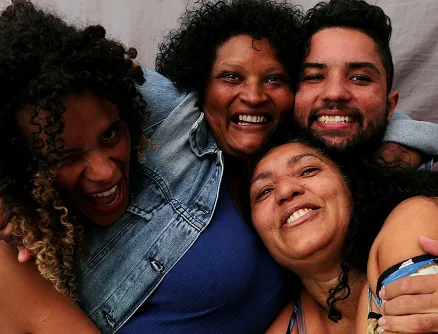






Thousands of immigrants are already achieving more with their money. You can too.
Comun is a financial technology company and not a bank. Banking services are provided by Community Federal Savings Bank; Member FDIC. The Comun Visa® Debit Card is issued by Community Federal Savings Bank, pursuant to a license from Visa U.S.A Inc. and may be used everywhere Visa Cards are accepted.
Results may vary. For a complete list of eligible IDs and application requirements, follow this link.
No minimums, no maintenance fees. ATM or transfer fees may apply. See app for fee details.
Direct deposit funds are typically available when we receive the payment file, up to two days before the scheduled payment date. This early availability is not guaranteed.
A service provided by Service UniTeller, Inc. Service UniTeller, Inc. is licensed in all states that require a license.
Remittance fees start at $2.99 but may vary. Please check the app for more details.
Comun Inc. may earn revenue from the conversion of foreign currencies.
Funds in your account are FDIC insured up to $250,000 by ownership category through Community Federal Savings Bank (CFSB), Member FDIC, in the event CFSB fails.