Checking account
Prepaid card vs. debit card: what's the difference?
Compare prepaid and debit cards: fees, direct deposit, account statements and how to open an account without an SSN.
8 min read

05 Oct 2026
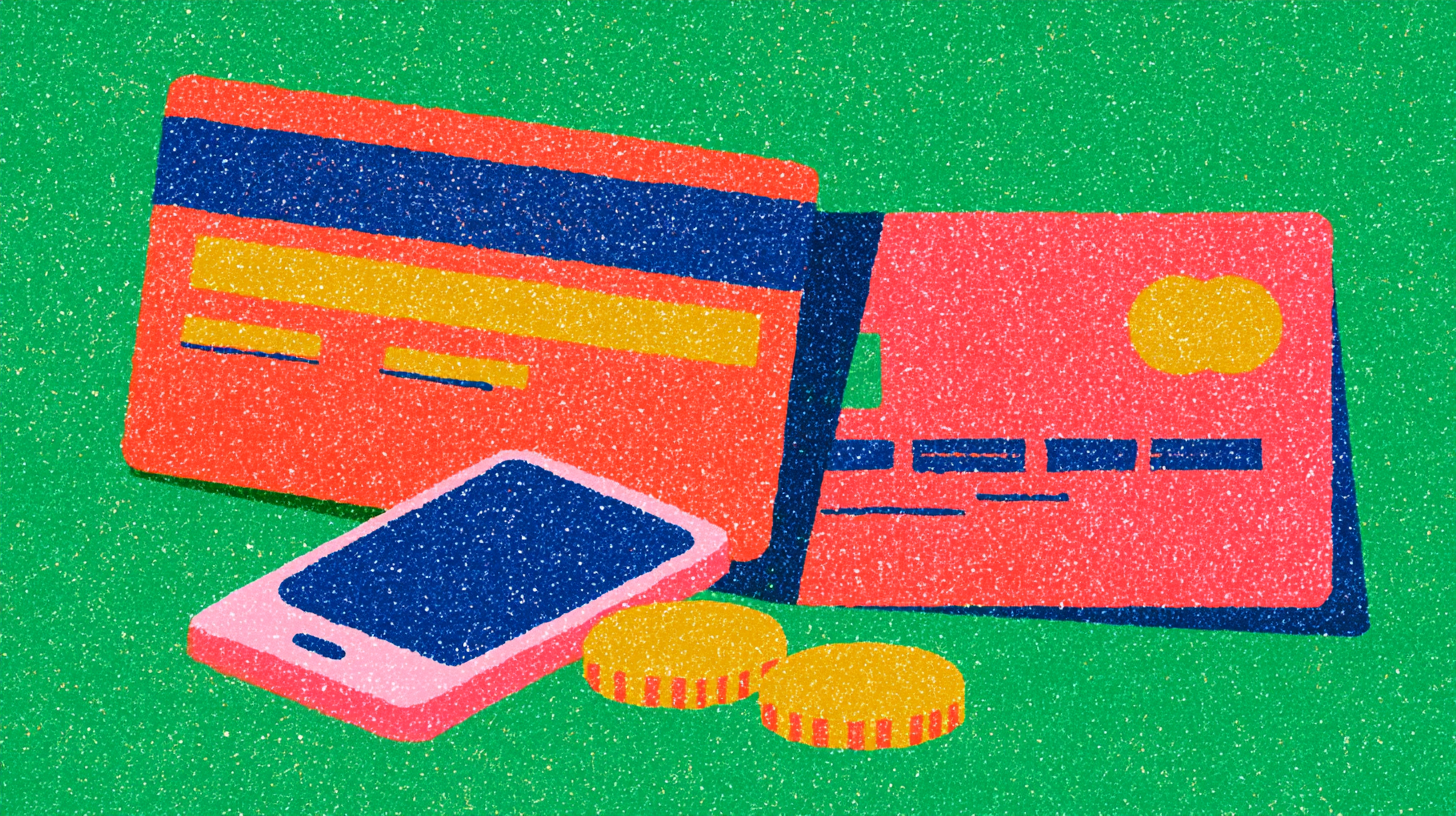
A prepaid card is loaded with money in advance and generally is not linked to a traditional checking account. A debit card is linked to a checking account, and money is taken directly from the available balance in that account. A debit card is generally connected to additional banking features, such as account statements, direct deposit, and other account services.
The main difference is their connection to a bank account, as a debit card draws funds directly from a checking account, while a prepaid card requires you to load money onto it in advance. Neither prepaid cards nor debit cards typically help you build a credit score because they generally are not reported to the major credit bureaus.
What is a prepaid card?
A prepaid card is a payment card that must be loaded with funds before it can be used. Spending is limited to the amount loaded onto the card. They are commonly available through retail stores and financial service providers.
Prepaid cards are commonly used for everyday purchases, online payments, and sending or receiving limited funds. Prepaid cards can be reloadable, meaning you can add money again after spending the balance. Some also allow direct deposit, but the features available depend on the provider.
Because prepaid cards are generally not linked to a traditional checking account, they may not include features such as full account statements, overdraft services, or other banking features. Available services vary by provider.
What is a debit card?
A debit card is linked to a checking account. When a purchase is made, the money is taken directly from the account balance.
Debit cards are commonly used for daily spending, online purchases, ATM withdrawals, and bill payments. They are also commonly used for receiving income through direct deposit from employers or other payment sources.
Because the card is connected to an account, all transactions are recorded in account statements. These statements can be used to track spending, income deposits, and account activity over time.
A debit card generally reflects your available account balance as transactions are processed.
Prepaid card vs. debit card: main differences
Prepaid cards and debit cards can look similar in everyday use, but they operate in different ways behind the scenes. The comparison below breaks down how each one works across key features such as account access, fees, deposits, and financial tools. Común’s debit card is included to be used as an example of a debit card.
| Feature | Prepaid Card | Debit Card | Común Debit Card |
|---|---|---|---|
| Linked to checking account | No | Yes | Yes |
| FDIC insured | Varies by provider | Yes, if linked to an FDIC insured checking account | Yes, through Community Federal Savings Bank, Member FDIC |
| Direct deposit | Limited | Available, depending on the account | Yes, with early access options |
| Monthly fees | May apply, depending on the provider | Varies by provider | No monthly fee |
| Reload fees | May apply, depending on the provider | Not applicable | None |
| Account statements | Not available | Available through account | Available through account |
| Open without SSN | Many prepaid cards require SSNs | Varies by provider | Yes, eligible customers may apply using a passport or certain Latin American IDs |
| Overdraft protection | Generally no | Varies by account | Generally no |
This comparison shows how prepaid cards and debit cards differ in structure, cost, and financial features, especially when it comes to account access and long-term use. A debit card linked to a checking account can offer more functionality, including direct deposit and account statements. Eligible customers can open a Común checking account using a Passport or certain Latin American IDs.
What are the disadvantages of prepaid cards?
Prepaid cards can be useful for basic spending, but they can have limitations depending on how they are used.
One common limitation is cost structure. Many prepaid cards may charge fees for adding money, withdrawing cash, or maintaining the card. The types and amounts of fees vary by provider.
Some prepaid cards also have limits on deposits, withdrawals, or transfers.
Another limitation is access to financial features. Prepaid cards usually do not include all of the features available with a traditional checking account, such as detailed account statements, bill payment tools, or other banking services.
Can immigrants get a debit card without a Social Security Number?
Some financial institutions and service providers allow individuals to open accounts using alternative identification instead of a Social Security Number. Accepted identification varies by institution and may include a passport or other forms of government issued identification.
Verification is still required to confirm identity under U.S. financial rules, but the documents accepted can vary by provider.
Once the account is approved, a debit card is issued and linked to the checking account. It can then be used for purchases, withdrawals, and direct deposits.
In the United States, some financial service providers accept different forms of identifications for their verification process. For example, Común accepts passports and more than 100 Latin American IDs to open an account.
When does it make sense to use a prepaid card?
A prepaid card can be useful for basic spending, short-term use, or situations where a traditional checking account is not available.
It can also be used as a budgeting tool since spending is limited to the loaded balance.
Some people use prepaid cards as a first step in the U.S. financial system before moving toward debit accounts with more features.
How to switch from a prepaid card to a debit card
Switching from a prepaid card to a debit card usually involves opening a checking account and moving recurring payments or deposits to the new account.
Once the account is open, money can be added through direct deposit, transfers, or other supported methods depending on the provider.
Some users keep their prepaid card active during the transition period while updating payment information across services.
If you’re considering switching from a prepaid card, Común offers a checking account with a debit card that eligible customers can open using a passport or accepted Latin American IDs. The account doesn’t have any minimum balance requirements or monthly maintenance fees.
FAQ
Is a prepaid card the same as a debit card?
No, a prepaid card is loaded with money in advance and is not connected to a checking account. A debit card is linked to a checking account and uses the available balance in that account.
Can I use a prepaid card to build credit?
Prepaid cards generally do not build credit because purchases are not typically reported to the major credit bureaus.
What are the fees on a typical prepaid card?
Fees can include monthly maintenance charges, reload fees, and ATM withdrawal fees. The exact cost depends on the provider.
Can I get a debit card without a Social Security Number?
Some services allow account opening using alternative identification such as a passport or national IDs, depending on verification requirements.
What do I need to open a debit card account as an immigrant?
Requirements typically include a valid form of identification, personal information, and verification steps required by the financial provider.
Común is a financial technology company and not a bank. Banking services are provided by Community Federal Savings Bank, Member FDIC. The Común Visa® Debit Card is issued by Community Federal Savings Bank, pursuant to a license from Visa U.S.A. Inc. and may be used everywhere Visa Cards are accepted.
No minimum balance requirements or monthly maintenance fees. ATM or transfer fees may apply. See app for fee details.
Direct deposit funds are typically available when we receive the payment file, up to two days before the scheduled payment date. This early availability is not guaranteed.
Funds in your account are FDIC insured up to applicable limits by ownership category through Community Federal Savings Bank (CFSB), Member FDIC, in the event CFSB fails.
About Común
Común aims to support the Latino community in the United States. It offers a debit account that can be opened with more than 100 valid Latin American IDs and an app available in Spanish.
Visit Común's website or download the app for free to learn more about the full offer and applicable terms.
Olivia Rhye
Community Partner

Immigration
ITIN vs. SSN: What's the Difference and Why Does It Matter?
8 min de lectura
What Is an SSN?
A Social Security Number (SSN) is a unique nine-digit code assigned by the U.S. Social Security Administration (SSA) to citizens, permanent residents, and certain eligible temporary residents. Originally designed to manage Social Security benefits, the SSN is now widely used for tax filing, credit history, and access to government services.
People must submit their SSN application to the address provided by the Social Security Administration.
Key facts about SSNs:
- Eligibility: U.S. citizens, permanent residents, and certain non-citizens authorized to work are eligible for an SSN.
- Uses: SSNs are used for employment, tax filing, Social Security benefits, and access to government services.
- Financial access: SSNs are often required to open bank accounts, apply for credit, and get loans.
An Individual Taxpayer Identification Number (ITIN) is also a nine-digit number, but it's issued by the IRS (Internal Revenue Service) rather than the SSA. People must file Form W-7 to apply for an ITIN. The ITIN is specifically for people who are required to file U.S. tax returns but aren't eligible for an SSN. This includes non-citizens without legal work authorization in the U.S., foreign investors, and dependents of U.S. citizens or residents.
An ITIN is required to file a U.S. tax return and is also used to submit a federal tax return.
Key facts about ITINs:
- Eligibility: ITINs are available to non-citizens who are required to file U.S. taxes but don't qualify for an SSN.
- Uses: ITINs are used solely for tax filing purposes and don't authorize work or provide eligibility for Social Security benefits.
- Financial access: While ITINs can be used to open bank accounts and apply for credit at some institutions, they don't grant the same level of access as an SSN.
Differences Between ITIN and SSN
The main difference between an ITIN and an SSN comes down to who can get them and what they're used for:
- Eligibility:
- SSN: Issued to U.S. citizens, permanent residents, and certain temporary residents authorized to work.
- ITIN: Issued to non-citizens who are required to file taxes but aren't eligible for an SSN. The number of days present in the U.S. affects residency status for tax purposes.
- Purpose:
- SSN: Used for a wide range of activities, including employment, tax filing, and access to Social Security benefits.
- ITIN: Used exclusively for tax filing and reporting by non-citizens without SSNs. An Employer Identification Number (EIN) is used for business entities, estates, and trusts.
- Legal status:
- SSN: Grants work eligibility and access to certain government benefits.
- ITIN: Does not grant work authorization or eligibility for Social Security benefits.
- Access to financial services:
- SSN: Provides broader access to financial services, including easier access to credit, loans, and government benefits.
- ITIN: While it can be used to open bank accounts and access some financial services, options are more limited compared to what's available with an SSN.
ITIN vs. SSN: Why Does the Difference Matter?
Understanding the difference between an ITIN and an SSN matters for several reasons:
- Tax compliance: Knowing which number to use is crucial for filing taxes correctly. Using the wrong identifier can result in errors, penalties, or delays in processing refunds. For U.S. citizens or residents, it's essential to use the correct identifier, such as an SSN or an Adoption Taxpayer Identification Number (ATIN), when an SSN can't be obtained in time for tax filing.
- Access to financial services: The type of tax ID you have can affect your access to banking, credit, and other financial services. For example, some banks and credit unions accept ITINs, while others may require an SSN.
- Employment eligibility: An SSN is required to work legally in the U.S. If you're a non-citizen without work authorization, applying for an SSN can lead to legal complications. In those cases, an ITIN is the appropriate identifier for tax purposes.
- Government benefits: An SSN is required to receive Social Security benefits and other government services, which aren't accessible with an ITIN.
Conclusion
Both the ITIN and the SSN play critical roles in the U.S. financial and tax systems, but they serve different populations and purposes. Understanding the differences between these identifiers is essential for anyone navigating tax filing, financial access, and legal employment in the U.S. Whether you're a U.S. citizen, a non-citizen authorized to work, or a foreign investor, knowing which number you need — and why — can help you avoid potential legal issues and ensure you have the financial access your circumstances require.
International Money Transfers
How to send money to Mexico via WhatsApp? Común vs. WhatsApp Pay
8 min de lectura
How to send money to Mexico via WhatsApp? Común vs. WhatsApp Pay
WhatsApp does not currently offer a service to send money directly from the United States to Mexico.
WhatsApp is one of the most popular ways to stay in touch with family and friends across borders. While the app supports payments in certain countries, its payment features are not available for sending money from the United States to Mexico.
However, for people living in the United States who are looking into sending money to Mexico, there are many different options available. From traditional service providers such as Western Union and MoneyGram to apps with instant international transfers like Wise, Remitly and Común.
Can I send money to Mexico via WhatsApp from the United States?
At this time, WhatsApp does not offer an official service that allows people in the United States to send money directly to recipients in Mexico through WhatsApp Pay. WhatsApp's payment functionality is only available in Brazil and India.
This means that you can still use WhatsApp every day to communicate with family and friends in Mexico, but you cannot transfer money from a U.S. account to a recipient in Mexico using WhatsApp Pay.
Some money transfer companies offer WhatsApp-based experiences that help initiate transfers, but those services are different from WhatsApp Pay itself. The actual transfer is processed through the remittance provider rather than through WhatsApp's native payment system.
What is WhatsApp Pay and how does it work?
WhatsApp Pay is a payment feature integrated into WhatsApp that allows eligible users to send and receive money without leaving the app. The service operates through local payment networks and financial partners in supported countries.
As of 2026, WhatsApp Pay is available in India and Brazil. It is not broadly available as a payment method in the United States, and it is not available as a direct remittance solution for sending money from the United States to Mexico.
Why can't I use WhatsApp to send money to Mexico?
Cross-border money transfers require financial institutions, payment networks, regulatory approvals, identity verification procedures, and international settlement systems. WhatsApp Pay was built around local payment systems in specific countries. Because of this, the service does not currently support direct remittances from U.S. bank accounts to recipients in Mexico.
This limitation often creates confusion because WhatsApp is widely used on both sides of the border. Messaging a family member in Mexico through WhatsApp is easy, but sending money through WhatsApp Pay is a different service with separate availability requirements.
How much does WhatsApp Pay charge for sending money?
There is no standard fee for sending money from the United States to Mexico through WhatsApp Pay because that service is not currently available.
If you're in the United States and need to send money to Mexico, you will need a remittance service provider. To compare the costs related to sending money to Mexico, it can be important to review: transfer fees, exchange rates, delivery methods, transfer speed, and recipient requirements.
What's the best way to send money to Mexico if not via WhatsApp?
There is no single answer because different money transfer methods work better for different situations. Bank transfers can be a familiar option for people who already have a checking account. Traditional remittance providers such as MoneyGram and Western Union offer multiple delivery methods, including bank deposits, cash pickup locations, and mobile wallets in some markets.
Digital remittance platforms have become increasingly popular because they offer the possibility of sending money directly from a smartphone. These services typically display the exchange rate, fees, and delivery method before the transfer is completed.
One option is Común through its remittances services, which allows eligible customers to send money to Mexico and other countries in Latin America directly from the Común app. Transfers start at $2.99, and many transfers are delivered on the same day depending on the destination and delivery method.
How to send money to Mexico with Común? (step by step)
1. Open the Común app on your phone.
Sign in to your account and navigate to the remittance section.
2. From the main page, select "Envía una Remesa".
Select the option on your app.
3. Choose your recipient or add a new one.
Provide the required details for the person receiving the transfer.
4. Enter the transfer amount.
Review the amount you want to send.
5. Review the transfer details.
Confirm the recipient information, delivery method, transfer amount, and estimated delivery timeframe.
6. Confirm the transfer.
Complete the transaction and wait for confirmation. Many transfers are delivered the same day, although delivery times may vary.
WhatsApp Pay vs. Común: a direct comparison
| Feature | WhatsApp Pay | Común |
|---|---|---|
| Send money from the United States to Mexico | No | Yes |
| Cross-border remittances | No | Yes |
| Starting transfer cost | Not available for U.S.-Mexico transfers | Starting at $2.99 |
| Delivery to recipients in Mexico | Not supported | Available |
| Transfer purpose | Domestic payments in supported countries | Money transfers to Mexico and Latin America |
WhatsApp Pay was created for payments within certain supported markets. Común remittance services make it possible to send money from the United States to recipients in Mexico and other countries in Latin America directly from the Común app.
A Común account can be opened with a passport or more than 100 Latin American IDs with no minimums or monthly fees.
FAQ
Can I send money to Mexico using WhatsApp?
No. WhatsApp does not currently provide an official service that allows users in the United States to send money directly to recipients in Mexico through WhatsApp Pay.
How does WhatsApp Pay work?
WhatsApp Pay allows eligible users in supported countries to send and receive money through WhatsApp using local payment networks and financial partners.
How long does it take for the money to arrive if I send it with Común?
Many transfers sent through Común are delivered on the same day. Delivery times may vary depending on the destination, delivery method, and recipient institution.
What do I need to send money to Mexico with Común?
You generally need a Común account, the recipient's information, the transfer amount, and any additional details required for the selected delivery method.
How much does it cost to send money to Mexico with Común?
Común international transfers start at $2.99. The total cost may vary depending on the transfer amount, destination, and exchange rate.
Is it safe to send money through apps from the United States?
Using a regulated money transfer provider can help protect your transaction through identity verification, encryption, fraud monitoring, and transaction tracking features.
Común is a financial technology company and not a bank. Banking services are provided by Community Federal Savings Bank, Member FDIC. Peer-to-peer payments services are provided by Cross River Bank. No minimums, no maintenance fees. Remittance service provided by Service UniTeller, Inc. Remittance fees start at $2.99 but may vary. Común Inc. may earn revenue from the conversion of foreign currencies.

Living in the United States
What are the school grades in the United States? Ages and equivalencies
8 min de lectura
Do you have children about to enter school in the United States? Understanding the U.S. education system is essential for adapting to a new culture and preparing for the differences compared with your country of origin.
Broadly speaking, the U.S. education system is divided into three stages: Elementary School, Middle School, and High School. Each plays a specific role in students’ academic journey. This system covers ages 5 through 18 and forms the central framework of schooling in the country.
In this article, we explain each of these stages and detail their purpose to demystify how students progress through the system and its educational levels in the United States.
Levels of the U.S. education system: Everything you need to know
In the United States, it is common for children to begin schooling around age 5. After kindergarten, it is divided into 12 grade levels.
Below, we show how the U.S. education system is structured.
Early childhood education
Early childhood education or preschool is not mandatory in the United States. However, it is common for children under age 5 to attend pre-K (preschool) or kindergarten.
These centers focus on young children’s cognitive development through play and early literacy activities. For this reason, there is no grading system. Kindergarten is offered through private and public options or via the Head Start social assistance program for low-income families.
Elementary school
After that, children will enter primary education or Elementary school starting around age 6, depending on the school district.
This level typically covers 1st through 5th grade and is characterized by the gradual introduction of more advanced knowledge, with the aim of building cognitive and social development through learning skills such as mathematics, science, and language, among others.
- Characteristics: students generally have the same teacher for almost all subjects, except for those requiring specialized knowledge, such as physical education.
- Grading system: it can vary by district, but it is common for students to be assessed using a letter scale—A, B, C, D, and F—or, alternatively, a numeric scale from 1 to 4.
- Approximate Ages: between 6 and 11.
Middle school (junior high school)
After finishing primary education, students continue with Middle school, which typically covers 6th through 8th grade. It is a transitional stage between primary and secondary education.
- Characteristics: students have a different teacher and classroom for each subject, which promotes independence and socialization.
- Grading system: the formal A through F system is typically being used.
- Approximate Ages: between 11 and 14.
High school
The next level is secondary school or High school, typically covering grades 9 through 12. It culminates in the High school diploma, a basic requirement to continue with higher education or enter the job market.
- Characteristics: in addition to required subjects such as English, math, and science, students can complement their education with electives and extracurricular activities.
- Grading system: both the A–F letter scale and the GPA (Grade Point Average) are generally used; GPA serves as an indicator of academic performance and is key for college admission.
- Approximate Ages: between 14 and 18.
Postsecondary education
Postsecondary or higher education in the United States includes different types of programs as well as private and public schools. Although it is not strictly mandatory, it provides more opportunities for good jobs and higher earnings.
These are the types of higher-education institutions in the U.S.
Public or private universities
- They offer a curriculum lasting approximately 4 years.
- Upon completion and passing of the program, graduates receive a Bachelor’s degree.
- The admission process depends on prior academic performance, reflected in the GPA.
- There are public universities funded by the government and private universities as well.
Community colleges
- These are public colleges offering educational programs that last 2 years.
- Upon completing this program, students earn an Associate’s degree, equivalent to a technical program.
- They are more accessible than a university, and admission rates are also higher.
If you need to send money to another country, explore some options and tips.
Technical or vocational institutions
- They focus on acquiring knowledge related to practical trades, such as nursing, graphic design, and programming.
- They also offer certificates to recognize completed studies.
The U.S. education system can be somewhat confusing compared with other countries, such as some in Latin America. Below is a comparison table to clarify general equivalencies, keeping in mind that there are variations in each country.
| Grade level in the United States | Typical Ages | Equivalence in Mexico |
|---|---|---|
| Preschool | 3–4 years | Preschool/kindergarten |
| Kindergarten | 5–6 years | Final year of preschool |
| 1st grade | 6–7 years | 1st year of elementary |
| 2nd grade | 7–8 years | 2nd year of elementary |
| 3rd grade | 8–9 years | 3rd year of elementary |
| 4th grade | 9–10 years | 4th year of elementary |
| 5th grade | 10–11 years | 5th year of elementary |
| 6th grade | 11–12 years | 6th year of elementary (start of Middle school in some countries) |
| 7th grade | 12–13 years | 1st year of Middle school |
| 8th grade | 13–14 years | 2nd year of Middle school |
| 9th grade | 14–15 years | 3rd year of Middle school (may be the final year of secundaria or 1st year of High school) |
| 10th grade | 15–16 years | 1st year of High school |
| 11th grade | 16–17 years | 2nd year of High school |
| 12th grade | 17–18 years | 3rd year of High school |
| Postsecondary education | 18 and up | University |
How does the school year work in the United States? Key aspects
The U.S. education system is characterized by flexibility to adapt to students’ abilities and interests in order to foster their full potential.
For this reason, it is common for students to be placed into specific classes according to their learning level, which may be more or less challenging.
- Placement depends on several factors, such as:
- How well the student understands English or their test scores—especially for foreign students
- Recommendations from parents/guardians
- Standardized test scores and prior academic performance
- Willingness to complete challenging assignments
- The student’s interest or motivation
- Teacher or counselor recommendation
- Examples of student work demonstrating their level of understanding and skills
Another relevant aspect to consider is the school calendar and schedule in the United States. These can vary by state and school district, but in general the school year begins in late August or early September and ends in late May or early June.
How to manage your finances in the United States with Común
As you can see, the U.S. education system is intentionally designed to guide students from basic education through higher studies and, afterward, into working life.
Each level has a clear function, which makes it easier for families, students, and educators to plan and provide support in order to make more informed decisions along the school path.
Without a doubt, your children’s education is one of the most important investments, because it is a way to secure their future.
Común is the ideal financial platform to help you manage tuition payments and handle school expenses for higher education.
Común is a financial platform with a mobile app that makes it easy to open accounts in the U.S. with a qualified official ID from your country of origin, send low-cost remittances, and provide bilingual Spanish and English language support for the immigrant community.
Learn about all the benefits of opening an account with Común for you and your family.
As an immigrant, Común allows you to open an account with a qualified official ID from your country, with no hidden fees and bilingual Spanish and English language support.
Frequently asked questions
If you still have questions, consult our Q&A section.
How do you enroll your child in school?
Go to the school district where you live to find out which school corresponds to your address. Complete the required documents and the enrollment application.
Requirements may vary by state or school district, so it is important to verify directly with your local school.
What is the difference between a public and a private school in the United States?
Public schools are funded by government tax revenues, while private schools are funded by tuition.
What do Freshman/Sophomore/Junior/Senior mean?
These are the terms used in U.S. high schools and universities to indicate year level
- Freshman: 1st year
- Sophomore: 2nd year
- Junior: 3rd year
- Senior: 4th year
What is needed to enter school in the United States?
- Minimum age depending on the level
- Birth certificate
- Up-to-date vaccination record
- Proof of residence in the district

Living in the United States
How to Save on Groceries: 10 Tips for 2026
8 min de lectura
Saving on groceries without sacrificing quality is possible with simple strategies: comparing unit prices, taking advantage of seasonal deals, and using a fee-free account so you don't lose money to bank charges while you shop.
The impact of inflation on our food budget is no joke. Rising food prices make us look for more affordable alternatives. Discover how to save on food with these 10 tips to spend less at supermarkets and restaurants.
Set a supermarket budget:
- Set a limit for your supermarket purchases and look for deals before entering the store. Plan your meals and snacks based on the week's discounts. Try generic brands to save even more.
Be aware of sales tactics:
- Avoid marketing strategies that make you spend more. Do not shop when you are bored, tired, or hungry. Stay focused and stick to your shopping list.
- These are some of the aggressive tactics supermarkets use:
- Minimum purchases to receive a discount. Supermarkets advertise a cheap price when you buy a minimum quantity of a product. Sometimes it is two, three, or five. Many times the store honors the price if you buy individually. This is sorted out at the register.
- Anchoring. This happens when the sale price is strategically placed next to the regular price, making you feel like you are getting a bargain.
- Placing impulse buys at the end of each aisle and at checkout. You may add something to your cart that you do not need.
- Loss leaders. These are items advertised at very low prices. While you may get a deal on the sale item, the intention is for you to enter the store and buy more items at regular prices.
- These are some of the aggressive tactics supermarkets use:
Use coupons:
- Take advantage of apps and browser extensions to find coupons and discounts on your purchases, such as Honey, Dosh, or Ibotta.
Buy only essentials in bulk:
- Buy in large quantities only non-perishable and regularly used products, such as toilet paper or diapers.
Check the discount shelf offers:
- Look for discounted products in the meat and produce sections, as well as on your local supermarket's clearance shelves.
Check your pantry:
- Before going to the supermarket, check what you have at home and create dishes with those ingredients. Use apps like Kiwilimon to find recipes.
Use food-saving apps:
- Apps like Too Good to Go let you buy surplus food at reduced prices. Misfit Markets, Imperfect Foods, and GrubMarket offer food with cosmetic imperfections or surplus at lower prices.
Avoid food delivery apps such as Grubhub, Doordash, and Uber Eats because they charge many fees and inflate dish prices for delivery.
Eat out during lunch hour or happy hour:
- Take advantage of deals and special menus at bars and restaurants during these hours to save money.
Reduce how often you eat out:
- Limit your visits to restaurants and fast food, and focus on preparing meals at home. Meal planning can help you save money and eat healthier.
Space out your supermarket visits and choose just one store:
- Wait until you have used up most of your food before going to the supermarket, and choose a single store to avoid extra transportation expenses.
Remember that with Común, you can take full control of your finances and manage your money from your app. Común offers a checking account with more than 57,000 ATMs around the United States. At no cost. Saving you money is what we do best.
Saving on food is possible by following these 10 practical tips. Setting a budget, taking advantage of deals, and reducing how often you eat out will help you spend less at supermarkets and restaurants without sacrificing the quality of your food. Start saving today!
How do I save money on groceries without buying lower-quality products?
Compare the price per unit (not just the total price), buy seasonal produce, and take advantage of weekly deals instead of always buying the same items out of habit.
Do bank fees affect my grocery budget?
Yes — a monthly fee or out-of-network card charges reduce the money available for your shopping. With Común there's no monthly fee or charges for using your debit card.
What other habits help save on weekly shopping?
Make a list before you go, avoid shopping while hungry, and check your transactions after each shopping trip to catch duplicate charges or errors.
Frequently asked questions
How do I compare prices more effectively at the grocery store?
Look at the unit price (per ounce, per pound) printed on the shelf tag, not just the package's total price — sometimes the "bigger" package costs more per unit.
Is it worth buying in bulk?
Only if you'll use the product before it expires; otherwise the savings are lost to wasted food.
How do I avoid overspending on groceries?
Make a list before you leave and avoid shopping while hungry, since it increases impulse purchases.
Does Común charge anything for using my debit card in stores?
No, there are no charges for using your Común debit card on purchases.
How do I know if I was overcharged on a purchase?
Check your activity in the app after each purchase — real-time notifications help you catch errors quickly.
Does saving on groceries really make a big difference?
Yes — small weekly savings add up over time; cutting $20-30 a week can add up to over $1,000 a year.
Living in the United States
Identity theft in the U.S.: protection guide for immigrants
8 min de lectura
Identity theft happens when a person uses someone else’s personal information, such as a Social Security number (SSN), Individual Taxpayer Identification Number (ITIN), or financial account information, to commit fraud. Scammers often target immigrants through fake government agencies, employment offers, and immigration-related schemes designed to collect personal information. If identity theft happens, it is important to report it quickly through IdentityTheft.gov and to follow the recommended steps that may help reduce the damage.
Identity theft can happen to anyone, regardless of their immigration status. Knowing how to recognize the warning signs, respond quickly, and protect sensitive information can make recovering from identity theft easier.
This article is for informational purposes only. If you are a victim of identity theft, visit IdentityTheft.gov for official guidance.
What is identity theft and why are immigrants frequent targets?
Identity theft occurs when another person uses someone else's personal information without permission to open financial accounts, apply for credit, file tax returns, obtain employment, or commit other forms of fraud. In many cases, victims may not discover the problem until they receive unexpected bills, notice unfamiliar activity on their financial accounts, or are denied credit they never requested.
Immigrants are frequently targeted by scams designed to collect personal information. People who have recently arrived in the United States may also be less familiar with credit reports, fraud alerts, credit freezes, or official government procedures. Fraudsters may pretend to represent government agencies, immigration services, employers, financial institutions, or utility companies. These scams often pressure people into sharing an SSN, ITIN, passport information, debit card numbers, or online account credentials.
Sharing personal information does not automatically lead to identity theft, but it can give criminals the information they need to misuse someone's identity. That is why it is important to verify who is requesting personal information before providing it and to avoid responding to unsolicited phone calls, emails, text messages, or social media messages asking for sensitive information.
Identity theft is different from a financial scam. A scam may involve convincing someone to send money voluntarily. Identity theft involves using personal information without permission to impersonate another person or commit fraud in their name. In some situations, both can happen at the same time.
What are the warning signs of identity theft?
Identity theft often develops gradually. Small warning signs may appear weeks or even months before a victim realizes someone has been using their information. Therefore, it is important to pay attention to unexpected financial or tax notices.
The following situations are some common warning signs of identity theft.
| Warning sign | What it could mean |
|---|---|
| Unexpected bills or collection calls | Someone may have opened an account in your name. |
| Denial of a loan or financial account you never applied for | Your credit history may contain fraudulent activity. |
| IRS notice about income you did not earn | Someone may be using your SSN or ITIN for tax-related fraud or employment. |
| Mail stops arriving or unfamiliar mail appears | Someone may have changed your mailing address without your knowledge. |
| Unfamiliar accounts on your credit report | Financial accounts may have been opened using your personal information. |
| Charges you do not recognize on your account statement | Someone may have gained access to your financial account or payment information. |
Not every unfamiliar transaction means identity theft has occurred. Sometimes a merchant name appears differently on an account statement, or a family member may have made a purchase. Even so, unexpected activity should be reviewed as soon as possible so any unauthorized transactions can be reported promptly.
Another important warning sign is receiving verification codes, password reset emails, or notifications about accounts that were never created. These messages can indicate that someone is attempting to access an online account or register an account using your personal information.
Checking credit reports periodically may also help identify unfamiliar accounts before they become a more serious problem. Reviewing financial statements regularly, monitoring account activity, and responding quickly to unexpected notices can reduce the amount of time fraudulent activity goes unnoticed.
Finally, you should trust your instincts when something feels unusual. Receiving repeated phone calls requesting personal information, being pressured to confirm an SSN or ITIN, or being told that immediate payment is required to avoid legal consequences are all situations that deserve additional verification before sharing any sensitive information. These tactics are commonly used by scammers to collect the personal details needed to commit identity theft.
What should you do immediately if your identity is stolen?
If identity theft is suspected, acting quickly can help limit financial losses and make the recovery process easier. The Federal Trade Commission (FTC) recommends creating a recovery plan through IdentityTheft.gov as soon as possible. The site generates personalized steps based on the type of identity theft reported.
If a financial account may have been compromised, contact the financial institution immediately to report the suspicious activity to help secure the account. Changing passwords and enabling two-factor authentication on important accounts can also help prevent additional unauthorized access.
If someone may have opened credit accounts using your personal information, consider placing a fraud alert or credit freeze with the major credit bureaus. These tools can make it more difficult for someone to open new accounts in your name.
How to report identity theft to the FTC
The Federal Trade Commission allows identity theft victims to report the incident through IdentityTheft.gov at no cost. After answering a few questions, the website creates an FTC Identity Theft Report and provides a personalized recovery plan based on the situation.
Depending on the type of fraud, the recovery plan may recommend contacting financial institutions, disputing fraudulent accounts, placing a fraud alert or credit freeze, or reporting tax-related identity theft to the IRS.
Keep copies of any letters, emails, account statements, or case numbers related to the incident. Having well-documented and organized records can make it easier to resolve disputes with creditors or financial institutions.
How to protect your SSN or ITIN from identity theft
Protecting personal information starts with sharing it only when necessary. Before providing an SSN or ITIN, verify who is requesting it, why it is needed, and whether another form of identification can be accepted.
Avoid carrying documents that display an SSN or ITIN unless they are needed for a specific appointment. Store tax documents, identification numbers, and financial records in a secure location, and shred documents containing sensitive information before discarding them.
If you save your SSN or ITIN information digitally, try to use strong, unique passwords for your online accounts and enable two-factor authentication whenever it is available. Keeping devices updated with the latest security software may also reduce the risk of unauthorized access.
How to monitor your accounts for suspicious activity
Regular account monitoring is one of the most effective ways to detect identity theft early. Reviewing account activity, checking credit reports, and paying attention to unexpected notifications can help identify suspicious activity before it becomes a larger problem.
Transaction alerts can also make monitoring easier. Común's checking account includes instant transaction notifications, helping account holders to quickly identify purchases or transfers they do not recognize. The account also supports two-factor authentication.
If an unfamiliar transaction appears, it is important for you to review it as soon as possible and contact the financial institution if the activity cannot be verified. Responding promptly may reduce the impact of unauthorized transactions and help secure the account more quickly.
With Común, eligible customers can enable instant transaction alerts and two-factor authentication directly in the app. Monitoring your account activity regularly can help you spot unfamiliar transactions and respond quickly if something doesn't look right.
Eligible customers may be able to open a Común account using a valid passport, matrícula consular or more than 100 valid Latin American IDs. The account has no minimum balance requirements or monthly maintenance fees.
FAQ
How do I know if someone stole my identity?
Identity theft often becomes noticeable through unfamiliar charges, debt collection calls, accounts you never opened, or unexpected IRS notices. Checking your financial accounts and credit reports regularly can help you identify suspicious activity sooner.
What should I do first if my identity is stolen?
Start by reporting the incident at IdentityTheft.gov. The website creates an FTC Identity Theft Report and provides a personalized recovery plan. If financial accounts are affected, contact the companies involved as soon as possible.
Can someone steal my identity using my ITIN?
Yes. Although an ITIN cannot be used for every purpose that an SSN can, it may still be misused for tax-related fraud or other identity theft schemes. Protect your ITIN just as carefully as your SSN and only share it when necessary.
Is it free to report identity theft to the FTC?
Yes. Identity theft can be reported at IdentityTheft.gov at no cost. After submitting a report, the FTC provides recovery guidance and documentation that may help resolve fraudulent accounts and credit report issues.
How long does it take to fix identity theft damage?
Recovery time depends on the type of fraud and how quickly it is reported. Some issues can be resolved within weeks, while others, such as correcting credit reports or tax-related identity theft, may take longer. Acting promptly can help reduce delays.
Should I freeze my credit if my identity is stolen?
A credit freeze is one option the FTC recommends because it makes it more difficult for someone to open new credit accounts in your name. It is free to place and remove, and it does not affect existing financial accounts.
Común is a financial technology company and not a bank. Banking services are provided by Community Federal Savings Bank, Member FDIC. The Común Visa® Debit Card is issued by Community Federal Savings Bank, pursuant to a license from Visa U.S.A. Inc. and may be used everywhere Visa Cards are accepted.
No minimum balance requirements or monthly maintenance fees. ATM or transfer fees may apply. See app for fee details.
Direct deposit funds are typically available when we receive the payment file, up to two days before the scheduled payment date. This early availability is not guaranteed.
Funds in your account are FDIC insured up to applicable limits by ownership category through Community Federal Savings Bank (CFSB), Member FDIC, in the event CFSB fails.

Immigration
What happens if I don’t renew my permanent visa? Discover everything about the Green Card in the U.S.
8 min de lectura
Have you just obtained your permanent residence in the United States? Without a doubt, it’s a great achievement for every immigrant who has gone through the immigration process for a long time, though it also comes with a series of responsibilities and restrictions.
A recurring issue within the immigrant community is the general lack of awareness about the risks that can affect their legal status if they don’t act appropriately in the country.
In this article, we aim to keep you informed about these restrictions and provide practical advice to maintain your permanent residence smoothly.
Legal restrictions and rights as a permanent resident
The first thing you should understand is that being a resident is not the same as being a U.S. citizen, as there are clear legal differences that set them apart.
These are the main restrictions you should keep in mind.
You cannot vote in federal elections
Unlike U.S. citizenship, permanent resident status does not grant the right to participate in federal or state elections, which is a disadvantage in exercising voting rights.
Certain public jobs are restricted
Although permanent residents can work for the U.S. government, some positions are only available to citizens, particularly those related to national security or public trust roles.
Possibility of losing status for serious crimes
While obeying the law is mandatory regardless of your immigration status, it’s important to remember that committing crimes such as fraud or drug trafficking can lead to the revocation of your Green Card.
Risks of losing the Green Card due to absences or immigration errors
One of the key requirements you must keep in mind from the moment you began your Green Card process is the obligation to maintain continuous residence in the United States before and after approval.
Keep these risk scenarios in mind to avoid problems with U.S. immigration authorities.
- Leaving the country for more than 6 months without justification may raise suspicion of abandoning residence: if you need to leave the U.S. for more than 6 months, apply for Form I-131, which declares your intention to return.
- Stays outside the U.S. longer than one year can cause automatic loss of status: prolonged absences are generally considered abandonment of permanent residence. Form I-131 allows you to remain abroad for up to two years.
- Failing to file taxes or lying on tax returns can be grounds for revocation: the Internal Revenue Service (IRS) and U.S. Citizenship and Immigration Services (USCIS) may revoke lawful permanent resident status if they detect irregularities in tax payments.
It is advisable to plan your trips abroad in advance and, if necessary, obtain a reentry permit before leaving. Also, stay up to date with your tax payments and seek legal advice if needed.
Limitations on sponsoring family members and obtaining benefits
One of the main advantages of having a Green Card is the ability to sponsor family members for the same status. However, unlike U.S. citizens, residents have access to limited eligibility categories.
- You can only sponsor a spouse and unmarried children under 21: these relatives are considered “preference” categories and must wait until visa slots become available.
- Parents and siblings cannot be sponsored (only citizens can do so): in this case, the only option is to obtain U.S. citizenship.
- Waiting times are long depending on the country of origin: the process can take longer for applicants from high-demand countries, such as Mexico.
Although permanent residence offers certain benefits for holders, these restrictions can be frustrating for immigrants seeking family reunification hindered by regulations.
Tips to protect your status as a permanent resident
It’s true that there are risks that can lead to losing your permanent residence, but most can be avoided with good practices and responsibility.
Keep these tips in mind to avoid problems with the U.S. government.
Always meet your tax obligations
Stay current with your annual tax filings; remember that the deadline is usually April 15 each year. It is essential to meet this requirement, even if you spend time outside the country, to demonstrate your responsibility as a permanent resident.
Maintain a clear residence and ties in the U.S.
It is essential that your main residence is in the United States and that you can show clear ties in the country, such as work, studies, or family.
Avoid long absences and consult before traveling
As mentioned before, being away for more than 6 months may be interpreted as abandoning permanent residence. Try to leave the country only in emergencies, after applying for Form I-131.
Consider applying for citizenship if you meet the requirements
After 5 years as a permanent resident without extended absences and meeting other legal requirements, you can apply for citizenship and remove these restrictions.
Although naturalization is a long process with several steps, it is the most practical path to long-term stability in the country and full rights.
Común supports your financial life as an immigrant
In this article, we explained the “fine print” of the permanent resident card, showing you the risk factors that could lead to losing your status, as well as its benefits.
A common concern for immigrants seeking permanent residence is staying connected with their loved ones despite the distance. Común is the fintech platform that helps you organize your money and send support easily.
Discover all the benefits of Común!
- Checking account with clear and competitive fees.
- Affordable international money transfers.
- Mobile app available in Spanish that accepts more than 100 qualifying official identifications from your home country.
- Debit card for everyday purchases and payments.
Open your account with Común today and manage your money in the U.S. with clarity and confidence.
Frequently Asked Questions (FAQ)
If you still have questions, check the following section.
What’s the difference between a Green Card and residency?
The Green Card, or permanent resident card, is the physical document that certifies that a person holds lawful permanent residence. Residency, on the other hand, is the status granting the right to remain in the country indefinitely.
How long does a Green Card last?
The Green Card is valid for 10 years and can be renewed indefinitely as long as requirements are met. For conditional residency, it lasts 2 years, after which you must apply to remove the condition to renew it for 10 years.
What happens if I don’t renew my permanent visa?
If you don’t renew your permanent residence, your status remains valid, but you might face issues reentering the country, at work, or when handling legal procedures. It’s best to keep this document current to avoid complications.
Checking account
What to Do if Your Alza Account Was Closed
8 min de lectura
If your Alza account was closed, you can open an account with Común using your passport, consular ID, or another Latin American ID — no Social Security Number required. The process takes about 3 minutes.
Similarities Between Alza and Común
Sending money to Latin America: Both Alza and Común offer remittance services, letting users send money to friends and family in Latin America quickly and efficiently.
Debit card and checking account: Users on both platforms get a debit card linked to a checking account; Común offers a Visa card, allowing worldwide transactions and access to funds.
Virtual Visa debit card: Común provides a checking account connected to a physical and virtual Visa debit card, emphasizing the importance of this offering for the financial stability and inclusion of Latino families.
Flexible application process: Both platforms let users apply for an account using various forms of ID, like an international passport, consular card, SSN, or ITIN.
ATM fee reimbursement: Alza users could withdraw cash from any ATM worldwide with full fee reimbursement. Común also supports ATM withdrawals, ensuring convenient access to cash.
Advantages of Switching to Común: Modern Banking Solutions
One of Común's standout features is its commitment to transparency and cost-effectiveness. Unlike traditional banks and even Alza, Común doesn't charge opening fees, monthly maintenance fees, and has no minimum balance requirements. This makes it an ideal option for those looking to avoid unnecessary banking fees and keep more of their hard-earned money. Here are a few more standout features of a Común account:
Financial inclusion: Común is dedicated to promoting financial inclusion by providing modern banking solutions tailored to the unique needs of Latino families. They address the challenges Latinos face in accessing traditional financial services and emphasize the importance of financial education. This commitment ensures the Latino community has access to an inclusive, supportive banking experience.
Broader ID acceptance:
- Común: Accepts any official government-issued ID, not just passports or consular cards. This makes it easier for a wider range of people to open an account.
- Alza: Limited to specific forms of ID, which could be restrictive for some users.
Simplified address verification:
- Común: Applicants can verify their home address using their phone's geolocation. This feature is particularly beneficial for immigrants who may not have traditional proof-of-address documents.
- Alza: Required physical proof of address, which could be a challenge for those in non-permanent housing or living with relatives.
Extensive cash deposit network:
- Común: Offers access to the largest cash deposit network in the U.S., with more than 90,000 locations, including popular retailers like Walgreens, Walmart, and Dollar General.
- Alza: Didn't specify as extensive a cash deposit network, limiting convenience for cash deposits.
24/7 customer service:
- Común: Provides customer service around the clock, ensuring help is available anytime, any day of the week.
- Alza: Customer service availability wasn't highlighted as a 24/7 feature.
With Común, you'll never feel alone managing your finances. They offer top-tier customer service available seven days a week via chat, email, or phone. That means you can get help whenever you need it, making your banking experience smooth and worry-free.
Open your bank account¹ in 3 minutes with your country's ID²
- No minimum balance fees
- Send money to your home country safely
- Get paid up to 2 days early³
- Send money to your home country safely
- And much more!
Making the Switch to Común: Financial Inclusion
Switching from Alza to Común is simple and hassle-free. As a trusted financial partner, Común understands Latino families' unique needs. You can apply for a Común account online in minutes using a variety of ID documents like a passport, consular card, or ITIN. Once your account is set up, you can easily transfer your funds to Común. The fastest way would be to withdraw cash from your Alza account and then deposit it at any cash deposit location Común offers using the barcode option in Común's cash deposit feature.
The transition from Alza to Común is designed to be smooth and straightforward, helping you achieve financial freedom. Here's how you can make the switch:
Open a Común account: Visit the Común website or download the Común app to start your application. Use any government-issued ID and your phone's geolocation to verify your address.
Transfer your funds: To transfer your funds to your Común account, we recommend first withdrawing cash from your Alza account. Then, you can go to any cash deposit location Común offers and deposit your cash using the barcode option. This option doesn't require your physical card, so you can deposit cash from your Alza account immediately after being approved for a Común account.
Another quick option that doesn't require your Común card is transferring your Alza funds directly from your Alza account to your Común account using your account number and routing number. You can find this information under Account Information in Settings.
Set up direct deposits: Update your direct deposit information with your employer or any other income source to ensure uninterrupted access to your funds.
Current Común Offerings
One of Común's founding principles is inclusivity. As a customer-focused digital bank, Común doesn't require a Social Security Number (SSN) to open an account. Unlike many traditional banks, this feature is particularly beneficial for immigrants and people who may not have access to traditional forms of ID. Común focuses on providing secure banking solutions for everyone, regardless of immigration status. Común also aims to be a financial hub for Latino immigrants, offering a comprehensive banking solution with expanded resources tailored to their needs. To welcome former Alza customers, Común has several incentives:
- Hassle-free application: Apply using any government-issued ID and easily verify your address through your smartphone.
- Enhanced customer support: Benefit from 24/7 customer service to assist with any questions or issues during your transition.
- Extensive cash deposit options: Enjoy the convenience of depositing cash at more than 90,000 locations nationwide.
Conclusion: Secure Your Financial Future With Común for Financial Stability
As Alza prepares to close its doors, Común offers a robust, user-friendly alternative that not only matches but goes beyond the services Alza provided. With no fees, an extensive cash deposit network, and unmatched customer support, Común is the ideal banking solution for former Alza customers. Make the switch today and experience the superior banking experience Común has to offer.
Make the switch today and experience the benefits of a banking platform that truly puts you first. Visit the Común website to learn more and start your new banking journey.
For more information and to start your application, visit Común's official website here: https://www.comun.app
Why do digital bank accounts like Alza get closed?
Reasons vary by institution — they can include inactivity, identity verification issues, or changes in the provider's policies. Check directly with Alza for your specific case.
What do I do if my account was closed and I need an alternative?
You can open an account with Común using a valid government-issued ID — passport, consular ID, or one of over 100 accepted Latin American IDs.
What do I need to open my new account with Común?
Just your valid government-issued ID. No Social Security Number or ITIN required, and the process is 100% online.
Frequently asked questions
Can I open a Común account if my previous account was closed by another provider?
Yes, as long as you have a valid government-issued ID, you can open your Común account without issue.
Do I need a Social Security Number to open my Común account?
No, we accept a passport, consular ID, or other Latin American IDs.
How long does it take to open my new account?
About 3 minutes, with instant approval in most cases.
Will I lose my financial history if I switch providers?
History within another platform doesn't transfer automatically; your new Común account starts fresh.
Does Común charge a fee to open the account?
No, there's no opening fee, monthly fee, or minimum balance required.
What should I do with the money in my old account?
Contact your previous provider directly to learn the process for withdrawing your funds before the account closes completely.
.avif)
Instant payments
How do I send money through Xoom? Your complete 7-step guide
8 min de lectura
Today, sending money to other countries has become a basic need for millions of immigrants living in the United States.
According to the IDFR ( International Day of Family Remittances) campaign in 2025, over the last decade, immigrants sent around 5 trillion dollars in remittances to their countries of origin, which are essential for food, housing, health, and other basic expenses.
To meet this need, there are applications such as Xoom, a PayPal service for transferring money using various payment methods and in a secure manner.
In this guide, we will review how to send money with Xoom step by step, its main features, and some alternatives to connect with your family outside the U.S.
What is Xoom, and is it safe to send money with this service?
Xoom is a digital transfer network owned by PayPal that operates entirely online and offers different sending options to facilitate transactions.
It has become one of the most popular options for making international digital money transfers, due to the backing provided by PayPal, which gives users a sense of security.
In addition to PayPal’s backing, Xoom has high security standards for transferring money, such as SSL encryption and the VeriSign seal.
Additionally, its services are available to send money from the United States to more than 70 countries, including Mexico, Guatemala, Honduras, Peru, among others.
7 detailed steps to send money with Xoom
To send money through Xoom, just follow the steps below.
Access Xoom (web or mobile application) and sign in or register
You can choose to log in via the website www.xoom.com or the mobile application. Once there, sign in or open an account with your email address. You can also use your PayPal account to access.
Select the destination country and the amount to send
Choose the country to which you want to send the transfer. Then you will see the sending options available for the selected destination.
Choose the sending method
Xoom offers the following payment methods:
- Bank deposit
- Cash pickup at physical locations, such as Oxxo or Elektra
- Mobile top-up
- Bill payment
- Cash delivery
Provide the recipient’s details
The information you must enter is:
- Full name, as it appears on their official ID
- Address
- Phone number
- Bank account (if applicable, depending on the sending method)
Select your payment method
Next, enter the amount you want to send and select the payment method, among which are:
- Linked bank account
- Debit card or credit card
- Available balance in your PayPal account
Review and confirm the transaction
Before confirming the transfer, Xoom will display the details so you can verify they are correct, along with the amount corresponding to fees, as well as the exchange rate used for the currency conversion.
Track your transfer with the tracking number
Obtain a tracking number and check the status of your transfer directly in Xoom’s application or website.
Key aspects to consider when using Xoom
Although Xoom is a popular alternative for making fast and secure transfers, it is important to consider several aspects before choosing this option.
Sending fees
Xoom’s sending fees are not fixed; they depend on the destination country, the amount to send, and the payment method.
Generally, the most expensive method is with a credit card and the least expensive is through an account.
| Platform | Fee | Exchange rate | Delivery time | Delivery options |
|---|---|---|---|---|
| Xoom | From 2.99 USD, depending on the sending type | Less favorable | Minutes to hours | Bank deposit, cash pickup, home delivery |
| Común | Fee starting at 2.99 USD, up to the applicable limits | Competitive (Clarification: Results may vary depending on destination country and sending method) | Minutes | Cash pickup, bank deposit |
Exchange rate
The exchange rate can be another drawback because, in addition to being calculated directly on Xoom’s platform, it varies depending on the selected transfer method.
Sending limits
Xoom imposes sending limits that depend on each account’s verification level. For unverified users residing in the U.S., the daily limit is $2,999 USD. By contrast, verified users can send up to $10,000 or $50,000 USD per day, depending on their verification level.
Receiving options
Xoom has different receiving options, but they may vary depending on the destination country.
In general, it is possible to send money for cash pickup at different payout locations, by bank deposit, top-up, or bill payment.
Security and reliability
Xoom is backed by PayPal, in addition to SSL/TLS encryption to protect your financial information and anti-fraud monitoring to ensure your money reaches its destination.
Delivery times
Generally, money transfers via debit card and cash are reflected within minutes. However, other sending methods, such as bank deposit, can take from 1 business day.
The total time will appear before you confirm your transaction in Xoom’s application or on its website.
Accessibility
Xoom is also available in Spanish and, overall, is easy for migrants in the United States to use.
Modern alternatives to sending money with Xoom: Why is Común a smart choice?
Sending money outside the U.S. is essential, as is having efficient international transfer services such as Xoom. However, there are also more innovative options that offer you greater advantages and lower costs so that your family and friends receive much more.
Común is an innovative and comprehensive financial service that meets the financial needs of users living in the United States, especially immigrants. Unlike Xoom, Común has a specialized focus and transparent fees.
With Común:
- Open your account with an official ID from your country; more than 100 identifications are accepted.
- After your first free transfer, pay a fee starting at $2.99 USD per transfer, up to the applicable limits.
- Access customer service in Spanish and English, available 24/7.
- Get a Visa debit card to make purchases at physical merchants.
- Manage your finances from Común’s mobile platform, where you can sync your external bank account and manage your finances from the Común platform.
Still unsure which option is most convenient for sending money? Discover Común and get to know the easy and safe side of finance.
Frequently asked questions
If you want to learn more, see our FAQ section
How do I send money from Mexico to the United States using Xoom?
It is not possible to send money from Mexico through Xoom, since it only allows transfers from the United States, Canada, and other European countries.
How long does it take for money to arrive via Xoom?
Depending on the sending method, it ranges from minutes to up to 3 business days.
Is it safe to use Común to send money to Latin America?
Yes, Común has the necessary security measures in place to keep your money and personal data safe.
Can I use Común even if I don’t have a PayPal account?
Yes, Común is an independent platform from PayPal, and you can open an account with official ID from your country.
Can I make cash deposits if I don’t have a bank account in the U.S.?
Yes, Común allows you to deposit cash at numerous locations near you.

Community
How to Make a Bank Transfer Online | Común Guide
8 min de lectura
One of the great advantages of having an online account is being able to make bank transfers more quickly, easily, and securely. A bank transfer online is the sending of money from one account to another over the internet. You can do it by ACH (1-3 days, free), Zelle (instant, free), or wire transfer (same day, $15-$45). You only need the recipient’s account number or their phone/email if you use Zelle.
What is an online bank transfer?
An online bank transfer is the instruction you give your bank to move money from your account to another person’s or entity’s account, using digital channels (mobile app or website). There are several types of transfers, each with different speed, cost, and limit characteristics.
What types of bank transfers exist?
ACH Transfer
This is the standard method in the U.S. for transferring money between banks through the ACH (Automated Clearing House) payment network. It is free at most banks and funds arrive in 1-3 business days. Ideal for regular, non-urgent payments.
Zelle
An instant payment service between users of participating banks in the U.S. Transfers are free and instant (minutes). You only need the recipient’s phone number or email.
Wire Transfer
A direct transfer between banks domestically or internationally. It is the fastest method for large amounts (it can be same-day if initiated before the cutoff time). Typical cost: $15-$45 at traditional banks. Requires the recipient’s account number and routing number.
How do you make an online bank transfer step by step?
- Log in to your bank’s app or website
- Go to the "Transfers" or "Payments" section
- Select the type of transfer (ACH, Zelle, wire)
- Enter the recipient’s details: name, account number, and routing number (for ACH/wire) or phone/email (for Zelle)
- Enter the amount and date (immediate or scheduled)
- Review all details and confirm
- Save the transaction receipt
How much money can I transfer?
Limits vary by bank and account type. For ACH transfers, most banks allow between $1,000 and $10,000 per day for new users. With Zelle, the limit is set by your bank (Bank of America: $3,500/day; Wells Fargo: $2,500/day). Wire transfers typically have higher limits (up to $100,000 or more). For international transfers, limits are set by each service.
Frequently Asked Questions About Online Bank Transfers
How long does an online bank transfer take?
It depends on the method. Zelle: minutes. Standard ACH: 1-3 business days. Same-day ACH (premium option): hours. Domestic wire transfer: same day if initiated before the cutoff time (generally 3-4 PM local time). International wire transfer: 1-5 business days depending on the destination country.
What information do I need to make a transfer?
For ACH or wire transfer, you need: the recipient’s full name, bank account number, and routing number (9-digit routing number). For Zelle, the recipient’s registered phone number or email is enough. For international transfers, in addition to the receiving bank’s IBAN or SWIFT/BIC, you may also need CLABE (Mexico) or other local codes.
Can I cancel a bank transfer after sending it?
It depends on the type and how much time has passed. ACH: you can cancel if the bank has not yet processed it (typically within the first few hours). Zelle: not cancellable if the recipient is already registered. Wire transfer: difficult but possible if you act immediately; the bank charges a reversal fee. Always verify the recipient’s details before confirming any transfer.
Is there a limit to how many transfers I can make per month?
Banks may set limits on the number of transactions in addition to dollar limits. Some savings accounts limit you to 6 monthly transfers (Reg D regulation, although it was suspended in 2020). Checking accounts generally do not have a limit on the number of transfers. Check your account’s specific terms.
Are online bank transfers safe?
Yes, when you use regulated platforms. Banks use SSL encryption, two-factor authentication, and fraud monitoring. However, confirmed transfers are difficult to reverse, so always verify the recipient’s details. Be wary of any urgent transfer requests from people you do not know.
What do I need to receive a bank transfer?
To receive a transfer, you need a bank account with a routing number and account number. Común gives you both from the moment you open your account, with no SSN. Share your routing number and account number with whoever is sending you money, or your phone number if it is through Zelle.
Financial Education
Online Banking Security: Protect Your Account Information
8 min de lectura
Protecting your information in online banking starts with simple good habits: use unique passwords, turn on two-factor verification when available, and check your activity often. With Común you can lock your card instantly from the app if something looks suspicious.
The convenience of managing your financial transactions online through digital banking has become increasingly popular. However, with the rise of digital banking comes the need for greater security to protect personal and financial information. Here's how you can safeguard your bank account information while enjoying the benefits of online and mobile banking. Aiming for the most secure online banking possible is essential, since it involves implementing industry-standard security technology, multi-factor authentication, alert notifications, and encouraging people to take proactive security measures.
Understanding Online Banking
Online banking, offered by most traditional banks, credit unions, and online-only banks, lets customers pay bills, transfer funds, and manage their financial accounts over the internet. Whether you're dealing with a large bank or a local credit union, these institutions offer secure online banking services tailored to their customers' needs. This can be accessed through a bank's website or a mobile banking app, offering the convenience of banking anytime, anywhere. As banking has evolved, security measures to protect online bank account information must also advance.
Common Threats in Online Banking
Online banking security is paramount, since various threats could compromise your bank accounts. Common online threats include:
- Phishing Scams: Identity thieves send fraudulent communications, often by email, to access your online banking information.
- Malware: Malicious software designed to infiltrate your device and steal data related to your financial accounts.
- Identity Theft: Criminals can use personal information to open new accounts or access existing ones.
- Data Breach: A significant risk where sensitive information is accessed without authorization, potentially affecting numerous accounts.
Understanding these risks is crucial to maintaining online banking security. Banks and credit unions often update their security features to protect against such threats, making it important for users to follow recommended security measures. Keeping online banking secure is a collective effort involving secure banking technology, vigilant fraud monitoring, and informed users who are aware of risks like phishing scams and hacking attacks.
Regain Control and Peace of Mind With Común's Security Measures
- Log In Easily and Securely: Use Face ID or Touch ID for quick access to your Común account.
- Get Instant Notifications: Stay on top of your purchases with instant alerts from Común.
- Manage Your Card With Ease: Freeze and unfreeze your Común card whenever you need to.
Open your bank account¹ in 3 minutes with your country's ID²
Your Money Is in Good Hands With Común
- FDIC-Insured: Funds in your Común account are insured up to $250,000 by Community Federal Savings Bank, Member FDIC.
- VISA Protections: Your Común card is protected by VISA's guarantee against unauthorized charges.
Monitoring and Protecting Your Accounts
Regularly monitoring your account balances and transactions is vital. Set up banking alerts through your financial institution to notify you of any unauthorized transactions. When banking online, especially on public Wi-Fi networks, it's a good idea to use a Virtual Private Network (VPN) to secure the connection and protect your data from being intercepted. Also, make sure all devices used for online banking have secure software and are regularly updated.
Most banks, including credit unions and traditional banks, use robust banking security measures to protect online and mobile banking operations. However, responsibility also falls on the customer to use trusted mobile banking apps, available from sources like Google Play or the App Store, emphasizing the importance of security when choosing apps, and to contact the bank right away if any suspicious activity is detected. The Federal Deposit Insurance Corporation (FDIC) plays a crucial role in improving online banking security and protection by insuring money at online banks and protecting customer data security, thereby safeguarding customer funds and privacy.
The Importance of Strong Passwords
Online banking security starts with strong, unique passwords. Creating strong passwords means using a combination of at least 12 characters, including uppercase letters, lowercase letters, numbers, and symbols. Avoid using the same password across multiple online accounts, and update your passwords regularly to protect your bank account information. A password manager can help generate and securely store these passwords. It's crucial to apply this practice to all accounts, especially your savings account, to protect it from unauthorized access and potential hacking threats.
The Role of Encryption in More Secure Online Banking
Encryption serves as a critical layer of security to protect your account information while banking online. When you access your bank account through a bank's website or a mobile banking app, your personal and financial information is encrypted. This encryption makes it harder for hackers to intercept and decode data during transmission between your device and your bank's servers, keeping online banking secure.
Technologies like SSL (Secure Socket Layer) and HTTPS (Hyper Text Transfer Protocol Secure) are fundamental to ensuring a secure connection when banking online. These security measures are used by most banks and credit unions to protect financial transactions. To verify a secure connection, users can look for the lock symbol in their browser's address bar on banking websites, confirming the presence of HTTPS, which indicates web communication is protected by encryption.
Staying Educated on the Latest Security Trends
Staying informed about the latest security features and trends is crucial for anyone using online and mobile banking platforms. Traditional banks, online banks, and credit unions continually update their security protocols to counter emerging threats and ensure secure online banking. By regularly reading updates from your financial institution and taking advantage of resources like banking alerts and advice from bank representatives, you can improve your ability to protect your bank accounts from unauthorized transactions and identity theft.
Additionally, using a Virtual Private Network (VPN) can add an extra layer of security when accessing your financial information on public Wi-Fi networks. A VPN creates a secure, private connection over a less secure network, like public Wi-Fi, ensuring your online banking activities are protected from prying eyes.
Enrolling in two-factor authentication (2FA) or multi-factor authentication (MFA) is another strong security measure recommended by most banks. This approach requires more than one form of verification to access your online bank account, significantly reducing the risk of unauthorized access.
By understanding the importance of these security practices and adopting measures like using strong, unique passwords, regularly updating them through a password manager, and monitoring your account balances, you can safeguard your financial life and enjoy the benefits of digital banking with confidence. Whether you need to transfer money, pay bills, or simply check your savings or money market accounts, being proactive about online security can protect you from potential cyber threats and improve your overall online banking experience.
Protect Your Account
In conclusion, the growing popularity of online and mobile banking requires robust security practices to protect sensitive personal and financial information. By understanding various threats like phishing, malware, and data breaches, and using strong security measures like strong, unique passwords, encryption, and multi-factor authentication, people can significantly improve their online banking security.
It's also crucial for users to stay informed about the latest security trends and updates provided by their financial institutions. Taking proactive steps, like using a VPN on public networks and regularly monitoring account activity, helps ensure a secure, efficient digital banking experience. By adopting these practices, users can protect their financial transactions and personal details, maintaining peace of mind while enjoying the convenience of modern banking technology.
What are good security practices for online banking?
Use unique, hard-to-guess passwords, avoid accessing your account over public wifi, and review your activity regularly.
What security features does Común offer?
Instant card lock from the app, PIN or Face ID login, and 24/7 support through chat, email, phone, or WhatsApp.
How do I recognize a fraud or phishing attempt?
Be wary of urgent messages asking you to confirm information or click links. Común will never ask for your password or access codes by message or phone call.
Frequently asked questions
What is two-factor verification and why does it matter?
It's an extra layer of security that requires a second code beyond your password, making it harder for someone else to access your account even if they have your password.
Is it safe to use public wifi to check my bank account?
It's not recommended — use mobile data or a secure network when accessing financial information.
How do I lock my Común card if I suspect something's wrong?
Directly from the app, instantly, with no need to call support.
Will Común ask for my password by phone or message?
No, never. If someone asks for it claiming to be from Común, it's a fraud attempt.
How often should I check my bank activity?
Ideally every few days, to catch any activity you don't recognize as early as possible.
What do I do if I get a suspicious message asking for my information?
Don't reply or click any links — contact Común support directly through the app's official channels.
Immigration
Benefits of Having an ITIN in the U.S. for Non-Citizens
8 min de lectura
How to get an ITIN
The ITIN is obtained through IRS Form W-7 along with identity and foreign status documentation. A passport is the only document that satisfies both requirements on its own. The process takes between 7 and 11 weeks.
1. It allows federal tax filing
The ITIN allows you to file tax returns with the IRS, including claiming credits such as the Child Tax Credit and the Earned Income Tax Credit.
2. Access to credit and financial services
Some banks and credit unions accept an ITIN as an alternative ID to an SSN for opening accounts. Platforms like Común do not require either an SSN or an ITIN.
3. It facilitates business operations
For entrepreneurs, the ITIN is vital for filing business taxes and applying for an Employer Identification Number (EIN).
4. It supports residence and immigration processes
Consistently filing taxes with an ITIN can demonstrate good moral character, a factor considered in some immigration cases.
5. It helps establish identity and secure income
In the absence of an SSN, the ITIN is recognized by financial institutions and government agencies as a valid identification number.
6. Access to state services and benefits
In some states, the ITIN allows access to a driver’s license, health insurance, or in-state college tuition rates.
7. It protects against tax identity theft
Using the ITIN consistently links your tax data to your identification number, reducing the risk that someone files a return in your name.
Frequently asked questions about ITIN benefits
What is the ITIN used for in daily life?
The ITIN allows you to file tax returns with the IRS, claim tax credits such as the Child Tax Credit, open bank accounts at institutions that accept it, and in some states access services such as driver’s licenses or in-state tuition. It is the tax identification number for those who do not qualify for an SSN.
Does the ITIN give me the same rights as an SSN?
No. The ITIN is exclusively for tax purposes. It does not authorize you to work legally in the U.S., does not generate Social Security credits, does not provide automatic access to federal benefits such as Medicare or unemployment, and is not equivalent to an SSN for most government procedures. It is a tool for tax inclusion, not immigration status.
Does filing taxes with an ITIN affect me in an immigration process?
In general, filing taxes with an ITIN can be beneficial in immigration processes because it demonstrates a history of tax compliance and “good moral character,” one of the criteria evaluated in some adjustment-of-status cases. However, the impact varies by case — consult an immigration attorney before using it as an immigration strategy.
Can I open a bank account with an ITIN?
Some banks do accept an ITIN. Bank of America and certain local banks have specific programs for ITIN holders. However, many large banks require an SSN. Alternatives like Común do not require either an SSN or an ITIN — they accept a passport, consular ID, or other Latin American IDs for immediate account opening.
Does the ITIN help me access credit in the U.S.?
Yes, partially. Some credit card issuers and lenders accept an ITIN. Certain mortgage programs (ITIN loans) allow you to buy a home without an SSN. Building credit history with an ITIN is possible, although more limited than with an SSN. Credit built with an ITIN generally does not automatically transfer if you later obtain an SSN.
How do I apply for an ITIN if I have never had one?
You submit IRS Form W-7 along with identity and foreign-status documentation — a passport is the only document that satisfies both requirements on its own. You can mail it with your tax return, go in person to an IRS Taxpayer Assistance Center, or apply through an authorized Certifying Acceptance Agent (CAA), which is the fastest and safest method.
Financial Education
Popular apps to send money from the United States: 2026 comparison
8 min de lectura
Popular apps to send money from the United States
The short answer is that it depends on what you're looking for. Whether you're splitting rent with a roommate, paying a friend back for dinner, or sending money home to your family in Mexico or Guatemala, there's an app for it. The key is selecting which one to use and when.
Sending Money from your phone
Today, millions of people living in the United States send money in minutes from their phones. This can be done to another person's bank account for someone sitting across the table from you at lunch or to a family member in a different country.
However, it is important to consider that not all apps work the same way, and choosing the right one for you could save you time or money. Some service providers offer fixed fees, while others offering international transfers include the cost in the exchange rate. This directly impacts how many pesos, quetzales, or lempiras your loved ones receive after the conversion.
How to compare money transfer apps?
It is recommended to look at three key factors that could impact the real cost of any transfer:
The transfer fee
The flat fee or percentage charge that is presented before the transaction is made. Some apps charge both a transfer fee and an exchange rate markup, while others charge only one. For domestic transfers within the United States, the fee is often the main cost to evaluate.
Speed
Faster delivery options could have a higher cost. Many apps offer a standard option that takes a few days at a lower cost, and an express option for more urgent transfers. For domestic transfers in the US, instant or same-day delivery is more common, though it may still carry an extra charge depending on the provider.
The exchange rate spread
For international transfers, this is the gap between the mid-market rate and the rate the app offers you. It is one of the most important cost drivers when sending money abroad. For domestic transfers in the US, there is no currency conversion, so this factor does not apply.
An overview of popular money transfer apps from the U.S.
| App | Cost | Speed | Transfer limits | Additional features | Coverage |
|---|---|---|---|---|---|
| Venmo | No fee (bank account/balance); 3% (credit card); instant transfer to bank: 1.75% (min $0.25, max $25) | Up to 1 day (standard); ~30 min (instant) | Up to $299.99/week (unverified); up to $60,000/week (verified) | Social payments feed; online and in-store purchases; Cash Card debit card | U.S. only |
| Zelle | No fee (some banks may apply fees) | Minutes | Limits vary by bank | Built into most major U.S. bank apps; no separate account needed | U.S. only |
| Cash App | No fee (bank account/debit card); 3% (credit card); instant transfer to bank: 0.5%–1.75% (min $0.25) | Standard: 1–3 business days; instant: ~minutes | Up to $7,500/week (verified users) | Cash Card debit; Bitcoin and stock investment; direct deposit | U.S. only |
| Común | No fee (U.S.); from $2.99 (international) | Instant to ~8 minutes (average) | $2,999/day · $4,999/7 days · $9,999/30 days · $19,999/90 days | Cash pickup and delivery; bank deposit and digital wallet; app in Spanish | U.S. and Latin America |
| Western Union | $3–$30+ (varies by amount, country, and method) | Minutes to several days (depends on method) | Up to $5,000 online | Cash pickup and delivery at 200+ country agent network; bank deposit and digital wallet | 200+ countries |
| Remitly | $0–$3.99 (varies by amount and method); first transfer may have a promotional rate | Express: minutes to same day; Economy: 3–5 business days | Up to $100,000 (verified U.S. users) | Express and Economy tiers; cash pickup; home delivery in select countries | 170+ countries |
| Wise | Variable fee from ~0.48%; mid-market rate with no markup | Instant to 2 days | Up to $1,000,000 per ACH transfer (verified) | Multi-currency account (40+ currencies); transparent fee shown before confirmation | 140+ countries |
| Revolut | No fee between Revolut users; Standard plan: no exchange fee up to $1,000/month on weekdays, then 0.5%; weekend transfers ~1% | Instant (Revolut-to-Revolut); up to 3–5 business days (external) | No preset maximum for most currencies | Savings tools; spending analytics; 25+ currency account; prepaid debit card | U.S., Europe, Latin America, Asia |
| PayPal | No fee (domestic, bank/balance); international personal transfers: 5% (min $0.99, max $4.99) + currency conversion spread 3–4% | Generally immediate | Up to $10,000 per transfer (verified accounts) | Accepted at millions of merchants globally; supports multiple linked payment methods | 200+ countries |
Data based on official provider sources as of April 28, 2026. Fees, limits, and exchange rates change frequently — always confirm current terms directly with each provider before sending. This table is for informational purposes only and does not constitute financial advice.
Reviewing six popular remittance apps in the U.S.
Sending money within the United States is not the same as sending money abroad. The costs and logistics work differently, especially when currency exchange comes into play.
1. Común
Común is a digital financial platform that offers services in Spanish and supports both domestic transfers and remittances to countries across Latin America. Users can receive direct deposits into a Común account and send money from the same balance. Transfers are typically completed within minutes, with an average delivery time of around eight minutes depending on the destination and method. Común also operates with cumulative transfer limits over time: $2,999/day · $4,999/7 days · $9,999/30 days · $19,999/90 days. To learn more visit comun.app/remittances.
2. Remitly
Remitly offers multiple delivery options, including bank deposits, cash pickup, and mobile wallets. The app tends to offer promotional exchange rates available for the first transfers; however ongoing transfers tend to include a different spread. It is important to review each service provider's exchange rate spread. Speed is flexible: Express transfers are faster but could come with a higher cost embedded in the rate.
3. Wise
Wise shows the mid-market rate and charges with a clearly defined fee. This model makes it easier to understand what you are paying. It is an app that users have reported to be useful when managing multiple currencies or sending money to different regions across the world.
4. Xoom
Xoom is part of PayPal, which can be convenient if you already use PayPal regularly. Transfers are generally quick to initiate and familiar for those who already know the platform. In some cases, exchange rates may include a wider spread compared to more specialized remittance providers, so it can be useful to check the rate offered on the day of the transfer.
5. Western Union
Its biggest advantage is cash pickup. Recipients can collect money in thousands of locations, which can be useful for those receiving the money who don't have bank accounts. The costs vary widely depending on how you send and receive money.
6. Felix Pago
Felix Pago operates through WhatsApp, which could simplify the transfer process for some users. It is primarily focused on transfers to Mexico, and pricing can be competitive in certain cases, though exchange rate spreads may vary depending on the transfer method and timing.
Which app works best for each country?
The reality is that it depends on specific needs, whether it is lower costs, delivery options or speed. Mexico is one of the largest recipients of remittances globally — most major apps support transfers from the United States to Mexico. Guatemala and Honduras are supported by several providers, including Común, Remitly, Western Union, and Xoom. Colombia and El Salvador are also served by a mix of providers.
What's the best exchange rate available right now?
It changes. Exchange rates fluctuate with currency markets, and provider margins shift with them as well. The recommended approach is to model your specific transfer before sending. Some app service providers offer tools to enter the amount and calculate the amount your recipient would actually receive.
What can I look out for when sending money?
Typos in recipient information:
These are the most common and costly errors. A wrong digit in a phone number or account number can delay a transfer for days or send money to the wrong person entirely.
Sending on a Friday afternoon or holiday weekend:
This often means that the money won't arrive until Monday or Tuesday, even for services that advertise same-day delivery.
Choosing the wrong delivery method:
A bank deposit doesn't help someone who doesn't have a bank account. A cash pickup location that's far from your recipient's town isn't convenient, no matter how fast the transfer is.
Not comparing rates for larger transfers:
The exchange rate spreads and fees directly affect the final amount the person receives.
FAQ
Which app charges the least?
It depends on the destination, amount, speed, and delivery method.
Which app is the fastest?
Speed can vary between domestic transfers within the United States and international remittances. Some providers offer faster delivery options that may come with an additional cost.
Can I send money without a bank account?
Some financial service providers like Común allow you to open an account with your home country's official ID which may be used to manage your finances and send money. Western Union also accepts cash payments at agent locations.
Are these apps safe?
Many money transfer apps operating in the United States are registered with financial authorities and are required to follow regulations related to consumer protection and anti-money laundering. Issues are often linked to user input rather than the platform itself.
The right app depends on what you need
The right app depends on what you need, and that can change over time. There is no single option that fits every situation. What tends to make the biggest difference over time is paying attention to the full picture, including fees, timing, and the final amount your recipient receives.
If you send money regularly to Latin America, it may be worth exploring options that combine everyday banking with remittances in one place. Visit comun.app to learn more.
Remittance service provided by Service UniTeller, Inc. Service UniTeller, Inc. is licensed in all states that require a license. Remittance fees start at $2.99 but may vary. Please check the app for more details. Comun Inc. may earn revenue from the conversion of foreign currencies.





Thousands of immigrants are already achieving more with their money. You can too.
Comun is a financial technology company and not a bank. Banking services are provided by Community Federal Savings Bank; Member FDIC. The Comun Visa® Debit Card is issued by Community Federal Savings Bank, pursuant to a license from Visa U.S.A Inc. and may be used everywhere Visa Cards are accepted.
Comun is a fintech company and not a bank or licensed money transmitter.
* Results may vary. For a complete list of eligible IDs and application requirements, follow this link.
^ No minimums, no maintenance fees. ATM or transfer fees may apply. See app for fee details.
‡ Direct deposit funds are typically available when we receive the payment file, up to two days before the scheduled payment date. This early availability is not guaranteed.
** A service provided by Service UniTeller, Inc. Service UniTeller, Inc. is licensed in all states that require a license. Remittance fees start at $2.99 but may vary. Please check the app for more details. Comun Inc. may earn revenue from the conversion of foreign currencies.
† Funds in your account are FDIC insured up to $250,000 by ownership category through Community Federal Savings Bank (CFSB), Member FDIC, in the event CFSB fails.