Checking account
What to Do if Your Alza Account Was Closed
As Alza announced its closure effective August 9, 2024, many users are looking for alternative banking solutions. Común, a direct Alza competitor, offers a seamless transition with a full suite of financial tools through its banking services, enhanced features, and exceptional service. Here's a detailed comparison to help you understand why Común is the ideal choice for your banking needs and how it helps users achieve financial stability.
8 min read

16 Jul 2024
If your Alza account was closed, you can open an account with Común using your passport, consular ID, or another Latin American ID — no Social Security Number required. The process takes about 3 minutes.
Similarities Between Alza and Común
Sending money to Latin America: Both Alza and Común offer remittance services, letting users send money to friends and family in Latin America quickly and efficiently.
Debit card and checking account: Users on both platforms get a debit card linked to a checking account; Común offers a Visa card, allowing worldwide transactions and access to funds.
Virtual Visa debit card: Común provides a checking account connected to a physical and virtual Visa debit card, emphasizing the importance of this offering for the financial stability and inclusion of Latino families.
Flexible application process: Both platforms let users apply for an account using various forms of ID, like an international passport, consular card, SSN, or ITIN.
ATM fee reimbursement: Alza users could withdraw cash from any ATM worldwide with full fee reimbursement. Común also supports ATM withdrawals, ensuring convenient access to cash.
Advantages of Switching to Común: Modern Banking Solutions
One of Común's standout features is its commitment to transparency and cost-effectiveness. Unlike traditional banks and even Alza, Común doesn't charge opening fees, monthly maintenance fees, and has no minimum balance requirements. This makes it an ideal option for those looking to avoid unnecessary banking fees and keep more of their hard-earned money. Here are a few more standout features of a Común account:
Financial inclusion: Común is dedicated to promoting financial inclusion by providing modern banking solutions tailored to the unique needs of Latino families. They address the challenges Latinos face in accessing traditional financial services and emphasize the importance of financial education. This commitment ensures the Latino community has access to an inclusive, supportive banking experience.
Broader ID acceptance:
- Común: Accepts any official government-issued ID, not just passports or consular cards. This makes it easier for a wider range of people to open an account.
- Alza: Limited to specific forms of ID, which could be restrictive for some users.
Simplified address verification:
- Común: Applicants can verify their home address using their phone's geolocation. This feature is particularly beneficial for immigrants who may not have traditional proof-of-address documents.
- Alza: Required physical proof of address, which could be a challenge for those in non-permanent housing or living with relatives.
Extensive cash deposit network:
- Común: Offers access to the largest cash deposit network in the U.S., with more than 90,000 locations, including popular retailers like Walgreens, Walmart, and Dollar General.
- Alza: Didn't specify as extensive a cash deposit network, limiting convenience for cash deposits.
24/7 customer service:
- Común: Provides customer service around the clock, ensuring help is available anytime, any day of the week.
- Alza: Customer service availability wasn't highlighted as a 24/7 feature.
With Común, you'll never feel alone managing your finances. They offer top-tier customer service available seven days a week via chat, email, or phone. That means you can get help whenever you need it, making your banking experience smooth and worry-free.
Open your bank account¹ in 3 minutes with your country's ID²
- No minimum balance fees
- Send money to your home country safely
- Get paid up to 2 days early³
- Send money to your home country safely
- And much more!
Making the Switch to Común: Financial Inclusion
Switching from Alza to Común is simple and hassle-free. As a trusted financial partner, Común understands Latino families' unique needs. You can apply for a Común account online in minutes using a variety of ID documents like a passport, consular card, or ITIN. Once your account is set up, you can easily transfer your funds to Común. The fastest way would be to withdraw cash from your Alza account and then deposit it at any cash deposit location Común offers using the barcode option in Común's cash deposit feature.
The transition from Alza to Común is designed to be smooth and straightforward, helping you achieve financial freedom. Here's how you can make the switch:
Open a Común account: Visit the Común website or download the Común app to start your application. Use any government-issued ID and your phone's geolocation to verify your address.
Transfer your funds: To transfer your funds to your Común account, we recommend first withdrawing cash from your Alza account. Then, you can go to any cash deposit location Común offers and deposit your cash using the barcode option. This option doesn't require your physical card, so you can deposit cash from your Alza account immediately after being approved for a Común account.
Another quick option that doesn't require your Común card is transferring your Alza funds directly from your Alza account to your Común account using your account number and routing number. You can find this information under Account Information in Settings.
Set up direct deposits: Update your direct deposit information with your employer or any other income source to ensure uninterrupted access to your funds.
Current Común Offerings
One of Común's founding principles is inclusivity. As a customer-focused digital bank, Común doesn't require a Social Security Number (SSN) to open an account. Unlike many traditional banks, this feature is particularly beneficial for immigrants and people who may not have access to traditional forms of ID. Común focuses on providing secure banking solutions for everyone, regardless of immigration status. Común also aims to be a financial hub for Latino immigrants, offering a comprehensive banking solution with expanded resources tailored to their needs. To welcome former Alza customers, Común has several incentives:
- Hassle-free application: Apply using any government-issued ID and easily verify your address through your smartphone.
- Enhanced customer support: Benefit from 24/7 customer service to assist with any questions or issues during your transition.
- Extensive cash deposit options: Enjoy the convenience of depositing cash at more than 90,000 locations nationwide.
Conclusion: Secure Your Financial Future With Común for Financial Stability
As Alza prepares to close its doors, Común offers a robust, user-friendly alternative that not only matches but goes beyond the services Alza provided. With no fees, an extensive cash deposit network, and unmatched customer support, Común is the ideal banking solution for former Alza customers. Make the switch today and experience the superior banking experience Común has to offer.
Make the switch today and experience the benefits of a banking platform that truly puts you first. Visit the Común website to learn more and start your new banking journey.
For more information and to start your application, visit Común's official website here: https://www.comun.app
Why do digital bank accounts like Alza get closed?
Reasons vary by institution — they can include inactivity, identity verification issues, or changes in the provider's policies. Check directly with Alza for your specific case.
What do I do if my account was closed and I need an alternative?
You can open an account with Común using a valid government-issued ID — passport, consular ID, or one of over 100 accepted Latin American IDs.
What do I need to open my new account with Común?
Just your valid government-issued ID. No Social Security Number or ITIN required, and the process is 100% online.
Frequently asked questions
Can I open a Común account if my previous account was closed by another provider?
Yes, as long as you have a valid government-issued ID, you can open your Común account without issue.
Do I need a Social Security Number to open my Común account?
No, we accept a passport, consular ID, or other Latin American IDs.
How long does it take to open my new account?
About 3 minutes, with instant approval in most cases.
Will I lose my financial history if I switch providers?
History within another platform doesn't transfer automatically; your new Común account starts fresh.
Does Común charge a fee to open the account?
No, there's no opening fee, monthly fee, or minimum balance required.
What should I do with the money in my old account?
Contact your previous provider directly to learn the process for withdrawing your funds before the account closes completely.
About Común
Común aims to support the Latino community in the United States. It offers a debit account that can be opened with more than 100 valid Latin American IDs and an app available in Spanish.
Visit Común's website or download the app for free to learn more about the full offer and applicable terms.
Olivia Rhye
Community Partner

International Money Transfers
What are remittances?
8 min de lectura
Remittances are money transfers an immigrant sends to family back home. With Común, sending a remittance to Latin America costs as little as $2.99, with a competitive exchange rate and delivery within minutes in most cases.
Living and working abroad? Remittances might be for you if you want to send money to family members, friends, or other beneficiaries in another country.
Remittance is money transfers from one person to another, usually across borders. They are most commonly sent by immigrants who send a portion of their income to support their families back home. However, remittances can also be personal gifts, financial support, or payments between relatives or friends who maintain social or economic ties despite the distance.
Do you know the difference between a remittance and a bank transfer payment?
Remittances can be money transfers, however what is commonly understood as remittances are voluntary person-to-person transfers, usually between family members. For example: a worker in Texas sending money to their parents in Mexico, a nurse in Florida sending money to her siblings in Honduras, or a student helping their grandparents in Guatemala. Bank transfers on the other hand, can include payments between companies, international trade payments, foreign direct investment, loans between corporations, or government aid.
In summary, remittances are personal, cross-border, person-to-person transfers.
How can you send remittances from the United States to Latin American countries?
Today there are more options than ever to send money to Latin America from the U.S. The process is usually very simple:
#1 Choose a remittance provider
Your remittance service provider can be a financial mobile application, a traditional bank like Wells Fargo, a specialized money transfer service like Western Union or MoneyGram, or a fintech company like Remitly.
#2 Select the destination country and delivery method
Each company offers different delivery options depending on their services and local partnerships. Delivery options vary in cost depending on the provider and the urgency.
#3 Enter the amount and confirm the exchange rate and fee
The amount received by the recipient varies by the exchange rate used by the provider and the service fee they charge. Some companies might charge no fees, but their business model relies on the exchange rate markup.
#4 Pay for the remittance
With so many options available, remittances can be paid with various methods including:
- Bank account (ACH).
- Debit card.
- Credit card (often the most expensive).
- Cash
#5 The recipient receives the money
It can take minutes to days for the recipient to receive the funds, depending on how the funds are received or by the type of remittance provider used to send the remittance.
How much does it cost to send remittances from the United States?
The total cost depends on two main factors:
1. Service fees
This is the fee the provider charges to send the remittance. It can range from $0 to over $20 USD per transaction depending on the provider and payment method used.
- Bank account: typically the cheapest.
- Debit card: mid-range cost.
- Credit card: most expensive (fees + potential interest)
2. Exchange rate costs
Some companies have different exchange rates, making the remittance more expensive even if the service fee is advertised as “$0.” Sometimes the fee for the service provider is included within the added margins in exchange rates.
3. Other possible additional costs
These may include cash pickup fees, limits for high transaction amounts, or fees charged by participating banks. It is important to understand the fees in remittance costs to be able to manage your funds in a way that makes sense to you.
What should you consider before sending money abroad from the United States?
To choose the best option, you can always consider:
- Total costs (fee + exchange rate). Sometimes comparing only the fixed fee is not enough to fully understand the cost of a remittance or transfer.
- Delivery time. If the recipient needs the money the same day, it could be best to choose an quick service.
- Delivery method. Cash pickup can be useful if the recipient doesn’t have a bank account. Other options include bank deposit or digital wallets, which can be practical and low-cost.
- Convenience for the sender. If you send money frequently, it is recommended to evaluate apps that allow saved recipients, automatic payments, recurring transfers, or exchange-rate alerts or options that adjust and serve your needs.
- Limits and requirements. Not all money transfer service providers are the same. Some services require government-issued identification to provide their services, while others require a U.S. bank account and, in some cases, proof of identity (some providers accept foreign passports as proof of identity to send remittances if the sender can prove residency in the United States) for large transfers.
What Companies Offer Remittance Services from the United States?
In the U.S., there are several types of companies offering remittance services:
Traditional money transfer companies, for example: Western Union, MoneyGram, and Ria Money Transfer. These companies have physical branches in many locations. Fees could be higher than alternatives and the exchange rates can be less competitive.
Traditional banks: However, not all banks provide this service, but institutions like Bank of America and Wells Fargo allow international transfers through online banking or in-branch. However, it is important to consider that the fees can reach up to $60 USD depending on the bank, and transfers can take up to 5 business days. For this option, a bank account with the institution is needed or cash transfers are done directly at a branch.
Digital first companies (apps): Examples include Remitly, Wise, WorldRemit, and Xoom (from PayPal). These companies can offer more competitive pricing and faster transfers. These options are presented as an alternative to traditional banks or Western Union. Comun is one of these platforms, combining a fintech experience with extra benefits like a digital account and an easy-to-use app available in Spanish.
Convenience stores: For example, Walmart offers in-person remittance services. For example companies like Comun can also offer services like cash funding in retails or ATM locations. With a Comun open account you can deposit cash at one of over 90,000 retail locations (Walmart, 7-Eleven, Walgreens, and more) and then complete the remittances conveniently from your app.
What do I need to send remittances from the United States to Latin American countries?
Requirements vary by provider and they depend on:
-How the remittance is sent, and
-How the remittance is received.
For example, if sending money for cash pickup, the most important information is the recipient’s full legal name as it appears on their official ID, since they’ll potentially need to present it to pick up the money.
For a bank-to-bank international transfer, the essential information includes the bank details for the receiving account.
Traditional banks and companies like Western Union generally require:
- Recipient’s full name.
- Recipient’s account number.
- SWIFT code.
- Receiving country.
- Amount and currency
How can you send remittances using Comun?
Sending a remittance with Comun is very simple. You have two options at the palm of your hand, you can send it through the app or via WhatsApp. Here’s a detailed step by step on how to do it:
Through the Comun App
- Open your Comun app.
- Select “Transfer.”
- Select “International.”
- Under “How do you want to send your money?”, choose “Through the app.”
- You’ll see the current exchange rate.
- Select an existing recipient or add a new one.
*To add a recipient, you’ll need: full name as on their ID, phone number, and—if sending a bank transfer—their bank details.
- Confirm the recipient’s information.
- Choose the transfer method (bank deposit or cash pickup; options vary by country).
- Enter the sender’s ID type and ID number.
- Confirm transfer details.
- Enter the amount (the calculator shows the amount the recipient will receive in local currency and the transfer fee).
- Confirm the transaction.
And that’s it—your remittance is sent!
Through Comun’s WhatsApp
- Start from our website (by selecting “Send Money”), which will show the WhatsApp option — or.
- From the app, select “Transfer.”
- Select “International.”
- Choose “Via WhatsApp.”
- Follow the conversation flow.
- Choose “Send money.”
- Confirm the country.
- Enter the amount.
- You’ll receive a confirmation message showing the amount to be received in local currency.
- Choose the delivery method.
- Provide the recipient’s details: full name, ID type, ID number, and bank account (if applicable).
- Confirm your remittance.
- Verify your identity through the verification steps.
And you’re done—your remittance is sent!
Best Practices for Sending Remittances
To make sure your get the best out of your hard-earned money, it is recommended to keep some good practices in mind:
1. Verify the exchange-rate margin
Ideally, choose a provider that uses an exchange rate as close as possible to the real market rate as this impacts the actual amount your recipient will receive. Understanding transaction costs can help make better financial decisions for your needs.
2. Look for transparent, fixed fees
Comparing fees can be confusing because many services use variable pricing based on multiple factors. Ideally it is recommended to choose a provider that offers fixed fees and transparent pricing.
3. Consider timing and holidays in both countries
Keep in mind that transfers may be delayed during weekends or holidays in either country, so processing times may be slower than on regular business days.
What exactly is a remittance?
It's money a person sends from the country where they work back to their home country, typically to support family.
How do I send a remittance with Común?
In the app, select "Send a remittance," choose the destination country and delivery method, add the recipient, and confirm the amount and fee before sending.
Which countries can I send money to with Común?
Común supports remittances to Mexico and other Latin American countries; check the full list of available countries in the app.
Frequently asked questions
What's the difference between a remittance and a regular bank transfer?
A remittance is specifically designed for international transfers to family, usually with delivery methods like cash pickup or deposit to an account in the destination country.
How much does it cost to send a remittance with Común?
Starting at $2.99 per transfer, with your first transfer at no cost.
Do I need a Común account to send remittances?
Yes, remittances are sent from your Común account inside the app.
How long does a remittance take to arrive?
Most transfers arrive within minutes, depending on the country and delivery method.
Can I send remittances in cash, or only to a bank account?
Both options exist depending on the country; in Mexico, for example, you can use cash pickup at locations like Elektra or Oxxo.
Is it safe to send remittances through an app?
Común works with a licensed remittance provider and shows the full exchange rate before you confirm each transfer.

Community
Investment Basics for Immigrants in the U.S.
8 min de lectura
The Importance of Investing for Immigrant Families
Investing is one of the most powerful tools for building long-term wealth. For immigrant families in the U.S., understanding investment basics can make the difference between merely surviving and financially thriving. In this guide, we explain the fundamental concepts you need to know before you start investing.
What is investing?
Investing means putting money into assets with the goal of growing it over time. Unlike saving, which keeps money safe but with low returns, investing takes on some risk in exchange for the possibility of higher gains. The most common assets are stocks (ownership stakes in companies), bonds (loans to governments or companies), mutual funds (diversified portfolios), and real estate.
Key concepts you need to understand
Risk and return
The higher the potential risk, the higher the return can be. Individual stocks are more volatile than government bonds. Index funds offer a balance between reduced risk through diversification and historically positive long-term returns.
Diversification
Do not put all your eggs in one basket. Spreading investments across multiple assets, sectors, and geographies reduces the risk that one bad investment will ruin your entire portfolio.
Compound interest
Compound interest is the phenomenon of earning interest on previously earned interest. An investor who starts at age 25 will reach retirement with significantly more money than someone who starts at 35, even if they contribute the same monthly amount.
Investment horizon
The length of time you plan to hold your investments affects which assets to choose. For goals more than 5 years away, you can take on more risk. For short-term goals, prefer more conservative options. Never invest money you need in the short term.
Frequently asked questions about investing for immigrants in the U.S.
Can an immigrant invest in the U.S. stock market?
Yes. Most brokers in the U.S. allow non-citizens to invest, including permanent residents and people with work visas (H-1B, L-1, etc.). Some brokers also accept non-residents. To open an investment account, you generally need a tax identification number (SSN or ITIN) and a U.S. bank account.
How much money can I start investing with in the U.S.?
Most modern brokers like Fidelity, Charles Schwab, and Robinhood have no minimum amount to open an account. You can buy fractional shares starting at $1. What matters is not the starting amount but consistency—investing $50-100 per month regularly produces better results than irregular large sums thanks to dollar-cost averaging (DCA).
What is an index fund and why is it recommended for beginners?
An index fund is a fund that tracks the performance of a stock market index such as the S&P 500. Instead of selecting individual stocks, you invest in a “basket” of the 500 largest companies in the U.S. They are popular for their low cost (fees of 0.03-0.20%), automatic diversification, and historical returns that have outperformed most active managers over the long term.
What happens to my investments if I move back to my country?
You can usually keep your U.S. investment account while abroad, although some brokers restrict nonresident accounts. When you sell, you will pay capital gains taxes in the U.S. (and possibly in your country of residence). Consult a tax advisor before leaving the country to plan the transition properly.
Is a 401(k) account the same as a regular investment account?
No. A 401(k) is a tax-advantaged retirement account generally offered by your employer—the contributions reduce your taxable income now, and the money grows tax-deferred until retirement. A regular investment account (brokerage account) does not have special tax advantages but also no withdrawal restrictions. Both are complementary tools for building wealth.
What are the most common mistakes beginner investors make?
The most common mistakes are: investing money you need in the short term (investments require a 3+ year horizon), selling when the market drops out of panic, not diversifying (putting everything in one company or sector), paying unnecessarily high fees, and not investing because you are “waiting for the perfect moment.” Discipline and consistency matter more than perfect market timing.
Living in the United States
How to Build a Strong Financial Foundation in the U.S.?
8 min de lectura
Building a solid financial foundation in the U.S. starts with three pillars: a realistic budget, responsible debt management, and consistent savings for emergencies and long-term goals. An account with no monthly fee, like Común's, makes it easier to stay in control without losing money to fees.
Start Your Financial Journey: Savings
Creating a savings account and establishing an emergency fund are crucial steps in building a strong financial foundation. An emergency fund ensures that you have a safety net for unexpected expenses, preventing a financial setback. These steps are essential for managing your financial life effectively.
Start with Savings
Opening a savings account is straightforward and gives you a safe place to keep your money. Many banks offer savings accounts with competitive interest rates that help your money grow over time. When building a strong financial foundation, immigrants in the U.S. should consider the following three types of savings accounts. Each type offers unique features and benefits that can help with different aspects of financial planning:
Traditional Savings Accounts
Traditional savings accounts are offered by most banks and credit unions and are a good starting point for those looking to save money safely.
Key Features:
- Accessibility: Easily accessible through ATMs, online banking, and bank branches.
- Interest Rates: Offer lower interest rates compared to other types of savings accounts, but funds are safe and FDIC-insured up to $250,000 per depositor.
- Minimum Balance Requirements: Often have low or no minimum balance requirements.
Benefits:
- Ideal for emergency funds and short-term savings.
- Funds are liquid and can be accessed easily without penalties.
- Provides a safe place to keep money while earning a small amount of interest.
High-Yield Savings Accounts
High-yield savings accounts offer higher interest rates compared to traditional savings accounts, helping your money grow faster over time. They are generally available through online banks, which may offer better rates because of their lower operating costs.
Key Features:
- High Interest Rates: Offer significantly higher interest rates, which means more earnings on your deposits.
- Online Access: Generally managed online, providing convenient access and account management.
- Minimum Balance Requirements: May have higher minimum balance requirements to earn the best rates.
Benefits:
- Better for medium-term savings goals due to higher interest earnings.
- Suitable for building an emergency fund that can grow over time.
- Often come with fewer fees compared to traditional banks.
Certificates of Deposit (CDs)
Certificates of Deposit (CDs) are time deposit accounts that offer higher interest rates in exchange for leaving your money in the account for a fixed period of time. This is a great option for someone who does not need access to their money for a longer period.
Key Features:
- Fixed Terms: The money must remain in the account for a specific term, ranging from a few months to several years.
- High Interest Rates: CDs offer higher interest rates than a traditional or high-yield savings account, particularly with longer terms.
- Early Withdrawal Penalties: Withdrawing money before the term ends can result in significant penalties.
Benefits:
- Works best for a long-term savings goal that does not require immediate access to funds.
- Provides a predictable return on investment with guaranteed interest rates.
- Encourages disciplined saving because of early withdrawal penalties.
Building an Emergency Fund
Calculating an emergency fund based on your income involves a few key steps to ensure you have a financial cushion that can cover unexpected expenses. Here is how to determine a good amount for your emergency fund:
- Determine Your Monthly Expenses
Start by calculating your essential monthly expenses. These typically include rent or mortgage payments, utilities (electricity, water, gas, internet), food and household supplies, transportation (car payments, insurance, gas, public transportation), minimum debt payments (credit cards, loans), health costs (medications, doctor visits), and other necessary expenses (childcare, basic personal care). - Calculate Your Total Monthly Expenses
Add up your essential monthly expenses to find your total monthly living cost. For example, if your monthly expenses are $2,500, this is your reference point for calculating your emergency fund. - Decide How Many Months to Cover
Financial advisors generally recommend saving enough to cover 3 to 6 months of moderate living expenses. The exact amount depends on your personal situation, job stability, and comfort level. For those with more stable income and lower risk of job loss, three months may be enough. Those with less stable income or higher risk may aim for six months or more. - Calculate Your Emergency Fund
You can multiply your total monthly expenses by the number of months you want to cover. Using the example above:
- Three months: $2,500 x 3 = $7,500
- Six months: $2,500 x 6 = $15,000
- Adjust Based on Personal Factors
Consider any additional factors that may affect your needs:
- Dependents: If you have children or other dependents, you may want to save more.
- Health Conditions: If you have ongoing medical expenses, include them.
- Industry: If you work in an industry prone to layoffs, consider a larger fund.
Building an emergency fund is an essential step toward financial security. By carefully calculating your monthly expenses, determining how many months you need to cover, and adjusting for personal factors, you can create a financial cushion that protects you against unexpected expenses. Whether you aim for three or six months of coverage, having an emergency fund will give you peace of mind and stability, ensuring that you are prepared for financial challenges that may arise.
Master Your Cash Flow and Budget
Effective cash flow and budget management are fundamental to maintaining personal finances and financial stability. By tracking your income and expenses, you can make informed financial decisions and avoid overspending.
- Track Your Income and Expenses: Create a detailed record of your monthly income and categorize your expenses. This will help you understand where your money goes and identify areas where you can cut costs.
- Set a Realistic Budget: Develop a monthly budget that prioritizes essential expenses, savings, and investments. Sticking to a budget ensures that you live within your means and set aside money for future needs.
- Address Debt and Build Your Credit: Debt management is a critical component of financial health. Focus on eliminating high-interest debt, such as credit card balances, and work on building a good credit history.
- High-Interest Debt: Prioritize paying off any high-interest debt you have. This will keep you more liquid with a better chance to save and invest in a shorter period of time.
- Build and Maintain Good Credit: A good credit score opens doors to better financial opportunities. If you pay your bills on time and keep your credit card balances low, you can avoid taking on unnecessary debt and maintain a strong financial record.
Mastering your cash flow and budget is crucial for financial stability. By diligently tracking your income and expenses, you can make informed decisions and avoid overspending. Establishing a realistic budget helps you prioritize essential expenses, savings, and investments, ensuring that you live within your means. Effective debt management and building good credit are also key components, as they reduce financial burdens and open the door to better opportunities. Together, these practices lay the foundation for a secure and prosperous financial future.
Invest in Your Future: Retirement and Education Savings
Investing in your future is vital for long-term financial security. Start saving for retirement and consider education savings plans if you have children.
- Retirement Planning: Contribute money to retirement accounts such as a 401(k) or IRA. These accounts offer tax advantages and help ensure that you have enough money to live comfortably in your later years.
- Save for Education: Education expenses can be significant. Start a college savings plan, such as a 529 plan, to save for your children’s educational costs. These plans offer tax benefits and can ease the financial burden of higher education.
- Explore Mutual Funds: Mutual funds are an excellent way to diversify your investments and grow your wealth over time. They offer professional management and a range of investment options to suit different risk levels.
Seek Professional Guidance: Financial Advisors and Tax Professionals
Navigating the complexities of personal finance can be daunting. If you seek advice from a financial advisor or tax professional, they can help you make better-informed decisions and optimize your financial health.
- Consult Financial Advisors: A financial advisor can help you create a personalized financial plan, set realistic financial goals, and provide advice on investments and savings.
- Work with Tax Professionals: Tax professionals can help you understand your tax liability, maximize your deductions, and ensure you comply with tax laws. This can save you money and prevent legal problems.
Investing in your future is essential to achieving long-term financial security. By contributing to retirement accounts and setting up education savings plans, you can secure a comfortable retirement and ease the financial burden of your children’s higher education. Exploring mutual funds allows you to diversify and grow your wealth. In addition, seeking professional guidance from financial advisors and tax professionals can help you make informed decisions and optimize your financial situation, putting you on the path to a secure and prosperous future.
Build Your American Dream: Secure Your Financial Future Today
Building a strong financial foundation in the U.S. is essential for immigrants seeking stability and prosperity. By creating a savings account, establishing an emergency fund, managing your cash flow, and budgeting wisely, you can secure your financial future. In addition, investing in retirement and education savings plans, as well as seeking professional guidance from financial advisors and tax professionals, will further strengthen your financial foundation. These steps not only provide immediate financial security, but also pave the way for long-term financial success. Remember, every small step you take today contributes to a stable and prosperous financial future in the U.S.
What are the pillars of a solid financial foundation?
A budget that prioritizes essential expenses, debt management that avoids unnecessary interest, and a savings fund for emergencies and long-term investment.
How much should I have saved for emergencies?
It's generally recommended to have 3 to 9 months of basic expenses covered, though the exact amount depends on your personal situation.
How do I choose a bank account that supports my financial goals?
Look for an account with no monthly fee, no minimum balance, and tools that make it easy to track your spending — every avoidable fee is money that stays in your budget.
Frequently asked questions
What are the basic pillars of financial stability?
A realistic budget, responsible debt management, and a savings fund for emergencies and long-term investment.
How much should I save for an emergency fund?
Generally 3 to 9 months of basic expenses, depending on your personal situation.
Why is it important to avoid unnecessary bank fees?
Every fee you pay is money you can't put toward your financial goals — over time, these fees add up to hundreds of dollars a year.
Does Común help me build a solid financial foundation?
Yes — it doesn't charge a monthly fee or require a minimum balance, and offers tools like real-time notifications to track your spending.
Do I need good credit history in the U.S.?
It helps you access better rates on loans and cards, but it's not a requirement to open a basic bank account.
Where do I start if I don't have any savings yet?
Start with small, consistent amounts — even $20-30 a week adds up significantly over time.

Financial Education
How to Cash a Check: A Step-by-Step Process
8 min de lectura
With Común you can cash a check without going to a bank: take a photo of it in the app and the money is deposited into your account at no cost. You can also use the network of over 88,000 cash-deposit locations if you prefer to cash it in person.
In the world of finance, the ability to cash a check efficiently and securely is a fundamental necessity. From payroll checks to tax refund checks, the mechanism of turning these paper promises into real purchasing power is a critical aspect of financial management. This article provides a guide on what a check is, how to cash it, and where to do so, ensuring you are well equipped to navigate this process.
What Is a Check?
A check is a written, dated, and signed instrument that orders a bank to pay a specific amount of money from the issuer’s account to the person or entity whose name is written on the check. The recipient (payee) then deposits or cashes the check to access the funds.
Checks are a traditional form of payment that allow individuals and businesses to make transactions without the need for immediate cash exchange. They can be used for a wide range of payments, from personal gifts to payroll and business transactions.
Checks offer a traceable payment method, providing a paper trail that can be useful for accounting and tax purposes. They remain a fundamental component of financial transactions, offering a combination of security, convenience, and versatility. Despite the rise of digital payments, the relevance of various types of checks persists, serving diverse needs from everyday payments to significant financial dealings. Here are the different types of checks:
- Personal Checks: These are the most common type, issued by individuals and generally drawn from a checking account. They are used to pay bills, rent, or transfer money to family and friends.
- Cashier’s Checks: These are issued by banks themselves, guaranteeing funds are available because the bank holds the amount until the check is cashed. They are often used in major transactions, such as down payments on a house.
- Certified Checks: These are personal checks verified by a bank. The bank certifies that the signature is genuine and that the issuer has sufficient funds in their account to cover the check amount at the time of issuance.
- Money Orders: These are a prepaid payment method, similar to checks but generally considered safer because they require upfront payment. Money orders are widely accepted and can be purchased at banks, post offices, and even some retail stores.
- Traveler’s Checks: These are preprinted fixed-amount checks designed to allow travelers to carry money without cash. They can be exchanged for local currency at banks, exchange offices, or some retailers and are protected against loss or theft.
- Government Checks: These include tax refunds, Social Security benefits, and other payments issued by the government. These are considered very secure, as they are backed by the government.
From personal to certified checks, each type plays a specific role, ensuring that individuals and businesses have the flexibility to manage their money securely and efficiently. Despite the growing prevalence of digital finance, checks continue to hold their place, offering an indispensable option for a wide variety of financial dealings. Understanding the functionality and usefulness of different types of checks remains key to optimizing financial transactions and strategies.
How to Cash Your Check
The journey from receiving a check to turning it into cash or depositing it into your bank account is simplified by understanding a few key steps. Using advances in banking technology and the expertise of bank tellers, let us dive into the methodical approach to accessing your funds.
Step 1: Endorse Your Check
Start by endorsing your check, a necessary step that indicates your intent to cash or deposit it. Turn the check over and sign your name in the specified area on the back.
Step 2: Prepare Your Identification
Having a valid form of identification is crucial. This could be a driver’s license, a government-issued ID, or any other official identification, ensuring that the check is cashed or deposited by its legitimate owner.
Step 3: Choose Where to Cash the Check
Your options include a local bank or credit union, where checking accounts often provide lower fees for account holders, or a check-cashing service for those without a bank account. In addition, certain retailers and grocery stores with a customer service desk may offer check-cashing services, usually for a small fee.
Step 4: Present Your Check and Identification
At your chosen location, present the endorsed check and your ID. The teller or service representative will verify your identity and the check’s authenticity.
Step 5: Decide Between Cash or Deposit
Choose whether you want to cash the check or deposit it into your account. This decision may affect whether you opt for a direct deposit into a linked bank account, use mobile deposit options, or even load funds onto a prepaid debit card.
Step 6: Complete the Transaction
The teller processes your check based on your decision. Deposits may require a short wait for funds to become available, while cashing it provides immediate access to your money.
Step 7: Obtain a Receipt
Always make sure to get a receipt after the transaction. This serves as a record of your action, important for personal financial tracking and potential inquiries.
Cashing your check is a straightforward process when you follow these essential steps, from endorsement to choosing your cashing location. Each stage is designed to ensure access to your funds is secure, convenient, and tailored to your financial needs, highlighting the importance of understanding your banking options.
Where to Cash Your Check and the Associated Fees
Identifying a reliable and efficient place to cash your check, whether it involves government checks, insurance settlement checks, or two-party personal checks, is paramount. The landscape offers several avenues, each with its own set of benefits and considerations.
Banks and Credit Unions
Traditional and secure, if the check is drawn against an account at the same institution, cashing it is typically free. These places are ideal for those with their own bank accounts, offering services such as cashing cashier’s checks and government and payroll checks. Associated Fees: If you have an account at the bank or credit union where the check was drawn, cashing a check is generally free. Some banks may still charge a fee if the check comes from a different bank, but this is increasingly uncommon.
Check-Cashing Services
A viable option for immediate needs or for individuals without bank accounts, though often accompanied by fees. Check-cashing stores and services such as Ingo Money provide versatility but may involve check-cashing limits or higher fees. Associated Fees: These services are convenient but often come with higher fees. They may charge a flat fee plus a percentage of the check amount, which can range from 1% to 4% or more. For example, cashing a $1,000 check at a service that charges 2% would cost $20.
Retail Stores
A very convenient option, many stores and gas stations now offer check cashing for a flat fee or a percentage of the check amount. This can be particularly helpful for cashing checks such as payroll or government checks on the go. Associated Fees: Some supermarkets and convenience stores cash checks for a fee, which may be lower than check-cashing services. Fees at retailers are often a flat fee (for example, $3 to $6 for checks up to a certain dollar amount) plus an additional fee for larger amounts.
Digital Options
Mobile deposits and services linked to PayPal accounts or prepaid cards allow you to deposit checks without visiting a bank. This method suits those comfortable with digital banking, offering a way to deposit checks directly into a linked account or prepaid card. Associated Fees: If there are fees, they are often structured similarly to Ingo Money or PayPal services for immediate access, but they are usually waived if you are willing to wait for the standard clearing time.
The decision spans traditional banking institutions, check-cashing services, retail points of sale, and innovative digital platforms, each catering to different needs and preferences. Whether you prioritize convenience, low fees, or immediate access to cash, there is a tailored option for your situation. As we move toward an increasingly digital world, the value of the physical check remains undeniable in its usefulness and necessity.
Conclusion
Cashing a check efficiently depends on understanding your options and the associated fees. Whether you prefer the traditional security of a bank or credit union, the convenience of a check-cashing service, or the modern approach of mobile deposits, the key is to weigh these options against your immediate financial needs and the costs involved. By integrating money-saving strategies, such as avoiding high fees and opting for direct deposit, you can ensure a smooth and stress-free process while making the most of your financial resources.
How do I cash a check with the Común app?
Open the app, go to the check deposit section, take a photo of the front and back (make sure it's signed in the endorsement area), and confirm the amount. Mobile check deposit is at no cost.
How long does it take for the check funds to show up?
Timing varies depending on the amount and your account history; the app shows you an estimate before you confirm the deposit.
What are my options if I don't want to use mobile deposit?
Común has a network of over 88,000 cash-deposit locations, and you can withdraw at AllPoint+ ATMs at no cost (3 free withdrawals a month, then $2.50 per withdrawal).
Frequently asked questions
Does cashing a check through the Común app cost anything?
No, mobile check deposit through the app is at no cost.
What do I need to deposit a check through the app?
Just your phone with the Común app, the physical check signed in the endorsement area, and good lighting for the photo.
Can I cash any type of check with Común?
The app guides you through the process; make sure the check is current, properly signed, and has complete information before photographing it.
What happens if my check deposit is rejected?
The app will notify you if there's an issue with the deposit; check that the check's details are legible and complete.
Can I withdraw the cash from a deposited check at an ATM?
Yes, once the deposit shows in your account, you can withdraw at any AllPoint+ ATM at no cost (up to 3 times a month).
Does Común charge for each check I deposit?
No, mobile check deposit has no fee.
Checking account
What Is a Debit Card and How Does It Work?
8 min de lectura
A debit card is a bank card that lets you make purchases and withdraw money using funds available in your bank account. A debit card looks a lot like a credit card, but it works differently. When you use a debit card, the money is deducted directly from your bank account. That means you can only use the card if you have enough available funds — otherwise, the transaction won't go through.
Who Issues Debit Cards for Consumers?
Debit cards are issued by banks and are linked to individual checking accounts. You can get a debit card by opening a bank account at any bank or credit union that offers this service.
Many banking institutions also offer other digital services, like mobile and online banking, that let you manage your account over the internet or through a mobile device. In general, all banks offer services designed for people with different needs and income levels, giving nearly every adult access to banking.
Even though debit cards are easy to use, you should be careful with them. If you lose your card or it's stolen, report it to your bank immediately to prevent fraud or misuse. You should also regularly check your statements for fraudulent transactions or errors. With a bit of care, debit cards can be a useful tool for managing your money and making purchases online and in person.
How Can You Use Your Debit Card to Make Purchases or Withdraw Money From an ATM?
There are many ways to use a debit card to make purchases or withdraw money from an ATM.
To make a purchase, you can insert your card into the point-of-sale (POS) terminal and select "debit" as your payment method. Then enter your PIN and select the purchase amount.
To withdraw money from an ATM, insert your card into the machine's slot and select "checking/savings." Then enter your PIN and select the amount you want to withdraw.
You can also use your debit card to make payments online or by phone. To make an online payment, enter your card details on the merchant's website. To make a payment by phone, call the merchant's customer service number and provide your card details when asked.
What Protection Do Visa Debit Cards Have Against Unauthorized Charges?
If you have a Visa card, you're protected by Visa's Zero Liability policy. This policy guarantees you won't be held responsible for any unauthorized charges made with your card. That means if someone steals your card or uses it without your permission, you won't have to pay for those charges.
Visa's Zero Liability policy applies to all Visa cards, including debit and credit cards. It also applies to all transactions, including online and in-person transactions. This policy was put in place to help protect consumers against fraud and identity theft.
If you're a victim of fraud or identity theft, be sure to report it right away. You can call Visa's toll-free number 24/7 to report any incident. Visa will work with you to resolve the issue and help protect your money and identity.
What Are Virtual Debit Cards?
A virtual card is a card that isn't physical — it exists only in the digital world. Virtual cards are often used for online purchases, since they offer more security than using a regular debit card.
One of the benefits of virtual cards is that they can be used to limit how much money is spent on a purchase. For example, if you're buying something online and want to make sure you don't go over budget, you can use a virtual card instead of your regular credit or debit card. This can help you stay within budget and avoid racking up debt. Likewise, if your information is stolen during a transaction, the thief won't be able to access your other cards. This can help prevent fraud and keep your personal information safe.
If you're interested in getting a virtual card, there are a few things you should know. First, not all banks offer virtual cards, so you may need to open a new account at a bank that offers this service. Second, not all merchants accept virtual cards, so there may be some places where you can't use them. Finally, virtual cards sometimes come with associated fees, so be sure to read the terms and conditions before using one.
The Benefits of Común
When you get a checking account with Común, you'll get two debit cards: a physical one and a virtual one.
The physical card lets you make purchases at any business, and offers security thanks to its contactless capability and chip. This prevents your card details from being cloned or used for fraud.
The virtual card lets you make online purchases with more confidence, since contactless technology and chip protection aren't available on the internet — but if fraud does happen, the card can be canceled and replaced immediately. You can contact our support team anytime to report these cases.
Común debit cards work at more than 55,000 ATMs across the United States for deposits and withdrawals, and are protected by Visa's Zero Liability policy. That means any unauthorized charge won't be deducted from your checking account balance.
Living in the United States
Best Free Online English Courses for Immigrants in the U.S.
8 min de lectura
Some of the best English classes to learn online as an immigrant in the U.S.
Although moving to the United States brings a number of benefits due to the wide range of job opportunities available, it also presents challenges, such as the language barrier, which can limit opportunities for many immigrants who have not had access to formal language education.
While it may seem like a difficult goal to achieve, speaking English can make many aspects of daily life easier — such as getting a job, going to school, or handling important paperwork.
Fortunately, technology allows more people to learn English for free and easily, through platforms and mobile apps that offer lessons from anywhere. Below, we’ll show you some of the best options for immigrants who live or plan to live in the United States to learn English.
5 Reliable Platforms to Learn English from Scratch
For many people, taking in-person English classes isn’t always the best option due to cost, schedules, and transportation challenges. If you face any of these obstacles, you should know about practical alternatives from educational institutions and online platforms — ideal for those who prefer a more academic or progressive learning path.
Below, we present 5 reliable alternatives for learning English online.
British Council
This is one of the most prestigious English teaching institutions worldwide. Its platform offers a variety of courses for beginner, intermediate, and advanced students, segmented by skills: listening comprehension, grammar, writing, and conversation.
It stands out as a very complete option since students can supplement lessons with various materials such as podcasts, videos, and exercises prepared by certified English teachers.
Coursera
Coursera is a platform that offers free English courses in collaboration with prestigious universities, maintaining an academic and professional focus.
This is an excellent option if you’re looking to improve your English to access better job opportunities or refine specific skills to sound more like a native speaker.
BBC Learning English
This platform focuses on teaching English through current content, such as international and cultural news. It’s an ideal alternative for students who want to improve listening comprehension and expand their vocabulary.
USA Learns
This is an official U.S. government platform. It is specifically designed for people who want to acquire basic language skills to handle real-life situations such as visiting the doctor, ordering food, or completing immigration paperwork.
Alison
Alison is another dynamic alternative that offers a variety of free courses across different levels and practical skills. Students can also focus on specific areas, such as business English or preparation for certifications like the TOEFL.
Platform
Type of Course
Level
Main Benefit
British Council
Courses segmented by skills, general English.
From beginner to advanced.
Structured learning units with rich study materials.
Coursera
Academic and professional English.
From intermediate to advanced.
Courses focused on improving professional communication skills.
BBC Learning English
Everyday English.
From beginner to advanced.
Short lessons based on current topics.
USA Learns
Practical English.
Beginner.
Designed to equip students with the skills needed to communicate in everyday situations.
Alison
Business English and official certification preparation.
From beginner to advanced.
Offers the option to earn official digital certificates.
Mobile Applications to Learn English for Free
In addition to the options above, you can also explore other alternatives known for their flexibility in helping you learn English easily.
Mobile language-learning apps let users study anywhere, anytime, and serve as a fun complement to traditional courses.
Duolingo
Duolingo is the most famous and culturally influential app. It uses gamified lessons that unlock progressively as users acquire new skills. It’s ideal for building vocabulary.
Mondly
Mondly focuses on conversational practice and pronunciation using tools like voice recognition and artificial intelligence to interact with virtual characters.
Busuu
Busuu is one of the most comprehensive language-learning apps. In addition to structured lessons based on the Common European Framework, it allows students to interact with native speakers.
Memrise
Memrise focuses on improving listening comprehension and learning new vocabulary through videos of real-life situations presented by native English speakers.
HelloTalk
HelloTalk makes English practice easier by connecting people around the world interested in cultural and language exchange.
How to Choose the Right English Course for You
As you can see, there are many ways to learn and improve your English. Each has different approaches and benefits, so there’s no single “best option” — it depends on your level and specific needs.
Before deciding which online English course is best for you, consider these recommendations:
- Define your goals: be clear about why you want to learn or improve your English.
- Evaluate your current English level: whether you’re a beginner or already advanced.
- Compare platforms and apps: take time to find the one that best fits your needs.
- Review the course duration and format: make sure to organize your time so you can attend classes consistently and on schedule.
- Complement your study with conversation practice: it’s very important to engage with native speakers in real-life situations and different accents.
The most important factor in making language study effective is consistency, regardless of which platform you choose.
Practical Tips to Improve Your English Every Day
In addition to the classes on platforms or the interactive resources in apps, it’s important to incorporate strategies that help improve your confidence and fluency when communicating in English.
Here are some practical tips designed to make life easier for immigrants in the United States.
- Listen to English every day: whether on YouTube videos or movies. The goal isn’t to understand 100%, but to start getting used to the language.
- Practice with friends or coworkers: if you have people you trust, don’t hesitate to ask them for help.
- Apply what you’ve learned in your environment: mentally review your surroundings and try to name the things around you in English.
- Use technology to your advantage: rely on AI-powered tutors or platforms that offer automatic corrections.
Learning English and managing your finances with Comun are key steps to achieving your goals in the U.S.
In this article, we explained why learning English is important if you plan to live in the U.S., and showed you various platforms and apps designed to help you build essential language skills.
Fortunately, the immigrant community in the U.S. has allies dedicated to supporting them through their adaptation and growth in the country.
Discover Comun — the digital platform designed to meet the financial needs of immigrants.
At Comun, we believe every new learning step brings you closer to your dreams: learning English and organizing your money with Comun are steps toward achieving your goals in the United States.
Frequently Asked Questions (FAQ)
What is the best free online English course for beginners?
There are several English course options. If you have no prior knowledge, it’s recommended to start with British Council courses and complement with Duolingo.
How long does it take to learn basic English?
It depends on your consistency. If you dedicate even a small amount of time daily, you should notice improvement within three months.
What’s the best free method for adults to learn English?
There isn’t just one method to learn English. Try combining practice across different language skills using interactive platforms.
Instant payments
Learn how to use Cash App for your finances in the U.S.
8 min de lectura
The popularity of digital personal finance applications continues to grow among users in the United States. According to recent data, 8 out of 10 Americans have embraced the digital economy by using financial applications for purchases, digital payments, online banking, and more.
Cash App is one effective alternative to facilitate personal finance management. In 2024, it recorded 57 million monthly active users and $16.2 billion in earnings.
If you're curious to know what Cash App is, how it works, all its benefits, and its associated fees, below we provide all the details so you can decide whether it is the best option to meet your needs.
What Is Cash App and What Is It Used For?
Cash App is an alternative to traditional banking that operates through a mobile financial services application. Its functionality is highly versatile, as it not only allows users to send and receive money but also to make purchases and receive direct deposits from payroll.
The application was developed by Block Inc. (formerly Square Inc.) and aims to offer a comprehensive and more accessible service through digital solutions.
To open an account on Cash App, you must meet certain requirements, such as having a Social Security Number (SSN) and a U.S. bank account.
Cash App: How It Works, What Features It Offers, and What Fees It Charges
Cash App is available through its official mobile application, in which you must complete the registration and verification process to access all available features. Once completed, you may link a bank account if needed.
You will also have a Cash Tag: a unique username that allows you to send and receive money easily.
The following are the main features offered by the Cash App application:
Sending and Receiving Money
Cash App allows instant transfers between users of the application free of charge (free instant transfers; standard network fees may still apply).
Cash Card
This is a free debit card linked to your balance. It allows you to make online and in-store purchases and withdraw cash from ATMs.
QR Code
Pay directly in physical stores using a QR code.
Cash App Pay
A payment method that allows users to complete transactions in online stores and directly through the application.
Cash Boosts
You can obtain discounts at selected physical and online establishments.
Fees for Using Cash App
Although many of Cash App’s features are free, such as account maintenance, use of the Cash Card, and transfers between Cash App accounts. Below is a table with some of the main fees and charges associated with the aforementioned features:
| Service | Cost |
|---|---|
| Instant transfer to bank card | 0.5 % to 1.75 % |
| Standard transfer (1 to 3 days) | Free |
| ATM withdrawals | 2.50 USD per withdrawal |
Cash App registration requirements
If you want to use Cash App to control your finances, make sure you meet the following requirements:
Have a U.S. phone number
You can also use an email to verify your identity.
Reside in the United States or England
Cash App is only available in the United States and the United Kingdom. The application and information are available in English only.
Have a bank account
It is recommended if you want to have access to all the functions of the application.
Do the identity verification
This will allow you to access features such as sending or receiving more than 1,000 USD over 30 calendar days and applying for the Cash Card.
But remember that to perform identity verification you need:
- Full name
- Birthdate
- Social Security Number (SSN)
How secure is Cash App? : 9 important considerations
The issue of security is one of the most relevant in relation to financial services applications. You should always verify that your provider has the necessary measures in place to keep your assets and personal data safe.
For its part, Cash App has the following security measures, among others:
Multifactor authentication
Cash App requests identity authentication via email or SMS. In addition, it allows you to activate a PIN or biometry to log in.
End-to-end encryption
Your personal data stored in Cash App is secure through TLS/E2E.
System for the detection and prevention of illegal activities
Cash App has implemented technologies trained to detect unusual behavior and prevent fraud, such as machine learning and algorithms.
Subsequent payment monitoring
The application has an additional monitoring system to do a double check and detect unusual activities.
Although the above features offer some certainty regarding the application's security measures, it's always important to take into account some considerations:
Turn off automatic login
To prevent an outsider from accessing your account without your authorization, avoid using automatic login. Instead, use strong, unique passwords and enable 2-step authentication.
Beware of fraud
Stay alert to scams, either by phone or email. Never give out personal information or passwords through these means. If you need to contact application support, do so through official means.
Keep active alerts
Cash App allows you to receive alerts for your transactions directly on your cell phone. Make sure to keep them active.
Verify data before making transfers
Send money only to people you know and verify their information before confirming the operation, since once the money has been sent, it is not possible to recover it.
Activate the PIN to carry out transactions
You have the option of activating the PIN or biometric data to confirm your transfers before doing them, and avoid the use of your application by third parties in case of theft or loss.
Are you looking for more than just a payment app? Comun is your financial ally in the U.S. UU.
There is no doubt that Cash App is a popular alternative among those looking for a fairly comprehensive and easy-to-use financial solution.
But if you are looking for a financial ally that offers a simple and secure experience, with customer service and a platform also available in Spanish, we present Comun.
Comun goes beyond traditional limitations, so that immigrant communities in the United States have access to quality financial services, without complications. With Comun you can:
- Receive and send money conveniently, without complications and without the need for a traditional bank account.
- Open your Comun account with the qualified Official Identification of your country of origin.
- Get a simple mobile application for hassle-free daily international money transfers.
Open your Comun account today and breaks down the barriers of traditional financial services, language and cultural ones.
FAQs
If you still have questions about what Cash App is for and its features, check out our frequently asked questions.
What are Cash Boosts in Cash App?
These are instant discounts available on the Cash Card. To activate them, enter the mobile application and select “Cash Card”, followed by “Add Boost” and “Save Boost”. Select the discount you are interested in and it will be applied when you pay with your debit card.
What happens if I receive a lot of money through Cash App?
Some necessary checks may be activated starting at $1000.
How much is the maximum that can be sent via Cash App?
1000 USD over 30 calendar days for unverified users; if you verify your user, you can increase this limit to 20,000 USD.
What is Cashtag in the Cash App?
This is a unique username that is used so that other users of the application can send you money. It starts with the $ symbol followed by an identifier.
Financial Education
Direct deposit vs wire transfer: comparison guide for U.S. immigrants
8 min de lectura
Direct deposit vs wire transfer: comparison guide for U.S. immigrants
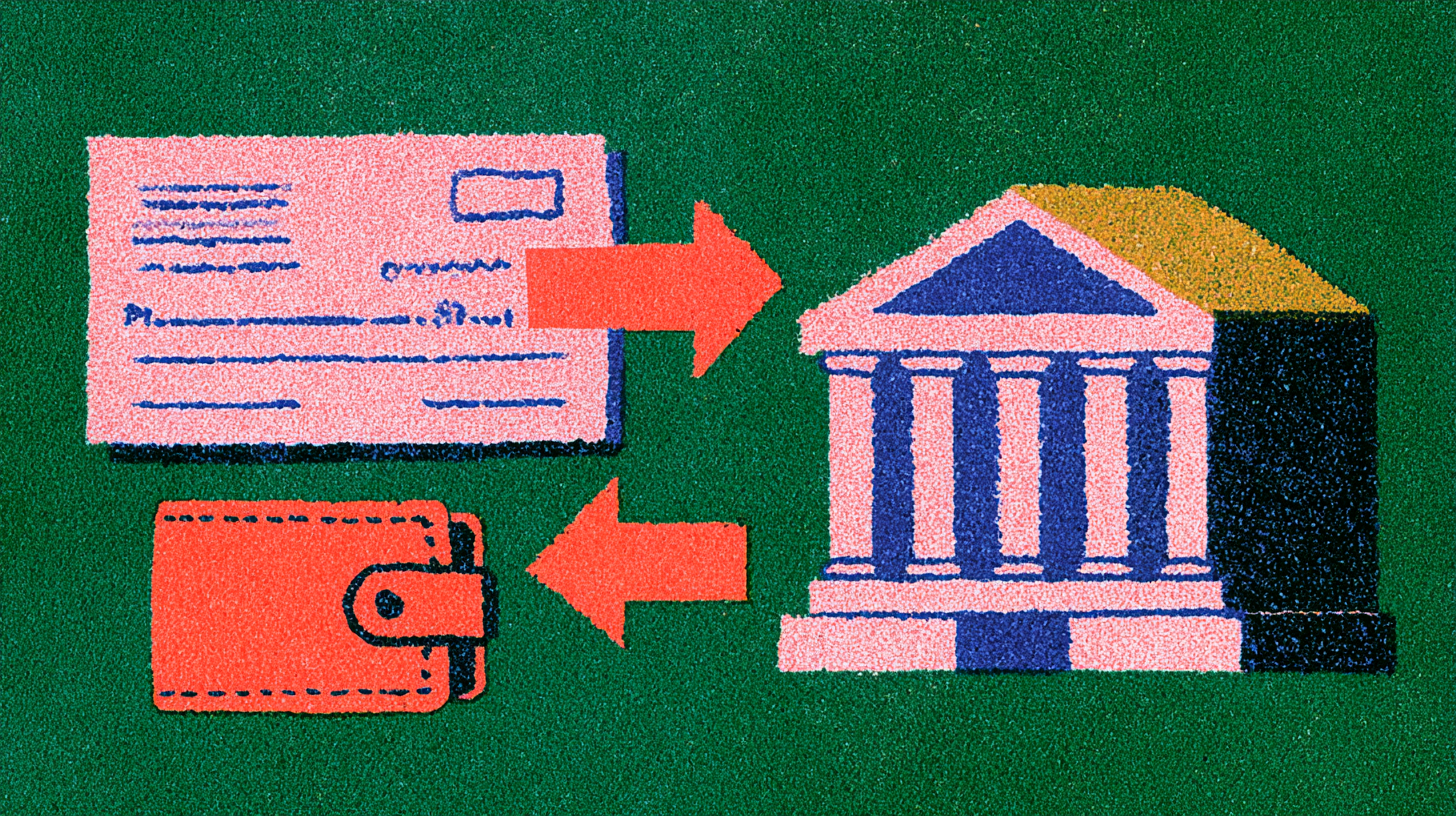
These payment methods are both available in the U.S. but they are often used for different purposes. Direct deposit is commonly used for paychecks, tax refunds, and government benefits, while wire transfers are more often used for urgent or high-value transfers between financial institutions.
Understanding the difference between direct deposit and wire transfers can help you avoid unnecessary fees, choose the right payment method for your situation, and manage your money more confidently.
What's the difference between direct deposit and wire transfer?
The biggest difference is the purpose they serve. Direct deposit is commonly used for recurring payments such as salaries, benefits, and tax refunds. Wire transfers are commonly used to move money quickly between financial institutions, particularly for large or time-sensitive transactions.
| Feature | Direct deposit | Wire transfer |
|---|---|---|
| Common use | Paychecks, benefits, tax refunds | Large or urgent transfers |
| Network used | ACH network | Wire transfer network |
| Speed | Typically 1–3 business days | Often same day or next business day |
| Typical cost | Often no fee to receive | Fees may apply |
| International transfers | Limited | Commonly used |
| Recurring payments | Yes | Less common |
| Setup required | Routing + account number | Bank details + recipient information |
How direct deposit works
Direct deposit is one of the most common payment methods in the United States, particularly for employees receiving wages from an employer. Instead of issuing a paper check, an employer sends the payment electronically to the employee's bank account through the ACH network.
To set up direct deposit you need to provide your employer: your bank's routing number and your personal account number.
How wire transfer works
A wire transfer is an electronic transfer of funds between financial institutions through secure financial networks like Fedwire or SWIFT. Unlike direct deposit, wire transfers are better suited for large one-time payments, urgent payments, real estate transactions, or international transfers.
When to use each one
Use direct deposit for:
- Receiving your paycheck
- IRS tax refunds
- Social security or unemployment benefits
- Recurring business payments
Use wire transfer for:
- Real estate payments (down payment, closing)
- Urgent international transfers
- High-value business payments
- When the recipient specifically requires a wire transfer
How to set up direct deposit with Común
With your Común account, you can set up direct deposit by providing your Común routing number and account number to your employer. Your Común account has unique routing and account numbers available in the app. Visit comun.app to learn more.
FAQ
Is direct deposit faster than wire transfer?
Not necessarily. Domestic wire transfers can be faster (same day), while direct deposits usually take 1-3 business days. However, many accounts offer early access to direct deposits up to 2 days early.
How much does it cost to set up direct deposit?
Setting up direct deposit is generally no fee. Employers use the ACH network to send payroll electronically at no charge to the employee.
Común is a financial technology company and not a bank. Banking services are provided by Community Federal Savings Bank, Member FDIC.
Financial Education
How to save money in the USA? Real strategies for immigrants starting from scratch
8 min de lectura
Living in the U.S., without a doubt, represents a major advantage for improving quality of life, due to the job opportunities this country offers both citizens and foreigners. However, adjusting to the pace of life in the United States also means facing various expenses that can affect personal finances, especially for newly arrived immigrants.
Savings strategies are an indispensable ally for reducing financial uncertainty, being prepared for any unforeseen event, and building a full future in a new country.
If you identify with this situation and are navigating difficulties covering monthly expenses, below we show different ways to save money in the USA tailored specifically to the reality of immigrants, as well as alternatives for savings accounts, so you can have full control of your capital.
10 ways to save money in the USA
Saving in the United States means developing a set of habits aimed at optimizing resources and choosing financial services with competitive interest rates.
Setting savings goals is the first step toward starting a healthy, worry-free financial life.
Below, we share some strategies to get the most out of your daily spending.
1. Plan and budget your expenses
Before making any move, it’s essential that you’re clear on the amount of your monthly income and outgoings, so you should start by keeping clear financial records.
To do this, you can use a personal finance and budgeting application or a spreadsheet, in order to record categories such as:
- Fixed expenses: all expenses you repeat every month such as rent, utilities, transportation, remittances, etc.
- Variable expenses: expenses whose amount varies, such as food, entertainment, loans, etc. Based on your income, assign a budget to each.
- Savings: it’s very important to make sure you keep a sufficient amount of money after covering your monthly expenses. It will help you build an emergency fund you can use for the unexpected. Set short-term financial goals so you can monitor your progress.
2. Take advantage of deals and coupons
An effective way to take advantage of deals at different department stores is to use an application that helps you compare prices; that way, you can choose an alternative without leaving home.
You can also take advantage of the loyalty programs several stores offer through their mobile applications, such as Safeway and Target.
3. Reduce housing costs
Depending on the city, rent can be one of the highest expenses in your budget. If you find that after covering this item your wallet is too tight, you can consider applying some strategies.
- Consider sharing an apartment with roommates.
- Look for an area with accessible rental prices, such as Texas.
- By contrast, New York is among the most expensive places to live, so it’s advisable to look for more accessible options.
- Check your eligibility to access the public housing program with the Housing Authority.
4. Cook at home instead of eating out
Eating at restaurants is always tempting, but it can generate up to 5 times more expenses than preparing food at home. Plan weekly menus and avoid wasting food.
5. Use low-fee remittance services to send money to your country of origin
For immigrants in the United States, sending money home is a basic need, since it is one of the main means of support for their loved ones.
Before sending money to Latin America, make sure to compare different services in terms of transfer fees, exchange rate, delivery methods, and time.
Comun lets you send your first remittance at no cost (Promotion subject to change. Check availability in the mobile app) and offers accessible fees for the following ones. It is a popular option among immigrants for its accessibility and bilingual Spanish-language support, because it shares language, interests, and common goals: bringing families closer through safe and accessible financial solutions.
6. Use public transportation or share rides
Public transportation is a great way to get around a city at low cost. You can choose the bus service, ride-sharing applications, or, for short distances, a bicycle.
7. Look for assistance programs or local benefits available to immigrants
Check the availability of assistance programs in your city, such as medical care at community health clinics and food banks.
For example, the Supplemental Nutrition Assistance Program (SNAP) provides financial assistance for the purchase of nutritious food. Eligibility for this benefit depends on immigration status, as it requires citizenship or legal residency in the country.
8. Learn about credit and finances as an immigrant
Understanding the U.S. financial system is key to accessing basic services such as a bank account, debit card, credit card, etc. For this, you generally must have an SNN or ITIN. Therefore, it’s advisable to look for accessible options so you can integrate as soon as possible.
In addition, the U.S. government offers a retirement savings plan through the Individual Retirement Account (IRA), which allows you to accumulate money tax-free until it is withdrawn.
9. Buy second-hand to save from the start
Another way to save money is to buy household items at second-hand stores such as Craigslist, OfferUp, and Goodwill. In this way, you can save up to 50% of the budget allocated to these purchases.
10. Take advantage of government benefits
Another support program is Housing Vouchers, which help low-income families with rent payments. On the other hand, the Earned Income Tax Credit (EITC) is available to workers with low to moderate incomes.
What earns the most money in the United States?
If you’re wondering how to make more money in the USA, you should consider working in some of the country’s sectors if your profile fits any of them.
These are some of the highest-paying jobs in the United States, which will not only allow you to meet your savings goals but also significantly improve your quality of life.
Medicine
Professions related to the health sector in the United States are among the highest salary. Average earnings can reach up to $450,000 USD per year, depending on the specialty.
Public Services
This sector also reaches very good earnings, which average can reach up to $133,800 USD per year. This sector includes jobs related to electricity and the generation of renewable energy.
Information Technology (IT)
This is one of the highest-paying industries worldwide. In the United States, average annual salaries reach approximately $99,500 USD. It encompasses skills related to software development, artificial intelligence, and cybersecurity.
Finance
The average earnings of jobs related to the financial sector exceed $90,000 USD. In this case, you can specialize in professions such as portfolio management and investment banking or financial advisor.
Law
Finally, the legal sector is also very well paid, with average earnings of approximately $176,000 USD per year.
Open your account at Comun easily, quickly, and safely
Saving in the United States doesn’t mean giving up your quality of life, but rather adopting smarter money-management habits and developing a solid financial education.
You can start with simple savings strategies, such as taking advantage of digital discounts, reducing housing expenses, avoiding impulse purchases, and choosing more economical remittance platforms.
The key to strengthening your finances lies in organizing resources with a long-term vision and applying these strategies consistently to move toward your goals.
Meet Comun! The financial platform that addresses day-to-day needs in the United States, through an easy-to-use mobile app, where you can open an account in a matter of minutes with a qualified official ID from your country of origin. Send money to your loved ones without complications, so your family gets more for less. See terms and conditions. Exchange rates and fees may vary by country, amount, and delivery method.
Comun is a digital platform designed to help the immigrant community in the U.S., available in Spanish and English.
Frequently Asked Questions
If you still have questions, check our Frequently Asked Questions section.
Which account fits your needs in the United States?
Comun is a popular alternative among immigrants who seek accessible, quality services. Open your account today and discover all the benefits.
What is the 50-30-20 rule?
It’s a savings method that helps you divide your income to reach your financial goals: 50% for necessities, 30% for discretionary expenses, and 20% for your savings fund.
How can you make money quickly in the United States?
Look for flexible jobs on applications or sell things you no longer use on second-hand sites.
Living in the United States
Cheapest cities to live in the United States in 2026
8 min de lectura
Cheapest Cities to Live in the United States (2026)
Living in large metropolitan areas such as New York City, Los Angeles, or Miami can be expensive, especially when it comes to housing, transportation, and everyday expenses. For many people, including recent immigrants, young professionals, and families trying to build financial stability, the affordability of a place may play an important role when deciding where to live in the United States.
There are cities across the country where the overall cost of living can be lower while still offering access to jobs, public services, universities, and established communities. Cities such as Cleveland, Detroit, Toledo, Wichita, and Memphis are often recognized among the more affordable cities to live in the United States due to their relatively lower housing costs and cost-of-living indexes.
This guide explores some of the more affordable cities to live in the U.S., the factors that influence affordability, and considerations that may help when choosing a city that fits your budget, lifestyle, and long-term goals.
Factors that influence the cost of living in cities in the U.S.
Housing and rent
Housing is usually one of the largest expenses for households in the U.S. The national median home price ranges from approximately $408,800 to $437,000. In major metropolitan areas, average rents can exceed $2,000/month. In the most affordable cities, median home prices can be as low as $75,000–$150,000, and one-bedroom apartments often rent for $600–$900/month.
Utilities and groceries
Utility costs such as electricity, water, internet, and heating can vary depending on the region and climate. Grocery prices can also differ between cities depending on transportation costs, local agriculture, and overall demand.
Transportation and mobility
In some larger cities, public transportation may reduce the need for a car. In smaller or more spread-out cities, owning a vehicle may be more needed, which can add costs such as gas, insurance, parking, and maintenance.
Job Opportunities and Salaries
A lower cost of living may not always translate into greater affordability if local salaries are significantly lower. According to the U.S. Census Bureau, the national median household income was approximately $83,730 in 2024.
The 10 most affordable cities to live in the United States
1. Cleveland, OH
Cleveland consistently ranks among the most affordable large cities in the United States. Its overall cost of living runs approximately 7–17% below the national average, with housing costs particularly low. Median home prices range from roughly $105,000 to $150,000, a fraction of the national median. The city's economy is anchored in healthcare and advanced manufacturing, with the Cleveland Clinic and University Hospitals serving as two of the region's largest employers. Cleveland is also home to approximately 49,500 Hispanic residents, making it the second-largest Latino community of any city in Ohio, with established Puerto Rican, Mexican, and Central American communities.
2. Detroit, MI
Detroit stands out for its exceptionally low housing purchase prices. Houzeo reports a median sale price of $82,000, while Redfin records a higher median of $104,000 as of March 2026. Significant investment in downtown revitalization, automotive industry jobs, and a growing startup scene have improved its economic outlook.
3. Toledo, OH
Toledo is one of the lower-cost cities in the Midwest. Redfin puts Toledo's median sale price at $111,000 as of February 2026, noting that Toledo's median is 68% lower than the national average. Manufacturing, healthcare, and logistics remain important parts of the local economy, and the city has an established Latino community with access to Spanish-speaking services.
4. Wichita, KS
Wichita's cost of living is 12% lower than the national average, with housing 35% cheaper than the U.S. average. The median household income is $63,072. Redfin reports a median sale price of $235,000 in March 2026. The aerospace and manufacturing industries are major employers.
5. Memphis, TN
Memphis's overall cost of living is 11% lower than the national average. Redfin reports a median sale price of $170,000 in February 2026, noting Memphis's median is 51% lower than the national average. Average rents for a one-bedroom are typically in the $800–$950 range. Memphis is a logistics and distribution hub — FedEx is headquartered there.
6. Tulsa, OK
Tulsa is often viewed as one of the more affordable cities in the South-Central United States, with housing costs remaining below those in many larger U.S. metros. The city gained national attention through the Tulsa Remote program. Energy, healthcare, and finance continue to be important industries in the local economy.
7. Knoxville, TN
Knoxville's cost of living is 14% lower than the national average. The city combines lower overall costs with access to universities, healthcare systems, and outdoor recreation in the Appalachian region. Redfin reports a median sale price of $307,000 in March 2026.
8. Birmingham, AL
Birmingham is frequently recognized as one of the more affordable cities in the Southeast. Healthcare remains one of the city's largest industries, particularly because of the University of Alabama at Birmingham and its medical network. Housing prices and rental costs may remain lower than those found in many larger Southern metropolitan areas.
9. Indianapolis, IN
Indianapolis is often categorized as a lower-cost mid-sized city. The city has continued expanding in sectors such as logistics, healthcare, and technology, while maintaining housing prices that are often lower than those in coastal metropolitan areas. Indianapolis also has a growing Latino community and multiple immigrant support organizations.
10. Brownsville, TX
Brownsville is often highlighted for its affordability and strong connection to Latin American culture. Located within the U.S.-Mexico border, the city has one of the largest Spanish-speaking populations in the country (94% Hispanic), which may make everyday life more accessible for recent immigrants and bilingual families.
Comparison Table: Cost of Living by City (2026)
| State | 1BR FMR / Avg. Rent | vs. National 1BR FMR (~$1,393) | Cost of Living Index |
|---|---|---|---|
| West Virginia | $801 (FMR) | ~42% less | 83.2–86.6 |
| Arkansas | $811 (FMR) | ~42% less | 87.6 |
| Mississippi | $910 (FMR) | ~35% less | 83.3 |
| Oklahoma | ~$850–$875 (market) | ~37–39% less | 85.5–88.8 |
| Kansas | $885 (FMR) | ~36% less | 89.0 |
| Iowa | $839 (FMR) | ~40% less | 90.4 |
| Wyoming | $836 (FMR) | ~40% less | 92.3 |
| Alabama | $905 (FMR) | ~35% less | 89.3 |
| Indiana | ~$900–$950 (market) | ~32–35% less | 90.1 |
| Ohio | ~$950–$1,000 (market) | ~28–32% less | 91.2 |
1BR FMR = HUD Fair Market Rent FY2025. National 1BR FMR baseline: $1,393. Market-rate averages from PropertyCEO. Cost of Living Index from costoflivingbystate.com (C2ER Q1 2026). All figures are estimates and may vary by city, unit type, and data provider.
How to choose the ideal city?
An affordable city may look attractive on paper, but the best option can still vary depending on your personal situation, work opportunities, and long-term goals.
Family budget:
For most households, housing remains the largest monthly expense. Neighborhood-level costs may vary significantly within the same city.
Community and support networks:
For many immigrants, having access to a strong community network can make the transition to a new city easier. Cities with established Latino communities may offer more Spanish-speaking services, cultural organizations, churches, restaurants, and local businesses.
Job availability:
A lower cost of living may not always translate into greater financial stability if local salaries and job opportunities are limited. For remote workers, choosing a lower-cost city may also provide more flexibility.
Access to services and education:
Before moving, it may help to consider commute times, fuel costs, access to public transit, and proximity to schools, grocery stores, and healthcare services.
Manage your finances in the US with Común
Choosing an affordable city is only one part of building a stable life in the United States. Común offers a debit account that can be opened with more than 100 valid Latin American IDs. The app and services are available in Spanish and users can conveniently send money from their phone to 10+ countries in Latin America. Visit comun.app to learn more.
FAQs
What is the cheapest city to live in the US?
Based on 2026 cost-of-living data, Cleveland, OH and Detroit, MI rank among the cheapest large cities in the United States, with cost-of-living indexes well below the national average.
Where can you find the most affordable housing in the US?
The most affordable housing markets in 2026 tend to be in the Midwest and South, particularly in Ohio, Michigan, Tennessee, Alabama, and Oklahoma.
Which cities offer a balance between employment and affordability?
Indianapolis, IN and Knoxville, TN are frequently cited for combining affordability with strong job markets.
How do I calculate the cost of living before moving to a new city?
Start with the three largest expenses: housing, transportation, and food. Use tools like the C2ER Cost of Living Index or Numbeo's city comparison tool to compare cities side by side.
Which cities have the largest Latino communities and affordable cost of living?
Brownsville, TX has a 94% Hispanic population and a cost of living approximately 12–16% below the national average. Toledo, OH, Cleveland, and Indianapolis also have established Latino communities and Spanish-language services.
International Money Transfers
How much does it cost to send money to Guatemala from the United States? A 2026 guide
8 min de lectura
The total cost may depend on three main factors: the transfer fee, the exchange rate used to convert USD to Guatemalan quetzales (GTQ), and any charges applied when the recipient receives the money. The total cost can vary from one transfer to another, depending on the provider and delivery method.
For many Guatemalans living in the United States, sending money back home is important. Some people support their families by covering everyday expenses or helping during emergencies. According to the World Bank, Guatemala is the second-largest recipient of remittances in the Latin America and Caribbean region, after Mexico. Remittances play a vital role in supporting rural communities in Guatemala, which receive over half of total flows.
Today, there are many ways to send money to Guatemala from the United States, including banks, cash pickup services, and apps and digital platforms. Comparing costs, delivery times, and exchange rates before sending can help your family receive more money overall.
How much money can you send to Guatemala?
The amount you can send to Guatemala may depend on the provider you choose, your account verification level, and the payment method used for the transfer.
In general, there is no single universal limit imposed on personal remittances from the United States. However, money transfer companies and financial institutions usually apply their own transfer limits as part of fraud prevention and regulatory compliance requirements.
For example:
- Some providers may limit new accounts to smaller daily or monthly transfers.
- Verified users may qualify for higher transfer limits.
- Cash-based transfers sometimes have different limits than bank transfers.
- Certain services may request additional identification for larger transactions.
Before sending money, it is recommended to review the provider’s limits, accepted identification documents, and delivery methods available in Guatemala.
What determines the real cost of sending money to Guatemala?
The real cost of sending money to Guatemala may depend on three main factors:
Transfer fee
The transfer fee is the amount charged to process the remittance.
Some services use a flat fee structure, while others may adjust the pricing depending on the amount sent, payment method, or delivery speed. Some service providers may also offer promotional pricing for first-time transfers.
Although low fees can help reduce costs, they may not always represent the lowest total transfer cost once exchange rates and other charges are considered.
Exchange rate spread (USD to GTQ)
Another important factor is the exchange rate used to convert U.S. dollars into Guatemalan quetzales.
Some providers may apply a margin (also known as a spread) on top of the market exchange rate. Even small differences in the USD to GTQ conversion rate can affect how many quetzales your family receives, especially on larger transfers.
Comparing the final amount received in GTQ may provide a more accurate picture of the total transfer cost.
Recipient charges or withdrawal costs
In some cases, the recipient may face additional costs when receiving the money. These depend on the provider and delivery method.
There could be charges related to ATM withdrawals, cash pickup locations, bank processing, or currency conversion. These costs may vary depending on the institution or pickup network used in Guatemala.
What is the best way to send money to Guatemala from the United States?
The best way depends on your context and priorities. Today, there are many ways to send money to Guatemala from the United States, with different service providers offering features such as faster delivery times, multiple delivery methods, or lower overall transfer costs depending on the type of transaction.
Traditional banks
Some people choose to send money through traditional bank wire transfers. This option is available for people who already use a U.S. bank account.
However, international bank transfers can sometimes involve higher fees, slower processing times, special considerations such as banks in the U.S. generally being closed for federal holidays or additional requirements such as SWIFT codes and recipient banking information.
Cash transfer agencies
Cash pickup services continue to play an important role for many families in Guatemala, especially for recipients who primarily manage their finances in cash or who may not have easy access to traditional banking services.
Companies such as Western Union, MoneyGram, and Ria Money Transfer can offer extensive pickup networks across Guatemala through local banks, convenience stores, supermarkets, and remittance partners.
This option can be convenient for recipients who prefer immediate access to cash, although some traditional cash transfer services may involve higher fees or exchange rates that are less favorable compared to other options.
Digital apps and platforms
Another option is using apps and digital platforms specialized in international transfers.
Services such as Común, Félix Pago, Ria Money Transfer, and MoneyGram offer options to send money directly from your phone, either through an app or even WhatsApp. These services often include multiple delivery options available in Guatemala.
While some of these service providers focus mainly on remittances, others may also include features such as debit cards, mobile banking access, or account management tools. For example, Común (https://www.comun.app) offers a debit card that accepts more than 100 Latin American IDs for account verification, it also offers the option to send money on the app or using WhatsApp, and offers cash pickup options in Guatemala.
Comparing services for sending money to Guatemala
There are services available for sending money to Guatemala, but the fees, exchange rates, transfer speeds, and delivery methods can vary depending on the provider and transfer type. This table was created to provide a visual aid for comparing 5 popular remittance service providers in the United States to Guatemala.
| Service | Payment Options | Fee | Delivery Options | Exchange Rate | Speed |
|---|---|---|---|---|---|
| Común | Bank account, debit card, cash | Starting at 2.99 USD | Bank account or cash pickup | Competitive | Minutes to hours |
| Western Union | Bank account, card, cash | Varies depending on amount and method | Cash pickup, bank deposit, wallet | Varies with applicable spread | Minutes to days |
| Ria Money Transfer | Bank account, debit card, credit card, cash | Starting at $0.99; can be free for bank transfers up to $15,000 | Cash pickup, bank deposit, wallet | Varies with applicable spread | Minutes to days |
| MoneyGram | Bank account, debit card, credit card, cash | Varies depending on amount and delivery method | Cash pickup, bank deposit, wallet | Varies with applicable spread | Minutes to hours |
| Félix Pago | WhatsApp, debit card, cash | $2.99 USD for bank account transfers and $4.98 USD for cash pickup transfers | Bank account and cash pickup | Competitive | Instant to days |
The total amount received in GTQ is subject to change throughout the day due to exchange rate fluctuations, provider fees, and delivery methods.
To compare real-time transfer costs and exchange rates, you can use tools such as Común Compara (https://www.comun.app/compara) designed to help you have more clarity on remittance costs. If applicable, you may see a "Primer envío" toggle that reflects promotional pricing for eligible first transfers.
How does the recipient receive money in Guatemala?
It depends on the provider selected, as recipients in Guatemala can receive money through different delivery methods.
Bank deposit
Some service providers offer direct deposits into Guatemalan bank accounts in quetzales. The delivery speed can vary depending on the receiving bank and transfer verification process.
Cash pickup
Depending on the provider and the recipient's location, they can collect money from local banks, remittance agencies, supermarkets, or retail stores.
To receive the money, recipients often require a valid identification document and the transfer reference number.
Delivery times
Transfer times can vary depending on the provider, payment method, verification requirements, holidays, and delivery option selected.
Some digital transfers can arrive within minutes, while bank transfers or certain cash pickup options could take longer.
How can I send money to Guatemala with Común?
With Común, people can send money to Guatemala directly from the mobile app. To send money, you can follow the steps:
- Open your Común mobile app.
- Select "Send a Remittance."
- Choose or register the recipient.
- Enter the recipient's information, including bank details if needed.
- After registering the recipient, enter the amount you want to send.
- Review the exchange rate, transfer fee, and delivery method.
- Confirm the transaction.
- You can check the transfer status in your Común mobile app by clicking on the transaction.
Transfer fees start at 2.99 USD per transaction, up to applicable limits.
Why choose Común to send money to Guatemala?
Común’s vision is to become the leading financial platform for immigrants in the U.S. Therefore, it can include elements that are helpful for people sending money to Guatemala from the United States.
Some of the services include:
- Acceptance of more than 100 Latin American IDs for verification.
- Spanish-language app experience.
- Ability to send money directly from the app or WhatsApp.
- Multiple delivery methods available in Guatemala.
As with any financial service, transfer costs, delivery speeds, and availability may vary depending on the transaction details. You can learn more about Común on our website (https://www.comun.app/about-us) or in the app (https://www.comun.app/).
FAQ
How much does it cost to send money to Guatemala?
The total cost may depend on the provider, transfer fee, exchange rate, delivery method, and whether the recipient faces additional charges.
How long does it take for money to arrive in Guatemala?
Transfer times can vary depending on the provider and delivery method selected. Some digital transfers may arrive within minutes, while others could take several business days.
What is the best app to send money to Guatemala?
The best app may depend on what matters most to you, whether that's lower fees, exchange rates, delivery speed, or cash pickup availability.
Do I need an SSN to send money to Guatemala?
Some providers may require an SSN, while others may also accept an ITIN or alternative identification documents depending on their verification policies. It is important to check each service provider’s verification requirements.
How much money can you send to Guatemala from the United States?
Transfer limits may vary depending on the provider, payment method, and verification level.
Where can my family receive money in Guatemala?
Depending on the provider, recipients may receive money through bank deposits, cash pickup locations, mobile wallets, or other delivery methods available in Guatemala.





Thousands of immigrants are already achieving more with their money. You can too.
Comun is a financial technology company and not a bank. Banking services are provided by Community Federal Savings Bank; Member FDIC. The Comun Visa® Debit Card is issued by Community Federal Savings Bank, pursuant to a license from Visa U.S.A Inc. and may be used everywhere Visa Cards are accepted.
Comun is a fintech company and not a bank or licensed money transmitter.
* Results may vary. For a complete list of eligible IDs and application requirements, follow this link.
^ No minimums, no maintenance fees. ATM or transfer fees may apply. See app for fee details.
‡ Direct deposit funds are typically available when we receive the payment file, up to two days before the scheduled payment date. This early availability is not guaranteed.
** A service provided by Service UniTeller, Inc. Service UniTeller, Inc. is licensed in all states that require a license. Remittance fees start at $2.99 but may vary. Please check the app for more details. Comun Inc. may earn revenue from the conversion of foreign currencies.
† Funds in your account are FDIC insured up to $250,000 by ownership category through Community Federal Savings Bank (CFSB), Member FDIC, in the event CFSB fails.