Instant payments
What is Venmo and how does it work? 2026 Guide
Venmo is a P2P payment app in the U.S. Learn how it works, its fees, Spanish availability, and how it compares to Común for Latino immigrants.
8 min read

16 Jul 2026
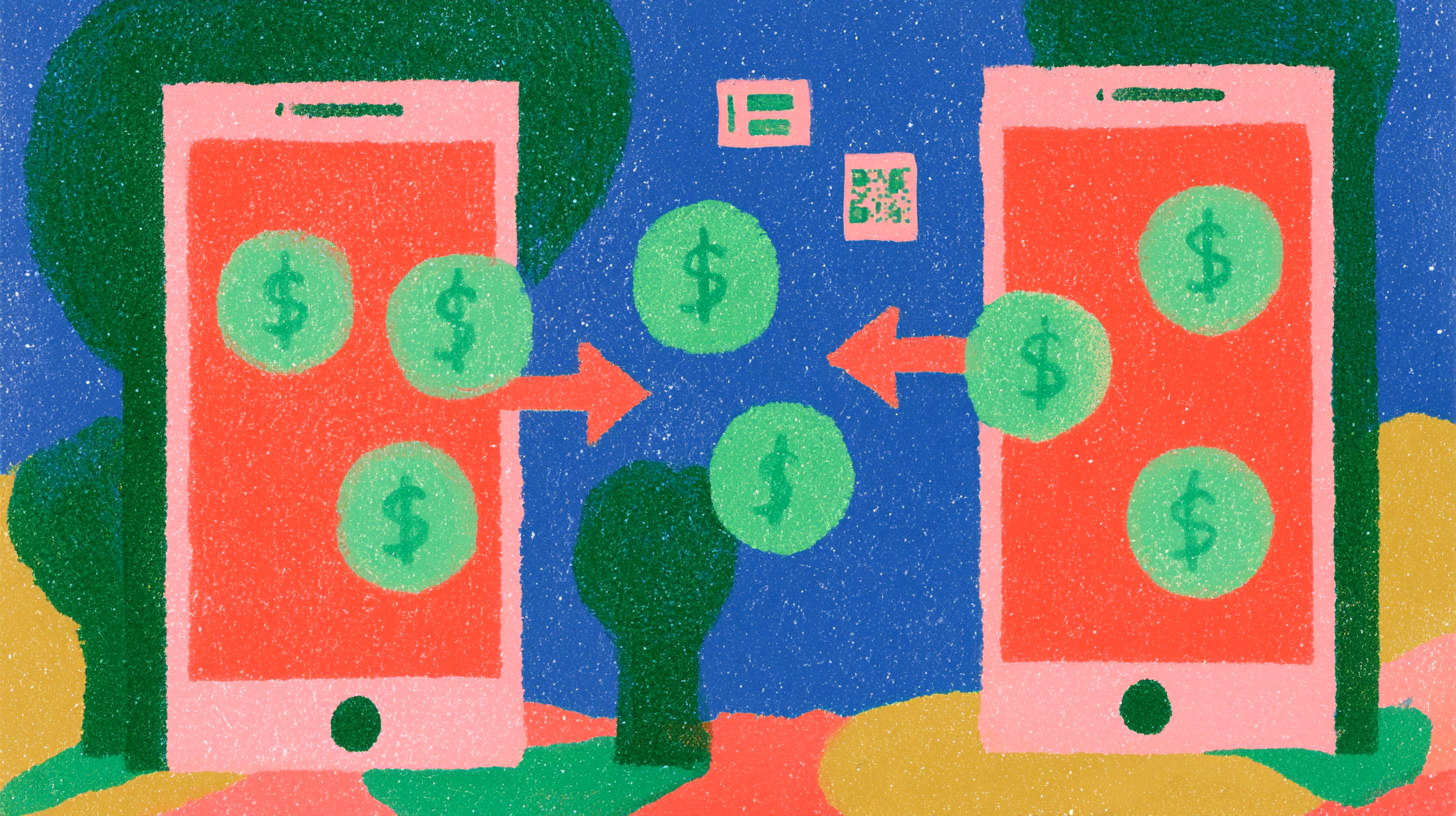
What is Venmo and how does it work? 2026 guide to understanding how Venmo works in the United States
Venmo is a digital payment app in the United States that allows people to send and receive money quickly from their phones. The platform works as a peer-to-peer (P2P) payment service, meaning users can transfer money to friends, family members, or other contacts using a linked bank account, debit card, or available balance within the app.
Over the last several years, Venmo has become one of the most widely recognized payment apps for splitting bills, paying rent, reimbursing friends, and handling everyday payments in the U.S.
What Is Venmo?
Venmo is a digital payment app for quick transfers between people who know each other. It is commonly used to split a restaurant bill, to pay rent between roommates or even for sharing costs for trips or events. Venmo operates within the United States and requires compatible payment methods such as U.S. bank accounts or debit cards.
Verified users can send up to $60,000 per week. Transfer limits vary based on account verification status and may change over time.
How does Venmo work?
To start using Venmo, users first need to download the mobile app on iPhone or Android and create an account using an email address or U.S. phone number. After setting up the account, users can connect a payment method such as: a U.S. bank account, a debit card, a credit card, or an existing Venmo balance.
Once the account is ready, users can search for another person on Venmo using their name, username, phone number, or QR code. From there, they can either send money or request a payment.
Venmo fees — Cost table
| Service | Possible fee |
|---|---|
| Standard bank transfer | No additional transfer fee |
| Instant transfer | 1.75% of the transfer amount |
| Payment funded by credit card | 3% fee may apply |
| Out-of-network ATM withdrawals | Additional fees may apply |
Venmo fees can change over time. Always review the latest information directly on Venmo's official website.
Is Venmo available in Spanish?
Venmo is not available in Spanish; the app operates entirely in English. However, you can make the app display in Spanish by changing your smartphone's system language. Venmo does not offer customer service in Spanish.
Can I use Venmo as an immigrant?
Venmo requires a U.S. bank account or debit card to work. If you do not have access to traditional banking services, it may be difficult to get started. Also, Venmo does not allow international remittances, so if you need to send money to family in Latin America, you will need a different service.
Venmo vs. Común — Direct comparison
| Feature | Venmo | Común (ComunPay) |
|---|---|---|
| Main function | P2P payments in the U.S. | P2P payments in the US, remittances and deposit accounts |
| Spanish-language support | No (English only) | Yes, fully bilingual app + 24/7 Spanish support |
| Ways to send money | Username, phone, email, or QR code | Phone number, email, @username, QR code |
| QR code payments | Yes | Yes |
| Remittances to Latin America | No | Yes |
| Part of a broader financial app | Yes, debit card and direct deposit | Yes, checking account, Visa debit card and remittance services |
When does it make sense to use Venmo?
Venmo may be useful if: your friends and family already use Venmo, you mainly need fast domestic payments in the U.S., and you have a linked U.S. bank account.
FAQ
Is Venmo available in Spanish?
No. Venmo operates entirely in English without Spanish customer support.
Can I send money to Mexico with Venmo?
No. Venmo only supports domestic transfers within the U.S.
How much does Venmo charge?
Standard bank transfers have no additional fee. Instant transfers carry a 1.75% fee. Credit card payments may have a 3% fee.
Is Venmo safe?
Venmo uses encryption and identity verification. However, like any P2P app, transactions are difficult to reverse once completed.
Común is a financial technology company and not a bank. Banking services are provided by Community Federal Savings Bank, Member FDIC. Peer-to-peer payments services are provided by Cross River Bank.
About Común
Común aims to support the Latino community in the United States. It offers a debit account that can be opened with more than 100 valid Latin American IDs and an app available in Spanish.
Visit Común's website or download the app for free to learn more about the full offer and applicable terms.
Olivia Rhye
Community Partner


Instant payments
What is Venmo and how does it work? The Ultimate Guide for Immigrants to the United States
8 min de lectura
Have you heard of Venmo? It is a digital payment application that has gained popularity in the United States in recent years. According to recent data, in 2024 the mobile application reached 68.3 million active users, representing an 8.8% increase compared to 2023.
The importance this mobile application has acquired cannot be denied, which is why knowing what Venmo is in the United States can be very useful to send and receive money from family and friends quickly and securely.
As a foreign national living in the U.S., you must ensure that you choose a financial platform that meets your needs for sending money to your home country and making payments with ease.
In this guide, we clarify all your potential questions about how to use Venmo in other languages like Spanish, what it is for, the requirements to open an account, the benefits this mobile app offers, and also its limitations.
What Is Venmo and How Does It Work?
Venmo is a highly popular P2P (peer-to-peer) payment mobile application in the U.S. Its primary purpose is to facilitate the instant transfer of money between friends and family, in addition to allowing users to link bank accounts and cards.
Venmo’s business model is based on charging fees for services such as credit card transactions, instant transfers of money to bank accounts, and transactions using its physical card.
Some of the most common reasons immigrants use Venmo include:
- Paying monthly rent
- Receiving wages from occasional jobs
- Paying or receiving money from friends and family
- Lending or repaying money to acquaintances
Key Features of Venmo: What Can You Do With It in the U.S.?
To fully understand what Venmo is in the United States, it is important to explore the functionalities this P2P payment service offers its users to simplify their lives:
- Instant sending and receiving of money between Venmo users
These are the mobile app’s most important features, as it allows for instant transfers without charging a fee between Venmo users.
It also enables adding notes or emojis to identify each transaction and the option to use the mobile app’s balance or a linked bank account. - Use of Venmo Debit Card (Mastercard) for purchases
Venmo also offers a physical debit card for making purchases at brick-and-mortar establishments. It is valid at any merchant that accepts Mastercard within the United States.
Additionally, it includes an extra benefit: each purchase with the debit card accumulates cash back for greater savings. - Direct deposit for wages and benefits
You can use your Venmo account to receive your salary or other types of transfers. All you need is your personal QR code. - Bank transfers to bank accounts
Venmo offers two types of bank transfers: standard transfers, which are free and take one to three business days, and instant transfers, which incur a fee of approximately 1.75% and are completed within minutes. - Payments to businesses and merchants that accept Venmo
Another advantage of this service is the “Pay with Venmo” feature, which allows payments at physical or online businesses that accept Venmo.
This streamlines transactions and enables you to use the balance deposited in the application directly. - Social features: comments, “likes,” and bill-splitting
Lastly, one feature that makes Venmo more appealing is the ability to add comments, likes, and emojis.
This allows you to request payments from friends and family, add reminders, and split expenses among multiple users. - Business profiles for companies
Venmo allows small businesses and independent workers to create a business profile to receive payments directly into their account via username or QR code.
What Do I Need to Have Venmo? The Reality of Its Availability
Now that you know the benefits of this mobile application in detail, you probably want to learn the requirements to start using it.
Before learning how to pay with Venmo, remember that it only works in the United States.
These are the requirements to use Venmo:
- Have an Android or iOS phone
As it is a mobile application, you must have a compatible Android or iOS smartphone and download the mobile app from the corresponding store. - Register with a personal phone number
To register in the mobile app, you need a U.S. phone number and must reside in the country, as Venmo is only available there. You may also register with an email address. - Link your U.S. bank account
Linking a bank account isn't required to create your Venmo account; you can receive money and pay with your balance or a card. However, most features require a linked bank account. - Link a debit or credit card
Another option to access all Venmo’s features is linking a credit or debit card instead of a bank account. This allows you to use the card’s balance for transactions directly from the mobile app. - Verify your account
Account verification is required to access all Venmo features, to confirm users’ identities. Verified users can send up to $60,000 per week, but only if their SSN or ITIN has been confirmed. Non-verified users can send up to $299.99 per week.
To verify your account, Venmo will request the following:
- Full legal name
- Mailing address in the United States
- Date of birth
- SSN (Social Security Number) or ITIN
How to Transfer Money from Venmo to My Bank Account?
To transfer money from Venmo to your bank account, once it is linked and verified, follow these steps:
1. Log into your account through the mobile app and go to the “Me” tab.
2. Press the “Transfer” or “Add” button.
3. Enter or edit the amount you want to transfer to your bank account.
4. Select the transfer method: “Instant” or “up to 3 biz days,” noting any applicable fees.
5. Confirm the transfer details and complete the process.
If you want more options for depositing money into another person’s account, do not miss these recommendations.
Limitations of Venmo for Immigrants: Why Is It Not a Complete Solution?
The need for immigrants to have an integrated solution allowing access to digital payments, transfers, and other benefits increases daily. Therefore, while Venmo is a popular option for sending and receiving money in the U.S., it may present limitations for immigrants working in the country.
One limiting factor for immigrant communities is the language barrier in customer support. Because it is a service designed for U.S. residents, it is not optimized for people who speak a different language, such as Spanish. In addition, you should have a U.S. bank account.
Your best option may be to entrust your financial assets to a service offered in your language.
Comun: An Excellent Alternative to Venmo for the Immigrant Community in the U.S.
We present Comun, the solution for immigrants seeking to improve the way they send and receive money to family and friends.
Why Is Comun a Great Option for Immigrant Communities in the United States?
- Comun allows you to open an account with the official identification from your country.
- It is also a platform available in Spanish without complicated terms.
- Unlike Venmo, Comun enables you to send remittances to LATAM for an affordable fee starting at $2.99, subject to applicable limits.
- Access a mobile application to perform your transactions from the palm of your hand.
If you think accessing quality financial services in the U.S. is impossible for immigrants, open your Comun account today and forget about complications.
Disclosures:
“Comun is a financial technology company and not a bank. Banking services are provided by Community Federal Savings Bank; Member FDIC. The Comun Visa® Debit Card is issued by Community Federal Savings Bank, pursuant to a license from Visa U.S.A Inc. and may be used everywhere Visa Cards are accepted.”
“Funds in your account are FDIC insured up to $250,000 by ownership category through Community Federal Savings Bank (CFSB), Member FDIC, in the event CFSB fails.”
“A service provided by Service UniTeller, Inc. Service UniTeller, Inc. is licensed in all states that require a license.”
“Remittance fees start at $2.99 but may vary. Please check the app for more details.”
“Comun Inc. may earn revenue from the conversion of foreign currencies.”
“Direct deposit funds are typically available when we receive the payment file, up to two days before the scheduled payment date. This early availability is not guaranteed.”

Instant payments
What is Cash App and how does it work?
8 min de lectura
What is Cash App and how does it work?
Cash App is a peer-to-peer (P2P) payment app that allows users in the United States and the United Kingdom to send and receive money digitally. Over time, Cash App has expanded beyond transfers and now also offers features such as debit cards, direct deposits, savings tools, and investing options.
If you recently moved to the United States or are exploring digital financial tools, you have probably heard of Cash App. The app is widely used for sending money between friends, paying for purchases, and managing certain financial activities directly from a smartphone.
For many immigrants in the United States, understanding how Cash App works is important because it may appear similar to a traditional bank account, but it is not exactly the same thing.
What is Cash App?
Cash App is a mobile financial app that allows users to send, receive, store, and spend money digitally through their phones. The app is commonly used for:
- Sending money to friends or family
- Receiving payments
- Paying for purchases
- Using a debit card linked to your balance
- Receiving direct deposits
- Buying stocks or Bitcoin
Unlike traditional banks, Cash App primarily operates through its mobile app rather than physical branches.
How does Cash App work?
To start using Cash App, you need to download the app, create an account with a U.S. phone number or email, and link a bank account or debit card. Once the account is set up, you can send or request money by searching for another person by their $Cashtag, phone number, email, or QR code.
Standard transfers typically arrive in 1 to 3 business days to a linked bank account. Instant transfers to a debit card usually carry a percentage-based fee.
How much does Cash App charge? — Fee table
| Service | Typical Cost |
|---|---|
| Standard bank transfer (1–3 business days) | No additional fee |
| Instant transfer to debit card | Percentage-based fee |
| Sending money using linked credit card | Additional fee may apply |
| ATM withdrawals | Fee may apply depending on conditions |
| Account opening | No monthly fee |
Fees and terms may change over time. Always review the official Cash App website before using financial services.
Is Cash App safe?
Cash App uses encryption and security features like Face ID and Touch ID. However, like any P2P payment platform, it is important to use it only with people you know. Once sent, money generally cannot be recovered if the transaction went to the wrong person.
Is Cash App available in Spanish?
Spanish-language support availability on Cash App may vary. The app's primary experience is mainly in English, which can be a limitation for users who prefer to operate in Spanish.
Can an immigrant open a Cash App account?
Cash App has its own eligibility requirements for account opening. Requirements may include a U.S. phone number or email address, and additional verification information may be required. It is recommended to review Cash App's current terms directly.
Limitations of Cash App for Latino immigrants
- Does not support international remittances to Latin America
- Spanish-language experience may be limited
- May not accept Latin American IDs for account opening
- No dedicated 24/7 Spanish-language support
Cash App vs. Común — Quick comparison
| Feature | Cash App | Común |
|---|---|---|
| P2P payments in the U.S. | Yes | Yes |
| Debit card | Yes | Yes |
| Stock and Bitcoin investing | Yes | No |
| Remittances to Latin America | No | Yes |
| Spanish-language experience | Spanish-language support availability varies | Yes |
| Payroll direct deposit | Yes | Yes |
| Open account with Latin American IDs | Eligibility requirements apply | Yes |
| Monthly maintenance fee | Varies by service usage | No monthly maintenance commission |
| Minimum balance requirement | Not always required | $0 |
FAQ
Is Cash App available in Spanish?
The app primarily operates in English. Spanish-language support availability may vary.
Can I send money to Mexico with Cash App?
No. Cash App does not support international money transfers to Mexico or other Latin American countries.
How much does Cash App charge for instant transfers?
Cash App charges a percentage-based fee for instant transfers to a debit card. Verify current fees on the official Cash App website.
Is Cash App safe?
Cash App uses encryption and identity verification. However, P2P transfers are difficult to reverse. Use it only with people you know and trust.
What is the difference between Cash App and Común?
Cash App focuses on domestic payments in the U.S. Común also offers domestic payments but additionally includes remittances to Latin America, full Spanish-language support, and the ability to open an account with more than 100 Latin American IDs.
Común is a financial technology company and not a bank. Banking services are provided by Community Federal Savings Bank, Member FDIC. Peer-to-peer payments services are provided by Cross River Bank. No minimums, no monthly maintenance commission.

Instant payments
Transferencias de Dinero en Tiempo Real: Cómo Funcionan las Transferencias Instantáneas
8 min de lectura
¿Qué es la Red de Pagos en Tiempo Real (RTP)?
La red de Pagos en Tiempo Real (RTP) es una infraestructura financiera avanzada diseñada para facilitar las transferencias de dinero instantáneas en tiempo real. Introducida por The Clearing House en 2017, la red RTP permite la transferencia inmediata de fondos entre instituciones financieras participantes. Este sistema opera las 24 horas del día, los 365 días del año, lo que garantiza que las transacciones puedan realizarse en cualquier momento, incluidos fines de semana y días festivos.
Las características clave de la red RTP incluyen:
- Disponibilidad Inmediata de Fondos: Los fondos están disponibles para el destinatario en segundos después de iniciar la transacción.
- Comunicación Mejorada: El sistema RTP admite mensajería detallada, lo que permite a los remitentes y destinatarios intercambiar información sobre el pago.
- Mayor Seguridad: Las medidas avanzadas de cifrado y autenticación ayudan a proteger las transacciones contra fraudes.
Características Clave de la Red RTP
- Velocidad: Las transacciones se completan en segundos, proporcionando disponibilidad inmediata de fondos al destinatario.
- Seguridad: La red RTP emplea protocolos avanzados de cifrado y autenticación para garantizar la seguridad de las transacciones.
- Transparencia: Las actualizaciones y confirmaciones en tiempo real permiten que ambas partes sigan el estado de sus pagos al instante.
- Interoperabilidad: La red RTP está diseñada para funcionar sin problemas con varias instituciones financieras, lo que permite una amplia compatibilidad y adopción.
La red RTP está diseñada para admitir una variedad de tipos de pago, incluidos los pagos de persona a persona (P2P), de empresa a empresa (B2B) y de empresa a consumidor (B2C), lo que la convierte en una herramienta versátil para las operaciones financieras modernas.
¿Cómo Funcionan los Pagos en Tiempo Real?
Los pagos en tiempo real revolucionan la experiencia bancaria tradicional al permitir transferencias de dinero instantáneas. Esta eficiencia es posible gracias a la tecnología avanzada y los protocolos de comunicación seguros. A continuación, se presenta un análisis detallado de cómo funcionan los pagos en tiempo real.
El Proceso de los Pagos en Tiempo Real
La mecánica de los pagos en tiempo real implica varios pasos clave, que garantizan tanto la velocidad como la seguridad:
Iniciación del Pago
- El remitente inicia un servicio de pago a través de la plataforma en línea de su banco o una aplicación móvil.
- Se ingresan detalles esenciales como la información de la cuenta del destinatario, el monto y el propósito del pago.
Validación y Autenticación
- El banco del remitente valida los detalles del pago y autentica la identidad del remitente.
- La verificación incluye comprobar que haya fondos suficientes en la cuenta del remitente para cubrir la transacción.
Transmisión del Pago
- Una vez validado, el pago se transmite a través de la red RTP.
- La red RTP facilita el intercambio de datos en tiempo real entre los bancos del remitente y del destinatario.
Procesamiento del Banco Receptor
- El banco receptor recibe las instrucciones de pago y verifica su autenticidad.
- Luego, el banco receptor acredita la cuenta del destinatario con el monto especificado.
Confirmación en Tiempo Real
- Tanto el remitente como el destinatario reciben notificaciones en tiempo real que confirman la transacción exitosa.
- Esta transparencia asegura que ambas partes estén al tanto del estado del pago de inmediato.
Plataforma digital financiera diseñada para tu vida en USA
Abre tu cuenta corriente¹ en 3 minutos con la ID de tu país²
Infraestructura Técnica Detrás de los Pagos en Tiempo Real
El funcionamiento fluido de los pagos en tiempo real depende de una infraestructura técnica robusta. Los componentes clave incluyen:
- Pasarelas de Pago: Facilitan la transferencia de datos de pago entre los bancos y la red RTP.
- APIs (Interfaces de Programación de Aplicaciones): Permiten que los bancos integren sus sistemas con la red RTP, asegurando una comunicación y procesamiento de transacciones sin problemas.
- Protocolos de Cifrado: Protegen los datos de la transacción durante la transmisión, evitando el acceso no autorizado.
- Sistemas de Detección de Fraude: Algoritmos avanzados y modelos de aprendizaje automático monitorean las transacciones en tiempo real para detectar y prevenir actividades fraudulentas.
Medidas de Seguridad en los Pagos en Tiempo Real
Garantizar la seguridad de los pagos en tiempo real es fundamental. Se implementan varias capas de seguridad para proteger las transacciones:
- Autenticación Multifactor (MFA): Se requiere que los usuarios verifiquen su identidad mediante varios métodos de autenticación, como contraseñas, datos biométricos o códigos de un solo uso.
- Cifrado: Todos los datos de las transacciones se cifran durante la transmisión para evitar la interceptación y el acceso no autorizado.
- Tokenización: La información sensible, como los números de cuenta, se reemplaza con tokens únicos que solo pueden ser interpretados por partes autorizadas.
- Monitoreo Continuo: Las transacciones se monitorean continuamente en tiempo real para detectar cualquier patrón inusual que pueda indicar actividad fraudulenta.
Ejemplos de Casos de Uso de Pagos en Tiempo Real
Los pagos en tiempo real se utilizan en diversos escenarios, mejorando la eficiencia de las transacciones financieras en diferentes sectores:
- Transferencias de Persona a Persona (P2P): Amigos y familiares pueden enviarse dinero al instante, independientemente del banco que utilicen.
- Pagos de Empresa a Empresa (B2B): Las empresas pueden pagar a proveedores y socios de inmediato, mejorando la gestión del flujo de caja y las operaciones comerciales.
- Pagos de Empresa a Consumidor (B2C): Las empresas pueden pagar a empleados, contratistas o proveedores de servicios al instante, asegurando una compensación oportuna.
- Transacciones de Comercio Electrónico: Los minoristas en línea pueden recibir pagos al instante, lo que permite un procesamiento y envío de pedidos más rápido.
Ventajas de los Pagos en Tiempo Real
Los beneficios de los pagos en tiempo real son multifacéticos y ofrecen ventajas significativas sobre los métodos de pago tradicionales:
- Velocidad: Las transacciones instantáneas eliminan los períodos de espera para que los fondos estén disponibles.
- Conveniencia: Las transacciones se pueden realizar en cualquier momento, desde cualquier lugar, sin las restricciones de los horarios bancarios.
- Eficiencia: Simplifica las operaciones financieras tanto para individuos como para empresas, reduciendo el tiempo y el esfuerzo necesarios para procesar pagos.
- Transparencia: Las notificaciones y confirmaciones inmediatas mantienen a todas las partes informadas en tiempo real.
Los pagos en tiempo real representan un avance significativo en la industria financiera, ofreciendo una forma fluida, segura y eficiente de transferir fondos. A medida que la adopción de los sistemas de pago en tiempo real continúa creciendo, los beneficios serán cada vez más generalizados, transformando la forma en que manejamos las transacciones financieras.
RTP vs. Otros Tipos de Pago
Los pagos en tiempo real (RTP) ofrecen una ventaja distintiva sobre los métodos de pago tradicionales al proporcionar un procesamiento de transacciones inmediato y disponibilidad de fondos. Para comprender el alcance completo de los beneficios de los RTP, es útil compararlos con otros tipos de pago comunes: transferencias de la Cámara de Compensación Automatizada (ACH) y Pagos Inmediatos.
RTP vs. ACH
Las transferencias de la Cámara de Compensación Automatizada (ACH) han sido un pilar en las transacciones financieras durante décadas. Sin embargo, los RTP ofrecen varias mejoras que los convierten en una opción superior en muchos escenarios. Aquí hay una comparación:
- Velocidad:
- RTP: Las transacciones se procesan al instante, con fondos disponibles para el destinatario en segundos.
- ACH: Las transacciones generalmente tardan de uno a tres días hábiles en liquidarse, ya que se procesan en lotes.
- Disponibilidad:
- RTP: Opera las 24 horas del día, los 365 días del año, lo que permite realizar transacciones en cualquier momento, incluidos fines de semana y días festivos.
- ACH: Limitado a días y horas hábiles, sin procesamiento los fines de semana ni días festivos.
- Costo:
- RTP: Aunque los costos pueden variar, las transacciones RTP suelen tener tarifas competitivas, que pueden ser más bajas que las de los servicios ACH acelerados.
- ACH: Generalmente son de menor costo para transacciones estándar, pero las transferencias ACH aceleradas pueden incurrir en tarifas más altas.
- Transparencia:
- RTP: Proporciona confirmaciones de transacciones en tiempo real y capacidades de mensajería detalladas, mejorando la transparencia.
- ACH: Las notificaciones suelen retrasarse, y los mensajes detallados de transacciones no son tan sólidos.
- Casos de Uso:
- RTP: Ideal para pagos urgentes, transferencias entre personas (P2P) y transacciones comerciales que requieren disponibilidad inmediata de fondos.
- ACH: Adecuado para nóminas regulares, pagos de facturas y transacciones en masa donde la disponibilidad inmediata no es crítica.
RTP vs. Pagos Inmediatos
Los pagos inmediatos, como los facilitados por redes de tarjetas de crédito o ciertos servicios de pago digital, también ofrecen tiempos de procesamiento rápidos. Así es como se comparan con RTP:
- Tiempo de Procesamiento:
- RTP: Las transacciones se liquidan al instante, proporcionando disponibilidad inmediata de fondos.
- Pagos Inmediatos: A menudo se procesan en segundos o minutos, pero los tiempos de liquidación pueden variar según el proveedor de servicios.
- Costo:
- RTP: Generalmente más rentable, especialmente para transacciones de alto valor, ya que las tarifas suelen ser más bajas en comparación con las tarifas de procesamiento de tarjetas de crédito.
- Pagos Inmediatos: Las transacciones con tarjeta de crédito pueden incurrir en tarifas más altas debido a los cargos de procesamiento y tarifas de intercambio.
- Seguridad:
- RTP: Emplea cifrado avanzado, autenticación multifactor y monitoreo continuo para la detección de fraudes.
- Pagos Inmediatos: Las medidas de seguridad varían según el proveedor, pero generalmente incluyen cifrado y monitoreo de fraudes.
- Uso:
- RTP: Se utiliza para una amplia gama de transacciones, incluidas las transferencias P2P, pagos B2B y B2C.
- Pagos Inmediatos: Comúnmente utilizados para transacciones de consumo, compras en línea y pagos de pequeñas empresas.
- Disponibilidad:
- RTP: Siempre disponible, independientemente de la hora o el día.
- Pagos Inmediatos: La disponibilidad depende del proveedor de servicios, pero muchos ofrecen procesamiento casi instantáneo.
Al comprender estas comparaciones, queda claro que los RTP aportan un nivel de eficiencia, conveniencia y seguridad que los métodos de pago tradicionales no pueden igualar. Como resultado, los RTP están ganando popularidad tanto para transacciones financieras personales como comerciales.
Aprende mas sobre los diferentes tipos de transferencias bancarias
Aplicaciones de Transferencia Instantánea
Además de los canales bancarios tradicionales, las aplicaciones de transferencia instantánea han surgido como herramientas populares para facilitar las transferencias de dinero en tiempo real. Estas aplicaciones aprovechan la red de Pagos en Tiempo Real (RTP) y otras tecnologías de pago en tiempo real para proporcionar a los usuarios formas rápidas y convenientes de enviar y recibir fondos. Exploremos algunas de las aplicaciones de transferencia instantánea más utilizadas y cómo funcionan.
Aplicaciones de Transferencia Instantánea Populares
- Venmo: Una aplicación ampliamente utilizada que permite a los usuarios enviar y recibir dinero con amigos y familiares, con una interfaz similar a las redes sociales para mayor conveniencia.
- Zelle: Integrada con los principales bancos, Zelle ofrece transferencias directas de banco a banco, lo que la hace conveniente para los usuarios con cuentas en instituciones financieras participantes.
- Común App: Común es una recién llegada al mercado de aplicaciones de transferencia instantánea, ganando atención por su interfaz fácil de usar y su enfoque en servicios financieros impulsados por la comunidad inmigrante. Con Común, los usuarios pueden enviar dinero al instante a amigos, familiares y negocios, mientras acceden a una gama de funciones diseñadas para empoderar financieramente a las comunidades.
Estas aplicaciones han hecho que las transferencias instantáneas sean accesibles a un público más amplio, simplificando el proceso de enviar y recibir dinero.
Conclusión
Las transferencias de dinero en tiempo real, facilitadas por la red RTP y aplicaciones de transferencia instantánea como Venmo, Zelle y Común, ofrecen una velocidad, conveniencia y seguridad incomparables en las transacciones financieras. Con la disponibilidad inmediata de fondos, operación las 24 horas del día y interfaces fáciles de usar, estas tecnologías están transformando la forma en que gestionamos nuestras finanzas. Adoptar las transferencias en tiempo real abre nuevas posibilidades para interacciones financieras eficientes e inclusivas, empoderando a individuos y empresas en todo el mundo.
Living in the United States
Step by step: how to file taxes for the first time as an immigrant in the U.S.
8 min de lectura
Basic requirements to file taxes for the first time in the United States
Although getting a job in the United States brings a series of benefits for the quality of life of immigrants and their families, it also means committing to fulfilling the obligations required by the country's laws.
Filing a tax return is one of the processes everyone who has earned income must complete. This is done by submitting a report of annual income to the Internal Revenue Service (IRS).
Filing a tax return is particularly important for everyone, as it opens the door to access financial services such as mortgage and personal loans, which in turn help build a financial record especially for immigrants.
Filing taxes is a stressful and often confusing process for most people, especially when it involves understanding the tax institutions of another country.
Below, we show you a step-by-step guide to help you fulfill your tax obligations in the U.S. and access the benefits that come with it, such as receiving refunds and building a financial record in the country.
What documents do you need to file your taxes?
The first thing you should know to file your tax return in the U.S. is the documentation required by the IRS to process your information.
Make sure you have the following documents:
- Tax Identification Number: if you do not have a Social Security Number (SSN), you must apply for an Individual Taxpayer Identification Number (ITIN).
- Qualifying official identification from your home country: valid passport, driver’s license, or any official document that verifies your identity.
- Proof of income: W-2 forms if you are a salaried employee and your employer withholds taxes, and Form 1099 if you are self-employed.
- Proof of address in the United States: utility bill or rental agreement.
- Financial information: checking account and routing number to receive your refund through direct deposit, if any.
Tax preparation: step by step for your first filing
It is important to stay alert during tax season and prepare in advance to meet the deadlines established by law.
Follow these steps to ease the stress of tax obligations.
Step 1. Gather all your documents
The first step is to gather all the necessary documents to file your annual tax return.
- Form W-2: this document details your salary and the amount of taxes already withheld; request it directly from your employer.
- Form 1099: used by people who work independently.
- Benefit or assistance letters: if you receive any government benefit or tax credit, the IRS sends letters to include in your tax return.
Step 2. Choose how to file
Once you have your documentation in order, you must decide how you will file your return: on your own or with professional help.
- Self-prepared tax filing: you can use various IRS-approved tax preparation software such as IRS Free File, TaxSlayer, or TurboTax, which simplify the process by automatically calculating your taxes.
- With the help of a tax preparer, if you have multiple income sources or are self-employed, the best option is to hire an authorized preparer to ensure everything is filed correctly. You can also go to a community organization that offers low-cost assistance.
Step 3. File your tax return in the United States on time
Keep in mind that the deadline to file your tax return is usually April 15 each year. It is essential to submit your tax return within the deadline to avoid penalties and delays in receiving your refund.
How much does it cost to file taxes, and which option is best for you?
As mentioned before, there are different ways to file your tax return, which vary in cost and level of support offered. The best option depends on several factors, such as your income level and how familiar you are with tax topics.
Below is a comparative table of the different ways to file taxes in the United States.
Method
Approximate cost
Level of support
Doing it yourself with IRS-approved software
Free or up to $25
Low. Although the platform guides you step by step, you must enter all the information yourself.
With the support of community organizations
Free or up to $50
Medium. You receive assistance from certified volunteers.
With private preparers or accountants
$150 to $500, depending on complexity
High. The preparer does all the work and answers your questions.
Practical tips to avoid mistakes in your first tax filing
If this is your first time filing taxes in the United States, it may seem like a very complex task. Keep these tips in mind to ease the stress associated with the process.
- Don’t wait until the last minute to file: keep the deadline in mind and prepare several weeks in advance.
- Verify that all forms match your income: remember that the required form depends on your type of work. Make sure your income matches what you report.
- Keep copies of all submitted documents: create both a physical and digital file to have every record handy.
- Check official IRS resources for immigrants: always access official websites ending in .gov.
- Avoid relying on third parties that promise higher refunds: remember that tax preparers or community organizations must be certified by the IRS to ensure your filing is done properly and your personal data remains secure.
Común, your financial support after filing your taxes
We’ve shown that the tax filing process is not as complicated as it seems. Now you know which steps to take and which method to use based on your situation.
Just as filing taxes helps you organize your financial situation, Común helps you manage your day-to-day finances.
Discover all the benefits of Común!
- Open a checking account with a qualifying official identification from your home country.
- Mobile app available in Spanish and English, specially designed for the immigrant community.
- Ability to receive your tax refund directly into your account.
- Debit card for daily expenses and international money transfers to Latin America.
Discover Común, the option dedicated to serving the needs of immigrant communities in the United States, with support available in Spanish.
Frequently Asked Questions (FAQ)
If you still have questions, check this section.
What happens if I don’t file my taxes in the U.S.?
Not filing your tax return may result in IRS penalties, accumulated interest, and withheld future refunds.
Can I file taxes without a Social Security Number?
If you do not have a Social Security Number, you can apply for an ITIN.
Is it better to file my taxes myself or with a tax preparer?
It depends on your situation: if you have only one source of income, you can use software, but if your income is higher or more complex, the best option is to consult a professional.

Living in the United States
The cheapest states to rent in the United States in 2026
8 min de lectura
The cheapest states to rent in the United States in 2026
Based on recent rental market data, West Virginia continues to rank among the lowest-cost states for renters, with a 2025 Fair Market Rent of approximately $801 per month for a one-bedroom apartment. Arkansas and Mississippi also remain among the most affordable states to rent, with estimated one-bedroom Fair Market Rents of roughly $811 and $910 per month respectively. Other states frequently appearing among the cheapest states to rent include Oklahoma, Kansas, Iowa, Alabama, Indiana, Wyoming, and Ohio.
The national average asking rent for a one-bedroom apartment in the US sits at around $1,576 per month — a figure that can consume a significant share of the household's income. However, the average masks the variations across the country.
Why do rent prices vary so much by state?
Rent prices are not a single national market, they are thousands of local ones. The gap between the cheapest and most expensive states may be more than $1,600/month for a comparable unit. Several structural factors explain why a one-bedroom in Iowa can cost a fraction of what it does in California:
- Housing supply and construction pace. States with fewer building restrictions and lower land costs tend to have more available units, which keeps prices more accessible.
- Local economy and wages. Higher-income cities attract more renters competing for the same units, pushing prices up.
- Urban vs. rural mix. A state dominated by mid-sized cities will register lower averages than one anchored by major coastal cities.
- Regulatory environment. Zoning laws, permitting processes, and landlord-tenant regulations influence how fast housing supply can respond to demand.
- Climate and geography. Desirable coastal cities or warmer climates attract more people, which drives up rents over time.
The 10 cheapest states to rent in the U.S. in 2026
1. West Virginia — 1BR FMR: ~$801/month
West Virginia holds the lowest 1-bedroom Fair Market Rent of any state in the US at $801/month. The median rent statewide sits around $883/month across all unit types, with West Virginia apartments running roughly 41.6% less expensive than the national 2BR average. In 2024, 64.8% of leased homes in West Virginia rented for less than $1,000/month.
2. Arkansas — 1BR FMR: ~$811/month
Arkansas is consistently cited among the states with the lowest rent in the US. The 2025 HUD Fair Market Rent for a 1-bedroom is $811/month, and the state's apartments run roughly 41.4% less expensive than the national 2BR average. In 2024, 51.9% of leased homes in Arkansas rented for less than $1,000/month.
3. Mississippi — 1BR FMR: ~$910/month
The 2025 HUD Fair Market Rent for a 1-bedroom is $910/month, and some market-rate data places average 1BR asking rents lower, around $785–$825/month. In Jackson, the state capital, a 1-bedroom apartment may average around $785/month. The state has a notable Latino community in agricultural and food-processing hubs.
4. Oklahoma — 1BR avg: ~$850–$875/month
Oklahoma may offer some of the most affordable urban rent in the country. Oklahoma City's average 1BR rent sits around $875/month, ranking among the cheapest large cities to rent in the US. The state's housing index sits at approximately 67.9, meaning homes and rentals cost about 32% less than they do nationally.
5. Kansas — 1BR FMR: ~$885/month
Kansas delivers consistent affordability, with a 2025 HUD Fair Market Rent for a 1-bedroom at $885/month, roughly 35.6% below the national 2BR average. The median home price in Wichita, Kansas' largest city, was approximately $198,000 in Q1 2026.
6. Iowa — 1BR FMR: ~$839/month
The 2025 HUD Fair Market Rent for a 1-bedroom is $839/month, with Iowa apartments running 38.3% less expensive than the national 2BR average. Iowa households spend just 17% of their income on housing, the lowest share of any state in the country.
7. Alabama — 1BR FMR: ~$905/month
Alabama's apartments run roughly 36.4% less expensive than the national 2BR average. The 2025 HUD Fair Market Rent for a 1-bedroom is $905/month. The median home price of approximately $179,400 is among the lowest in the country. In 2024, 42.8% of leased homes in Alabama rented for less than $1,000/month.
8. Indiana — 1BR avg: ~$900–$950/month
Indiana sits comfortably in the affordable tier, with average 1BR rents well below $1,000/month in most markets. Indianapolis offers sub-$1,000 rents in a metro with a job market ranging from logistics, healthcare, technology, to life sciences. Indianapolis' growing Latino community has made the city an increasingly relevant destination for immigrant families relocating to the Midwest.
9. Wyoming — 1BR FMR: ~$836/month
Wyoming's sparse population keeps rental demand low and rents affordable. The 2025 HUD Fair Market Rent for a 1-bedroom is $836/month. In 2024, 50.2% of leased homes in Wyoming rented for less than $1,000/month. Wyoming has no state income tax.
10. Ohio — 1BR avg: ~$950–$1,000/month
Average 1BR rents hover near $950–$1,000/month while the state's cost of living runs roughly 8–9% below the national average. Ohio's combination of major metro accessibility and rental affordability makes it a compelling option.
Comparison table of the cheapest states to rent in the US (2026)
| State | 1BR FMR / Avg. Rent | vs. National 1BR FMR (~$1,393) | Cost of Living Index |
|---|---|---|---|
| West Virginia | $801 (FMR) | ~42% less | 83.2–86.6 |
| Arkansas | $811 (FMR) | ~42% less | 87.6 |
| Mississippi | $910 (FMR) | ~35% less | 83.3 |
| Oklahoma | ~$850–$875 (market) | ~37–39% less | 85.5–88.8 |
| Kansas | $885 (FMR) | ~36% less | 89.0 |
| Iowa | $839 (FMR) | ~40% less | 90.4 |
| Wyoming | $836 (FMR) | ~40% less | 92.3 |
| Alabama | $905 (FMR) | ~35% less | 89.3 |
| Indiana | ~$900–$950 (market) | ~32–35% less | 90.1 |
| Ohio | ~$950–$1,000 (market) | ~28–32% less | 91.2 |
1BR FMR = HUD Fair Market Rent FY2025. National 1BR FMR baseline: $1,393. Market-rate averages from PropertyCEO. Cost of Living Index from costoflivingbystate.com (C2ER Q1 2026). All figures are estimates and may vary by city, unit type, and data provider.
How to choose the right State for your budget and lifestyle?
Rent-to-income ratio, not just the rent number:
Some cheap-rent states also have lower wages. Mississippi, for example, ranks near the bottom for rent in dollars, but can rank near the top in terms of what percentage rent makes up of earned income.
Job availability in your field:
Employment opportunities can vary significantly from state to state. States such as Ohio, Indiana, and Alabama tend to have more diversified economies. For remote workers, lower-cost states may provide greater financial flexibility.
Community and support networks:
For immigrants and families relocating to a new area, access to established communities can make a major difference. Cities with growing Latino populations, bilingual services, and community organizations may help newcomers feel more connected.
Climate and weather risk:
States in the Midwest can experience colder winters and higher heating costs, while Southern states may bring higher air conditioning expenses. Some regions may also face increased risks related to hurricanes, tornadoes, or flooding.
Compare the total cost of living:
Rent is only one part of a household budget. Groceries, utilities, transportation, healthcare, childcare, and taxes can also vary significantly by state.
Manage your finances in any state with Común
Moving to a more affordable state may help reduce financial pressure, but managing your money efficiently remains important no matter where you live. Visit Común's website or download the app to learn more.
FAQ
What is the cheapest state to rent in the US in 2026?
Based on HUD Fair Market Rent data, West Virginia has the lowest 1BR FMR of any state at $801/month and the lowest median rent overall at approximately $883/month.
Which states have the lowest average rent for an apartment?
The states with the lowest average apartment rent in 2026 are West Virginia, Arkansas, Iowa, Wyoming, Mississippi, Oklahoma, Kansas, Alabama, and Indiana. Average 1-bedroom rents in these states range from approximately $785 to $950/month.
How much should I budget for rent in the US?
The commonly cited guideline is to spend no more than 30% of gross monthly income on rent. In the cheapest states, where 1BR rents may run $800–$900/month, the same guideline requires roughly $2,667–$3,000/month in gross income.

Checking account
What do I need to open a traditional bank account as an immigrant?
8 min de lectura
For immigrants in the United States, having a banking account has become a basic necessity to carry out all types of daily tasks, such as shopping in physical and online stores, receiving wages, sending transfers and remittances, opening a savings account, among other things.
Despite the importance that a banking account has for immigrants and U.S. citizens, there are still factors that hinder the immigrant community’s access to banking, such as high fees and required documentation.
According to FDIC data, among vulnerable groups without banking accounts (unbanked), Hispanics make up 9.5%. This shows a gap that disadvantages a significant portion of the population.
Access to financial services is an increasingly attainable right for immigrants in the U.S. In this article, we will explain step by step what is required to open an account at a bank and on digital platforms, as well as the advantages of these solutions.

4 Requirements to Open a Banking Account in the United States
It is true that financial services make users’ lives easier and, in some way, improve their quality of life. But, what is needed to open a banking account in the United States?
Opening a bank account, whether a checking account or another type, requires meeting a series of requirements and presenting documentation, which may vary depending on the financial institution.
Some of the difficulties immigrants face when opening a banking account are not having an SSN (Social Security Number) or tax documentation, as well as the lack of information in Spanish.
Fortunately, beyond traditional banks, there are currently alternative solutions such as Común, a financial platform dedicated to meeting the needs of people who seek accessible and efficient services.
In general, these are the most common required documents to access a banking account in the United States.
Social Security Number (SSN)
This is the most common requirement for opening an account. It is an identifier for people who reside and work legally in the United States, and it is required for banks to carry out the identity verification process.
Individual Taxpayer Identification Number (ITIN)
The ITIN is an alternative for people who do not qualify for the SSN, since some financial institutions accept it instead.
Identity Document
For this requirement, it is possible to present a passport, a driver’s license, a government-issued ID, or a consular ID card. Any of these documents must be valid and show both name and photograph.
Proof of Address
To prove your residence in the United States, you can present utility bills, such as electricity, or even a digital account statement.
Step by Step: How to Open a Banking Account in the U.S. with Foreign Identification
The number of requirements requested by traditional institutions tends to make access to banking difficult, especially for immigrants without the previously listed documentation.
If you are looking for a practical and simpler solution than traditional banking services, you can turn to options like Común, the platform that streamlines processes and offers fair financial services for everyone.
Access to these services is possible with official, qualified foreign documentation, which helps reduce the gap in access to banking for immigrants.
Choose a Secure Platform that Accepts Foreign Identifications
In general, traditional banks request the SSN or ITIN, so a convenient option is to choose a digital platform with more flexible requirements but with the same quality and seriousness in their processes.
Común is a platform that makes immigrants’ lives easier in the United States, as it allows you to open an account with official, qualified documentation from your country of origin and simplifies the sign-up process without complicated paperwork.
Download the Mobile App and Set Up Your Account available in Spanish
You only need a mobile device compatible with Android or iOS to download the application, where you will create your profile and enter your information.
Verify your identity with an official ID from your country
Then, carry out the identity verification with your official ID from your country of origin. To do this, you will need to take a picture of it and possibly take a selfie.
Activate Your Card and Start Using Your Account
Once you provide the necessary documentation, you will have access to a debit card to make purchases at various establishments and will be able to make transfers and receive payments.
Use Additional Features Such as Sending Remittances or Deposits at Stores
For immigrants, it is essential to have services that allow them to send remittances to their countries of origin, so you can also use this benefit, in addition to making direct deposits in physical stores near you.
Which Bank in the U.S. Allows Opening an Account with a Passport? More Accessible Alternatives
There are alternatives with more flexible account opening options, such as Bank of America, which accepts the ITIN in case you do not have an SSN. However, the processes tend to be longer and slower compared to other digital platforms, which facilitate the sign-up process by offering greater feasibility in their requirements.
Bank of America
Bank of America supports the opening of banking accounts in the United States for immigrants, because it allows opening an account with a valid passport or ITIN. However, it is necessary to go in person to a branch to complete the process.
Común
Común is a digital platform that allows opening an account with more than 100 foreign IDs or with a valid passport, which makes it easier to obtain an account for immigrants and send remittances to Latin America for an affordable fee; in addition to making cash deposits at more than 100 stores.
Wells Fargo
Wells Fargo also accepts a passport as the main ID, but may request an additional identification, such as a credit card or student ID.
Wise
Wise is a fintech that offers digital accounts in different currencies. It is possible to access its services with a passport, ITIN, or SSN.
Revolut
Revolut is another alternative for non-citizens in the United States, since it accepts a passport as identification; among other options, such as a driver’s license or national ID.
Why Común is Ideal for Opening Your Account in the U.S.?
Although the requirements to open an account may make it seem like an inaccessible process for many immigrants in the U.S., fortunately, there are also more accessible options.
If you are looking for a clear, reliable alternative available in Spanish, it is time to change your relationship with finances through Común: a service that truly understands your needs.
Why is Común Your Ally?
Forget about minimum deposits or monthly charges
Access a mobile app available in Spanish with a user-friendly interface
Send money to your home country for a fee starting at $2.99, up to the applicable limits
Deposit cash at a network of establishments near you
It has 24/7 customer support available in Spanish
Remember that Común offers you a service available in Spanish with simple processes. Open your account today and start using a service designed for you!

Financial Education
What is ACH and why is it important for sending and receiving money in the U.S.?
8 min de lectura
If you need to make bank transfers in the United States, it will be useful to know what the ACH network is and understand its importance in the country’s banking system.
ACH (Automated Clearing House) is an Automated Clearing House that handles the processing of electronic transfers between U.S. accounts.
It is highly relevant for receiving direct payroll deposits, also known as ACH credits, and for processing recurring payments, due to several advantages compared to the traditional bank network, such as cost reduction and traceability of operations.
According to official sources, in 2024 the ACH payment network processed around 33.6 billion electronic payments, with a value close to $86.2 trillion, underscoring the importance of this method in the U.S. financial system.
On this occasion, we will explain in detail the advantages of this type of transaction and provide some recommendations so you can get the most out of them.
What is ACH and how does it work?
ACH or Automated Clearing House is a network that allows money to move between banks, credit unions, and other financial institutions in the United States, where the use of cash or checks is not necessary, because everything is processed electronically.
The central part of this system is NACHA (National Automated Clearing House Association), which oversees compliance with the rules and ensures transfers are carried out according to established security standards.
It is very likely that in your daily life you have already used the ACH system without noticing it. For example, for:
- Payroll deposits: every time you receive your salary in your bank account.
- Bill payments: to pay basic services such as electricity and internet automatically.
- Transfers between people: when you make an electronic transfer to a friend or to your own accounts.
Differences between ACH payments and other transfer methods
In the United States, there are different systems for moving money. In addition to the ACH network, you can rely on more traditional networks such as wire transfers and checks.
The main difference with other bank transfer systems is that ACH focuses on electronic, secure, and low-cost payments, which take longer than other options that tend to be more expensive; whereas ACH transfers are more suitable for recurring payments and direct deposits.
Below, we show you a comparative table so you can visualize the fundamental differences between ACH payments and other methods.
| ACH | Wire transfer | Check | |
|---|---|---|---|
| Transaction speed | From 1 to 2 business days | From minutes to hours | From 2 to 5 business days |
| Cost per transaction | Free or reduced | Variable, around $25 to $50 USD | There may be issuance costs |
| Geographic availability | Only within the United States | National and international | National and sometimes international |
| Most common use | Payroll payments, bills, transfers between accounts, automatic payments | Transfers of large amounts of urgent money | Traditional payments between people without access to a bank account |
Benefits and some recommendations when using ACH payments
One of the main advantages of ACH payments is the security involved in using this system to transfer money. This is because it is regulated by an organization called NACHA, which verifies each transaction based on financial system regulations, thereby reducing the chances of fraud.
Despite the trust that ACH transfers provide, they also present some limitations.
These are the most common benefits and limitations of the ACH system:
Benefits
- It is the lowest-cost method of transferring money, as transactions are free or have minimal fees
- Transactions are protected by NACHA regulations, which guarantees their security
- It is a system well-suited for processing recurring payments and subscriptions
- It is easy to track operations, because all are recorded in the banking system
Limitations
- Transactions take longer to complete. Generally, they are reflected the next day or up to two business days later
- International money transfers cannot be made, only within the United States
- Some banks may set daily limits, so it is not advisable for moving large amounts of money
If you need an alternative for making recurring payments and direct deposits to a bank account within the United States, the ACH network is a popular alternative due to its security standards and accessibility. But if you are looking for other types of financial services, you can consider more comprehensive options.
At Común we make your ACH payments easier
As you can see, ACH payments are a reliable option for making and receiving money transfers, as long as they are scheduled transactions within the United States and within the limits set by banks.
It is very important to have a reliable and transparent partner to move your money and manage your personal finances in a comprehensive and efficient way.
Meet Común, the platform that integrates the ACH network for direct deposits, payments, and transfers, and uses a service that has clear and visible rates in the mobile app.
Discover everything Común offers you!
- Open your account with a qualified official ID from your country of origin—we accept more than one hundred of them!
- Get a debit card and make purchases easily
- Deposit cash at hundreds of locations near you
- Make international money transfers for a fee starting at $2.99 USD, up to the available limits
- Be part of a service that speaks your language and understands the needs of immigrants working in the United States
Don’t wait any longer—open your account at Común!
Frequently Asked Questions (FAQ)
If you have questions about what ACH is and what it is for, consult our Frequently Asked Questions section.
How long does an ACH transfer take?
Generally, ACH transfers take 1 to 2 business days. It is also possible they are completed the same day if the bank offers the same-day ACH option.
How much does it cost to send money via ACH?
ACH transfers are usually free up to the applicable limits. Some banks charge a minimal fee, around $3 USD. It is a more economical option than a wire transfer, which can cost more than $50 USD.
Is it safe to use ACH for personal payments?
Yes, ACH transfers are regulated by the NACHA system, so they are easily traceable and protected with anti-fraud security measures.
Can I use ACH if I don’t have a bank account in the U.S.?
No, to send money through the ACH system you need an account number from a U.S. bank or credit union. Otherwise, you can resort to more accessible alternatives such as Venmo, PayPal, and Común.
What is an ACH payment?
An ACH payment is a money transfer processed through the ACH system and managed by NACHA (National Automated Clearinghouse Association).
What is a wire transfer?
A wire transfer is a payment method that allows money to be moved from one bank to another electronically, both nationally and internationally.

Immigration
What is needed to obtain a Green Card in the United States?
8 min de lectura
Surely during your stay in the United States you have heard about the well-known Green Card or permanent resident card.
It is a document issued by the U.S. government that allows immigrants to reside and work legally and permanently.
For immigrants, obtaining it is of utmost importance, as it also opens the door to several benefits, such as legal protection, the right to purchase property, and the ability to apply for lawful permanent residence for family members.
Thousands of migrants in the United States often ask the big question: “How can I live legally in the United States?” We know how important it is for you to achieve better living conditions to support your family and loved ones. Therefore, below you’ll find a guide with practical steps, eligibility categories, and the documents needed to obtain a Green Card and change your life in the United States.
Eligibility categories for the Green Card
There are several paths to obtain a green card. To know which one to take, you need to be clear about both your immigration status and the eligibility category that applies to your profile.
Family-based Green Card
The first category refers to permanent residence granted through immediate family members who already have legal status in the United States.
It is divided as follows:
- Immediate relatives of U.S. citizens: spouses and unmarried children under 21.
You must wait for approval of Form I-130 and then apply for residence; there is no annual cap.
- Family preference category: unmarried children over 21 of citizens; spouses and children of permanent residents; married children of citizens; and siblings of citizens.
You must file Form I-485. For this, you must wait until your priority date becomes current on the Visa Bulletin. Otherwise, you can only file the I-130.
Employment-based Green Card
- EB-1 visa: individuals with extraordinary ability, such as distinguished professors or researchers.
- EB-2 visa: accomplished professionals with an advanced degree and exceptional ability.
- EB-3 visa: skilled workers, professionals, and “other workers.”
- EB-4 visa: special categories such as religious workers, U.S. government employees, members of the Armed Forces, among others.
- EB-5 visa: for investors who allocate substantial funds to businesses that create at least 10 jobs in the country.
Process to obtain a work-based visa
- The employer files the PERM Labor Certification, demonstrating that there are no qualified or available U.S. workers for the position. To do this, they must submit Form ETA-9089 to the Department of Labor.
- Once employment authorization is obtained, the employer must file Form I-140 with USCIS, along with the approved PERM certification.
- The employee must apply for adjustment of status via Form I-485 (if in the United States) or do consular processing at a U.S. embassy.
- For the EB-2 visa, applicants may choose the National Interest Waiver (NIW), which eliminates the need for PERM.
Remember that to work legally in the United States you must obtain an SSN. Before obtaining residence, migrants often use an ITIN to file their tax returns.
Green Card for special immigrants
- VAWA visa: victims of abuse by a U.S. citizen or permanent resident.
- SIJ visa: minors who have been abused or abandoned by their parents.
- In both cases, applicants must file Form I-360.
Green Card through refugee or asylee status
- People admitted through an asylum claim or refugee status, as well as their immediate family members.
- In both cases, applicants must be physically present in the United States for at least 1 year and then file Form I-485.
Other categories
In addition, there are other less common categories:
- Diversity Visa (Green Card Lottery): an annual lottery of up to 50,000 slots. Selectees receive a consular interview, though it does not guarantee a visa.
- Cuban Adjustment Act: a special adjustment program for Cuban nationals.
Each category has different eligibility requirements and processing times, so it is very important to consult U.S. government guidance and, if needed, seek the support of an immigration attorney.
Steps to apply for a Green Card
Once you know, in broad strokes, the requirements to obtain a Green Card, you need to be clear about the application process you must follow.
Determine eligibility
Before starting any process, review the categories above and determine which best fits your profile—family, employment, special immigrants, etc.
We recommend reviewing the Visa Bulletin to verify the documents required for your category and ensure you have them.
File the initial petition
Once you are clear on the category that applies to you, you must file the form indicated for that category, along with the required supporting documents, for example:
- Valid passport (required for any category).
- Evidence of the family relationship, such as birth or marriage certificates.
- Job offer letter.
Adjustment of status or consular processing
After your corresponding form is approved, you must apply for adjustment of status or consular processing and pay the fee required by the Department of State.
- If you are in the United States, file Form I-485 along with evidence of eligibility.
- If you are in another country, you must submit the DS-260 at a U.S. consulate. This is the immigrant visa application for permanent residence.
Interview and biometrics
In the next step, you must attend an adjustment-of-status appointment, at which USCIS will take your fingerprints, biometrics, photo, and signature.
You must also attend an interview to answer questions related to your eligibility category.
Receiving the Green Card
Finally, your Green Card will be mailed to your address. Make sure to check that all details are correct and keep it in a safe place.
After some time, you may apply for citizenship if you meet the necessary requirements.
Maintaining and renewing the Green Card
Once you have your green card in hand, you must keep track of renewal periods to avoid issues after the expiration date.
Renewal and replacement
- A regular Green Card is valid for 10 years.
- To replace your Green Card, you must file Form I-90 at least 6 months before the expiration date.
- The same form is also used in case of damage or loss.
Removal of conditions
- Applies to conditional residents with a 2-year Green Card, generally based on a recent marriage to a U.S. citizen.
- File Form I-751 for marriage-based cases or the corresponding form for your category.
- You must submit the documentation required by USCIS, as well as attend an additional interview.
Important rules
- If you change your address, be sure to report it to USCIS promptly.
- If for any reason you need to spend more than 6 consecutive months outside the United States, be sure to obtain a reentry permit (Advance Parole or Reentry Permit). Otherwise, you could risk losing your residence.
- Refrain from actions considered abandonment of residence, such as surrendering the card or voting in foreign countries.
- Keep an eye on your Green Card’s validity and renew it when appropriate.
Organize your financial life in the U.S. with Común
As you can see, the process of obtaining a Green Card is long and exhausting. Therefore, it is essential to understand the different categories, steps, forms, and the key points to maintain your permanent residence.
Another relevant point for improving your stay in the United States is having partners who understand your needs.
We present Común, the financial platform that addresses day-to-day needs through an intuitive mobile app, where you can easily open an account with qualifying official identification from your country of origin.
It also offers remittance services to several countries, helping your family receive more for less.
- Open a secure account with clear and competitive fees.
- Receive deposits and send remittances home.
- Get a debit card for daily expenses and financial control.
- Ability to save and plan your finances as you settle in the United States.
Open your account with Común today and get financial services tailored to you.
Frequently Asked Questions (FAQ)
If you still have questions, consult our FAQs.
Can I travel outside the U.S. while my application is in process?
You need to obtain Advance Parole (Form I-131), since leaving the country could cancel your application.
When can I apply for citizenship after obtaining a Green Card?
You must be a permanent resident for at least 5 years, or 3 if based on marriage, and have lived continuously in the United States and fulfilled tax obligations.
How long does the Green Card process take?
It depends on the category and whether you apply inside or outside the country. In general, the wait time is approximately 1 to 3 years.
How much does it cost to apply for a Green Card?
The cost varies by category. Check USCIS’s fee calculator to get a clear figure.
What is the difference between the I-485 and the DS-260?
The I-485 is the adjustment-of-status application to permanent resident filed within the United States, whereas the DS-260 is the immigrant visa application filed from another country.
What happens if your Green Card is denied?
You can appeal the decision via Form I-290B or refile the application.
Immigration
How much does it cost to renew permanent residence in the U.S.?
8 min de lectura
Obtaining a Green Card or permanent residence is one of the most important steps a migrant can take in the United States, as it allows them to reside and work legally and access the same benefits as a U.S. citizen.
If you already have your permanent resident card in hand, congratulations! The next step is to stay alert to renewal, since it is crucial for maintaining your legal status and keeping the benefits it provides.
If you have had your green card for several years, it is even more important to be clear on the requirements, costs, and procedures needed to renew it and thus avoid any setbacks that could cause problems related to your immigration status.
In this article we provide an overview of the process, including key aspects such as how much it costs to renew permanent residence, the requirements, Green Card validity, and everything you need to know to comply on time and in proper form with U.S. immigration authorities.
What is the eligibility criterion?
The first thing to know is that there are two types of residence: permanent and conditional. These are the main differences:
- Permanent residence: this is Lawful Permanent Resident (LPR) status. Although the residence is permanent, the physical card does have a validity period, so it must be renewed at least 6 months before the expiration date. Although some residence permits do not show their validity explicitly, most are valid for 10 years.
- Conditional residence: this is a step prior to obtaining permanent residence, such as a period following a marriage between a foreign national and a U.S. citizen or lawful permanent resident. It is valid for 2 years and cannot be renewed.
These are the eligibility criteria for both types of residence.
Eligibility criterion for permanent residence
To obtain permanent resident status, your profile must fit one of the eligibility categories and meet the requirements set by USCIS (U.S. Citizenship and Immigration Services).
Family
It is divided into two subcategories:
- Immediate relatives of U.S. citizens: spouses and unmarried children under 21.
- Family preference category: unmarried children over 21 of citizens; spouses and children of permanent residents; married children of citizens; and siblings of citizens.
Employment
There are five employment-based residence categories:
- EB-1 visa: workers with extraordinary ability.
- EB-2 visa: accomplished professionals with an advanced degree and exceptional ability.
- EB-3 visa: skilled workers, professionals, and “other workers.”
- EB-4 visa: religious workers, U.S. government employees, members of the Armed Forces, among others.
- EB-5 visa: investors who allocate substantial funds to businesses that generate at least 10 jobs in the country.
Refugees and asylees
People who entered the United States through an asylum petition, and their family members, may apply for permanent residence after completing at least 1 year in the country.
Special immigrants
This category includes people who have been victims of abuse by U.S. citizens (VAWA visa) and minors who have been harmed and/or abandoned by their parents (SIJ visa).
Special categories
This category includes the Diversity Visa or Green Card Lottery, an annual drawing with up to 50,000 consular interview slots, as well as special provisions for Cuban citizens and other nationalities.
Eligibility criterion for conditional permanent residents
Conditional residence, in most cases, is valid for 2 years. Then it is necessary to file the petition to remove conditions within the 90 days prior to expiration.
- Conditional residence based on a marriage of less than 2 years at the time status is obtained.
- Conditional residence through investment under the EB-5 category.
What are the requirements to renew permanent residence?
Currently, there are three ways to complete the renewal process to obtain a new resident card.
File online
The easiest way is through the USCIS website, since you can do it anywhere and at any time of day. You only need to create an account, upload your documents, and track your status.
Paper filing
Another alternative is to mail Form I-90 to the USCIS office. It is advisable if you prefer handling physical documents, although processing time is usually longer.
In-person filing
You can also apply in person, though it is limited to exceptional cases such as humanitarian emergencies or technical issues. It is suitable if you urgently need USCIS guidance; otherwise, the recommended route is through the website.
Documents needed to renew a Green Card
These are the documents you must attach to your renewal application, regardless of the method you use.
- Form I-90 to apply for renewal of the Permanent Resident Card.
- Payment of the applicable fee, biometrics (if required), a copy of the expired card, or a theft/loss report.
How much does it cost to renew residence?
Most residents must pay a filing fee when applying to renew the card.
The current cost to file Form I-90 for Green Card renewal is:
- $415 USD if you file online.
- $465 USD if you file on paper.
In some cases, you may be required to provide biometrics (fingerprints, photo, and signature), but since 2024 there is no longer a separate fee.
What are the consequences of not renewing residence on time?
It is very important to complete the process in time to obtain a new permanent resident card. Although expiration of your card does not mean you will automatically lose permanent residence, you could face a number of issues with U.S. authorities, for example:
Difficulties renewing your driver’s license
In many states, a valid Green Card is required as proof of legal residence when issuing or renewing a driver’s license.
Losing access to certain benefits and services
Various public services and state and local programs may request a valid Green Card as proof of eligibility. Otherwise, they may request additional documents and delay processing.
It is also common for financial institutions to request valid proof of status when processing applications to open a bank account or obtain a credit card.
In such cases, you can present your Form I-90 receipt number or other identity documents, such as a valid passport and Social Security number.
Difficulties reentering the United States
If your Green Card expires while you are outside the U.S., you may have problems with the authorities upon reentry, because U.S. immigration laws require proof of status.
In this case, you will need to request a reentry permit via Form I-131 or an ADIT stamp in your passport.
If you plan to be outside the United States for an extended period, consider applying for a reentry permit even if your expiration date is not near. This will help you avoid problems or delays when reentering.
Not being able to prove you have valid authorization to work in the U.S.
To work legally in the United States, employers must present proof of eligibility along with Form I-9. When a Green Card expires, it is no longer considered valid proof.
In this case, you may present the Form I-90 receipt as temporary proof. If the employer does not accept it, you can contact USCIS directly or seek advice from an immigration attorney.
To avoid greater complications at work and in other aspects of your life, it is best to keep your Green Card expiration date top of mind and start the renewal process at least 6 months in advance.
Simplify your financial management with Común
As you can see, renewing the Permanent Resident Card is fundamental to maintaining legal status and the rights it provides. Therefore, it is essential to understand the requirements, costs, and procedures clearly so you can approach the process with greater confidence and efficiency.
Always remember to stay informed about available options, such as fee waivers, and to follow the established steps to ensure successful renewal of your Green Card.
Making the payments for your immigration process can be challenging if you don’t have the right financial tools. That’s what Común is for!
Común is a financial platform that addresses day-to-day needs in the United States through an easy-to-use mobile app, where you can open an account with qualifying official identification from your country of origin.
It also offers remittance services to several countries, with competitive fees that help you save. Discover Común, an excellent option dedicated to serving immigrant communities in the United States, with support available in Spanish.
Haven’t tried Común yet? Open your account today and discover a reliable option to manage your money in the U.S. safely and efficiently.
Frequently Asked Questions
If you still have questions, consult our FAQs.
How much time do I have to renew my permanent resident card?
USCIS allows you to file Form I-90 up to 6 months before your Green Card’s expiration date.
How long does it take to renew a permanent resident card?
Renewal times vary widely depending on the service center, application volume, and whether there are errors to resolve. A routine renewal takes around 2 months; in cases of theft or loss, it can exceed 20 months. However, note that for most permanent residents the process tends to take between 7 and 11 months.

Financial Education
How to fill out a check in the United States in 5 simple steps (+ Example)
8 min de lectura
Have you ever filled out a check? Although most transactions today are digital, knowing how to fill out a check is essential—especially if you are just beginning your financial life.
According to recent data, one-third of Americans paid by check in 2024, demonstrating that checks still play an important role in the U.S. economy.
You might consider checks an outdated payment method; the reality is that they are useful in specific situations. For that reason, we will explain what a check is, the different types of checks, and how to complete them properly.
What Is a Check and What Is It Used For?
Despite the digital era, checks remain a relevant traditional payment method due to their formality and traceability. They are used for rent payments, purchases, and service payments.
Additionally, checks are a common payment method among the immigrant community, who often use them while adapting to the U.S. banking system.
But what exactly is a check and what are its characteristics? It is a physical document issued by an individual or business (the drawer) to order a bank to pay a specified amount to a third party. For the payment to be processed, the drawer must have sufficient funds in their checking account.
In general, a check contains the following information:
- Name of the drawer, whether an individual or a business
- Name of the payee
- Financial institution where the money will be drawn
- Amount to be paid, both in numbers and in words
- Signatures of the drawer
What Are the Different Types of Checks?
There are different types of checks in the United States. In this case, we will focus on the personal check, although you may choose the option that best suits your needs.
Personal Check
A personal check is a payment order issued by an individual to another individual using the funds in a checking account.
What Is a Personal Check Used For?
The most common uses for personal checks include:
- Rent and utility payments
- Purchase of everyday goods
- Legal agreements requiring documentary support
Certified Check
A certified check serves the same purpose as a personal check but is reviewed and guaranteed by the issuing bank, which verifies that the drawer has sufficient funds and holds them until the check is cashed.
A certified check provides certainty of available funds, making it a more secure method for making and receiving payments.
Cashier’s Check
Unlike a personal check, a cashier’s check is issued directly by the bank, offering greater security for the payee, as the bank is responsible for issuing and safeguarding the funds.
To obtain a cashier’s check, the drawer must visit a bank branch and pay the amount to be transferred. The bank then issues the check in the name of the payee, guaranteeing that it can be cashed using the institution’s own funds and not a personal account.
It is commonly used for high-value purchases such as homes and vehicles.
Money Order
While not strictly a check, it is a traditional payment method with similar functionality.
A money order is a financial instrument that allows funds to be sent via traditional mail using a certified check, which must be purchased and paid for by the drawer at an authorized location.
It allows secure money transfers without requiring a bank account.
How to Fill Out a Check in the U.S.
Before issuing this type of payment order, you must know how to do it properly. Below is an example of how to fill out a check easily, starting from step one:

1. Write the Date
Remember that in the United States, the date format is mm/dd/yyyy.
2. Payee’s Name
Write the full name of the person to whom you are issuing the check, exactly as it appears on their official identification.
3. Amount in Numbers
Write the numerical amount clearly.
4. Amount in Words
Write the amount in words, including cents.
5. Add a Memo
You may include a note specifying the reason for the payment.
6. Sign the Check
Sign the check legibly in the space designated for the drawer.
7. Review the Information
Ensure that all information is accurate to avoid issues for the payee when cashing the check.
It is essential to complete checks legibly, without strike-throughs or corrections, as these may invalidate the document.
How to Correctly Write Numbers in Words on a Check
Writing amounts in words may be confusing when dealing with U.S. dollars. The following points should be kept in mind:
- Dollar amounts must be written in full words
- Cents must be written as fractions
- Avoid using dollar symbols or similar notations
- If there is leftover space at the end of the line, draw a line to prevent fraud
- For example, $1,000.75 is written as: One thousand and 75/100 dollars
Cash Checks and Manage Your Money Easily with Comun
As you can see, knowing how to fill out a check is useful for sending and receiving money in the United States. It is a reliable and accessible alternative if you do not have a banking account.
However, issuing and cashing a check can also require significant time and effort. That’s why you can skip the trip to the bank, avoid wasting time or money on gas, and cash your check directly from your phone using Comun—no lines, no questions, no complications.
Discover Comun, the only platform designed to serve the needs of immigrant communities in the United States, with support available in Spanish.
Why Choose Comun?
- Open your account with an official ID from your country
- Access a mobile app specifically designed for immigrants in the U.S.
- Make payments, receive your salary, and manage your finances
- Send money to your loved ones in LATAM for just a $2.99 transfer fee
Frequently Asked Questions
Still have questions about how to fill out a personal check? See our FAQ section.
What if I Make a Mistake Filling Out a Check?
If there are strike-throughs or inconsistencies in the amounts, the check must be voided and a new one used.
How Do I Void a Check?
Write the word VOID in large letters on the front of the check.
What Information Appears on the Back of a Check?
The back of the check contains the endorsement, meaning the payee’s signature for cashing the check.
Instant payments
What is Venmo and how does it work? The Ultimate Guide for Immigrants to the United States
8 min de lectura
Have you heard of Venmo? It is a digital payment application that has gained popularity in the United States in recent years. According to recent data, in 2024 the mobile application reached 68.3 million active users, representing an 8.8% increase compared to 2023.
The importance this mobile application has acquired cannot be denied, which is why knowing what Venmo is in the United States can be very useful to send and receive money from family and friends quickly and securely.
As a foreign national living in the U.S., you must ensure that you choose a financial platform that meets your needs for sending money to your home country and making payments with ease.
In this guide, we clarify all your potential questions about how to use Venmo in other languages like Spanish, what it is for, the requirements to open an account, the benefits this mobile app offers, and also its limitations.
What Is Venmo and How Does It Work?
Venmo is a highly popular P2P (peer-to-peer) payment mobile application in the U.S. Its primary purpose is to facilitate the instant transfer of money between friends and family, in addition to allowing users to link bank accounts and cards.
Venmo’s business model is based on charging fees for services such as credit card transactions, instant transfers of money to bank accounts, and transactions using its physical card.
Some of the most common reasons immigrants use Venmo include:
- Paying monthly rent
- Receiving wages from occasional jobs
- Paying or receiving money from friends and family
- Lending or repaying money to acquaintances
Key Features of Venmo: What Can You Do With It in the U.S.?
To fully understand what Venmo is in the United States, it is important to explore the functionalities this P2P payment service offers its users to simplify their lives:
- Instant sending and receiving of money between Venmo users
These are the mobile app’s most important features, as it allows for instant transfers without charging a fee between Venmo users.
It also enables adding notes or emojis to identify each transaction and the option to use the mobile app’s balance or a linked bank account. - Use of Venmo Debit Card (Mastercard) for purchases
Venmo also offers a physical debit card for making purchases at brick-and-mortar establishments. It is valid at any merchant that accepts Mastercard within the United States.
Additionally, it includes an extra benefit: each purchase with the debit card accumulates cash back for greater savings. - Direct deposit for wages and benefits
You can use your Venmo account to receive your salary or other types of transfers. All you need is your personal QR code. - Bank transfers to bank accounts
Venmo offers two types of bank transfers: standard transfers, which are free and take one to three business days, and instant transfers, which incur a fee of approximately 1.75% and are completed within minutes. - Payments to businesses and merchants that accept Venmo
Another advantage of this service is the “Pay with Venmo” feature, which allows payments at physical or online businesses that accept Venmo.
This streamlines transactions and enables you to use the balance deposited in the application directly. - Social features: comments, “likes,” and bill-splitting
Lastly, one feature that makes Venmo more appealing is the ability to add comments, likes, and emojis.
This allows you to request payments from friends and family, add reminders, and split expenses among multiple users. - Business profiles for companies
Venmo allows small businesses and independent workers to create a business profile to receive payments directly into their account via username or QR code.
What Do I Need to Have Venmo? The Reality of Its Availability
Now that you know the benefits of this mobile application in detail, you probably want to learn the requirements to start using it.
Before learning how to pay with Venmo, remember that it only works in the United States.
These are the requirements to use Venmo:
- Have an Android or iOS phone
As it is a mobile application, you must have a compatible Android or iOS smartphone and download the mobile app from the corresponding store. - Register with a personal phone number
To register in the mobile app, you need a U.S. phone number and must reside in the country, as Venmo is only available there. You may also register with an email address. - Link your U.S. bank account
Linking a bank account isn't required to create your Venmo account; you can receive money and pay with your balance or a card. However, most features require a linked bank account. - Link a debit or credit card
Another option to access all Venmo’s features is linking a credit or debit card instead of a bank account. This allows you to use the card’s balance for transactions directly from the mobile app. - Verify your account
Account verification is required to access all Venmo features, to confirm users’ identities. Verified users can send up to $60,000 per week, but only if their SSN or ITIN has been confirmed. Non-verified users can send up to $299.99 per week.
To verify your account, Venmo will request the following:
- Full legal name
- Mailing address in the United States
- Date of birth
- SSN (Social Security Number) or ITIN
How to Transfer Money from Venmo to My Bank Account?
To transfer money from Venmo to your bank account, once it is linked and verified, follow these steps:
1. Log into your account through the mobile app and go to the “Me” tab.
2. Press the “Transfer” or “Add” button.
3. Enter or edit the amount you want to transfer to your bank account.
4. Select the transfer method: “Instant” or “up to 3 biz days,” noting any applicable fees.
5. Confirm the transfer details and complete the process.
If you want more options for depositing money into another person’s account, do not miss these recommendations.
Limitations of Venmo for Immigrants: Why Is It Not a Complete Solution?
The need for immigrants to have an integrated solution allowing access to digital payments, transfers, and other benefits increases daily. Therefore, while Venmo is a popular option for sending and receiving money in the U.S., it may present limitations for immigrants working in the country.
One limiting factor for immigrant communities is the language barrier in customer support. Because it is a service designed for U.S. residents, it is not optimized for people who speak a different language, such as Spanish. In addition, you should have a U.S. bank account.
Your best option may be to entrust your financial assets to a service offered in your language.
Comun: An Excellent Alternative to Venmo for the Immigrant Community in the U.S.
We present Comun, the solution for immigrants seeking to improve the way they send and receive money to family and friends.
Why Is Comun a Great Option for Immigrant Communities in the United States?
- Comun allows you to open an account with the official identification from your country.
- It is also a platform available in Spanish without complicated terms.
- Unlike Venmo, Comun enables you to send remittances to LATAM for an affordable fee starting at $2.99, subject to applicable limits.
- Access a mobile application to perform your transactions from the palm of your hand.
If you think accessing quality financial services in the U.S. is impossible for immigrants, open your Comun account today and forget about complications.
Disclosures:
“Comun is a financial technology company and not a bank. Banking services are provided by Community Federal Savings Bank; Member FDIC. The Comun Visa® Debit Card is issued by Community Federal Savings Bank, pursuant to a license from Visa U.S.A Inc. and may be used everywhere Visa Cards are accepted.”
“Funds in your account are FDIC insured up to $250,000 by ownership category through Community Federal Savings Bank (CFSB), Member FDIC, in the event CFSB fails.”
“A service provided by Service UniTeller, Inc. Service UniTeller, Inc. is licensed in all states that require a license.”
“Remittance fees start at $2.99 but may vary. Please check the app for more details.”
“Comun Inc. may earn revenue from the conversion of foreign currencies.”
“Direct deposit funds are typically available when we receive the payment file, up to two days before the scheduled payment date. This early availability is not guaranteed.”
Financial Education
How to renew your ITIN: step-by-step guide
8 min de lectura
How to renew your ITIN: step-by-step guide
Your ITIN may have expired if you have not used it on a federal tax return for three consecutive tax years. To renew it, you must submit Form W-7 to the IRS, which is the same form used to apply for a new ITIN. You do not need to wait until tax season to start the renewal process, and you can submit your renewal before filing a tax return.
When does an ITIN expire?
An ITIN (Individual Taxpayer Identification Number) is a 9-digit tax processing number issued by the IRS. It is designed specifically for individuals who need to report income and file taxes in the United States but are ineligible for a Social Security Number (SSN).
An ITIN expires when it has not been used on a federal tax return for three consecutive tax years. The IRS explains that the expiration takes effect on December 31 of the third year of non-use.
An ITIN does not expire because time has passed, but because it has not been used for federal tax filing. Once expired, the number remains the same and can usually be renewed rather than replaced. An expired ITIN does not erase previous tax filings or financial records associated with it.
How do you know if your ITIN has expired?
One sign that an ITIN may have expired is not having filed a federal tax return with that number for several years. If three consecutive tax years have passed without using the ITIN, the number may no longer be active according to current IRS rules.
The IRS may also send a notice informing you that your ITIN needs to be renewed. Receiving a renewal notice does not mean there is a problem with your record. It simply means the IRS has determined that renewal is required before the number can be used again for tax filing purposes.
Tax software may also indicate that an ITIN has expired when preparing a return. If you are unsure if your ITIN has expired, checking IRS correspondence or reviewing past tax filings can also be a way to confirm status.
What happens if your ITIN expires?
An expired ITIN can delay the processing of a federal tax return. According to the IRS, certain tax credits and benefits associated with a return may not be available until the ITIN has been renewed.
An expired ITIN does not cancel previous tax filings, change your tax history, or create a new tax identity. The IRS maintains records associated with the original number even if that number has expired due to non-use.
An expired ITIN also does not automatically affect financial accounts that were opened using that number. However, an active ITIN may be required when completing future tax-related paperwork or applying for certain financial products and services.
If your ITIN has expired, the most practical step can be to start the renewal process before filing your next federal tax return. Taking action early can help avoid delays and additional paperwork during tax season.
What do you need to renew your ITIN?
To renew an ITIN, you must complete Form W-7 and mark it as a renewal application.
You also need documentation that proves identity and foreign status. The IRS lists acceptable documents in its official instructions, which include: passport, U.S. Citizenship and Immigration Services (USCIS) photo identification, visa issued by the U.S. Department of State, U.S. driver's license, foreign driver's license, foreign military identification card, national identification card (must contain name, photograph, address, date of birth, and expiration date), among others.
If your legal name has changed since your ITIN was issued, supporting documentation such as a marriage certificate or court order may be required.
How to renew your ITIN: step by step
1. Complete Form W-7
Fill out Form W-7 and indicate that you are renewing an existing ITIN. Make sure all personal details match your official documents.
2. Gather required documents
Collect identification documents that prove identity and foreign status. The IRS outlines acceptable documents in the Form W-7 instructions.
3. Attach supporting documentation
Include any additional documents required for your situation, such as name change records or prior IRS notices.
4. Submit your application
You can submit Form W-7 by mail, through an IRS-certified Acceptance Agent, or at select IRS Taxpayer Assistance Centers.
5. Wait for IRS processing
The IRS reviews the application and supporting documents before issuing confirmation. Keep copies of everything submitted for reference.
How long does ITIN renewal take?
Processing times vary throughout the year, but the IRS currently advises applicants to allow approximately seven to eleven weeks to receive notification regarding an ITIN application or renewal. Processing may take nine to eleven weeks during peak tax season or when applications are submitted from outside the United States.
Submitting a complete application can help prevent unnecessary delays. Applications that are missing required documents may take longer because the IRS must request additional information before processing can continue.
Can Común help me renew my ITIN?
Yes. Común's ITIN service helps with both new ITIN applications and ITIN renewals.
Común's ITIN service costs $199 and includes guidance throughout the renewal process. The service works with IRS-certified agents who help prepare the required paperwork, explain the requirements, and answer questions in Spanish.
The process can be completed from your phone, making it easier to organize documents and track progress without visiting multiple offices. Común also offers a money-back guarantee if the ITIN application is not approved according to the program terms.
FAQ
Do all ITINs expire?
Not all ITINs expire immediately or at the same time. An ITIN expires if it has not been used on a federal tax return for three consecutive tax years.
Can I renew my ITIN without filing taxes?
In some cases, yes. The IRS allows exceptions where Form W-7 can be submitted without a tax return depending on eligibility.
What form do I use to renew my ITIN?
You use Form W-7 for both new applications and renewals.
How long does it take to renew an ITIN in 2026?
The IRS estimates about seven weeks for processing. Processing may take approximately nine to eleven weeks during tax season or for certain international applications.
Can I still use my Común account if my ITIN expires?
An expired ITIN does not erase your financial history. If you have questions about how an expired ITIN may affect your specific account, contact Común directly for guidance.
What happens to my tax refund if my ITIN expires?
If an ITIN is expired, the IRS may delay processing a return until it is renewed. Certain tax benefits may not be available until the ITIN has been renewed, which can affect the timing of a refund.
Común is a financial technology company and not a bank. Banking services are provided by Community Federal Savings Bank, Member FDIC. The Común Visa® Debit Card is issued by Community Federal Savings Bank.
.avif)
Immigration
What is SSN? Everything you need to know if you are a resident in the U.S.
8 min de lectura
An SSN (Social Security Number) is a 9-digit number issued by the U.S. government. It is required for working legally, filing taxes, and accessing financial services in the United States. As an immigrant, you may apply for an SSN if you have an eligible visa or Green Card — or use an ITIN as an alternative. If you have newly arrived in the U.S., you likely have questions about how to handle certain procedures. Therefore, we will explain what the SSN is, what it is for, how to apply for it, how much it costs, and what the benefits are of having this identifier.
What is the Social Security Number (SSN)?
The Social Security Number (SSN) is a series of 9 digits issued by the Social Security Administration (SSA, or Administración del Seguro Social in Spanish). It is issued to citizens, permanent residents, and eligible temporary residents, in accordance with their immigration status.
Its main function is to serve as a unique identification number that allows the government to track specific data for each person, such as their income, financial information, and employment history. This makes it possible to determine, in each particular case, eligibility to access Social Security benefits such as retirement, disability, among others.
In addition to facilitating access to these benefits, the Social Security card serves as official identification for employment onboarding, driver’s licenses (in some states), and opening bank accounts.
How to obtain the Social Security Number in the United States?
An important point about the Social Security Number in the U.S. is that there are three different types:
- For citizens born in the United States
- For citizens born abroad
- For non-citizens with lawful resident status
In the case of lawful permanent residents, it is necessary to obtain a Green Card or a visa with valid work authorization issued by the Department of Homeland Security (DHS), such as H-1B or L-1.
The process of obtaining the SSN varies depending on immigration characteristics. If you requested the SSN during your visa processing—through the “Application for Immigrant Visa and Alien Registration” form or the DS-260 electronic format, “Immigrant Visa Electronic Application”—DHS will contact the Social Security Administration directly to carry out the process.
Get your SSN in just 4 steps
If you did not request the SSN during your visa process, the first thing you should do is gather the following documentation:
- A valid passport with the Machine Readable Immigrant Visa (MRIV) or a Permanent Resident Card (Form I-551)
- Birth certificate
Once you have gathered the documentation, follow these steps:
- Download and complete the SS-5 application
- Go to an SSA office
- Present the original documents
- Wait 7 to 14 days to receive the Social Security card by mail
What to do if your SSN card is lost?
If your Social Security card is lost, it is important to take security measures immediately to avoid identity theft, fraud, or misuse of your personal data.
Report the theft or loss of this document to the police and then file a complaint with the Federal Trade Commission (FTC).
Afterwards, go to the Social Security Administration, complete the SS-5 form again, and bring the corresponding documents for replacement of the card.
Avoid carrying the card with you unless necessary and keep it in a safe place. Generally, you do not need to present your physical card but rather the number, which does not change even if you replace the card.
5 benefits of having an SSN
If you are still wondering what the SSN is for, you should know that this document provides multiple benefits of different kinds, such as the following:
1. Employment
For permanent residents, the greatest benefit of the SSN is that it grants work authorization, enables income tracking, as well as the payment of taxes and legal obligations. Presenting this document is an indispensable requirement during formal hiring processes in the United States.
2. Credit
The SSN is also typically required to apply for loans and credit from banks and financial institutions in the United States; in this way you can access assets such as real estate, a car, or other types of services.
3. Banking services
Accessing financial services is essential for immigrant workers in the United States, whether to receive wages or send money to their countries of origin. Generally, the SSN is a requirement to access a bank account and credit and debit cards, among other services.
4. Government benefits
There are other benefits available, such as unemployment insurance in the event of dismissal, and access to retirement and Medicare starting at age 65, for eligible permanent residents.
5. Taxes
The SSN functions as the taxpayer’s personal identification number, which makes it easier to file tax returns and report income and expenses. Another alternative for residents who do not have an SSN is the ITIN, issued by the Internal Revenue Service (IRS), which serves to fulfill tax obligations and grants other benefits.
In short, the Social Security Number—beyond being an administrative procedure—facilitates economic and social integration in the United States because it serves to track income and expenses and facilitates access to basic rights such as work, health, and banking, which are essential for integrating into society.
How much does it cost to get an SSN?
It is important to clarify that the Social Security card process does not involve any cost, whether you do it for the first time or as a replacement due to theft or loss.
Stay alert to potential fraud and avoid making payments to unauthorized third parties. If you have any doubts, go directly to your local Social Security office and report any suspicious activity.
Read more: Don’t miss our guide to investment basics for immigrants
Simplify your financial life upon arriving in the United States with Comun
As you can see, the SSN is highly relevant to establishing a stable life in the United States because it facilitates access to work, health services, and financial products that are essential for carrying out daily tasks such as payments and money transfers.
Comun is a financial platform designed to make life easier for immigrants in the United States by facilitating their integration into the financial system from day one.
- Open your account with an official ID from your country of origin
- Receive a Visa debit card and make purchases easily in physical stores and online
- Access a mobile application and manage your finances from the palm of your hand
- Send remittances to your home country for a fee starting at $2.99 USD, up to the applicable limits
- Forget about hidden fees and complicated processes
- Access support available in Spanish and English
With Comun, discover the most accessible way to manage your finances for everyday life in the United States.
Frequently Asked Questions
If you still have questions, consult our Frequently Asked Questions section.
What should I do if someone uses my SSN without permission?
Report immediately at IdentityTheft.gov and place a fraud alert.
How many times can I replace my SSN card?
Up to 3 times per year and a maximum of 10 times in your lifetime.
Is it mandatory to have an SSN to open an account with Comun?
Comun allows you to open an account with official ID from your country.
Living in the United States
Cheapest cities to live in the United States in 2026
8 min de lectura
Cheapest Cities to Live in the United States (2026)
Living in large metropolitan areas such as New York City, Los Angeles, or Miami can be expensive, especially when it comes to housing, transportation, and everyday expenses. For many people, including recent immigrants, young professionals, and families trying to build financial stability, the affordability of a place may play an important role when deciding where to live in the United States.
There are cities across the country where the overall cost of living can be lower while still offering access to jobs, public services, universities, and established communities. Cities such as Cleveland, Detroit, Toledo, Wichita, and Memphis are often recognized among the more affordable cities to live in the United States due to their relatively lower housing costs and cost-of-living indexes.
This guide explores some of the more affordable cities to live in the U.S., the factors that influence affordability, and considerations that may help when choosing a city that fits your budget, lifestyle, and long-term goals.
Factors that influence the cost of living in cities in the U.S.
Housing and rent
Housing is usually one of the largest expenses for households in the U.S. The national median home price ranges from approximately $408,800 to $437,000. In major metropolitan areas, average rents can exceed $2,000/month. In the most affordable cities, median home prices can be as low as $75,000–$150,000, and one-bedroom apartments often rent for $600–$900/month.
Utilities and groceries
Utility costs such as electricity, water, internet, and heating can vary depending on the region and climate. Grocery prices can also differ between cities depending on transportation costs, local agriculture, and overall demand.
Transportation and mobility
In some larger cities, public transportation may reduce the need for a car. In smaller or more spread-out cities, owning a vehicle may be more needed, which can add costs such as gas, insurance, parking, and maintenance.
Job Opportunities and Salaries
A lower cost of living may not always translate into greater affordability if local salaries are significantly lower. According to the U.S. Census Bureau, the national median household income was approximately $83,730 in 2024.
The 10 most affordable cities to live in the United States
1. Cleveland, OH
Cleveland consistently ranks among the most affordable large cities in the United States. Its overall cost of living runs approximately 7–17% below the national average, with housing costs particularly low. Median home prices range from roughly $105,000 to $150,000, a fraction of the national median. The city's economy is anchored in healthcare and advanced manufacturing, with the Cleveland Clinic and University Hospitals serving as two of the region's largest employers. Cleveland is also home to approximately 49,500 Hispanic residents, making it the second-largest Latino community of any city in Ohio, with established Puerto Rican, Mexican, and Central American communities.
2. Detroit, MI
Detroit stands out for its exceptionally low housing purchase prices. Houzeo reports a median sale price of $82,000, while Redfin records a higher median of $104,000 as of March 2026. Significant investment in downtown revitalization, automotive industry jobs, and a growing startup scene have improved its economic outlook.
3. Toledo, OH
Toledo is one of the lower-cost cities in the Midwest. Redfin puts Toledo's median sale price at $111,000 as of February 2026, noting that Toledo's median is 68% lower than the national average. Manufacturing, healthcare, and logistics remain important parts of the local economy, and the city has an established Latino community with access to Spanish-speaking services.
4. Wichita, KS
Wichita's cost of living is 12% lower than the national average, with housing 35% cheaper than the U.S. average. The median household income is $63,072. Redfin reports a median sale price of $235,000 in March 2026. The aerospace and manufacturing industries are major employers.
5. Memphis, TN
Memphis's overall cost of living is 11% lower than the national average. Redfin reports a median sale price of $170,000 in February 2026, noting Memphis's median is 51% lower than the national average. Average rents for a one-bedroom are typically in the $800–$950 range. Memphis is a logistics and distribution hub — FedEx is headquartered there.
6. Tulsa, OK
Tulsa is often viewed as one of the more affordable cities in the South-Central United States, with housing costs remaining below those in many larger U.S. metros. The city gained national attention through the Tulsa Remote program. Energy, healthcare, and finance continue to be important industries in the local economy.
7. Knoxville, TN
Knoxville's cost of living is 14% lower than the national average. The city combines lower overall costs with access to universities, healthcare systems, and outdoor recreation in the Appalachian region. Redfin reports a median sale price of $307,000 in March 2026.
8. Birmingham, AL
Birmingham is frequently recognized as one of the more affordable cities in the Southeast. Healthcare remains one of the city's largest industries, particularly because of the University of Alabama at Birmingham and its medical network. Housing prices and rental costs may remain lower than those found in many larger Southern metropolitan areas.
9. Indianapolis, IN
Indianapolis is often categorized as a lower-cost mid-sized city. The city has continued expanding in sectors such as logistics, healthcare, and technology, while maintaining housing prices that are often lower than those in coastal metropolitan areas. Indianapolis also has a growing Latino community and multiple immigrant support organizations.
10. Brownsville, TX
Brownsville is often highlighted for its affordability and strong connection to Latin American culture. Located within the U.S.-Mexico border, the city has one of the largest Spanish-speaking populations in the country (94% Hispanic), which may make everyday life more accessible for recent immigrants and bilingual families.
Comparison Table: Cost of Living by City (2026)
| State | 1BR FMR / Avg. Rent | vs. National 1BR FMR (~$1,393) | Cost of Living Index |
|---|---|---|---|
| West Virginia | $801 (FMR) | ~42% less | 83.2–86.6 |
| Arkansas | $811 (FMR) | ~42% less | 87.6 |
| Mississippi | $910 (FMR) | ~35% less | 83.3 |
| Oklahoma | ~$850–$875 (market) | ~37–39% less | 85.5–88.8 |
| Kansas | $885 (FMR) | ~36% less | 89.0 |
| Iowa | $839 (FMR) | ~40% less | 90.4 |
| Wyoming | $836 (FMR) | ~40% less | 92.3 |
| Alabama | $905 (FMR) | ~35% less | 89.3 |
| Indiana | ~$900–$950 (market) | ~32–35% less | 90.1 |
| Ohio | ~$950–$1,000 (market) | ~28–32% less | 91.2 |
1BR FMR = HUD Fair Market Rent FY2025. National 1BR FMR baseline: $1,393. Market-rate averages from PropertyCEO. Cost of Living Index from costoflivingbystate.com (C2ER Q1 2026). All figures are estimates and may vary by city, unit type, and data provider.
How to choose the ideal city?
An affordable city may look attractive on paper, but the best option can still vary depending on your personal situation, work opportunities, and long-term goals.
Family budget:
For most households, housing remains the largest monthly expense. Neighborhood-level costs may vary significantly within the same city.
Community and support networks:
For many immigrants, having access to a strong community network can make the transition to a new city easier. Cities with established Latino communities may offer more Spanish-speaking services, cultural organizations, churches, restaurants, and local businesses.
Job availability:
A lower cost of living may not always translate into greater financial stability if local salaries and job opportunities are limited. For remote workers, choosing a lower-cost city may also provide more flexibility.
Access to services and education:
Before moving, it may help to consider commute times, fuel costs, access to public transit, and proximity to schools, grocery stores, and healthcare services.
Manage your finances in the US with Común
Choosing an affordable city is only one part of building a stable life in the United States. Común offers a debit account that can be opened with more than 100 valid Latin American IDs. The app and services are available in Spanish and users can conveniently send money from their phone to 10+ countries in Latin America. Visit comun.app to learn more.
FAQs
What is the cheapest city to live in the US?
Based on 2026 cost-of-living data, Cleveland, OH and Detroit, MI rank among the cheapest large cities in the United States, with cost-of-living indexes well below the national average.
Where can you find the most affordable housing in the US?
The most affordable housing markets in 2026 tend to be in the Midwest and South, particularly in Ohio, Michigan, Tennessee, Alabama, and Oklahoma.
Which cities offer a balance between employment and affordability?
Indianapolis, IN and Knoxville, TN are frequently cited for combining affordability with strong job markets.
How do I calculate the cost of living before moving to a new city?
Start with the three largest expenses: housing, transportation, and food. Use tools like the C2ER Cost of Living Index or Numbeo's city comparison tool to compare cities side by side.
Which cities have the largest Latino communities and affordable cost of living?
Brownsville, TX has a 94% Hispanic population and a cost of living approximately 12–16% below the national average. Toledo, OH, Cleveland, and Indianapolis also have established Latino communities and Spanish-language services.

Financial Education
What is a certified check and how does it work?
8 min de lectura
What is a certified check and how does it work?
Certified checks are a common form of payment for thousands of immigrants living in the United States, especially for major purchases such as rent payments, buying a car, and legal settlements.
However, it is not always clear why the certification process matters and how it differs from other types of checks.
A certified check is a physical payment order that has been reviewed in advance by a financial institution to ensure there are sufficient funds in the issuer’s bank account. This is the fundamental reason it’s considered a safer form of payment than a personal check.
Below, we explain in detail what a certified check is, how it works, and why it’s important to understand the differences from other types of checks.
What is a certified check?
A certified check is a type of check with guaranteed funds, since the issuing bank has verified the money exists in the checking or personal account.
This makes it a safer form of payment than personal checks, because the bank sets aside the amount to be paid so it can be collected by the payee.
How is a certified check issued?
Issuing a certified check is a straightforward process you can complete directly at the financial institution of your choice.
- The customer requests the check
The account holder must go to a bank and request a certified check, specifying the payee and the amount.
- Customer identification
You must present an official ID to verify that you are the holder of the savings or checking account from which the funds will be drawn.
- The bank freezes the amount in the account
The bank then certifies there are sufficient funds to cover the check and freezes them to ensure the payee can cash it.
- Signature certification
You must sign the check before finishing the process so the bank can confirm the signature matches the one on file.
Affixing the certification stamp
Finally, once the bank has verified the funds and the signature, it places a certification stamp to document completion of the process.
Differences between a certified check and a cashier’s check
A cashier’s check is another way to make secure payments using a physical instrument. In this case, the bank branch issues the check after receiving the customer’s payment, so the funds come from the bank itself.
Below is a comparison between a cashier’s check and a certified check.
Cashier’s check
Certified check
Security
High; the bank verifies sufficient funds and places a hold for the payee.
Very high; the check is backed by the bank and does not depend on the issuer’s account.
Cost
At some banks they have no cost at others up to approximately $15.
Depends on the bank; typically $10–$20.
Issuance time
At the branch, after funds are verified.
Immediate.
When is a certified check typically required?
A certified check is commonly used for significant transactions or large amounts. This gives the recipient assurance that funds are available.
- Paying an apartment security deposit.
When finalizing a lease or purchasing an apartment, the landlord or agent may request payment via certified check to guarantee funds.
- Buying a used car.
Whether dealing directly with owners or dealerships, a certified check can be a suitable option because of the security it provides.
- Closing an important contract or legal settlement.
For example, to pay fees, settlements, or indemnities, certified checks provide security for both parties.
- For tuition or school fees.
Some educational institutions accept certified checks as a form of payment, especially for international or first-time payments.
Do you know what to do if a check is stolen or lost? We explain it here!
Practical tips for using certified checks safely
While certified checks are among the safest payment methods due to the bank’s verification process, there are still fraud attempts using forged documents.
With this in mind, keep these tips in mind to avoid becoming a victim of check fraud.
How to know if a check has funds and avoid scams
- Verify with the issuing bank.
Call the bank directly and provide the check number, account holder, and amount; ask them to confirm authenticity and that funds are guaranteed. Make sure you call the bank’s official number, not the one printed on the check.
- Be alert if you receive an overpayment check.
A common scam is sending a check for more than the amount due and asking for the difference in cash. Confirm the check’s validity with the bank before proceeding.
- Wait for the check to clear before handing over any goods.
Clearing can take 3–10 days. Make sure the funds have fully settled and are not just on hold.
- Avoid accepting checks from unknown parties.
Whenever possible, accept checks only from people you trust. If you must take a check, follow the security measures above.
Manage your money securely with Común
In this article we explained what a certified check is, how it’s issued, how it differs from cashier’s checks, and how to use this payment method safely.
While certified checks can be a good payment option, a checking account in the U.S. is a much more secure and practical way to manage money.
Meet Común, your financial ally in the United States!
Send, receive, and cash money within and outside the United States. Our platform lets you move your money easily, quickly, and securely. You need a qualifying official ID from your country of origin to get started.
Open your account with Común today and discover a financial platform tailored to you.
Frequently Asked Questions (FAQ)
Where can I get a certified check in the United States?
You can request certified checks at financial institutions such as banks, credit unions, and some digital banks.
How much does it cost to get a certified check at the bank?
The cost depends on the bank but is typically between $10 and $15.
What other types of checks exist in the U.S. besides certified checks?
Other types of checks in the United States include: Money order; Personal check; Cashier’s check.







Thousands of immigrants are already achieving more with their money. You can too.
Comun is a financial technology company and not a bank. Banking services are provided by Community Federal Savings Bank; Member FDIC. The Comun Visa® Debit Card is issued by Community Federal Savings Bank, pursuant to a license from Visa U.S.A Inc. and may be used everywhere Visa Cards are accepted.
Comun is a fintech company and not a bank or licensed money transmitter.
* Results may vary. For a complete list of eligible IDs and application requirements, follow this link.
^ No minimums, no maintenance fees. ATM or transfer fees may apply. See app for fee details.
‡ Direct deposit funds are typically available when we receive the payment file, up to two days before the scheduled payment date. This early availability is not guaranteed.
** A service provided by Service UniTeller, Inc. Service UniTeller, Inc. is licensed in all states that require a license. Remittance fees start at $2.99 but may vary. Please check the app for more details. Comun Inc. may earn revenue from the conversion of foreign currencies.
† Funds in your account are FDIC insured up to $250,000 by ownership category through Community Federal Savings Bank (CFSB), Member FDIC, in the event CFSB fails.