Financial Education
Why was my bank transaction declined? Causes and solutions in 2026
Bank transactions are declined for insufficient funds, daily limits, fraud alerts, or incorrect information. Learn the 10 most common causes and how to resolve them in 2026.
8 min read

17 Jul 2026
Why was my bank transaction declined? Causes and solutions in 2026
Bank transactions are usually declined for one of these reasons: insufficient funds, daily transfer limits, suspected fraud, incorrect payment information, expired cards, or unusual account activity. In some cases, your bank may temporarily block a payment to protect your account, even if there's sufficient money available.
If your debit card, ACH transfer, ATM withdrawal, or online payment was rejected, the fastest solution is identifying whether the issue is caused by a transaction limit, a fraud alert, or a technical restriction on the account.
Top 10 reasons why your transaction was declined
1. Insufficient funds
This is still one of the most common causes. Even if you recently deposited money, funds may still be pending or unavailable. What you can do: check your available balance (not just current balance), review pending transactions.
2. Daily limit reached
Most accounts have daily transaction limits for debit cards, ATM withdrawals, and ACH transfers. What you can do: verify your limits in your bank's app or contact support.
3. Automatic fraud alert
Security systems may block transactions that seem unusual, such as purchases in a different location. What you can do: check if you received a confirmation SMS and respond to authorize the transaction.
4. Incorrect information
An incorrect card number, expiration date, CVV, or billing address can cause rejection. What you can do: verify the information entered and correct it.
5. Expired card
If your card has expired, transactions will be automatically rejected. What you can do: request a replacement card from your bank.
6. Blocked account
Your account may be temporarily blocked due to suspicious activity. What you can do: contact your bank directly.
7. Unsupported merchant
Some merchants or purchase types may be restricted by your bank. What you can do: use a different payment method or contact your bank.
8. Monthly ACH limit
ACH transfers have monthly limits in addition to daily ones. What you can do: verify your ACH limits and wait for the next cycle if you've reached them.
9. Inactive account
Accounts with no activity for an extended period may be flagged. What you can do: contact your bank to reactivate the account.
10. International transactions not enabled
Many debit cards don't come with international transactions enabled by default. What you can do: contact your bank to enable international payments.
Transaction types and their limits
| Transaction type | How it works | Common limitation |
|---|---|---|
| Debit card | Uses money from your checking account | Daily purchase or ATM limit |
| Credit card | Uses borrowed credit from the issuer | Credit limit or available credit |
| ACH transfer | Bank-to-bank electronic transfer | Daily or monthly ACH transfer cap |
Fraud alert vs. transaction limit: how to tell the difference
| Sign | Likely fraud alert | Likely transaction limit |
|---|---|---|
| Sudden block after travel | Yes | Sometimes |
| Transaction amount identical to your limit | No | Yes |
| Verification text message received | Yes | Rare |
| Small transactions also failing | Possibly | Less common |
| Decline happens at same amount repeatedly | Unlikely | Likely |
FAQ
Why was my card declined if I have money?
It could be a daily limit, a fraud alert, or a technical restriction. Check your bank's app or contact support for more details.
How do I check my transaction limits?
Most banking apps show transaction limits in the settings or transfers section. You can also contact your bank's support.
Común is a financial technology company and not a bank. Banking services are provided by Community Federal Savings Bank, Member FDIC.
About Común
Común aims to support the Latino community in the United States. It offers a debit account that can be opened with more than 100 valid Latin American IDs and an app available in Spanish.
Visit Común's website or download the app for free to learn more about the full offer and applicable terms.
Olivia Rhye
Community Partner

Financial Education
Unrecognized charge on my debit card: what to do in the United States
8 min de lectura
Unrecognized charge on my debit card: What to do in the United States?
If you notice an unrecognized debit card charge, one of the first steps is to lock your card, verify whether the transaction was actually unauthorized, and contact your financial service provider immediately. If you are a Común debit card holder, you can report suspicious activity directly through the app, email, or WhatsApp support.
Seeing an unrecognized charge on your debit card can be stressful, especially if you rely on your account for rent, groceries, transportation, or sending money to family. Unauthorized transactions can happen for many reasons, and debit card users in the United States have certain protections under the Electronic Fund Transfer Act (EFTA) and Regulation E.
It is also important to understand that not every unfamiliar transaction is considered fraud. Some charges may come from subscriptions, merchants using different billing names, or purchases made by someone who had permission to use the card.
What is an 'unrecognized' vs 'unauthorized' charge?
An unrecognized debit card transaction
is a transaction you do not immediately recognize. This does not necessarily mean fraud occurred. Examples: a merchant billing under a different legal name, a forgotten subscription renewal, a delayed hotel or gas station authorization, a trial membership converting into a paid subscription, or a family member using the card.
An unauthorized charge
generally means someone used your debit card or account information without your permission. Examples: purchases made after your card was lost or stolen, online purchases you did not authorize, potentially fraudulent recurring charges, or transactions occurring after your credentials were compromised.
It is important to understand that if you voluntarily gave your card, PIN, password, or account access to a family member, partner, or friend, those transactions may not qualify as unauthorized under Regulation E.
How can I identify a suspicious charge?
Checklist for an unrecognized debit card charge:
- Review the merchant name carefully — many businesses process payments under a parent company or billing processor that looks unfamiliar
- Check the transaction date — some charges appear several days after the original purchase
- Look for recurring subscriptions — streaming platforms, delivery apps, gyms, and trial memberships commonly renew automatically
- Verify the location — some online merchants process payments from another state or country even when the transaction was legitimate
- Ask family members — a spouse, child, roommate, or trusted person could have used the card
- Watch for small 'test' charges — fraudsters sometimes attempt small transactions before attempting larger purchases
What to do right away if you notice an unauthorized charge?
1. Lock your card immediately
If your financial service provider offers a card lock feature, you can temporarily freeze your card to help prevent additional transactions while you review the activity further.
2. Report the transaction to your financial service provider
Reporting a potentially unauthorized transaction promptly helps preserve certain protections available under applicable law. If you use Común, you can contact support through:
- In-app chat
- Email: ayuda@comun.app
- WhatsApp: +1 646 600 5660
When reporting the transaction, try to include: the transaction amount, merchant name, transaction date, and why you believe the charge is unauthorized.
3. Document everything
Take screenshots and save records of suspicious transactions, text alerts or emails, merchant communications, and subscription cancellation confirmations.
4. Change passwords and security settings
If you suspect your account information was compromised: change your password, update your email password, enable Face ID or Touch ID, review connected devices, remove suspicious app access, and if your PIN may have been exposed, change it immediately.
5. File a police report if appropriate
If your wallet was stolen, your identity may have been compromised, or the situation involves significant financial loss, contacting law enforcement and filing a police report may help support your case.
Your rights as a US Debit Cardholder
Debit card protections in the United States are primarily governed by the Electronic Fund Transfer Act (EFTA) and Regulation E.
| When you report | Potential Maximum liability | Source |
|---|---|---|
| Within 2 business days of learning of the loss or theft | Up to $50 | Reg E §1005.6(b)(1) |
| More than 2 business days after learning of the loss or theft, but within 60 days after your statement sent | Up to $500 | Reg E §1005.6(b)(2) |
| More than 60 days after statement is sent | Liability may increase significantly | Reg E §1005.6(b)(3) |
| Visa Zero Liability (when applicable) | $0 for eligible unauthorized transactions | Visa policy terms and conditions apply |
Federal law may limit liability for unauthorized electronic fund transfers, but delays in reporting may reduce available protections.
What is the 'Visa Zero Liability' policy?
Visa's Zero Liability policy generally provides protection for eligible unauthorized transactions made with covered Visa debit cards, subject to applicable terms, conditions, and limitations.
Key aspects:
- Protection scope: may apply to certain unauthorized transactions involving lost, stolen, or fraudulently used cards
- No enrollment necessary: the policy applies automatically to eligible Visa cards without requiring special sign-up
- Prompt reporting: to qualify, you must promptly report potentially unauthorized transactions to your financial institution
- Limitations and exclusions: certain transactions, including commercial card or anonymous prepaid card transactions, may not be covered
How does the Común dispute process work?
Once you report an unrecognized or potentially unauthorized debit card transaction to Común, the investigation process may include several stages. Typical timelines may include:
- Initial review beginning within approximately 2 business days
- Potential provisional credit within applicable regulatory timeframes for qualifying disputes
- Extended investigations in certain situations
- Visa dispute or arbitration processes that may take up to approximately 90 days in some cases
What is not covered?
Some situations may not qualify as unauthorized transactions under Regulation E or Visa Zero Liability protections:
- Charges made by family or friends who had access to your card or account
- Transactions you approved but later disputed due to dissatisfaction
- Wallet-only customers without a Común debit card
- ComúnPay P2P transactions funded through external debit cards
- Cases involving negligence or false claims
How can I help prevent unauthorized charges?
Use card lock and unlock features:
Locking your card when not in use may help reduce unauthorized transactions.
Enable real-time transaction alerts:
Instant transaction notifications through the app can help you identify suspicious activity more quickly.
Use Face ID or Touch ID:
Biometric authentication features can help reduce unauthorized account access.
Protect your PIN:
Avoid sharing your PIN, even with people you trust. Never store it in unsecured notes apps or write it directly on your card.
Watch for phishing scams:
Fraudsters may impersonate banks through text messages, fake login pages, phone calls, or social media messages. Banks and service providers will not ask for your password or verification code through text message.
FAQ
What is an unrecognized charge on my debit card?
An unrecognized charge is a transaction you do not immediately recognize on your account. It does not always mean fraud occurred.
How long do I have to report an unrecognized charge?
Under Regulation E in the United States, reporting suspicious transactions promptly is important. Certain consumer protections may decrease after 2 business days and again after 60 days from the date the statement was sent.
Will I get my money back if I report an unauthorized charge?
It depends on the investigation results and whether the transaction qualifies as unauthorized. In some qualifying cases, consumers may receive reimbursement or provisional credit.
What happens if I let a family member use my card?
If you voluntarily shared your card, PIN, password, or account access, the resulting transactions may not qualify as unauthorized under Regulation E or applicable Visa Zero Liability policies.
How long does Común take to resolve a dispute?
Investigations may begin within approximately 2 business days. Some cases may be resolved more quickly, while more complex disputes or Visa dispute processes may take longer, including up to approximately 90 days in certain situations.
Final thoughts
An unrecognized charge on your debit card does not always mean fraud, but it is important to review unfamiliar transactions promptly. In the United States, Regulation E or the Visa Zero Liability protections can help limit your liability for qualifying unauthorized transactions, particularly when reported promptly.

Financial Education
Overdraft Fees on Bank Accounts: How to Manage and Avoid Them
8 min de lectura
How Does an Overdraft Happen on a Bank Account?
Overdrafts happen for various reasons. Sometimes it's an accidental oversight — maybe you forgot about an automatic payment or miscalculated your available balance. Common reasons include unexpected expenses, delayed direct deposits, or simply losing track of your spending. Understanding these causes can help you avoid overdrafts and keep a positive account balance.
What Are the Consequences of Overdrafts and Overdraft Fees?
Overdrafts can be more than just a hassle — they often come with substantial overdraft fees. Financial institutions typically charge an overdraft fee for each transaction that overdraws your account. Some banks only charge overdraft fees if a customer overdraws by a certain amount, or provide grace periods where no fees are charged if the customer replenishes their account quickly after an overdraft. These fees can add up fast if you're not careful.
Additionally, overdrafts can disrupt your financial health. They can lead to a negative balance, making it harder to cover transactions for essential needs and future purchases. If you overdraft frequently, it could even affect your credit score, which could impact your ability to get loans or other financial products in the future. Frequent overdrafts can also result in multiple overdraft fees, further compounding your finances.
Tips to Avoid Overdrafts
Avoiding overdrafts is about being proactive. Here are some practical tips:
Keep an Eye on Your Spending: Keep a close watch on your account balance and transactions. Use online banking or mobile deposit apps to monitor your spending in real time.
Set Up Low-Balance Alerts: Most banks offer low-balance alerts that notify you when your available funds are low. Setting up these alerts can give you a heads-up before an overdraft happens.
Keep a Cushion: Try to keep a cushion of extra funds in your checking account. Even a small cushion can prevent overdrafts caused by unexpected expenses.
Link to Savings: Consider linking your checking account to a savings account. This way, if your checking account runs out of funds, money can be automatically transferred from your savings to cover the shortfall.
Monitor Pending Transactions: Be aware of any pending transactions that aren't yet reflected in your account balance. This includes debit card transactions and automated payments. Making sure you have enough money in your account to cover pending transactions can help avoid overdrafts.
Set Up Direct Deposit: Setting up direct deposit can help maintain a minimum balance in your account, potentially avoiding monthly maintenance fees and other charges. Direct deposit can also be an option for waiving certain fees offered by banks.
Learn how to manage your bank account
Managing an Overdraft if It Happens
Sometimes, despite your best efforts, an overdraft can happen. Here's what to do if it happens to you:
Act Quickly: As soon as you realize you've overdrafted, deposit or transfer money into your account to cover the negative balance. Having enough money in your account to cover transactions is crucial to avoiding further overdrafts. This can minimize fees and prevent additional transactions from causing more overdrafts.
Contact Your Bank: Reach out to your financial institution's customer service. They may waive the overdraft fee if it's your first time or if you have a good banking history.
Review Your Spending: Look at what caused the overdraft and adjust your budget to avoid repeating the mistake. Consider setting up stricter monitoring or additional alerts to stay on top of your account balances.
Pay Off Overdrafts Promptly: Make sure any overdrafts and associated fees are paid off as soon as possible to avoid additional fees or returned transactions.
Scams That Can Result in Overdrafts
Beyond the usual causes of overdrafts, like accidental spending or unexpected expenses, there are numerous scams that can lead to overdraft situations. These scams often involve fraudulent checks and deceptive tactics that drain your account, resulting in negative balances and multiple overdraft fees. Here are some common scams to be aware of to protect your financial health.
Online Purchase Scams: In online purchase scams, scammers pose as legitimate buyers or sellers in online marketplaces. A scammer might send a check as payment for an item you're selling, which then bounces after you've shipped the item. Alternatively, you might receive a check for a purchase you made, only to find out it's fake, leading to an overdraft when the funds are withdrawn from your account.
Phishing Scams: Phishing scams involve scammers sending emails, texts, or phone calls posing as a bank or other trusted entity. They trick you into providing your account information, which they then use to withdraw funds or write fraudulent checks. This can lead to overdrafts if your account is drained without your knowledge.
Charity Scams: Scammers often exploit goodwill by posing as charitable organizations, especially during times of crisis. They send checks as a "refund" for a previous donation or as an overpayment, asking you to return part of the money. The check bounces, and you end up with an overdraft and lost funds.
Advance Fee Scams: In advance fee scams, scammers promise large sums of money, like lottery winnings or an inheritance, in exchange for a smaller upfront fee. They send a check to cover the fee, which you deposit and then send back the "fee." The check bounces, causing an overdraft and a loss of the amount sent.
Fraudulent Refund Scams: Scammers contact you claiming to be from a company you recently did business with, claiming there was an overpayment or billing error. They send a check and ask for a partial refund. When the check bounces, you're left with an overdraft and out-of-pocket expenses.
Romance Scams: In romance scams, scammers build a fake relationship with their victims, often online. Eventually, they ask for money, sometimes sending a check first to "prove" they're legitimate. When the check bounces, the victim is left with an overdraft and the emotional and financial fallout of the scam.
Contractor Scams: Fake contractors offer services like home repairs or improvements. They ask for an upfront payment, often sending a check as partial payment. Once the check bounces, you're left with an overdraft and no completed work.
Job Offer Scams: Scammers offer fake jobs and send a check for equipment or initial expenses, asking you to send back a portion. When the check bounces, you're left with an overdraft and no job.
Travel Scams: In travel scams, scammers offer discounted trips or vacation packages. They send a check for supposed travel expenses, asking you to send part of it back or to another party. The check bounces, leading to an overdraft and no vacation.
Using Overdraft Protection Services
Overdraft protection generally involves linking your checking account to another account, like a linked savings account or a line of credit. If you overdraft your checking account, funds are automatically transferred from the linked account to cover the transaction.
The main advantage is avoiding the high fees associated with overdrafts. However, there may be a transfer fee for the overdraft protection itself, and it can encourage spending beyond your means if not used responsibly. Not all overdraft protection plans are the same. Carefully review the terms and conditions, and choose one that fits your habits and financial needs. It's important to understand the overdraft coverage options provided by your financial institution. Look for services that offer coverage for debit card purchases, ATM transactions, and other charges associated with insufficient funds. Financial institutions play a crucial role in offering these services.
Using the right tools can make managing your finances much easier and help you avoid the stress of overdrafts. Común.app is designed to help you stay on top of your finances with features that can help prevent overdrafts.
- Real-Time Balance Monitoring: Común.app provides real-time updates on your account balances, ensuring you always know how much money you have available.
- Low-Balance Alerts: Set up low-balance alerts to get notified when your funds are running low, helping you avoid overdrafts before they happen.
- Automatic Transfers: Link your checking account to your savings account within Común.app to enable automatic transfers. This way, if your checking account balance gets too low, funds can be transferred from your savings to cover transactions.
- Spending Insights: Común.app offers insights into your spending habits, helping you identify areas where you might be overspending and need to cut back to maintain a positive balance.
By integrating Común.app into your financial routine, you can take proactive steps to manage your money effectively, avoid overdraft fees, and keep your account in good standing.
Conclusion
Overdrafts on bank accounts can be a significant financial burden, but with the right knowledge and tools, you can effectively manage and avoid them. Understanding what overdrafts are and their potential consequences is the first step toward proactive financial management. Even if an overdraft happens, acting quickly, contacting your bank, and reviewing your spending habits can help minimize the impact and prevent future issues. Additionally, being aware of various scams that can lead to overdrafts, like online purchase scams, phishing scams, and advance fee scams, can protect you from falling victim to these fraudulent schemes.
Using tools like Común can further simplify your financial management. With features like real-time balance monitoring, low-balance alerts, automatic transfers, and spending insights, Común.app helps you stay on top of your finances and avoid the stress of overdrafts. By incorporating these strategies and resources into your financial routine, you can maintain a healthy account balance, avoid unnecessary fees, and ensure your financial well-being.
Conclusión
Los sobregiros en cuentas bancarias pueden ser una carga financiera significativa, pero con el conocimiento y las herramientas adecuadas, puedes gestionarlos y evitarlos eficazmente. Entender qué son los sobregiros y sus posibles consecuencias es el primer paso hacia la gestión financiera proactiva. Incluso si ocurre un sobregiro, actuar rápidamente, comunicarte con tu banco y revisar tus hábitos de gasto puede ayudarte a minimizar el impacto y prevenir problemas futuros. Además, ser consciente de varias estafas que pueden llevar a sobregiros, como estafas de compras en línea, estafas de phishing y estafas de tarifas por adelantado, puede protegerte de caer víctima de estos esquemas fraudulentos.
Usar herramientas como Común puede simplificar aún más tu gestión financiera. Con características como monitoreo de saldo en tiempo real, alertas de saldo bajo, transferencias automáticas y perspectivas de gastos, Común.app te ayuda a mantenerte al tanto de tus finanzas y evitar el estrés de los sobregiros. Al integrar estas estrategias y recursos en tu rutina financiera, puedes mantener un saldo saludable en tu cuenta, evitar tarifas innecesarias y asegurar tu bienestar financiero.

Financial Education
What to Do if Your Bank Account Is Compromised: Immediate Actions
8 min de lectura
If you suspect your account was compromised, act immediately: lock your card from the app, review your recent activity, and contact support. With Común, locking your card is instant and support is available 24/7.
Recognizing the Signs of Identity Theft and a Compromised Account
The first step is recognizing the signs that your bank account may have been compromised. Unusual or suspicious transactions, unexpected changes to your account details, and alerts or notifications from your bank that you didn't trigger are clear indicators. Getting text or email alerts about activity you didn't do can also mean your account has been hacked. Staying alert and regularly reviewing your account activity can help you catch these signs early if your bank account is hacked.
Immediate Actions to Take When You Notice Suspicious Activity
1. Contact Your Bank Immediately. If you suspect your account has been compromised, call your financial institution directly. Most banks have a dedicated fraud department that can freeze your account to prevent further unauthorized transactions. Acting quickly is crucial to protecting your hard-earned money.
2. Change Your Account Passwords. Immediately change your online account passwords and any other online accounts linked to your financial information. Make sure your new passwords are strong, unique, and different from passwords you've used before.
3. Monitor Your Account for Further Activity. Keep a close eye on your account for any additional suspicious activity. Regularly review your bank statement and account activity, and report any discrepancies to your bank. Setting up text and email alerts for transactions can help you stay on top of your account status.
Learn how to monitor your accounts here
4. Report the Fraud. File a report with your bank's fraud department. Also report the incident to the Federal Trade Commission (FTC) and consider filing a police report. This can help protect your credit report and prevent further identity theft.
Additional Precautions: Enable Two-Factor Authentication
[Image: homepage of bank app — keep image as-is]
To Prevent Future Incidents, Take These Additional Security Measures:
1. Secure Your Devices. Make sure your devices are protected with the latest antivirus protection and security updates. Avoid using public Wi-Fi for online banking.
2. Enable Two-Factor Authentication. Turn on two-factor authentication (2FA) for an extra layer of security on your bank accounts and other online accounts. This makes it harder for unauthorized users to access your accounts.
3. Be Careful What You Share. Be careful about the information you share online, and avoid providing sensitive information like your Social Security number through unsecured channels. Watch out for phishing emails and malicious links that can lead to a compromised account.
4. Use Strong, Unique Passwords. Make sure to use strong, unique passwords for all your other accounts. Avoid reusing the same password across multiple accounts, and change your passwords regularly.
5. Set Up Fraud Alerts. Consider setting up fraud alerts with your bank and credit bureaus. This can help you stay informed about any suspicious activity on your accounts.
We'll show you how to open a bank account in the United States
Común's Security Features
At Común, we prioritize the security of our customers' accounts, just like leading financial institutions. Our platform includes advanced security measures like encryption and real-time monitoring to protect your financial information. If you ever suspect fraudulent activity, our customer service team is available to help you right away. Just send us a message through the Común app, and we'll walk you through the steps needed to secure your account.
Open your bank account¹ in 3 minutes with your country's ID²
- No minimum balance fees
- Get paid up to 2 days early³
- Send money to your home country safely
- And much more!
Conclusion
Quick action is crucial when it comes to a compromised bank account. By recognizing the signs, taking immediate action, and using strong security features, you can protect your finances and regain control of your accounts. Stay alert and proactive to keep your bank account secure. Remember, responding quickly can prevent further losses and ensure your money stays in your hands.
What are the signs my account was compromised?
Transactions you don't recognize, unexpected changes to your account details, or alerts about activity you didn't start.
What should I do right away if my account was compromised?
Lock your card instantly from the app, review your recent activity, and contact support to report the suspicious activity.
How do I contact Común support in an emergency?
Through in-app chat, email, phone, or WhatsApp, available 24/7.
Frequently asked questions
How do I know if my account was hacked?
Common signs include transactions you don't recognize, changes to your contact details, or alerts about activity you didn't start.
Can I lock my Común card myself if I suspect fraud?
Yes, you can lock it instantly from the app without needing to call support first.
What should I check first if I think my account was compromised?
Review your recent activity in the app to identify any transaction you don't recognize.
How do I report suspicious activity on my Común account?
Contact support through chat, email, phone, or WhatsApp, available 24/7.
Am I responsible for fraudulent transactions if I report them quickly?
Reporting right away reduces your liability; exact protections depend on the circumstances.
How do I protect my account going forward?
Turn on app notifications, review your activity regularly, and never share your access codes, even with someone claiming to represent Común.
Financial Education
Online Banking Security: Protect Your Account Information
8 min de lectura
Protecting your information in online banking starts with simple good habits: use unique passwords, turn on two-factor verification when available, and check your activity often. With Común you can lock your card instantly from the app if something looks suspicious.
The convenience of managing your financial transactions online through digital banking has become increasingly popular. However, with the rise of digital banking comes the need for greater security to protect personal and financial information. Here's how you can safeguard your bank account information while enjoying the benefits of online and mobile banking. Aiming for the most secure online banking possible is essential, since it involves implementing industry-standard security technology, multi-factor authentication, alert notifications, and encouraging people to take proactive security measures.
Understanding Online Banking
Online banking, offered by most traditional banks, credit unions, and online-only banks, lets customers pay bills, transfer funds, and manage their financial accounts over the internet. Whether you're dealing with a large bank or a local credit union, these institutions offer secure online banking services tailored to their customers' needs. This can be accessed through a bank's website or a mobile banking app, offering the convenience of banking anytime, anywhere. As banking has evolved, security measures to protect online bank account information must also advance.
Common Threats in Online Banking
Online banking security is paramount, since various threats could compromise your bank accounts. Common online threats include:
- Phishing Scams: Identity thieves send fraudulent communications, often by email, to access your online banking information.
- Malware: Malicious software designed to infiltrate your device and steal data related to your financial accounts.
- Identity Theft: Criminals can use personal information to open new accounts or access existing ones.
- Data Breach: A significant risk where sensitive information is accessed without authorization, potentially affecting numerous accounts.
Understanding these risks is crucial to maintaining online banking security. Banks and credit unions often update their security features to protect against such threats, making it important for users to follow recommended security measures. Keeping online banking secure is a collective effort involving secure banking technology, vigilant fraud monitoring, and informed users who are aware of risks like phishing scams and hacking attacks.
Regain Control and Peace of Mind With Común's Security Measures
- Log In Easily and Securely: Use Face ID or Touch ID for quick access to your Común account.
- Get Instant Notifications: Stay on top of your purchases with instant alerts from Común.
- Manage Your Card With Ease: Freeze and unfreeze your Común card whenever you need to.
Open your bank account¹ in 3 minutes with your country's ID²
Your Money Is in Good Hands With Común
- FDIC-Insured: Funds in your Común account are insured up to $250,000 by Community Federal Savings Bank, Member FDIC.
- VISA Protections: Your Común card is protected by VISA's guarantee against unauthorized charges.
Monitoring and Protecting Your Accounts
Regularly monitoring your account balances and transactions is vital. Set up banking alerts through your financial institution to notify you of any unauthorized transactions. When banking online, especially on public Wi-Fi networks, it's a good idea to use a Virtual Private Network (VPN) to secure the connection and protect your data from being intercepted. Also, make sure all devices used for online banking have secure software and are regularly updated.
Most banks, including credit unions and traditional banks, use robust banking security measures to protect online and mobile banking operations. However, responsibility also falls on the customer to use trusted mobile banking apps, available from sources like Google Play or the App Store, emphasizing the importance of security when choosing apps, and to contact the bank right away if any suspicious activity is detected. The Federal Deposit Insurance Corporation (FDIC) plays a crucial role in improving online banking security and protection by insuring money at online banks and protecting customer data security, thereby safeguarding customer funds and privacy.
The Importance of Strong Passwords
Online banking security starts with strong, unique passwords. Creating strong passwords means using a combination of at least 12 characters, including uppercase letters, lowercase letters, numbers, and symbols. Avoid using the same password across multiple online accounts, and update your passwords regularly to protect your bank account information. A password manager can help generate and securely store these passwords. It's crucial to apply this practice to all accounts, especially your savings account, to protect it from unauthorized access and potential hacking threats.
The Role of Encryption in More Secure Online Banking
Encryption serves as a critical layer of security to protect your account information while banking online. When you access your bank account through a bank's website or a mobile banking app, your personal and financial information is encrypted. This encryption makes it harder for hackers to intercept and decode data during transmission between your device and your bank's servers, keeping online banking secure.
Technologies like SSL (Secure Socket Layer) and HTTPS (Hyper Text Transfer Protocol Secure) are fundamental to ensuring a secure connection when banking online. These security measures are used by most banks and credit unions to protect financial transactions. To verify a secure connection, users can look for the lock symbol in their browser's address bar on banking websites, confirming the presence of HTTPS, which indicates web communication is protected by encryption.
Staying Educated on the Latest Security Trends
Staying informed about the latest security features and trends is crucial for anyone using online and mobile banking platforms. Traditional banks, online banks, and credit unions continually update their security protocols to counter emerging threats and ensure secure online banking. By regularly reading updates from your financial institution and taking advantage of resources like banking alerts and advice from bank representatives, you can improve your ability to protect your bank accounts from unauthorized transactions and identity theft.
Additionally, using a Virtual Private Network (VPN) can add an extra layer of security when accessing your financial information on public Wi-Fi networks. A VPN creates a secure, private connection over a less secure network, like public Wi-Fi, ensuring your online banking activities are protected from prying eyes.
Enrolling in two-factor authentication (2FA) or multi-factor authentication (MFA) is another strong security measure recommended by most banks. This approach requires more than one form of verification to access your online bank account, significantly reducing the risk of unauthorized access.
By understanding the importance of these security practices and adopting measures like using strong, unique passwords, regularly updating them through a password manager, and monitoring your account balances, you can safeguard your financial life and enjoy the benefits of digital banking with confidence. Whether you need to transfer money, pay bills, or simply check your savings or money market accounts, being proactive about online security can protect you from potential cyber threats and improve your overall online banking experience.
Protect Your Account
In conclusion, the growing popularity of online and mobile banking requires robust security practices to protect sensitive personal and financial information. By understanding various threats like phishing, malware, and data breaches, and using strong security measures like strong, unique passwords, encryption, and multi-factor authentication, people can significantly improve their online banking security.
It's also crucial for users to stay informed about the latest security trends and updates provided by their financial institutions. Taking proactive steps, like using a VPN on public networks and regularly monitoring account activity, helps ensure a secure, efficient digital banking experience. By adopting these practices, users can protect their financial transactions and personal details, maintaining peace of mind while enjoying the convenience of modern banking technology.
What are good security practices for online banking?
Use unique, hard-to-guess passwords, avoid accessing your account over public wifi, and review your activity regularly.
What security features does Común offer?
Instant card lock from the app, PIN or Face ID login, and 24/7 support through chat, email, phone, or WhatsApp.
How do I recognize a fraud or phishing attempt?
Be wary of urgent messages asking you to confirm information or click links. Común will never ask for your password or access codes by message or phone call.
Frequently asked questions
What is two-factor verification and why does it matter?
It's an extra layer of security that requires a second code beyond your password, making it harder for someone else to access your account even if they have your password.
Is it safe to use public wifi to check my bank account?
It's not recommended — use mobile data or a secure network when accessing financial information.
How do I lock my Común card if I suspect something's wrong?
Directly from the app, instantly, with no need to call support.
Will Común ask for my password by phone or message?
No, never. If someone asks for it claiming to be from Común, it's a fraud attempt.
How often should I check my bank activity?
Ideally every few days, to catch any activity you don't recognize as early as possible.
What do I do if I get a suspicious message asking for my information?
Don't reply or click any links — contact Común support directly through the app's official channels.

Financial Education
Money Transfer Scams: How to Recognize and Avoid Them
8 min de lectura
Understanding Money Transfer Scams
Money transfer scams are fraudulent schemes designed to trick people into sending money or sharing sensitive financial information. These scams can happen through various channels, including emails, phone calls, text messages, and even social media. Scammers often pose as legitimate entities, like banks, government agencies, or trusted companies, to earn the victim's trust and prompt immediate action.
Common Tactics Used in Money Transfer Scams
- Impersonation: Scammers often pose as credible entities to make their requests seem legitimate. They may pretend to be from your bank, a government agency, or even a friend or family member in trouble.
- Urgency and Fear: Scammers create a sense of urgency or fear, insisting immediate action must be taken. This tactic pressures victims into making hasty decisions without proper verification.
- Emotional Manipulation: Many scams exploit the victim's emotions. For example, a scammer might claim a loved one is in trouble and needs money right away.
- Phishing: Scammers use emails or messages that appear to be from legitimate sources to steal personal information, like login credentials or bank details.
Impact of Money Transfer Scams
The consequences of falling victim to a money transfer scam can be severe:
- Financial Loss: The most direct impact is losing money, which can range from a few dollars to substantial sums.
- Identity Theft: Scammers can use stolen information to commit identity theft, leading to further financial and legal complications.
- Emotional Stress: Victims often experience significant stress and anxiety after realizing they've been scammed.
Understanding these tactics and their potential impact is the first step to protecting yourself from money transfer scams. Learn about Común account security
Types of Scams
Money transfer scams come in several forms, each with unique methods for deceiving victims. Below are two common types of scams to be aware of:
They Send You a Check in Exchange for a Return Payment
In this scam, the victim receives a check, often for a large amount, with instructions to deposit it into their bank account. The scammer then asks the victim to send part of the money back to them or to a third party, usually under the pretext of covering fees, taxes, or another made-up reason.
How It Works:
- Receiving the Check: The scammer sends a check that looks real, often claiming it's an overpayment, a prize, or some other reason.
- Depositing the Check: The victim deposits the check into their account. Initially, the bank may credit the amount to the victim's account, making it appear the funds are available.
- Return Payment Request: The scammer then asks the victim to send back a portion of the funds before the check fully clears.
- Returned Check: Eventually, the check is returned as fraudulent, leaving the victim responsible for the full amount, including the money they sent to the scammer.
Warning Signs:
- Receiving a check from an unknown source.
- Instructions to send money or gift cards in return.
- Pressure to act quickly before verifying the check's authenticity.
They Ask for a Confirmation Code Before Withdrawing Funds
In this scam, the scammer poses as a legitimate company or financial institution and contacts the victim, asking them to provide a confirmation code to verify their identity or complete a transaction.
How It Works:
- Initial Contact: The scammer contacts the victim, often through a phone call, text message, or email, posing as a representative of a trusted entity.
- Confirmation Code Request: The victim is asked to provide a confirmation code, usually sent to their phone or email.
- Unauthorized Access: Once the victim provides the code, the scammer uses it to access the victim's bank account or complete an unauthorized transaction.
- Withdrawal of Funds: The scammer withdraws funds from the victim's account, leaving them with financial losses.
Warning Signs:
- Unexpected requests for confirmation codes or personal information.
- Calls or messages claiming urgent verification needs.
- Requests to share codes sent to your phone or email, especially if you didn't initiate any transaction.
By understanding these specific types of money transfer scams, you can better protect yourself and recognize warning signs when they come up.
How to Avoid Money Transfer Scams
Avoiding money transfer scams requires vigilance and following certain best practices. Here are some essential tips to help protect you from falling victim to these fraudulent schemes.
Never Send Money to Someone You Don't Know
One of the most important rules to remember is to never send money to someone you don't personally know. Scammers often pose as legitimate businesses or people in urgent need, but once the money is sent, it's nearly impossible to get it back.
Key Points:
- Verify Identity: Always verify the identity of the person or organization requesting the transfer. Use official contact information to confirm their legitimacy.
- Question the Request: Be skeptical of any request to send money, especially if it comes from someone you haven't dealt with before or don't know in person.
- Consult Trusted Sources: Before sending money, check with friends, family, or financial advisors for a second opinion.
Remember: Money Transfers Are Like Sending Cash
Money transfers are a convenient way to send money, but they're also irreversible and can be easily exploited by scammers. Treat money transfers with the same caution you'd use with cash transactions. Learn how to make international transfers
Key Points:
- Understand the Risks: Money sent via transfer is money that's gone. Unlike credit card transactions, money transfers don't have fraud protection or dispute mechanisms.
- Use Alternative Methods: For transactions with unknown parties, consider using payment methods with better security and fraud protection, like credit cards or payment platforms like PayPal.
- Double-Check Details: Before completing a money transfer service, double-check all the recipient's details to ensure accuracy and legitimacy.
Verify Identity and Authenticate Transactions
Verifying the identity of the parties involved in a transaction and ensuring the transaction itself is authentic are crucial steps to preventing money transfer scams. Scammers often rely on impersonation and fake transactions to deceive victims.
User Authentication at the Point of Purchase
Implementing strong user authentication methods at the point of purchase can significantly reduce fraud risk. This involves verifying the buyer's identity before completing the transaction.
Effective Authentication Methods:
- Biometric Verification: Use biometric data, like fingerprints or facial recognition, for added security during transactions.
- Secure Payment Gateways: Use secure payment gateways that offer robust authentication processes.
- Verification Codes: Require verification codes sent to the user's mobile device or email before completing the purchase.
Be Cautious When Transferring Money
Exercising caution and diligence when transferring money is essential to avoid scams. Here are some tips to keep in mind:
- Double-Check Recipient Details: Always double-check the recipient's information before starting a transfer. Make sure the name, account number, and routing or control number are accurate.
- Avoid Public Wi-Fi: Only complete financial transactions on secure, private networks. Public Wi-Fi can be easily compromised by scammers.
- Limit Transfer Amounts: If possible, limit how much money you transfer at once, especially when dealing with new or unknown parties.
Protect Your Bank Account
Protecting your bank account from unauthorized access is vital to preventing financial losses due to scams.
Security Measures:
- Strong Passwords: Use complex, unique passwords for your bank accounts. Avoid easy-to-guess information, like birthdates or common words.
- Regular Monitoring: Regularly monitor your bank statements and account activity for suspicious transactions.
- Account Alerts: Set up account alerts to notify you of large withdrawals, suspicious activity, or login attempts from unrecognized devices.
- Secure Devices: Make sure your devices are protected with up-to-date antivirus software and that you use secure browsers for online banking.
By following these guidelines and putting these security measures in place, you can significantly reduce your risk of falling victim to money transfer scams.
Recovering From a Money Transfer Scam
If you suspect you've fallen victim to a money transfer scam, it's crucial to act quickly to limit any potential damage and increase your chances of recovering lost funds. Here are the steps to take to address the situation:
What Are the Steps to Recover Funds From Money Transfer Scams?
Contact Your Bank Immediately
The first and most critical step to recovering from a money transfer scam is contacting your bank. Here's what to do:
- Provide Details: Give your bank all the information about the transaction, including dates, amounts, and any communication with the scammer.
- Request an Investigation: Ask the bank to investigate the transaction. They may have specific procedures for handling fraud cases.
- Follow Up: Stay in regular contact with your bank to stay updated on the investigation's progress and any action they take.
Report to Authorities
- File a Report: Report the scam to your local law enforcement agency. Give them all the details and any evidence you have.
- Contact Federal Agencies: In the United States, report the scam to the Federal Trade Commission (FTC) and the Internet Crime Complaint Center (IC3). These agencies can help investigate the fraud and potentially recover funds.
Notify Your Employer
If the scam involves your workplace or business accounts, notify your employer right away. They may have additional resources or protocols to help mitigate the impact.
Monitor Your Accounts
- Watch for Unauthorized Activity: Closely monitor your bank accounts and credit reports for any signs of unauthorized transactions or identity theft.
- Set Up Alerts: Enable alerts on all financial accounts to get notified of any suspicious activity.
Change Security Details
- Update Passwords: Change the passwords on all your financial accounts and any other accounts that may have been compromised.
- Enable Two-Factor Authentication: Improve your account security by enabling two-factor authentication wherever possible.
Seek Professional Advice
- Legal Advice: Consider consulting with an attorney specializing in financial fraud to understand your legal options and rights.
- Financial Advisor: A financial advisor can help you assess the scam's impact on your finances and advise you on steps to prevent future occurrences.
By following these steps, you can take proactive measures to recover from a money transfer scam and protect yourself from future incidents. Staying informed is key to safeguarding your financial well-being in an increasingly digital world. Learn more about the immediate actions you can take if your account has been compromised
Conclusion
Money transfer scams are pervasive threats in today's digital landscape, targeting both individuals and businesses with sophisticated tactics. However, armed with knowledge and vigilance, you can protect yourself against these fraudulent schemes. By understanding common tactics, recognizing warning signs, and implementing preventive measures like verifying identities and protecting your bank accounts, you can significantly reduce your risk of falling victim to scams.
In the unfortunate event that you're scammed, quick action is crucial. Contact your bank immediately, report the scam to authorities, and monitor your accounts for unauthorized activity. By staying cautious and skeptical of unsolicited requests for money or personal information, you can navigate financial transactions with confidence and security.

Financial Education
Best Practices for Managing Your Bank Account
8 min de lectura
Managing your bank account efficiently means checking your activity regularly, avoiding unnecessary fees, and using digital tools. With Común there's no monthly fee, no minimum balance, and you can do almost everything from the app.
Managing your bank accounts efficiently involves understanding best practices for handling them, using your bank or credit union’s resources, and making informed financial decisions. This article will explore essential strategies from choosing the right type of bank and balancing your checking account to taking advantage of your bank’s mobile banking app for optimal account management.
Understanding Your Account
Explore different types of bank accounts, such as checking accounts, savings accounts, and money market accounts at various financial institutions. Learn about their specific uses, from everyday spending with a debit card to saving money for future goals through a high-yield savings account. Master how to monitor checking account balances and track financial transactions using your bank’s mobile banking app, ensuring effective cash management.
Click here to learn more about your account number
Setting Up Account Alerts
Mobile banking alerts are essential tools in the digital banking era, as they increase your awareness of account activity and help with financial management. Use strong security practices to manage your online account, such as using secure passwords and enabling two-factor authentication. Use your bank’s mobile app security features to protect against unauthorized access and ensure the safety of your financial transactions.
When setting up alerts, you can receive notifications for various events, such as when your balance falls below a certain threshold, which helps prevent overdraft fees. Alerts for large deposits or withdrawals can also help monitor fraudulent transactions, especially important across multiple bank accounts at different financial institutions.
In addition, many banks and credit unions now offer customizable alert options, allowing you to receive updates on account balances at set times or even unusual card activity, further securing your financial transactions and helping maintain good cash flow management.
Budgeting and Tracking Spending
An effective budget is crucial for financial stability, and modern money management tools are designed to meet this need by providing detailed insight into your variable and fixed expenses. These tools sync with your bank accounts to automatically categorize transactions, making it easier to track where your money goes and identify areas for potential savings.
Using direct deposits strategically can automate much of your financial planning, ensuring essential expenses such as monthly bills are covered automatically, while also directing money into separate savings accounts designated for specific goals such as saving for an emergency fund or building up a down payment. This direct deposit setup not only simplifies financial management, but also helps maintain discipline in achieving your financial goals.
Using Automatic Savings Tools
Automatic savings tools are vital for building financial resilience without requiring constant manual intervention. Setting up transfers between your checking account and high-yield savings accounts can significantly improve your savings efforts by taking advantage of the higher interest rates offered by these accounts. These tools can be programmed to transfer a fixed amount or a percentage of your monthly income directly into a savings or investment account, ensuring that saving becomes a continuous part of your financial routine.
In addition, some banks offer features such as “round-up” programs, where everyday transactions are rounded up to the nearest dollar and the difference is transferred into a separate savings account, effectively turning every purchase into a savings opportunity. Discussing these options provides a clear view of how automatic savings tools not only help achieve long-term financial goals, but also more effectively manage day-to-day financial health.
Minimizing Fees
Understanding and minimizing the fees associated with bank accounts is crucial to maintaining your financial health. Monthly service fees, minimum balance requirements, overdraft fees, and other charges can quickly erode your savings if not managed properly. It is important to regularly review the terms and conditions of each bank account, as banks often change their fee structures. One effective strategy is to keep a certain balance in the account that exempts some of these fees.
Also consider using a bank or credit union that offers fee-free checking and savings options. Tools like fee-analysis apps can help identify potential savings by suggesting changes in how you manage your accounts or even recommending a switch to a different financial institution that offers lower fees. This proactive approach ensures that you are always ahead of unnecessary expenses, preserving more of your hard-earned money.
Common Fees:
- Monthly Service Fees: Charged for account maintenance, applicable to many checking and savings accounts.
- Minimum Balance Requirement Fees: Incurred when account balances fall below a specified threshold.
- Overdraft Fees: Charged when transactions exceed the account balance.
- ATM Fees: Applied when using ATMs outside your bank’s network.
- Transaction Fees: Some accounts charge fees for certain types of transactions, such as wire transfers or even excessive withdrawals.
Strategies to Avoid Fees:
- Maintain Minimum Balances: Keep your account above the required minimum to avoid monthly fees.
- Use In-Network ATMs: Withdraw cash from ATMs within your bank’s network to avoid fees.
- Set Up Alerts: Monitor your account balances and receive notifications to prevent overdrafts.
- Choose the Right Account Type: Opt for bank accounts that fit your financial habits, such as accounts with no monthly fees or accounts that offer fee waivers with direct deposit.
- Link Accounts: Link your checking and savings accounts to automatically cover shortfalls and avoid overdraft fees.
- Review Account Terms Regularly: Stay up to date on any changes to your bank’s fee structure and terms of service.
- Negotiate Fees: Some banks may waive fees if you discuss your account options with them, especially if you are a long-time customer with multiple accounts.
By implementing these strategies, you can minimize or even eliminate many of the fees typically associated with managing bank accounts. This proactive approach not only helps save money, but also improves your overall financial health.
You Can Open Your Checking Account at Común with a VISA Card¹ and No Absurd Charges
Open your checking account¹ in just 3 minutes with your country’s ID².
Accepted documents from across LATAM:
- Passport
- ID card
- Driver’s license
- Consular ID
- Visa
- And many more!
Unmatched benefits:
- $0 opening fee
- $0 minimum balance
- $0 monthly fee
Learn more about our services
We explain how to open a checking account in the United States
Regular Review and Reassessment
Consistently reviewing and reassessing your financial goals and bank account setup is key to adapting to changes in your financial situation and market conditions. This should include checking whether savings account interest rates are competitive, evaluating the benefits of having multiple accounts, and assessing whether your current bank meets your needs.
Regular reassessment can help identify opportunities to consolidate accounts, thereby simplifying finances and potentially reducing fees. In addition, consider setting reminders to review all direct deposits and automatic payments annually to ensure they align with your current financial goals and cash flow needs. This regular review helps avoid financial complacency, ensuring your banking arrangements are always optimized for your current financial situation and savings goals.
Linking Accounts for Simplified Management
Linking your various bank accounts, whether at the same financial institution or across multiple ones, can greatly improve your ability to manage finances smoothly. This can make transfers between accounts easier, such as moving funds from a checking account to a savings account, which can be essential for managing monthly cash flow or saving for planned expenses like vacations or holiday spending.
In addition, many financial institutions now offer sophisticated online and mobile tools that provide a unified view of all your accounts, even if they are at different banks. This integration can help you better understand your overall financial picture, making it easier to make informed decisions about where to allocate funds. Also, having a central hub for managing multiple accounts can reduce the time spent logging into several separate accounts and improve the accuracy of your budgeting and financial tracking.
Conclusion
Efficiently managing your bank accounts is not just about protecting your funds, but also about optimizing your financial operations to support your personal and financial goals. Throughout this article, we explored a variety of strategies, from choosing the right type of account to taking advantage of advanced mobile banking tools. These practices are designed to improve your financial understanding, reduce unnecessary fees, and enhance overall cash flow management.
Finally, as we discussed, using alerts, understanding your bank’s fee structure, and employing automatic savings tools are all fundamental aspects of maintaining strong financial health. Regular reviews and strategic account linking further simplify the management process, allowing for a smoother financial journey. By implementing these best practices, you can make your bank accounts work harder for you, turning everyday banking into a powerful tool for achieving long-term stability and success.
How can I manage my bank account more efficiently?
Check your activity often, avoid avoidable fees (like overdrafts), and use your app's digital tools to track your spending.
What fees should I avoid?
Monthly maintenance fees, minimum balance charges, and out-of-network ATM fees. With Común, none of these apply, and you get free withdrawals on the AllPoint+ network.
What Común tools help me manage my money?
Mobile check deposit, cash deposit at over 88,000 locations, and real-time activity notifications from the app.
Frequently asked questions
How do I avoid unnecessary bank fees?
Choose an account with no monthly fee or minimum balance, like Común's, and avoid overdrafts by checking your balance regularly.
How often should I check my bank account?
Ideally every few days, to stay on top of your spending and catch any unexpected charges.
Does Común charge a monthly fee?
No, there's no monthly fee and no minimum balance required.
How do I deposit cash with Común?
Through the network of over 88,000 locations available on the app's map.
Can I withdraw money without paying a fee?
Yes, at AllPoint+ network ATMs you get 3 free withdrawals a month.
What tool helps me track my spending?
Real-time activity notifications inside the app show you every transaction instantly.
Living in the United States
Best Free Online English Courses for Immigrants in the U.S.
8 min de lectura
Some of the best English classes to learn online as an immigrant in the U.S.
Although moving to the United States brings a number of benefits due to the wide range of job opportunities available, it also presents challenges, such as the language barrier, which can limit opportunities for many immigrants who have not had access to formal language education.
While it may seem like a difficult goal to achieve, speaking English can make many aspects of daily life easier — such as getting a job, going to school, or handling important paperwork.
Fortunately, technology allows more people to learn English for free and easily, through platforms and mobile apps that offer lessons from anywhere. Below, we’ll show you some of the best options for immigrants who live or plan to live in the United States to learn English.
5 Reliable Platforms to Learn English from Scratch
For many people, taking in-person English classes isn’t always the best option due to cost, schedules, and transportation challenges. If you face any of these obstacles, you should know about practical alternatives from educational institutions and online platforms — ideal for those who prefer a more academic or progressive learning path.
Below, we present 5 reliable alternatives for learning English online.
British Council
This is one of the most prestigious English teaching institutions worldwide. Its platform offers a variety of courses for beginner, intermediate, and advanced students, segmented by skills: listening comprehension, grammar, writing, and conversation.
It stands out as a very complete option since students can supplement lessons with various materials such as podcasts, videos, and exercises prepared by certified English teachers.
Coursera
Coursera is a platform that offers free English courses in collaboration with prestigious universities, maintaining an academic and professional focus.
This is an excellent option if you’re looking to improve your English to access better job opportunities or refine specific skills to sound more like a native speaker.
BBC Learning English
This platform focuses on teaching English through current content, such as international and cultural news. It’s an ideal alternative for students who want to improve listening comprehension and expand their vocabulary.
USA Learns
This is an official U.S. government platform. It is specifically designed for people who want to acquire basic language skills to handle real-life situations such as visiting the doctor, ordering food, or completing immigration paperwork.
Alison
Alison is another dynamic alternative that offers a variety of free courses across different levels and practical skills. Students can also focus on specific areas, such as business English or preparation for certifications like the TOEFL.
Platform
Type of Course
Level
Main Benefit
British Council
Courses segmented by skills, general English.
From beginner to advanced.
Structured learning units with rich study materials.
Coursera
Academic and professional English.
From intermediate to advanced.
Courses focused on improving professional communication skills.
BBC Learning English
Everyday English.
From beginner to advanced.
Short lessons based on current topics.
USA Learns
Practical English.
Beginner.
Designed to equip students with the skills needed to communicate in everyday situations.
Alison
Business English and official certification preparation.
From beginner to advanced.
Offers the option to earn official digital certificates.
Mobile Applications to Learn English for Free
In addition to the options above, you can also explore other alternatives known for their flexibility in helping you learn English easily.
Mobile language-learning apps let users study anywhere, anytime, and serve as a fun complement to traditional courses.
Duolingo
Duolingo is the most famous and culturally influential app. It uses gamified lessons that unlock progressively as users acquire new skills. It’s ideal for building vocabulary.
Mondly
Mondly focuses on conversational practice and pronunciation using tools like voice recognition and artificial intelligence to interact with virtual characters.
Busuu
Busuu is one of the most comprehensive language-learning apps. In addition to structured lessons based on the Common European Framework, it allows students to interact with native speakers.
Memrise
Memrise focuses on improving listening comprehension and learning new vocabulary through videos of real-life situations presented by native English speakers.
HelloTalk
HelloTalk makes English practice easier by connecting people around the world interested in cultural and language exchange.
How to Choose the Right English Course for You
As you can see, there are many ways to learn and improve your English. Each has different approaches and benefits, so there’s no single “best option” — it depends on your level and specific needs.
Before deciding which online English course is best for you, consider these recommendations:
- Define your goals: be clear about why you want to learn or improve your English.
- Evaluate your current English level: whether you’re a beginner or already advanced.
- Compare platforms and apps: take time to find the one that best fits your needs.
- Review the course duration and format: make sure to organize your time so you can attend classes consistently and on schedule.
- Complement your study with conversation practice: it’s very important to engage with native speakers in real-life situations and different accents.
The most important factor in making language study effective is consistency, regardless of which platform you choose.
Practical Tips to Improve Your English Every Day
In addition to the classes on platforms or the interactive resources in apps, it’s important to incorporate strategies that help improve your confidence and fluency when communicating in English.
Here are some practical tips designed to make life easier for immigrants in the United States.
- Listen to English every day: whether on YouTube videos or movies. The goal isn’t to understand 100%, but to start getting used to the language.
- Practice with friends or coworkers: if you have people you trust, don’t hesitate to ask them for help.
- Apply what you’ve learned in your environment: mentally review your surroundings and try to name the things around you in English.
- Use technology to your advantage: rely on AI-powered tutors or platforms that offer automatic corrections.
Learning English and managing your finances with Comun are key steps to achieving your goals in the U.S.
In this article, we explained why learning English is important if you plan to live in the U.S., and showed you various platforms and apps designed to help you build essential language skills.
Fortunately, the immigrant community in the U.S. has allies dedicated to supporting them through their adaptation and growth in the country.
Discover Comun — the digital platform designed to meet the financial needs of immigrants.
At Comun, we believe every new learning step brings you closer to your dreams: learning English and organizing your money with Comun are steps toward achieving your goals in the United States.
Frequently Asked Questions (FAQ)
What is the best free online English course for beginners?
There are several English course options. If you have no prior knowledge, it’s recommended to start with British Council courses and complement with Duolingo.
How long does it take to learn basic English?
It depends on your consistency. If you dedicate even a small amount of time daily, you should notice improvement within three months.
What’s the best free method for adults to learn English?
There isn’t just one method to learn English. Try combining practice across different language skills using interactive platforms.
Financial Education
What to Do if Your Bank Account Is Compromised: Immediate Actions
8 min de lectura
If you suspect your account was compromised, act immediately: lock your card from the app, review your recent activity, and contact support. With Común, locking your card is instant and support is available 24/7.
Recognizing the Signs of Identity Theft and a Compromised Account
The first step is recognizing the signs that your bank account may have been compromised. Unusual or suspicious transactions, unexpected changes to your account details, and alerts or notifications from your bank that you didn't trigger are clear indicators. Getting text or email alerts about activity you didn't do can also mean your account has been hacked. Staying alert and regularly reviewing your account activity can help you catch these signs early if your bank account is hacked.
Immediate Actions to Take When You Notice Suspicious Activity
1. Contact Your Bank Immediately. If you suspect your account has been compromised, call your financial institution directly. Most banks have a dedicated fraud department that can freeze your account to prevent further unauthorized transactions. Acting quickly is crucial to protecting your hard-earned money.
2. Change Your Account Passwords. Immediately change your online account passwords and any other online accounts linked to your financial information. Make sure your new passwords are strong, unique, and different from passwords you've used before.
3. Monitor Your Account for Further Activity. Keep a close eye on your account for any additional suspicious activity. Regularly review your bank statement and account activity, and report any discrepancies to your bank. Setting up text and email alerts for transactions can help you stay on top of your account status.
Learn how to monitor your accounts here
4. Report the Fraud. File a report with your bank's fraud department. Also report the incident to the Federal Trade Commission (FTC) and consider filing a police report. This can help protect your credit report and prevent further identity theft.
Additional Precautions: Enable Two-Factor Authentication
[Image: homepage of bank app — keep image as-is]
To Prevent Future Incidents, Take These Additional Security Measures:
1. Secure Your Devices. Make sure your devices are protected with the latest antivirus protection and security updates. Avoid using public Wi-Fi for online banking.
2. Enable Two-Factor Authentication. Turn on two-factor authentication (2FA) for an extra layer of security on your bank accounts and other online accounts. This makes it harder for unauthorized users to access your accounts.
3. Be Careful What You Share. Be careful about the information you share online, and avoid providing sensitive information like your Social Security number through unsecured channels. Watch out for phishing emails and malicious links that can lead to a compromised account.
4. Use Strong, Unique Passwords. Make sure to use strong, unique passwords for all your other accounts. Avoid reusing the same password across multiple accounts, and change your passwords regularly.
5. Set Up Fraud Alerts. Consider setting up fraud alerts with your bank and credit bureaus. This can help you stay informed about any suspicious activity on your accounts.
We'll show you how to open a bank account in the United States
Común's Security Features
At Común, we prioritize the security of our customers' accounts, just like leading financial institutions. Our platform includes advanced security measures like encryption and real-time monitoring to protect your financial information. If you ever suspect fraudulent activity, our customer service team is available to help you right away. Just send us a message through the Común app, and we'll walk you through the steps needed to secure your account.
Open your bank account¹ in 3 minutes with your country's ID²
- No minimum balance fees
- Get paid up to 2 days early³
- Send money to your home country safely
- And much more!
Conclusion
Quick action is crucial when it comes to a compromised bank account. By recognizing the signs, taking immediate action, and using strong security features, you can protect your finances and regain control of your accounts. Stay alert and proactive to keep your bank account secure. Remember, responding quickly can prevent further losses and ensure your money stays in your hands.
What are the signs my account was compromised?
Transactions you don't recognize, unexpected changes to your account details, or alerts about activity you didn't start.
What should I do right away if my account was compromised?
Lock your card instantly from the app, review your recent activity, and contact support to report the suspicious activity.
How do I contact Común support in an emergency?
Through in-app chat, email, phone, or WhatsApp, available 24/7.
Frequently asked questions
How do I know if my account was hacked?
Common signs include transactions you don't recognize, changes to your contact details, or alerts about activity you didn't start.
Can I lock my Común card myself if I suspect fraud?
Yes, you can lock it instantly from the app without needing to call support first.
What should I check first if I think my account was compromised?
Review your recent activity in the app to identify any transaction you don't recognize.
How do I report suspicious activity on my Común account?
Contact support through chat, email, phone, or WhatsApp, available 24/7.
Am I responsible for fraudulent transactions if I report them quickly?
Reporting right away reduces your liability; exact protections depend on the circumstances.
How do I protect my account going forward?
Turn on app notifications, review your activity regularly, and never share your access codes, even with someone claiming to represent Común.

Immigration
How to apply for a credit card as an immigrant in the U.S. in 2026
8 min de lectura
How to apply for a credit card as an immigrant in the U.S. in 2026
Applying for a credit card in the United States as an immigrant is possible, even if you don't have a Social Security number (SSN) or established credit history. This guide provides general information about the process and shares helpful tips.
What do you need to apply for a credit card in the U.S.?
Applying for a credit card in the U.S. is generally a straightforward process. Issuers typically request documentation for identity verification and risk assessment purposes. Requirements may vary by issuer, but you can generally expect the following:
Identification
- Full legal name
- Date of birth (must be 18+)
- U.S. address (some institutions may accept applicants with a U.S. mailing address)
- Government-issued ID (for example, passport or driver's license)
Tax ID number
You'll typically need one of the following: SSN or ITIN (Individual Taxpayer Identification Number) issued by the IRS. It's important to note that not all credit card issuers accept ITINs. However, some financial institutions and fintech providers may offer alternatives.
Income information
- Annual income (employment, self-employment, or other sources)
- Employer name (may be requested)
Credit history
- Credit score (for example, FICO) may be reviewed
- Existing loans, credit cards, and payment history
Contact information
- Phone number and email address
Can I apply for a credit card without a Social Security number?
Yes. Some credit card issuers accept an ITIN instead of a Social Security Number. You can apply for an ITIN by submitting Form W-7 to the IRS.
It is recommended to look for service providers whose requirements match your current needs and documentation. For example, you may be able to open an account with Común using more than 100 valid Latin American IDs, which can be a helpful first step before applying for a credit card.
Step by step: How to apply for your first credit card
Step 1: Open a bank account in the U.S.
Before applying for credit, while not always required, it is generally recommended to open a debit account in the U.S. Having one may improve your chances of approval and help simplify the process. It can also help demonstrate income activity and provide a way to make payments on your credit account.
Look for service providers whose requirements align with your current documentation status. For example, some traditional banks may accept an ITIN to open a debit account. Others, such as Común, offer the ability to open a debit account online with more than 100 valid Latin American IDs. Visit comun.app to learn more.
Step 2: Build a basic financial history
To begin establishing a financial footprint in the U.S., it is often suggested to use a debit account consistently. This may include receiving direct deposits and maintaining regular account activity. While this does not create a credit history on its own, it may help establish a relationship with financial institutions and may support access to credit-building products.
Step 3: Choose the correct card type
Secured credit cards:
These cards typically require a refundable deposit, for example, $200. The deposit usually becomes your credit limit. This structure helps reduce risk for the issuer and may make approval more accessible.
Credit cards for individuals with limited or no credit history:
These credit cards are designed for individuals without an established credit history. They may not require a deposit but can have stricter approval criteria. Some issuers may offer products that accept an ITIN.
Step 4: Submit your application
To submit your application, depending on the issuer you may apply online or at a bank branch. You will typically be required to provide personal details, such as your name, address, date of birth, an SSN or ITIN and your income information.
It is generally recommended to avoid submitting multiple applications in a short period of time, as each application may result in a 'hard inquiry' which can temporarily impact your credit score.
Differences between a credit card and a debit card
Debit card:
- Uses your own money (that you deposit or transfer)
- Does not involve borrowing money
- Can help manage daily spending and receive deposits
- Does not typically build credit history on its own
- May serve as a practical and accessible first step into the U.S. financial system
Credit card:
- Uses borrowed money from a bank
- Requires repayment (ideally in full each month)
- Activity may be reported to credit bureaus
- Can help build your credit history and score over time
Tips to help reduce the likelihood of application rejection
- If possible, avoid applying for multiple credit cards at the same time
- You could consider starting with a secured card if you don't have a credit history
- It is recommended to have an active debit account before applying
- Verify that your information matches across all documents
- Try to keep your expectations realistic about your first credit limit — approval matters more than the amount
Frequently asked questions about applying for a credit card as an immigrant
How long does it take to build credit?
You may generate your first credit score within approximately 3 to 6 months after opening a credit account.
Can I apply for a credit card without documentation?
In most cases, to apply for a credit card you'll need some form of identification, such as a passport, and an ITIN. Some institutions offer options for individuals without an SSN, but applications without any documentation are generally not accepted.
What is a credit score?
A credit score is a number that reflects how you manage credit, based on your payment history and use of borrowed money.
Can I be denied a credit card because I'm an immigrant?
No. Lenders generally don't deny applications based on immigration status alone. However, an application may not be approved if you don't have a credit history, sufficient income, or the required identification requested by the issuer.
Does my credit history from another country count in the U.S.?
In most cases, no. Most U.S. lenders don't have access to international credit data, so you'll need to start building credit history in the U.S.
In summary
Starting somewhere can make the process feel more manageable. For many people, building credit in the U.S. begins with something simple such as opening a debit account. Común offers a debit account that can be opened with more than 100 valid Latin American IDs, with an app available in Spanish. Visit comun.app to learn more.
Financial Education
Unrecognized charge on my debit card: what to do in the United States
8 min de lectura
Unrecognized charge on my debit card: What to do in the United States?
If you notice an unrecognized debit card charge, one of the first steps is to lock your card, verify whether the transaction was actually unauthorized, and contact your financial service provider immediately. If you are a Común debit card holder, you can report suspicious activity directly through the app, email, or WhatsApp support.
Seeing an unrecognized charge on your debit card can be stressful, especially if you rely on your account for rent, groceries, transportation, or sending money to family. Unauthorized transactions can happen for many reasons, and debit card users in the United States have certain protections under the Electronic Fund Transfer Act (EFTA) and Regulation E.
It is also important to understand that not every unfamiliar transaction is considered fraud. Some charges may come from subscriptions, merchants using different billing names, or purchases made by someone who had permission to use the card.
What is an 'unrecognized' vs 'unauthorized' charge?
An unrecognized debit card transaction
is a transaction you do not immediately recognize. This does not necessarily mean fraud occurred. Examples: a merchant billing under a different legal name, a forgotten subscription renewal, a delayed hotel or gas station authorization, a trial membership converting into a paid subscription, or a family member using the card.
An unauthorized charge
generally means someone used your debit card or account information without your permission. Examples: purchases made after your card was lost or stolen, online purchases you did not authorize, potentially fraudulent recurring charges, or transactions occurring after your credentials were compromised.
It is important to understand that if you voluntarily gave your card, PIN, password, or account access to a family member, partner, or friend, those transactions may not qualify as unauthorized under Regulation E.
How can I identify a suspicious charge?
Checklist for an unrecognized debit card charge:
- Review the merchant name carefully — many businesses process payments under a parent company or billing processor that looks unfamiliar
- Check the transaction date — some charges appear several days after the original purchase
- Look for recurring subscriptions — streaming platforms, delivery apps, gyms, and trial memberships commonly renew automatically
- Verify the location — some online merchants process payments from another state or country even when the transaction was legitimate
- Ask family members — a spouse, child, roommate, or trusted person could have used the card
- Watch for small 'test' charges — fraudsters sometimes attempt small transactions before attempting larger purchases
What to do right away if you notice an unauthorized charge?
1. Lock your card immediately
If your financial service provider offers a card lock feature, you can temporarily freeze your card to help prevent additional transactions while you review the activity further.
2. Report the transaction to your financial service provider
Reporting a potentially unauthorized transaction promptly helps preserve certain protections available under applicable law. If you use Común, you can contact support through:
- In-app chat
- Email: ayuda@comun.app
- WhatsApp: +1 646 600 5660
When reporting the transaction, try to include: the transaction amount, merchant name, transaction date, and why you believe the charge is unauthorized.
3. Document everything
Take screenshots and save records of suspicious transactions, text alerts or emails, merchant communications, and subscription cancellation confirmations.
4. Change passwords and security settings
If you suspect your account information was compromised: change your password, update your email password, enable Face ID or Touch ID, review connected devices, remove suspicious app access, and if your PIN may have been exposed, change it immediately.
5. File a police report if appropriate
If your wallet was stolen, your identity may have been compromised, or the situation involves significant financial loss, contacting law enforcement and filing a police report may help support your case.
Your rights as a US Debit Cardholder
Debit card protections in the United States are primarily governed by the Electronic Fund Transfer Act (EFTA) and Regulation E.
| When you report | Potential Maximum liability | Source |
|---|---|---|
| Within 2 business days of learning of the loss or theft | Up to $50 | Reg E §1005.6(b)(1) |
| More than 2 business days after learning of the loss or theft, but within 60 days after your statement sent | Up to $500 | Reg E §1005.6(b)(2) |
| More than 60 days after statement is sent | Liability may increase significantly | Reg E §1005.6(b)(3) |
| Visa Zero Liability (when applicable) | $0 for eligible unauthorized transactions | Visa policy terms and conditions apply |
Federal law may limit liability for unauthorized electronic fund transfers, but delays in reporting may reduce available protections.
What is the 'Visa Zero Liability' policy?
Visa's Zero Liability policy generally provides protection for eligible unauthorized transactions made with covered Visa debit cards, subject to applicable terms, conditions, and limitations.
Key aspects:
- Protection scope: may apply to certain unauthorized transactions involving lost, stolen, or fraudulently used cards
- No enrollment necessary: the policy applies automatically to eligible Visa cards without requiring special sign-up
- Prompt reporting: to qualify, you must promptly report potentially unauthorized transactions to your financial institution
- Limitations and exclusions: certain transactions, including commercial card or anonymous prepaid card transactions, may not be covered
How does the Común dispute process work?
Once you report an unrecognized or potentially unauthorized debit card transaction to Común, the investigation process may include several stages. Typical timelines may include:
- Initial review beginning within approximately 2 business days
- Potential provisional credit within applicable regulatory timeframes for qualifying disputes
- Extended investigations in certain situations
- Visa dispute or arbitration processes that may take up to approximately 90 days in some cases
What is not covered?
Some situations may not qualify as unauthorized transactions under Regulation E or Visa Zero Liability protections:
- Charges made by family or friends who had access to your card or account
- Transactions you approved but later disputed due to dissatisfaction
- Wallet-only customers without a Común debit card
- ComúnPay P2P transactions funded through external debit cards
- Cases involving negligence or false claims
How can I help prevent unauthorized charges?
Use card lock and unlock features:
Locking your card when not in use may help reduce unauthorized transactions.
Enable real-time transaction alerts:
Instant transaction notifications through the app can help you identify suspicious activity more quickly.
Use Face ID or Touch ID:
Biometric authentication features can help reduce unauthorized account access.
Protect your PIN:
Avoid sharing your PIN, even with people you trust. Never store it in unsecured notes apps or write it directly on your card.
Watch for phishing scams:
Fraudsters may impersonate banks through text messages, fake login pages, phone calls, or social media messages. Banks and service providers will not ask for your password or verification code through text message.
FAQ
What is an unrecognized charge on my debit card?
An unrecognized charge is a transaction you do not immediately recognize on your account. It does not always mean fraud occurred.
How long do I have to report an unrecognized charge?
Under Regulation E in the United States, reporting suspicious transactions promptly is important. Certain consumer protections may decrease after 2 business days and again after 60 days from the date the statement was sent.
Will I get my money back if I report an unauthorized charge?
It depends on the investigation results and whether the transaction qualifies as unauthorized. In some qualifying cases, consumers may receive reimbursement or provisional credit.
What happens if I let a family member use my card?
If you voluntarily shared your card, PIN, password, or account access, the resulting transactions may not qualify as unauthorized under Regulation E or applicable Visa Zero Liability policies.
How long does Común take to resolve a dispute?
Investigations may begin within approximately 2 business days. Some cases may be resolved more quickly, while more complex disputes or Visa dispute processes may take longer, including up to approximately 90 days in certain situations.
Final thoughts
An unrecognized charge on your debit card does not always mean fraud, but it is important to review unfamiliar transactions promptly. In the United States, Regulation E or the Visa Zero Liability protections can help limit your liability for qualifying unauthorized transactions, particularly when reported promptly.
Immigration
Benefits of Having an ITIN in the U.S. for Non-Citizens
8 min de lectura
How to get an ITIN
The ITIN is obtained through IRS Form W-7 along with identity and foreign status documentation. A passport is the only document that satisfies both requirements on its own. The process takes between 7 and 11 weeks.
1. It allows federal tax filing
The ITIN allows you to file tax returns with the IRS, including claiming credits such as the Child Tax Credit and the Earned Income Tax Credit.
2. Access to credit and financial services
Some banks and credit unions accept an ITIN as an alternative ID to an SSN for opening accounts. Platforms like Común do not require either an SSN or an ITIN.
3. It facilitates business operations
For entrepreneurs, the ITIN is vital for filing business taxes and applying for an Employer Identification Number (EIN).
4. It supports residence and immigration processes
Consistently filing taxes with an ITIN can demonstrate good moral character, a factor considered in some immigration cases.
5. It helps establish identity and secure income
In the absence of an SSN, the ITIN is recognized by financial institutions and government agencies as a valid identification number.
6. Access to state services and benefits
In some states, the ITIN allows access to a driver’s license, health insurance, or in-state college tuition rates.
7. It protects against tax identity theft
Using the ITIN consistently links your tax data to your identification number, reducing the risk that someone files a return in your name.
Frequently asked questions about ITIN benefits
What is the ITIN used for in daily life?
The ITIN allows you to file tax returns with the IRS, claim tax credits such as the Child Tax Credit, open bank accounts at institutions that accept it, and in some states access services such as driver’s licenses or in-state tuition. It is the tax identification number for those who do not qualify for an SSN.
Does the ITIN give me the same rights as an SSN?
No. The ITIN is exclusively for tax purposes. It does not authorize you to work legally in the U.S., does not generate Social Security credits, does not provide automatic access to federal benefits such as Medicare or unemployment, and is not equivalent to an SSN for most government procedures. It is a tool for tax inclusion, not immigration status.
Does filing taxes with an ITIN affect me in an immigration process?
In general, filing taxes with an ITIN can be beneficial in immigration processes because it demonstrates a history of tax compliance and “good moral character,” one of the criteria evaluated in some adjustment-of-status cases. However, the impact varies by case — consult an immigration attorney before using it as an immigration strategy.
Can I open a bank account with an ITIN?
Some banks do accept an ITIN. Bank of America and certain local banks have specific programs for ITIN holders. However, many large banks require an SSN. Alternatives like Común do not require either an SSN or an ITIN — they accept a passport, consular ID, or other Latin American IDs for immediate account opening.
Does the ITIN help me access credit in the U.S.?
Yes, partially. Some credit card issuers and lenders accept an ITIN. Certain mortgage programs (ITIN loans) allow you to buy a home without an SSN. Building credit history with an ITIN is possible, although more limited than with an SSN. Credit built with an ITIN generally does not automatically transfer if you later obtain an SSN.
How do I apply for an ITIN if I have never had one?
You submit IRS Form W-7 along with identity and foreign-status documentation — a passport is the only document that satisfies both requirements on its own. You can mail it with your tax return, go in person to an IRS Taxpayer Assistance Center, or apply through an authorized Certifying Acceptance Agent (CAA), which is the fastest and safest method.

Financial Education
How to fill out a check in the United States in 5 simple steps (+ Example)
8 min de lectura
Have you ever filled out a check? Although most transactions today are digital, knowing how to fill out a check is essential—especially if you are just beginning your financial life.
According to recent data, one-third of Americans paid by check in 2024, demonstrating that checks still play an important role in the U.S. economy.
You might consider checks an outdated payment method; the reality is that they are useful in specific situations. For that reason, we will explain what a check is, the different types of checks, and how to complete them properly.
What Is a Check and What Is It Used For?
Despite the digital era, checks remain a relevant traditional payment method due to their formality and traceability. They are used for rent payments, purchases, and service payments.
Additionally, checks are a common payment method among the immigrant community, who often use them while adapting to the U.S. banking system.
But what exactly is a check and what are its characteristics? It is a physical document issued by an individual or business (the drawer) to order a bank to pay a specified amount to a third party. For the payment to be processed, the drawer must have sufficient funds in their checking account.
In general, a check contains the following information:
- Name of the drawer, whether an individual or a business
- Name of the payee
- Financial institution where the money will be drawn
- Amount to be paid, both in numbers and in words
- Signatures of the drawer
What Are the Different Types of Checks?
There are different types of checks in the United States. In this case, we will focus on the personal check, although you may choose the option that best suits your needs.
Personal Check
A personal check is a payment order issued by an individual to another individual using the funds in a checking account.
What Is a Personal Check Used For?
The most common uses for personal checks include:
- Rent and utility payments
- Purchase of everyday goods
- Legal agreements requiring documentary support
Certified Check
A certified check serves the same purpose as a personal check but is reviewed and guaranteed by the issuing bank, which verifies that the drawer has sufficient funds and holds them until the check is cashed.
A certified check provides certainty of available funds, making it a more secure method for making and receiving payments.
Cashier’s Check
Unlike a personal check, a cashier’s check is issued directly by the bank, offering greater security for the payee, as the bank is responsible for issuing and safeguarding the funds.
To obtain a cashier’s check, the drawer must visit a bank branch and pay the amount to be transferred. The bank then issues the check in the name of the payee, guaranteeing that it can be cashed using the institution’s own funds and not a personal account.
It is commonly used for high-value purchases such as homes and vehicles.
Money Order
While not strictly a check, it is a traditional payment method with similar functionality.
A money order is a financial instrument that allows funds to be sent via traditional mail using a certified check, which must be purchased and paid for by the drawer at an authorized location.
It allows secure money transfers without requiring a bank account.
How to Fill Out a Check in the U.S.
Before issuing this type of payment order, you must know how to do it properly. Below is an example of how to fill out a check easily, starting from step one:
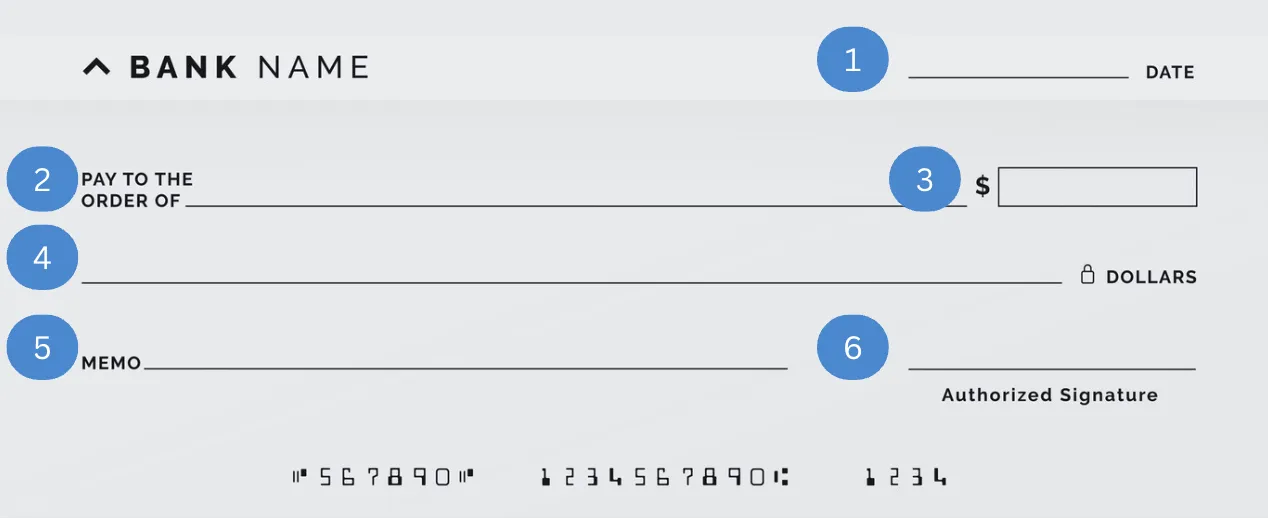
1. Write the Date
Remember that in the United States, the date format is mm/dd/yyyy.
2. Payee’s Name
Write the full name of the person to whom you are issuing the check, exactly as it appears on their official identification.
3. Amount in Numbers
Write the numerical amount clearly.
4. Amount in Words
Write the amount in words, including cents.
5. Add a Memo
You may include a note specifying the reason for the payment.
6. Sign the Check
Sign the check legibly in the space designated for the drawer.
7. Review the Information
Ensure that all information is accurate to avoid issues for the payee when cashing the check.
It is essential to complete checks legibly, without strike-throughs or corrections, as these may invalidate the document.
How to Correctly Write Numbers in Words on a Check
Writing amounts in words may be confusing when dealing with U.S. dollars. The following points should be kept in mind:
- Dollar amounts must be written in full words
- Cents must be written as fractions
- Avoid using dollar symbols or similar notations
- If there is leftover space at the end of the line, draw a line to prevent fraud
- For example, $1,000.75 is written as: One thousand and 75/100 dollars
Cash Checks and Manage Your Money Easily with Comun
As you can see, knowing how to fill out a check is useful for sending and receiving money in the United States. It is a reliable and accessible alternative if you do not have a banking account.
However, issuing and cashing a check can also require significant time and effort. That’s why you can skip the trip to the bank, avoid wasting time or money on gas, and cash your check directly from your phone using Comun—no lines, no questions, no complications.
Discover Comun, the only platform designed to serve the needs of immigrant communities in the United States, with support available in Spanish.
Why Choose Comun?
- Open your account with an official ID from your country
- Access a mobile app specifically designed for immigrants in the U.S.
- Make payments, receive your salary, and manage your finances
- Send money to your loved ones in LATAM for just a $2.99 transfer fee
Frequently Asked Questions
Still have questions about how to fill out a personal check? See our FAQ section.
What if I Make a Mistake Filling Out a Check?
If there are strike-throughs or inconsistencies in the amounts, the check must be voided and a new one used.
How Do I Void a Check?
Write the word VOID in large letters on the front of the check.
What Information Appears on the Back of a Check?
The back of the check contains the endorsement, meaning the payee’s signature for cashing the check.
Immigration
How to Create a Resume in the United States: Step-by-Step + Template
8 min de lectura
Practical Guide + Template to Create Your Resume in the United States
Getting a stable and well-paid job is the main goal of thousands of immigrants who come to the United States in search of a better quality of life.
For this reason, it’s essential to have an optimized resume (“CV”) that summarizes personal information, work experience, academic background, and all relevant details for recruiters and hiring managers.
You’ve probably faced the challenge of writing and refining a CV to apply for a job in your home country.
However, knowing the standards in Latin America is not enough, as U.S. resumes have key differences, such as length and focus on measurable results.
Mastering a new resume format can be challenging, and the process can be frustrating if you don’t hear back after sending multiple applications.
This doesn’t necessarily mean you lack the required skills — your resume might simply need some adjustments to get noticed by U.S. recruiters.
In this article, we aim to make the process easier for immigrant job seekers through a complete guide and sample resumes that will help you create your own by the end of the reading.
Differences Between a U.S. Resume and a Latin American CV
Even if you know how to write a resume in Latin America, it’s essential to understand the key differences compared to the U.S. standard.
Here are the main differences between a professional CV in Latin America and a U.S. resume.
- Length
In Latin America, it’s common to see two-page CVs, while the American resume is usually limited to one page.
- Focus on Quantifiable Achievements
U.S. recruiters look for quantifiable data and measurable results, while in Latin America it’s more common to include task descriptions and responsibilities.
- No Photo, Age, or Marital Status
To prevent discrimination, U.S. resumes do not typically include a photo, age, or nationality.
- Use of Keywords to Pass ATS Filters
The use of ATS (Applicant Tracking Systems) to detect keywords is widespread among U.S. companies.
- Format
While Latin American CVs often use colorful or elaborate designs, U.S. recruiters prefer minimalist formats to make information easier to read.
Understanding these differences is crucial for immigrants, as it increases the chances of being considered by both recruiters and automated systems.
7 Steps to Create a Resume in the United States
Here’s a step-by-step guide to writing a strong U.S. resume that passes ATS filters and captures recruiters’ attention.
Step 1. Choose the Right Format
Avoid flashy designs, as they can make reading difficult and hurt your ATS score. Choose a clean, organized, and easy-to-scan format.
Step 2. Fill in Your Contact Information
Include your full name, U.S. phone number, professional email address, and LinkedIn profile link.
Remember that you do not need to include a photo, date of birth, or marital status.
Step 3. Write Your Professional Summary
Your profile should be concise and include relevant keywords. This section should be a short paragraph summarizing your work history, interests, achievements, and career goals.
Step 4. Clearly Present Your Work Experience
It’s essential to list your work experience clearly and in chronological order.
- Use bullet points to list your most recent positions, including company name, job title, start and end dates.
- Highlight measurable achievements in each position.
To write your professional achievements, use the XYZ formula, structured as follows:
- X: what you did
- Y: how you did it
- Z: the result achieved.
For example:
“Improved the brand’s visual identity through an e-commerce rebranding project, reducing cart abandonment by 50%.”
Step 5. Your Education
List your academic background, including institution name, degree, and attendance dates.
Step 6. Highlight Your Skills
The skills section is key to making your resume stand out.
It’s recommended to separate this section into soft skills and technical skills.
- Soft skills: communication, teamwork, time management, attention to detail.
- Technical skills: design and editing software.
Step 7. Optional Sections
Depending on the vacancy and your profile, you can include additional sections, such as languages, certifications, or volunteer experience.
This information can set you apart from other candidates, as it gives you additional skills that could be relevant to the position.
Example of a U.S. Resume
Here’s an example of how an optimized resume should look, according to U.S. company standards.
On this page, you can download CV templates in English to customize yours according to your experience.
The last step is to adapt this example to your own professional profile and career path, which may differ depending on whether you are a recent graduate or already have experience.
- Recent graduate: if you have no experience, focus on your academic background, highlighting valuable projects, professional internships, volunteer work, and personal projects.
- Professional with experience: adapt the example to your own work history and use the XYZ formula to highlight your professional achievements.
Common Mistakes to Avoid When Writing a Resume in the U.S.
Here are some things to avoid when writing your resume.
- Using the same resume for every job: try to tailor your resume to the job you are applying for.
- Including a photo or unnecessary personal details: remember that in the United States, this data is irrelevant.
- Poorly translating key terms: if you have doubts about how to translate a term from Spanish to English, consult a translator or compare different sources on the internet.
- Making it too long: your resume should not exceed one page; otherwise, it may be discarded even if you have the necessary skills.
- Using a graphic-heavy design that doesn’t pass ATS filters: you may think that recruiters like resume templates with eye-catching designs, but the truth is that they are unlikely to pass ATS filters.
Común, Your Ally for Financial Stability in the United States
Having a strong resume is key to successfully entering the U.S. job market.
Just as a resume opens the door to great job opportunities, Común opens the door to financial stability for immigrants.
Discover Común, the option designed to serve the needs of immigrant communities in the U.S., with service available in Spanish.
Discover All the Benefits of Común!
- Open a checking account with a qualifying official identification from your home country.
- Mobile app available in Spanish and English.
- Easily receive payments from employers, cash checks, and send international money transfers to Latin America.
Discover Común, the option dedicated to meeting the needs of immigrant communities in the United States with services available in Spanish.
Frequently Asked Questions (FAQ)
If you still have questions, check out the next section.
Is It Necessary to Include References in the Resume?
It’s not necessary to include references in your resume, as companies usually request them later in the hiring process.
What Are the 3 Most Important Details in a Resume?
The 3 most important details are: contact information, professional experience, and skills.
What Language Should My Resume Be In When Applying in the U.S.?
The resume format used in the U.S. is becoming common in other countries, so the language should match the job posting.
Living in the United States
How to Make Money Fast in the United States
8 min de lectura
Earning extra money fast in the U.S. is possible through survey apps, flexible freelance work, or referrals. With Común's referral program, you earn a cash reward for every person you invite who opens an account.
Making money fast can be a necessity at any point in life, and for Latinos in the United States it can be an even greater challenge. But don’t worry, in this post we’ll give you some ideas and tips so you can make money quickly and improve your financial situation.
1. Find temporary jobs
Temporary jobs are a good option for making money quickly. Many companies hire temporary workers to cover demand during certain times of the year, such as the holiday season or tax season. Look on job websites like Indeed, Glassdoor, or Monster to find temporary jobs in your area.
2. Become a rideshare driver
If you have a car and a valid driver’s license, consider becoming a rideshare driver for services like Uber or Lyft. These services let you work on your own schedule and make money quickly. Plus, you can work as much or as little as you want.
3. Sell your skills
If you have skills you can sell, such as computer repair, graphic design, or language teaching, you can use online platforms like Fiverr or Upwork to connect with people who need your services. These platforms charge a commission for each completed job, but you can set your own prices and work on projects based on your availability.
4. Do yard work or cleaning jobs
Many people need help with yard work or cleaning, and this can be a good option for making money quickly. You can offer your services in your neighborhood or on websites like Craigslist. Make sure you have the right equipment and a good attitude to win regular customers.
5. Sell items you no longer need
Selling items you no longer need is a quick way to get extra cash. You can sell them online through websites like eBay or Amazon, or in person at a garage sale or flea market. If you have valuable items you no longer use, this can be an excellent option for making money quickly.
Remember that these are just some ideas for making money quickly. You can also look for jobs in the hospitality or customer service industry, offer house cleaning services, or take online surveys to earn extra money. The important thing is to find an option that fits your skills and needs.
Remember to connect your Común account to your job so you can receive your pay as quickly as possible — up to two days early. In your Común checking account, you can keep the income from your work at no cost and with the highest possible security.
Común debit cards are compatible with more than 57,000 ATMs in the United States for deposits and withdrawals, and they include Visa’s zero-liability protection policy. This means that any unauthorized charge will not be deducted from the balance in your checking account. Likewise, your bank account is insured by the FDIC up to $250,000 like any other legal bank.
Good luck!
How can I earn extra money fast?
Paid survey apps, flexible freelance work (driving, deliveries, task apps), and financial app referral programs are common ways to generate extra income without a full-time job.
How does Común's referral program work?
Invite someone with your unique link from the app's home screen. When that person opens a full debit account and completes their first qualifying outflow, you both receive a cash reward — credited to your account within 5 days.
How much can I earn by referring people?
The reward amount can vary based on the current promotion; check the active terms inside the referral section of the app.
Frequently asked questions
Do I need to do anything special to join Común's referral program?
Just share your unique link from the referral button on the app's home screen — referrals outside that link don't qualify.
When do I get my reward for referring someone?
Within 5 calendar days after your referral completes a First Qualifying Outflow.
Is there a limit to how many people I can refer?
The current terms and conditions detail the limits; check them in the app before sharing broadly.
What happens if my referral doesn't complete the process?
The reward is only credited if the referral opens the account, gets approved, and completes a First Qualifying Outflow.
Can I refer myself with another account?
No, self-referral and fraudulent or abusive activity aren't eligible for rewards.
What other quick ways exist to generate income besides referrals?
Paid survey apps and flexible freelance work are other common options, though they typically generate less than a primary income.
International Money Transfers
How to send money to Mexico via WhatsApp? Común vs. WhatsApp Pay
8 min de lectura
How to send money to Mexico via WhatsApp? Común vs. WhatsApp Pay
WhatsApp does not currently offer a service to send money directly from the United States to Mexico.
WhatsApp is one of the most popular ways to stay in touch with family and friends across borders. While the app supports payments in certain countries, its payment features are not available for sending money from the United States to Mexico.
However, for people living in the United States who are looking into sending money to Mexico, there are many different options available. From traditional service providers such as Western Union and MoneyGram to apps with instant international transfers like Wise, Remitly and Común.
Can I send money to Mexico via WhatsApp from the United States?
At this time, WhatsApp does not offer an official service that allows people in the United States to send money directly to recipients in Mexico through WhatsApp Pay. WhatsApp's payment functionality is only available in Brazil and India.
This means that you can still use WhatsApp every day to communicate with family and friends in Mexico, but you cannot transfer money from a U.S. account to a recipient in Mexico using WhatsApp Pay.
Some money transfer companies offer WhatsApp-based experiences that help initiate transfers, but those services are different from WhatsApp Pay itself. The actual transfer is processed through the remittance provider rather than through WhatsApp's native payment system.
What is WhatsApp Pay and how does it work?
WhatsApp Pay is a payment feature integrated into WhatsApp that allows eligible users to send and receive money without leaving the app. The service operates through local payment networks and financial partners in supported countries.
As of 2026, WhatsApp Pay is available in India and Brazil. It is not broadly available as a payment method in the United States, and it is not available as a direct remittance solution for sending money from the United States to Mexico.
Why can't I use WhatsApp to send money to Mexico?
Cross-border money transfers require financial institutions, payment networks, regulatory approvals, identity verification procedures, and international settlement systems. WhatsApp Pay was built around local payment systems in specific countries. Because of this, the service does not currently support direct remittances from U.S. bank accounts to recipients in Mexico.
This limitation often creates confusion because WhatsApp is widely used on both sides of the border. Messaging a family member in Mexico through WhatsApp is easy, but sending money through WhatsApp Pay is a different service with separate availability requirements.
How much does WhatsApp Pay charge for sending money?
There is no standard fee for sending money from the United States to Mexico through WhatsApp Pay because that service is not currently available.
If you're in the United States and need to send money to Mexico, you will need a remittance service provider. To compare the costs related to sending money to Mexico, it can be important to review: transfer fees, exchange rates, delivery methods, transfer speed, and recipient requirements.
What's the best way to send money to Mexico if not via WhatsApp?
There is no single answer because different money transfer methods work better for different situations. Bank transfers can be a familiar option for people who already have a checking account. Traditional remittance providers such as MoneyGram and Western Union offer multiple delivery methods, including bank deposits, cash pickup locations, and mobile wallets in some markets.
Digital remittance platforms have become increasingly popular because they offer the possibility of sending money directly from a smartphone. These services typically display the exchange rate, fees, and delivery method before the transfer is completed.
One option is Común through its remittances services, which allows eligible customers to send money to Mexico and other countries in Latin America directly from the Común app. Transfers start at $2.99, and many transfers are delivered on the same day depending on the destination and delivery method.
How to send money to Mexico with Común? (step by step)
1. Open the Común app on your phone.
Sign in to your account and navigate to the remittance section.
2. From the main page, select "Envía una Remesa".
Select the option on your app.
3. Choose your recipient or add a new one.
Provide the required details for the person receiving the transfer.
4. Enter the transfer amount.
Review the amount you want to send.
5. Review the transfer details.
Confirm the recipient information, delivery method, transfer amount, and estimated delivery timeframe.
6. Confirm the transfer.
Complete the transaction and wait for confirmation. Many transfers are delivered the same day, although delivery times may vary.
WhatsApp Pay vs. Común: a direct comparison
| Feature | WhatsApp Pay | Común |
|---|---|---|
| Send money from the United States to Mexico | No | Yes |
| Cross-border remittances | No | Yes |
| Starting transfer cost | Not available for U.S.-Mexico transfers | Starting at $2.99 |
| Delivery to recipients in Mexico | Not supported | Available |
| Transfer purpose | Domestic payments in supported countries | Money transfers to Mexico and Latin America |
WhatsApp Pay was created for payments within certain supported markets. Común remittance services make it possible to send money from the United States to recipients in Mexico and other countries in Latin America directly from the Común app.
A Común account can be opened with a passport or more than 100 Latin American IDs with no minimums or monthly fees.
FAQ
Can I send money to Mexico using WhatsApp?
No. WhatsApp does not currently provide an official service that allows users in the United States to send money directly to recipients in Mexico through WhatsApp Pay.
How does WhatsApp Pay work?
WhatsApp Pay allows eligible users in supported countries to send and receive money through WhatsApp using local payment networks and financial partners.
How long does it take for the money to arrive if I send it with Común?
Many transfers sent through Común are delivered on the same day. Delivery times may vary depending on the destination, delivery method, and recipient institution.
What do I need to send money to Mexico with Común?
You generally need a Común account, the recipient's information, the transfer amount, and any additional details required for the selected delivery method.
How much does it cost to send money to Mexico with Común?
Común international transfers start at $2.99. The total cost may vary depending on the transfer amount, destination, and exchange rate.
Is it safe to send money through apps from the United States?
Using a regulated money transfer provider can help protect your transaction through identity verification, encryption, fraud monitoring, and transaction tracking features.
Común is a financial technology company and not a bank. Banking services are provided by Community Federal Savings Bank, Member FDIC. Peer-to-peer payments services are provided by Cross River Bank. No minimums, no maintenance fees. Remittance service provided by Service UniTeller, Inc. Remittance fees start at $2.99 but may vary. Común Inc. may earn revenue from the conversion of foreign currencies.

Financial Education
Exchange Rates and Currency Margins: A Simplified Explanation
8 min de lectura
Introduction: What Is the Foreign Exchange Market?
The foreign exchange (FX) market is the backbone of global trade, since it allows one currency to be exchanged for another. Whether you're traveling abroad, buying international products, or investing overseas, FX plays a crucial role in our financial lives. This article aims to demystify two key FX concepts: exchange rates and currency margins, explaining them in simple terms for new banking customers and anyone unfamiliar with these topics. Understanding these concepts is crucial for customers of Community Federal Savings Bank and other financial institutions that offer banking services.
What Is the Exchange Rate?
The exchange rate is the value of one currency in terms of another. For example, if 1 U.S. Dollar (USD) is worth 0.85 Euros (EUR), the exchange rate is 1 USD = 0.85 EUR. Exchange rates fluctuate based on supply and demand in the foreign exchange market. Several factors influence these rates, including:
- Supply and Demand: If a currency is in high demand, its value increases. Conversely, if there's more supply than demand, the currency's value decreases.
- Central Banks and Government Policies: Central banks, like the Federal Reserve in the U.S. or the European Central Bank, can influence exchange rates through interest rates and monetary policy. For example, higher interest rates offer better returns on investments in that currency, increasing demand and value.
How Do Exchange Rates Affect Us?
Exchange rates impact several aspects of our lives:
- International Travel: When you travel abroad, the amount of foreign currency you get for your money depends on the exchange rate. For Común customers, understanding exchange rates⁴ helps keep your money secure while traveling. Examples of fluctuating exchange rates include: 1 USD = 0.85 EUR or 1 USD = 109.75 Japanese Yen (JPY).
- Cost of Imported Products: Products priced in foreign currencies become more or less expensive depending on the exchange rate.
- International Business and Investment: Businesses dealing with international customers and suppliers, or investing abroad, are affected by exchange rate fluctuations, which influence their costs and revenue.
What Is the Currency Margin (FX Spread)?
The currency margin is the difference between the buy price and the sell price of a currency pair. The buy price is what buyers are willing to pay, while the sell price is what sellers are asking. The spread is essentially the cost of trading currencies.
For example, if the buy price for EUR/USD is 0.84 and the sell price is 0.86, the currency margin is 0.02. This margin is crucial because it represents the transaction cost of exchanging currencies, which is a key consideration for banks and financial institutions.
Why Does the Currency Margin Exist?
Several factors contribute to the existence of the currency margin:
- Market Liquidity: Greater liquidity (more buyers and sellers) generally results in a narrower margin. Lower liquidity leads to a wider margin.
- Currency Brokers and Financial Institutions: These intermediaries set the buy and sell prices, factoring in their profit margins.
- Transaction Costs: The costs of executing trades and maintaining currency inventories are also built into the margin.
How Does the Currency Margin Affect Transactions?
The currency margin impacts the cost of exchanging money. A smaller margin means lower costs, while a larger margin increases the cost. Here are some examples:
- Small Margin: If the buy-sell margin is small (for example, 0.01), the transaction cost is low, making it cheaper to exchange currency.
- Large Margin: A larger margin (for example, 0.05) means higher transaction costs.
To minimize the cost of exchanging currency, consider:
- Comparing Rates: Look for the best exchange rates and lowest margins, especially when using Community Federal Savings Bank banking services.
- Timing: Exchange money when market liquidity is high, typically during business hours in major financial centers.
Real-World Examples:
Understanding currency margins can help you make better financial decisions:
- Traveling Abroad: When exchanging money for a trip, the currency margin affects how much foreign currency you receive. Común¹ account holders can keep their money secure by understanding these margins.
- Online Shopping: Buying products on international websites involves currency conversion, where the margin influences the total cost.
To check the current exchange rate and currency margin, use online currency converters and financial news websites. Financial inclusion matters, and platforms like Común offer tools and support to help Latino immigrants and other users manage their money effectively.
Conclusion: Stay Informed
In summary, the exchange rate determines the value of one currency against another, while the currency margin is the cost of trading currencies. Understanding these concepts is essential for making informed financial decisions, whether you're a new banking customer or new to the world of FX. Stay informed and use this knowledge to navigate the complex world of currency exchange more effectively.
Additional Resources
- FDIC-Insured Banks: Make sure your funds are safe by choosing FDIC-insured banks like Común.
- Support and Security: Común offers customer support and security features to protect your personal information and funds.
- Remittances: For Latino families and immigrants, understanding exchange rates can help send money abroad efficiently.
Understanding exchange rates and currency margins can have a significant impact on your financial transactions. By staying informed, you can make better decisions and optimize your currency exchanges, improving your overall financial health.
Immigration
What Is the ITIN and How to Get It in the U.S.? | Comprehensive Guide
8 min de lectura
The ITIN (Individual Taxpayer Identification Number) is the IRS tax identification number for people who must file tax returns in the U.S. but cannot obtain an SSN. It is used only for tax purposes; it does not authorize work in the U.S. or entitle you to Social Security benefits. It is requested using Form W-7.
What is the ITIN?
The ITIN is a tax identification number issued by the U.S. Internal Revenue Service (IRS). It is designed for people who are required to file federal tax returns but do not qualify for a Social Security number (SSN). It consists of 9 digits and always begins with the number 9 (format: 9XX-XX-XXXX).
Who needs an ITIN?
- Undocumented immigrants who work and earn income in the U.S.
- Nonresident aliens with income or real estate transactions in the U.S.
- Dependents or spouses of U.S. citizens or residents who do not qualify for an SSN
- Foreign students and scholars with taxable income in the U.S.
- People who claimed tax treaty benefits
What the ITIN is for
The ITIN allows you to file federal and state tax returns, claim tax credits (such as the Child Tax Credit), open bank accounts at some banks that accept it as an alternative ID to the SSN, and comply with tax obligations while working in the U.S. without an SSN.
How do you apply for an ITIN?
To get an ITIN, you must complete Form W-7 (Application for IRS Individual Taxpayer Identification Number). You need to submit identity and foreign-status documents—the passport is the only document that satisfies both requirements. You can send it together with your tax return by mail, in person at an IRS Taxpayer Assistance Center, or through an authorized Certifying Acceptance Agent (CAA). The process takes between 7 and 11 weeks.
ITIN vs. SSN: key differences
The SSN is issued by the Social Security Administration and authorizes legal work, accumulation of Social Security credits, and access to all financial services. The ITIN is issued by the IRS, is for tax purposes only, does not authorize work, does not generate Social Security credits, and has more limited access to financial services. If you qualify for an SSN, you should not apply for an ITIN.
Do I need an ITIN to open a bank account?
Not always. Some banks accept an ITIN as tax identification to open accounts. However, many traditional banks still require an SSN. Común does not require either an SSN or an ITIN—it accepts your passport or consular ID card to open a full checking account. For most newly arrived immigrants, Común is the most direct route to having a bank account without waiting for an ITIN.
Frequently asked questions about the ITIN
How long does it take to get an ITIN?
The IRS says the process takes between 7 and 11 weeks from the time it receives the complete application. If you submit the application during tax season (January-April), it can take up to 14 weeks. Using a Certifying Acceptance Agent (CAA) can speed up the process because they certify original documents without needing to send them to the IRS.
Does the ITIN allow me to work legally in the U.S.?
No. The ITIN is only a tax number and does not authorize you to work in the U.S. or change your immigration status. Employers must ask for an SSN or work authorization documents (EAD) to hire you legally. The ITIN only serves for filing taxes and certain financial procedures.
Does the ITIN expire?
Yes. ITINs that have not been used on tax returns in the last 3 consecutive years expire. They also expire depending on the year they were issued (the IRS renews them in blocks). If your ITIN has expired, you must renew it with a new W-7 before filing your next tax return.
Can the ITIN help me build credit history in the U.S.?
Limitedly. Some lenders and credit card issuers accept ITINs for applications. Banks such as Bank of America have specific card programs for ITIN holders. However, credit built with an ITIN does not automatically transfer if you later obtain an SSN—you will need to establish the link with the credit bureaus.
Do I need an ITIN to receive the Child Tax Credit?
The parent can use an ITIN to claim the credit, but the children for whom the credit is claimed must have SSNs. Children born in the U.S. automatically have SSNs. The parent’s ITIN is sufficient to file the tax return and claim the credit for qualifying children.
Can I apply for an ITIN without a passport?
The passport is the only document that by itself satisfies both requirements (identity + foreign status). Without a passport, you need two documents: one identity document (DNI, consular ID card, foreign driver’s license) plus one that proves foreign status (visa, alien registration). The IRS may reject the application if the combination is not sufficient.




Thousands of immigrants are already achieving more with their money. You can too.
Comun is a financial technology company and not a bank. Banking services are provided by Community Federal Savings Bank; Member FDIC. The Comun Visa® Debit Card is issued by Community Federal Savings Bank, pursuant to a license from Visa U.S.A Inc. and may be used everywhere Visa Cards are accepted.
Comun is a fintech company and not a bank or licensed money transmitter.
* Results may vary. For a complete list of eligible IDs and application requirements, follow this link.
^ No minimums, no maintenance fees. ATM or transfer fees may apply. See app for fee details.
‡ Direct deposit funds are typically available when we receive the payment file, up to two days before the scheduled payment date. This early availability is not guaranteed.
** A service provided by Service UniTeller, Inc. Service UniTeller, Inc. is licensed in all states that require a license. Remittance fees start at $2.99 but may vary. Please check the app for more details. Comun Inc. may earn revenue from the conversion of foreign currencies.
† Funds in your account are FDIC insured up to $250,000 by ownership category through Community Federal Savings Bank (CFSB), Member FDIC, in the event CFSB fails.