Financial Education
What Is Financial Freedom and How Can You Achieve It?
Financial freedom is more than a simple definition — it's a state of life many aspire to reach. It's the ability to cover all your financial needs without being tied to a conventional job.
8 min read


What Financial Freedom Means and How to Achieve It
Financial freedom is more than a simple definition — it's a state of life many aspire to reach. It's the ability to cover all your financial needs without being tied to a conventional job. Imagine a world where your decisions aren't dictated by your financial obligations, but by your desires and passions. That's financial freedom.
In a constantly changing world, where the retirement age keeps rising and working conditions keep getting more challenging, financial freedom has become an essential goal. It provides not just economic security, but also a better quality of life, freedom of choice, and the chance to pursue personal passions and projects without restrictions.
Steps to Achieve Financial Freedom
Cutting Expenses: Taking Control of Your Personal Finances
Before you can save or invest, it's essential to understand where your money is going. Keeping a detailed record of your expenses lets you identify areas where you could potentially save. Adopting a frugal lifestyle doesn't mean sacrificing your quality of life — it means making more informed decisions about your spending.
To stay on top of your personal or family finances, it's important to create a budget and review it regularly. A budget helps you categorize your income and expenses over a period of time — usually once or twice a month — so you can identify your necessary expenses versus your discretionary or luxury spending. This makes it easier to figure out which expenses you can cut to improve your financial stability.
One of the biggest problems with not having a budget is falling into the most common mistake that keeps us from achieving financial freedom: going into debt — spending more than you earn and constantly being "in the red," a hole that's hard to climb out of as debt grows over time. The secret is living below your means: rather than adopting a lifestyle that reflects your salary or your wants, the advice from many financial experts is to live frugally and spend less than you earn. This lets you save and invest more over time.
Saving: The Foundation of Financial Freedom
Saving isn't just about setting money aside — it's a mindset and a discipline that lays the groundwork for a healthy financial life. Dave Ramsey, a well-known financial expert, has developed a series of principles and steps that have helped millions find their way to financial freedom.
Dave Ramsey is famous for his "Baby Steps," a series of seven steps designed to guide people toward financial freedom. The first step — and perhaps the most crucial — is saving $1,000 as a starter emergency fund. This fund acts as a cushion against the unexpected, keeping people from going into debt over surprise expenses.
"Not having an emergency fund is an emergency in itself" is a popular Dave Ramsey saying, and if you've ever been in an unexpected situation that required funds you didn't have on hand, you can probably vouch for how true that is. And while $1,000 doesn't sound like a lot compared to the cost of many emergencies, the point of this emergency fund is to push a person to take that first step and start building financial discipline.
Investing: Generating Passive Income
Warren Buffett, one of the most successful investors in the world, has always emphasized the importance of investing in what you know and understanding the intrinsic value of your investments. His investing philosophy, which has been the cornerstone of his success, is built on several core principles that can serve as a guide for those seeking financial freedom:
- Invest in what you know: Buffett has always been a strong advocate for investing in companies and sectors you fully understand. If you can't explain in simple terms how a company makes money, it might not be the best fit for your portfolio.
- Look for value, not price: Buffett distinguishes between the price and the value of a stock. While price is what you pay, value is what you get. His approach is based on identifying companies that are undervalued relative to their true intrinsic value and that have long-term growth potential.
- The market is volatile, but don't get swept up in the panic: Buffett compares the stock market to an unpredictable neighbor named "Mr. Market." Some days Mr. Market is optimistic and offers high prices, while other days he's pessimistic and offers bargains. Rather than getting carried away by Mr. Market's emotions, Buffett suggests staying calm and focusing on the intrinsic value of your investments.
- Long-term investing: Buffett isn't chasing quick gains. Instead, he looks for companies with lasting competitive advantages and holds them for decades. His famous quote, "my favorite holding period is forever," reflects his long-term investing approach.
- Reinvesting dividends: One of the strategies behind Buffett's success is reinvesting dividends. By reinvesting dividends, you benefit from compound interest, which can lead to exponential growth in your investment over time.
Passive income — whether through dividends, rental income, or online businesses — is essential for financial freedom. This income, which doesn't require constant direct involvement, lets your money work for you, generating regular cash flow that can support a lifestyle free from the constraints of a conventional job. Warren Buffett's investing philosophy centers on patience, education, and a deep understanding of investments. By adopting these principles and focusing on generating passive income, you can chart a path toward true financial freedom.
Conclusion
Financial freedom is an ideal that goes beyond simply accumulating wealth — it's the manifestation of a balanced life where our decisions aren't dictated by economic pressures, but by our true passions and desires. Through the discipline of saving, wisdom in investing, and understanding our finances, we can move closer to this ideal. The teachings of experts like Dave Ramsey and Warren Buffett offer us a clear roadmap toward this goal. At the end of the day, financial freedom isn't just about money — it's about living a life with purpose, security, and genuine independence. It's a journey that requires commitment, education, and constant action, but the rewards, both tangible and intangible, are invaluable.
About Común
Común aims to support the Latino community in the United States. It offers a debit account that can be opened with more than 100 valid Latin American IDs and an app available in Spanish.
Visit Común's website or download the app for free to learn more about the full offer and applicable terms.
Olivia Rhye
Community Partner

Living in the United States
The High Cost of Traditional Banks and Being Unbanked in the United States
8 min de lectura
Traditional banks typically charge monthly maintenance fees (between $12 and $25) and overdraft fees (averaging $34 per transaction). Without a bank account, many people end up paying more at check-cashing stores and money transfer services.
Today, many Latinos living in the United States may be overpaying for financial services. According to a 2021 report from the Federal Deposit Insurance Corporation (FDIC), 24.1% of Hispanic households are underbanked, meaning the household has a checking or savings account at a financial institution but has also used other services (for example, money orders, remittance transfers, check cashing) outside their bank or credit union. Accessing additional services outside a bank can be costly.
The FDIC report also found that 9.3% of Hispanic households are unbanked, meaning no one in the household has a checking or savings account at a financial institution. Not having access to banking services can limit access to certain financial products and services, like savings accounts that offer investment opportunities and insurance options.
To examine the cost Latinos may be paying to access financial services in the United States, Común conducted an analysis comparing the cost if someone were a Común customer versus a traditional financial institution. The study also looked at the cost of not having access to banking services. Additionally, Común analyzed the cost of all three options over the course of a year, and how much someone could save by using a service like Común over one year and over a five-year period.
Comparison table to translate and rebuild in Webflow (values unchanged):
Financial Service Type | Común | Traditional Bank | Unbanked
Account opening* | $0 | $100* | $0
Monthly cost | $0 | $144.00 | $0
Cash deposit fee (ATM) | $42 | $60 | $0
Remittance fee | $66 | $1,080 | $184
Overdraft fee | $0 | $0 | $0
Early direct deposit | $0 | $0 | $0
Check deposit fee | N/A | $0 | $96
Money order fees | N/A | N/A | $24
Total | $108 | $1,284 | $304
*Note: Común did not include the account opening fee in the total for the traditional bank, since we assumed this user would not maintain minimum balance requirements and would therefore incur a $12 monthly fee.
How Much Customers Can Save in a Year Using a Service Like Común:
Cost of a traditional bank account: $1,176
The cost of being unbanked: $196
How Much Customers Can Save Over Five Years Using a Service Like Común:
Cost of a traditional bank account: $5,881
The cost of being unbanked: $981
Additional Notes
Beyond direct costs like check cashing or money order fees, unbanked people also incur many indirect costs, such as:
- High borrowing costs: Without a bank account, accessing credit can be more complicated and costly. Unbanked people may turn to alternative financial services, like payday loans or pawn shops, which typically charge high interest rates and fees. Having a bank account and a good banking relationship can qualify people for lower-interest loans and other credit products.
- Limited access to financial services: Being unbanked can result in limited access to certain financial services and products, like savings accounts, investment opportunities, and insurance options. This lack of access can hinder people's ability to build wealth and protect themselves financially over the long term.
- Security risks: Keeping cash at home can be risky, since it's vulnerable to theft, loss, or damage. Bank accounts offer a secure way to store and access funds, reducing the risk of financial loss due to theft or other unforeseen circumstances.
Methodology
The analysis was conducted in April 2024 by Común. The data examines the annual cost of using a service like Común, a traditional bank account, or being unbanked for financial services. In this analysis, we looked at the cost of a checking account at a traditional financial institution, as well as the cost of services outside a financial institution, and made these assumptions:
- Minimum balance to open an account
- Común cost: $0
- Traditional financial institution cost: $100, based on the minimum balance needed to open the referenced bank account.
- Monthly cost
- Común cost: $0
- Traditional financial institution cost: A $12 monthly fee, assuming the $1,500 minimum daily balance isn't met
- Two cash deposits (ATM) per month
- Común cost: $0 to use an in-network ATM and $3.50 to use a retail partner to make a deposit. Común assumed a user makes two deposits per month, one at a retail store and one at an in-network ATM.
- Traditional financial institution cost: $2.50 for a deposit at another financial institution and $2.50 if using an out-of-network ATM. For the bank account analyzed in this report, there's no charge for branch cash deposits. However, this bank charges $2.50 for deposits at other ATMs. The retail store will also charge the customer, which varies by location, but Común assumed $2.50.
- Two remittance transfers per month
- Común cost: Customers can send their first remittance at no cost. After that, remittances carry a fee starting at $2.99.
- Traditional financial institution cost: $45 to send international dollar transfers
- For the unbanked, Común assumed the person sends remittances with Western Union, which costs $8 per transfer in flat fees if the user is depositing cash at a Western Union location in the United States and the recipient is picking up cash at a Western Union location in Mexico (source: fee calculator). Común assumed 2 remittances per month over a year, with the first remittance at no cost (a Western Union promotion).
- Check cashing fee
- We assume a user cashes two checks a month and pays $4 each time (fee amount from Walmart).
- Money order fee
- We assume a user buys two money orders a month and pays $1 each time (fee amount from Walmart).
What does a traditional bank really cost?
Monthly maintenance fees, overdraft charges (averaging $34 per transaction industry-wide), and out-of-network ATM fees are the most common costs that add up at traditional banks.
What does it cost to be unbanked?
People without a bank account often pay more to cash checks (1% to 3% of the check's value at check-cashing stores) and to send money, compared to those with account access.
How do I avoid these costs?
With Común there's no monthly fee, no minimum balance required, and mobile check deposit is at no cost.
Frequently asked questions
How much do traditional banks charge for monthly maintenance?
Generally between $12 and $25 a month, though some banks waive it if you maintain a certain minimum balance.
What's a typical overdraft fee?
The industry average is approximately $34 per transaction.
How much does it cost to cash a check without a bank account?
Check-cashing stores charge between 1% and 3% of the check's value, with a $3-5 minimum.
Does Común charge a maintenance fee?
No, there's no monthly fee and no minimum balance required.
How can I avoid out-of-network ATM fees?
By using ATMs within your provider's network; with Común, AllPoint+ ATMs give you 3 free withdrawals a month.
Is it worth opening a bank account if I don't have much money?
Yes — many digital accounts, like Común's, don't require a minimum balance, so there's no barrier to entry.

International Money Transfers
What banks does Zelle have in Mexico? A Complete Guide to Sending and Receiving Money from the U.S.
8 min de lectura
Have you heard of Zelle? It is a highly popular digital payments platform in the United States. It allows users with accounts at affiliated banks—whether traditional banks, digital banks, or credit unions to easily send and receive money.
In 2024 alone, Zelle reported 151 million enrolled accounts, including individuals and small businesses, reflecting its widespread adoption among U.S. users.
If you need to send money outside the United States easily, for example Mexico, you may be wondering which banks in Mexico support Zelle.
However, this platform does not have agreements with any banks in Mexico, and it is mandatory to have a U.S. banking account to access its services.
Nevertheless, there are other options as efficient as Zelle for sending money to Mexico, such as banking accounts with integrated remittance services and international money transfer applications.
Below, we explain how to receive money through Zelle, the benefits it offers for users in the United States, and the alternatives available for sending money to other countries.
What is Zelle and Is It Possible to Use It in Mexico?
Zelle is a digital payments service that facilitates P2P (peer-to-peer) transfers at certain partner banks within the United States.
It is known for being a fast service, with money transfers reflected within minutes, in addition to being free and having broad coverage throughout the U.S.
It operates through the mobile apps of participating banks, as it is directly integrated with them and only allows money transfers to other Zelle users.
But which bank in Mexico is compatible with Zelle? Unfortunately, it is not possible to send or receive money through this platform in Mexico, as it is not designed for international money transfers and only complies with the technological and regulatory standards of the U.S. financial system.
Which Banks in Mexico Use Zelle? Everything You Need to Know
No bank in Mexico is compatible with Zelle services, meaning that international money transfers cannot be made through this platform.
To use Zelle, you must have a U.S. banking account at one of the affiliated banks.
Here is a list of some of the major banks that support Zelle in the United States:
- Ally Bank
- Bank of America
- BMO Harris Bank
- Capital One
- Chase (JPMorgan Chase)
- Citibank
- Citizens Bank
- Discover Bank
- Fifth Third Bank
- FirstBank
- Frost Bank
- Huntington Bank
- PNC Bank
- Regions Bank
- TD Bank
- Truist Bank
- US Bank
- Wells Fargo
Although Comun is not integrated with Zelle, this does not limit its functionality, as it is a comprehensive personal finance solution that goes beyond just money transfers.
How to Send Money to Mexico with Zelle? Answers and Efficient Alternatives
If you need to send money to Mexico quickly, you will have to choose a different service than Zelle, as it only allows bank transfers between U.S. accounts.
The main reasons Zelle is not available in Mexico are:
- To register with Zelle, you must access the online banking platform of one of the affiliated U.S. banks.
- You also need a U.S. phone number or email address.
- Zelle is not a remittance or international payment platform, so it does not have the capacity to convert currencies or deposit funds in international banks.
- Zelle does not comply with the regulations of financial institutions in Mexico, such as Banxico and the CNBV.
If you have used Zelle to send money within the United States, you are likely looking for a similarly reliable system to make international money transfers.
U.S. Banking Accounts with Integrated Remittance Services
In addition to traditional banks, there are alternatives that offer integrated remittance services to facilitate money transfers to Mexico.
Comun is a platform that meets the needs of many people in the United States, especially the immigrant community, by allowing remittances to be sent to loved ones easily, at very low cost, and through a single mobile application.
International Money Transfer Platforms
Another alternative for making international money transfers is to use platforms specialized in this type of transaction.
Examples include:
- Wise: sends money between accounts using the real time exchange rate.
- Remitly: offers international money transfers with standard or instant delivery.
The advantage of these platforms is that a bank account is not required, and their operation is accessible. However, the money transfer fees vary depending on factors such as the amount to be sent and the exchange rate.
Traditional International Bank Transfers to Mexico
You can also opt to make money transfers through traditional banks, for which you will need the SWIFT code of the receiving institution in Mexico and the recipient’s banking details.
Although it is a secure option, it is also one of the most expensive, due to high fees and intermediaries that increase the cost.
For example, a U.S. bank like Bank of America charges a $45 USD fee plus an average of 1% to 3% exchange rate margin. Therefore, in a money transfer of $1000 USD, the recipient receives approximately 900 pesos MXN less than with specialized international money transfer platforms.
Cash Deposit/Withdrawal Services at Retail Networks
If the recipient does not have access to a banking account, you can choose a service for cash deposit and withdrawal at physical locations.
Some examples include:
- Western Union: global network for bank transfers and cash delivery
- MoneyGram: allows money transfers to banking accounts and in cash
- Comun: also allows quick cash transfers
Beyond Zelle: Comun Simplifies Your Financial Life in the U.S. and Your Money Transfers to Mexico
Although Zelle is a very effective service for sending and receiving money within the United States, it has limitations that prevent international money transfers, making it more suitable for citizens who need to make frequent payments within U.S. territory.
For the immigrant community in the United States, it is important to choose a solution that not only facilitates money transfers but also offers a complete, accessible, and easy-to-use finance platform.
Comun is the platform that will simplify your financial life in the United States, offering the following benefits:
- Open an account easily using your official ID from your country.
- Forget about traditional fees: no opening fee, no monthly maintenance fee, and no minimum balance required.
- No hidden charges for remittances: your first international money transfer is free, and afterward you pay a fee starting at $2.99 USD per transfer, up to the applicable limits.
- Customer support also available in Spanish.
- Integrate your finances and remittance service in a single mobile application, making Comun the most suitable option.
- Obtain a Visa debit card to make purchases in physical stores.
- Access an extensive cash management network and make deposits at thousands of locations near you.
Open your Comun account and access a financial service without complications.
Frequently Asked Questions
Do I need a U.S. account to use Zelle?
Yes, Zelle is only available through the online banking platforms of affiliated U.S. banks.
Can I send money to Mexico via Zelle if I have a U.S. account?
No, no bank in Mexico is compatible with Zelle.
What are the best alternatives to Zelle for sending money to Mexico?
Comun: a fintech platform that provides access to an account and remittance capabilities.
Does Comun offer Zelle for sending money to Mexico?
Comun is not connected to Zelle, but you can send money to Mexico for a fee starting at $2.99 USD per transfer up to the applicable limits.
How do I set Zelle to Spanish?
Since it is a service available through the affiliated bank apps, you must access their settings and select Spanish as the preferred language.
How do I download Zelle?
Go to the Play Store or App Store and search for Zelle. Remember, it is only available in the United States.
Community
What You Need to Open an Account at Comun¹ 2
8 min de lectura
Unmatched Ease of Opening an Account
Opening a checking account with Comun is simple and hassle-free, addressing the barriers to financial exclusion typically faced by the immigrant community. Accepting over 100 forms of identification², including social security numbers from Latin American countries, Comun ensures that immigrants have access to essential banking services. The application process is quick, taking less than 5 minutes, and is free of additional or hidden fees, minimum balance requirements or monthly commissions. This inclusiveness is central to Comun's mission of fostering financial stability and growth.
Mobile Deposit Options
ComunComun offers a convenient mobile deposit feature that allows users to deposit cash at more than 88,000 locations in the United States, including major retailers such as Walgreens, Dollar General and Walmart. This extensive network ensures that users can easily find a deposit location near them, making the process of adding money to their accounts simple and hassle-free.
Traditional Banking: Although many traditional banks offer mobile deposit options, they often restrict these to check deposits through a mobile app. Cash deposits typically require a visit to an ATM or bank branch, which can be less convenient and more time-consuming than Comun's extensive cash deposit network.
Utility in Today's World: In today's fast-paced environment, the flexibility to deposit cash in a wide range of accessible locations is invaluable, especially for individuals who may not have easy access to traditional banking services or who work non-traditional hours when banks are closed.
International Remittances
ComunComun excels in facilitating international remittances⁴, allowing users to send money abroad quickly and with lower fees compared to many traditional banks and remittance services. The process is enhanced with real-time notifications, keeping the sender informed from the moment the money is sent until it is received.
Traditional Banking: Traditional banks generally offer international transfer services, but these can be expensive and slow, with transfers sometimes taking several days to complete. In addition, the fees associated with traditional bank remittances can be significantly higher.
Usefulness in Today's World: In a globalized economy, the ability to send money across borders quickly and affordably is crucial. Many families rely on remittances for financial support, and businesses need efficient ways to handle international transactions. Comun's streamlined and cost-effective service effectively meets these modern demands.
Advance Salary Access
Comun: Comun offers the ability to connect wages to the application and receive payment up to two days in advance³. This feature incurs no additional fees, providing significant relief during financial emergencies or when planning ahead.
Traditional Banking: Some traditional banks have begun to offer similar features, but they are often tied to specific types of accounts or require a minimum balance. The accessibility and ease of use of early access to Comun's salary is not always matched in traditional environments.
Usefulness in Today's World: With the rise of gig economy jobs and irregular pay schedules, having early access to wages can provide a buffer against financial instability. This feature is particularly valuable for those living paycheck to paycheck, offering a cushion that can help avoid overdraft fees and late payments.
Unlike traditional banking institutions, Comun's innovative features are designed to meet the needs of today's diverse and mobile population, particularly benefiting the immigrant community in the U.S. By providing services that offer greater convenience, lower costs and greater accessibility, Comun not only addresses common challenges faced by its users, but also empowers them toward greater financial freedom and stability. As we move toward a more interconnected and fast-paced world, the importance of responsive and inclusive financial services continues to grow, something Comun is uniquely positioned to offer.
Robust Security and Customer Support
Security and customer support are paramount at Comun. With FDIC-insured accounts and Visa protection on virtual Visa debit card transactions, Comun customers can manage their funds with confidence. Innovative security features such as biometric logins and instant transaction notifications keep your money safe. In addition, Comun offers 24/7 customer support in English and Spanish, ensuring that help is always available in your preferred language.
Commitment to Zero Fees and Upward Mobility
Comun stands out not only for offering zero fees for account opening, monthly maintenance or minimum balances, but also for its commitment to helping its users move up the financial ladder. Comun acts as a financial partner, supporting financial transactions without the burden of excessive fees. This commitment aligns with the goal of enabling upward mobility for immigrants, who contribute significantly to the U.S. economy.
Customized Features and Benefits
Comun goes beyond traditional financial services by offering features designed to meet the unique needs of the immigrant community. Users can send money abroad with low or no fees, deposit cash at more than 88,000 locations nationwide, including free ATM withdrawals, and connect their accounts to popular payment apps such as Zelle, CashApp and Venmo. Comun's platform also allows customers to receive their paychecks up to two days early through direct deposit, further enhancing their financial flexibility and stability.
Conclusion
Comun is not just a financial services provider, but a platform dedicated to transforming the banking experience for immigrants in the U.S. With its user-focused design, commitment to financial freedom and robust features, Comun is destined to become a vital tool for achieving financial stability and growth for its users. Whether you are looking to manage your daily finances or send money to loved ones abroad quickly and securely, Comun offers a reliable, inclusive and efficient banking solution.
Foundational Moment: Did you know?
Founded by entrepreneurs Mark Selcow and Andres Santos in New York, Comun was built to empower families and enable upward mobility, particularly for the immigrant family. The company has garnered significant investment from prominent firms such as Costanoa Ventures, FJ Labs and South Park Commons, underscoring the tremendous opportunity to serve the financial needs of immigrant families and improve the lives of every individual.
Community
What You Need to Open an Account at Común¹
8 min de lectura
Unmatched Ease of Opening an Account
Opening a checking account with Común is simple and hassle-free, addressing the barriers to financial exclusion typically faced by the immigrant community. Accepting over 100 forms of identification², including social security numbers from Latin American countries, Común ensures that immigrants have access to essential banking services. The application process is quick, taking less than 5 minutes, and is free of additional or hidden fees, minimum balance requirements or monthly commissions. This inclusiveness is central to Común's mission of fostering financial stability and growth.
Mobile Deposit Options
Común: Común offers a convenient mobile deposit feature that allows users to deposit cash at more than 88,000 locations in the United States, including major retailers such as Walgreens, Dollar General and Walmart. This extensive network ensures that users can easily find a deposit location near them, making the process of adding money to their accounts simple and hassle-free.
Traditional Banking: Although many traditional banks offer mobile deposit options, they often restrict these to check deposits through a mobile app. Cash deposits typically require a visit to an ATM or bank branch, which can be less convenient and more time-consuming than Común's extensive cash deposit network.
Utility in Today's World: In today's fast-paced environment, the flexibility to deposit cash in a wide range of accessible locations is invaluable, especially for individuals who may not have easy access to traditional banking services or who work non-traditional hours when banks are closed.
International Remittances
Común: Común excels in facilitating international remittances⁴, allowing users to send money abroad quickly and with lower fees compared to many traditional banks and remittance services. The process is enhanced with real-time notifications, keeping the sender informed from the moment the money is sent until it is received.
Traditional Banking: Traditional banks generally offer international transfer services, but these can be expensive and slow, with transfers sometimes taking several days to complete. In addition, the fees associated with traditional bank remittances can be significantly higher.
Usefulness in Today's World: In a globalized economy, the ability to send money across borders quickly and affordably is crucial. Many families rely on remittances for financial support, and businesses need efficient ways to handle international transactions. Común's streamlined and cost-effective service effectively meets these modern demands.
Advance Salary Access
Común: Común offers the ability to connect wages to the application and receive payment up to two days in advance³. This feature incurs no additional fees, providing significant relief during financial emergencies or when planning ahead.
Traditional Banking: Some traditional banks have begun to offer similar features, but they are often tied to specific types of accounts or require a minimum balance. The accessibility and ease of use of early access to Común's salary is not always matched in traditional environments.
Usefulness in Today's World: With the rise of gig economy jobs and irregular pay schedules, having early access to wages can provide a buffer against financial instability. This feature is particularly valuable for those living paycheck to paycheck, offering a cushion that can help avoid overdraft fees and late payments.
Unlike traditional banking institutions, Común's innovative features are designed to meet the needs of today's diverse and mobile population, particularly benefiting the immigrant community in the U.S. By providing services that offer greater convenience, lower costs and greater accessibility, Común not only addresses common challenges faced by its users, but also empowers them toward greater financial freedom and stability. As we move toward a more interconnected and fast-paced world, the importance of responsive and inclusive financial services continues to grow, something Común is uniquely positioned to offer.
Robust Security and Customer Support
Security and customer support are paramount at Común. With FDIC-insured accounts and Visa protection on virtual Visa debit card transactions, Común customers can manage their funds with confidence. Innovative security features such as biometric logins and instant transaction notifications keep your money safe. In addition, Común offers 24/7 customer support in English and Spanish, ensuring that help is always available in your preferred language.
Commitment to Zero Fees and Upward Mobility
Común stands out not only for offering zero fees for account opening, monthly maintenance or minimum balances, but also for its commitment to helping its users move up the financial ladder. Común acts as a financial partner, supporting financial transactions without the burden of excessive fees. This commitment aligns with the goal of enabling upward mobility for immigrants, who contribute significantly to the U.S. economy.
Customized Features and Benefits
Común goes beyond traditional financial services by offering features designed to meet the unique needs of the immigrant community. Users can send money abroad with low or no fees, deposit cash at more than 88,000 locations nationwide, including free ATM withdrawals, and connect their accounts to popular payment apps such as CashApp and Venmo. Comun's platform also allows customers to receive their paychecks up to two days early through direct deposit, further enhancing their financial flexibility and stability.
Conclusion
Común is not just a financial services provider, but a platform dedicated to transforming the banking experience for immigrants in the U.S. With its user-focused design, commitment to financial freedom and robust features, Común is destined to become a vital tool for achieving financial stability and growth for its users. Whether you are looking to manage your daily finances or send money to loved ones abroad quickly and securely, Común offers a reliable, inclusive and efficient banking solution.
Foundational Moment: Did you know?
Founded by entrepreneurs Mark Selcow and Andres Santos in New York, Común was built to empower families and enable upward mobility, particularly for the immigrant family. The company has garnered significant investment from prominent firms such as Costanoa Ventures, FJ Labs and South Park Commons, underscoring the tremendous opportunity to serve the financial needs of immigrant families and improve the lives of every individual.
Financial Education
What is a certified check and how does it work?
8 min de lectura
What is a certified check and how does it work?
Certified checks are a common form of payment for thousands of immigrants living in the United States, especially for major purchases such as rent payments, buying a car, and legal settlements.
However, it is not always clear why the certification process matters and how it differs from other types of checks.
A certified check is a physical payment order that has been reviewed in advance by a financial institution to ensure there are sufficient funds in the issuer’s bank account. This is the fundamental reason it’s considered a safer form of payment than a personal check.
Below, we explain in detail what a certified check is, how it works, and why it’s important to understand the differences from other types of checks.
What is a certified check?
A certified check is a type of check with guaranteed funds, since the issuing bank has verified the money exists in the checking or personal account.
This makes it a safer form of payment than personal checks, because the bank sets aside the amount to be paid so it can be collected by the payee.
How is a certified check issued?
Issuing a certified check is a straightforward process you can complete directly at the financial institution of your choice.
- The customer requests the check
The account holder must go to a bank and request a certified check, specifying the payee and the amount.
- Customer identification
You must present an official ID to verify that you are the holder of the savings or checking account from which the funds will be drawn.
- The bank freezes the amount in the account
The bank then certifies there are sufficient funds to cover the check and freezes them to ensure the payee can cash it.
- Signature certification
You must sign the check before finishing the process so the bank can confirm the signature matches the one on file.
Affixing the certification stamp
Finally, once the bank has verified the funds and the signature, it places a certification stamp to document completion of the process.
Differences between a certified check and a cashier’s check
A cashier’s check is another way to make secure payments using a physical instrument. In this case, the bank branch issues the check after receiving the customer’s payment, so the funds come from the bank itself.
Below is a comparison between a cashier’s check and a certified check.
Cashier’s check
Certified check
Security
High; the bank verifies sufficient funds and places a hold for the payee.
Very high; the check is backed by the bank and does not depend on the issuer’s account.
Cost
At some banks they have no cost at others up to approximately $15.
Depends on the bank; typically $10–$20.
Issuance time
At the branch, after funds are verified.
Immediate.
When is a certified check typically required?
A certified check is commonly used for significant transactions or large amounts. This gives the recipient assurance that funds are available.
- Paying an apartment security deposit.
When finalizing a lease or purchasing an apartment, the landlord or agent may request payment via certified check to guarantee funds.
- Buying a used car.
Whether dealing directly with owners or dealerships, a certified check can be a suitable option because of the security it provides.
- Closing an important contract or legal settlement.
For example, to pay fees, settlements, or indemnities, certified checks provide security for both parties.
- For tuition or school fees.
Some educational institutions accept certified checks as a form of payment, especially for international or first-time payments.
Do you know what to do if a check is stolen or lost? We explain it here!
Practical tips for using certified checks safely
While certified checks are among the safest payment methods due to the bank’s verification process, there are still fraud attempts using forged documents.
With this in mind, keep these tips in mind to avoid becoming a victim of check fraud.
How to know if a check has funds and avoid scams
- Verify with the issuing bank.
Call the bank directly and provide the check number, account holder, and amount; ask them to confirm authenticity and that funds are guaranteed. Make sure you call the bank’s official number, not the one printed on the check.
- Be alert if you receive an overpayment check.
A common scam is sending a check for more than the amount due and asking for the difference in cash. Confirm the check’s validity with the bank before proceeding.
- Wait for the check to clear before handing over any goods.
Clearing can take 3–10 days. Make sure the funds have fully settled and are not just on hold.
- Avoid accepting checks from unknown parties.
Whenever possible, accept checks only from people you trust. If you must take a check, follow the security measures above.
Manage your money securely with Común
In this article we explained what a certified check is, how it’s issued, how it differs from cashier’s checks, and how to use this payment method safely.
While certified checks can be a good payment option, a checking account in the U.S. is a much more secure and practical way to manage money.
Meet Común, your financial ally in the United States!
Send, receive, and cash money within and outside the United States. Our platform lets you move your money easily, quickly, and securely. You need a qualifying official ID from your country of origin to get started.
Open your account with Común today and discover a financial platform tailored to you.
Frequently Asked Questions (FAQ)
Where can I get a certified check in the United States?
You can request certified checks at financial institutions such as banks, credit unions, and some digital banks.
How much does it cost to get a certified check at the bank?
The cost depends on the bank but is typically between $10 and $15.
What other types of checks exist in the U.S. besides certified checks?
Other types of checks in the United States include: Money order; Personal check; Cashier’s check.
.avif)
Immigration
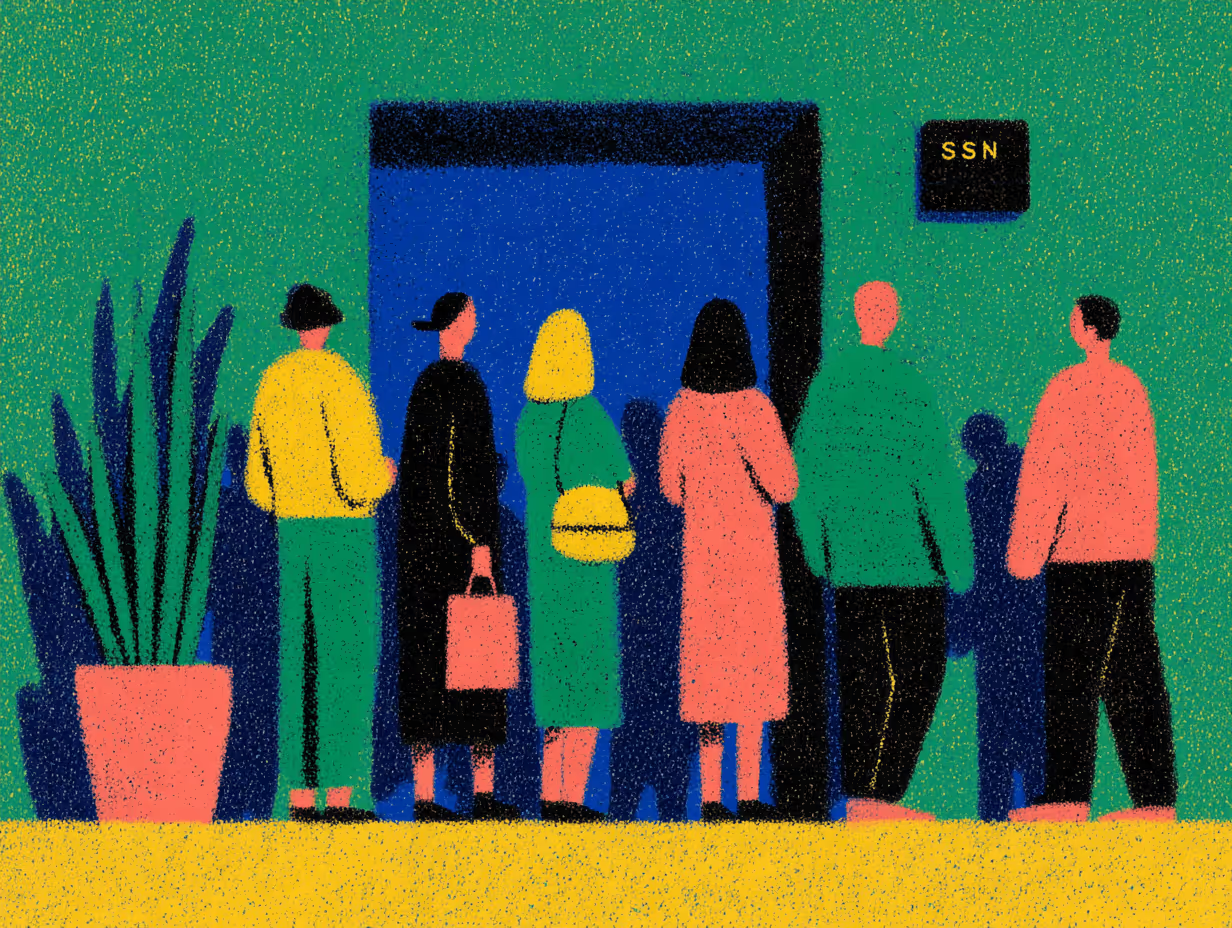
What is SSN? Everything you need to know if you are a resident in the U.S.
8 min de lectura
An SSN (Social Security Number) is a 9-digit number issued by the U.S. government. It is required for working legally, filing taxes, and accessing financial services in the United States. As an immigrant, you may apply for an SSN if you have an eligible visa or Green Card — or use an ITIN as an alternative. If you have newly arrived in the U.S., you likely have questions about how to handle certain procedures. Therefore, we will explain what the SSN is, what it is for, how to apply for it, how much it costs, and what the benefits are of having this identifier.
What is the Social Security Number (SSN)?
The Social Security Number (SSN) is a series of 9 digits issued by the Social Security Administration (SSA, or Administración del Seguro Social in Spanish). It is issued to citizens, permanent residents, and eligible temporary residents, in accordance with their immigration status.
Its main function is to serve as a unique identification number that allows the government to track specific data for each person, such as their income, financial information, and employment history. This makes it possible to determine, in each particular case, eligibility to access Social Security benefits such as retirement, disability, among others.
In addition to facilitating access to these benefits, the Social Security card serves as official identification for employment onboarding, driver’s licenses (in some states), and opening bank accounts.
How to obtain the Social Security Number in the United States?
An important point about the Social Security Number in the U.S. is that there are three different types:
- For citizens born in the United States
- For citizens born abroad
- For non-citizens with lawful resident status
In the case of lawful permanent residents, it is necessary to obtain a Green Card or a visa with valid work authorization issued by the Department of Homeland Security (DHS), such as H-1B or L-1.
The process of obtaining the SSN varies depending on immigration characteristics. If you requested the SSN during your visa processing—through the “Application for Immigrant Visa and Alien Registration” form or the DS-260 electronic format, “Immigrant Visa Electronic Application”—DHS will contact the Social Security Administration directly to carry out the process.
Get your SSN in just 4 steps
If you did not request the SSN during your visa process, the first thing you should do is gather the following documentation:
- A valid passport with the Machine Readable Immigrant Visa (MRIV) or a Permanent Resident Card (Form I-551)
- Birth certificate
Once you have gathered the documentation, follow these steps:
- Download and complete the SS-5 application
- Go to an SSA office
- Present the original documents
- Wait 7 to 14 days to receive the Social Security card by mail
What to do if your SSN card is lost?
If your Social Security card is lost, it is important to take security measures immediately to avoid identity theft, fraud, or misuse of your personal data.
Report the theft or loss of this document to the police and then file a complaint with the Federal Trade Commission (FTC).
Afterwards, go to the Social Security Administration, complete the SS-5 form again, and bring the corresponding documents for replacement of the card.
Avoid carrying the card with you unless necessary and keep it in a safe place. Generally, you do not need to present your physical card but rather the number, which does not change even if you replace the card.
5 benefits of having an SSN
If you are still wondering what the SSN is for, you should know that this document provides multiple benefits of different kinds, such as the following:
1. Employment
For permanent residents, the greatest benefit of the SSN is that it grants work authorization, enables income tracking, as well as the payment of taxes and legal obligations. Presenting this document is an indispensable requirement during formal hiring processes in the United States.
2. Credit
The SSN is also typically required to apply for loans and credit from banks and financial institutions in the United States; in this way you can access assets such as real estate, a car, or other types of services.
3. Banking services
Accessing financial services is essential for immigrant workers in the United States, whether to receive wages or send money to their countries of origin. Generally, the SSN is a requirement to access a bank account and credit and debit cards, among other services.
4. Government benefits
There are other benefits available, such as unemployment insurance in the event of dismissal, and access to retirement and Medicare starting at age 65, for eligible permanent residents.
5. Taxes
The SSN functions as the taxpayer’s personal identification number, which makes it easier to file tax returns and report income and expenses. Another alternative for residents who do not have an SSN is the ITIN, issued by the Internal Revenue Service (IRS), which serves to fulfill tax obligations and grants other benefits.
In short, the Social Security Number—beyond being an administrative procedure—facilitates economic and social integration in the United States because it serves to track income and expenses and facilitates access to basic rights such as work, health, and banking, which are essential for integrating into society.
How much does it cost to get an SSN?
It is important to clarify that the Social Security card process does not involve any cost, whether you do it for the first time or as a replacement due to theft or loss.
Stay alert to potential fraud and avoid making payments to unauthorized third parties. If you have any doubts, go directly to your local Social Security office and report any suspicious activity.
Read more: Don’t miss our guide to investment basics for immigrants
Simplify your financial life upon arriving in the United States with Comun
As you can see, the SSN is highly relevant to establishing a stable life in the United States because it facilitates access to work, health services, and financial products that are essential for carrying out daily tasks such as payments and money transfers.
Comun is a financial platform designed to make life easier for immigrants in the United States by facilitating their integration into the financial system from day one.
- Open your account with an official ID from your country of origin
- Receive a Visa debit card and make purchases easily in physical stores and online
- Access a mobile application and manage your finances from the palm of your hand
- Send remittances to your home country for a fee starting at $2.99 USD, up to the applicable limits
- Forget about hidden fees and complicated processes
- Access support available in Spanish and English
With Comun, discover the most accessible way to manage your finances for everyday life in the United States.
Frequently Asked Questions
If you still have questions, consult our Frequently Asked Questions section.
What should I do if someone uses my SSN without permission?
Report immediately at IdentityTheft.gov and place a fraud alert.
How many times can I replace my SSN card?
Up to 3 times per year and a maximum of 10 times in your lifetime.
Is it mandatory to have an SSN to open an account with Comun?
Comun allows you to open an account with official ID from your country.
Financial Education
How to Use ATMs Safely in the U.S.
8 min de lectura
To use ATMs safely in the U.S.: choose ATMs in well-lit locations and at reputable banks, cover the keypad when entering your PIN, inspect the card reader for unusual devices (skimmers), and use ATMs within your bank's network to avoid fees. Acting with caution can protect you from the most common ATM fraud.
ATMs are an essential financial tool in the United States. However, they are also a frequent target for fraud and theft. Knowing the best safety practices can make the difference between a secure experience and a financial nightmare.
Choose the ATM Carefully
Choosing the right ATM is the first step toward a secure transaction. Prioritize ATMs located inside banks or large supermarkets, in well-lit areas, and with visible cameras. Avoid ATMs in isolated or poorly lit areas, or those that appear to be in bad condition. ATMs from recognized networks such as Allpoint, MoneyPass, or your own bank offer greater security and generally no additional fees. Común gives you access to more than 55,000 fee-free ATMs in the U.S. through the Allpoint network.
Visual Inspection: Spot Skimmers
Skimming is one of the most common forms of ATM fraud. Skimmers are illegal devices placed over the card reader to copy your card information. Before inserting your card: gently pull on the card reader — if it moves or seems loose, do not use that ATM. Check that the keypad is not raised or has unusual components. Look for small cameras or strange objects near the keypad. If anything looks out of the ordinary, use another ATM and report the suspicious one to the bank.
Always Protect Your PIN
Your PIN is the key to your account. When entering it: cover the keypad with your free hand even if no one is nearby — there may be hidden cameras. Never share your PIN with anyone, including bank employees. Memorize it and do not keep it written down near your card. If you forget your PIN, call the bank; never use the first number that comes to mind because you could lock your card. Change your PIN periodically, especially if you suspect it has been compromised.
During the Transaction
While using the ATM: keep your distance from strangers — no one needs to be close to you while you are completing your transaction. Do not accept help from strangers, even if they seem friendly. Know the amount you need to withdraw before you arrive at the ATM. Put away your cash and card before walking away. Make sure the ATM returns your card before you leave. If the ATM "swallows" your card, contact the bank immediately (there is a number on the ATM or on your card).
How to Avoid ATM Fees
ATM fees can add up quickly. To avoid them: use ATMs within your bank's or financial institution's network. Común offers access to the Allpoint network with more than 55,000 free ATMs in the U.S. If you use an out-of-network ATM, expect to pay between $2.50 and $5 per transaction, plus whatever your bank charges. Plan your withdrawals — taking out a larger amount less often reduces the number of fees. Consider paying with a debit card at stores that offer fee-free cash back.
What to Do If You Have an ATM Problem
If the ATM does not give you the money but deducted it from your account: keep the receipt or take a photo of the screen. Contact your bank immediately (the number is on your card). The bank will investigate and generally resolves the issue within 10 business days. If your card is retained by the ATM: do not leave until bank assistance arrives (they have rapid-response technicians). If you must leave, call the bank immediately to report it and block your card.
Frequently Asked Questions About Safe ATM Use
How do I know if an ATM has a skimmer installed?
Skimmers usually protrude slightly from the original card reader, have a different color or texture, or move when pressed. On the keypad, look for an extra layer placed over the original keypad. They may also install small cameras disguised as decorations. If you have doubts, do not use that ATM and report it by calling the number on the ATM.
Is it safe to use ATMs at night?
It depends on the location. An ATM inside a 24-hour store or in a well-lit bank lobby is safe at night. Avoid outdoor ATMs in isolated areas or on lightly traveled streets at night. If you urgently need cash at night, prefer 24-hour stores that offer cash back when you pay with debit.
What should I do if I am robbed while using the ATM?
Your safety comes first: do not resist and hand over the cash if you are threatened. As soon as you are safe: call 911, contact your bank to block the card immediately, and file a police report. With the police report, you can start a dispute process with your bank to recover stolen funds in some cases.
Do I have a daily ATM withdrawal limit?
Yes, all banks have daily ATM withdrawal limits. The standard limit at most banks in the U.S. is $300 to $1,000 per day. Común has set limits that you can check in the app. If you need to withdraw more, you can do so at multiple ATMs or contact the bank to request a temporary limit increase.
Can I use my Latin American debit card at ATMs in the U.S.?
Yes, if it has the Visa, Mastercard, or Maestro logo, it will work at most ATMs in the U.S. However, the fees can be high: international fee from the issuing bank (1-3%), U.S. ATM fee ($3-$5), and a currency conversion rate. For regular use in the U.S., it is more convenient to open a local account like Común to eliminate these costs.

Checking account
What’s the difference between a savings account and a checking account?
8 min de lectura
Difference Between a Savings Account and a Checking Account
Need a safe, simple way to manage your money? It’s important to understand the different bank account types offered by U.S. financial institutions and digital platforms.
Two primary examples are savings accounts and checking accounts. While common in the U.S., they differ in important ways especially relevant when you’re new to managing money in a new country.
It’s easy to assume both accounts do the same thing. Below, we detail what each account is, the main differences, comparisons, and examples.
What is a checking account?
A checking account is one of the most popular financial products. It’s designed for frequent transactions: receiving pay, sending transfers, and paying at physical and online merchants.
These are the main benefits of opening a checking account:
- Allows frequent deposits and withdrawals.
- Includes a debit card for purchases.
- Makes bill payments and transfers easy.
- Ideal for day-to-day income and expense management.
- Access to mobile/online banking.
- Some still offer paper checks for secure payments.
What is a checking account used for?
A checking account has multiple functions, for example:
- Receive your paycheck via direct deposit—securely and quickly.
- Pay utilities like electricity, water, or internet.
- Make purchases online or in stores.
- Withdraw cash at ATMs or participating retailers.
- Send money transfers to others easily.
- Track your money in real time.
In short, this account type covers everyday needs with simple, accessible tools.
Here’s where you can learn about different checking account types and their features.
What is a savings account?
Unlike checking, a savings account is for setting money aside longer term and growing it through interest.
Advantages of a savings account:
- Fewer routine transactions; focused on building funds.
- Can earn interest on your balance.
- Useful for mid- to long-term goals.
- Generally limits monthly withdrawals.
- Ideal for an emergency fund or setting aside money for unexpected expenses.
Key differences between checking and savings
Though different, both accounts complement each other to cover short-, mid-, and long-term financial needs.
These are the main differences between them.
Access and usage
- Checking: money is available anytime for daily transactions—transfers, cash withdrawals, and bill payments via cards and digital channels.
- Savings: access is more limited because the goal is saving and growth; transfers are still possible.
Interest earnings
- Checking: most don’t pay interest; those that do tend to offer very low rates.
- Savings: the core feature is interest over time—protecting and growing funds without high-risk investing.
Learn about joint bank accounts, an excellent way to manage finances as a team.
Primary purpose
- Checking: mainly for short-term holding to cover daily expenses, receive wages, and make purchases with a debit card.
- Savings: to keep money safe and earn interest so it doesn’t lose value to inflation; a reserve for emergencies or long-term plans like trips, celebrations, or moves.
Costs and requirements
- Checking: many have monthly maintenance fees, often waived with a minimum balance or regular direct deposits.
- Savings: typically fewer fees than checking, but may require a minimum balance to avoid charges; some require keeping funds for a set period before withdrawal.
As you can see, the decision to open a checking or savings account depends on your needs. However, combining both is a strategic decision for financial management. On the one hand, a checking account allows you to keep up with daily payments, while a savings account is designed to plan for the future and keep your money separate.
Manage your money in the U.S. with Común
In this article, you learned the difference between checking (for daily transactions) and savings (for growing money over time to meet future goals).
Immigrants arriving in the U.S. need bank accounts that offer security and trust, yet often face hurdles due to strict requirements that disadvantage many in the community.
Meet Común, the checking account that understands immigrants’ needs!
Here are some benefits that await you:
- Checking account with clear, competitive fees.
- International money transfers with affordable costs.
- Mobile app also available in Spanish and accepts 100+ qualifying official IDs for account opening.
- Debit card for everyday purchases and payments.
Open your Común account today and organize your money in the U.S.
Frequently Asked Questions (FAQ)
If you still have questions, check out our FAQ section.
Which is better, checking or savings?
It depends on your needs. If you're looking for an account for everyday transactions, such as transfers and deposits, receiving paychecks, and making utility payments, a checking account may be an option. If you want to save your money for the long term, consider a savings account.
Can I have both checking and savings?
Yes, you can separate your goals and organize your money. Use a checking account that supports domestic and international transfers with clear, affordable fees, and keep a savings account to plan long-term.
Which account suits newly arrived immigrants best?
Común is a financial platform with accessible onboarding requirements and fair, competitive pricing.

Living in the United States
How to Make Money Fast in the United States
8 min de lectura
Earning extra money fast in the U.S. is possible through survey apps, flexible freelance work, or referrals. With Común's referral program, you earn a cash reward for every person you invite who opens an account.
Making money fast can be a necessity at any point in life, and for Latinos in the United States it can be an even greater challenge. But don’t worry, in this post we’ll give you some ideas and tips so you can make money quickly and improve your financial situation.
1. Find temporary jobs
Temporary jobs are a good option for making money quickly. Many companies hire temporary workers to cover demand during certain times of the year, such as the holiday season or tax season. Look on job websites like Indeed, Glassdoor, or Monster to find temporary jobs in your area.
2. Become a rideshare driver
If you have a car and a valid driver’s license, consider becoming a rideshare driver for services like Uber or Lyft. These services let you work on your own schedule and make money quickly. Plus, you can work as much or as little as you want.
3. Sell your skills
If you have skills you can sell, such as computer repair, graphic design, or language teaching, you can use online platforms like Fiverr or Upwork to connect with people who need your services. These platforms charge a commission for each completed job, but you can set your own prices and work on projects based on your availability.
4. Do yard work or cleaning jobs
Many people need help with yard work or cleaning, and this can be a good option for making money quickly. You can offer your services in your neighborhood or on websites like Craigslist. Make sure you have the right equipment and a good attitude to win regular customers.
5. Sell items you no longer need
Selling items you no longer need is a quick way to get extra cash. You can sell them online through websites like eBay or Amazon, or in person at a garage sale or flea market. If you have valuable items you no longer use, this can be an excellent option for making money quickly.
Remember that these are just some ideas for making money quickly. You can also look for jobs in the hospitality or customer service industry, offer house cleaning services, or take online surveys to earn extra money. The important thing is to find an option that fits your skills and needs.
Remember to connect your Común account to your job so you can receive your pay as quickly as possible — up to two days early. In your Común checking account, you can keep the income from your work at no cost and with the highest possible security.
Común debit cards are compatible with more than 57,000 ATMs in the United States for deposits and withdrawals, and they include Visa’s zero-liability protection policy. This means that any unauthorized charge will not be deducted from the balance in your checking account. Likewise, your bank account is insured by the FDIC up to $250,000 like any other legal bank.
Good luck!
How can I earn extra money fast?
Paid survey apps, flexible freelance work (driving, deliveries, task apps), and financial app referral programs are common ways to generate extra income without a full-time job.
How does Común's referral program work?
Invite someone with your unique link from the app's home screen. When that person opens a full debit account and completes their first qualifying outflow, you both receive a cash reward — credited to your account within 5 days.
How much can I earn by referring people?
The reward amount can vary based on the current promotion; check the active terms inside the referral section of the app.
Frequently asked questions
Do I need to do anything special to join Común's referral program?
Just share your unique link from the referral button on the app's home screen — referrals outside that link don't qualify.
When do I get my reward for referring someone?
Within 5 calendar days after your referral completes a First Qualifying Outflow.
Is there a limit to how many people I can refer?
The current terms and conditions detail the limits; check them in the app before sharing broadly.
What happens if my referral doesn't complete the process?
The reward is only credited if the referral opens the account, gets approved, and completes a First Qualifying Outflow.
Can I refer myself with another account?
No, self-referral and fraudulent or abusive activity aren't eligible for rewards.
What other quick ways exist to generate income besides referrals?
Paid survey apps and flexible freelance work are other common options, though they typically generate less than a primary income.

International Money Transfers
How long does an international money transfer take? Business days, time zones, and type of transfer
8 min de lectura
If you need to send money to your home country from the United States, it is important to consider how long an international money transfer takes. In general, the processing time for this type of operation is usually 1 to 5 business days.
However, this depends on several factors, such as the payment system, the banks involved, the currency conversion, and the holidays in between.
That is why it is important to know the different types of international money transfers available, the advantages and disadvantages of each one, and, of course, how long they take to deliver the money to its destination.
Below, we offer you a guide to answer those questions so you can send money home as quickly and safely as possible.
What is an international money transfer and how long does it usually take?
First of all, an international transfer is the sending of money to a bank entity located outside the country of the originating account. Unlike domestic transfers, international transfers involve additional banking systems, such as the SWIFT networks, which can increase costs and processing times in many cases.
There are several factors that influence the total time an international money transfer takes, but in general, it takes 1 to 5 business days.
For example, one relevant aspect that influences this is the system used, whether SWIFT or SEPA, which have different conditions and characteristics.
SWIFT Transfers
The SWIFT system is the largest network: it connects thousands of traditional banks worldwide to send money from one country to another through secure mechanisms.
Characteristics of the SWIFT system
- In general, it takes 3 to 5 days to complete money transfers.
- The involvement of intermediary banks is common, which can generate additional fees.
- It is useful for sending money in different currencies, although it implies disadvantages in time and costs.
- To use this system, check the SWIFT code of the receiving bank.
SEPA Transfer
On the other hand, the SEPA system is focused on international money transfers within the European Union.
Characteristics of the SEPA system
- International money transfers are usually completed in 1 business day.
- Fees are more affordable compared to the SWIFT system.
- This system works exclusively in the SEPA area, and for transactions in euros.
As you can see, both the SWIFT and SEPA systems are useful for making international money transfers safely. Although for those living in the United States, the latter is not recommended due to its geographic limitations.
Here is a comparison table:
| SWIFT | SEPA | |
|---|---|---|
| Time | 3 to 5 business days | 1 business day |
| Cost | Expensive, due to the involvement of intermediaries | Affordable |
| Geographic availability | Worldwide | Exclusively in Europe |
Factors that influence the time of an international money transfer
The time an international money transfer takes is not fixed. It varies according to the type of transfer and other elements involved in the operation.
Here is what you need to know to estimate how long it will take for your money to reach your loved ones.
Payment system
So far, we have presented the SWIFT system, which takes 3 to 5 business days, and SEPA, which is generally reflected the next business day.
In addition, there are ACH (Automated Clearing House) transfers, which are a more common system in the U.S., characterized by being a more economical option, although the process usually takes 2 to 3 business days.
Intermediary banks
There are cases in which the financial institutions participating in an international money transfer do not have a direct relationship with each other, so they need to involve intermediary banks. This, in addition to increasing costs, lengthens transfer times, because it makes the operation take longer than usual.
Cut-off times and business days
Another essential aspect is the cut-off time banks have for executing transactions. If you send money after this time, the operation is processed the next business day.
Also, do not forget to take into account the holidays of both the sending country and the receiving country, which also extend the waiting time.
Currency conversion and destination country
When sending money from the United States to your home country in Latin America, the bank will need to make the corresponding currency exchange and apply an exchange rate. This also usually adds time to the international money transfer process.
Security verifications and compliance controls
Banks often carry out security checks to prevent money laundering and fraud, especially when large amounts are involved.
What information do you need to make an international money transfer?
You are almost ready to start sending money abroad. But first, it is very important that you make sure you have the necessary information to process this type of transfer. Otherwise, the transfer could be rejected or take longer than usual.
Sender’s information
You will need to provide your basic personal information: full name, bank account, official address, and phone number.
Beneficiary’s information
It is also essential to provide the details of the person who will receive the money: full name, recipient’s account number, address, and country of origin.
Bank codes
- IBAN: for transfers within the European Union.
- SWIFT/BIC code: for transfers in most of the world, including the United States.
Amount and currency
Indicate the amount of the transfer and the currency in which it will be received.
Purpose or payment reference
Finally, indicate the purpose of the transfer. It may be: maintenance payment, family support, family savings, etc.
How can you speed up an international money transfer?
We know that sending money to your family and loved ones is very important, which is why it is vital that you avoid mistakes and bad practices that could delay your transfers even more.
- Verify that the beneficiary’s details are complete and correct: check that your recipient’s details are written as they appear on their official identification.
- Make the transfer before the bank’s cut-off time: remember that doing it after this time causes the transfer to be processed the next business day.
- Avoid sending money on weekends or holidays: try to send money on business days to avoid delays.
- Consider using specialized remittance services with faster processes: there are alternative services that offer better conditions than traditional banks.
Make your international money transfers quickly and safely with Común
This time, we learned that international transfers are money transfers made from one country to another, and there are several factors involved in the time they take to be completed.
Are you looking for a way to send money home without complications?
Discover Común, the digital platform that connects you with your family through a service that understands your needs.
Make your first international money transfer, forget about hidden fees, and get transparent rate so your loved ones receive more for less.
Frequently Asked Questions (FAQ)
If you still have questions, check our FAQ.
What is the average time of an international money transfer?
Approximately 1 to 5 business days.
Why do some transfers take longer than usual?
It depends on the system used, the involvement of intermediaries, the currency exchange, and other factors. That is why you should make sure to check the estimated time before sending your money, to see if it fits your timing and needs.
Can I send money on weekends?
Yes, but it will be processed the next business day in most cases.
Financial Education
Overdraft Fees on Bank Accounts: How to Manage and Avoid Them
8 min de lectura
How Does an Overdraft Happen on a Bank Account?
Overdrafts happen for various reasons. Sometimes it's an accidental oversight — maybe you forgot about an automatic payment or miscalculated your available balance. Common reasons include unexpected expenses, delayed direct deposits, or simply losing track of your spending. Understanding these causes can help you avoid overdrafts and keep a positive account balance.
What Are the Consequences of Overdrafts and Overdraft Fees?
Overdrafts can be more than just a hassle — they often come with substantial overdraft fees. Financial institutions typically charge an overdraft fee for each transaction that overdraws your account. Some banks only charge overdraft fees if a customer overdraws by a certain amount, or provide grace periods where no fees are charged if the customer replenishes their account quickly after an overdraft. These fees can add up fast if you're not careful.
Additionally, overdrafts can disrupt your financial health. They can lead to a negative balance, making it harder to cover transactions for essential needs and future purchases. If you overdraft frequently, it could even affect your credit score, which could impact your ability to get loans or other financial products in the future. Frequent overdrafts can also result in multiple overdraft fees, further compounding your finances.
Tips to Avoid Overdrafts
Avoiding overdrafts is about being proactive. Here are some practical tips:
Keep an Eye on Your Spending: Keep a close watch on your account balance and transactions. Use online banking or mobile deposit apps to monitor your spending in real time.
Set Up Low-Balance Alerts: Most banks offer low-balance alerts that notify you when your available funds are low. Setting up these alerts can give you a heads-up before an overdraft happens.
Keep a Cushion: Try to keep a cushion of extra funds in your checking account. Even a small cushion can prevent overdrafts caused by unexpected expenses.
Link to Savings: Consider linking your checking account to a savings account. This way, if your checking account runs out of funds, money can be automatically transferred from your savings to cover the shortfall.
Monitor Pending Transactions: Be aware of any pending transactions that aren't yet reflected in your account balance. This includes debit card transactions and automated payments. Making sure you have enough money in your account to cover pending transactions can help avoid overdrafts.
Set Up Direct Deposit: Setting up direct deposit can help maintain a minimum balance in your account, potentially avoiding monthly maintenance fees and other charges. Direct deposit can also be an option for waiving certain fees offered by banks.
Learn how to manage your bank account
Managing an Overdraft if It Happens
Sometimes, despite your best efforts, an overdraft can happen. Here's what to do if it happens to you:
Act Quickly: As soon as you realize you've overdrafted, deposit or transfer money into your account to cover the negative balance. Having enough money in your account to cover transactions is crucial to avoiding further overdrafts. This can minimize fees and prevent additional transactions from causing more overdrafts.
Contact Your Bank: Reach out to your financial institution's customer service. They may waive the overdraft fee if it's your first time or if you have a good banking history.
Review Your Spending: Look at what caused the overdraft and adjust your budget to avoid repeating the mistake. Consider setting up stricter monitoring or additional alerts to stay on top of your account balances.
Pay Off Overdrafts Promptly: Make sure any overdrafts and associated fees are paid off as soon as possible to avoid additional fees or returned transactions.
Scams That Can Result in Overdrafts
Beyond the usual causes of overdrafts, like accidental spending or unexpected expenses, there are numerous scams that can lead to overdraft situations. These scams often involve fraudulent checks and deceptive tactics that drain your account, resulting in negative balances and multiple overdraft fees. Here are some common scams to be aware of to protect your financial health.
Online Purchase Scams: In online purchase scams, scammers pose as legitimate buyers or sellers in online marketplaces. A scammer might send a check as payment for an item you're selling, which then bounces after you've shipped the item. Alternatively, you might receive a check for a purchase you made, only to find out it's fake, leading to an overdraft when the funds are withdrawn from your account.
Phishing Scams: Phishing scams involve scammers sending emails, texts, or phone calls posing as a bank or other trusted entity. They trick you into providing your account information, which they then use to withdraw funds or write fraudulent checks. This can lead to overdrafts if your account is drained without your knowledge.
Charity Scams: Scammers often exploit goodwill by posing as charitable organizations, especially during times of crisis. They send checks as a "refund" for a previous donation or as an overpayment, asking you to return part of the money. The check bounces, and you end up with an overdraft and lost funds.
Advance Fee Scams: In advance fee scams, scammers promise large sums of money, like lottery winnings or an inheritance, in exchange for a smaller upfront fee. They send a check to cover the fee, which you deposit and then send back the "fee." The check bounces, causing an overdraft and a loss of the amount sent.
Fraudulent Refund Scams: Scammers contact you claiming to be from a company you recently did business with, claiming there was an overpayment or billing error. They send a check and ask for a partial refund. When the check bounces, you're left with an overdraft and out-of-pocket expenses.
Romance Scams: In romance scams, scammers build a fake relationship with their victims, often online. Eventually, they ask for money, sometimes sending a check first to "prove" they're legitimate. When the check bounces, the victim is left with an overdraft and the emotional and financial fallout of the scam.
Contractor Scams: Fake contractors offer services like home repairs or improvements. They ask for an upfront payment, often sending a check as partial payment. Once the check bounces, you're left with an overdraft and no completed work.
Job Offer Scams: Scammers offer fake jobs and send a check for equipment or initial expenses, asking you to send back a portion. When the check bounces, you're left with an overdraft and no job.
Travel Scams: In travel scams, scammers offer discounted trips or vacation packages. They send a check for supposed travel expenses, asking you to send part of it back or to another party. The check bounces, leading to an overdraft and no vacation.
Using Overdraft Protection Services
Overdraft protection generally involves linking your checking account to another account, like a linked savings account or a line of credit. If you overdraft your checking account, funds are automatically transferred from the linked account to cover the transaction.
The main advantage is avoiding the high fees associated with overdrafts. However, there may be a transfer fee for the overdraft protection itself, and it can encourage spending beyond your means if not used responsibly. Not all overdraft protection plans are the same. Carefully review the terms and conditions, and choose one that fits your habits and financial needs. It's important to understand the overdraft coverage options provided by your financial institution. Look for services that offer coverage for debit card purchases, ATM transactions, and other charges associated with insufficient funds. Financial institutions play a crucial role in offering these services.
Using the right tools can make managing your finances much easier and help you avoid the stress of overdrafts. Común.app is designed to help you stay on top of your finances with features that can help prevent overdrafts.
- Real-Time Balance Monitoring: Común.app provides real-time updates on your account balances, ensuring you always know how much money you have available.
- Low-Balance Alerts: Set up low-balance alerts to get notified when your funds are running low, helping you avoid overdrafts before they happen.
- Automatic Transfers: Link your checking account to your savings account within Común.app to enable automatic transfers. This way, if your checking account balance gets too low, funds can be transferred from your savings to cover transactions.
- Spending Insights: Común.app offers insights into your spending habits, helping you identify areas where you might be overspending and need to cut back to maintain a positive balance.
By integrating Común.app into your financial routine, you can take proactive steps to manage your money effectively, avoid overdraft fees, and keep your account in good standing.
Conclusion
Overdrafts on bank accounts can be a significant financial burden, but with the right knowledge and tools, you can effectively manage and avoid them. Understanding what overdrafts are and their potential consequences is the first step toward proactive financial management. Even if an overdraft happens, acting quickly, contacting your bank, and reviewing your spending habits can help minimize the impact and prevent future issues. Additionally, being aware of various scams that can lead to overdrafts, like online purchase scams, phishing scams, and advance fee scams, can protect you from falling victim to these fraudulent schemes.
Using tools like Común can further simplify your financial management. With features like real-time balance monitoring, low-balance alerts, automatic transfers, and spending insights, Común.app helps you stay on top of your finances and avoid the stress of overdrafts. By incorporating these strategies and resources into your financial routine, you can maintain a healthy account balance, avoid unnecessary fees, and ensure your financial well-being.
Conclusión
Los sobregiros en cuentas bancarias pueden ser una carga financiera significativa, pero con el conocimiento y las herramientas adecuadas, puedes gestionarlos y evitarlos eficazmente. Entender qué son los sobregiros y sus posibles consecuencias es el primer paso hacia la gestión financiera proactiva. Incluso si ocurre un sobregiro, actuar rápidamente, comunicarte con tu banco y revisar tus hábitos de gasto puede ayudarte a minimizar el impacto y prevenir problemas futuros. Además, ser consciente de varias estafas que pueden llevar a sobregiros, como estafas de compras en línea, estafas de phishing y estafas de tarifas por adelantado, puede protegerte de caer víctima de estos esquemas fraudulentos.
Usar herramientas como Común puede simplificar aún más tu gestión financiera. Con características como monitoreo de saldo en tiempo real, alertas de saldo bajo, transferencias automáticas y perspectivas de gastos, Común.app te ayuda a mantenerte al tanto de tus finanzas y evitar el estrés de los sobregiros. Al integrar estas estrategias y recursos en tu rutina financiera, puedes mantener un saldo saludable en tu cuenta, evitar tarifas innecesarias y asegurar tu bienestar financiero.

Living in the United States
Learn about the 11 U.S. holidays and how they affect you
8 min de lectura
Starting a life in the United States means adapting to a new culture and customs that can interfere with everyday activities such as going to school, working, and carrying out important banking transactions.
Knowing the month-by-month celebrations in the United States lets you plan ahead—especially if you need to send remittances to your home country, plan trips, or make important payments.
This guide explains the main U.S. holidays, the differences between state and federal holidays, and how they affect work, school, and banking hours.
What are holidays in the United States?
U.S. holidays are special dates commemorating historical or cultural events. They may be observed at the federal or state level.
- Federal holidays
These are declared by the federal government. On these dates, banks, government offices, and federal services close. One example is Independence Day.
- State holidays
These are declared by state governments and apply only within that state.
Labor laws do not mandate overtime or premium pay on holidays, but some employers offer holiday pay.
Time off is only mandatory for federal employees; in the private sector it depends entirely on the employer. In some industries—such as tourism and hospitality—it’s common to work on holidays, with compensation determined by the company.
List of national holidays in 2025
There are 11 federal holidays in the United States to keep in mind. On these dates, banks and government offices typically close. This can delay remittance transfers.
Be sure to schedule transfers in advance so they don’t overlap with U.S. holidays and your money arrives without issues.
New Year’s Day – January 1
Celebration of the start of the year. Banks and public offices remain closed.
Martin Luther King Jr. Day – third Monday in January
Honors the memory of civil-rights leader Martin Luther King Jr.
Presidents Day – third Monday in February
Commemoration honoring George Washington and all U.S. presidents.
Memorial Day – last Monday in May
Commemorates members of the Armed Forces who died in service.
Juneteenth – June 19
Marks the end of slavery in the United States.
Independence Day – July 4
Celebration of the Declaration of Independence. One of the most important holidays.
Labor Day – first Monday in September
Celebration dedicated to the nation’s workers.
Columbus Day – second Monday in October
Marks Christopher Columbus’s arrival in the Americas in 1492.
Veterans Day – November 11
Commemoration recognizing all who served in the Armed Forces.
Thanksgiving Day – fourth Thursday in November
A family tradition dedicated to giving thanks for the harvest and the good moments of the year.
Christmas Day – December 25
The birth of Jesus; a widely observed religious and cultural celebration.
How holidays impact immigrants and families
Knowing what’s celebrated today in the United States helps you plan your day and be aware of possible workplace benefits you might be eligible for.
Work:
If you work in sectors such as hospitality, restaurants, or cleaning, you may have to work on holidays. Ask your employer whether double pay, shift changes, or other compensation applies.
Finances:
On federal holidays, banks and post offices close, which can delay financial operations such as deposits and international transfers. If you need to send money to family, do so before these dates.
Schools and procedures:
Public and private schools close on federal holidays. USCIS staff also do not work, so immigration processes are delayed.
Tips to organize your money and time
Don’t let holidays catch you off guard. Set aside a monthly budget for travel, daily expenses, and other activities.
Keep a payment calendar that accounts for holidays so you can make payments without setbacks.
Culturally important celebrations in the U.S. for immigrants
Beyond official dates, there are others that matter culturally to immigrant communities. They may not significantly affect institutions or businesses, but they’re still worth noting if you plan to budget for a celebration.
Battle of Puebla – May 5
A date that has also gained relevance among U.S. residents. Although many mistakenly link it to Mexico’s Independence Day, it actually commemorates victory over the French army.
Mother’s Day
In the U.S. it’s observed on the second Sunday in May, though immigrant communities may choose the customary date in their countries of origin.
Father’s Day
Observed on the third Sunday in June, though it can vary. It’s a day of family togetherness for many immigrants.
Halloween – October 31
A tradition that crosses borders; it’s very popular among immigrant communities who enjoy dressing up and having fun with kids.
Valentine’s Day – February 14
A popular holiday to celebrate love and friendship, spend time together, and give and receive gifts.
Day of the Dead – November 1–2
A Mexican tradition honoring the departed through altars, food, flowers, and music.
Organize your finances on holidays and send your money with Común
This article outlined the U.S. holidays and how they affect public and private operating hours.
Holidays shouldn’t keep you from meeting your financial obligations. Make sure you have an ally to help you plan your budget.
Get to know all the benefits of Común!
Transfer money from the United States to Latin America with clear, competitive fees, up to applicable limits (check terms in Común’s mobile app).
Discover the platform designed for immigrants—with shared interests, language, and goals: bringing families closer through accessible, secure financial solutions.
Open your Común checking account today and manage your money in the U.S. safely and without complications.
Frequently Asked Questions (FAQ)
If you still have questions, see this section.
What happens with banks and remittances on holidays?
On national holidays, banks and post offices are closed. This means money transfers can take 1–2 extra days to complete.
Do all workers receive extra pay on holidays?
The law doesn’t require double pay on holidays, but some employers offer this benefit.
What are the most important holidays for the immigrant community?
For immigrant communities, the most relevant holidays include Christmas, Mother’s Day, and the Day of the Dead, among others.





Thousands of immigrants are already achieving more with their money. You can too.
Comun is a financial technology company and not a bank. Banking services are provided by Community Federal Savings Bank; Member FDIC. The Comun Visa® Debit Card is issued by Community Federal Savings Bank, pursuant to a license from Visa U.S.A Inc. and may be used everywhere Visa Cards are accepted.
Comun is a fintech company and not a bank or licensed money transmitter.
* Results may vary. For a complete list of eligible IDs and application requirements, follow this link.
^ No minimums, no maintenance fees. ATM or transfer fees may apply. See app for fee details.
‡ Direct deposit funds are typically available when we receive the payment file, up to two days before the scheduled payment date. This early availability is not guaranteed.
** A service provided by Service UniTeller, Inc. Service UniTeller, Inc. is licensed in all states that require a license. Remittance fees start at $2.99 but may vary. Please check the app for more details. Comun Inc. may earn revenue from the conversion of foreign currencies.
† Funds in your account are FDIC insured up to $250,000 by ownership category through Community Federal Savings Bank (CFSB), Member FDIC, in the event CFSB fails.