International Money Transfers
How to Send Money to Mexico? Everything You Need to Know
Learn how to send money to Mexico with Comun.
8 min read

.avif)
For immigrants living in the United States, having accessible financial services that allow them to send money to Mexico and other countries in the region is of utmost importance; this is to financially support family and friends or achieve a better standard of living. Remittances have acquired such importance in the Mexican economy that, according to Reuters data, Mexico is the second-largest recipient of remittances worldwide, only after India, with more than 64.7 billion USD during 2024. It is fundamental for immigrants to know how to send money to Mexico from the United States securely, quickly, and at a low cost.
On this occasion, we will show you the best applications for transferring money to your loved ones, how they work, and all the benefits of each of them so you can choose the option that best suits your needs.
How much money can I send to Mexico?
A very important aspect you should consider is the amount allowed by applications for sending money to Mexico, as well as the restrictions in their terms and conditions.
In general, there is no legal limit imposed by the United States government, but each platform has its own standards and regulations on which they base certain limits and guidelines necessary for international money transfers.
For example, these are some of the best-known providers that offer money transfers to Mexico, with their respective limits:
- Western Union: up to 5,000 USD per transaction via the website
- MoneyGram: up to 10,000 USD per transaction
- Xoom: up to 10,000 USD per transaction
If you are looking for an easy way to send money to Mexico, Comun is an excellent alternative for you. You can enjoy your first money transfer for free, and then for a fee starting at 2.99 USD per transfer up to the applicable limits.
Additionally, your recipient can receive more for less due to highly competitive exchange rates compared to other similar applications.
Compare and choose the most convenient option to send money.
What's the best way to send money from the United States to Mexico?
There are several ways to send money from the United States to Mexico, either through traditional banks or specialized international money transfer services.
These are the simplest ways to do it:
Through bank-to-bank money transfers
One of the most common ways to send money is through bank transfers from one traditional bank to another. The advantage of this method is that it is safe, as it has the backing of official financial institutions. However, they also tend to take longer and generate more fees.
To send funds through this method, it is essential to have a U.S. bank account and use the recipient's SWIFT code. The cost of the money transfer depends on the receiving bank, in this case, located in Mexico.
For example, BBVA charges 30 USD plus VAT per transfer, Santander between 15 and 20 USD plus VAT, and Citi Banamex 20 USD plus VAT, all regardless of the amount sent.
Through cash remittances
Another option, which might be more accessible for users without a bank account, is cash remittances that can be collected at different points in Mexico. To send money in cash, it is necessary to go to a provider that offers this type of service, for example, a Western Union office. Once there, you must pay the amount to be sent, plus the fee assigned to the amount.
For your relatives to collect the funds from this transaction, they must present an official identification at one of the selected branches, which can be Oxxo, Banco Azteca, Walmart, or others. Although it is an excellent alternative for people who base their finances on cash handling, it may have certain disadvantages, such as high fees that depend on the amount sent, as well as a less competitive exchange rate.
Through mobile application
The third option for sending money to Mexico is through a mobile application specialized in international money transfers. There are many alternatives compatible with iOS and Android, and, in general, they are more economical than cash remittances or bank transfers.
To access these types of transfers, it is necessary to create an account on the provider's website or application. Additionally, some require identity verification through personal data such as the SSN (Social Security Number) or ITIN.
Before choosing an application to send money to Mexico, we recommend comparing the best-known options and evaluating which one best suits your needs and those of your family members.
The 6 best mobile applications for sending money to Mexico from the United States
| Name | Cost per transfer | Speed | Transfer limits | Additional features | Coverage |
|---|---|---|---|---|---|
| Venmo | Free or 3% if using credit card | Up to 1 day | Up to $299.99/week (unverified) Up to $60,000/week (verified with SSN or ITIN) |
Works as a social payment network. Online and in-store purchases. | U.S. |
| Zelle | Free (some banks may apply fees) | Minutes | Approx. $500/day (varies by bank) | Integrated into most U.S. banks | U.S. |
| Cash App | Free or up to 1.75% for instant transfers | Up to 2 days | Up to $7,500/week (verified) | Free debit card (Cash Card) | U.S. |
| Comun | Free in the U.S. or starting at $2.99 for international transfers | Instant or within minutes (average 8) | Up to $9,999/month* | Allows account opening with official ID, no SSN/ITIN required | U.S. and Latin America |
| Western Union | Between $3 and $30 (depending on amount, country, and method) | Immediate to several days | Up to $5,000 online | Cash transfers and withdrawals with broad coverage | 200+ countries |
| Remitly | Up to $10 (depending on speed) | Up to 5 days | From $3,000/month (depending on verification) | Home delivery option | 100+ countries |
| Wise | Variable fee (exchange rate and amount) | Up to 2 days | Up to $5,000/month | Multi-currency account | 70+ countries |
| Revolut | Free between Revolut users or ~5% for international transfers | Up to 2 days | Depends on country and currency | Automatic savings and financial analytics | U.S., Europe, LATAM, Asia |
| PayPal | Free local / ~3.95% + fixed fee for international transfers | Up to 1 day | Up to $10,000 per transfer (verified accounts) | Allows linking multiple payment methods and receiving money | 200+ countries |
Comun
Comun is a convenient option for immigrant workers in the United States, as it is specially designed to understand their needs. Comun offers a promotional fee-free first transfer and then a fee starting at 2.99 USD per transfer up to the applicable limits.
Additionally, you can access different payment methods and a very competitive exchange rate, so your family receives more for less at over 100,000 pickup locations.
Your Comun account gives you access to a mobile application and a debit card. Furthermore, your money transfers are applied in a matter of minutes.
Remitly
Remitly is an app that allows international money transfers. It is easy to use and offers various payment methods, such as debit or credit card or bank account. The sending time depends on the type of fee selected, either express, which is instant, or standard, which takes up to 5 business days.
It also offers a competitive exchange rate.
BOSS Revolution
BOSS Revolution is an easy and accessible money sending alternative. It has a limit of 2,999 USD, so it is geared towards small transactions. It accepts bank card and cash as payment methods, and money transfers are completed in minutes.
WorldRemit
WorldRemit is another alternative for easily sending money to Mexico. It offers a wide variety of payment methods, such as bank account transfers, cash pickup, and recharges. It has fees starting from 1.99 USD, but the exchange rate includes a margin of 1% to 2%, which affects the total amount to be received.
Western Union
Western Union is one of the most popular services for international money transfers. It has wide coverage, which facilitates access for people living in rural or remote areas. It allows sending money from banks, application, and website, and the money can be received in cash or in a bank account. The disadvantage is that fees are usually higher than other alternatives, and the exchange rate is less competitive with respect to the market, which affects the total amount to be received.
Félix Pago
Félix Pago is an innovative option that allows low-cost money transfers vía WhatsApp. It is a good option for small money deposits, although it does not offer functionalities such as account opening and a debit card, which could represent an obstacle for users seeking more complete alternatives.
How to send money to Mexico with Comun?
With Comun's international transfers, also known as Remittances, you can send money abroad to your family and friends from your Comun mobile application at a low cost and without leaving your home.
To make a transfer to Mexico, follow these steps:
- Enter your Comun mobile application.
- On the main page, select "Send a Remittance."
- Select the recipient to whom you wish to send the international transfer.
- You can register a recipient with their bank details, such as their full name, bank name, and cell phone number.
- After registering the recipient, enter the amount you wish to send and review the transaction costs.
- Confirm the data and select "confirm international transfer."
- The recipient should receive the international money within minutes.
- If you selected in-store pickup, the person can go to the store to pick up the money 30 minutes after confirming the transaction.
- You can check the status of the international transfer in your Comun mobile app by clicking on the movement.
You can send money to Mexico for a fee starting at $2.99 per transaction, up to the applicable limits.
Send money to Mexico easily and securely with a reliable mobile app
As you can see, sending money to Mexico has never been easier or more accessible. There are several remittance services that offer different competitive advantages, so it is convenient to compare fees, exchange rates, sending limits, among other features. The option indicated for you is a safe and fast alternative that speaks your language.
Comun allows you to open an account with your country's official documentation and send money home. Open your account today, send money to Latin American countries, and discover the most accessible side of finances.
Disclosures (in footer)
“Comun is a financial technology company and not a bank. Banking services are provided by Community Federal Savings Bank; Member FDIC. The Comun Visa® Debit Card is issued by Community Federal Savings Bank, pursuant to a license from Visa U.S.A Inc. and may be used everywhere Visa Cards are accepted.”
“Funds in your account are FDIC insured up to $250,000 by ownership category through Community Federal Savings Bank (CFSB), Member FDIC, in the event CFSB fails.”
“A service provided by Service UniTeller, Inc. Service UniTeller, Inc. is licensed in all states that require a license.”
“Remittance fees start at $2.99 but may vary. Please check the app for more details.”
“Comun Inc. may earn revenue from the conversion of foreign currencies.”
About Común
Común aims to support the Latino community in the United States. It offers a debit account that can be opened with more than 100 valid Latin American IDs and an app available in Spanish.
Visit Común's website or download the app for free to learn more about the full offer and applicable terms.
Olivia Rhye
Community Partner

Financial Education
Digital Banks in the United States: How to Open Your Account Easily and Quickly
8 min de lectura
Digital Banks in the United States: A Clear Guide to Opening Your Account
Having access to affordable financial services with features that let you carry out multiple operations in one place is essential for immigrants living and working in the United States.
Digital banks are a comprehensive solution that combines financial management with mobile technology to streamline processes compared with traditional banks.
These features are especially beneficial for immigrants looking for an alternative to access services that are often less feasible through institutions with physical branches.
In this guide, we explain why you should consider integrating digital banking into your lifestyle, how to open an account, and options for digital banks in the United States.
What Is a Digital Account and How Does It Work?
A digital account is a financial product that operates entirely online through mobile applications and digital platforms (website), removing the need to travel to a physical location to complete banking operations.
Here are some benefits of digital accounts.
- Mobility and 24/7 access from anywhere: they are not limited to teller hours and allow transactions at any time and place.
- Convenience for making payments and international money transfers: they allow sending money within and outside the country quickly.
- Security and transaction control from the app: they include safeguards to prevent misuse of personal data and crimes such as fraud.
How to Open a Digital Account in the United States Step by Step
Opening a digital account is usually simpler than with traditional financial institutions—not only because it can be done from a mobile device, but also due to flexible requirements that allow immigrant communities to access financial services with the same quality standards.
These are the steps to open a digital account in the United States.
Required Documents
Unlike traditional banking services, you can open a digital account with documents you use day to day.
- Official identification from your home country (valid passport, consular ID, driver’s license).
- In some cases, proof of address in the United States.
Account Opening Process
Once you have your documents ready, follow these steps.
Step 1. Register on the digital platform/mobile app.
Go to the digital bank’s website or mobile application of your choice and enter your personal information to register.
Step 2. Identity Verification and Approval.
For security reasons, digital banks require an identity verification process that includes submitting an official ID, a selfie, and, in some cases, facial recognition.
Step 3. Account Activation and Access to the Mobile App.
Once the digital bank verifies your identity, you’ll receive an activation notice. Immediately afterward, you can access all services, set up direct deposits, send money in real time, and manage your finances.
U.S. Financial Platforms Recommended for Immigrants
If you’re wondering which digital platform for immigrants is ideal, there are several effective options, so it’s best to compare them and choose the one that best fits your expectations.
Común
Fees: Affordable fees for international money transfers to Latin America.
Ease of use: Open an account from a mobile device with a qualifying official identification from your home country.
Spanish support available: offers 24/7 customer service also available in Spanish via WhatsApp or the mobile app itself.
Mobile access: you have access to a mobile app for comprehensive financial management.
Zelle compatibility: not integrated.
Ally Bank
Fees: most accounts do not charge monthly maintenance fees. Approximately $20 for domestic wire transfers.
Ease of use: a 100% digital platform offering a mobile application and a website.
Spanish support: limited Spanish-language service.
Mobile access: service compatible with mobile devices.
Zelle compatibility: integrated.
Wells Fargo
Fees: maintenance and overdraft fees vary by account type.
Ease of use: offers mobile banking, online banking, and a digital assistant.
Spanish support: available.
Mobile access: full mobile features.
Zelle compatibility: integrated.
Revolut
Fees: charges a 1–3% fee for adding money via credit or debit card.
Ease of use: offers comprehensive, easy-to-use digital products.
Spanish support: you can change the app language, but there is no Spanish-language support.
Mobile access: fully available.
Zelle compatibility: not integrated.
Mercury
Fees: offers international USD transfers at no additional cost.
Ease of use: focused on corporate and tech companies.
Spanish support: not available.
Mobile access: fully available, but more focused on web dashboards.
Zelle compatibility: not integrated.
Cash App is another efficient financial platform—here we explain its benefits.
The Importance of Using Your Account Safely and Efficiently
Although digital platforms offer security measures to protect your assets, it’s always wise to keep the following recommendations in mind to reduce risks.
- Set up transaction notifications and security alerts: they help you stay on top of your activity and detect any suspicious behavior.
- Use strong passwords and enable two-step verification: this reduces the risk of falling victim to hackers.
- Review activity regularly and learn to identify suspicious alerts: check text messages and transaction notifications, and report any unrecognized charges immediately.
- Take advantage of the mobile app’s functionality for quick and reliable transfers: send and receive money easily within and outside the United States.
Discover Común, the Financial Option for Immigrants
In this article, we presented a practical alternative to traditional institutions so you can decide which digital bank in the United States fits your needs.
Común is not a bank, but a digital platform, it offers a mobile app and a debit card that work together to provide a service ideally for the immigrant community.
You can open an account with qualifying official identification from your home country and a mobile device to access the financial service you deserve.
Open your account with Común and start sending, receiving, and withdrawing money.
Frequently Asked Questions (FAQ)
If you still have questions, see the section below.
Can I open a digital account without a Social Security Number?
Unlike traditional banks, digital accounts often have more flexible requirements, and it may be possible to open one with a qualifying official identification from your home country and, in some cases, proof of address in the United States.
Are digital banks in the U.S. safe?
Yes, digital banks in the United States have security measures such as two-step verification and encryption. It’s advisable to apply all possible security measures, such as using a strong password and enabling notifications.
Living in the United States
What is the best health insurance in the United States? Complete guide
8 min de lectura
What is the best health insurance in the United States?
Having health coverage is essential to ensure you receive care when you need it. It’s also a way to invest in your future by preventing large out-of-pocket expenses from costly procedures.
There are many health insurance options in the U.S., so there isn’t a single “best” plan—what’s best depends on your needs and budget.
Although access to healthcare is a basic need, enrolling in a plan can be confusing for immigrant communities.
Below you’ll find a comparison of the main health insurance options in the U.S., key evaluation criteria, and answers to frequent questions—so you can choose the best option to protect you and your family.
Factors to consider when choosing health insurance
Before choosing a plan, carefully assess your personal and family needs, as well as benefits, medical terms, and the features of each option.
Key points to keep in mind before signing anything.
- Coverage level.
Some plans cover only basic services, while others offer comprehensive coverage including hospitalization, specialist visits, and prescription drugs. Review your medical needs (and your family’s) to gauge the right level.
- Monthly premium cost. Coverage level affects the monthly price. Make sure the amount is sustainable for your long-term budget.
- Deductibles and copays.
You must understand both before enrolling. The deductible is what you pay out of pocket before your plan starts paying; the copay is the fixed amount you pay each time you use a covered service.
- Provider network.
Check that the plan includes a robust network of hospitals and clinics near your home or work, so you can access care when needed.
- Eligibility requirements.
As an immigrant in the U.S., note that some plans require certain immigration status, state residency, and/or income qualifications.
- Additional benefits.
Also review extras such as preventive care, mental health, wellness programs, and maternity coverage.
Remember: a low price doesn’t automatically mean the best option—it must fit your (and your family’s) specific needs.
Health insurance options in the United States
The U.S. health insurance market includes a range of public and private plans.
Here are key options you should know.
- Health insurance via the Marketplace (ACA).
Plans under the Affordable Care Act (ACA) are offered through federal/state marketplaces. They must include essential health benefits and prescription coverage. Income-based subsidies may lower costs.
- Medicaid.
A public program for people with low incomes; covers children, pregnant people, people with disabilities, and families. Usually no premium; some services may have small copays.
- Medicare.
A program for people 65+ (and some with disabilities). It’s divided as follows:
- Part A: hospital inpatient.
- Part B: medical services. Part C: Medicare Advantage (private insurers) that can bundle extra benefits.
- Private plans and employer-sponsored insurance.
Private coverage can be purchased directly or provided as an employer benefit. These plans vary in coverage levels and typically include broad provider networks.
Comparison of common health insurance options
Remember: beyond a policy, a health plan is protection for you and your family—take the time to choose well.
Here’s a comparative table of major U.S. health plan types.
Plan type
Who it serves
Approx. costs
Primary coverage
ACA Marketplace
People without employer private insurance.
Costs vary by coverage; income-based subsidies can lower premiums.
Essential benefits: hospitalization, preventive care, prescriptions, emergency care, etc.
Medicaid
People with low incomes.
Generally no premium; small copays for some services.
Broad medical and hospital coverage nationwide.
Medicare
People 65+ and certain disabilities.
- Part A: per-period deductibles.
- Part B: monthly premium ~$185.
Hospital and medical services coverage
Employer-sponsored private insurance
Workers (and dependents) covered by employers.
Costs include premiums, deductibles, and copays—vary by plan.
Hospital, specialists, prescriptions, emergency services, etc.
Don’t forget: as an immigrant in the U.S., verify eligibility rules related to immigration status.
Manage your finances in the U.S. with Común
In this article, we covered what to consider before enrolling, the different plan types, and how to compare benefits.
There’s no single “best” plan—it depends on your personal and family needs and budget.
Beyond medical costs, immigrants need safe financial services to manage their money.
Común is the financial platform you’ve been looking for—discover the benefits!
- Checking account with clear, competitive fees.
- International money transfers at affordable costs.
- Mobile app available in Spanish that accepts 100+ official IDs for account opening.
- Debit card for everyday purchases and payments.
Open your Común account today and manage U.S. medical bills simply and transparently.
Frequently Asked Questions (FAQ)
If you still have questions, see the section below.
What is the number-one health insurer in the U.S.?
Among the top U.S. health insurers are:
- Cigna.
- Aetna.
- Blue Cross Blue Shield.
- Ambetter.
- Anthem.
Is health insurance mandatory in the U.S.?
It isn’t required at the federal level, but some states—like California and New Jersey—mandate coverage or impose penalties.
Where can I officially compare health plans?
Official sources include: HealthCare.gov (federal Marketplace to view/compare/enroll); Finder.Healthcare.gov (to find off-Marketplace plans); Medicare.gov (compare Medicare plans by ZIP code).
Financial Education
Online Banking Security: Protect Your Account Information
8 min de lectura
Protecting your information in online banking starts with simple good habits: use unique passwords, turn on two-factor verification when available, and check your activity often. With Común you can lock your card instantly from the app if something looks suspicious.
The convenience of managing your financial transactions online through digital banking has become increasingly popular. However, with the rise of digital banking comes the need for greater security to protect personal and financial information. Here's how you can safeguard your bank account information while enjoying the benefits of online and mobile banking. Aiming for the most secure online banking possible is essential, since it involves implementing industry-standard security technology, multi-factor authentication, alert notifications, and encouraging people to take proactive security measures.
Understanding Online Banking
Online banking, offered by most traditional banks, credit unions, and online-only banks, lets customers pay bills, transfer funds, and manage their financial accounts over the internet. Whether you're dealing with a large bank or a local credit union, these institutions offer secure online banking services tailored to their customers' needs. This can be accessed through a bank's website or a mobile banking app, offering the convenience of banking anytime, anywhere. As banking has evolved, security measures to protect online bank account information must also advance.
Common Threats in Online Banking
Online banking security is paramount, since various threats could compromise your bank accounts. Common online threats include:
- Phishing Scams: Identity thieves send fraudulent communications, often by email, to access your online banking information.
- Malware: Malicious software designed to infiltrate your device and steal data related to your financial accounts.
- Identity Theft: Criminals can use personal information to open new accounts or access existing ones.
- Data Breach: A significant risk where sensitive information is accessed without authorization, potentially affecting numerous accounts.
Understanding these risks is crucial to maintaining online banking security. Banks and credit unions often update their security features to protect against such threats, making it important for users to follow recommended security measures. Keeping online banking secure is a collective effort involving secure banking technology, vigilant fraud monitoring, and informed users who are aware of risks like phishing scams and hacking attacks.
Regain Control and Peace of Mind With Común's Security Measures
- Log In Easily and Securely: Use Face ID or Touch ID for quick access to your Común account.
- Get Instant Notifications: Stay on top of your purchases with instant alerts from Común.
- Manage Your Card With Ease: Freeze and unfreeze your Común card whenever you need to.
Open your bank account¹ in 3 minutes with your country's ID²
Your Money Is in Good Hands With Común
- FDIC-Insured: Funds in your Común account are insured up to $250,000 by Community Federal Savings Bank, Member FDIC.
- VISA Protections: Your Común card is protected by VISA's guarantee against unauthorized charges.
Monitoring and Protecting Your Accounts
Regularly monitoring your account balances and transactions is vital. Set up banking alerts through your financial institution to notify you of any unauthorized transactions. When banking online, especially on public Wi-Fi networks, it's a good idea to use a Virtual Private Network (VPN) to secure the connection and protect your data from being intercepted. Also, make sure all devices used for online banking have secure software and are regularly updated.
Most banks, including credit unions and traditional banks, use robust banking security measures to protect online and mobile banking operations. However, responsibility also falls on the customer to use trusted mobile banking apps, available from sources like Google Play or the App Store, emphasizing the importance of security when choosing apps, and to contact the bank right away if any suspicious activity is detected. The Federal Deposit Insurance Corporation (FDIC) plays a crucial role in improving online banking security and protection by insuring money at online banks and protecting customer data security, thereby safeguarding customer funds and privacy.
The Importance of Strong Passwords
Online banking security starts with strong, unique passwords. Creating strong passwords means using a combination of at least 12 characters, including uppercase letters, lowercase letters, numbers, and symbols. Avoid using the same password across multiple online accounts, and update your passwords regularly to protect your bank account information. A password manager can help generate and securely store these passwords. It's crucial to apply this practice to all accounts, especially your savings account, to protect it from unauthorized access and potential hacking threats.
The Role of Encryption in More Secure Online Banking
Encryption serves as a critical layer of security to protect your account information while banking online. When you access your bank account through a bank's website or a mobile banking app, your personal and financial information is encrypted. This encryption makes it harder for hackers to intercept and decode data during transmission between your device and your bank's servers, keeping online banking secure.
Technologies like SSL (Secure Socket Layer) and HTTPS (Hyper Text Transfer Protocol Secure) are fundamental to ensuring a secure connection when banking online. These security measures are used by most banks and credit unions to protect financial transactions. To verify a secure connection, users can look for the lock symbol in their browser's address bar on banking websites, confirming the presence of HTTPS, which indicates web communication is protected by encryption.
Staying Educated on the Latest Security Trends
Staying informed about the latest security features and trends is crucial for anyone using online and mobile banking platforms. Traditional banks, online banks, and credit unions continually update their security protocols to counter emerging threats and ensure secure online banking. By regularly reading updates from your financial institution and taking advantage of resources like banking alerts and advice from bank representatives, you can improve your ability to protect your bank accounts from unauthorized transactions and identity theft.
Additionally, using a Virtual Private Network (VPN) can add an extra layer of security when accessing your financial information on public Wi-Fi networks. A VPN creates a secure, private connection over a less secure network, like public Wi-Fi, ensuring your online banking activities are protected from prying eyes.
Enrolling in two-factor authentication (2FA) or multi-factor authentication (MFA) is another strong security measure recommended by most banks. This approach requires more than one form of verification to access your online bank account, significantly reducing the risk of unauthorized access.
By understanding the importance of these security practices and adopting measures like using strong, unique passwords, regularly updating them through a password manager, and monitoring your account balances, you can safeguard your financial life and enjoy the benefits of digital banking with confidence. Whether you need to transfer money, pay bills, or simply check your savings or money market accounts, being proactive about online security can protect you from potential cyber threats and improve your overall online banking experience.
Protect Your Account
In conclusion, the growing popularity of online and mobile banking requires robust security practices to protect sensitive personal and financial information. By understanding various threats like phishing, malware, and data breaches, and using strong security measures like strong, unique passwords, encryption, and multi-factor authentication, people can significantly improve their online banking security.
It's also crucial for users to stay informed about the latest security trends and updates provided by their financial institutions. Taking proactive steps, like using a VPN on public networks and regularly monitoring account activity, helps ensure a secure, efficient digital banking experience. By adopting these practices, users can protect their financial transactions and personal details, maintaining peace of mind while enjoying the convenience of modern banking technology.
What are good security practices for online banking?
Use unique, hard-to-guess passwords, avoid accessing your account over public wifi, and review your activity regularly.
What security features does Común offer?
Instant card lock from the app, PIN or Face ID login, and 24/7 support through chat, email, phone, or WhatsApp.
How do I recognize a fraud or phishing attempt?
Be wary of urgent messages asking you to confirm information or click links. Común will never ask for your password or access codes by message or phone call.
Frequently asked questions
What is two-factor verification and why does it matter?
It's an extra layer of security that requires a second code beyond your password, making it harder for someone else to access your account even if they have your password.
Is it safe to use public wifi to check my bank account?
It's not recommended — use mobile data or a secure network when accessing financial information.
How do I lock my Común card if I suspect something's wrong?
Directly from the app, instantly, with no need to call support.
Will Común ask for my password by phone or message?
No, never. If someone asks for it claiming to be from Común, it's a fraud attempt.
How often should I check my bank activity?
Ideally every few days, to catch any activity you don't recognize as early as possible.
What do I do if I get a suspicious message asking for my information?
Don't reply or click any links — contact Común support directly through the app's official channels.

Immigration
How to apply for a credit card as an immigrant in the U.S. in 2026
8 min de lectura
How to apply for a credit card as an immigrant in the U.S. in 2026
Applying for a credit card in the United States as an immigrant is possible, even if you don't have a Social Security number (SSN) or established credit history. This guide provides general information about the process and shares helpful tips.
What do you need to apply for a credit card in the U.S.?
Applying for a credit card in the U.S. is generally a straightforward process. Issuers typically request documentation for identity verification and risk assessment purposes. Requirements may vary by issuer, but you can generally expect the following:
Identification
- Full legal name
- Date of birth (must be 18+)
- U.S. address (some institutions may accept applicants with a U.S. mailing address)
- Government-issued ID (for example, passport or driver's license)
Tax ID number
You'll typically need one of the following: SSN or ITIN (Individual Taxpayer Identification Number) issued by the IRS. It's important to note that not all credit card issuers accept ITINs. However, some financial institutions and fintech providers may offer alternatives.
Income information
- Annual income (employment, self-employment, or other sources)
- Employer name (may be requested)
Credit history
- Credit score (for example, FICO) may be reviewed
- Existing loans, credit cards, and payment history
Contact information
- Phone number and email address
Can I apply for a credit card without a Social Security number?
Yes. Some credit card issuers accept an ITIN instead of a Social Security Number. You can apply for an ITIN by submitting Form W-7 to the IRS.
It is recommended to look for service providers whose requirements match your current needs and documentation. For example, you may be able to open an account with Común using more than 100 valid Latin American IDs, which can be a helpful first step before applying for a credit card.
Step by step: How to apply for your first credit card
Step 1: Open a bank account in the U.S.
Before applying for credit, while not always required, it is generally recommended to open a debit account in the U.S. Having one may improve your chances of approval and help simplify the process. It can also help demonstrate income activity and provide a way to make payments on your credit account.
Look for service providers whose requirements align with your current documentation status. For example, some traditional banks may accept an ITIN to open a debit account. Others, such as Común, offer the ability to open a debit account online with more than 100 valid Latin American IDs. Visit comun.app to learn more.
Step 2: Build a basic financial history
To begin establishing a financial footprint in the U.S., it is often suggested to use a debit account consistently. This may include receiving direct deposits and maintaining regular account activity. While this does not create a credit history on its own, it may help establish a relationship with financial institutions and may support access to credit-building products.
Step 3: Choose the correct card type
Secured credit cards:
These cards typically require a refundable deposit, for example, $200. The deposit usually becomes your credit limit. This structure helps reduce risk for the issuer and may make approval more accessible.
Credit cards for individuals with limited or no credit history:
These credit cards are designed for individuals without an established credit history. They may not require a deposit but can have stricter approval criteria. Some issuers may offer products that accept an ITIN.
Step 4: Submit your application
To submit your application, depending on the issuer you may apply online or at a bank branch. You will typically be required to provide personal details, such as your name, address, date of birth, an SSN or ITIN and your income information.
It is generally recommended to avoid submitting multiple applications in a short period of time, as each application may result in a 'hard inquiry' which can temporarily impact your credit score.
Differences between a credit card and a debit card
Debit card:
- Uses your own money (that you deposit or transfer)
- Does not involve borrowing money
- Can help manage daily spending and receive deposits
- Does not typically build credit history on its own
- May serve as a practical and accessible first step into the U.S. financial system
Credit card:
- Uses borrowed money from a bank
- Requires repayment (ideally in full each month)
- Activity may be reported to credit bureaus
- Can help build your credit history and score over time
Tips to help reduce the likelihood of application rejection
- If possible, avoid applying for multiple credit cards at the same time
- You could consider starting with a secured card if you don't have a credit history
- It is recommended to have an active debit account before applying
- Verify that your information matches across all documents
- Try to keep your expectations realistic about your first credit limit — approval matters more than the amount
Frequently asked questions about applying for a credit card as an immigrant
How long does it take to build credit?
You may generate your first credit score within approximately 3 to 6 months after opening a credit account.
Can I apply for a credit card without documentation?
In most cases, to apply for a credit card you'll need some form of identification, such as a passport, and an ITIN. Some institutions offer options for individuals without an SSN, but applications without any documentation are generally not accepted.
What is a credit score?
A credit score is a number that reflects how you manage credit, based on your payment history and use of borrowed money.
Can I be denied a credit card because I'm an immigrant?
No. Lenders generally don't deny applications based on immigration status alone. However, an application may not be approved if you don't have a credit history, sufficient income, or the required identification requested by the issuer.
Does my credit history from another country count in the U.S.?
In most cases, no. Most U.S. lenders don't have access to international credit data, so you'll need to start building credit history in the U.S.
In summary
Starting somewhere can make the process feel more manageable. For many people, building credit in the U.S. begins with something simple such as opening a debit account. Común offers a debit account that can be opened with more than 100 valid Latin American IDs, with an app available in Spanish. Visit comun.app to learn more.
Financial Education
How to fill out a money order: step-by-step guide
8 min de lectura
How to fill out a money order
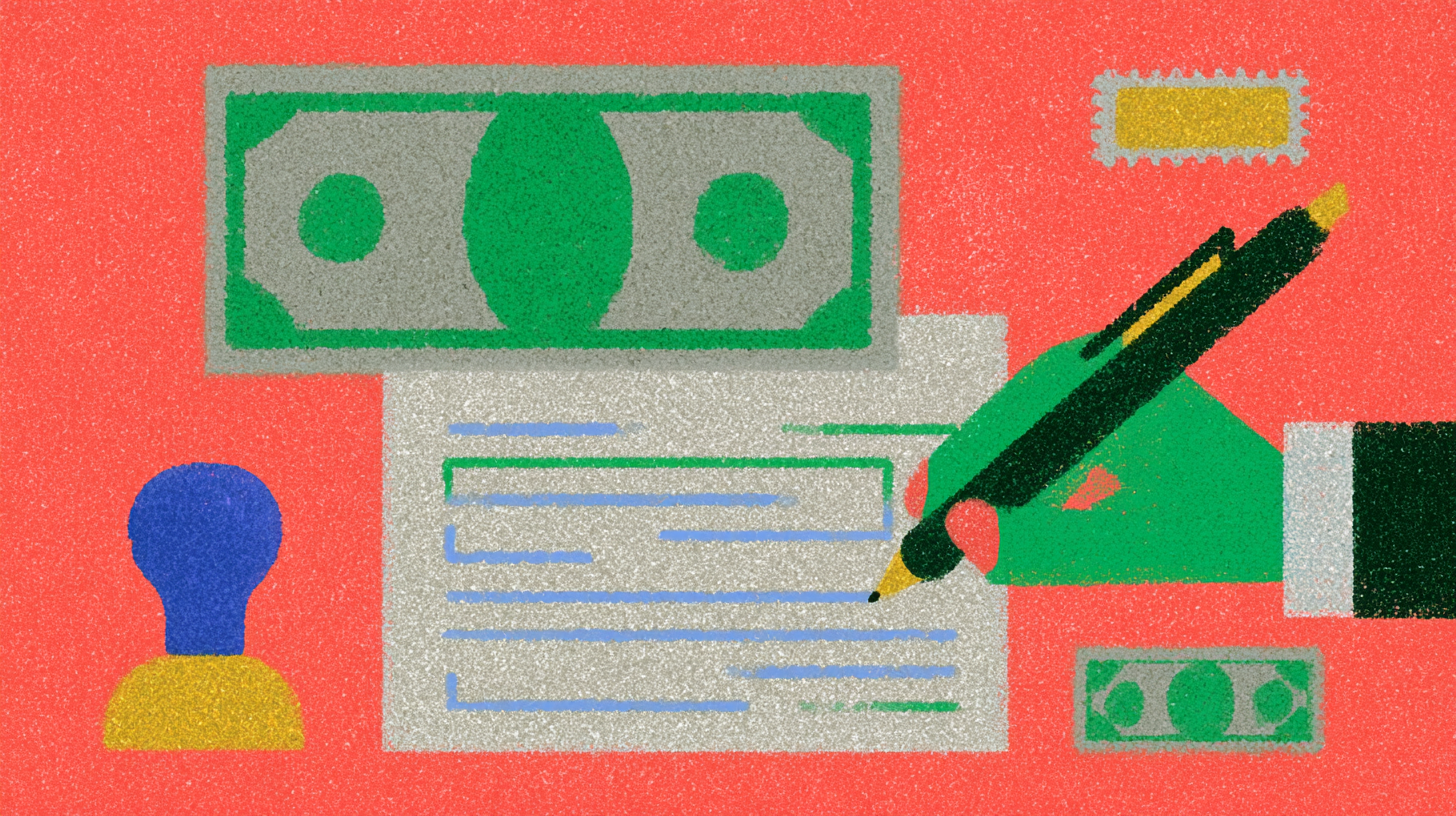
A money order is a prepaid paper payment often used for rent, bills, or sending money securely through the mail. To fill one out correctly, you need to add the recipient's name, your information, sign the front, and keep the receipt for tracking or replacement purposes.
Money orders are still widely used in the United States, especially for situations where people need a secure paper payment method. Even in 2026, many landlords, utility companies, government offices, and individual recipients continue to accept or require money orders for certain payments.
For many people, especially immigrants, newcomers to the United States, or people without a traditional bank account, money orders can feel more accessible than personal checks. Filling out a money order incorrectly can cause delays, make the payment invalid, or create problems if the money order is lost. Knowing exactly what information to write and where to write it can help avoid unnecessary stress.
What is a money order?
A money order is a prepaid paper payment that works similarly to a check. Instead of drawing money directly from a bank account, you pay the full amount upfront when purchasing the money order.
Once completed, the money order can usually be:
- Mailed to a recipient
- Deposited into a bank account
- Cashed at approved locations
Because the payment is prepaid, money orders are often considered safer than mailing cash. Money orders are commonly used for:
- Rent payments
- Utility bills
- Government fees
- Payments sent through the mail
- Sending money to family members
- Situations where personal checks are not accepted
Most money orders also include a receipt or tracking number that can help verify whether the payment was cashed. Unlike many digital payment apps, money orders are not typically trackable in real time.
When to use a money order vs other options
Money orders can still make sense in certain situations, especially when:
- A landlord only accepts money orders
- You do not have a U.S. checking account
- You need to mail a secure payment
- The recipient does not use digital payment apps
- You do not want to share banking information
Where to buy a money order
USPS (United States Postal Service):
One of the most common places to buy money orders. Domestic money orders typically cost between $1.45 and $1.95. USPS money orders never expire.
Walmart:
Many Walmart locations offer money orders through MoneyGram services. Fees can be lower than traditional banks, although limits apply depending on the location.
Western Union:
Western Union locations also sell money orders. Some stores offer extended hours.
Banks and credit unions:
Some banks and credit unions issue money orders to account holders. Fees may vary depending on whether you already bank with the institution.
Step 1: Fill out the recipient's name
Write the recipient's full legal name in the "Pay to," "Pay to the Order of," or "Payee" section.
Tips:
- Write clearly using black or blue ink
- Double-check spelling
- Avoid nicknames unless specifically requested
- Do not leave this section blank
If the name is incorrect, the recipient may have trouble depositing or cashing the money order. Once the recipient's name is written, only that person should be able to cash or deposit the money order with valid identification.
Step 2: Fill out the sender's name and address
Write your own information in the purchaser or sender section. The form may ask for: full name, address, city and state, phone number. This helps identify who purchased the money order if there is a problem later.
Step 3: Sign the front and add a memo
Sign only where the purchaser or sender is instructed to sign on the front.
Do not sign the back.
The back is reserved for the recipient when they cash or deposit the money order.
Some money orders also include a memo or account number section. Examples: apartment number for rent, utility account number, invoice number, purpose of payment.
Step 4: Keep your receipt
The receipt usually contains: tracking information, serial number, purchase amount, date of purchase.
Keep the receipt until the money order has been cashed or deposited successfully. If the money order is lost, stolen, or delayed, the receipt may help you: request a replacement, verify whether it was cashed, contact customer support, file a claim.
Common mistakes to avoid
Leaving fields blank:
Fill out the money order completely before handing it over or mailing it.
Using incorrect recipient information:
Misspelled names or incorrect business information can delay the payment process.
Signing the back:
Only the recipient should sign the back of the money order.
Throwing away the receipt:
Always keep your receipt until the payment is confirmed.
Using pencil or unclear handwriting:
Use permanent ink and write clearly.
Mailing cash instead:
Money orders are generally safer than sending cash through the mail.
Alternatives to money orders (digital options)
Common digital alternatives include: Venmo, Cash App, bank transfers, debit card payment apps.
For people who regularly send money within the United States or to Latin America, Común offers digital transfer options through ComunPay.
ComunPay allows eligible users to send money using: payment links, QR codes, phone numbers, email addresses, usernames, debit cards. Unlike traditional mailed money orders, digital transfers inside apps can usually be tracked directly from the phone.
Común also offers international remittances to Latin America starting at $2.99.
Choosing the right payment option for your needs
Money orders continue to play an important role for many people in the United States, especially for rent payments, government forms, mailed payments, or situations where paper documentation is preferred. For everyday sending between family members, friends, or trusted contacts, digital payment tools may feel more practical and easier to track.
FAQ
How much does a money order cost?
Money orders typically cost between $1.45 and $10 depending on the issuer, amount, and location. USPS money orders commonly range from $1.45 to $1.95.
Can a money order be cashed by anyone?
No. Once the recipient's name is written, only that person should be able to cash or deposit it with valid identification.
How long is a money order valid?
Many money orders do not expire. USPS money orders do not expire.
What happens if I make a mistake on a money order?
Avoid crossing information out. Contact the issuer about replacement options.
Can I track a money order?
You can usually verify whether it was cashed by contacting the issuer with your receipt information.
What is a digital alternative to a money order?
Venmo, Cash App and ComunPay for peer-to-peer transfers. Común also offers international remittances to Latin America starting at $2.99.
Común is a financial technology company and not a bank. Banking services are provided by Community Federal Savings Bank, Member FDIC. The Común Visa® Debit Card is issued by Community Federal Savings Bank. Peer-to-peer payments services are provided by Cross River Bank. No minimums, no maintenance fees. Remittance service provided by Service UniTeller, Inc. Remittance fees start at $2.99 but may vary. Común Inc. may earn revenue from the conversion of foreign currencies.
Immigration
Bank Fees for Immigrants: Common vs. Competitors
8 min de lectura
For immigrants in the U.S., bank fees can amount to hundreds of dollars a year. Común stands out by offering a monthly-fee-free account, no minimum balance, and no SSN requirement. Compared with competitors like Seis and Majority, Común eliminates fixed fees while still providing full services in Spanish.
Choosing the right bank account can save you hundreds of dollars a year. For the immigrant community in the U.S., comparing fees is especially important because many traditional accounts charge fees that directly affect the monthly budget. We analyzed the main options available.
Fees at Traditional Banks
Major U.S. banks such as Bank of America, Chase, and Wells Fargo charge between $6 and $25 per month to maintain a checking account, with minimum balance requirements of $1,500 to $25,000 to avoid those fees. They also charge overdraft fees ($35 per transaction), out-of-network ATM withdrawal fees ($2.50-$5 per withdrawal), and international transfer fees ($25-$45 per wire transfer). For a newly arrived immigrant without credit history or a high balance, these costs add up quickly.
Común: No-Fee Account for Immigrants
Común offers a checking account with no monthly fee, no minimum balance required, and no overdraft penalty in many cases. It does not require an SSN — it accepts a passport, consular ID, and more than 100 Latin American IDs. Customer service is completely in Spanish. Account opening takes minutes from a mobile phone. It allows instant domestic transfers at no cost between Común users. It is the option designed specifically for the Latino community in the U.S.
Majority: Monthly Membership with International Benefits
Majority charges $5.99 per month as a base membership (down from $14.99). In return, it offers unlimited international calls to selected countries, roaming mobile data in more than 50 countries, and discounts at participating merchants. If you actively use international calling and travel benefits, the membership may be worth it. However, if you only need a basic bank account, you are paying for services you may not use.
Seis: Account for Visa Workers
Seis is designed for expats and visa workers in the U.S. It offers an account without an SSN using a visa and passport. Fees vary by plan: the basic account has limits on the number of free transactions. It is more geared toward professionals with work visas (H-1B, L-1) than the immigrant community at large. Its interface is available in multiple languages, including Spanish.
Direct Fee Comparison
In terms of monthly fee, Común charges $0, Majority charges $5.99/month, and traditional banks charge between $6 and $25. The minimum balance requirement is $0 at Común, $0 at Majority, and between $1,500 and $25,000 at traditional banks. Regarding SSN requirement, Común does not require it, Majority does not either, while traditional banks generally do. All three have FDIC or equivalent deposit protection.
Which Option Is Best for You?
If you are looking for the account with the lowest total fees and do not need unlimited international calls, Común is the most economical option. If you travel frequently or call abroad often, Majority’s membership may be worth it. Traditional banks only make sense if you already have the required minimum balance or if you need specific services such as mortgages or investment accounts.
Frequently Asked Questions About Bank Fees
What bank fees are most common in the U.S.?
The most common are: monthly maintenance fee ($6-$25), overdraft fee ($35 per transaction), out-of-network ATM fee ($2.50-$5), and international wire transfer fees ($25-$45). Digital banks like Común eliminate most of these fees.
Can I avoid bank fees at a traditional bank?
Yes, usually by maintaining a monthly minimum balance (which varies by bank and account type), receiving direct payroll deposit, or being a student. However, for immigrants without credit history or with variable income, meeting these requirements can be difficult at first.
Are ATM fees unavoidable?
No. Multiple digital banks offer free access to ATM networks (Allpoint, MoneyPass) with thousands of fee-free locations across the U.S. Común provides access to fee-free ATMs within its network. Outside the network, typical charges are $2.50-$5 from the ATM plus whatever your bank charges.
What is an overdraft fee and how can I avoid it?
An overdraft fee occurs when you spend more money than you have in your account and the bank covers the difference by charging you a penalty (typically $35). You can avoid it by activating low-balance alerts, linking a savings account as backup, or choosing a bank that does not charge overdraft fees — some digital accounts decline the transaction instead of charging a penalty.
Is it worth paying a monthly membership for a bank account?
It depends on the included benefits. A $5.99-$14.99 monthly membership may be worth it if it includes services you actively use (international calling, travel insurance, cashback). If you only need an account for deposits, payments, and transfers, a free account like Común is more cost-effective.

Checking account
The Pros and Cons of Using Checks at Banks in the U.S. | Común
8 min de lectura
Cashing a Check at Your Own Bank
When it comes to cashing a check, one of the simplest options is visiting your own bank or financial institution. Here's a step-by-step process for depositing or cashing a check:
- Endorse the Check: Flip the check over and sign your name on the back in the area designated for endorsement. Make sure your signature matches what's on file with the bank.
- Visit Your Bank: Head to the local branch of the bank where you have an account. Bring a valid form of ID, like a driver's license or passport.
- Approach a Teller: Depending on your preference and the bank's options, you can present the check to a teller for processing or use an ATM equipped with check deposit functionality to get your money.
- Provide Necessary Information: If you're dealing with a teller, you may need to provide additional account information, like your account number, the issuing bank, and the check amount. For ATM deposits, follow the on-screen prompts to enter the relevant details.
- Confirm Deposit or Receive Cash: After processing, you'll receive confirmation of the deposit into your account or the cash in hand if you chose to cash the check.
'Cashing' a Check Electronically
Beyond traditional in-person methods, many banks offer electronic options for depositing checks. This convenient approach lets you deposit checks without visiting physical locations or even cash checks without ID. Here's how it works:
- Mobile Deposit: Most banks provide a mobile app that lets you deposit checks using your smartphone or tablet. Simply endorse the check, take photos of the front and back, and submit them through the app.
- Online Banking: Some banks offer online banking portals where you can scan and upload images of checks for deposit. This method generally follows steps similar to mobile deposit and is accessible through a web browser.
- Electronic Funds Transfer: In some cases, you may have the option to electronically transfer a check's funds directly to your account without needing physical processing.
Pros and Cons of Checking Accounts
Checking accounts serve as the hub for many financial transactions, offering both benefits and drawbacks. Understanding these pros and cons is crucial to effectively managing your resources.
Advantages of Having a Checking Account
- Convenience: Checking accounts provide a convenient way to access and manage your funds for everyday expenses, like paying bills and making purchases with a debit card.
- Writing Checks: With a checking account, you can issue checks to people or businesses, offering a secure, traceable payment method.
- Direct Deposit: Many employers offer direct deposit, letting your paychecks be automatically deposited into your checking account, providing quick access to money.
- Online Banking: Most banks offer online banking services for checking accounts, letting you monitor account activity, transfer money, and pay bills from the comfort of home or on the go.
- Overdraft Protection: Some checking accounts come with overdraft protection options, which can help prevent declined transactions and fees in the event of insufficient funds.
Disadvantages or Limitations of Checking Accounts
- Fees: Some checking and money market accounts may have monthly maintenance fees, overdraft fees, limited withdrawals, or ATM fees, which can reduce your balance if not carefully managed.
- Minimum Balance Requirements: Certain checking accounts require you to maintain a minimum balance to avoid fees, which can be a challenge for those living paycheck to paycheck.
- Limited Interest: While some checking accounts offer interest on balances, rates are typically lower compared to savings accounts, resulting in minimal earnings on your deposits.
- Fraud Risk: Issuing checks or using a debit card linked to your checking account exposes you to the risk of fraud or unauthorized transactions, requiring vigilance and prompt reporting of any suspicious activity.
By carefully weighing the advantages and disadvantages of checking accounts and considering key factors when selecting the right account, you can effectively manage your finances and get the most out of your banking experience.
Where to Cash a Check
When it comes to cashing a check, you have several options available, ranging from a traditional bank to a retail store. However, not all locations are equal, and it's essential to weigh the pros and cons of each option before making a decision.
- Banks: Your bank is often the simplest option for cashing a check. You can visit a branch or use an ATM equipped with check deposit functionality. Many banks and credit unions also offer mobile deposit options, letting you deposit checks using your smartphone.
- Retail Stores: Some retail stores, like supermarkets, convenience stores, and big-box retailers, offer check-cashing services for a fee. This can be a convenient option if you don't have a bank account or need access to cash outside of banking hours.
- Check-Cashing Stores: Dedicated check-cashing stores specialize in cashing checks for a fee. While these establishments provide quick access to cash, their fees can be higher compared to other options, reducing the amount you receive.
- Prepaid Debit Card: Certain prepaid debit cards let you load checks onto the card electronically, providing instant access to funds. This can be a convenient option if you regularly use prepaid cards for financial transactions.
Where to Avoid Cashing a Check Due to Potential Fees or Limitations
- Payday Lenders: Avoid cashing checks at payday loan establishments, since they often charge exorbitant fees and may engage in predatory lending practices.
- Pawn Shops: While some pawn shops offer check-cashing services, their fees can be high, and they may require collateral or impose additional charges and higher costs to cover transactions.
- High-Fee Retailers: Be careful when cashing checks at retailers that charge high fees for the service, since these fees can significantly reduce the amount of cash you receive.
When deciding where to cash a check, consider factors like convenience, fees, and access to money. Choose a reputable establishment and service with transparent fee structures to make sure you get the most value from your check-cashing experience.
Comparing Checking and Savings Accounts
Understanding the differences between checking and savings accounts is crucial for effective financial management. Here's a concise comparison:
Interest Rates and Benefits of Savings Accounts
- Interest Rates: A savings account generally offers higher interest rates compared to a checking account, making it ideal for growing your money over time.
- Benefits:
- Goal-Oriented Saving: Savings accounts are great for setting aside funds for specific goals.
- Safety Net: They provide a financial cushion for unexpected expenses.
- Access to Funds: While there may be a limit on withdrawals, savings accounts offer relatively easy access to your money.
Considerations for Having Both Accounts at the Same Bank
- Convenience: Managing both a savings and checking account at the same bank offers ease in transferring money, viewing balances, and accessing statement cycles and bundled services.
- Relationship Benefits: Some banks or credit unions offer perks for customers with multiple accounts, like higher interest rates or waived fees.
- Simplified Experience: Consolidating a savings and checking account simplifies banking tasks like bill payments and money transfers.
- Diversification: However, having accounts at different banks provides diversification and can mitigate risks associated with a single financial institution.
Ultimately, the decision to have a savings and checking account at the same bank or spread across multiple financial institutions depends on your preferences, financial goals, and banking needs.
Loading a Check Onto a Prepaid Card
Loading a check onto a prepaid card is a convenient alternative to traditional banking methods, offering flexibility and accessibility for people who may not have or prefer not to use traditional accounts. Let's briefly break down the process and considerations associated with this method.
Prepaid Cards and Their Suitability
- Prepaid Cards: Reloadable payment cards not linked to traditional bank accounts.
- Loading Checks: Prepaid card providers offer options to load checks electronically through mobile apps or online portals.
- Suitability: Ideal for those without a bank account or who prefer alternative financial services.
Pros and Cons of Using Prepaid Cards
Pros:
- Accessibility and convenience for loading checks.
- Control over spending and security features.
Cons:
- Monthly fees for various transactions.
- Limited features compared to traditional bank accounts.
- Reload limits and lack of FDIC insurance.
Consider the convenience and accessibility of prepaid cards for check transactions, keeping in mind the associated fees and limitations.
You Can Open a Checking Account With Común Right Now!
Open your checking account¹ in 3 minutes with your country's ID²
Conclusion
Navigating the check banking landscape today requires a balanced understanding of the advantages and disadvantages inherent to this payment method. While checks offer flexibility and accessibility, they also come with potential fees and security risks. By weighing the pros and cons outlined in this article and exploring alternative banking options, people can make informed decisions to optimize their financial and cash management strategies.

Financial Education
Quick guide on how to call Mexico from the USA
8 min de lectura
How to call Mexico from the United States easily and affordably
There’s no doubt about the impact the Mexican community has had in the United States due to the number of immigrants who have arrived in recent decades and who, despite the distance, need to stay in touch with their loved ones.
One of the most common points of confusion when making an international call has to do with the order of the required codes. However, with the right information, placing a call from the United States to Mexico is very simple.
Below, we’ll show you step by step how to dial, practical examples for major cities, as well as modern options to save money no matter how long you’re on the phone with your loved ones in Mexico.
Basic steps to call Mexico from the USA
To connect a phone call from the United States to Mexico, you need three basic pieces of information: the exit code, Mexico’s country code, and the local number.
These are the steps to call Mexico.
Dial the international prefix
011 from a U.S. landline or “+” from a mobile phone.
Add Mexico’s country code
The code is 52.
Dial the 10-digit national number
Include the area code plus the local number
Practical examples:
- Mexico City: 011 + 52 + 55 123 1234
- Guadalajara: 011 + 52 + 33 123 1234
- Monterrey: 011 + 52 + 81 123 1234
It’s important to clarify that it used to be necessary to add the prefix 1 for cell-phone calls, but this requirement was eliminated in 2019.
Area codes and example calls to Mexican cities
In Mexico, each city has an area code (lada) made up of 2 or 3 digits. Taking that into account, all Mexican phone numbers have 10 digits in total.
Below is a table with examples of how to dial from the United States to Mexico.
City
Area Code
Dialing example from the United States
Mexico City
55
011 + 52 + 55 + ########
Guadalajara
33
011 + 52 + 33 + ########
Monterrey
81
011 + 52 + 81 + ########
Puebla
222
011 + 52 + 222 + #######
Tijuana
664
011 + 52 + 664 + #######
León
477
011 + 52 + 477 + #######
Querétaro
442
011 + 52 + 442 + #######
Mérida
999
011 + 52 + 999 + #######
Cancún
998
011 + 52 + 998 + #######
Chihuahua
614
011 + 52 + 614 + #######
Modern and more affordable options for calling Mexico
Long-distance calling used to be very expensive, especially when made directly— a drawback for people who wanted to keep in touch with family abroad since costs were charged per minute.
Fortunately, today you can choose far more affordable alternatives that also offer unlimited minutes and other communication benefits such as messaging and video calls.
These are the most popular low-cost options for calling Mexico from the United States.
VoIP apps and services over Wi-Fi
VoIP (Voice over IP) apps are one of the most accessible alternatives for communicating with people worldwide.
The main advantage of mobile apps is that they allow domestic and international calls over a Wi-Fi or data connection. This significantly reduces costs and eliminates the need for local phone coverage, though a good internet connection is important.
WhatsApp is a popular app of this kind, given its large user base and a variety of features beyond calls, such as voice notes, voice dictation, video notes, and video calls.
Other similar alternatives include Skype, Google Voice, and Telegram.
International plans from your carrier
If you want to make long calls and not rely on Wi-Fi, a recommended alternative is to get an international plan with included or unlimited minutes to Mexico.
For example, Verizon Global Calling has a plan that includes unlimited minutes to Mexico and Canada.
If you’re still in Mexico, Telcel offers international roaming packages and eSIM for travelers.
Prepaid calling cards
Another solution for calling Mexico is using a prepaid calling card.
Here are some examples.
Company | Cost | Validity/Expiration Enjoy Prepaid | From 0.9¢/min to landlines, 2.9¢/min to mobiles. | After 183 days of inactivity. BOSS Revolution | 1.9¢/min to landlines and mobiles. | Credit remains while the user is active. Calling Card Plus | From 0.8¢/min to landlines and 2.5¢/min to mobiles. | Depends on the plan; may include per-minute rounding or a weekly charge.
Company
Cost
Validity/Expiration
Enjoy Prepaid
From 0.9¢/min to landlines, 2.9¢/min to mobiles.
After 183 days of inactivity.
BOSS Revolution
1.9¢/min to landlines and mobiles.
Credit remains while the user is active
Calling Card Plus
From 0.8¢/min to landlines and 2.5¢/min to mobiles.
Depends on the plan; may include per-minute rounding or a weekly charge.
Bundles with included minutes
A bundle is a package that, in addition to international calls, includes other related services. For example, Verizon Global Choice offers 300 minutes for $10 per month.
Practical tips for immigrants
Taking care of your finances is essential to stay in touch with your family in Mexico. Here are some tips to keep you connected.
- Use apps over Wi-Fi whenever possible: they’re a very affordable alternative, as long as you have a good internet connection.
- Compare rates from different companies: take time to review each provider’s international rates as well as specific terms.
- Consider family bundles or special plans for Mexico: given the geographic proximity between Mexico and the United States, there are several communication options designed for families who frequently contact relatives.
Stay connected with your family in Mexico thanks to Común
In this article, we showed you how to call Mexico from the United States with the correct code sequence, via mobile and landline. We also shared tips to keep in touch with your family through more accessible means such as mobile apps and international plans with minutes to Mexico.
In addition to staying in touch with family, Mexican immigrants also often need services that let them send money home.
- Discover the benefits of Común, the platform that brings you closer to the people you love most!
- Checking account with clear, competitive fees.
- Accessible international money transfers.
- Común’s mobile app is available in Spanish and accepts more than 100 eligible official IDs for account opening.
- Debit card for everyday purchases and payments.
Don’t lose touch with your country! Open your account with Común and connect with the financial platform dedicated to shortening the distance.
Frequently Asked Questions (FAQ)
If you still have questions, see this section.
What happens if I dial the number without the 011 prefix?
If you don’t dial 011 or “+” on mobile phones, your call won’t be recognized as international and will either connect as a local call or return an error.
Is it better to use apps or international calling plans?
It depends on your needs. Apps are an excellent alternative but depend on a good internet connection. International plans require a SIM, but they offer more stable calls along with other communication services.
Which option is best for saving money?
A very convenient option to save money is an app like WhatsApp, since it works over an internet connection.
How can I dial an 800 number from the United States to Mexico?
800 numbers are toll-free within Mexico, but from the United States they do carry a cost. To dial, you must enter the exit code and the country code.
Another option is to look for that institution’s alternate number for international calls.
Financial Education
How to Endorse a Check: Your Safe and Detailed Step-by-Step Guide
8 min de lectura
Despite the fact that digital payment methods have gained significant relevance practically worldwide, checks remain essential for carrying out certain transactions, especially for people without a banking account.
According to recent data, 61% of Americans still use checks. However, 17% have been victims of check fraud.
Knowing how to endorse a check in the United States is a necessary security measure to prevent fraud. While it can be a confusing procedure, it is crucial to understand it in order to avoid issues.
In this article, we will explain step-by-step how to correctly endorse checks, as well as the information you need to write on the back in order to cash the stated amount.
What Is a Check Endorsement and Why Is It So Important in the U.S.?
A check endorsement is a signature on the back of the check that serves as authorization for it to be cashed at a financial institution.
Its main function is to validate the cashing of the check, as well as authorize the transfer of funds, or to transfer the right to another person.
Knowing how to endorse a check is essential because it is a primary security requirement in the U.S. financial system, serving as a protection measure for the holder and the deposited funds.
What Is the Correct Way to Endorse a Check, and Where Should You Sign?
Below, we show you how to complete the endorsement before cashing checks at the bank.
Step 1: Verify the Check Details
Make sure the details on the front of the check are correct, such as the payee’s name, the amount in numbers and words, and the banking institution.
Step 2: Locate the Endorsement Area
Turn the check over and locate the statement “Endorse Here” or “Do not write below this line.” Avoid writing below the marked area.
Step 3: Sign the Check Precisely
Sign the check in the designated box, according to the type of endorsement you require. Next, we will explain everything about the different types.
But what should you do if the payee’s name is incorrect?
Example of How to Endorse a Check if the Name Is Misspelled
If the payee’s name is incorrect, you should first sign as it appears and then sign again with the corrected name.
James Smit — James Smith
Step 4: Consider a Restrictive Endorsement (Highly Recommended!)
A restrictive endorsement is a security measure to prevent an unauthorized third party from cashing the check, as it limits the form of payment to a registered banking account. It is linked to the information provided on the back of the check.
Step 5: Multiple-Payee Endorsements
If the check is made out to more than one payee, one or all may need to sign the endorsement, depending on how it is written.
- Katy Adams and Mark Palmer: Signatures from both are required
- Katy Adams or Mark Palmer: One signature is sufficient
- Katy Adams and/or Mark Palmer: Depending on the intermediary bank, one or two signatures may be required
- Katy Adams, Mark Palmer, etc.: The bank determines whether one or all signatures are necessary
Types of Endorsements: Know the Options for Your Checks
Before endorsing your check, verify which type is most suitable depending on the transaction you need to perform. For example, a restrictive endorsement is a way to secure your money, just like using modern financial alternatives such as Común, a comprehensive service that gives you access to unified and efficient financial tools.
Blank Endorsement
A blank endorsement is carried out when the same payee cashes the check in cash. In this case, only the signature in the designated area is needed.
Restrictive Endorsement
A restrictive endorsement is a security measure to ensure that the funds are deposited into a specific banking account.
To do this, you must include the statement “for deposit only to” + bank name, account number, and signature.
This is the most recommended method for Común users who make deposits via mobile, as it provides protection for the check in case of loss and ensures that the money is deposited into the designated account.
Third-Party Endorsement
If the check will be cashed by a third party, it must be endorsed as follows.
Pay to the order of: (name of another person) + signature
It is important to exercise extreme caution with this type of endorsement. Use it only with trusted individuals, and in case of theft or loss of a check, report it to the financial institution immediately.
Business Endorsement
A business endorsement is made when a check is cashed in the name of a company. This requires including the full name of the company, followed by the signature of the authorized legal representative.
Mobile Deposit Endorsement
To deposit check funds through a mobile application or mobile banking, it must be endorsed as follows:
For mobile deposit only + your signature.
Deposit your endorsed check easily and securely using Común
Cashing checks is a process that requires special care and attention in order to avoid mistakes and setbacks that could affect the transaction.
This time, we learned the importance of correctly endorsing a check in the United States, as well as the different types that exist, according to the available cashing methods.
Now that you know how to fill out a check on the back, you can rely on Común to deposit the funds through the mobile app.
Skip the lines: Deposit your check from the app; availability of funds may vary.
Común offers you the necessary security to protect your money and personal data
It is an accessible platform for immigrants in the United States; request to open your account with documentation from your country
Get customer support in English and Spanish, available 24/7
Access a comprehensive mobile app to manage your personal finances in the simplest way
Común will not only make the check deposit process easier, but it will also transform your financial life in the United States. Open your account today and find out.
Frequently Asked Questions
Is it mandatory to endorse a check in the United States?
In most cases, yes, it is necessary. If you request a deposit through an ATM or application, the bank may not require an endorsement.
What happens if I sign the check incorrectly when endorsing it?
Avoid cross-outs or scratches and endorse the check again. If the bank rejects it, ask the issuer to issue a new one.
Can I endorse a check to another person?
You can endorse a check so that it can be cashed by another person with the statement “pay to order of” along with the payee’s name. However, this process is restricted according to each bank’s specific policies.
Is it safe to deposit a check with the mobile app?
It is safe to deposit a check through the Común mobile app, as your data is encrypted and it includes other security measures such as two-step verification.

Living in the United States
What are the school grades in the United States? Ages and equivalencies
8 min de lectura
Do you have children about to enter school in the United States? Understanding the U.S. education system is essential for adapting to a new culture and preparing for the differences compared with your country of origin.
Broadly speaking, the U.S. education system is divided into three stages: Elementary School, Middle School, and High School. Each plays a specific role in students’ academic journey. This system covers ages 5 through 18 and forms the central framework of schooling in the country.
In this article, we explain each of these stages and detail their purpose to demystify how students progress through the system and its educational levels in the United States.
Levels of the U.S. education system: Everything you need to know
In the United States, it is common for children to begin schooling around age 5. After kindergarten, it is divided into 12 grade levels.
Below, we show how the U.S. education system is structured.
Early childhood education
Early childhood education or preschool is not mandatory in the United States. However, it is common for children under age 5 to attend pre-K (preschool) or kindergarten.
These centers focus on young children’s cognitive development through play and early literacy activities. For this reason, there is no grading system. Kindergarten is offered through private and public options or via the Head Start social assistance program for low-income families.
Elementary school
After that, children will enter primary education or Elementary school starting around age 6, depending on the school district.
This level typically covers 1st through 5th grade and is characterized by the gradual introduction of more advanced knowledge, with the aim of building cognitive and social development through learning skills such as mathematics, science, and language, among others.
- Characteristics: students generally have the same teacher for almost all subjects, except for those requiring specialized knowledge, such as physical education.
- Grading system: it can vary by district, but it is common for students to be assessed using a letter scale—A, B, C, D, and F—or, alternatively, a numeric scale from 1 to 4.
- Approximate Ages: between 6 and 11.
Middle school (junior high school)
After finishing primary education, students continue with Middle school, which typically covers 6th through 8th grade. It is a transitional stage between primary and secondary education.
- Characteristics: students have a different teacher and classroom for each subject, which promotes independence and socialization.
- Grading system: the formal A through F system is typically being used.
- Approximate Ages: between 11 and 14.
High school
The next level is secondary school or High school, typically covering grades 9 through 12. It culminates in the High school diploma, a basic requirement to continue with higher education or enter the job market.
- Characteristics: in addition to required subjects such as English, math, and science, students can complement their education with electives and extracurricular activities.
- Grading system: both the A–F letter scale and the GPA (Grade Point Average) are generally used; GPA serves as an indicator of academic performance and is key for college admission.
- Approximate Ages: between 14 and 18.
Postsecondary education
Postsecondary or higher education in the United States includes different types of programs as well as private and public schools. Although it is not strictly mandatory, it provides more opportunities for good jobs and higher earnings.
These are the types of higher-education institutions in the U.S.
Public or private universities
- They offer a curriculum lasting approximately 4 years.
- Upon completion and passing of the program, graduates receive a Bachelor’s degree.
- The admission process depends on prior academic performance, reflected in the GPA.
- There are public universities funded by the government and private universities as well.
Community colleges
- These are public colleges offering educational programs that last 2 years.
- Upon completing this program, students earn an Associate’s degree, equivalent to a technical program.
- They are more accessible than a university, and admission rates are also higher.
If you need to send money to another country, explore some options and tips.
Technical or vocational institutions
- They focus on acquiring knowledge related to practical trades, such as nursing, graphic design, and programming.
- They also offer certificates to recognize completed studies.
The U.S. education system can be somewhat confusing compared with other countries, such as some in Latin America. Below is a comparison table to clarify general equivalencies, keeping in mind that there are variations in each country.
| Grade level in the United States | Typical Ages | Equivalence in Mexico |
|---|---|---|
| Preschool | 3–4 years | Preschool/kindergarten |
| Kindergarten | 5–6 years | Final year of preschool |
| 1st grade | 6–7 years | 1st year of elementary |
| 2nd grade | 7–8 years | 2nd year of elementary |
| 3rd grade | 8–9 years | 3rd year of elementary |
| 4th grade | 9–10 years | 4th year of elementary |
| 5th grade | 10–11 years | 5th year of elementary |
| 6th grade | 11–12 years | 6th year of elementary (start of Middle school in some countries) |
| 7th grade | 12–13 years | 1st year of Middle school |
| 8th grade | 13–14 years | 2nd year of Middle school |
| 9th grade | 14–15 years | 3rd year of Middle school (may be the final year of secundaria or 1st year of High school) |
| 10th grade | 15–16 years | 1st year of High school |
| 11th grade | 16–17 years | 2nd year of High school |
| 12th grade | 17–18 years | 3rd year of High school |
| Postsecondary education | 18 and up | University |
How does the school year work in the United States? Key aspects
The U.S. education system is characterized by flexibility to adapt to students’ abilities and interests in order to foster their full potential.
For this reason, it is common for students to be placed into specific classes according to their learning level, which may be more or less challenging.
- Placement depends on several factors, such as:
- How well the student understands English or their test scores—especially for foreign students
- Recommendations from parents/guardians
- Standardized test scores and prior academic performance
- Willingness to complete challenging assignments
- The student’s interest or motivation
- Teacher or counselor recommendation
- Examples of student work demonstrating their level of understanding and skills
Another relevant aspect to consider is the school calendar and schedule in the United States. These can vary by state and school district, but in general the school year begins in late August or early September and ends in late May or early June.
How to manage your finances in the United States with Común
As you can see, the U.S. education system is intentionally designed to guide students from basic education through higher studies and, afterward, into working life.
Each level has a clear function, which makes it easier for families, students, and educators to plan and provide support in order to make more informed decisions along the school path.
Without a doubt, your children’s education is one of the most important investments, because it is a way to secure their future.
Común is the ideal financial platform to help you manage tuition payments and handle school expenses for higher education.
Común is a financial platform with a mobile app that makes it easy to open accounts in the U.S. with a qualified official ID from your country of origin, send low-cost remittances, and provide bilingual Spanish and English language support for the immigrant community.
Learn about all the benefits of opening an account with Común for you and your family.
As an immigrant, Común allows you to open an account with a qualified official ID from your country, with no hidden fees and bilingual Spanish and English language support.
Frequently asked questions
If you still have questions, consult our Q&A section.
How do you enroll your child in school?
Go to the school district where you live to find out which school corresponds to your address. Complete the required documents and the enrollment application.
Requirements may vary by state or school district, so it is important to verify directly with your local school.
What is the difference between a public and a private school in the United States?
Public schools are funded by government tax revenues, while private schools are funded by tuition.
What do Freshman/Sophomore/Junior/Senior mean?
These are the terms used in U.S. high schools and universities to indicate year level
- Freshman: 1st year
- Sophomore: 2nd year
- Junior: 3rd year
- Senior: 4th year
What is needed to enter school in the United States?
- Minimum age depending on the level
- Birth certificate
- Up-to-date vaccination record
- Proof of residence in the district

Financial Education
What is the CVV and what is it used for on your card?
8 min de lectura
What is the CVV on a card?
Nowadays, making purchases with a credit or debit card in physical stores and online is an essential activity for acquiring everyday goods.
Security in these operations is essential. For this, these payment methods use the CVV or CVC code, which means Card Verification Value or Card Verification Code respectively, and its purpose is to verify that the cardholder has the physical card and to protect online and phone purchases.
Below, we will explain in detail what the CVV is, where to find it, the types of security codes, and tips to keep your cards secure.
Where to find the CVV on your card?
If you are going to make purchases online or by phone, you will need to provide the security code of your debit or credit card to verify it belongs to you.
In most cases, the CVV is located on the back of the card and consists of 3 or 4 numbers.
Here is a quick guide to locating the verification code depending on the card type.
Card type
Where to find the CVV?
How many digits does it have?
Visa
Usually on the back, next to the magnetic stripe.
3
Mastercard
Usually on the back, next to the signature.
3
Discover
Usually on the back, to the right of the signature.
3
American Express
Usually on the front, next to the card number.
4
One way to strengthen security during electronic transactions is the use of a dynamic CVV, which is found in digital applications or cards and is valid only for a limited time to make a single purchase. This reduces the risk of misuse of your personal data if it is exposed.
What is the CVV for and why is it important?
The CVV number is a security lock that allows you to use your physical and digital cards with confidence that a third party cannot access your money.
These are the most important functions of this security code.
- Holder verification:
It is especially useful for protecting electronic operations by verifying that the cardholder is the one making the purchase.
- Security in online purchases
When making an online purchase, you must enter the card’s CVV to validate the transaction. This process is more secure when using a dynamic CVV because it reduces the risk in case of fraud.
- Fraud prevention
Unlike other data usually included on physical cards, such as the number and expiration date, the CVV is not stored in online store systems, so your data remains safe in case of potential identity theft.
The purpose of the CVV is to provide you with security and peace of mind when making online purchases.
CVV, CVC, and CVV2: how are they different?
You may notice different types of CVV since the name can vary depending on the card issuer.
These are the security codes most commonly used by financial institutions to protect users’ cards.
CVV
The CVV (Card Verification Value) is the security code created for Visa cards. It consists of 3 or 4 digits and is used to confirm that the person making the purchase actually has the card.
CVC
The CVC (Card Verification Code) is the version of the CVV used by Mastercard cards. It has the same function and a similar composition.
CVV2
The CVV2 (Card Verification Value 2) is a digital version of the CVV used to provide greater protection in online purchases. While the traditional CVV is used during payments at card terminals, the CVV2 is requested to confirm remote transactions.
4 tips to use your card safely
Some people avoid or minimize the use of physical or digital cards due to fear of having their personal data stolen and generating unauthorized charges. However, financial institutions and digital platforms currently offer the necessary security measures to protect your assets.
Thanks to the implementation of codes such as the CVV, the risk of experiencing a security incident is minimal and decreases even more when you have the right information to apply practical strategies like the following.
- Do not share your CVV or write it in visible places: avoid having this code leaked to third parties. Remember that it is the number used to verify online purchases and that no financial institution requests sensitive data over the phone, so make sure to use the CVV responsibly.
- Use only secure payment sites (https://): if you need to make an online purchase, make sure the site has the required security measures to process electronic payments.
- Activate notifications or dynamic CVV if your bank offers it: enable notifications in your banking application and try using the dynamic CVV when shopping online. This allows you to generate a new CVV for each purchase.
- Review your transactions regularly: check your statement and transaction history frequently. If you detect any irregular activity, report it to your bank immediately.
Bank cards are useful tools that require responsible and cautious use. Learning to use your card safely and confidently is also part of building financial stability.
Manage your money and make payments securely with Comun
This time we explained what the CVV or CVC is, why it is important, and gave you some tips to keep your checking accounts secure.
The security provided by the CVV is the same you need in all your financial operations, such as digital payments, cash deposits, and international money transfers. For this, you have Comun, the digital platform specially designed for immigrants living in the United States who want to manage their money safely and without complications, with clear and competitive fees.
Comun is the financial platform that truly understands your needs and offers fair, tailored solutions.
Open your Comun account and start managing your money in the United States with confidence. Send, receive, and monitor your expenses from the mobile app.
Frequently Asked Questions (FAQ)
If you still have questions, check the following section.
What happens if I give my CVV to someone else?
It is not advisable to give your CVV to someone else, as they could make purchases not authorized by you. Make sure to protect your banking information so only you have access to it.
Is the CVV the same as the card number?
No, the card number consists of 16 digits and identifies the checking account. The CVV consists of 3 or 4 digits and verifies that the holder is the card owner.
Can I make purchases without a CVV?
In physical stores, it is not strictly necessary, as the purchase is validated with the chip and PIN. For online purchases, it is essential to enter the CVV to authorize the transaction.
Financial Education
Digital wallet: what it is, how it works, and how to use it in the U.S.
8 min de lectura
If you’re looking for a safe, simple way to manage your money, a digital wallet could be the ideal complement to your finances. It’s a mobile application that lets you bring together your cards and other financial products in one place.
In recent years, it has become a key tool for digital money management due to its convenience and security.
Below we explain in detail what a digital wallet is, common uses, advantages, and some examples of the most popular digital wallets in the United States.
What is a digital wallet and how does it work?
A digital wallet is an application for Android- or iOS-compatible devices that securely stores credit or debit card details, or bank account information and lets you access it quickly and safely to make digital payments and other transactions.
How it works is simple: you register your banking information in the app, where it’s encrypted to keep it secure and prevent third-party access. This lets you make electronic payments in seconds through several methods—scanning a QR code, using a smartphone with NFC technology, or selecting the digital wallet at checkout for online purchases.
There is a wide variety of digital wallets in the United States; the most popular include Apple Pay, Google Wallet, Samsung Pay, and PayPal.
Most common uses of a digital wallet
A digital wallet simplifies day-to-day transactions for the thousands of immigrants living in the United States. These are the most common uses of this type of tool:
Pay in-store and online
Using a digital wallet in a store is easy as long as the merchant accepts contactless payments. In that case, simply enable NFC on your phone and hold it near the payment terminal. The payment will process automatically without entering additional information.
To pay online, first make sure you’ve added your bank accounts to the wallet’s mobile app. Then go to the product or service page and choose your digital wallet as the payment option. You may be prompted to enter an authentication factor for security.
Send money to family and friends
Another common use of digital wallets—especially among immigrant users in the U.S.—is sending remittances quickly to their home countries. Depending on the app, these can be less costly than traditional banks.
Store cards and documents
A digital wallet is also a handy organizational tool for keeping not only financial products like debit and credit cards, but also other digital items such as transit cards, tickets, and discount coupons.
Manage your money better
These applications also make it easy to keep your finances organized, create monthly budgets, and stay on top of day-to-day transactions.
4 advantages of using a digital wallet
Managing your financial products with a digital wallet has several notable benefits that can completely change how you make digital payments.
1. Security: lower theft risk compared with carrying cash.
Carrying cash is always riskier than digital options because of loss or theft. A digital wallet removes the need to depend on cash and streamlines payments online and in physical stores.
In addition, your personal information is encrypted so only you can access it. You can also add app-level security like biometrics and passcodes, facial recognition, and Touch ID.
2. Convenience: everything is on your phone, without carrying multiple cards.
Beyond avoiding cash, a digital wallet also means you don’t need to carry physical cards everywhere—you can add your accounts in the digital wallet app and pay from your mobile device.
3. Financial inclusion: ideal for immigrants without easy access to traditional banks.
A common challenge for immigrants newly arrived in the United States is meeting the requirements to open a traditional bank account. In contrast, a digital account would be far more accessible option for everyday essentials like receiving money, paying bills, and sending remittances to Latin America quickly and easily.
4. Financial control: lets you review expenses and organize money more clearly.
With a digital account, you can more easily track your money by enabling notifications on your phone to stay aware of every payment.
It can also log all your transactions and help maintain a monthly budget to ensure your money covers your U.S. expenses while supporting family in Latin America.
Examples of popular digital wallets in the United States
- Apple Pay
This is Apple’s official payments service and is built into all its products by default, such as iPhone and Apple Watch. One major advantage is that more than 85% of merchants in the United States accept it.
Its wide acceptance makes it very convenient for immigrants, whether for everyday shopping or paying monthly bills.
It also offers Apple Cash, which functions like a digital card and allows sending and receiving money, but it’s only available in the United States.
- Google Wallet
This is a virtual wallet available to Android mobile users. It’s a more complete option than its predecessor Google Pay, with features such as tap-to-pay.
It’s very useful for immigrants because it also stores official documents like licenses and various IDs.
- PayPal
PayPal is one of the most popular digital wallets not only in the U.S. but worldwide. It lets you store payment information easily, and sending money to other countries is straightforward thanks to its wide coverage.
- Cash App
Cash App is an application that lets registered users send and receive money. It may be a suitable alternative if you need a debit card and ATM withdrawals.
Manage your money as an immigrant with Común
In this article we showed you that a digital wallet is an application to store all your financial information in one place, plus the advantages, how they work, and the most popular brands in the United States.
If you want to simplify your finances, get to know Común, the platform that offers you:
- A checking account with clear, competitive fees.
- A debit card you can link to a digital wallet.
- Fast money transfers with affordable fees.
- Mobile banking available in Spanish and English
Open your Común account today with official ID from your country and start using your digital wallet to manage your money in the U.S.
Frequently asked questions
If you still have questions, see the section below.
What is the most reliable digital wallet?
You can choose options like Apple Pay, Google Wallet, and PayPal, as they have sufficient reputation for handling personal information.
How do I activate a digital wallet?
Download the application via Google Play or the App Store, create an account, add your cards, and complete the necessary verification.
Is it safe to use a digital wallet?
Yes, because they use encryption and tokenization to keep your information secure.





Thousands of immigrants are already achieving more with their money. You can too.
Comun is a financial technology company and not a bank. Banking services are provided by Community Federal Savings Bank; Member FDIC. The Comun Visa® Debit Card is issued by Community Federal Savings Bank, pursuant to a license from Visa U.S.A Inc. and may be used everywhere Visa Cards are accepted.
Comun is a fintech company and not a bank or licensed money transmitter.
* Results may vary. For a complete list of eligible IDs and application requirements, follow this link.
^ No minimums, no maintenance fees. ATM or transfer fees may apply. See app for fee details.
‡ Direct deposit funds are typically available when we receive the payment file, up to two days before the scheduled payment date. This early availability is not guaranteed.
** A service provided by Service UniTeller, Inc. Service UniTeller, Inc. is licensed in all states that require a license. Remittance fees start at $2.99 but may vary. Please check the app for more details. Comun Inc. may earn revenue from the conversion of foreign currencies.
† Funds in your account are FDIC insured up to $250,000 by ownership category through Community Federal Savings Bank (CFSB), Member FDIC, in the event CFSB fails.